I would like to begin by telling what this page is not about. This is not meant to be a comprehensive model list of Singer vintage sewing machines. ISMACS has already compiled the most complete one I could find.
That clarified, here’s what to expect from this page. The page you are about to explore wants to be another puzzle piece in my ongoing documentation of Singer sewing machines. As I do for Singer factories around the world and the decals and decoration sets, here I want to cross-reference the data I am collecting about Singer machines and their serial numbers.
By linking all the information we have about a documented Singer machine, we can reconstruct production dates and model identification, even when serial number allocation records have not survived. Every piece of information we can gather from a Singer machine, when linked to its serial number, can help us narrow down the period when it was produced, identify its model, verify the type of decoration it originally had.
So, here you’ll find what we know about the different classes of machines Singer produced around the world: which factories they came from, which decals they usually had, during which periods they were produced. For each class, you’ll also find useful information such as the needle or bobbin types commonly used, downloadable manuals, historical information.
But, as I said, this is not a comprehensive list. Everything here is guided by serial numbers: I am documenting only the classes that can be found in our serial number database.
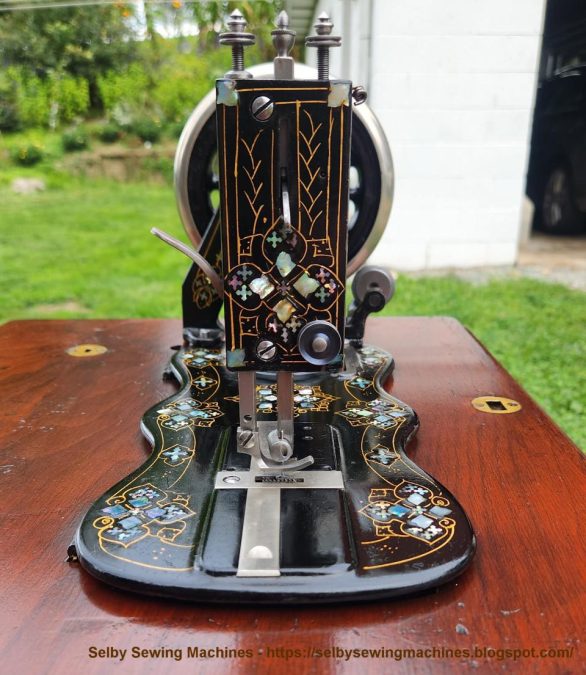
Table of contents
The difference between class and model
Before going any further, there is one important distinction to make: a Singer class is not the same thing as a Singer model.
The class identifies the basic machine design or family (for example, a 15-class machine). Within a class, Singer could produce different models, that can be defined as variations or versions of the same class.
There is also an important connection between model numbers and factories. Singer used factory location codes as part of many model numbers, and these codes can tell us where a particular machine was manufactured.
Singer classes, as documented in serial number records
299 classes / 2,759 documented machines
Family / Turtleback
In use from 1856 to 1859
Recorded serial numbers: 1,702
Recorded factories:
- New York Centre Street or New York Mott Street (USA)
- New York Mott Street (USA)
Usage Information
- Needle size: 13x1
Singer's first domestic machine. It had a vibrating overhanging shaft, reciprocating shuttle and rocking treadle. Photo courtesy of Wolfegang’s Collectibles.
Documented Machines
(What does it mean?)Total: 3
Documented Factories:
- New York Centre Street or New York Mott Street (USA)
- New York Mott Street (USA)
Documented Decals:
Documented years: 1858 - 1860
High Arm
In use from 1884 to 1887
Recorded serial numbers: 36,000
Recorded factories:
Usage Information
- Needle size: 20x1
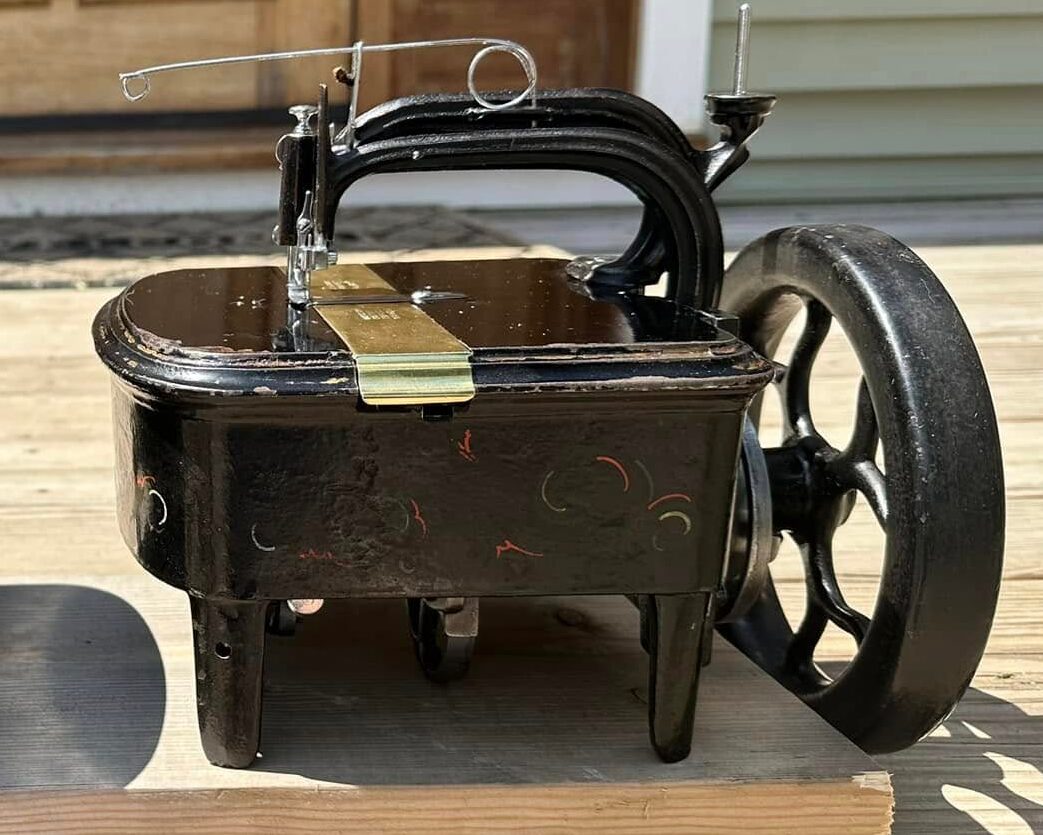
Domestic machines, high arm transverse shuttle.
Documented Machines
(What does it mean?)Total: 2
Documented Factories:
Documented Decals:
Documented years: 1884
Letter A
In use from 1859 to 1865
Recorded serial numbers: 74,003
Recorded factories:
- New York Centre Street or New York Mott Street (USA)
- New York Mott Street (USA)
Usage Information
- Needle size: 13x1
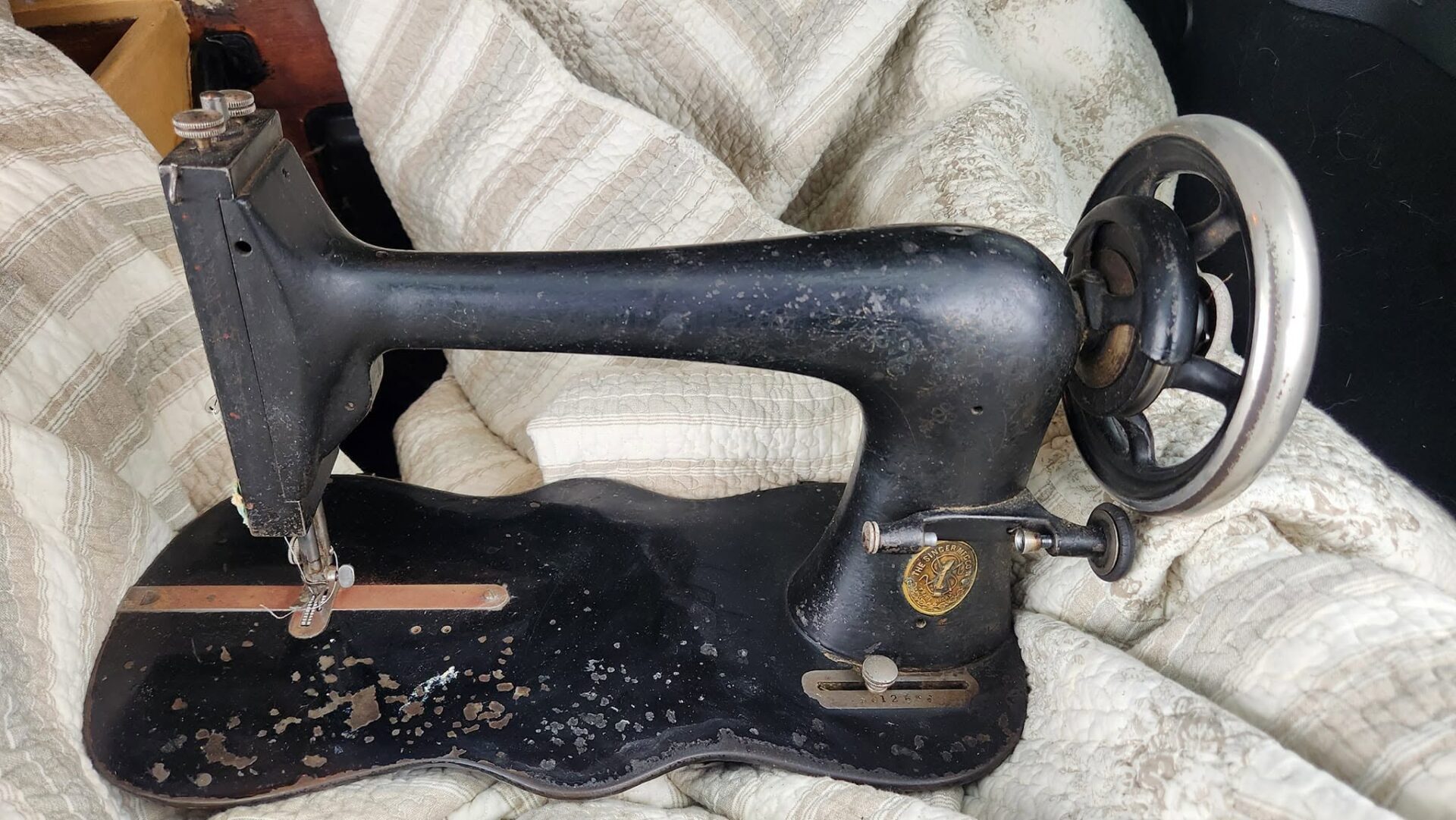
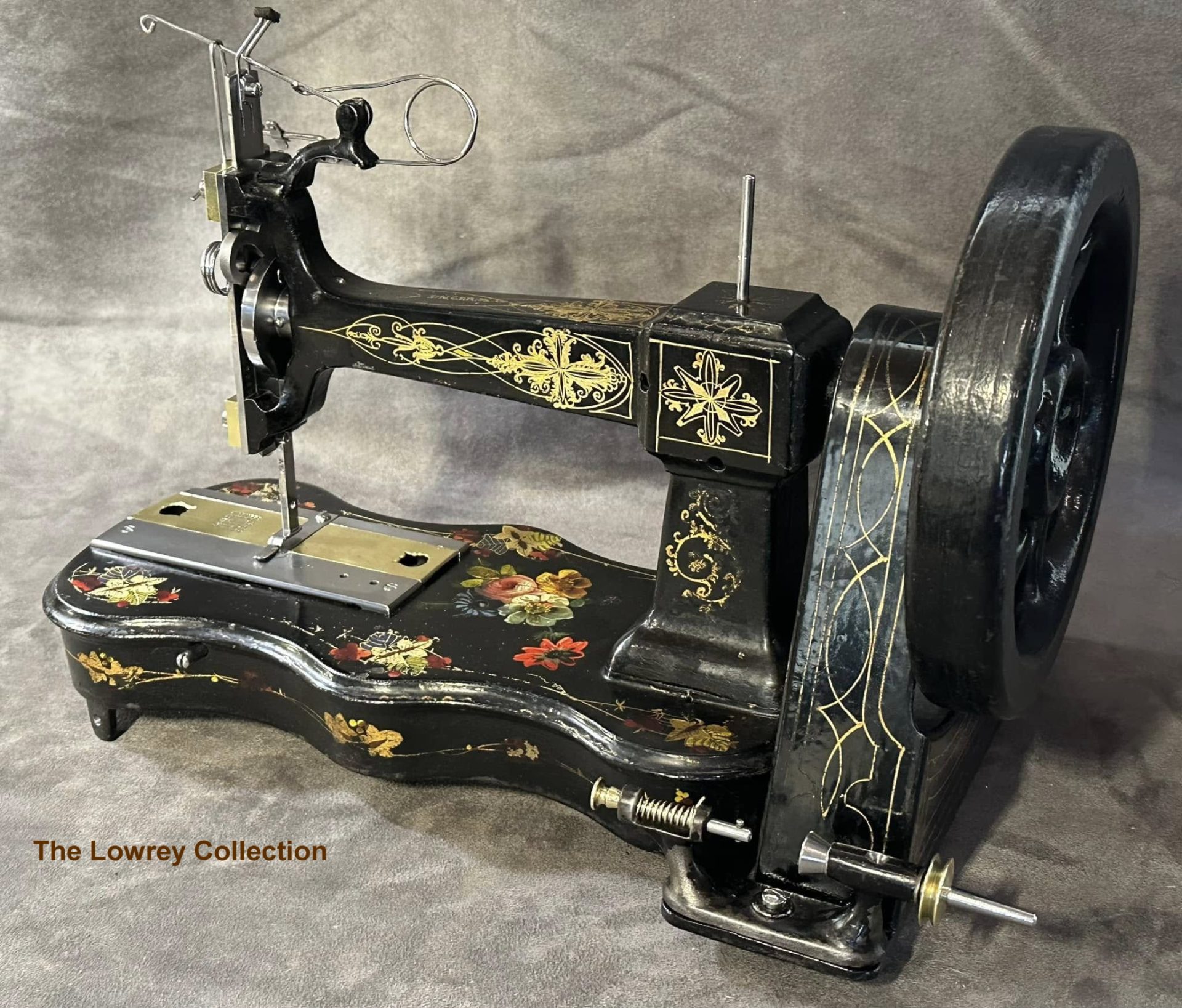
Introduced after the "Family / Turtleback", it featured a lengthened arm to provide greater space with more freedom for working. Photo courtesy of The Lowrey Collection.
Documented Machines
(What does it mean?)Total: 5
Documented Factories:
- New York Centre Street or New York Mott Street (USA)
- New York Mott Street (USA)
Documented Decals:
Documented years: 1859 - 1864
N° 1
In use from 1851 to 1880
Recorded serial numbers: 2,523
Recorded factories:
- Boston, Massachusetts (USA)
- New York Centre Street (USA)
- New York Centre Street or New York Mott Street (USA)
- New York City Workshop (USA)
Usage Information
- Needle size: 12x1
The first sewing machine class produced by Singer. Industrial lock stitch reciprocating shuttle. Image courtesy of The Lowrey Collection
Documented Machines
(What does it mean?)Total: 3
Documented Factories:
- New York Centre Street (USA)
- New York Centre Street or New York Mott Street (USA)
Documented Decals:
Documented years: 1853 - 1860
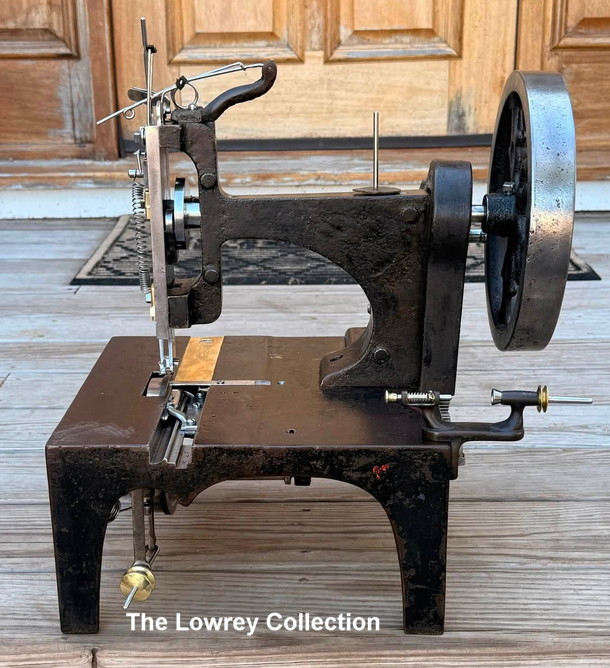
N°2 (or 2K)
In use from 1854 to 1904
A larger N°1 with roller, vibrating or spring presser. Industrial, for tailoring, army clothing, harness making, boot and show making, carriage trimming, etc.
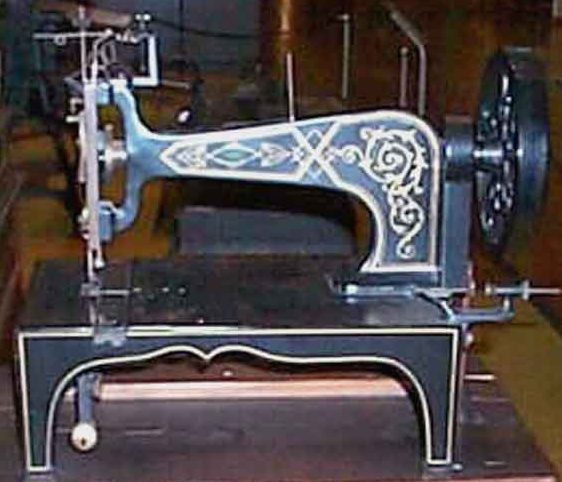
N°3 (or 3K)
In use from 1856 to 1875
Recorded serial numbers: 2,752
Recorded factories:
Industrial long arm version of N°2. Reciprocating (extra large) shuttle.

VS1
In use from 1885 to 1886
Recorded serial numbers: 108,000
Recorded factories:
Fiddlebed shaped machine with vibrating shuttle.
Documented Machines
(What does it mean?)Total: 1
Documented Factories:
Documented Decals:
Documented years: 1885
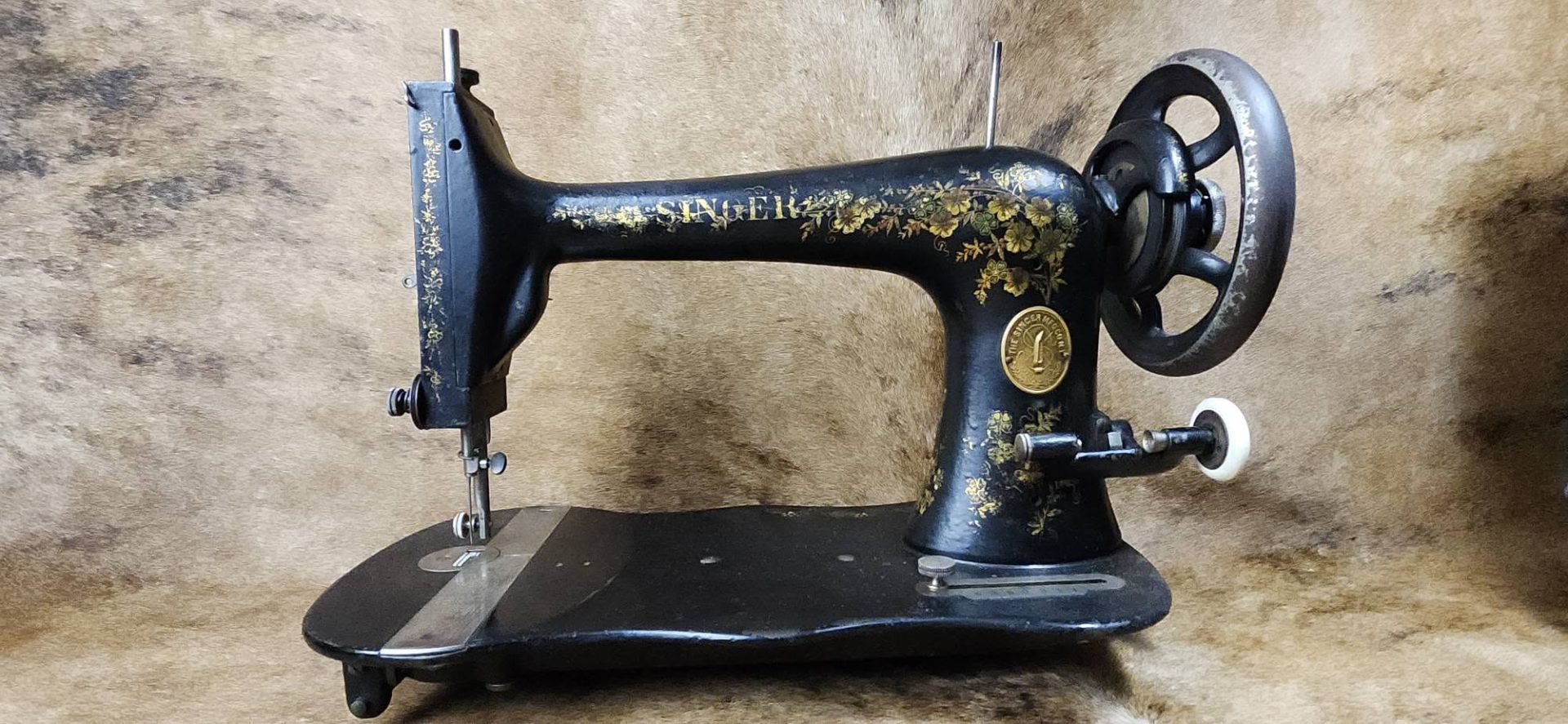
VS2
In use from 1886 to 1892
Recorded serial numbers: 462,814
Recorded factories:
Usage Information
- Needle size: 15x1
Fiddlebed shaped machine with vibrating shuttle. Bell-shaped access door cover on the front. Photo courtesy of Selby Sewing Machines. When the base became rectangular, it evolved into class 27.
Documented Machines
(What does it mean?)Total: 77
Documented Factories:
Documented Decals:
- Floral (Fiddlebed)
- National Rifle Association
- Painted Roses and Daisies (Flowers)
- Scrolls and Roses
- Scrolls and Roses (Fiddlebed)
- Sphinx (or Memphis)
- Victorian (Fiddlebed)
Documented years: 1886 - 1892
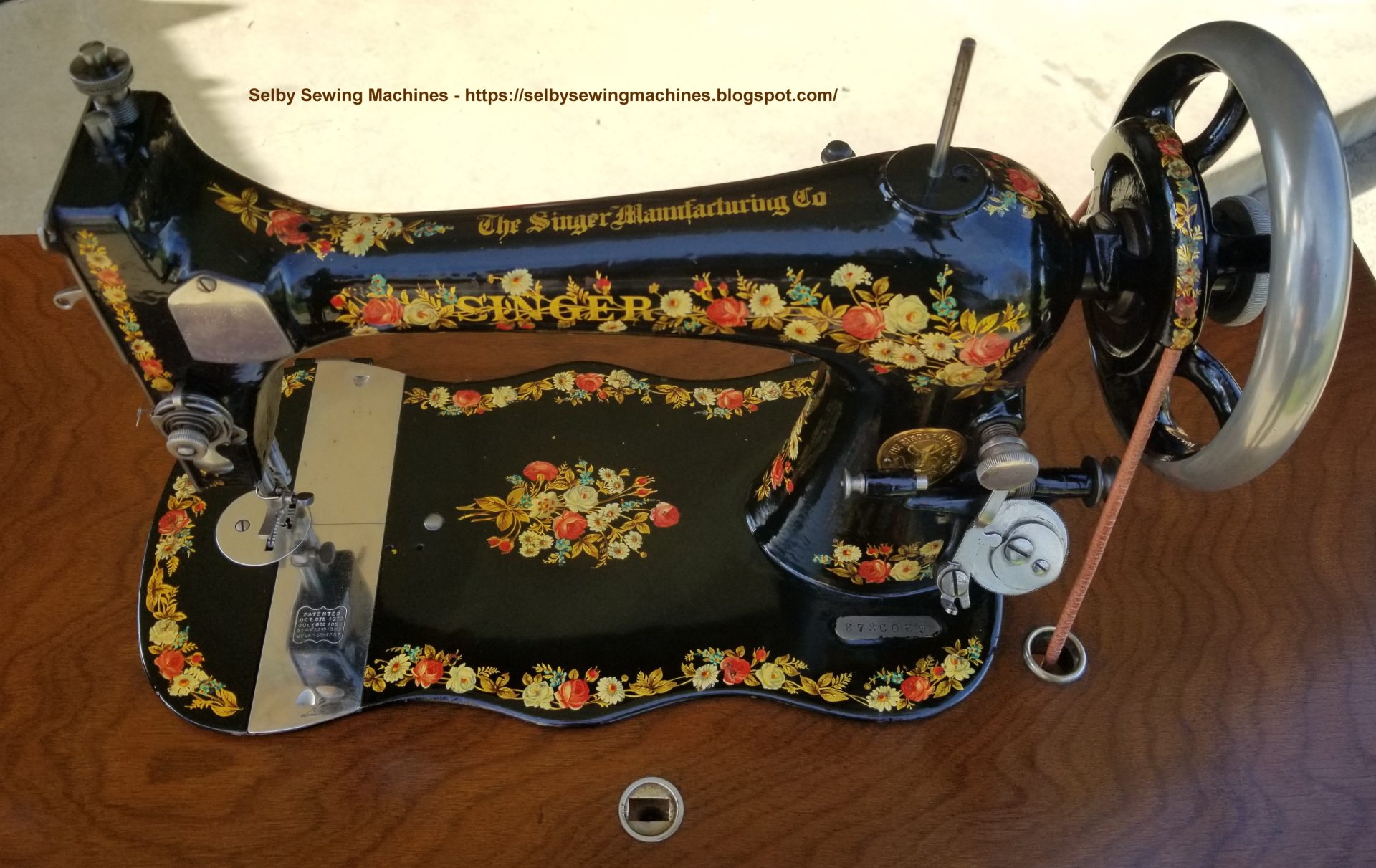
VS3
In use from 1887 to 1893
Recorded serial numbers: 15
Recorded factories:
Usage Information
- Needle size: 15x1
Fiddlebed shaped machine with vibrating shuttle. Bell-shaped access door cover on the front. Raised circular platform (known as “boss”) cast into the top of the arm, at the base of the spool pin. When the base became rectangular, it evolved into class 28.
Documented Machines
(What does it mean?)Total: 15
Documented Factories:
Documented Decals:
Documented years: 1888 - 1892
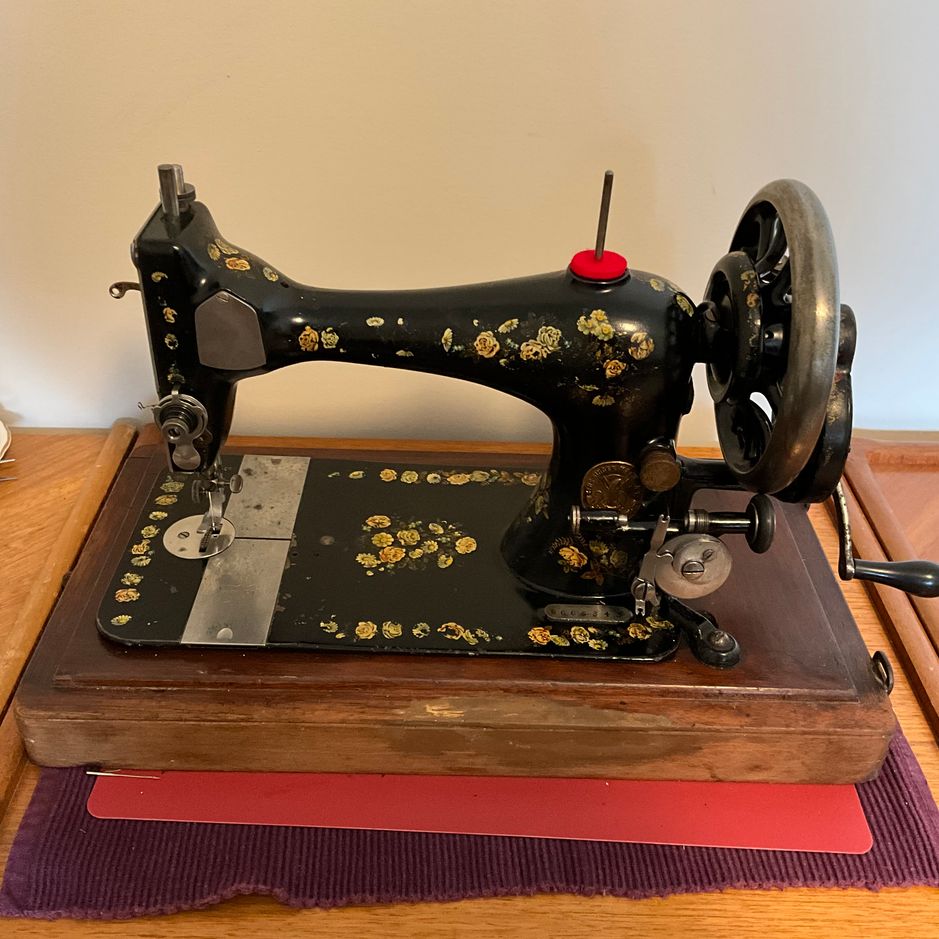
4
In use from 1868
Recorded serial numbers: 1
Recorded factories:
- New York Mott Street (USA)
Long arm version of Class 13, for industrial use.
Documented Machines
(What does it mean?)Total: 1
Documented Factories:
- New York Mott Street (USA)
Documented years: 1868
5
In use from 1914 to 1943
Recorded serial numbers: 310
Recorded factories:
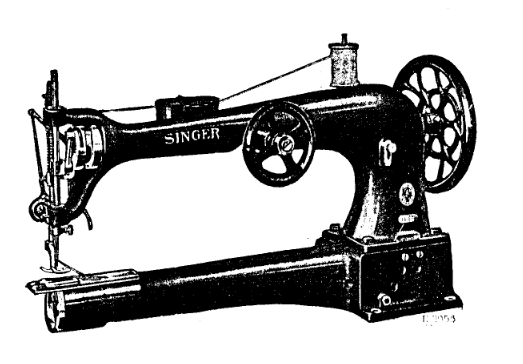
Industrial use, the submodels differ greatly one from the other. All variants have adjustable driven feed-rolls.
6
In use from 1902 to 1964
Recorded serial numbers: 2,648
Recorded factories:
Industrial machines for heavy work in cloth, leather or paper.
7
In use from 1885 to 1968
Recorded serial numbers: 38,626
Recorded factories:
Industrial machines with large long-beak shuttle and powerful mechanism for the strong lock-stitching of heavy fabrics.
Documented Machines
(What does it mean?)Total: 2
Documented Factories:
Documented years: 1885 - 1902
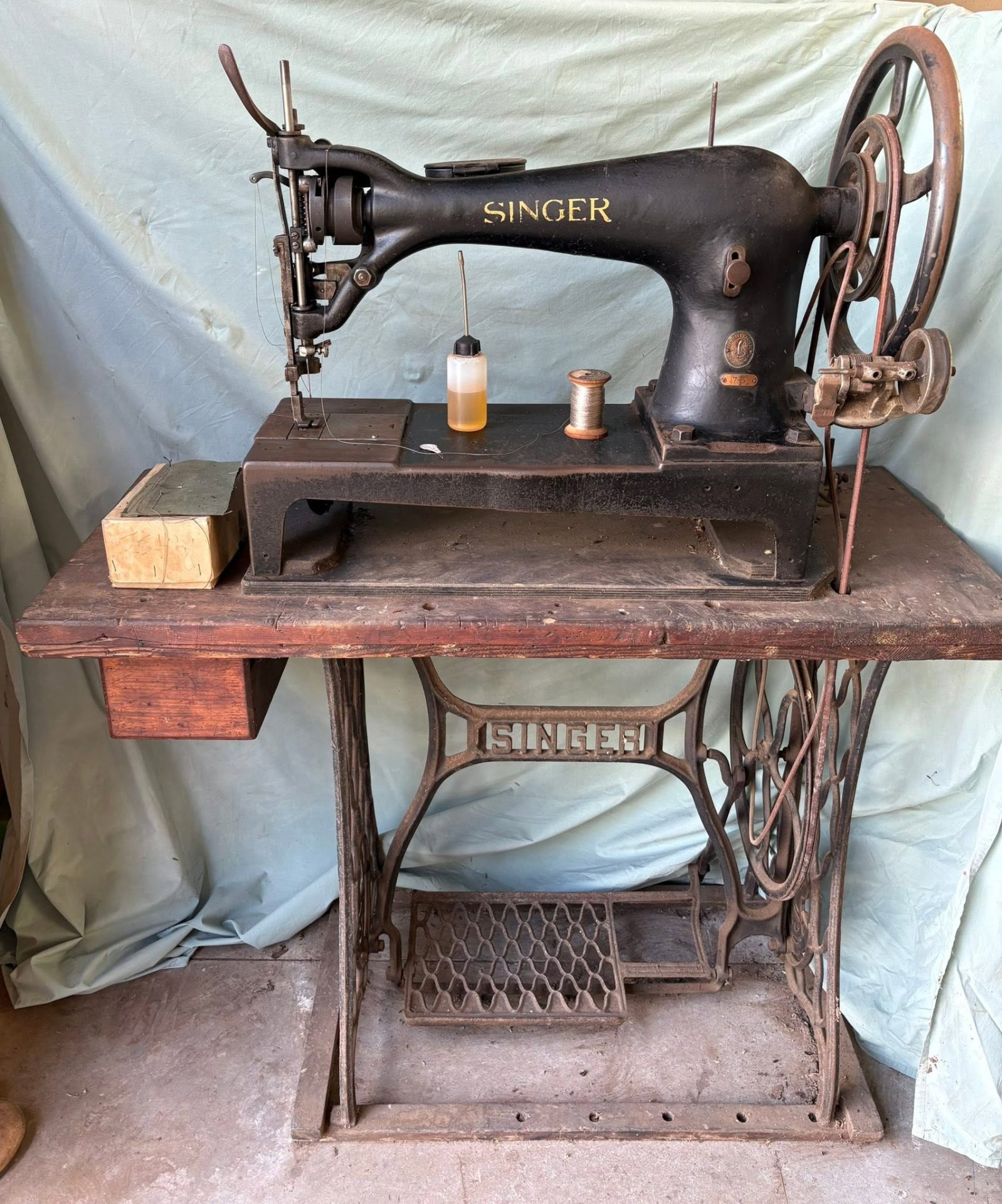
8
In use from 1914 to 1953
Recorded serial numbers: 455
Recorded factories:
Usage Information
- Needle size: 5x1
Very large lock-stitch machine with two needles and two oscillating shuttles. For industrial use for sewing canvas belts.
9
In use from 1911
Recorded serial numbers: 100
Recorded factories:
Large industrial machine for sewing two parallel rows on heavy and wide canvas or rubber belts.
9W
In use from 1905 to 1913
Recorded serial numbers: 4,113
Recorded factories:
9W machines are the continuation of Wheeler & Wilson D9 models, after Singer acquired the company and their Bridgeport plant in 1905. One of the most noticeable features of the 9W is its square-section pillar, that contrasts with the round pillars typical of Singer machines of the same period. More on the factory and the 9W machines
Documented Machines
(What does it mean?)Total: 75
Documented Factories:
Documented Decals:
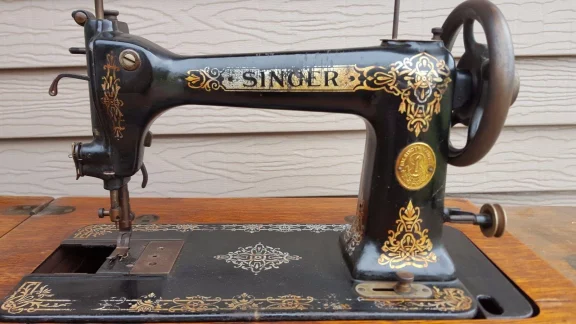
10
In use from 1914 to 1947
Recorded serial numbers: 115
Recorded factories:
Industrial cylinder bed oscillating shuttle machines. For harness and heavy leather, or for binding mats edges with rope binding.
11
In use from 1914 to 1956
Recorded serial numbers: 3,386
Recorded factories:
Industrial cylinder bed of unusual length. Oscillating shuttle machines. For stitching heavy tubular work like mail bags or coal bags or other long cylindrical articles, for overseaming or zigzag stitching on canvas, leather and heavy goods.
Documented Machines
(What does it mean?)Total: 1
Documented Factories:
Documented years: 1917
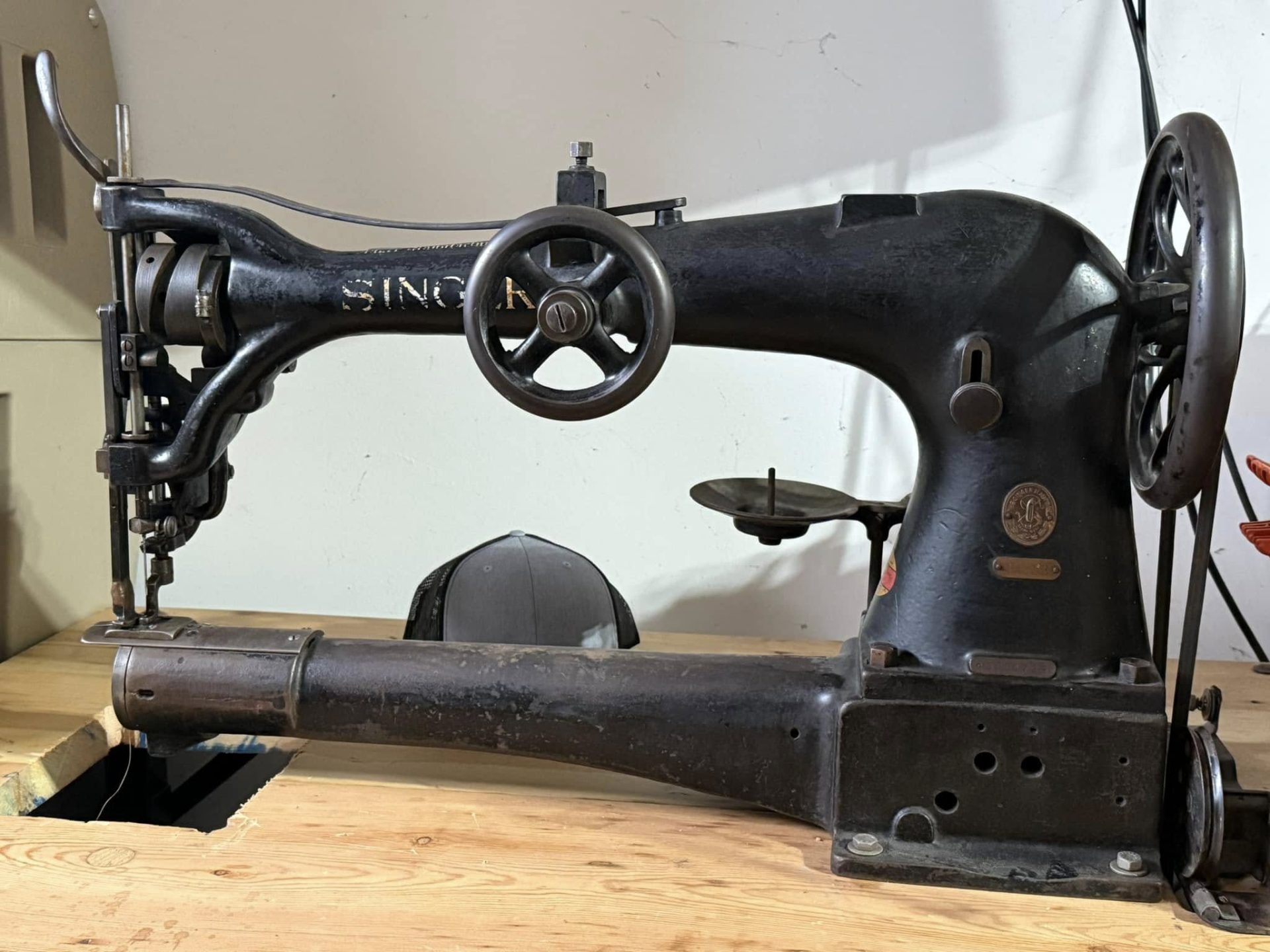
12
In use from 1865
Recorded serial numbers: 5,642,801
Recorded factories:
- Bridgeport, Connecticut (USA)
- Elizabethport, New Jersey (USA)
- Glasgow Love Loan (Scotland, UK)
- James Street, Bridgeton, Glasgow (Scotland, UK)
- Kilbowie, Clydebank (Scotland, UK)
- New York Mott Street (USA)
Usage Information
- Needle size: 12x1
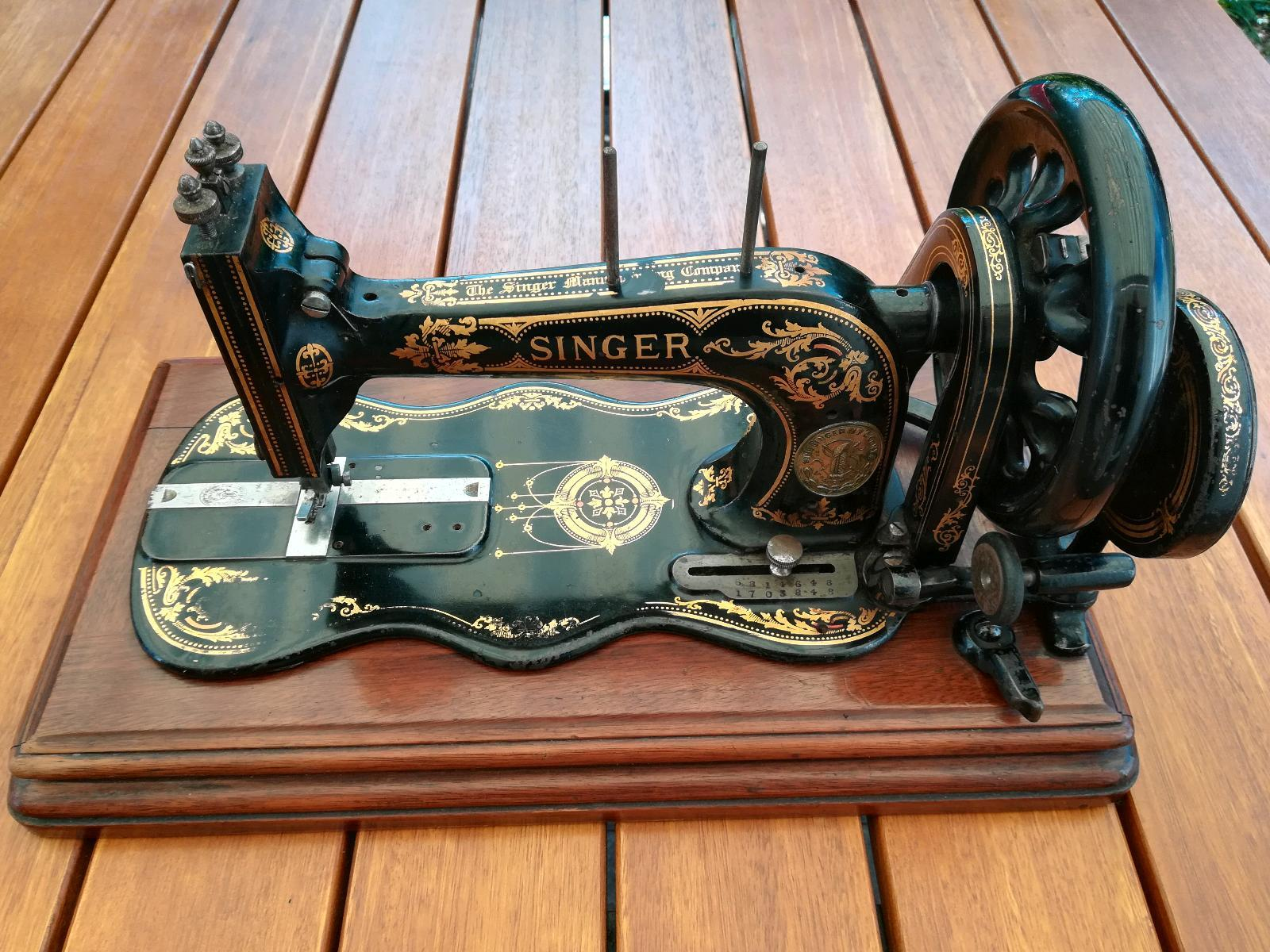
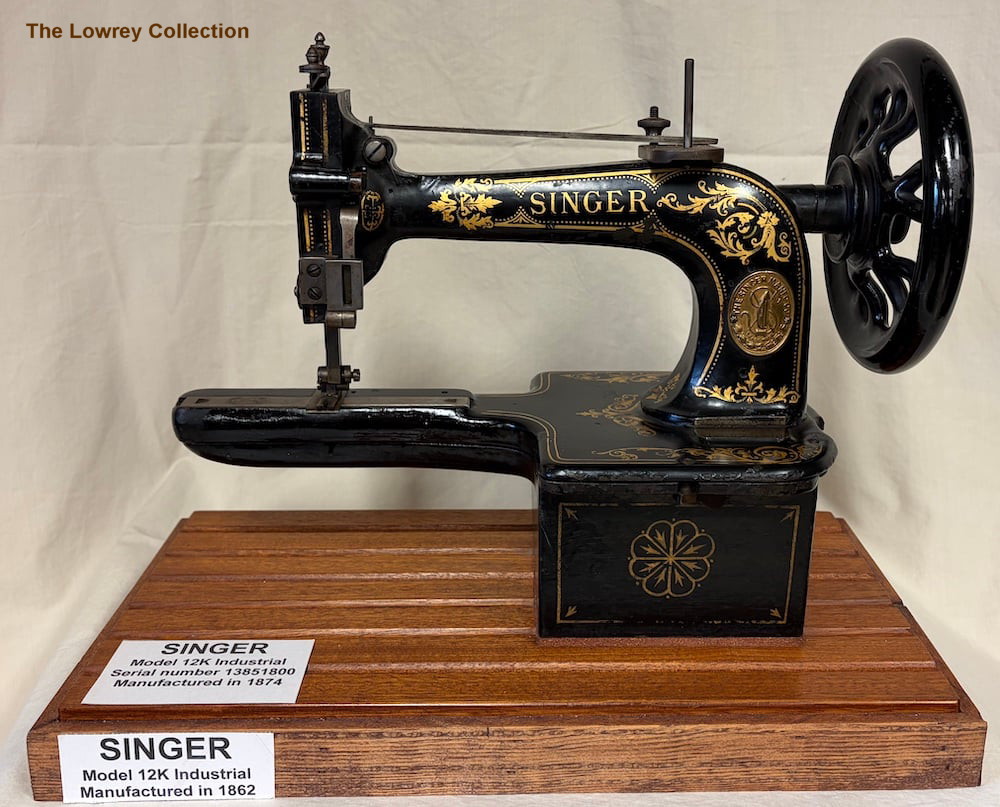
The Singer "New Family", introduced in 1865 and soon sold in the UK, was later renamed Singer 12. Early models, with their distinctive "fiddlebed" shape, used a transverse boat-shaped shuttle and round-shank "Class 12x1" needles. Later models had a rectangular base. From 1870 it was available for semi-industrial use with a longer arm, as the class 13. There are many industrial variants, like the 12K Industrial Free Arm.
Documented Machines
(What does it mean?)Total: 61
Documented Factories:
- Bridgeport, Connecticut (USA)
- Elizabethport, New Jersey (USA)
- James Street, Bridgeton, Glasgow (Scotland, UK)
- Kilbowie, Clydebank (Scotland, UK)
- New York Mott Street (USA)
Documented Decals:
- Acanthus Leaves
- Acanthus Leaves Industrial Variant
- Acanthus Leaves Mother-of-Pearl
- Early 20th Century Industrial
- Fire Department
- Gilt and Mother-of-Pearl
- Mother-of-Pearl Crosses
- Mother-of-Pearl Ovals
- Mother-of-Pearl Variant
- Mother-of-Pearl Variant #2
- Mother-of-Pearl Variant #3
- Mother-of-Pearl Variant #5
- Mother-of-Pearl Variant #6
- Mother-of-Pearl Variant #7
- Mother-of-Pearl Variant #8
- Ottoman Carnation
- Roses and Scrolls
- Star
- Swirl
- Swirl Variant
- Wheels
Documented years: 1868 - 1899
13
In use from 1869 to 1892
Recorded serial numbers: 889,900
Recorded factories:
- James Street, Bridgeton, Glasgow (Scotland, UK)
- Kilbowie, Clydebank (Scotland, UK)
Usage Information
- Needle size: 13x1
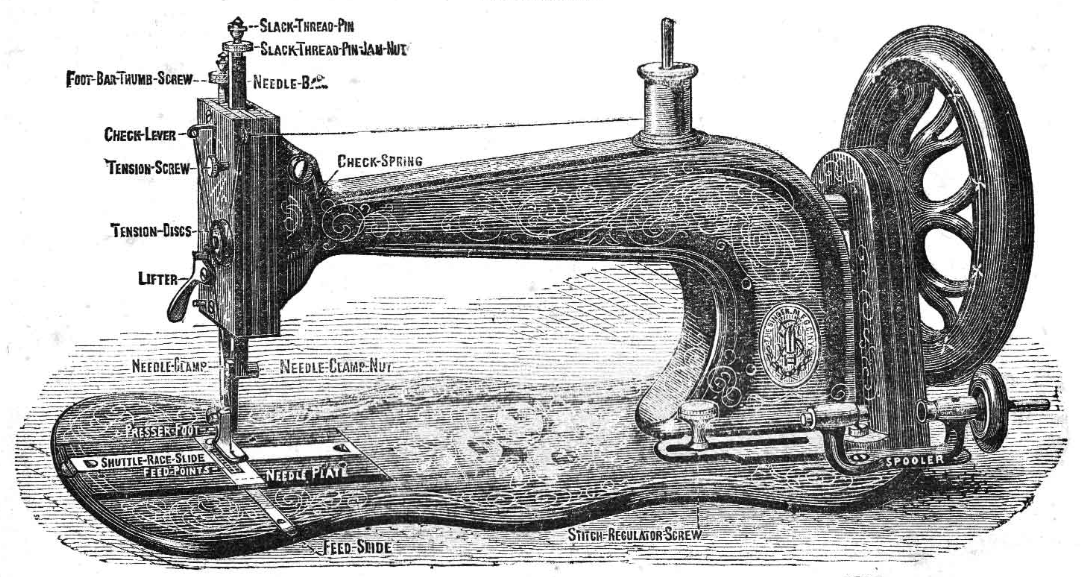
Also known as "Medium Family", it had a larger and longer arm compared to class 12 "New Family". Long bobbin reciprocating shuttle. Some industrial versions differ heavily from each other.
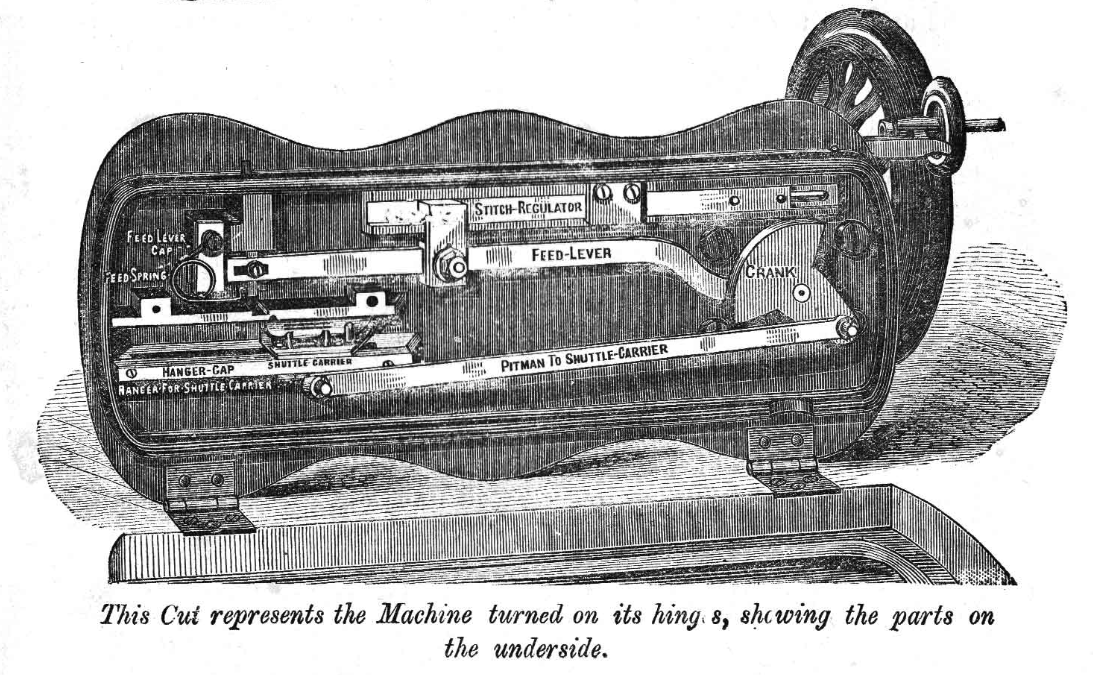
14
In use from 1900 to 1959
Recorded serial numbers: 1,973
Recorded factories:
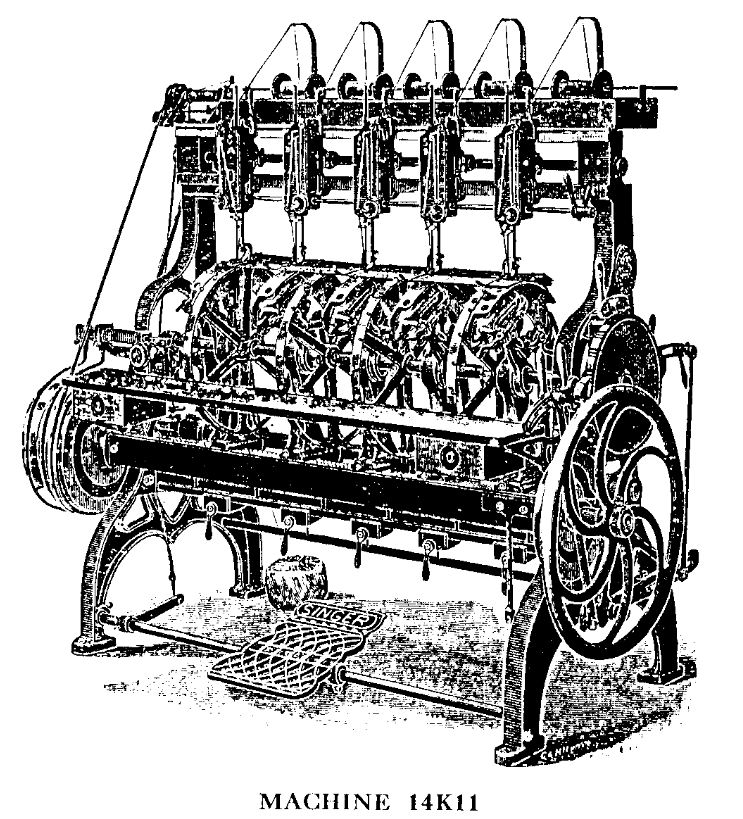
Machines with multiple heads, for lacing together pattern cards used in Jacquard looms.
15
In use from 1879 to 1963
Recorded serial numbers: 27,389,327
Recorded factories:
- Bonnières-sur-Seine (France)
- Bridgeport, Connecticut (USA)
- Campinas (Brazil)
- Elizabethport, New Jersey (USA)
- Karlsruhe (Germany)
- Kilbowie, Clydebank (Scotland, UK)
- Montreal (Canada)
- Monza (Italy)
- Podolsk (Russia)
- Querétaro (Mexico)
- St. John's Factory, Quebec (Canada)
- Taytay (Philippines)
- Utsunomiya (Japan)
- Wittenberge, Prussia (Germany)
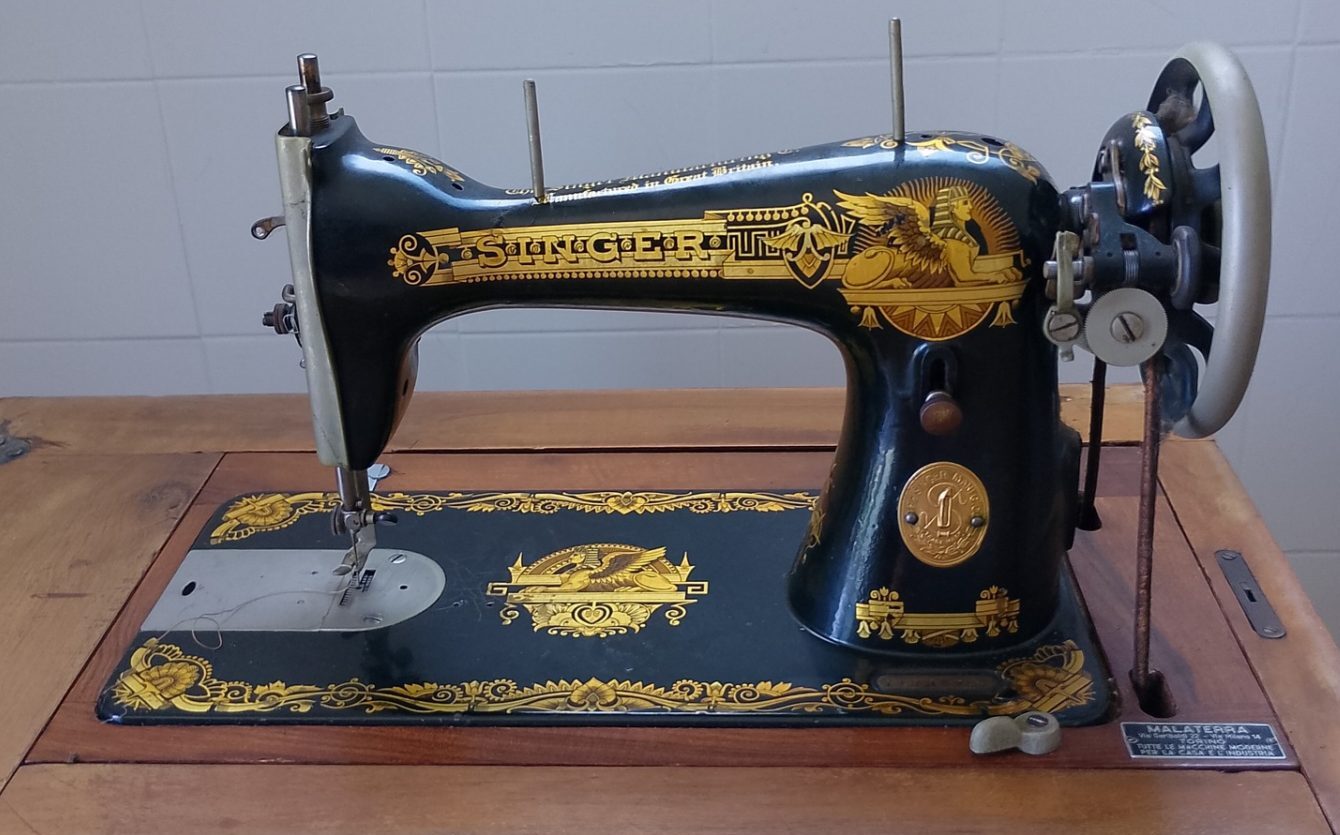
Successor to the "New Family", was the "Improved Family", which was given the class 15 designation. Originally patented by Singer engineer P. Diehl in 1878 (UK patent 2813, 13th July 1878), the 'Improved Family' was launched in 1879 as a treadle machine, lock stitch oscillating shuttle. It has the tension on the face plate. By the 1890s the name 'Improved Family' had been dropped and replaced by "Class 15". In the same period, the had received a serious upgrade. It had the most common domestic variant and also several industrial variants.
Documented Machines
(What does it mean?)Total: 653
Documented Factories:
- Bonnières-sur-Seine (France)
- Bridgeport, Connecticut (USA)
- Campinas (Brazil)
- Elizabethport, New Jersey (USA)
- Karlsruhe (Germany)
- Kilbowie, Clydebank (Scotland, UK)
- Montreal (Canada)
- Monza (Italy)
- Podolsk (Russia)
- Querétaro (Mexico)
- St. John's Factory, Quebec (Canada)
- Taytay (Philippines)
- Utsunomiya (Japan)
- Wittenberge, Prussia (Germany)
Documented Decals:
- Early 20th Century Industrial
- Eye and Trapezoids
- Eye and Trefoils
- Filigree
- Floral (Fiddlebed)
- Floral Variant (Forget-me-not)
- Gold Wings
- Leaf Vines
- Owl
- Painted Daisies
- Painted Roses and Daisies (Flowers)
- Painted Roses and Daisies Variant (Potentilla / Apple Blossom)
- Pearled
- Pheasant
- RAF
- Red Eye
- Scrolls and Roses
- Scrolls and Roses (Fiddlebed)
- Sphinx (or Memphis)
- Sphinx Variant (Indian Star)
- Tiffany (or Gingerbread)
- Wild Rose
Documented years: 1875 - 1961
16
In use from 1887 to 1963
Recorded serial numbers: 2,146,514
Recorded factories:
- Elizabethport, New Jersey (USA)
- Kilbowie, Clydebank (Scotland, UK)
- Montreal (Canada)
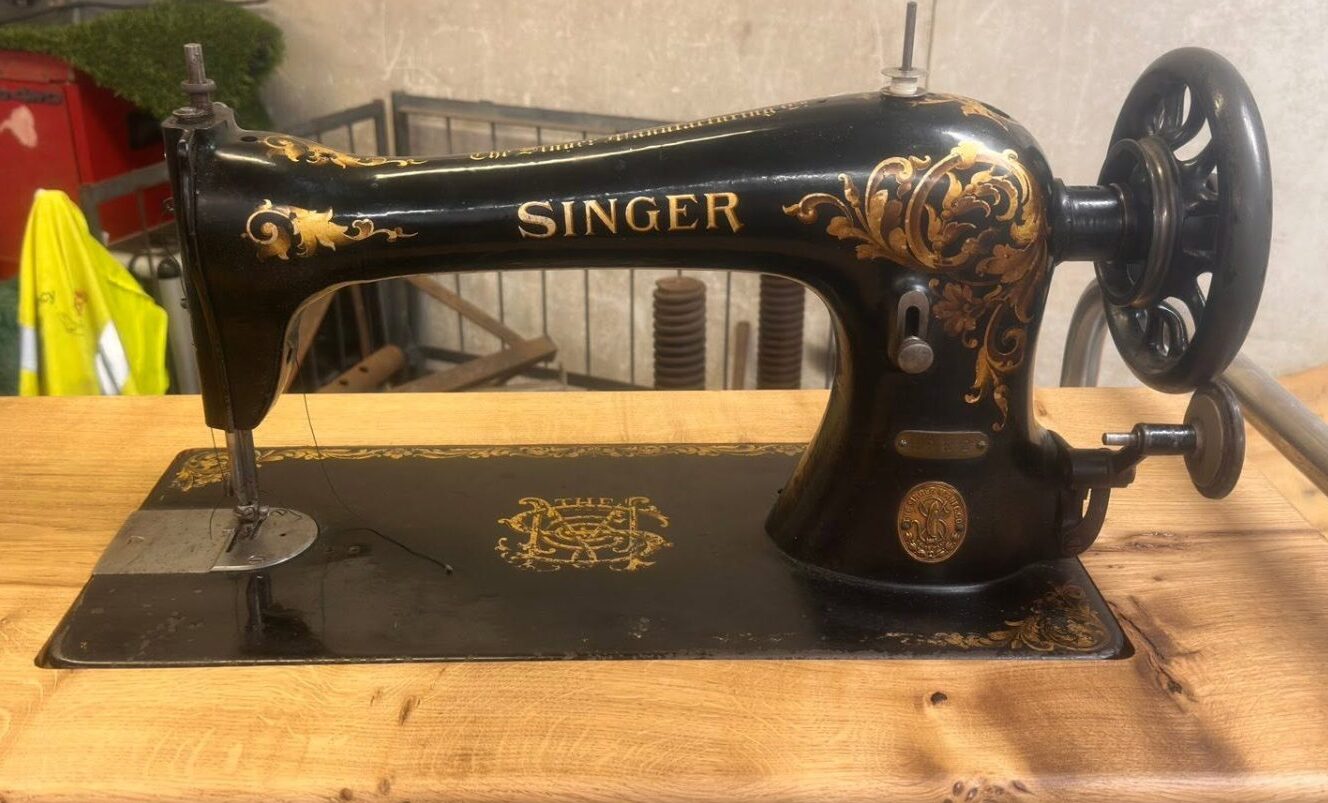
Successor to the "Improved Family" or class 15, was the "Improved Manufacturing", which was given the class 16 designation. The arm is longer than the "Improved Family", with more room for sewing. Lock stitch oscillating shuttle, it generally came with knee lifter. Industrial use, for clothing and heavier work in woven fabrics, shoes and other leatherwork.
Documented Machines
(What does it mean?)Total: 18
Documented Factories:
Documented Decals:
Documented years: 1887 - 1952
17
In use from 1894 to 1966
Recorded serial numbers: 93,850
Recorded factories:
Usage Information
- Needle size: 16x2
Long beak shuttle and cylinder bed. Industrial machines for shoes and irregularly shaped leather articles.
Documented Machines
(What does it mean?)Total: 1
Documented Factories:
Documented years: 1908
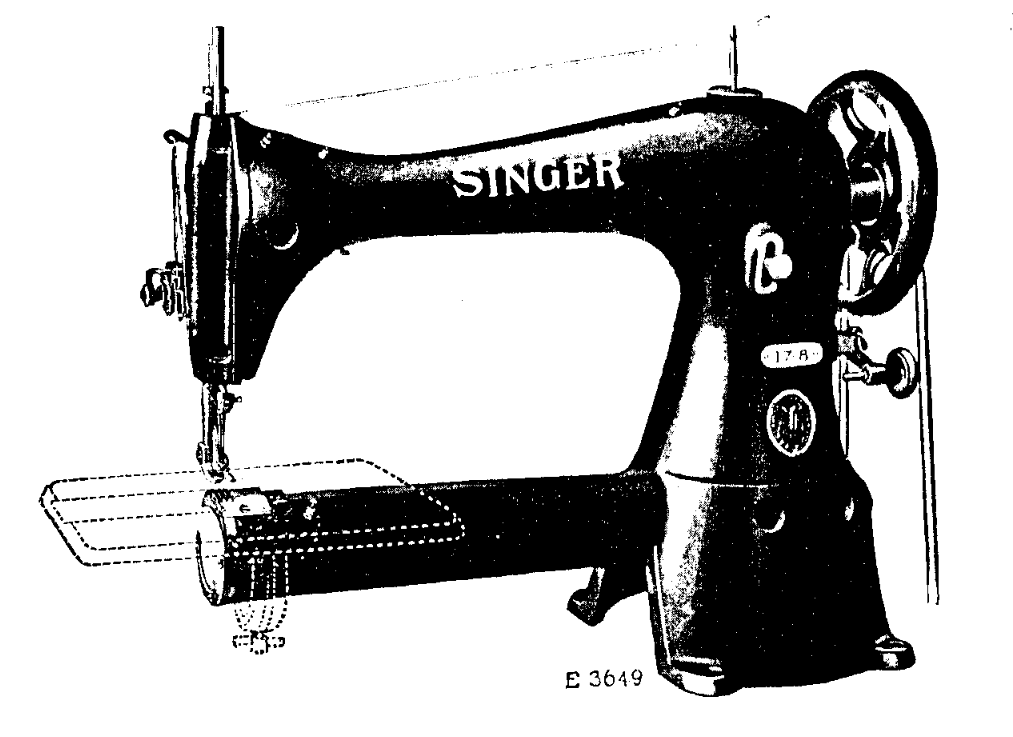
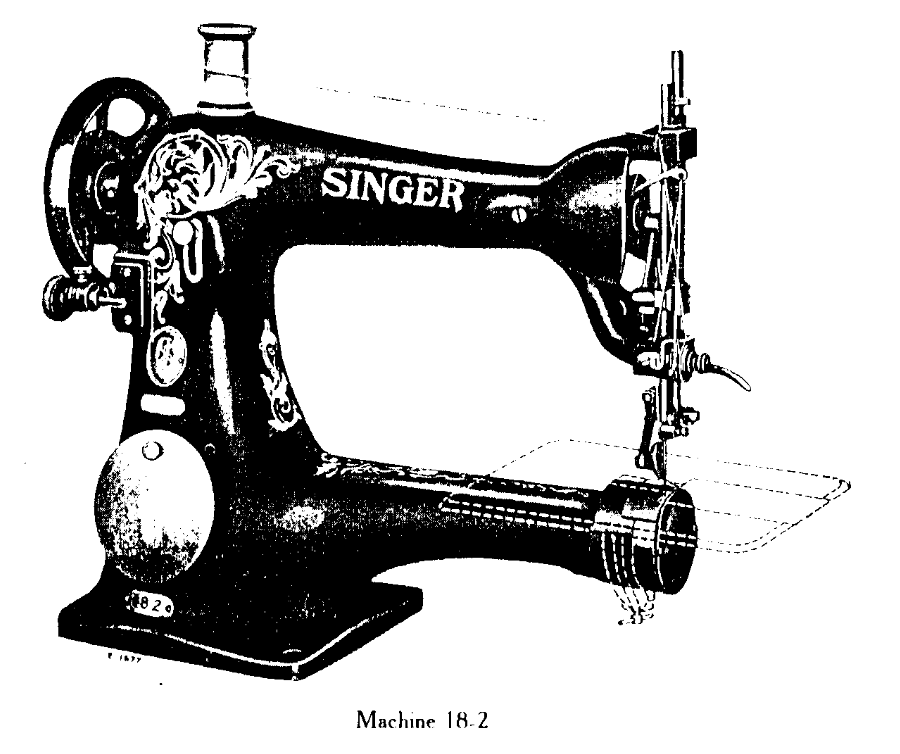
18
In use from 1900 to 1967
Recorded serial numbers: 191,827
Recorded factories:
Industrial cylinder bed machine. Lock stitch, drop feed. Optional flat work plate. Long beak oscillating shuttle. Designed for vamping shoes. For light and medium weight leather.
Documented Machines
(What does it mean?)Total: 4
Documented Factories:
Documented Decals:
Documented years: 1907 - 1928
19
In use from 1900 to 1954
Recorded serial numbers: 5,678
Recorded factories:
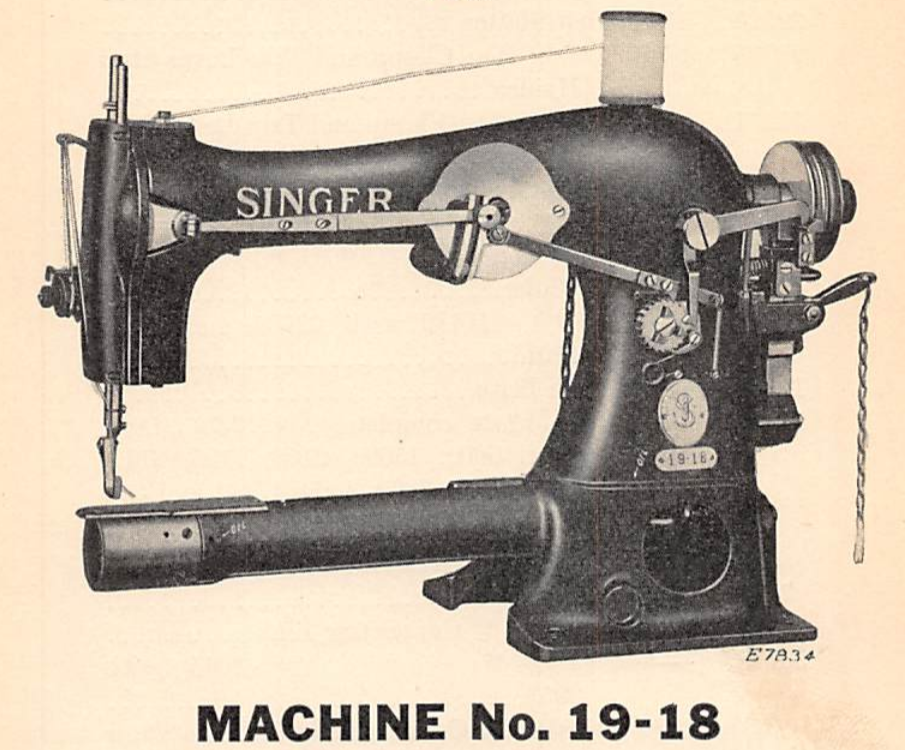
Industrial machine for working eyelets or ornaments in textiles and leather. Cylinder bed, rotary long beak hook, rotating ball bearing feed and presser foot.
20
In use from 1917
Recorded serial numbers: 500
Recorded factories:
Class recorded in G-series serial numbers, in a batch of 500 machines. No other info, at the moment, on the specifics of this class. Not to be mistaken for the SewHandy Toy machines, which did not have serial numbers.
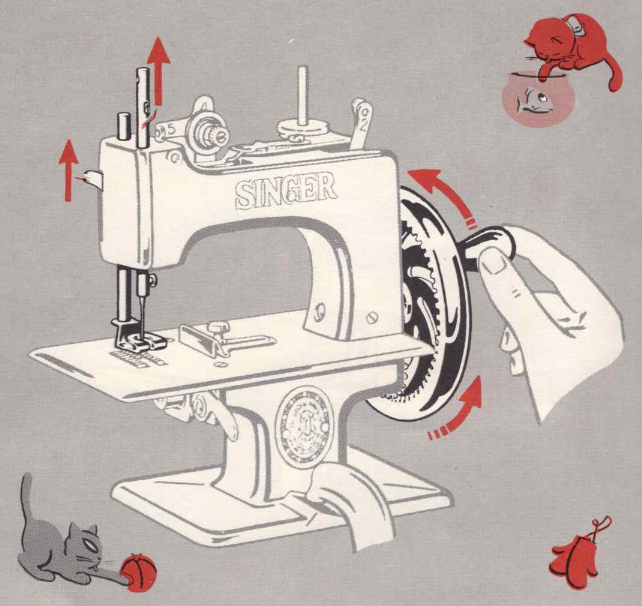
20 "Sew Handy"
In use from 1910
Usage Information
- Needle size: 24x1
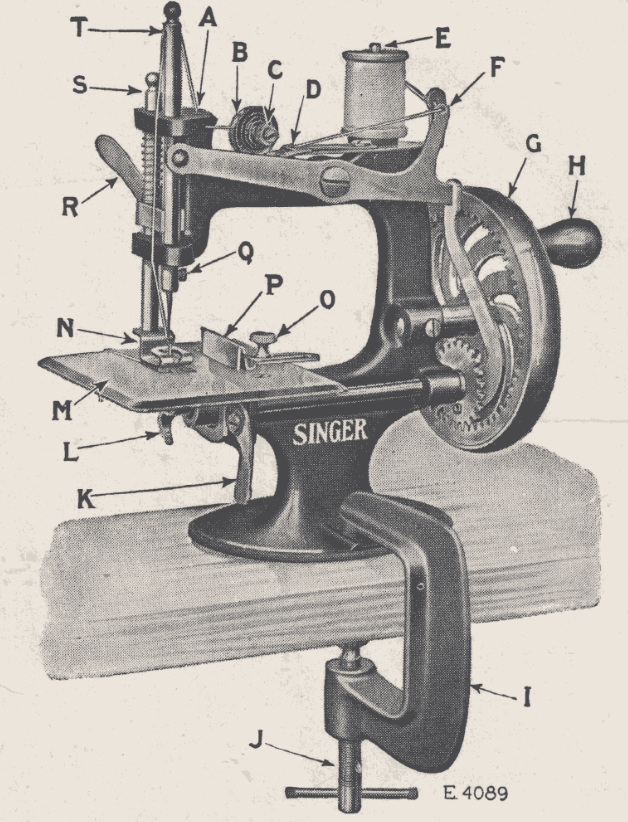
Single thread chain stitch marketed as both "small portable" and toy for children. 20-1 is hand driven, while 20-2 can have a motor. No serial numbers on those models.
20U
In use from 1973 to 1997
Recorded serial numbers: 1
Recorded factories:
- Utsunomiya (Japan)
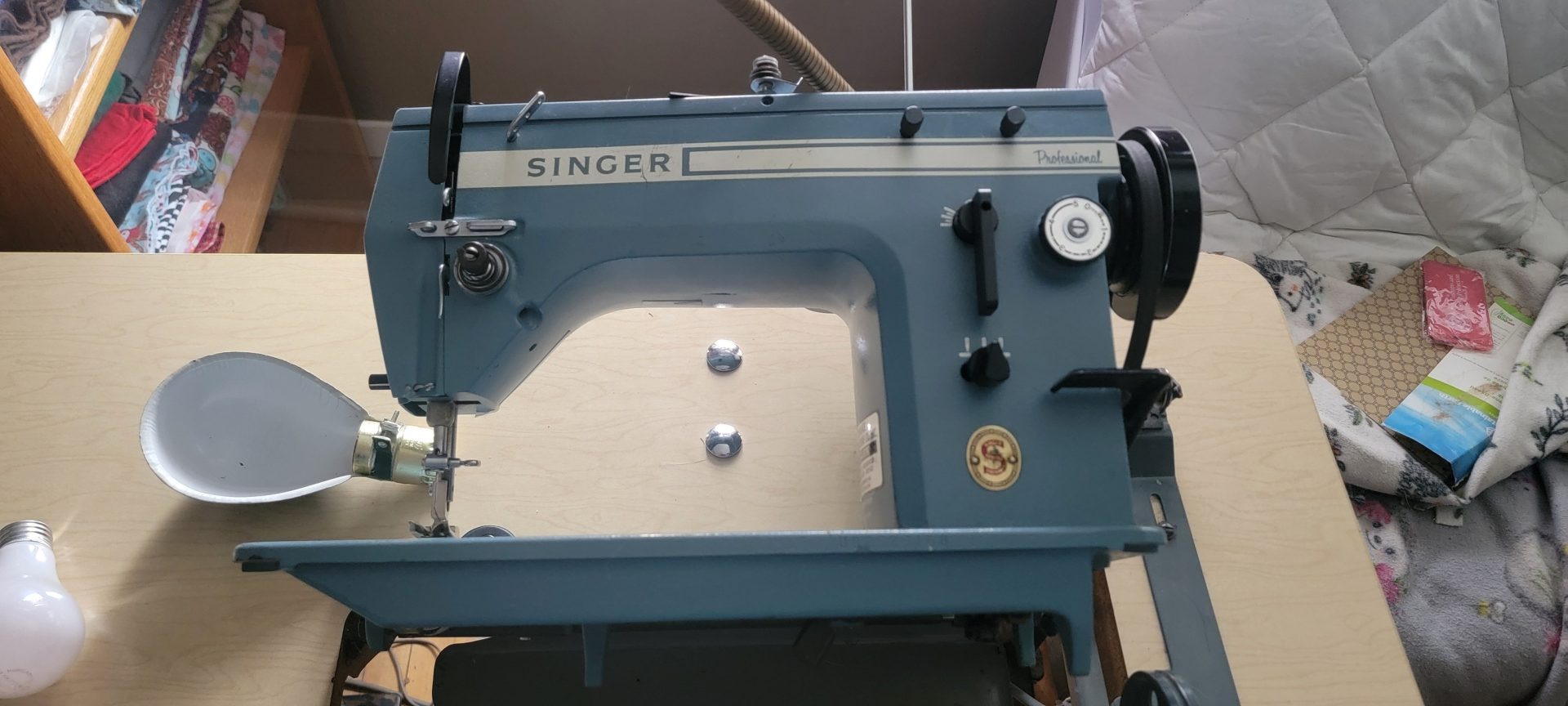
Professional zigzag machine made in Japan. For sewing light and medium weight fabrics, from ladies’ lingerie to overcoating. Variants for embroidery. Their serial numbers usually start with U. No records are preserved: Singer published its official records up to the beginning of the 1970s.
Documented Machines
(What does it mean?)Total: 1
Documented Factories:
- Utsunomiya (Japan)
21W
In use up to 1948
Recorded serial numbers: 1
Recorded factories:
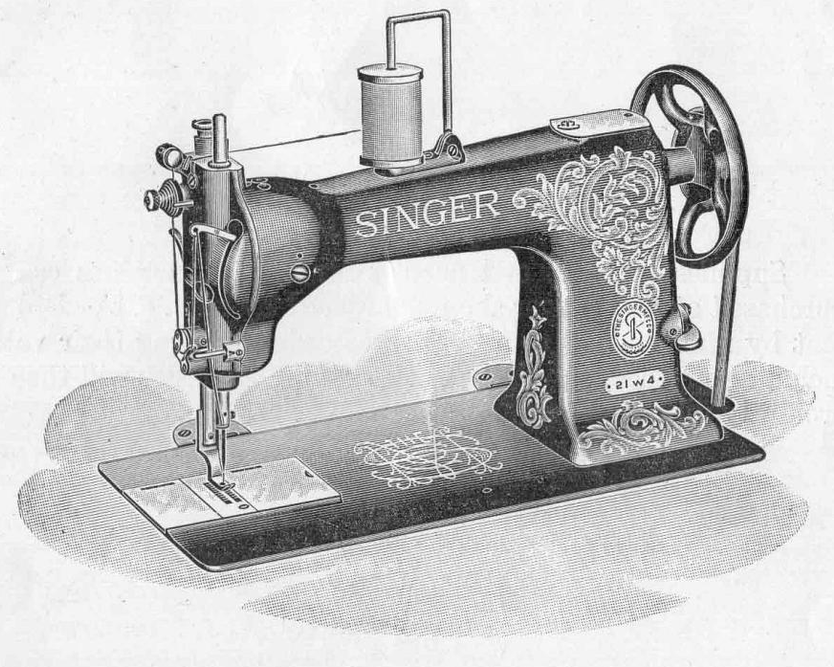
Industrial machine for specialized uses, such as shirts, shirt waists, wrappers, corsets, underwear, overalls, duck coats, canvas, tailoring, gloves, shoes, slippers, awnings, flossing, etc.
Documented Machines
(What does it mean?)Total: 1
Documented Factories:
Documented Decals:
22
In use from 1885 to 1930
Recorded serial numbers: 4,933
Recorded factories:
Industrial machine for stitching eyelets.
22W
Industrial machines for making the lock stitch simultaneously in two parallel seams at high speed in a variety of fabrics and leather.
23
In use from 1900 to 1942
Recorded serial numbers: 22,630
Recorded factories:
Industrial buttonholer. Variants for leather and for cloth.
24
In use from 1871 to 1960
Recorded serial numbers: 354,043
Recorded factories:
- Elizabethport, New Jersey (USA)
- New York Mott Street (USA)
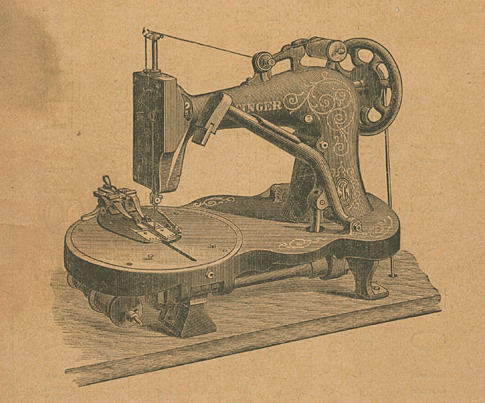
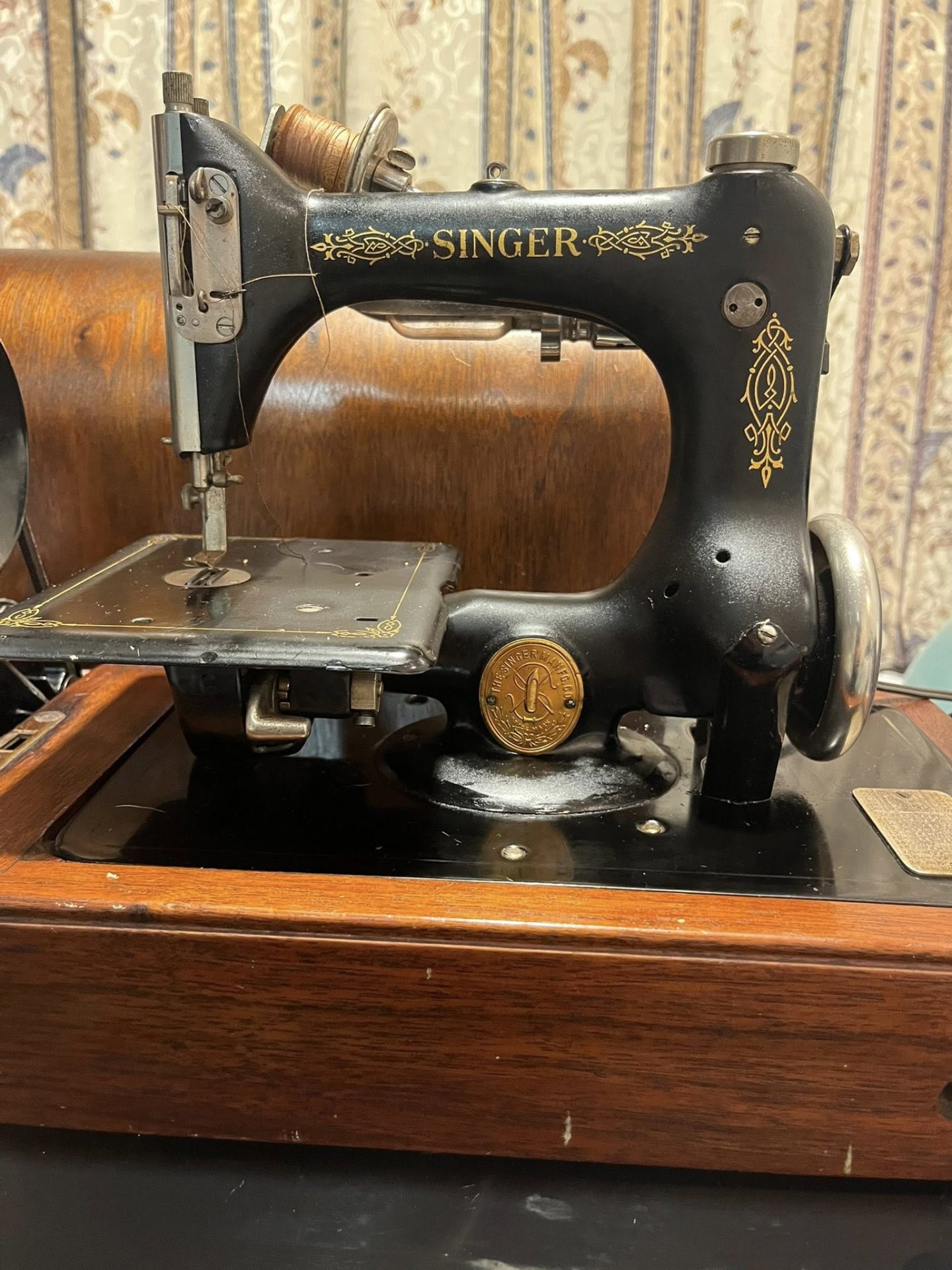
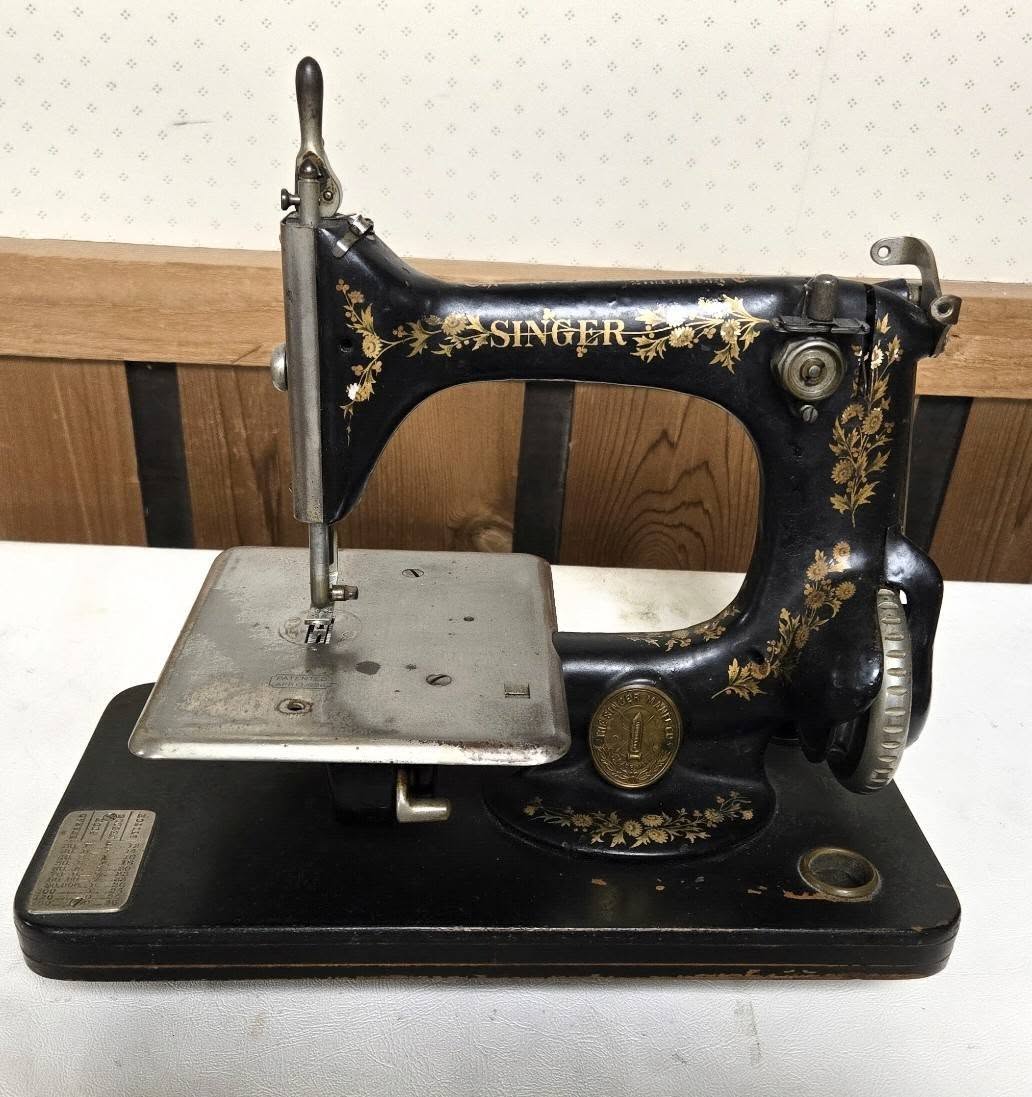
Industrial and domestic single-thread portable chain stitch machines.
Documented Machines
(What does it mean?)Total: 31
Documented Factories:
- Elizabethport, New Jersey (USA)
- New York Mott Street (USA)
Documented Decals:
- Celtic Knot and Leaves
- Celtic Knot Elaborate Variant
- Early 20th Century Industrial
- Eye and Trefoils
- Leaf Scrolls
- Redberry
Documented years: 1871 - 1945
25
In use from 1900 to 1953
Recorded serial numbers: 1,054
Recorded factories:
- Elizabethport, New Jersey (USA)
- Wittenberge, Prussia (Germany)
Usage Information
- Needle size: 24x1 or 24x2 or 25x1
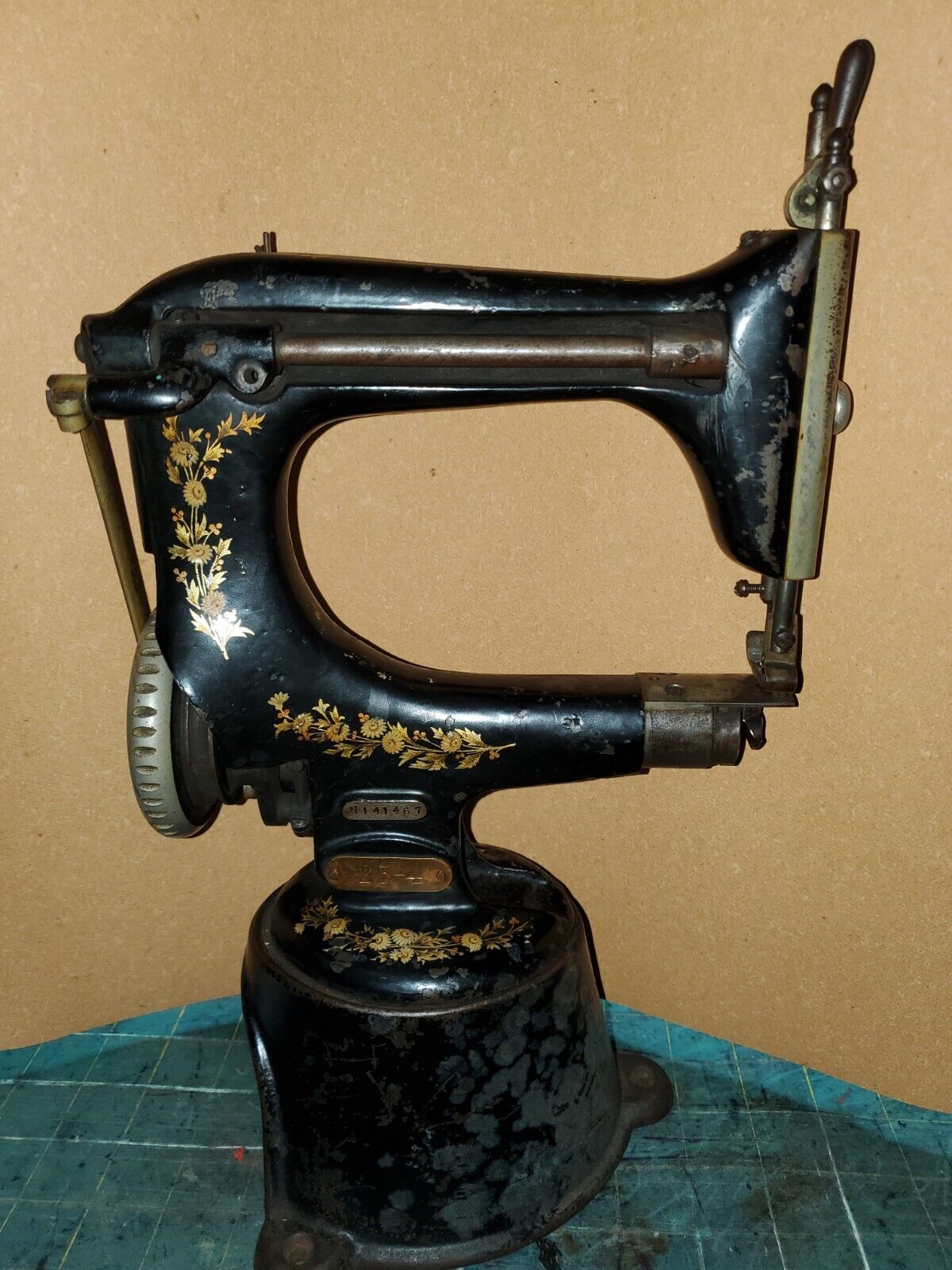
Mostly cylinder bed, industrial single-thread chain stitch machines.
Documented Machines
(What does it mean?)Total: 5
Documented Factories:
- Elizabethport, New Jersey (USA)
- Wittenberge, Prussia (Germany)
Documented Decals:
Documented years: 1900 - 1921
26
In use from 1905 to 1930
Recorded serial numbers: 46,088
Recorded factories:
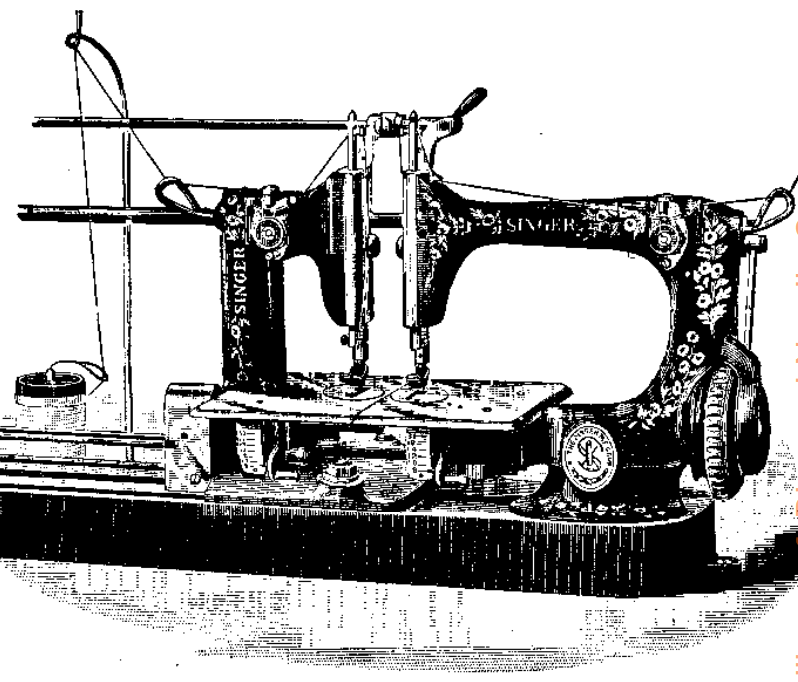
Two separate sewing machines coupled together to work in unison. Industrial use for making bags.
27
In use from 1889 to 1933
Recorded serial numbers: 7,104,795
Recorded factories:
- Elizabethport, New Jersey (USA)
- Kilbowie, Clydebank (Scotland, UK)
- Montreal (Canada)
- Montreal or St. John (Canada)
- Podolsk (Russia)
- St. John's Factory, Quebec (Canada)
Usage Information
- Needle size: 15x1
Evolution of the VS2. Vibrating shuttle, rectangular bed, low bobbin winder.
Documented Machines
(What does it mean?)Total: 445
Documented Factories:
- Elizabethport, New Jersey (USA)
- Kilbowie, Clydebank (Scotland, UK)
- Montreal (Canada)
- Montreal or St. John (Canada)
- Podolsk (Russia)
- St. John's Factory, Quebec (Canada)
Documented Decals:
- Dogwood
- Eagle
- Painted Roses and Daisies (Flowers)
- Persian
- Pheasant
- Scrolls and Roses
- Scrolls and Roses Variant (Queen Victoria Diamond Jubilee)
- Sphinx (or Memphis)
- Tiffany (or Gingerbread)
- Tiffany Variant (Queen Victoria Diamond Jubilee)
- Tiny Red Roses
Documented years: 1891 - 1922
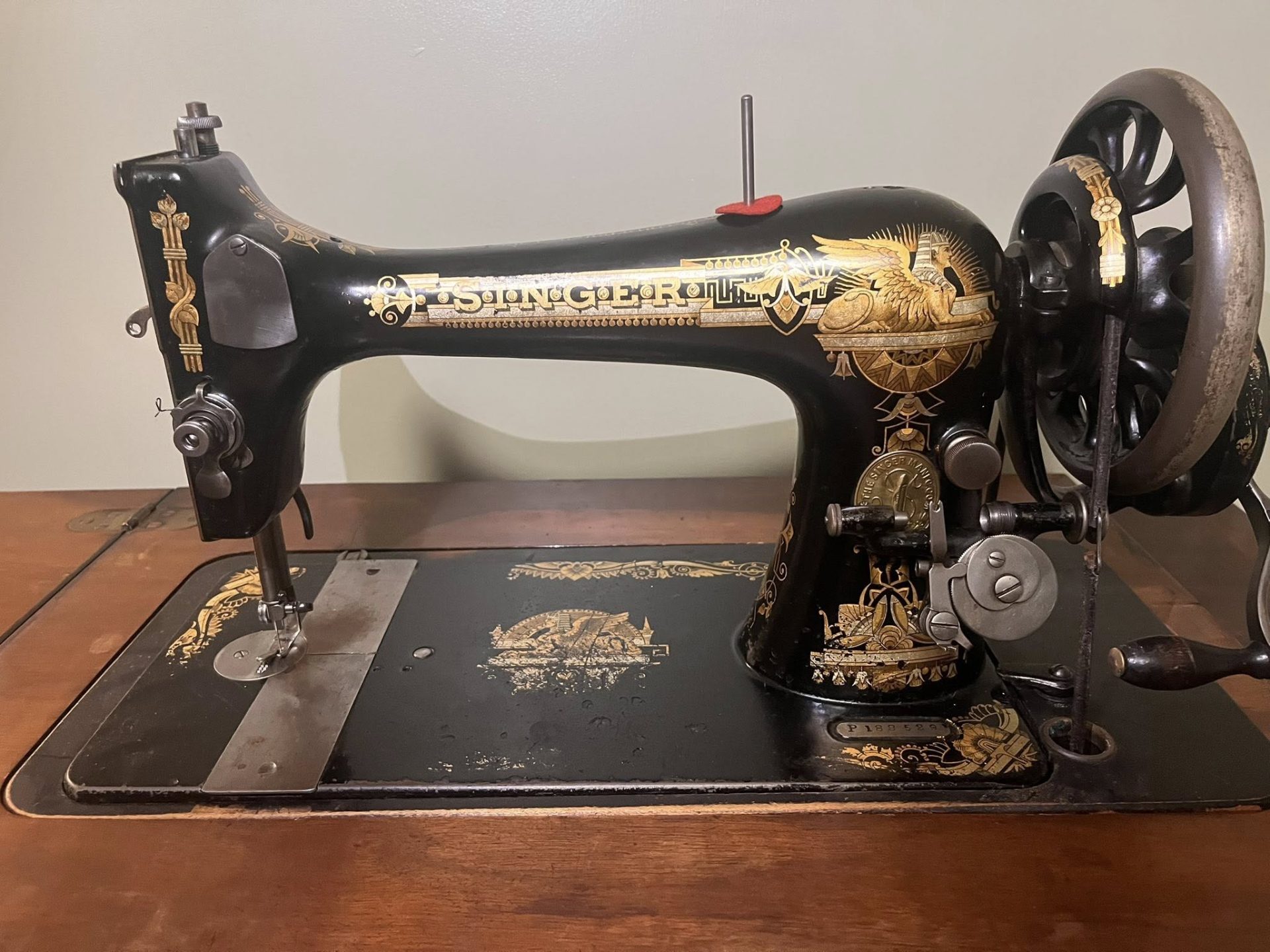
28
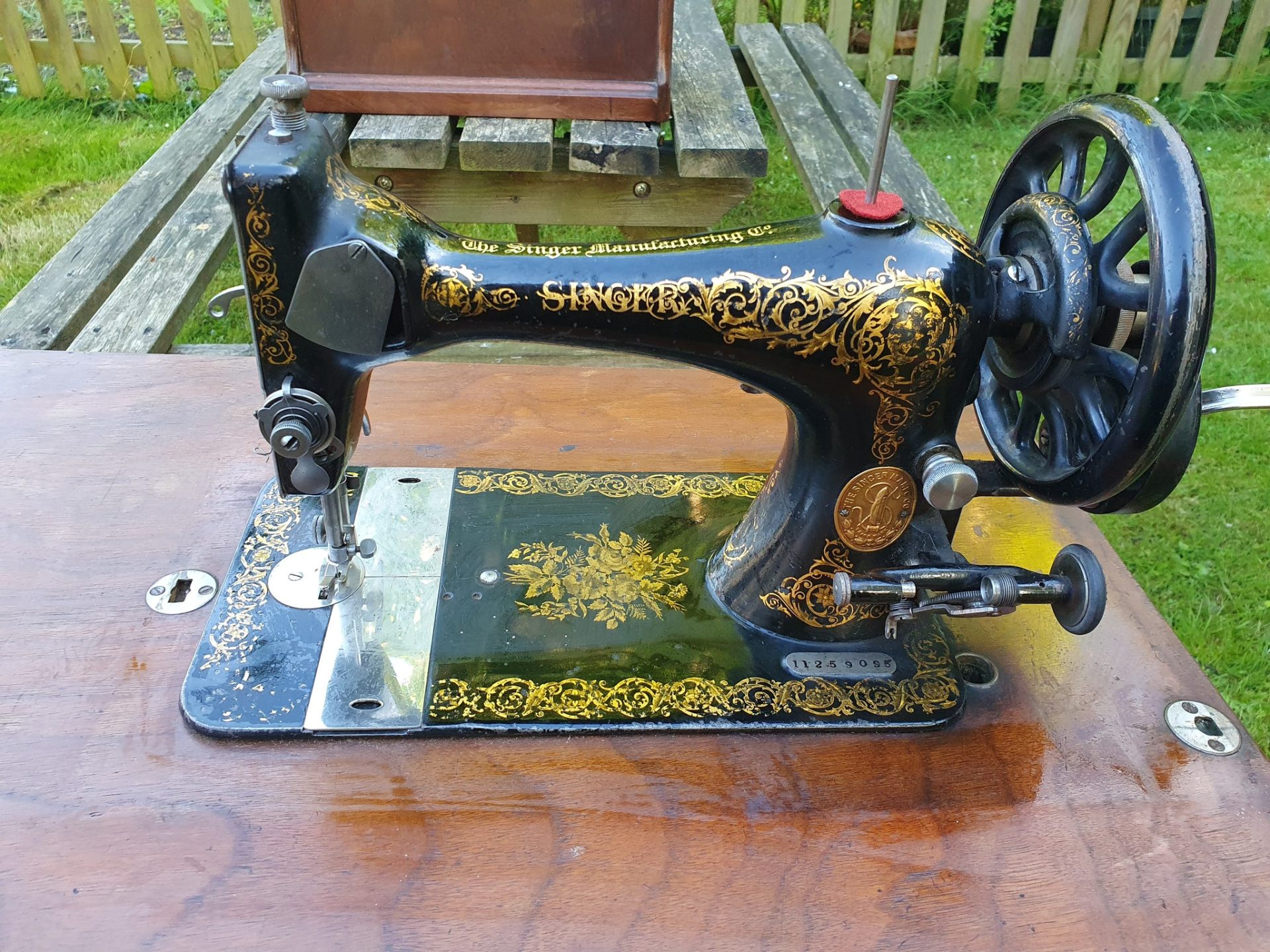
In use from 1889 to 1941
Recorded serial numbers: 8,270,607
Recorded factories:
- Elizabethport, New Jersey (USA)
- Kilbowie, Clydebank (Scotland, UK)
- Podolsk (Russia)
- St. John's Factory, Quebec (Canada)
Usage Information
- Needle size: 15x1
Evolution of the VS3. Vibrating shuttle, rectangular bed. Similar to the Class 27 but with 3/4-size bed. The 28 has a "bump" under the bell-shaped access door, that the 27 does not have.
Documented Machines
(What does it mean?)Total: 107
Documented Factories:
- Elizabethport, New Jersey (USA)
- Kilbowie, Clydebank (Scotland, UK)
- Podolsk (Russia)
- St. John's Factory, Quebec (Canada)
Documented Decals:
- Bunch of flowers
- Eagle
- La Vencedora
- Ottoman Carnation
- Owl
- Painted Roses and Daisies (Flowers)
- Scrolls and Roses
- Scrolls and Roses Variant (Indian Star)
- Tapestry
- Victorian
- Victorian Variant (Chinese)
- Victorian Variant (Indian Star)
- Wildflowers
- Wrought Iron
Documented years: 1889 - 1940
29
In use from 1877 to 1964
Recorded serial numbers: 834,828
Recorded factories:
Usage Information
- Needle size: 29x3 (cloth), 29x4 (leather)
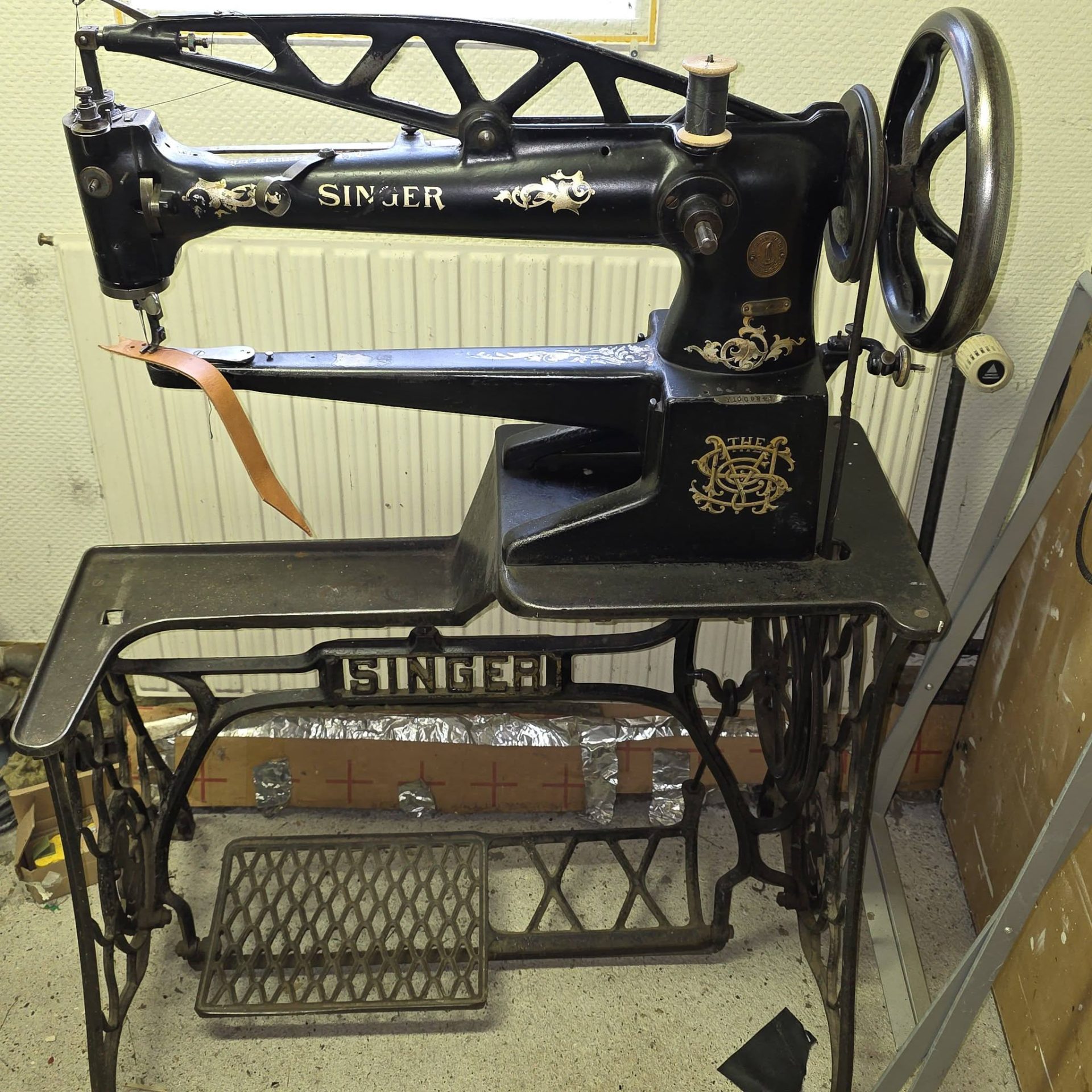
Universal feed arm for leather stitching. A range of machines commonly used by shoemakers and leatherworkers for their versatility, in particular for repairing boots and shoes. Many shoemakers use them still today. There is no under-feed, but the machine has a simple and effective top-feed mechanism, which is arranged to carry the work in any direction the operator needs. The progenitor of the class 29 was the U.F.A., "Universal Feed Arm"
Documented Machines
(What does it mean?)Total: 23
Documented Factories:
Documented Decals:
Documented years: 1890 - 1953
30
In use from 1912 to 1923
Recorded serial numbers: 16,550
Recorded factories:
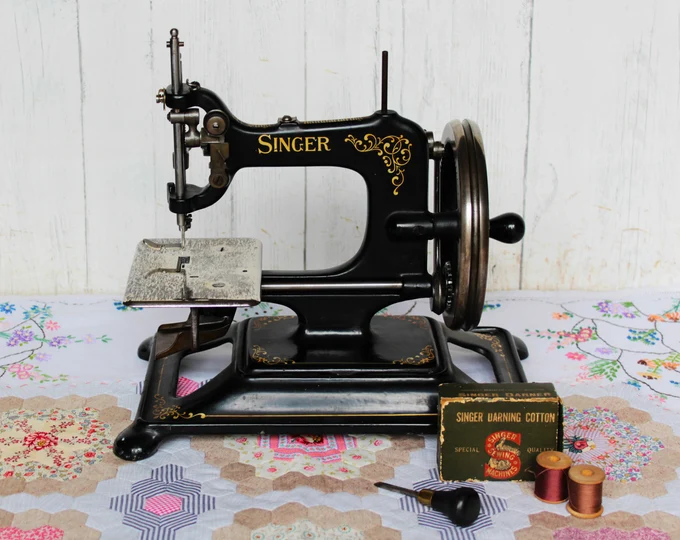
Half-size, chainstitch sewing machine on an iron base, designed for domestic use. It was made for a brief period: less then 10 allotment batches are documented in surviving serial number records, for a total of less than 20000 machines. Major production for this class ended in 1913, with a production run documented in 1923. The serial number is stamped into the underside base of the machine.
Documented Machines
(What does it mean?)Total: 3
Documented Factories:
Documented Decals:
Documented years: 1913
31
In use from 1900 to 1958
Recorded serial numbers: 2,299,523
Recorded factories:
Industrial machine for tailors and manufacturers handling large quantities of material in irregular form. For cloth, leather, coated fabrics, etc. Lock stitch oscillating shuttle.
Documented Machines
(What does it mean?)Total: 47
Documented Factories:
Documented Decals:
Documented years: 1903 - 1953


32
In use from 1898 to 1952
Recorded serial numbers: 92,001
Recorded factories:
Industrial vibrating needle oscillating shuttle machines. For overseaming or zigzag lock stitching and plain straightaway seaming in fabrics and light weight leather. Used in the manufacture of clothing, hats, suspenders, hosiery, knit goods, underwear, shirt collars, carpets, gloves, shoes, window shades, etc.
Documented Machines
(What does it mean?)Total: 1
Documented Factories:
Documented years: 1898
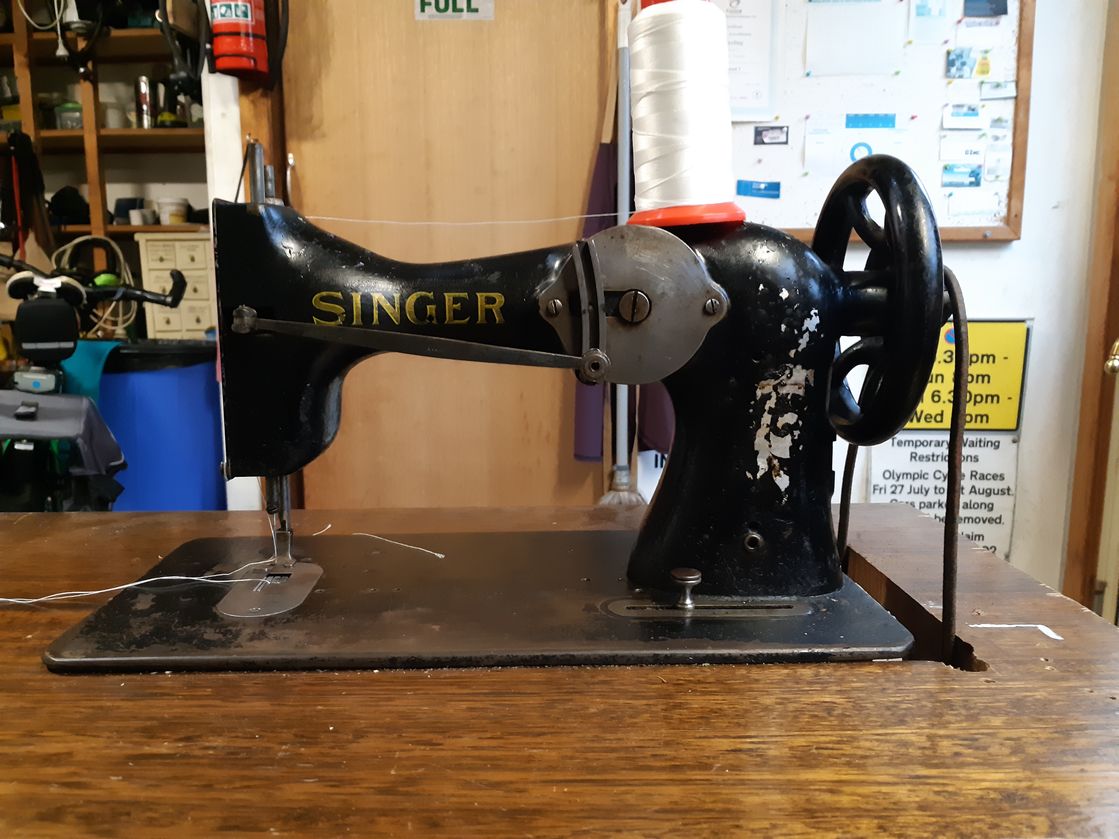
33
In use from 1897 to 1933
Recorded serial numbers: 25,735
Recorded factories:
Industrial vertical shuttle machines for hemstitching.
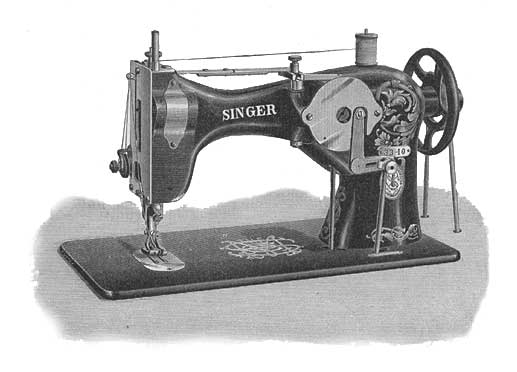
34
In use from 1892 to 1965
Recorded serial numbers: 90,814
Recorded factories:
Industrial machines for stitching hollow objects or hard-to-reach convex places. Raised "post" bed, roller presser and drop feed.
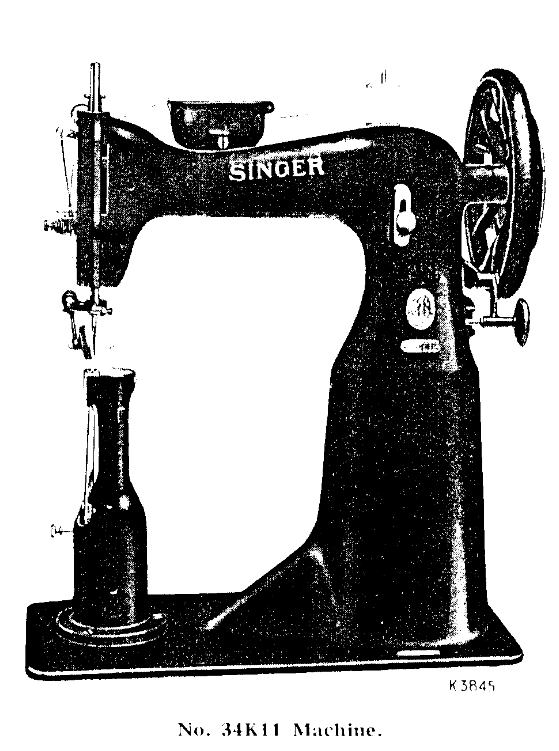
35
In use from 1900 to 1969
Recorded serial numbers: 1,572
Recorded factories:
Two thread chain stitch industrial machines for stitching carpets. You hold it by the handle on the side and operate it by cranking the lever on the other side of the flywheel, to stitch two rolls of carpet together.
Documented Machines
(What does it mean?)Total: 9
Documented Factories:
Documented years: 1947 - 1965
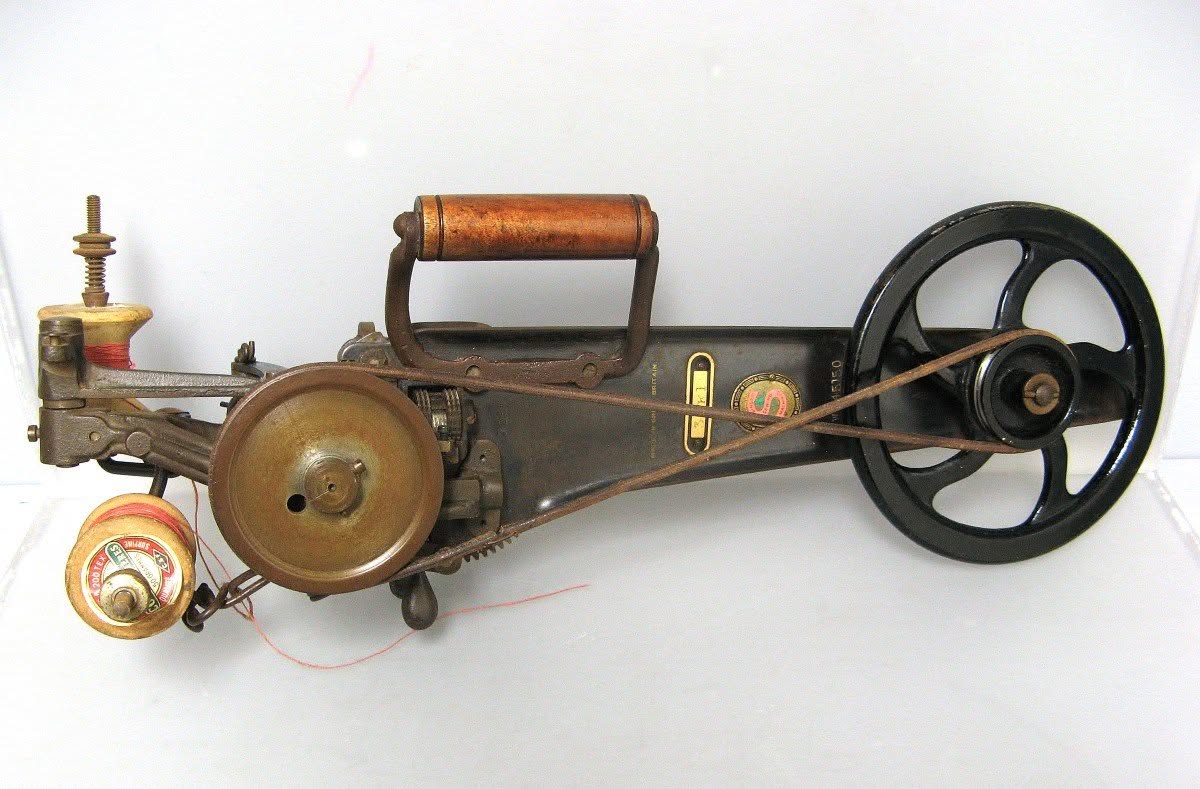
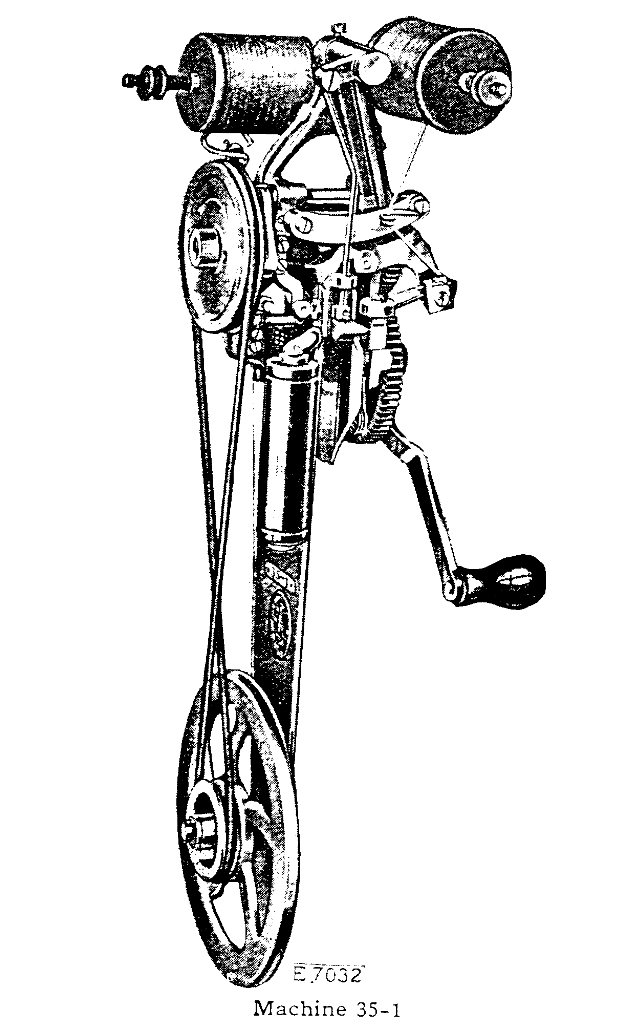
36
In use from 1900 to 1932
Recorded serial numbers: 2,375
Recorded factories:
Industrial machine for seaming carpets and rugs.
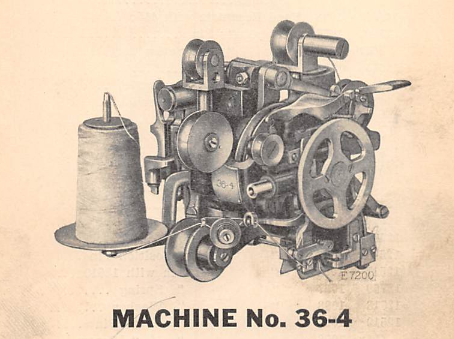
38
In use from 1909
Recorded serial numbers: 30,000
Recorded factories:
Allotted in a batch of 30000 in 1909. Nothing more is known about this class.
39
In use from 1894 to 1910
Recorded serial numbers: 129,715
Recorded factories:
Usage Information
- Needle size: 15x1
Drop-feed vibrating shuttle for domestic use.
Documented Machines
(What does it mean?)Total: 25
Documented Factories:
Documented Decals:
- Bunch of flowers
- Burmese Scroll
- Dogwood
- La Vencedora
- Ottoman Carnation
- Victorian
- Victorian Variant (Chinese)
Documented years: 1894 - 1909

41
In use from 1900 to 1953
Recorded serial numbers: 7,375
Recorded factories:
Industrial machines with multiple needles, for making from two to twelve parallel rows of stitching simultaneously.
42
In use from 1900 to 1953
Recorded serial numbers: 15,650
Recorded factories:
Industrial machines for stitching medium weight leather and the heavier woven fabrics. Used in the manufacture of leather cushions, curtains, etc. for automobiles, tarpaulins, sword belts, wagon covers, etc.
Documented Machines
(What does it mean?)Total: 1
Documented Factories:
Documented Decals:
Documented years: 1918
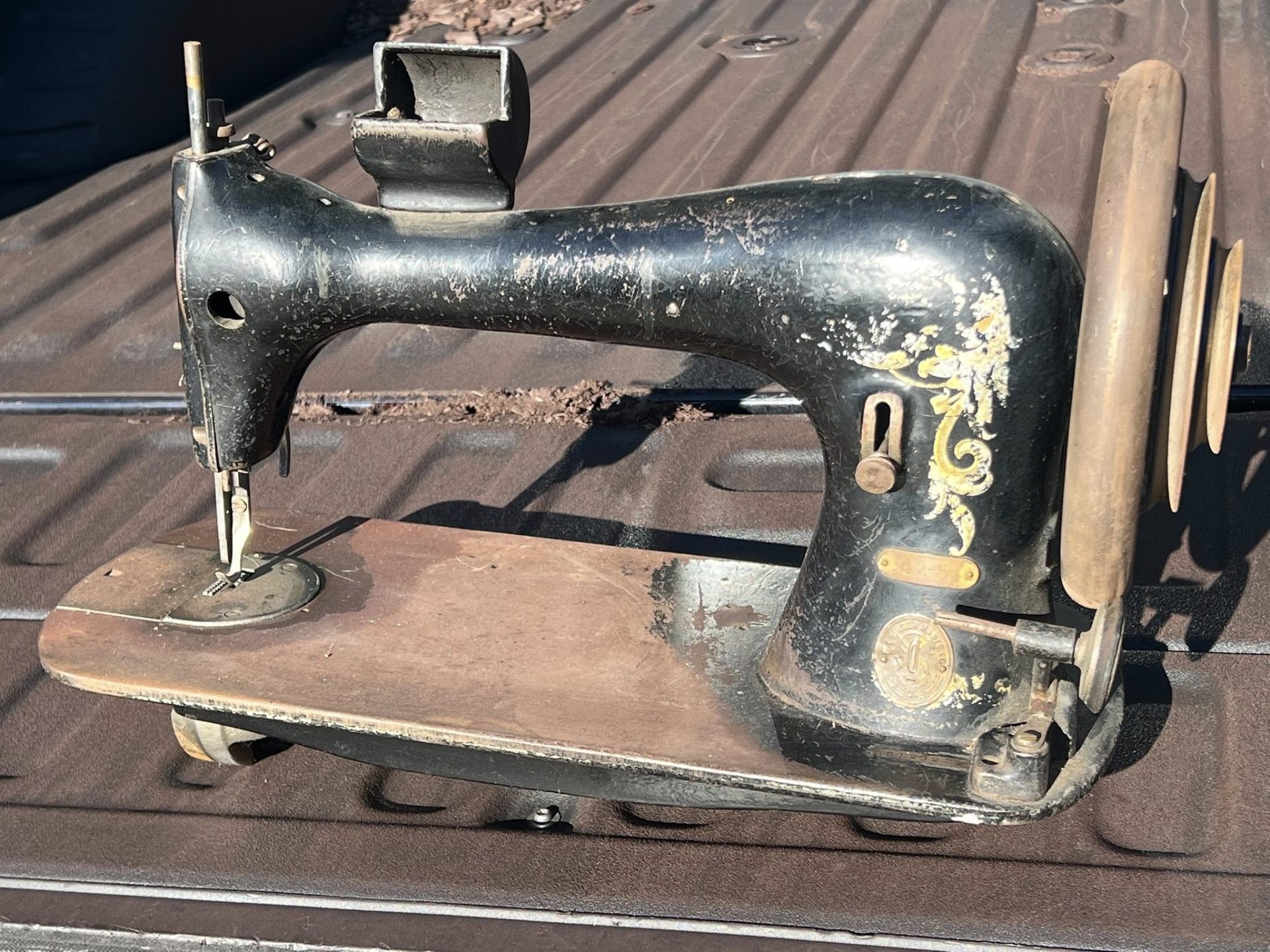
43
In use from 1901 to 1956
Recorded serial numbers: 2,501
Recorded factories:
Industrial machines with cylinder bed, central bobbin. Extra large shuttle for coarse thread and heavy work.
Documented Machines
(What does it mean?)Total: 1
Documented Factories:
Documented years: 1930
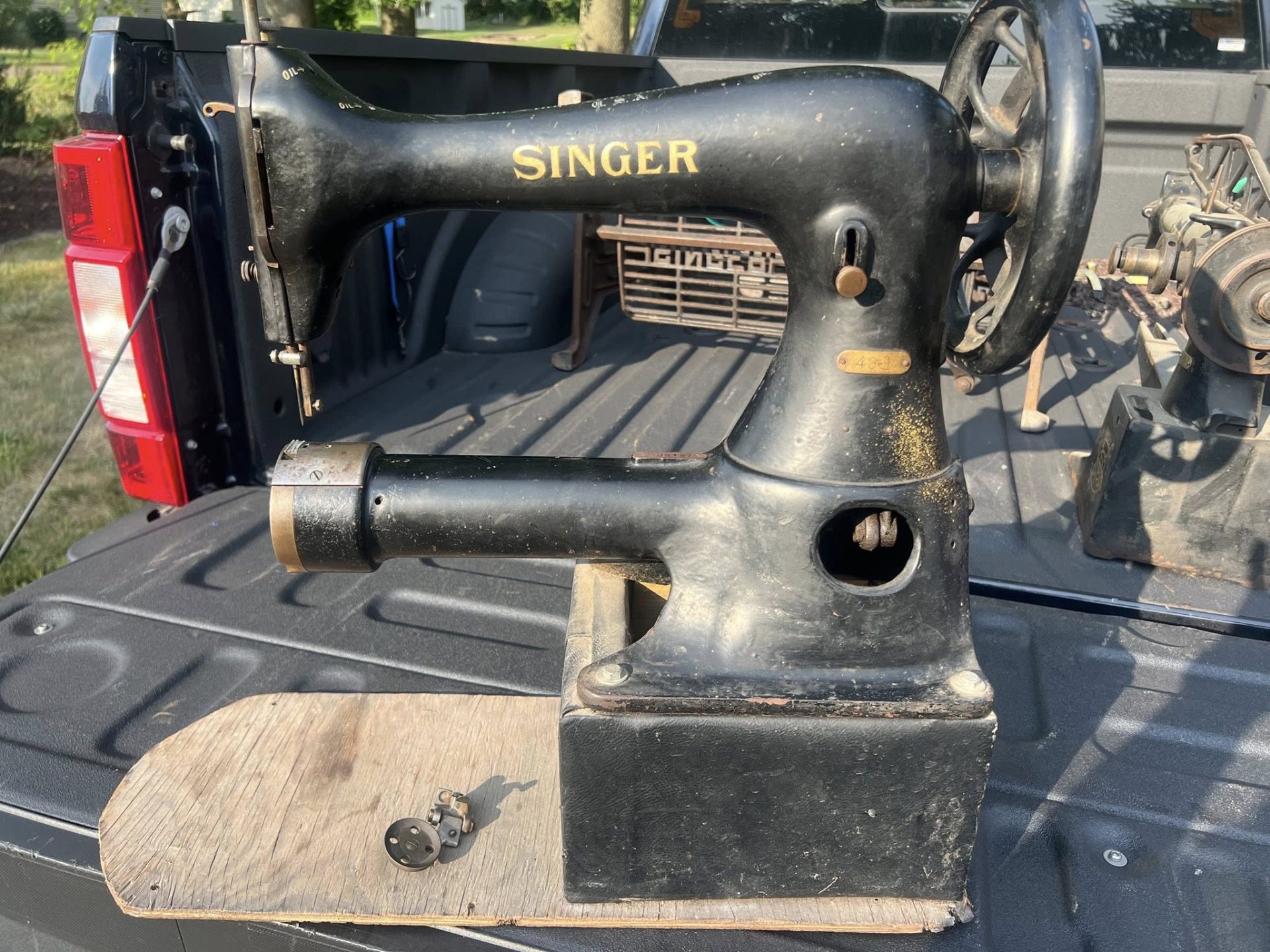
44
In use from 1898 to 1955
Recorded serial numbers: 458,019
Recorded factories:
Industrial short arm lock stitch machines, for light and medium weight cloth and leather.
Documented Machines
(What does it mean?)Total: 6
Documented Factories:
Documented Decals:
Documented years: 1908 - 1946
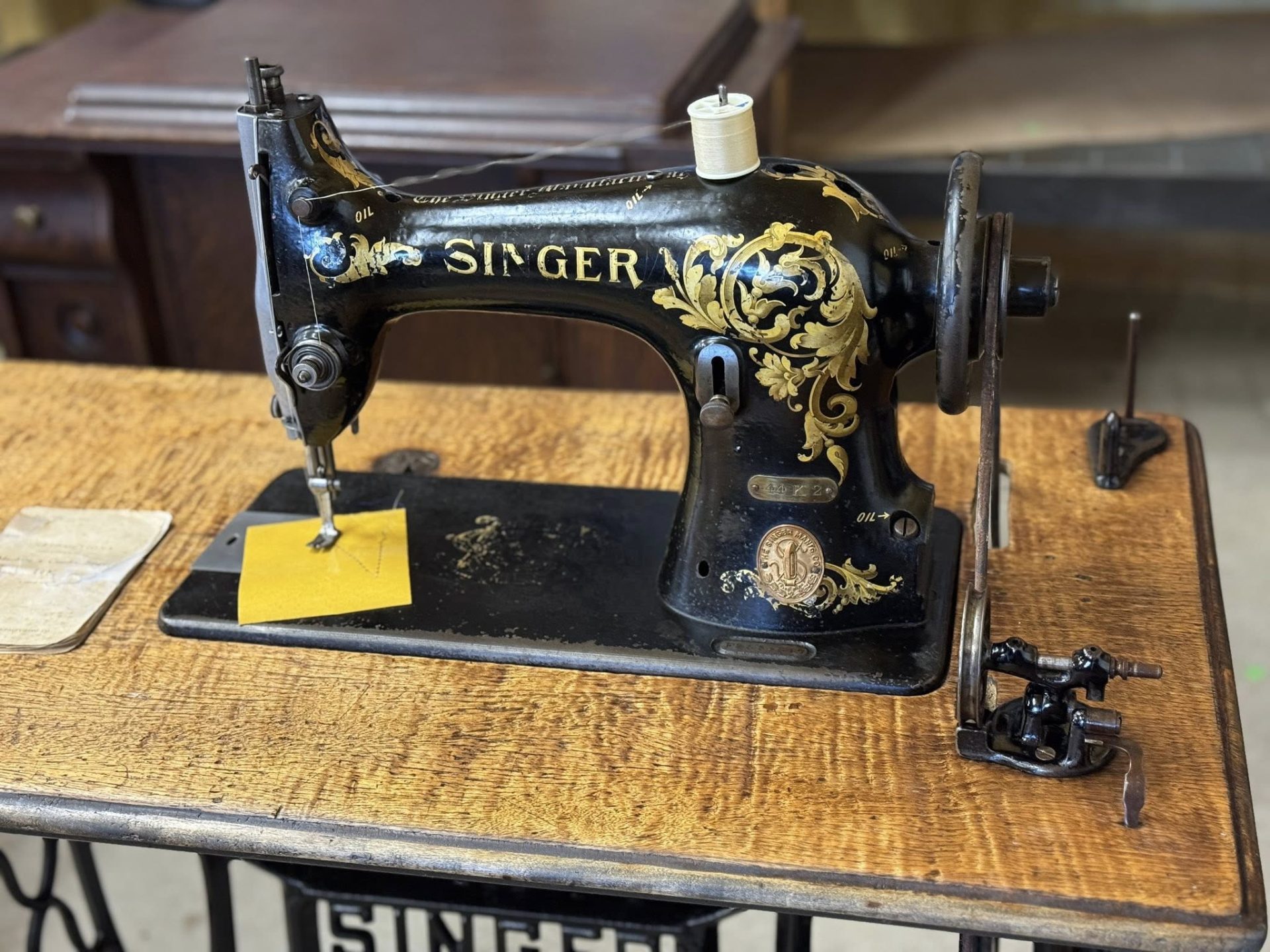
45
In use from 1895 to 1965
Recorded serial numbers: 182,599
Recorded factories:
Flatbed or cylinder bed industrial machines.
Documented Machines
(What does it mean?)Total: 5
Documented Factories:
Documented Decals:
Documented years: 1912 - 1961
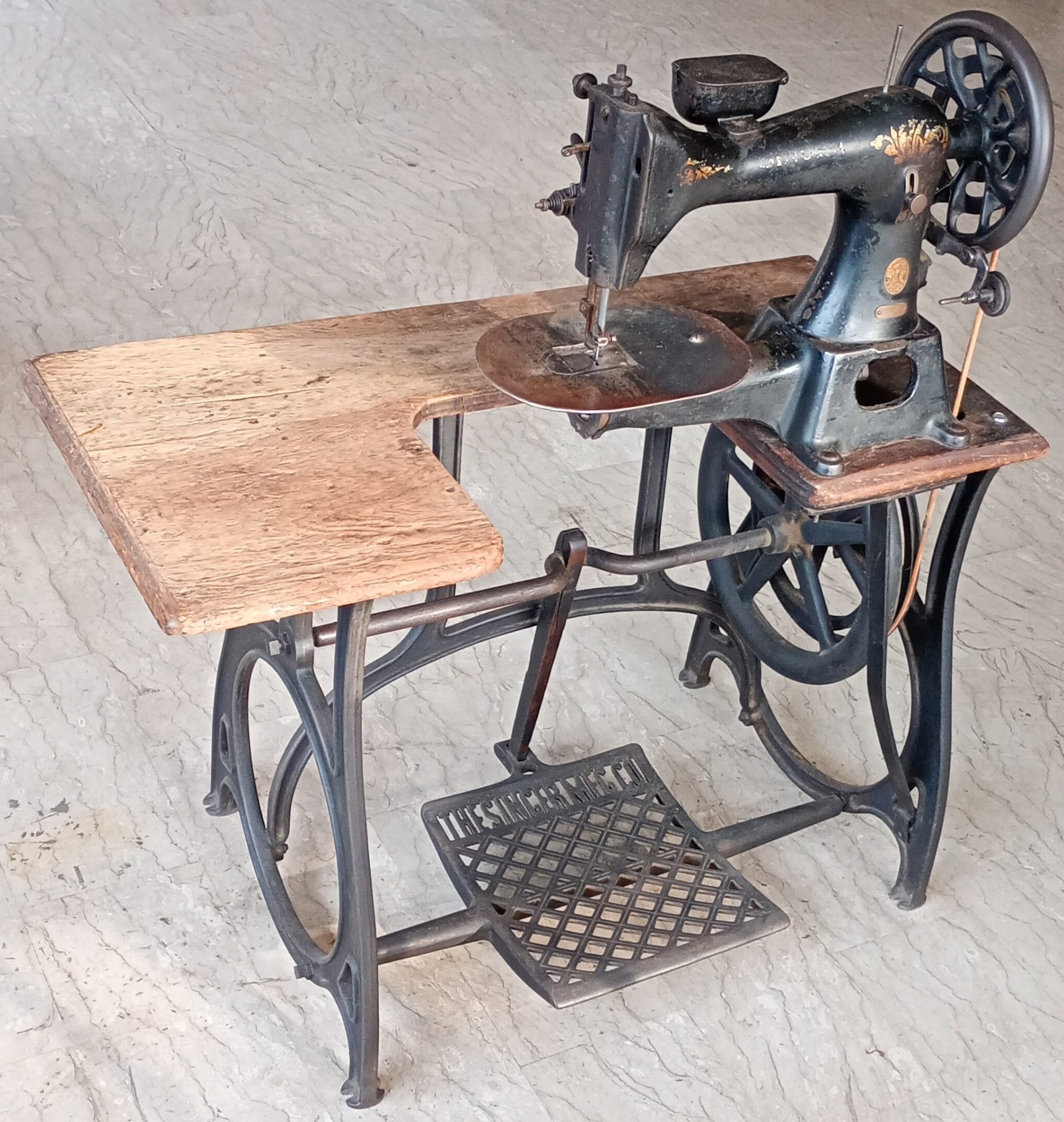
46
In use from 1900 to 1965
Recorded serial numbers: 84,615
Recorded factories:
Industrial "pique" stitch high pillar machines. Two-thread or double chain stitch. The 46K1 and 46K2 models were specialized "pique stitch" cylinder/post-bed machines, used primarily for sewing the fingers of gloves. The 46K2 is like the 46K1, but has a smaller column and looper.
Documented Machines
(What does it mean?)Total: 8
Documented Factories:
Documented Decals:
Documented years: 1900 - 1951
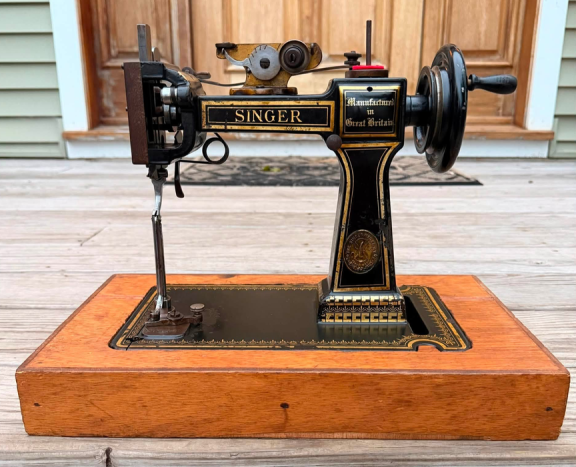
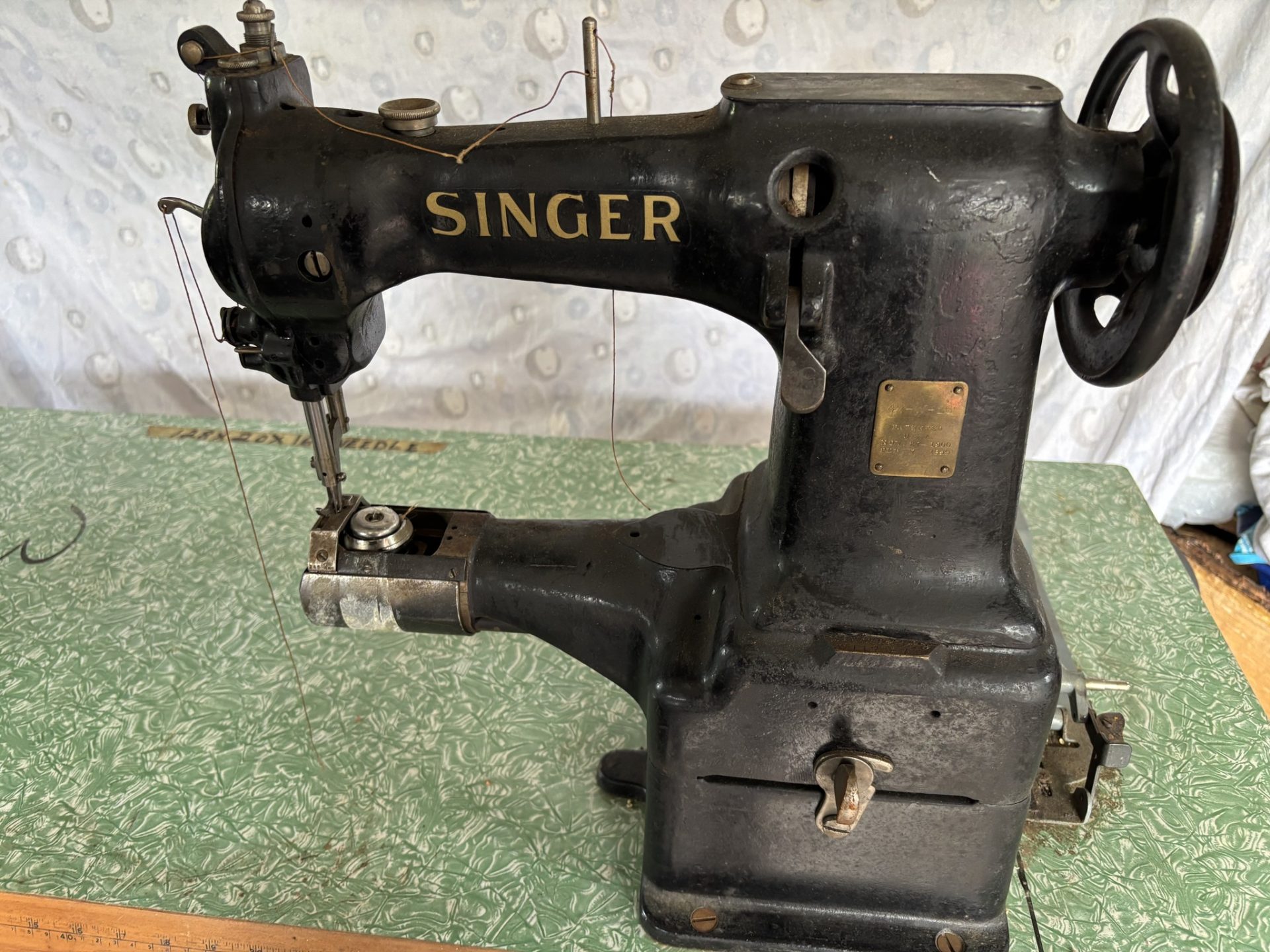
47
In use from 1900 to 1969
Recorded serial numbers: 7,432
Recorded factories:
Industrial lock stitch machines with cylinder bed. One needle and belt driven rotary sewing hook. Used for stitching tubular, concave or other irregularly shaped articles in cloth or leather.
Documented Machines
(What does it mean?)Total: 3
Documented Factories:
Documented years: 1928 - 1970
48
In use from 1899 to 1913
Recorded serial numbers: 544,850
Recorded factories:
High arm domestic machines. The 48K used a unique hybrid shuttle, that's an enclosed version of the earlier 12K open boat shuttle. It's similar to the one used on the 28K, but made to suit a straight race instead of a curved one. Bed size is unique to this class only. The serial number is stamped behind the main pillar
Documented Machines
(What does it mean?)Total: 9
Documented Factories:
Documented Decals:
Documented years: 1902 - 1911
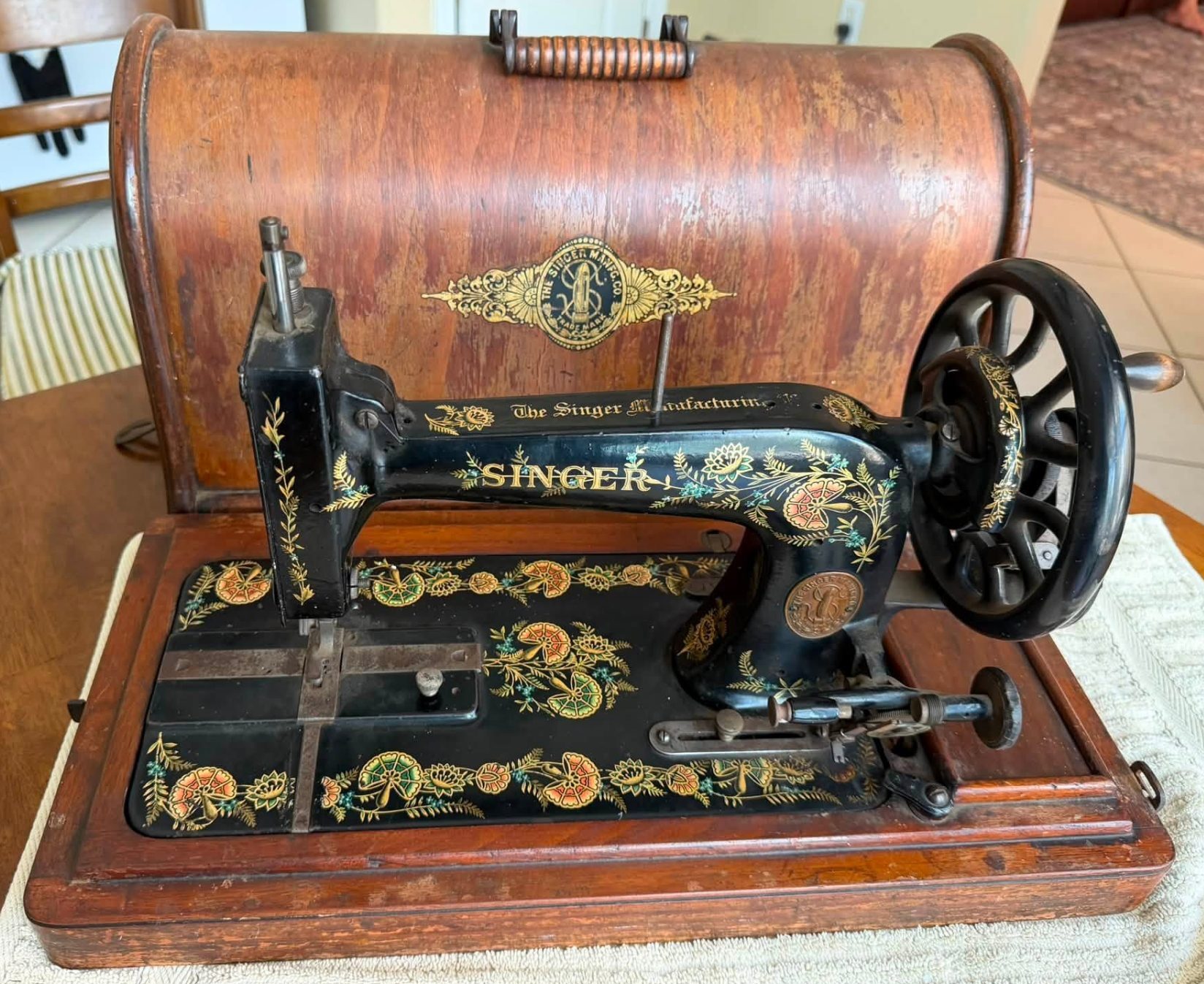
49
In use from 1902 to 1958
Recorded serial numbers: 15,495
Recorded factories:
Industrial "kilting" machines.
50
In use from 1912
Recorded serial numbers: 600
Recorded factories:
Allotted in a batch of 600 in 1912. Nothing more is known about this class.
51
In use from 1900 to 1967
Recorded serial numbers: 10,135
Recorded factories:
High speed industrial machines for for barring and tacking on leather or cloth.
51W
In use up to 1961
Recorded serial numbers: 1,501
Recorded factories:
Industrial machines for tailoring or for stitching shoes and lightweight leather. Single needle post bed machines.
Documented Machines
(What does it mean?)Total: 1
Documented Factories:
Documented Decals:
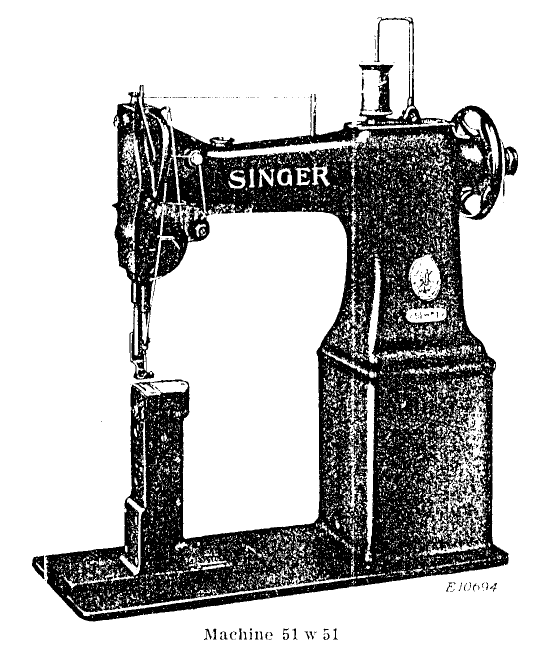
52
In use from 1900 to 1965
Recorded serial numbers: 23,100
Recorded factories:
Industrial single thread chain stitch machines, for rows of parallel stitching.
Documented Machines
(What does it mean?)Total: 1
Documented Factories:
Documented years: 1937
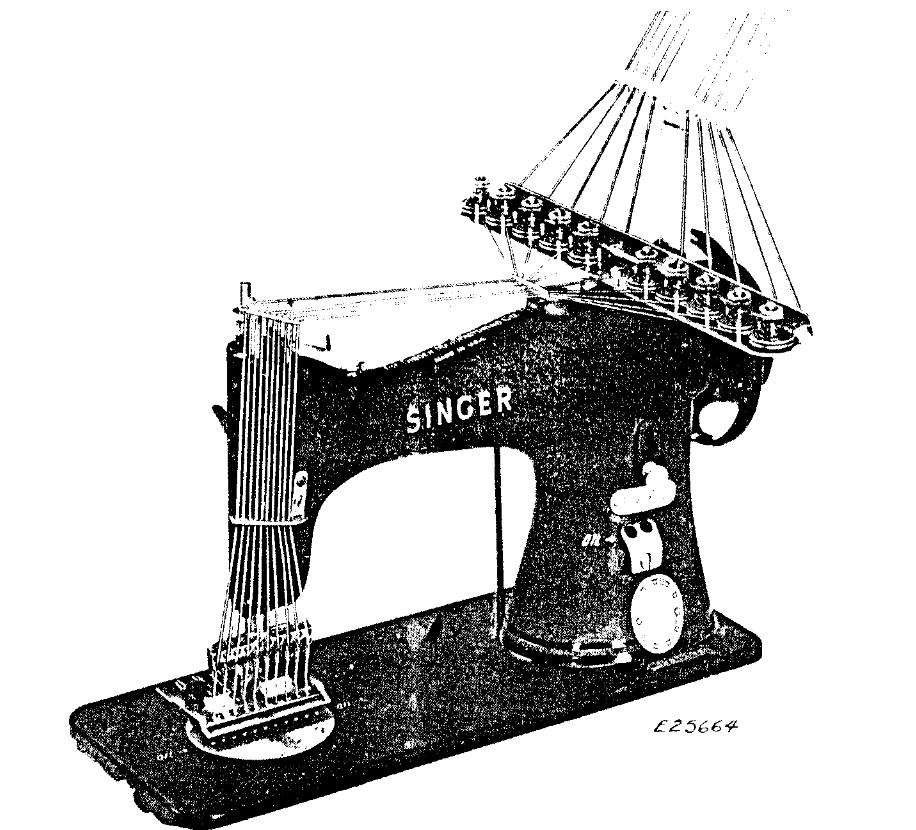
52W
In use from 1963 to 1966
Recorded serial numbers: 800
Recorded factories:
Industrial post bed machines for stitching shoes and other articles of light and medium weight leather.
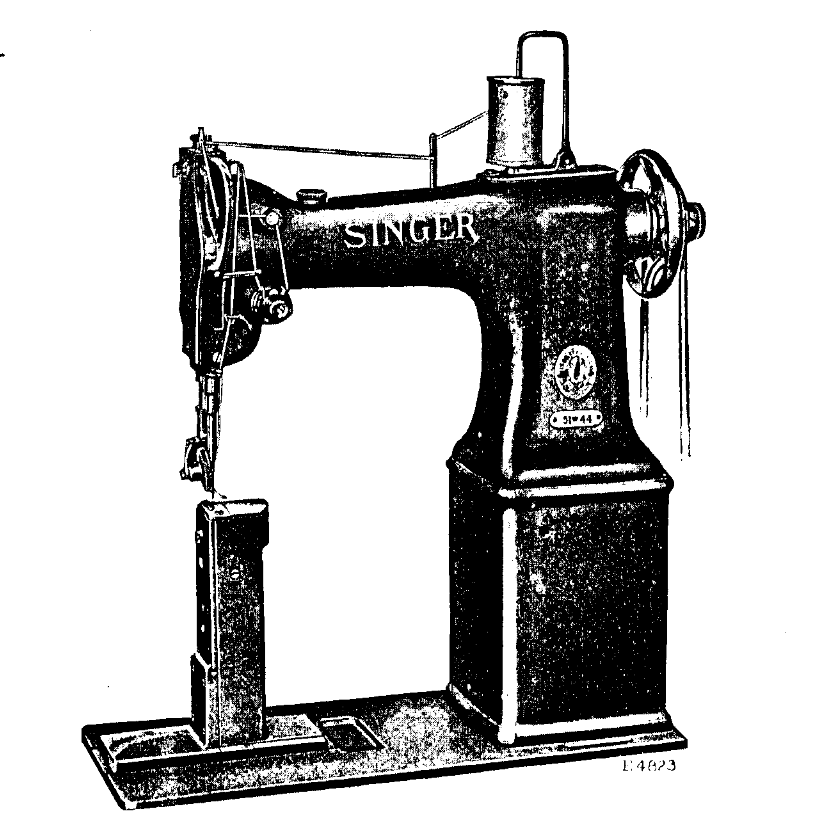
53
In use from 1901 to 1942
Recorded serial numbers: 5,634
Recorded factories:
Industrial one needle, oscillating hook, single thread chain stitch machines.
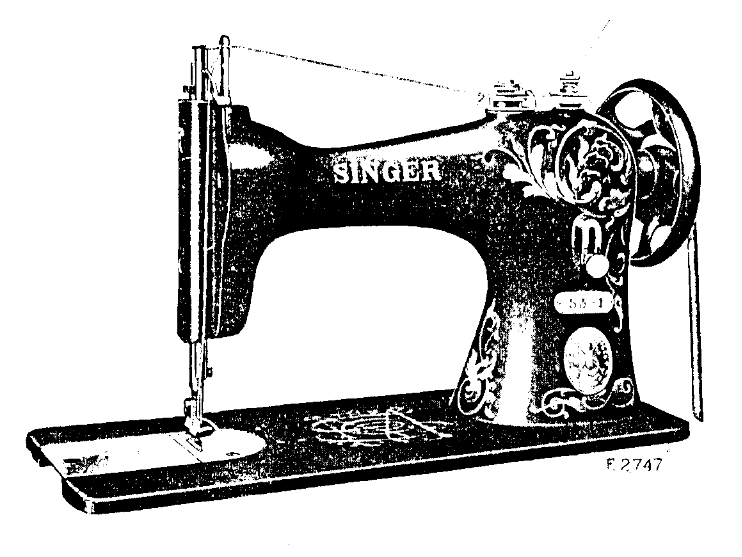
54
In use from 1901 to 1902
Recorded serial numbers: 235
Recorded factories:
Allotted in two batches: one batch of 110 machines in 1901 and one batch of 125 machines in 1902. Nothing more is known about this class.
55
In use from 1900 to 1956
Recorded serial numbers: 14,150
Recorded factories:
Industrial two thread and single thread chain stitch machines for bag stitching and basting clothing.
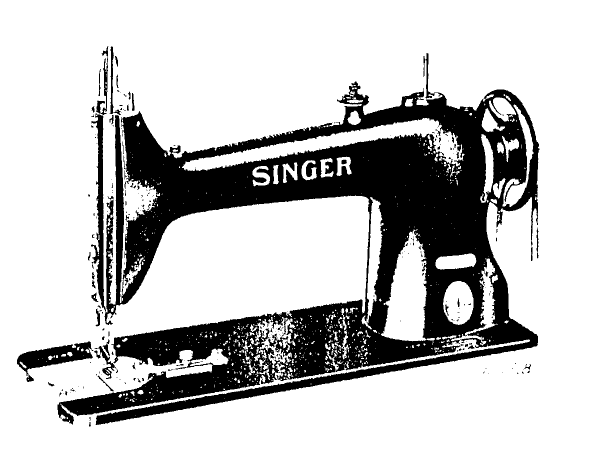
56
In use from 1900 to 1930
Recorded serial numbers: 850
Recorded factories:
Industrial under edge trimmers.
57
In use from 1900 to 1930
Recorded serial numbers: 3,775
Recorded factories:
Industrial clothing machines.
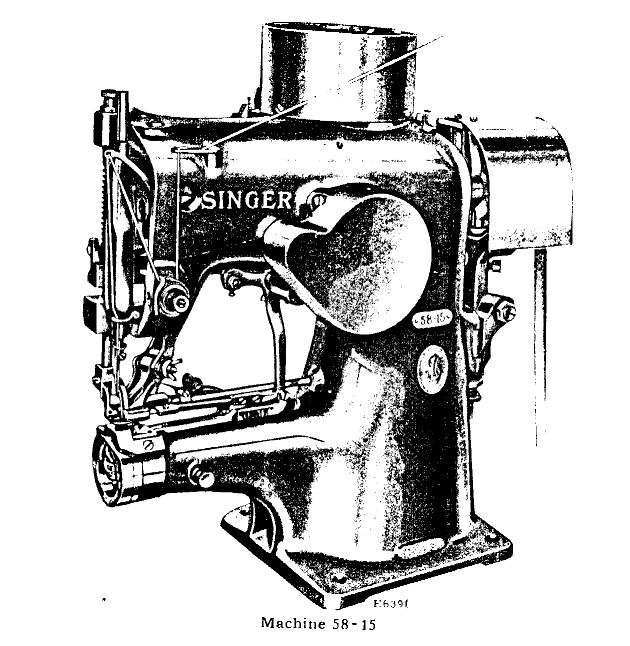
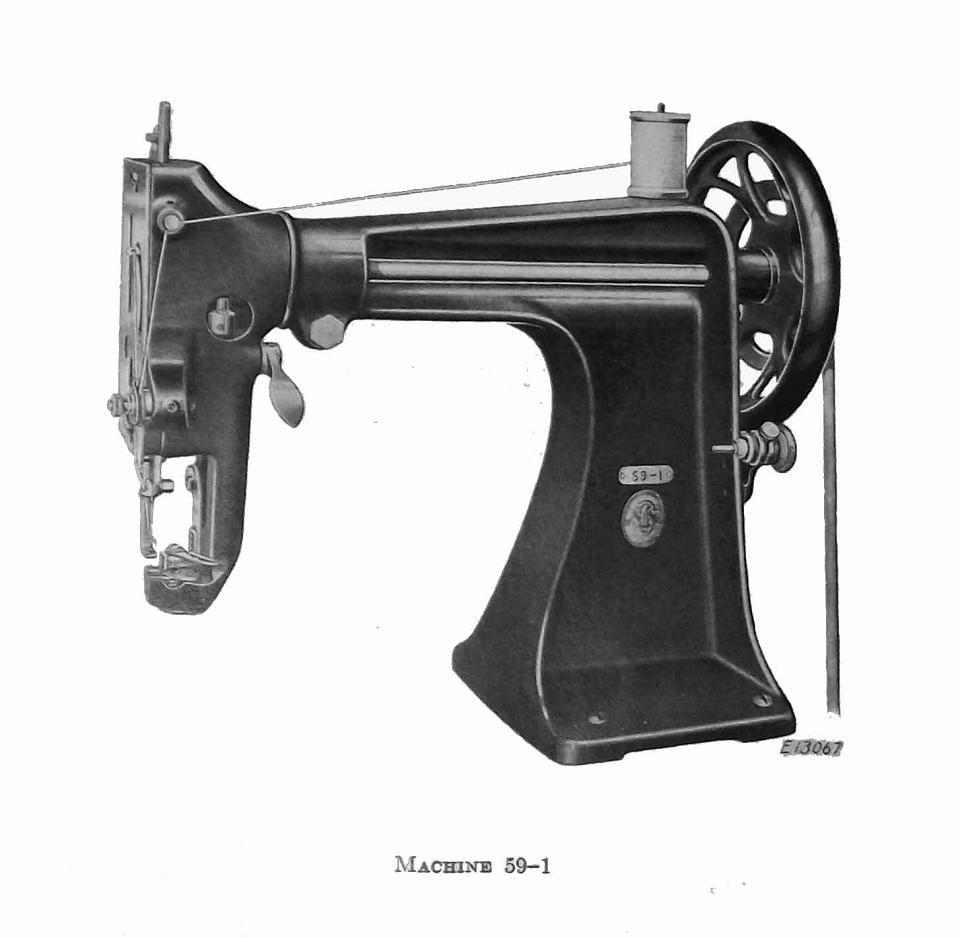
59
In use from 1900 to 1912
Recorded serial numbers: 625
Recorded factories:
Industrial machines for binding hat bands and the brims of stiff felt hats. The machine has no bed with all sewing mechanism located in the arm and head of the machine.
61
Recorded serial numbers: 3
Recorded factories:
Industrial machines for lockstitch at high speed in fabrics and light leather work.
Documented Machines
(What does it mean?)Total: 3
Documented Factories:
Documented years: 1940
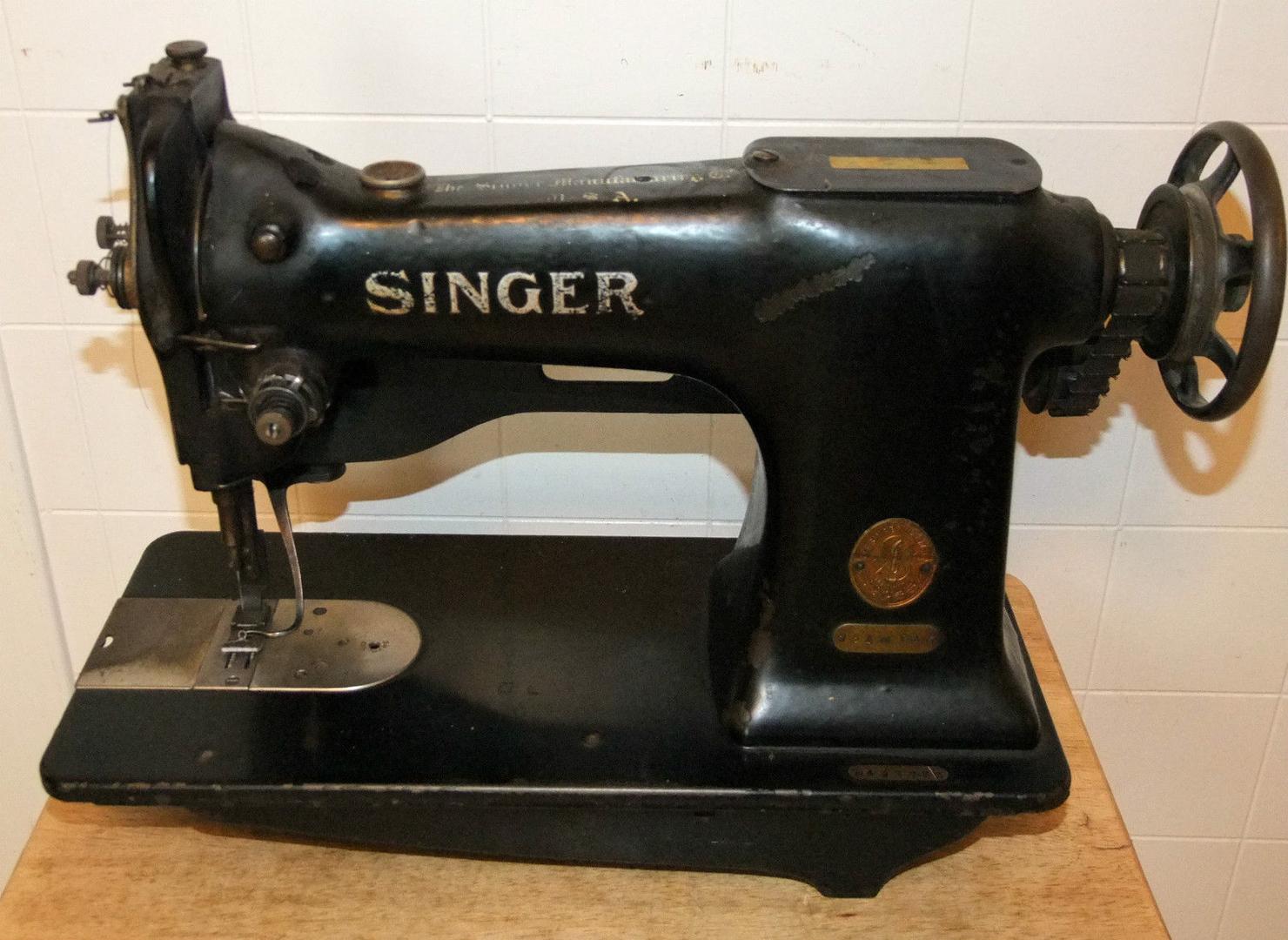
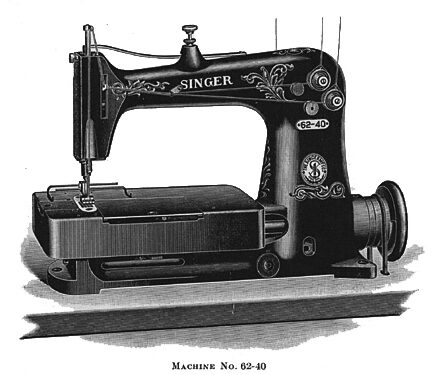
62
In use from 1901 to 1939
Recorded serial numbers: 21,150
Recorded factories:
Industrial two-thread chain stitch machines.
63
In use from 1900 to 1938
Recorded serial numbers: 5,100
Recorded factories:
Series of industrial machines for various purposes. Work plate extends beyond the presser foot on right hand side.
64
In use from 1901 to 1903
Recorded serial numbers: 3,800
Recorded factories:
Lock stitch high speed machines, for general work on light and medium weight fabrics.
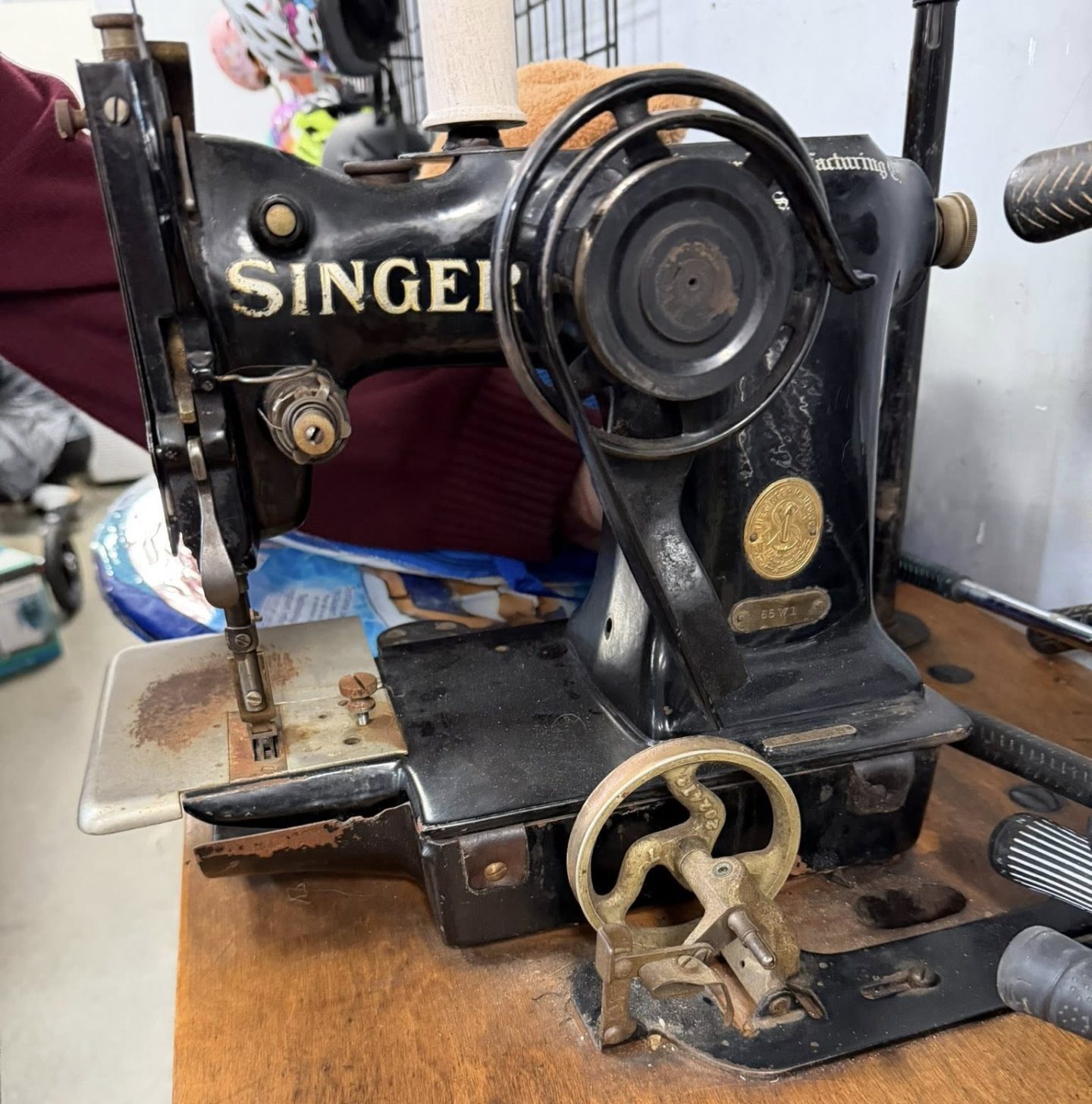
65
Recorded serial numbers: 201
Recorded factories:
Usage Information
- Needle size: 135x1
Industrial machines for for tubular work.
Documented Machines
(What does it mean?)Total: 1
Documented Factories:
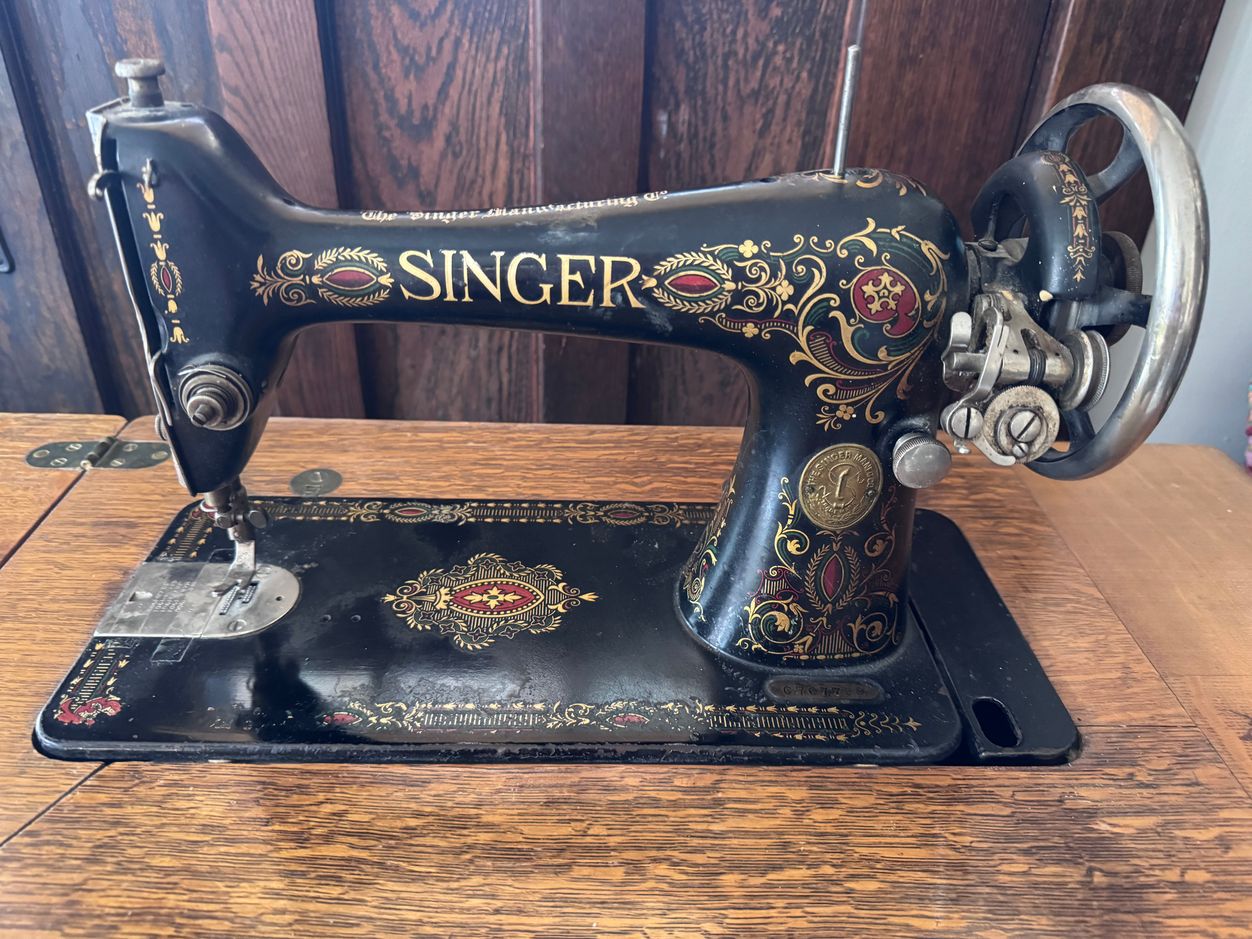
66
In use from 1899 to 1956
Recorded serial numbers: 8,967,294
Recorded factories:
- Elizabethport, New Jersey (USA)
- Kilbowie, Clydebank (Scotland, UK)
- Wittenberge, Prussia (Germany)
Usage Information
- Needle size: 15x1
- Bobbin size: Class 66
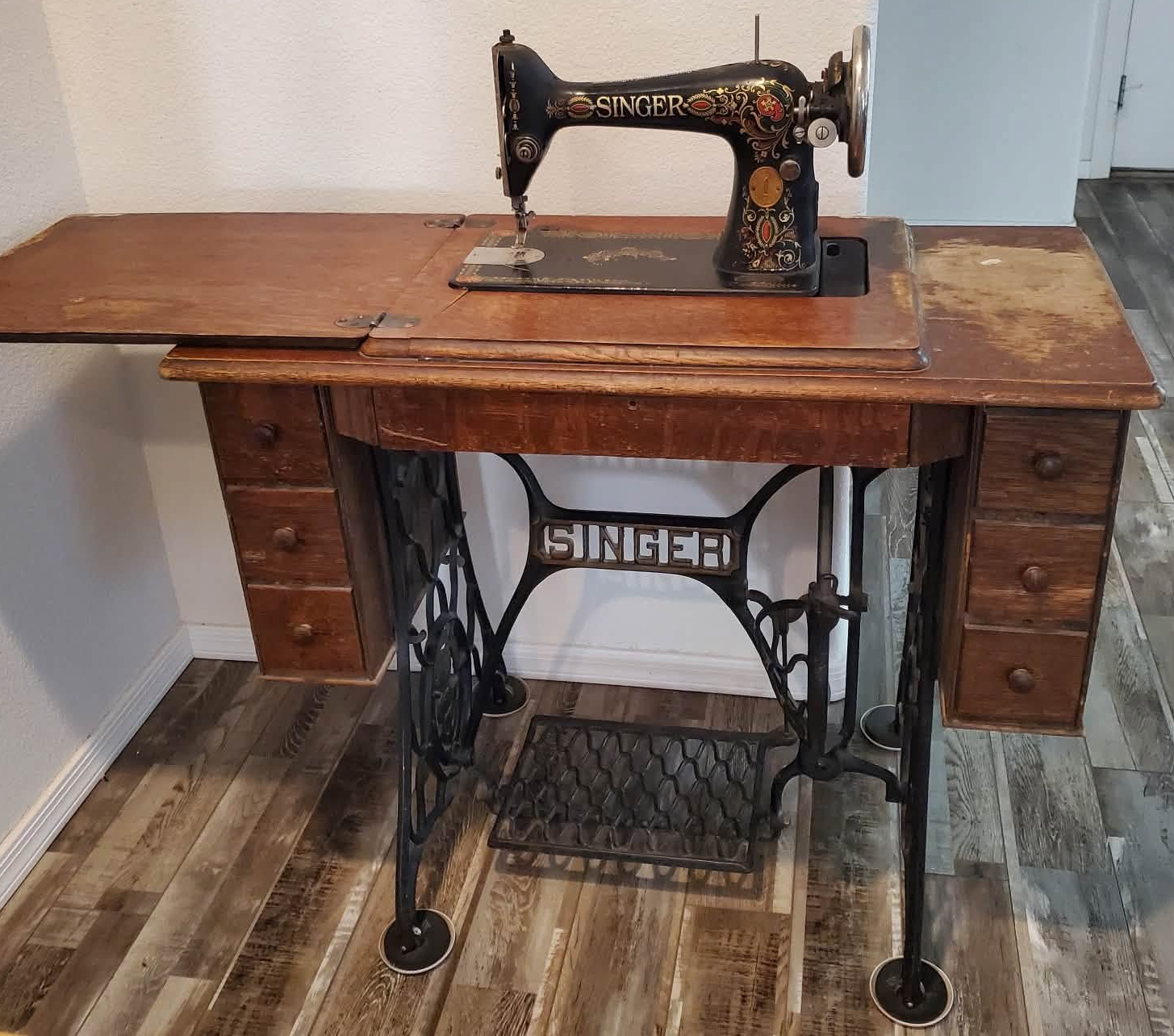
Heavy duty domestic sewing machines, low shank and oscillating hook. Full sized machines, while the Class 99 is 3/4 sized.
Documented Machines
(What does it mean?)Total: 156
Documented Factories:
- Elizabethport, New Jersey (USA)
- Kilbowie, Clydebank (Scotland, UK)
- Wittenberge, Prussia (Germany)
Documented Decals:
- Eye
- Eye and Trefoils
- Filigree
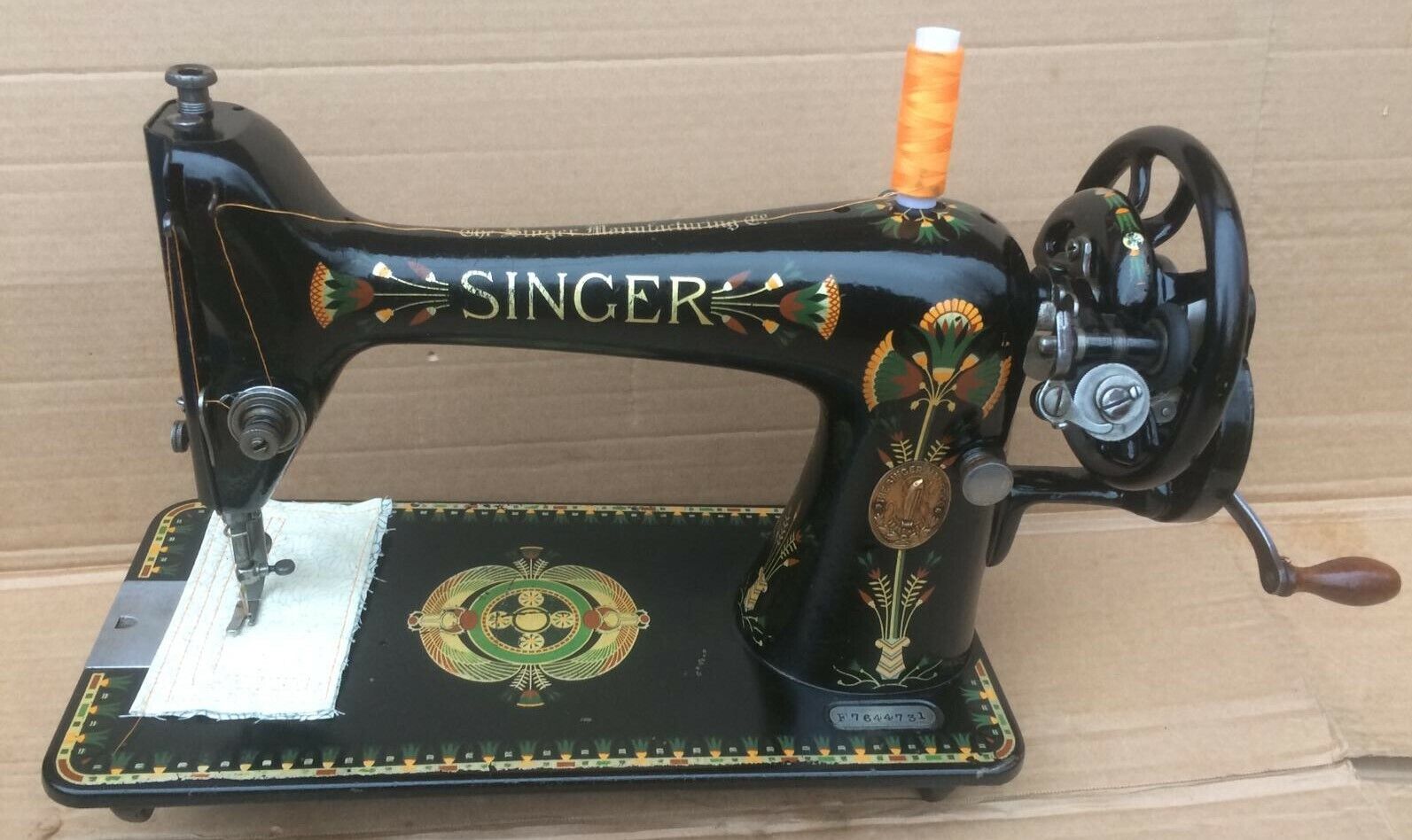
- Lotus (or Egyptian)
- Paperclip Godzilla Finish
- Red Eye
- Tiffany (or Gingerbread)
- Tiny Red Roses
Documented years: 1905 - 1955
67
In use from 1915 to 1930
Recorded serial numbers: 41
Recorded factories:
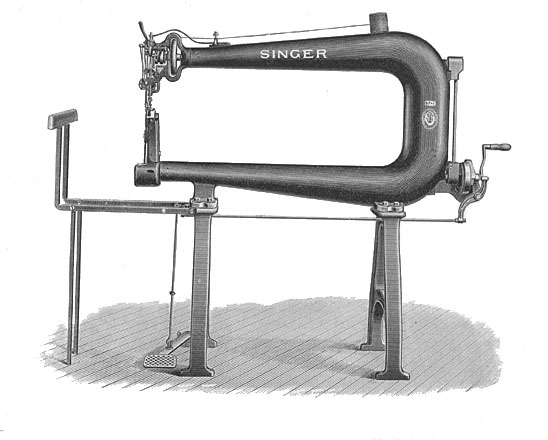
Industrial longarm machines built for heavy-duty tasks like stitching carriage dashes, leather and vehicle fenders.
68
In use from 1903 to 1960
Recorded serial numbers: 40,750
Recorded factories:
Usage Information
- Needle size: 68x5; 68x7; 68x13;
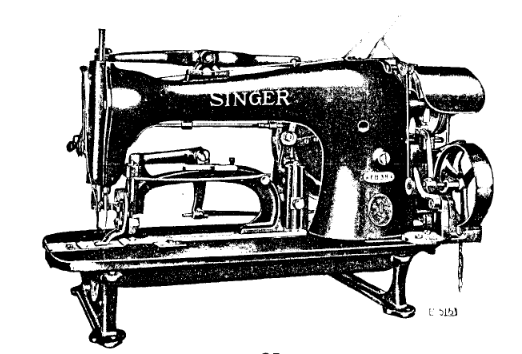
Industrial flat bed, lock stitch, oscillating shuttle machines. For barring and tacking.
69
In use from 1907 to 1958
Recorded serial numbers: 52,900
Recorded factories:
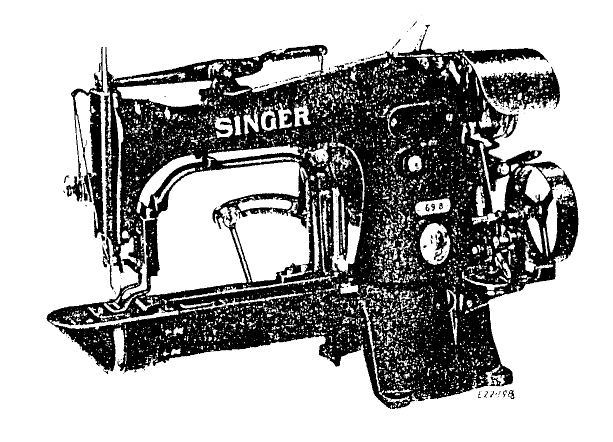
Industrial lock stitch oscillating shuttle machines. Automatic thread cutter.
71
Recorded serial numbers: 20,061
Recorded factories:
Industrial buttonholer machines. Designed for automatically making straight buttonholes, with the purl or whip stitch, and with or without barred ends according to the description of each specific model (except 71-47).
Documented Machines
(What does it mean?)Total: 1
Documented Factories:
Documented years: 1950
72
Recorded serial numbers: 115
Recorded factories:
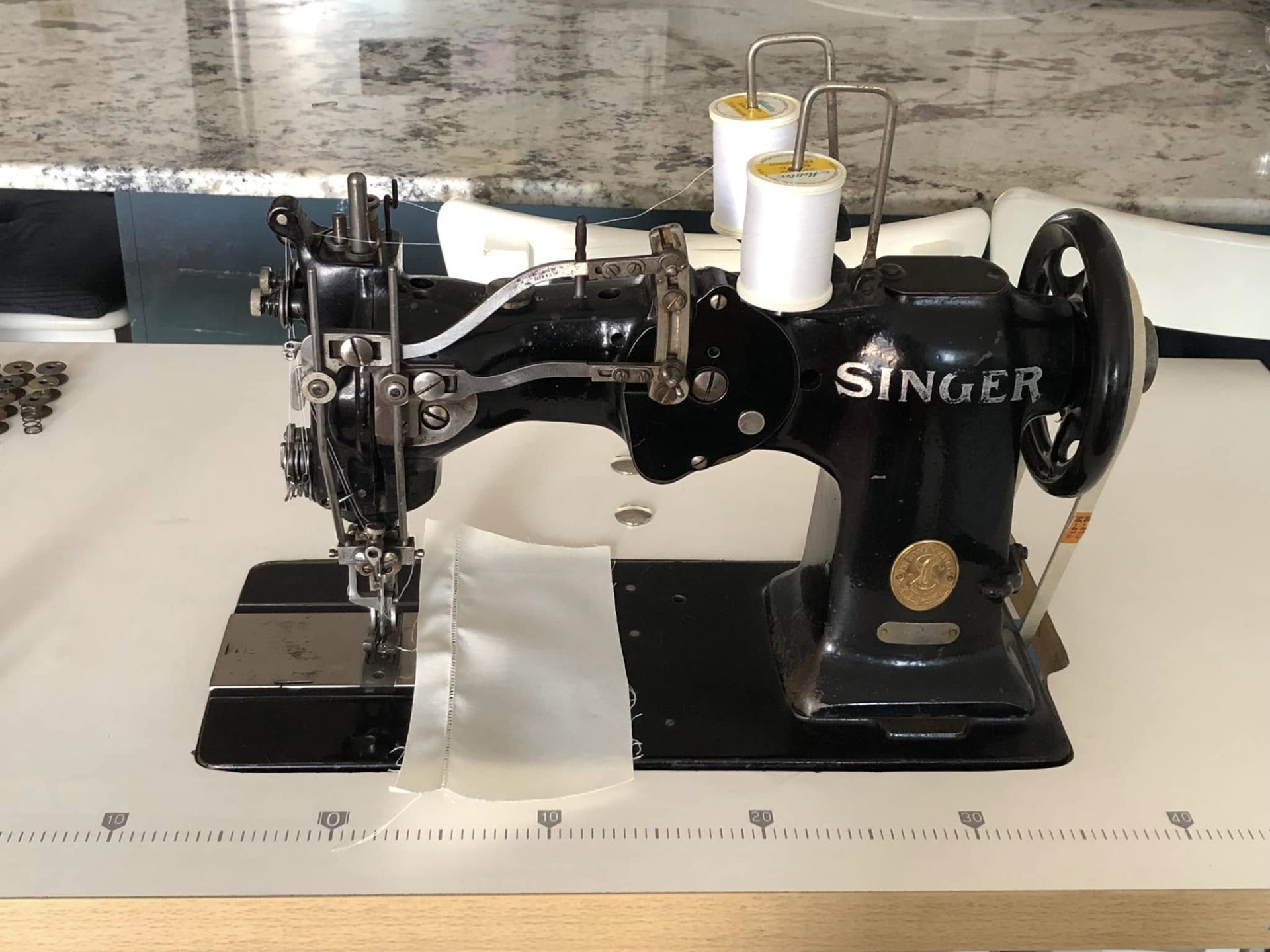
A group of industrial machines. We know of the 72W19 for two-needle hemstitching, or the 72W12 double-needle for vamping and shoe work. Serial number records for Elizabethport register 106 72-class machines.
Documented Machines
(What does it mean?)Total: 9
Documented Factories:
Documented Decals:
73
In use from 1903
Recorded serial numbers: 6
Recorded factories:
Industrial post bed machines. Serial number records register only one batch of 6 machines allotted in 1903.
75
In use from 1903 to 1923
Recorded serial numbers: 6,275
Recorded factories:
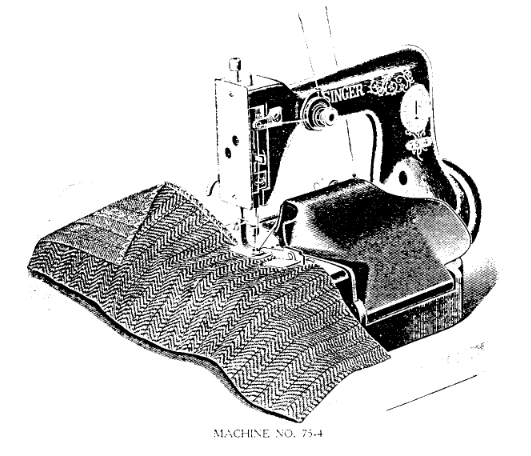
Industrial two thread chain stitch machines for overedging and trimming.
76
In use from 1904 to 1924
Recorded serial numbers: 1,300
Recorded factories:
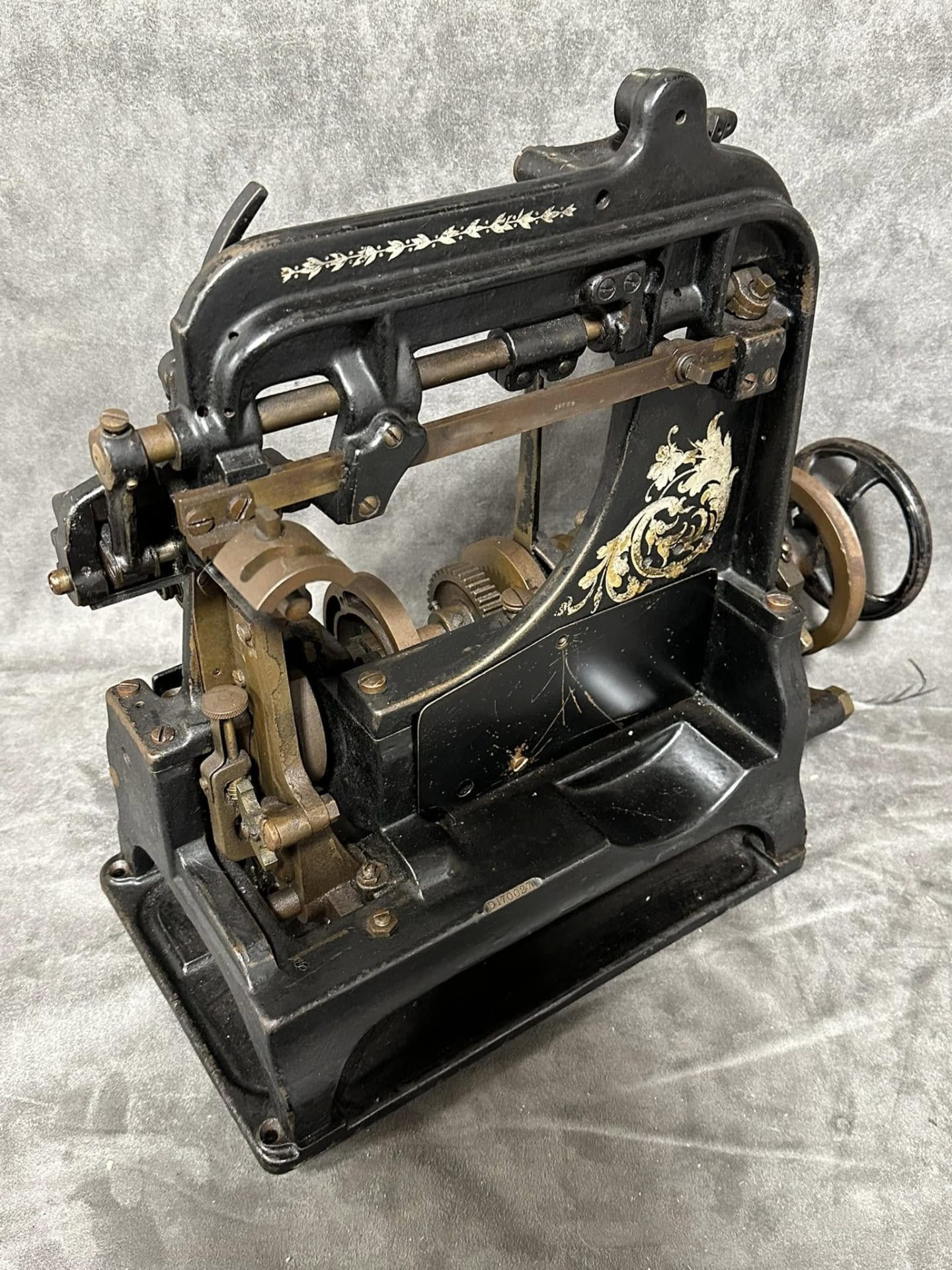
Industrial gathering machines.
77
In use from 1904 to 1911
Recorded serial numbers: 350
Recorded factories:
Industrial machines for sewing on shoe buttons.
Documented Machines
(What does it mean?)Total: 1
Documented Factories:
Documented Decals:
Documented years: 1908
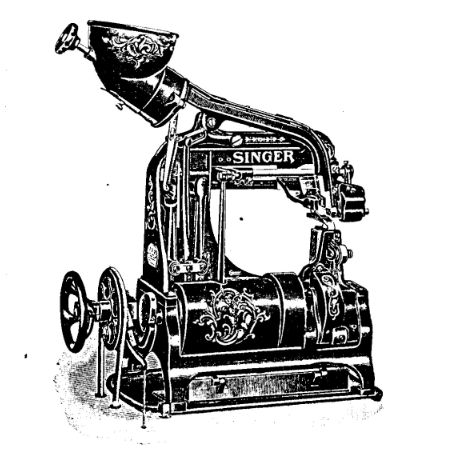
78
In use from 1910 to 1960
Recorded serial numbers: 29,275
Recorded factories:
Industrial lock-stitch machines for strapping and tacking.
Documented Machines
(What does it mean?)Total: 1
Documented Factories:
Documented years: 1915
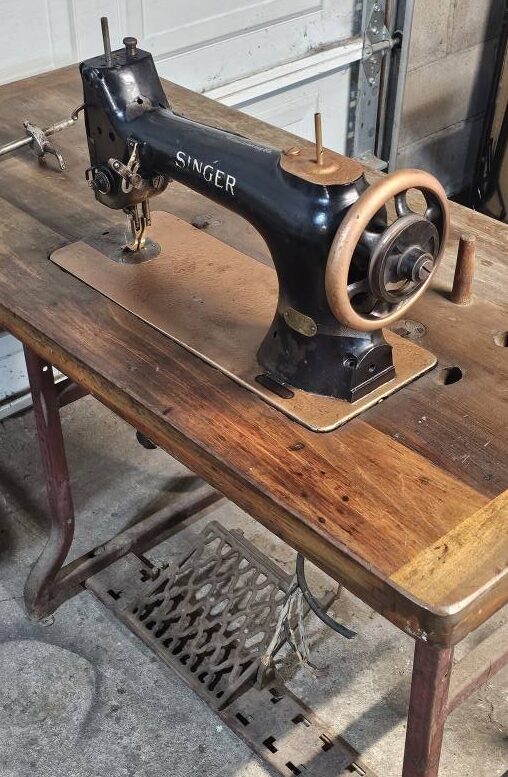
79
In use from 1912
Recorded serial numbers: 100
Recorded factories:
Industrial machines for strapping and tacking. Allotted in one batch of 100 machines in 1912.
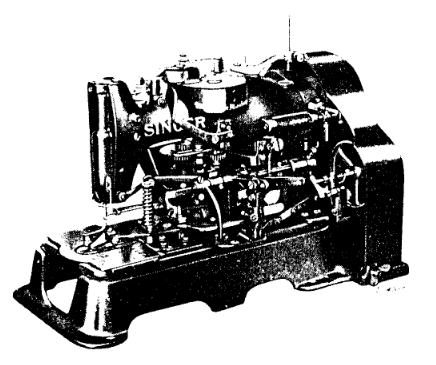
81
In use from 1907 to 1964
Recorded serial numbers: 101,650
Recorded factories:
Industrial machines for overedging.
Documented Machines
(What does it mean?)Total: 2
Documented Factories:
Documented years: 1938 - 1950
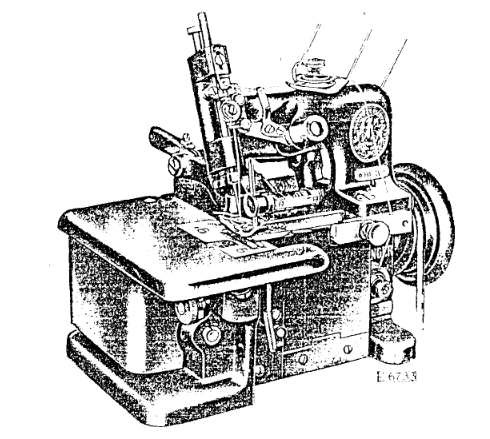
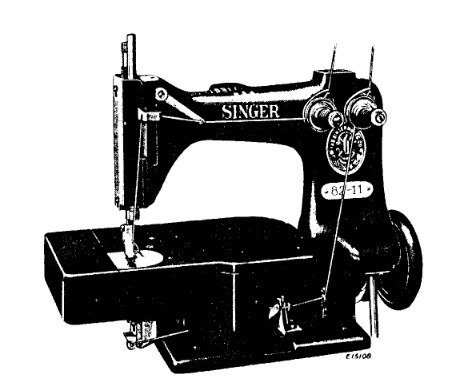
82
In use from 1906 to 1965
Recorded serial numbers: 14,813
Recorded factories:
Industrial glove-makers machines, two-thread chain stitch.
Documented Machines
(What does it mean?)Total: 1
Documented Factories:
Documented years: 1945
83
In use from 1910
Recorded serial numbers: 7
Recorded factories:
Allotted in a batch of 7 machines in 1910. Nothing more is known about this class.
84
In use from 1906 to 1912
Recorded serial numbers: 1,050
Recorded factories:
Industrial buttonhole machines, for making straight buttonholes, barred on both ends.
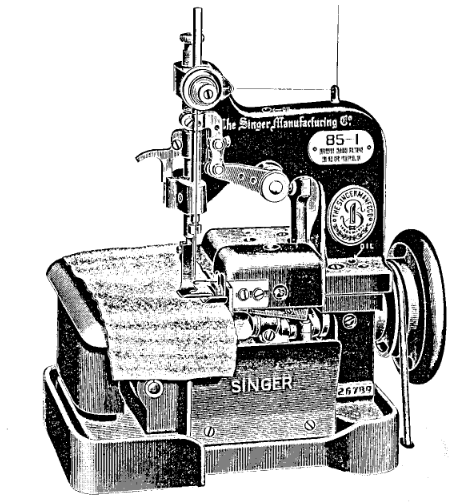
85
In use from 1910 to 1938
Recorded serial numbers: 2,324
Recorded factories:
Industrial machines for overedging thick fabrics.
86
In use from 1912 to 1925
Recorded serial numbers: 3,225
Recorded factories:
Industrial cylinder bed machines.
89
In use from 1909 to 1910
Recorded serial numbers: 600
Recorded factories:
Allotted in two batches of 200 machines in 1909 and 400 machines in 1910. Nothing more is known about this class.
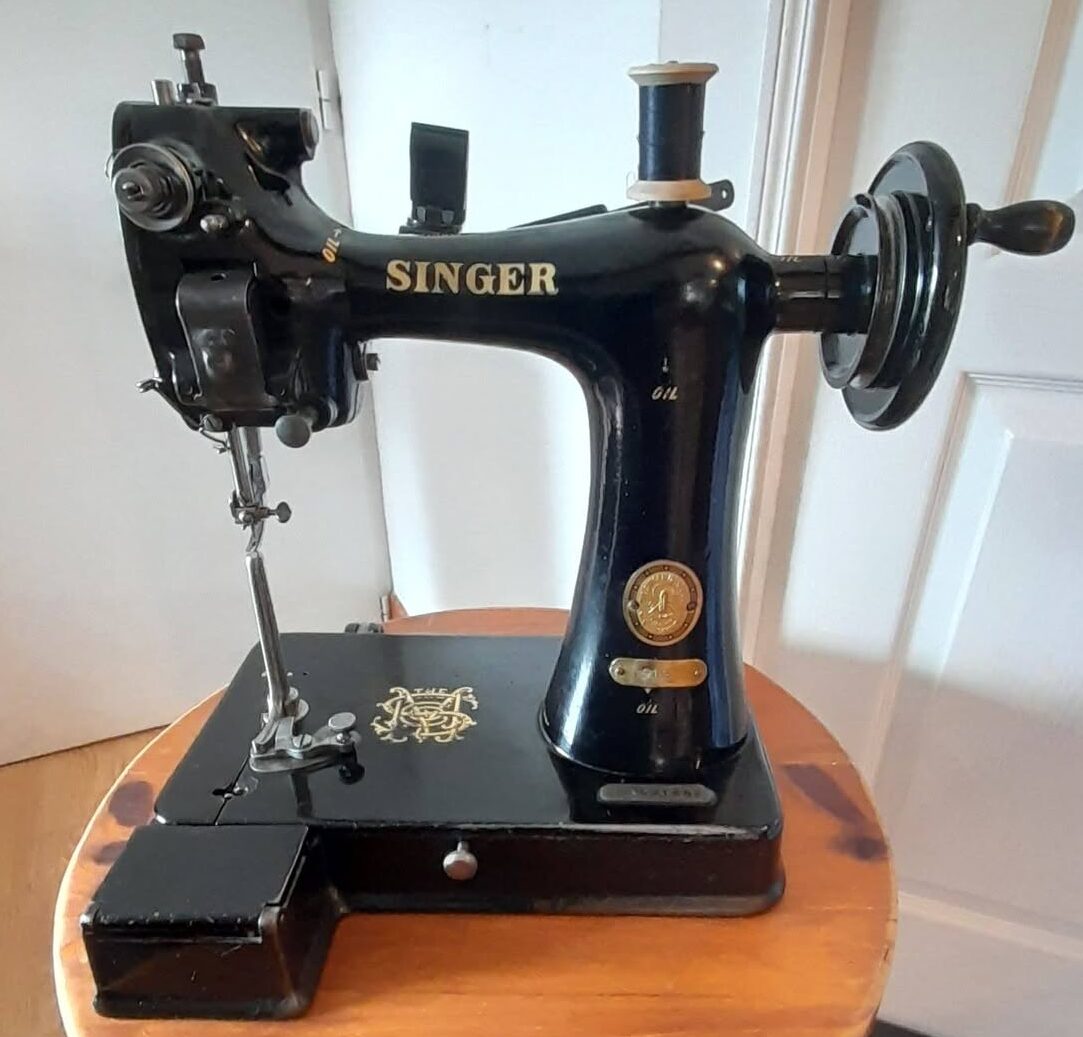
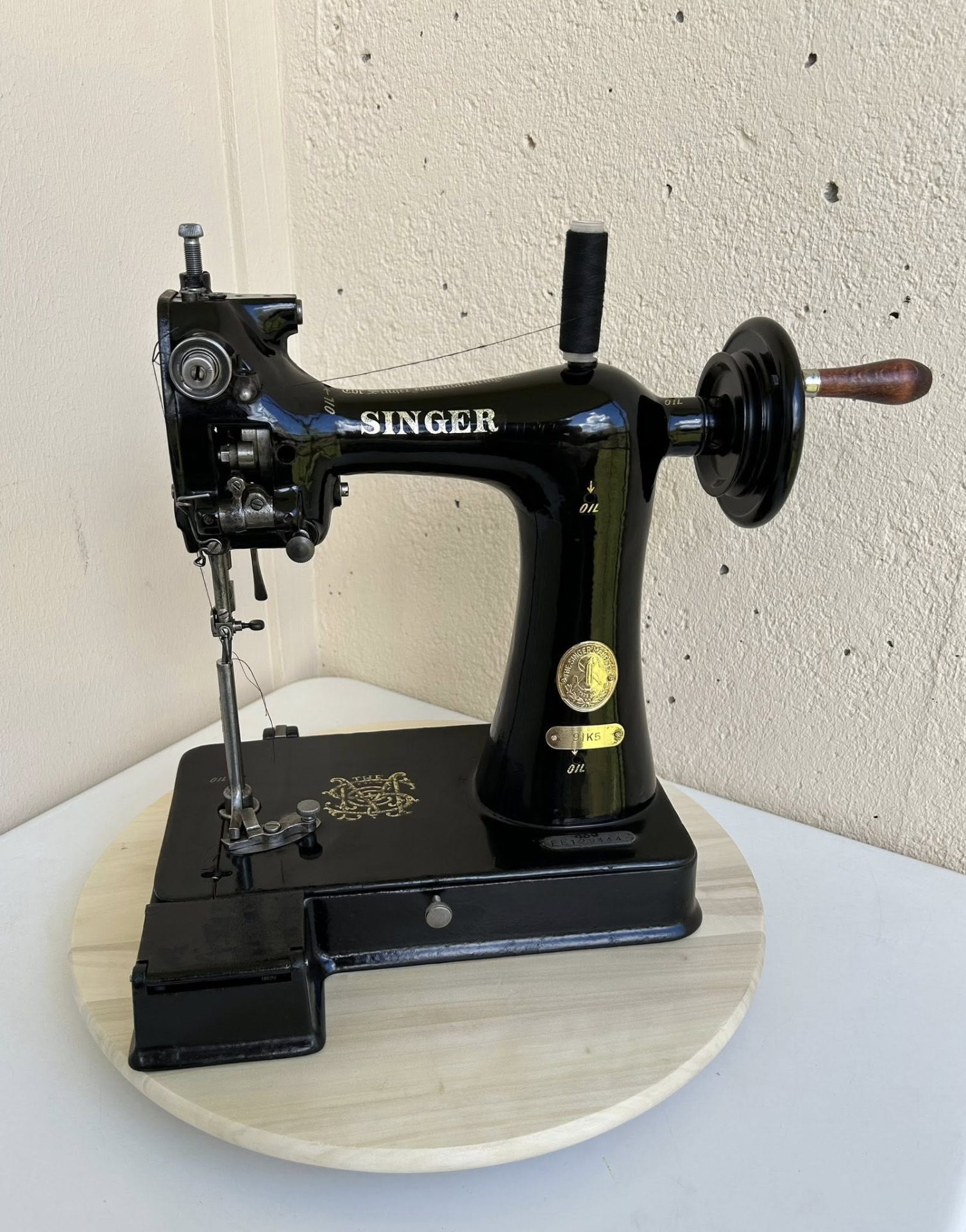
91
In use from 1915 to 1964
Recorded serial numbers: 22,330
Recorded factories:
Industrial pique stitch machines for glovework.
Documented Machines
(What does it mean?)Total: 4
Documented Factories:
Documented Decals:
Documented years: 1929 - 1955
92
In use from 1911 to 1942
Recorded serial numbers: 8,450
Recorded factories:
Single or two thread chain stitch industrial machines for bag making.
Documented Machines
(What does it mean?)Total: 1
Documented Factories:
Documented years: 1912
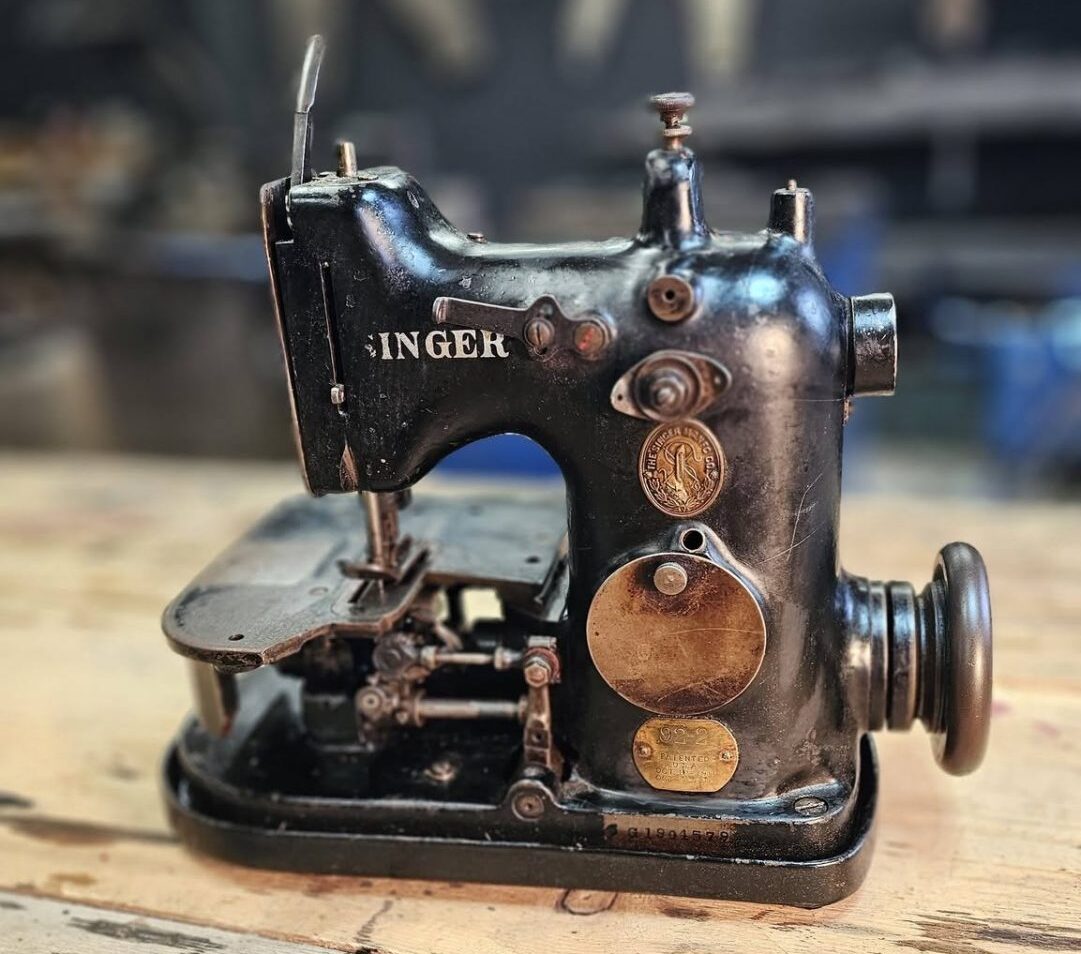
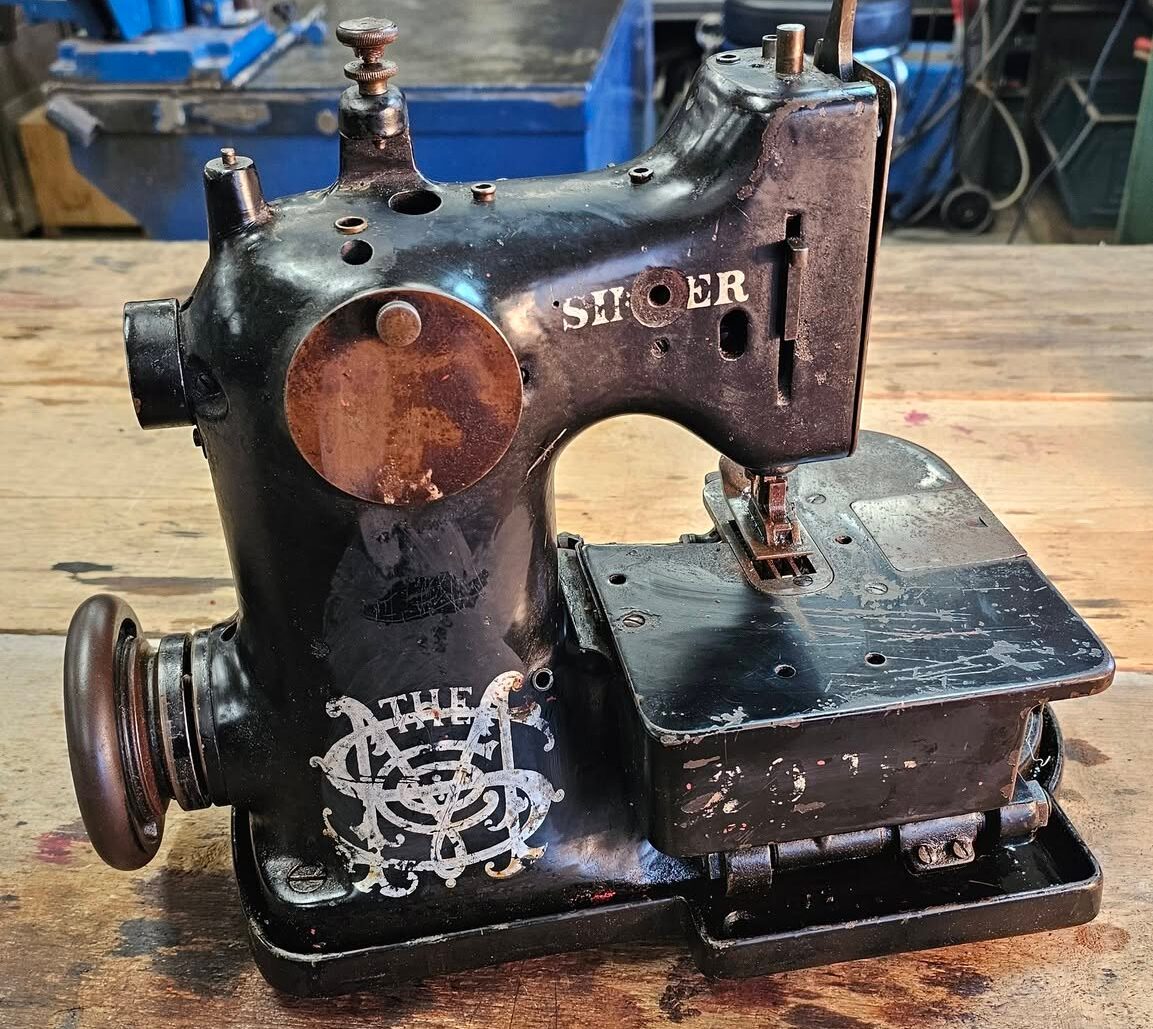
93
In use from 1911
Recorded serial numbers: 100
Recorded factories:
Allotted in 1911 in two batches, for a total of 100 machines. Nothing more is known about this class.
94
In use from 1912 to 1918
Recorded serial numbers: 8,450
Recorded factories:
Industrial glovemaking machines.
95
In use from 1911 to 1958
Recorded serial numbers: 679,910
Recorded factories:
Usage Information
- Needle size: 88x1
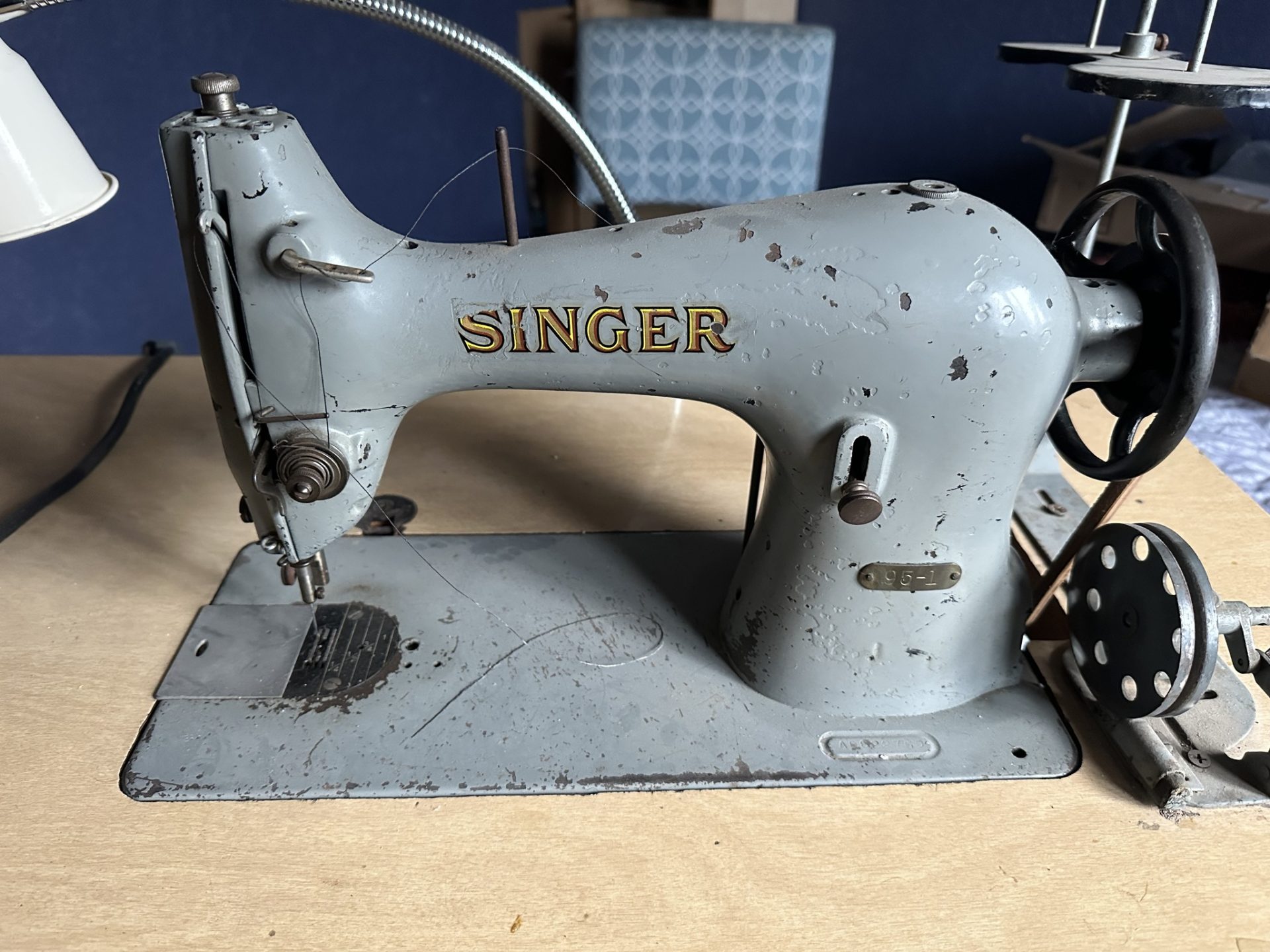
Shorter version of Class 96. For light and medium weight general clothing manufacture.
Documented Machines
(What does it mean?)Total: 8
Documented Factories:
Documented years: 1922 - 1952
96
In use from 1911 to 1959
Recorded serial numbers: 534,797
Recorded factories:
- Elizabethport, New Jersey (USA)
- Kilbowie, Clydebank (Scotland, UK)
- Wittenberge, Prussia (Germany)
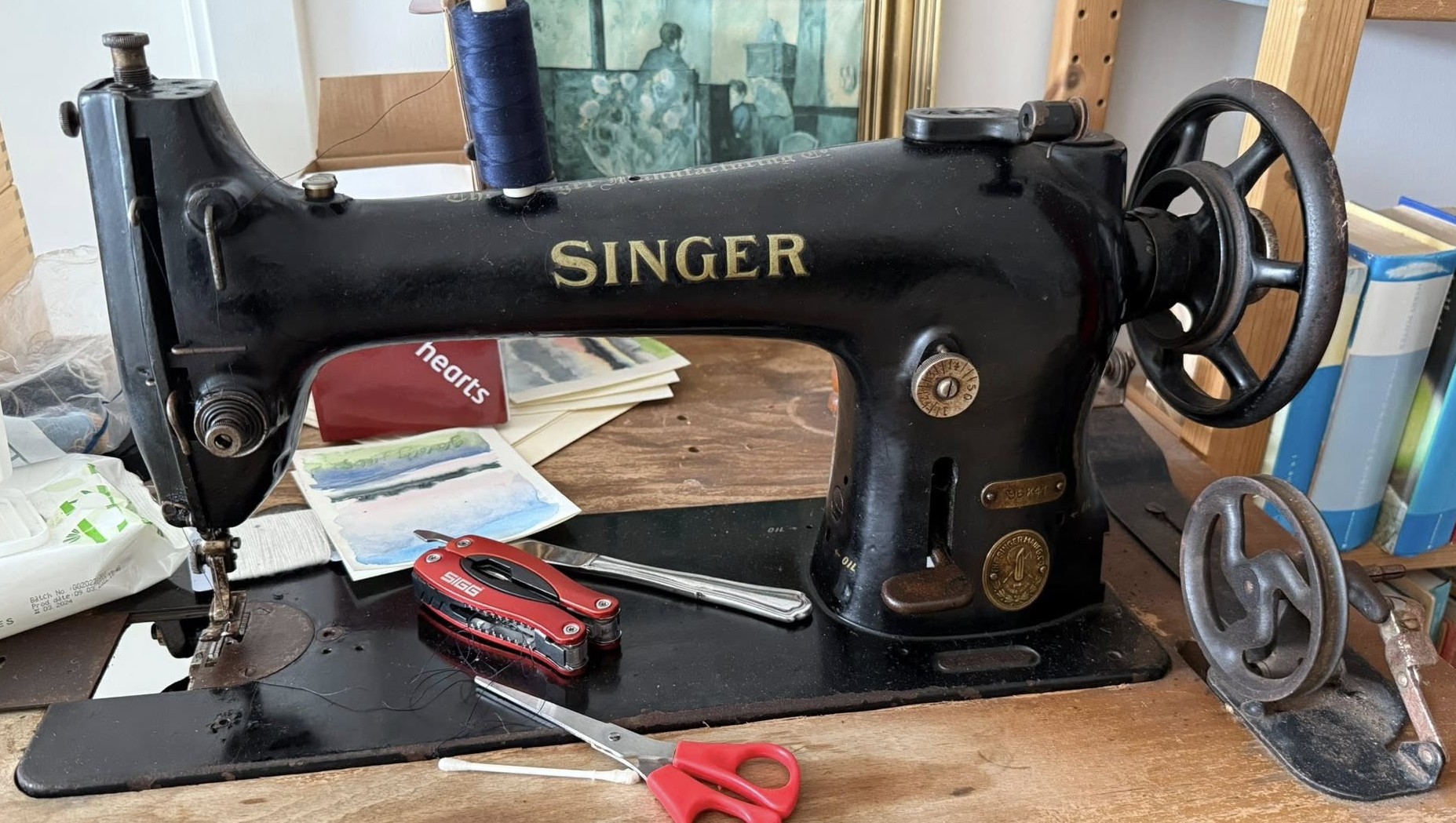
Industrial rotating hook machines. Longer version of Class 95.
Documented Machines
(What does it mean?)Total: 9
Documented Factories:
- Elizabethport, New Jersey (USA)
- Kilbowie, Clydebank (Scotland, UK)
- Wittenberge, Prussia (Germany)
Documented Decals:
Documented years: 1918 - 1957
97
In use from 1911 to 1962
Recorded serial numbers: 2,550
Recorded factories:
Industrial cylinder bed lock stitch machines. For heavy work in leather. Used for parachute harnesses and other harnesses.
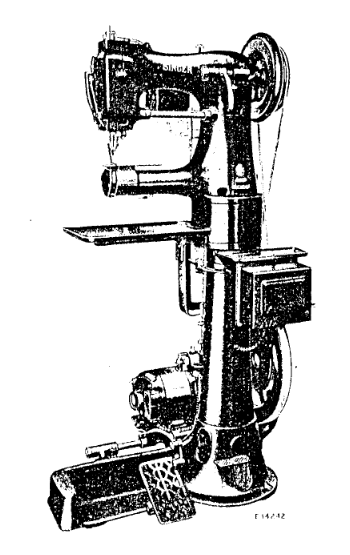
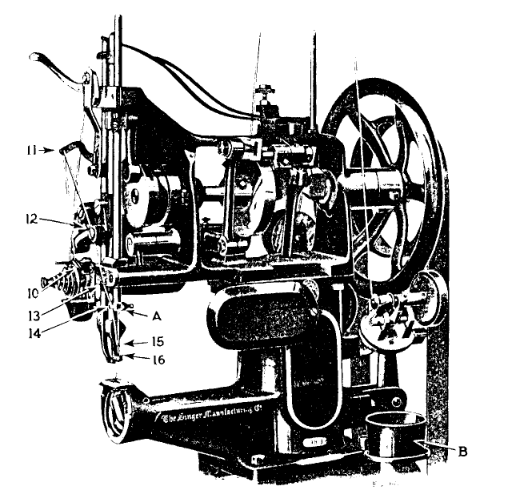
98
In use from 1915 to 1920
Recorded serial numbers: 465
Recorded factories:
Industrial cylinder bed for sewing treads on used automobile tyres, making firm lockstitches.
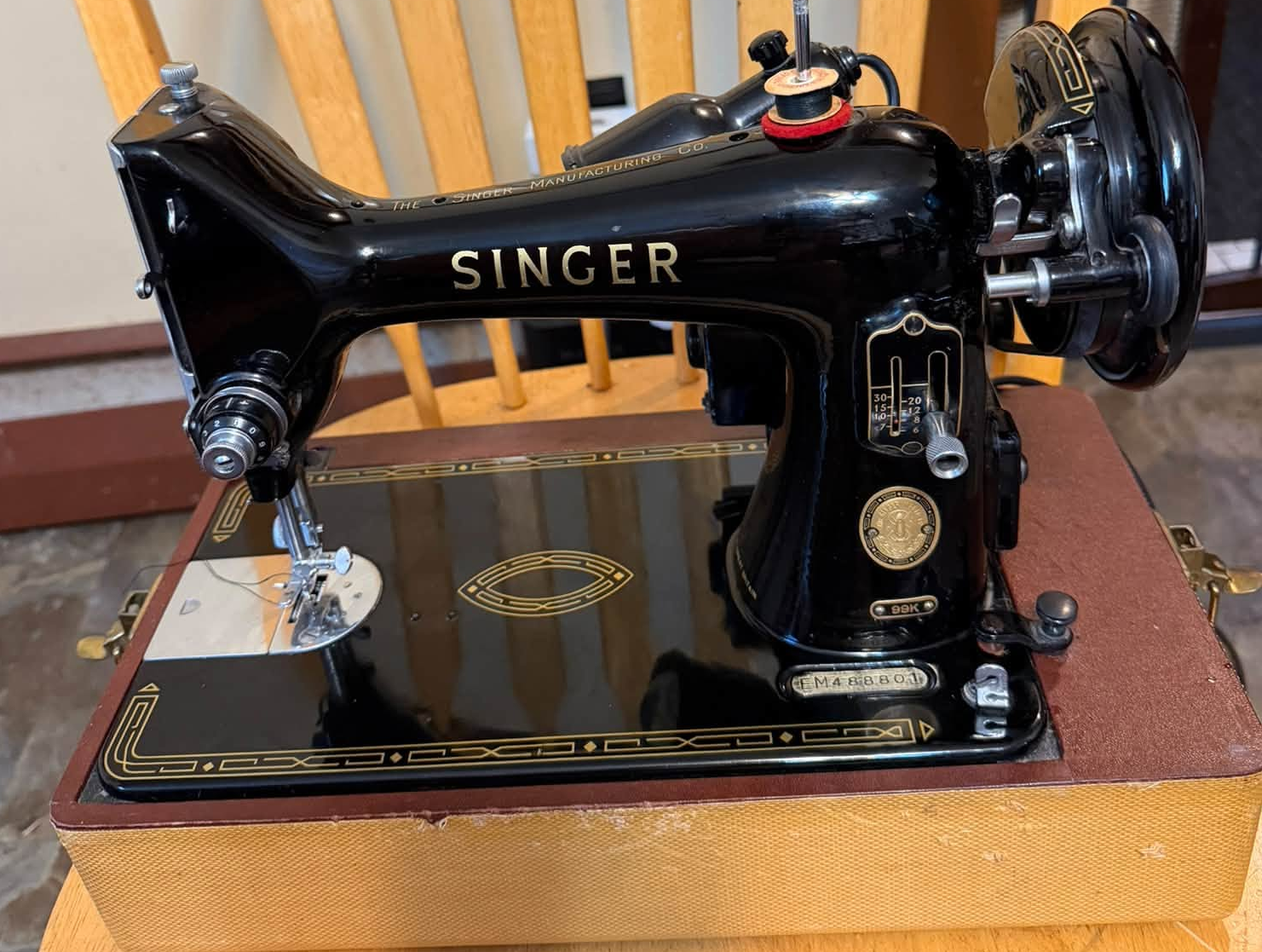
98K
In use from 1964
Recorded serial numbers: 50,000
Recorded factories:
Usage Information
- Needle size: 15x1
Domestic 3/4-size machine with external motor. Economy model.
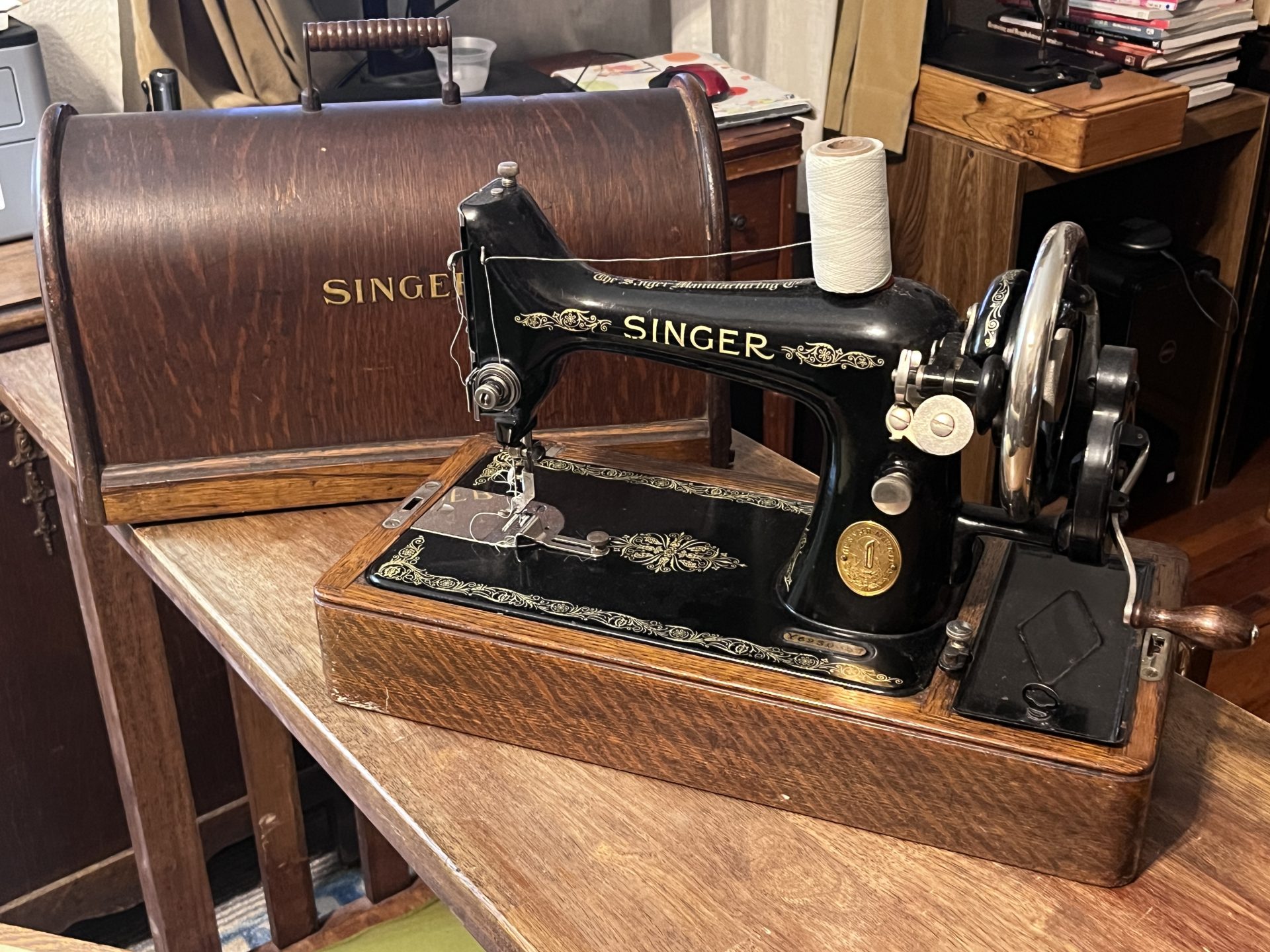
99
In use from 1911 to 1963
Recorded serial numbers: 4,116,993
Recorded factories:
Usage Information
- Needle size: 15x1
- Bobbin size: Class 66
3/4 size of the class 66. Lock stitch low shank and oscillating hook.
Documented Machines
(What does it mean?)Total: 71
Documented Factories:
Documented Decals:
Documented years: 1918 - 1962
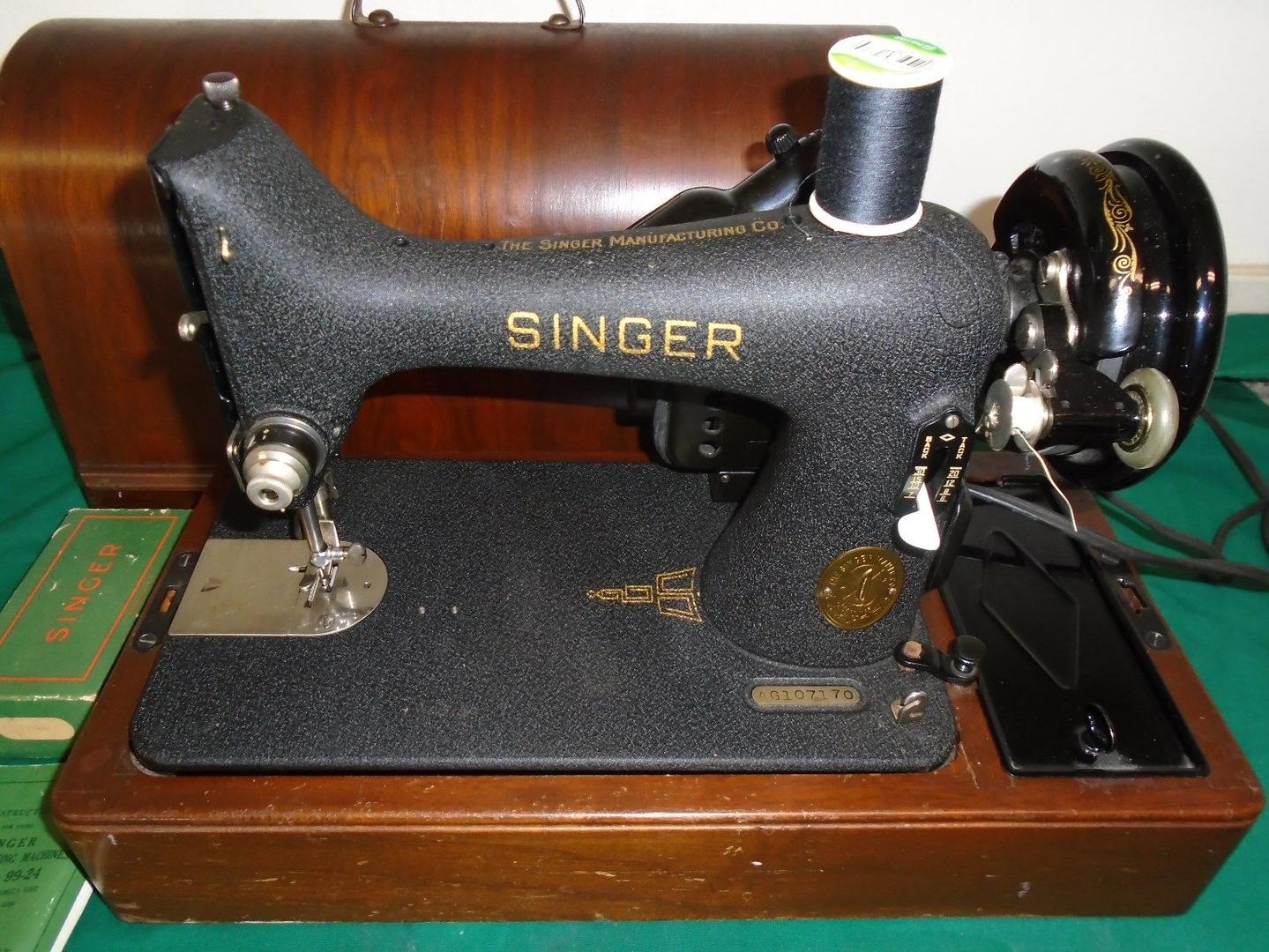
99W
In use from 1961 to 1962
Recorded serial numbers: 300
Recorded factories:
Industrial two-thread chain stitch. buttonholers. For making buttonholes and eyelets in cloth or leather.
101
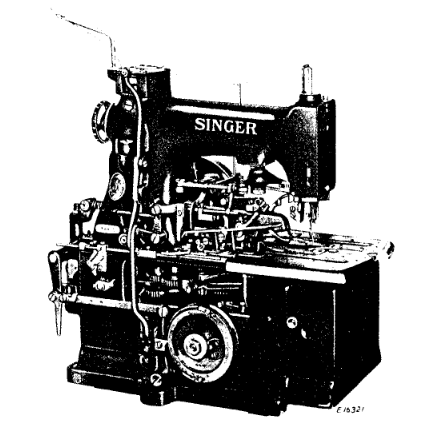
In use from 1920 to 1932
Recorded serial numbers: 230,475
Recorded factories:
Usage Information
- Needle size: 15x1
Domestic lock stitch machines with built-in motor. Has a "sew light" behind the arm.
Documented Machines
(What does it mean?)Total: 78
Documented Factories:
Documented Decals:
Documented years: 1920 - 1931
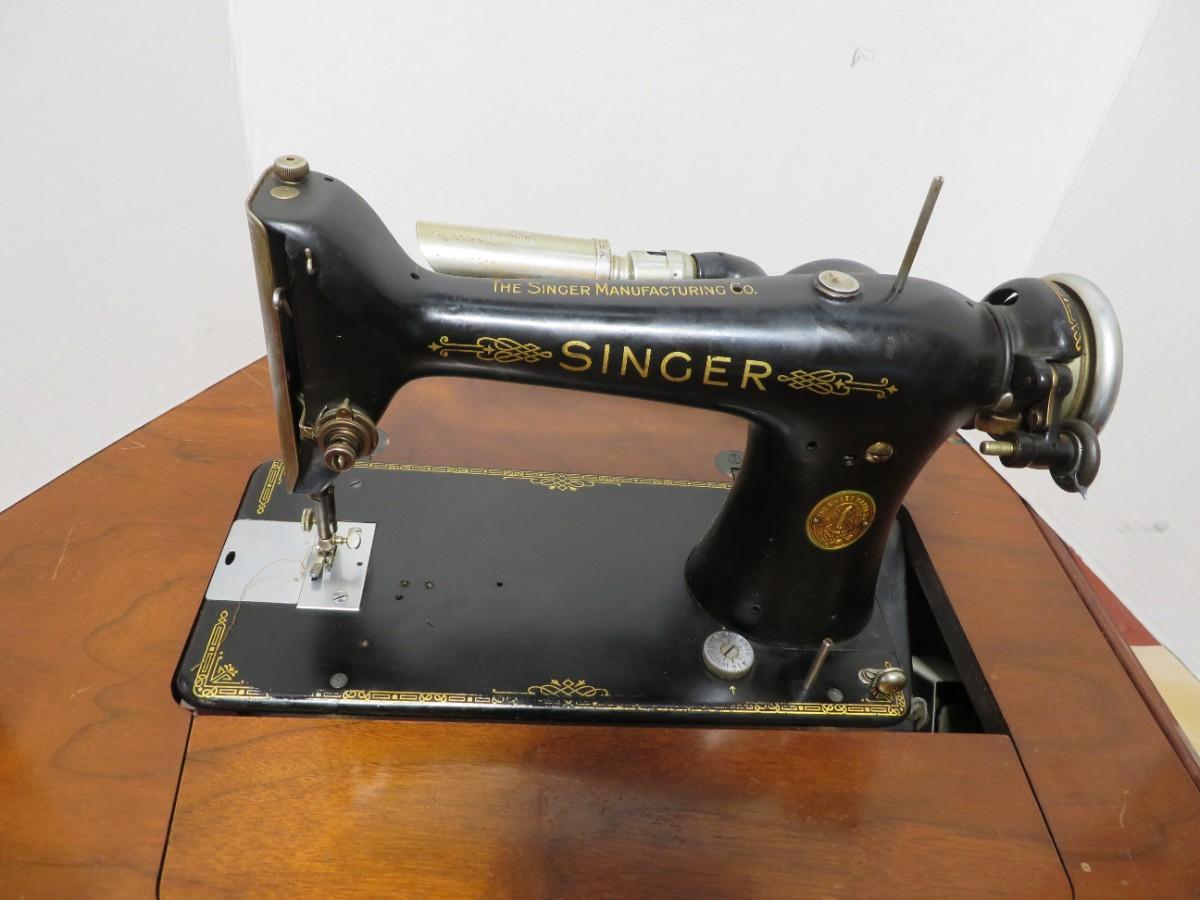
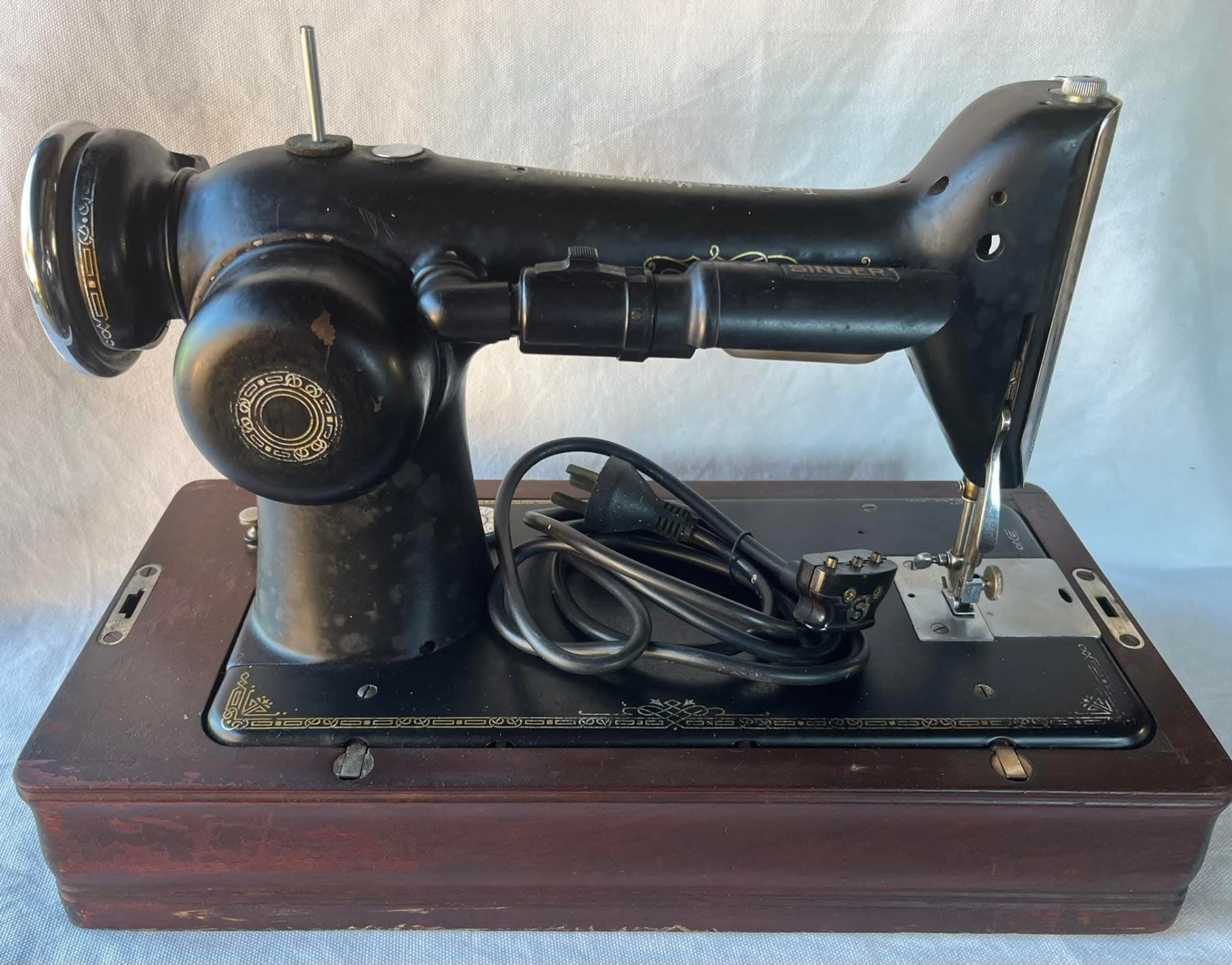
103
In use from 1912 to 1958
Recorded serial numbers: 300,417
Recorded factories:
- Elizabethport, New Jersey (USA)
- Kilbowie, Clydebank (Scotland, UK)
- Wittenberge, Prussia (Germany)
Usage Information
- Needle size: 16x231
Industrial high speed lock stitch machines, with rotating hook, fitted for for electric or foot power.
Documented Machines
(What does it mean?)Total: 2
Documented Factories:
- Kilbowie, Clydebank (Scotland, UK)
- Wittenberge, Prussia (Germany)
Documented Decals:
Documented years: 1938
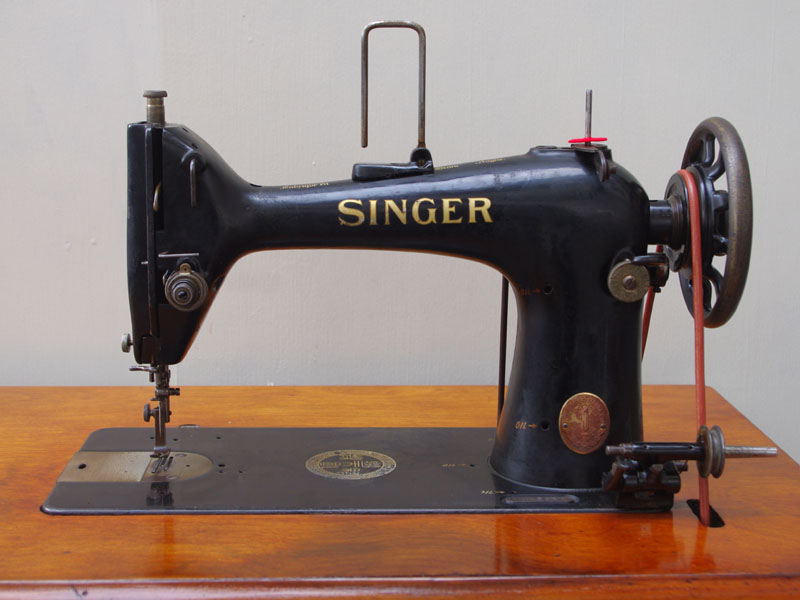
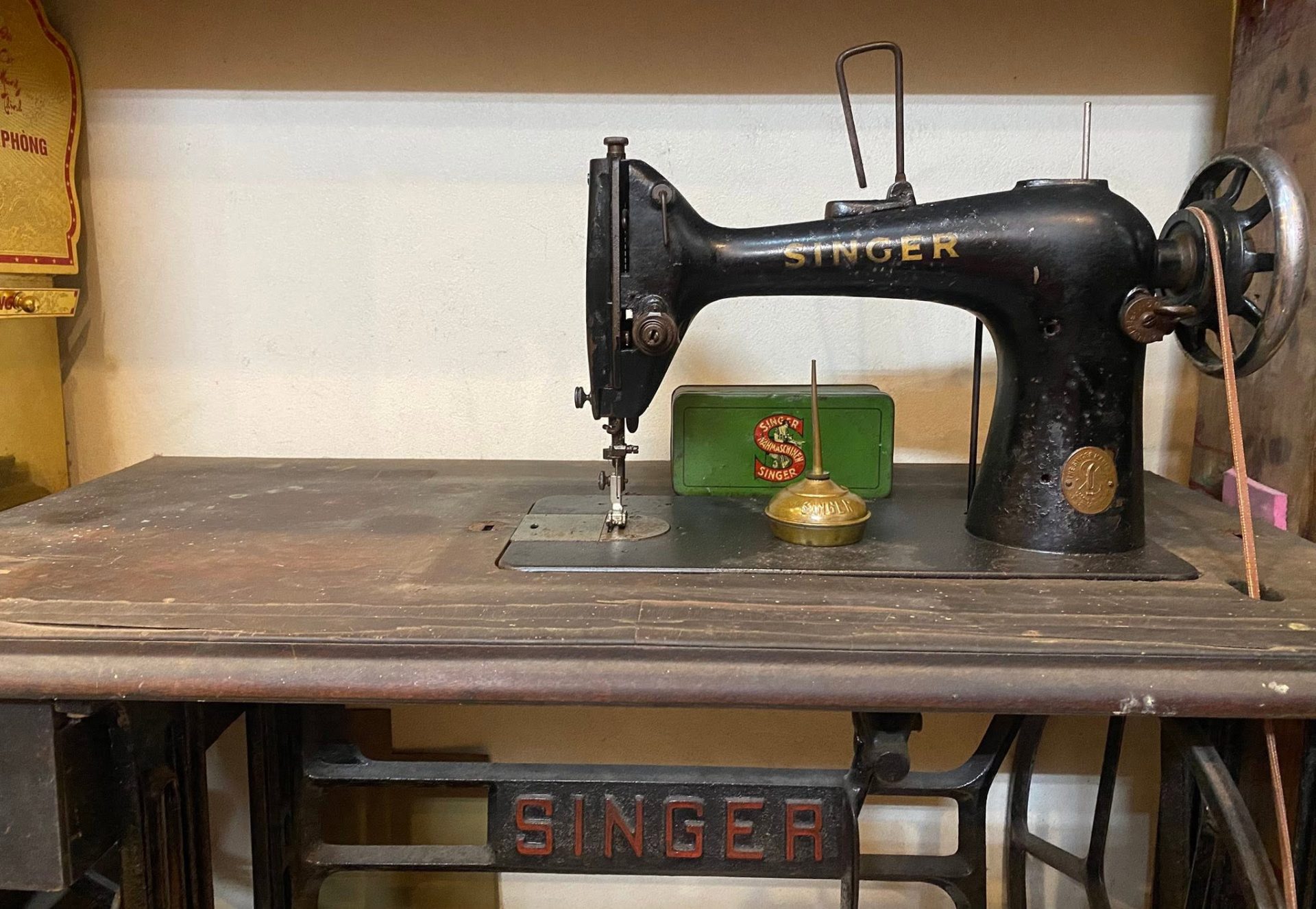
104
In use from 1914 to 1917
Recorded serial numbers: 300
Recorded factories:
Industrial machines with direct current motor. 300 machines allotted in serial number records.
105
In use from 1914 to 1955
Recorded serial numbers: 6,225
Recorded factories:
Usage Information
- Needle size: 82x1
Industrial two-thread chain stitch machines for gloves, knits and rayon.
Documented Machines
(What does it mean?)Total: 1
Documented Factories:
Documented years: 1925
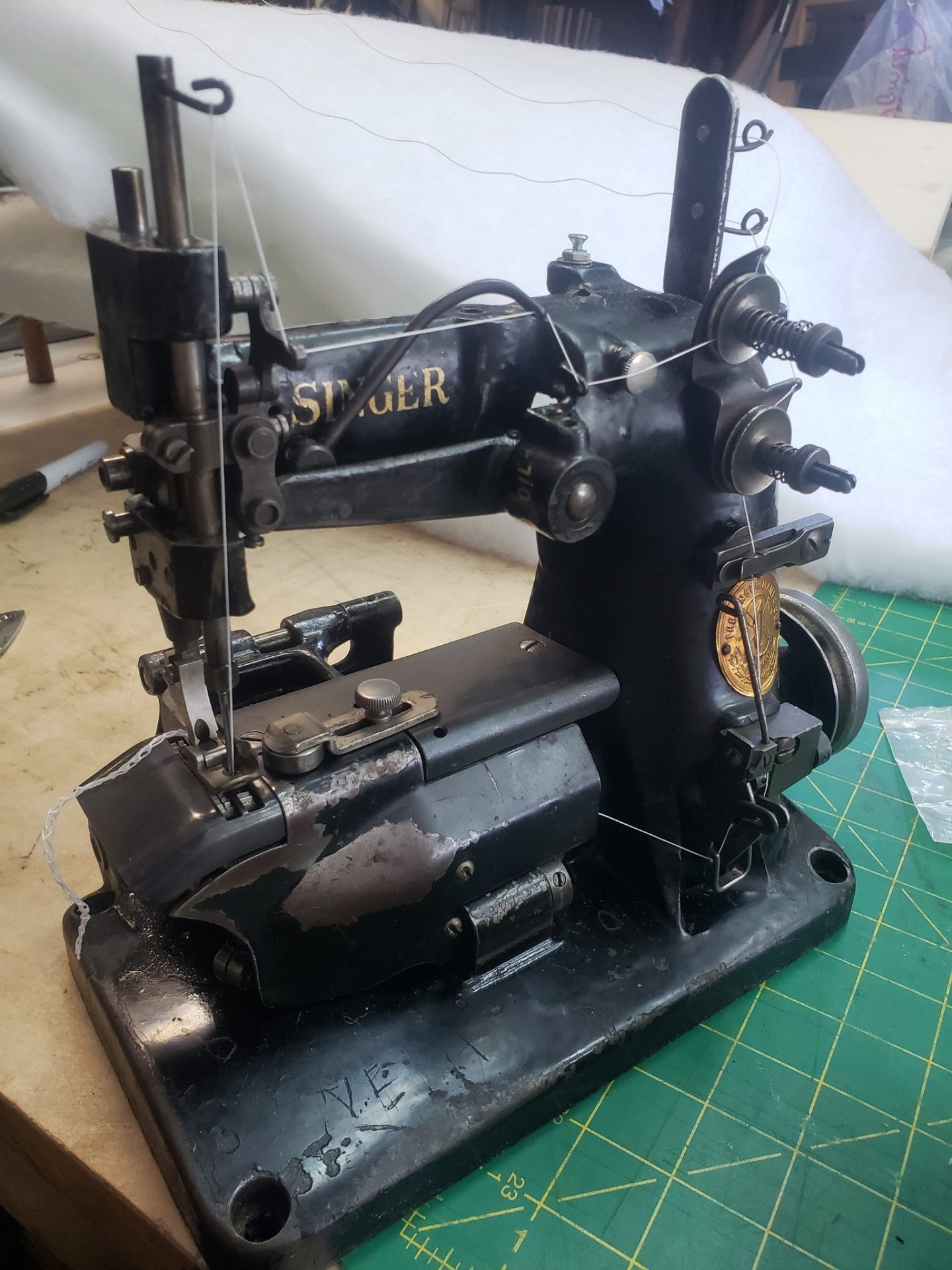
106
In use from 1914 to 1951
Recorded serial numbers: 2,225
Recorded factories:
Industrial two-thread multiple needles chain stitch machines. For simultaneously stitching parallel rows in cloth.
107
In use from 1914 to 1962
Recorded serial numbers: 1,875
Recorded factories:
Industrial single thread chain stitch machines with cylinder bed. For hats, coat sleeves.
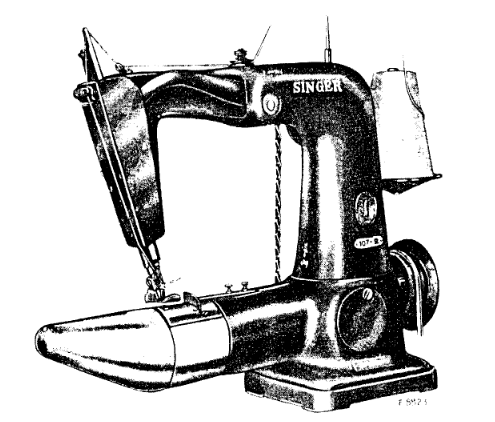
107W
Recorded serial numbers: 4
Recorded factories:
Industrial machines for high speed zigzag lock stitching.
Documented Machines
(What does it mean?)Total: 4
Documented Factories:
Documented years: 1948
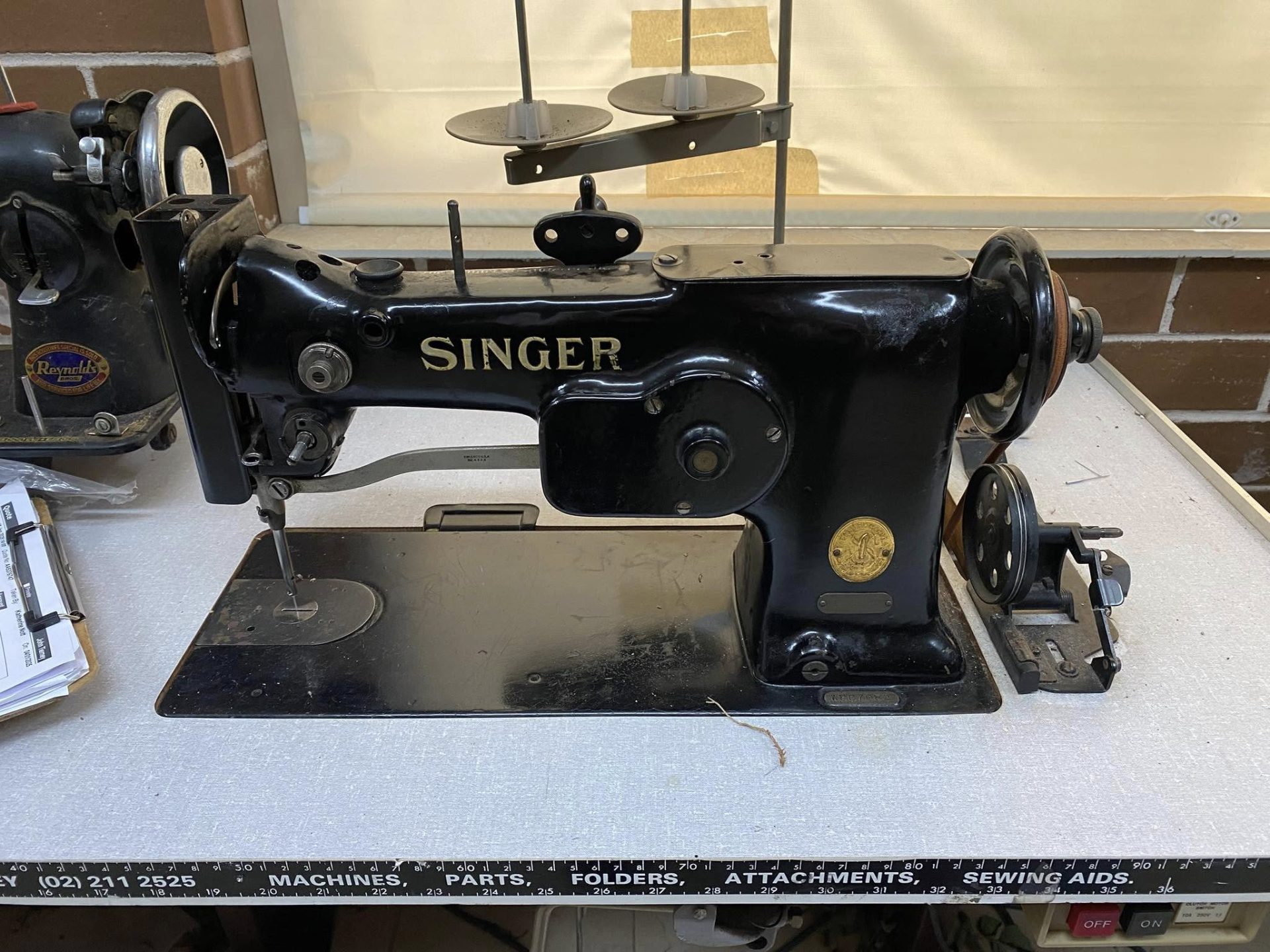
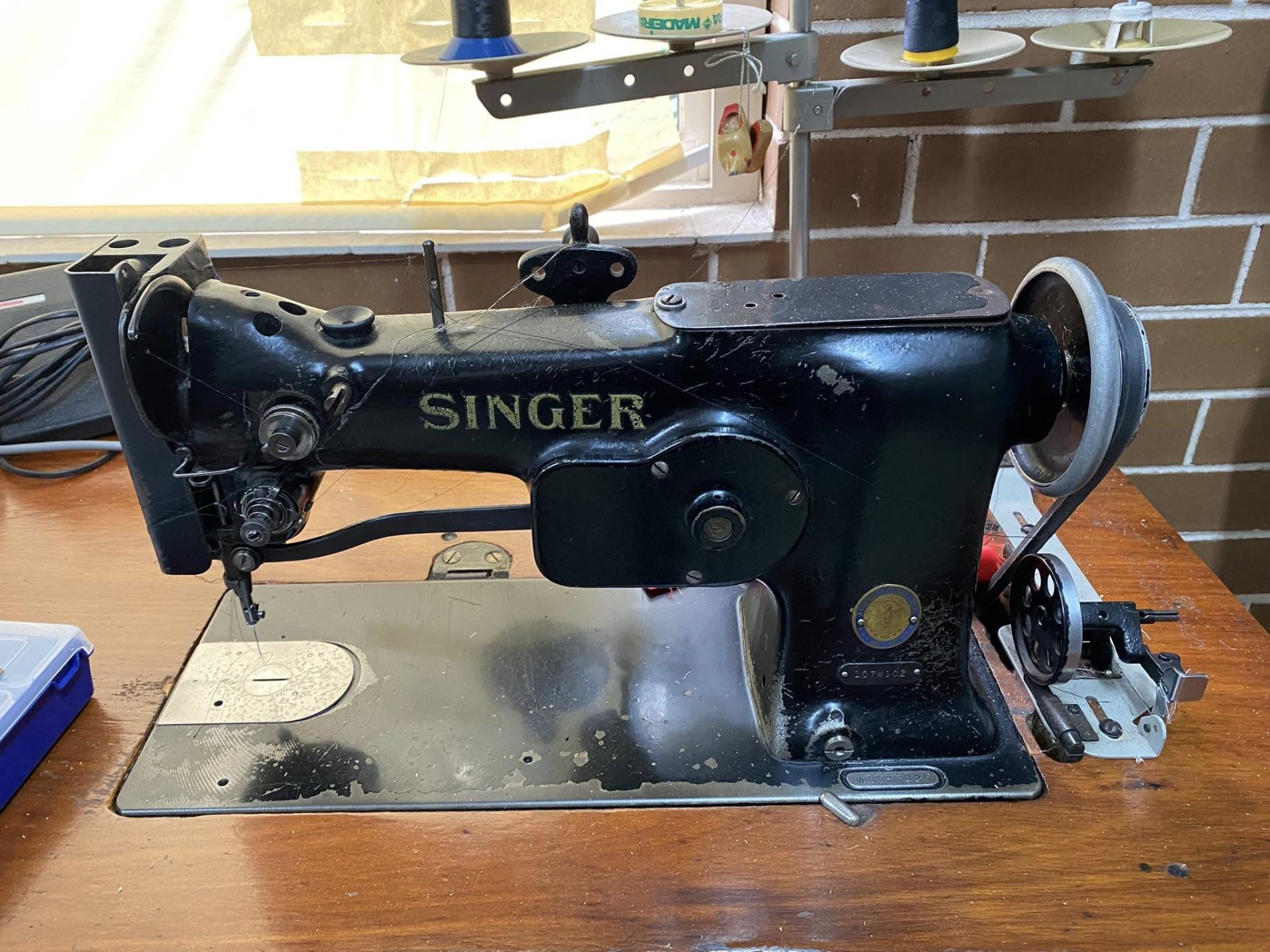
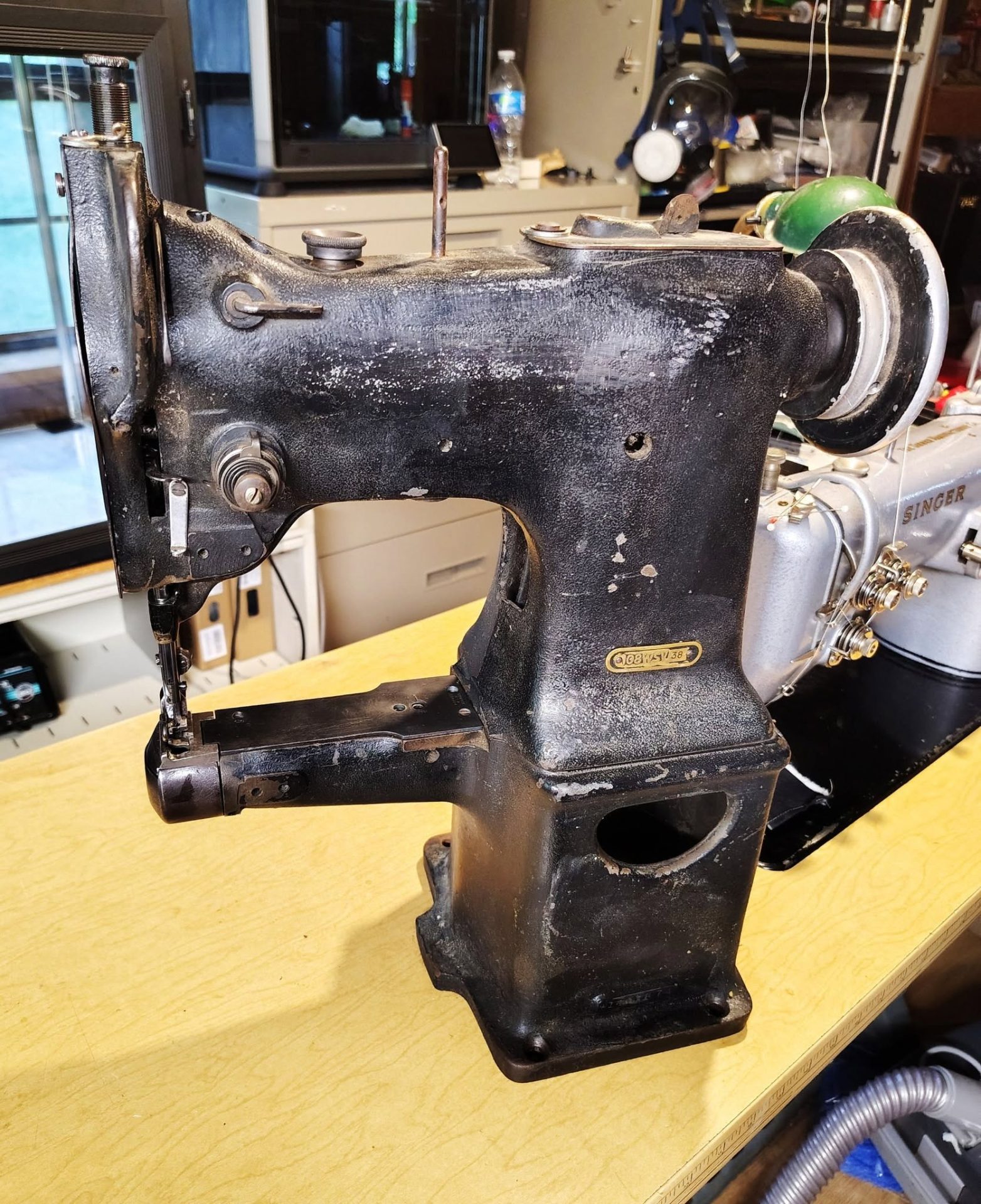
108W
In use from 1914 to 1968
Recorded serial numbers: 4,826
Recorded factories:
Industrial lock stitch machines with unison feed. It's not clear if there are differences between the 108W and 108K for lack of documentation and surviving machines.
Documented Machines
(What does it mean?)Total: 1
Documented Factories:
Documented years: 1955
109
In use from 1913 to 1951
Recorded serial numbers: 5,800
Recorded factories:
Industrial two-thread chain stitch machines with multiple needles.
109W
Recorded serial numbers: 1
Recorded factories:
Industrial high speed tailoring machines.
Documented Machines
(What does it mean?)Total: 1
Documented Factories:
110
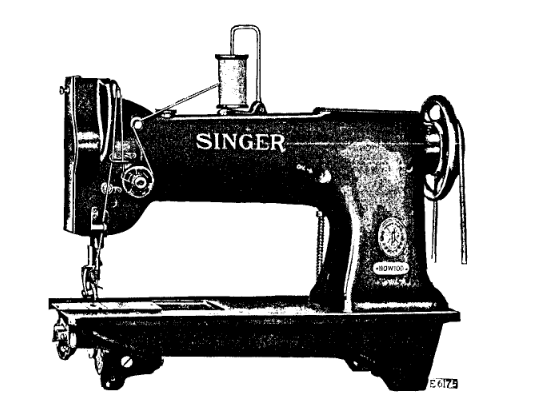
In use from 1914 to 1968
Recorded serial numbers: 3,875
Recorded factories:
Industrial machines fitted with continuous wheel feed for leather work.
111
In use from 1942 to 1959
Recorded serial numbers: 33
Recorded factories:
Single needle industrial lock stitch machines. For stitching medium and heavy fabrics, canvas, leather. After a small batch of 25 machines in 1915, serial number allotments resume in 1942.
Documented Machines
(What does it mean?)Total: 8
Documented Factories:
Documented years: 1942 - 1959
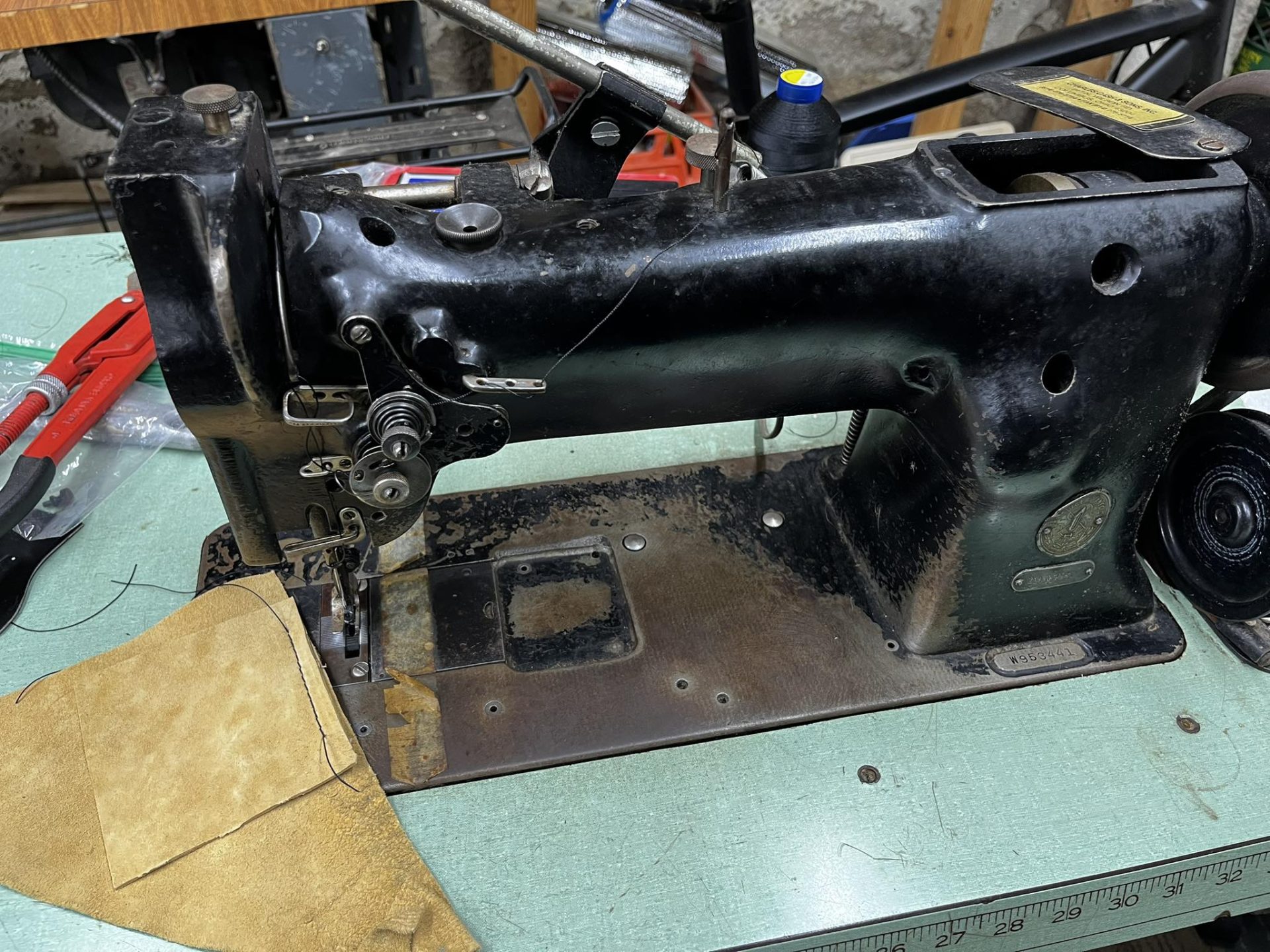
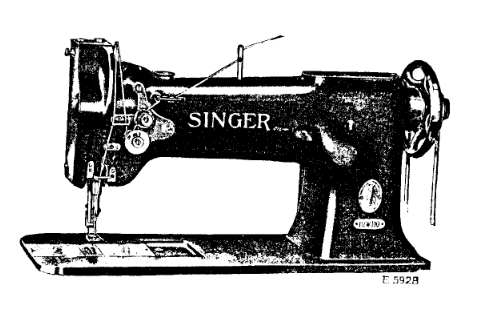
112
In use from 1915 to 1931
Recorded serial numbers: 7,526
Recorded factories:
Industrial machines to make straw hats.
Documented Machines
(What does it mean?)Total: 1
Documented Factories:
Documented years: 1944
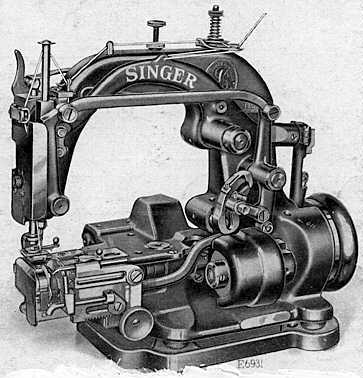
112W
Recorded serial numbers: 1
Recorded factories:
Industrial two-needle lock stitch machines.
Documented Machines
(What does it mean?)Total: 1
Documented Factories:
Documented years: 1944
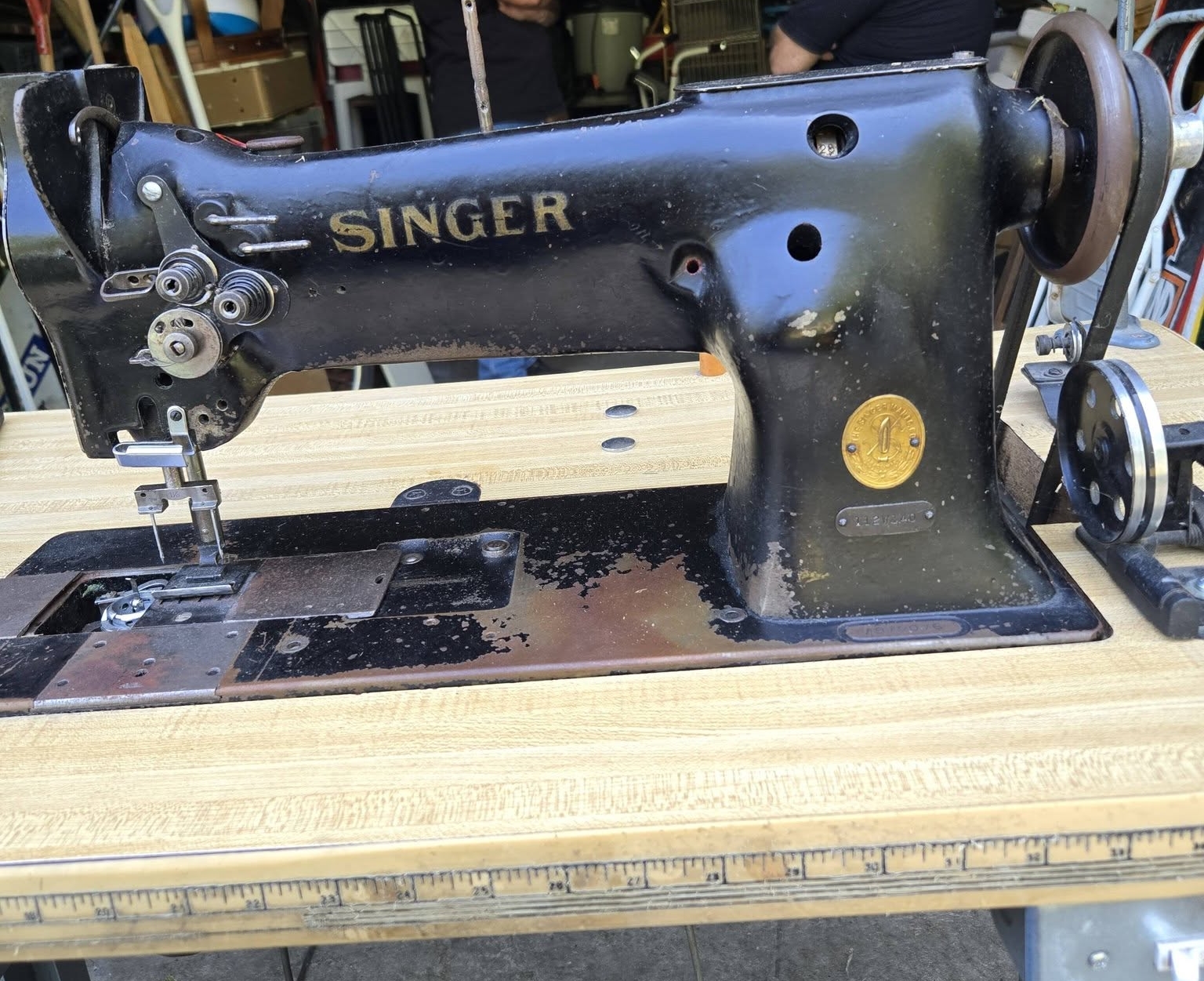
113
In use from 1915
Recorded serial numbers: 25
Recorded factories:
Allotted in a batch of 25 machines in 1915. Nothing more is known about this class.
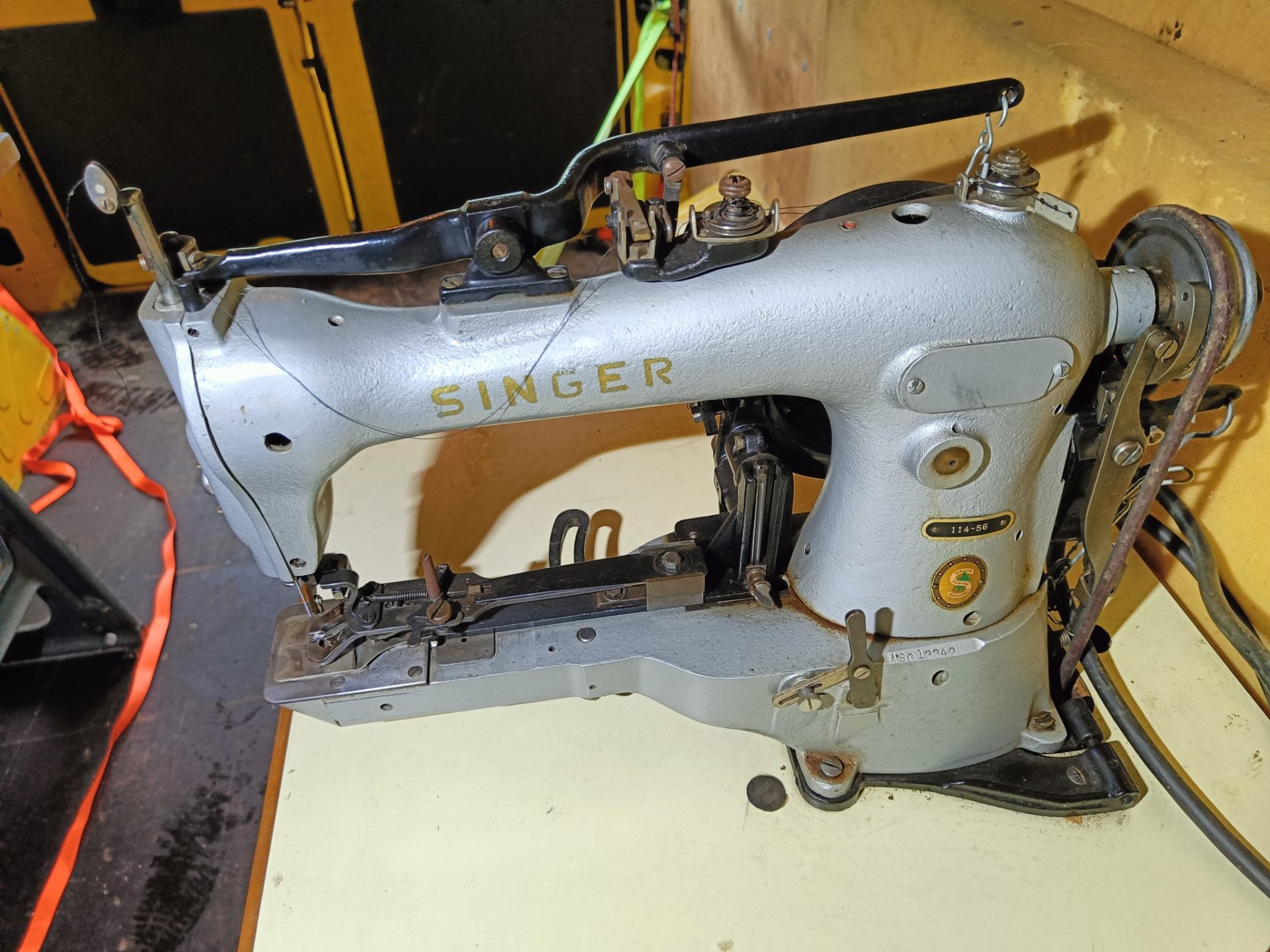
114
In use from 1915 to 1970
Recorded serial numbers: 38,188
Recorded factories:
Industrial single thread chain stitch machines with cylinder bed. For automatically sewing on flat buttons and for tacking paper tickets on clothing.
Documented Machines
(What does it mean?)Total: 1
Documented Factories:
Documented years: 1969
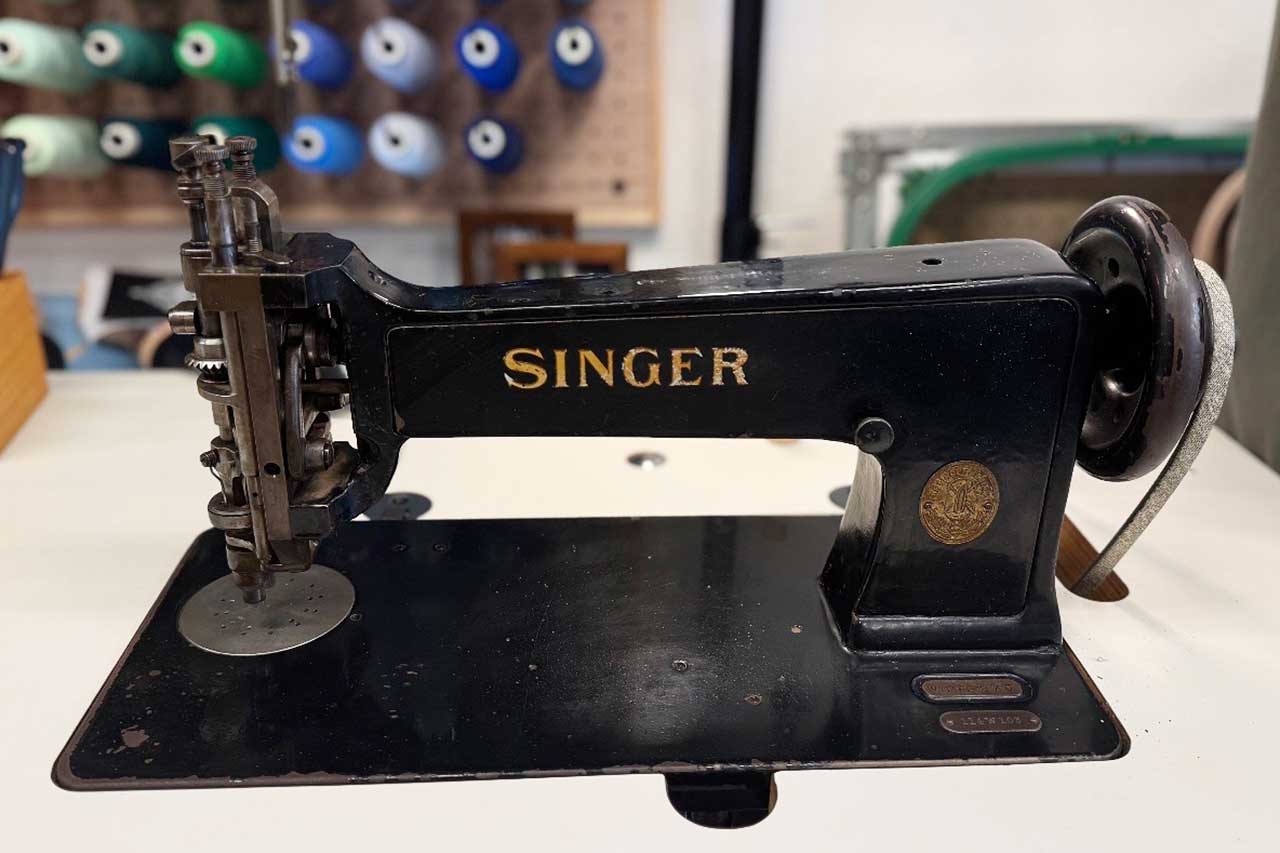
114W
Recorded serial numbers: 1,105
Recorded factories:
Industrial single needle chain and drop stitch machines.
Documented Machines
(What does it mean?)Total: 5
Documented Factories:
Documented years: 1947 - 1966
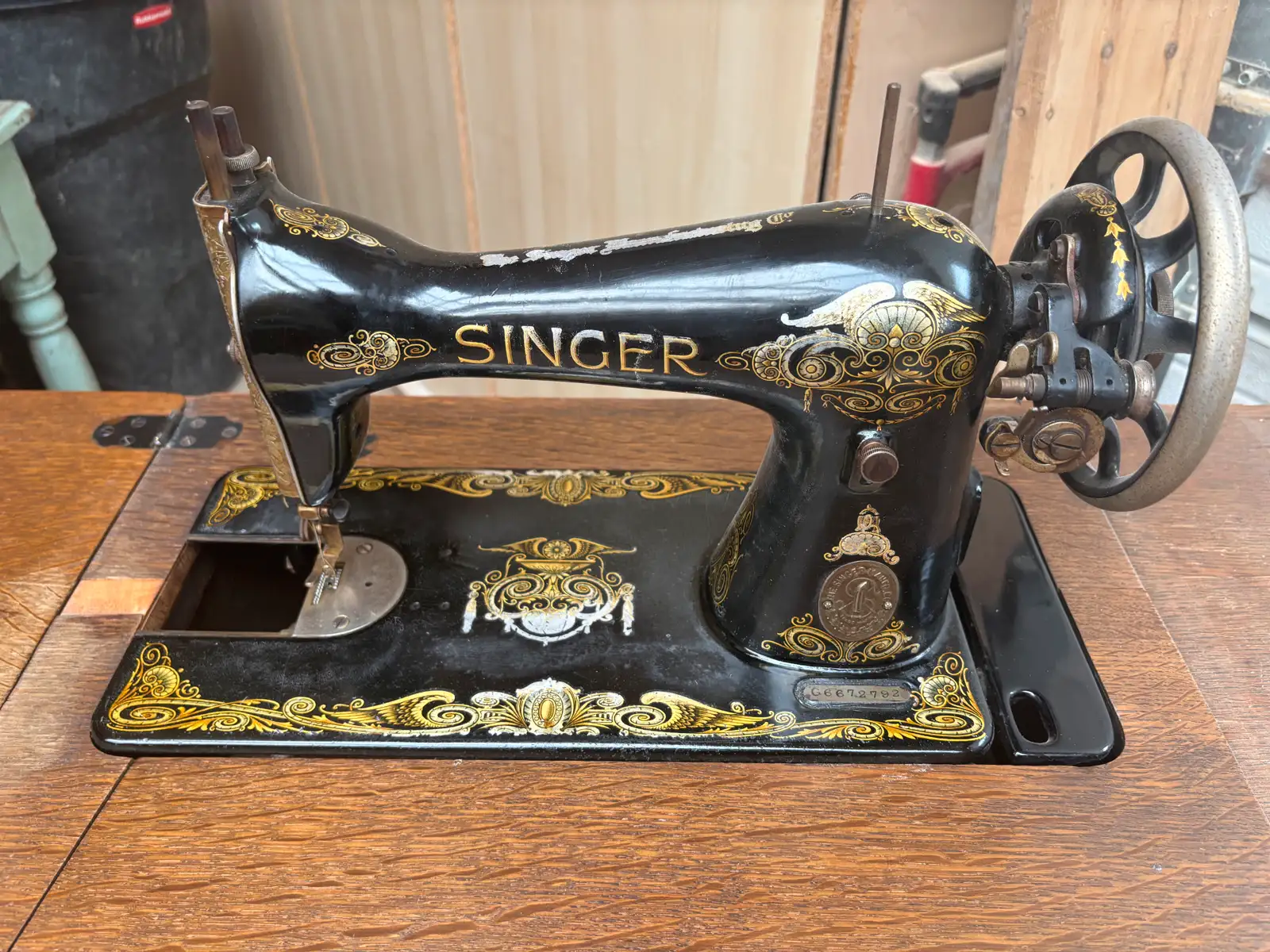
115
In use from 1887 to 1936
Recorded serial numbers: 348,547
Recorded factories:
- Elizabethport, New Jersey (USA)
- Kilbowie, Clydebank (Scotland, UK)
- St. John's Factory, Quebec (Canada)
Usage Information
- Needle size: 15x1
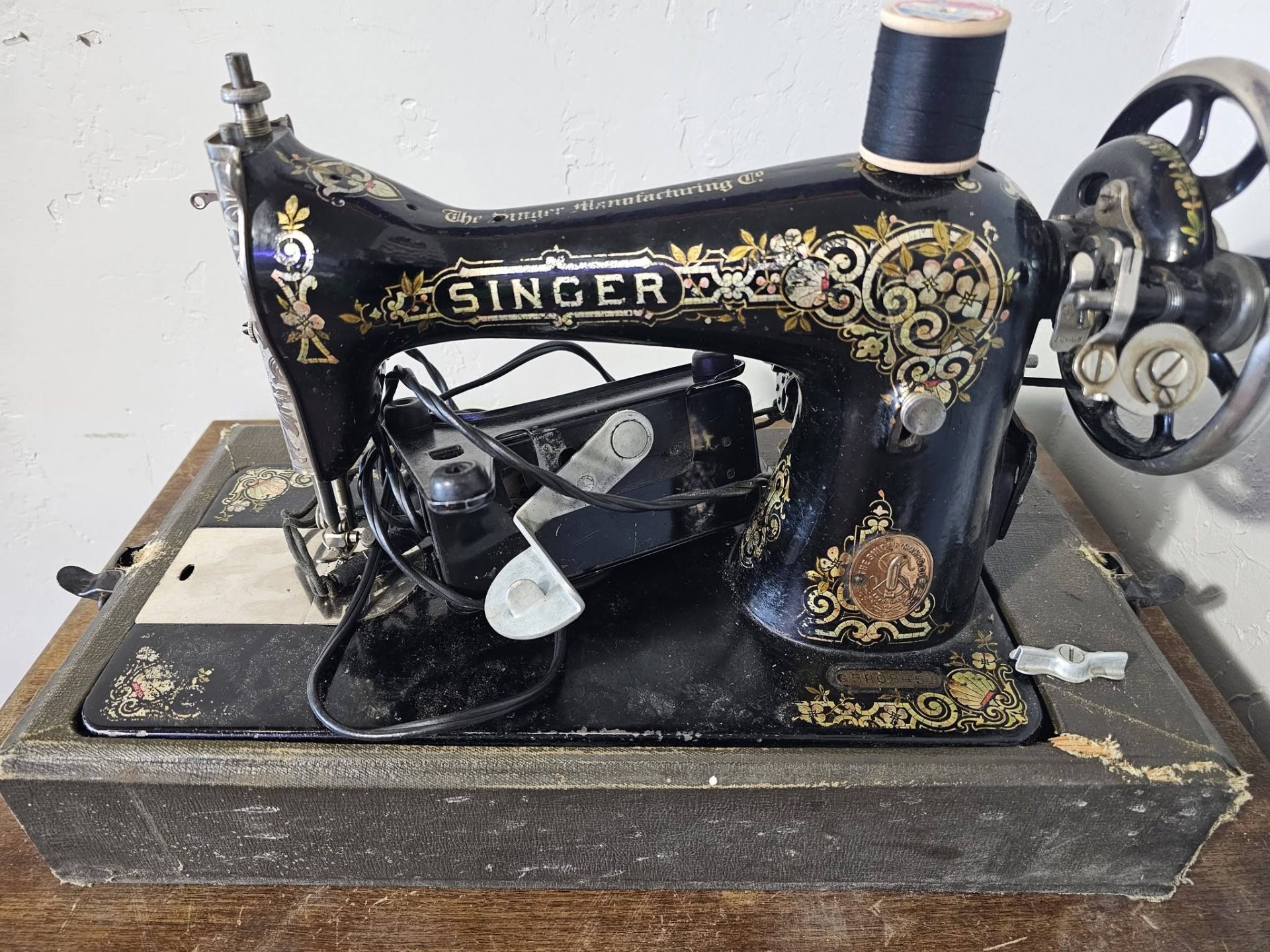
Class 115 machines were clearly based on the 9W7 design, retaining its rotary-hook mechanism, but they also incorporated several features borrowed from Class 15. Class 15 and 115 may look very alike. Class 15 features two small holes for oiling in the machine bed near the needle plate, while Class 115 has instead three deck holes on top (including one for an under-deck coil spring) and a single rocker bar underneath. They used a Class "L" bobbin case designed for the industrial-style 20U bobbins. Class 115 machines were typically decorated with either the distinctive “Gold Wings” decals or the “Tiffany” decals.
Documented Machines
(What does it mean?)Total: 18
Documented Factories:
- Elizabethport, New Jersey (USA)
- Kilbowie, Clydebank (Scotland, UK)
- St. John's Factory, Quebec (Canada)
Documented Decals:
Documented years: 1887 - 1920
117
In use from 1916 to 1930
Recorded serial numbers: 1,105
Recorded factories:
Industrial machines for stitching straw hats with a concealed single thread chain stitch.
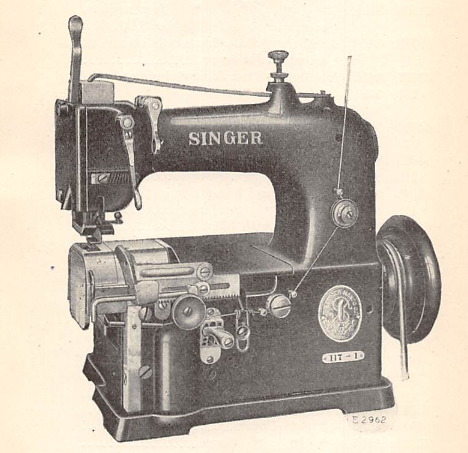
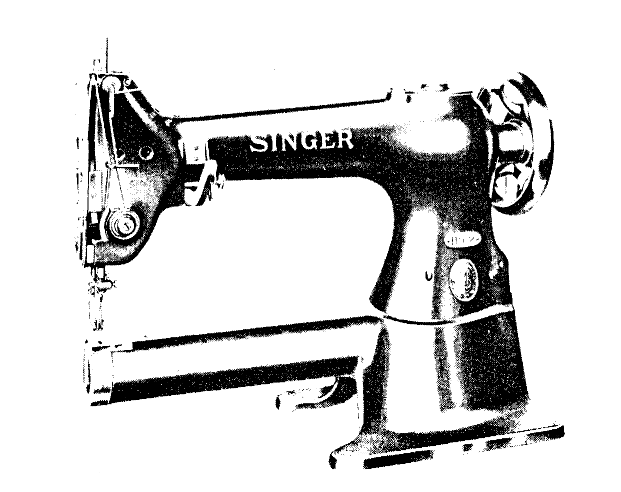
119
In use from 1917 to 1968
Recorded serial numbers: 5,010
Recorded factories:
Industrial cylinder bed single needle lock stitch machines. For light and medium weight leather and fabrics.
120
In use from 1917
Recorded serial numbers: 100
Recorded factories:
Allotted in a batch of 100 machines in 1917. Nothing more is known about this class.
121
In use from 1917
Recorded serial numbers: 250
Recorded factories:
Allotted in a batch of 250 machines in 1917. Nothing more is known about this class.
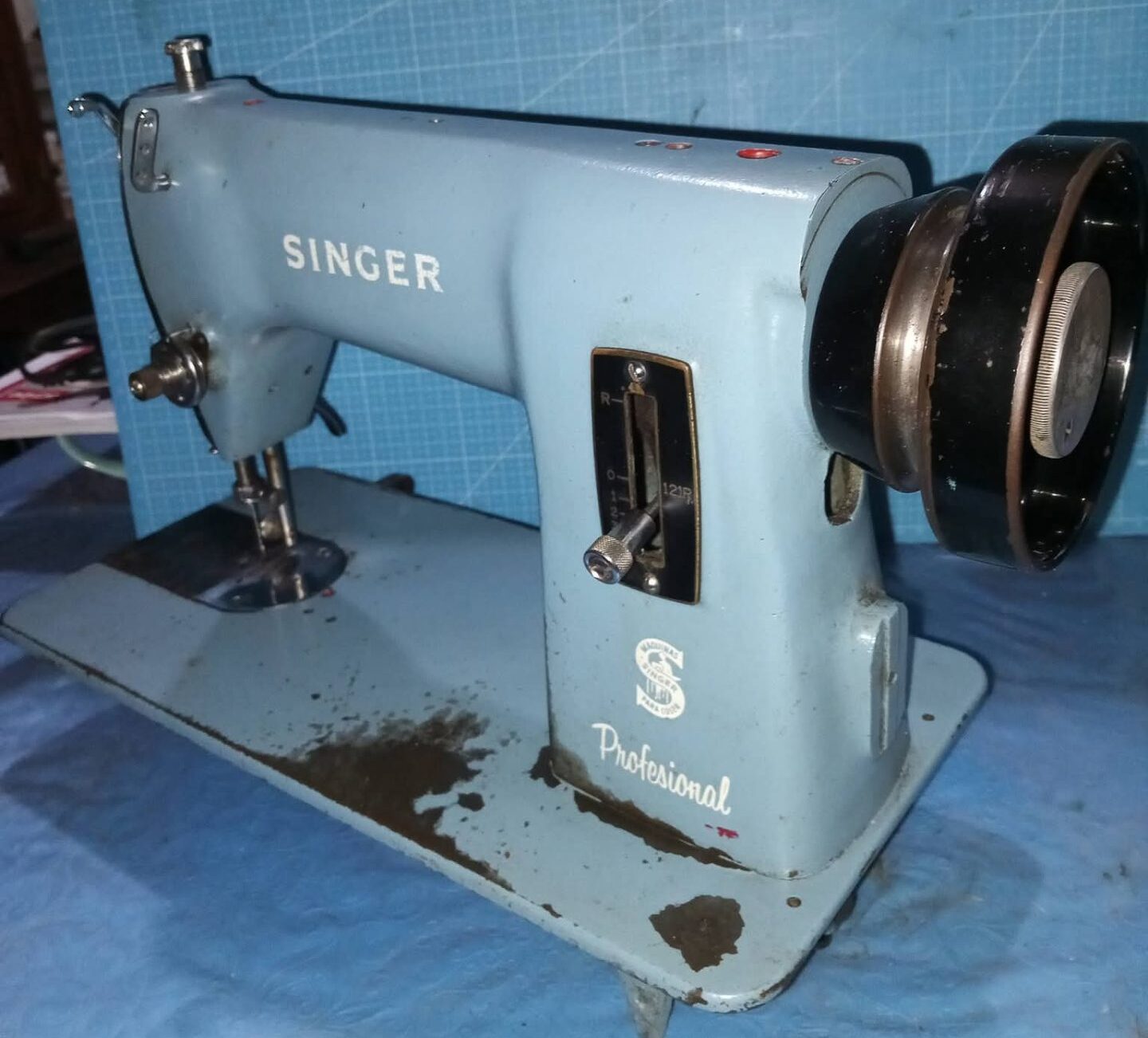
121R
Recorded serial numbers: 1
Recorded factories:
Industrial machines documented from the Querétaro factory. Nothing more is known about this class.
Documented Machines
(What does it mean?)Total: 1
Documented Factories:
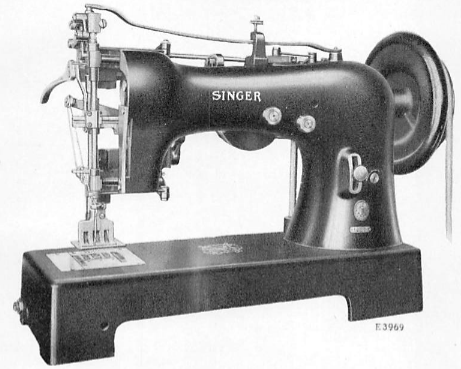
122
In use from 1917 to 1944
Recorded serial numbers: 100
Recorded factories:
Industrial machines for joining press cloths made of camel's hair for straining cottonseed oil.
123
In use from 1917 to 1922
Recorded serial numbers: 75
Recorded factories:
Usage Information
- Needle size: 5x11
Industrial machines for sewing canvas and rubber belting. Two needles, two cylinder shuttles.
123W
In use from 1905
Recorded serial numbers: 2
Recorded factories:
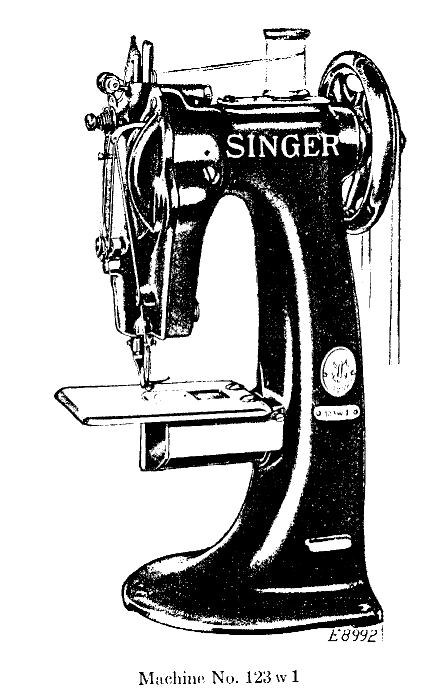
Industrial lock stitch, vertical hook machines with cylinder bed. Known as "Needle Feed Short Horizontal Cylinder Machines" in the class manuals.
Documented Machines
(What does it mean?)Total: 2
Documented Factories:
124
In use from 1917 to 1952
Recorded serial numbers: 2,160
Recorded factories:
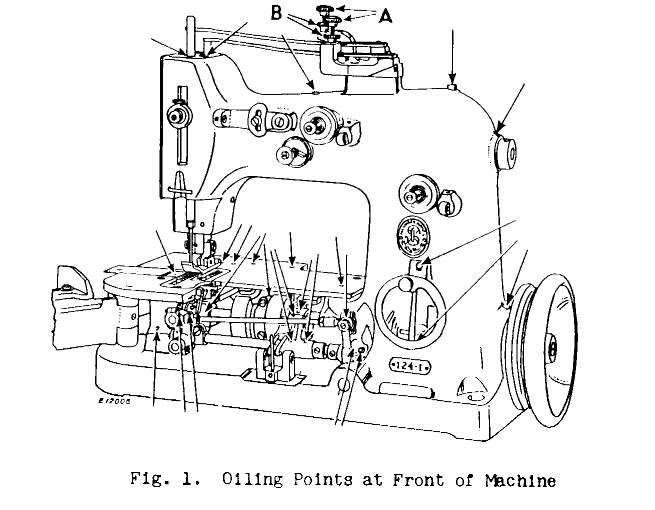
Single or two thread chain stitch industrial machines for heavy bag work.
125
In use from 1919 to 1931
Recorded serial numbers: 1,300
Recorded factories:
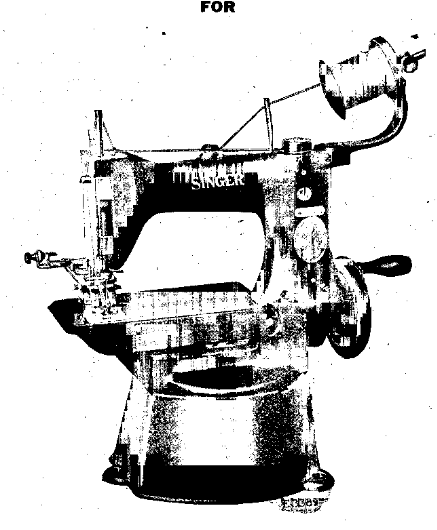
Industrial machines for stitiching two or four hole buttons.
126
In use from 1937
Recorded serial numbers: 20,000
Recorded factories:
Allotted in a batch of 20000 machines in 1937. Nothing more is known about this class.
127
In use from 1910 to 1961
Recorded serial numbers: 2,615,074
Recorded factories:
- Elizabethport, New Jersey (USA)
- Kilbowie, Clydebank (Scotland, UK)
- St. John's Factory, Quebec (Canada)
- Wittenberge, Prussia (Germany)
Usage Information
- Needle size: 15x1
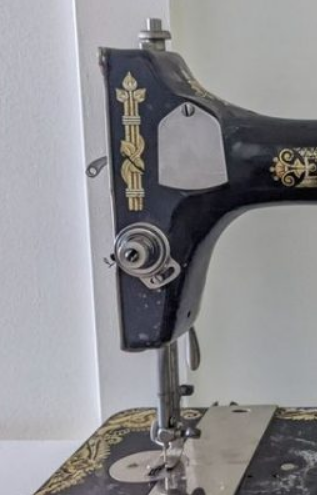
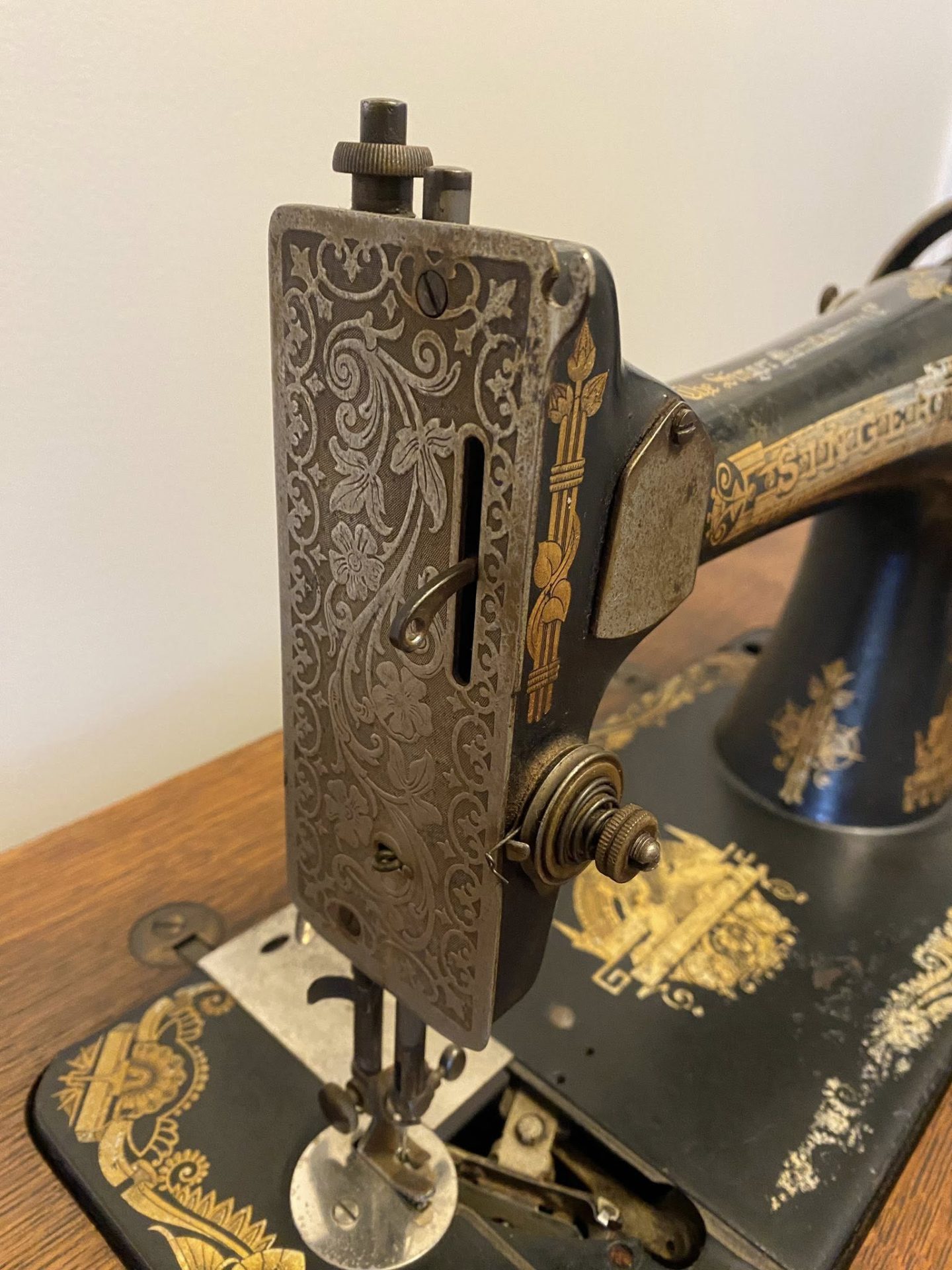
Full size bed, improved version of the class 27. Domestic vibrating-shuttle lock stitch machines. Rectangular bed, high bobbin winder. Bell-shaped access door cover on the front.
Documented Machines
(What does it mean?)Total: 53
Documented Factories:
- Elizabethport, New Jersey (USA)
- Kilbowie, Clydebank (Scotland, UK)
- St. John's Factory, Quebec (Canada)
- Wittenberge, Prussia (Germany)
Documented Decals:
Documented years: 1910 - 1937
128
In use from 1912 to 1962
Recorded serial numbers: 4,177,674
Recorded factories:
- Bonnières-sur-Seine (France)
- Elizabethport, New Jersey (USA)
- Kilbowie, Clydebank (Scotland, UK)
- St. John's Factory, Quebec (Canada)
Usage Information
- Needle size: 15x1
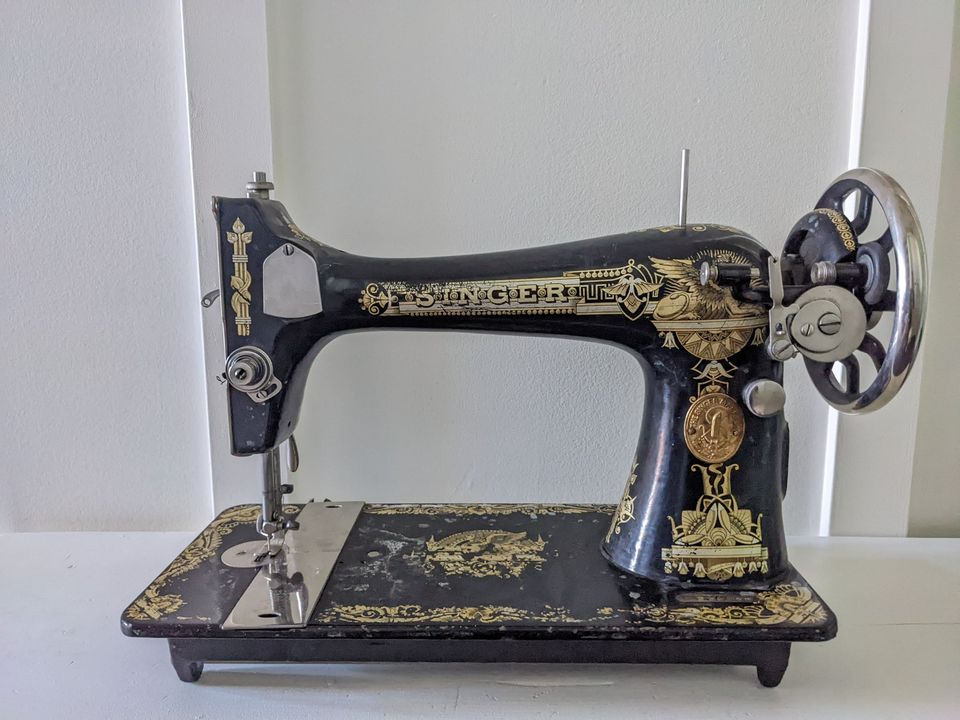
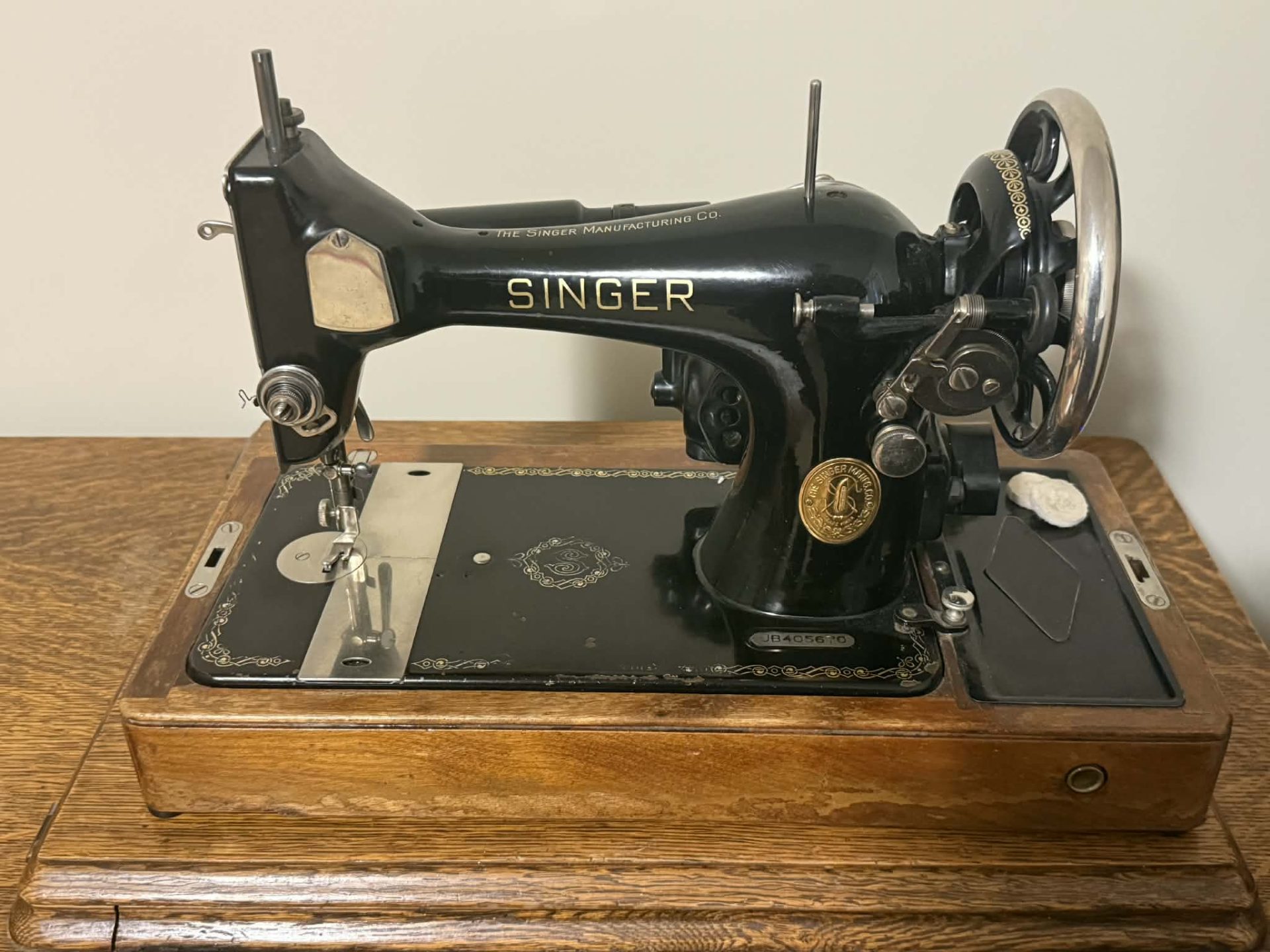
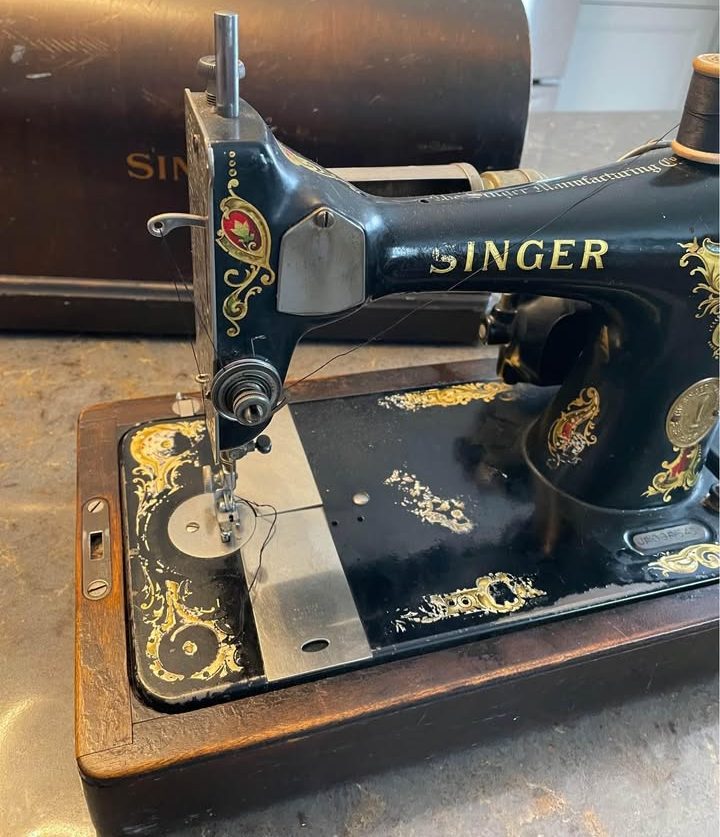
3/4 size bed, improved version of the class 28. Domestic vibrating-shuttle lock stitch machines. Rectangular bed, high bobbin winder. Bell-shaped access door cover on the front.
Documented Machines
(What does it mean?)Total: 103
Documented Factories:
- Bonnières-sur-Seine (France)
- Elizabethport, New Jersey (USA)
- Kilbowie, Clydebank (Scotland, UK)
- St. John's Factory, Quebec (Canada)
Documented Decals:
- Celtic Swirl
- Hearts
- Hearts Godzilla
- La Vencedora
- La Vencedora Variant (Indian Star)
- Paperclip Godzilla Finish
- Rococo
- Victorian
Documented years: 1892 - 1958
131
In use from 1919 to 1948
Recorded serial numbers: 103
Recorded factories:
Allotted in two distant batches: a batch of 100 machines in 1919, and a batch of 3 machines in 1948. Nothing more is known about this class.
132
In use from 1920 to 1965
Recorded serial numbers: 48,229
Recorded factories:
Industrial lock stitch machines, for cloth, canvas or leather.
133
Recorded serial numbers: 196,668
Recorded factories:
Industrial short arm cylinder bed machines. For general cloth, canvas and leather work.
Documented Machines
(What does it mean?)Total: 2
Documented Factories:
Documented years: 1947
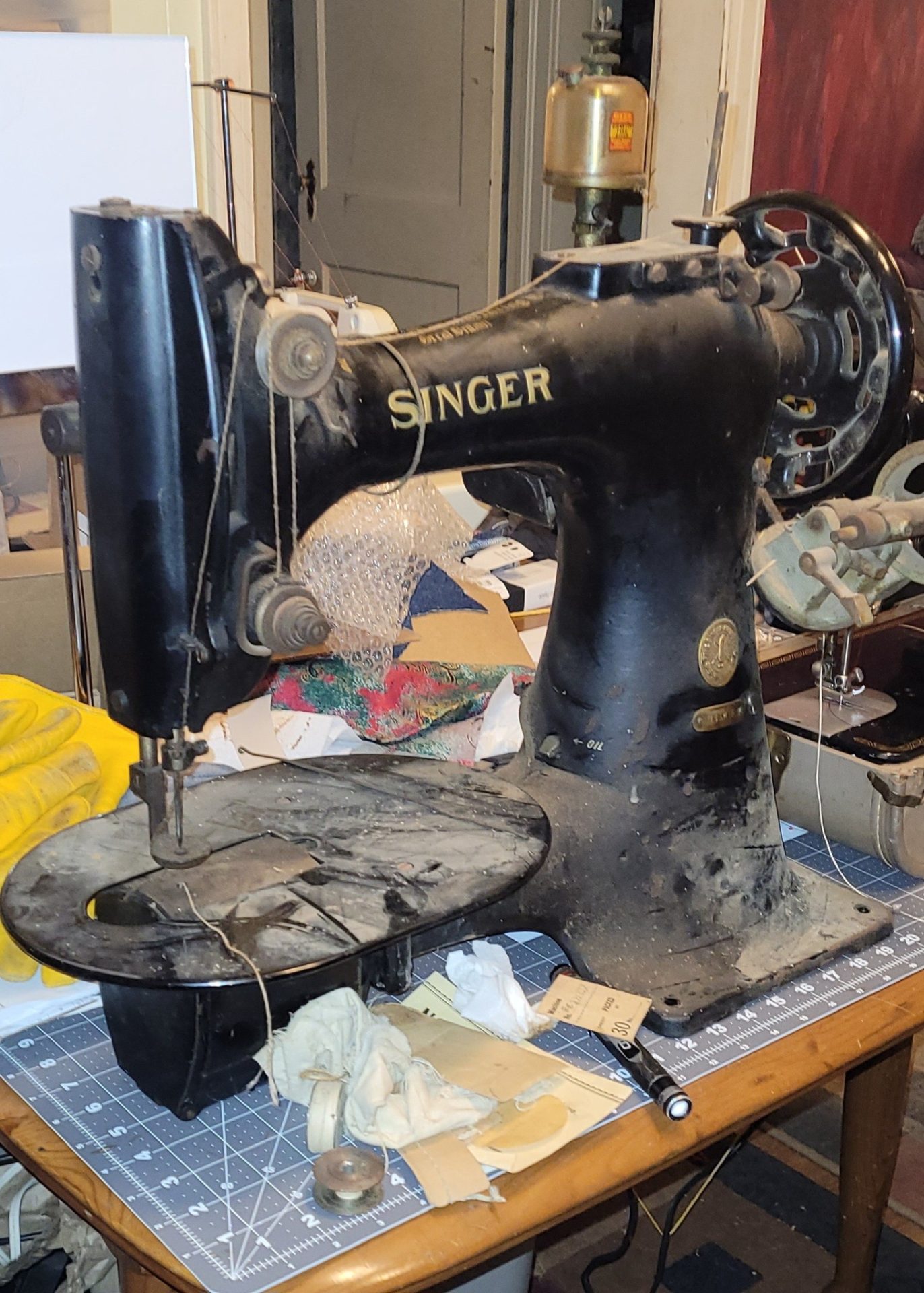
133W
In use from 1963
Recorded serial numbers: 200
Recorded factories:
Industrial flat stitch embroidery machines: for Madeira eyelets, French knots, seed stitch, scallops, etc.
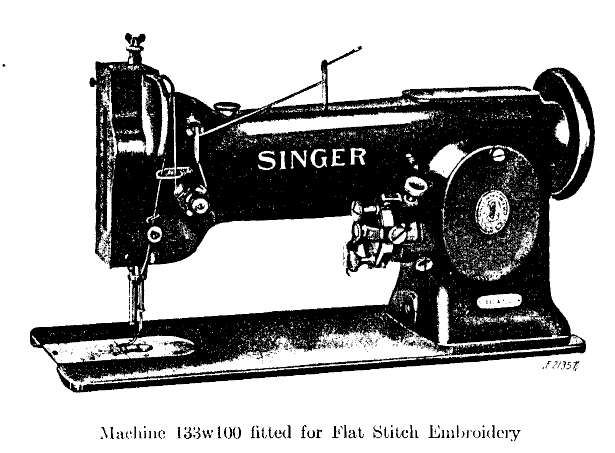
134
In use from 1926
Recorded serial numbers: 20
Recorded factories:
Allotted in a batch of 20 machines in 1926. Nothing more is known about this class of industrial machines.
135
In use from 1958
Recorded serial numbers: 500
Recorded factories:
Allotted in a batch of 500 machines in 1958. Nothing more is known about this class.
136W
In use from 1946
Recorded serial numbers: 1
Recorded factories:
Industrial post bed lock stitch, continuous wheel feed machines. For leather work, independently driven, oblique underedge trimmer.
Documented Machines
(What does it mean?)Total: 1
Documented Factories:
Documented years: 1946
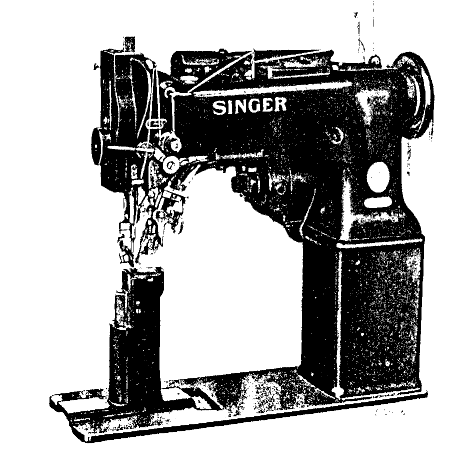
138
In use from 1925 to 1964
Recorded serial numbers: 2,664
Recorded factories:
Industrial single thread machines.
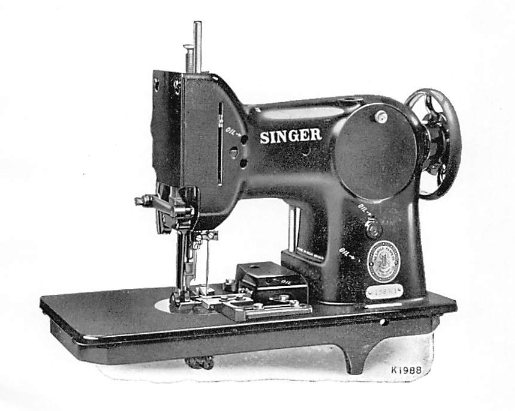
144
In use from 1960 to 1967
Recorded serial numbers: 3,500
Recorded factories:
Usage Information
- Needle size: 7x3
Industrial machines
145
In use from 1919 to 1949
Recorded serial numbers: 395
Recorded factories:
Cylinder bed industrial machines.
145W
In use from 1943 to 1966
Recorded serial numbers: 1,501
Recorded factories:
Industrial machines.
Documented Machines
(What does it mean?)Total: 1
Documented Factories:
Documented years: 1943
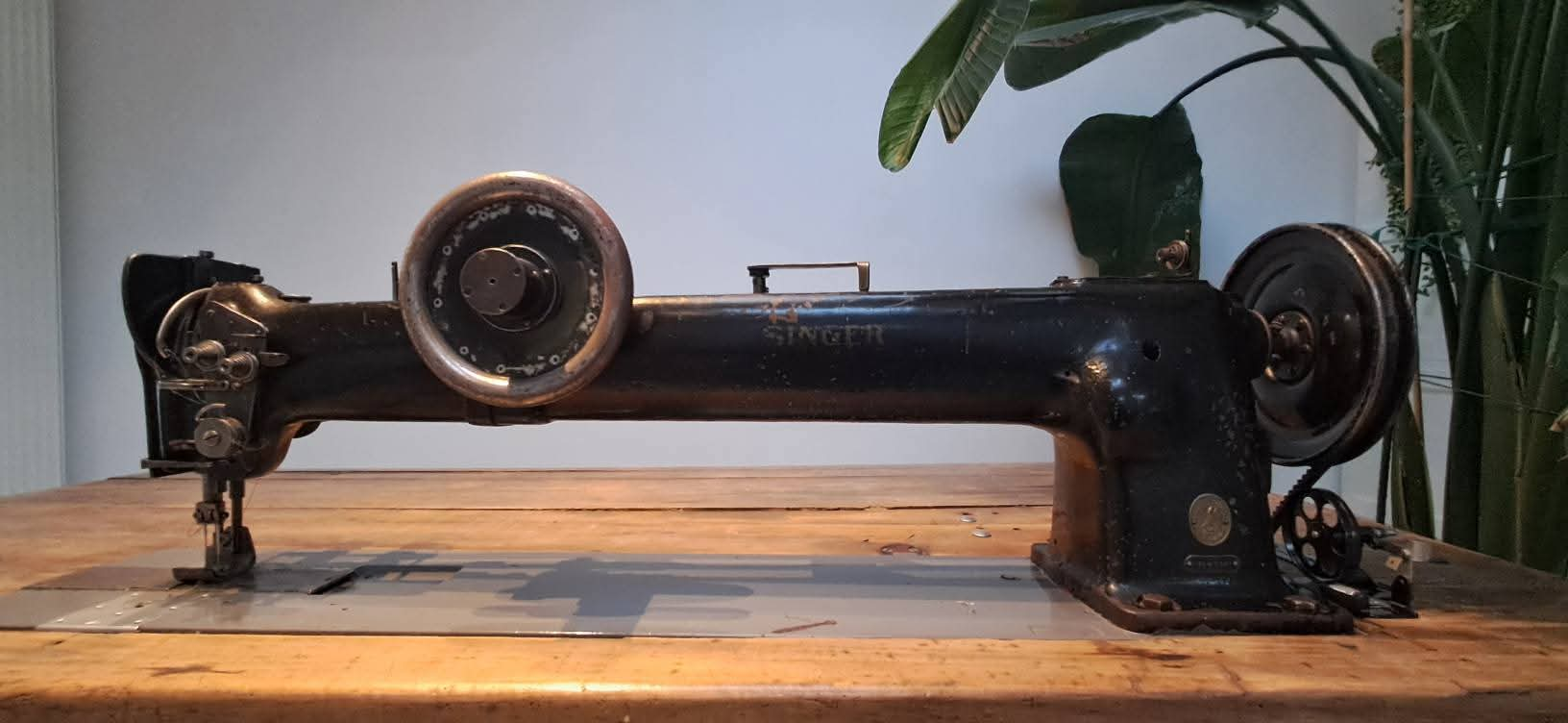
146
In use from 1921 to 1966
Recorded serial numbers: 6,675
Recorded factories:
Industrial two-thread chain stitch machines. For closing filled bags.
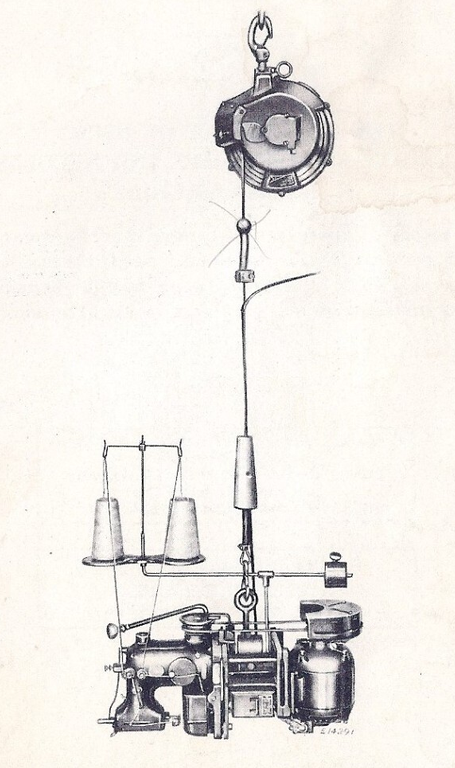
147
In use from 1923 to 1965
Recorded serial numbers: 33,575
Recorded factories:
Industrial two-thread chain stitch machines for various purposes.
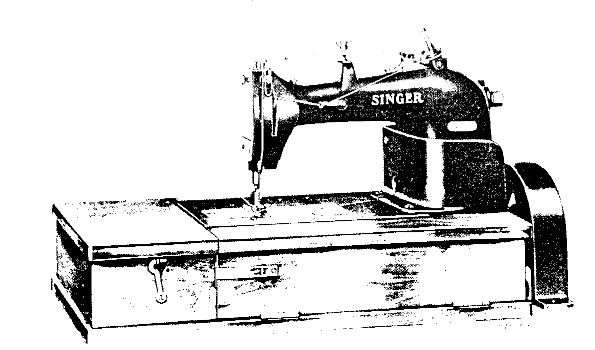
148
In use from 1924 to 1961
Recorded serial numbers: 3,850
Recorded factories:
Industrial cylinder bed two-thread chain stitch machines.
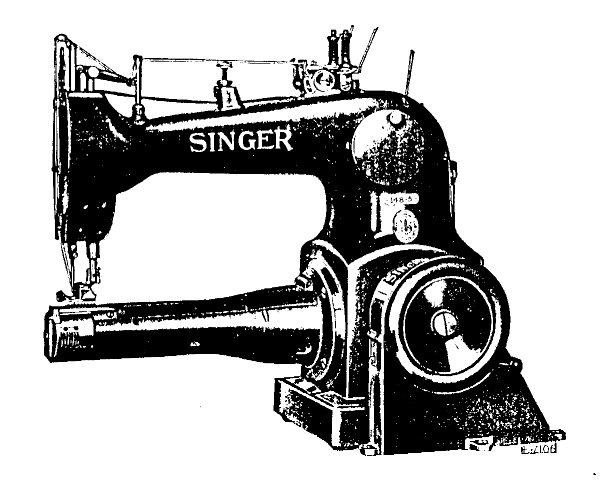
150
In use up to 1940
Recorded serial numbers: 1
Recorded factories:
Industrial cylinder-arm sewing machine designed for stitching bulky materials, like coats and outdoor gear. Produced in a variety of arm lenghts.
Documented Machines
(What does it mean?)Total: 1
Documented Factories:
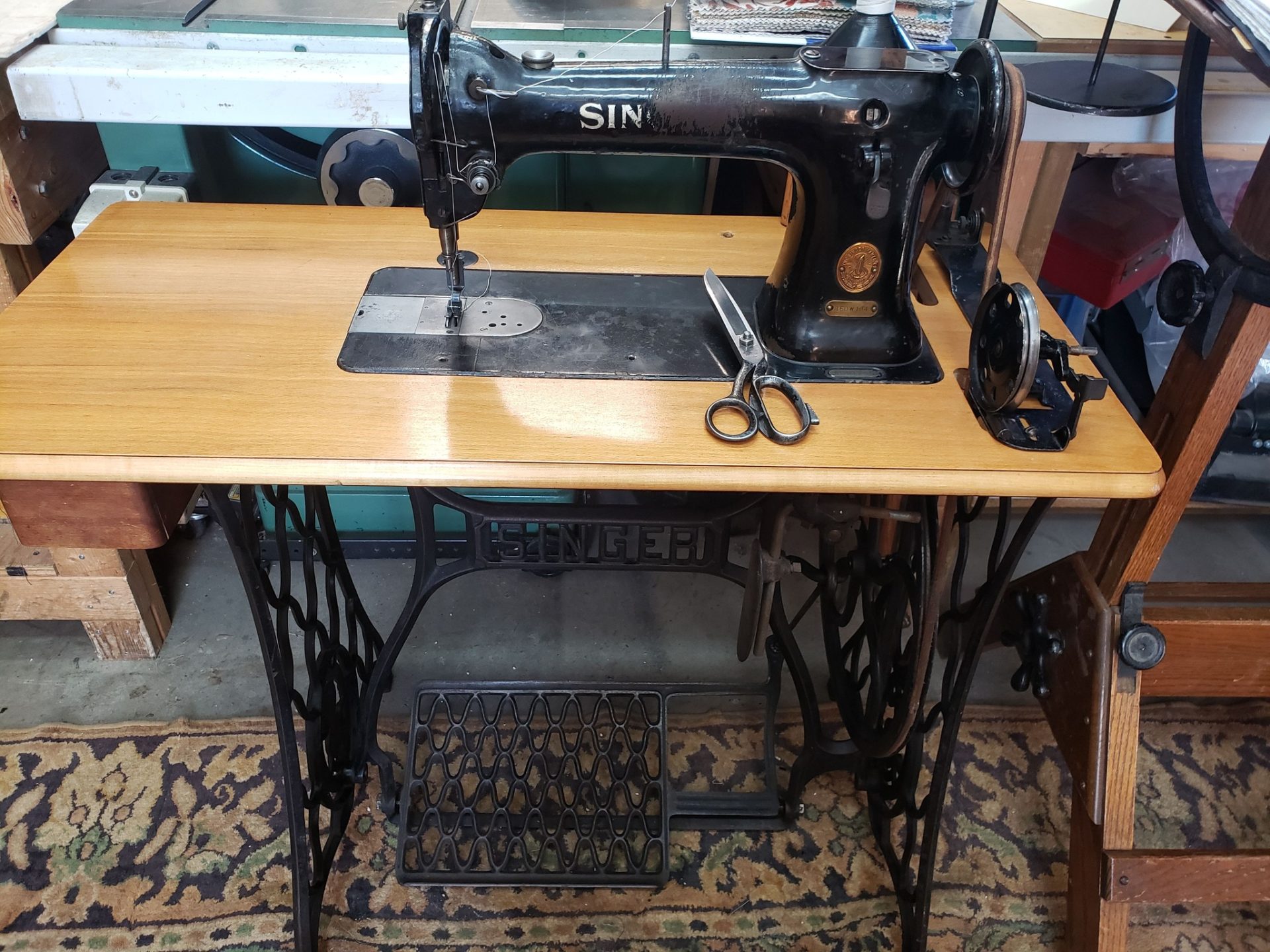
151
In use from 1924 to 1968
Recorded serial numbers: 5,800
Recorded factories:
Industrial three-thread chain stitch machines.
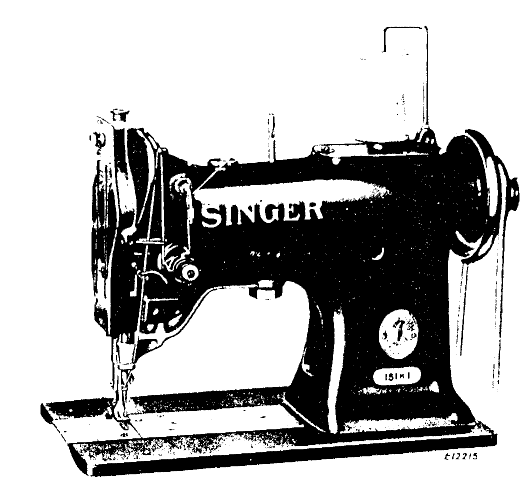
152
In use from 1931 to 1970
Recorded serial numbers: 3,200
Recorded factories:
Industrial two-needle two-loopers two-thread chain stitch machines.
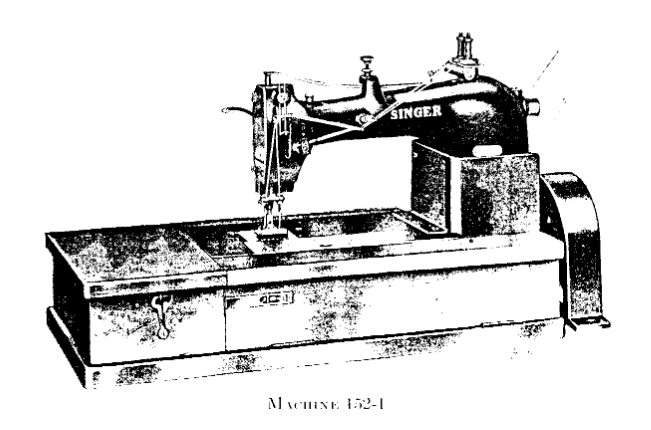
153
In use from 1950 to 1969
Recorded serial numbers: 5,581
Recorded factories:
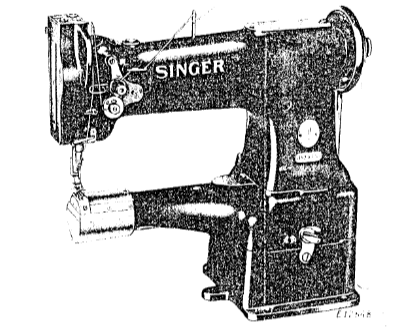
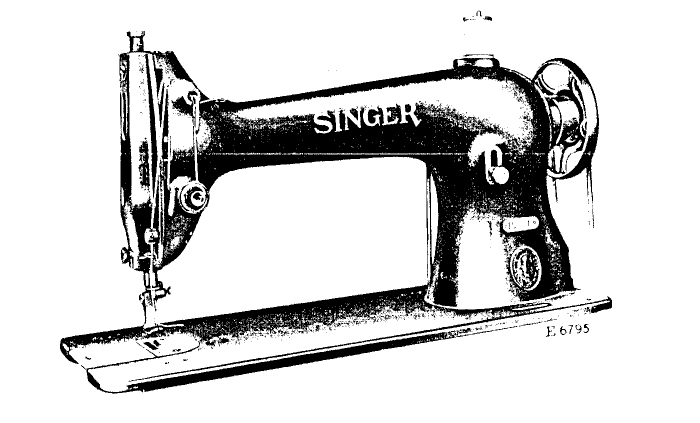
Industrial single needle lock stitch machines. Medium duty, cylinder arm.
Documented Machines
(What does it mean?)Total: 1
Documented Factories:
Documented years: 1950
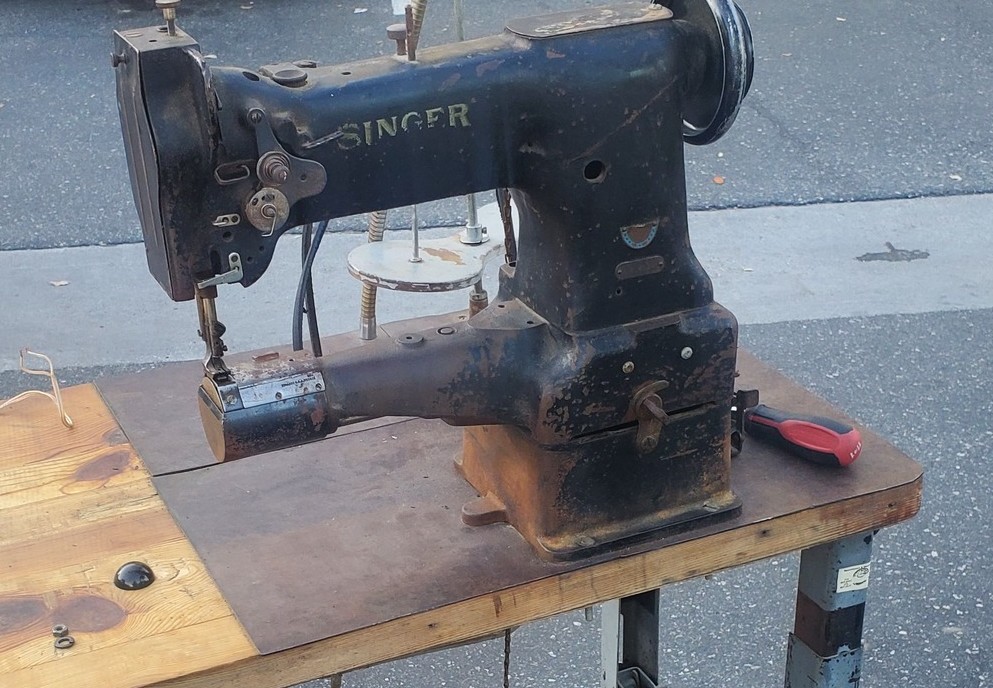
154
In use from 1961
Recorded serial numbers: 200
Recorded factories:
Industrial single needle, lock stitch, compound feed, horizontal cylinder bed machines.
156
In use from 1929 to 1940
Recorded serial numbers: 200
Recorded factories:
Allotted in two distant batches: a batch of 100 machines in 1929, and a batch of 100 machines in 1940. Nothing more is known about this class.
157
In use from 1931 to 1961
Recorded serial numbers: 4,425
Recorded factories:
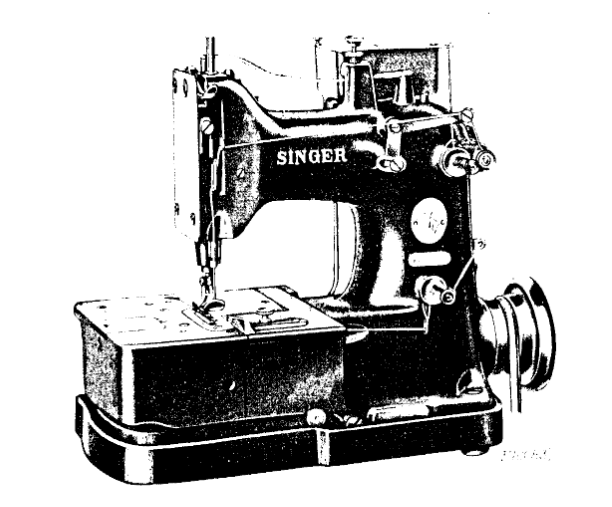
Industrial machines for making bags, with automated oiling system.
159
In use from 1931 to 1965
Recorded serial numbers: 2,800
Recorded factories:
Usage Information
- Needle size: 124x4 (for heavy work); 124x2 (for light work)
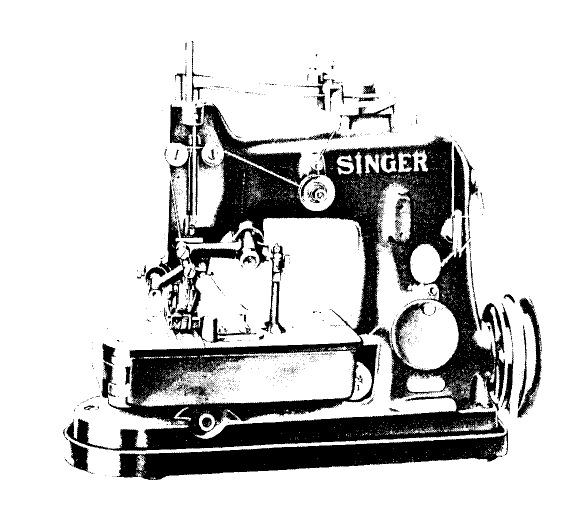
Industrial machines for overedging heavy burlap bags.
168
In use from 1944
Recorded serial numbers: 1
Recorded factories:
Industrial post bed machines. Lock stitch, single needle, compound feed.
Documented Machines
(What does it mean?)Total: 1
Documented Factories:
Documented years: 1944
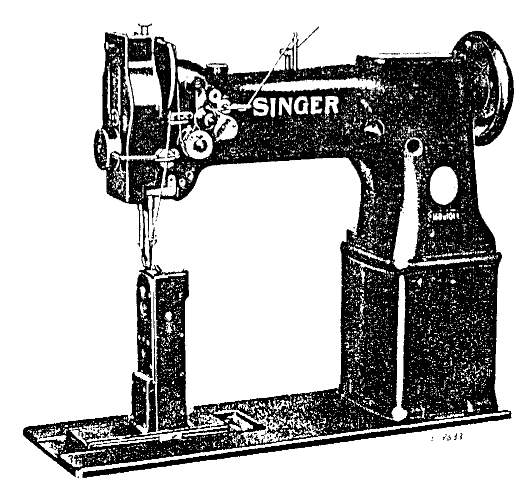
169
Recorded serial numbers: 11
Recorded factories:
Domestic machines.
Documented Machines
(What does it mean?)Total: 11
Documented Factories:
Documented years: 1962
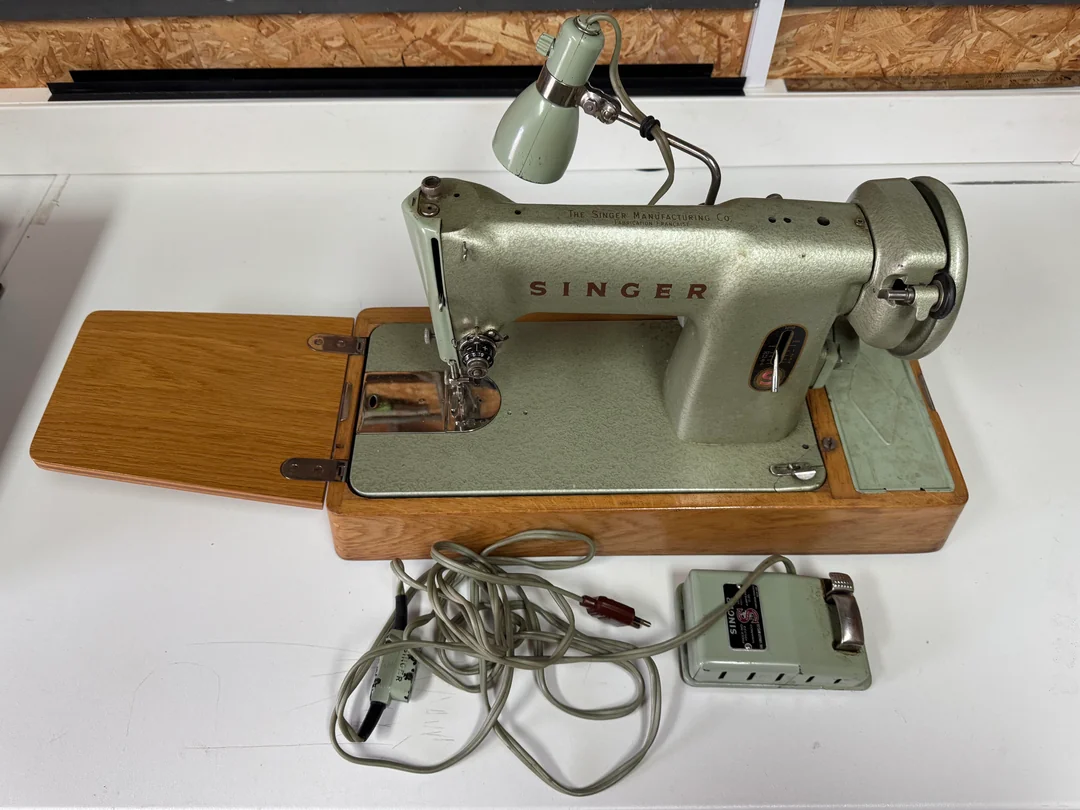
171
In use from 1941 to 1948
Recorded serial numbers: 700
Recorded factories:
Allotted in three batches between 1941 and 1948. Nothing more is known about this class.
172
In use from 1950 to 1965
Recorded serial numbers: 2,650
Recorded factories:
Industrial lock stitch machines for making gloves.
Documented Machines
(What does it mean?)Total: 1
Documented Factories:
Documented years: 1950
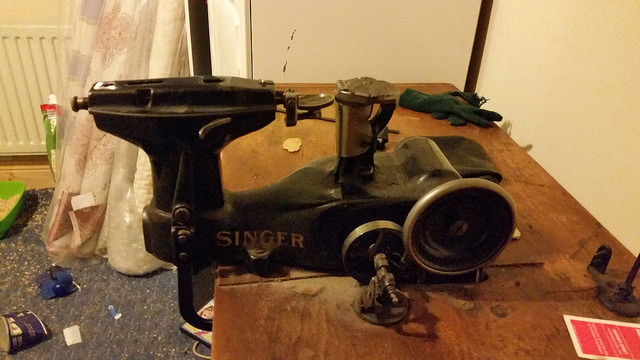
175
In use from 1934 to 1970
Recorded serial numbers: 39,550
Recorded factories:
Usage Information
- Needle size: 175x1
Industrial single thread chain stitch machines.
Documented Machines
(What does it mean?)Total: 1
Documented Factories:
Documented years: 1934
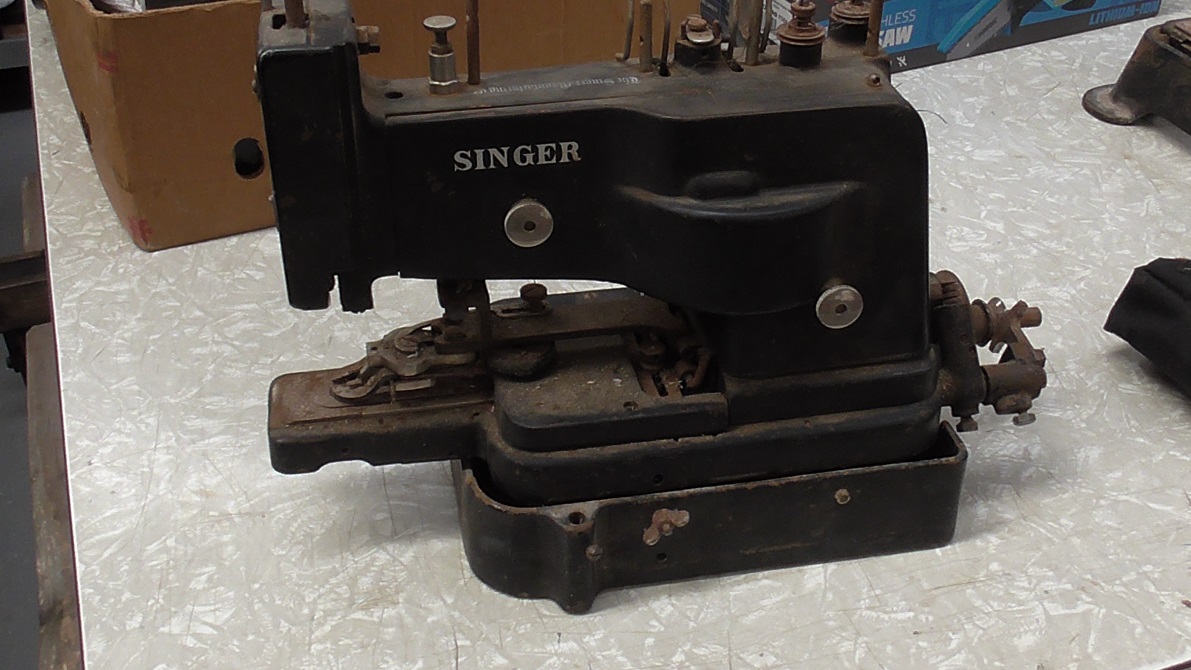
176
In use from 1934 to 1960
Recorded serial numbers: 7,900
Recorded factories:
Industrial single thread overseas stitch machines. For fur work, slipper and glove work
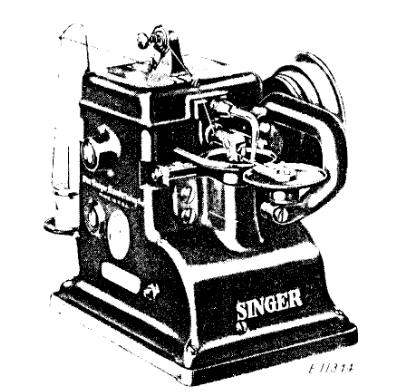
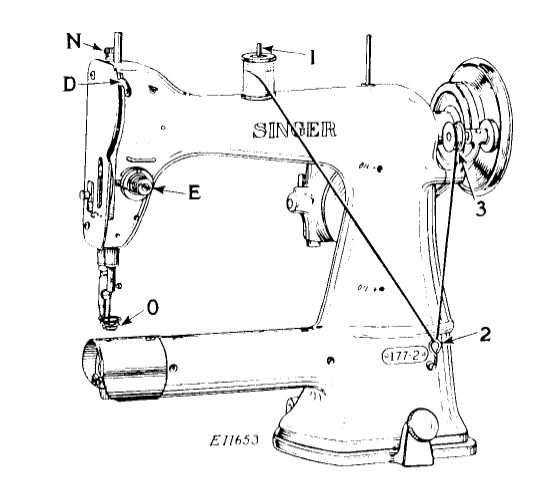
177
In use from 1934
Recorded serial numbers: 2,000
Recorded factories:
Industrial lock stitch machines for darning and mending, designed for repairing holes and tears in textiles. Cylinder bed.
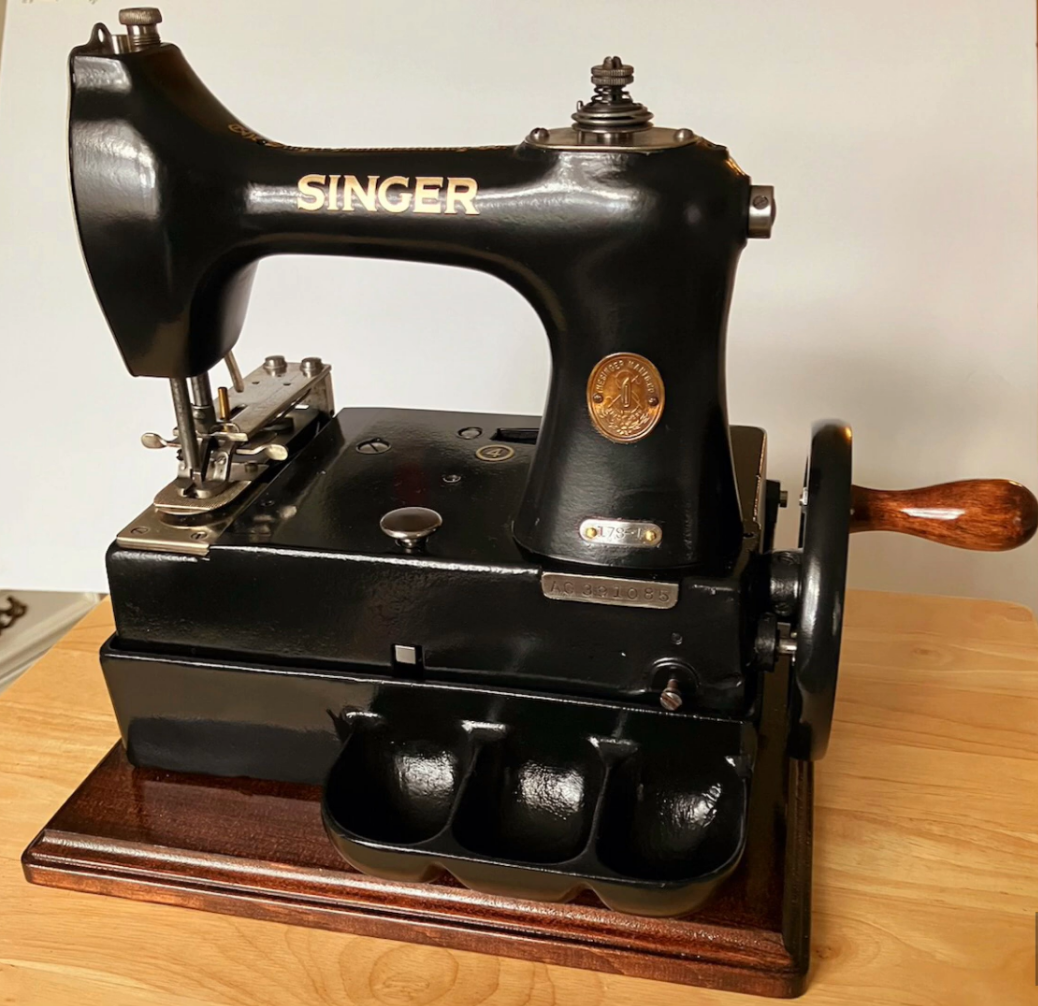
178
In use from 1937 to 1961
Recorded serial numbers: 3,000
Recorded factories:
Industrial single thread chain stitch machines for sewing on buttons.
Documented Machines
(What does it mean?)Total: 1
Documented Factories:
Documented years: 1942
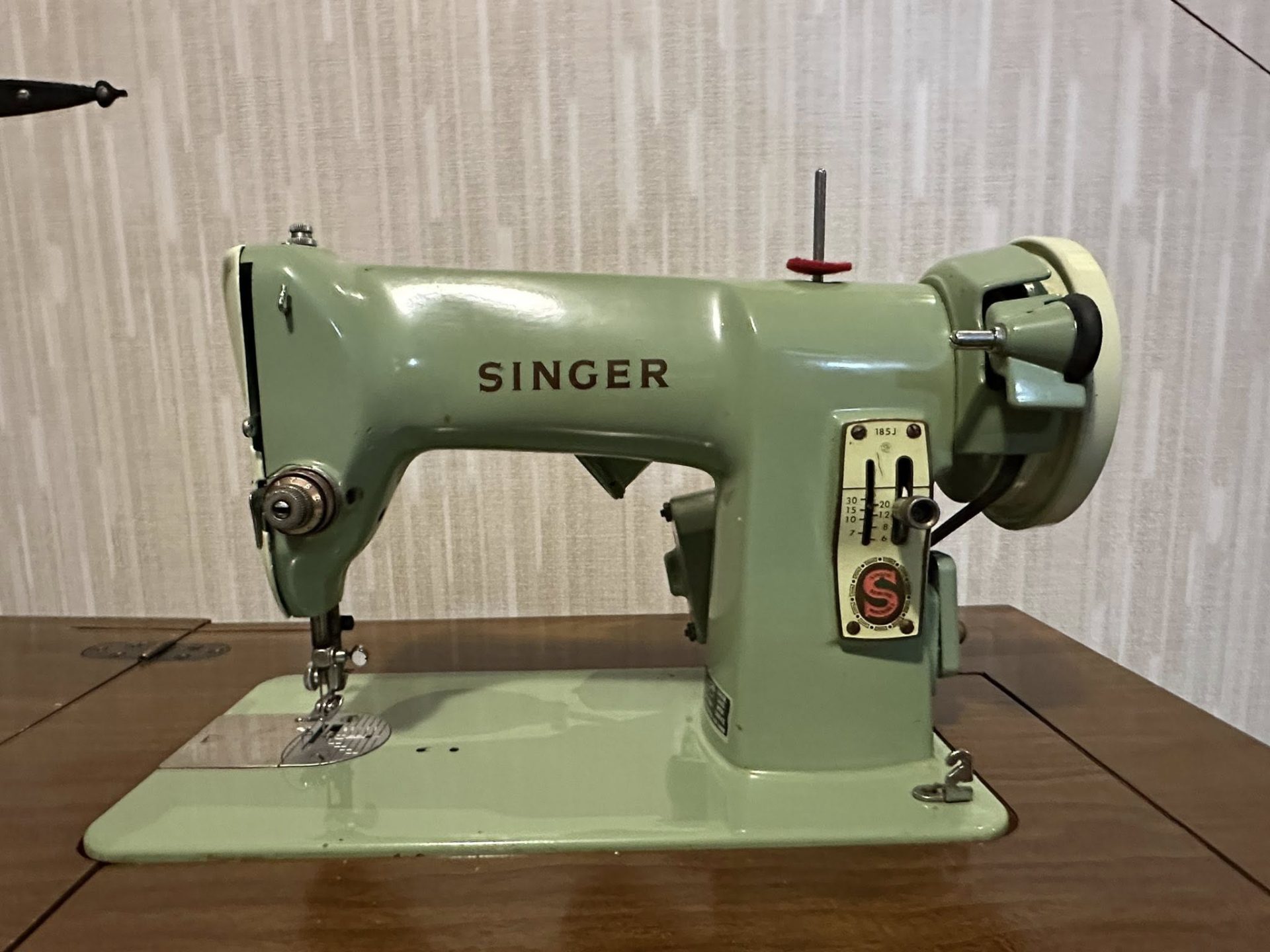
185
In use from 1954 to 1962
Recorded serial numbers: 317,519
Recorded factories:
- Elizabethport, New Jersey (USA)
- Kilbowie, Clydebank (Scotland, UK)
- St. John's Factory, Quebec (Canada)
Usage Information
- Needle size: 15x1
Domestic machines, revised electric version of the Class 99. 3/4 sized, usually tan/brown or green in color. In 1963, this class was replaced by Class 285, that looked almost identical, except for a different underbed mechanism.
Documented Machines
(What does it mean?)Total: 13
Documented Factories:
Documented years: 1958 - 1962
188
In use from 1959 to 1973
Recorded serial numbers: 80,536
Recorded factories:
- Kilbowie, Clydebank (Scotland, UK)
- Utsunomiya (Japan)
Usage Information
- Needle size: 16x231
Semi-industrial or "artisanal" machines. High arm, standard industrial bed.
Documented Machines
(What does it mean?)Total: 3
Documented Factories:
- Kilbowie, Clydebank (Scotland, UK)
- Utsunomiya (Japan)
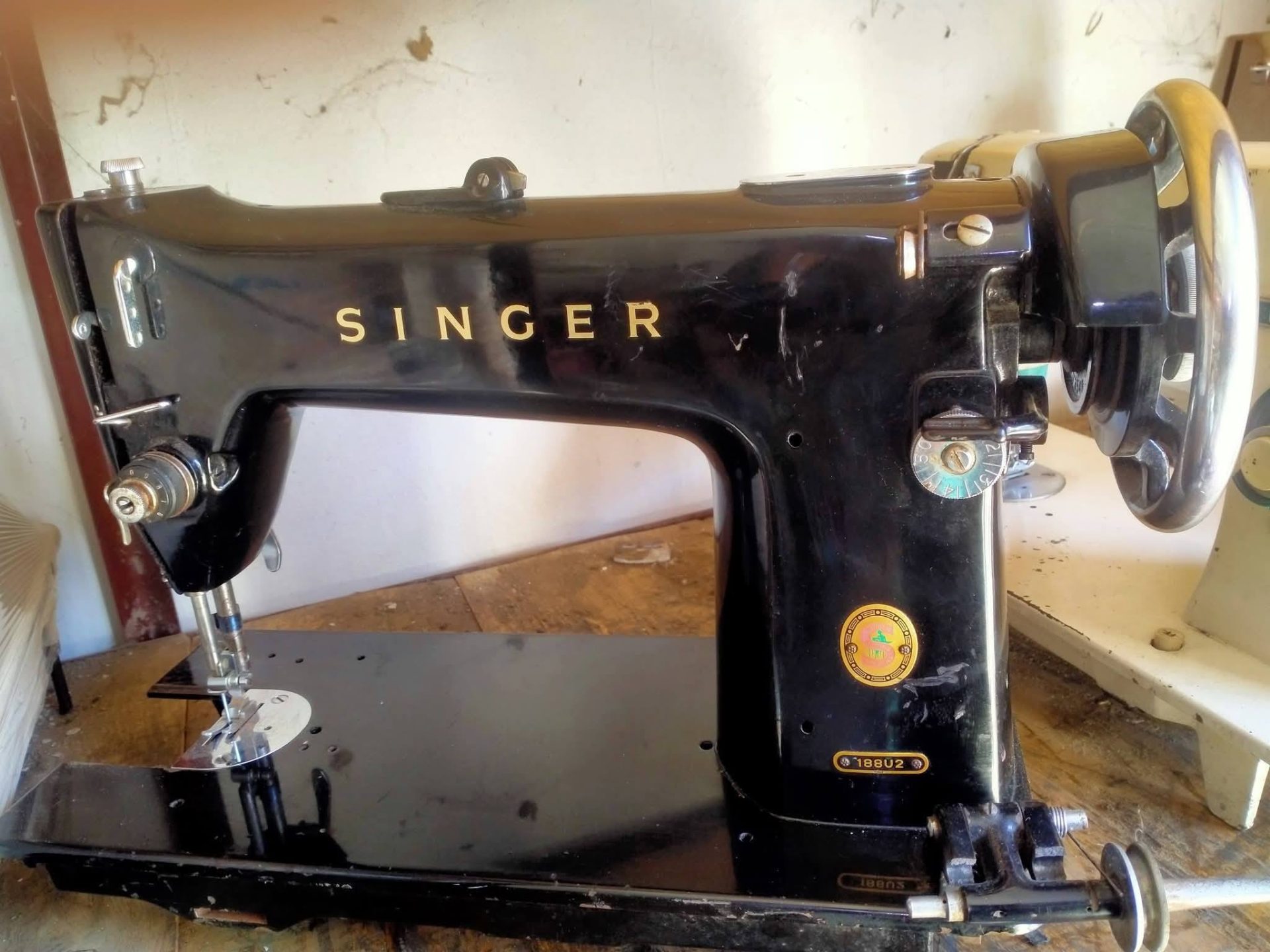
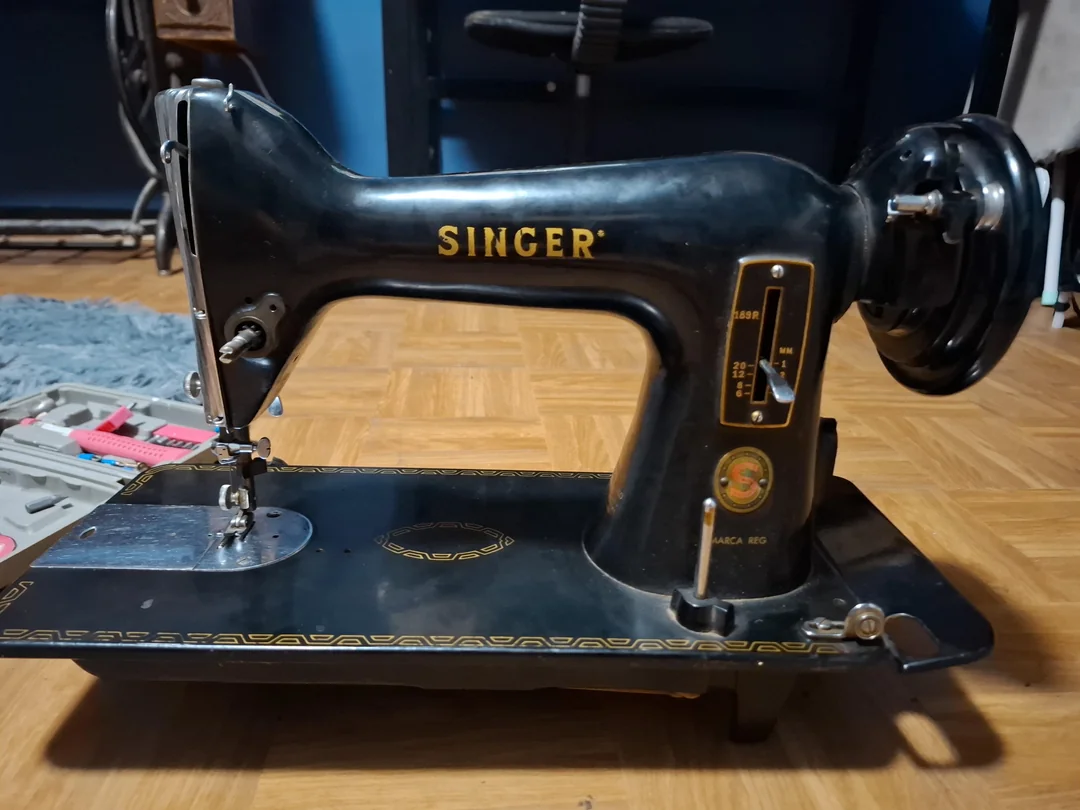
189
In use from 1958
Recorded serial numbers: 4
Recorded factories:
Domestic heavy duty machines. We know of a single machine allotted in 1961 in Elizabethport, then we documented a few machines from South American Singer factories.
Documented Machines
(What does it mean?)Total: 3
Documented Factories:
Documented Decals:
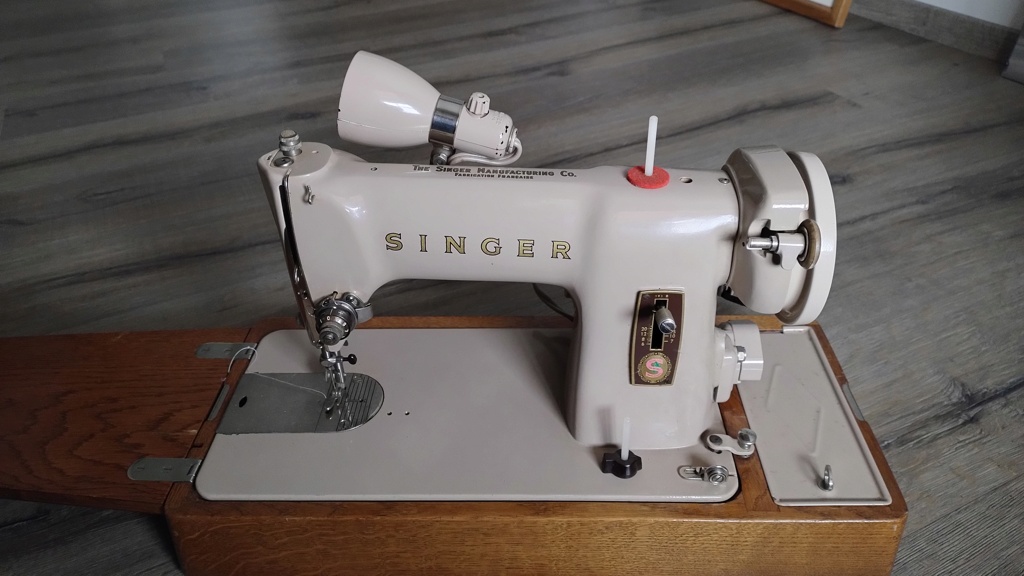
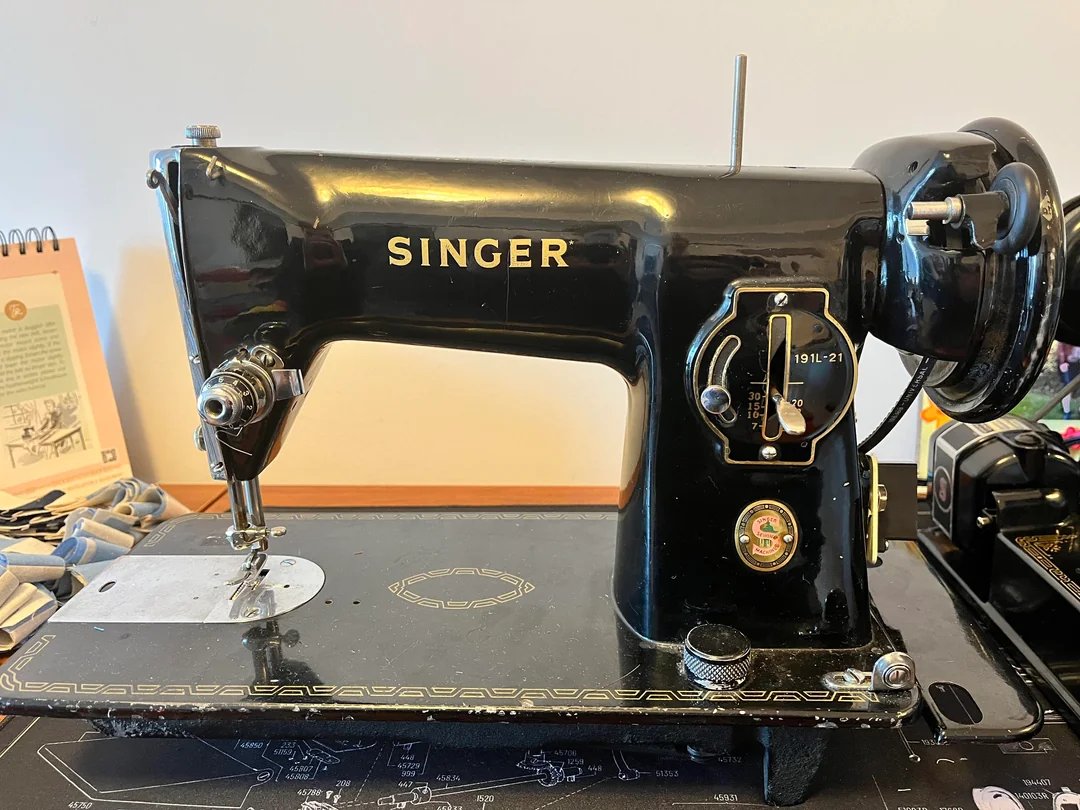
191
In use from 1957
Recorded serial numbers: 40,086
Recorded factories:
- Bogotà (Colombia)
- Bonnières-sur-Seine (France)
- Kilbowie, Clydebank (Scotland, UK)
- Monza (Italy)
- Querétaro (Mexico)
- St. John's Factory, Quebec (Canada)
- Utsunomiya (Japan)
Usage Information
- Needle size: 15x1
- Bobbin size: Class 15
Domestic oscillating hook, sturdy, straight-stitch sewing machines.
Documented Machines
(What does it mean?)Total: 86
Documented Factories:
- Bogotà (Colombia)
- Bonnières-sur-Seine (France)
- Kilbowie, Clydebank (Scotland, UK)
- Monza (Italy)
- Querétaro (Mexico)
- St. John's Factory, Quebec (Canada)
- Utsunomiya (Japan)
Documented Decals:
Documented years: 1957 - 1968
192
In use from 1958 to 1961
Recorded serial numbers: 134,999
Recorded factories:
Usage Information
- Needle size: 15x1
Domestic 3/4 size machines, horizontal oscillating hook. Budget version of Class 99, sometimes badged "Spartan".
Documented Machines
(What does it mean?)Total: 1
Documented Factories:
Documented years: 1959
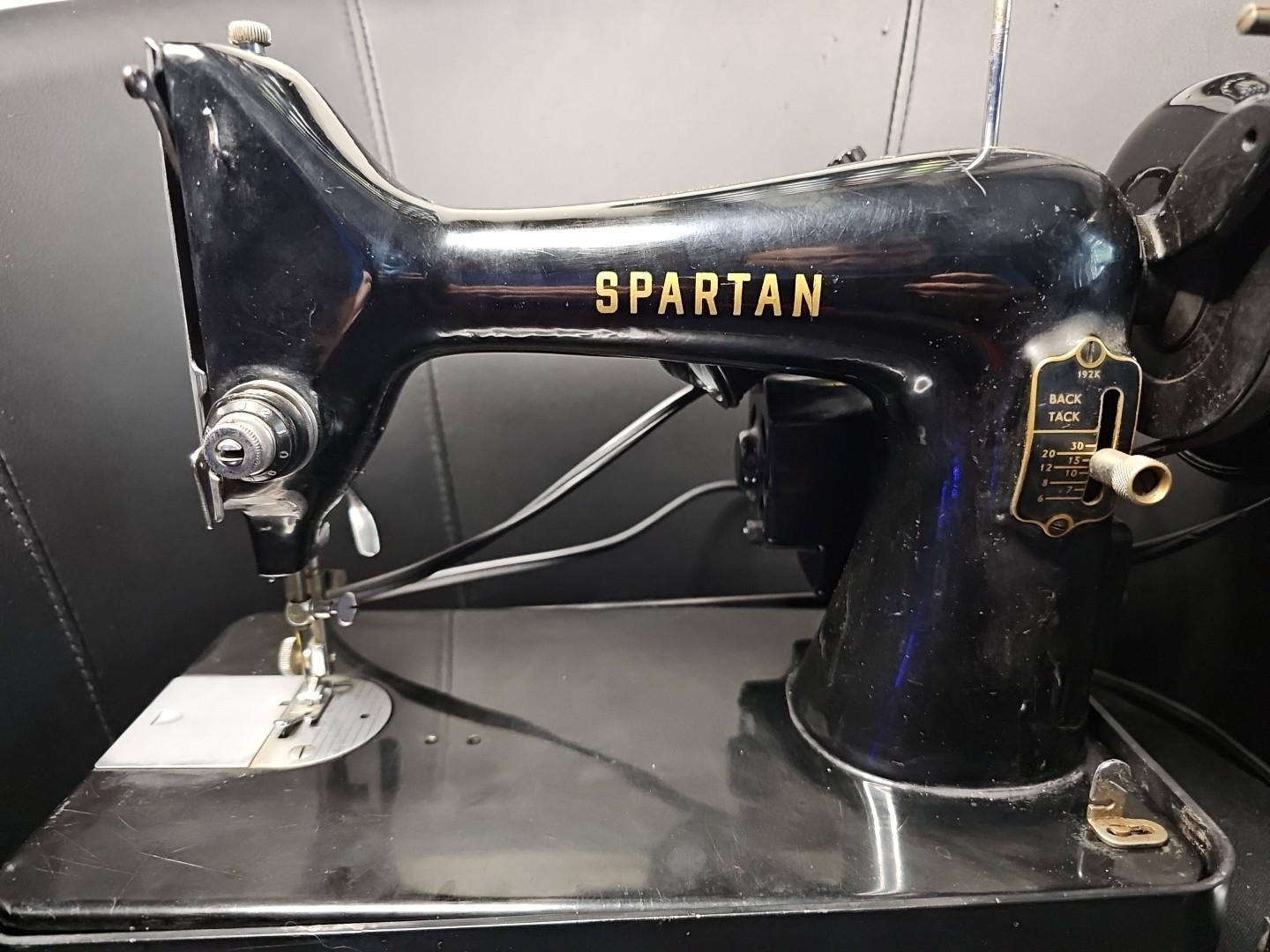
193
In use from 1960
Recorded serial numbers: 5
Recorded factories:
Domestic vertical oscillating hook machines. One allotment only is known: 5 machines from 1960.
194
Recorded serial numbers: 2
Recorded factories:
Domestic vertical oscillating hook machines.
Documented Machines
(What does it mean?)Total: 2
Documented Factories:

195
In use from 1959 to 1964
Recorded serial numbers: 34,199
Recorded factories:
Usage Information
- Needle size: 88x1
Industrial lock stitch rotating hook machines.
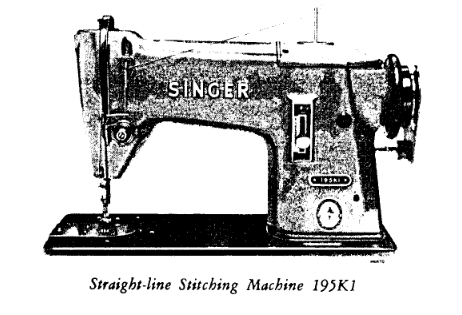
196
In use from 1958 to 1965
Recorded serial numbers: 106,493
Recorded factories:
Industrial lock stitch rotating hook machines.
197
Recorded serial numbers: 1
Recorded factories:
Electric domestic machines.
Documented Machines
(What does it mean?)Total: 1
Documented Factories:
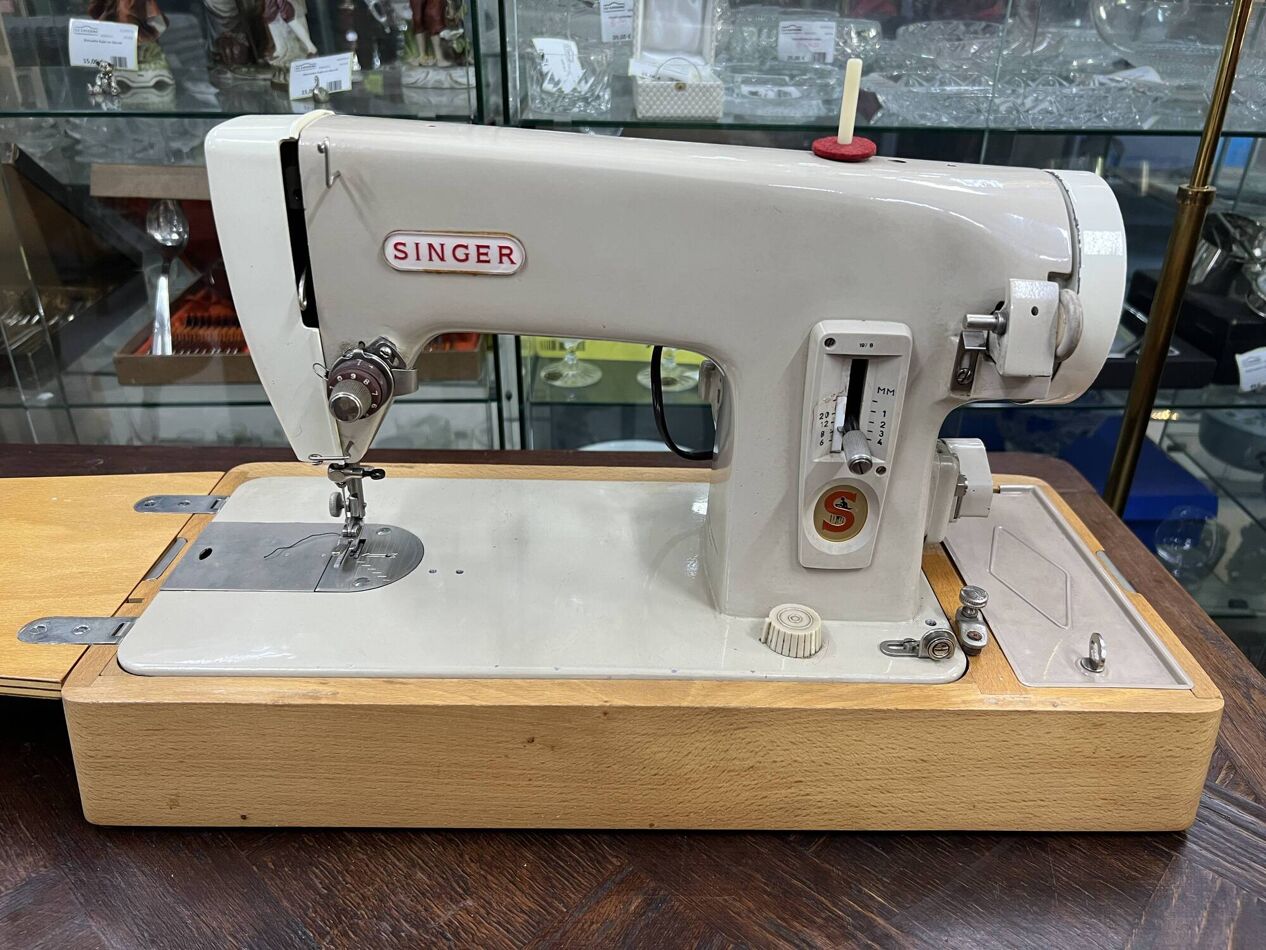
198
Recorded serial numbers: 5
Recorded factories:
Electric domestic machines.
Documented Machines
(What does it mean?)Total: 5
Documented Factories:
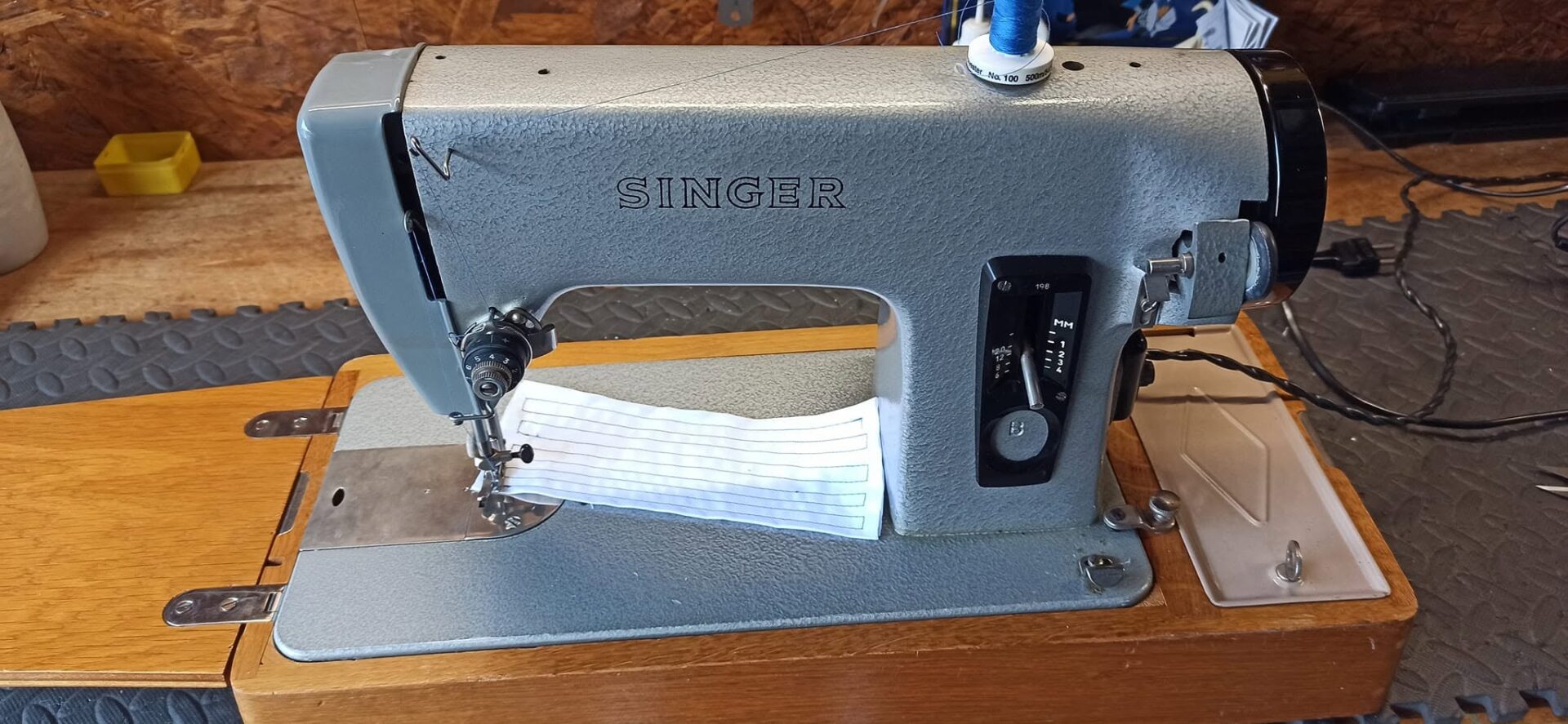
201
In use from 1932 to 1961
Recorded serial numbers: 2,523,322
Recorded factories:
- Elizabethport, New Jersey (USA)
- Kilbowie, Clydebank (Scotland, UK)
- Penrith, NSW (Australia)
- Wittenberge, Prussia (Germany)
Usage Information
- Needle size: 15x1
- Bobbin size: Class 66
Domestic horizontal rotary hook machines.
Documented Machines
(What does it mean?)Total: 44
Documented Factories:
- Elizabethport, New Jersey (USA)
- Kilbowie, Clydebank (Scotland, UK)
- Penrith, NSW (Australia)
- Wittenberge, Prussia (Germany)
Documented Decals:
Documented years: 1932 - 1957
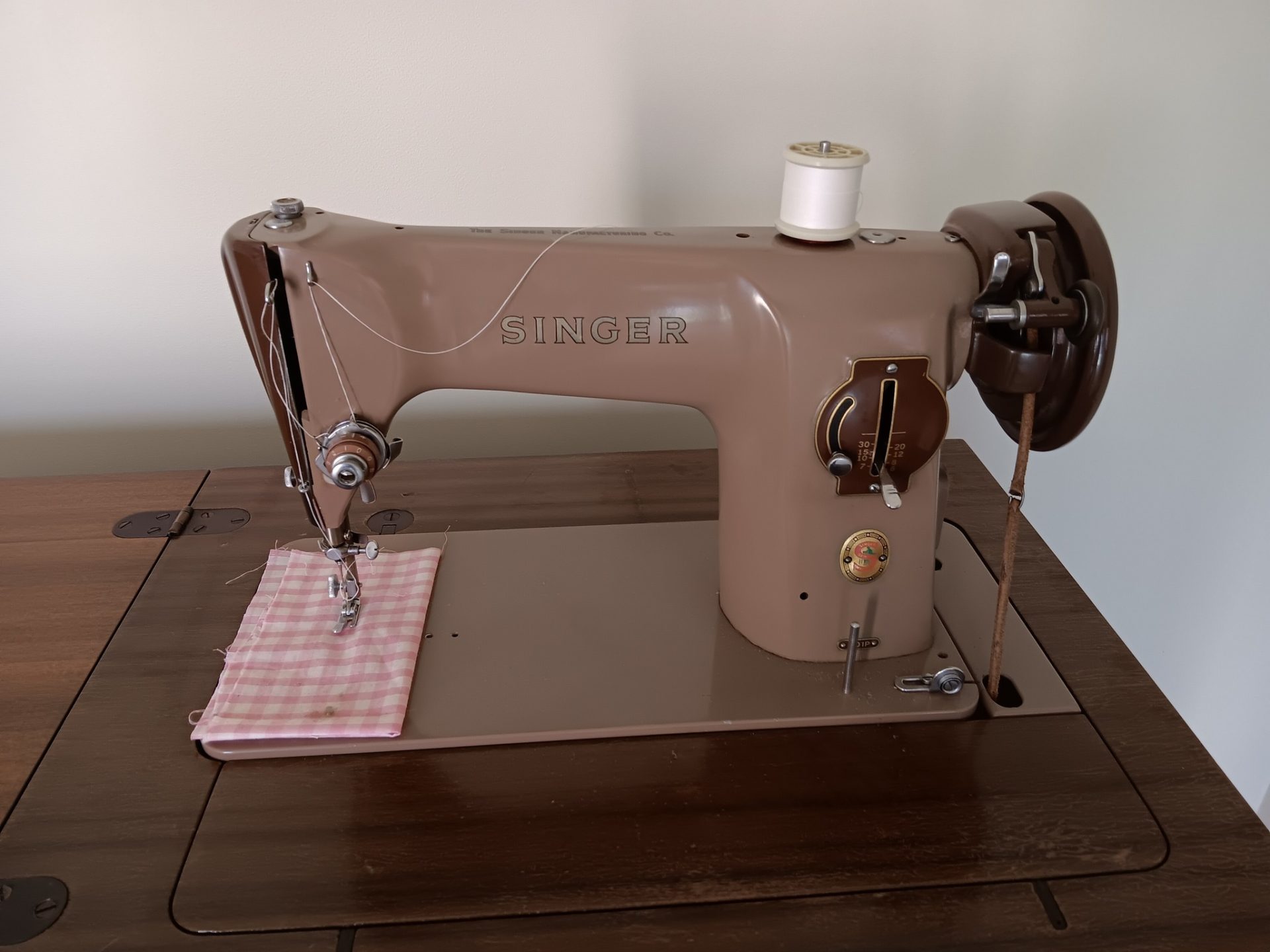
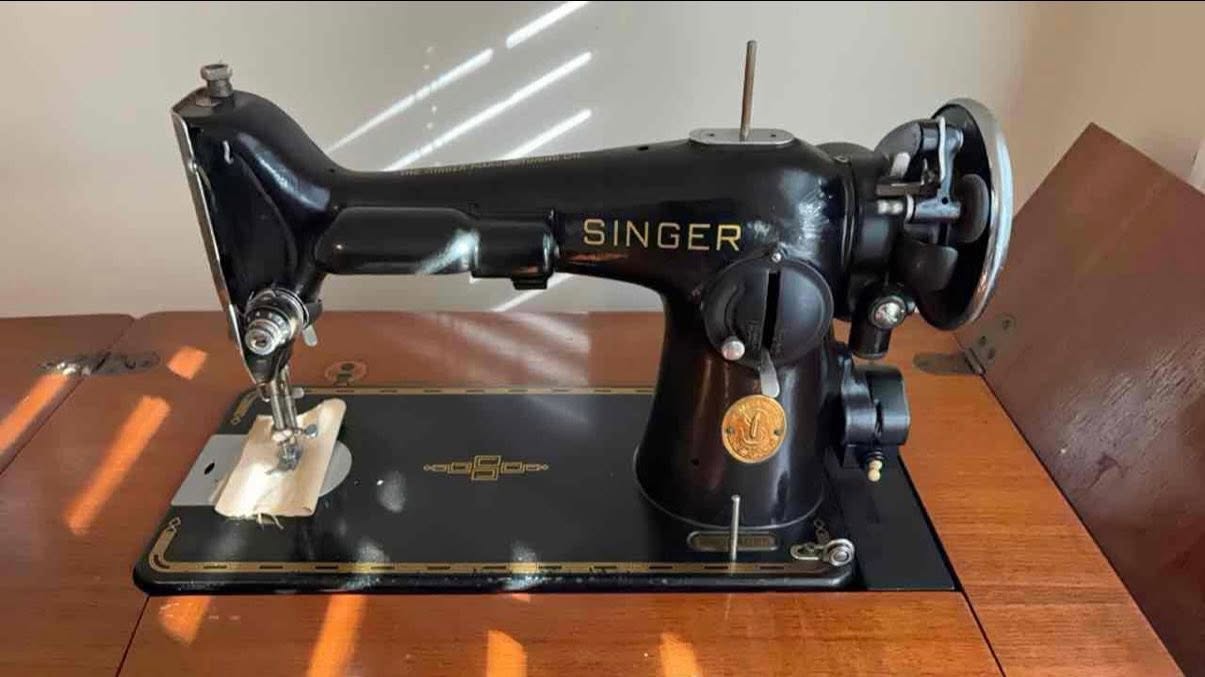
206
In use from 1936 to 1953
Recorded serial numbers: 181,511
Recorded factories:
- Kilbowie, Clydebank (Scotland, UK)
- Wittenberge, Prussia (Germany)
Domestic zig-zag machines with vertical rotary hook.
Documented Machines
(What does it mean?)Total: 16
Documented Factories:
- Kilbowie, Clydebank (Scotland, UK)
- Wittenberge, Prussia (Germany)
Documented Decals:
Documented years: 1936 - 1953
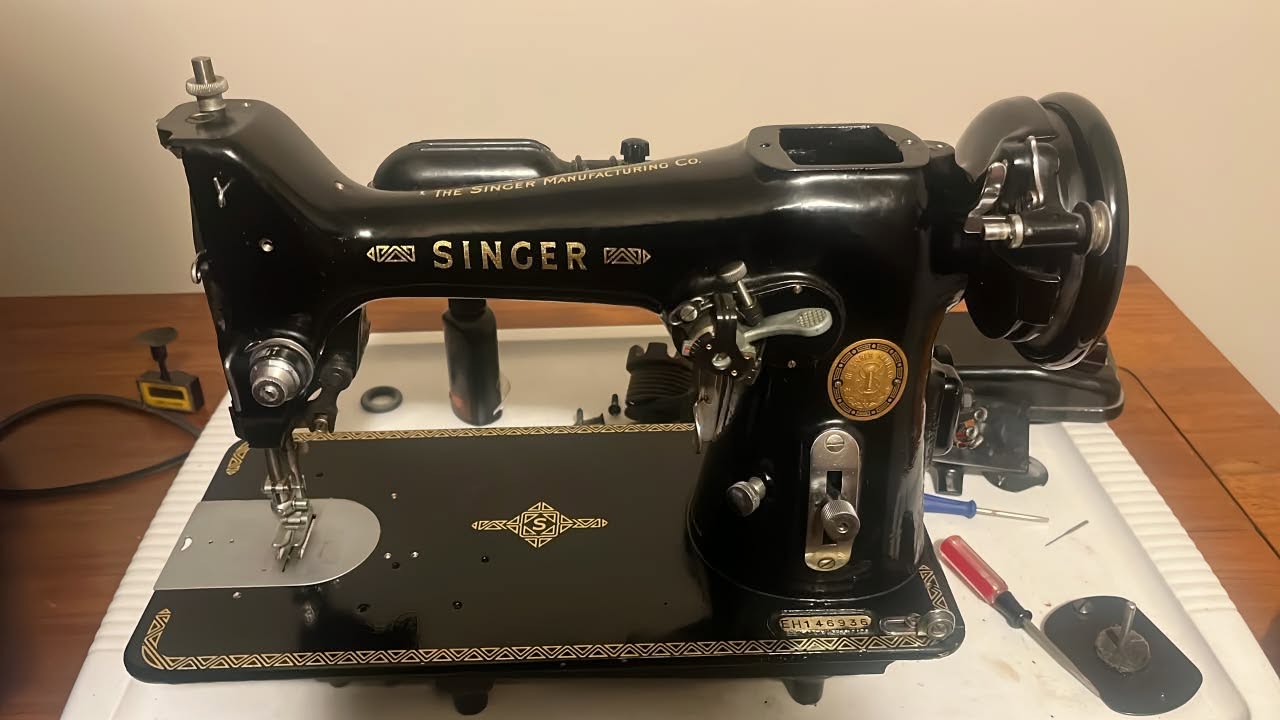
215
In use from 1954
Recorded serial numbers: 4
Recorded factories:
- Karlsruhe (Germany)
Domestic straight stitch machines, vertical oscillating hook. The designs for these machines were inherited from the Haid und Neu Company when Singer purchased their business.
Documented Machines
(What does it mean?)Total: 4
Documented Factories:
- Karlsruhe (Germany)
Documented Decals:
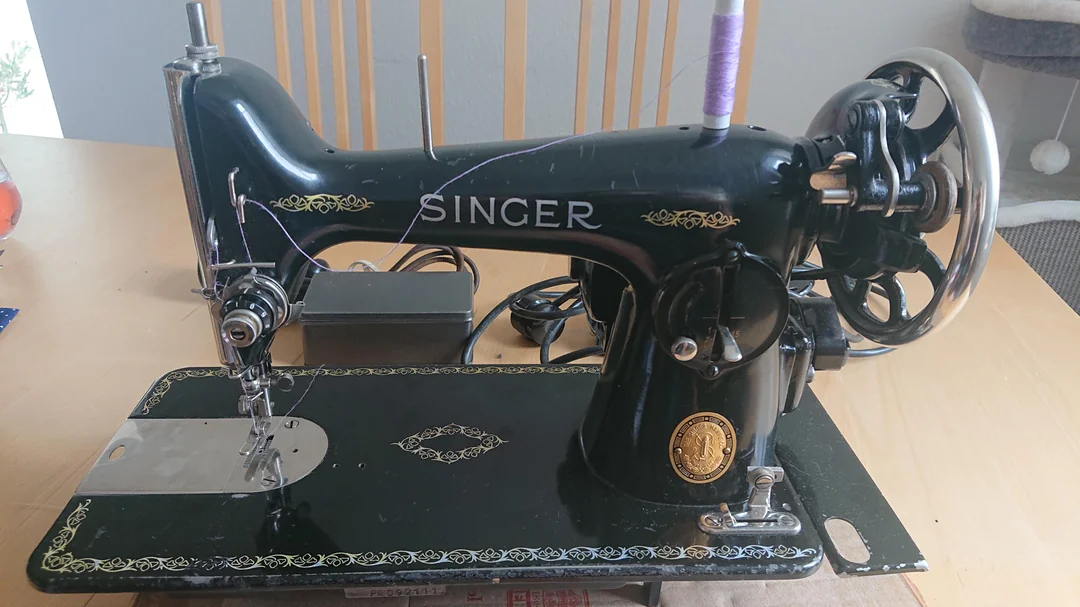
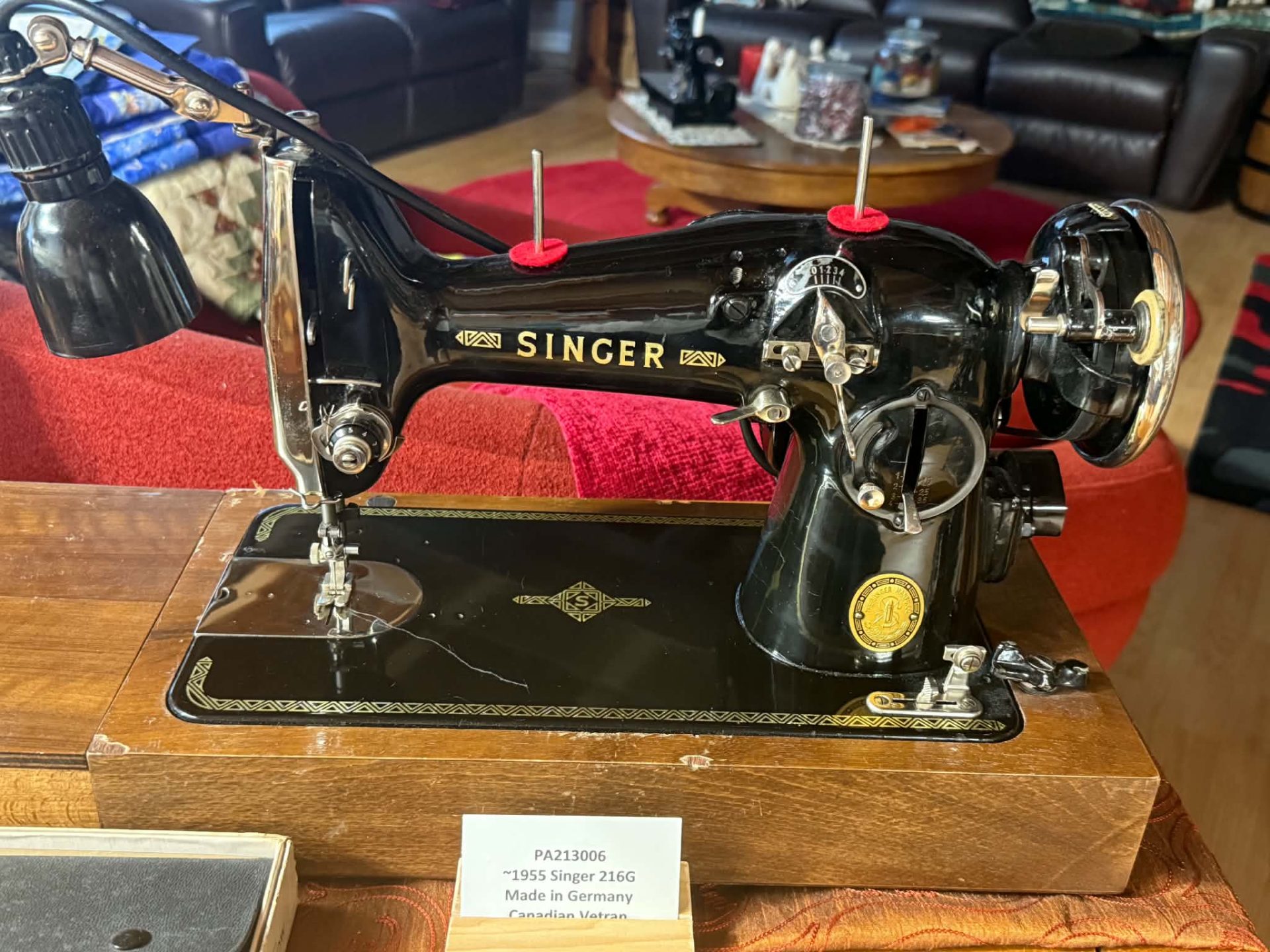
216
Recorded serial numbers: 4
Recorded factories:
- Karlsruhe (Germany)
Usage Information
- Needle size: 15x1
Domestic zig zag stitch machines, vertical oscillating hook. The designs for these machines were inherited from the Haid und Neu Company when Singer purchased their business.
Documented Machines
(What does it mean?)Total: 4
Documented Factories:
- Karlsruhe (Germany)
Documented Decals:
217
Recorded serial numbers: 502
Recorded factories:
Usage Information
- Needle size: 15x1
Domestic machines. The only known allotment from official serial records comes from a batch of 500 machines in 1969. There are known documented machines from factories where official records are lost.
Documented Machines
(What does it mean?)Total: 2
Documented Factories:
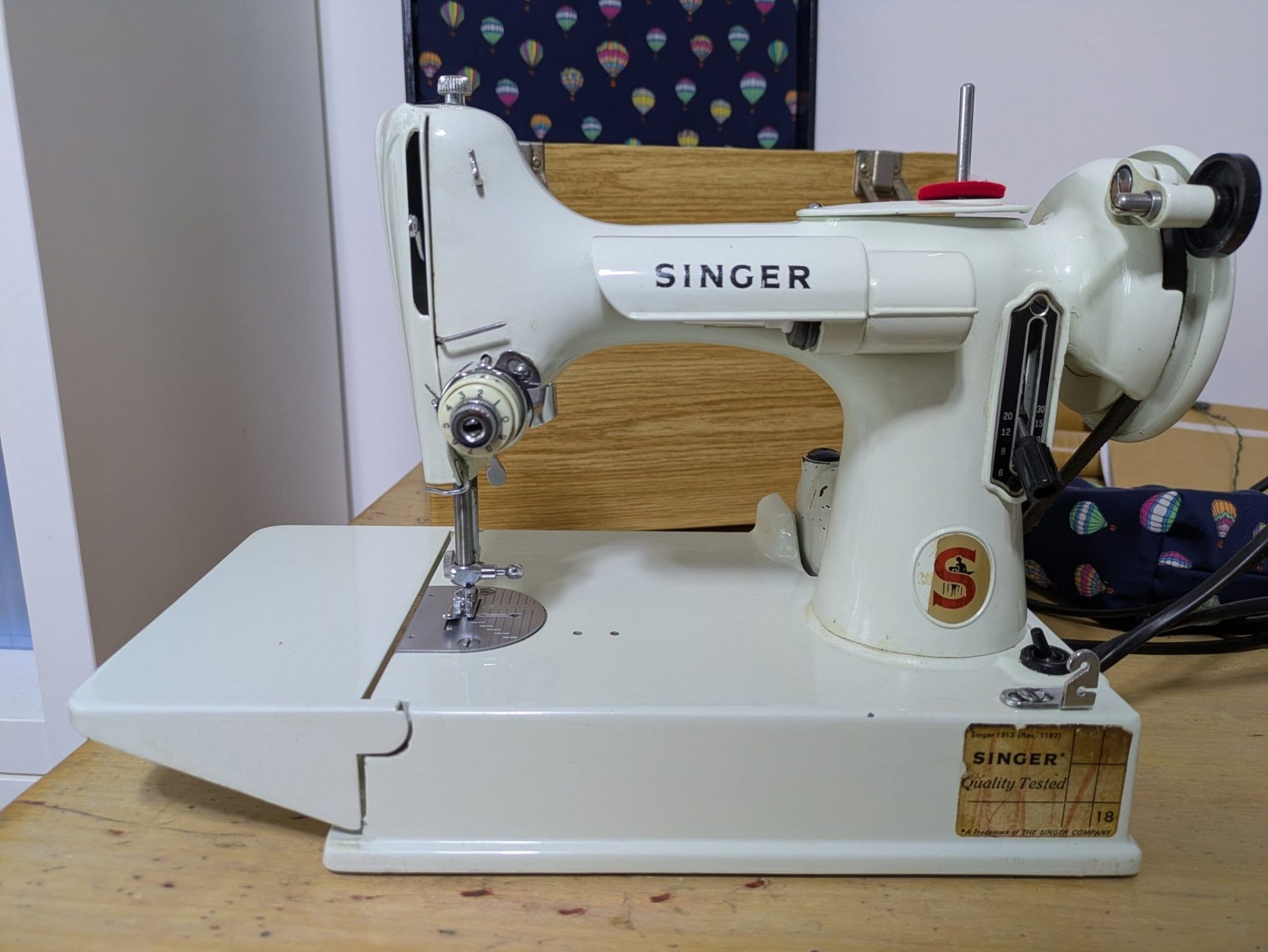
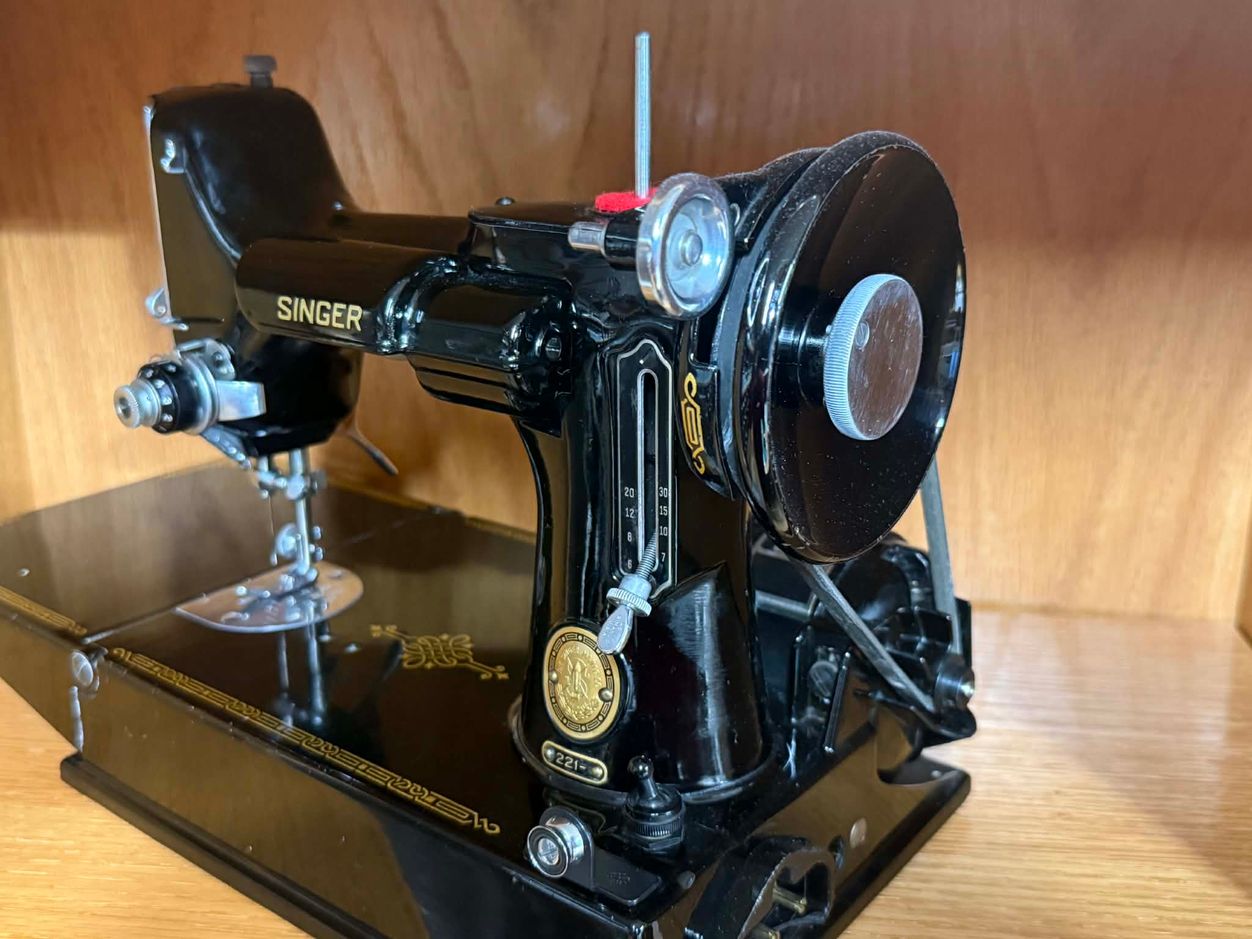
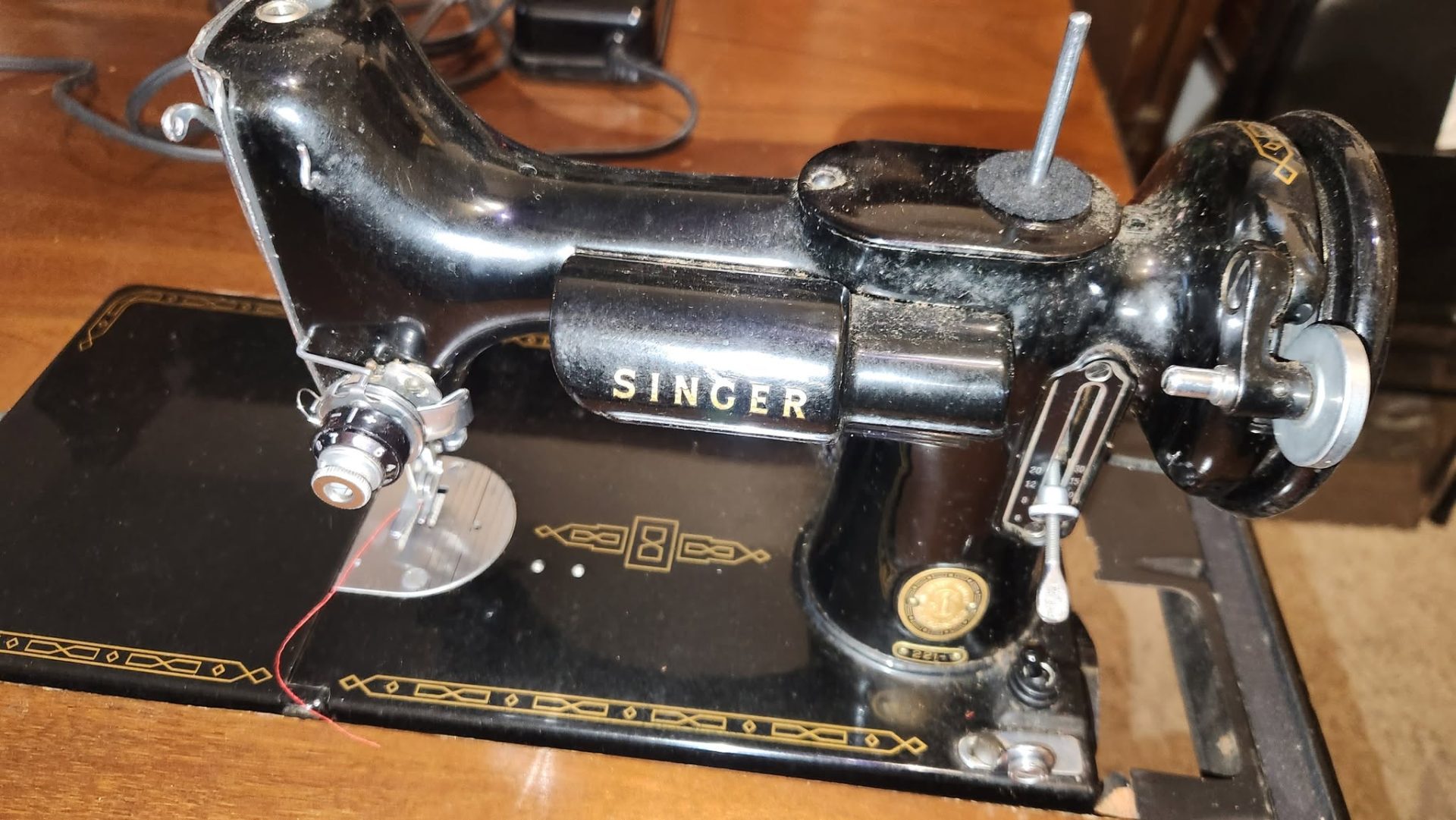
221 "Featherweight"
In use from 1933 to 1969
Recorded serial numbers: 2,112,059
Recorded factories:
- Elizabethport, New Jersey (USA)
- Kilbowie, Clydebank (Scotland, UK)
- St. John's Factory, Quebec (Canada)
- Taytay (Philippines)
Usage Information
- Needle size: 15x1
- Bobbin size: Class 221/301 Bobbin
Known as the "Featherweight". Very light weight 1/2 size straight stitch low shank machines in carrying case. Has an external motor and vertical rotary hook. The bed is not removable, as in the Class 222. Can be black (with or without decals) or colored (tan, pale turquoise, white...). Featherweight serial numbers can be usually found on the bottom of the machine, next to the bottom tray. A few of the early AD-series machines have their serial inside and underneath the bottom tray.
Documented Machines
(What does it mean?)Total: 62
Documented Factories:
- Elizabethport, New Jersey (USA)
- Kilbowie, Clydebank (Scotland, UK)
- St. John's Factory, Quebec (Canada)
- Taytay (Philippines)
Documented Decals:
Documented years: 1933 - 1964
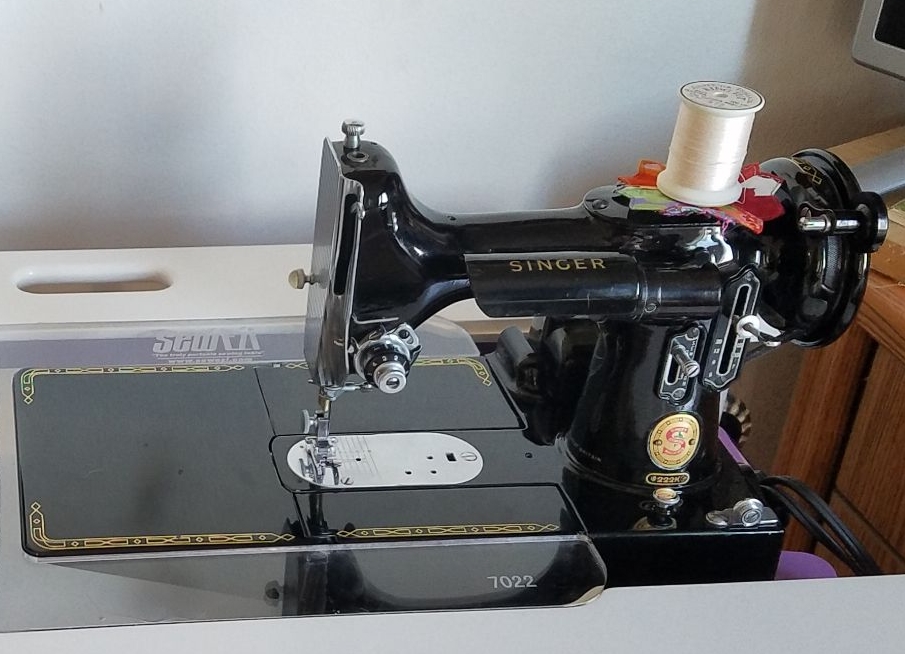
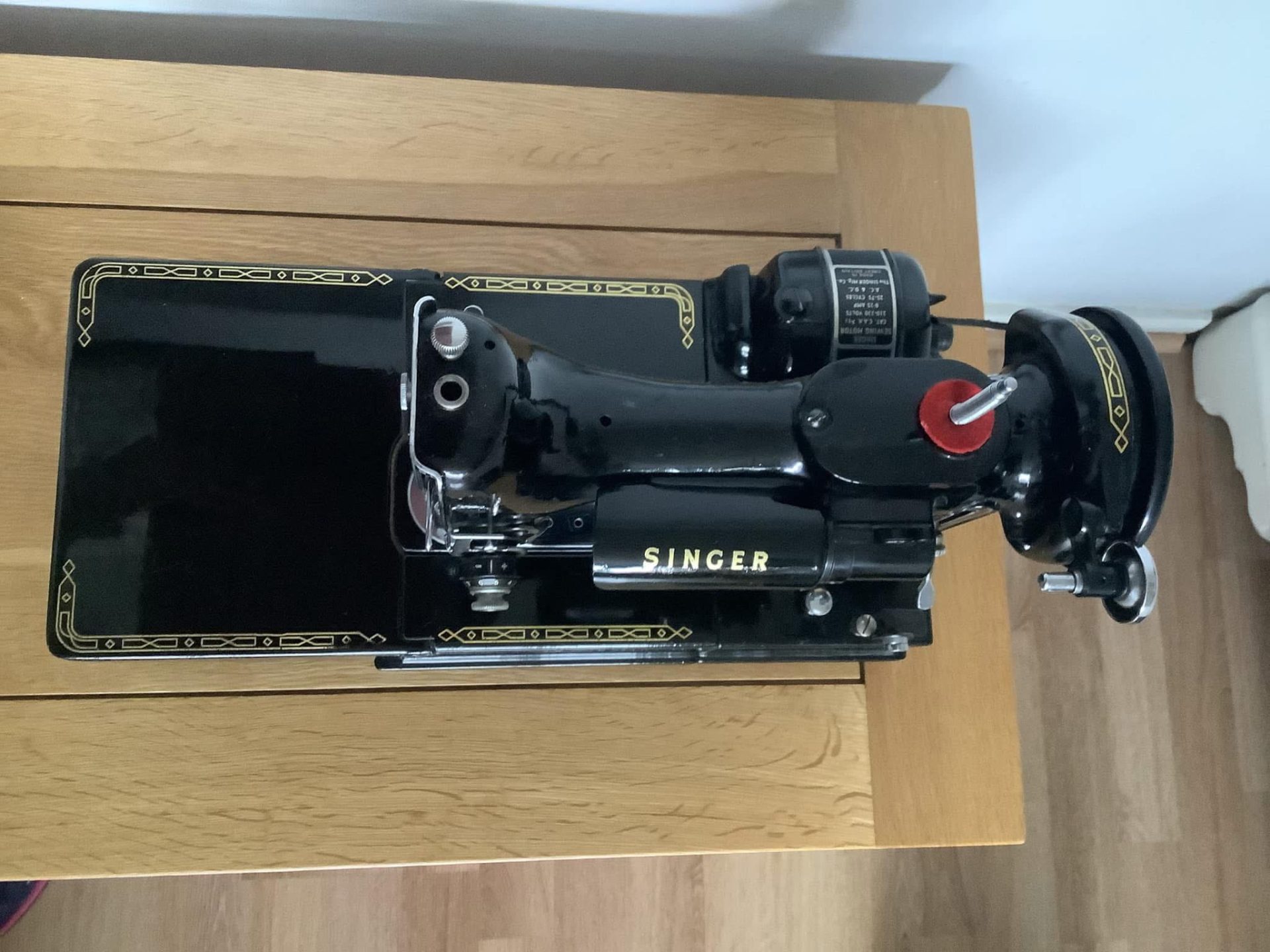
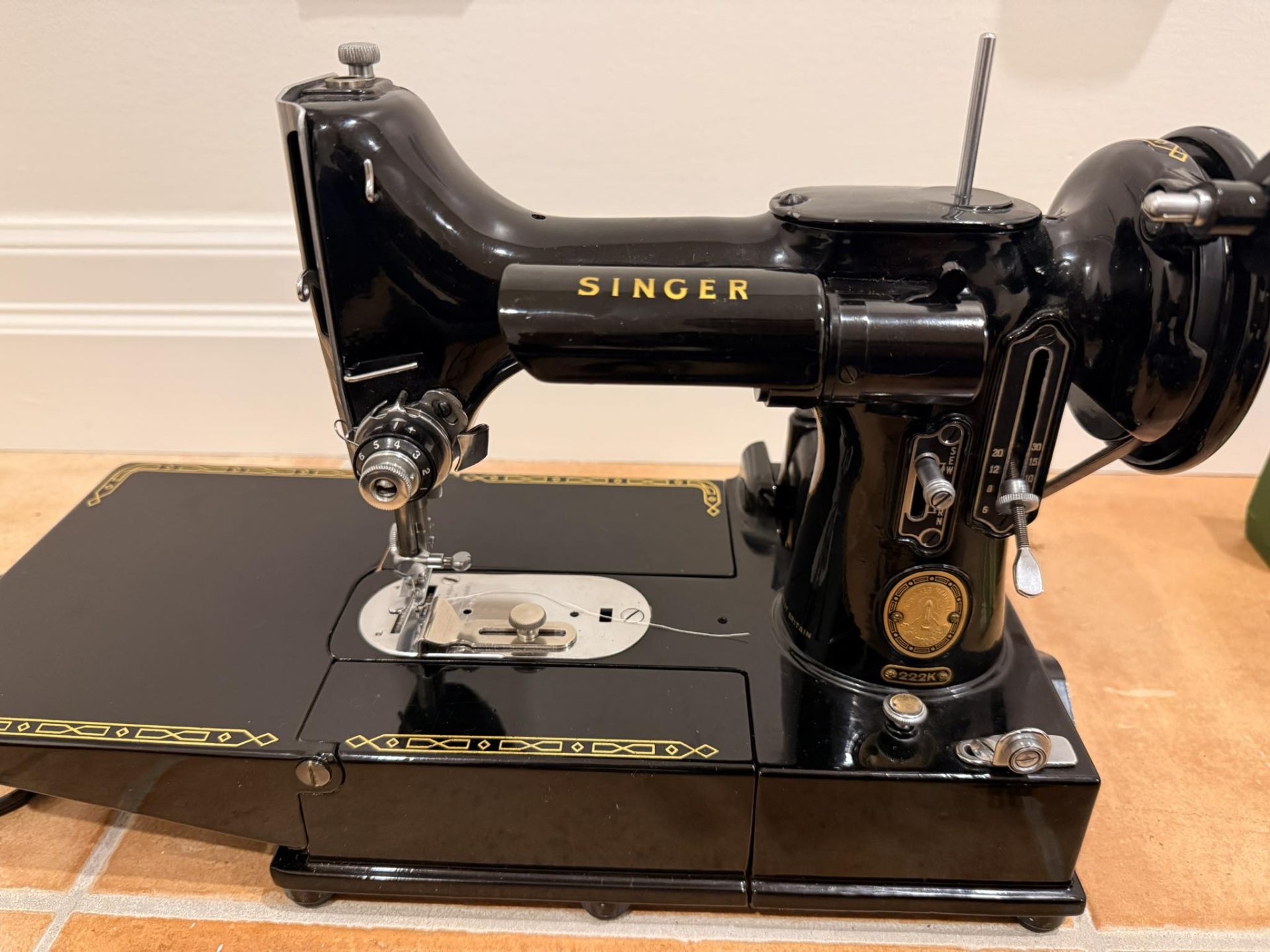
222 "Featherweight"
In use from 1953 to 1961
Recorded serial numbers: 108,900
Recorded factories:
Usage Information
- Needle size: 15x1
Similar to the Class 221, but with convertible bed from flat into tubular or free-Arm. Instead, the bed is not designed to be removed on a 221 machine. Sometimes referred to as the "Free-Arm Featherweight". Feed dogs can be lowered easily thanks to a sew/darn lever: this enables enabling free-motion quilting or darning.
Documented Machines
(What does it mean?)Total: 4
Documented Factories:
Documented Decals:
Documented years: 1954 - 1959
225
In use from 1960
Recorded serial numbers: 5
Recorded factories:
Allotted in a batch of 5 machines in 1960. Nothing more is known about this class.
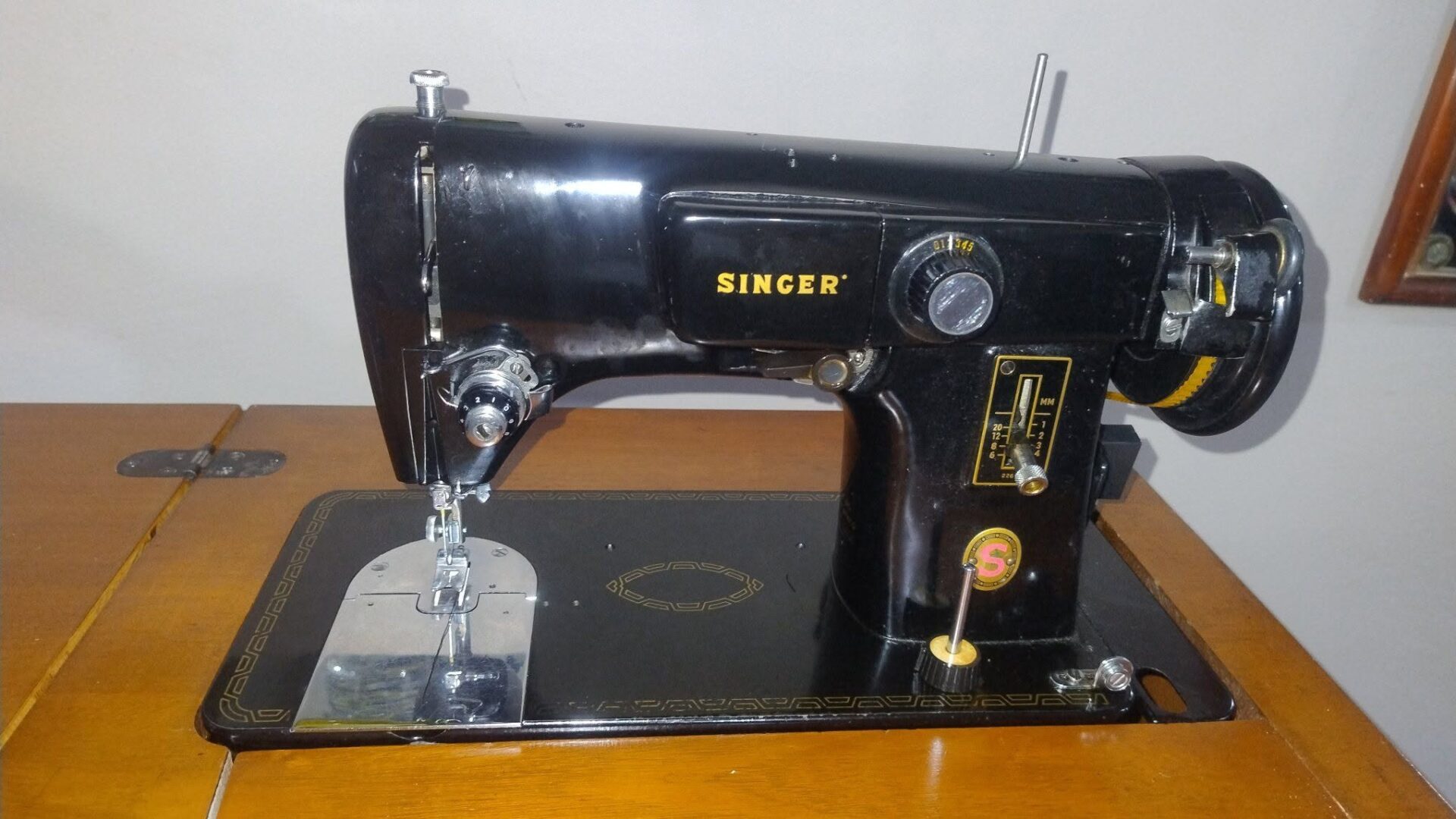
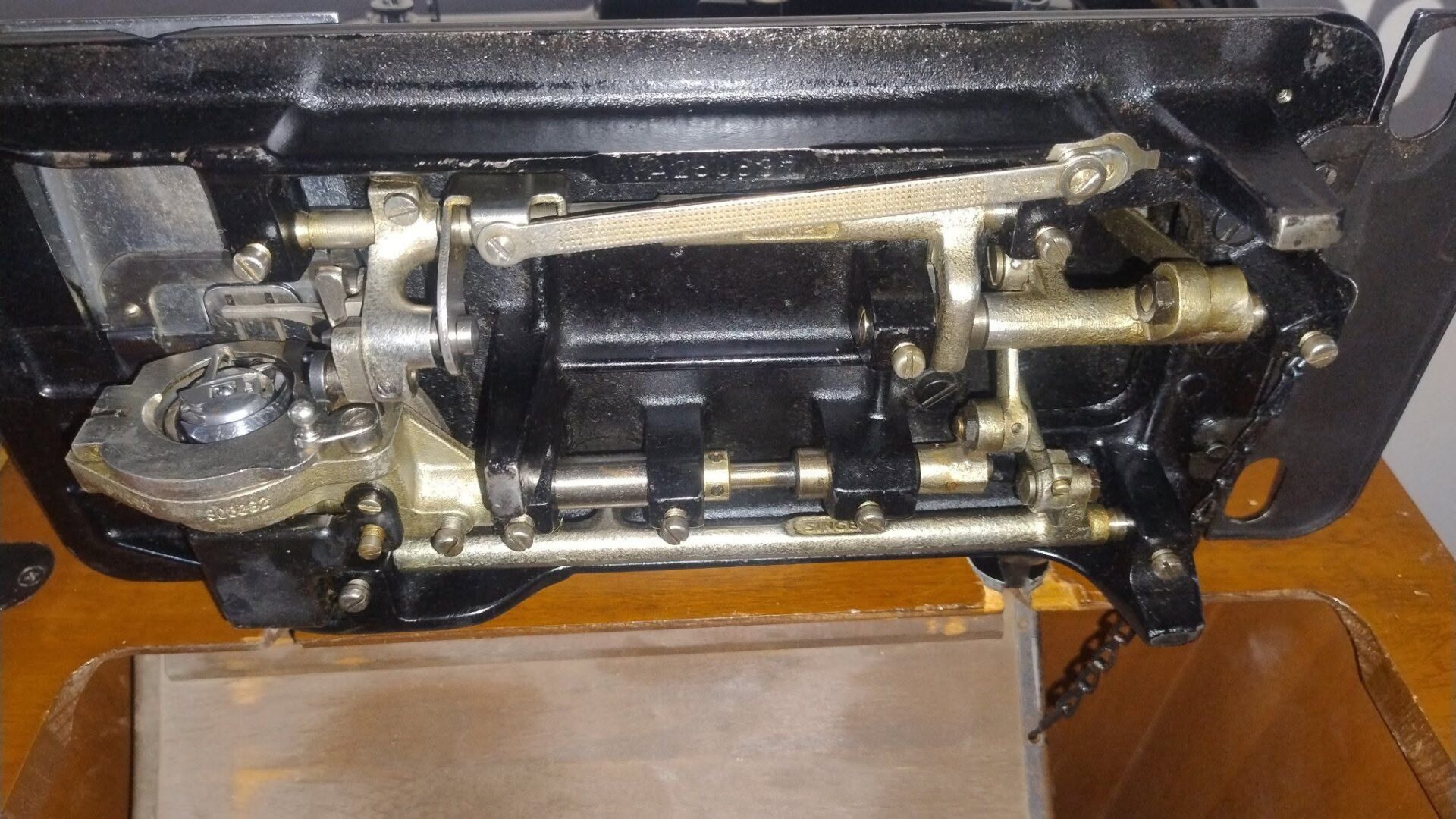
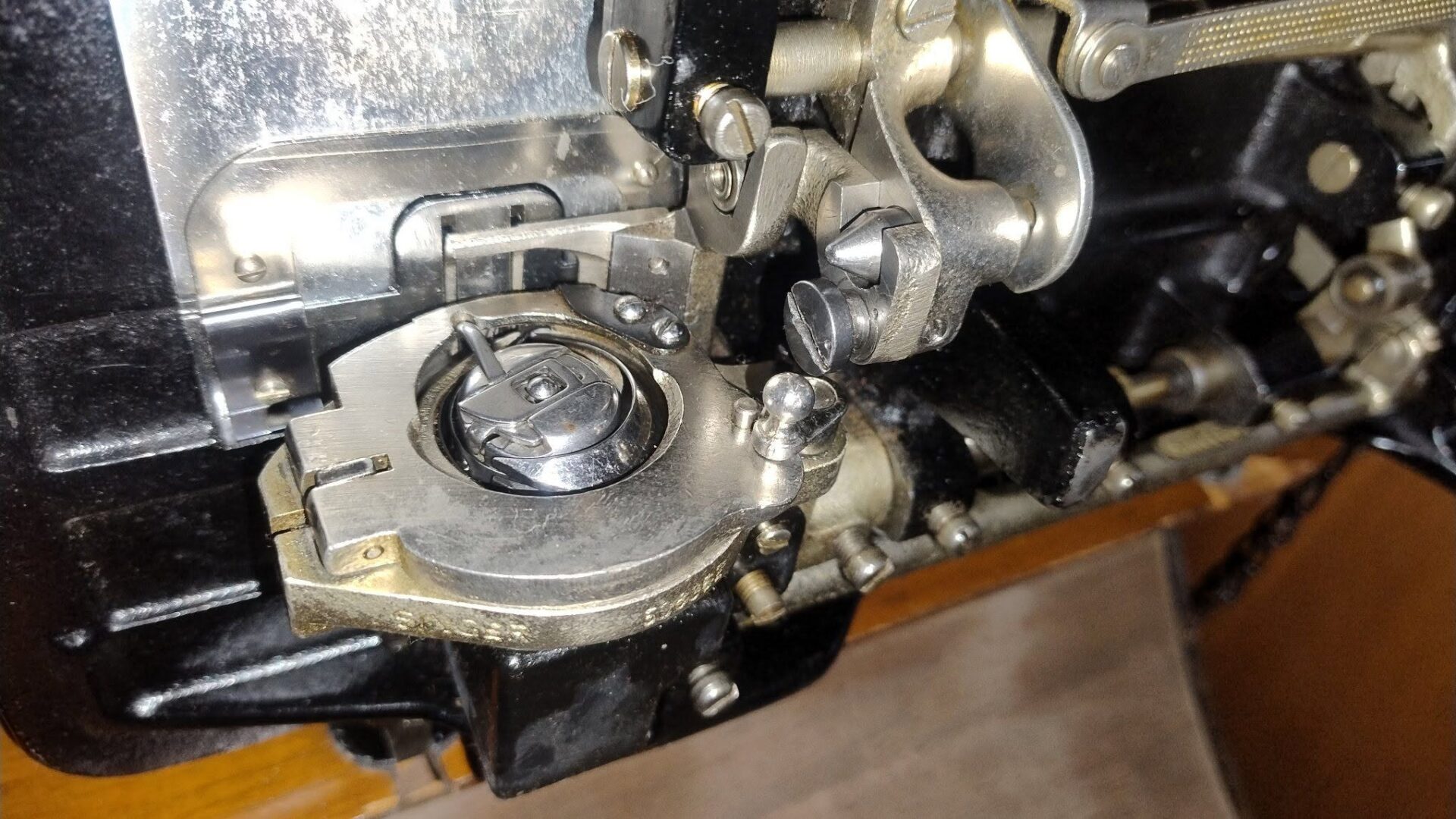
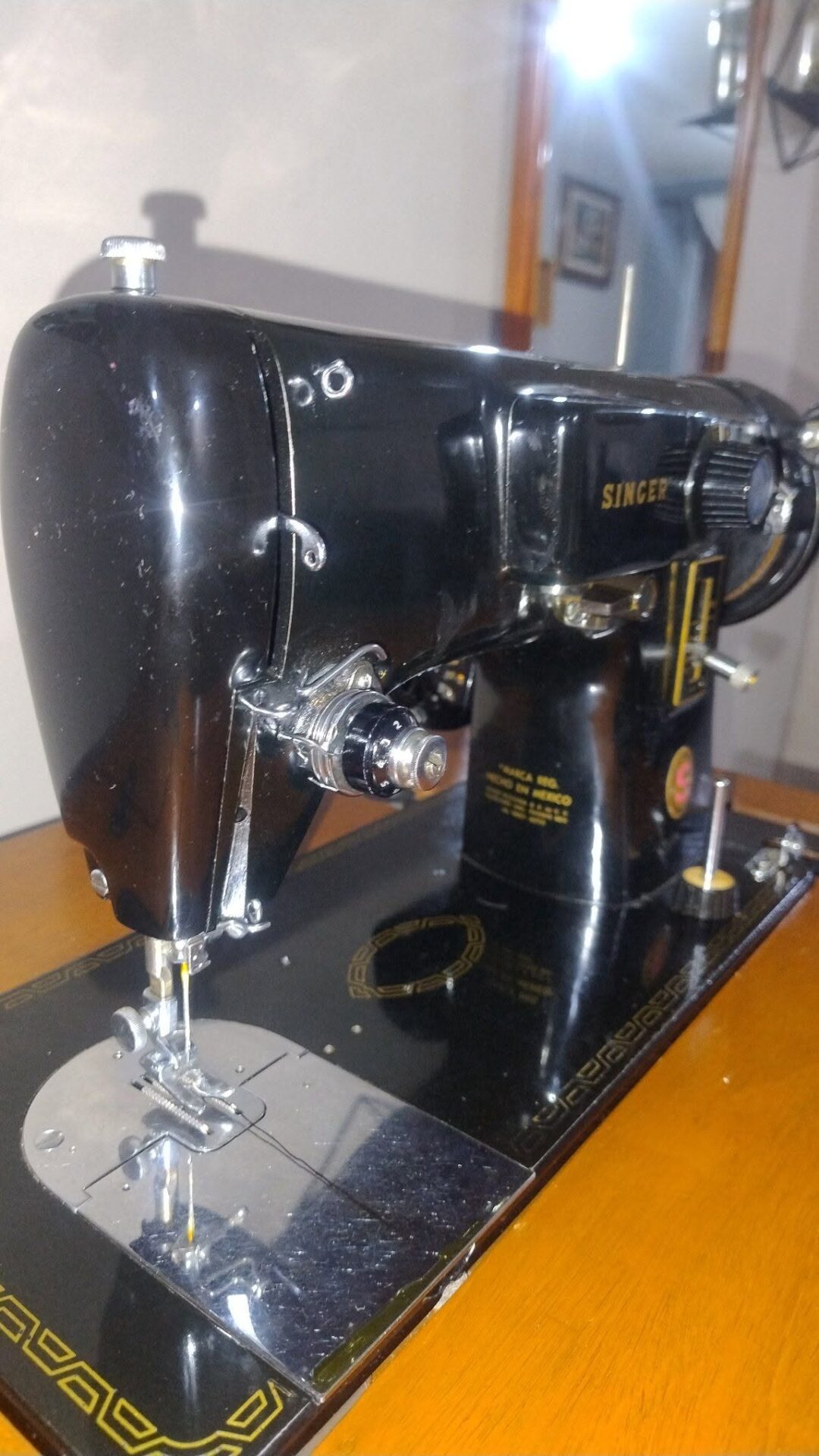
226
In use from 1960
Recorded serial numbers: 17
Recorded factories:
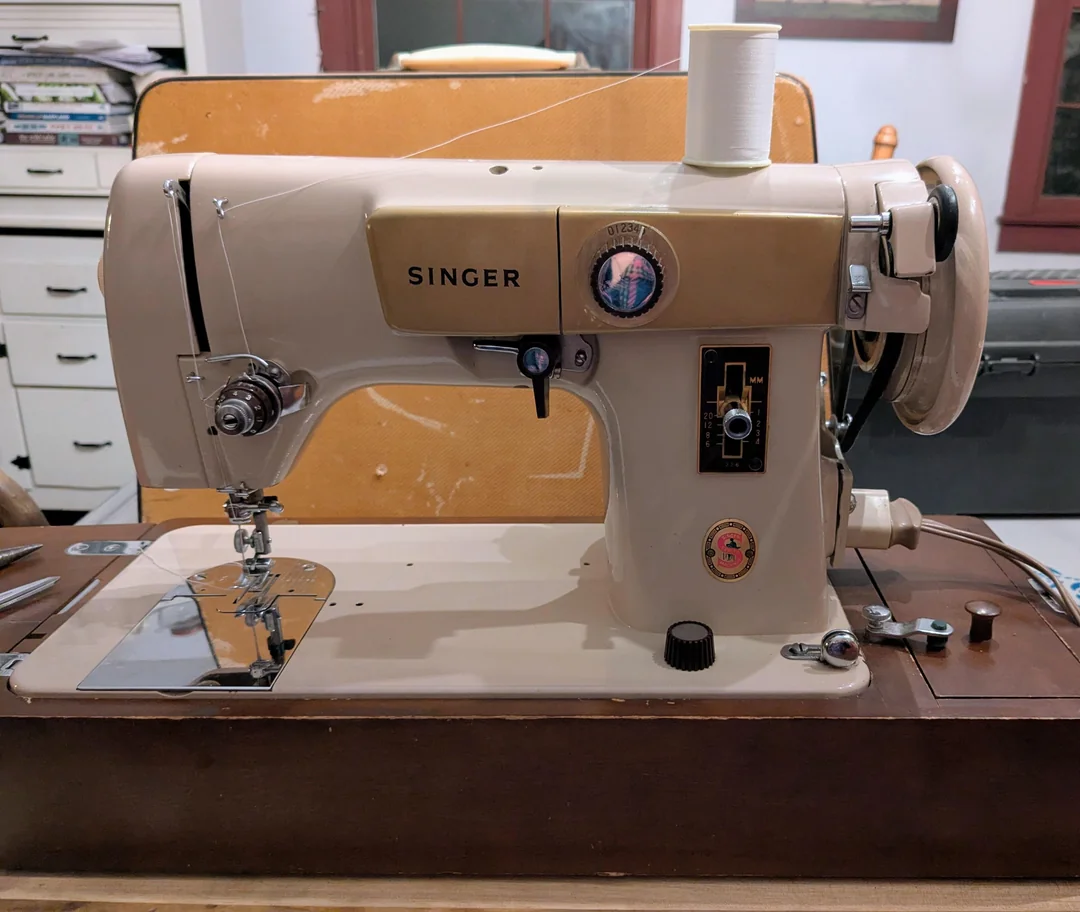
Allotted in two batches, one of 5 machines in 1960, and one of 10 machines in 1961. No other records survive, but we documented at least one machine from the factory of Querétaro (Mexico). Availableblack with decals and tan-colored.
Documented Machines
(What does it mean?)Total: 2
Documented Factories:
Documented Decals:
227
Recorded serial numbers: 15
Recorded factories:
Domestic straight stitch vertical oscillating hook machines.
Documented Machines
(What does it mean?)Total: 15
Documented Factories:
Documented years: 1959

228
Recorded serial numbers: 1
Recorded factories:
Domestic vertical oscillating hook machines.
Documented Machines
(What does it mean?)Total: 1
Documented Factories:
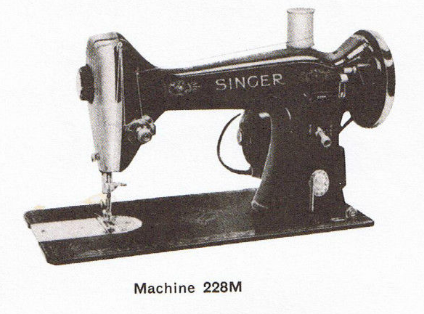
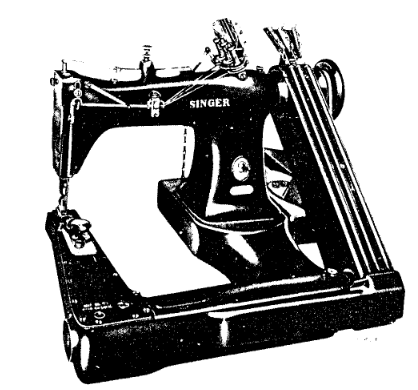
231
In use from 1935 to 1960
Recorded serial numbers: 26,100
Recorded factories:
Industrial feed-off-the-arm two needles, two loopers, two thread chain stitch machines.
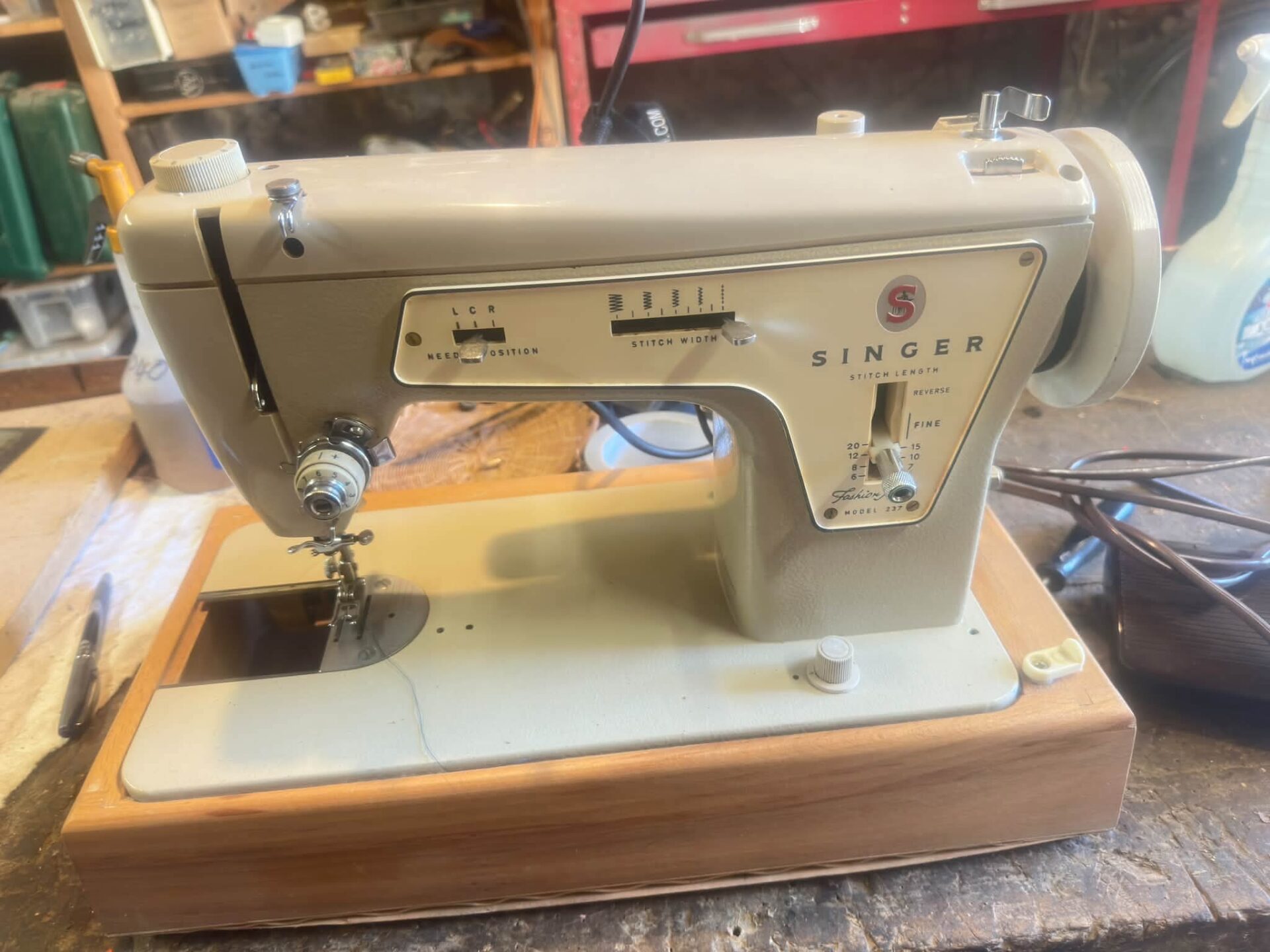
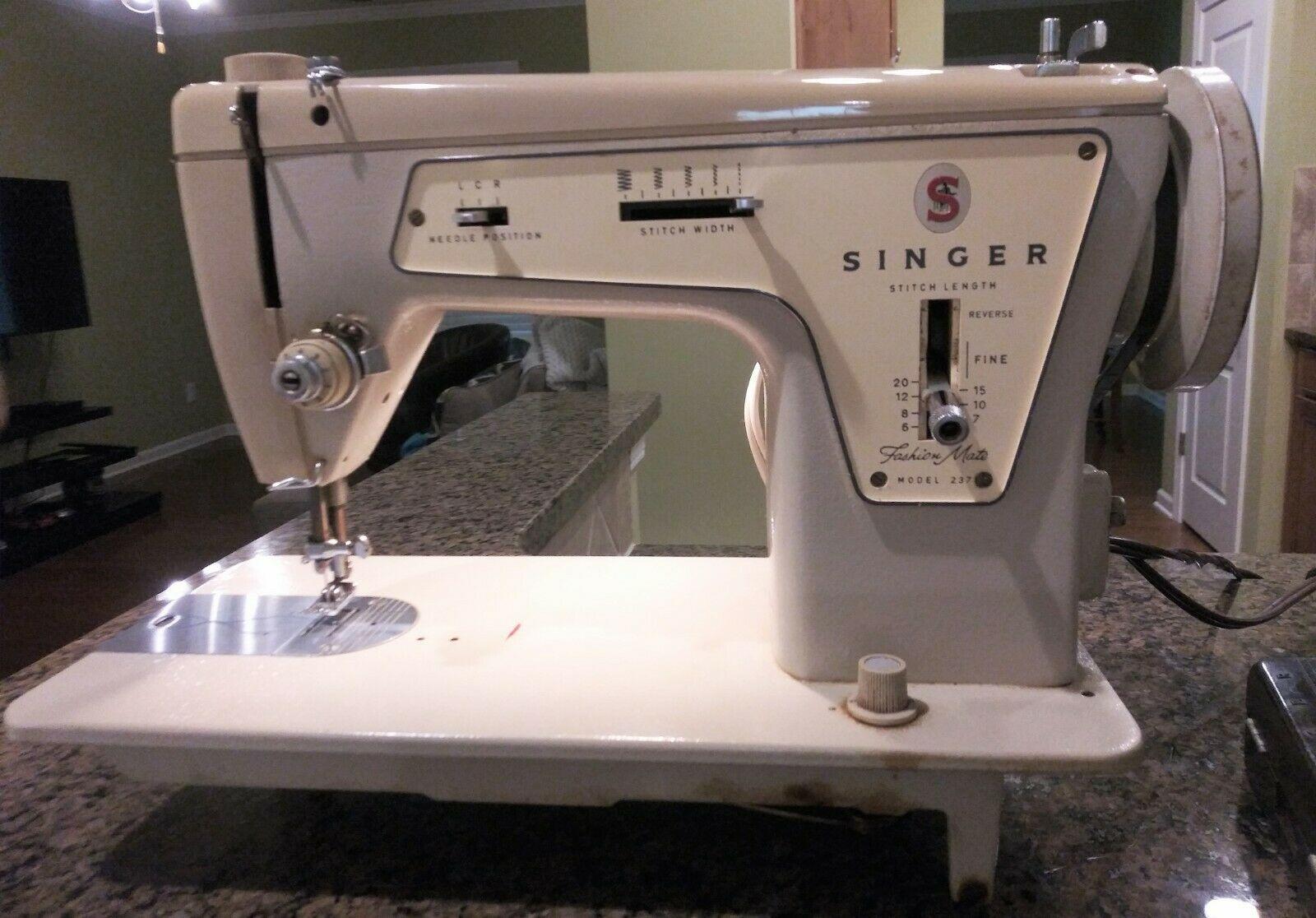
237 "Fashion Mate"
In use from 1967 to 1971
Recorded serial numbers: 101
Recorded factories:
Usage Information
- Needle size: 15x1
Domestic zig zag machines with external motor. Part of the "Fashion Mate" family. Could be cream, beige or tan.
Documented Machines
(What does it mean?)Total: 101
Documented Factories:
Documented years: 1970 - 1971
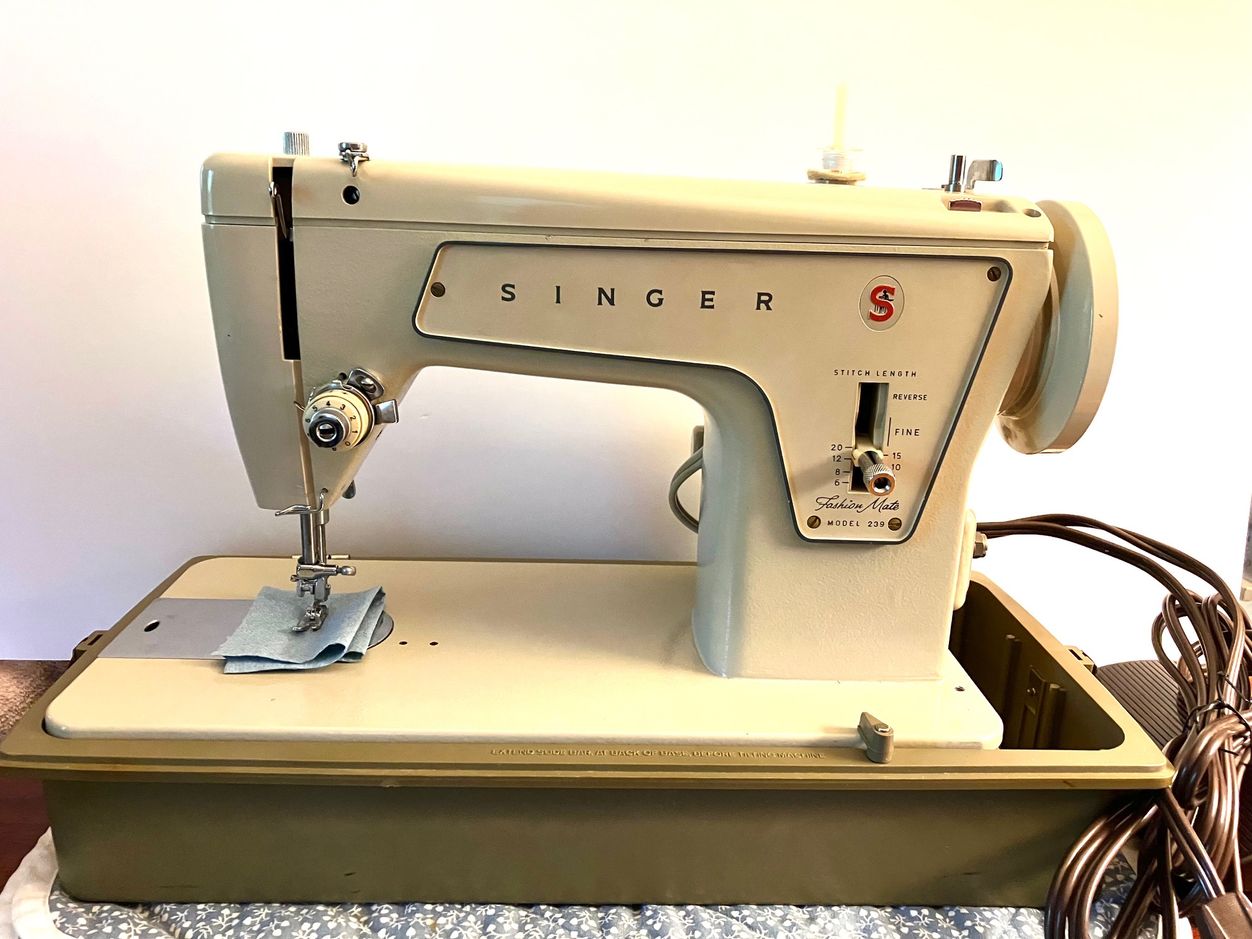
239 "Fashion Mate"
In use from 1968 to 1971
Recorded serial numbers: 12
Recorded factories:
Usage Information
- Needle size: 15x1
Domestic straight stitch machines, vertical oscillating hook. Part of the "Fashion Mate" family. Tan or beige in color.
Documented Machines
(What does it mean?)Total: 12
Documented Factories:
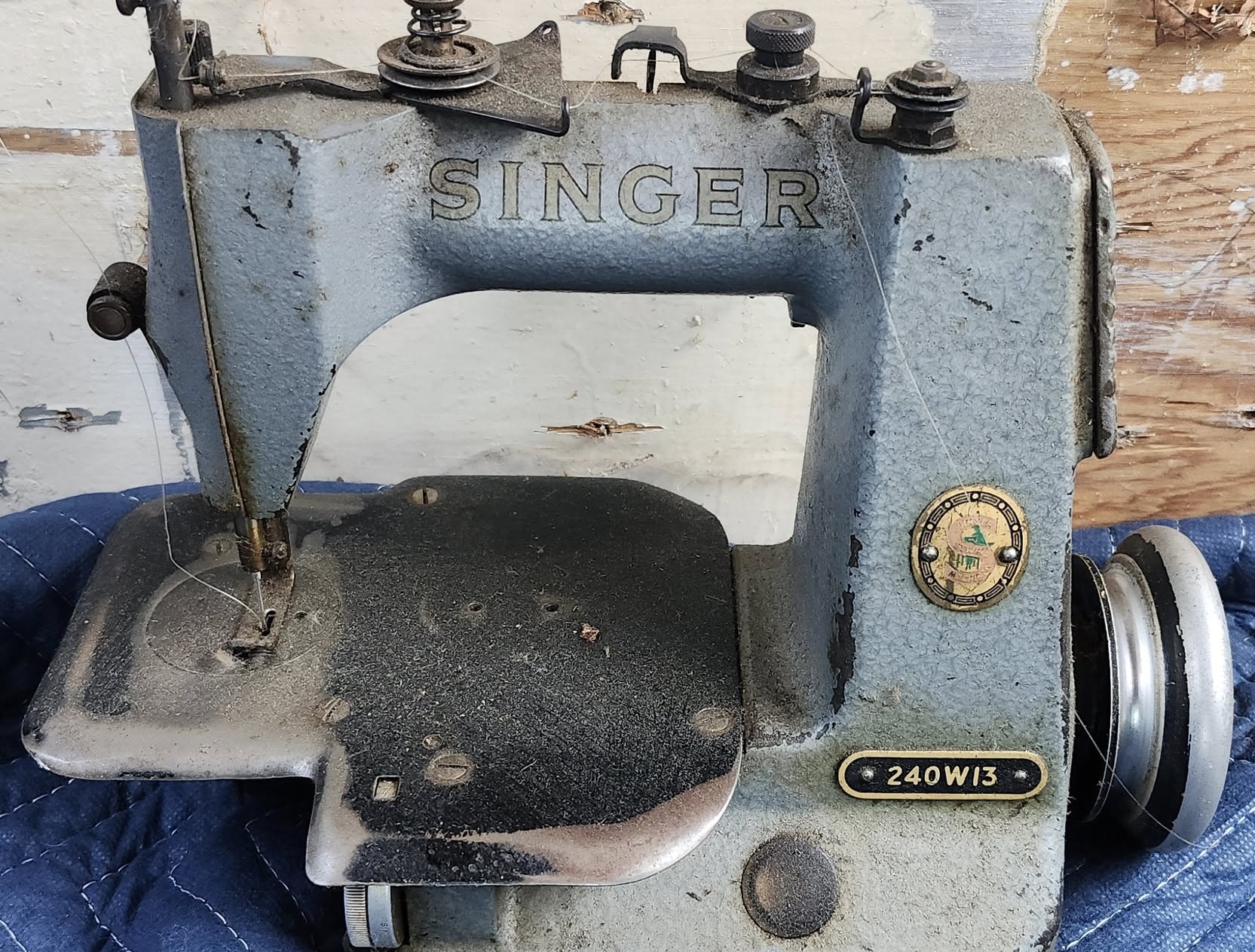
240
In use from 1962 to 1969
Recorded serial numbers: 10,700
Recorded factories:
Industrial drop feed, single needle, single thread chain stitch machines.
Documented Machines
(What does it mean?)Total: 1
Documented Factories:
Documented years: 1961
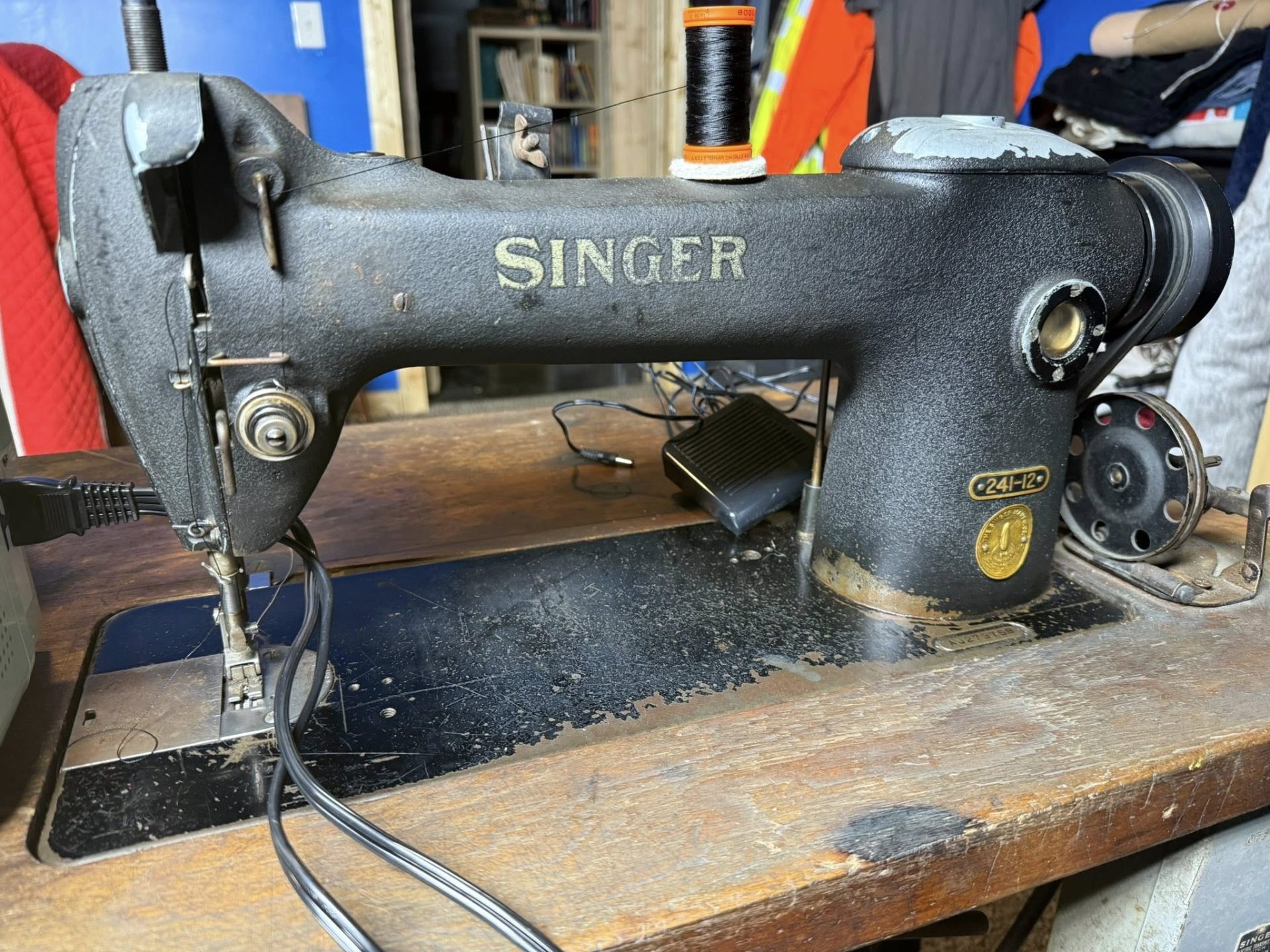
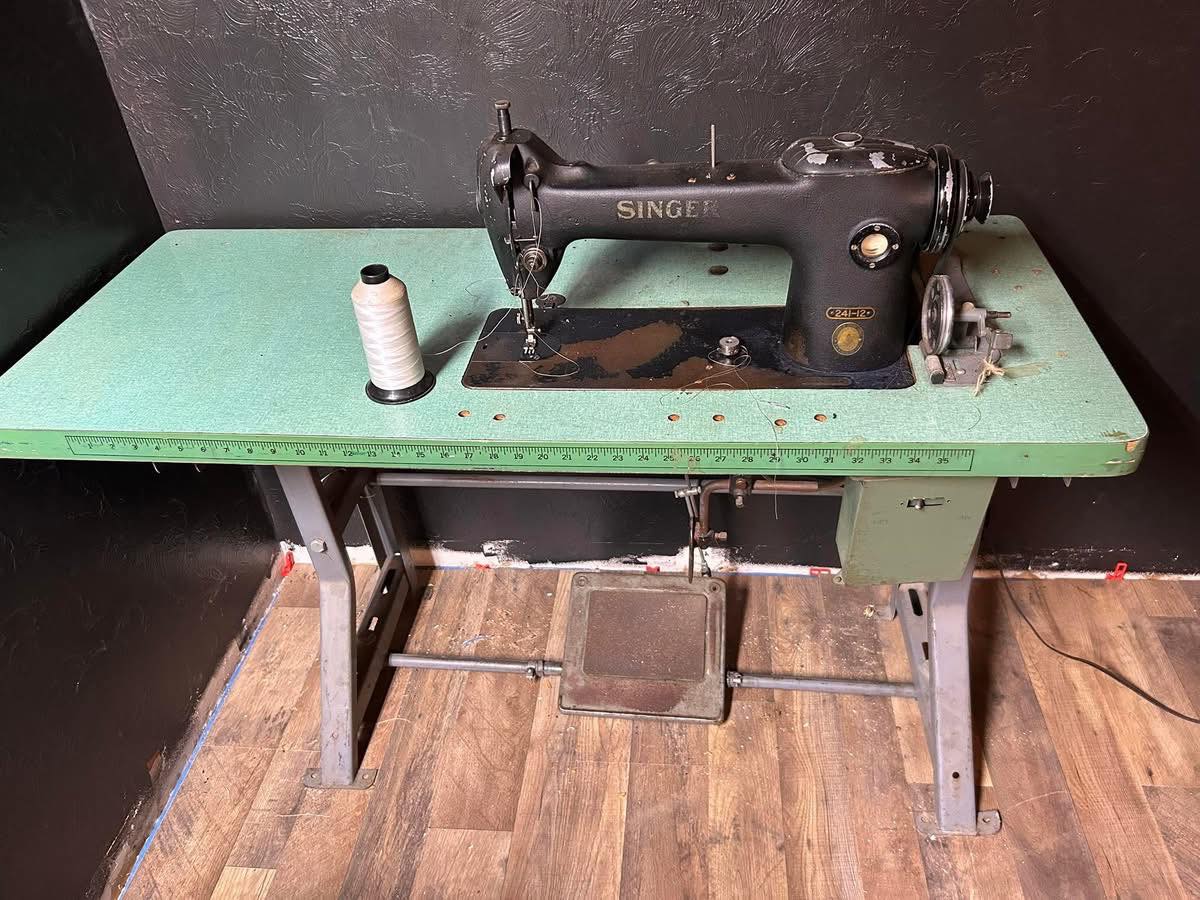
241
In use from 1939 to 1951
Recorded serial numbers: 276,877
Recorded factories:
Industrial high speed, single needle, lock stitch machines with automatic lubricating system.
Documented Machines
(What does it mean?)Total: 7
Documented Factories:
Documented Decals:
Documented years: 1940 - 1950
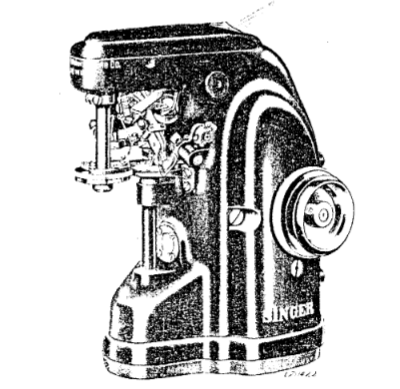
242
In use from 1940 to 1955
Recorded serial numbers: 10,500
Recorded factories:
Industrial two or three-thread overedge stitch machines.
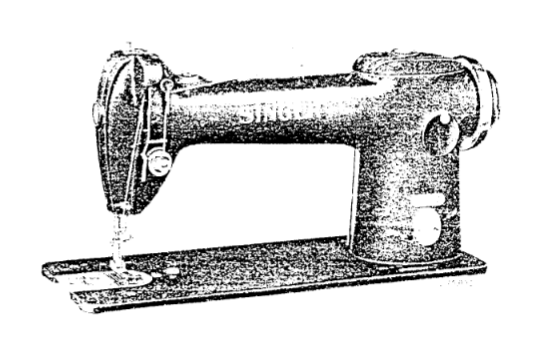
245
In use from 1940 to 1951
Recorded serial numbers: 32,500
Recorded factories:
Industrial single needle lock stitch machines.
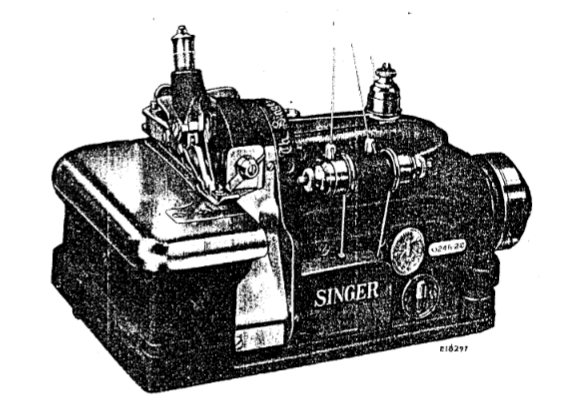
246
In use from 1946 to 1964
Recorded serial numbers: 120,399
Recorded factories:
Industrial machines for trimming and overedging.
247
In use from 1947 to 1952
Recorded serial numbers: 3,500
Recorded factories:
Industrial machines for making top and bottom covering stitch.
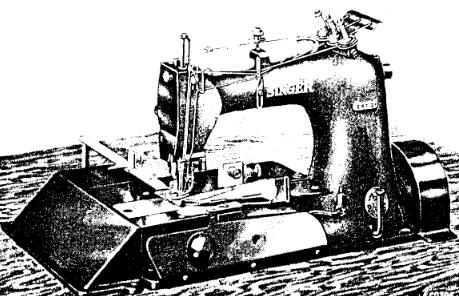
248
In use from 1946 to 1952
Recorded serial numbers: 1,800
Recorded factories:
Industrial machines for bonding thermoplastics.
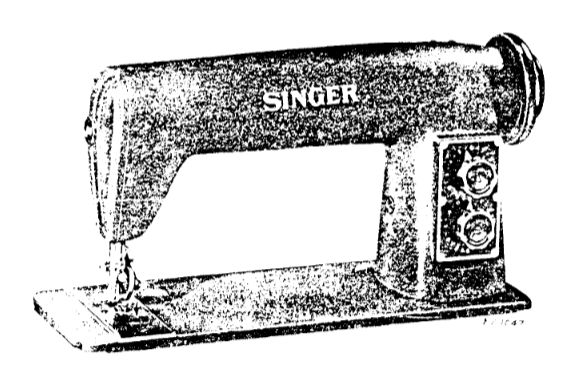
249
In use from 1946
Recorded serial numbers: 50
Recorded factories:
Allotted in two batches of 25 machines each, in 1946. Nothing more is known about this class.
251
In use from 1952 to 1964
Recorded serial numbers: 244,634
Recorded factories:
Industrial high speed, single needle, lock stitch machines with automatic lubricating system.
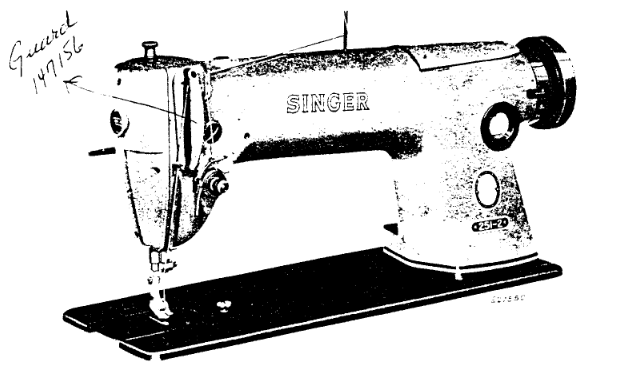
252
Recorded serial numbers: 3
Recorded factories:
Usage Information
- Needle size: 15x1
Domestic zig zag machines. Part of the "Fashion Mate" family.
Documented Machines
(What does it mean?)Total: 3
Documented Factories:

253
In use from 1948 to 1960
Recorded serial numbers: 24,500
Recorded factories:
Industrial high speed, drop feed, one needle, single looper, two thread chain stitch machines.
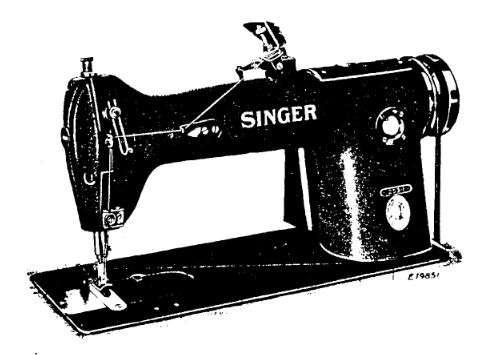
256
In use from 1961 to 1970
Recorded serial numbers: 735
Recorded factories:
Industrial automatic sequential buttonholer.
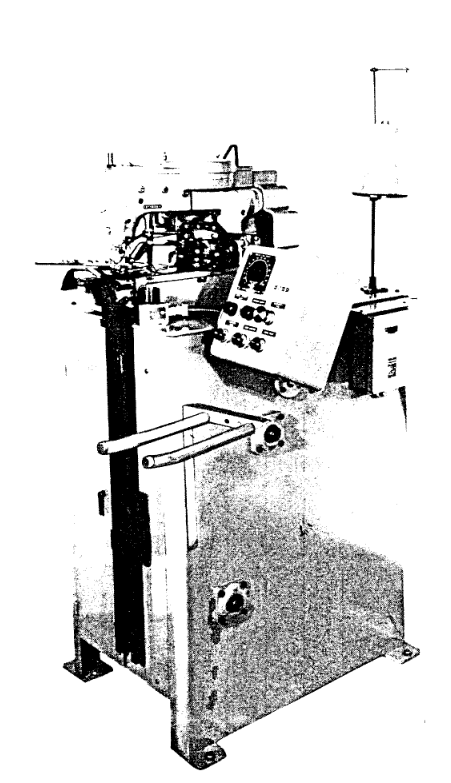
257
Recorded serial numbers: 5
Recorded factories:
Domestic zig zag machines. Part of the "Fashion Mate" family.
Documented Machines
(What does it mean?)Total: 5
Documented Factories:

259
Recorded serial numbers: 3
Recorded factories:
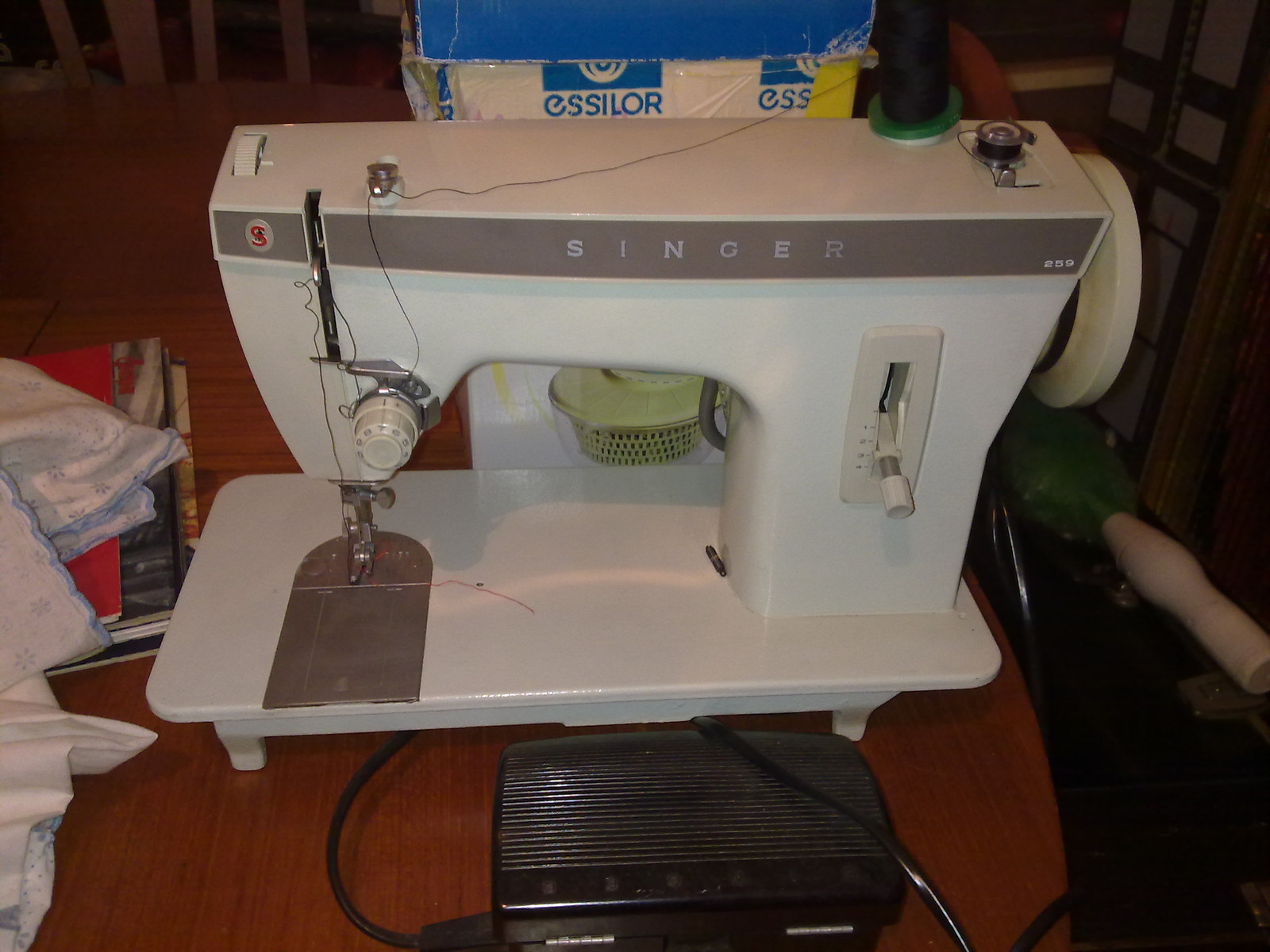
Domestic zig zag machines. Part of the "Fashion Mate" family.
Documented Machines
(What does it mean?)Total: 3
Documented Factories:
261
In use from 1960 to 1971
Recorded serial numbers: 9,352
Recorded factories:
Industrial high speed, drop feed, feed-off-the-arm, two thread chain stitch machines. For lap seam felling on medium-heavy to heavy weight materials.
262
In use from 1961 to 1965
Recorded serial numbers: 13,501
Recorded factories:
Industrial high speed, drop feed, chain stitch machines with automatic lubrication.
267
Recorded serial numbers: 4
Recorded factories:
Usage Information
- Needle size: 15x1
Domestic machines.
Documented Machines
(What does it mean?)Total: 4
Documented Factories:
Documented years: 1959

268
Recorded serial numbers: 1
Recorded factories:
- Karlsruhe (Germany)
Industrial machines.
Documented Machines
(What does it mean?)Total: 1
Documented Factories:
- Karlsruhe (Germany)
269
In use from 1960 to 1969
Recorded serial numbers: 51,022
Recorded factories:
Industrial machines for barring, tacking and button sewing.
270
In use from 1961 to 1970
Recorded serial numbers: 2,550
Recorded factories:
Usage Information
- Needle size: 16x95
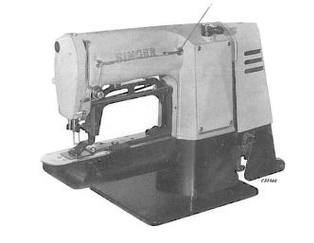
Industrial single needle, single thread, lock stitch machines. Rotary hook, cylinder bed. For barring, tacking and button sewing.
274
In use from 1965
Recorded serial numbers: 100
Recorded factories:
Industrial machines, allotted in only one batch of 100 "sample machines" in 1965.
275
In use from 1965
Recorded serial numbers: 100
Recorded factories:
Industrial machines, allotted in only one batch of 100 machines in 1965.
281
In use from 1953 to 1970
Recorded serial numbers: 123,511
Recorded factories:
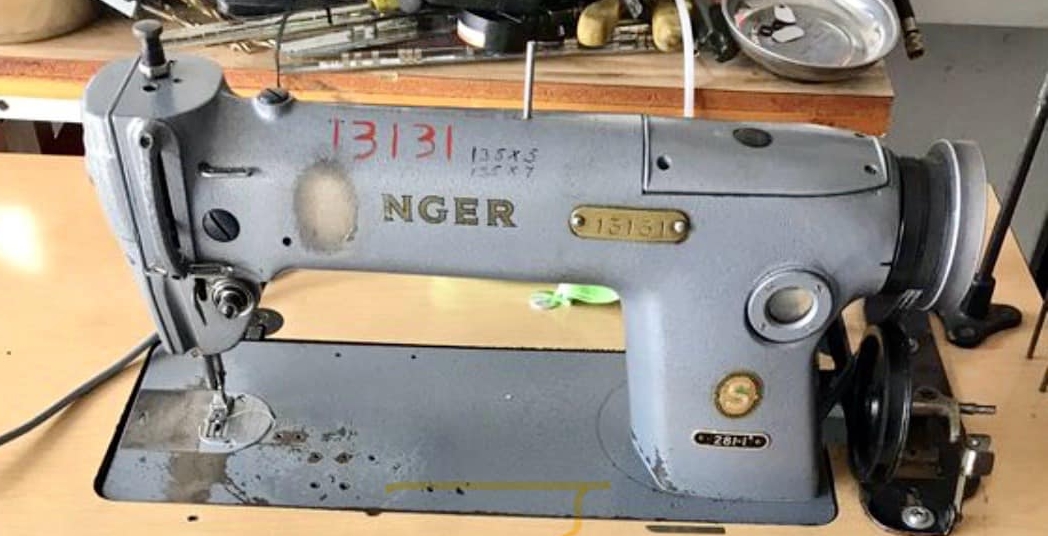
Industrial high speed, single needle lock stitch machines, with automatic lubrication. For lightweight to medium-heavy weight fabrics.
Documented Machines
(What does it mean?)Total: 1
Documented Factories:
Documented years: 1964
285
In use from 1963 to 1965
Recorded serial numbers: 219,999
Recorded factories:
Evolution of Class 185. Domestic straight stitch machines with external motor. Horizontal oscillating hook. Color blue when from Kilbowie, green when from Monza (Italy).
Documented Machines
(What does it mean?)Total: 1
Documented Factories:
Documented years: 1964
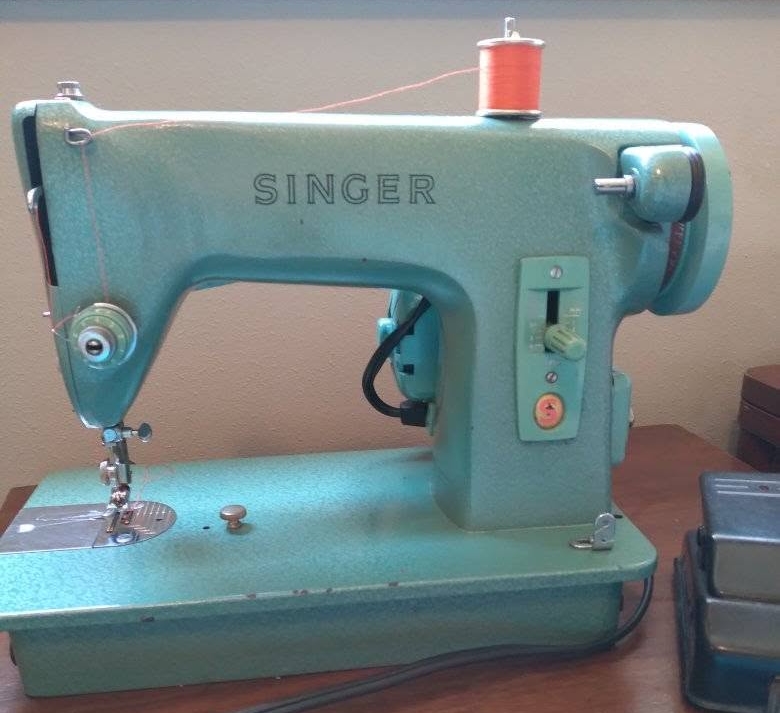
286
In use from 1955
Recorded serial numbers: 10
Recorded factories:
Allotted in only one batch of 10 machines in 1955. Nothing more is known about this class.
300W
In use from 1960 to 1969
Recorded serial numbers: 10,000
Recorded factories:
Industrial machines, one needle and one looper for a single row of two-thread chain stitching, or two or more needles and corresponding number of loopers for two or more parallel rows of stitching. For medium to heavy weight materials.
301
In use from 1951 to 1957
Recorded serial numbers: 700,030
Recorded factories:
- Anderson, South Carolina (USA)
- Elizabethport, New Jersey (USA)
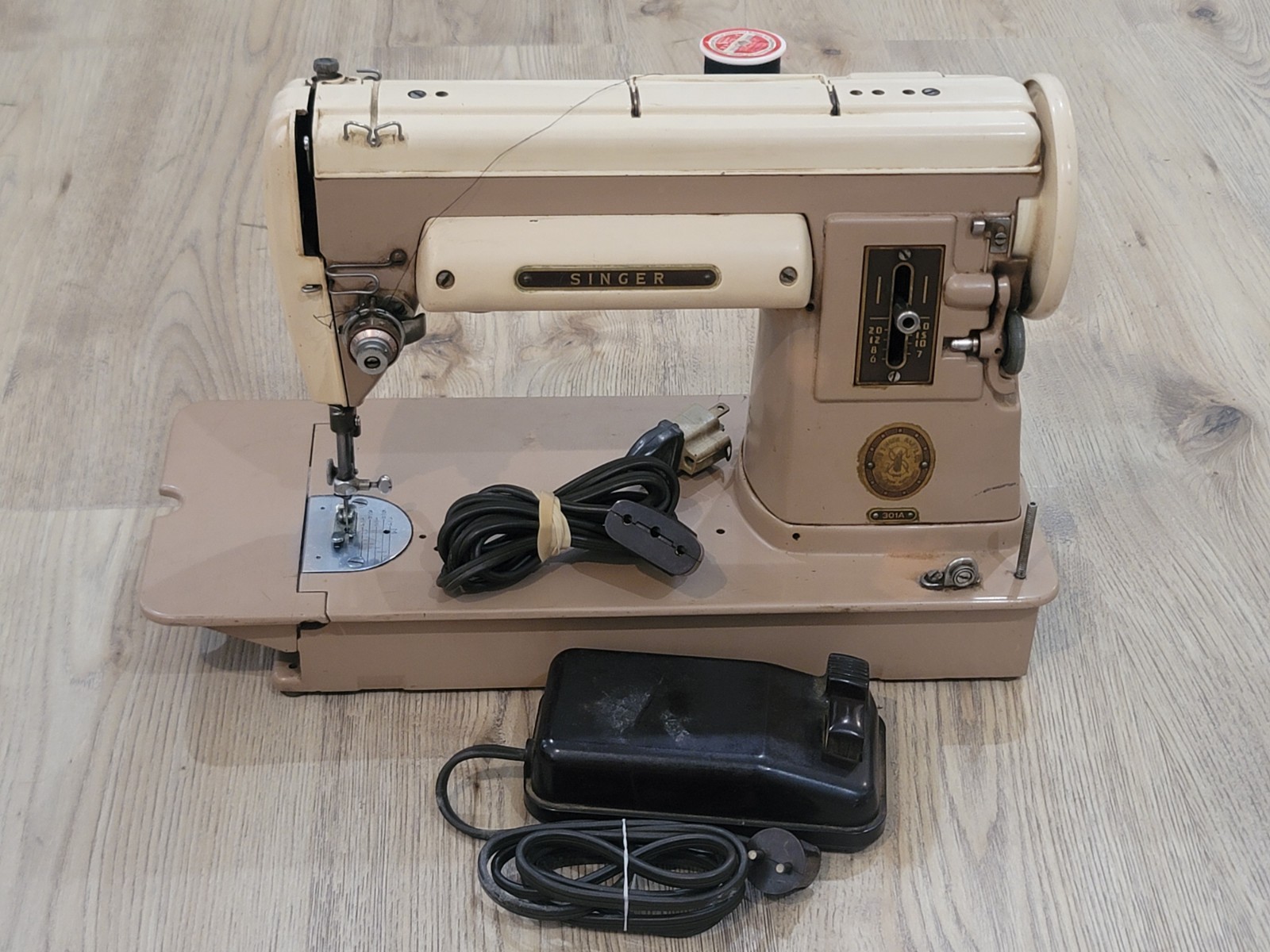
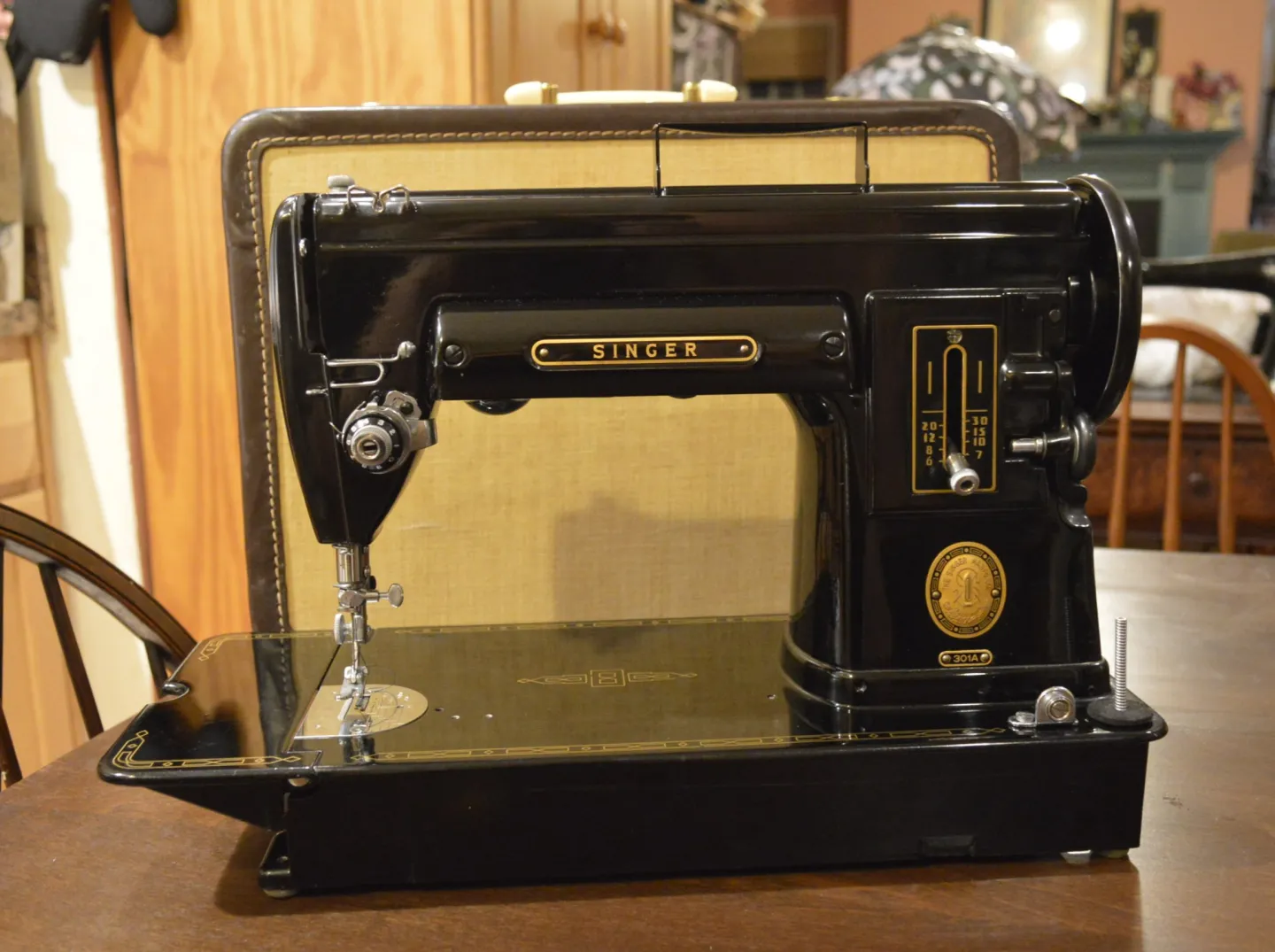
Domestic machines, the first slant needle model made by Singer. Part of the "Slant-o-matic" family. The most comprehensive information about Class 301 is available at Singer301.com
Documented Machines
(What does it mean?)Total: 18
Documented Factories:
- Anderson, South Carolina (USA)
Documented Decals:
Documented years: 1951 - 1956
306
In use from 1954 to 1962
Recorded serial numbers: 307,078
Recorded factories:
Usage Information
- Needle size: 206x13
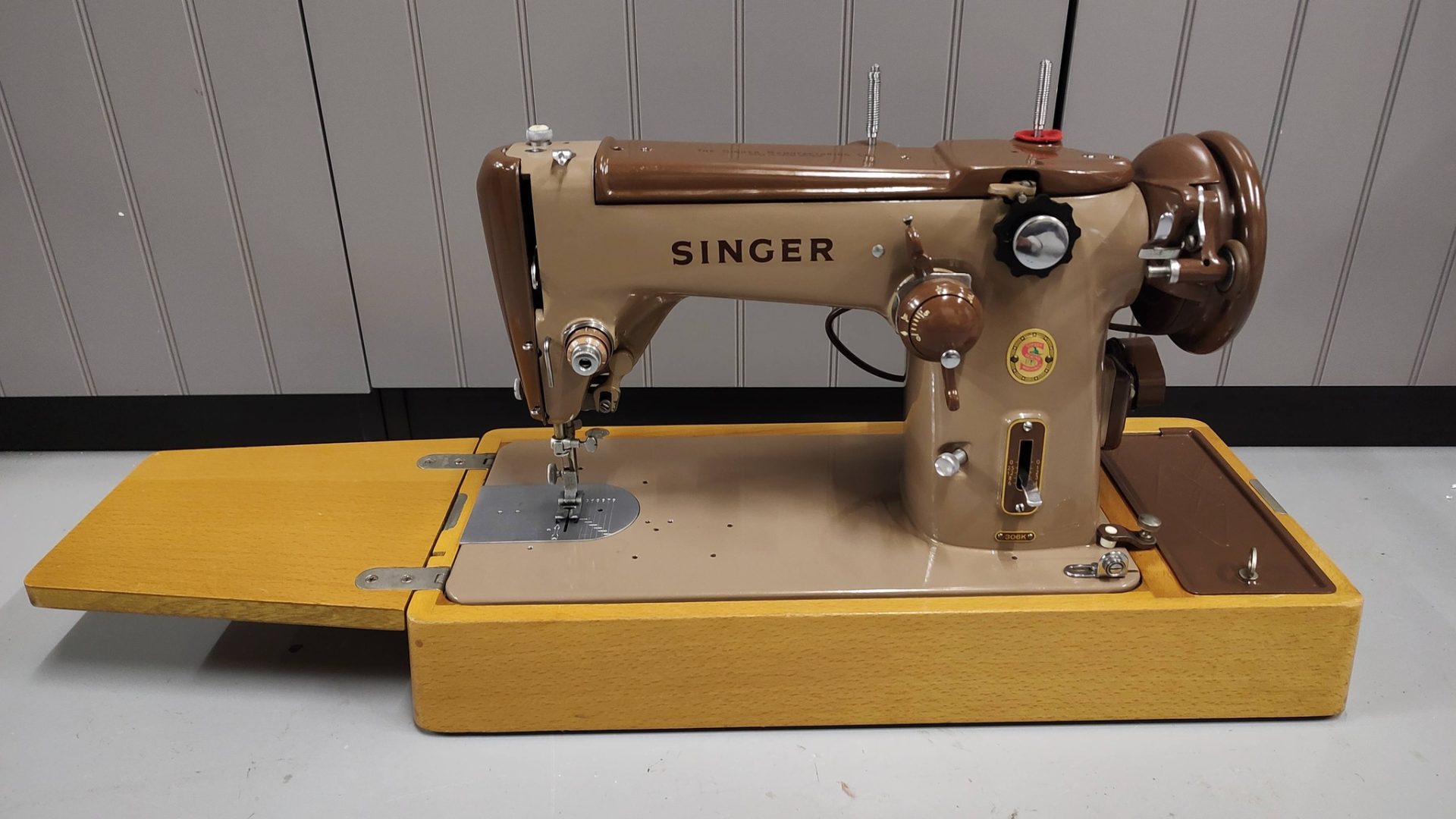
Domestic zig-zag stitch, swing needle machines in aluminum. Allotted in serial number records from 1954 to 1962, except for the factory of Monza, whose original records are lost. Available in tan or black, with or without decals.
Documented Machines
(What does it mean?)Total: 29
Documented Factories:
Documented Decals:
Documented years: 1954 - 1961

307G
Recorded serial numbers: 1
Recorded factories:
- Karlsruhe (Germany)
Industrial zig-zag machines for tailoring. One known machine from the German factory of Karlsruhe.
Documented Machines
(What does it mean?)Total: 1
Documented Factories:
- Karlsruhe (Germany)
315
In use from 1965 to 1967
Recorded serial numbers: 1
Recorded factories:
Usage Information
- Needle size: 15x1
Domestic electric machines with enclosed motor, carry bag, hard-wired foot pedal. Pale beige in color.
Documented Machines
(What does it mean?)Total: 1
Documented Factories:
316G
Recorded serial numbers: 3
Recorded factories:
- Karlsruhe (Germany)
Domestic machines produced in the German factory of Karlsruhe.
Documented Machines
(What does it mean?)Total: 3
Documented Factories:
- Karlsruhe (Germany)
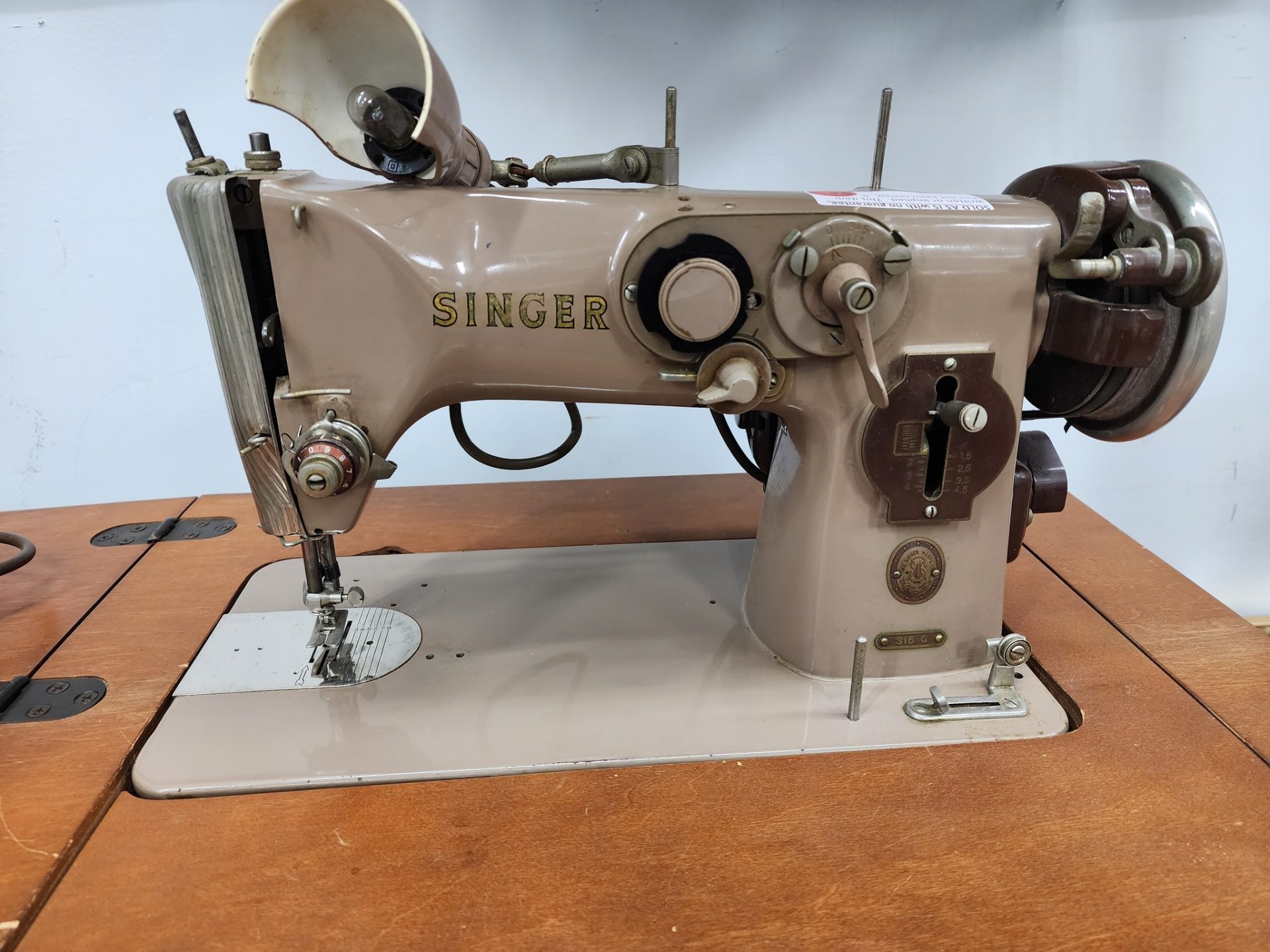
319
In use from 1956 to 1962
Recorded serial numbers: 4
Recorded factories:
Usage Information
- Needle size: 206x13
- Bobbin size: 20U
Domestic zig-zag machines, evolution of Class 306. Similar to Class 320, but flat bed, while Class 320 is tubular bed. Black with decals or colored (tan, green).
Documented Machines
(What does it mean?)Total: 4
Documented Factories:
Documented Decals:
Documented years: 1956
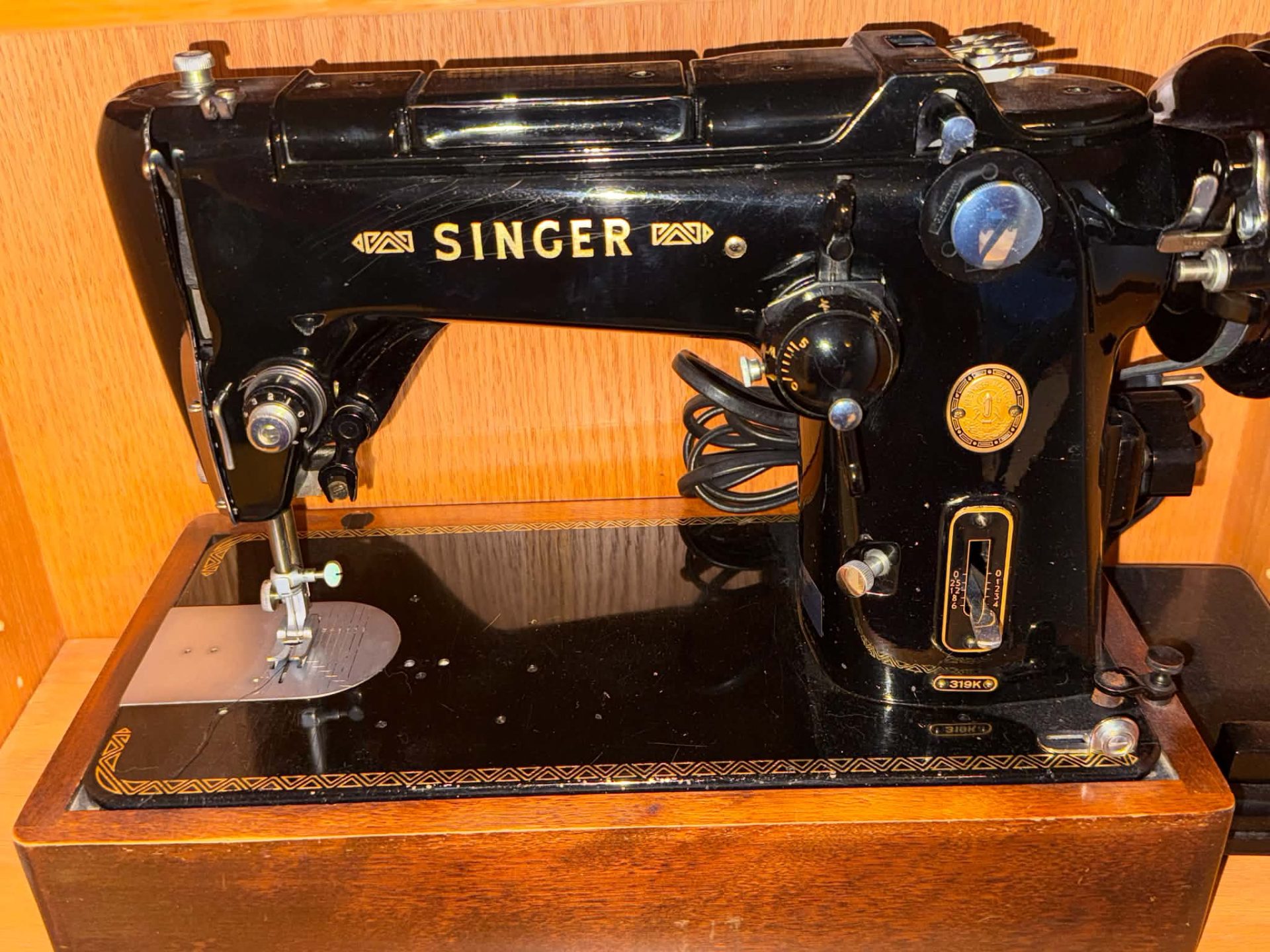
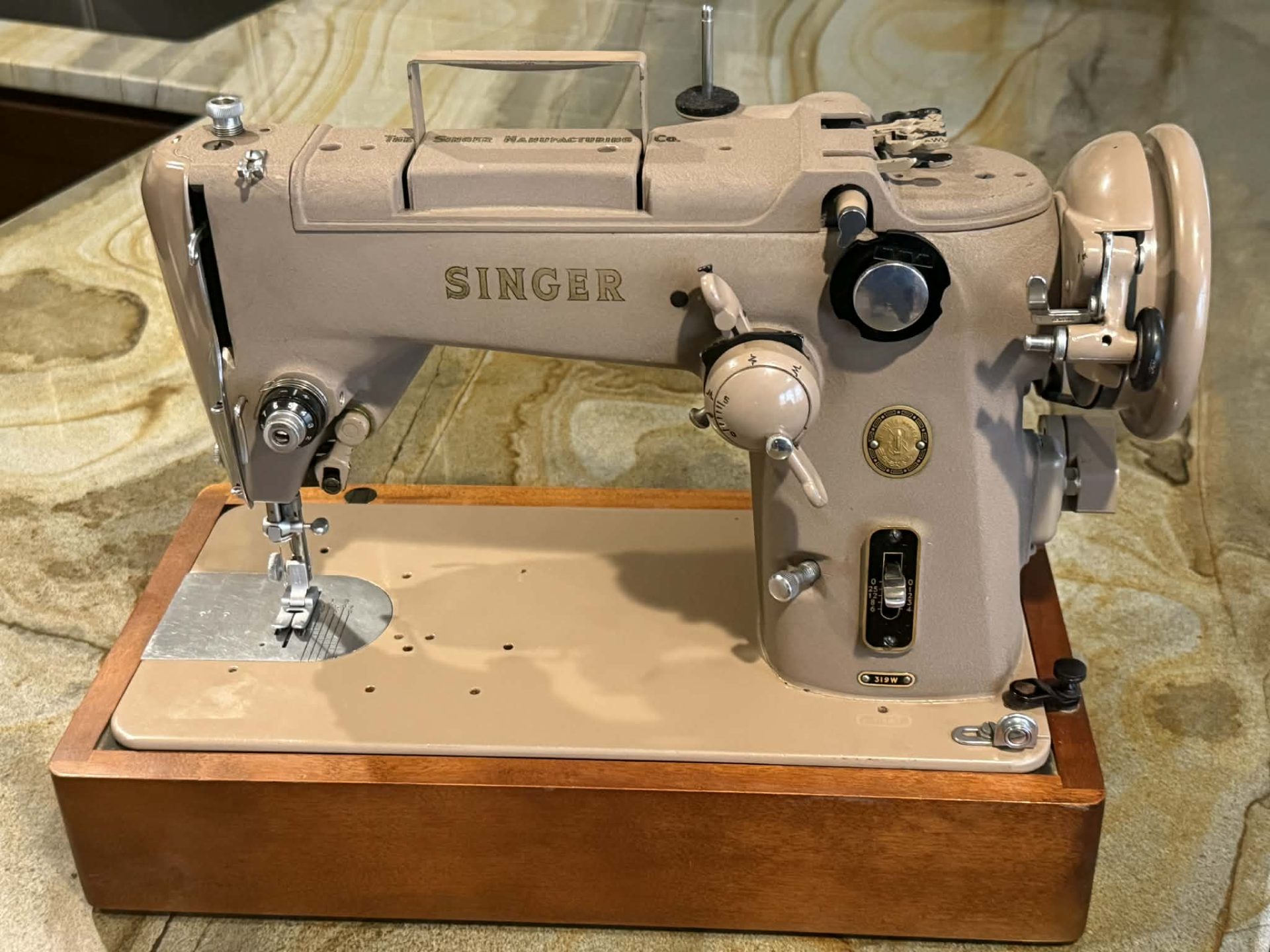
320
In use from 1958 to 1961
Recorded serial numbers: 78,500
Recorded factories:
Usage Information
- Needle size: 206x13
- Bobbin size: 20U
Domestic zig-zag machines, evolution of Class 306. Similar to Class 319, but tubular bed and free arm, while Class 319 is flat bed.
Documented Machines
(What does it mean?)Total: 1
Documented Factories:
Documented years: 1960
325
Recorded serial numbers: 8,500
Recorded factories:
Two known allotments from 1962, of 3500 and 5000 machines. Nothing more is known about this class.
326
Recorded serial numbers: 20,000
Recorded factories:
One known allotment of 20,000 machines from 1955. Nothing more is known about this class.
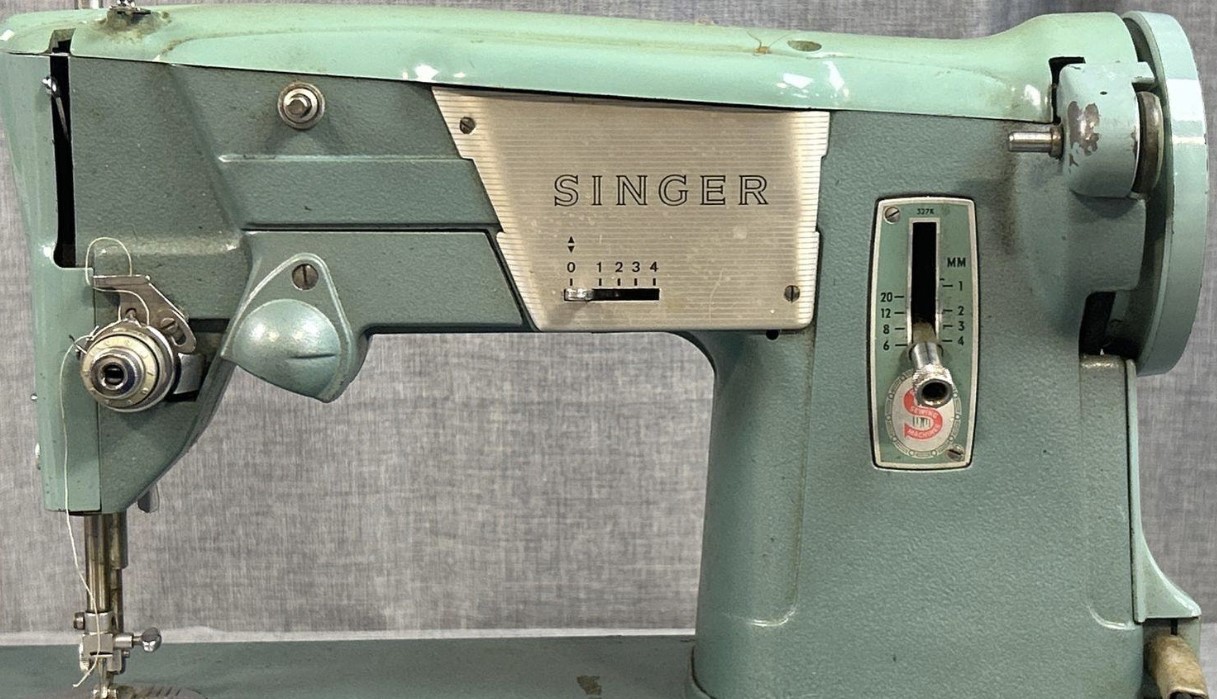
327
In use from 1963 to 1965
Recorded serial numbers: 1
Recorded factories:
Usage Information
- Needle size: 15x1
Domestic zig-zag horizontal oscillating hook machines. Can be green or tan in color.
Documented Machines
(What does it mean?)Total: 1
Documented Factories:
Documented years: 1964
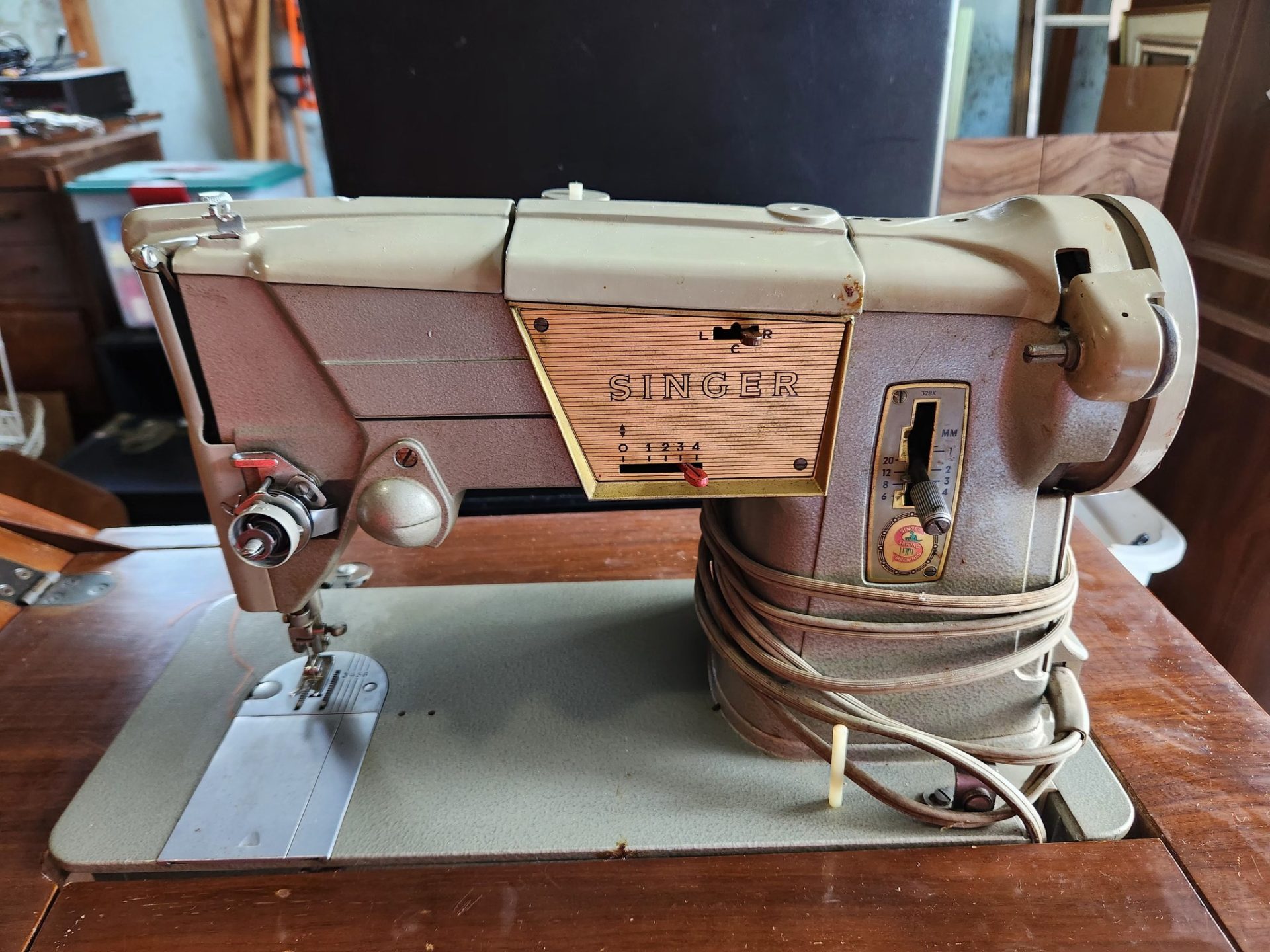
328
In use from 1960 to 1965
Recorded serial numbers: 1,036,498
Recorded factories:
- Elizabethport, New Jersey (USA)
- Kilbowie, Clydebank (Scotland, UK)
- St. John's Factory, Quebec (Canada)
Usage Information
- Needle size: 15x1
Domestic zig-zag horizontal oscillating hook machines of the "Style-Mate" family.
Documented Machines
(What does it mean?)Total: 5
Documented Factories:
Documented years: 1962 - 1963
329
In use from 1957 to 1964
Recorded serial numbers: 9
Recorded factories:
Usage Information
- Needle size: 15x1
Domestic zig-zag horizontal oscillating hook machines of the "Style-Mate" family.
Documented Machines
(What does it mean?)Total: 3
Documented Factories:
Documented years: 1961 - 1964
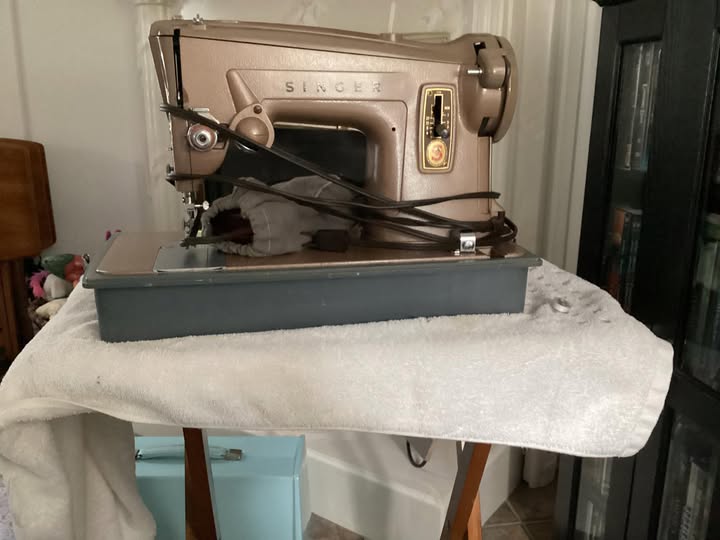
330
In use from 1957
Recorded serial numbers: 6
Recorded factories:
One known allotment of 6 machines from 1957. Nothing more is known about this class.
331
In use from 1959 to 1965
Recorded serial numbers: 112,102
Recorded factories:
Usage Information
- Needle size: 16x87
Industrial single needle lockstitch machines.
Documented Machines
(What does it mean?)Total: 2
Documented Factories:
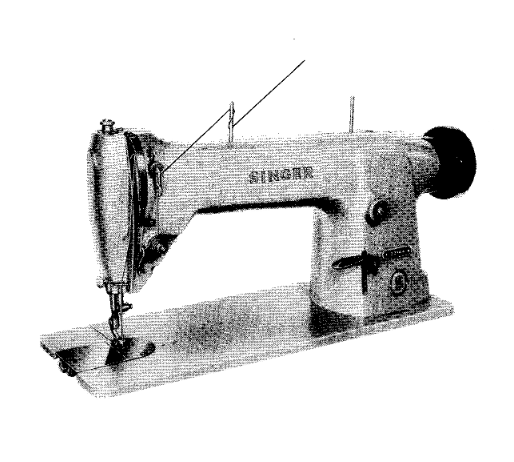
338
In use up to 1965
Recorded serial numbers: 1,000
Recorded factories:
Usage Information
- Needle size: 15x1
Domestic zig-zag machines. One known allotment of 1000 machines from 1965.
360
Recorded serial numbers: 1
Recorded factories:
Usage Information
- Needle size: 15x1
Domestic zig zag machines. Part of the "Fashion Mate" family.
Documented Machines
(What does it mean?)Total: 1
Documented Factories:

366
In use from 1963 to 1965
Recorded serial numbers: 27,500
Recorded factories:
Industrial single-needle, high-speed machines. For general purpose and leather work.
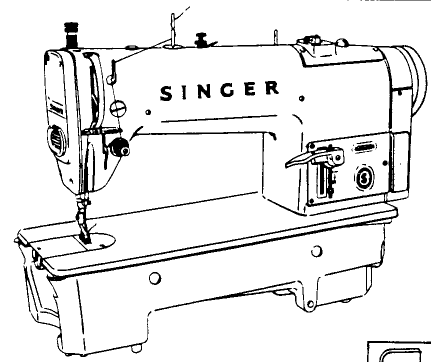
367
Recorded serial numbers: 4
Recorded factories:
Usage Information
- Needle size: 15x1
Domestic zig-zag machines.
Documented Machines
(What does it mean?)Total: 4
Documented Factories:
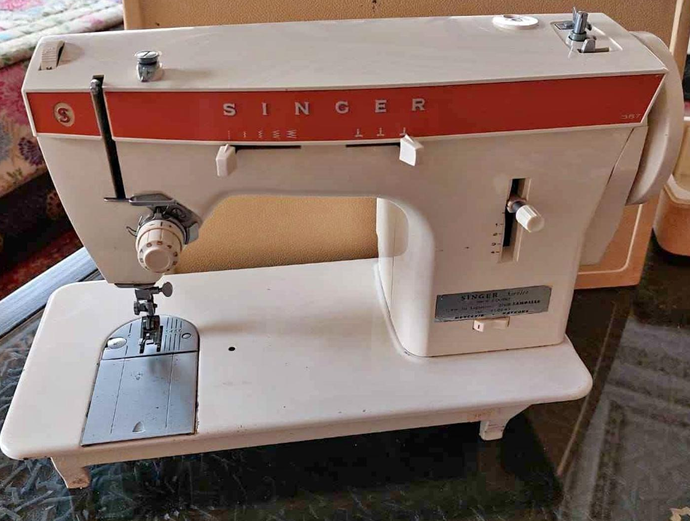
368
Recorded serial numbers: 1
Recorded factories:
Usage Information
- Needle size: 15x1
Domestic zig zag machines. Part of the "Fashion Mate" family.
Documented Machines
(What does it mean?)Total: 1
Documented Factories:
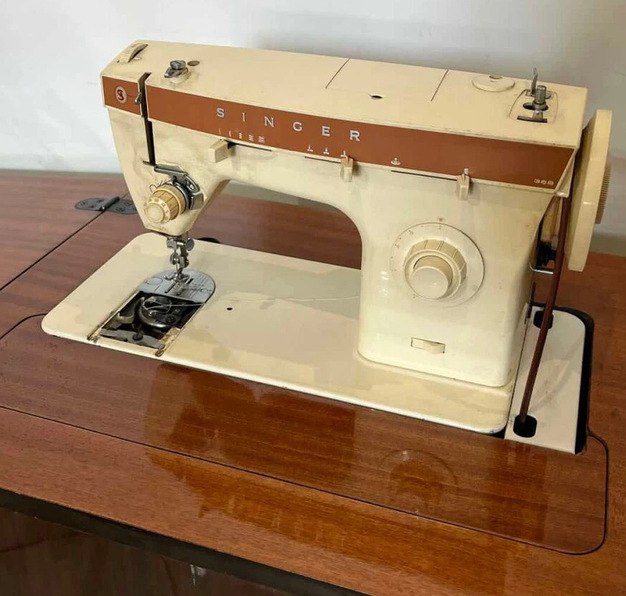
401
In use from 1957 to 1961
Recorded serial numbers: 1,200,005
Recorded factories:
- Anderson, South Carolina (USA)
- Elizabethport, New Jersey (USA)
- Monza (Italy)
Usage Information
- Needle size: 15x1
Domestic slant needle, zig-zag machines, part of the "Slant-o-matic" family.
Documented Machines
(What does it mean?)Total: 10
Documented Factories:
- Anderson, South Carolina (USA)
- Monza (Italy)
Documented years: 1957 - 1961
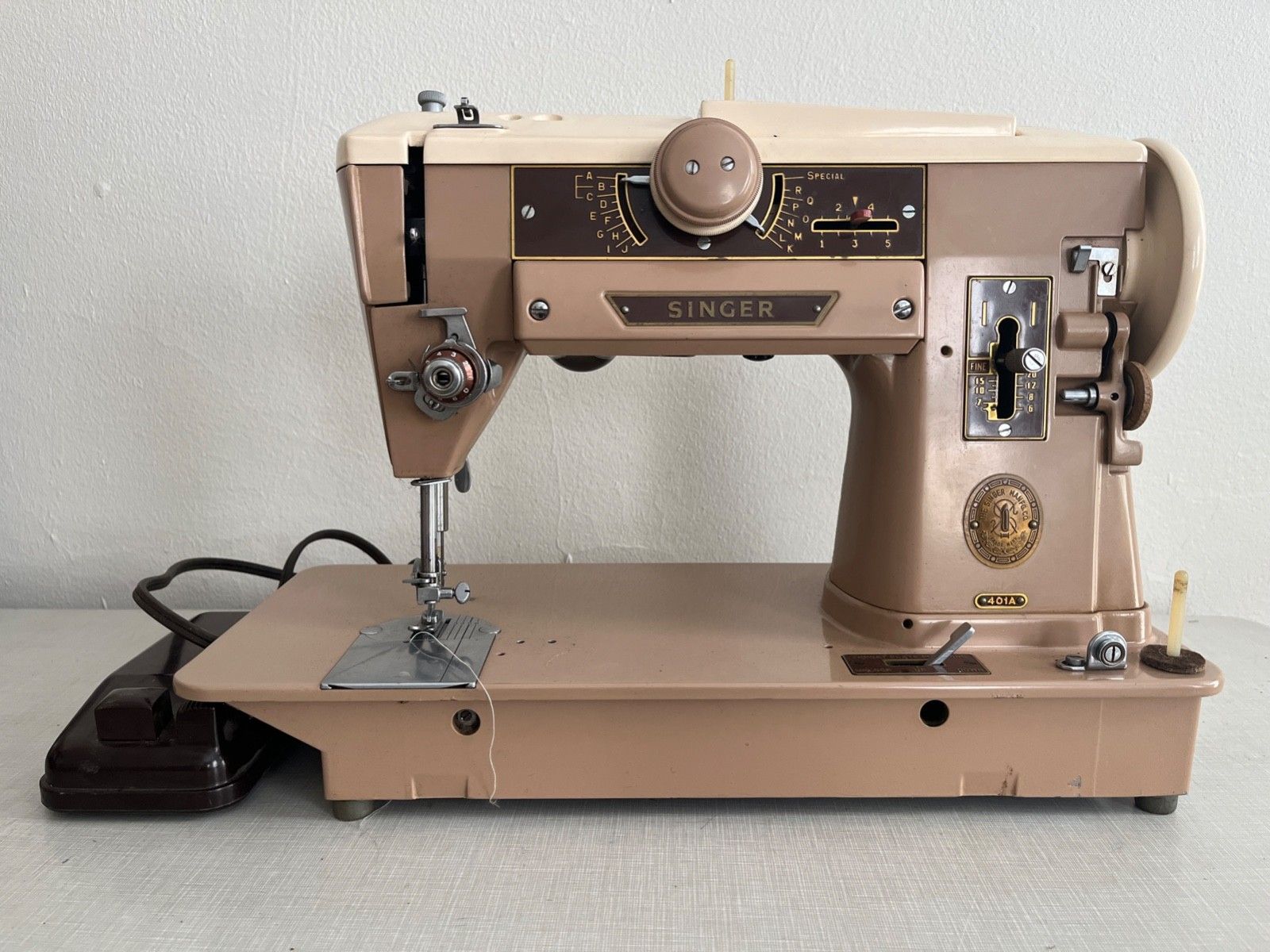
403
In use from 1958 to 1960
Recorded serial numbers: 299,998
Recorded factories:
- Anderson, South Carolina (USA)
Usage Information
- Needle size: 15x1
Domestic slant needle, zig-zag machines, part of the "Slant-o-matic" family.
Documented Machines
(What does it mean?)Total: 5
Documented Factories:
- Anderson, South Carolina (USA)
Documented years: 1958 - 1960
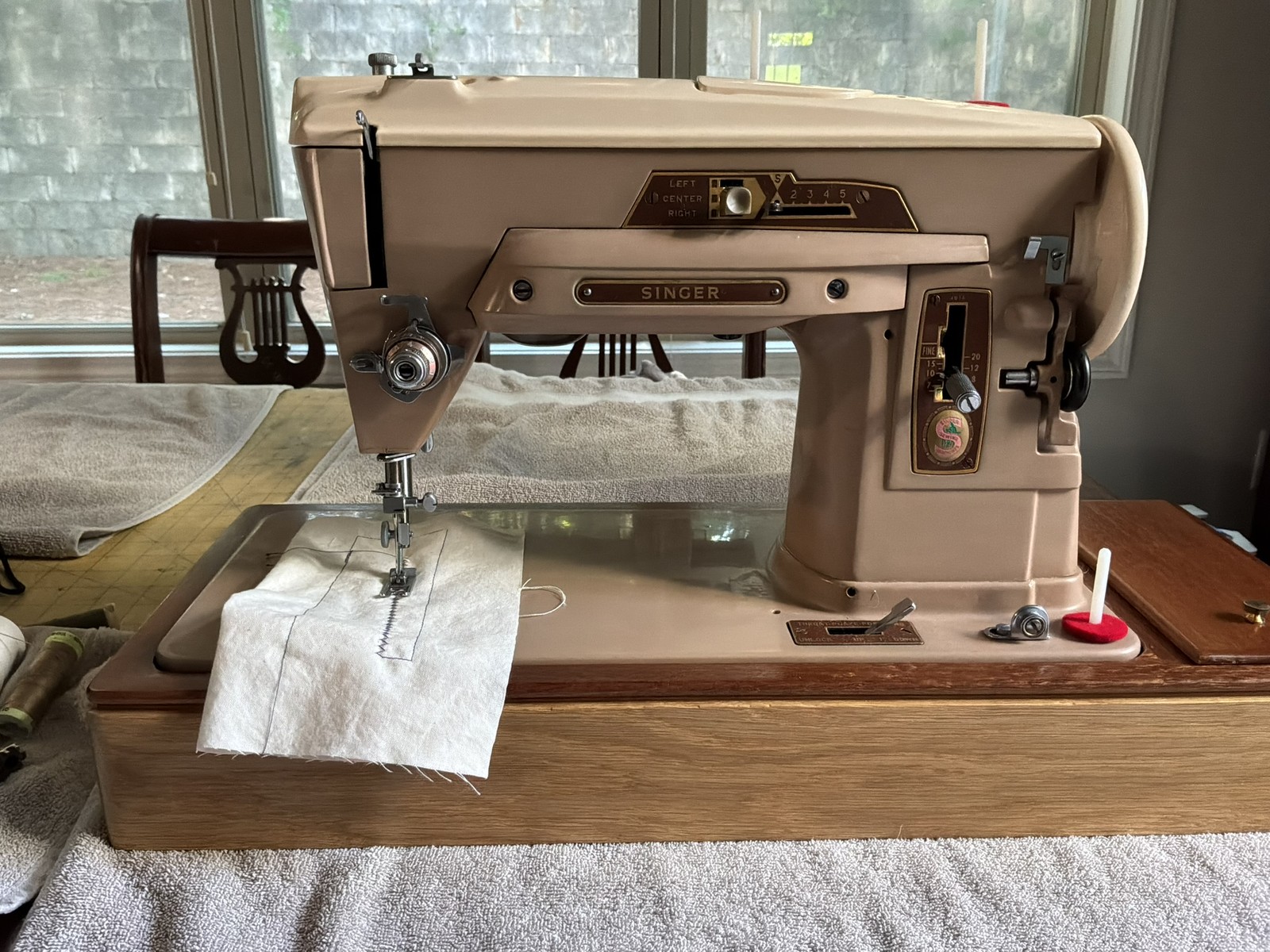
404
In use from 1958 to 1963
Recorded serial numbers: 401,500
Recorded factories:
Usage Information
- Needle size: 15x1
Domestic slant needle, zig-zag machines, part of the "Slant-o-matic" family.
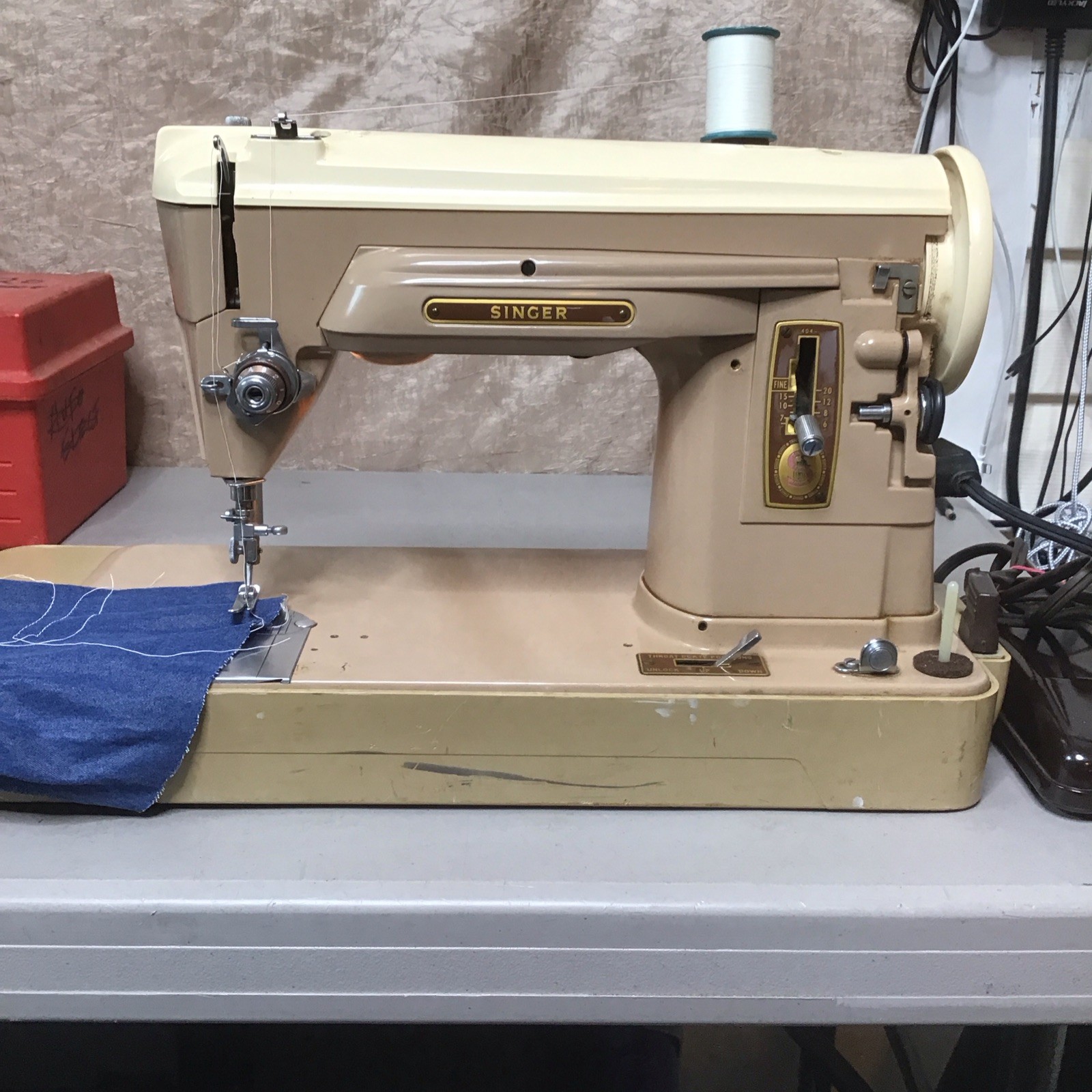
411
In use from 1962 to 1965
Recorded serial numbers: 14
Recorded factories:
- Karlsruhe (Germany)
- Monza (Italy)
- St. John's Factory, Quebec (Canada)
Usage Information
- Needle size: 15x1
- Bobbin size: Class 66
Domestic slant needle, zig-zag machines, part of the "Slant-o-matic" family.
Documented Machines
(What does it mean?)Total: 14
Documented Factories:
- Karlsruhe (Germany)
- Monza (Italy)
- St. John's Factory, Quebec (Canada)
Documented years: 1962 - 1965
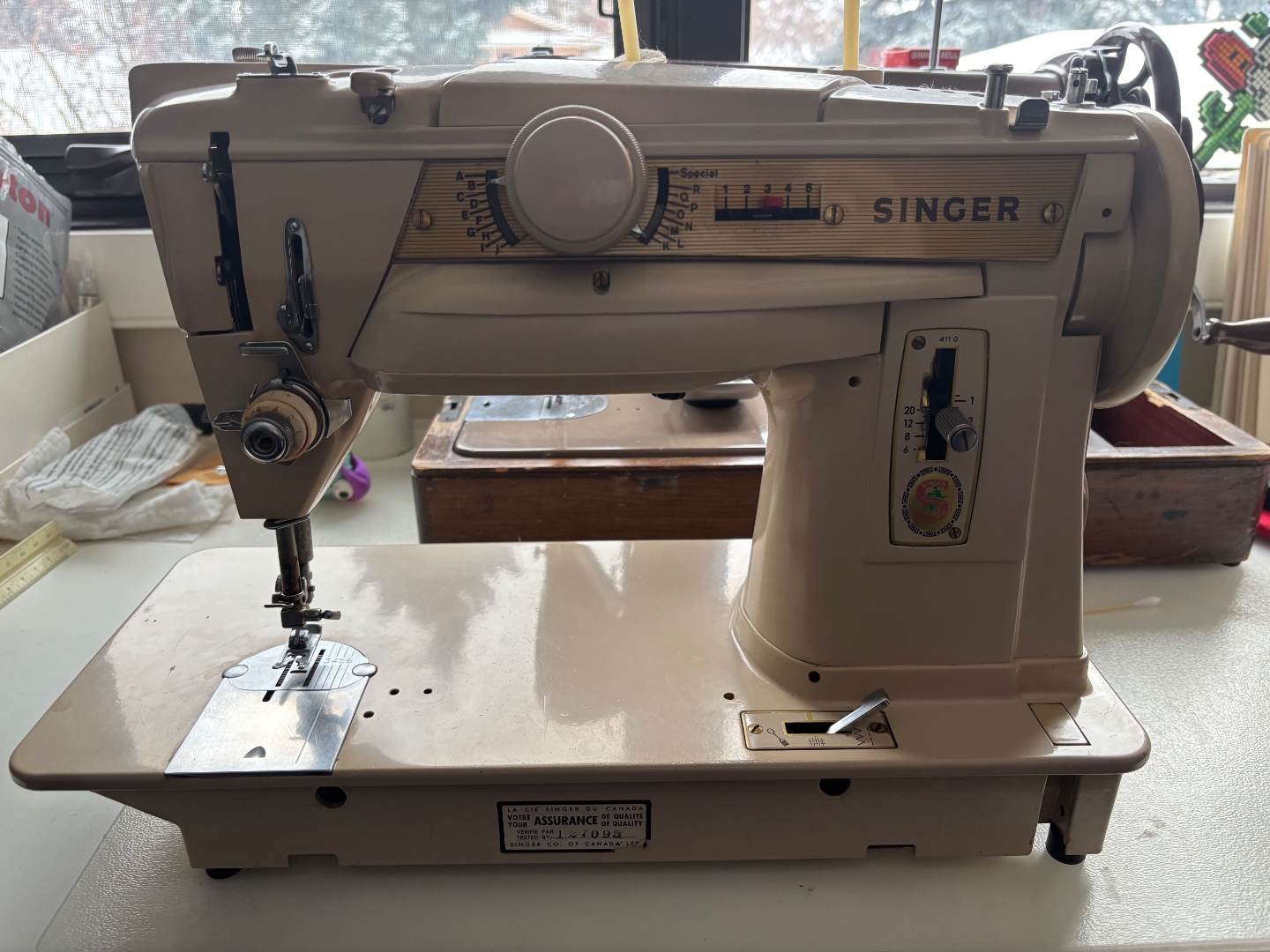
413 "Stylist"
In use up to 1978
Recorded serial numbers: 3
Recorded factories:
- Karlsruhe (Germany)
- Kilbowie, Clydebank (Scotland, UK)
Usage Information
- Needle size: 15x1
Domestic zig-zag, horizontal rotary hook machines. Singer 413K Stylist models were produced between 1971 and 1978, but we documented 413G machines from 1963, with their original documents proving the date.
Documented Machines
(What does it mean?)Total: 3
Documented Factories:
- Karlsruhe (Germany)
- Kilbowie, Clydebank (Scotland, UK)
Documented years: 1963
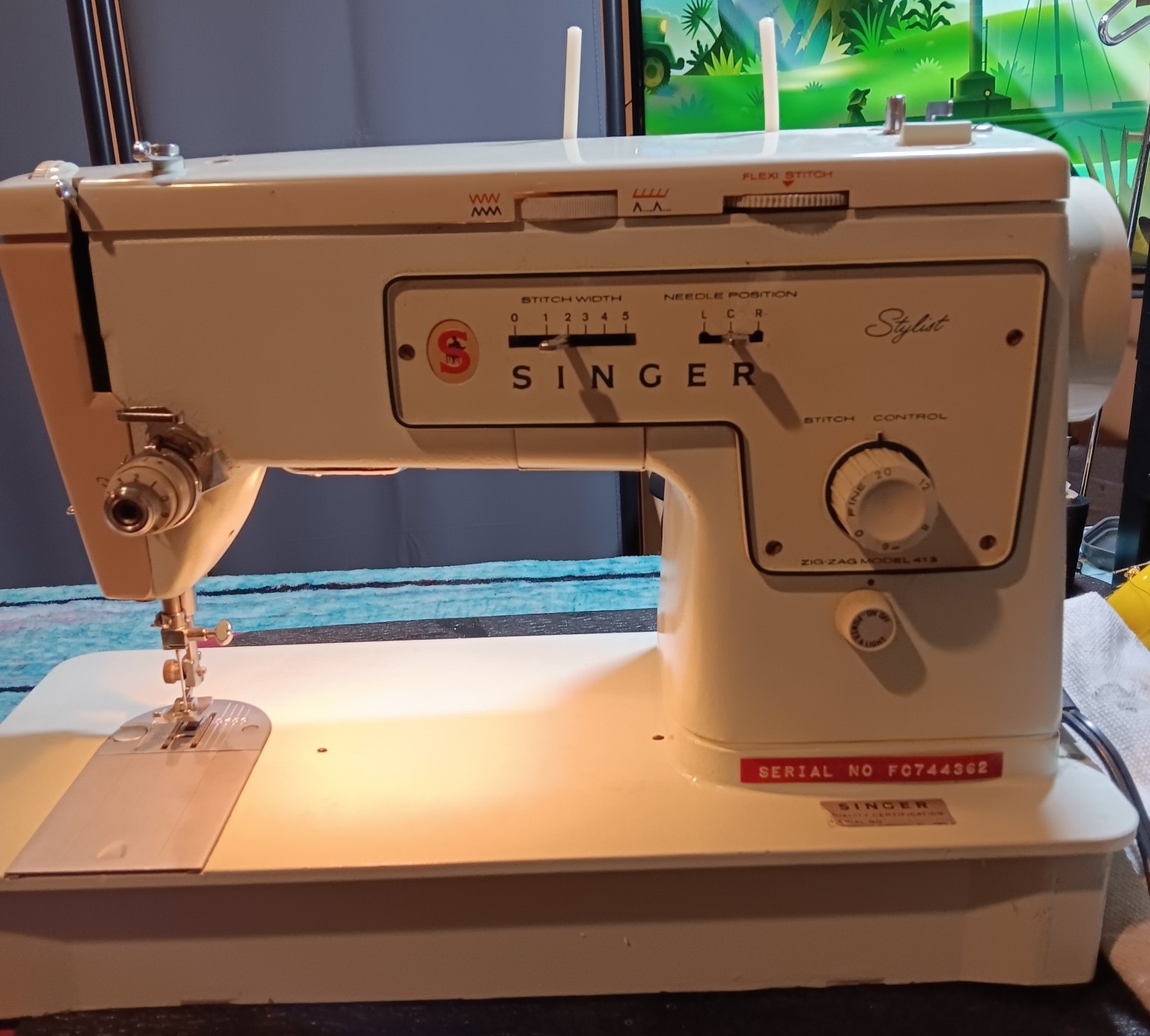
426
In use from 1953
Recorded serial numbers: 1,000
Recorded factories:
Allotted in a batch of 1000 in 1953. Nothing more is known about this class.
427
In use from 1969 to 1973
Recorded serial numbers: 1
Recorded factories:
Usage Information
- Needle size: 15x1
Domestic electric zig-zag machines. flatbed version of Class 437.
Documented Machines
(What does it mean?)Total: 1
Documented Factories:
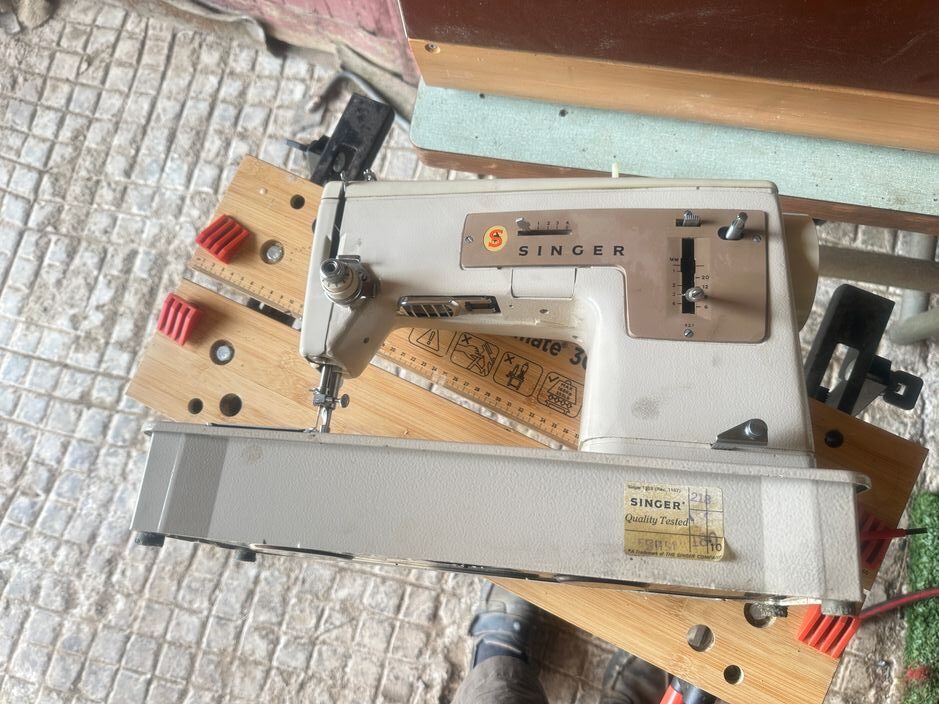
451
In use from 1952 to 1964
Recorded serial numbers: 236,810
Recorded factories:
Industrial high speed machines. Lock stitch, single rotary thread take-up
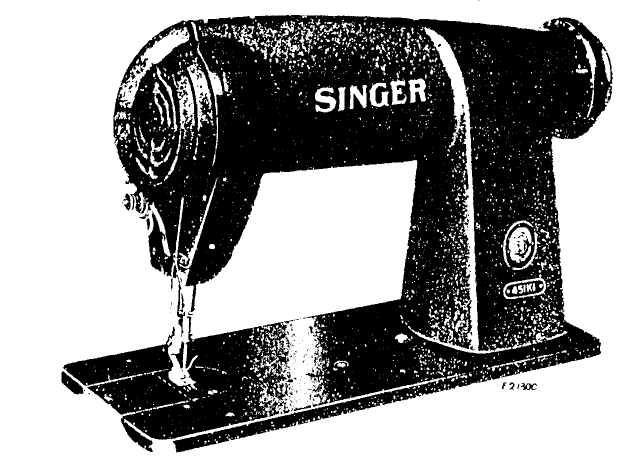
452
Recorded serial numbers: 1
Recorded factories:
Industrial machines. One machine only allotted in 1961. Nothing more is known about this class.
457
Recorded serial numbers: 1
Recorded factories:
One machine only allotted in 1961. Nothing more is known about this class. This allotment is probably not the 457 domestic machine of the "Stylist" family.
460
In use from 1964 to 1966
Recorded serial numbers: 11,650
Recorded factories:
Industrial overlocker (serger) machines.
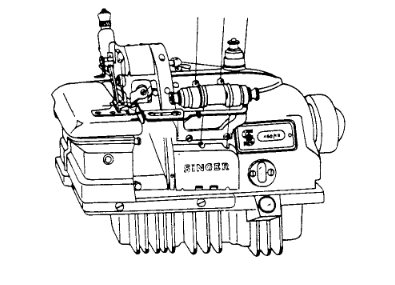
477 "Stylist"
Recorded serial numbers: 5
Recorded factories:
Usage Information
- Needle size: 15x1
Domestic zig-zag machines of the "Stylist" family.
Documented Machines
(What does it mean?)Total: 5
Documented Factories:
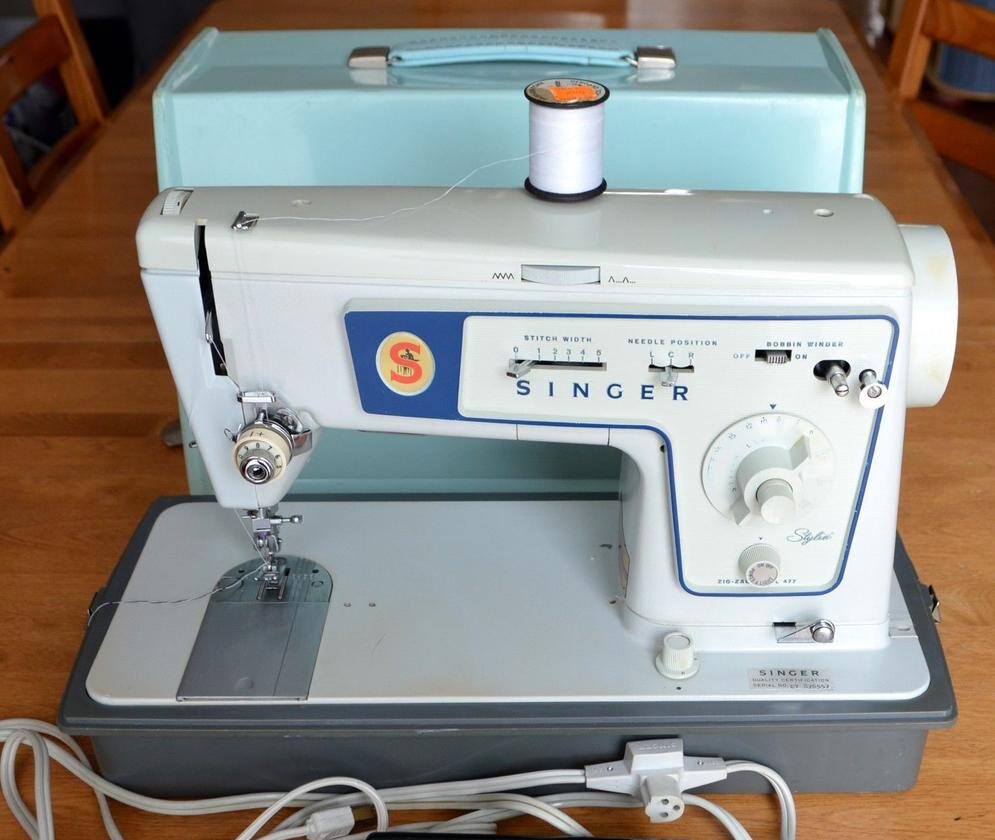
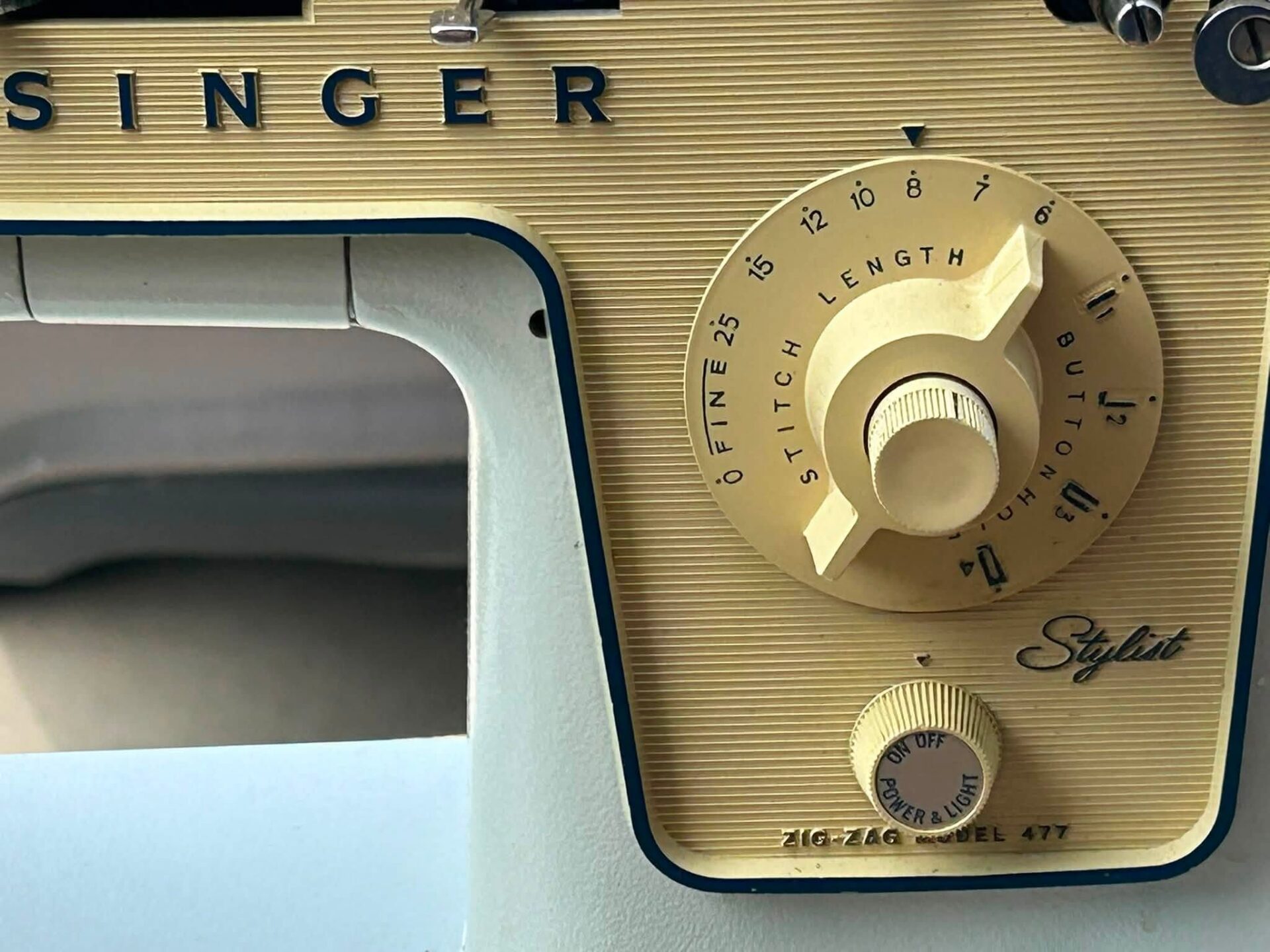
481
In use from 1970
Recorded serial numbers: 10
Recorded factories:
10 machines allotted in 1970. Nothing more is known about this class.
500
In use from 1960 to 1963
Recorded serial numbers: 500,008
Recorded factories:
- Anderson, South Carolina (USA)
- Elizabethport, New Jersey (USA)
- St. John's Factory, Quebec (Canada)
Usage Information
- Needle size: 15x1
- Bobbin size: Class 66
Domestic slant needle, zig-zag machines, commonly known as "The Rocketeer" for its shape. This class features a distinctive oval arm shape and futuristic aesthetic from the early 1960s. Part of the "Slant-o-matic" family.
Documented Machines
(What does it mean?)Total: 6
Documented Factories:
- Anderson, South Carolina (USA)
- St. John's Factory, Quebec (Canada)
Documented years: 1961 - 1963
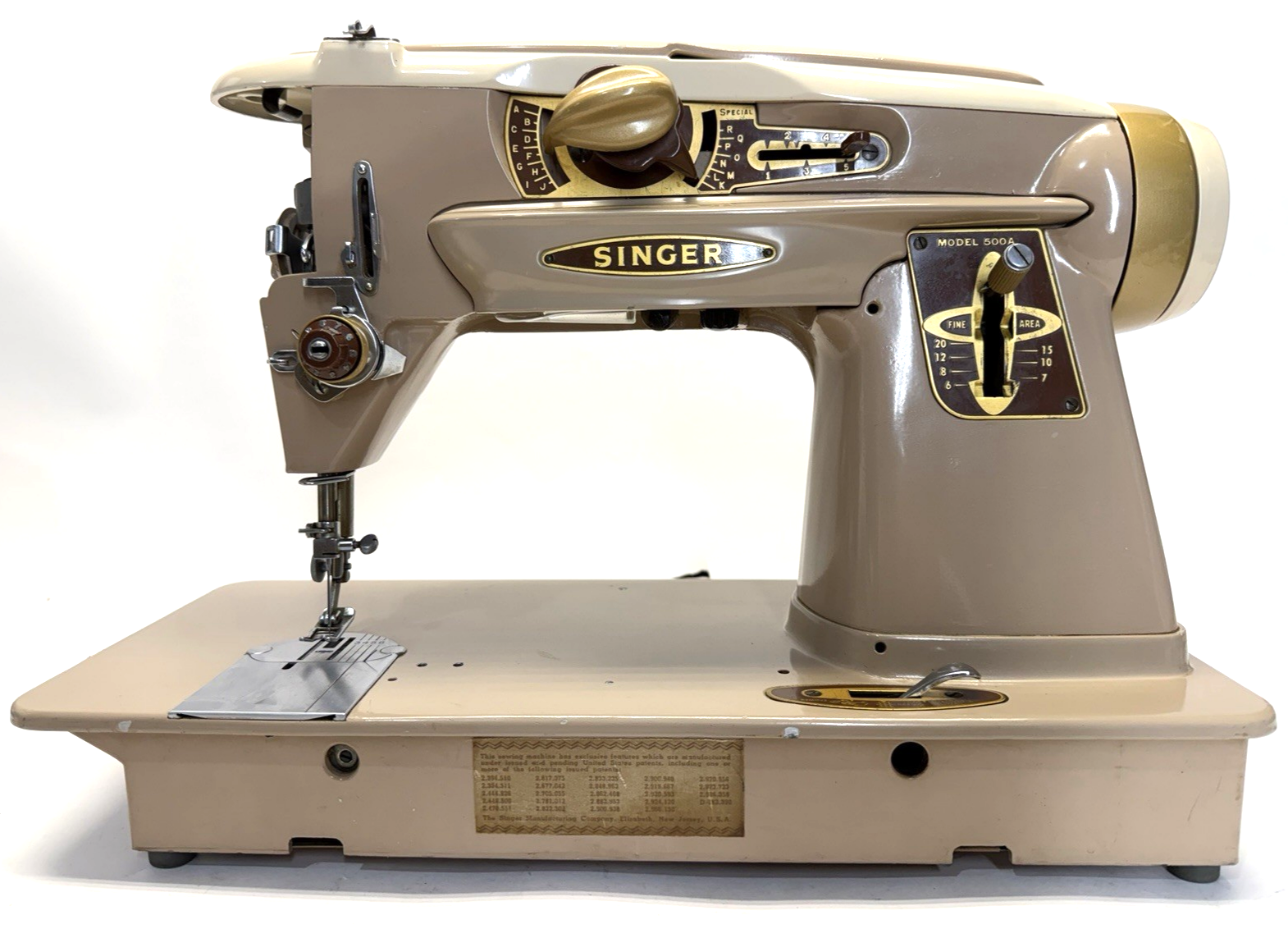
503
In use from 1961 to 1963
Recorded serial numbers: 300,000
Recorded factories:
- Anderson, South Carolina (USA)
Usage Information
- Needle size: 15x1
- Bobbin size: Class 66
Domestic slant needle, zig-zag machines, commonly known as "The Rocketeer" for its shape. This class features a distinctive oval arm shape and futuristic aesthetic from the early 1960s. Part of the "Slant-o-matic" family. This class requires cams for all zigzag functions.
Documented Machines
(What does it mean?)Total: 2
Documented Factories:
- Anderson, South Carolina (USA)
Documented years: 1961
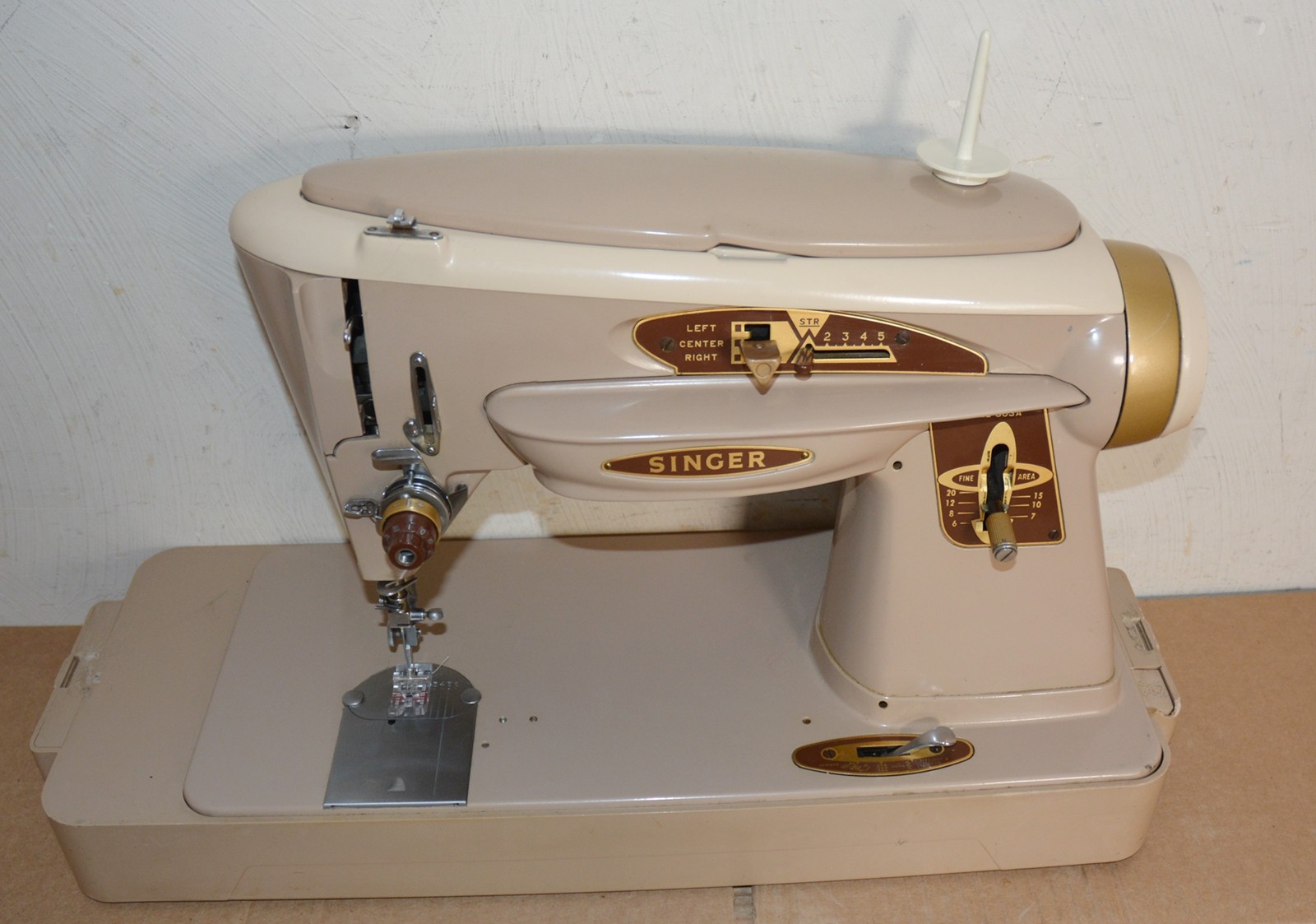
551
In use from 1967
Recorded serial numbers: 3
Recorded factories:
Only 3 machines allotted in 1967: the allotment records register them as prototypes. Nothing more is known about this class.
552
In use from 1964 to 1967
Recorded serial numbers: 4,941
Recorded factories:
Industrial high speed chain stitch machines.
553
In use from 1968 to 1970
Recorded serial numbers: 500
Recorded factories:
No info available on this class. Probably industrial.
554
In use from 1964 to 1967
Recorded serial numbers: 5,016
Recorded factories:
Several allotments are for single-machine prototypes.
555
In use from 1964 to 1966
Recorded serial numbers: 5,006
Recorded factories:
Several allotments are for single-machine prototypes.
581
In use from 1970
Recorded serial numbers: 5
Recorded factories:
Only 5 machines allotted in 1970. Nothing more is known about this class.
600
In use from 1962 to 1966
Recorded serial numbers: 496,011
Recorded factories:
Usage Information
- Needle size: 15x1
Domestic slant needle machines of the "Touch and Sew" family.
Documented Machines
(What does it mean?)Total: 1
Documented Factories:
Documented years: 1951
603
In use from 1962 to 1966
Recorded serial numbers: 277,010
Recorded factories:
Usage Information
- Needle size: 15x1
Domestic slant needle zig-zag machines of the "Touch and Sew" family.
604
In use from 1962 to 1966
Recorded serial numbers: 190,010
Recorded factories:
Usage Information
- Needle size: 15x1
Domestic slant needle straight stitch machines of the "Touch and Sew" family.
606
In use from 1970
Recorded serial numbers: 11,000
Recorded factories:
Usage Information
- Needle size: 15x1
Domestic slant needle machines of the "Touch and Sew" family. Only one allotment in 1970 for 11,000 machines.
609
In use from 1966 to 1968
Recorded serial numbers: 25,000
Recorded factories:
Usage Information
- Needle size: 15x1
Domestic slant needle straight stitch machines of the "Touch and Sew" family.
611
In use from 1966
Recorded serial numbers: 1
Recorded factories:
- Karlsruhe (Germany)
Usage Information
- Needle size: 15x1
Domestic slant needle zig-zag machines.
Documented Machines
(What does it mean?)Total: 1
Documented Factories:
- Karlsruhe (Germany)
Documented years: 1966
620
In use from 1966 to 1967
Recorded serial numbers: 163,000
Recorded factories:
Usage Information
- Needle size: 15x1
Domestic slant needle machines of the "Golden Touch and Sew" family.
625
In use from 1966
Recorded serial numbers: 65,000
Recorded factories:
Usage Information
- Needle size: 15x1
Domestic slant needle machines of the "Golden Touch and Sew" family.
626
In use from 1966 to 1967
Recorded serial numbers: 237,300
Recorded factories:
Usage Information
- Needle size: 15x1
Domestic slant needle machines of the "Touch and Sew" family.
628
In use from 1966 to 1968
Recorded serial numbers: 70,000
Recorded factories:
Usage Information
- Needle size: 15x1
Domestic slant needle machines of the "Touch and Sew" family.
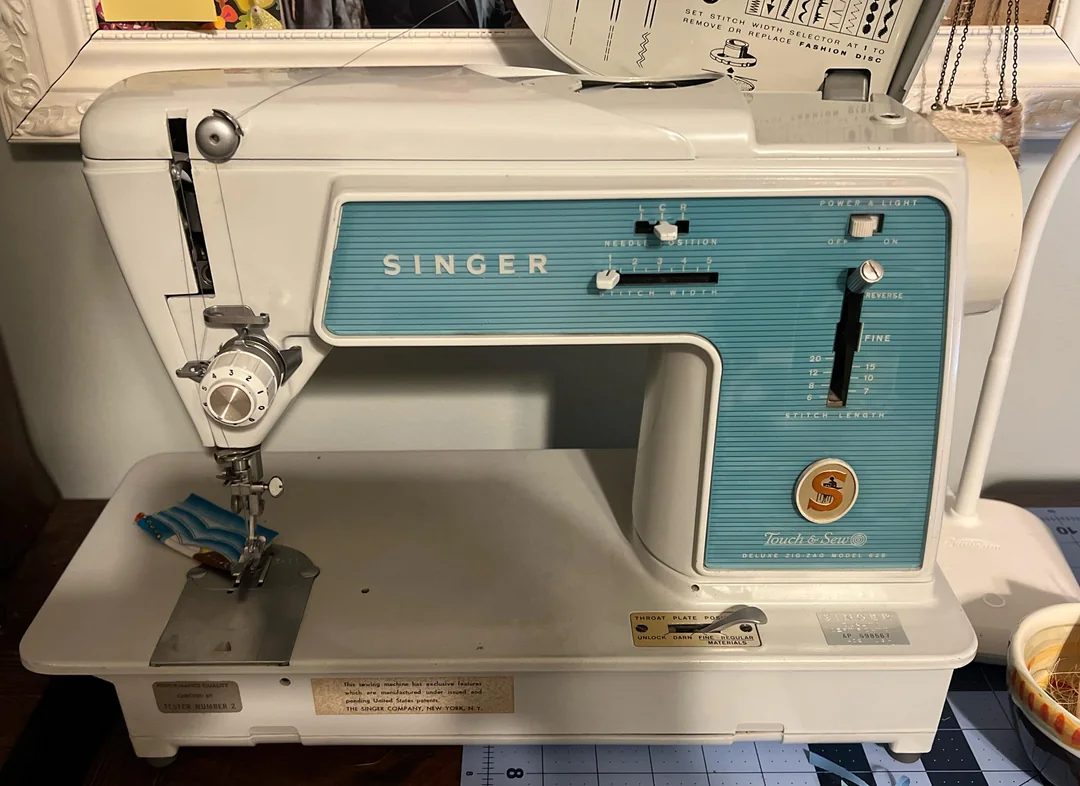
629
In use from 1966 to 1968
Recorded serial numbers: 34,000
Recorded factories:
Usage Information
- Needle size: 15x1
Domestic slant needle machines of the "Touch and Sew" family.
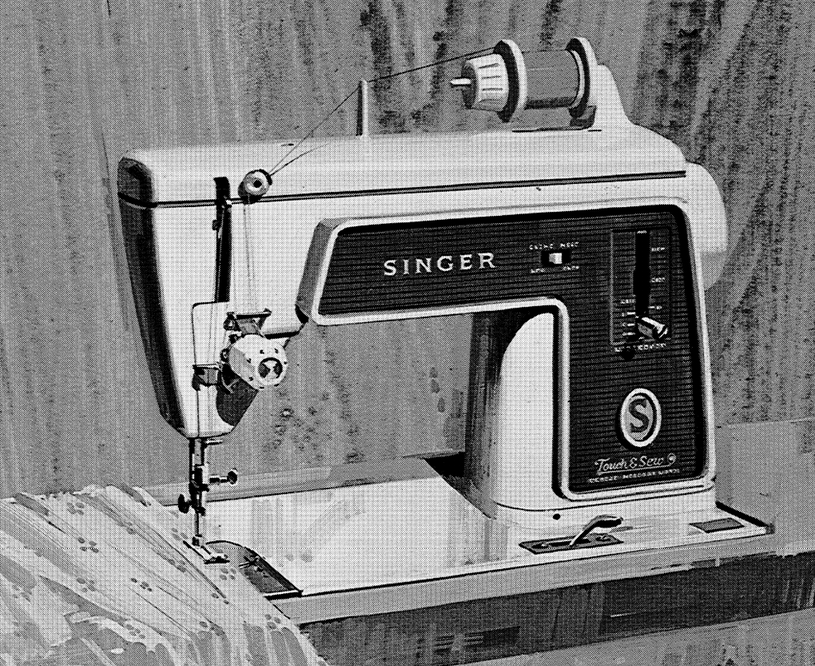
630
In use from 1967 to 1968
Recorded serial numbers: 110,500
Recorded factories:
Usage Information
- Needle size: 15x1
Domestic slant needle machines of the "Golden Touch and Sew" family.
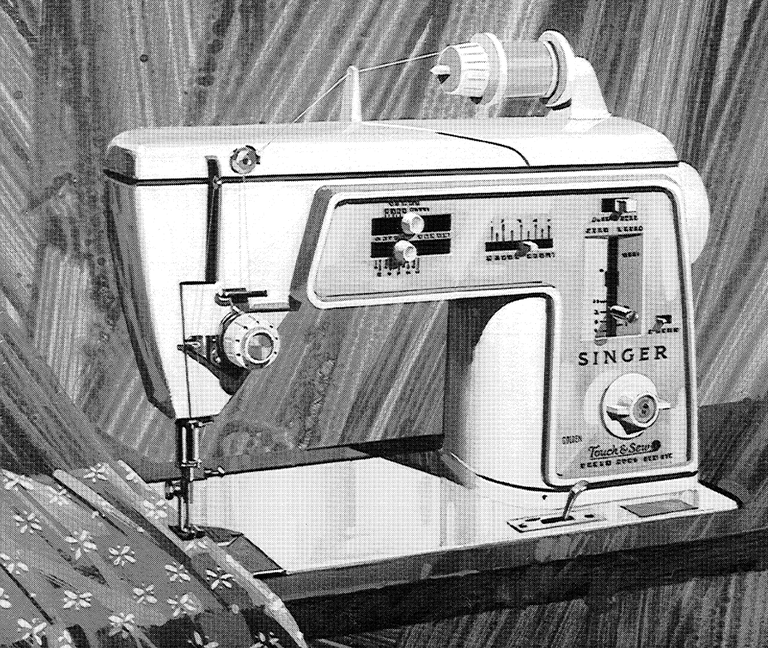
635
In use from 1967 to 1968
Recorded serial numbers: 72,500
Recorded factories:
Domestic slant needle machines of the "Touch and Sew" family.
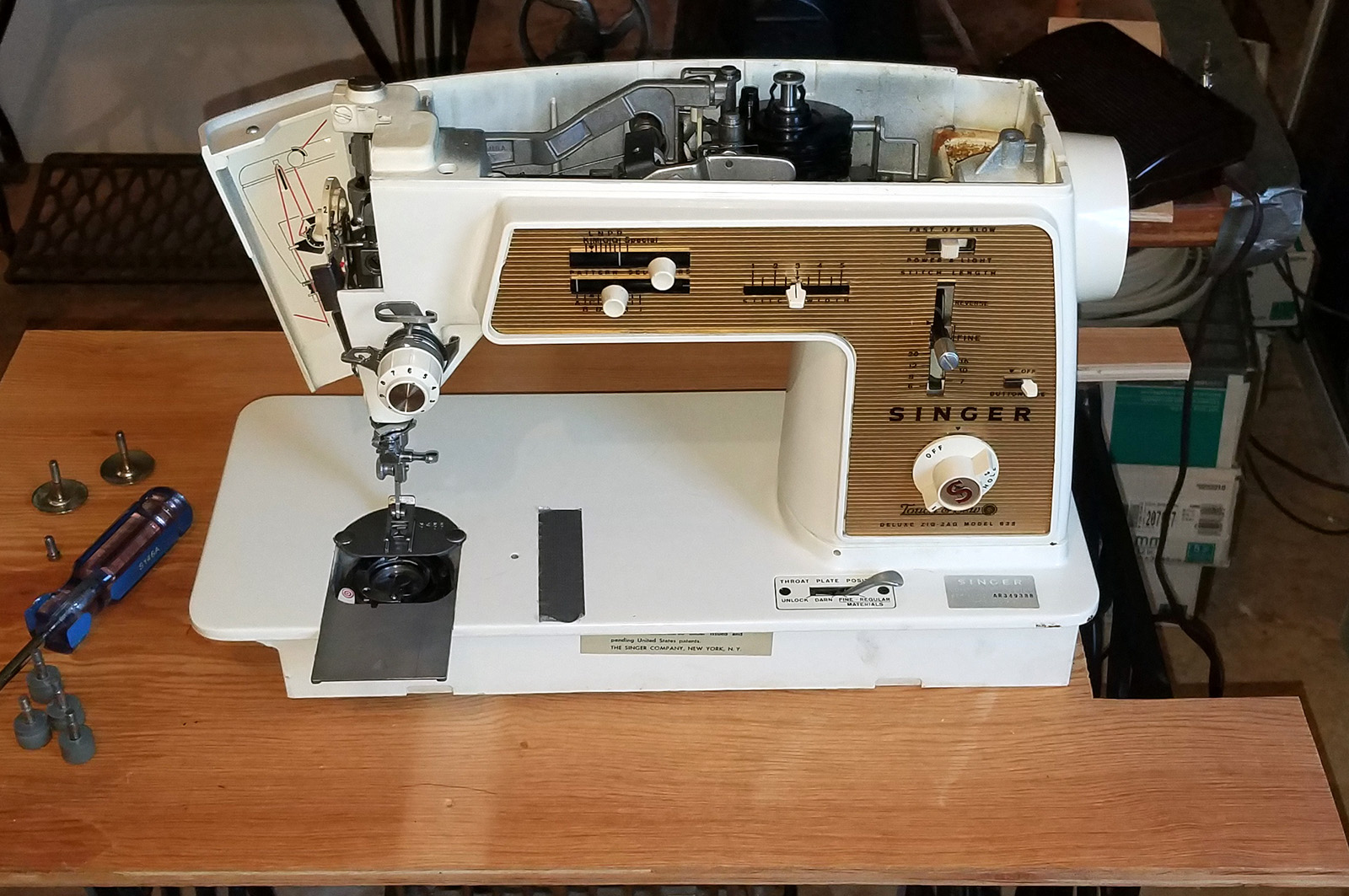
636
In use from 1967 to 1968
Recorded serial numbers: 110,000
Recorded factories:
Usage Information
- Needle size: 15x1
Domestic slant needle machines of the "Touch and Sew Deluxe" family.
638
In use from 1967 to 1968
Recorded serial numbers: 173,000
Recorded factories:
Usage Information
- Needle size: 15x1
Domestic slant needle zig-zag machines of the "Touch and Sew Special" family.
640
In use from 1968 to 1969
Recorded serial numbers: 169,001
Recorded factories:
Usage Information
- Needle size: 15x1
Domestic slant needle machines of the "Golden Touch and Sew" family.
Documented Machines
(What does it mean?)Total: 1
Documented Factories:
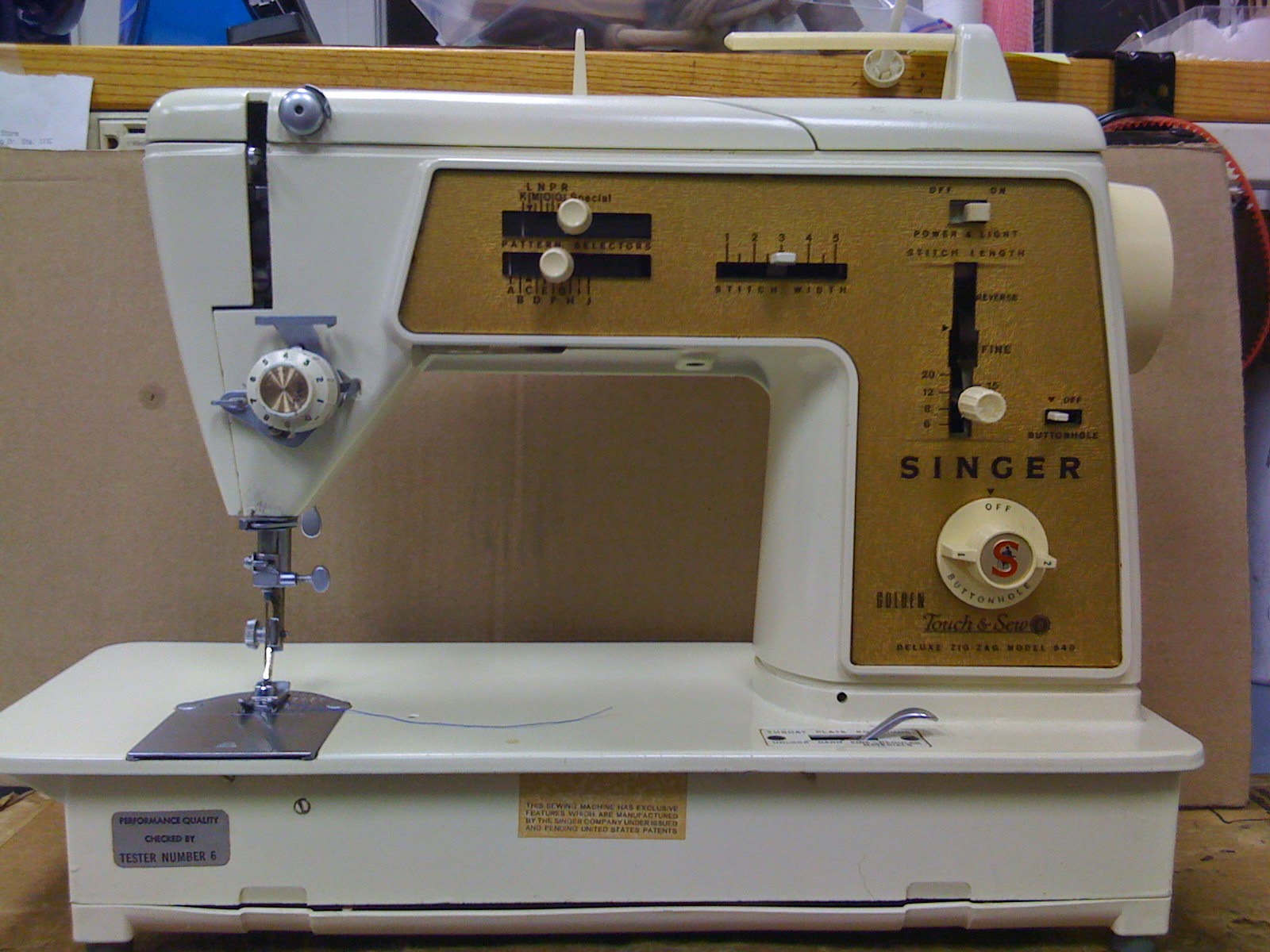
645
In use from 1968 to 1969
Recorded serial numbers: 53,000
Recorded factories:
Usage Information
- Needle size: 15x1
Domestic slant needle zig-zag machines of the "Touch and Sew Deluxe" family.
646
In use from 1968 to 1969
Recorded serial numbers: 75,000
Recorded factories:
Usage Information
- Needle size: 15x1
Domestic slant needle machines of the "Touch and Sew Deluxe" family.
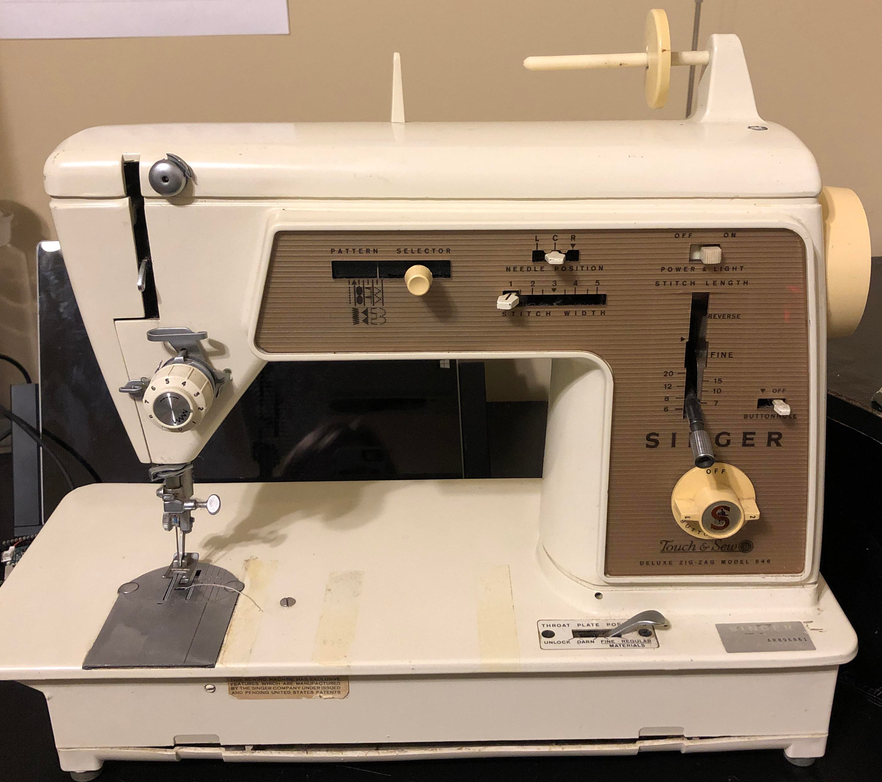
648
In use from 1968 to 1970
Recorded serial numbers: 253,824
Recorded factories:
Usage Information
- Needle size: 15x1
Domestic slant needle zig-zag machines of the "Touch and Sew Special" family.
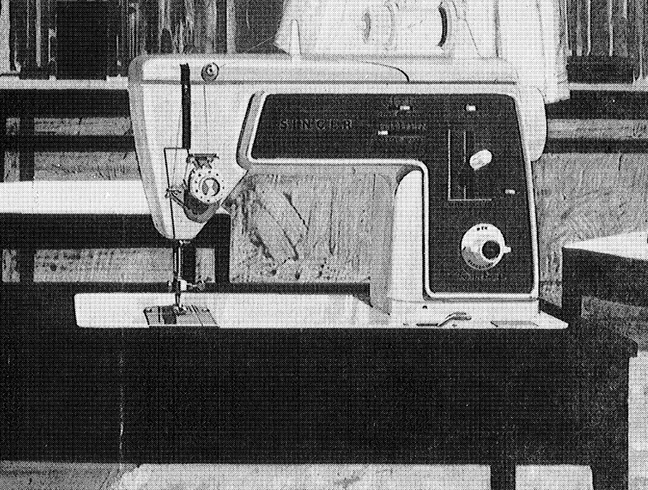
649
In use from 1968 to 1969
Recorded serial numbers: 24,000
Recorded factories:
Usage Information
- Needle size: 15x1
Domestic slant needle straight stitch machines of the "Touch and Sew Deluxe" family.
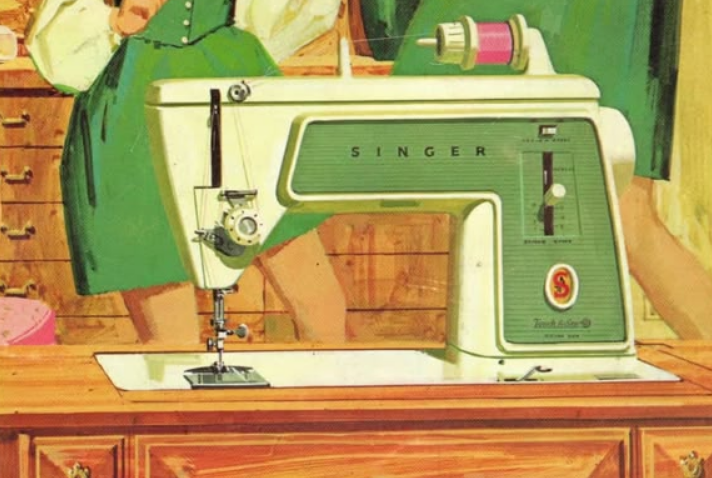
660
In use from 1964
Recorded serial numbers: 3
Recorded factories:
Only 3 machines allotted in 1964. Nothing more is known about this class.
675
Recorded serial numbers: 1
Recorded factories:
- Utsunomiya (Japan)
Usage Information
- Needle size: 15x1
Domestic slant needle machines.
Documented Machines
(What does it mean?)Total: 1
Documented Factories:
- Utsunomiya (Japan)
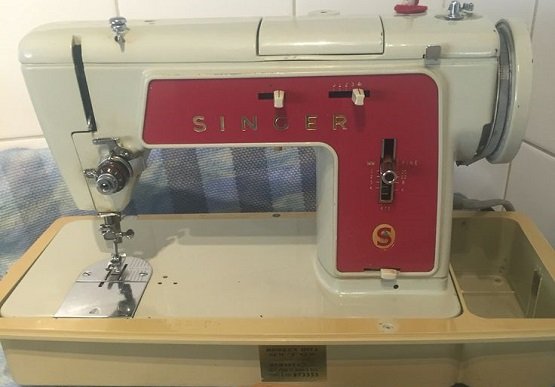
706
In use from 1951 to 1958
Recorded serial numbers: 400
Recorded factories:
Usage Information
- Needle size: 15x1
Domestic slant needle zig-zag machines.
707
In use from 1959 to 1965
Recorded serial numbers: 68
Recorded factories:
A few allotments of less than 10 machines each. Nothing more is known about this class.
717
In use from 1970 to 1971
Recorded serial numbers: 30,000
Recorded factories:
Domestic zig-zag and stretch machines of the "Scholastic" family. Slant needle.
719
In use from 1970 to 1971
Recorded serial numbers: 31,000
Recorded factories:
Domestic zig-zag and stretch machines of the "Scholastic" family. Slant needle.
750
In use from 1969 to 1970
Recorded serial numbers: 210,000
Recorded factories:
Usage Information
- Needle size: 15x1
Domestic slant needle machines of the "Touch and Sew Deluxe" family.
755
In use from 1969
Recorded serial numbers: 10,000
Recorded factories:
Usage Information
- Needle size: 15x1
Domestic slant needle machines of the "Touch and Sew II" family.
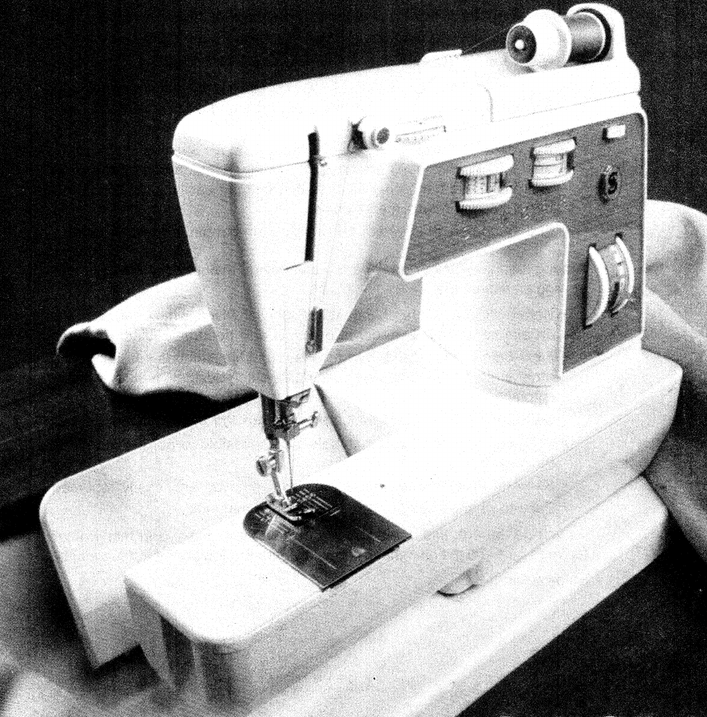
756
In use from 1969 to 1970
Recorded serial numbers: 80,000
Recorded factories:
Usage Information
- Needle size: 15x1
Domestic machines of the "Touch and Sew" family.
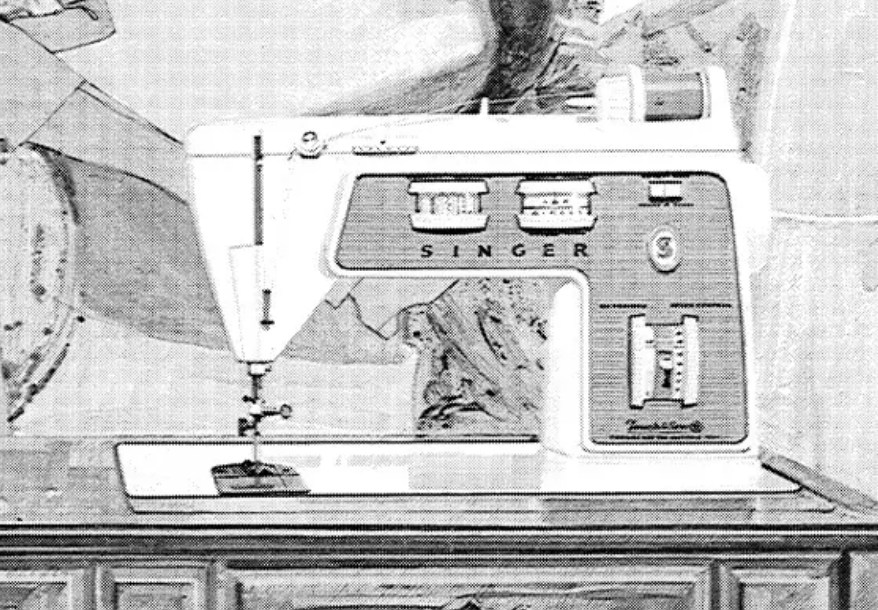
758
In use from 1969 to 1970
Recorded serial numbers: 216,809
Recorded factories:
Usage Information
- Needle size: 15x1
Domestic slant needle zig-zag machines of the "Touch and Sew Deluxe" family.
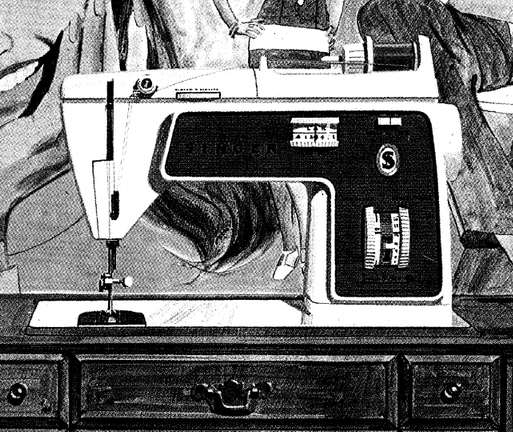
880
In use from 1908
Recorded serial numbers: 1
Recorded factories:
Industrial machines. The only documented machine we recorded is a modified Singer from the NYC garment district. It has the Godzilla finish with gold lettering for Singer and M&G.No consensus about the M&G letters: could stand for Milliners and Glovers, or Manufacturing and Garments from the district it was used in.
Documented Machines
(What does it mean?)Total: 1
Documented Factories:
Documented Decals:
Documented years: 1908
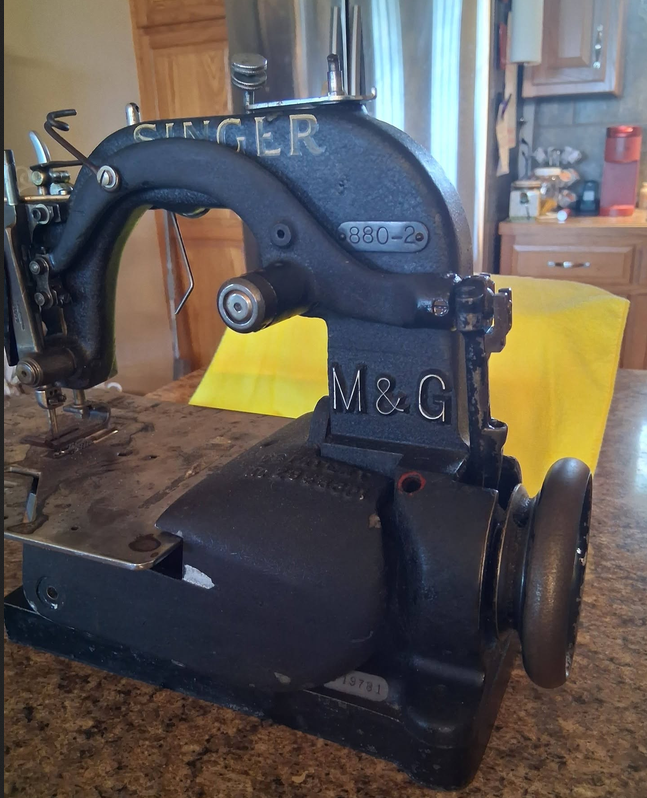
885
In use from 1967
Recorded serial numbers: 25
Recorded factories:
One allotment only is known: 25 machines from 1967. Nothing more is known about this class.
994
In use from 1912
Recorded serial numbers: 100
Recorded factories:
One allotment only is known: 100 machines from 1912. Nothing more is known about this class.
1200
In use from 1936 to 1956
Recorded serial numbers: 6,503
Recorded factories:
Semi-industrial machines, similar to the Class 201. Manuals say "for dressmakers' and home industrial use". Adjustable reverse feed, P.H. motor and Singerlight, knee lifter.
Documented Machines
(What does it mean?)Total: 3
Documented Factories:
Documented years: 1936 - 1938
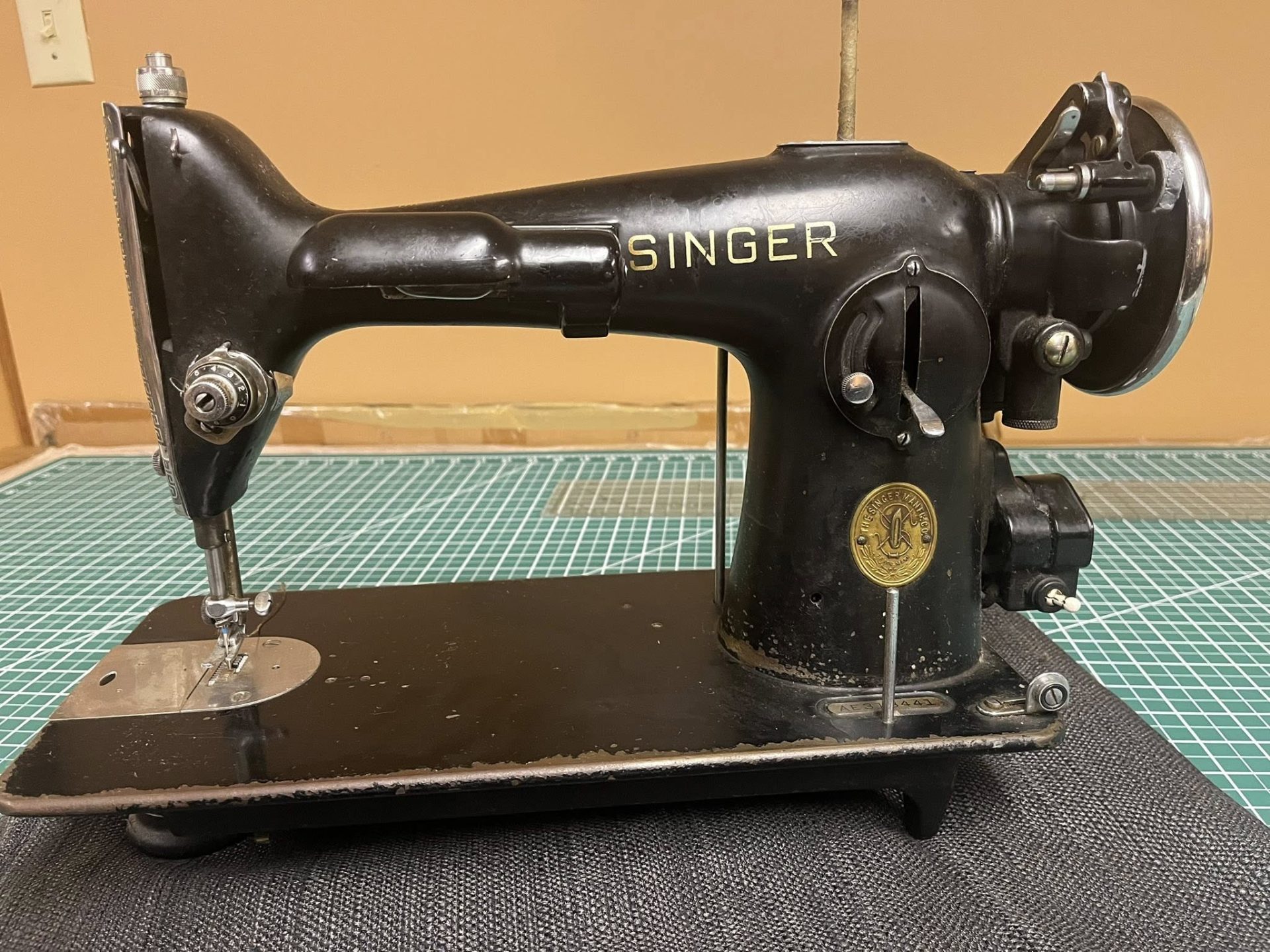
1398
In use from 1931
Recorded serial numbers: 25
Recorded factories:
One allotment only is known: 25 machines from 1931. Nothing more is known about this class.
Resources
- Comprehensive Singer sewing machine models list, from ISMACS
- Singer class and model numbers, from SingerSewingInfo.co.uk