
After researching the Singer Elizabethport factory, I knew I couldn’t leave its overseas counterpart alone. Kilbowie, in Clydebank (Scotland), was the other great international Singer manufacturing center: a huge factory complex that produced millions of sewing machines and became deeply connected with the town around it. Usually, when thinking about Singer factories, Elizabethport and Kilbowie are the first to come to mind: they were both big, they operated for about a century, produced millions of machines each, and also have the best-preserved factory records.
No surprise, then, that there’s no shortage of information about Kilbowie. Its history has been documented in books, archives, photographs and films, and there are some wonderful resources available online (and in the Resources below). So, as I did with Elizabethport, I don’t want this article to be just another chronological history of the factory.
What interests me here is what we can learn from the machines that came out of the plant.
While researching Singer machines and their serial numbers, I have been documenting machines made in Kilbowie and, in particular, the decals I have found on them.
There is also another wonderful piece of evidence: a 1934 Singer film that takes us inside the factory and shows the manufacturing process from raw materials to finished sewing machine. Watching it is almost like being allowed to walk through Kilbowie nearly a century ago: this is one of those rare cases where you can actually see how the machines were made.
So, in this article, I’ll start with the history of the Kilbowie factory, but then we’ll go a little deeper. By cross-referencing of the data we are collecting, we can add information about the machines that were produced here, their decals and other details that can help us identify and date surviving machines, and hopefully learn more about their individual stories.

Table of contents
Serial prefixes, location codes and production years
Here are the recorded factory identification details for Kilbowie: its location code, serial number prefixes and years of operation.
The location code is the letter found in the model number that identifies the manufacturing site of a particular machine. On the other end, serial prefixes are one or two letters at the beginning of the serial number that distinguish serial number ranges assigned to machines produced at different factories.
Kilbowie, Clydebank (Scotland, UK)
Active from 1884 to 1980
Country: Scotland, UK
City: Clydebank
Location code: K
Serial number prefixes:
- F, M, P, R, S, V, X, Y
- FA to FY
- GA to GY
- EA to EY
Documented machines for this factory: 439
Documented decals applied in this factory: 46
Documented classes in this factory: 45
Brief history of the Kilbowie factory
The beginning

Singer’s story in Scotland began before the great Kilbowie factory existed.
By the 1860s, demand for Singer sewing machines in Britain and Europe had grown enough for the company to establish a manufacturing operation in Scotland. The choice fell on Glasgow: it was already an important industrial center, with iron foundries, engineering, shipbuilding and textile industries, excellent transport and shipping connections, and a large pool of skilled workers. George Ross McKenzie, a Scottish-born executive who had emigrated to the United States, was closely involved in the decision to establish Singer’s first overseas factory.
In 1867 Singer established a small assembly plant in rented premises at Love Loan, near Queen Street Station. At first, this was essentially an assembly operation: machinery and parts were shipped from the United States and assembled in Glasgow for the British and European markets.
It soon became obvious that this was not going to be enough. Singer moved to larger premises in James Street, Bridgeton, where it could manufacture rather than simply assemble machines. Even after further expansion, however, production could not keep up with demand: Singer needed a much larger factory.
The answer was a 46-acre site of farmland at Kilbowie, west of Glasgow and close to what would become the town of Clydebank.
The location offered almost everything an enormous manufacturing plant could need: railway connections, access to the Forth and Clyde Canal and the River Clyde, good road links, and a large supply of workers. The surrounding area was also developing rapidly as an industrial center, particularly because of the growth of shipbuilding.
The first turf was cut by George Ross McKenzie on 8th May 1882, and construction began.
The scale of the project was extraordinary. The original factory consisted of two enormous main buildings, connected by wings, with a central tower rising above them. More than 20 million bricks were used in the construction, and the complex was designed with modern fire protection, including a sprinkler system.
The factory was also designed around the movement of materials. Railway tracks ran right through the works, connecting different departments and allowing materials and finished machines to move around the site. Later accounts put the total length of the internal railway system at between roughly 2¾ and 4 miles (4.5km and 6.5km). It was an enormous integrated manufacturing complex, with departments for processes such as casting, machining, finishing, cabinet making, packing and shipping.
Production began moving from James Street to Kilbowie in 1884, while construction was still being completed. By Summer 1885 the new factory was operating on a huge scale, with around 3500 employees and the capacity to manufacture approximately 8000 sewing machines a week.

When the demand for Singer machines continued to increase, the factory grew with it. The original buildings were extended, additional floors were added, and new buildings appeared across the site. There was a foundry, power station, cabinet works, sawmill, stores and many other departments. The factory eventually occupied more than 100 acres.
The railway system expanded along with it. By the early twentieth century the works had become a small industrial world of its own, with trains moving materials between departments and connecting the factory with the wider railway network.
In 1900 the factory officially became known as the Clydebank factory, although the name Kilbowie continued to be used and is still familiar to Singer collectors today.
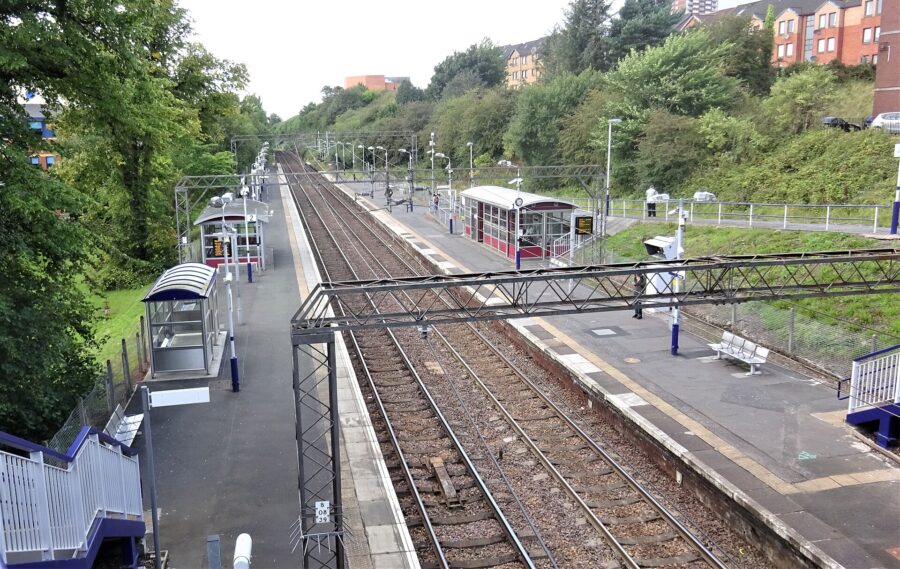
The factory’s importance was reflected in the creation of a railway station specifically associated with it: in 1907 the station was relocated during the expansion of the Singer works and became Singer station. Remarkably, the station survives today, long after the factory itself disappeared.
The Singer clock
The huge central tower became the most recognizable feature of the entire factory. Rising about 200 feet or 61 meters above the buildings, it carried the Singer name high above Clydebank and could be seen from a considerable distance.
The four-faced clock became famous in its own right and was described as the largest four-faced clock in the world. Each clock face weighed around five tons, and winding the mechanism was a considerable job.
The clock soon became part of everyday life in Clydebank: the tower was a landmark for people traveling through the area, and the clock provided a very visible way of keeping time.
The tower survived for decades, including the bombing of the factory during the Second World War. In the end, it was destroyed, but not by the war: in 1963 the old main building and clock tower were demolished as part of Singer’s program to modernize the factory.
The factory at its peak

By the beginning of the 20th century, Kilbowie was no longer simply a Scottish factory supplying a local market. It was one of Singer’s most important manufacturing centers anywhere in the world.
In 1905 Singer established the Singer Manufacturing Company Ltd. as a UK-registered company, reflecting the scale and importance of its British operations.
The factory continued to expand, and by 1913 it had reached its pre-war peak. The site covered more than 100 acres, the workforce had grown to around 14000 people, and more than one million sewing machines were shipped from the factory that year (to be precise, 1.301.851). West Dunbartonshire Council records that more than 80% of Singer’s production came from the Clydebank factory at this point.
Those numbers give some idea of what Kilbowie really was. It was a mass-production operation on a scale that few factories of the period could match.
And Singer’s influence extended far beyond the factory gates. Thousands of Clydebank families depended directly or indirectly on Singer for their livelihood. The company provided employment, but it also created a whole social world around the factory, with sports clubs, music groups, horticultural societies, recreational facilities and the famous Singer Gala. In 1913 Walter J. Rickey was appointed Manager of the Clydebank factory. A keen sportsman, he set up social and recreational clubs for his employees through a fund he established. Under Rickey’s management, in 1921 the Singer Recreation Hall and Grounds were formally opened.
The relationship between Singer and Clydebank became so close that the company was woven into the identity of the town itself. But that relationship was not always a happy one.
The 1911 strike
The most famous labour dispute in the history of the factory began with a very small group of workers.
In March 1911, twelve women working in the cabinet polishing department objected to changes in their work. Their workload had increased while their earnings were reduced. The dispute escalated quickly, and on the 21st those women went on strike.
Within a day, the strike had spread dramatically: the majority of the factory’s approximately 11.500 workers joined them.
The response from Singer management was equally dramatic. The factory was closed and the company threatened to move production elsewhere in Europe. Eventually, after long discussions between Unions and the management, the workers voted to return to work, and the strike ended on 10th April.
But the story did not end there.
Hundreds of workers were subsequently dismissed, including strike leaders. The dispute became an important episode in the development of the labour movement on Clydeside and is now regarded as one of the significant events associated with the emergence of Red Clydeside.
It is also an interesting example of the contrast that existed within Singer’s paternalistic approach to its workforce. The company provided recreational facilities and encouraged a strong sense of community among its employees, but industrial disputes could be dealt with very firmly.
World War I
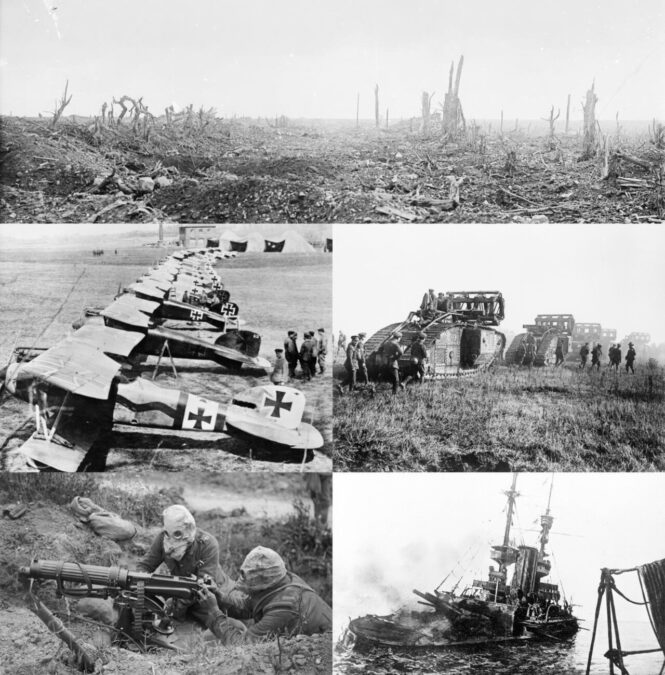
World War I changed the balance of production at Kilbowie.
Singer continued to manufacture sewing machines, but the factory also turned its enormous manufacturing capacity towards the war effort. The works produced munitions and other military components, and the disruption of international markets had a major effect on the sewing-machine business. The loss of the Russian market after the Russian Revolution was particularly significant: Russia had been one of Singer’s major export markets, and the interruption of that trade was a serious blow to production.
After the war, there was a recovery during the 1920s, but the Great Depression brought another decline in demand. The factory would never again reach the extraordinary peak production levels of 1913.
Yet Singer remained an enormous employer and an important part of Clydebank life.
World War II and the Clydebank Blitz
World War II once again transformed Singer’s production. The factory continued to make sewing machines, although in much smaller numbers, while also producing military equipment, aircraft components and munitions. Singer received its first wartime contract for tools used in aircraft manufacture in September 1938. The factory also had its own Home Guard unit.
Then, in March 1941, Clydebank was attacked during what became known as the Clydebank Blitz.
On the nights of 13th and 14th March, German Luftwaffe bombers attacked the industrial area around Clydebank, including Singer and the nearby shipyards. The Singer works suffered severe damage. A fire in the timber yard was particularly destructive, and approximately 390.000 square feet (36.000 Square meters) of factory floor space was lost. The human cost was even greater. Official figures record 528 civilians killed and 617 seriously injured during the two nights of bombing. Thirty-nine Singer employees were among those killed in the town.
And yet the factory recovered remarkably quickly. Some war production resumed within days, and full production was restored in less than six weeks despite the enormous amount of damage.

After the war: a changing industry

The post-war years brought a completely different challenge. Singer had survived war, depression and enormous changes in the international market. But now it faced increasingly serious competition from European and, particularly, Japanese manufacturers.
The sewing-machine industry was changing. New machines could be lighter, more modern and less expensive to manufacture. Singer responded with a major modernization program at Clydebank between 1961 and 1964, costing around £4 million according to West Dunbartonshire Council.
One of the most important changes was the move away from the traditional cast-iron machine bodies towards aluminium-bodied machines. This was a fundamental change in the kind of Singer machine being produced.
It also changed the factory itself. The old buildings were increasingly replaced or adapted for modern production, and in 1963 even the famous clock tower was demolished. A new high-volume domestic building opened in 1964 as part of the modernized factory. This period marks a very visible dividing line in the history of Kilbowie production.
The long decline
Modernization, however, could not solve all of Singer’s problems. Competition continued to increase, particularly from Japanese manufacturers. Singer was also dealing with changing consumer tastes. The market was moving away from the heavy treadle and cabinet machines that had once dominated domestic sewing and towards smaller, lighter portable machines.
Employment fell dramatically. The factory had more than 15.000 employees around 1960, but by 1972 the workforce had fallen to just over 6.000. The closure of the woodwork division in 1966 alone cost around 1.200 jobs.
By the late 1970s the situation was becoming critical. In 1978 around 4.800 people remained at Clydebank, and Singer proposed reducing the workforce to just 2.000. The factory was still producing both domestic and industrial machines, but its industrial products had lost their former competitive advantage, while Singer’s main markets in the United States and Europe had declined.
On 12th October 1979 Singer announced that the Clydebank factory would close. The end came in June 1980, bringing more than a century of sewing-machine manufacturing in Scotland to an end.
The buildings were eventually demolished and the site was redeveloped as Clydebank Business Park. But Singer left behind some tangible traces: the railway station still bears the name Singer, roads around the site preserve the name too. And, perhaps most importantly, the machines themselves survived.

1934 movie "The Birth of a Sewing Machine"
One of the most fascinating sources for the history of Kilbowie is a film made inside the factory in 1934, titled “Birth of a Sewing Machine“. Running for about 70 minutes, the film takes us through almost the entire manufacturing process, from raw materials arriving at the factory to finished sewing machines being packed and loaded onto ships for export.
It begins with an impressive view of the Clydebank factory from across the river, including the shipyards and the enormous Queen Mary under construction nearby. The camera then moves towards the Singer works, showing the recreation hall, playing fields and the huge electric clock before following the workforce into the factory.
From there, the film takes us right back to the beginning of the process. Stacks of pig iron and timber are shown in the factory yards, followed by the foundry, where molten iron is poured into molds to produce the large cast-iron components of the machines. The film tells us that more than a million castings were made each week. We can actually watch arms, shoulders and balance wheels being cast, removed from their molds, cooled and cleaned in the “rumbling” machines.
The castings then move through a succession of machining operations. One particularly interesting shot shows a machine stamping the serial number onto the bedplate. This is a small detail, but a remarkable one, especially for me, actively researching Singer serial numbers!
The prepared parts are then assembled and sprayed, and the familiar Singer ornamentation is applied by hand. The film specifically shows workers applying the transfers, trade name and decorative work to the machine arms.
The film then moves through the manufacture of the steel components, including embossed steel plates and forged Pitman rods. It shows the enormous Screw Department, where the shot list records nearly 800 automatic machines, as well as workers inspecting parts with control gauges to ensure that they were made accurately enough to be interchangeable.
Other departments follow: shuttles and shuttle races are assembled and inspected, oscillating hooks are spot-welded, steel components are hardened in furnaces and quenched in oil, and parts pass through the plating department. Finally, we reach the great Assembly Department, where the individual components come together to form complete sewing-machine heads.
The finished heads are cleaned, placed on racks and wrapped in specially prepared material.
But the sewing machine itself is only part of the story. The second reel takes us through the manufacture of Singer electric motors and accessories, the printing department where Singer’s literature was produced, and the making of the transfers used to decorate the machine heads.
Then comes the cabinet department. Here we see timber being cut, molded and shaped into sewing-machine cabinets, covers and drawers. Treadle stands and tables are assembled on production lines before the cabinets and machines are brought together for crating.
And finally, the machines leave the factory. The film shows crates being packed, loaded onto railway wagons and carried away from the factory siding. The destinations stamped on the crates remind us that Singer’s Kilbowie factory was producing for an international market. The final scenes show the machines being loaded onto a cargo ship and beginning another journey overseas.
What makes “Birth of a Sewing Machine” particularly valuable today is that it allows us to connect the surviving machines with the manufacturing process. We can see the castings being made, the serial numbers being stamped, the parts being machined and plated, the decorative transfers being applied, and finally the completed machines being packed for export. It is one thing to read that Kilbowie was a huge, highly organised manufacturing complex. It is quite another to watch the factory actually making a Singer.
Decals from the Clydebank-made sewing machines
Here are the decal sets recorded on machines made in the factory of Kilbowie, with their periods of use and the classes (models) they were applied to.
It’s a cross-reference of known Singer decal sets with the serial numbers in our own database. This may be helpful to date machines when serial records are incomplete.
Use recorded from 1878 to 1890
Acanthus was one of the earliest decal patterns used on Singer Model 12 sewing machines. The expert collector Gary Kleiner identified three main versions. The first Acanthus design, in use around 1878–1879, was without the Singer name on the front of the arm. Around 1880–1884, the second iteration added the Singer name on the front of the arm. The later version, called Dotted Acanthus, was a revised design, in use around 1884–1890. It's distinguished by small decorative dots added throughout the pattern. This is the most commonly encountered Acanthus variant today.
Documented machines in this factory
(What does it mean?)Total documented machines: 9
Documented Classes:
- 12
Documented years: 1884 - 1888

In use for industrial versions of Singer's New Family (class 12), in particular the free arm industrial version with cylinder bed. Images from The J&P Lowrey Collection
Documented machines in this factory
(What does it mean?)Total documented machines: 1
Documented Classes:
- 12
Documented years: 1885

Use recorded from 1881 to 1885
This mother-of-pearl and gold decoration is a highly ornate, classical decal set featured primarily on class-12 late 19th-century machines. The intricate floral design makes great use of mother-of-pearl inlays to produce a shimmering, opulent finish on the machine bed. Mother-of-pearl decoration was applied in many different patterns, in some early cases at the discretion of the decorators.
Documented machines in this factory
(What does it mean?)Total documented machines: 2
Documented Classes:
- 12
Documented years: 1884 - 1885

Use recorded from 1933 to 1954
Documented machines in this factory
(What does it mean?)Total documented machines: 6
Documented Classes:
- 211
- 221
Documented years: 1948 - 1953

The Chinese characters in the center of the bed are in Seal Script, a very old and decorative writing style. In traditional Chinese: 福 — fú = good fortune / blessing 禄 — lù = prosperity / wealth / official success 寿 — shòu = longevity 喜 — xǐ = happiness / joy Together, 福禄寿喜 (fú lù shòu xǐ) is an extremely traditional auspicious combination meaning roughly “fortune, prosperity, longevity and happiness.” These characters were applied specifically on machines produced for the Chinese market. They were applied specifically on machines produced for the Chinese market, usually accompanied by more common decal designs such as Victorian or Acanthus Leaves.
Documented machines in this factory
(What does it mean?)Total documented machines: 1
Documented Classes:
- 103
Documented years: 1938

Use recorded from 1900 to 1920
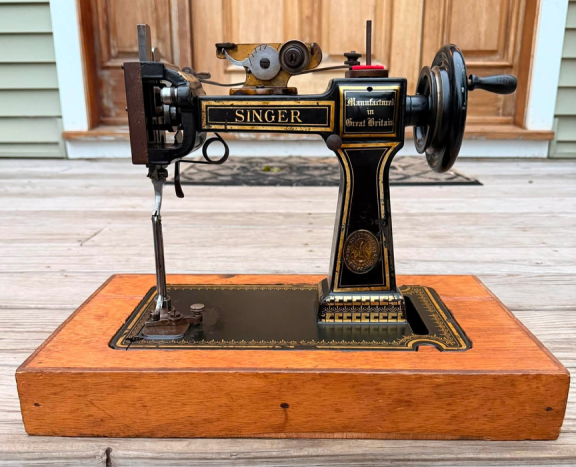
This decal is for a high pillar machine, the 46K1 or 46K2 models. The 46K1 and 46K2 models were specialized "pique stitch" cylinder/post-bed machine used primarily for sewing the fingers of gloves. The 46K2 is like the 46K1, but has a smaller column and looper. The shape of the machine, with the high column highlighted by golden borders, the base of the pillar with a stylized leaves border, gives the impression of classical ancient Greek decorations on columns. First image from The Wolfegang's Collectibles
Documented machines in this factory
(What does it mean?)Total documented machines: 5
Documented Classes:
- 46
Documented years: 1900 - 1917

Use recorded from 1912 to 1913
Documented machines in this factory
(What does it mean?)Total documented machines: 2
Documented Classes:
- 30
Documented years: 1913
Use recorded from 1884 to 1955
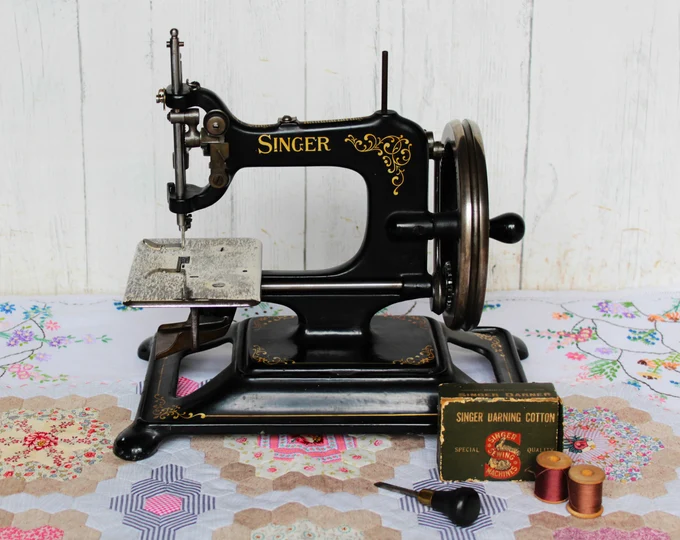
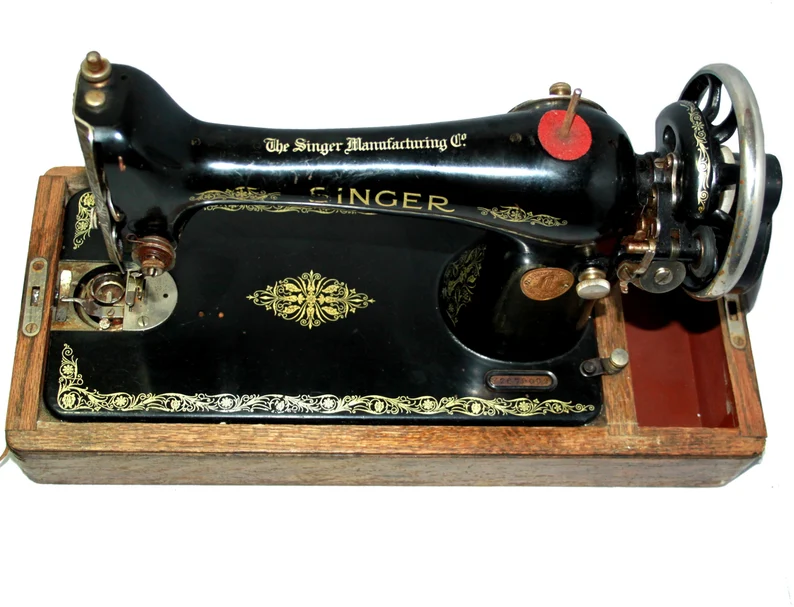
While most of the industrial models did not have decals, this one is probably the most common one used on industrial Singer machines. Variations depend largely on the shape of the specific machine. It may feature intricate leaf scrolls or just the ornate monogram "The S.M. Co." ("The Singer Manufacturing Company"). Also the position of each decorative element varies from model to model, due to the particular shapes of certain industrial machines.
Documented machines in this factory
(What does it mean?)Total documented machines: 18
Documented Classes:
- 16
- 29
- 44
- 45
- 91
Documented years: 1900 - 1955

Use recorded from 1953 to 1960
Usually documented for class-99 machines, we found one class-66 machine with this decal set. Name coming from The Needlebar wiki.
Documented machines in this factory
(What does it mean?)Total documented machines: 15
Documented Classes:
- 99
Documented years: 1953 - 1957

Use recorded from 1921 to 1955
This decal is sometimes called also "Triplets". Commonly used on 15-class machines. We recorded also a couple 66-class with these decals, but it could be a later application of decals on an older machine. Those 66 models were manufactured two decades before the patent for the Trefoil decals was filed. We also recorded a few 24-18 machine with Eye and Trefoils decal, produced before the 1931 patent for this decoration was files. It's indeed possible the patent was filed after the set had been used in production batches. Notice that the patents, while not mentioning specific models, seem to picture class 15 machines or similar.
Documented machines in this factory
(What does it mean?)Total documented machines: 8
Documented Classes:
- 15
Documented years: 1927 - 1953

Documented machines in this factory
(What does it mean?)Total documented machines: 5
Documented Classes:
- 206
- 306
Documented years: 1952 - 1954

Use recorded from 1911 to 1952
The common name of this decal set comes from its fine, lace-like metallic scrollwork designs. It's commonly found on models 66 and 99, but we could also verify a few 15-class machines with those decals, from the factory of Wittemberge (Germany) in particular.
Documented machines in this factory
(What does it mean?)Total documented machines: 25
Documented Classes:
- 15
- 66
- 99
Documented years: 1914 - 1952
Use recorded from 1926 to 1948
The Indian Star decal was an attempt to stimulate the emerging Indian market at the beginning of the 20th century. Entering this market was not easy, though. The main difficulties were overcoming caste prejudice, language differences and limited access to women. The Indian Star machines say 'Singer' in different languages on each point of the star: Onya, Singhalese, Gujarati, Kannada, Hindi, Telugu, Malayalam (or Tamil), Urdu. The Indian Star appears as a variant in several decals, on different models.
Documented machines in this factory
(What does it mean?)Total documented machines: 2
Documented Classes:
- 99
Documented years: 1932 - 1948

Use recorded from 1902 to 1960
The name means "The Victrix"
Documented machines in this factory
(What does it mean?)Total documented machines: 3
Documented Classes:
- 128
Documented years: 1917 - 1951

Use recorded from 1916 to 1960
The Indian Star decal was an attempt to stimulate the emerging Indian market at the beginning of the 20th century. Entering this market was not easy, though. The main difficulties were overcoming caste prejudice, language differences and limited access to women. The Indian Star machines say 'Singer' in different languages on each point of the star: Onya, Singhalese, Gujarati, Kannada, Hindi, Telugu, Malayalam (or Tamil), Urdu. The Indian Star appears as a variant in several decals, on different models.
Documented machines in this factory
(What does it mean?)Total documented machines: 2
Documented Classes:
- 128
Documented years: 1934 - 1946
Use recorded from 1902 to 1935
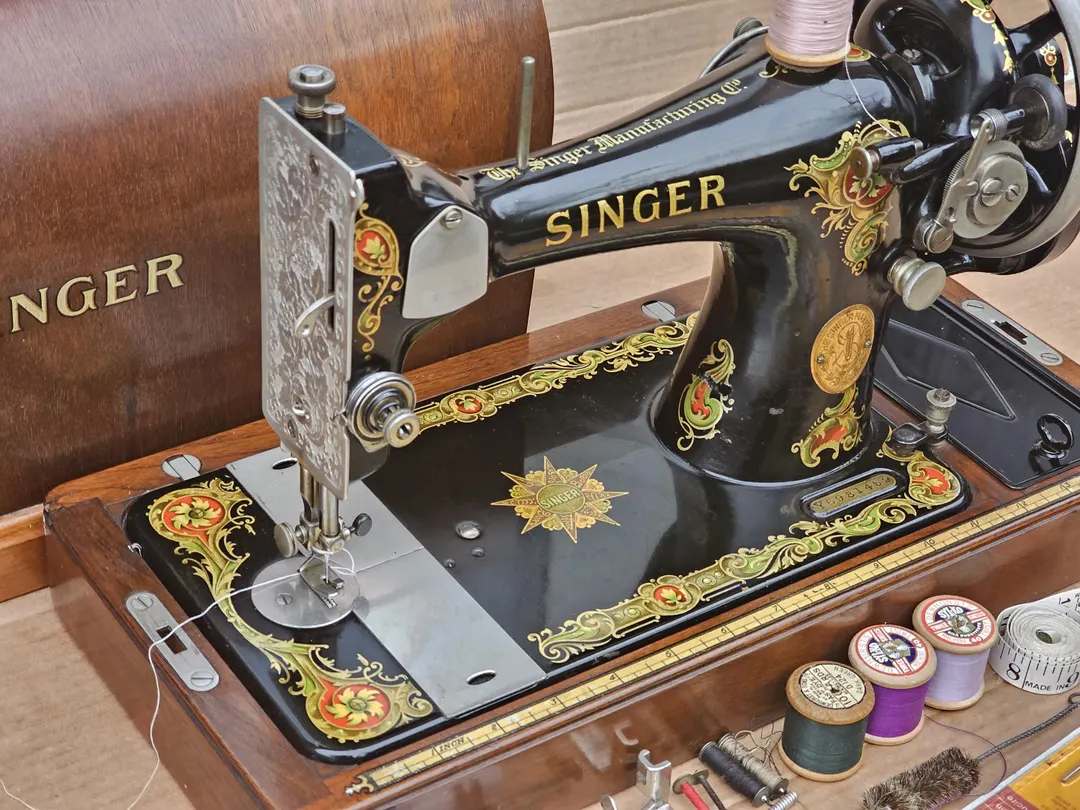
This decal set has ornamental gold flower patterns featuring scrollwork, red accents and an Egyptian-inspired design. Intricate, stylized lotus flower artwork is arranged in symmetrical layouts across the bed and pillar. Small pops of red coloring highlighting parts of the flowers and borders. The application for the patent filed by Robert Whyte in 1903 speaks about "comprises a set of several separate and disconnected parts or figures, all representing conventionally in the same general style the Egyptian lotus flower in various stages of development". This patent was filed in the USA, by a designer from Scotland. It's usually found on 66K machines made in Kilbowie (Scotland, UK), but also documented on 66 machines made in Elizabethport (NJ, USA).
Documented machines in this factory
(What does it mean?)Total documented machines: 27
Documented Classes:
- 66
Documented years: 1910 - 1935

Use recorded from 1884
The mother-of-pearl inlays around the bed alternate quaterfoil shapes with pointy ovals
Documented machines in this factory
(What does it mean?)Total documented machines: 1
Documented Classes:
- 12
Documented years: 1884

Use recorded until 1885
This decoration set is a variant of the Mother-of-Pearl, where the border around the fiddlebase has a continuous line of mother-of-pearl inlays.
Documented machines in this factory
(What does it mean?)Total documented machines: 1
Documented Classes:
- 12
Documented years: 1885

Use recorded from 1889
Those decals have been found on a sewing machine owned by Karen Lewis, that we thank for the photos. The emblem of The National Rifle Association in the UK (established in 1859) is on the base of the machine. Also the treadle has matching decorations. The highly ornate design with mother-of-pearl inlays makes us think it was a custom hand-crafted design.
Documented machines in this factory
(What does it mean?)Total documented machines: 1
Documented Classes:
- 27
Documented years: 1889

Use recorded from 1884 to 1913
There are various, distinctly different versions of this design to suit a variety of machines. All of them were designed by George Alfred Squire of Bayonne (New Jersey, USA) in 1884.
In his patent, he describes it as "a main flower resembling a dianthus (carnation), and a smaller flower resembling a buttercup, and interlaced stems bearing buds and slender pointed leaves", without mentioning "Ottoman". This design got its "Ottoman" colloquial designation because of its mix of Islamic and figurative styles.
Documented machines in this factory
(What does it mean?)Total documented machines: 11
Documented Classes:
- 12
- 48
Documented years: 1887 - 1911
Use recorded from 1903 to 1913
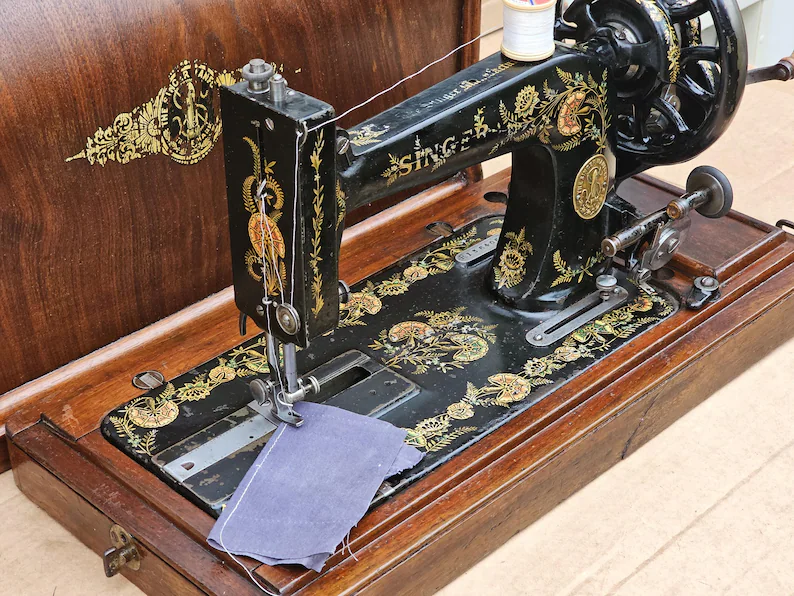
Ottoman Carnation Variant (Indian Star) was used only on 48K models produced in Kilbowie. The Indian Star decal was an attempt to stimulate the emerging Indian market at the beginning of the 20th century. Entering this market was not easy, though. The main difficulties were overcoming caste prejudice, language differences and limited access to women. The Indian Star machines say 'Singer' in different languages on each point of the star: Onya, Singhalese, Gujarati, Kannada, Hindi, Telugu, Malayalam (or Tamil), Urdu. The Indian Star appears as a variant in several decals, on different models.
Documented machines in this factory
(What does it mean?)Total documented machines: 1
Documented Classes:
- 48
Documented years: 1911
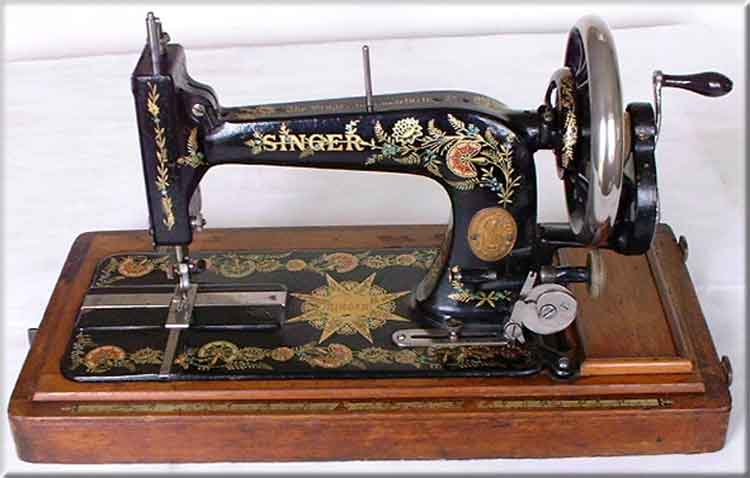
Use recorded from 1884
Documented machines in this factory
(What does it mean?)Total documented machines: 3
Documented Classes:
- 15
Documented years: 1885 - 1893
Use recorded from 1883 to 1894
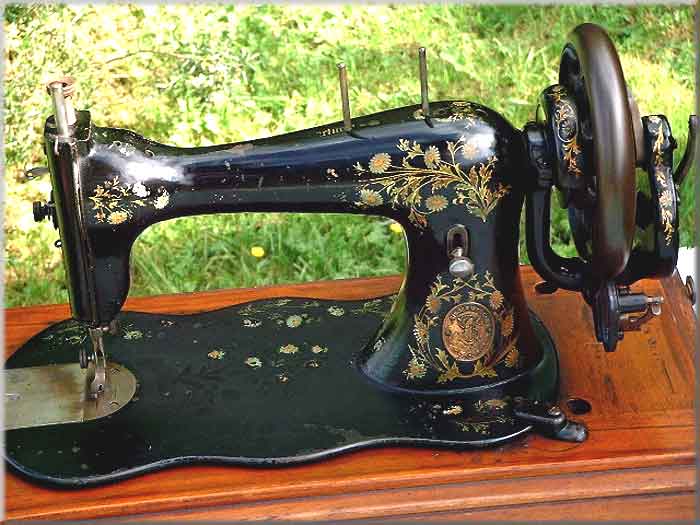
The identification of the exact flowers can be hard, and is easily inaccurate. There were several versions. Sometimes you can find this kind of decal under the name "Apple Blossom", but there's another different flower decal known as "Potentilla / Apple Blossom". This is why we chose to name this style using the more generic denomination. First photo by Selby Sewing Machines
Documented machines in this factory
(What does it mean?)Total documented machines: 3
Documented Classes:
- 28
Documented years: 1889 - 1890

Use recorded from 1886 to 1906
A variant of many decals with flowers. The identification of the exact flowers can be hard, and is easily inaccurate. There were several versions. The denomination "Potentilla / Apple Blossom" can be mistaken for another decal, known as "Apple Blossom". To try and avoid confusion, we named the second one "Painted Roses and Daisies (Flowers)".
Documented machines in this factory
(What does it mean?)Total documented machines: 3
Documented Classes:
- 15
Documented years: 1893 - 1906

Use recorded from 1934 to 1956
This decal set was also commonly used on refurbished machines of any model, even applied to models that were out of production before the decals were even designed. The bed edge transfers were cut to length to fit variously sized beds.
Documented machines in this factory
(What does it mean?)Total documented machines: 7
Documented Classes:
- 201
Documented years: 1940 - 1953

Use recorded from 1939 to 1942
The Indian Star decal was an attempt to stimulate the emerging Indian market at the beginning of the 20th century. Entering this market was not easy, though. The main difficulties were overcoming caste prejudice, language differences and limited access to women. The Indian Star machines say 'Singer' in different languages on each point of the star: Onya, Singhalese, Gujarati, Kannada, Hindi, Telugu, Malayalam (or Tamil), Urdu. The Indian Star appears as a variant in several decals, on different models.
Documented machines in this factory
(What does it mean?)Total documented machines: 1
Documented Classes:
- 201
Documented years: 1939

Use recorded from 1891 to 1910
The name of the decal comes from the images of a pheasant bird: one is featured in the middle of the bed, another on the main body of the machine.
Documented machines in this factory
(What does it mean?)Total documented machines: 1
Documented Classes:
- 27
Documented years: 1894

Use recorded from 1952 to 1961
Documented machines in this factory
(What does it mean?)Total documented machines: 7
Documented Classes:
- 201
- 221
- 222
Documented years: 1954 - 1961

Use recorded from 1931 to 1960
This decal features simplified motifs designed by William Hopper from Dumbarton (Scotland) and patented in 1931. Since he worked at the Kilbowie plant in Scotland, the most part of the machines with RAF decals come from this plant, but it was used also in other factories. For example, we know of a 191R machine made in Mexico that has RAF decals, but it had no serial number to record it in our database. The center of the bed features a stylized bird in flight combined with geometric or lightning-like lines, resembling a seagull or eagle. The name "RAF" stands for Royal Air Force, a colloquial nickname given by collectors. For many, the central geometric shape in the transfer pattern bears a passing resemblance to the circular roundel insignia used by the British Royal Air Force. No real connection with the Royal Air Force, but the name reference stuck nonetheless. We recorded a machine with RAF decals from 1912, but it seems those decals were re-applied afterwards during a restoration. The first machine with actual original RAF decals comes from 1931.
Documented machines in this factory
(What does it mean?)Total documented machines: 3
Documented Classes:
- 15
Documented years: 1912 - 1930

Use recorded from 1912 to 1961
Documented machines in this factory
(What does it mean?)Total documented machines: 8
Documented Classes:
- 128
Documented years: 1917 - 1956

Use recorded from 1875 to 1925
There are several variants of this decal set, with various scrolls on the arm and large or small roses on the bedplate. It features intricate, flowing gold filigree and acanthus-style borders along the machine arm and bed. Main characteristics are the roses in the middle of the bed.
Documented machines in this factory
(What does it mean?)Total documented machines: 15
Documented Classes:
- 15
- 27
- 28
Documented years: 1890 - 1920

Use recorded from 1889 to 1893
Documented machines in this factory
(What does it mean?)Total documented machines: 2
Documented Classes:
- 15
- 27
Documented years: 1889 - 1893

Use recorded from 1900 to 1913
The Indian Star decal was an attempt to stimulate the emerging Indian market at the beginning of the 20th century. Entering this market was not easy, though. The main difficulties were overcoming caste prejudice, language differences and limited access to women. The Indian Star machines say 'Singer' in different languages on each point of the star: Onya, Singhalese, Gujarati, Kannada, Hindi, Telugu, Malayalam (or Tamil), Urdu. The Indian Star appears as a variant in several decals, on different models.
Documented machines in this factory
(What does it mean?)Total documented machines: 1
Documented Classes:
- 28
Documented years: 1907

Use recorded from 1896 to 1897
Documented machines in this factory
(What does it mean?)Total documented machines: 1
Documented Classes:
- 27
Documented years: 1896
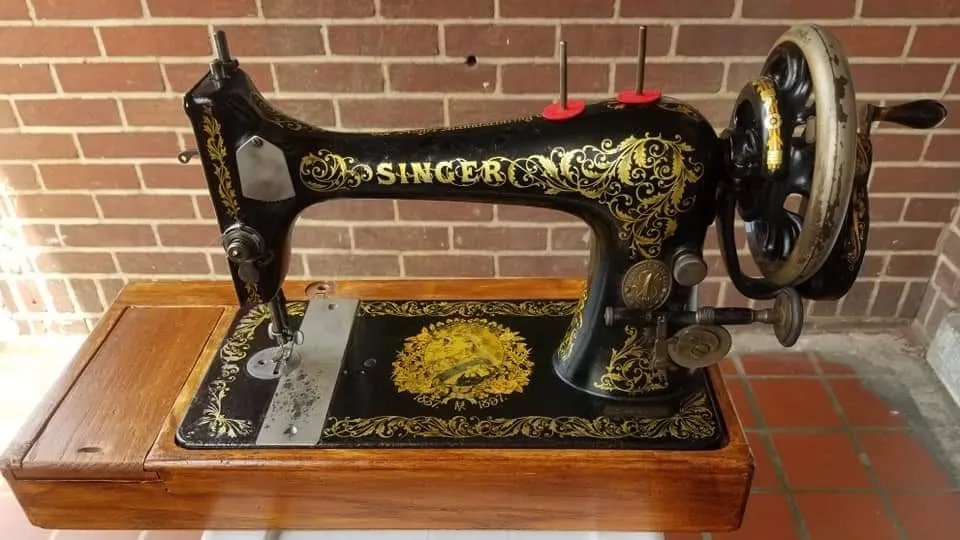
Use recorded from 1886 to 1959
Also called “Egyptian” decals, they first appeared in the 1890’s. They were used on the class 15 and class 27 up to the 1950’s.
Documented machines in this factory
(What does it mean?)Total documented machines: 81
Documented Classes:
- 15
- 27
- 127
Documented years: 1893 - 1950

Use recorded from 1940 to 1957
Based on the Sphinx / Memphis design, in the Indian national colors, with the Indian Star on the bed plate. A few different color variations may appear. The Indian Star decal was an attempt to stimulate the emerging Indian market at the beginning of the 20th century. Entering this market was not easy, though. The main difficulties were overcoming caste prejudice, language differences and limited access to women. The Indian Star machines say 'Singer' in different languages on each point of the star: Onya, Singhalese, Gujarati, Kannada, Hindi, Telugu, Malayalam (or Tamil), Urdu. The Indian Star appears as a variant in several decals, on different models.
Documented machines in this factory
(What does it mean?)Total documented machines: 4
Documented Classes:
- 15
Documented years: 1941 - 1957

Use recorded from 1887 to 1930
This design is known as Tiffany or Gingerbread. There are two known variants of the Tiffany decal: what changes is the design under the logo metal badge. The earlier style has a triangle-shaped design under the logo badge; the more recent style has a "bird's nest" design below the logo badge, with such badge resting inside the "nest" or slightly raised higher up. No information about when the style changed.
Documented machines in this factory
(What does it mean?)Total documented machines: 2
Documented Classes:
- 15
- 115
Documented years: 1887 - 1910

Use recorded from 1896 to 1897
Documented machines in this factory
(What does it mean?)Total documented machines: 2
Documented Classes:
- 27
Documented years: 1896

Documented machines in this factory
(What does it mean?)Total documented machines: 1
Documented Classes:
- 66
Documented years: 1916

Use recorded from 1954 to 1962
Documented machines in this factory
(What does it mean?)Total documented machines: 2
Documented Classes:
- 306
- 319
Documented years: 1954 - 1956

Use recorded from 1885 to 1941
Commonly seen on 28 and 128 models, we also documented class 39 machines with this kind of decoration. In use from the 1880s up to the 1940s.
Documented machines in this factory
(What does it mean?)Total documented machines: 30
Documented Classes:
- 28
- 128
Documented years: 1892 - 1940

Use recorded from 1886 to 1892
Documented machines in this factory
(What does it mean?)Total documented machines: 2
Documented Classes:
- 27
Documented years: 1892

The Indian Star decal was an attempt to stimulate the emerging Indian market at the beginning of the 20th century. Entering this market was not easy, though. The main difficulties were overcoming caste prejudice, language differences and limited access to women. The Indian Star machines say 'Singer' in different languages on each point of the star: Onya, Singhalese, Gujarati, Kannada, Hindi, Telugu, Malayalam (or Tamil), Urdu. The Indian Star appears as a variant in several decals, on different models.
Documented machines in this factory
(What does it mean?)Total documented machines: 1
Documented Classes:
- 28
Documented years: 1914
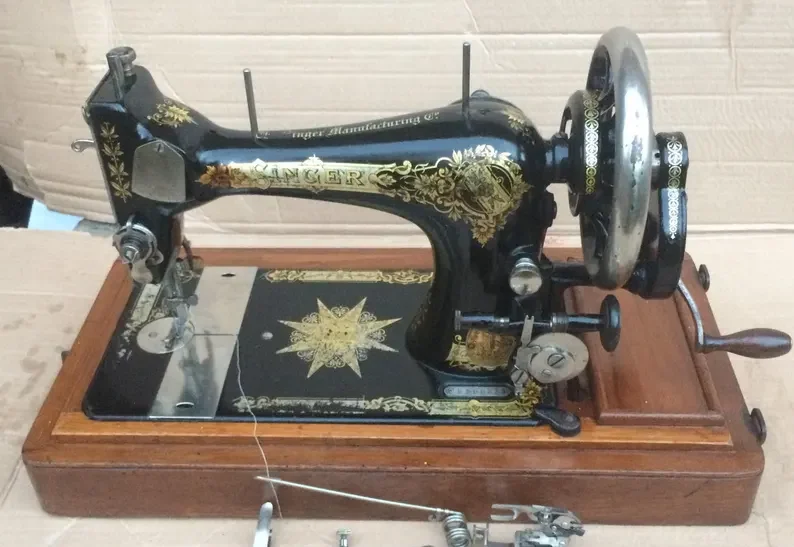
Use recorded from 1877 to 1892
Documented machines in this factory
(What does it mean?)Total documented machines: 1
Documented Classes:
- 29
Documented years: 1890
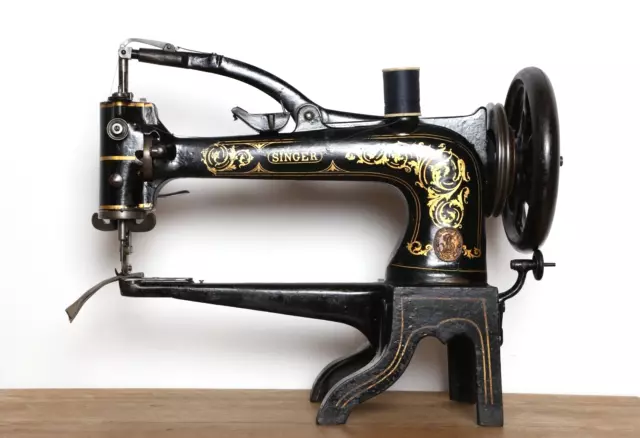
Use recorded from 1885 to 1888
Documented machines in this factory
(What does it mean?)Total documented machines: 5
Documented Classes:
- 12
Documented years: 1885 - 1888

Use recorded from 1907 to 1929
Documented machines in this factory
(What does it mean?)Total documented machines: 1
Documented Classes:
- 28
Documented years: 1907
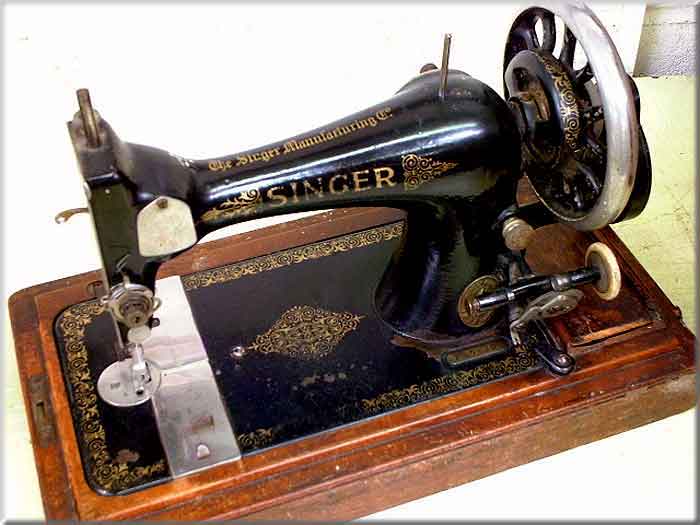
Share info about your machine
If you happen to own a Singer sewing machine, feel free to get in touch and share your machine’s serial number (and photos, if you have them). Each one adds another piece to the puzzle. Please share what you know with the community! Thank you for helping us in this monumental research.
Classes from the Clydebank-made sewing machines
Here are the classes recorded on machines made in the factory of Kilbowie, with their periods of use and the decals applied. The class is the core mechanism design (the base machine type), while the full model number combines that class with a factory code and a sub-version variant indicating specific features. For example, a model 15K88 is sub-version 88 of class 15, while “K” is the factory location code for Kilbowie.
It’s a cross-reference of the classes we associated to serial numbers in our own database. This may be helpful to date machines when serial records are incomplete.
N°3 (or 3K)
Use recorded from 1856 to 1875
Industrial long arm version of N°2. Reciprocating (extra large) shuttle.

VS2
Use recorded from 1886 to 1892
Fiddlebed shaped machine with vibrating shuttle. Bell-shaped access door cover on the front. Photo courtesy of Selby Sewing Machines. When the base became rectangular, it evolved into class 27.
Documented machines in this factory
(What does it mean?)Total documented machines: 10
Documented Decals:
Documented years: 1889 - 1892
VS3
Use recorded from 1887 to 1893
Fiddlebed shaped machine with vibrating shuttle. Bell-shaped access door cover on the front. Raised circular platform (known as “boss”) cast into the top of the arm, at the base of the spool pin. When the base became rectangular, it evolved into class 28.
Documented machines in this factory
(What does it mean?)Total documented machines: 1
Documented Decals:
Documented years: 1892

5
Use recorded from 1914 to 1943
Industrial use, the submodels differ greatly one from the other. All variants have adjustable driven feed-rolls.
6
Use recorded from 1902 to 1964
Industrial machines for heavy work in cloth, leather or paper.
12
Use recorded from 1865
The Singer "New Family", introduced in 1865 and soon sold in the UK, was later renamed Singer 12. Early models, with their distinctive "fiddlebed" shape, used a transverse boat-shaped shuttle and round-shank "Class 12x1" needles. Later models had a rectangular base. From 1870 it was available for semi-industrial use with a longer arm, as the class 13. There are many industrial variants, like the 12K Industrial Free Arm.
Documented machines in this factory
(What does it mean?)Total documented machines: 23
Documented Decals:
- Acanthus Leaves
- Acanthus Leaves Industrial Variant
- Acanthus Leaves Mother-of-Pearl
- Mother-of-Pearl Variant
- Mother-of-Pearl Variant #7
- Ottoman Carnation
- Wheels
Documented years: 1884 - 1899

13
Use recorded from 1869 to 1892
Also known as "Medium Family", it had a larger and longer arm compared to class 12 "New Family". Long bobbin reciprocating shuttle. Some industrial versions differ heavily from each other.

14
Use recorded from 1900 to 1959
Machines with multiple heads, for lacing together pattern cards used in Jacquard looms.

15
Use recorded from 1879 to 1963
Successor to the "New Family", was the "Improved Family", which was given the class 15 designation. Originally patented by Singer engineer P. Diehl in 1878 (UK patent 2813, 13th July 1878), the 'Improved Family' was launched in 1879 as a treadle machine, lock stitch oscillating shuttle. It has the tension on the face plate. By the 1890s the name 'Improved Family' had been dropped and replaced by "Class 15". In the same period, the had received a serious upgrade. It had the most common domestic variant and also several industrial variants.
Documented machines in this factory
(What does it mean?)Total documented machines: 79
Documented Decals:
- Eye and Trefoils
- Filigree
- Painted Daisies
- Painted Roses and Daisies Variant (Potentilla / Apple Blossom)
- RAF
- Scrolls and Roses
- Scrolls and Roses (Fiddlebed)
- Sphinx (or Memphis)
- Sphinx Variant (Indian Star)
- Tiffany (or Gingerbread)
Documented years: 1885 - 1957

16
Use recorded from 1887 to 1963
Successor to the "Improved Family" or class 15, was the "Improved Manufacturing", which was given the class 16 designation. The arm is longer than the "Improved Family", with more room for sewing. Lock stitch oscillating shuttle, it generally came with knee lifter. Industrial use, for clothing and heavier work in woven fabrics, shoes and other leatherwork.
Documented machines in this factory
(What does it mean?)Total documented machines: 7
Documented Decals:
Documented years: 1900 - 1929

17
Use recorded from 1894 to 1966
Long beak shuttle and cylinder bed. Industrial machines for shoes and irregularly shaped leather articles.

22
Use recorded from 1885 to 1930
Industrial machine for stitching eyelets.
23
Use recorded from 1900 to 1942
Industrial buttonholer. Variants for leather and for cloth.
26
Use recorded from 1905 to 1930
Two separate sewing machines coupled together to work in unison. Industrial use for making bags.

27
Use recorded from 1889 to 1933
Evolution of the VS2. Vibrating shuttle, rectangular bed, low bobbin winder.
Documented machines in this factory
(What does it mean?)Total documented machines: 44
Documented Decals:
- Pheasant
- Scrolls and Roses
- Scrolls and Roses Variant (Queen Victoria Diamond Jubilee)
- Sphinx (or Memphis)
- Tiffany Variant (Queen Victoria Diamond Jubilee)
Documented years: 1892 - 1906

28
Use recorded from 1889 to 1941
Evolution of the VS3. Vibrating shuttle, rectangular bed. Similar to the Class 27 but with 3/4-size bed. The 28 has a "bump" under the bell-shaped access door, that the 27 does not have.
Documented machines in this factory
(What does it mean?)Total documented machines: 44
Documented Decals:
- Painted Roses and Daisies (Flowers)
- Scrolls and Roses
- Scrolls and Roses Variant (Indian Star)
- Victorian
- Victorian Variant (Indian Star)
- Wrought Iron
Documented years: 1889 - 1940
29
Use recorded from 1877 to 1964
Universal feed arm for leather stitching. A range of machines commonly used by shoemakers and leatherworkers for their versatility, in particular for repairing boots and shoes. Many shoemakers use them still today. There is no under-feed, but the machine has a simple and effective top-feed mechanism, which is arranged to carry the work in any direction the operator needs. The progenitor of the class 29 was the U.F.A., "Universal Feed Arm"
Documented machines in this factory
(What does it mean?)Total documented machines: 14
Documented Decals:
Documented years: 1890 - 1953

30
Use recorded from 1912 to 1923
Half-size, chainstitch sewing machine on an iron base, designed for domestic use. It was made for a brief period: less then 10 allotment batches are documented in surviving serial number records, for a total of less than 20000 machines. Major production for this class ended in 1913, with a production run documented in 1923. The serial number is stamped into the underside base of the machine.
Documented machines in this factory
(What does it mean?)Total documented machines: 3
Documented Decals:
Documented years: 1913
31
Use recorded from 1900 to 1958
Industrial machine for tailors and manufacturers handling large quantities of material in irregular form. For cloth, leather, coated fabrics, etc. Lock stitch oscillating shuttle.
Documented machines in this factory
(What does it mean?)Total documented machines: 5
Documented years: 1915 - 1951

33
Use recorded from 1897 to 1933
Industrial vertical shuttle machines for hemstitching.

34
Use recorded from 1892 to 1965
Industrial machines for stitching hollow objects or hard-to-reach convex places. Raised "post" bed, roller presser and drop feed.

35
Use recorded from 1900 to 1969
Two thread chain stitch industrial machines for stitching carpets. You hold it by the handle on the side and operate it by cranking the lever on the other side of the flywheel, to stitch two rolls of carpet together.
Documented machines in this factory
(What does it mean?)Total documented machines: 2
Documented years: 1965

36
Use recorded from 1900 to 1932
Industrial machine for seaming carpets and rugs.

44
Use recorded from 1898 to 1955
Industrial short arm lock stitch machines, for light and medium weight cloth and leather.
Documented machines in this factory
(What does it mean?)Total documented machines: 2
Documented Decals:
Documented years: 1908 - 1912

45
Use recorded from 1895 to 1965
Flatbed or cylinder bed industrial machines.
Documented machines in this factory
(What does it mean?)Total documented machines: 5
Documented Decals:
Documented years: 1912 - 1961

46
Use recorded from 1900 to 1965
Industrial "pique" stitch high pillar machines. Two-thread or double chain stitch. The 46K1 and 46K2 models were specialized "pique stitch" cylinder/post-bed machines, used primarily for sewing the fingers of gloves. The 46K2 is like the 46K1, but has a smaller column and looper.
Documented machines in this factory
(What does it mean?)Total documented machines: 8
Documented Decals:
Documented years: 1900 - 1951
47
Use recorded from 1900 to 1969
Industrial lock stitch machines with cylinder bed. One needle and belt driven rotary sewing hook. Used for stitching tubular, concave or other irregularly shaped articles in cloth or leather.
Documented machines in this factory
(What does it mean?)Total documented machines: 1
Documented years: 1970

48
Use recorded from 1899 to 1913
High arm domestic machines. The 48K used a unique hybrid shuttle, that's an enclosed version of the earlier 12K open boat shuttle. It's similar to the one used on the 28K, but made to suit a straight race instead of a curved one. Bed size is unique to this class only. The serial number is stamped behind the main pillar
Documented machines in this factory
(What does it mean?)Total documented machines: 9
Documented Decals:
Documented years: 1902 - 1911

49
Use recorded from 1902 to 1958
Industrial "kilting" machines.
51
Use recorded from 1900 to 1967
High speed industrial machines for for barring and tacking on leather or cloth.
51W
Use recorded up to 1961
Industrial machines for tailoring or for stitching shoes and lightweight leather. Single needle post bed machines.

52
Use recorded from 1900 to 1965
Industrial single thread chain stitch machines, for rows of parallel stitching.

52W
Use recorded from 1963 to 1966
Industrial post bed machines for stitching shoes and other articles of light and medium weight leather.

53
Use recorded from 1901 to 1942
Industrial one needle, oscillating hook, single thread chain stitch machines.

55
Use recorded from 1900 to 1956
Industrial two thread and single thread chain stitch machines for bag stitching and basting clothing.

66
Use recorded from 1899 to 1956
Heavy duty domestic sewing machines, low shank and oscillating hook. Full sized machines, while the Class 99 is 3/4 sized.
Documented machines in this factory
(What does it mean?)Total documented machines: 36
Documented Decals:
Documented years: 1910 - 1949

71
Industrial buttonholer machines. Designed for automatically making straight buttonholes, with the purl or whip stitch, and with or without barred ends according to the description of each specific model (except 71-47).
81
Use recorded from 1907 to 1964
Industrial machines for overedging.
Documented machines in this factory
(What does it mean?)Total documented machines: 1
Documented years: 1938

82
Use recorded from 1906 to 1965
Industrial glove-makers machines, two-thread chain stitch.

91
Use recorded from 1915 to 1964
Industrial pique stitch machines for glovework.
Documented machines in this factory
(What does it mean?)Total documented machines: 3
Documented Decals:
Documented years: 1947 - 1955

95
Use recorded from 1911 to 1958
Shorter version of Class 96. For light and medium weight general clothing manufacture.
Documented machines in this factory
(What does it mean?)Total documented machines: 3
Documented years: 1942 - 1952

96
Use recorded from 1911 to 1959
Industrial rotating hook machines. Longer version of Class 95.
Documented machines in this factory
(What does it mean?)Total documented machines: 4
Documented years: 1927 - 1957

98K
Use recorded from 1964
Domestic 3/4-size machine with external motor. Economy model.
99
Use recorded from 1911 to 1963
3/4 size of the class 66. Lock stitch low shank and oscillating hook.
Documented machines in this factory
(What does it mean?)Total documented machines: 40
Documented Decals:
Documented years: 1922 - 1962

99W
Use recorded from 1961 to 1962
Industrial two-thread chain stitch. buttonholers. For making buttonholes and eyelets in cloth or leather.

103
Use recorded from 1912 to 1958
Industrial high speed lock stitch machines, with rotating hook, fitted for for electric or foot power.
Documented machines in this factory
(What does it mean?)Total documented machines: 1
Documented Decals:
Documented years: 1938
108W
Use recorded from 1914 to 1968
Industrial lock stitch machines with unison feed. It's not clear if there are differences between the 108W and 108K for lack of documentation and surviving machines.

110
Use recorded from 1914 to 1968
Industrial machines fitted with continuous wheel feed for leather work.

114
Use recorded from 1915 to 1970
Industrial single thread chain stitch machines with cylinder bed. For automatically sewing on flat buttons and for tacking paper tickets on clothing.

114W
Industrial single needle chain and drop stitch machines.

115
Use recorded from 1887 to 1936
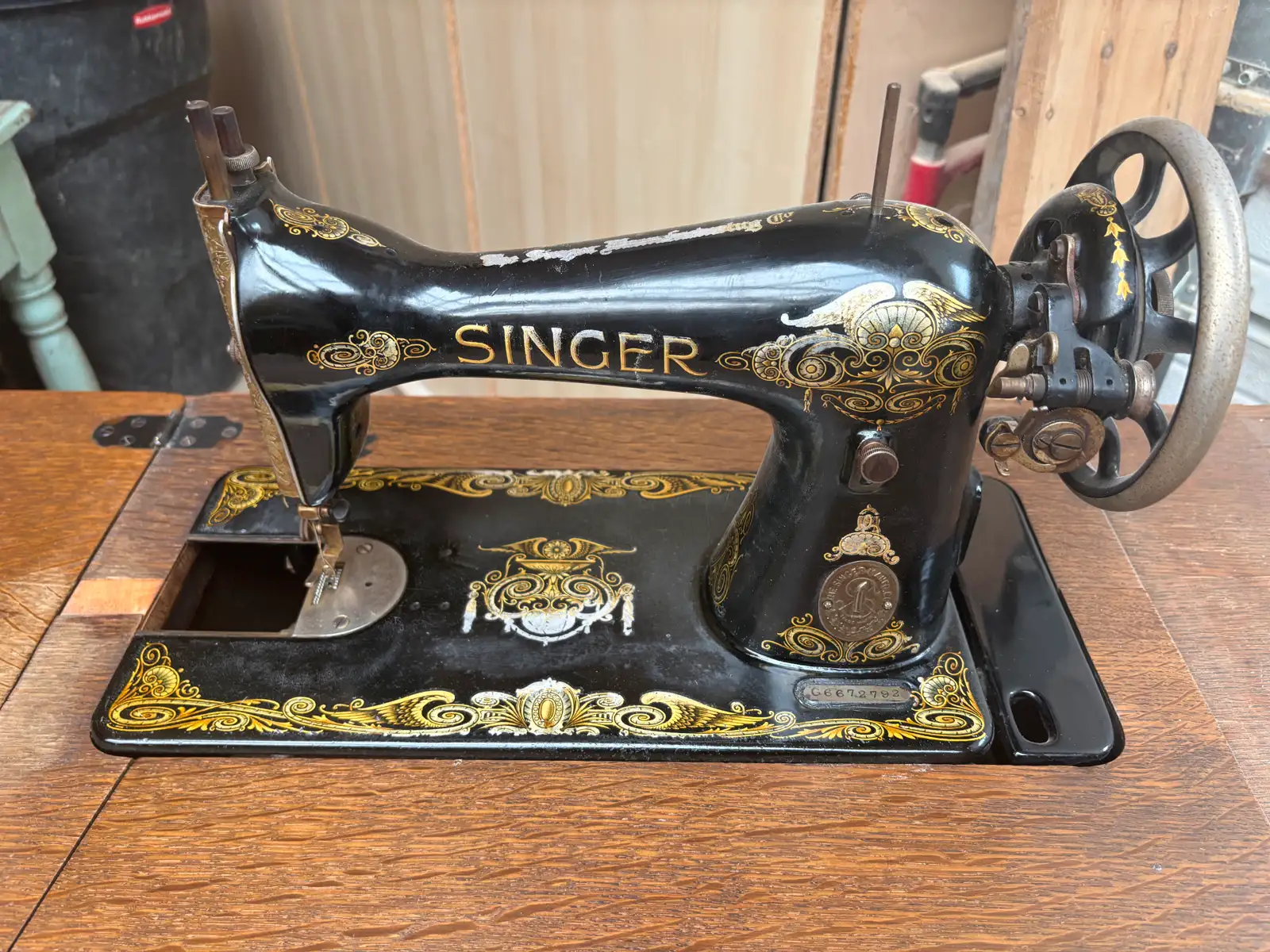
Class 115 machines were clearly based on the 9W7 design, retaining its rotary-hook mechanism, but they also incorporated several features borrowed from Class 15. Class 15 and 115 may look very alike. Class 15 features two small holes for oiling in the machine bed near the needle plate, while Class 115 has instead three deck holes on top (including one for an under-deck coil spring) and a single rocker bar underneath. They used a Class "L" bobbin case designed for the industrial-style 20U bobbins. Class 115 machines were typically decorated with either the distinctive “Gold Wings” decals or the “Tiffany” decals.
Documented machines in this factory
(What does it mean?)Total documented machines: 1
Documented Decals:
Documented years: 1887
119
Use recorded from 1917 to 1968
Industrial cylinder bed single needle lock stitch machines. For light and medium weight leather and fabrics.

126
Use recorded from 1937
Allotted in a batch of 20000 machines in 1937. Nothing more is known about this class.
127
Use recorded from 1910 to 1961
Full size bed, improved version of the class 27. Domestic vibrating-shuttle lock stitch machines. Rectangular bed, high bobbin winder. Bell-shaped access door cover on the front.
Documented machines in this factory
(What does it mean?)Total documented machines: 1
Documented Decals:
Documented years: 1917

128
Use recorded from 1912 to 1962
3/4 size bed, improved version of the class 28. Domestic vibrating-shuttle lock stitch machines. Rectangular bed, high bobbin winder. Bell-shaped access door cover on the front.
Documented machines in this factory
(What does it mean?)Total documented machines: 17
Documented Decals:
Documented years: 1917 - 1956

131
Use recorded from 1919 to 1948
Allotted in two distant batches: a batch of 100 machines in 1919, and a batch of 3 machines in 1948. Nothing more is known about this class.
132
Use recorded from 1920 to 1965
Industrial lock stitch machines, for cloth, canvas or leather.
133
Industrial short arm cylinder bed machines. For general cloth, canvas and leather work.
Documented machines in this factory
(What does it mean?)Total documented machines: 2
Documented years: 1947

133W
Use recorded from 1963
Industrial flat stitch embroidery machines: for Madeira eyelets, French knots, seed stitch, scallops, etc.

134
Use recorded from 1926
Allotted in a batch of 20 machines in 1926. Nothing more is known about this class of industrial machines.
135
Use recorded from 1958
Allotted in a batch of 500 machines in 1958. Nothing more is known about this class.
138
Use recorded from 1925 to 1964
Industrial single thread machines.
145
Use recorded from 1919 to 1949
Cylinder bed industrial machines.
151
Use recorded from 1924 to 1968
Industrial three-thread chain stitch machines.

153
Use recorded from 1950 to 1969
Industrial single needle lock stitch machines. Medium duty, cylinder arm.

154
Use recorded from 1961
Industrial single needle, lock stitch, compound feed, horizontal cylinder machines.
172
Use recorded from 1950 to 1965
Industrial lock stitch machines for making gloves.
Documented machines in this factory
(What does it mean?)Total documented machines: 1
Documented years: 1950

185
Documented machines in this factory
(What does it mean?)Total documented machines: 8
Documented years: 1959 - 1962
191
192
195
196
201
Documented machines in this factory
(What does it mean?)Total documented machines: 15
Documented Decals:
Documented years: 1937 - 1957
206
Documented machines in this factory
(What does it mean?)Total documented machines: 4
Documented Decals:
Documented years: 1952 - 1953
211
Documented machines in this factory
(What does it mean?)Total documented machines: 1
Documented Decals:
Documented years: 1953
217
221
Documented machines in this factory
(What does it mean?)Total documented machines: 20
Documented Decals:
Documented years: 1935 - 1964
222
Documented machines in this factory
(What does it mean?)Total documented machines: 4
Documented Decals:
Documented years: 1954 - 1959
240
Documented machines in this factory
(What does it mean?)Total documented machines: 1
Documented years: 1961
246
271
274
275
281
285
Documented machines in this factory
(What does it mean?)Total documented machines: 1
Documented years: 1964
300
306
Documented machines in this factory
(What does it mean?)Total documented machines: 5
Documented Decals:
Documented years: 1954 - 1961
319
Documented machines in this factory
(What does it mean?)Total documented machines: 2
Documented Decals:
Documented years: 1956
320
Documented machines in this factory
(What does it mean?)Total documented machines: 1
Documented years: 1960
325
326
327
Documented machines in this factory
(What does it mean?)Total documented machines: 1
Documented years: 1964
328
Documented machines in this factory
(What does it mean?)Total documented machines: 2
Documented years: 1962 - 1963
329
Documented machines in this factory
(What does it mean?)Total documented machines: 3
Documented years: 1961 - 1964
331
Documented machines in this factory
(What does it mean?)Total documented machines: 2
Documented years: 1935
338
361
366
426
451
460
707
1398
Share info about your machine
If you happen to own a Singer sewing machine, feel free to get in touch and share your machine’s serial number (and photos, if you have them). Each one adds another piece to the puzzle. Please share what you know with the community! Thank you for helping us in this monumental research.
Resources
- The history of Singer Kilbowie factory, from SingerSewingInfo.co.uk
- West Dunbartonshire Council about the Kilbowie factory
- The Clydebank Collection, from ISMACS
- On the 1911 strike
- About the Singer clock
- The ladies of Kilbowie, reprinted from The Sunday Post (Scotland)
- On the history of Singer company
- Complete database of vintage Singer sewing machines serial numbers, plus info about serial numbers, factories and location codes, class and model numbers
- Singer sewing machine manuals
- Singer sewing machine decal sets



)