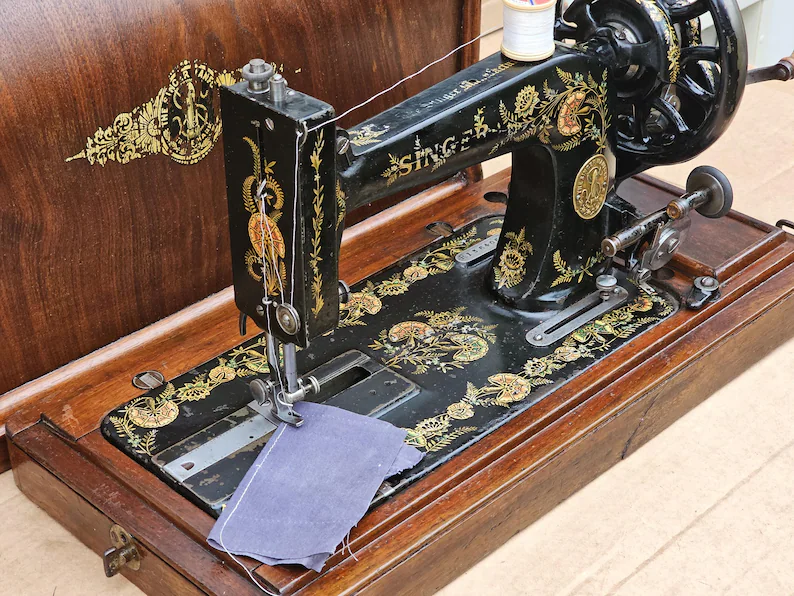
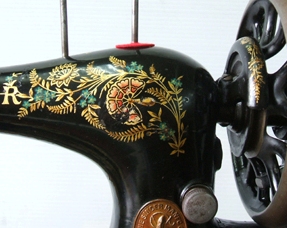
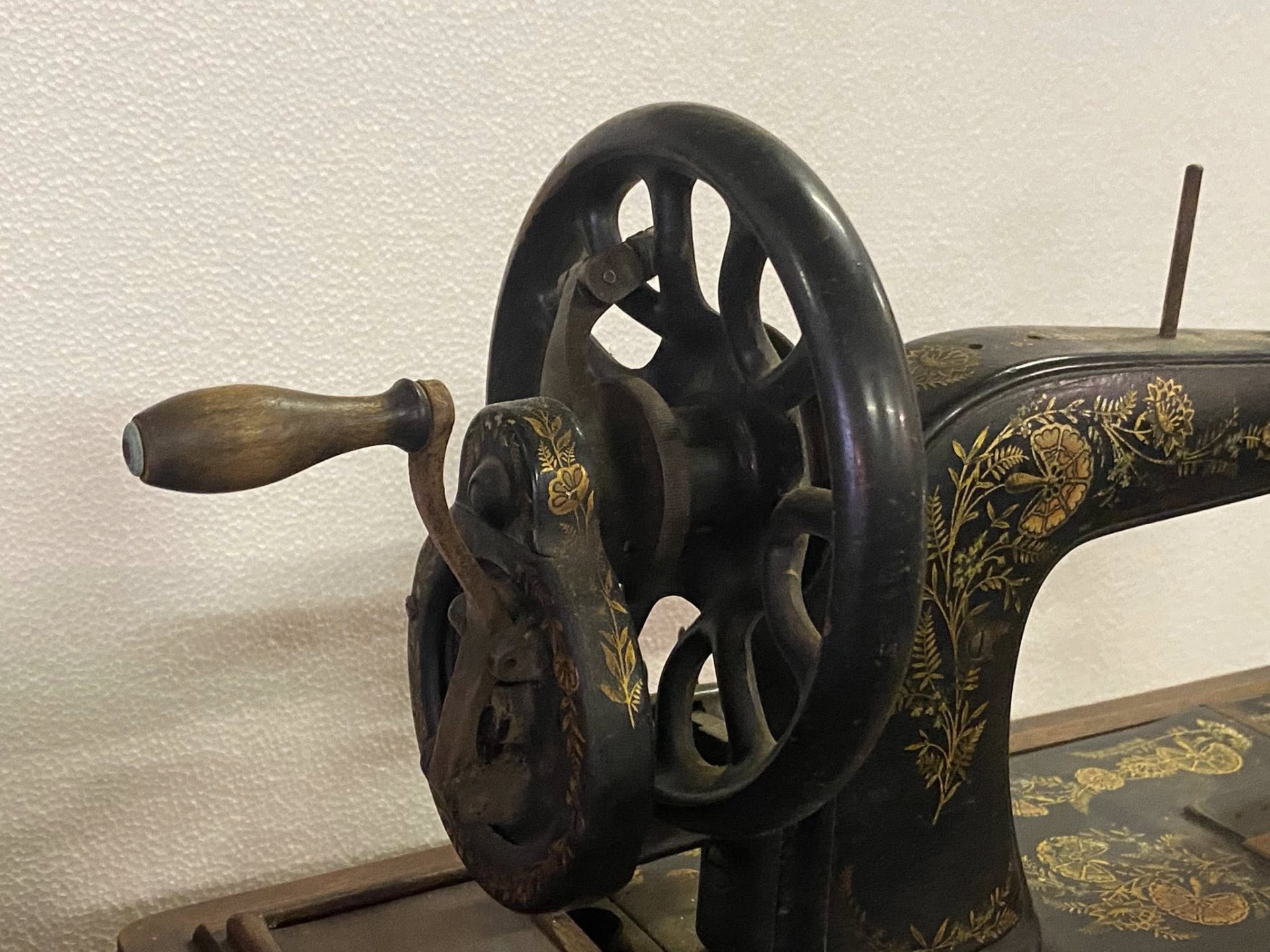
Ottoman Carnation
In use from 1884 up to 1913
In use for Classes:
- VS1 (1884-1886)
- High Arm Family (1885-1886)
- 15 (Improved Family, 1885-1886)
- 12 (1885-1903)
- 28 (1891-1902)
- 39
- 48 (1900 - 1913)
There are various, distinctly different versions of this design to suit a variety of machines. All of them were designed by George Alfred Squire of Bayonne (New Jersey, USA) in 1884.
In his patent, he describes it as "a main flower resembling a dianthus (carnation), and a smaller flower resembling a buttercup, and interlaced stems bearing buds and slender pointed leaves", without mentioning "Ottoman". This design got its "Ottoman" colloquial designation because of its mix of Islamic and figurative styles.
Patents:
- 05/08/1884, Patent n. USD15218 "Ornamentation of a sewing machine" by George Alfred Squire (Pdf) - Design patent for hand ornamentation, describing hand-painted or hand-gilded elements. It’s possible that following decals borrowed their design from here. The specification describes multiple ornamental groups (A–I) applied to the sides, arm, post, and cloth plate of the machine, including trailing vines, dianthus-like flowers, pointed leaves, tendrils, and lettering. Groups C and D include the word "Singer" integrated into the design.
- 05/08/1884, Patent n. USD15220 "Ornamentation of a sewing machine" by George Alfred Squire (Pdf) - Design patent for hand ornamentation, describing hand-painted or hand-gilded elements. It’s possible that following decals borrowed their design from here. The specification describes multiple ornamental groups (A–N) applied to the cloth plate, arm, post, and other surfaces of the machine. Features include branches, sprays, leaves, stems, buds, dianthus-like and buttercup-like flowers, pointed leaves, and lettering. Group II includes the word "Singer" integrated into the design.
Documented Machines
(What does it mean?)Total n.: 13
Factories:
- Elizabethport, New Jersey (USA)
- Kilbowie, Clydebank (Scotland, UK)
Documented Classes:
- 12
- 28
- 39
- 48
Documented years: 1887 - 1911