Total serial numbers present in the database: 11.152.179.
From the year 1862 to the year 1978.
(More recent machines from the year 1986 to the year 1992) (Learn more)
Documented machines: 39 (What does it mean?).

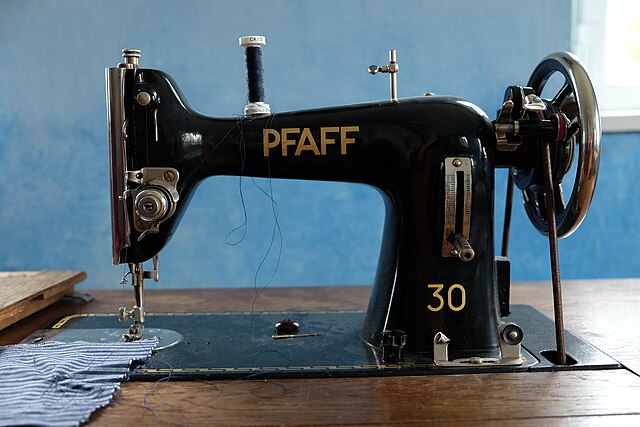
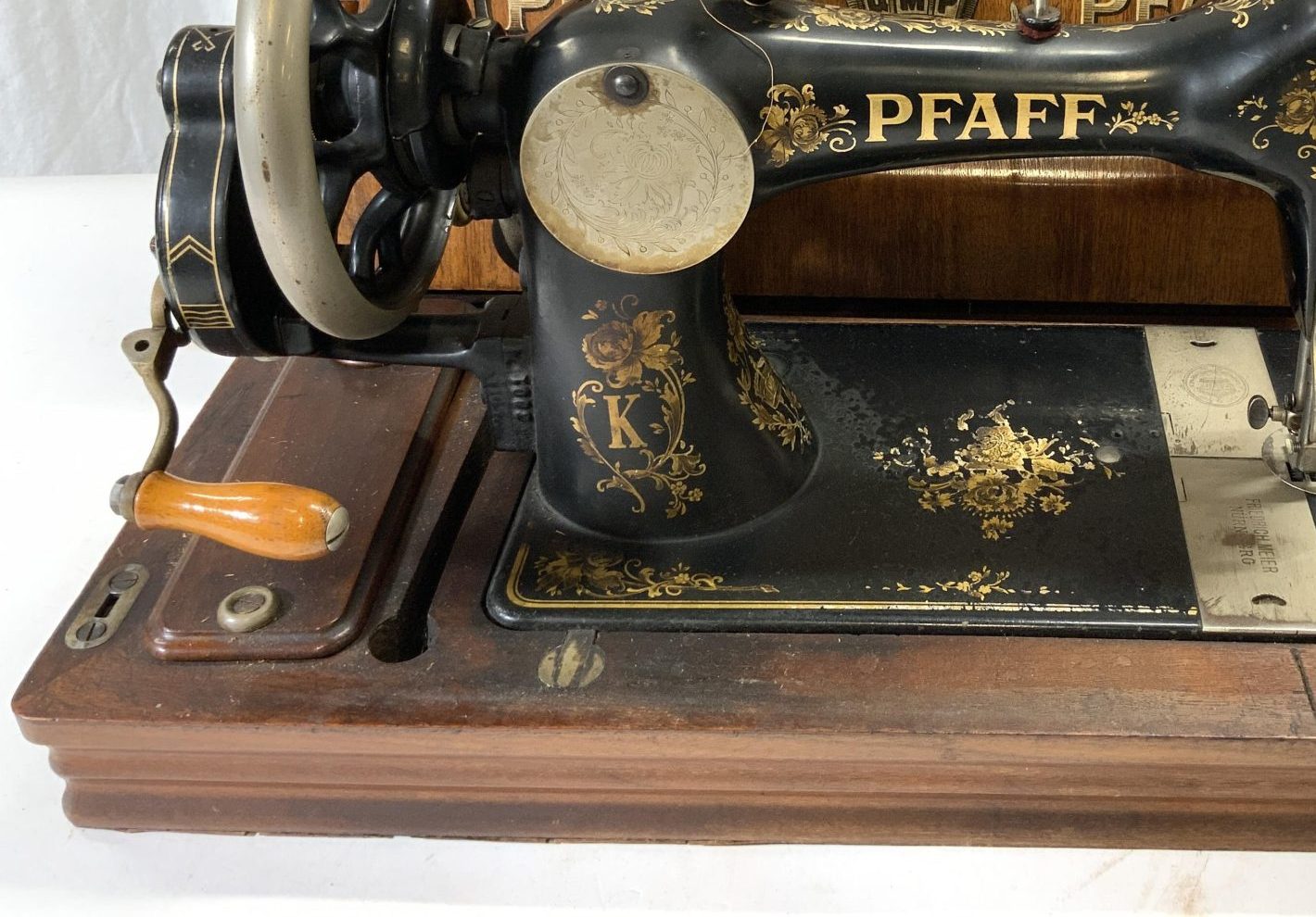
By now all my friends know I am into vintage sewing machines. A friend of mine, knowing I made a tool to research vintage Singer serial numbers, asked me info about the Pfaff machine that belonged to her grand mother. She wanted to know more about the age of the machine, the model, anything about that keepsake she wanted to bring back to life.
So here I am, a new research started to help her out: a database of what’s known about vintage Pfaff sewing machines. Information is, unfortunately, scarcer than for most popular Singer machines. Knowleadgeable people from The Needlebar, ISMACS or Fiddlebase had already done a great job in research, and they are all linked in the Resources below.
From their work, I started my journey. This database contains what we know so far about Pfaff sewing machines from their serial number. Here you can input the number and obtain the year of production. About models, that’s totally work in progress: we do not have, as far as I know, original factory records, like for Singer. All the info we can reconstruct comes from the deep research of passionate historians and collectors, who put together anything they could find. I’ll do my best to go on with their work and provide people with an easy tool to explore all the available research.
Please, if you have more information that you want to share about a Pfaff vintage machine, tell us in the comments or contact us, so we can improve and update this database. Thank you.
And if you are instead in knowing more about Pfaff, its history, serial numbers, where to find them, the main models and more, go on reading below.
Table of contents
The history of Pfaff
Pfaff’s story begins in 1862 in Kaiserslautern, Germany, with a young instrument maker named Georg Michael Pfaff (1823–1893). Just eleven years after Isaac Singer began producing sewing machines in the United States, Pfaff handcrafted his first machine, designed to sew leather for shoes. He founded the G. M. Pfaff sewing machine factory, and his talent for innovation and mechanical skill quickly became evident.
From the very beginning, Pfaff sought to improve production techniques. He moved from individual handcrafting to steam-driven drilling, milling and planning machines, allowing him to produce more machines with greater consistency. By 1872, only ten years after starting, Pfaff was producing around a thousand machines per year with 30 employees, half of which were exported.
The company was also ahead of its time in caring for its workforce. In 1874, Georg Pfaff introduced a sickness benefit scheme for employees and a fund for the surviving dependents of workers who passed away. His eldest son, Jakob Pfaff, expanded the company’s reach with advertising and by creating a sales organization, which began with traveling salesmen and eventually evolved into exclusive agencies. By 1885, Pfaff even opened a shop in London.


Pfaff’s reputation grew steadily. The factory was continuously modernized, employing 400 workers by 1890. Georg Pfaff’s second son, also named Georg, took over after the founder’s death in 1893, continuing the expansion. By the early 1900s, the factory moved to the outskirts of Kaiserslautern, employed 1000 workers, and began producing machine tools for its own sewing machines. Household, artisan and light industrial machines with electric motors became part of Pfaff’s growing lineup.
By 1910, Pfaff had produced its one-millionth sewing machine; by 1935, it had produced its three-millionth one. In 1912, the fiftieth year of its business, Pfaff was already exporting to 64 countries across Europe, Africa, Asia and Australia.
Georg Pfaff jr died in 1917, and her sister Lina Pfaff took over the management of the company. She built the Pfaff housing estate and, for the welfare of the public, the Pfaff baths in Kaiserslautern.
The company was converted to a share company in 1926 and Karl Pfaff, the founder’s grandson, took over its management. At that time, the company introduced an old-age pension insurance. Pfaff then employed 2600 workers.
During World War II, the company suffered, but production didn’t stop. The factory was destroyed in 1944, suffering extensive damage, but it was then reconstructed and restarted its activities in record time. In the 1940s, the company developed plastic heat-sealing machines and the first early cam-controlled sewing machines.
In 1951 Pfaff introduced the first portable consumer sewing machine with variable free-arm. It reached the milestone of five million machines by 1954.

Support our work!
Enjoy this website?
Please consider a small tip to say thanks.
(No account required!)
The 1950s saw the company expand globally. The very first industrial high-speed seamer with pressurised lubrication came onto the market in that period. 1954 saw the production of the fifth-millionth sewing machine.
In order to cover the factory’s requirements for electrical equipment, in 1956 Pfaff bought the ELTE Works in Landstuhl (Germany). The following year, the company acquired the share majority of Gritzner-Kayser AG, a well-known consumer sewing machine and bicycle manufacturer in Karlsruhe (Germany).
The 1960s saw further expansion, with the introduction in 1960 on the stock exchange in Frankfurt. In 1962 the company celebrated its 100th anniversary.
In 1964 a collaboration began with Japanese manufacturers like Janome to produce competitively priced machines.
In 1973 the newly introduced high-speed home ironers helped to offset the weak sewing machine business due to the recession.
In 1978 Pfaff opened a factory in Curitiba (Brazil) to produce high-speed seamers. In 1979 Pfaff developed the first freely programmable automatic sewing machine with X/Y control. In 1982 the company launched its new top model: the “Pfaff Creative 1469” for home sewing. Here, the entire control and stitch formation is handled by a computer.
In the late 20th century, Pfaff saw a period under Singer, from 1997 to 1999, when a threatening management situation led to the separation of the two companies. In the same year, the domestic sewing machine division in Karlsruhe was sold to the Swedish group Husqvarna Viking.
After the short involvement of the Italian sewing machine manufacturer Rimoldi between 2001 and 2002, Pfaff returned to family ownership in 2002, when the family-run Italian Bianchi Marè group took over 95% of the shares.

What we know about factories
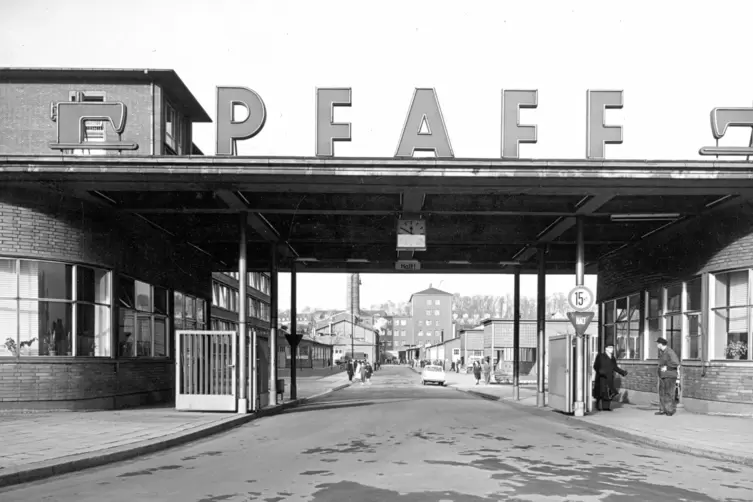
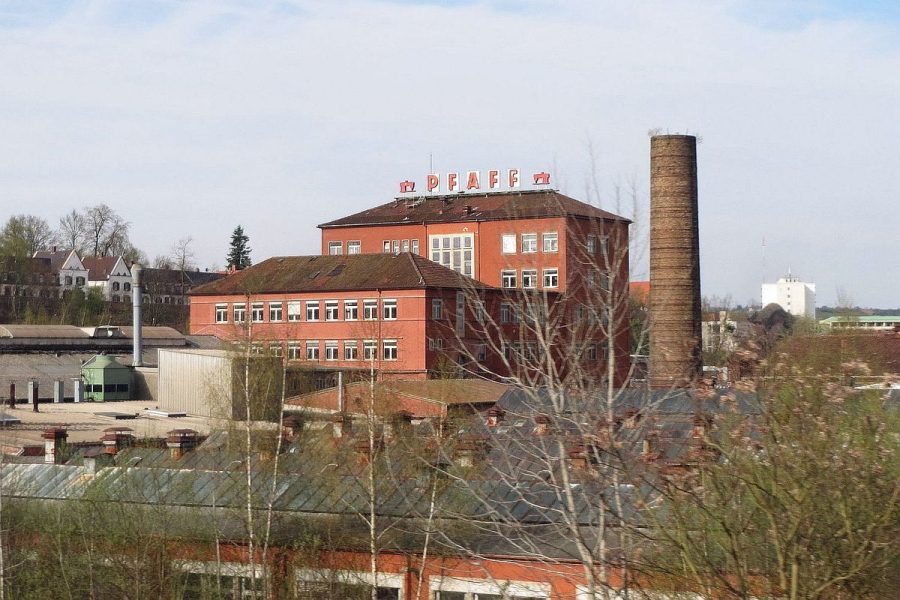
Pfaff’s production story has always been linked to Kaiserslautern in Germany, from its founding in 1862. Here, the workshops quickly grew from handcrafted, one-off machines to a modern facility equipped with steam-driven tools. As demand increased, the works were continually expanded and modernized, and between 1901 and 1906 the company moved to a large new plant on the outskirts of Kaiserslautern. At its peak before World War I, that factory employed over a thousand workers and supplied machines to more than sixty countries.
After World War II, Pfaff’s production footprint expanded beyond Kaiserslautern when, in 1957, Pfaff acquired Gritzner-Kayser AG, a prominent sewing-machine (and earlier bicycle and motorcycle) manufacturer in Karlsruhe-Durlach. The Gritzner works had suffered a major fire in 1955, destroying much of the factory, which was rebuilt before the acquisition.
Under Pfaff’s ownership, the Gritzner-Kayser facility in Durlach became Pfaff’s main production plant for household/domestic sewing machines (‘Pfaff-Haushaltmaschinen GmbH’), while industrial machine production (‘Pfaff-Industriemaschinen GmbH’) continued in Kaiserslautern. For decades, many Pfaff household machines were produced at Karlsruhe, though precise records of which models were built there remain elusive.
The situation of production plants after the mid-20th century is less clear. We know that in 1964 Pfaff began a partnership with Janome in Japan to produce competitively priced models, using parts kits imported from Japan. The Durlach factory carried out the assembly and finishing of these machines, including the degree-engraving and zig-zag models. Over time, Janome became a long-term partner of Pfaff. In addition to Pfaff’s own sales outlets, new distribution channels were established, and before long the Pfaff trademark also appeared on Japanese-made low-priced machines.
We also know that in 1978 a factory was opened in Curitiba (Brazil) to produce industrial machines and strenghten Pfaff’s overseas market presence.
Beyond this, information on Pfaff’s manufacturing locations becomes very scarce. Even for more recent household models, it is difficult to trace exactly where they were made. This lack of transparency makes it harder for collectors today to tie machines to their production sites, unlike Singer, whose factory records are far better documented.
The serial numbers
Where to find the serial number


Finding the number itself can take a bit of detective work. Depending on the model and era, it might appear on the back, the sides, or the underside of the machine, usually on a plate or near the badge.
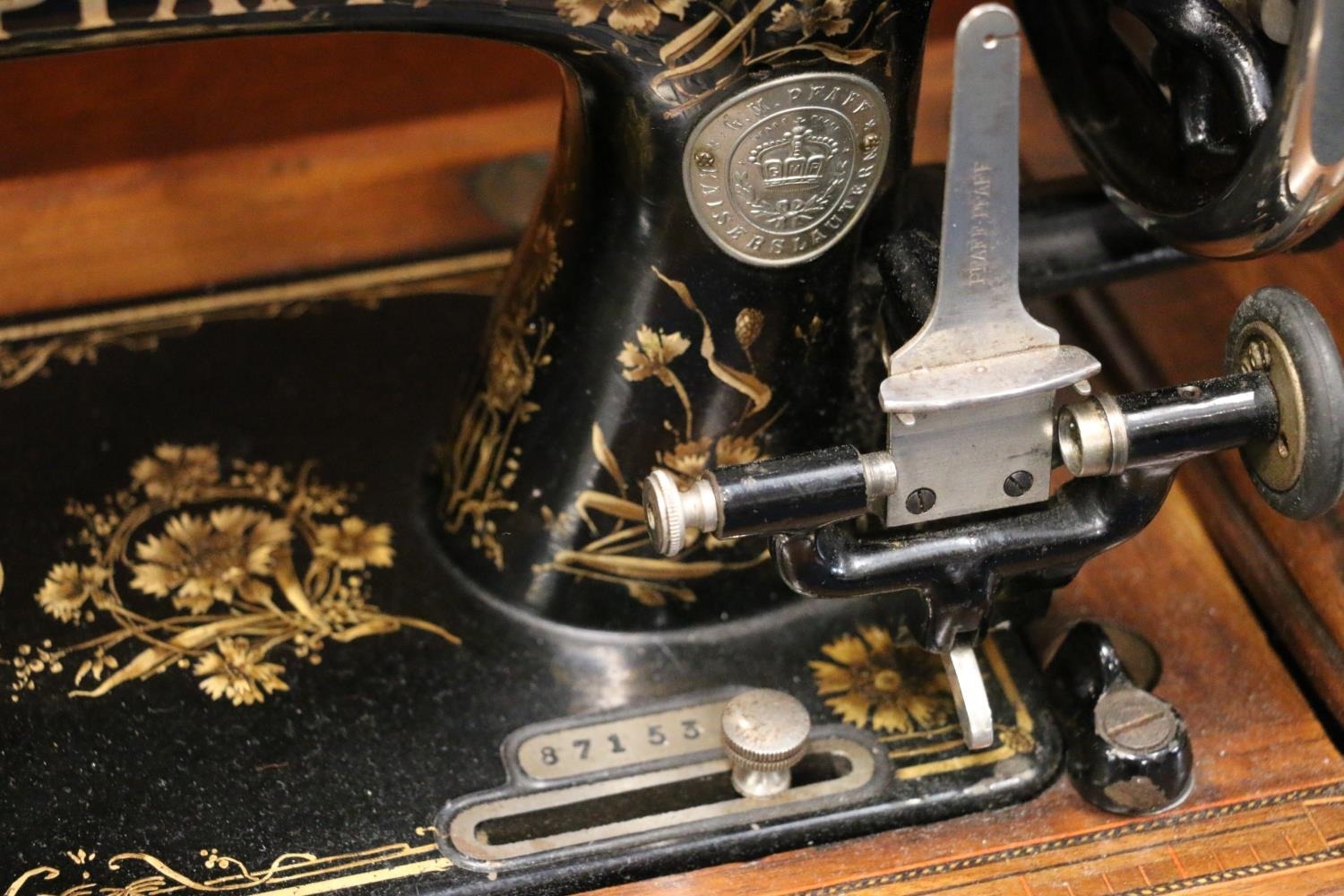
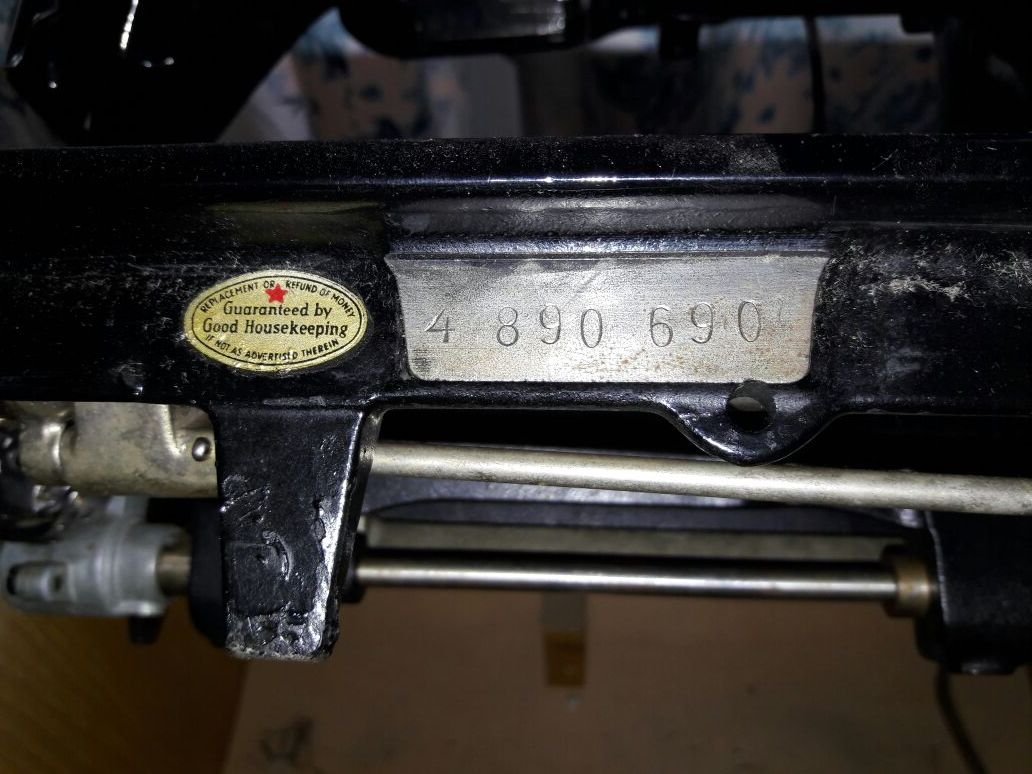
- In older machines, serials could be on a metal plate inset into the bed, below the logo badge, like for Singer machines. Numbers may be hidden beneath the bobbin area or inside the case. If your machine is mounted in a table or box, it’s worth lifting it out carefully: sometimes a plate with the serial is fixed to the front of the base, right in the middle.
- On some vintage models, like the Model R, the number was stamped directly into the bed beneath the brass logo badge, no metal plate.
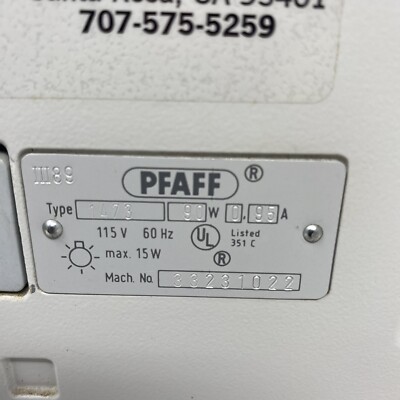
- More recent machines are the easiest to date: they often have a small white metal plate on the back with the date printed in the upper left corner. The month appears in Roman numerals, followed by two digits for the year (for example, I 87 means January 1987).
Reading worn numbers is not always easy: years of dust and use can obscure markings, and since early numbers were carved by hand, they may take patience to interpret.
The serial number format
Unlike Singer, which produced billions of machines in dozens of factories worldwide and had to use prefix letters to keep track, Pfaff kept things much simpler. Their machines were numbered in sequential order, starting in 1862 with the very first machine Georg Michael Pfaff built.
For well over a century, the system remained consistent: just numbers, no letters. Even into the 1990s, Pfaff machines still carried only numerical serials (by then, up to eight digits long). This straightforward approach makes Pfaff serials less confusing than Singer’s, though it also means you can extract less information at a first glance.
The information you can gather from a Pfaff serial number is, unfortunately, scarcer than what is available for Singer machines. Dedicated researchers that have done an outstanding job piecing together Pfaff’s production history, and their work is linked in the Resources section below.
From here, we are building our searcheable database, using what we know so far. From a serial number you may obtain the machine’s year of production. We do not know whether serial batches were assigned to specific plants, or if all numbers were centrally allotted from Kaiserslautern.
Everything we can reconstruct comes from the painstaking work of passionate historians and collectors who have assembled information from scattered sources. I’ll do my best to continue their work and provide an accessible tool for anyone who wants to explore it.

Two different numbering systems
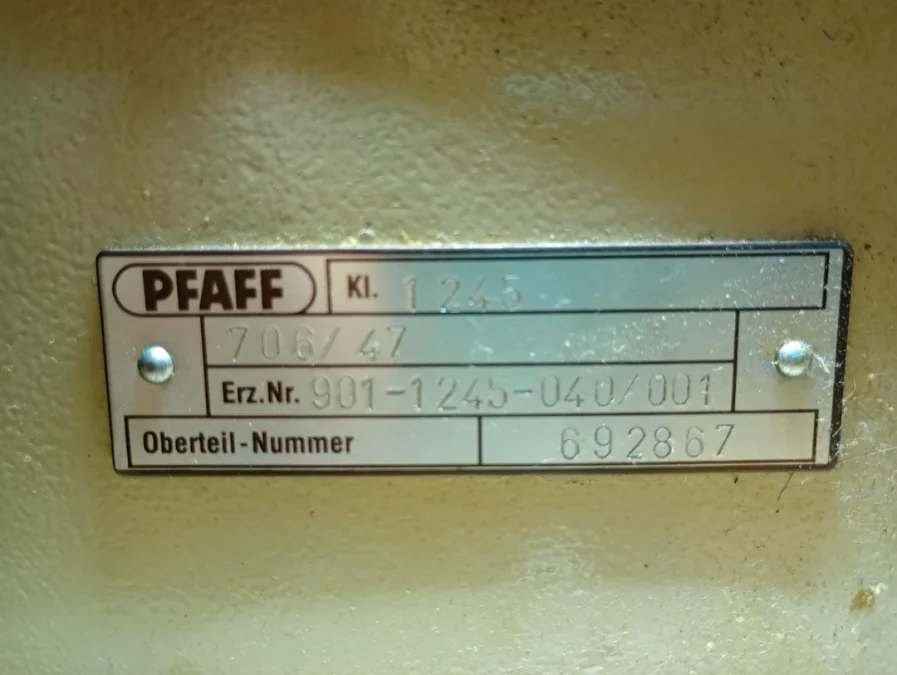
When researching a Pfaff serial number, you might find a production year that seems too early for the machine in front of you. For example, an industrial 1245 model with a serial like 678898 might appear to correspond to machines produced around 1905, and it’s clearly not the case.
This discrepancy exists because, at some point in its history, Pfaff changed the way it assigned serial numbers. Following acquisitions and the opening of new factories, it’s believed that, after Pfaff acquired Gritzner-Kayser AG in 1957 and started producing domestic machines there, while continuing the production of industrial models in Kaiserslautern, two different numbering sequences emerged.
Typically, you’ll happen to find industrial machines that display serial numbers that are “too low,” suggesting that domestic models continued with the original numbering sequence, while industrial machines started a new one. The exact starting point of this new sequence is still unknown.
Unfortunately, we do not have complete factory records. Most of what we know is based on careful guesses, collector research, and historian work. We will continue updating this database as more archival information becomes available.
The model number
Initially, Pfaff assigned letters to their sewing machine models, but by 1906 the company began transitioning from letters to numbers. This change was prompted by the practical concern that they would soon run out of letters for new models.
As a result, most of the lettered models were gradually discontinued or replaced with numeric designations. For example, the popular H model was renamed the 31. Both the H and the 31 were central bobbin machines, similar in design to the Singer 15.
On most early Pfaff machines, the model (whether letter or number) was prominently displayed on the body of the machine, typically between the decals, on the front beneath the brass logo badge, and often on the back as well, usually in large golden letters.


Share info about your machine
If you do know something about a Pfaff vintage sewing machine, please share what you know with the community! Thank you for helping us in this research.
About documented machines
Extant Pfaff serial number records are far from complete. They just give a rough estimate of the production year, no info about the production factory or the model. As I am doing for Singer sewing machine, I started collecting information about Pfaff machines I’ve seen in person, or that an expert collector has seen and told me about.
I wish I could meet other researches who embarked in the same endeavour who’d like to share their efforts with me and the community. If you are that person, please get in touch!
Knowledge is best when shared, that’s the main reason why I started all my work on vintage sewing machine searcheable databases. That’s what “Documented machine” means here: a particular serial number was linked to a real machine, and all possible details recorded.
Please, if you do know of a Pfaff vintage machine and want to share info with us, for anyone to benefit, fill in our suggestion form, or write a comment down below, or contact us. Thank you for helping us in this research!
Resources
- Pfaff serial numbers from The Needlebar
- Pfaff serial numbers from ISMACS
- The history of Pfaff from the official website
- The history of Pfaff from Fiddlebase
- The history of Pfaff from SewALot
- A comprehensive timeline of Pfaff history
- Official website of Pfaff today
Support our work!
Enjoy this website?
Please consider a small tip to say thanks.
(No account required!)