
By now, I could say I am deep into a rabbit hole. I am following many paths while researching the history of Singer sewing machines. One of them is about factories. Since I started diving deep into the Singer production in Monza (Italy) and Bonnières-sur-Seine (France), many more paths opened. Some led to the discovery of lovely decals, another led to the story of a family.
Factory histories are often written through dates, production numbers, patents, corporate decisions. But factories are also made of people, I would say they are mainly made of people: mechanics, supervisors, office workers, salesmen, engineers, technicians of any sort, cleaning staff, and so on. In some cases, entire families sometimes spent generations inside those buildings.
While researching Singer’s history, I had the chance to speak with Ken Meise, whose family was deeply connected to the company. His father, grandfather and uncle all worked for Singer, in different moments and roles. Through his memories and family stories, I could see a much more personal image of a Singer factory as a workplace with its own culture, tensions and daily routines.
This led me to this article, about the Singer factory of Elizabethport, New Jersey (USA). This was one of the main factories, together with Kilbowie in Scotland, so it’s one of the best known and researched, with its preserved production records and more. What I want to do here is briefly retrace the commonly known history of this workplace, then concentrate on Ken’s family and how it really felt working in a Singer factory like this.
All my research projects started with my Singer serial number database, so here you’ll mainly find data cross-referencing: what the serial numbers can tell us about the production in Elzabethport, the decals applied here and other peculiar features to help date and identify any particular machine. As always, if you know something I do not cover yet here, please get in touch: all this research is to help the community of vintage sewing machine lovers, but this monumental endeavor would not be possible without the help of all the community. Thank you!

Table of contents
Serial prefixes, location codes and production years
Here are the recorded factory identification details for Elizabethport: its location code, serial number prefixes and years of operation.
The location code is the letter found in the model number that identifies the manufacturing site of a particular machine. On the other end, serial prefixes are one or two letters at the beginning of the serial number that distinguish serial number ranges assigned to machines produced at different factories.
Elizabethport, New Jersey (USA)
Active from 1872 to 1982
Country: USA
City: Elizabethport, New Jersey
Location code: -
Serial number prefixes:
- B, D, G, H, K, L, N
- AA to AT, BA to BY
Documented machines for this factory: 1,025
Documented decals applied in this factory: 58
Documented classes in this factory: 43
Brief history of the Elizabethport factory

The Elizabethport factory was one of biggest, longest running plants in Singer history, active from 1872 to 1982: more than a century of making sewing machines. No wonder a lot is known about its history, so I’ll keep it brief here, linking to all the best resources I has access to for further information.
This factory opened in 1872 to replace Singer’s earlier New York workshops. Its more modern facility, originally on a 32-acre site, became the primary manufacturing hub for the United States, an essential supplier of parts, machinery and technical expertise for other Singer factories worldwide, alongside the other big plant of Kilbowie in Scotland. At the time, it was said it was the largest factory in the world for the manufacturing of a single product. It also had a water front on Newark Bay and a railway track connection to the system of the Central Railroad of New Jersey: this allowed easy transportation of its machines, materials and equipment.
The plant survived a major fire in 1890, but fortunately didn’t suffer major damages: the premises were soon rebuilt and production resumed quickly.
This factory contributed to both World Wars, manufacturing also armaments. By the beginning of WWII it employed 5,000 people across 48 buildings on 113 acres, supplying parts and machinery to Singer factories worldwide. From June 1942 until July 1945, Elizabethport stopped making domestic sewing machines, although it continued production of spare parts, needles and limited runs of industrial machines. Civilian sewing machine production resumed in 1945, after the war ended. Production declined in the 1970s and the factory closed in 1982, when it employed 1000 people.
The original brick factory building built by Singer is still standing nowadays, despite a huge fire in 2024: it’s now a huge industrial park.
The "Great Singer Factory" in the book "Genius Rewarded"
The Singer Manufacturing Company published a fascinating promotional book, often attributed to Isaac M. Singer himself but written by ghostwriter John Scott, published in 1880: “Genius Rewarded, or the story of the sewing machine“. Here, in chapter 5 titled “The Great Factory”, the book describes the Elizabethport plant. All the book contains lovely illustrations of the factory: the courtyard, the main buildings, the decoration department, the furnaces…
This book gives us a guided tour of the Elizabethport factory as it existed in 1880. We rarely get such a detailed contemporary description of a Singer factory written for the general public.
The author describes arriving by train at Elizabethport Station and immediately seeing the immense factory complex. In front of it stood a landscaped private park maintained by the company, complete with walks, flowers, shrubs, trees, even a large fountain. The factory itself was presented as a modern, fire-resistant structure built of brick, iron and slate, crowned by a prominent clock tower visible throughout the neighborhood. This tower still stands today, a remarkable landmark for more than a century.


What strikes you is the scale of the operations described here. Always remember it was the 1800s, the sewing machine was a fairly recent invention, and Singer factories showcased state of the art technologies that many outside couldn’t even imagine.
The factory had more than five miles of internal railway tracks. Singer even owned its own steamboat and locomotive, which hauled raw materials and finished machines from the site to New York all day long.
Yet, within thirty years a single company finds itself with over ten thousand employés under regular salaries or wages, and thirty thousand more working the whole or part of the time on commission. And this Company, investing many millions of money in its business, spending thousands every year in advertising, employing some forty thousand persons, eight thousand horses, and having its own locomotive and steamboat busy in transporting its machines and materials between New York and its great factory at Elizabeth, is, as the reader may have surmised, The Singer Manufacturing Company.
The book describes a highly organized manufacturing process.
The foundry employed about four hundred men and consumed sixty-five tons of iron every day. Machines passed through repeated stages of assembly, adjustment, inspection, and stitching tests before being approved for sale. More than fifty women were employed solely to test completed machines by sewing with them, ensuring they produced a perfect stitch before leaving the factory.
What’s striking is also the emphasis on specialization. I described the japanning process more in detail in the article about decals and ornamentation of sewing machines. Isaac Singer proudly describes hundreds of separate operations involved in producing a sewing machine, from casting and forging to needle making, plating, inspection, and final assembly.
The author seems almost obsessed with describing how tidy the place was. He writes that despite more than 2,000 workers crossing the yard every day, visitors would not find “a bit of dirt as big as a filbert” anywhere. Of course, this is more like company publicity rather than reporting, but it shows the image Singer wanted to project: order, efficiency, and modernity.


A surprising statement in chapter 5 is that even with Elizabethport producing thousands of machines per week and the Glasgow factory turning out another 4,000–5,000 machines weekly, Singer was still behind on orders. The company’s offices were reportedly complaining that they could not get enough machines to satisfy demand.
When this great establishment was built, in 1873, it was thought a good week’s work to turn out 4,000 complete machines; but at this time its weekly product is upwards of 8,000 complete machines. Besides these, the Singer Company’s other factory at Glasgow, Scotland, is turning out between 4,000 and 5,000 complete machines each week, and yet the offices throughout the United States and Canada are complaining of the injury their business receives because they cannot get enough machines. The factory at the time of writing is largely behind its orders. Enlargements of various departments have been made from time to time, but the demand is yet far ahead of the capacity for production.
Having such an opportunity to walk through the factory as a visitor would have done in 1880 is indeed rare. Thanks to the “Genius Rewarded“, we can see the buildings, departments, workers and machinery through the eyes of the proud owner, trying to describe its industrial empire as someone who witnessed Singer at the height of its success.
Although this book contains a wealth of information and wonderful illustrations of the Elizabethport factory, it should not be read as an impartial history. It was published in the aftermath of the famous sewing machine patent wars, a period in which companies such as Singer and Howe actively promoted their own versions of the invention’s history. Like many corporate publications of the era, “Genius Rewarded” was intended first of all as advertisement, to celebrate Singer’s achievements and reinforce the company’s place in the story of the sewing machine.
Some claims should therefore be taken with a pinch of salt. Even so, the book remains an extraordinary source for understanding how Singer wanted to present itself to the public, and for the remarkable views it preserves of the Elizabethport factory.
Life inside the Singer factory: memories from a family who worked there
As I mentioned in the introduction, Ken Meise’s family spent generations working for the company. His father, uncle and grandfather all worked for Singer in different roles. According to Ken, his grandfather was even in charge of the South America division and traveled extensively for the company. His uncle also spent his entire career at Singer, travelling to Scotland often for the company, and retired in 1975 after rising fairly high in the company hierarchy.
Ken himself visited the Singer buildings in Elizabethport as a child. He remembers the factory complex as enormous, with multiple Singer buildings spreading between New Jersey and New York. Even today, despite fires and redevelopment, part of the main Elizabethport building still survives.
Ken’s father, Ed, worked as an industrial sewing machine mechanic. From the stories passed down in the family, he was considered exceptionally skilled, the kind of mechanic Singer would still call after he had already left the company because nobody else could solve certain problems. According to Ken, mechanics were often specialized on only one or two machine classes. In his opinion, this would make more money in servicing, increasing dependency on official repairers.


Mechanics seem to have been highly respected when it came to technical matters. Ken remembers about a disagreement between his dad and a colleague, that grew so big the company’s president had to step in to settle it down. But this was just about work: the two mechanics never stopped being friends. Even though nobody questioned the skills of highly specialized mechanics, they were not paid enough for their craftsmanship.
Despite the stability Singer offered, easily giving a person a job for life, wages appear to have been a constant source of frustration. Ken repeatedly described Singer as a company where employees could expect “a job for life,” but where mechanics were paid poorly compared to what they could earn independently.
Eventually Ed Meise left Singer and started working on his own. According to Ken, Singer tried to bring him back, but by then he was already making far better money independently than he ever had at the factory. Only two weeks after he left, Singer reportedly began contacting him again whenever difficult repair problems appeared. This time, however, the company had to pay his own rates. It is hard not to smile at the irony: the company that had refused a small raise suddenly found itself paying considerably more for the same expertise.
According to Ken, his father had only asked Singer for a quarter raise before leaving the company. Singer refused. Looking back, Ken believes that if Singer had accepted that small raise, his father probably would have stayed there for the rest of his career. According to family memories, many other skilled mechanics eventually followed the same path and left Singer as well.
Some of Ken’s memories also touch on the final decades before the factory’s collapse.
He recalls his uncle, who retired in 1975, saying already in the early 1970s that he did not like the direction the company was taking. According to him, upper management was “cashing in” while the company itself was weakening. After Singer’s decline and eventual closing of the Elizabethport plant, Ken said his uncle’s pension was cut in half or less, something that reportedly affected many former employees.
Ken also remembers Singer destroying trade-in machines to remove them from the market (I can see you, horrified collectors, while reading this…). When a customer bought a new Singer machine, it could happen they brought in their old machine as part of the deal: Singer would give them a discount or credit toward the new purchase. An old sewing machine (being it a Singer or another brand) was often still perfectly usable. If Singer accepted a trade-in and then resold it cheaply, it might compete with the sale of a new machine: destroying the trade-in removed a potential competitor from the market.
Ken’s recollection immediately made me think of all the machines that collectors would love to have today. However, “destroying” a machine did not always mean simply scrapping it. From my own research into Singer factories, I read that machines could also be dismantled for parts or even rebuilt into newer models. During periods of material shortages, especially during the world wars, refurbishment often became more common than destruction. For factories like Monza, sometimes you might have a modern-looking machine with a serial number that seems too low for it: this was often the case of wartime refurbishment.
Another fascinating detail mentioned by Ken, was Singer reportedly monitoring competitor catalogs and brochures closely, studying what other companies were producing and selling. Small memories like these help reconstruct Singer’s corporate culture.

Decals from the Elizabethport-made sewing machines
Here are the decal sets recorded on machines made in the factory of Elizabethport, with their periods of use and the classes (models) they were applied to.
It’s a cross-reference of known Singer decal sets with the serial numbers in our own database. This may be helpful to date machines when serial records are incomplete.
Use recorded from 1881 to 1885
This mother-of-pearl and gold decoration is a highly ornate, classical decal set featured primarily on class-12 late 19th-century machines. The intricate floral design makes great use of mother-of-pearl inlays to produce a shimmering, opulent finish on the machine bed. Mother-of-pearl decoration was applied in many different patterns, in some early cases at the discretion of the decorators.
Documented machines in this factory
(What does it mean?)Total documented machines: 1
Documented Classes:
- 12
Documented years: 1881

Another floral decal variant, with roses and daisies. The name we gave to this decoration set comes from the fact that the flowers seem to be gathered in bunches, mainly on the back. Applied on class 39 machines, which are rarer than other models, so we don't have many machines with pristine decals to be able to appreciate the flower types.
Documented machines in this factory
(What does it mean?)Total documented machines: 2
Documented Classes:
- 39
Documented years: 1895

Use recorded from 1889 to 1897
Quite rare decal set, easily mistake for the more common "La Vencedora". It's been documented on VS3 (28-class) models, and also on the uncommon model 39. It features red scrolls on all four sides of the bed, giving the decal its common name.
Documented machines in this factory
(What does it mean?)Total documented machines: 7
Documented Classes:
- 28
- 39
Documented years: 1889 - 1897

Use recorded from 1933 to 1954
Documented machines in this factory
(What does it mean?)Total documented machines: 20
Documented Classes:
- 221
Documented years: 1934 - 1953

Use recorded from 1945
Similar to the Celtic Knot design, but with leaves and flower elements. The back has no celtic knots.
Documented machines in this factory
(What does it mean?)Total documented machines: 1
Documented Classes:
- 24
Documented years: 1945
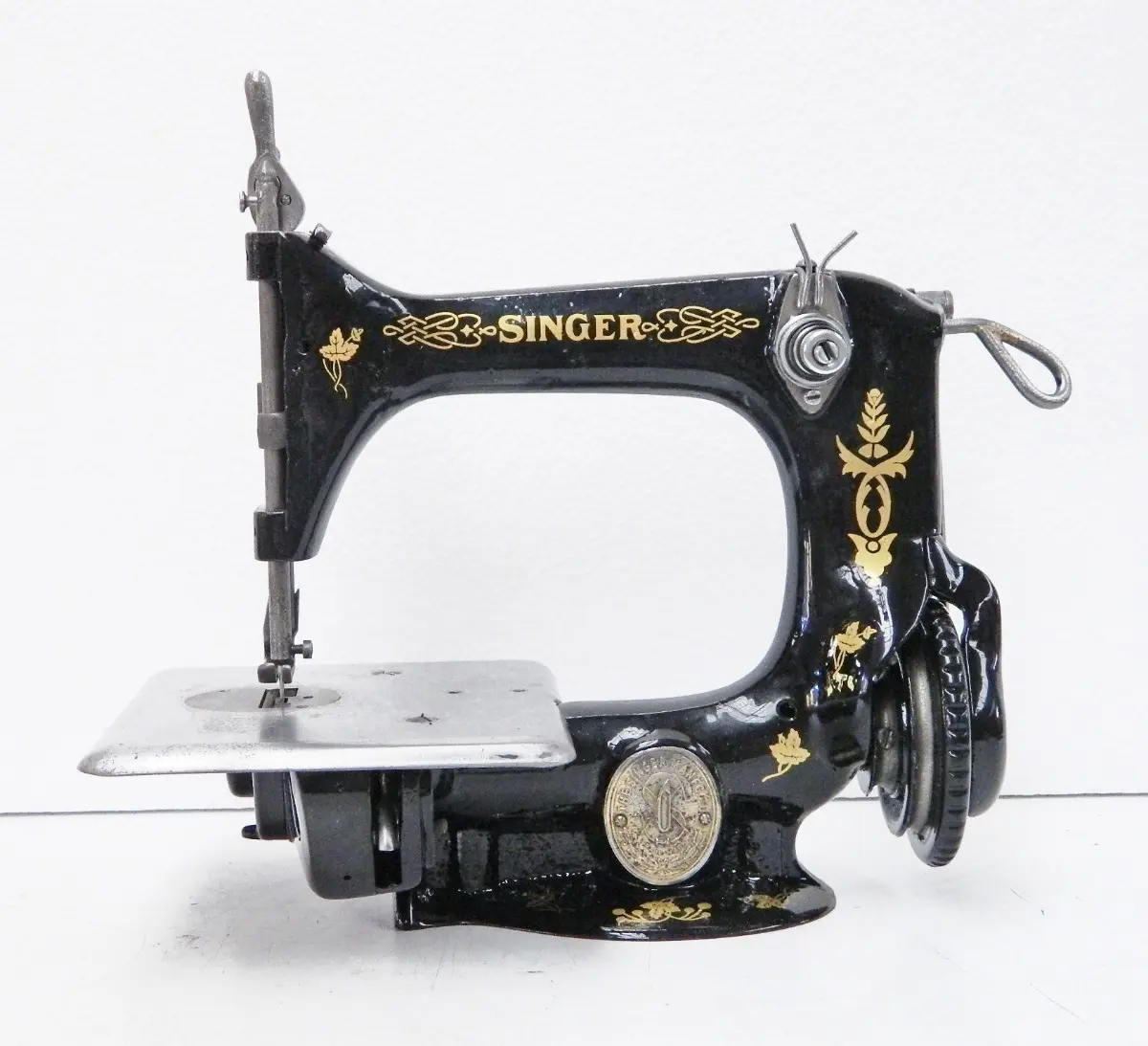
Use recorded from 1920 to 1925
Very similar to the Celtic Knot Variant design in use for class 24, but this decal has denser, more intricate interlacing, with tighter loops and additional internal lines. The motif becomes elongated and more ornate.
Documented machines in this factory
(What does it mean?)Total documented machines: 4
Documented Classes:
- 24
Documented years: 1920 - 1925

Use recorded from 1934 to 1957
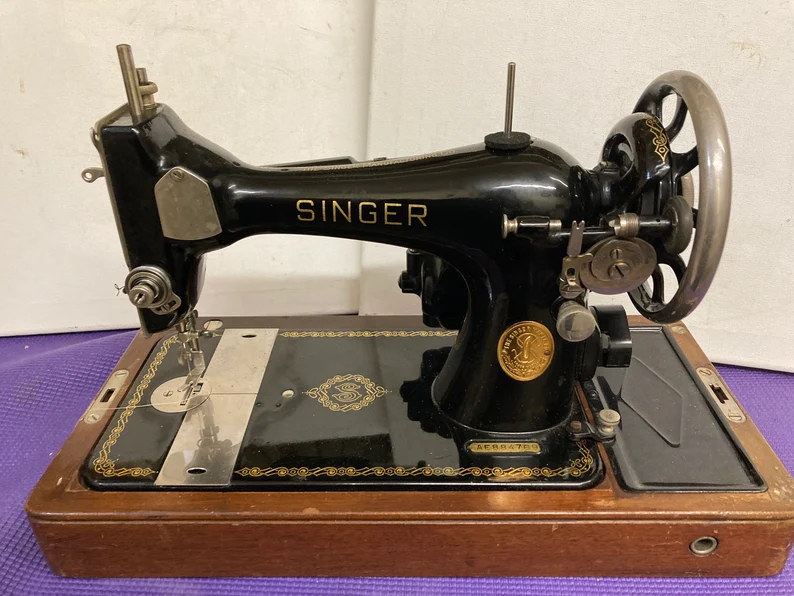
The Celtic Swirl has an "S"-like motive in the middle of the bed, and all the bed is surrounded by swirling motifs. Used on 128-class machines.
Documented machines in this factory
(What does it mean?)Total documented machines: 4
Documented Classes:
- 128
Documented years: 1938 - 1952
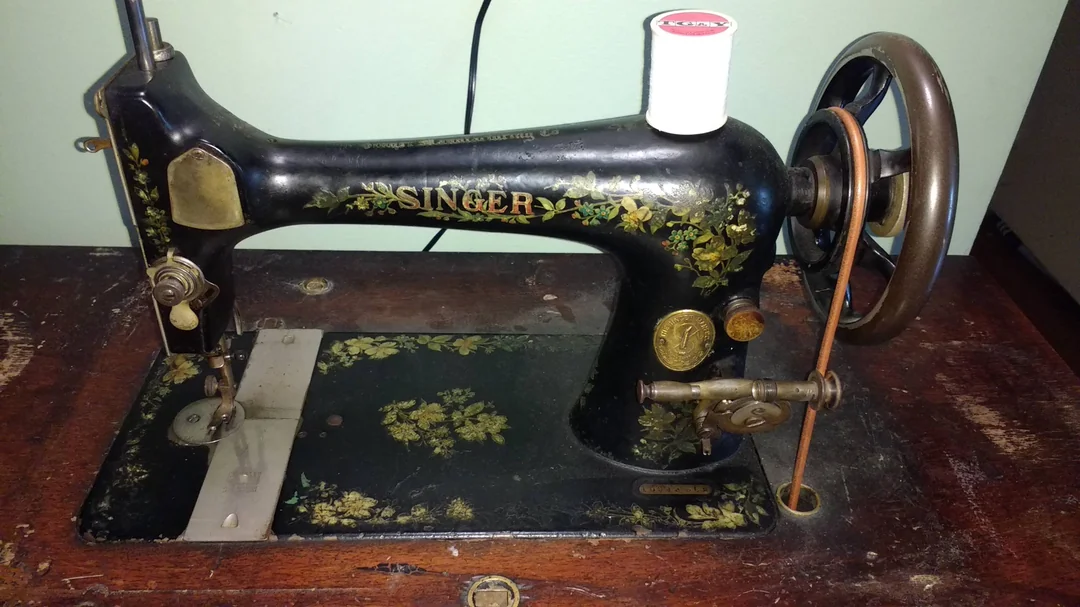
Use recorded from 1890 to 1896
This decal set features delicate white and pinkish dogwood flower motifs, with forget-me-not blue flowers, all rich in colors and shadows.
Documented machines in this factory
(What does it mean?)Total documented machines: 44
Documented Classes:
- 27
- 39
Documented years: 1892 - 1896
Use recorded from 1894
It reminds of the Owl decals, but the bird on the right of the arm is an eagle. It has a wing spread out as to point at the Singer wording.
Documented machines in this factory
(What does it mean?)Total documented machines: 2
Documented Classes:
- 27
Documented years: 1894

Use recorded from 1884 to 1955
While most of the industrial models did not have decals, this one is probably the most common one used on industrial Singer machines. Variations depend largely on the shape of the specific machine. It may feature intricate leaf scrolls or just the ornate monogram "The S.M. Co." ("The Singer Manufacturing Company"). Also the position of each decorative element varies from model to model, due to the particular shapes of certain industrial machines.
Documented machines in this factory
(What does it mean?)Total documented machines: 18
Documented Classes:
- 15
- 16
- 18
- 24
- 29
- 31
- 42
- 77
Documented years: 1894 - 1922

Use recorded from 1953 to 1960
Usually documented for class-99 machines, we found one class-66 machine with this decal set. Name coming from The Needlebar wiki.
Documented machines in this factory
(What does it mean?)Total documented machines: 2
Documented Classes:
- 66
Documented years: 1955

Use recorded from 1955 to 1968
This decal has a repeating geometric trapezoidal border pattern, that goes all around the bed and makes an oval eye in the center.
Documented machines in this factory
(What does it mean?)Total documented machines: 1
Documented Classes:
- 15
Documented years: 1956

Use recorded from 1921 to 1955
This decal is sometimes called also "Triplets". Commonly used on 15-class machines. We recorded also a couple 66-class with these decals, but it could be a later application of decals on an older machine. Those 66 models were manufactured two decades before the patent for the Trefoil decals was filed. We also recorded a few 24-18 machine with Eye and Trefoils decal, produced before the 1931 patent for this decoration was files. It's indeed possible the patent was filed after the set had been used in production batches. Notice that the patents, while not mentioning specific models, seem to picture class 15 machines or similar.
Documented machines in this factory
(What does it mean?)Total documented machines: 37
Documented Classes:
- 15
- 24
- 66
Documented years: 1914 - 1955

Use recorded from 1911 to 1952
The common name of this decal set comes from its fine, lace-like metallic scrollwork designs. It's commonly found on models 66 and 99, but we could also verify a few 15-class machines with those decals, from the factory of Wittemberge (Germany) in particular.
Documented machines in this factory
(What does it mean?)Total documented machines: 34
Documented Classes:
- 15
- 66
- 99
Documented years: 1924 - 1952
Use recorded from 1879 to 1882
Name of this decal comes from the knowleadgeable collector Gary Kleiner
Documented machines in this factory
(What does it mean?)Total documented machines: 4
Documented Classes:
- 12
Documented years: 1879 - 1882

Use recorded from 1885 to 1894
Name coming from The Needlebar wiki.
Documented machines in this factory
(What does it mean?)Total documented machines: 6
Documented Classes:
- 1
- 15
- 27
Documented years: 1885 - 1889

Use recorded from 1883
We have a patent for an ornamentation set featuring sprays of forget-me-nots with "... slender tendrils, various flowers and buds...". This was issued by William Hähnel in 1883. Hähnel was a freelance designer who designed decal sets for Singer, Minnesota, Davis, New Home and other manufacturers.
Name coming from The Needlebar wiki.
Documented machines in this factory
(What does it mean?)Total documented machines: 3
Documented Classes:
- 15
Documented years: 1883

Use recorded from 1881
First photos provided by Selby Sewing Machines. In some well preserved examples, the hand wheel is japaned with mother-of-pearl inlays.
Documented machines in this factory
(What does it mean?)Total documented machines: 4
Documented Classes:
- 12
Documented years: 1881

Use recorded from 1930 to 1953
The so-called "Godzilla finish" is also known as "crinkle" or "wrinkle" finish. Because of the nature of the crinkle paint, the decals are usually fainter than the more common bright golden decals. "Godzilla" models seem to have been manufactured with non-crinkle shiny drive wheels.
Documented machines in this factory
(What does it mean?)Total documented machines: 3
Documented Classes:
- 96
- 241
Documented years: 1930 - 1949

Use recorded from 1924 to 1950
The pattern around the border of the bed features interlacing heart shapes. Two interlaced hearts are also on the front of the machine, surrounding the Singer logo on the arm.
Documented machines in this factory
(What does it mean?)Total documented machines: 1
Documented Classes:
- 127
Documented years: 1937
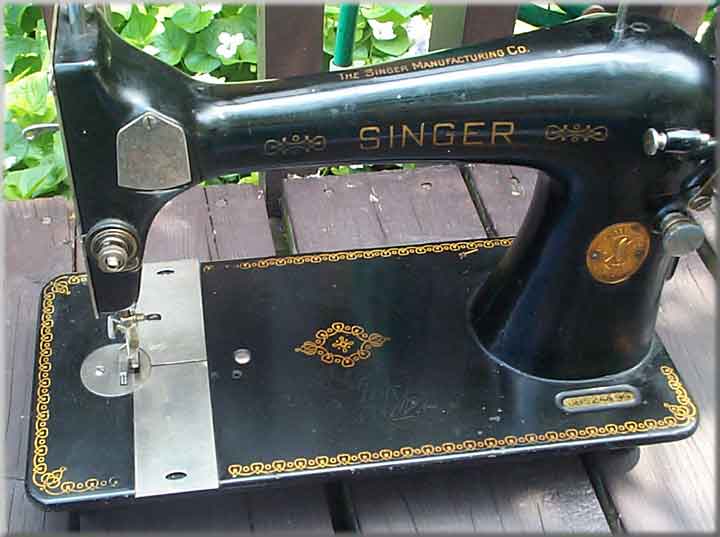
Use recorded from 1940 to 1953
The so-called "Godzilla finish" is also known as "crinkle" or "wrinkle" finish. Because of the nature of the crinkle paint, the decals are usually fainter than the more common bright golden decals. With the "Godzilla" finishes variations, the decoration is applied only in the middle of the bed and on the front of the machine, around Singer logos, no borders around the bed. "Godzilla" models seem to have been manufactured with non-crinkle shiny drive wheels.
Documented machines in this factory
(What does it mean?)Total documented machines: 7
Documented Classes:
- 128
Documented years: 1940 - 1952
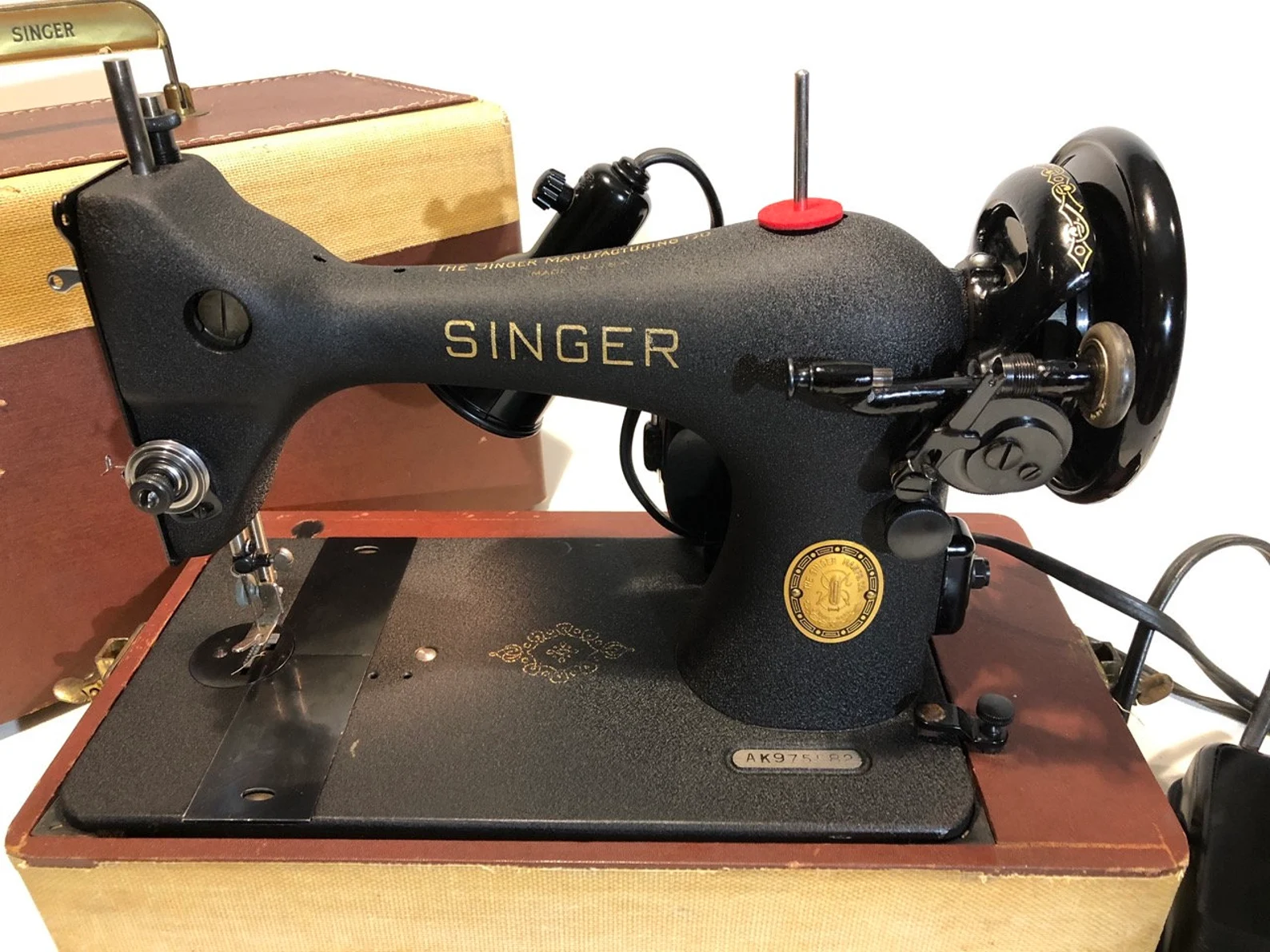
Use recorded from 1920 to 1939
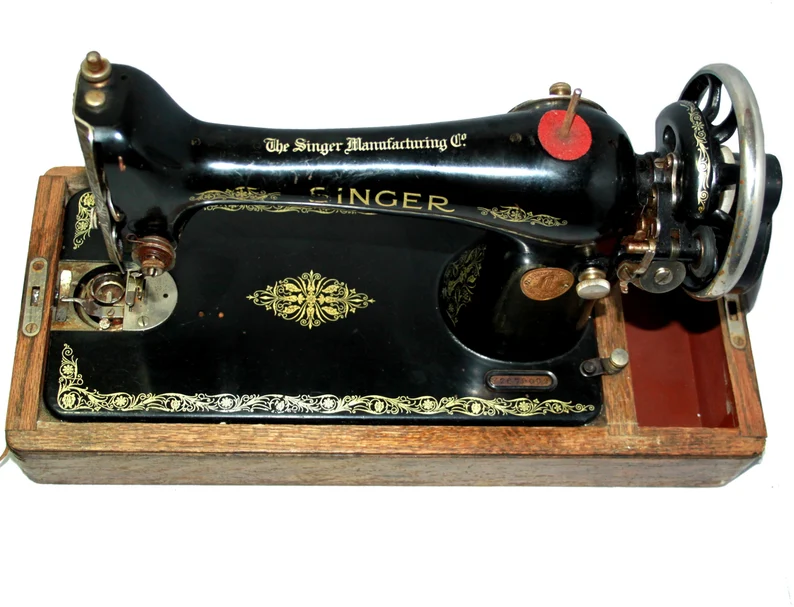
It features repeating small, ornate Celtic knots, inserted in a line framework. The Singer logo on the arm is flanked on both sides by interlocking Celtic-style knotwork. In use in class-101 machines. The official Singer code "101-4" for this decal set likely recalls the class it was used on.
Documented machines in this factory
(What does it mean?)Total documented machines: 15
Documented Classes:
- 101
Documented years: 1920 - 1931

Use recorded from 1902 to 1960
The name means "The Victrix"
Documented machines in this factory
(What does it mean?)Total documented machines: 15
Documented Classes:
- 39
- 128
Documented years: 1902 - 1926

Use recorded from 1871 to 1899
This decal was first recorded on a 24-17 model by Rachael Bhakail.
Documented machines in this factory
(What does it mean?)Total documented machines: 1
Documented Classes:
- 24
Documented years: 1899

Use recorded from 1902 to 1935
This decal set has ornamental gold flower patterns featuring scrollwork, red accents and an Egyptian-inspired design. Intricate, stylized lotus flower artwork is arranged in symmetrical layouts across the bed and pillar. Small pops of red coloring highlighting parts of the flowers and borders. The application for the patent filed by Robert Whyte in 1903 speaks about "comprises a set of several separate and disconnected parts or figures, all representing conventionally in the same general style the Egyptian lotus flower in various stages of development". This patent was filed in the USA, by a designer from Scotland. It's usually found on 66K machines made in Kilbowie (Scotland, UK), but also documented on 66 machines made in Elizabethport (NJ, USA).
Documented machines in this factory
(What does it mean?)Total documented machines: 9
Documented Classes:
- 66
Documented years: 1905 - 1909

This mother-of-pearl decoration set is characterized by mother-of-pearl inserts in the shape of ornate crosses.
Documented machines in this factory
(What does it mean?)Total documented machines: 1
Documented Classes:
- 12
Documented years: 1881

This decoration set features prominent rows of mother-of-pearl oval inlays.
Documented machines in this factory
(What does it mean?)Total documented machines: 1
Documented Classes:
- 12
Documented years: 1877

Use recorded from 1876
Photo courtesy Gary Kleiner
Documented machines in this factory
(What does it mean?)Total documented machines: 1
Documented Classes:
- 12
Documented years: 1876

Use recorded from 1884 to 1913
There are various, distinctly different versions of this design to suit a variety of machines. All of them were designed by George Alfred Squire of Bayonne (New Jersey, USA) in 1884.
In his patent, he describes it as "a main flower resembling a dianthus (carnation), and a smaller flower resembling a buttercup, and interlaced stems bearing buds and slender pointed leaves", without mentioning "Ottoman". This design got its "Ottoman" colloquial designation because of its mix of Islamic and figurative styles.
Documented machines in this factory
(What does it mean?)Total documented machines: 4
Documented Classes:
- 28
- 39
Documented years: 1895 - 1902
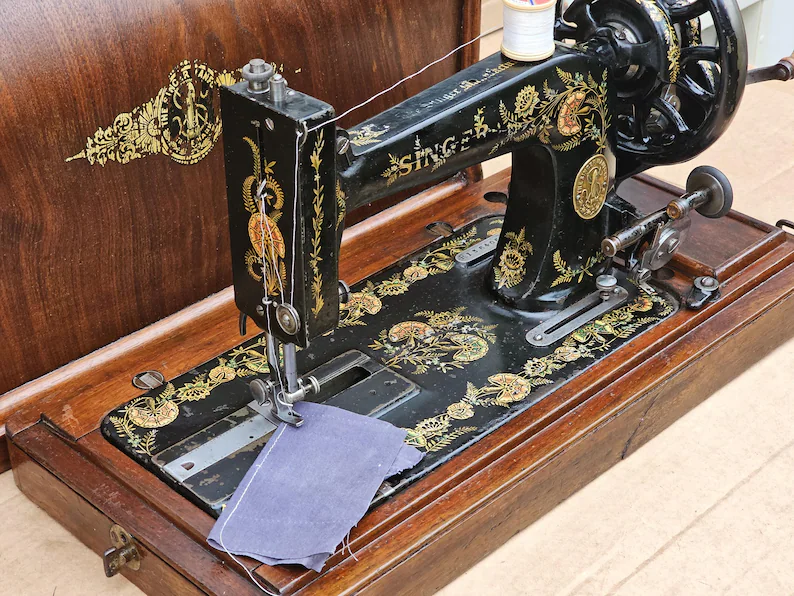
Use recorded from 1891 to 1898
The owl that gives the name to this decal is on the right of the arm.
Documented machines in this factory
(What does it mean?)Total documented machines: 8
Documented Classes:
- 15
- 28
Documented years: 1891 - 1898

Use recorded from 1884
Documented machines in this factory
(What does it mean?)Total documented machines: 4
Documented Classes:
- 15
Documented years: 1888 - 1893
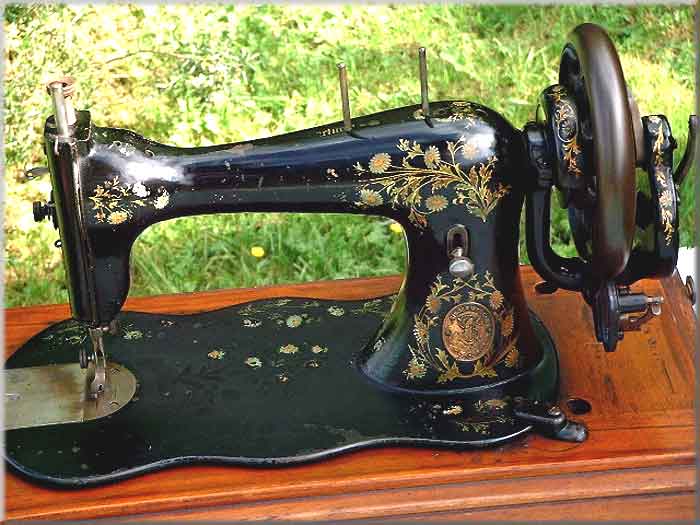
Use recorded from 1883 to 1894
The identification of the exact flowers can be hard, and is easily inaccurate. There were several versions. Sometimes you can find this kind of decal under the name "Apple Blossom", but there's another different flower decal known as "Potentilla / Apple Blossom". This is why we chose to name this style using the more generic denomination. First photo by Selby Sewing Machines
Documented machines in this factory
(What does it mean?)Total documented machines: 15
Documented Classes:
- 15
- 27
Documented years: 1886 - 1894

Use recorded from 1886 to 1906
A variant of many decals with flowers. The identification of the exact flowers can be hard, and is easily inaccurate. There were several versions. The denomination "Potentilla / Apple Blossom" can be mistaken for another decal, known as "Apple Blossom". To try and avoid confusion, we named the second one "Painted Roses and Daisies (Flowers)".
Documented machines in this factory
(What does it mean?)Total documented machines: 6
Documented Classes:
- 15
Documented years: 1886 - 1890

Use recorded from 1934 to 1956
This decal set was also commonly used on refurbished machines of any model, even applied to models that were out of production before the decals were even designed. The bed edge transfers were cut to length to fit variously sized beds.
Documented machines in this factory
(What does it mean?)Total documented machines: 14
Documented Classes:
- 201
Documented years: 1936 - 1952

Use recorded from 1940 to 1953
The Paperclip decal set was also applied to models with the so-called "Godzilla finish", also known as "crinkle" or "wrinkle" finish. In those cases, the decoration is applied only in the middle of the bed and on the front of the machine, around Singer logos, no borders around the bed. Because of the nature of the crinkle paint, the decals are usually fainter than the more common bright golden decals.
Documented machines in this factory
(What does it mean?)Total documented machines: 13
Documented Classes:
- 66
- 99
- 128
Documented years: 1940 - 1952

Use recorded from 1932 to 1934
This design shows a border with a classical geometric pattern, featuring repeating Greek meanders at right-angle turns. This border forms a continuous, interlocking band, while the more common Paperclip decals feature instead smooth, elongated S-curves separated from each other. Seeing the patent from 1932, this might be the original first version of the Paperclip decals
Documented machines in this factory
(What does it mean?)Total documented machines: 2
Documented Classes:
- 201
Documented years: 1932 - 1934
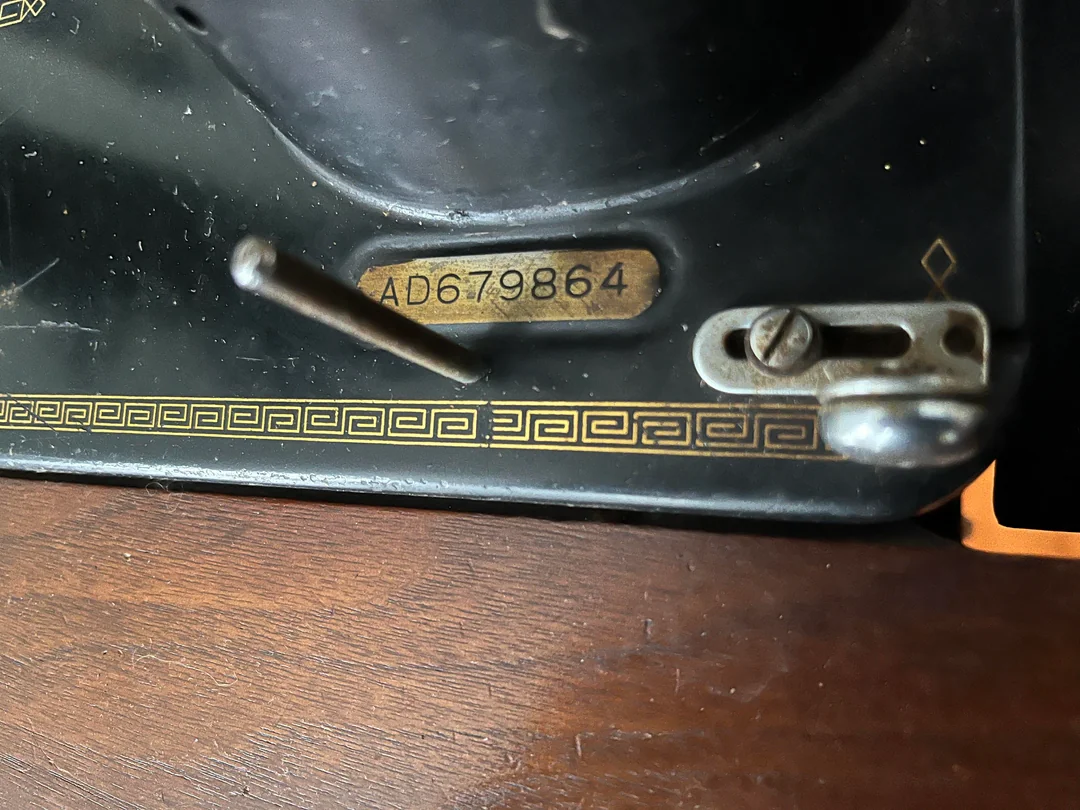
Use recorded from 1879 to 1883
The name of this decal comes from the ISMACS history of the Improved Family model. Here they say that this machine, as it was launched in 1879, was only available as a treadle machine. They also state that it was probably the last Singer machine to be made with 'mother-of-pearl' inlays, like this ornate decoration. Images from The J&P Lowrey Collection
Documented machines in this factory
(What does it mean?)Total documented machines: 1
Documented Classes:
- 15
Documented years: 1883

Use recorded from 1893 to 1903
Documented machines in this factory
(What does it mean?)Total documented machines: 25
Documented Classes:
- 27
Documented years: 1893 - 1900

Use recorded from 1891 to 1910
The name of the decal comes from the images of a pheasant bird: one is featured in the middle of the bed, another on the main body of the machine.
Documented machines in this factory
(What does it mean?)Total documented machines: 58
Documented Classes:
- 15
- 27
Documented years: 1893 - 1910

Use recorded from 1952 to 1961
Documented machines in this factory
(What does it mean?)Total documented machines: 2
Documented Classes:
- 221
Documented years: 1956 - 1957

Use recorded from 1931 to 1960
This decal features simplified motifs designed by William Hopper from Dumbarton (Scotland) and patented in 1931. Since he worked at the Kilbowie plant in Scotland, the most part of the machines with RAF decals come from this plant, but it was used also in other factories. For example, we know of a 191R machine made in Mexico that has RAF decals, but it had no serial number to record it in our database. The center of the bed features a stylized bird in flight combined with geometric or lightning-like lines, resembling a seagull or eagle. The name "RAF" stands for Royal Air Force, a colloquial nickname given by collectors. For many, the central geometric shape in the transfer pattern bears a passing resemblance to the circular roundel insignia used by the British Royal Air Force. No real connection with the Royal Air Force, but the name reference stuck nonetheless. We recorded a machine with RAF decals from 1912, but it seems those decals were re-applied afterwards during a restoration. The first machine with actual original RAF decals comes from 1931.
Documented machines in this factory
(What does it mean?)Total documented machines: 4
Documented Classes:
- 15
Documented years: 1934 - 1938

Use recorded from 1902 to 1925
The "Red Eye" or "Red Head" decal (officially named "Scroll (red)" by Singer) is one of the most iconic. The name comes from its distinctive prominent central eye, and the two"eyes" on the front of the machine, surrounding the Singer wording. It has distinctive red and green scrollwork, more bright and prominent in earlier examples. It's characteristic of class-66 machines: all machines you'll encounter with Red Eye decals, you can be pretty confident they are class 66.
Documented machines in this factory
(What does it mean?)Total documented machines: 50
Documented Classes:
- 66
Documented years: 1910 - 1924

Use recorded from 1900 to 1929
This decal features a delicate arrangement of small, delicate flowers and red berry clusters, giving this decoration its common name. It's found on miniature models, like 24-class and 25-class machines, made in the first decades of the 20th Century.
Documented machines in this factory
(What does it mean?)Total documented machines: 17
Documented Classes:
- 24
- 25
Documented years: 1897 - 1929

Use recorded from 1873 to 1879
Name from The Needlebar Wiki
Documented machines in this factory
(What does it mean?)Total documented machines: 1
Documented Classes:
- 12
Documented years: 1874

Use recorded from 1875 to 1925
There are several variants of this decal set, with various scrolls on the arm and large or small roses on the bedplate. It features intricate, flowing gold filigree and acanthus-style borders along the machine arm and bed. Main characteristics are the roses in the middle of the bed.
Documented machines in this factory
(What does it mean?)Total documented machines: 6
Documented Classes:
- 15
- 27
- 28
Documented years: 1875 - 1904

Use recorded from 1889 to 1893
Documented machines in this factory
(What does it mean?)Total documented machines: 3
Documented Classes:
- 15
- 27
Documented years: 1889 - 1890

Use recorded from 1879
This decal set has several variants, where scrolls on the arm or roses on the bed change slightly from one another. The variant used on industrial models such as the Improved Manufacturing (I.M., class 16) have less intricate scrolls on the arm, that cover less the Singer logo.
Documented machines in this factory
(What does it mean?)Total documented machines: 2
Documented Classes:
- 16
Documented years: 1891

Use recorded from 1886 to 1959
Also called “Egyptian” decals, they first appeared in the 1890’s. They were used on the class 15 and class 27 up to the 1950’s.
Documented machines in this factory
(What does it mean?)Total documented machines: 228
Documented Classes:
- 15
- 27
- 127
Documented years: 1888 - 1930

Use recorded from 1940 to 1957
Based on the Sphinx / Memphis design, in the Indian national colors, with the Indian Star on the bed plate. A few different color variations may appear. The Indian Star decal was an attempt to stimulate the emerging Indian market at the beginning of the 20th century. Entering this market was not easy, though. The main difficulties were overcoming caste prejudice, language differences and limited access to women. The Indian Star machines say 'Singer' in different languages on each point of the star: Onya, Singhalese, Gujarati, Kannada, Hindi, Telugu, Malayalam (or Tamil), Urdu. The Indian Star appears as a variant in several decals, on different models.
Documented machines in this factory
(What does it mean?)Total documented machines: 3
Documented Classes:
- 15
Documented years: 1941

Use recorded from 1871 to 1881
Documented machines in this factory
(What does it mean?)Total documented machines: 1
Documented Classes:
- 12
Documented years: 1881
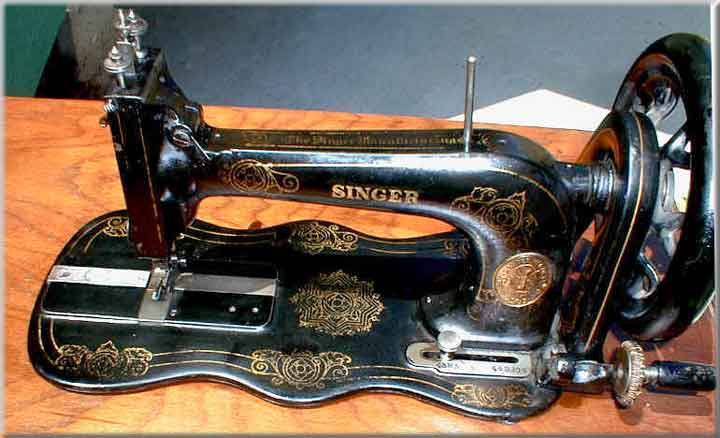
Name of this decal comes from the knowleadgeable collector Gary Kleiner
Documented machines in this factory
(What does it mean?)Total documented machines: 2
Documented Classes:
- 12
Documented years: 1879 - 1881

Use recorded from 1887 to 1890
The name comes from an intricate design that could remind of classic decorative plant motifs on fabric tapestries popular in the Victorian era.
Documented machines in this factory
(What does it mean?)Total documented machines: 7
Documented Classes:
- 28
Documented years: 1888 - 1890

Use recorded from 1887 to 1930
This design is known as Tiffany or Gingerbread. There are two known variants of the Tiffany decal: what changes is the design under the logo metal badge. The earlier style has a triangle-shaped design under the logo badge; the more recent style has a "bird's nest" design below the logo badge, with such badge resting inside the "nest" or slightly raised higher up. No information about when the style changed.
Documented machines in this factory
(What does it mean?)Total documented machines: 85
Documented Classes:
- 15
- 27
- 66
- 115
Documented years: 1894 - 1927

Use recorded from 1885 to 1941
Commonly seen on 28 and 128 models, we also documented class 39 machines with this kind of decoration. In use from the 1880s up to the 1940s.
Documented machines in this factory
(What does it mean?)Total documented machines: 20
Documented Classes:
- 27
- 28
- 39
- 128
Documented years: 1892 - 1924

Use recorded from 1886 to 1892
Documented machines in this factory
(What does it mean?)Total documented machines: 27
Documented Classes:
- 27
Documented years: 1886 - 1892

Use recorded from 1898 to 1908
Recorded by The Needlebar wiki. The Chinese characters in the center of the bed are in Seal Script, a very old and decorative writing style. In traditional Chinese: 福 — fú = good fortune / blessing 禄 — lù = prosperity / wealth / official success 寿 — shòu = longevity 喜 — xǐ = happiness / joy Together, 福禄寿喜 (fú lù shòu xǐ) is an extremely traditional auspicious combination meaning roughly “fortune, prosperity, longevity and happiness.” These characters were applied specifically on machines produced for the Chinese market. These characters were applied specifically on machines produced for the Chinese market.
Documented machines in this factory
(What does it mean?)Total documented machines: 2
Documented Classes:
- 28
- 39
Documented years: 1898 - 1906

Use recorded from 1884
The name of this decal comes from the Selby Sewing Machines, who provided the detailed images and gave the name to this decoration. This decoration has a gold base as opposed to a silver base like most later decals.
Documented machines in this factory
(What does it mean?)Total documented machines: 1
Documented Classes:
- 15
Documented years: 1884

Documented machines in this factory
(What does it mean?)Total documented machines: 1
Documented Classes:
- 28
Documented years: 1891

Share info about your machine
If you happen to own a Singer sewing machine made in Elizabethport, feel free to get in touch and share your machine’s serial number (and photos, if you have them). Each one adds another piece to the puzzle. Please share what you know with the community! Thank you for helping us in this monumental research.
Classes from the Elizabethport-made sewing machines
Here are the classes recorded on machines made in the factory of Elizabethport, with their periods of use and the decals applied. The class is the core mechanism design (the base machine type), while the full model number combines that class with a factory code and a sub-version variant indicating specific features. For example, a model 15K88 is sub-version 88 of class 15, while “K” is the factory location code for Kilbowie.
It’s a cross-reference of the classes we associated to serial numbers in our own database. This may be helpful to date machines when serial records are incomplete.
N°3 (or 3K)
Use recorded from 1856 to 1875
Industrial long arm version of N°2. Reciprocating (extra large) shuttle.

VS1
Use recorded from 1885 to 1886
Fiddlebed shaped machine with vibrating shuttle.
Documented machines in this factory
(What does it mean?)Total documented machines: 1
Documented Decals:
Documented years: 1885

VS2
Use recorded from 1886 to 1892
Fiddlebed shaped machine with vibrating shuttle. Bell-shaped access door cover on the front. Photo courtesy of Selby Sewing Machines. When the base became rectangular, it evolved into class 27.
Documented machines in this factory
(What does it mean?)Total documented machines: 65
Documented Decals:
- Floral (Fiddlebed)
- Painted Roses and Daisies (Flowers)
- Scrolls and Roses
- Scrolls and Roses (Fiddlebed)
- Sphinx (or Memphis)
- Victorian (Fiddlebed)
Documented years: 1886 - 1892
VS3
Use recorded from 1887 to 1893
Fiddlebed shaped machine with vibrating shuttle. Bell-shaped access door cover on the front. Raised circular platform (known as “boss”) cast into the top of the arm, at the base of the spool pin. When the base became rectangular, it evolved into class 28.
Documented machines in this factory
(What does it mean?)Total documented machines: 10
Documented Decals:
Documented years: 1888 - 1891

5
Use recorded from 1914 to 1943
Industrial use, the submodels differ greatly one from the other. All variants have adjustable driven feed-rolls.
6
Use recorded from 1902 to 1964
Industrial machines for heavy work in cloth, leather or paper.
7
Use recorded from 1885 to 1968
Industrial machines with large long-beak shuttle and powerful mechanism for the strong lock-stitching of heavy fabrics.
Documented machines in this factory
(What does it mean?)Total documented machines: 2
Documented years: 1885 - 1902

8
Use recorded from 1914 to 1953
Very large lock-stitch machine with two needles and two oscillating shuttles. For industrial use for sewing canvas belts.
9
Use recorded from 1911
Large industrial machine for sewing two parallel rows on heavy and wide canvas or rubber belts.
10
Use recorded from 1914 to 1947
Industrial cylinder bed oscillating shuttle machines. For harness and heavy leather, or for binding mats edges with rope binding.
11
Use recorded from 1914 to 1956
Industrial cylinder bed of unusual length. Oscillating shuttle machines. For stitching heavy tubular work like mail bags or coal bags or other long cylindrical articles, for overseaming or zigzag stitching on canvas, leather and heavy goods.
Documented machines in this factory
(What does it mean?)Total documented machines: 1
Documented years: 1917

12
Use recorded from 1865
The Singer "New Family", introduced in 1865 and soon sold in the UK, was later renamed Singer 12. Early models, with their distinctive "fiddlebed" shape, used a transverse boat-shaped shuttle and round-shank "Class 12x1" needles. Later models had a rectangular base. From 1870 it was available for semi-industrial use with a longer arm, as the class 13. There are many industrial variants, like the 12K Industrial Free Arm.
Documented machines in this factory
(What does it mean?)Total documented machines: 22
Documented Decals:
- Acanthus Leaves Mother-of-Pearl
- Fire Department
- Gilt and Mother-of-Pearl
- Mother-of-Pearl Crosses
- Mother-of-Pearl Ovals
- Mother-of-Pearl Variant #3
- Roses and Scrolls
- Star
- Swirl
Documented years: 1873 - 1886

15
Use recorded from 1879 to 1963
Successor to the "New Family", was the "Improved Family", which was given the class 15 designation. Originally patented by Singer engineer P. Diehl in 1878 (UK patent 2813, 13th July 1878), the 'Improved Family' was launched in 1879 as a treadle machine, lock stitch oscillating shuttle. It has the tension on the face plate. By the 1890s the name 'Improved Family' had been dropped and replaced by "Class 15". In the same period, the had received a serious upgrade. It had the most common domestic variant and also several industrial variants.
Documented machines in this factory
(What does it mean?)Total documented machines: 123
Documented Decals:
- Early 20th Century Industrial
- Eye and Trapezoids
- Eye and Trefoils
- Filigree
- Floral (Fiddlebed)
- Floral Variant (Forget-me-not)
- Owl
- Painted Daisies
- Painted Roses and Daisies (Flowers)
- Painted Roses and Daisies Variant (Potentilla / Apple Blossom)
- Pearled
- Pheasant
- RAF
- Scrolls and Roses
- Scrolls and Roses (Fiddlebed)
- Sphinx (or Memphis)
- Sphinx Variant (Indian Star)
- Tiffany (or Gingerbread)
- Wild Rose
Documented years: 1875 - 1956

16
Use recorded from 1887 to 1963
Successor to the "Improved Family" or class 15, was the "Improved Manufacturing", which was given the class 16 designation. The arm is longer than the "Improved Family", with more room for sewing. Lock stitch oscillating shuttle, it generally came with knee lifter. Industrial use, for clothing and heavier work in woven fabrics, shoes and other leatherwork.
Documented machines in this factory
(What does it mean?)Total documented machines: 10
Documented Decals:
Documented years: 1887 - 1952

17
Use recorded from 1894 to 1966
Long beak shuttle and cylinder bed. Industrial machines for shoes and irregularly shaped leather articles.
Documented machines in this factory
(What does it mean?)Total documented machines: 1
Documented years: 1908

18
Use recorded from 1900 to 1967
Industrial cylinder bed machine. Lock stitch, drop feed. Optional flat work plate. Long beak oscillating shuttle. Designed for vamping shoes. For light and medium weight leather.
Documented machines in this factory
(What does it mean?)Total documented machines: 4
Documented Decals:
Documented years: 1907 - 1928

19
Use recorded from 1900 to 1954
Industrial machine for working eyelets or ornaments in textiles and leather. Cylinder bed, rotary long beak hook, rotating ball bearing feed and presser foot.

20
Use recorded from 1917
Class recorded in G-series serial numbers, in a batch of 500 machines. No other info, at the moment, on the specifics of this class. Not to be mistaken for the SewHandy Toy machines, which did not have serial numbers.
22
Use recorded from 1885 to 1930
Industrial machine for stitching eyelets.
23
Use recorded from 1900 to 1942
Industrial buttonholer. Variants for leather and for cloth.

24
Use recorded from 1871 to 1960
Industrial and domestic single-thread portable chain stitch machines.
Documented machines in this factory
(What does it mean?)Total documented machines: 27
Documented Decals:
- Celtic Knot and Leaves
- Celtic Knot Elaborate Variant
- Early 20th Century Industrial
- Eye and Trefoils
- Leaf Scrolls
- Redberry
Documented years: 1897 - 1945

25
Use recorded from 1900 to 1953
Mostly cylinder bed, industrial single-thread chain stitch machines.
Documented machines in this factory
(What does it mean?)Total documented machines: 4
Documented Decals:
Documented years: 1900 - 1921

26
Use recorded from 1905 to 1930
Two separate sewing machines coupled together to work in unison. Industrial use for making bags.

27
Use recorded from 1889 to 1933
Evolution of the VS2. Vibrating shuttle, rectangular bed, low bobbin winder.
Documented machines in this factory
(What does it mean?)Total documented machines: 369
Documented Decals:
- Dogwood
- Eagle
- Painted Roses and Daisies (Flowers)
- Persian
- Pheasant
- Sphinx (or Memphis)
- Tiffany (or Gingerbread)
- Victorian
Documented years: 1891 - 1922

28
Use recorded from 1889 to 1941
Evolution of the VS3. Vibrating shuttle, rectangular bed. Similar to the Class 27 but with 3/4-size bed. The 28 has a "bump" under the bell-shaped access door, that the 27 does not have.
Documented machines in this factory
(What does it mean?)Total documented machines: 18
Documented Decals:
Documented years: 1890 - 1918
29
Use recorded from 1877 to 1964
Universal feed arm for leather stitching. A range of machines commonly used by shoemakers and leatherworkers for their versatility, in particular for repairing boots and shoes. Many shoemakers use them still today. There is no under-feed, but the machine has a simple and effective top-feed mechanism, which is arranged to carry the work in any direction the operator needs. The progenitor of the class 29 was the U.F.A., "Universal Feed Arm"
Documented machines in this factory
(What does it mean?)Total documented machines: 8
Documented Decals:
Documented years: 1898 - 1922

31
Use recorded from 1900 to 1958
Industrial machine for tailors and manufacturers handling large quantities of material in irregular form. For cloth, leather, coated fabrics, etc. Lock stitch oscillating shuttle.
Documented machines in this factory
(What does it mean?)Total documented machines: 11
Documented Decals:
Documented years: 1903 - 1952

32
Use recorded from 1898 to 1952
Industrial vibrating needle oscillating shuttle machines. For overseaming or zigzag lock stitching and plain straightaway seaming in fabrics and light weight leather. Used in the manufacture of clothing, hats, suspenders, hosiery, knit goods, underwear, shirt collars, carpets, gloves, shoes, window shades, etc.
Documented machines in this factory
(What does it mean?)Total documented machines: 1
Documented years: 1898

34
Use recorded from 1892 to 1965
Industrial machines for stitching hollow objects or hard-to-reach convex places. Raised "post" bed, roller presser and drop feed.

35
Use recorded from 1900 to 1969
Two thread chain stitch industrial machines for stitching carpets. You hold it by the handle on the side and operate it by cranking the lever on the other side of the flywheel, to stitch two rolls of carpet together.

36
Use recorded from 1900 to 1932
Industrial machine for seaming carpets and rugs.

38
Use recorded from 1909
Allotted in a batch of 30000 in 1909. Nothing more is known about this class.
39
Use recorded from 1894 to 1910
Drop-feed vibrating shuttle for domestic use.
Documented machines in this factory
(What does it mean?)Total documented machines: 25
Documented Decals:
- Bunch of flowers
- Burmese Scroll
- Dogwood
- La Vencedora
- Ottoman Carnation
- Victorian
- Victorian Variant (Chinese)
Documented years: 1894 - 1909
41
Use recorded from 1900 to 1953
Industrial machines with multiple needles, for making from two to twelve parallel rows of stitching simultaneously.
42
Use recorded from 1900 to 1953
Industrial machines for stitching medium weight leather and the heavier woven fabrics. Used in the manufacture of leather cushions, curtains, etc. for automobiles, tarpaulins, sword belts, wagon covers, etc.
Documented machines in this factory
(What does it mean?)Total documented machines: 1
Documented Decals:
Documented years: 1918

43
Use recorded from 1901 to 1956
Industrial machines with cylinder bed, central bobbin. Extra large shuttle for coarse thread and heavy work.
Documented machines in this factory
(What does it mean?)Total documented machines: 1
Documented years: 1930

44
Use recorded from 1898 to 1955
Industrial short arm lock stitch machines, for light and medium weight cloth and leather.
Documented machines in this factory
(What does it mean?)Total documented machines: 2
Documented years: 1900 - 1946

49
Use recorded from 1902 to 1958
Industrial "kilting" machines.
50
Use recorded from 1912
Allotted in a batch of 600 in 1912. Nothing more is known about this class.
51
Use recorded from 1900 to 1967
High speed industrial machines for for barring and tacking on leather or cloth.
52
Use recorded from 1900 to 1965
Industrial single thread chain stitch machines, for rows of parallel stitching.
Documented machines in this factory
(What does it mean?)Total documented machines: 1
Documented years: 1937

53
Use recorded from 1901 to 1942
Industrial one needle, oscillating hook, single thread chain stitch machines.

54
Use recorded from 1901 to 1902
Allotted in two batches: one batch of 110 machines in 1901 and one batch of 125 machines in 1902. Nothing more is known about this class.
55
Use recorded from 1900 to 1956
Industrial two thread and single thread chain stitch machines for bag stitching and basting clothing.

56
Use recorded from 1900 to 1930
Industrial under edge trimmers.
57
Use recorded from 1900 to 1930
Industrial clothing machines.
58
Use recorded from 1904 to 1940
Industrial buttonholers.

59
Use recorded from 1900 to 1912
Industrial machines for binding hat bands and the brims of stiff felt hats. The machine has no bed with all sewing mechanism located in the arm and head of the machine.

62
Use recorded from 1901 to 1939
Industrial two-thread chain stitch machines.

63
Use recorded from 1900 to 1938
Series of industrial machines for various purposes. Work plate extends beyond the presser foot on right hand side.
64
Use recorded from 1901 to 1903
Lock stitch high speed machines, for general work on light and medium weight fabrics.
65
Industrial machines for for tubular work.

66
Use recorded from 1899 to 1956
Heavy duty domestic sewing machines, low shank and oscillating hook. Full sized machines, while the Class 99 is 3/4 sized.
Documented machines in this factory
(What does it mean?)Total documented machines: 94
Documented Decals:
- Eye
- Eye and Trefoils
- Filigree
- Lotus (or Egyptian)
- Paperclip Godzilla Finish
- Red Eye
- Tiffany (or Gingerbread)
Documented years: 1905 - 1955

67
Use recorded from 1915 to 1930
Industrial longarm machines built for heavy-duty tasks like stitching carriage dashes, leather and vehicle fenders.

68
Use recorded from 1903 to 1960
Industrial flat bed, lock stitch, oscillating shuttle machines. For barring and tacking.

69
Use recorded from 1907 to 1958
Industrial lock stitch oscillating shuttle machines. Automatic thread cutter.

71
Industrial buttonholer machines. Designed for automatically making straight buttonholes, with the purl or whip stitch, and with or without barred ends according to the description of each specific model (except 71-47).
72
A group of industrial machines. We know of the 72W19 for two-needle hemstitching, or the 72W12 double-needle for vamping and shoe work. Serial number records for Elizabethport register 106 72-class machines.

73
Use recorded from 1903
Industrial post bed machines. Serial number records register only one batch of 6 machines allotted in 1903.
75
Use recorded from 1903 to 1923
Industrial two thread chain stitch machines for overedging and trimming.

76
Use recorded from 1904 to 1924
Industrial gathering machines.
77
Use recorded from 1904 to 1911
Industrial machines for sewing on shoe buttons.
Documented machines in this factory
(What does it mean?)Total documented machines: 1
Documented Decals:
Documented years: 1908

78
Use recorded from 1910 to 1960
Industrial lock-stitch machines for strapping and tacking.
Documented machines in this factory
(What does it mean?)Total documented machines: 1
Documented years: 1915

79
Use recorded from 1912
Industrial machines for strapping and tacking. Allotted in one batch of 100 machines in 1912.

81
Use recorded from 1907 to 1964
Industrial machines for overedging.
Documented machines in this factory
(What does it mean?)Total documented machines: 1
Documented years: 1950

82
Use recorded from 1906 to 1965
Industrial glove-makers machines, two-thread chain stitch.

83
Use recorded from 1910
Allotted in a batch of 7 machines in 1910. Nothing more is known about this class.
84
Use recorded from 1906 to 1912
Industrial buttonhole machines, for making straight buttonholes, barred on both ends.
85
Use recorded from 1910 to 1938
Industrial machines for overedging thick fabrics.

86
Use recorded from 1912 to 1925
Industrial cylinder bed machines.
88
Use recorded from 1906 to 1910
Industrial machines.
89
Use recorded from 1909 to 1910
Allotted in two batches of 200 machines in 1909 and 400 machines in 1910. Nothing more is known about this class.
91
Use recorded from 1915 to 1964
Industrial pique stitch machines for glovework.

92
Use recorded from 1911 to 1942
Single or two thread chain stitch industrial machines for bag making.
Documented machines in this factory
(What does it mean?)Total documented machines: 1
Documented years: 1912

93
Use recorded from 1911
Allotted in 1911 in two batches, for a total of 100 machines. Nothing more is known about this class.
94
Use recorded from 1912 to 1918
Industrial glovemaking machines.
95
Use recorded from 1911 to 1958
Shorter version of Class 96. For light and medium weight general clothing manufacture.
Documented machines in this factory
(What does it mean?)Total documented machines: 5
Documented years: 1922 - 1934

96
Use recorded from 1911 to 1959
Industrial rotating hook machines. Longer version of Class 95.
Documented machines in this factory
(What does it mean?)Total documented machines: 4
Documented Decals:
Documented years: 1918 - 1938

97
Use recorded from 1911 to 1962
Industrial cylinder bed lock stitch machines. For heavy work in leather. Used for parachute harnesses and other harnesses.

98
Use recorded from 1915 to 1920
Industrial cylinder bed for sewing treads on used automobile tyres, making firm lockstitches.

99
Use recorded from 1911 to 1963
3/4 size of the class 66. Lock stitch low shank and oscillating hook.
Documented machines in this factory
(What does it mean?)Total documented machines: 18
Documented Decals:
Documented years: 1924 - 1941

101
Use recorded from 1920 to 1932
Domestic lock stitch machines with built-in motor. Has a "sew light" behind the arm.
Documented machines in this factory
(What does it mean?)Total documented machines: 77
Documented Decals:
Documented years: 1920 - 1931
103
Use recorded from 1912 to 1958
Industrial high speed lock stitch machines, with rotating hook, fitted for for electric or foot power.

104
Use recorded from 1914 to 1917
Industrial machines with direct current motor. 300 machines allotted in serial number records.
105
Use recorded from 1914 to 1955
Industrial two-thread chain stitch machines for gloves, knits and rayon.
Documented machines in this factory
(What does it mean?)Total documented machines: 1
Documented years: 1925

106
Use recorded from 1914 to 1951
Industrial two-thread multiple needles chain stitch machines. For simultaneously stitching parallel rows in cloth.
107
Use recorded from 1914 to 1962
Industrial single thread chain stitch machines with cylinder bed. For hats, coat sleeves.

108W
Use recorded from 1914 to 1968
Industrial lock stitch machines with unison feed. It's not clear if there are differences between the 108W and 108K for lack of documentation and surviving machines.

109
Use recorded from 1913 to 1951
Industrial two-thread chain stitch machines with multiple needles.
110
Use recorded from 1914 to 1968
Industrial machines fitted with continuous wheel feed for leather work.

111
Use recorded from 1942 to 1959
Single needle industrial lock stitch machines. For stitching medium and heavy fabrics, canvas, leather. After a small batch of 25 machines in 1915, serial number allotments resume in 1942.

112
Use recorded from 1915 to 1931
Industrial machines to make straw hats.
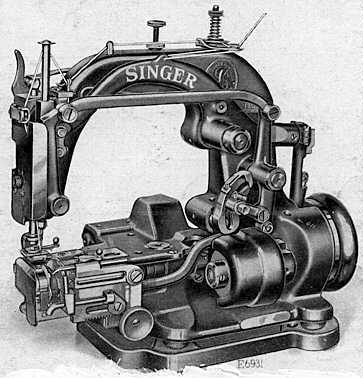
113
Use recorded from 1915
Allotted in a batch of 25 machines in 1915. Nothing more is known about this class.
114
Use recorded from 1915 to 1970
Industrial single thread chain stitch machines with cylinder bed. For automatically sewing on flat buttons and for tacking paper tickets on clothing.
Documented machines in this factory
(What does it mean?)Total documented machines: 1
Documented years: 1969

115
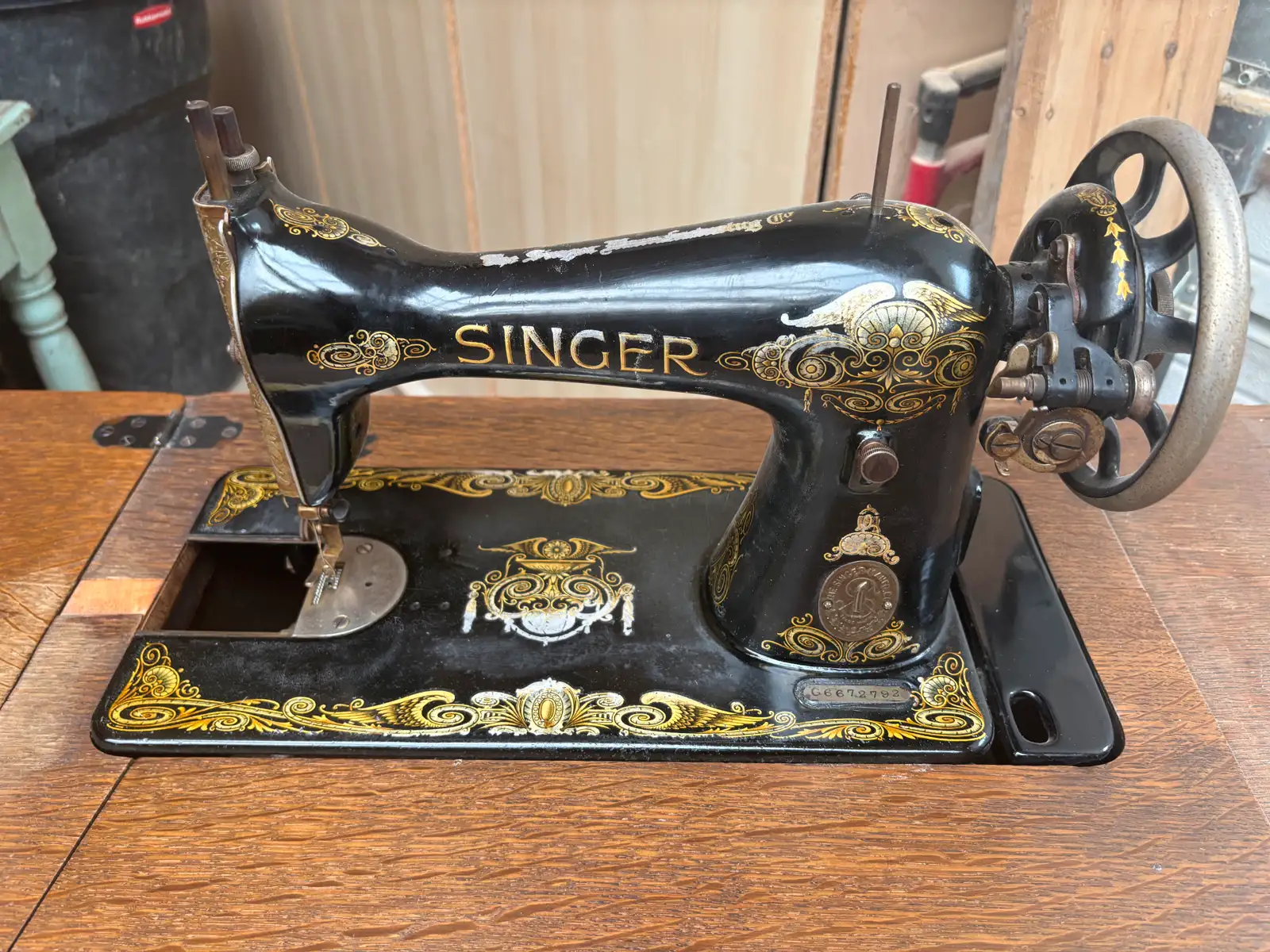
Use recorded from 1887 to 1936
Class 115 machines were clearly based on the 9W7 design, retaining its rotary-hook mechanism, but they also incorporated several features borrowed from Class 15. Class 15 and 115 may look very alike. Class 15 features two small holes for oiling in the machine bed near the needle plate, while Class 115 has instead three deck holes on top (including one for an under-deck coil spring) and a single rocker bar underneath. They used a Class "L" bobbin case designed for the industrial-style 20U bobbins. Class 115 machines were typically decorated with either the distinctive “Gold Wings” decals or the “Tiffany” decals.
Documented machines in this factory
(What does it mean?)Total documented machines: 5
Documented Decals:
Documented years: 1898 - 1920
116
Use recorded from 1916 to 1949
Industrial machines
117
Use recorded from 1916 to 1930
Industrial machines for stitching straw hats with a concealed single thread chain stitch.

119
Use recorded from 1917 to 1968
Industrial cylinder bed single needle lock stitch machines. For light and medium weight leather and fabrics.

120
Use recorded from 1917
Allotted in a batch of 100 machines in 1917. Nothing more is known about this class.
121
Use recorded from 1917
Allotted in a batch of 250 machines in 1917. Nothing more is known about this class.
122
Use recorded from 1917 to 1944
Industrial machines for joining press cloths made of camel's hair for straining cottonseed oil.

123
Use recorded from 1917 to 1922
Industrial machines for sewing canvas and rubber belting. Two needles, two cylinder shuttles.
124
Use recorded from 1917 to 1952
Single or two thread chain stitch industrial machines for heavy bag work.

125
Use recorded from 1919 to 1931
Industrial machines for stitiching two or four hole buttons.

127
Use recorded from 1910 to 1961
Full size bed, improved version of the class 27. Domestic vibrating-shuttle lock stitch machines. Rectangular bed, high bobbin winder. Bell-shaped access door cover on the front.
Documented machines in this factory
(What does it mean?)Total documented machines: 31
Documented Decals:
Documented years: 1910 - 1937

128
Use recorded from 1912 to 1962
3/4 size bed, improved version of the class 28. Domestic vibrating-shuttle lock stitch machines. Rectangular bed, high bobbin winder. Bell-shaped access door cover on the front.
Documented machines in this factory
(What does it mean?)Total documented machines: 28
Documented Decals:
Documented years: 1919 - 1952

144
Use recorded from 1960 to 1967
Industrial machines
145W
Use recorded from 1943 to 1966
Industrial machines.

146
Use recorded from 1921 to 1966
Industrial two-thread chain stitch machines. For closing filled bags.

147
Use recorded from 1923 to 1965
Industrial two-thread chain stitch machines for various purposes.

148
Use recorded from 1924 to 1961
Industrial cylinder bed two-thread chain stitch machines.

149
Use recorded from 1924 to 1951
Industrial machines
151
Use recorded from 1924 to 1968
Industrial three-thread chain stitch machines.

152
Use recorded from 1931 to 1970
Industrial two-needle two-loopers two-thread chain stitch machines.

155
Use recorded from 1926 to 1927
Industrial machines.

156
Use recorded from 1929 to 1940
Allotted in two distant batches: a batch of 100 machines in 1929, and a batch of 100 machines in 1940. Nothing more is known about this class.
157
Use recorded from 1931 to 1961
Industrial machines for making bags, with automated oiling system.

159
Use recorded from 1931 to 1965
Industrial machines for overedging heavy burlap bags.

171
Use recorded from 1941 to 1948
Allotted in three batches between 1941 and 1948. Nothing more is known about this class.
175
Use recorded from 1934 to 1970
Industrial single thread chain stitch machines.
Documented machines in this factory
(What does it mean?)Total documented machines: 1
Documented years: 1934

176
Use recorded from 1934 to 1960
Industrial single thread overseas stitch machines. For fur work, slipper and glove work

177
Use recorded from 1934
Industrial lock stitch machines for darning and mending, designed for repairing holes and tears in textiles. Cylinder bed.

178
Use recorded from 1937 to 1961
Industrial single thread chain stitch machines for sewing on buttons.
Documented machines in this factory
(What does it mean?)Total documented machines: 1
Documented years: 1942

185
Use recorded from 1954 to 1962
Domestic machines, revised electric version of the Class 99. 3/4 sized, usually tan/brown or green in color. In 1963, this class was replaced by Class 285, that looked almost identical, except for a different underbed mechanism.

189
Use recorded from 1958
Domestic heavy duty machines. We know of a single machine allotted in 1961 in Elizabethport, then we documented a few machines from South American Singer factories.
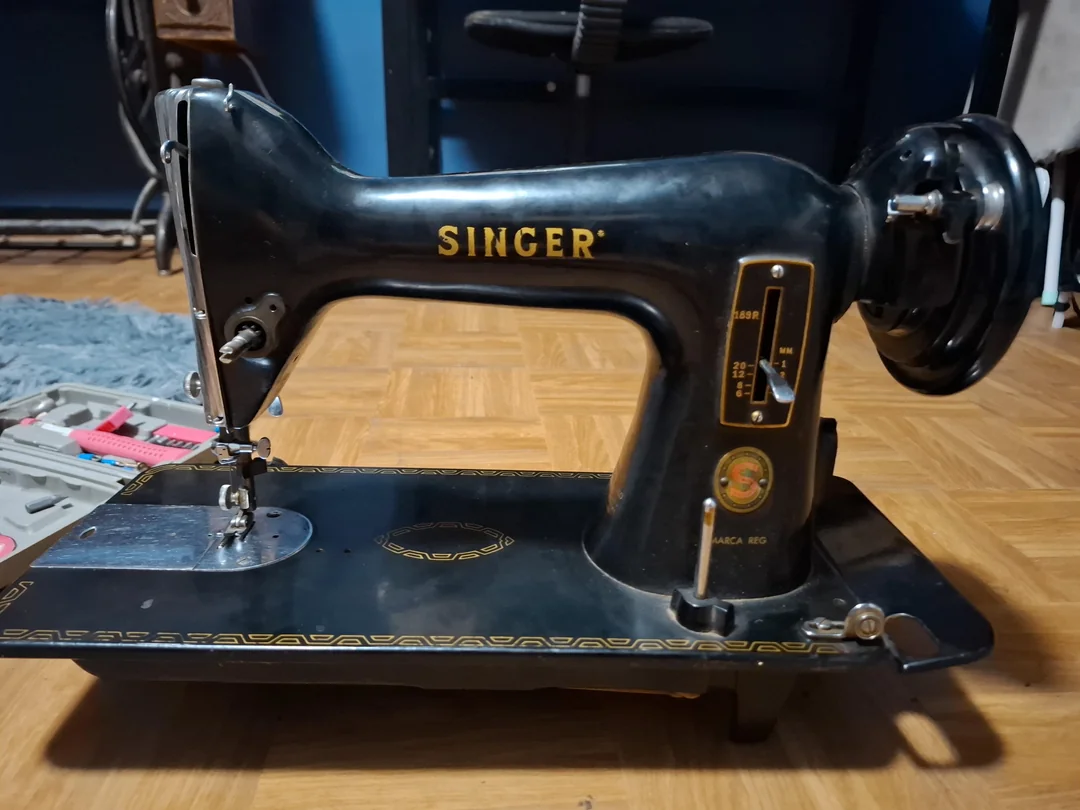
193
Use recorded from 1960
Domestic vertical oscillating hook machines. One allotment only is known: 5 machines from 1960.
201
Use recorded from 1932 to 1961
Domestic horizontal rotary hook machines.
Documented machines in this factory
(What does it mean?)Total documented machines: 17
Documented Decals:
Documented years: 1932 - 1952

221 "Featherweight"
Use recorded from 1933 to 1969
Known as the "Featherweight". Very light weight 1/2 size straight stitch low shank machines in carrying case. Has an external motor and vertical rotary hook. The bed is not removable, as in the Class 222. Can be black (with or without decals) or colored (tan, pale turquoise, white...). Featherweight serial numbers can be usually found on the bottom of the machine, next to the bottom tray. A few of the early AD-series machines have their serial inside and underneath the bottom tray.
Documented machines in this factory
(What does it mean?)Total documented machines: 22
Documented Decals:
Documented years: 1934 - 1957

225
Use recorded from 1960
Allotted in a batch of 5 machines in 1960. Nothing more is known about this class.
226
Use recorded from 1960 to 1961
Allotted in two batches, one of 5 machines in 1960, and one of 10 machines in 1961. Nothing more is known about this class.
231
Use recorded from 1935 to 1960
Industrial feed-off-the-arm two needles, two loopers, two thread chain stitch machines.

241
Use recorded from 1939 to 1951
Industrial high speed, single needle, lock stitch machines with automatic lubricating system.
Documented machines in this factory
(What does it mean?)Total documented machines: 7
Documented Decals:
Documented years: 1940 - 1950
242
Use recorded from 1940 to 1955
Industrial two or three-thread overedge stitch machines.

245
Use recorded from 1940 to 1951
Industrial single needle lock stitch machines.

246
Use recorded from 1946 to 1964
Industrial machines for trimming and overedging.

247
Use recorded from 1947 to 1952
Industrial machines for making top and bottom covering stitch.

248
Use recorded from 1946 to 1952
Industrial machines for bonding thermoplastics.

249
Use recorded from 1946
Allotted in two batches of 25 machines each, in 1946. Nothing more is known about this class.
251
Use recorded from 1952 to 1964
Industrial high speed, single needle, lock stitch machines with automatic lubricating system.

253
Use recorded from 1948 to 1960
Industrial high speed, drop feed, one needle, single looper, two thread chain stitch machines.

256
Use recorded from 1961 to 1970
Industrial automatic sequential buttonholer.

261
Use recorded from 1960 to 1971
Industrial high speed, drop feed, feed-off-the-arm, two thread chain stitch machines. For lap seam felling on medium-heavy to heavy weight materials.
262
Use recorded from 1961 to 1965
Industrial high speed, drop feed, chain stitch machines with automatic lubrication.
269
Use recorded from 1960 to 1969
Industrial machines for barring, tacking and button sewing.

270
Use recorded from 1961 to 1970
Industrial single needle, single thread, lock stitch machines. Rotary hook, cylinder bed. For barring, tacking and button sewing.
281
Use recorded from 1953 to 1970
Industrial high speed, single needle lock stitch machines, with automatic lubrication. For lightweight to medium-heavy weight fabrics.
Documented machines in this factory
(What does it mean?)Total documented machines: 1
Documented years: 1964

286
Use recorded from 1955
Allotted in only one batch of 10 machines in 1955. Nothing more is known about this class.
300
Use recorded from 1957 to 1970
Domestic machines.
300W
Use recorded from 1960 to 1969
Industrial machines, one needle and one looper for a single row of two-thread chain stitching, or two or more needles and corresponding number of loopers for two or more parallel rows of stitching. For medium to heavy weight materials.
301
Use recorded from 1951 to 1957
Domestic machines, the first slant needle model made by Singer. Part of the "Slant-o-matic" family. The most comprehensive information about Class 301 is available at Singer301.com

302
Use recorded from 1960 to 1971
Industrial machines
328
Use recorded from 1960 to 1965
Domestic zig-zag horizontal oscillating hook machines of the "Style-Mate" family.

329
Use recorded from 1957 to 1964
Domestic zig-zag horizontal oscillating hook machines of the "Style-Mate" family.

330
Use recorded from 1957
One known allotment of 6 machines from 1957. Nothing more is known about this class.
401
Use recorded from 1957 to 1961
Domestic slant needle, zig-zag machines, part of the "Slant-o-matic" family.

404
Use recorded from 1958 to 1963
Domestic slant needle, zig-zag machines, part of the "Slant-o-matic" family.

452
Industrial machines. One machine only allotted in 1961. Nothing more is known about this class.
457
One machine only allotted in 1961. Nothing more is known about this class. This allotment is probably not the 457 domestic machine of the "Stylist" family.
460
Use recorded from 1964 to 1966
Industrial overlocker (serger) machines.

481
Use recorded from 1970
10 machines allotted in 1970. Nothing more is known about this class.
500
Use recorded from 1960 to 1963
Domestic slant needle, zig-zag machines, commonly known as "The Rocketeer" for its shape. This class features a distinctive oval arm shape and futuristic aesthetic from the early 1960s. Part of the "Slant-o-matic" family.

551
Use recorded from 1967
Only 3 machines allotted in 1967: the allotment records register them as prototypes. Nothing more is known about this class.
552
Use recorded from 1964 to 1967
Industrial high speed chain stitch machines.
553
Use recorded from 1968 to 1970
No info available on this class. Probably industrial.
554
Use recorded from 1964 to 1967
Several allotments are for single-machine prototypes.
555
Use recorded from 1964 to 1966
Several allotments are for single-machine prototypes.
581
Use recorded from 1970
Only 5 machines allotted in 1970. Nothing more is known about this class.
600
Use recorded from 1962 to 1966
Domestic slant needle machines of the "Touch and Sew" family.

603
Use recorded from 1962 to 1966
Domestic slant needle zig-zag machines of the "Touch and Sew" family.

604
Use recorded from 1962 to 1966
Domestic slant needle straight stitch machines of the "Touch and Sew" family.

606
Use recorded from 1970
Domestic slant needle machines of the "Touch and Sew" family. Only one allotment in 1970 for 11,000 machines.
609
Use recorded from 1966 to 1968
Domestic slant needle straight stitch machines of the "Touch and Sew" family.

620
Use recorded from 1966 to 1967
Domestic slant needle machines of the "Golden Touch and Sew" family.

625
Use recorded from 1966
Domestic slant needle machines of the "Golden Touch and Sew" family.

626
Use recorded from 1966 to 1967
Domestic slant needle machines of the "Touch and Sew" family.

628
Use recorded from 1966 to 1968
Domestic slant needle machines of the "Touch and Sew" family.
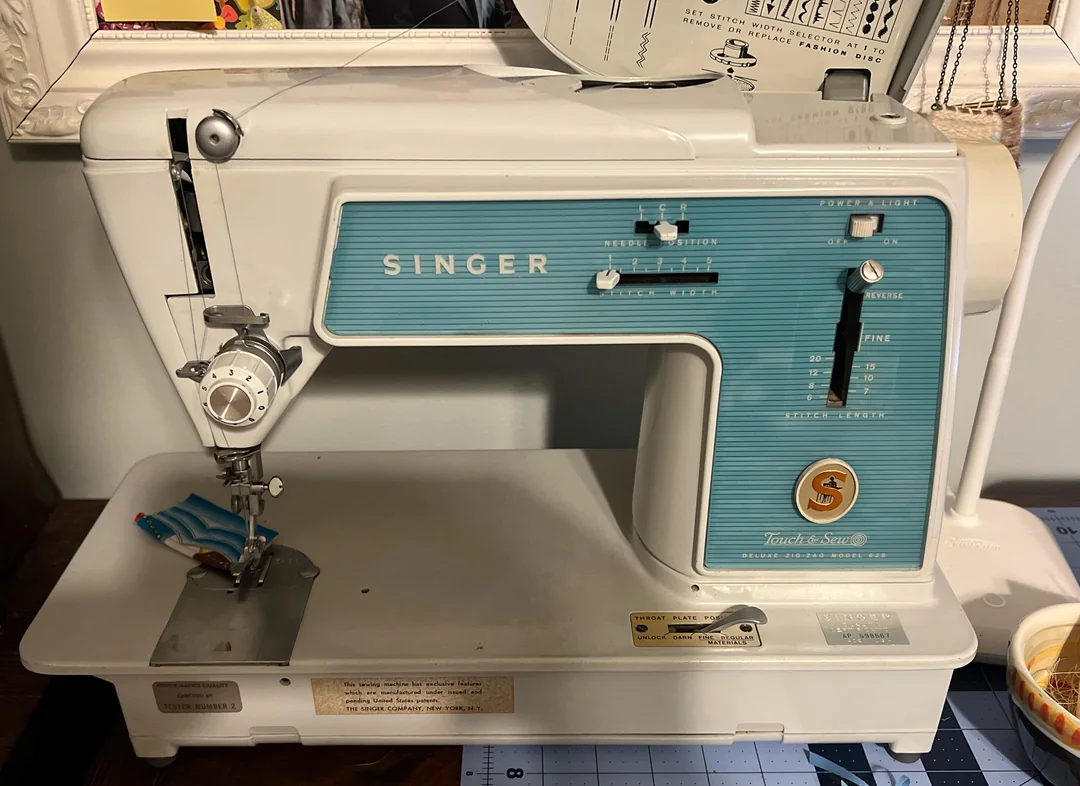
629
Use recorded from 1966 to 1968
Domestic slant needle machines of the "Touch and Sew" family.

630
Use recorded from 1967 to 1968
Domestic slant needle machines of the "Golden Touch and Sew" family.

635
Use recorded from 1967 to 1968
Domestic slant needle machines of the "Touch and Sew" family.

636
Use recorded from 1967 to 1968
Domestic slant needle machines of the "Touch and Sew Deluxe" family.

638
Use recorded from 1967 to 1968
Domestic slant needle zig-zag machines of the "Touch and Sew Special" family.

640
Use recorded from 1968 to 1969
Domestic slant needle machines of the "Golden Touch and Sew" family.

645
Use recorded from 1968 to 1969
Domestic slant needle zig-zag machines of the "Touch and Sew Deluxe" family.

646
Use recorded from 1968 to 1969
Domestic slant needle machines of the "Touch and Sew Deluxe" family.

648
Use recorded from 1968 to 1970
Domestic slant needle zig-zag machines of the "Touch and Sew Special" family.

649
Use recorded from 1968 to 1969
Domestic slant needle straight stitch machines of the "Touch and Sew Deluxe" family.

660
Use recorded from 1964
Only 3 machines allotted in 1964. Nothing more is known about this class.
706
Use recorded from 1951 to 1958
Domestic slant needle zig-zag machines.

717
Use recorded from 1970 to 1971
Domestic zig-zag and stretch machines of the "Scholastic" family. Slant needle.
719
Use recorded from 1970 to 1971
Domestic zig-zag and stretch machines of the "Scholastic" family. Slant needle.

750
Use recorded from 1969 to 1970
Domestic slant needle machines of the "Touch and Sew Deluxe" family.

755
Use recorded from 1969
Domestic slant needle machines of the "Touch and Sew II" family.

756
Use recorded from 1969 to 1970
Domestic machines of the "Touch and Sew" family.

758
Use recorded from 1969 to 1970
Domestic slant needle zig-zag machines of the "Touch and Sew Deluxe" family.

759
Use recorded from 1969 to 1970
Domestic machines.
885
Use recorded from 1967
One allotment only is known: 25 machines from 1967. Nothing more is known about this class.
994
Use recorded from 1912
One allotment only is known: 100 machines from 1912. Nothing more is known about this class.
1200
Use recorded from 1936 to 1956
Semi-industrial machines, similar to the Class 201. Manuals say "for dressmakers' and home industrial use". Adjustable reverse feed, P.H. motor and Singerlight, knee lifter.
Documented machines in this factory
(What does it mean?)Total documented machines: 1
Documented years: 1936

Share info about your machine
If you happen to own a Singer sewing machine made in Elizabethport, feel free to get in touch and share your machine’s serial number (and photos, if you have them). Each one adds another piece to the puzzle. Please share what you know with the community! Thank you for helping us in this monumental research.
Resources
- The history of Singer Elizabethport factory
- Inside the Elizabethport factory
- The factory in 1908
- Article about the closing of the Anderson factory, New York Times, 1982
- A 1984 report on the site, with maps, from Historic America Engineering Record
- About the 2024 fire
- Book “Genius Rewarded”, 1880
- Articles about the book “Genius Rewarded”: part 1 and part 2
- On the history of Singer company
- Complete database of vintage Singer sewing machines serial numbers, plus info about serial numbers, factories and location codes, class and model numbers
- Singer sewing machine manuals
- Singer sewing machine decal sets
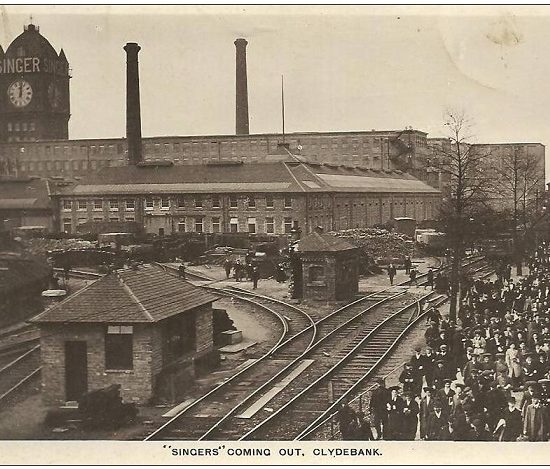

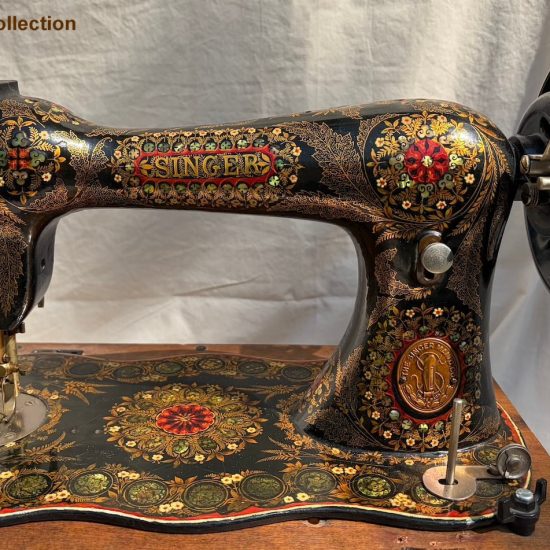





)