
After starting my Singer serial number database and spending quite a bit of time digging into the history of Monza and Bonnières factories production, I felt the need to go further. One detail that always fascinated me about vintage Singers is their decals, those decorations that made each machine beautiful. So, I began researching decals, and whenever I had a machine whose details were verified, I also recorded its decals.
Of course, once the data was there, the next question was obvious: why have it if you can’t use it? That’s when I built this page. Here you’ll find most of the recorded Singer decal sets, with information gathered over time by Needlebar, ISMACS and other collectors and researchers (which you’ll find linked in the Resources below), such as their periods of use and the classes (models) they were applied to.
Then, I compared that decal information with the serial numbers in my own database. That way, we can start to cross-reference the two. This may be helpful to date machines when serial records are incomplete. I was this way able to add information about in which factories a certain decal was applied. You can then use this section as an identification guide for decoration sets, as well as a reference for the factories, years and models Singer decals were in use.
A little note: I divided the ornamentation sets in two categories: decals and hand ornamentations. At first Singer machines were decorated by hand, as I explain further on. As you can imagine, we have even less information about hand ornamentation, and a huge amount of variations.
Adding new data points is long and hard, but each new one will contribute to our collective knowledge of Singer’s history. I am thankful to Rachael Bhakail, who led me into the rabbit hole of ancient patents: you’ll find in this page all the decal and ornamentation patents she could find. Also a huge thank you to all the owners of machines who wanted to send me photos to contribute to this list.
This is a long, ongoing process, and it will only get better with more contributions. If you’d like to share your machine data with me, please leave a comment or get in touch, so I can add it to the database. Thank you!
Table of contents
Singer ornamentation sets and decal sets
114 decoration sets / 1,658 documented machines with decoration sets
Hand ornamentation
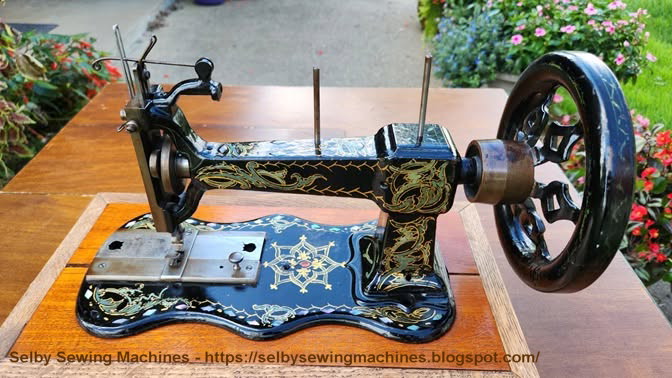
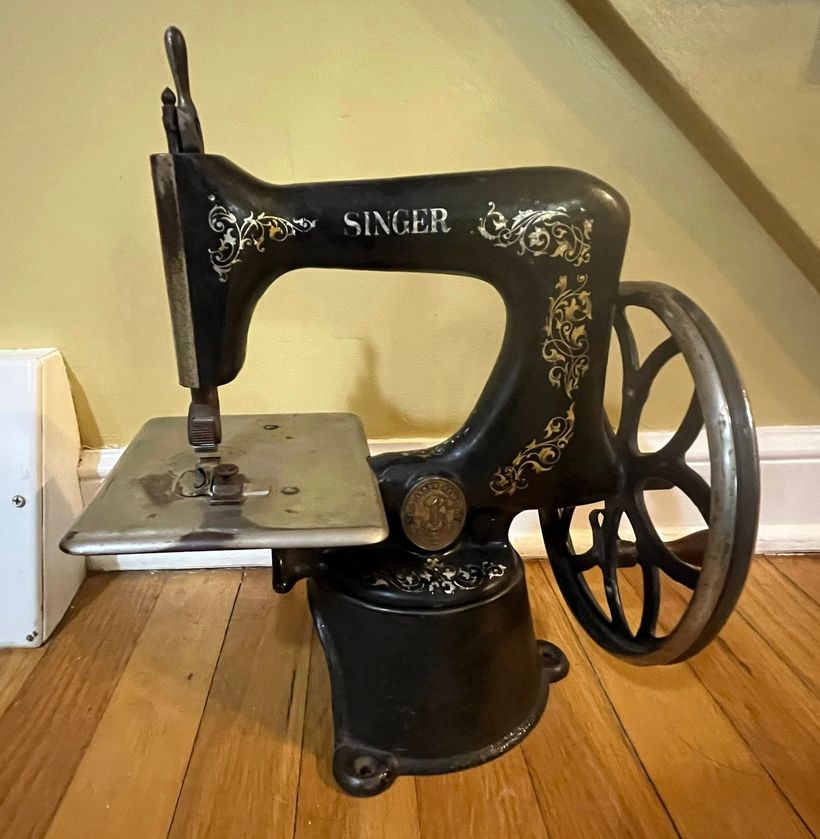
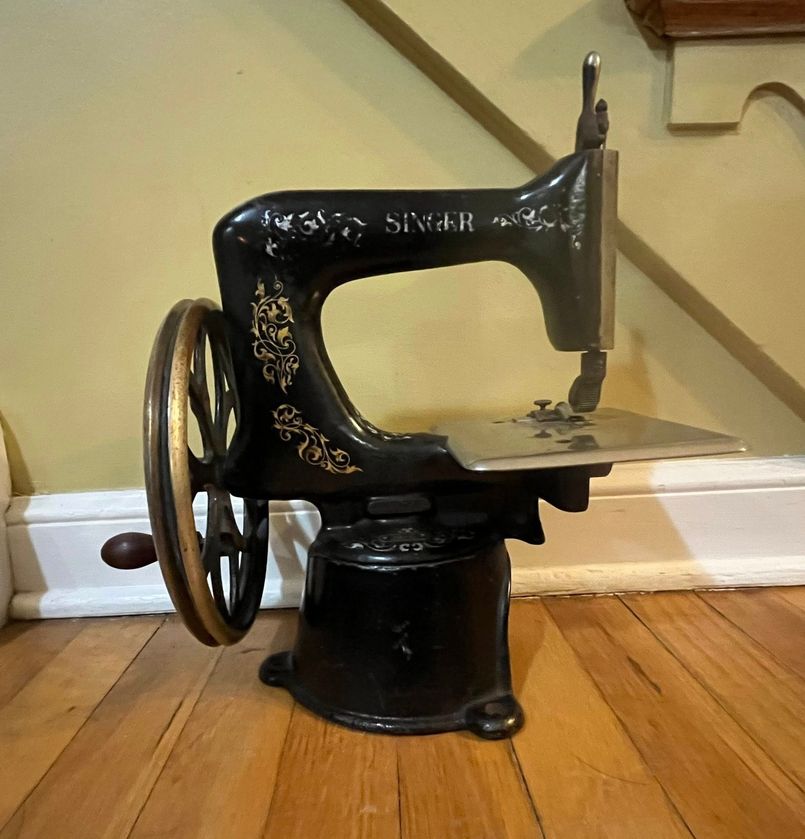
(30)In use from 1881 up to 1885
In use for Classes:
- 12 (New Family)
- 13 (Medium)
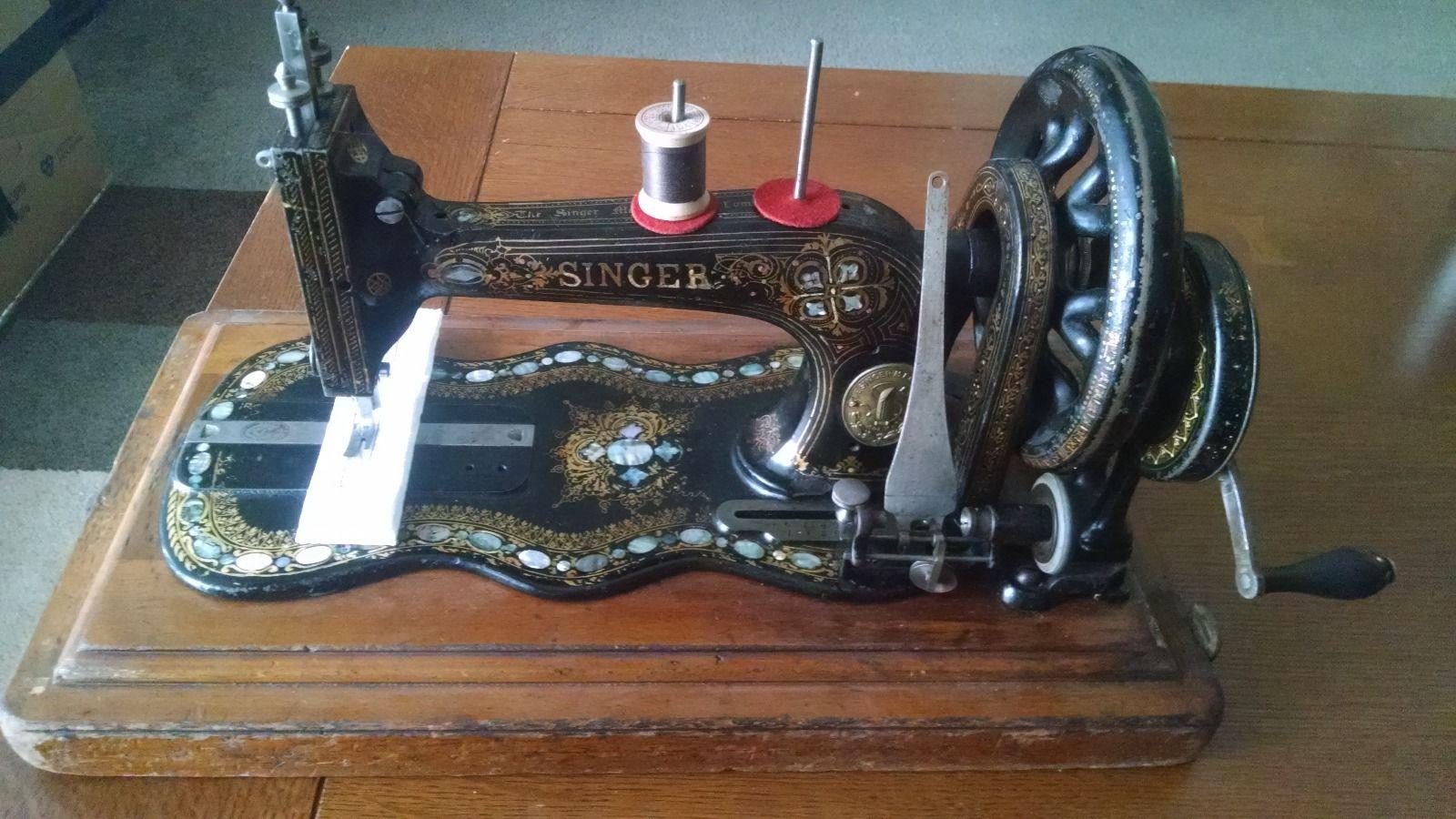
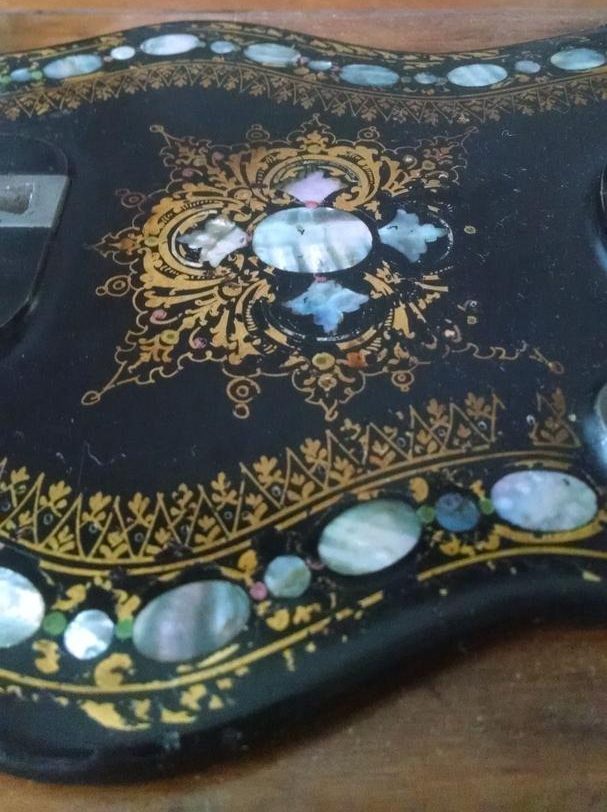
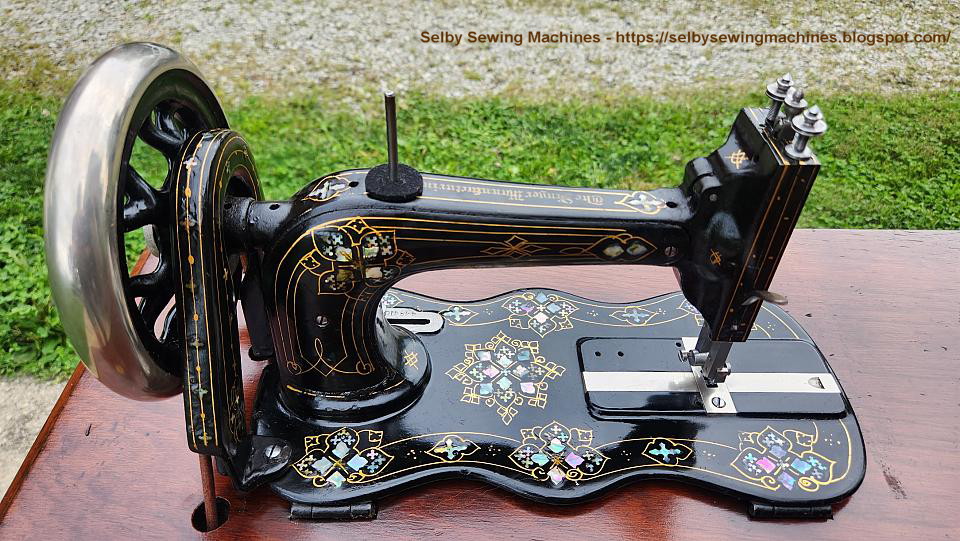
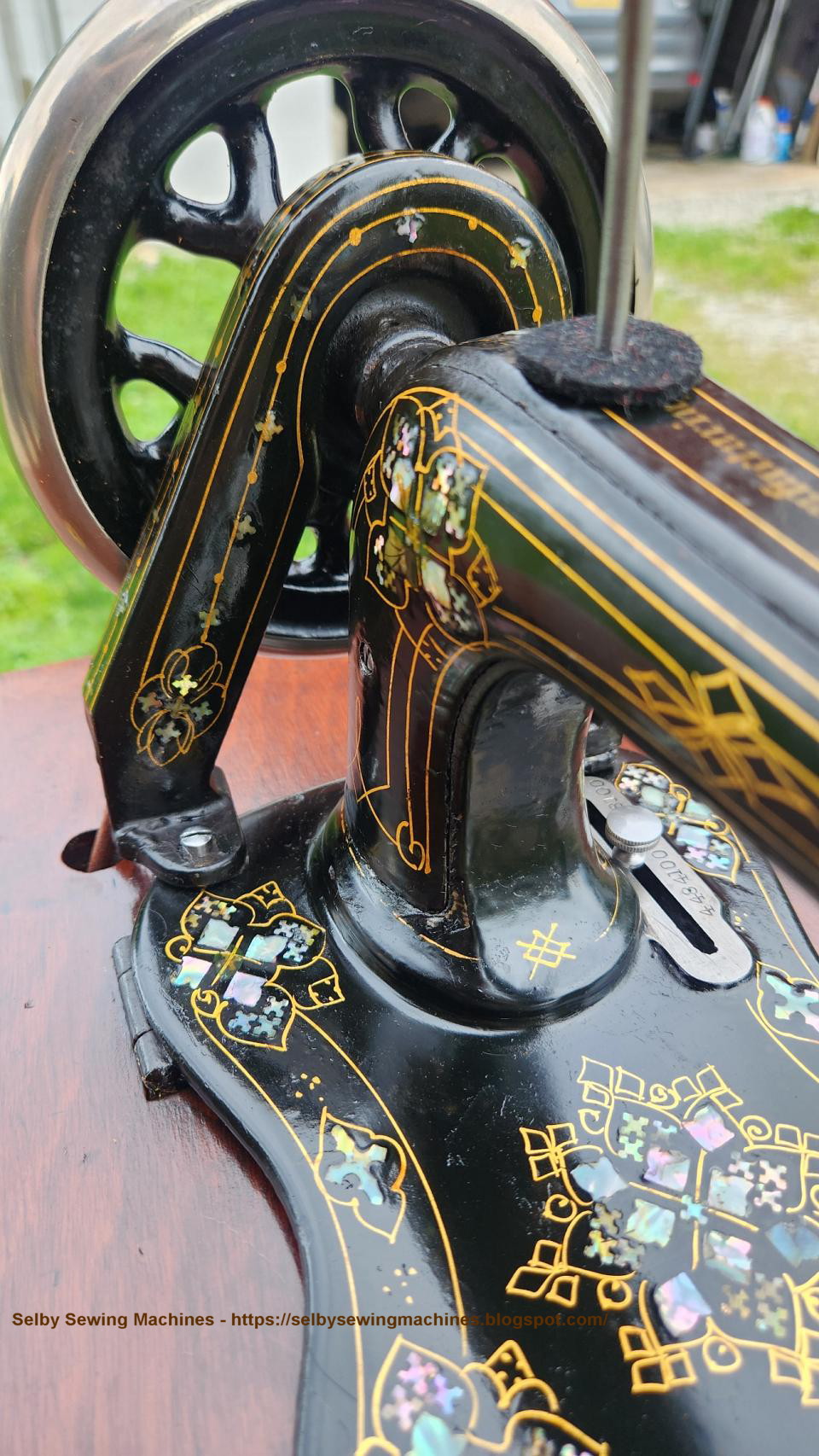
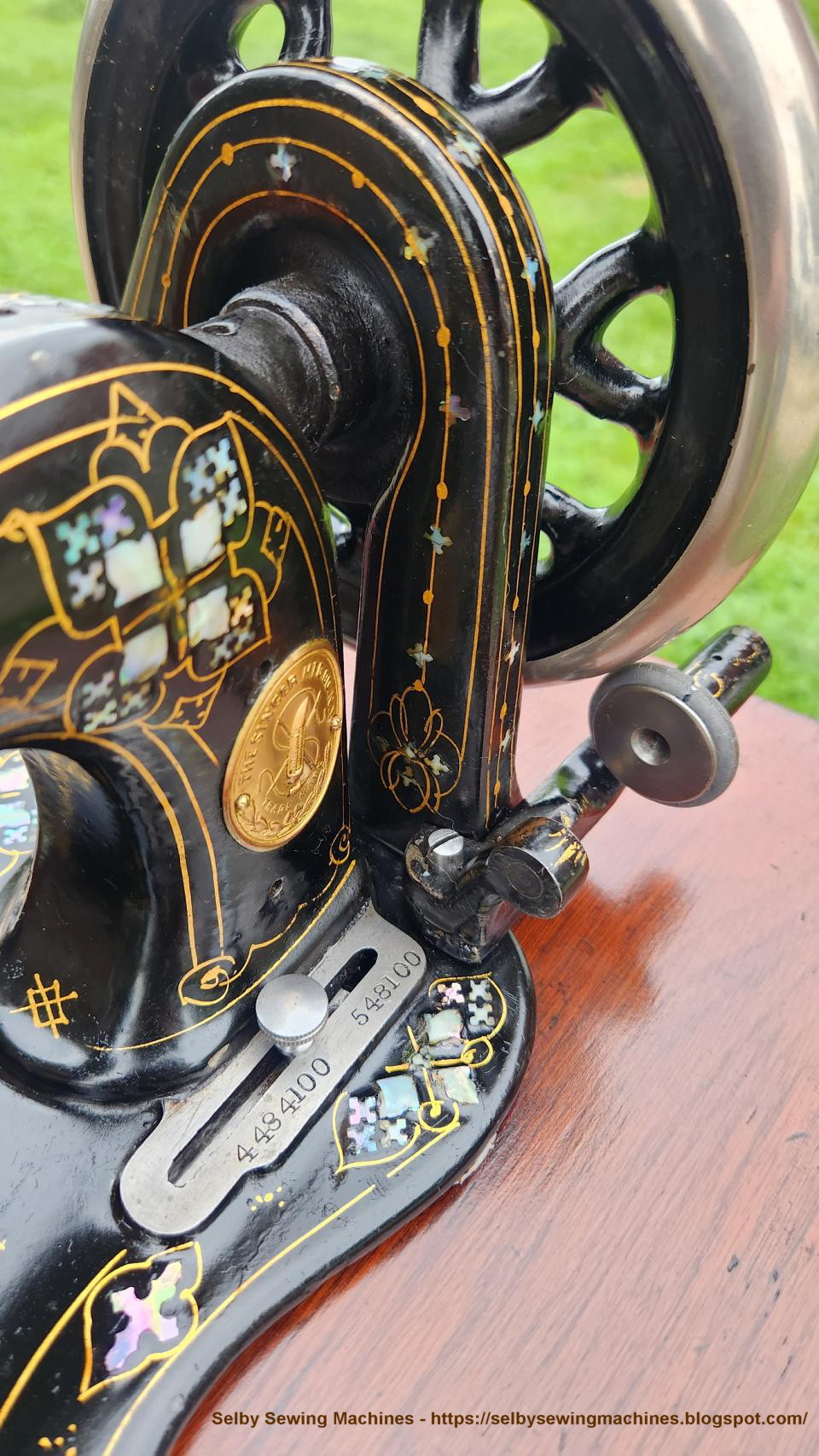
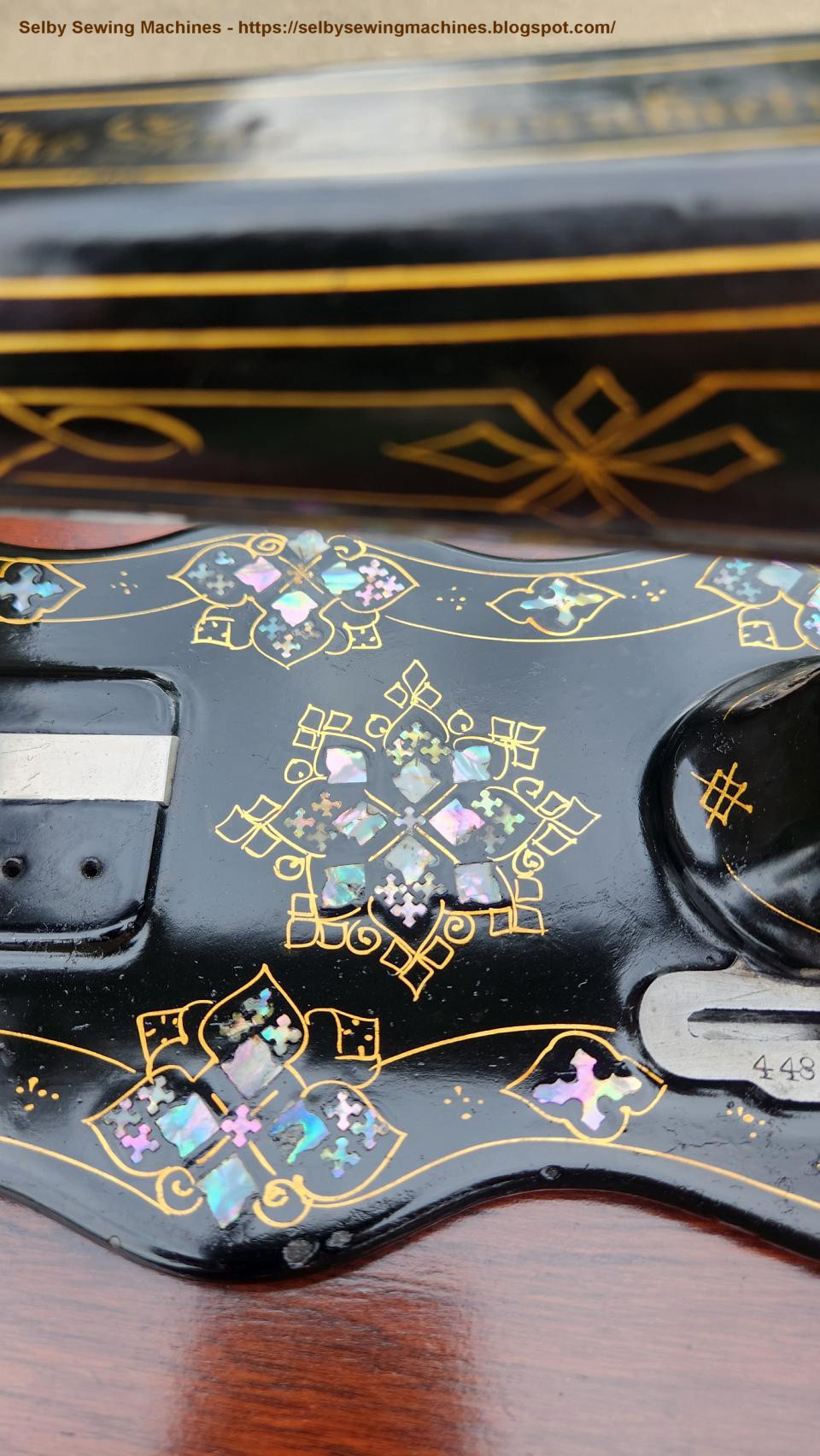
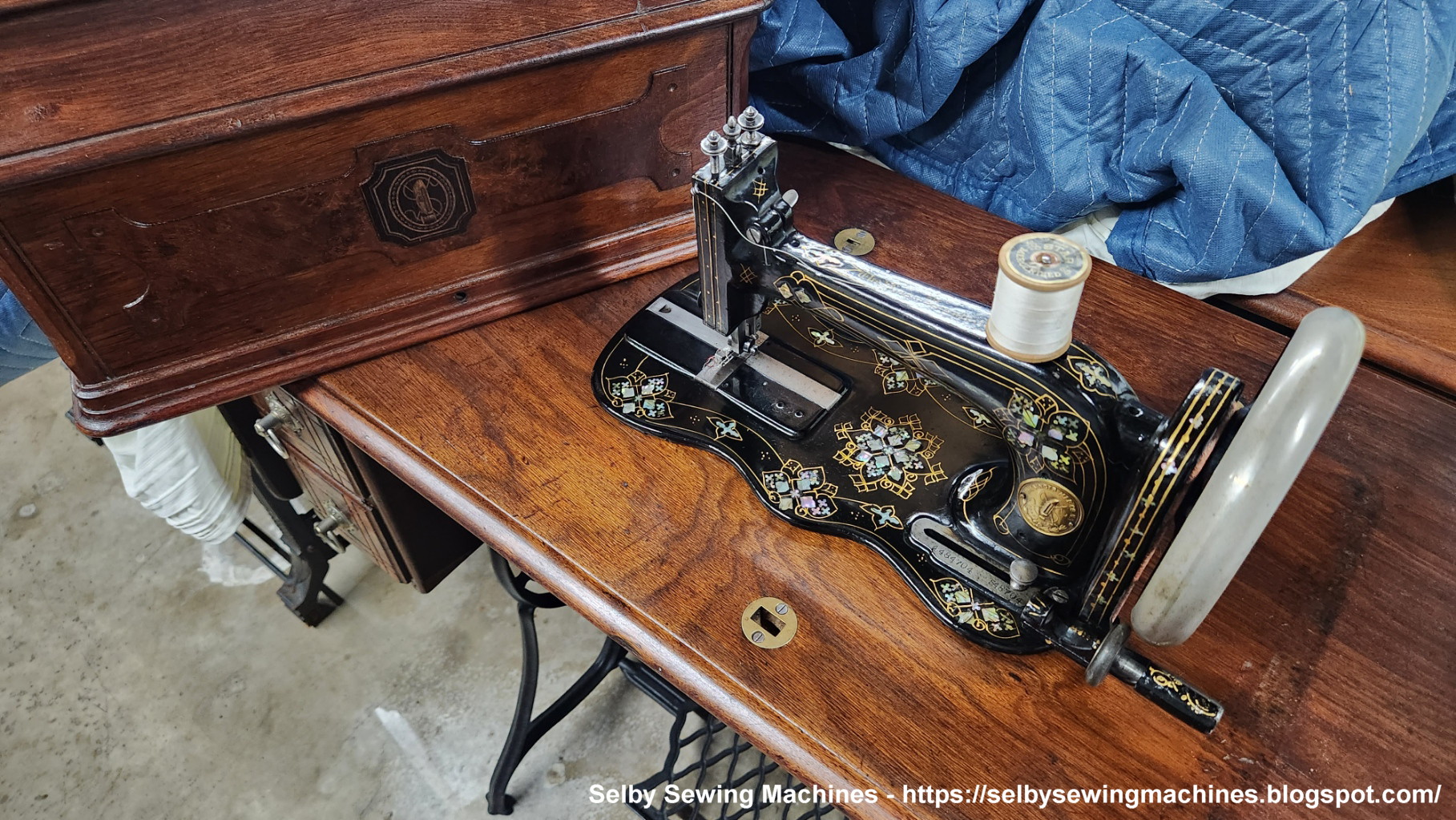
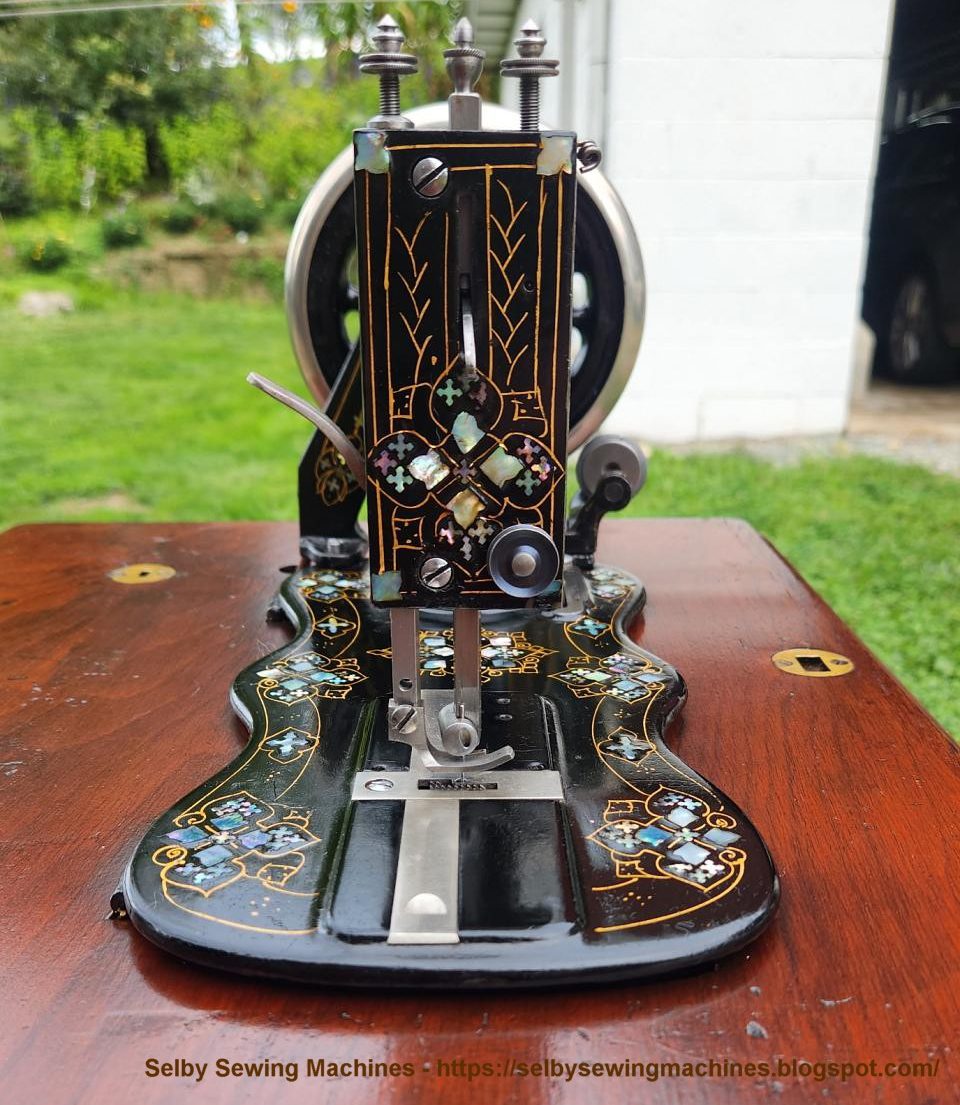
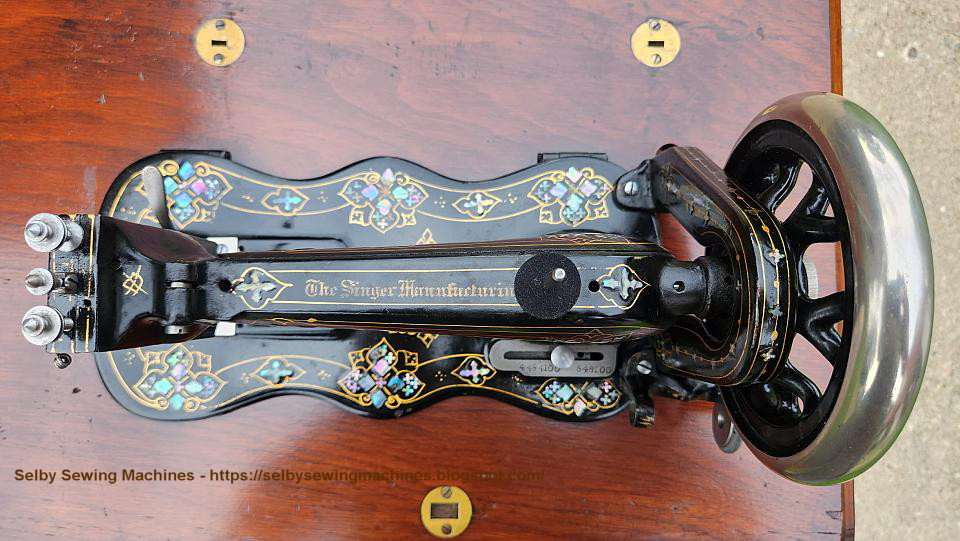
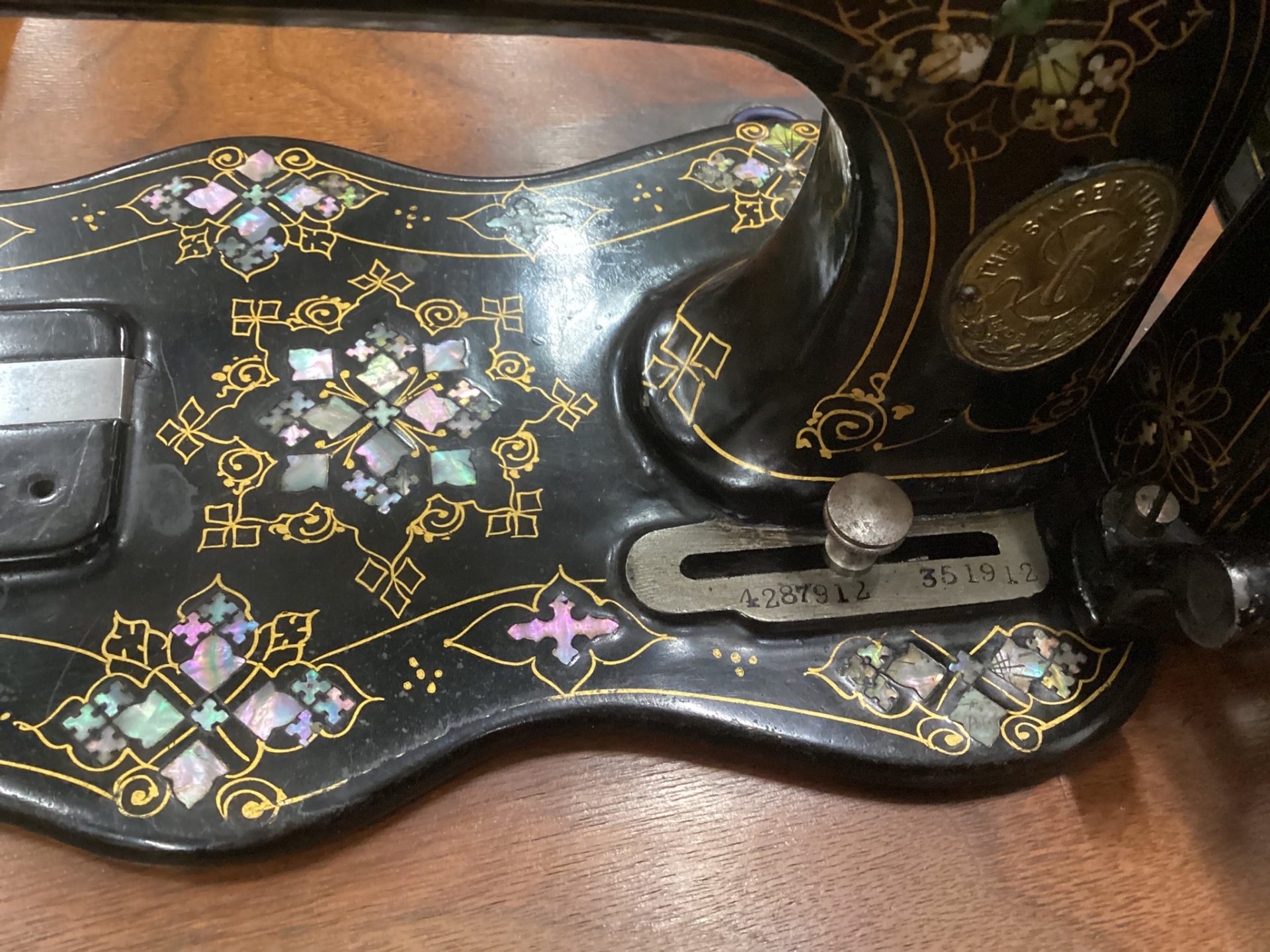
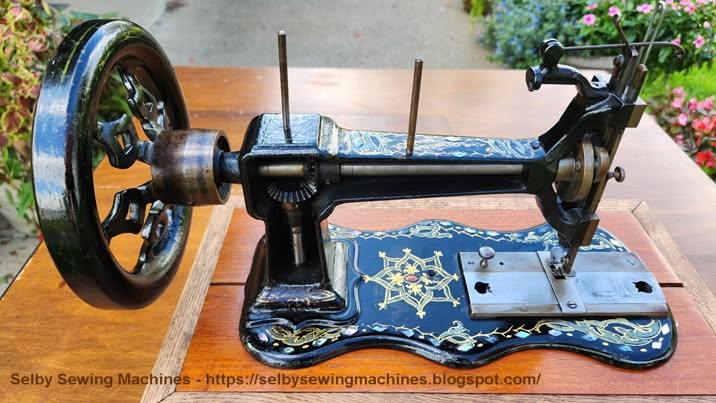
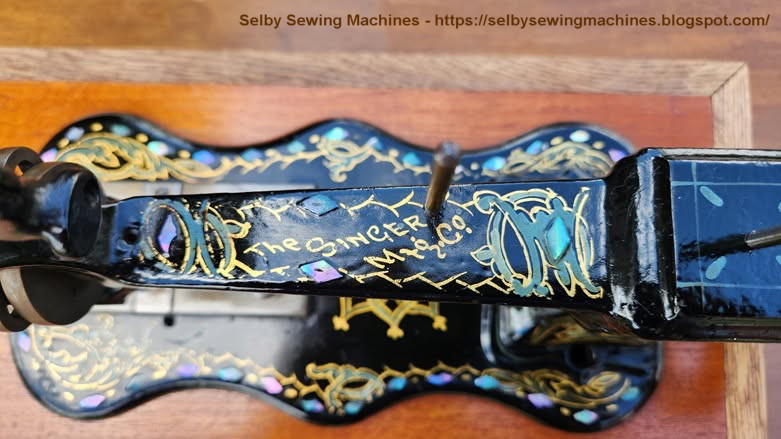
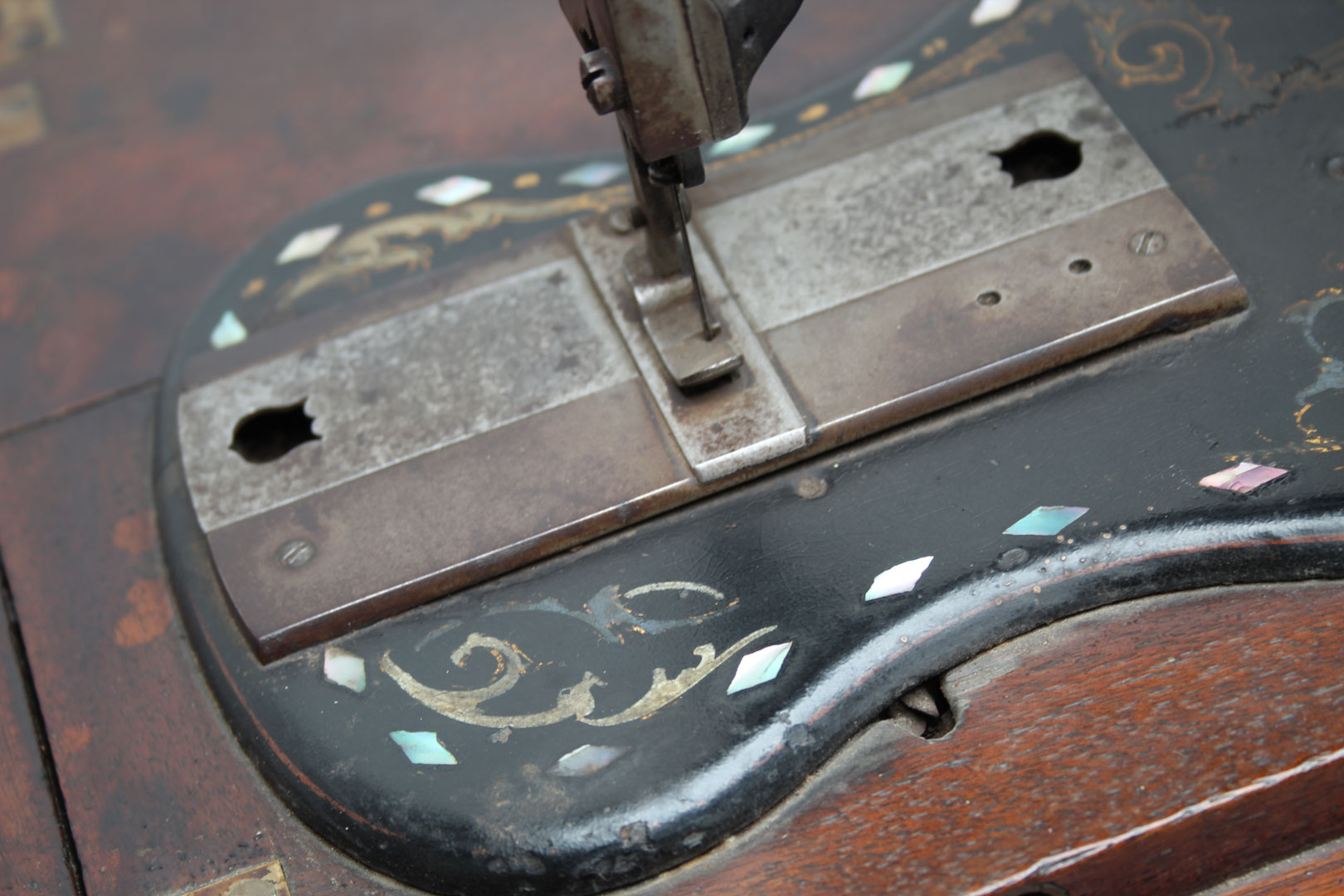
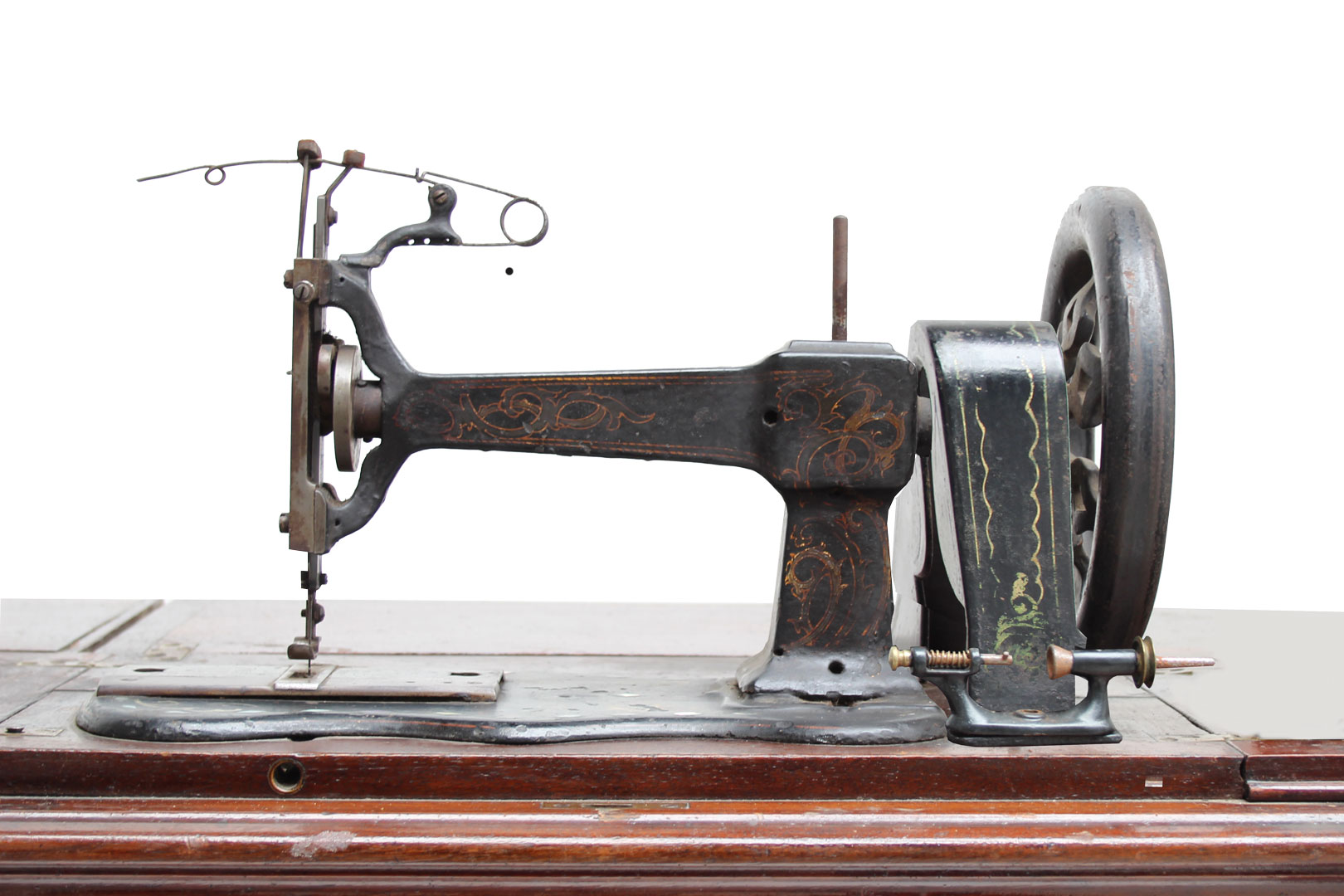
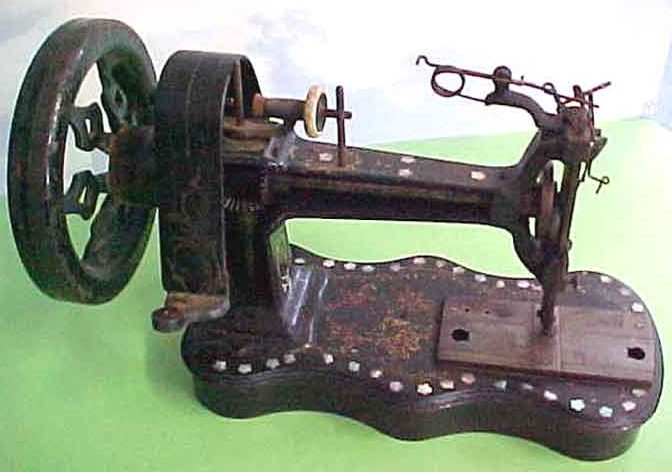
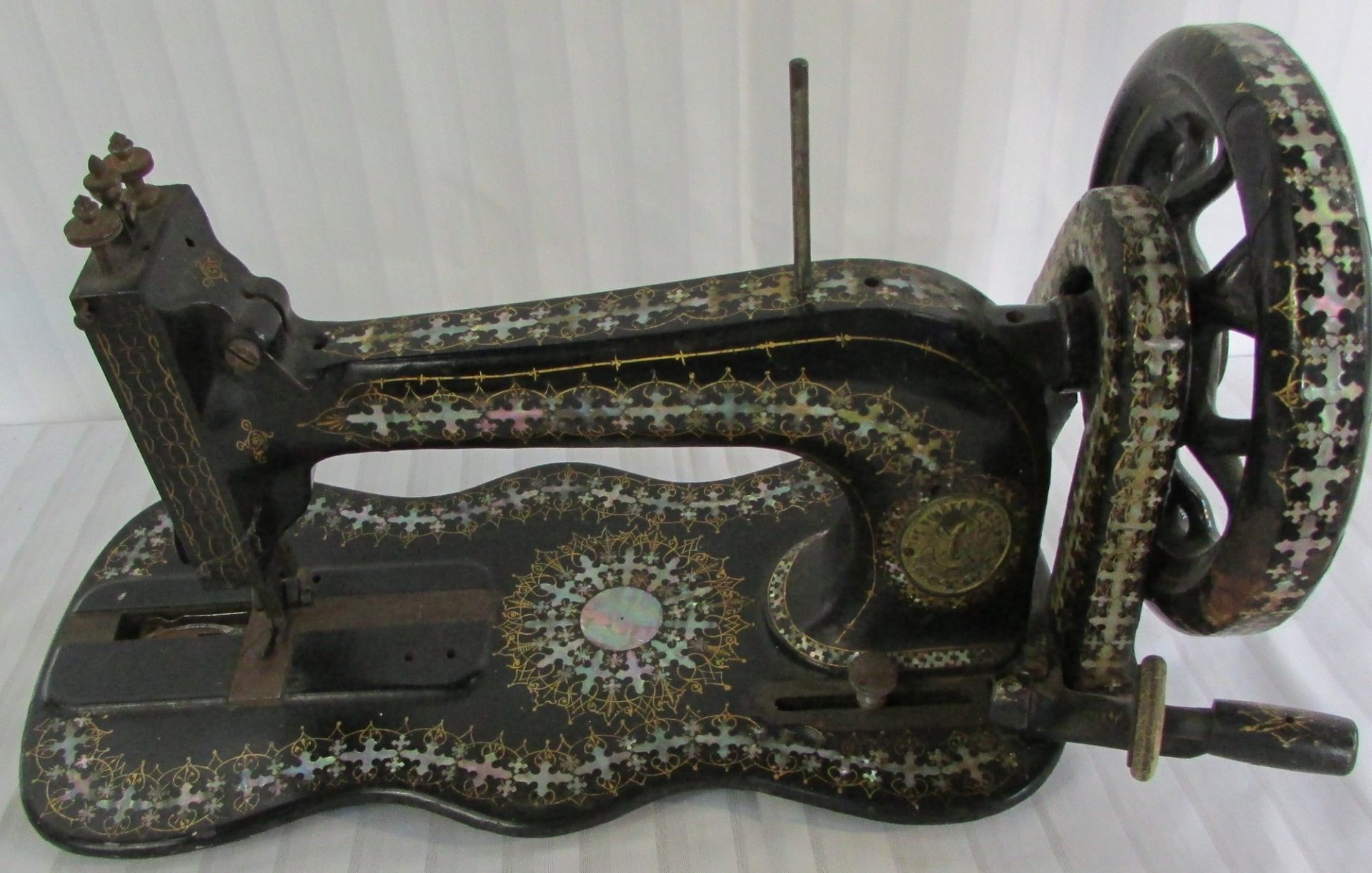
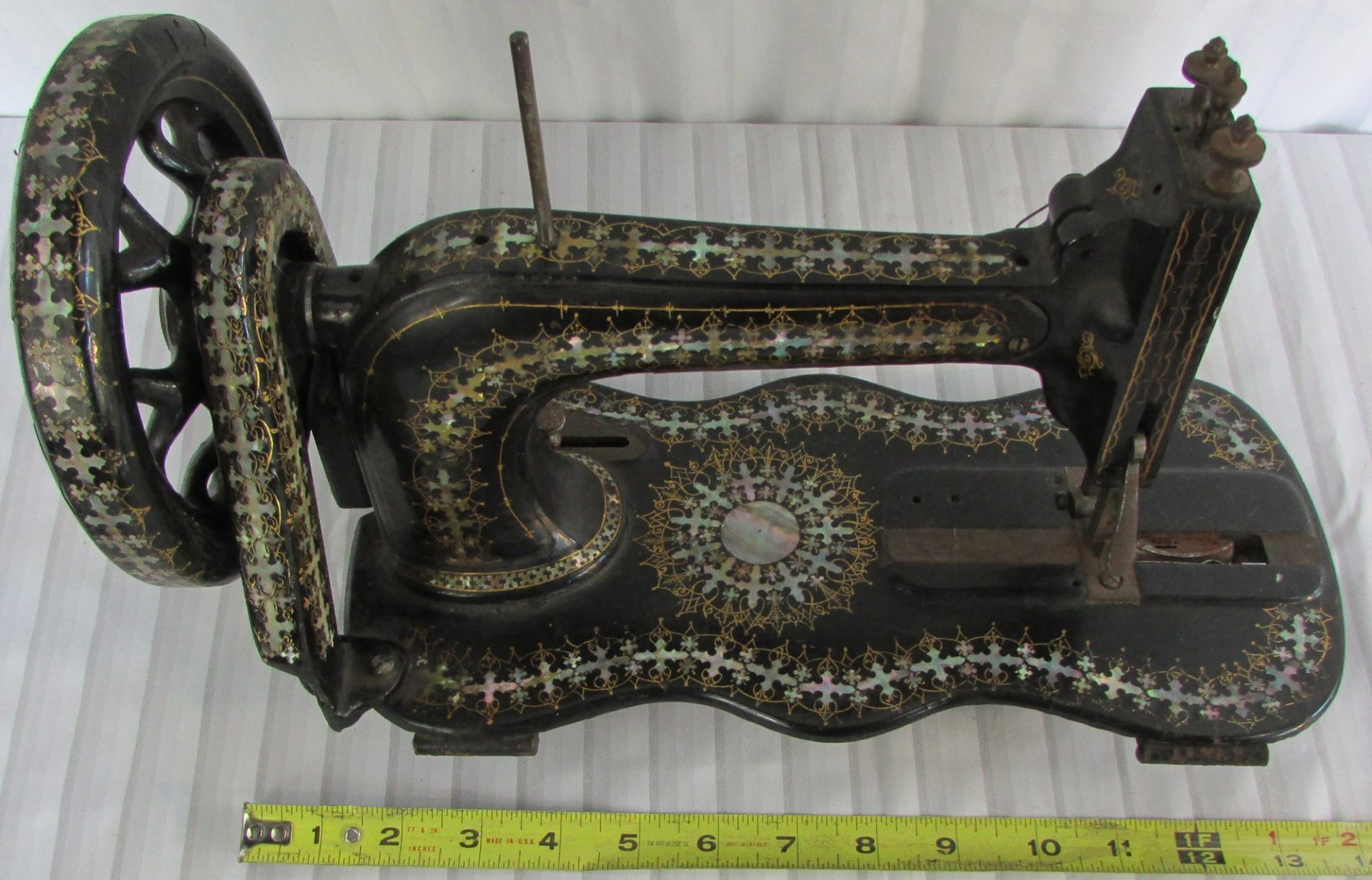
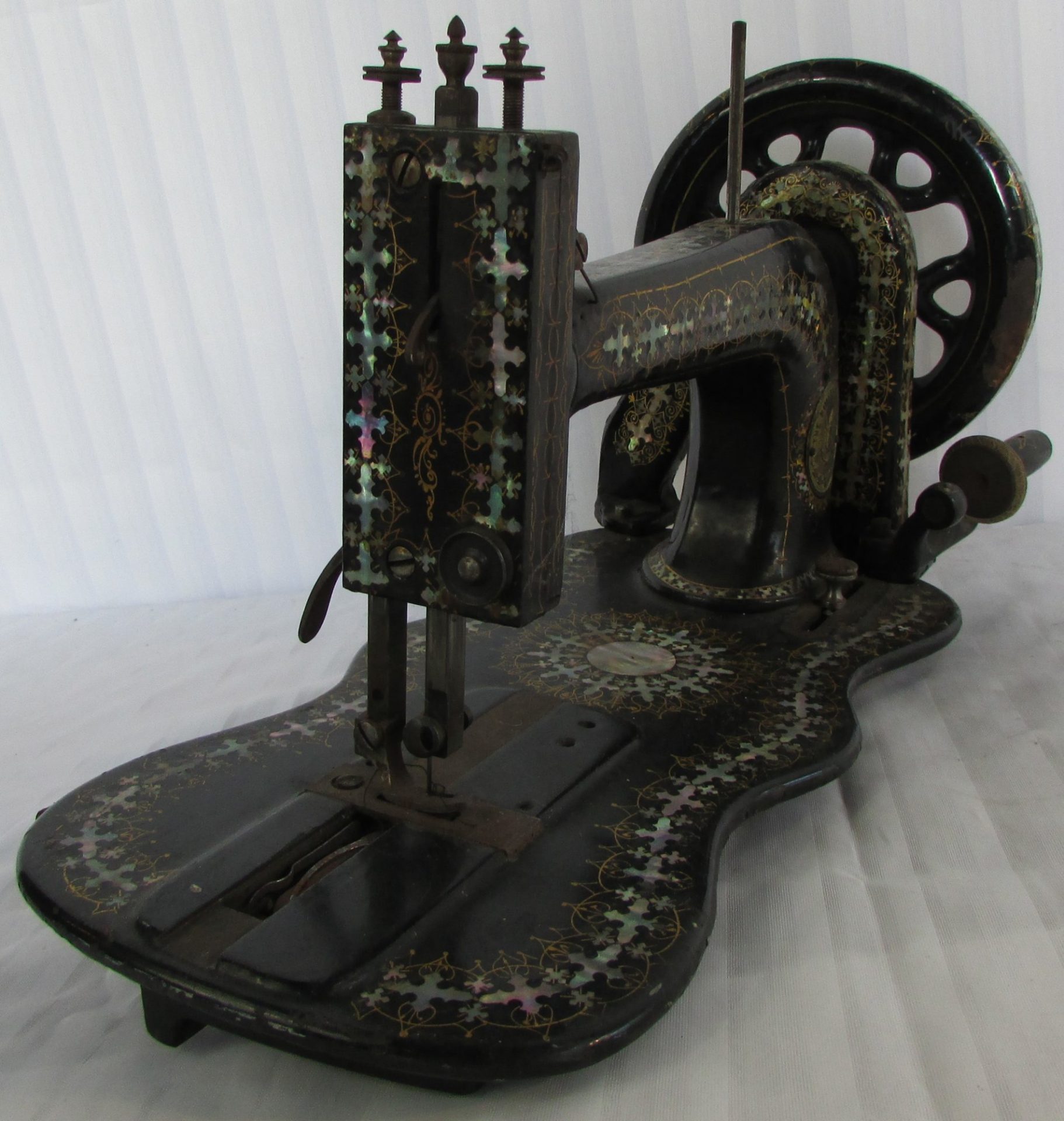
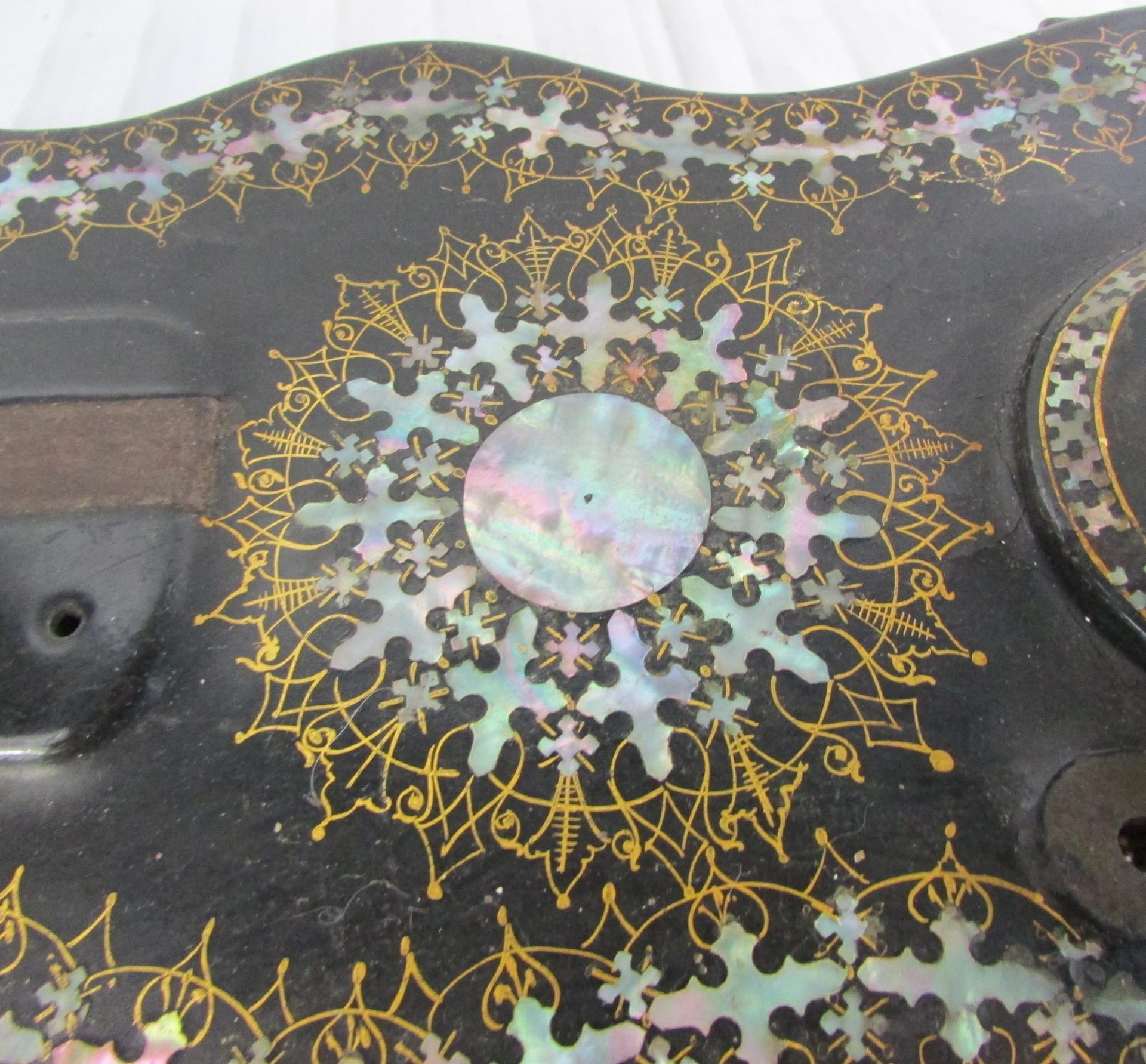
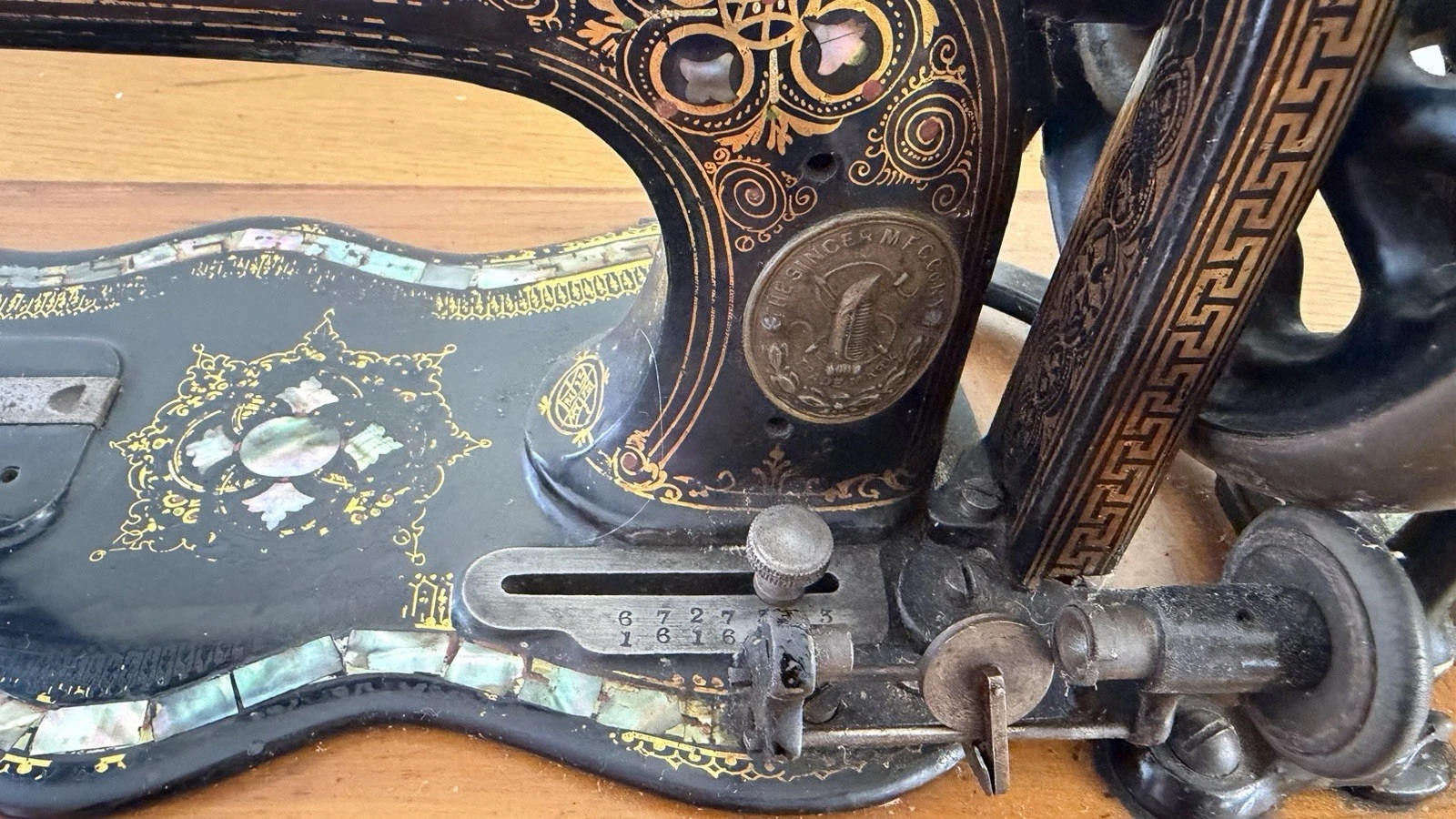
This mother-of-pearl and gold decoration is a highly ornate, classical decal set featured primarily on class-12 late 19th-century machines. The intricate floral design makes great use of mother-of-pearl inlays to produce a shimmering, opulent finish on the machine bed. Mother-of-pearl decoration was applied in many different patterns, in some early cases at the discretion of the decorators.
Documented Machines
(What does it mean?)Total n.: 3
Factories:
Documented Classes:
- 12
Documented years: 1881 - 1885
In use from 1881
In use for Classes:
- 12 (New Family)
First photos provided by Selby Sewing Machines. In some well preserved examples, the hand wheel is japaned with mother-of-pearl inlays.
Documented Machines
(What does it mean?)Total n.: 4
Factories:
Documented Classes:
- 12
Documented years: 1881
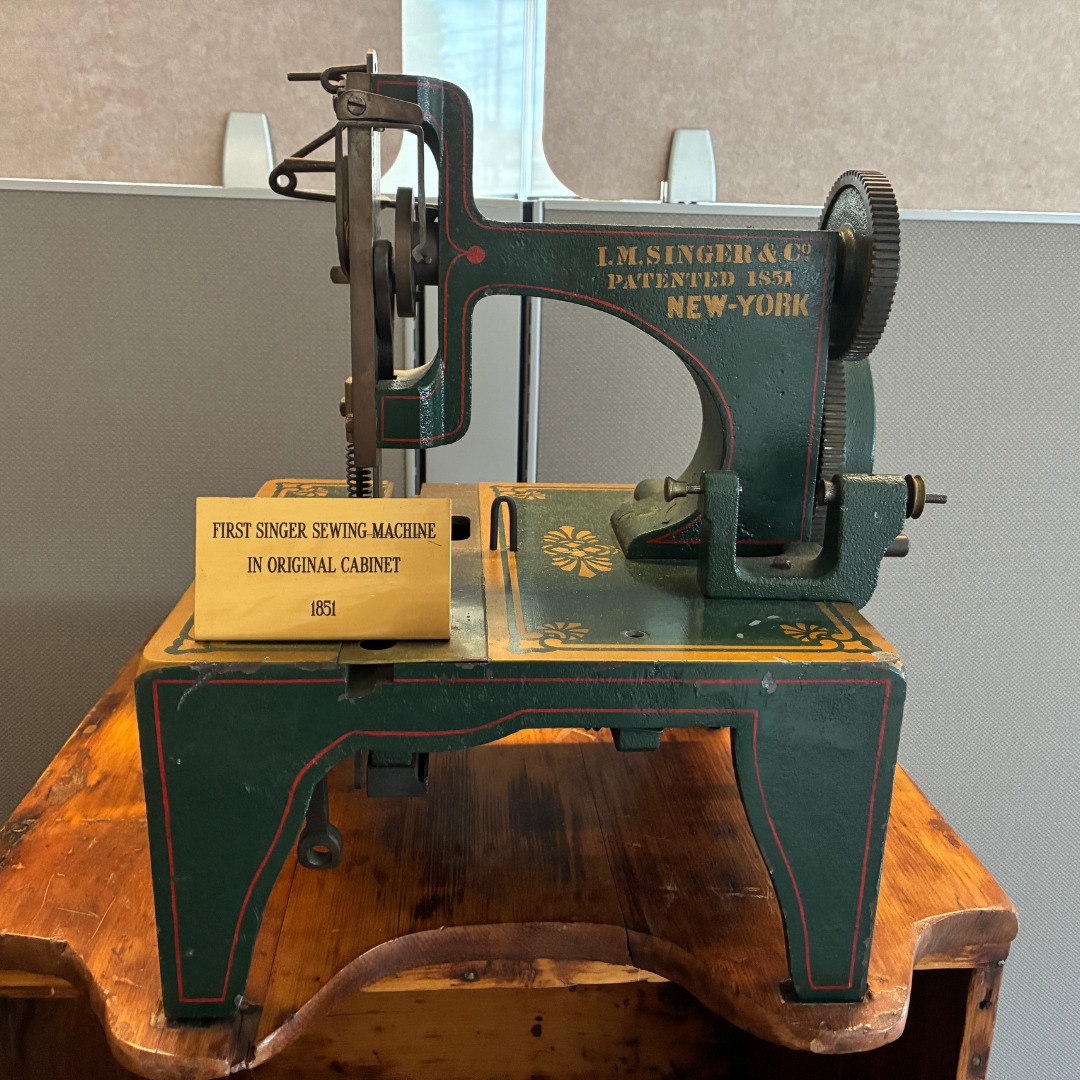
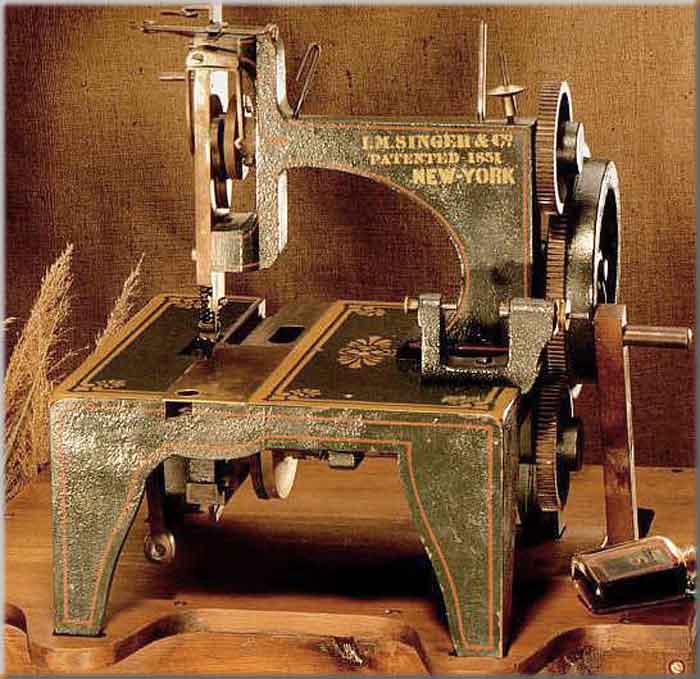
In use from 1851
In use for Classes:
- N°1
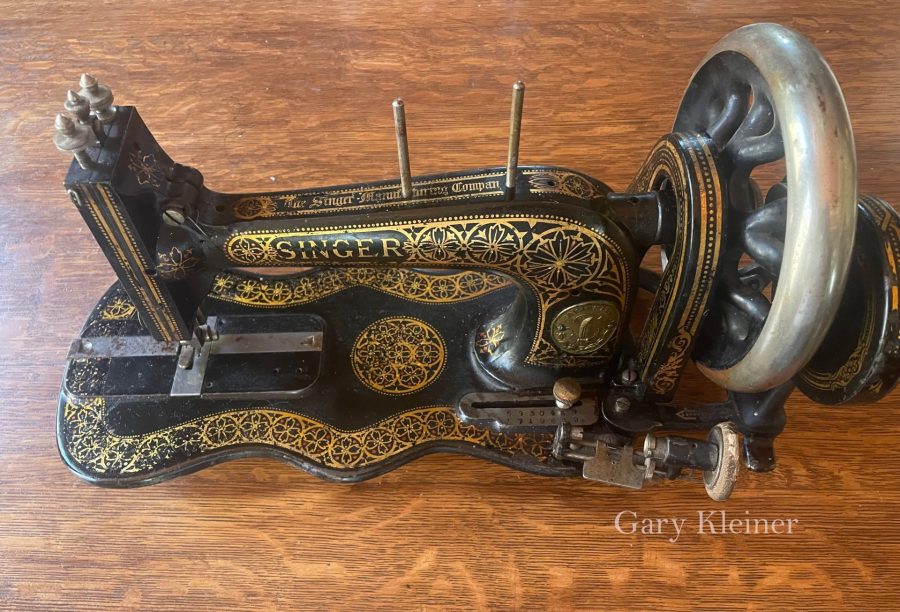
The name "Original Stripe" comes from The Needlebar wiki. Since it has the same text as the "Isaac Singer Name" decoration, we added that as well in the denomination. It adds also a line around the shape of the machine and stylized floral decorations on the bed.
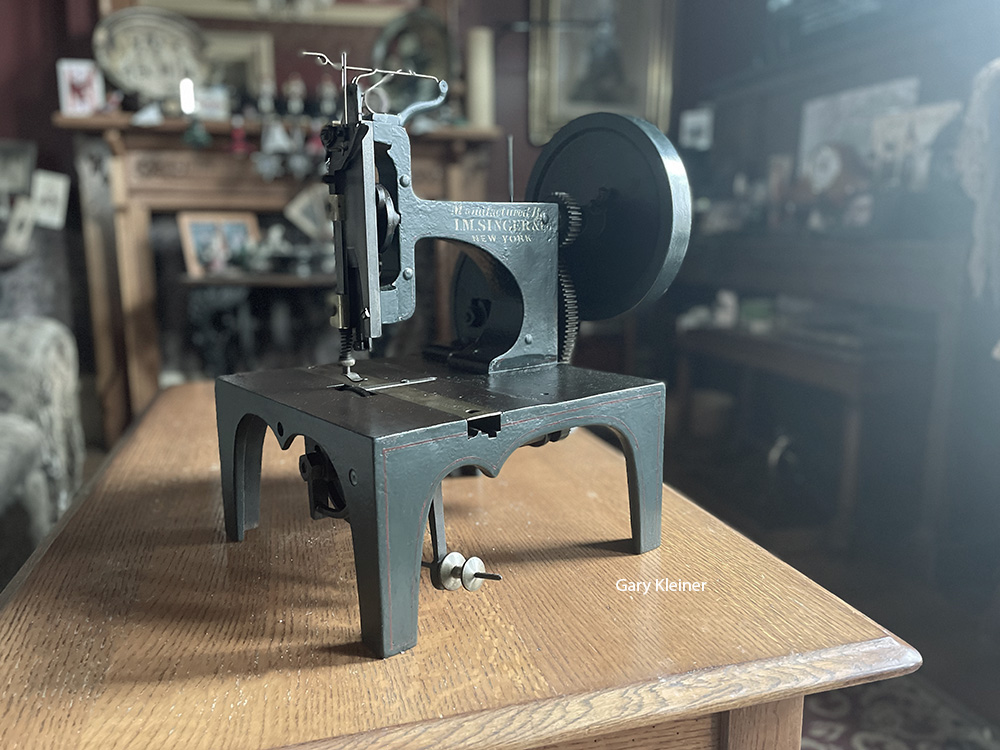
In use from 1851
In use for Classes:
- N°1
Photo courtesy Gary Kleiner
Documented Machines
(What does it mean?)Total n.: 1
Factories:
- New York Centre Street (USA)
Documented years: 1856
In use from 1859 up to 1865
In use for Classes:
- Letter A
Name coming from The Needlebar wiki. The swirls on this decal may have different variations, flowing in clockwise or anti-clockwise directions. First photos provided by Selby Sewing Machines
Documented Machines
(What does it mean?)Total n.: 1
Factories:
- New York Mott Street (USA)
Documented Classes:
- Letter A
Documented years: 1864
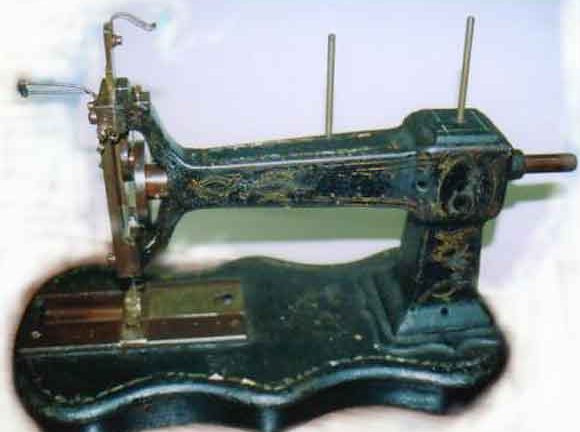
In use from 1859 up to 1865
In use for Classes:
- Letter A
Name coming from The Needlebar wiki.
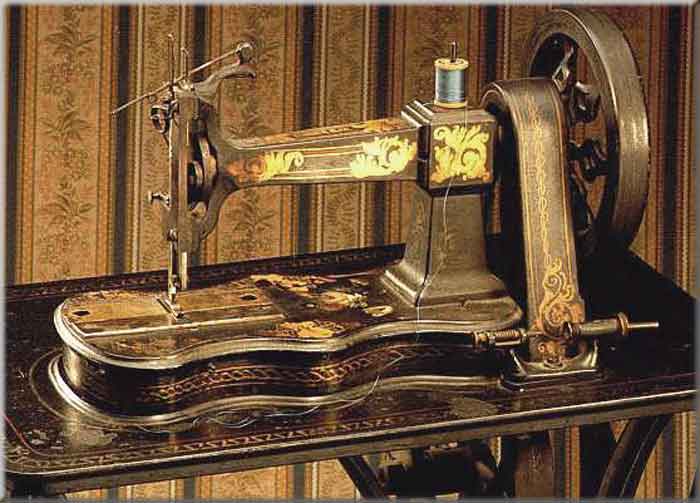
In use from 1858 up to 1861
In use for Classes:
- Letter A
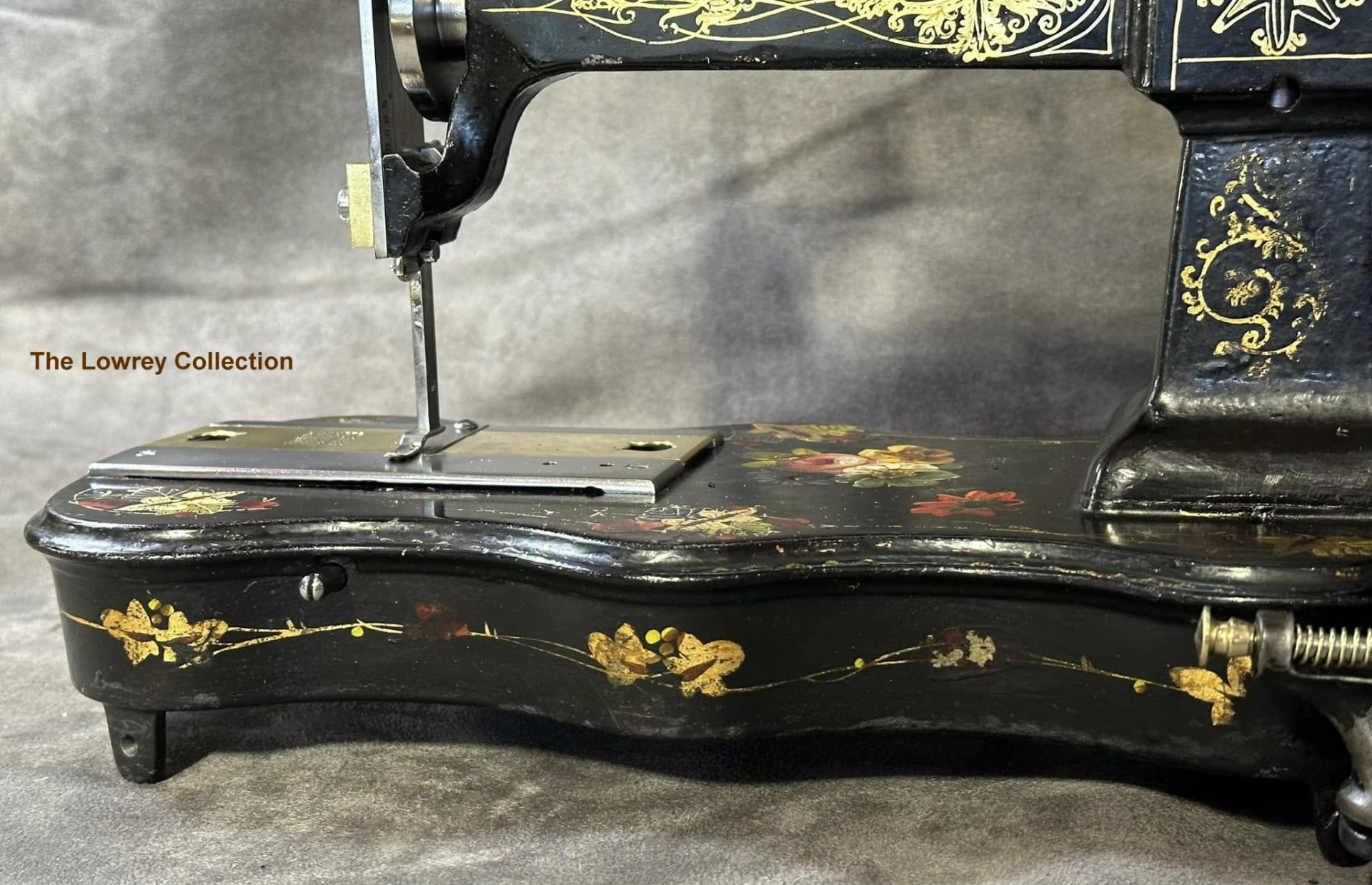
Letter A models, introduced in late 1859, were hand decorated. Images from The J&P Lowrey Collection
Documented Machines
(What does it mean?)Total n.: 1
Factories:
- New York Centre Street or New York Mott Street (USA)
Documented Classes:
- Letter A
Documented years: 1860
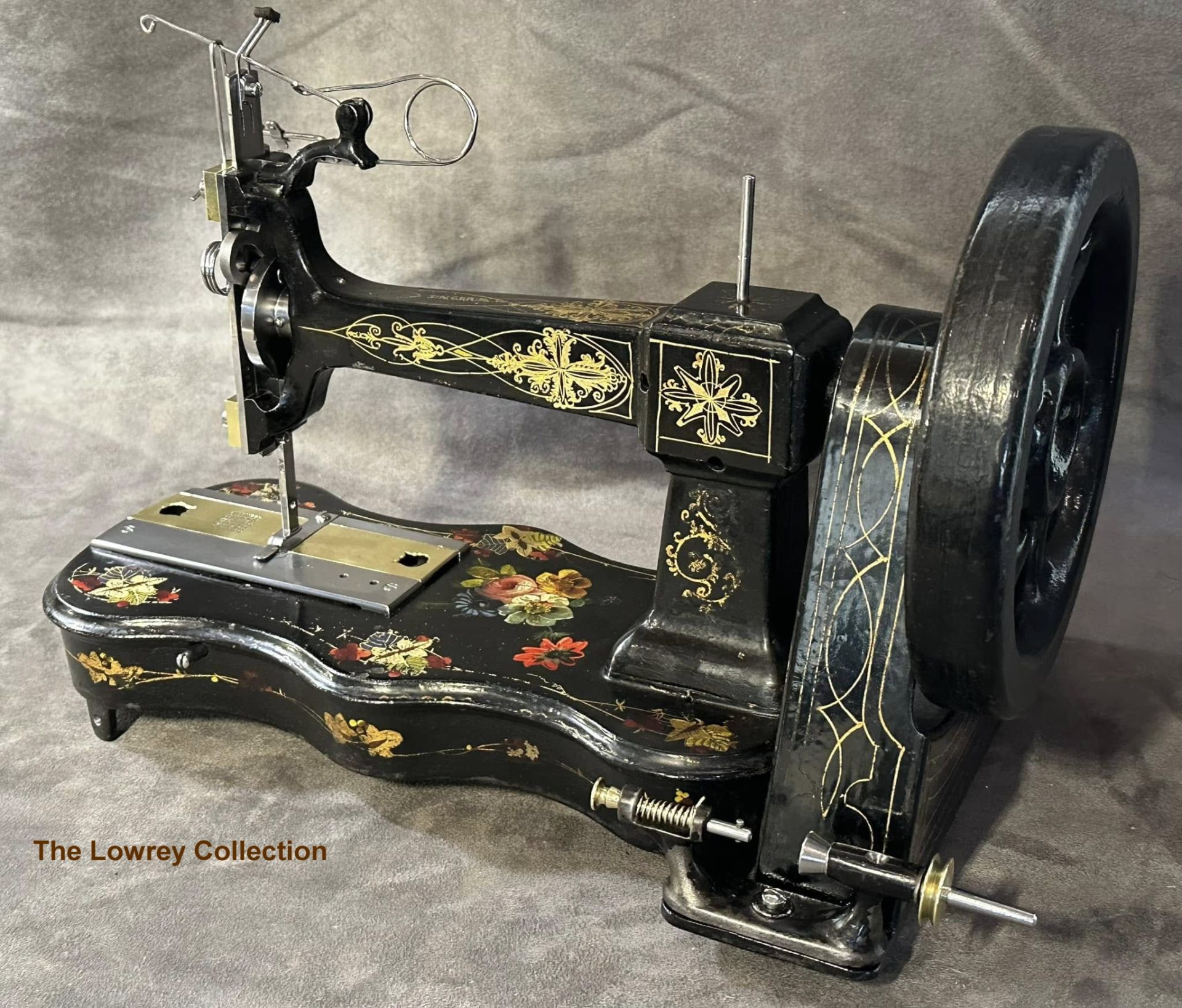
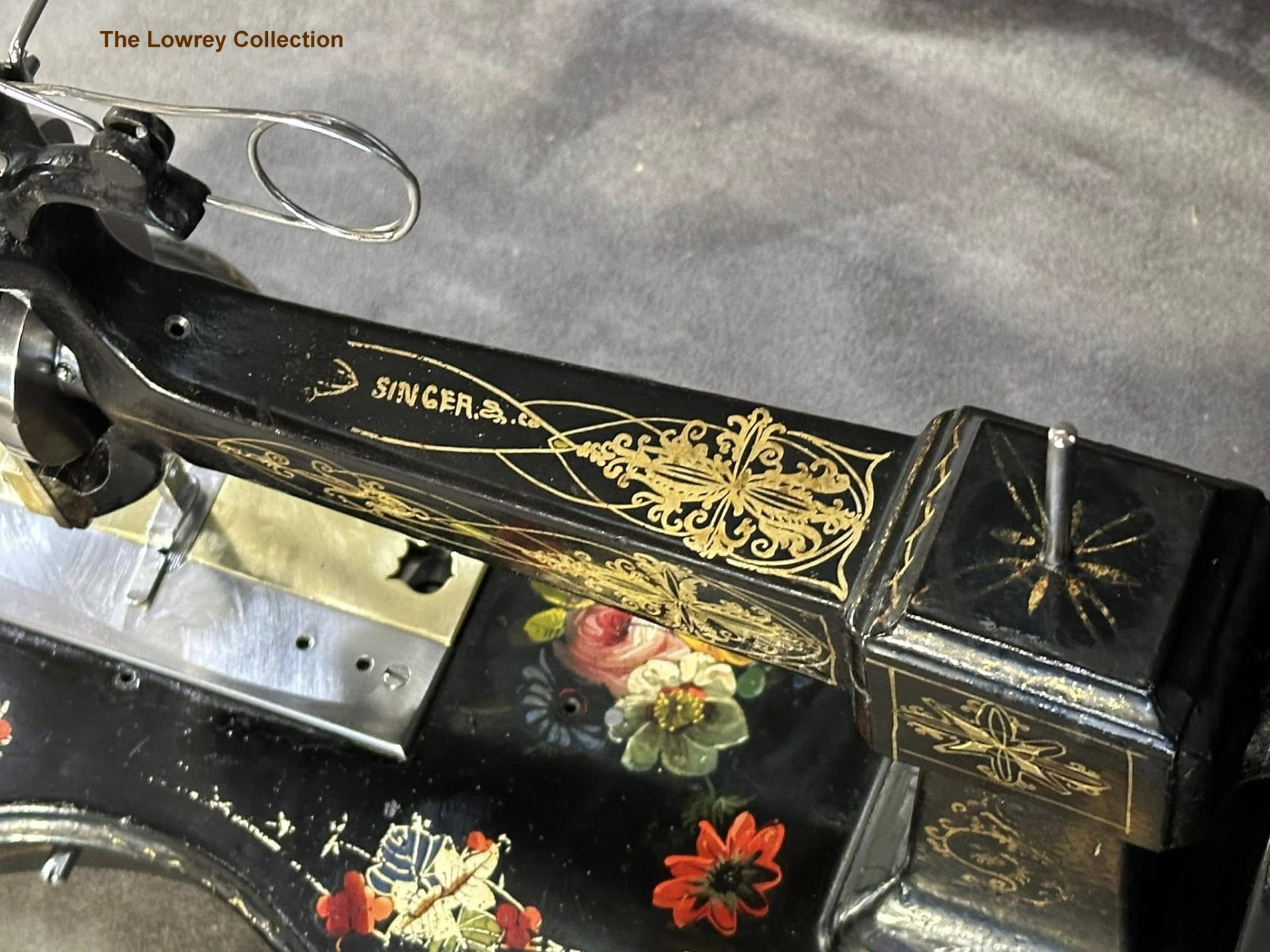
In use from 1859 up to 1865
In use for Classes:
- Letter A
Name coming from The Needlebar wiki.
In use from 1859 up to 1861
In use for Classes:
- Letter A
Letter A models, introduced in late 1859, were hand decorated.
In use from 1859 up to 1859
In use for Classes:
- Letter A
Letter A models, introduced in late 1859, were hand decorated. This particular decoration was found on a machine originally sold to a C. Irwin of Erie, PA, on 28th January 1859. To date, this hand decoration is unique to this specific machine.
Documented Machines
(What does it mean?)Total n.: 1
Factories:
- New York Centre Street or New York Mott Street (USA)
Documented Classes:
- Letter A
Documented years: 1859
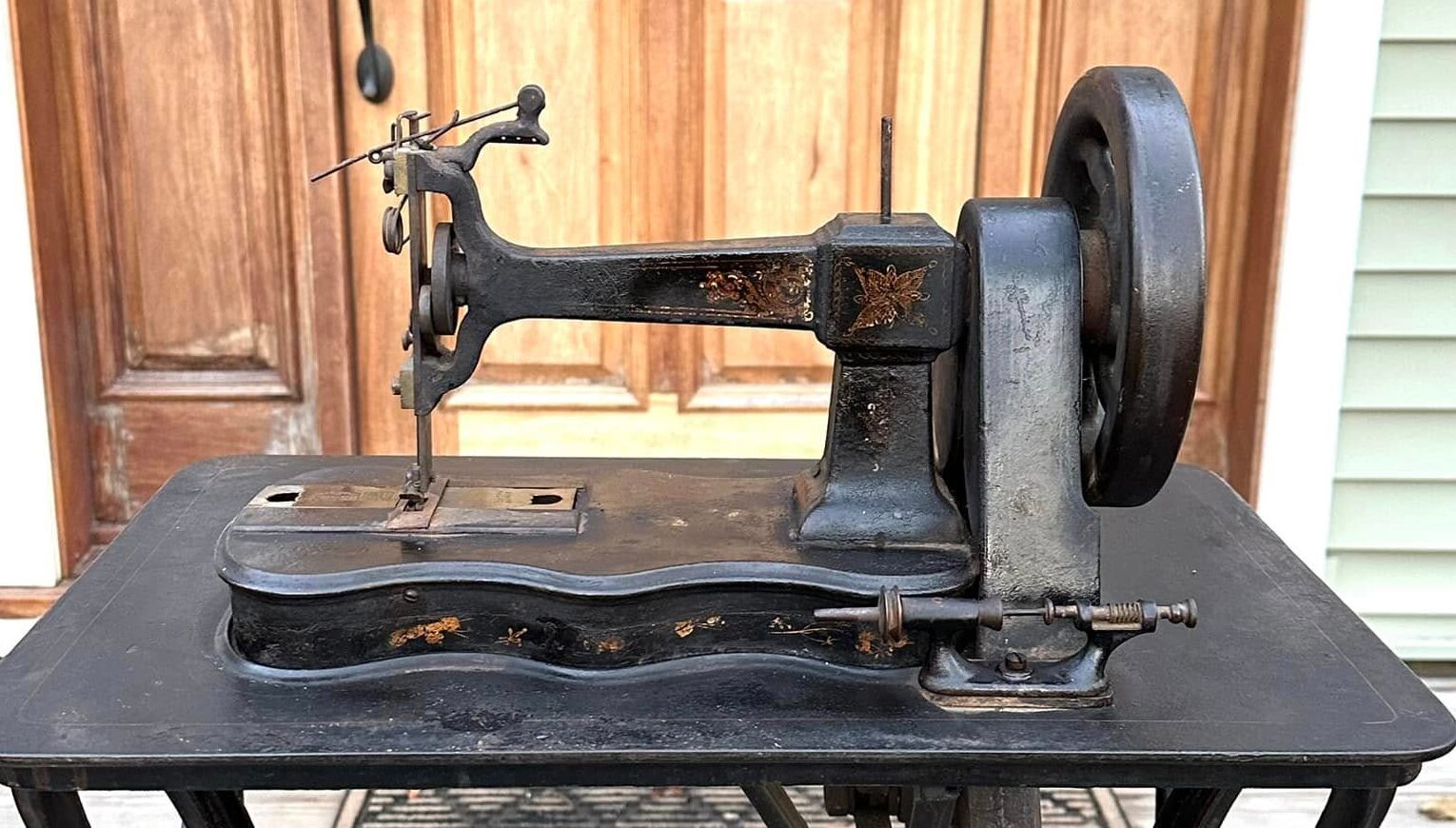
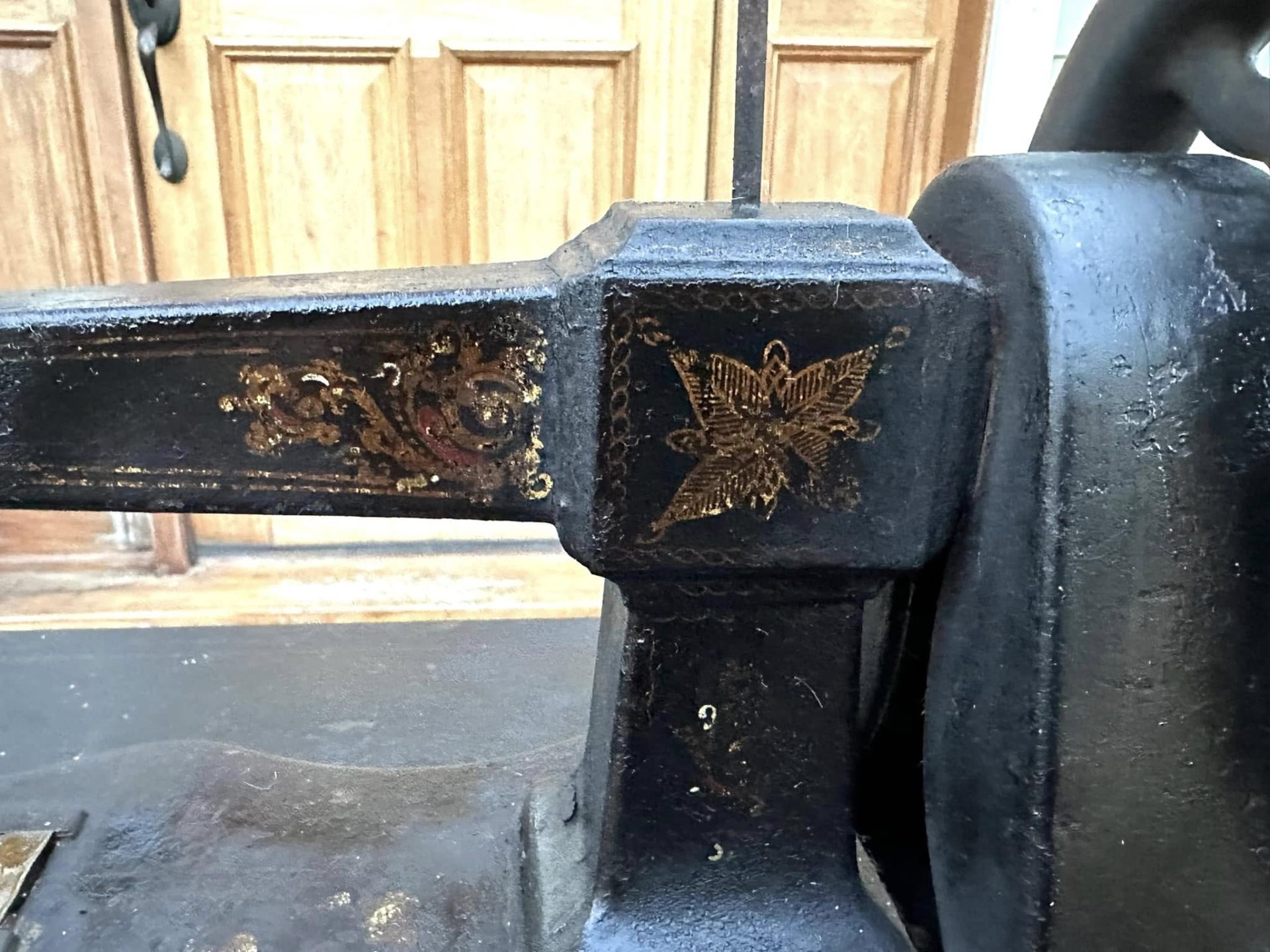
In use from 1859 up to 1865
In use for Classes:
- Letter A
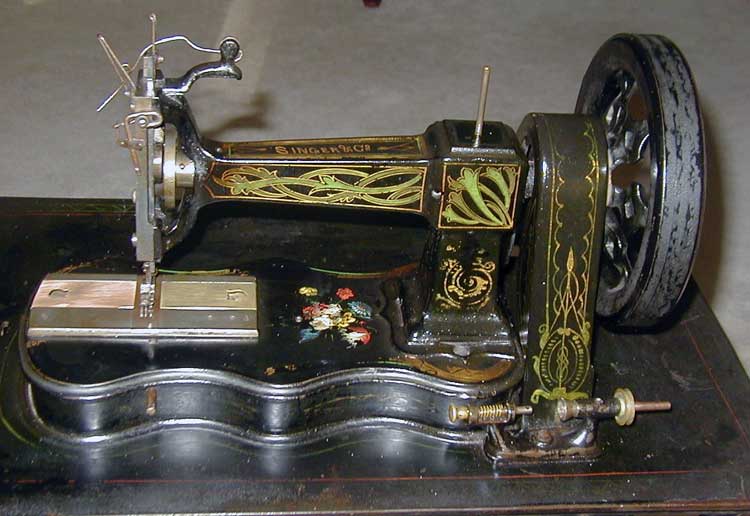
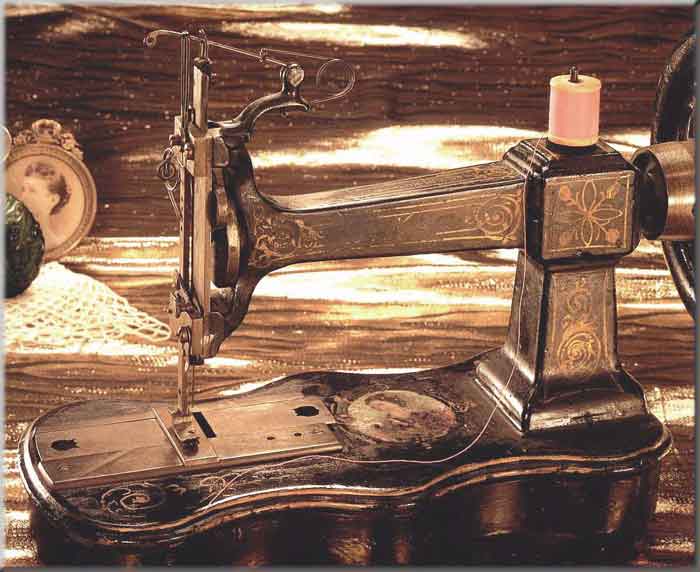
In use from 1862 up to 1862
In use for Classes:
- Letter A
Letter A models, introduced in late 1859, were hand decorated.
Documented Machines
(What does it mean?)Total n.: 1
Factories:
- New York Mott Street (USA)
Documented Classes:
- Letter A
Documented years: 1862
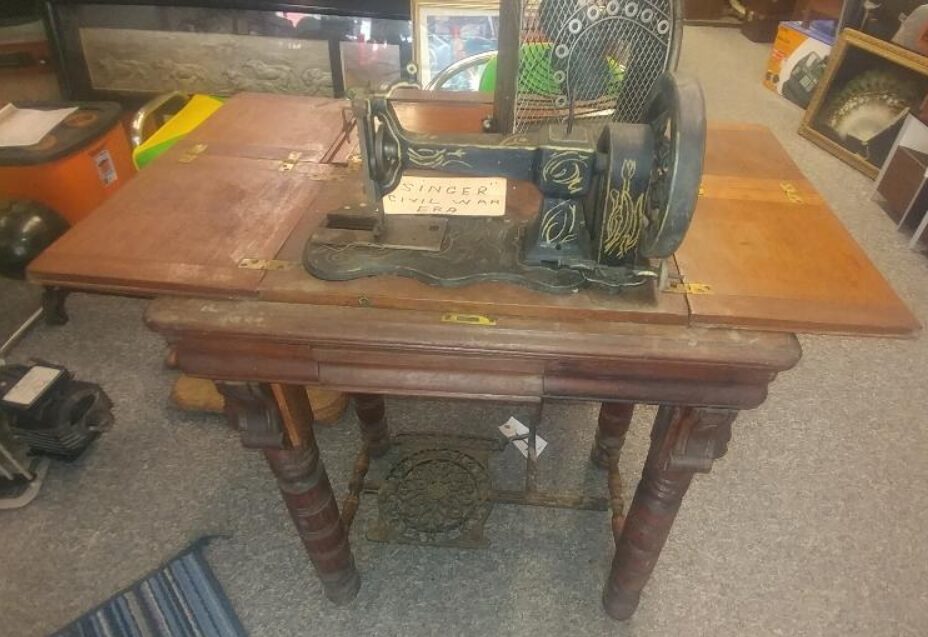
In use for Classes:
- 12 (New Family)
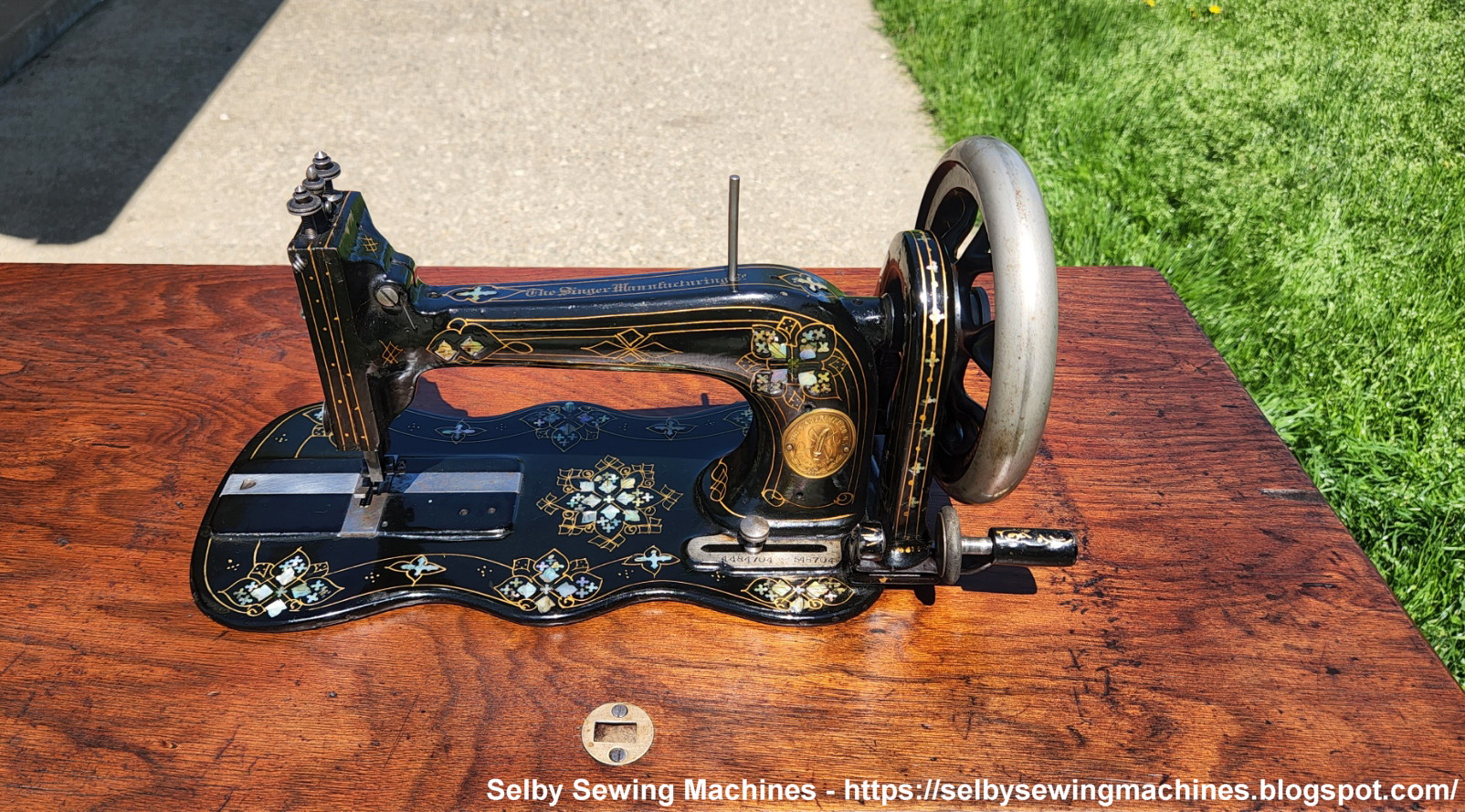
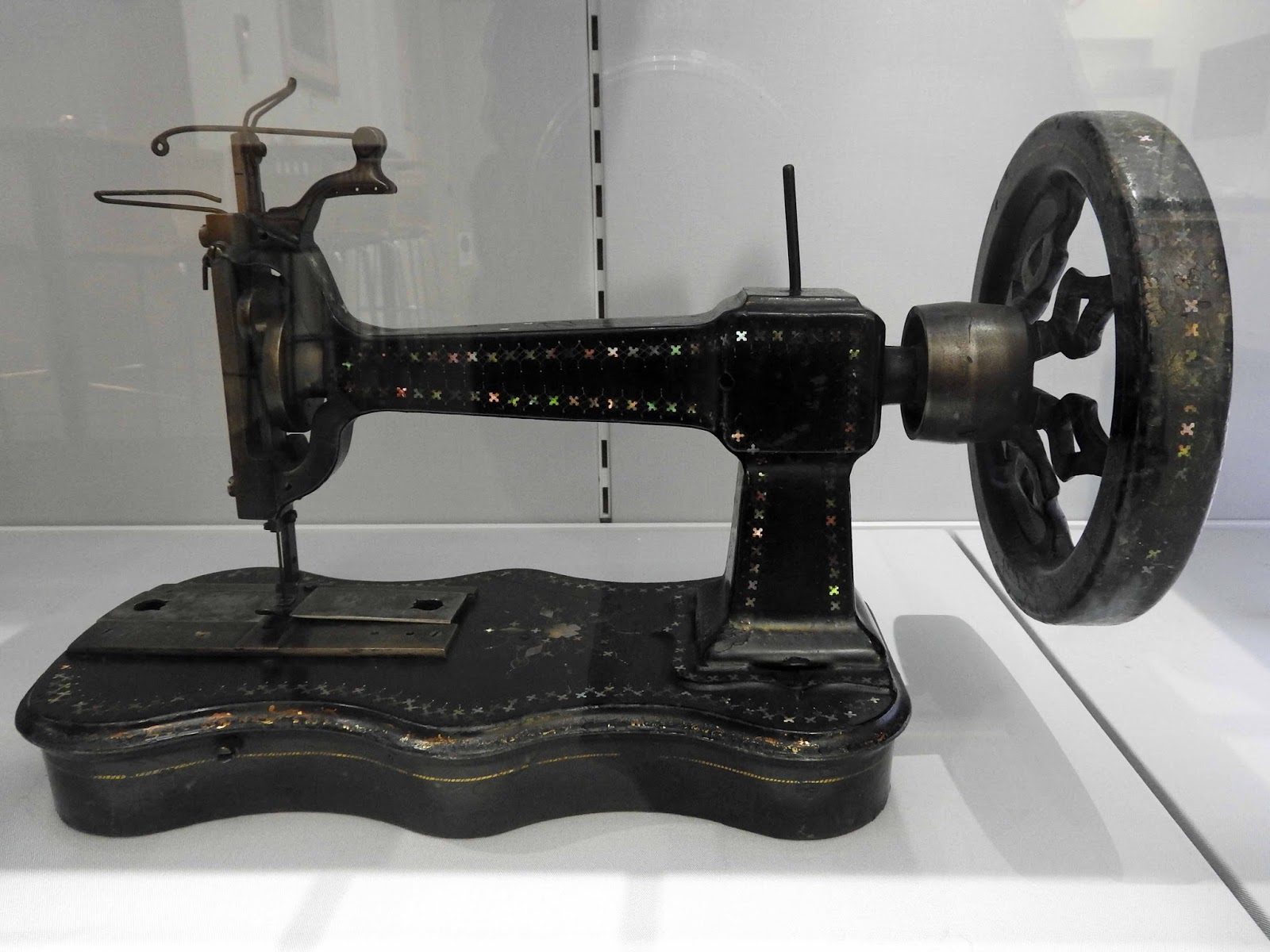
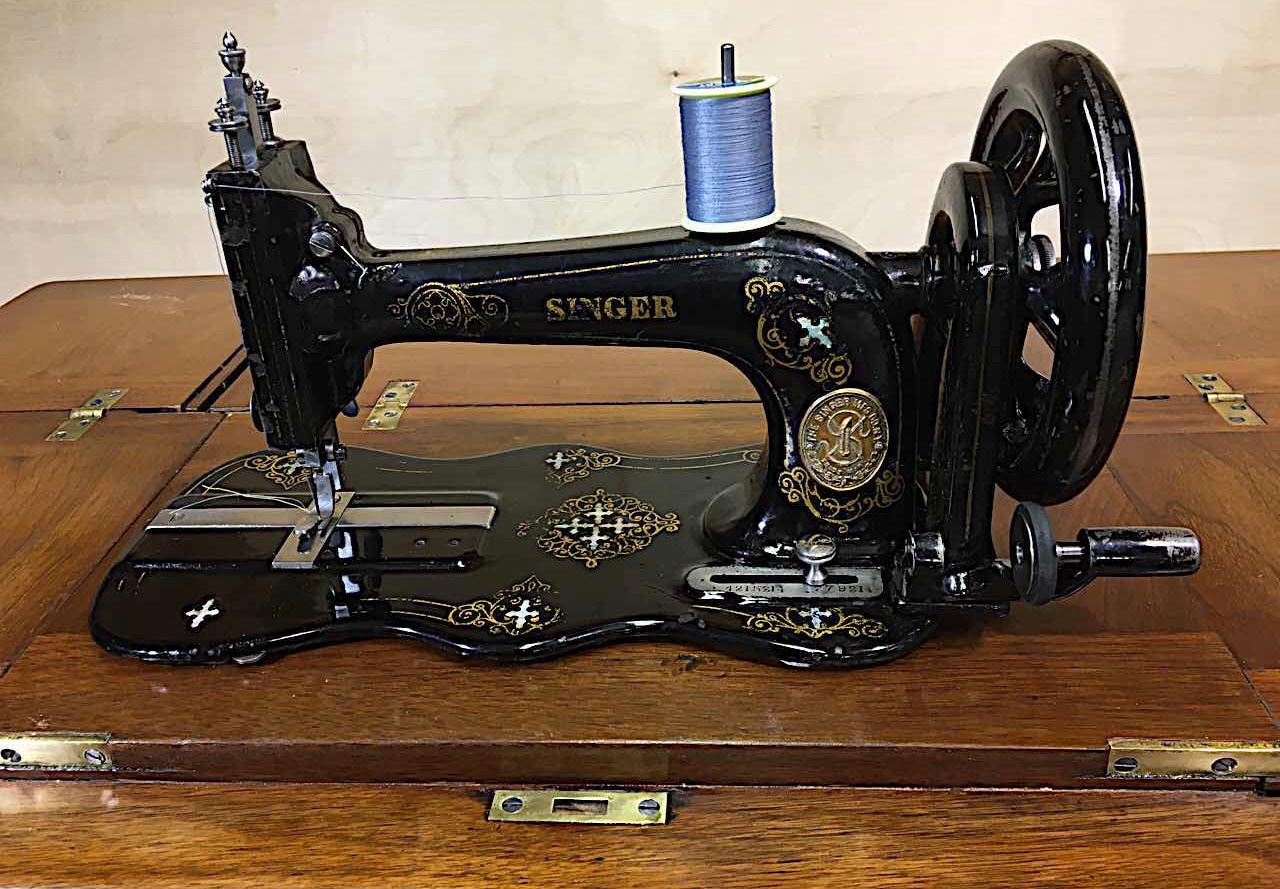
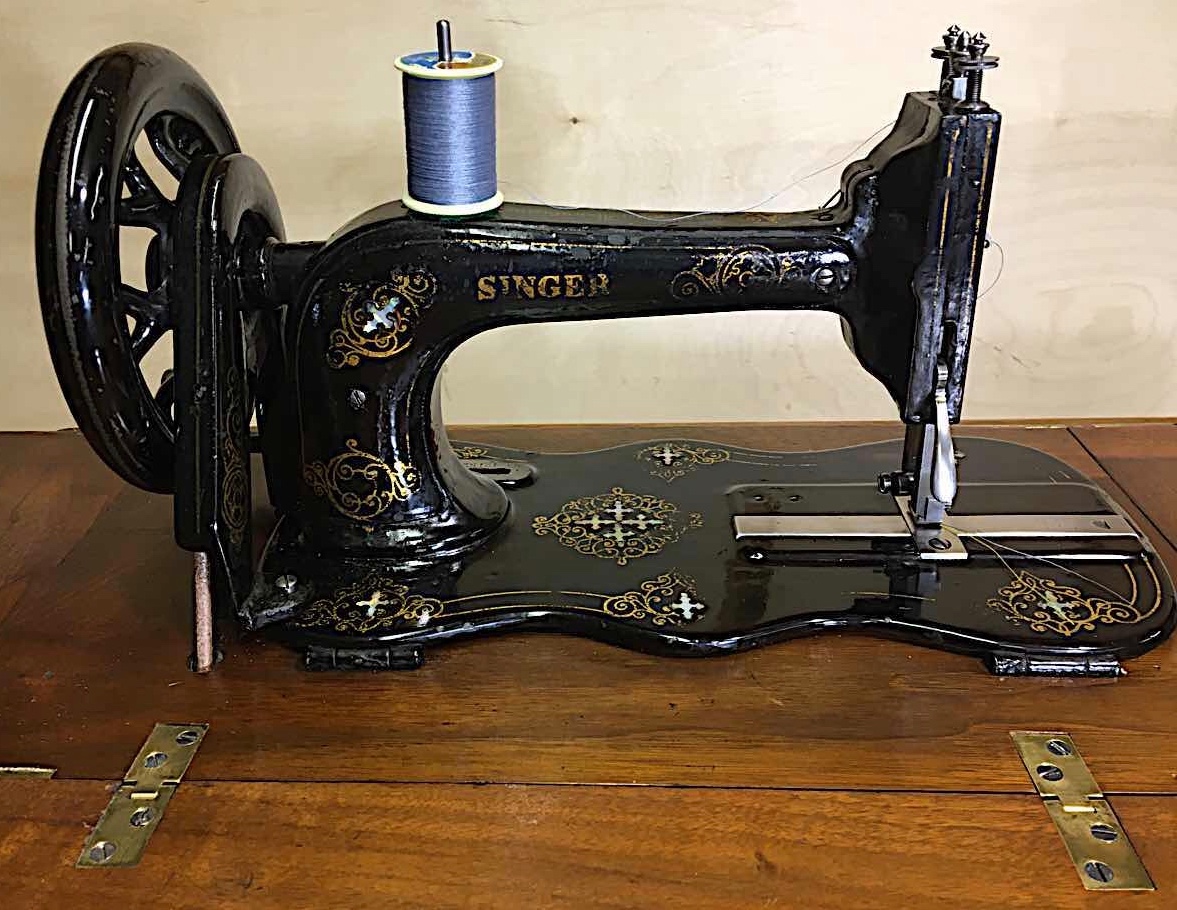
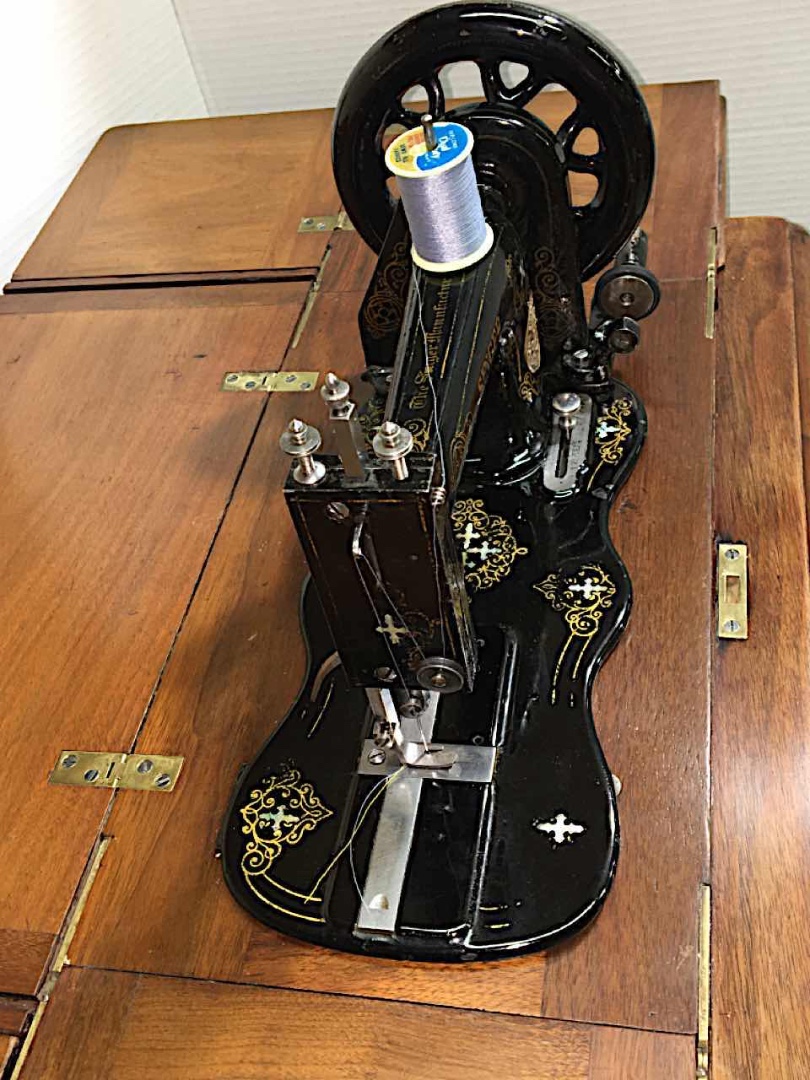
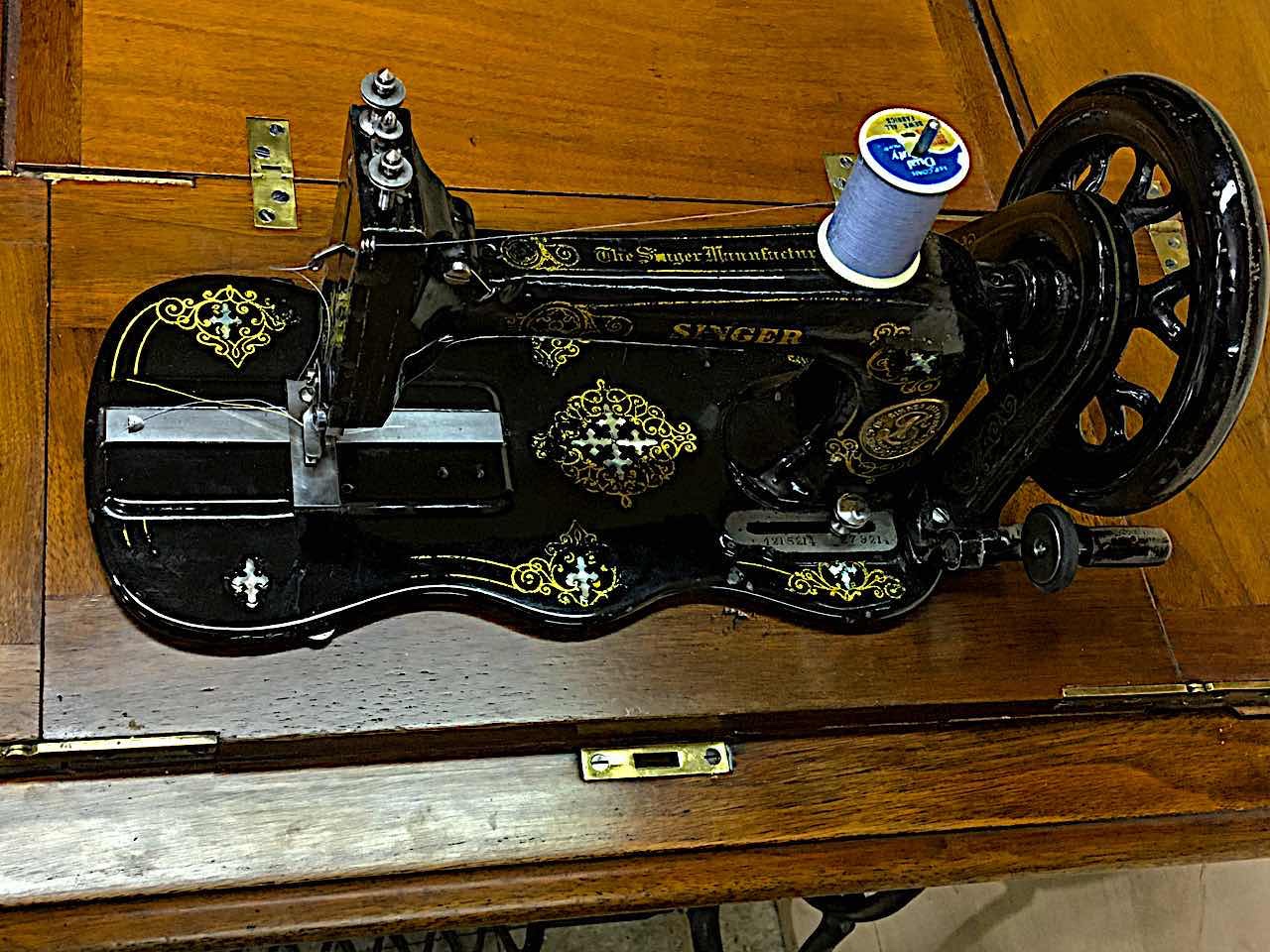
This mother-of-pearl decoration set is characterized by mother-of-pearl inserts in the shape of ornate crosses.
Documented Machines
(What does it mean?)Total n.: 1
Factories:
Documented Classes:
- 12
Documented years: 1881
In use for Classes:
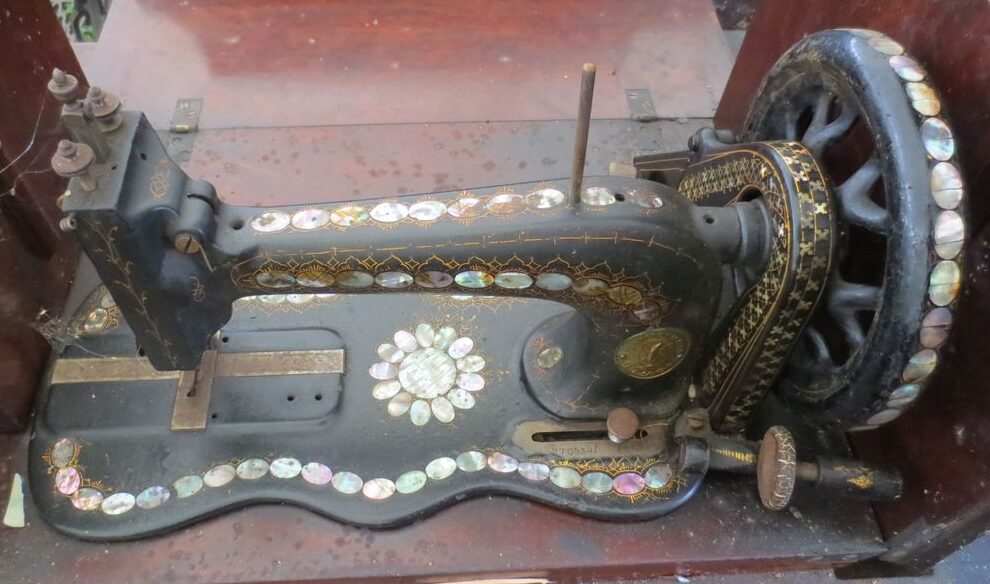
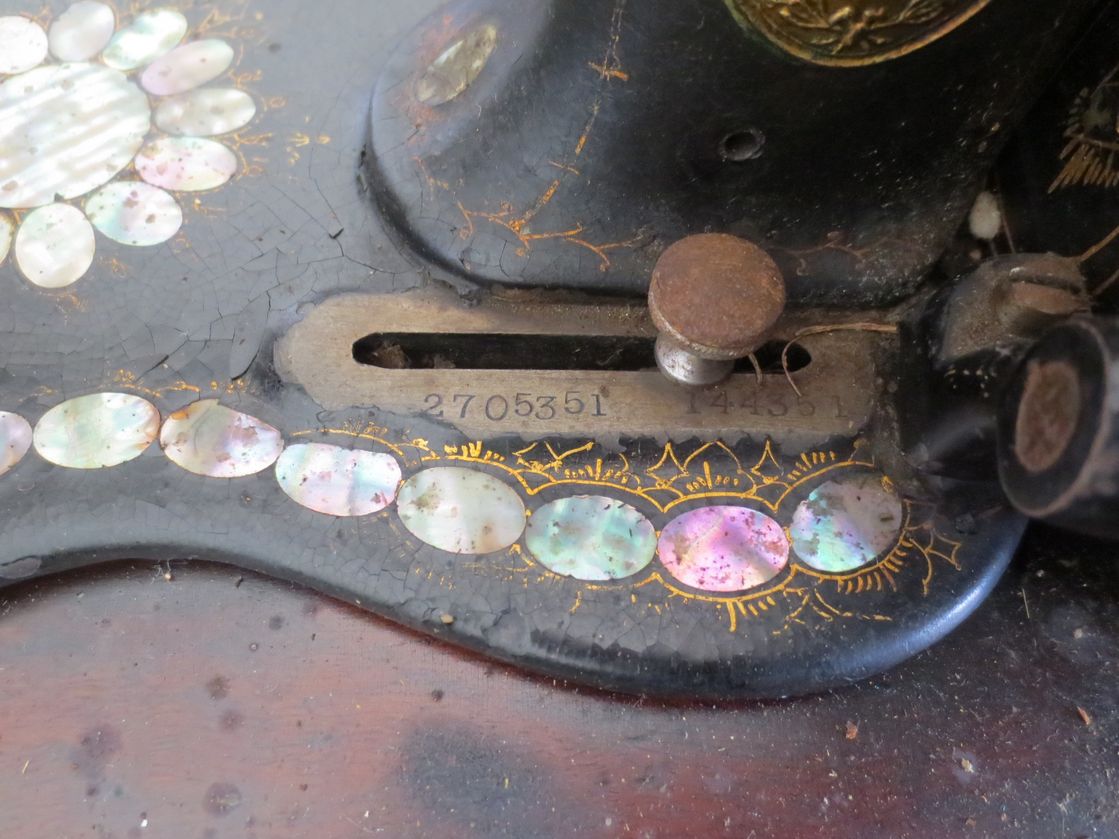
- 12 (New Family)
This decoration set features prominent rows of mother-of-pearl oval inlays.
Documented Machines
(What does it mean?)Total n.: 1
Factories:
Documented Classes:
- 12
Documented years: 1877
In use from 1884
In use for Classes:
- 12 (New Family)
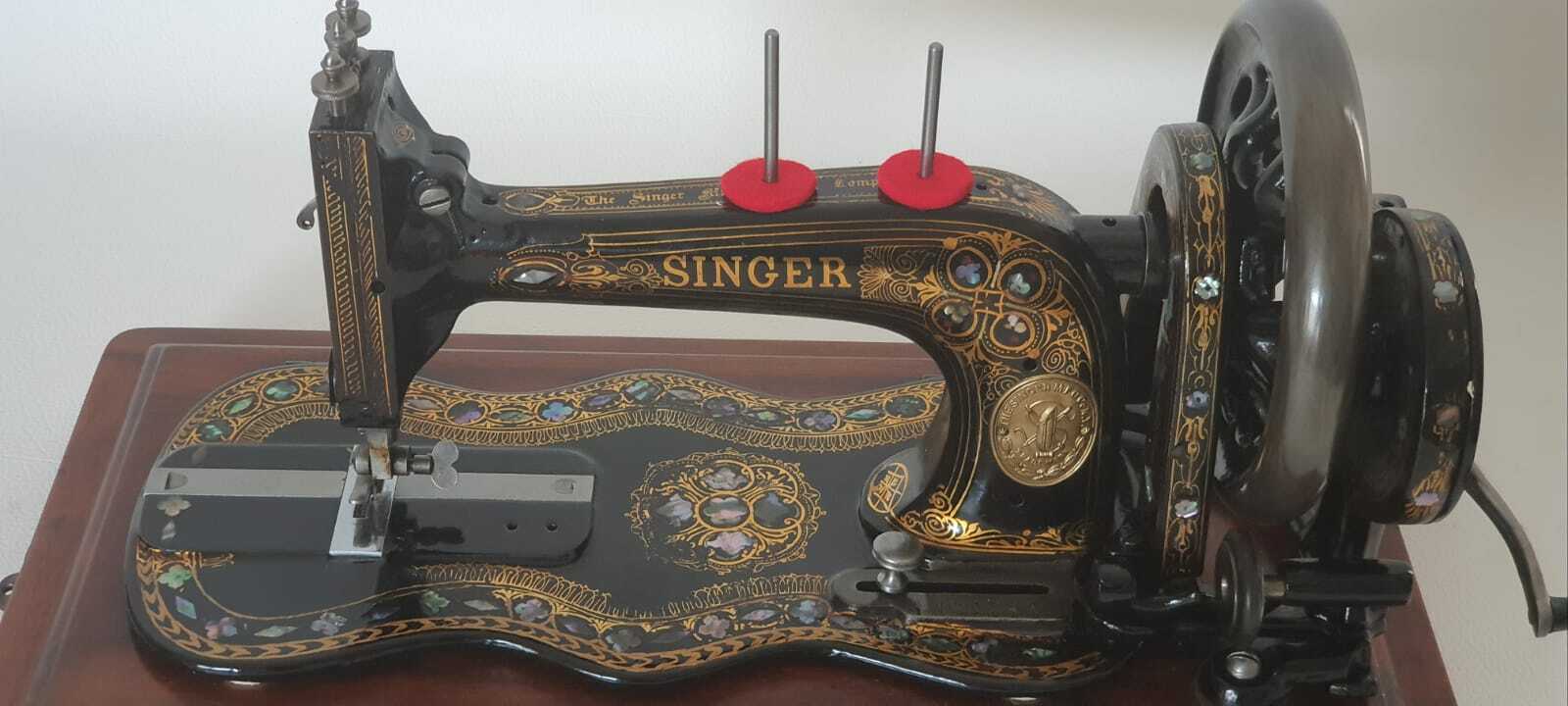
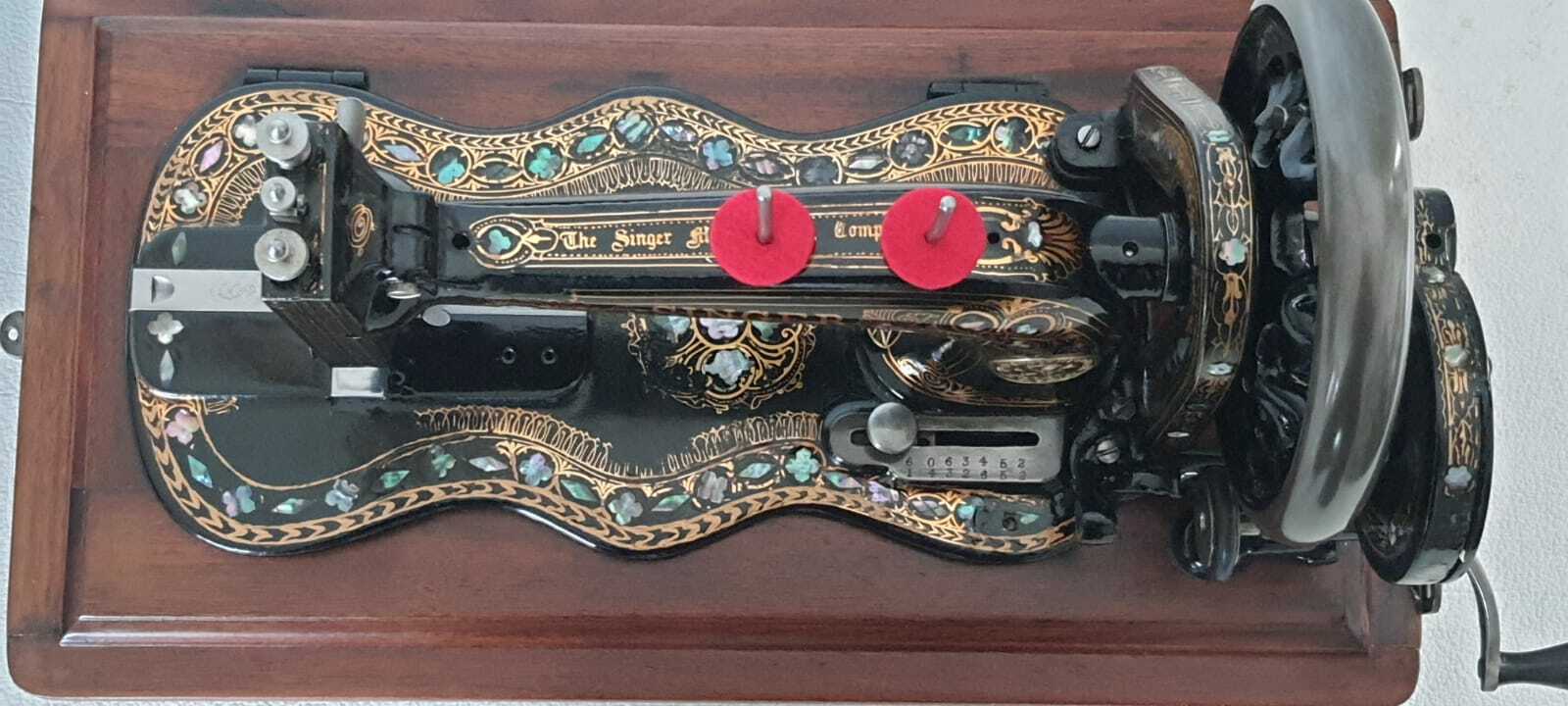
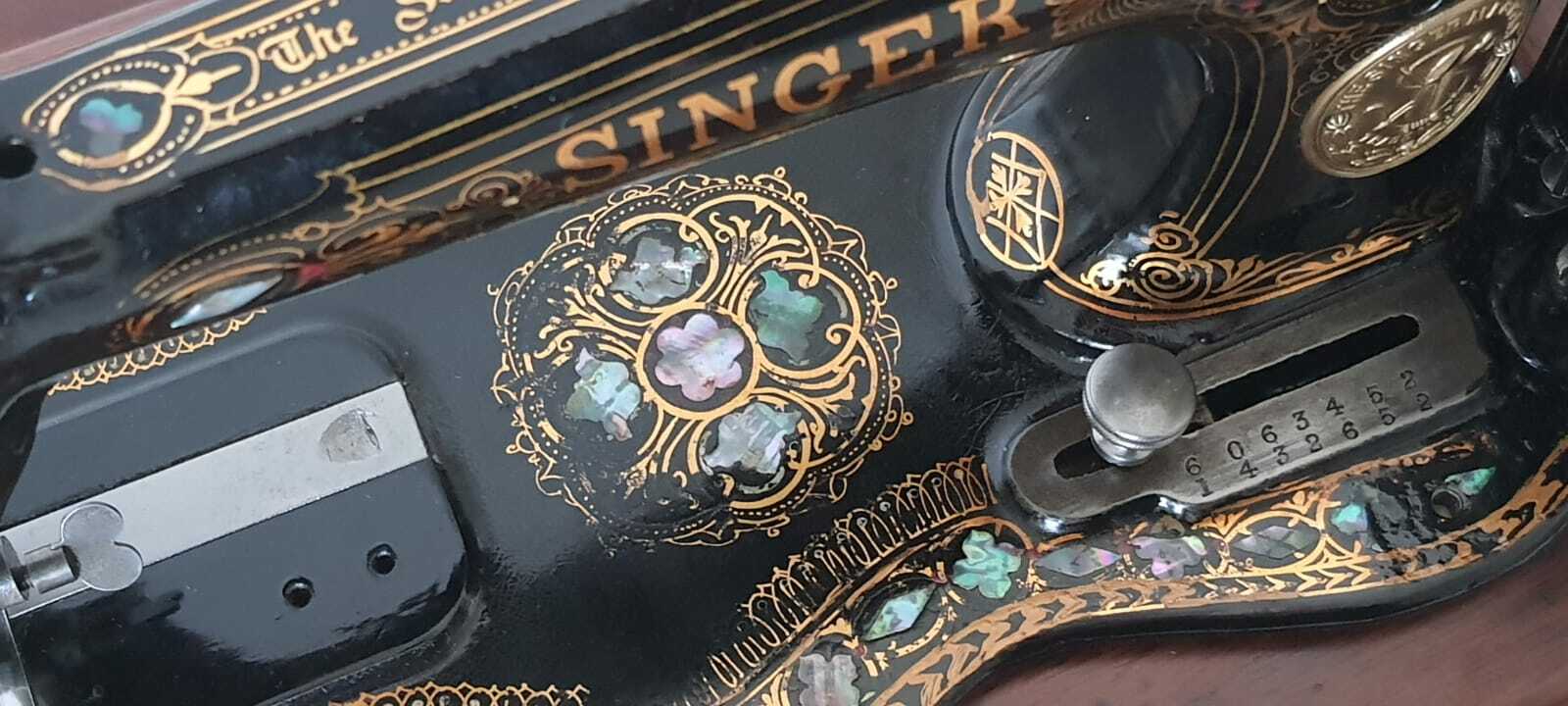
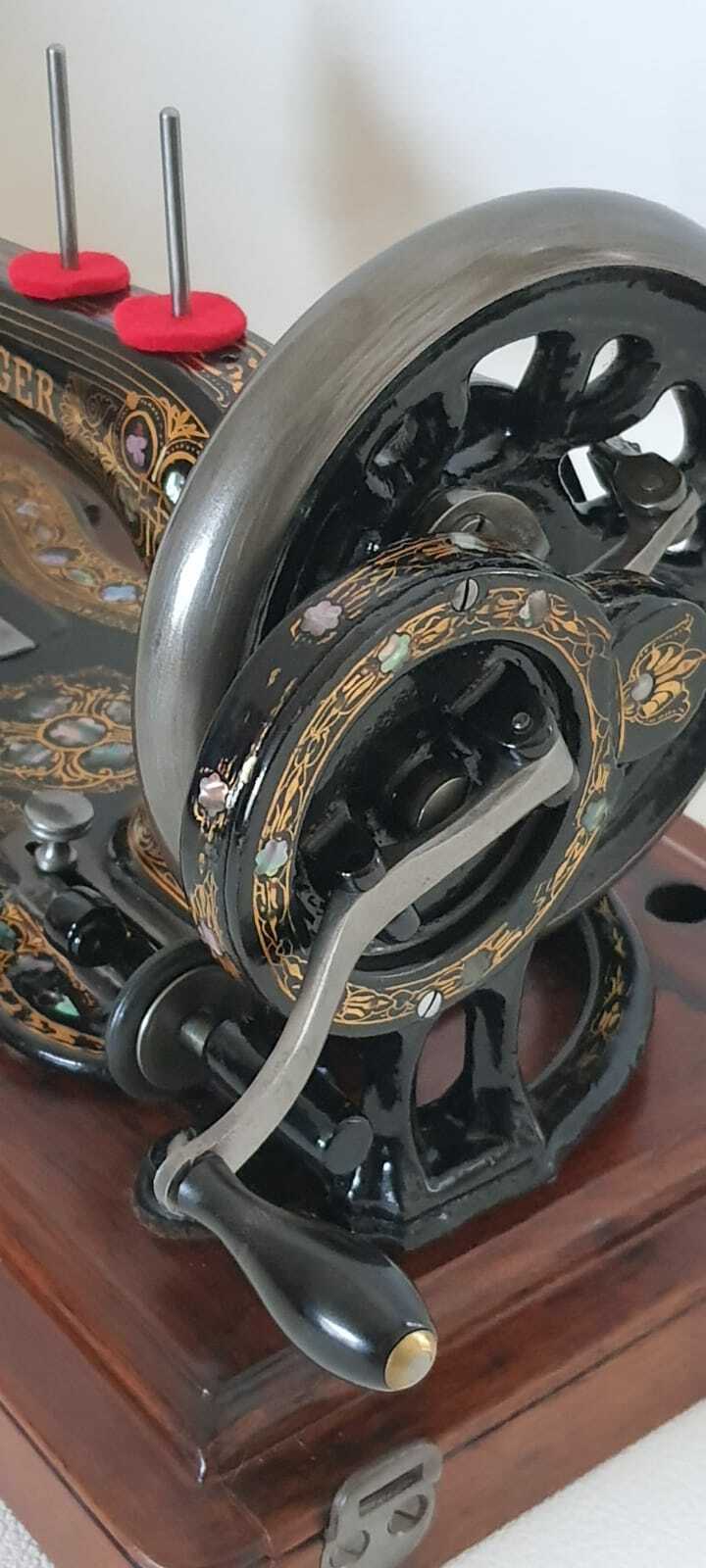
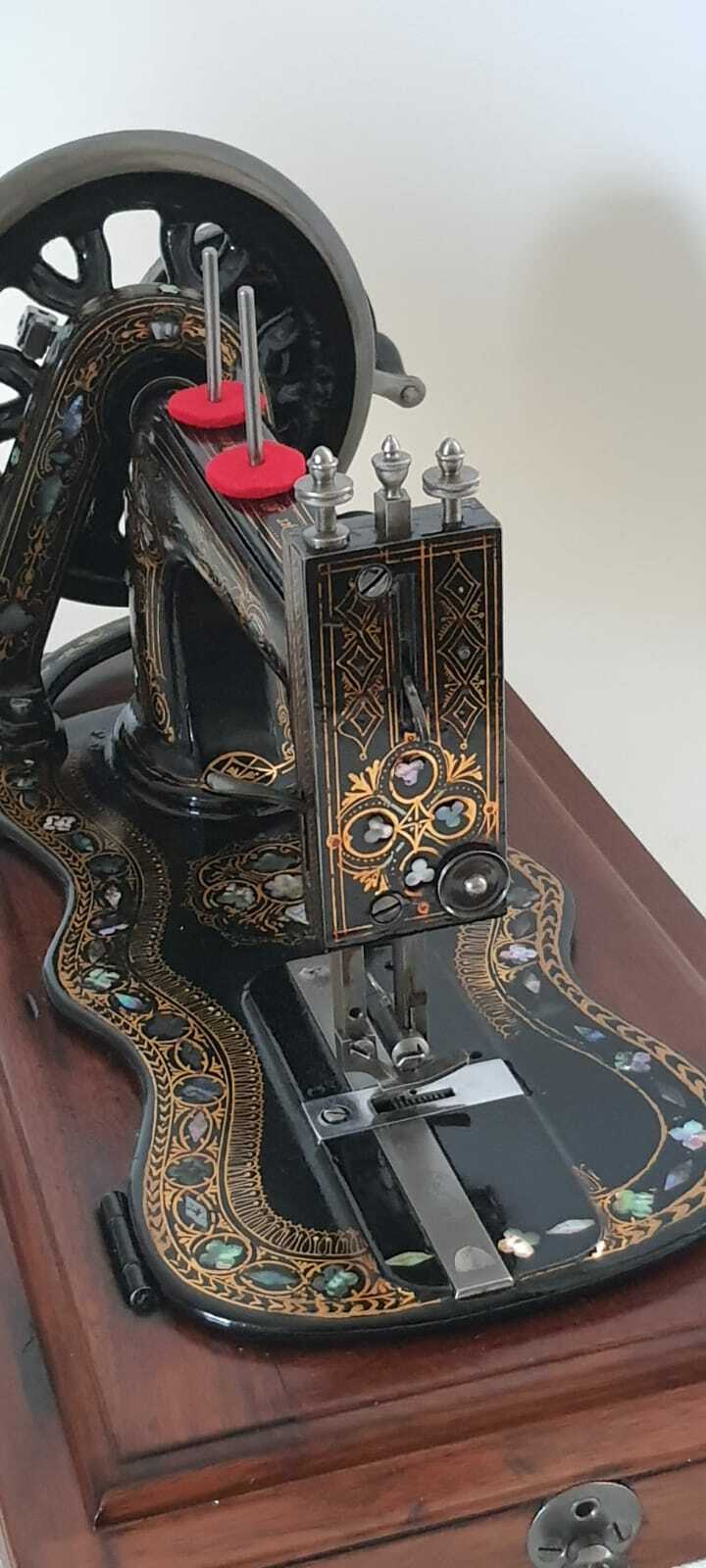
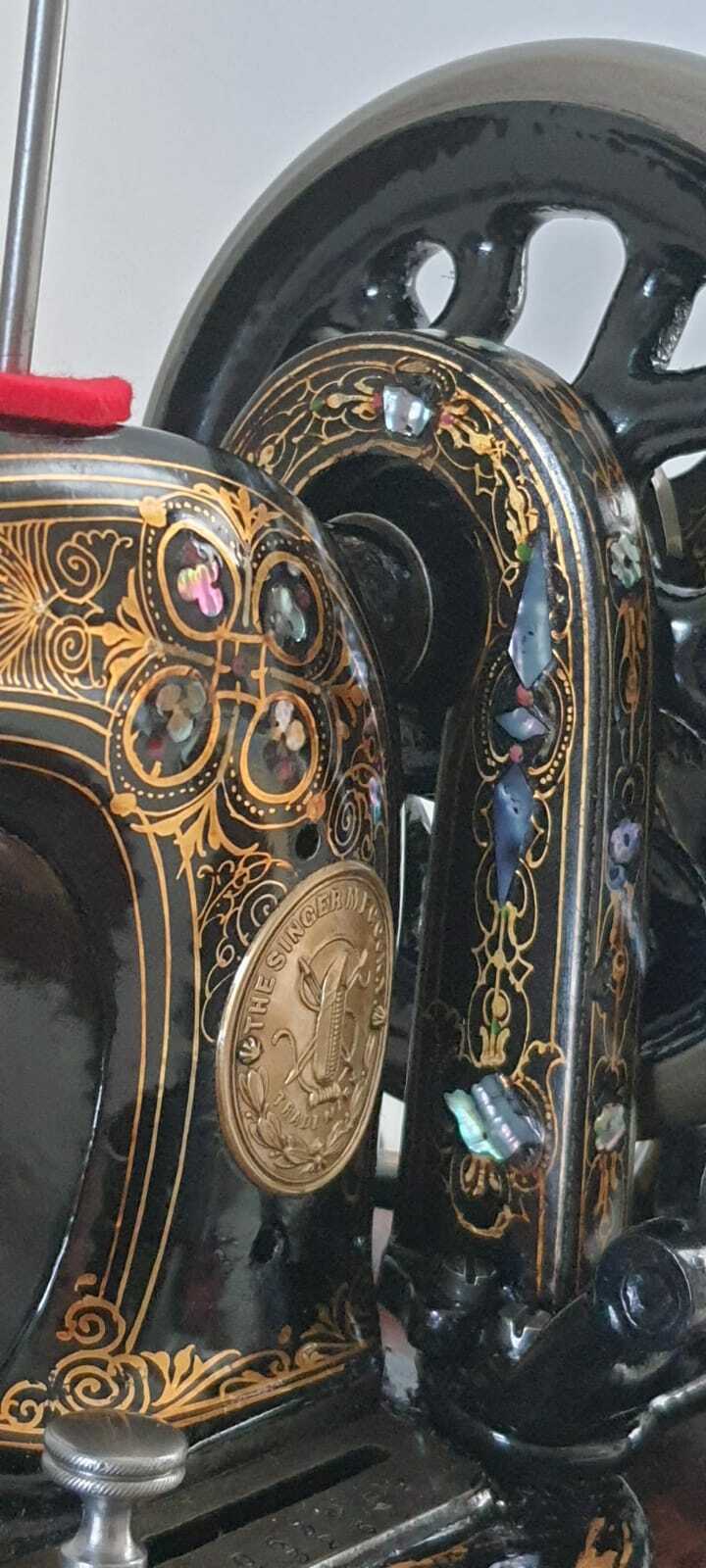
The mother-of-pearl inlays around the bed alternate quaterfoil shapes with pointy ovals
Documented Machines
(What does it mean?)Total n.: 1
Factories:
Documented Classes:
- 12
Documented years: 1884
In use from 1869 up to 1870
In use for Classes:
- 12 (New Family)
Documented Machines
(What does it mean?)Total n.: 1
Factories:
- New York Mott Street (USA)
Documented Classes:
- 12
Documented years: 1870
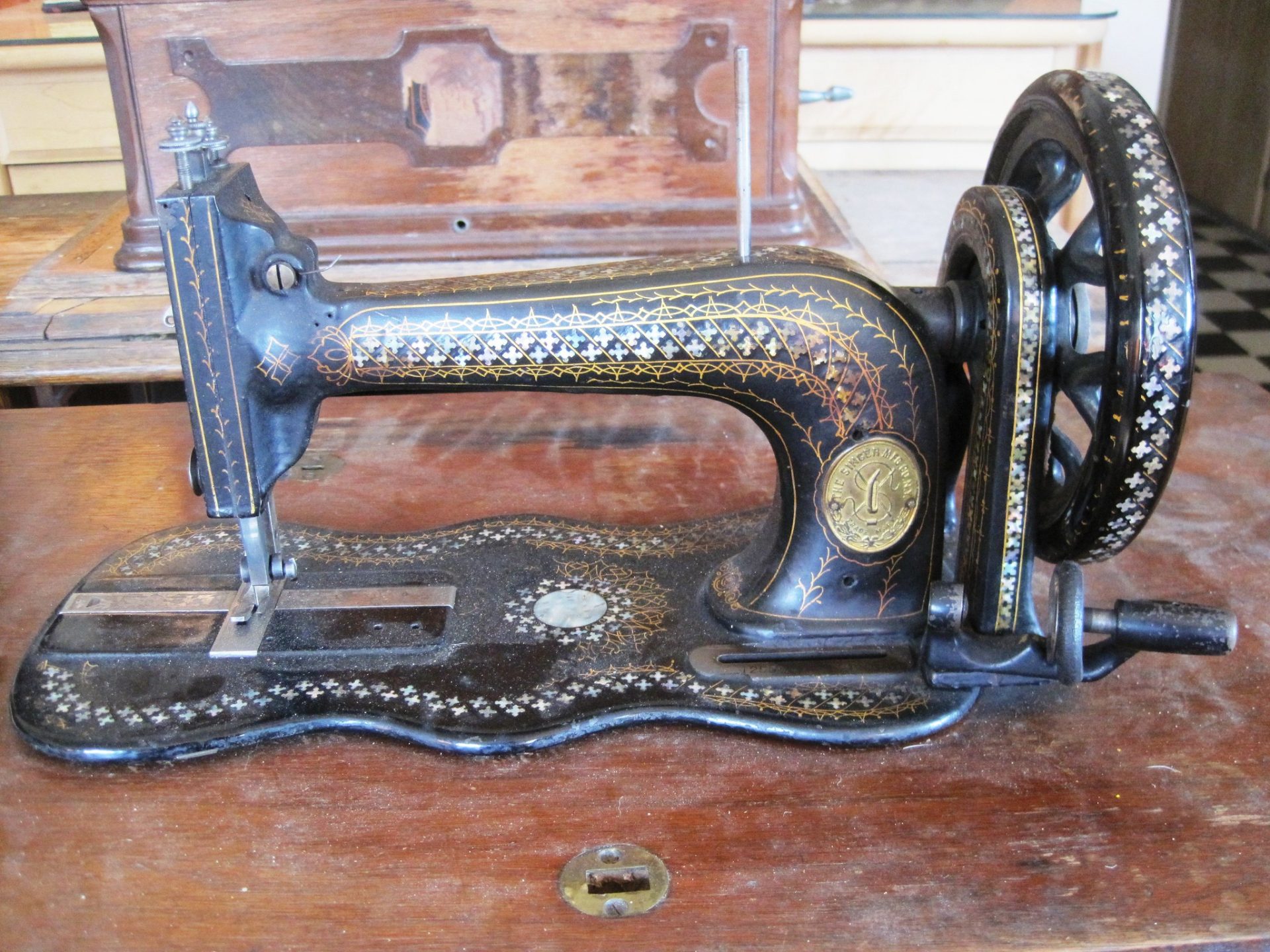
In use from 1876
In use for Classes:
- 12 (New Family)
Photo courtesy Gary Kleiner
Documented Machines
(What does it mean?)Total n.: 1
Factories:
Documented Classes:
- 12
Documented years: 1876
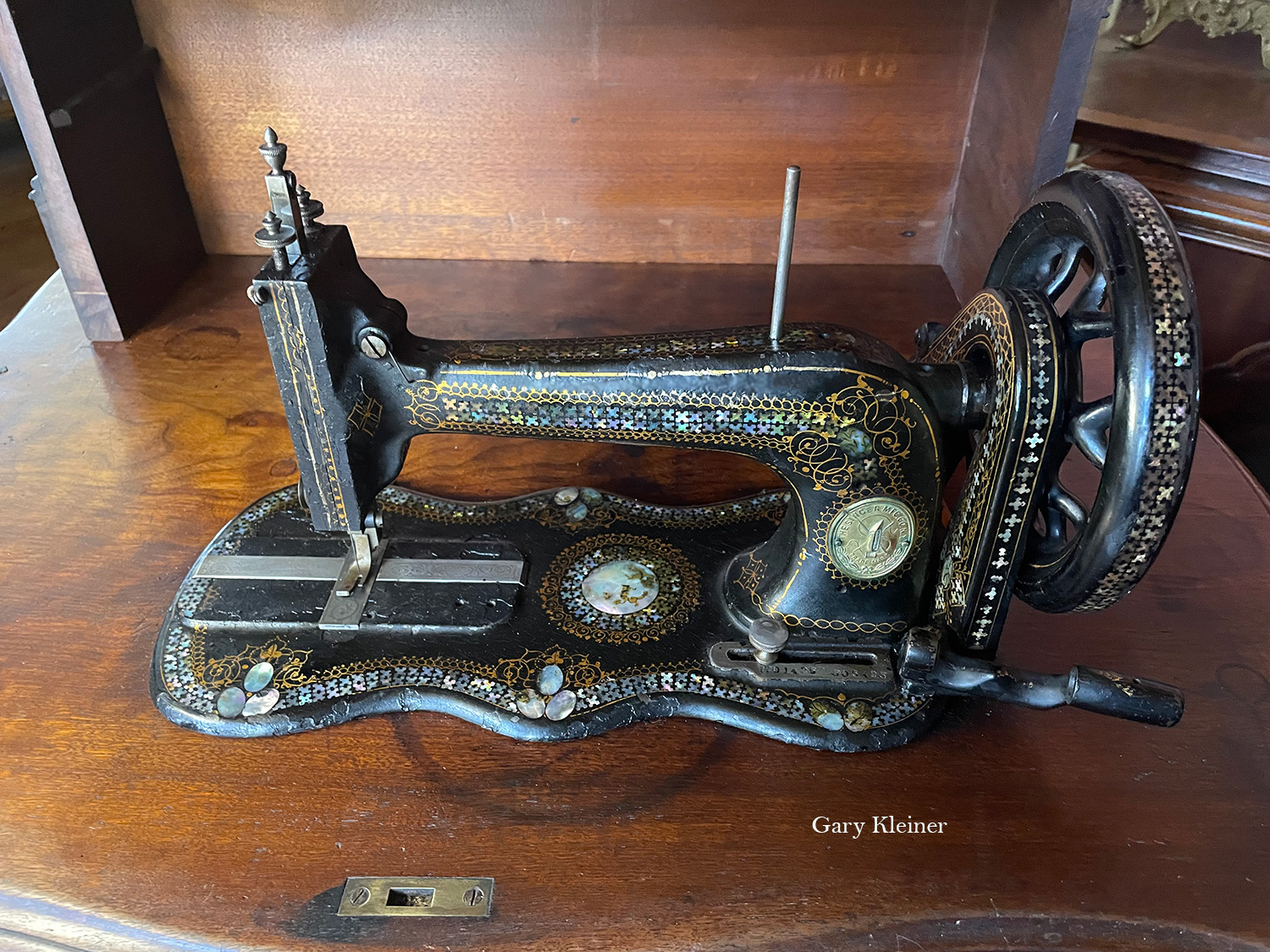
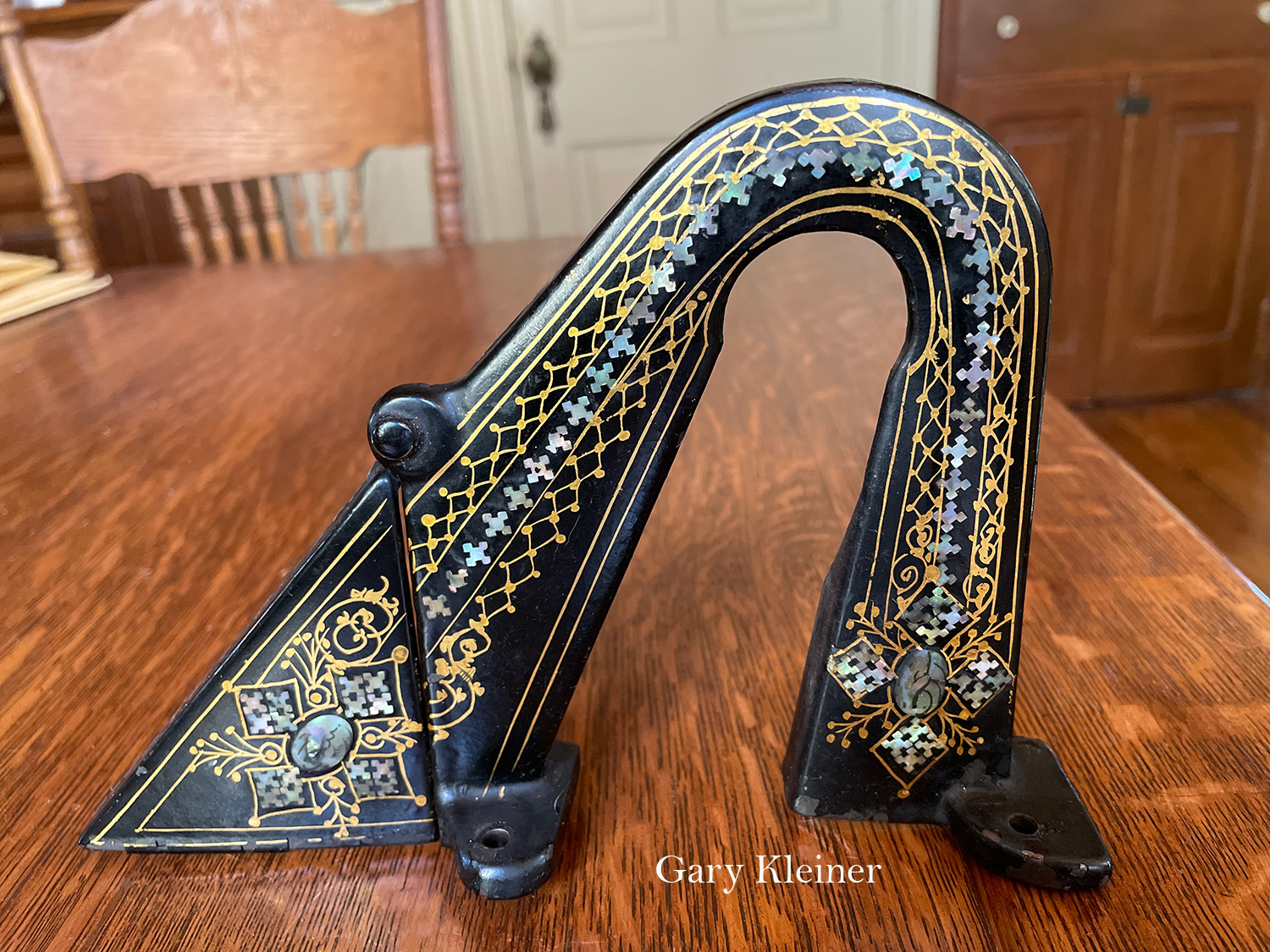
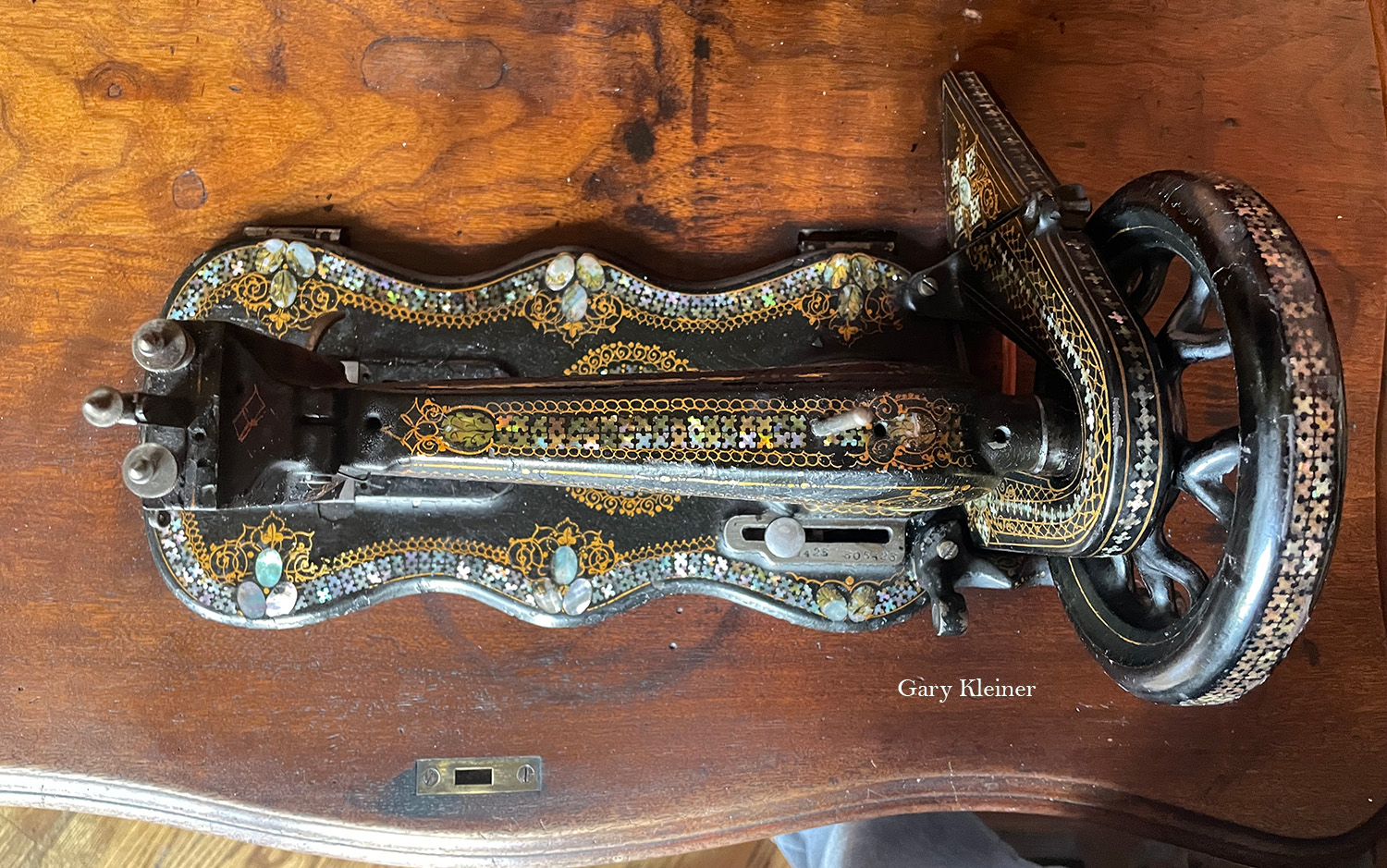
In use from 1869
In use for Classes:
- 12 (New Family)
This mother-of-pearl decoration set is similar to variant #3, with the same groups of three egg-shaped inlays around the bed, but with a different central decoration.
Documented Machines
(What does it mean?)Total n.: 1
Factories:
- New York Mott Street (USA)
Documented Classes:
- 12
Documented years: 1869
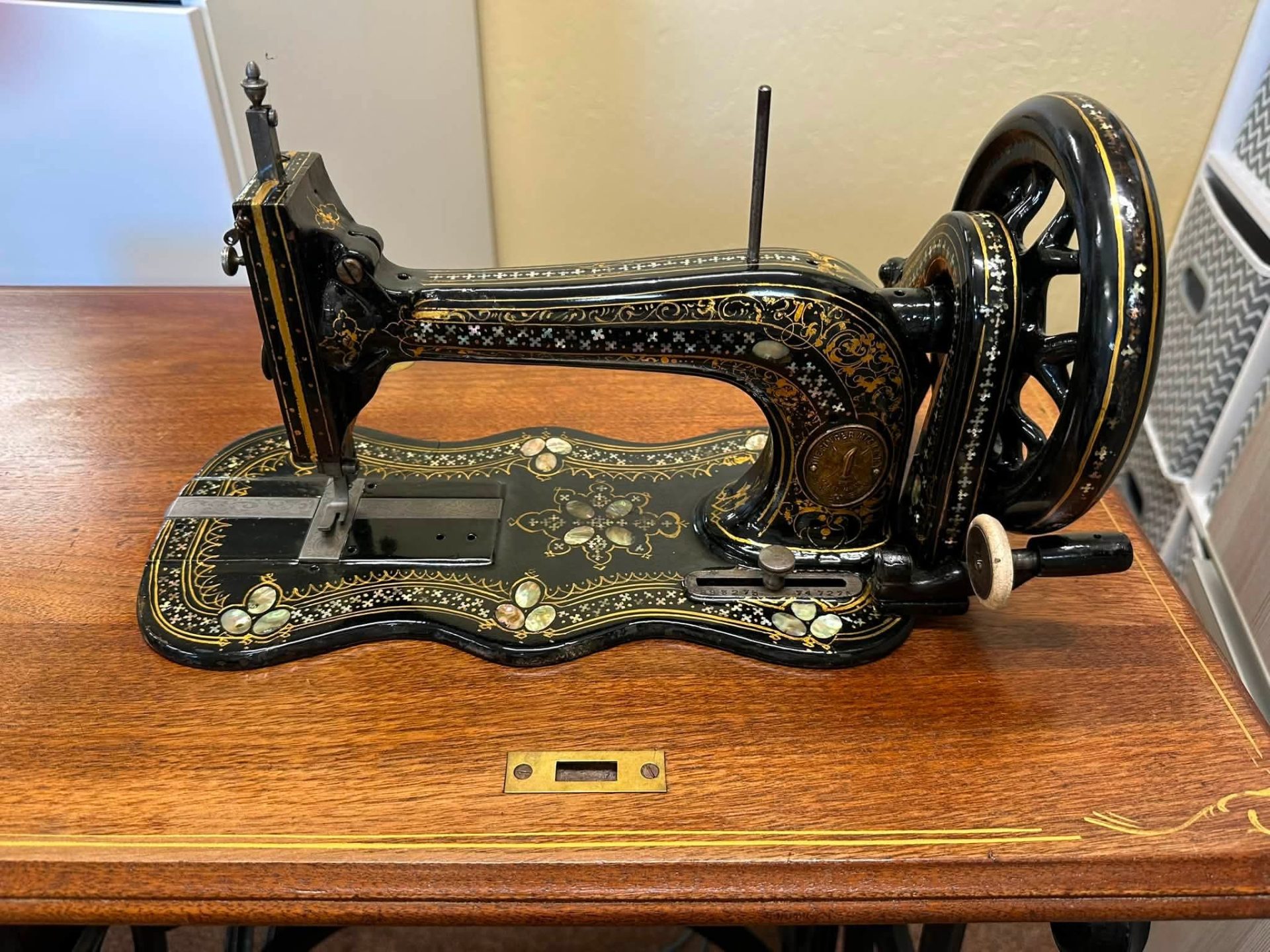
In use from 1881
In use for Classes:
- 12 (New Family)
This decoration set has a border around the bed with a series of egg-shaped inlays, highly ornated with gold Lotus leaves.
Documented Machines
(What does it mean?)Total n.: 1
Factories:
- James Street, Bridgeton, Glasgow (Scotland, UK)
Documented Classes:
- 12
Documented years: 1881
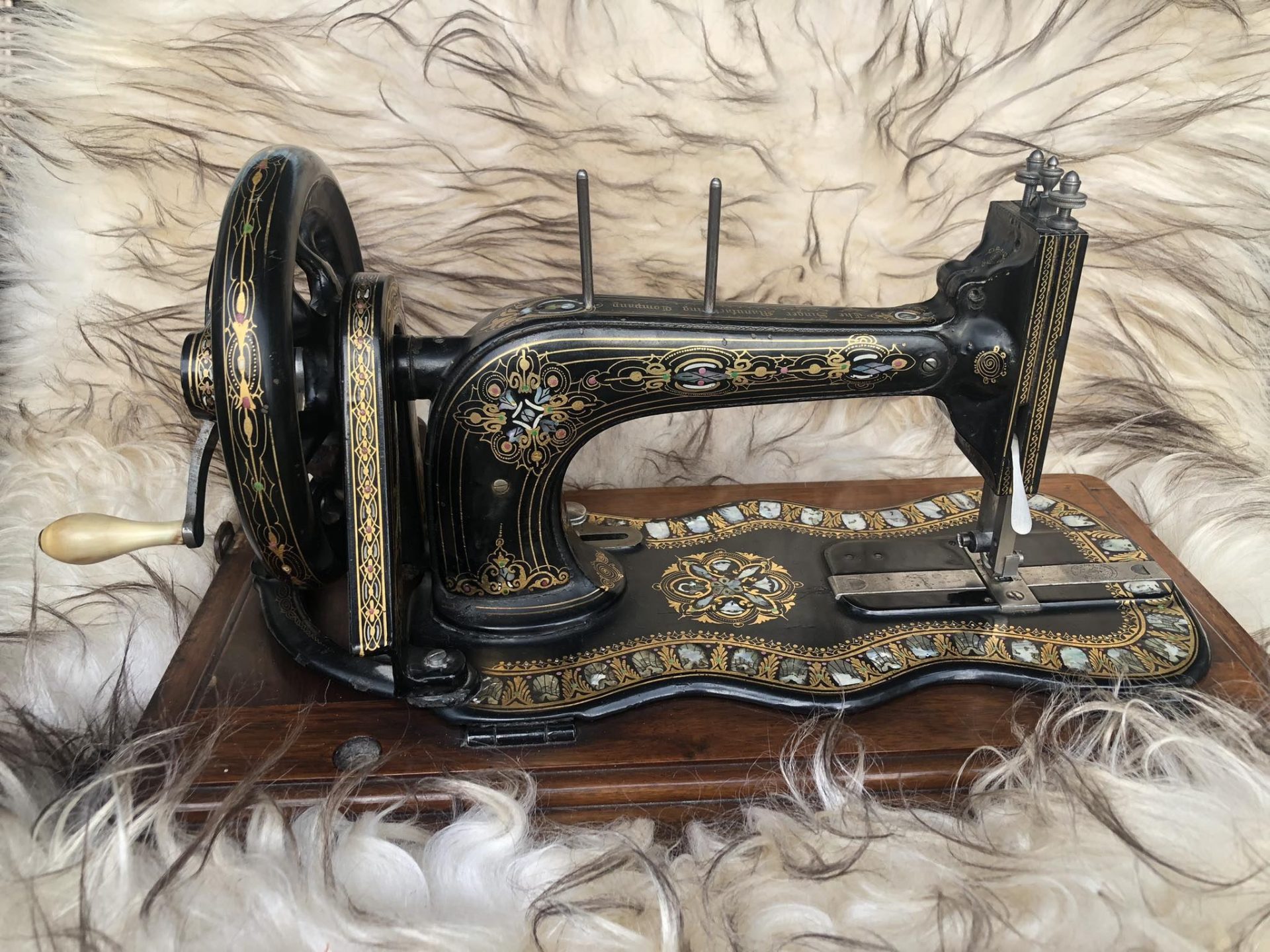
In use up to 1885
In use for Classes:
- 12 (New Family)
This decoration set is a variant of the Mother-of-Pearl, where the border around the fiddlebase has a continuous line of mother-of-pearl inlays.
Documented Machines
(What does it mean?)Total n.: 1
Factories:
Documented Classes:
- 12
Documented years: 1885
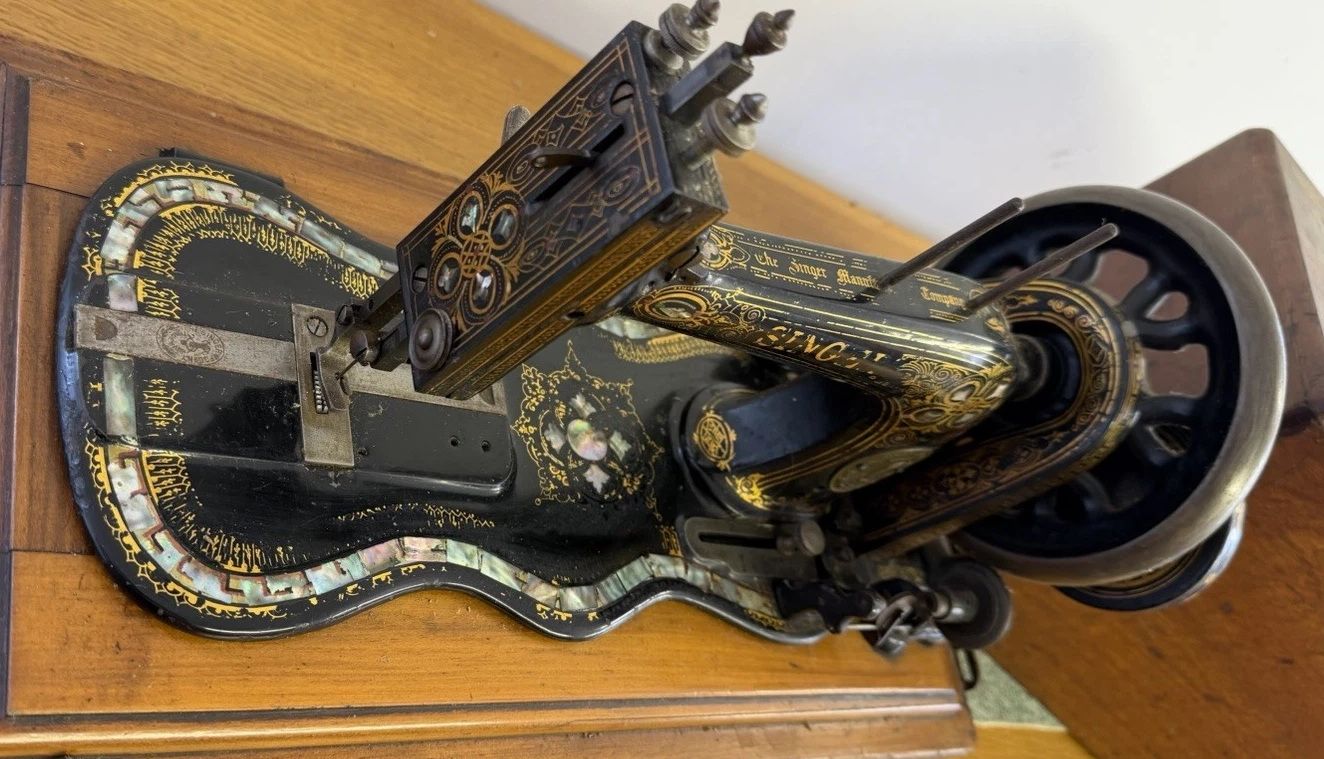
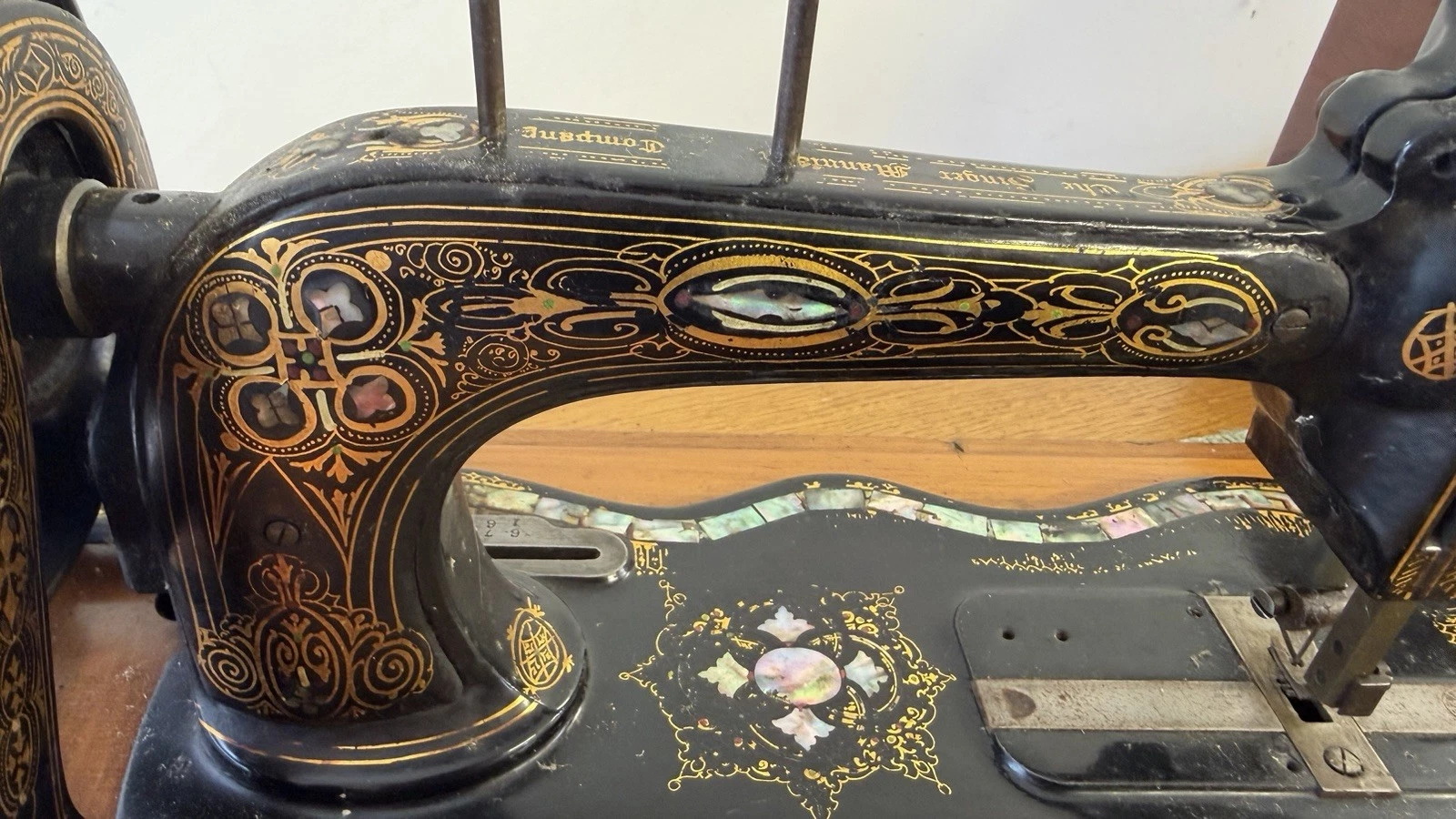
In use from 1889
In use for Classes:
- 27K (VS2)
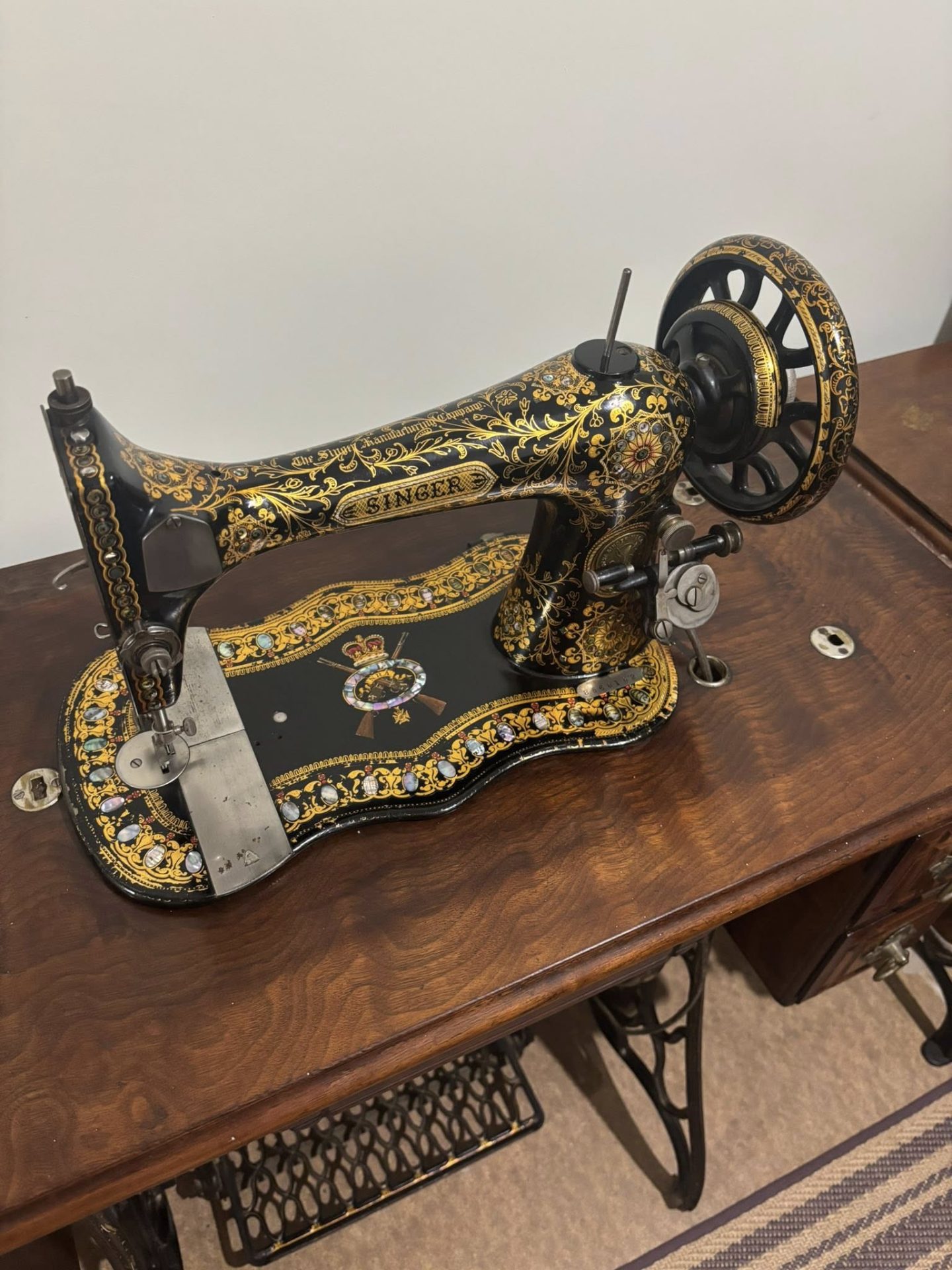
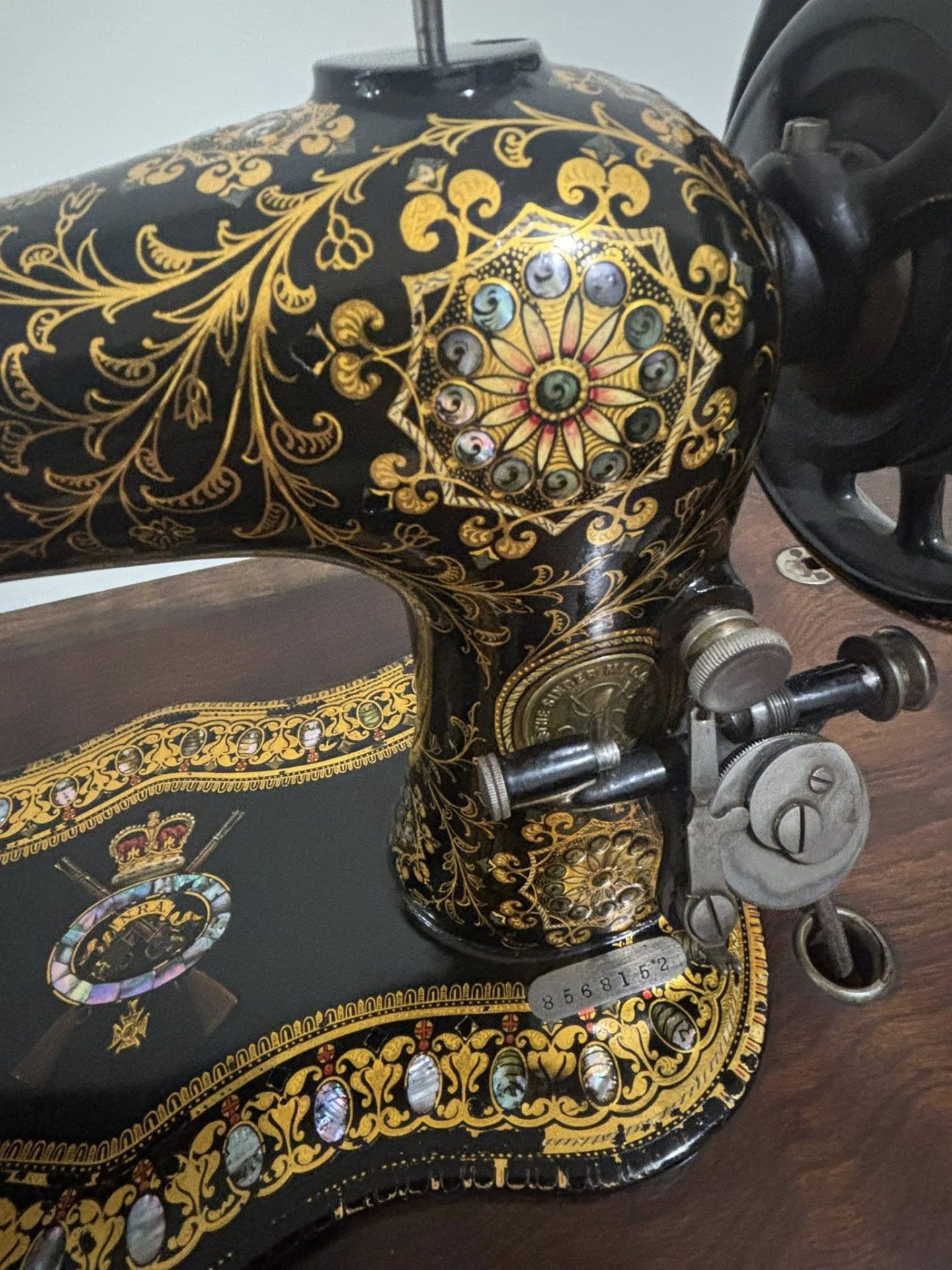
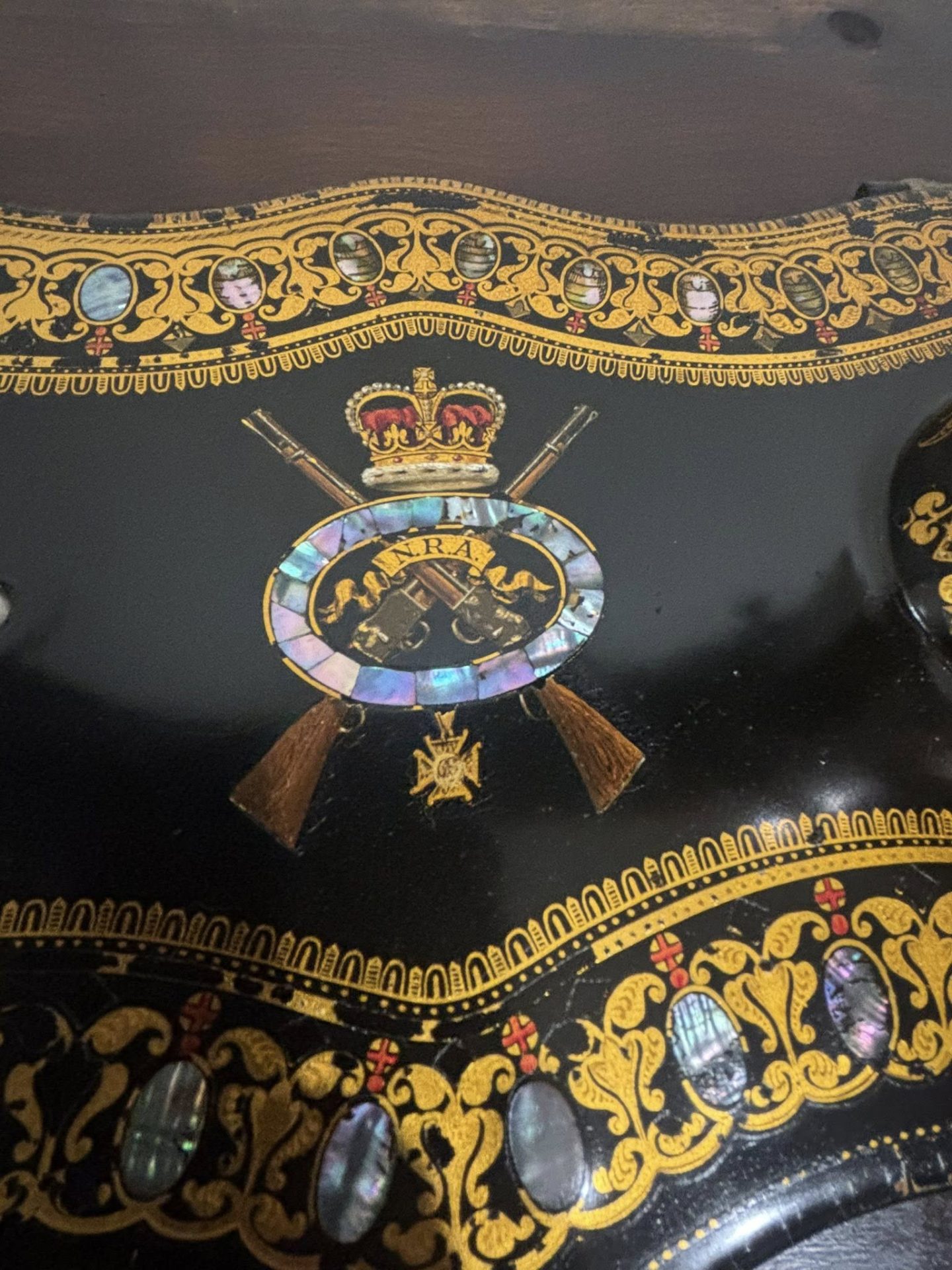
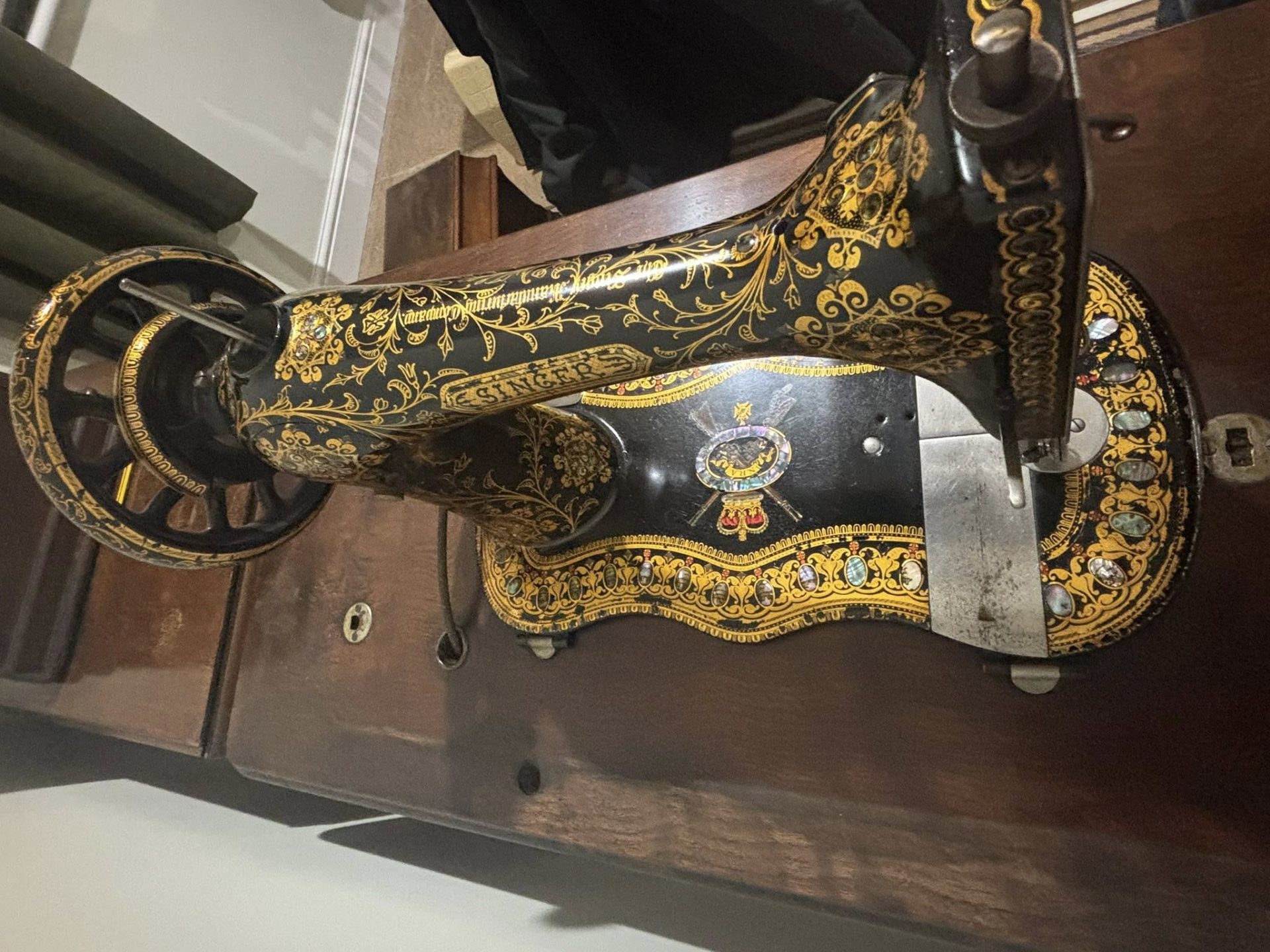
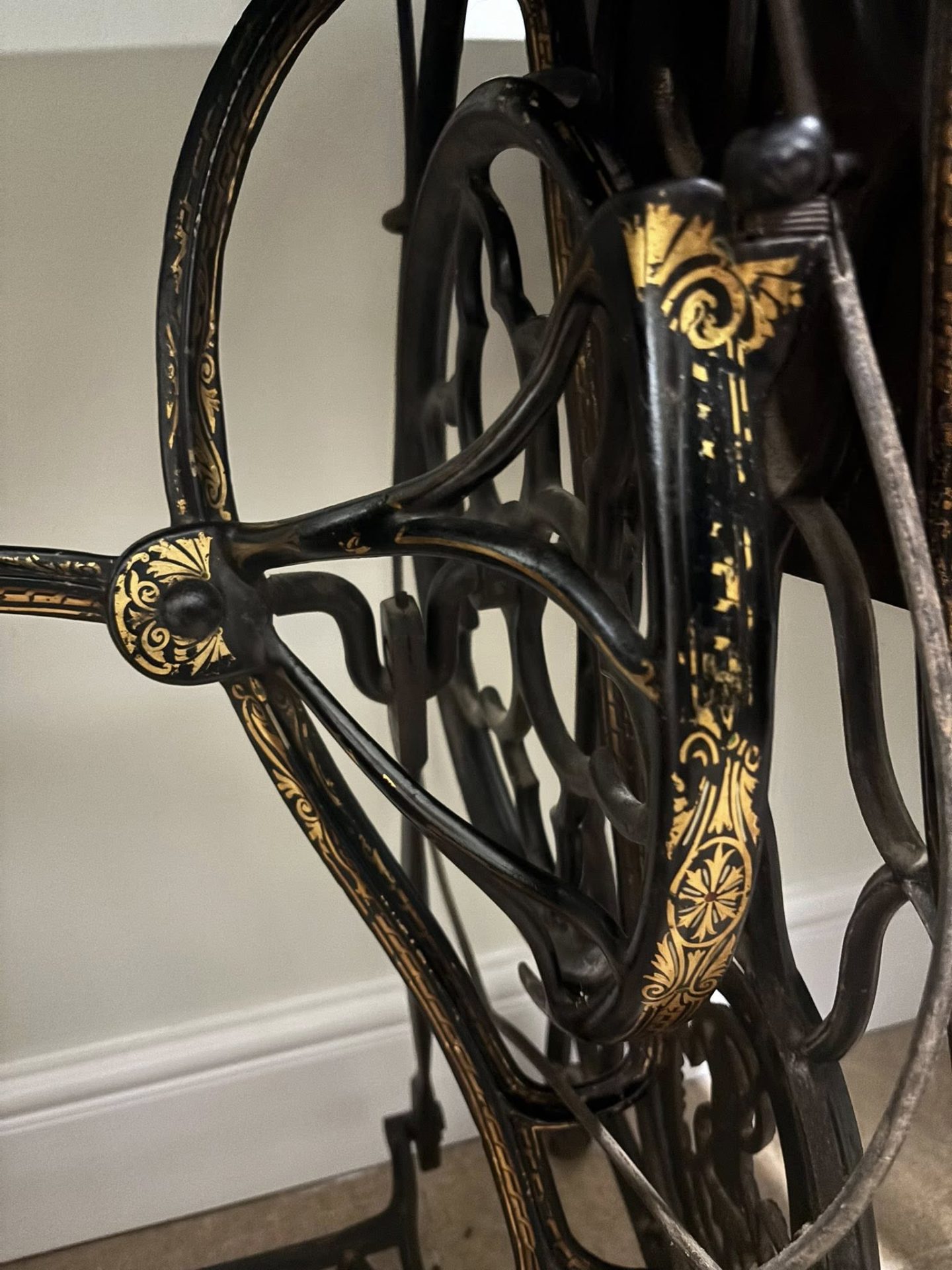
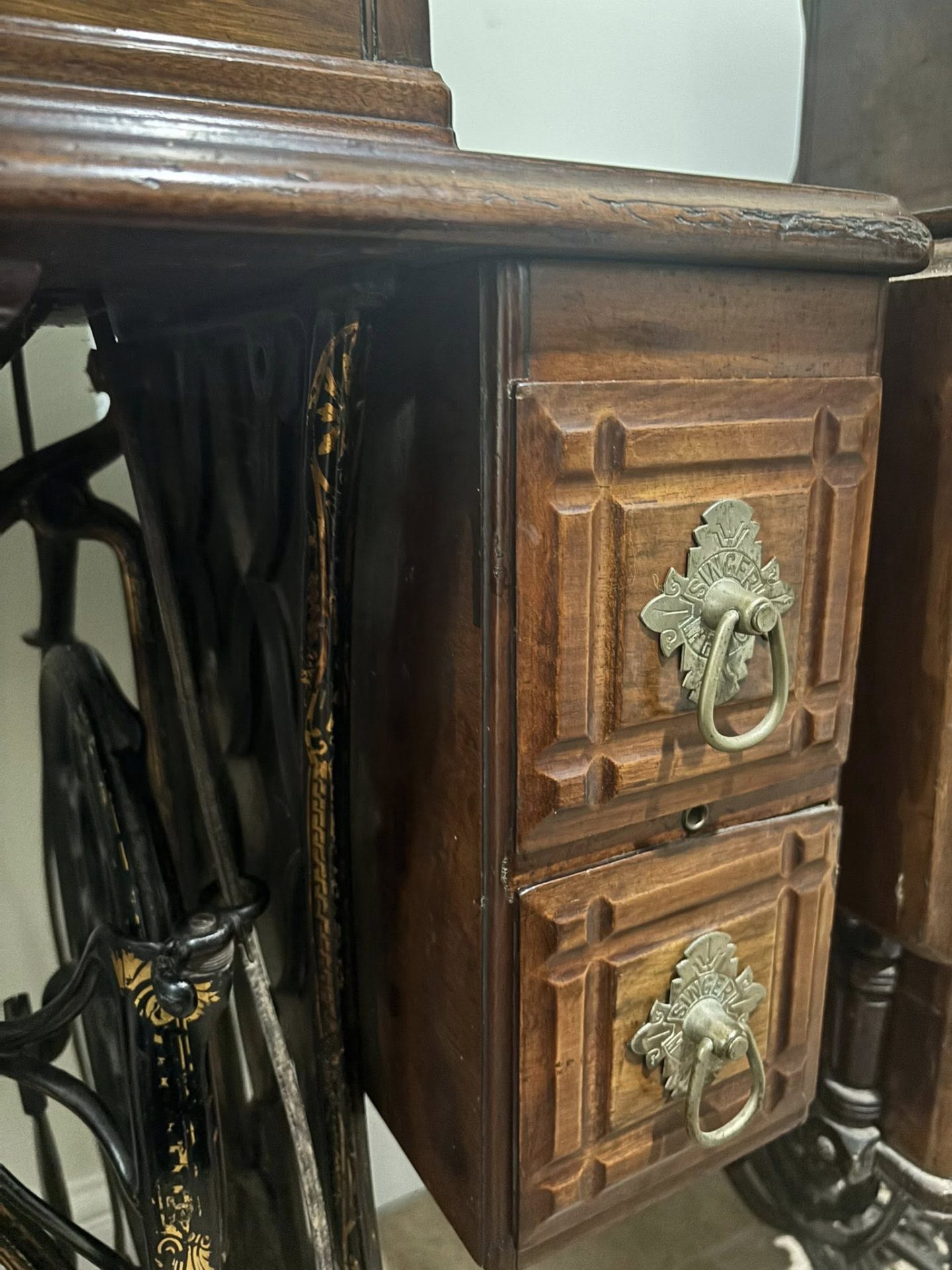
Those decals have been found on a sewing machine owned by Karen Lewis, that we thank for the photos. The emblem of The National Rifle Association in the UK (established in 1859) is on the base of the machine. Also the treadle has matching decorations. The highly ornate design with mother-of-pearl inlays makes us think it was a custom hand-crafted design.
Documented Machines
(What does it mean?)Total n.: 1
Factories:
Documented Classes:
- 27
Documented years: 1889
In use from 1879 up to 1883
In use for Classes:
- 15 (Improved Family)
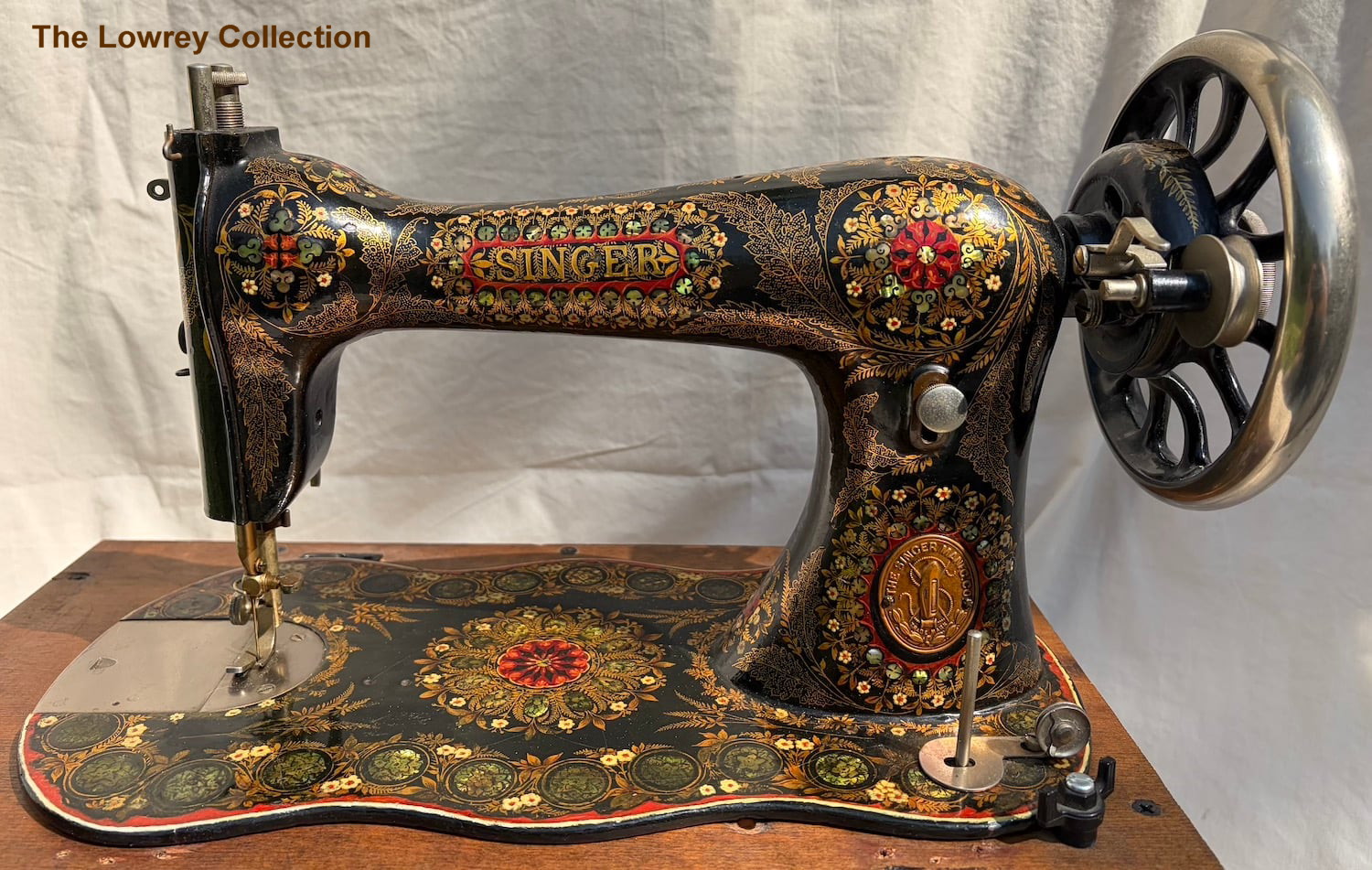
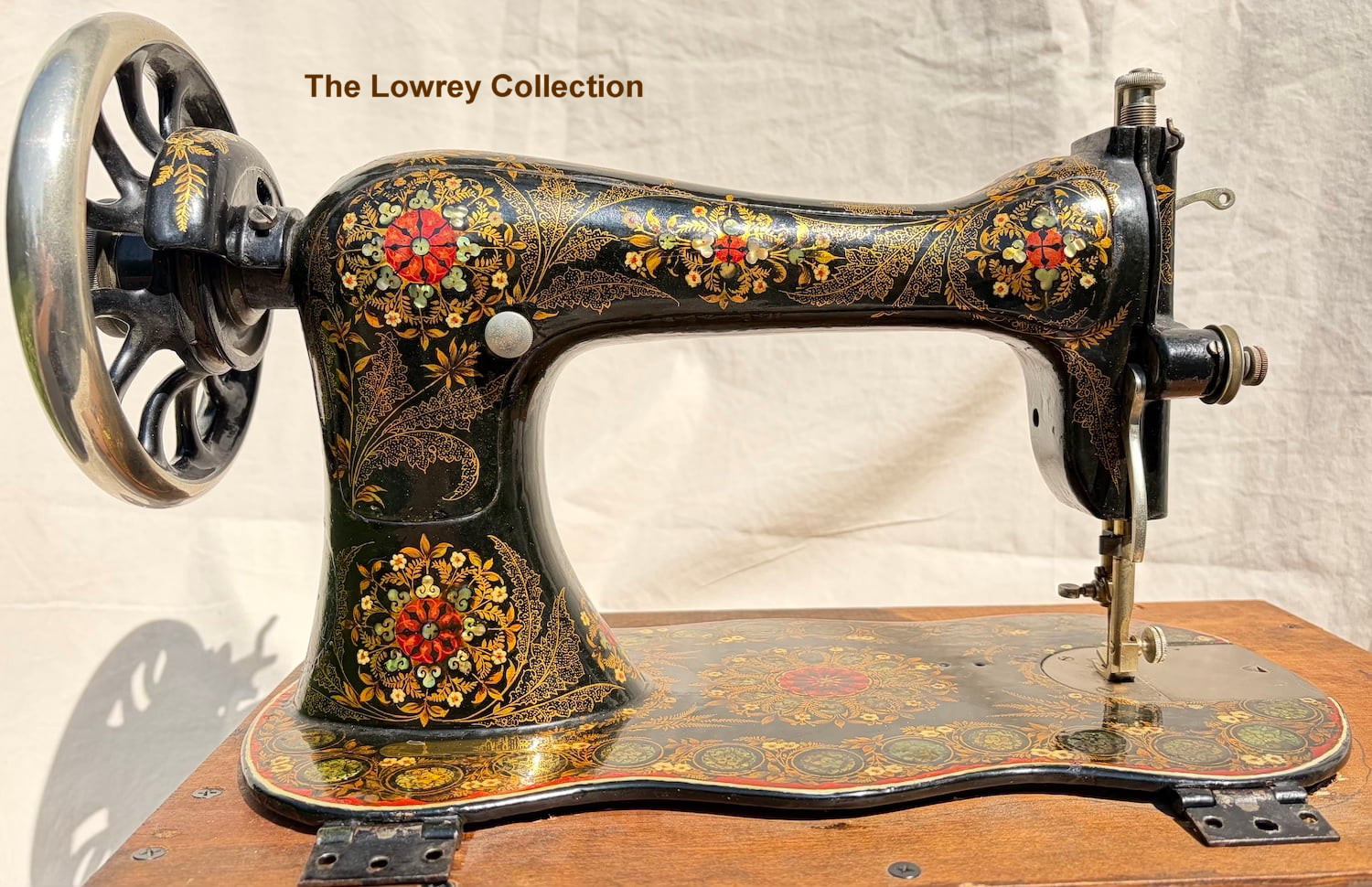
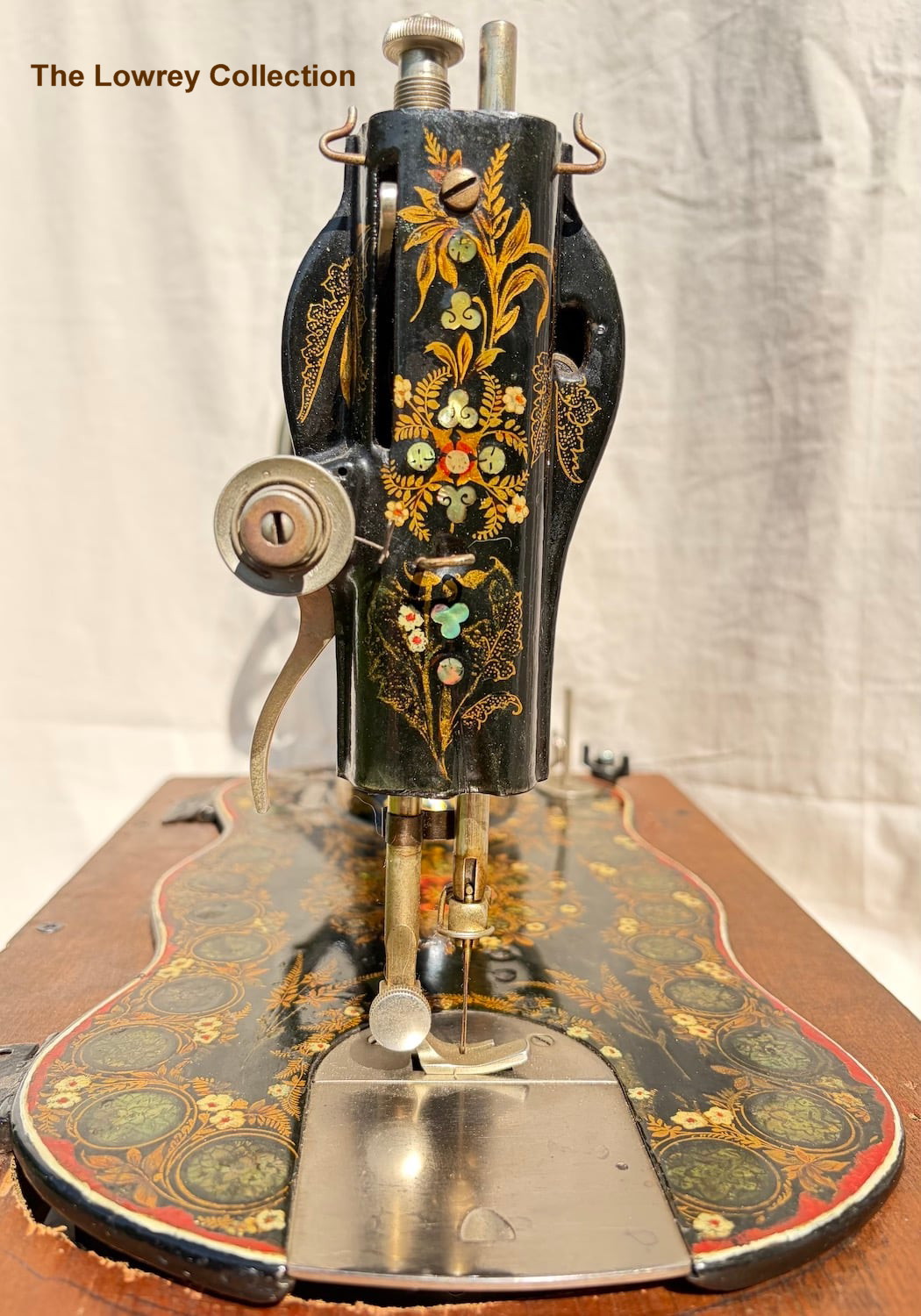
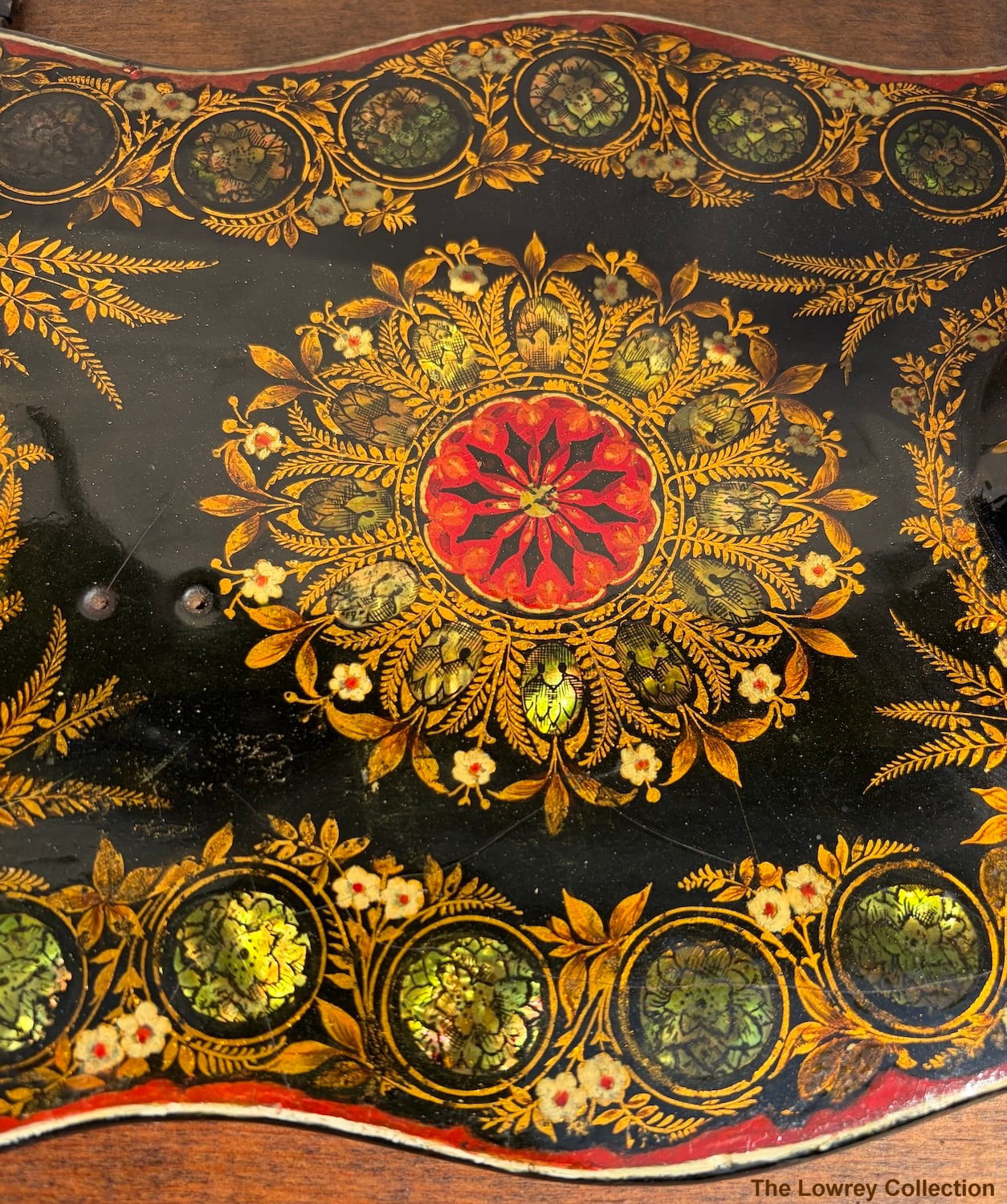
The name of this decal comes from the ISMACS history of the Improved Family model. Here they say that this machine, as it was launched in 1879, was only available as a treadle machine. They also state that it was probably the last Singer machine to be made with 'mother-of-pearl' inlays, like this ornate decoration. Images from The J&P Lowrey Collection
Documented Machines
(What does it mean?)Total n.: 1
Factories:
Documented Classes:
- 15
Documented years: 1883
In use from 1873 up to 1879
In use for Classes:
- 12
- 13
Name from The Needlebar Wiki
Documented Machines
(What does it mean?)Total n.: 3
Factories:
- Elizabethport, New Jersey (USA)
- James Street, Bridgeton, Glasgow (Scotland, UK)
Documented Classes:
- 12
Documented years: 1874 - 1877
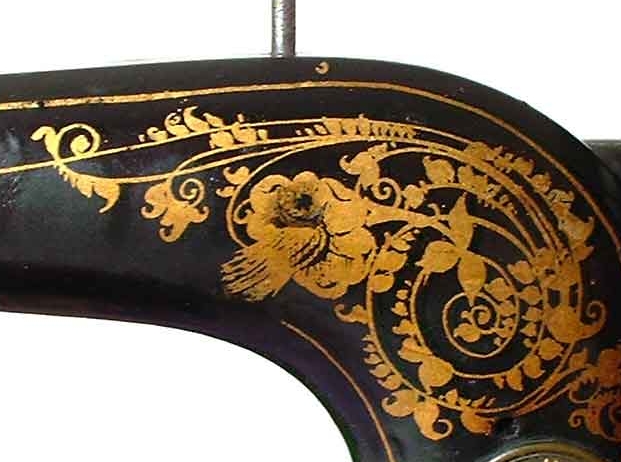
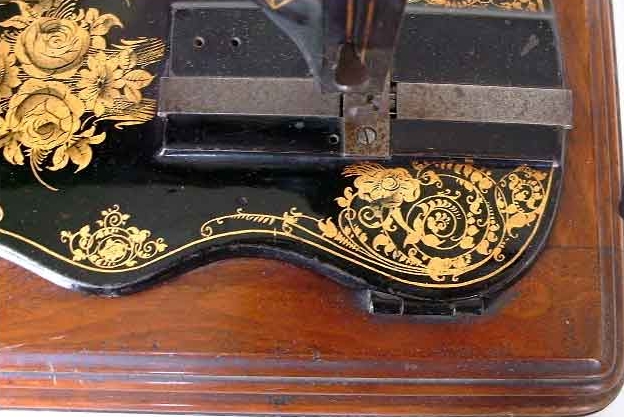
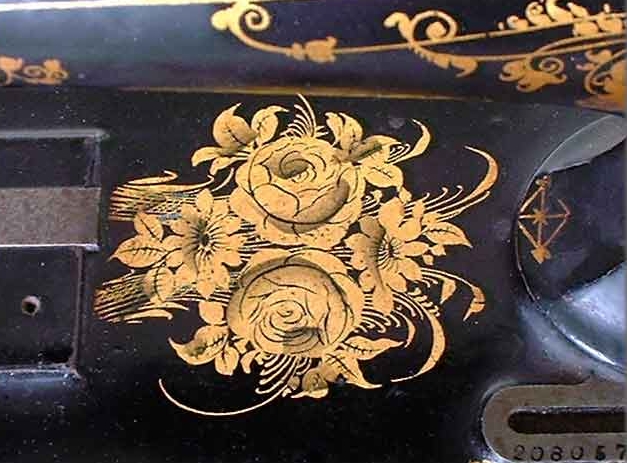
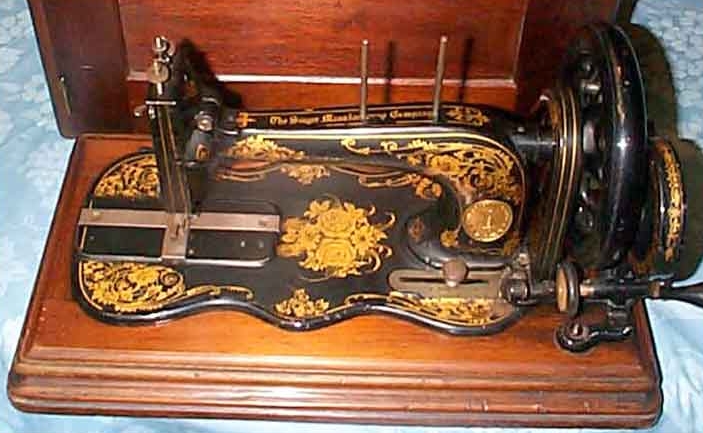
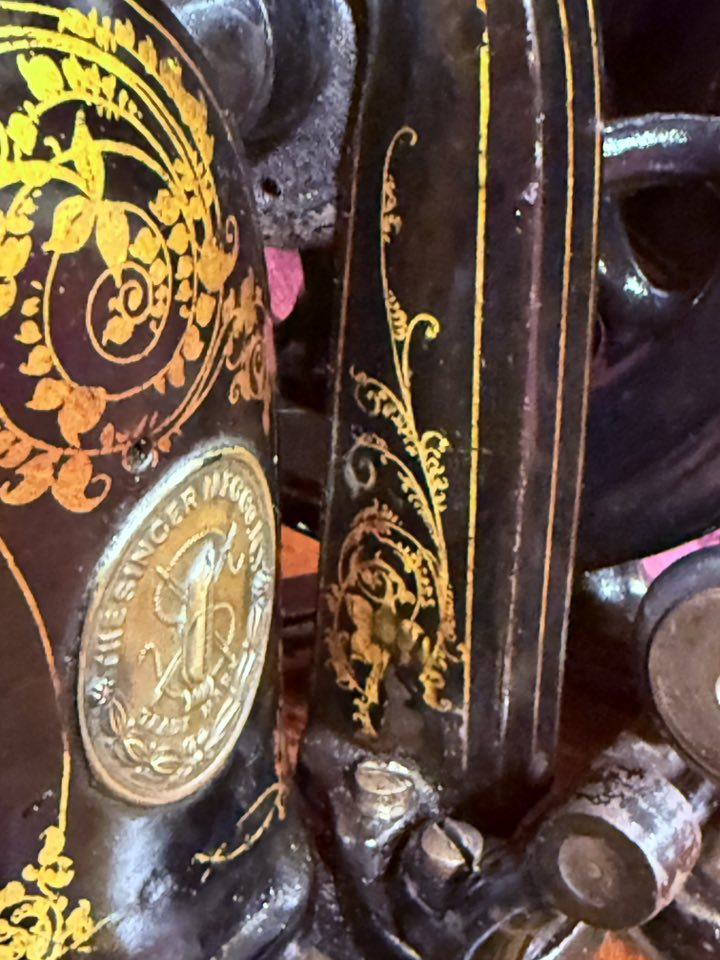
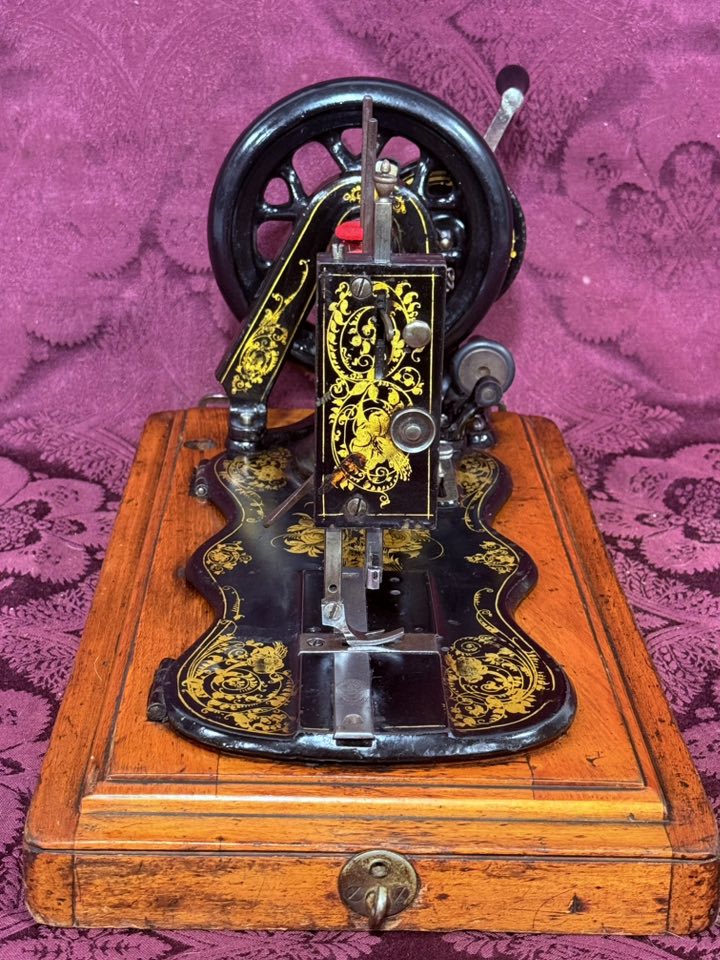
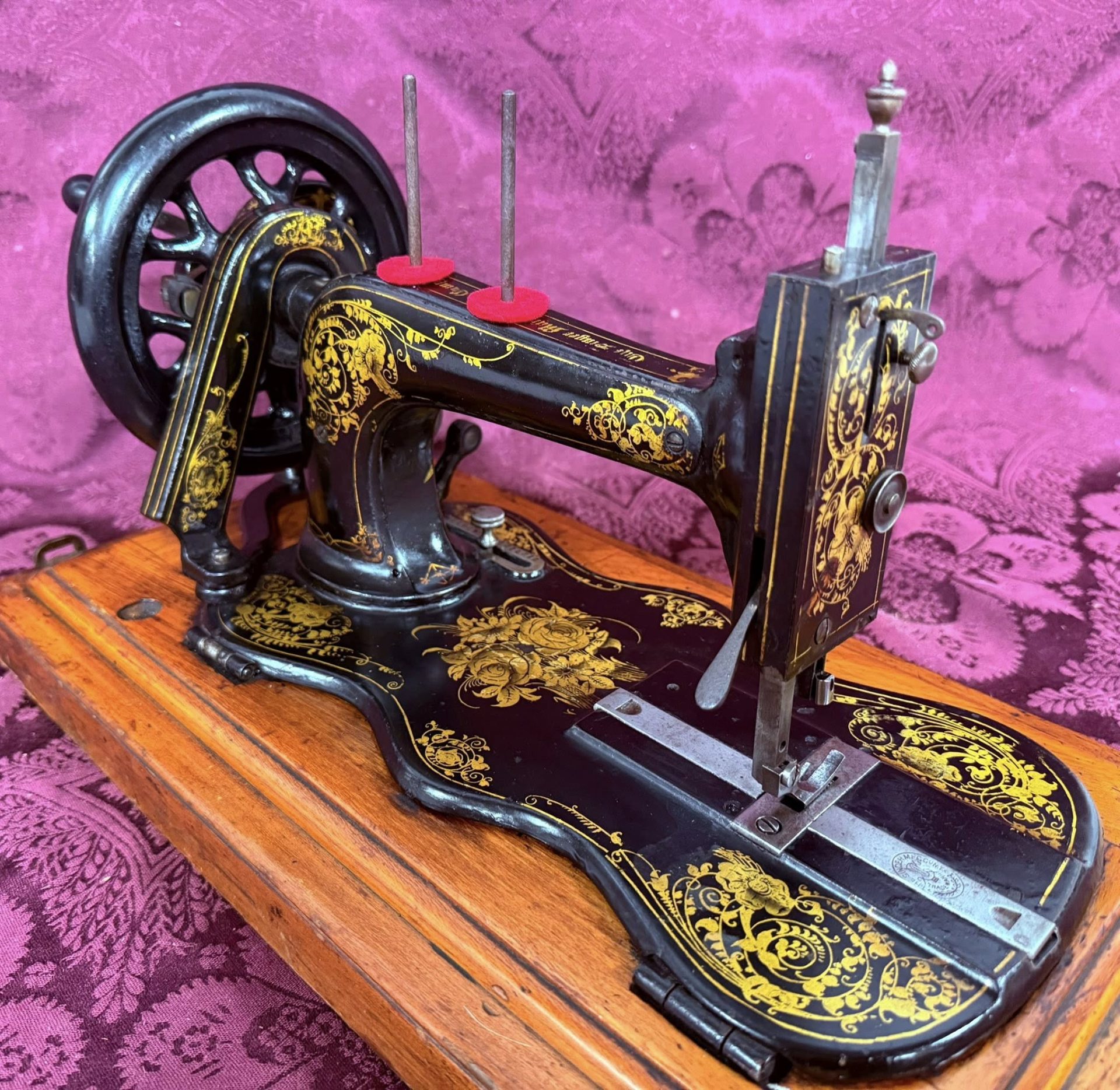
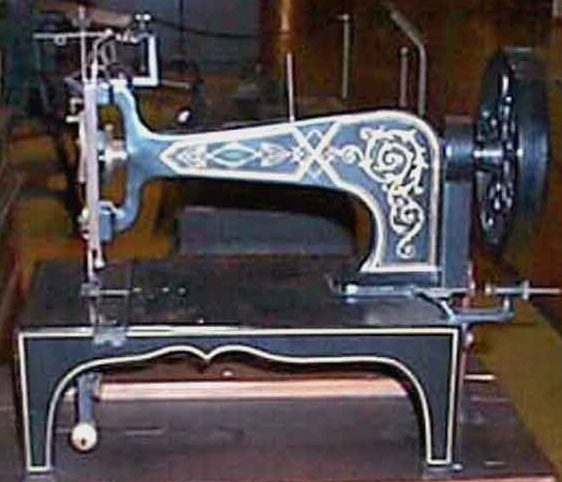
In use for Classes:
- 12
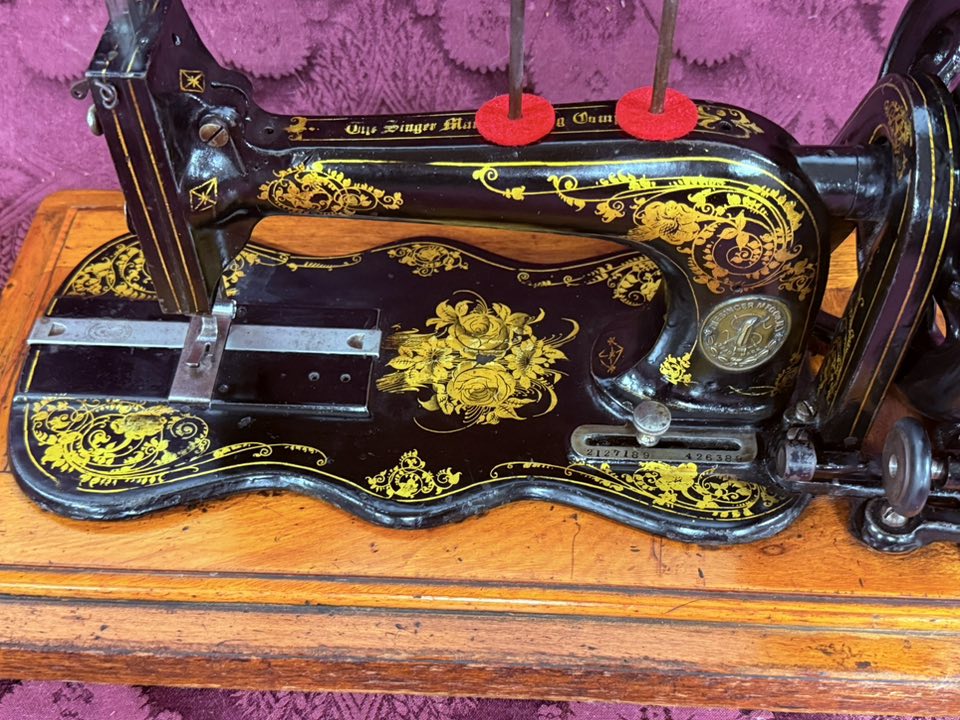
Name of this decal comes from the knowleadgeable collector Gary Kleiner
Documented Machines
(What does it mean?)Total n.: 2
Factories:
Documented Classes:
- 12
Documented years: 1879 - 1881
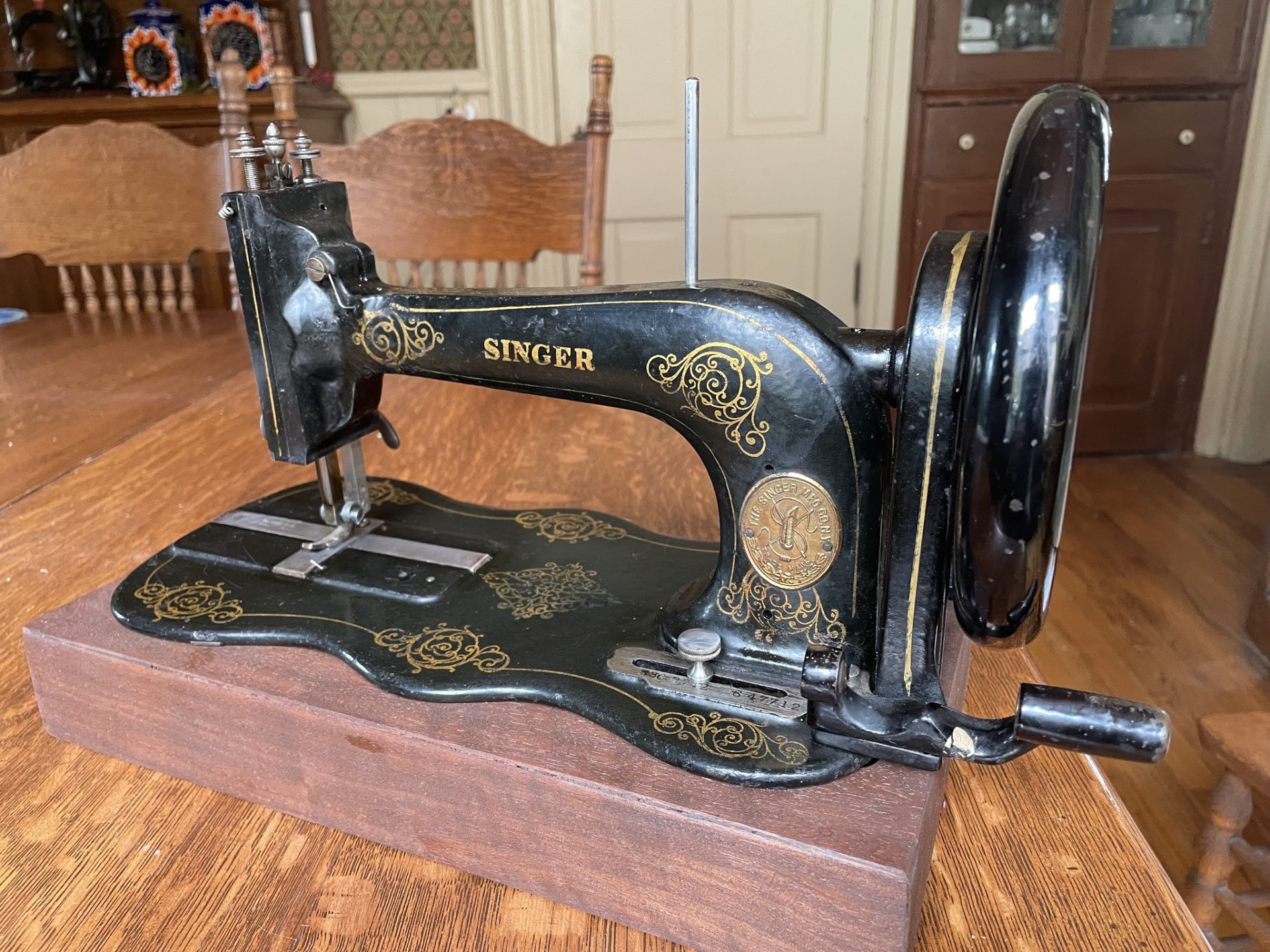
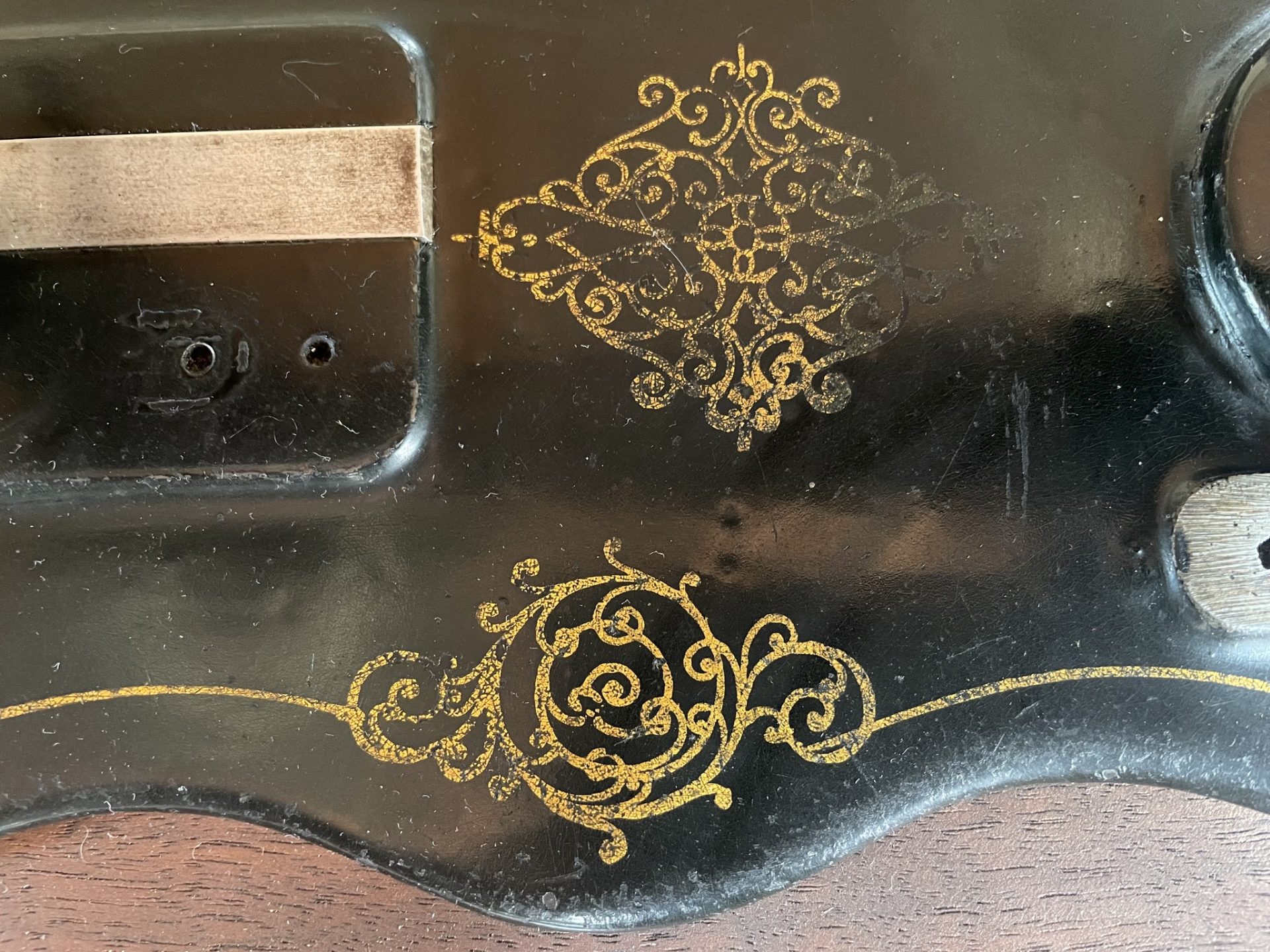
In use from 1856 up to 1859
In use for Classes:
- Family / Turtleback
Turtlebacks, produced between 1856 and 1859, were hand decorated, so different machines has different variations.
Documented Machines
(What does it mean?)Total n.: 1
Factories:
- New York Centre Street or New York Mott Street (USA)
Documented years: 1860
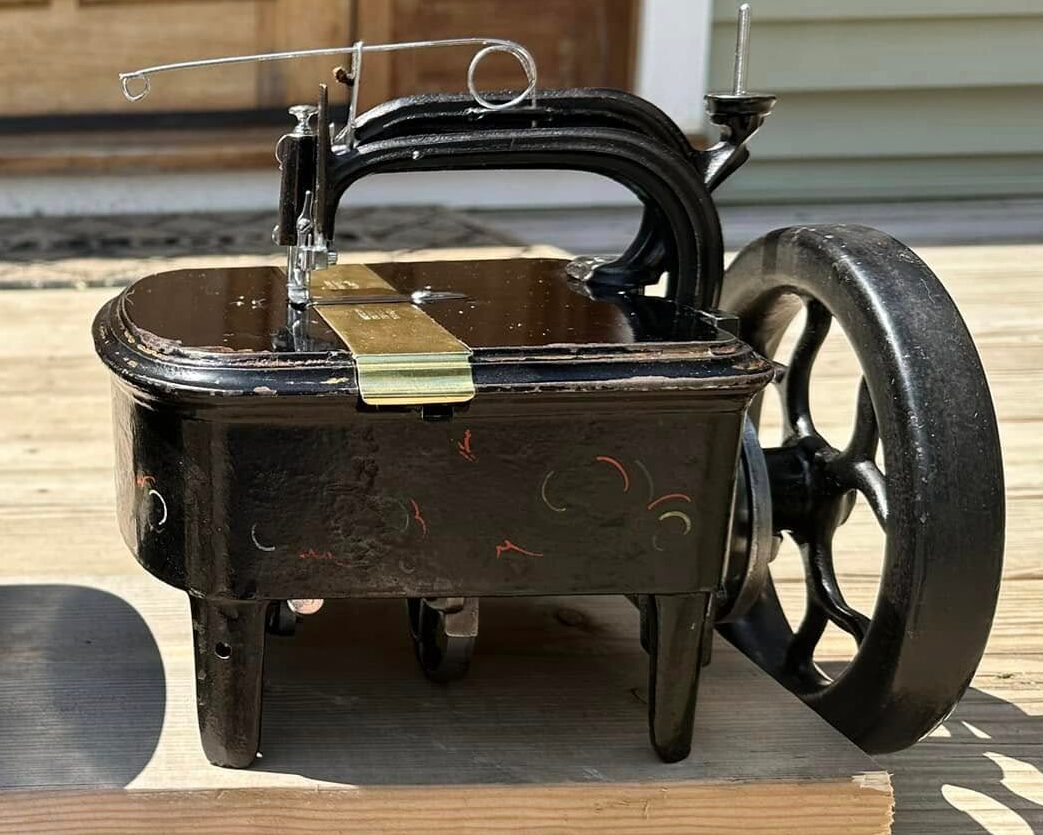
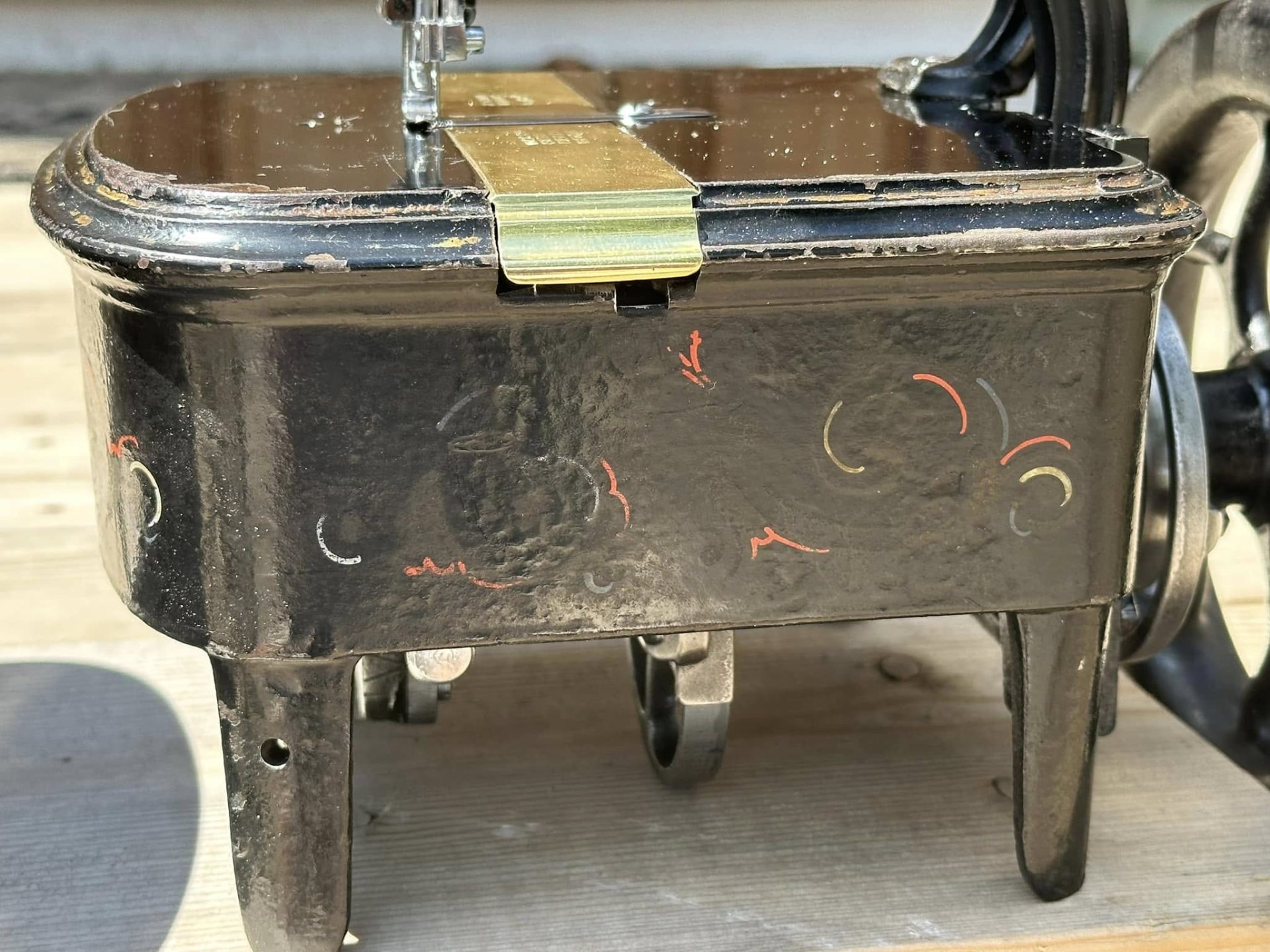
In use from 1856 up to 1859
In use for Classes:
- Family / Turtleback
Turtlebacks, produced between 1856 and 1859, were hand decorated, so different machines has different flower variations. Find more images of this specific decoration.
Documented Machines
(What does it mean?)Total n.: 2
Factories:
- New York Centre Street or New York Mott Street (USA)
- New York Mott Street (USA)
Documented years: 1858 - 1859
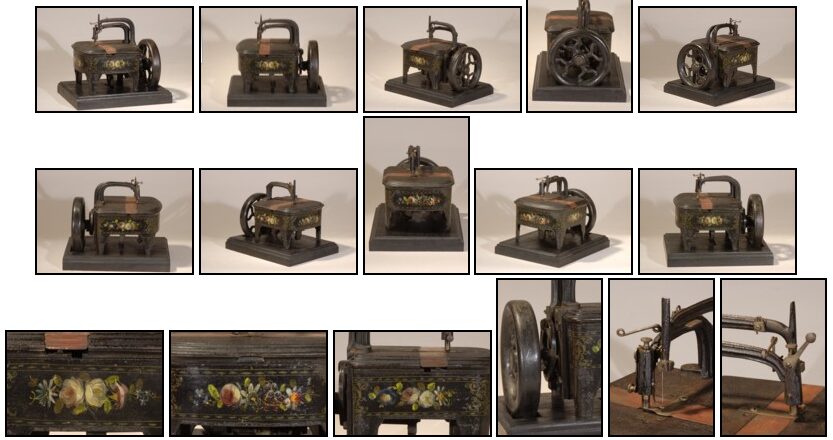
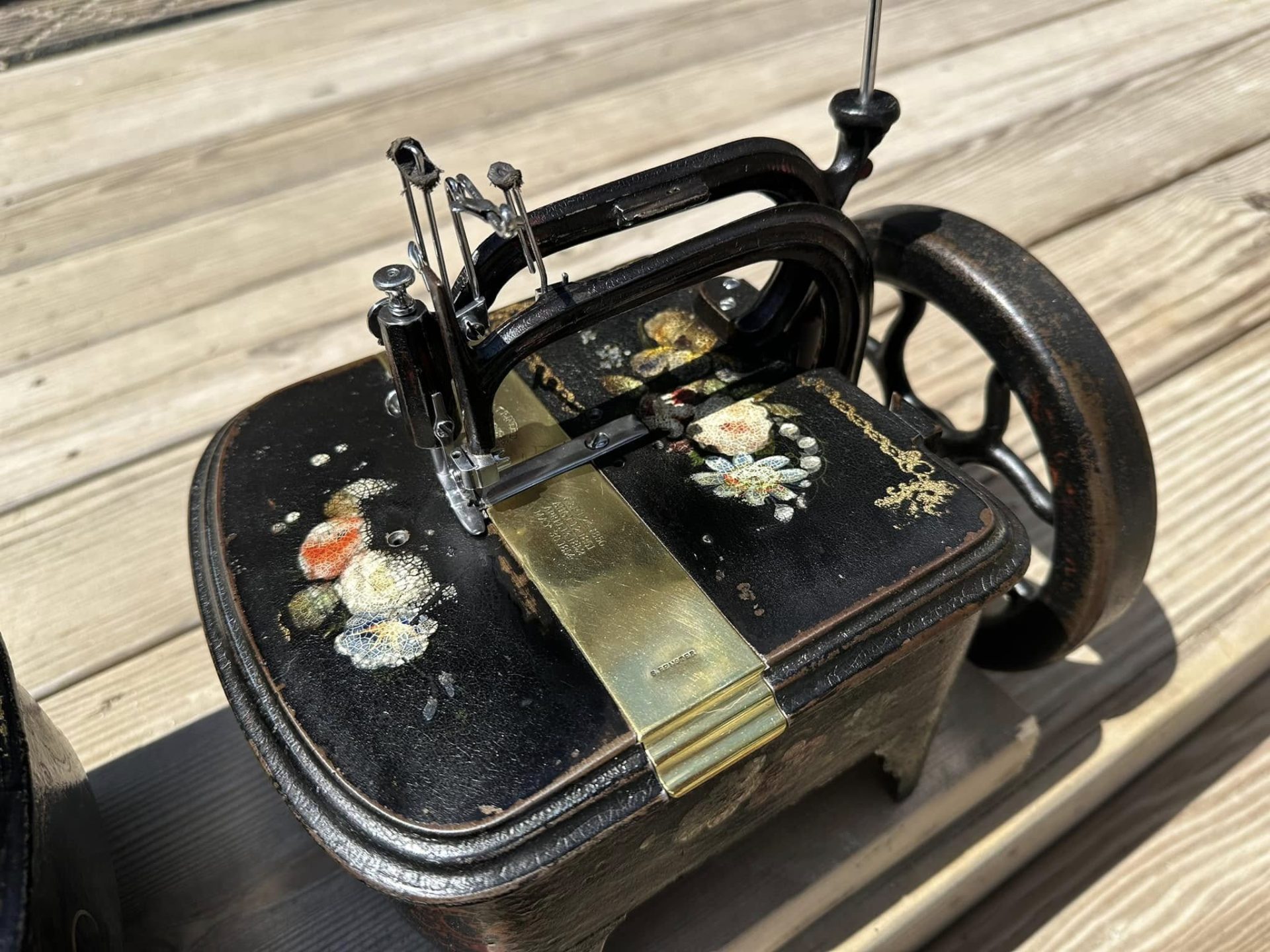
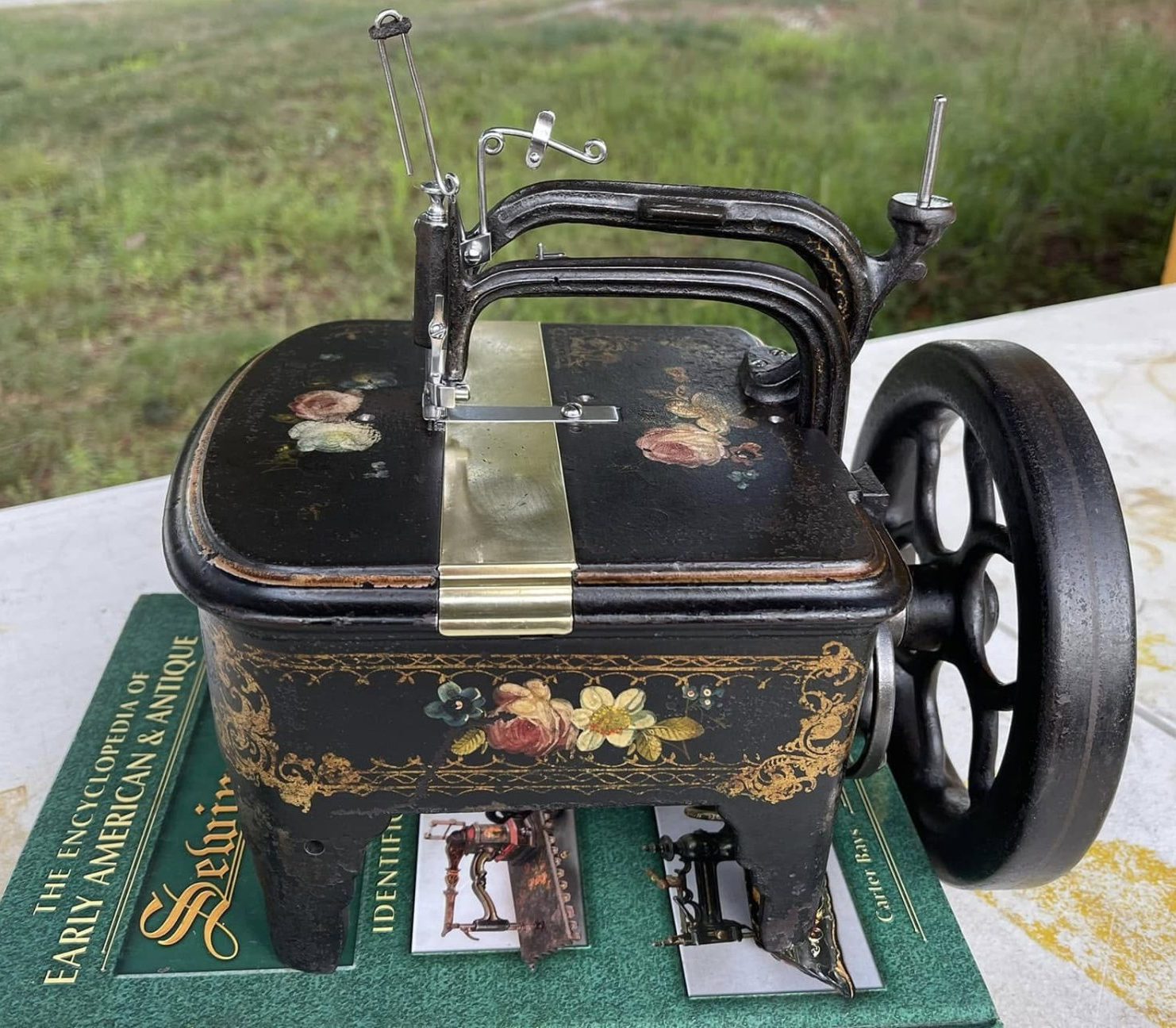
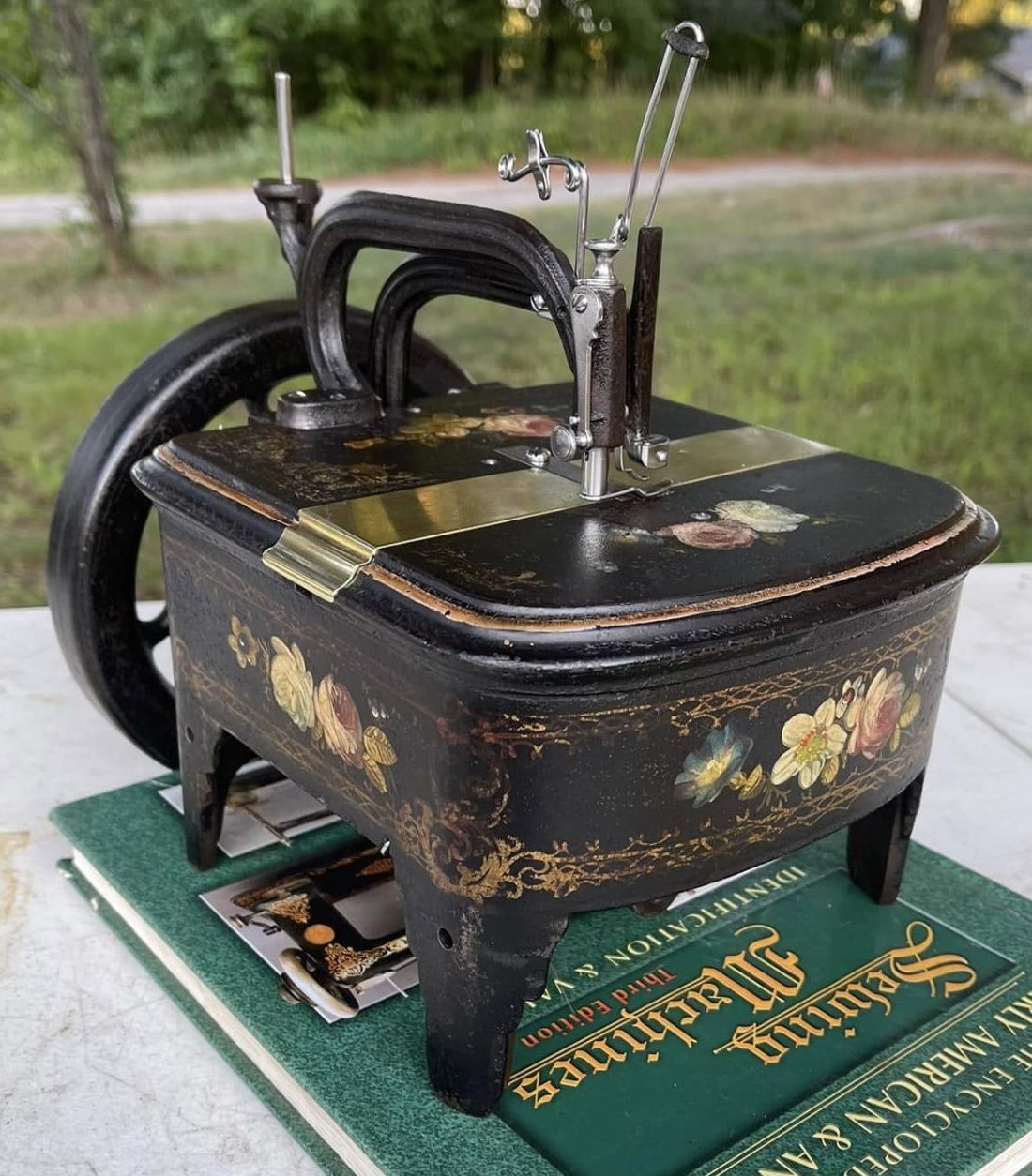
In use from 1856 up to 1859
In use for Classes:
- Family / Turtleback

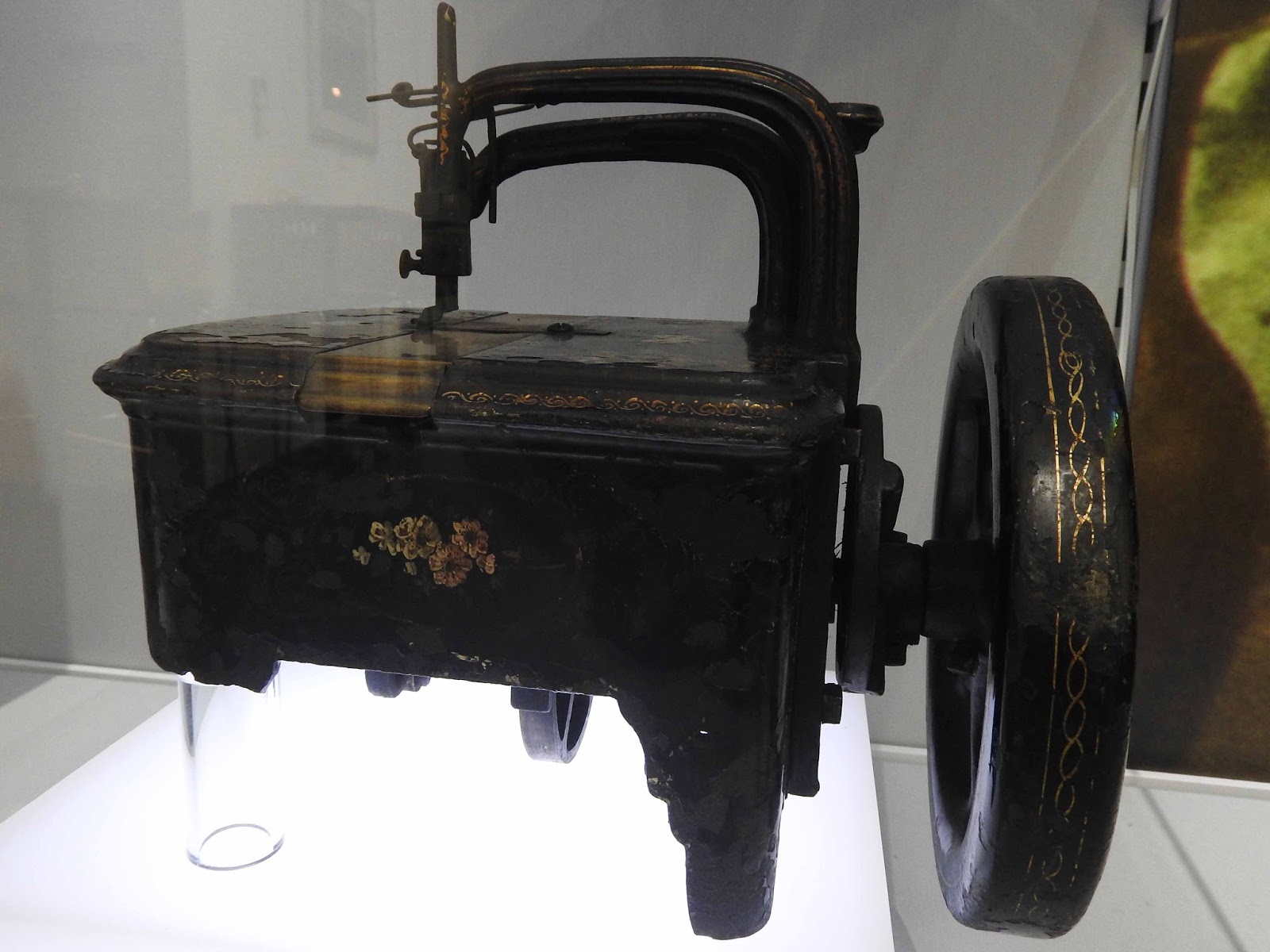
Decal
(84)In use from 1878 up to 1890
In use for Classes:
- 12 (New Family)
- 13 (Medium)
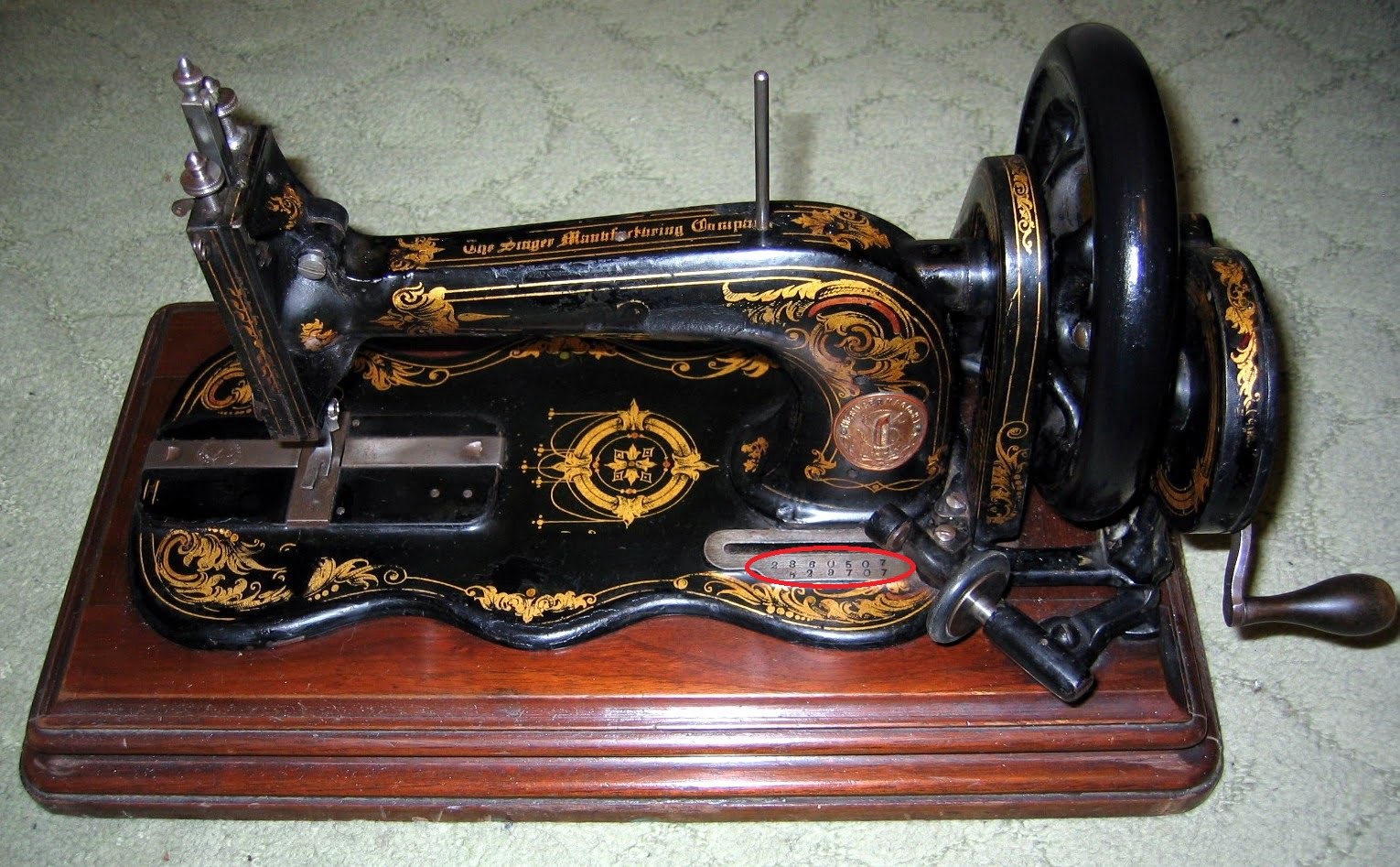
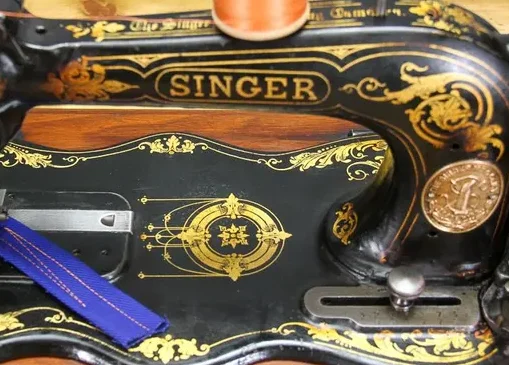
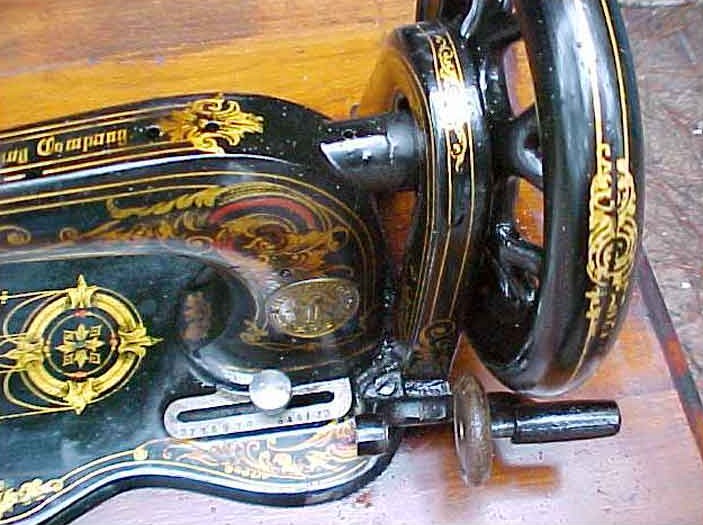
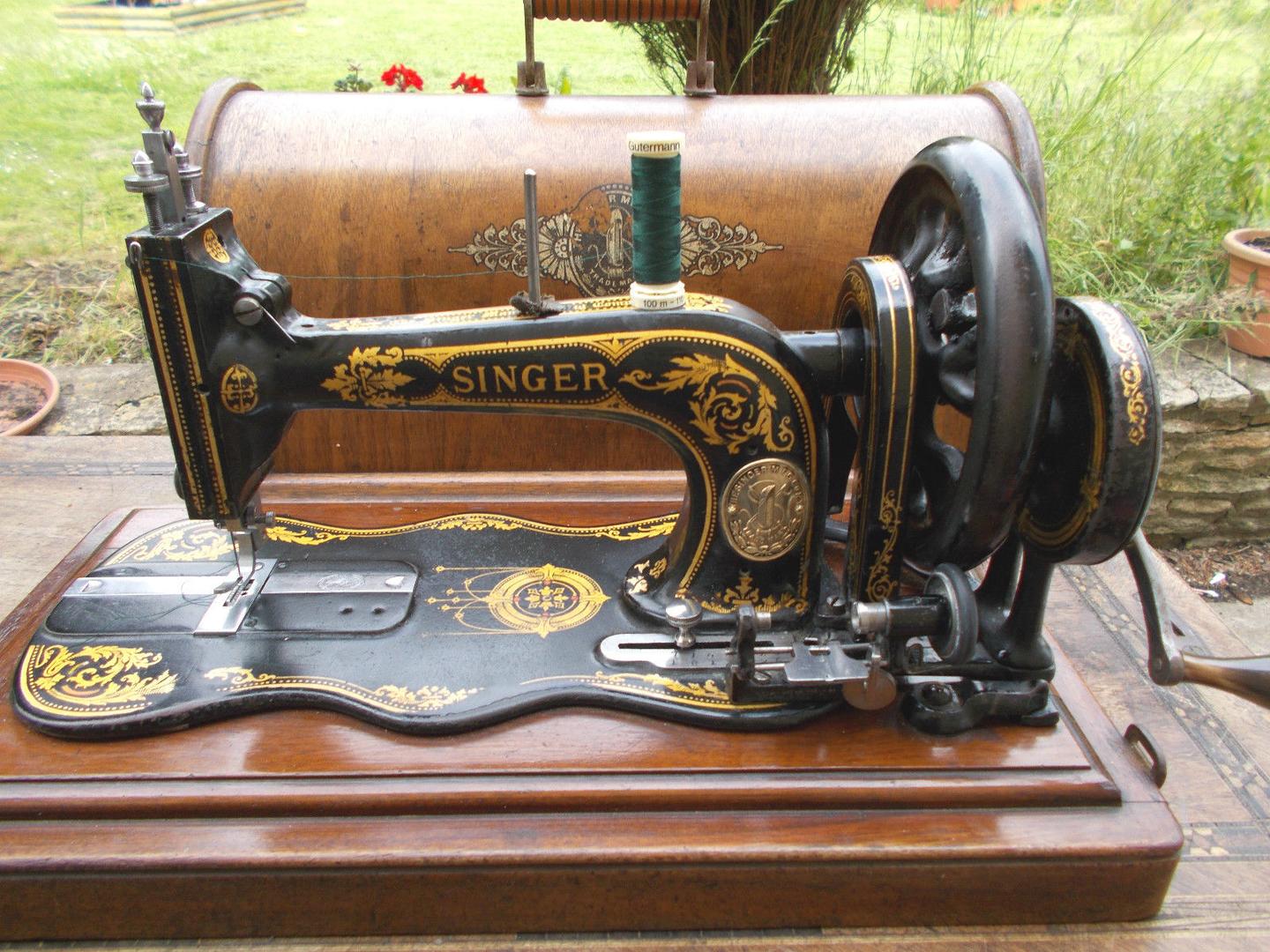
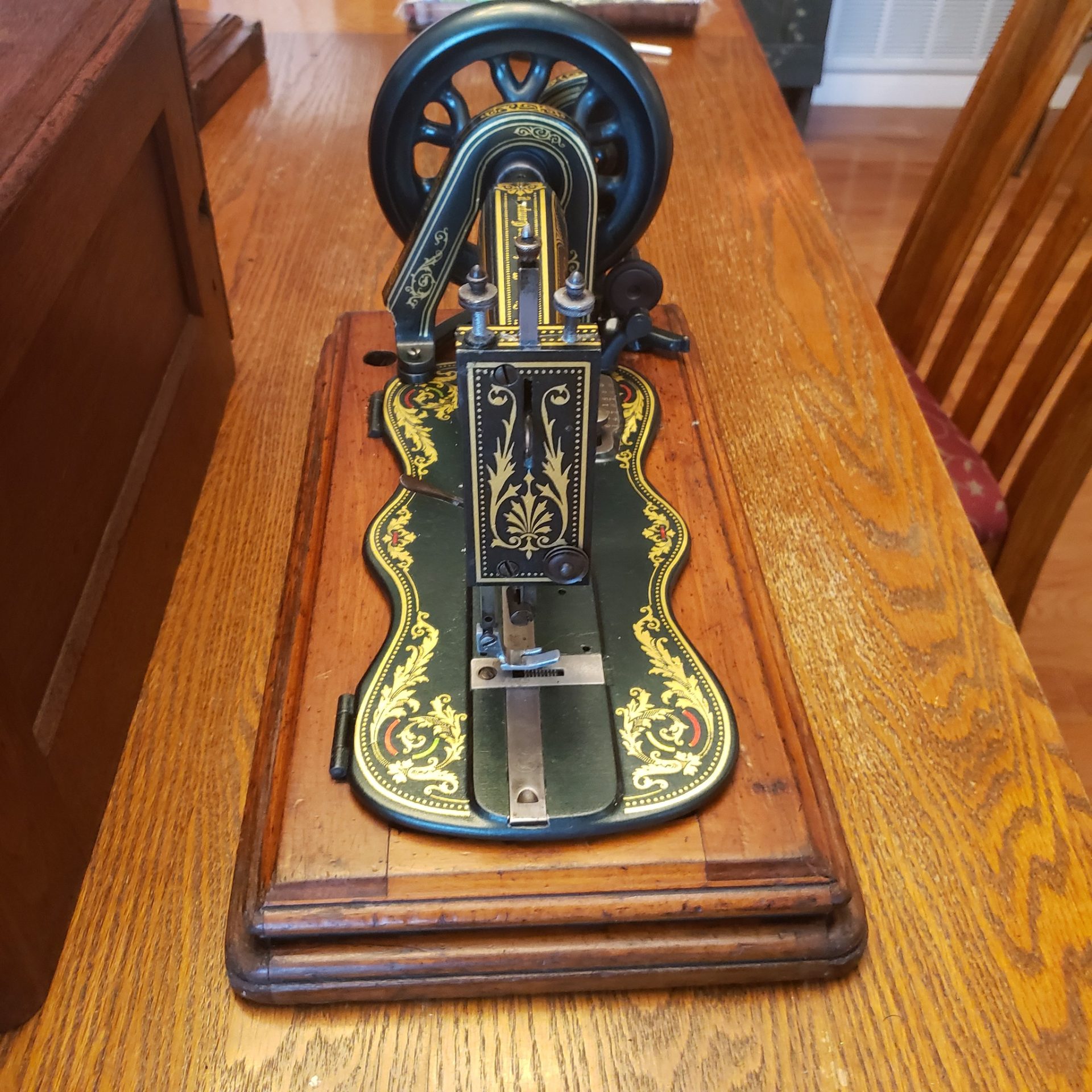
Acanthus was one of the earliest decal patterns used on Singer Model 12 sewing machines. The expert collector Gary Kleiner identified three main versions. The first Acanthus design, in use around 1878–1879, was without the Singer name on the front of the arm. Around 1880–1884, the second iteration added the Singer name on the front of the arm. The later version, called Dotted Acanthus, was a revised design, in use around 1884–1890. It's distinguished by small decorative dots added throughout the pattern. This is the most commonly encountered Acanthus variant today.
Documented Machines
(What does it mean?)Total n.: 11
Factories:
- James Street, Bridgeton, Glasgow (Scotland, UK)
- Kilbowie, Clydebank (Scotland, UK)
Documented Classes:
- 12
Documented years: 1878 - 1888
In use for Classes:
- 12
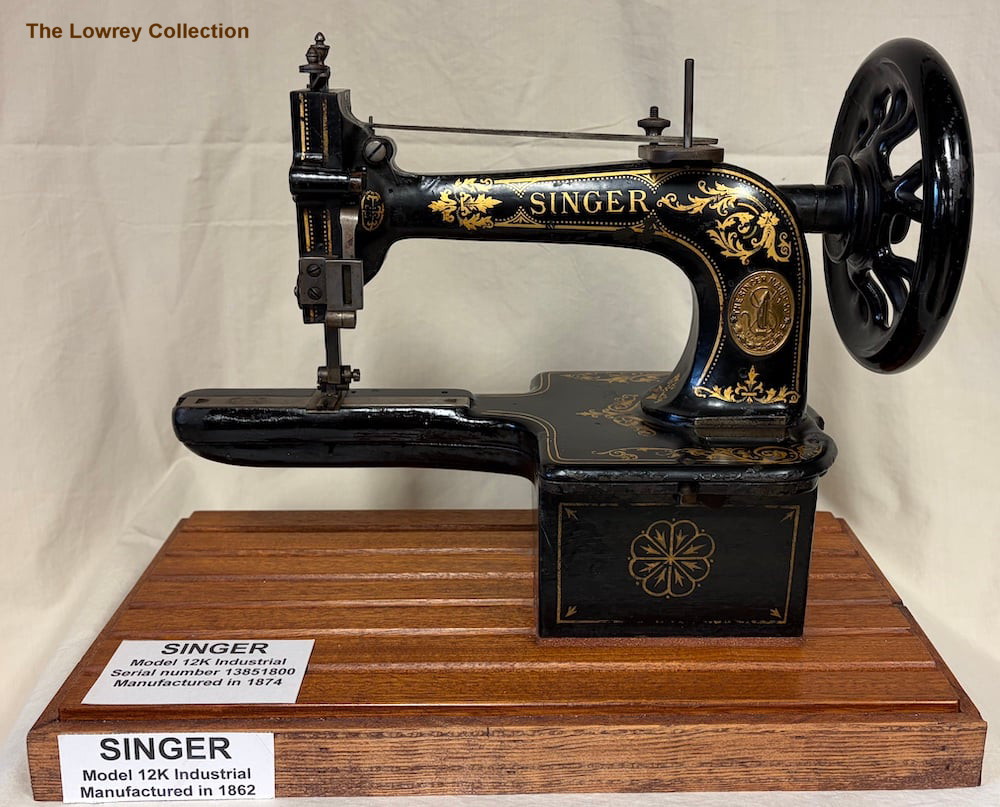
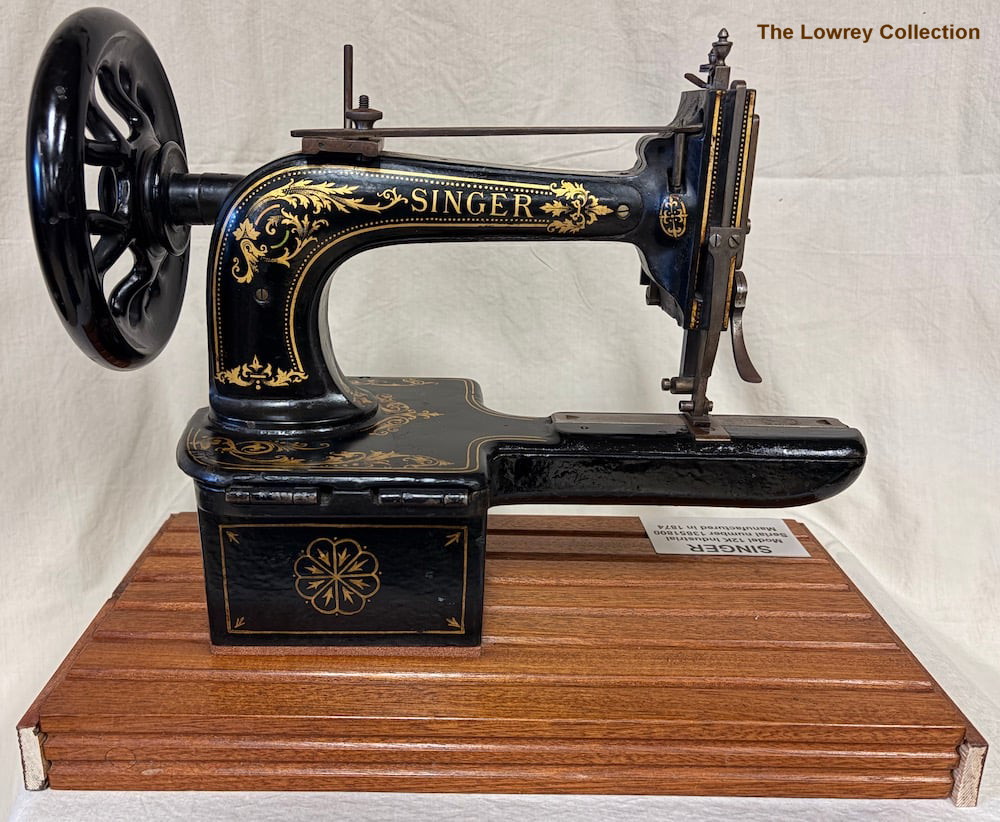
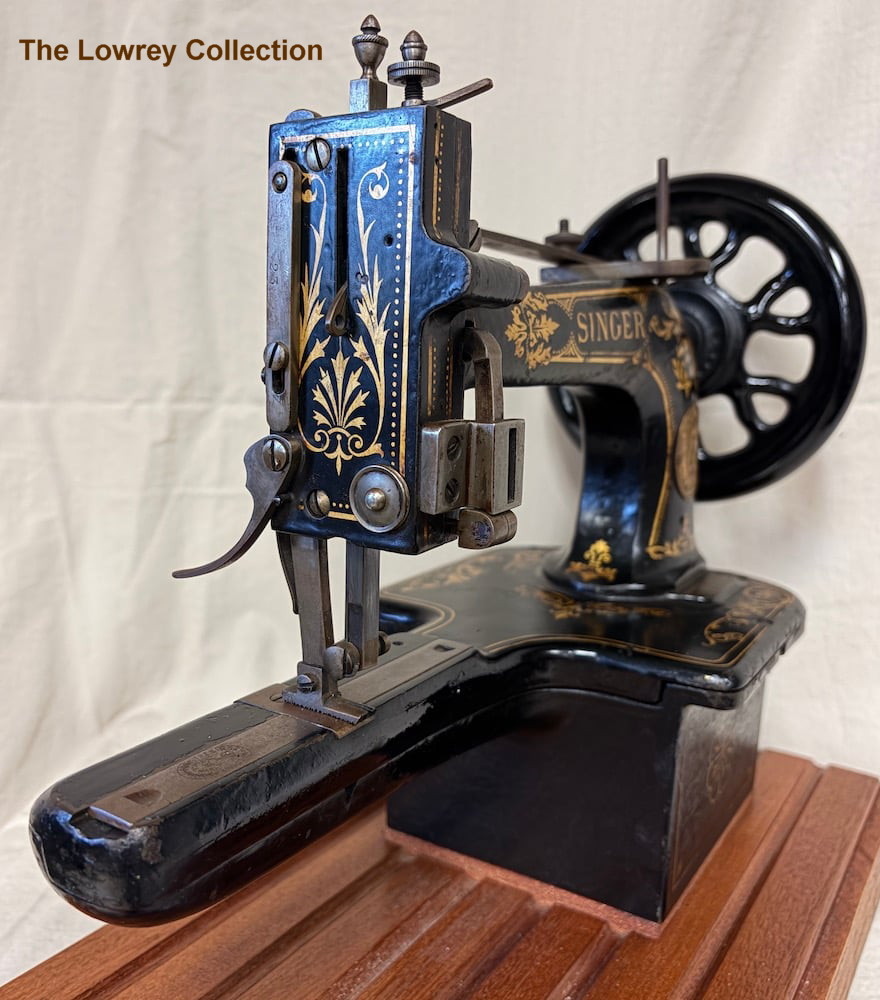
In use for industrial versions of Singer's New Family (class 12), in particular the free arm industrial version with cylinder bed. Images from The J&P Lowrey Collection
Documented Machines
(What does it mean?)Total n.: 2
Factories:
Documented Classes:
- 12
Documented years: 1885 - 1896
In use from 1880 up to 1884
In use for Classes:
- 12 (New Family)
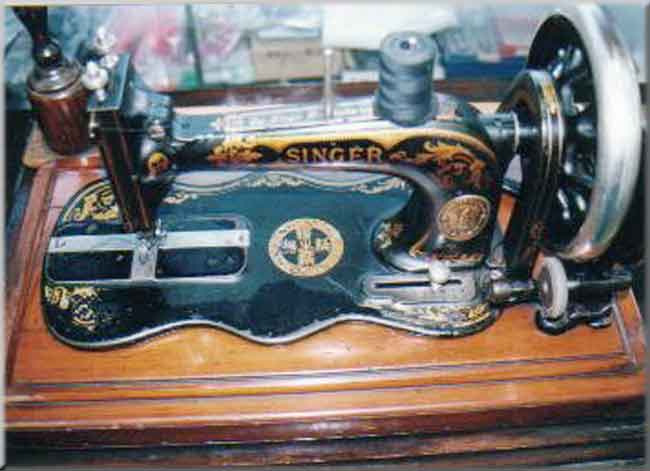
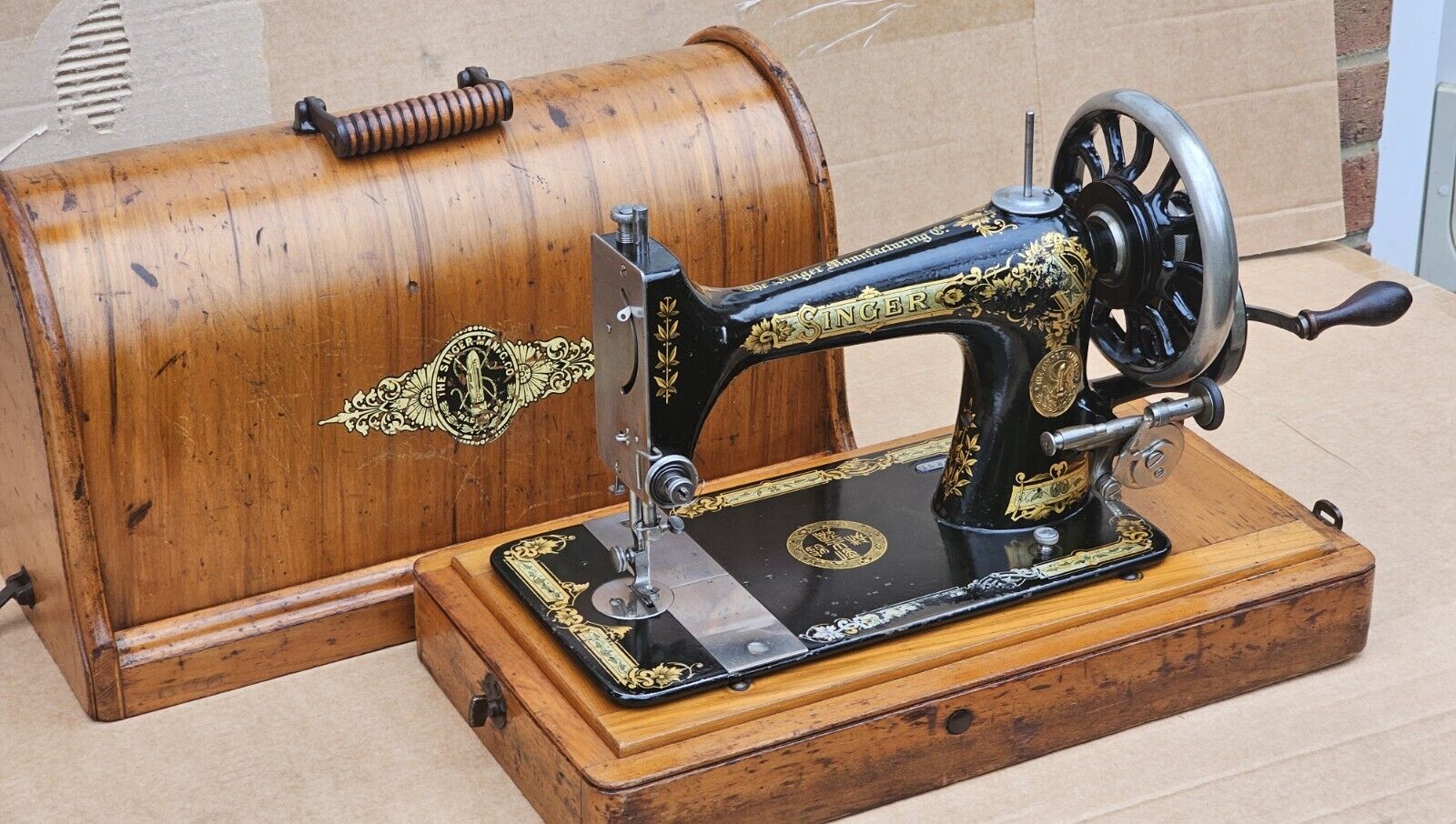
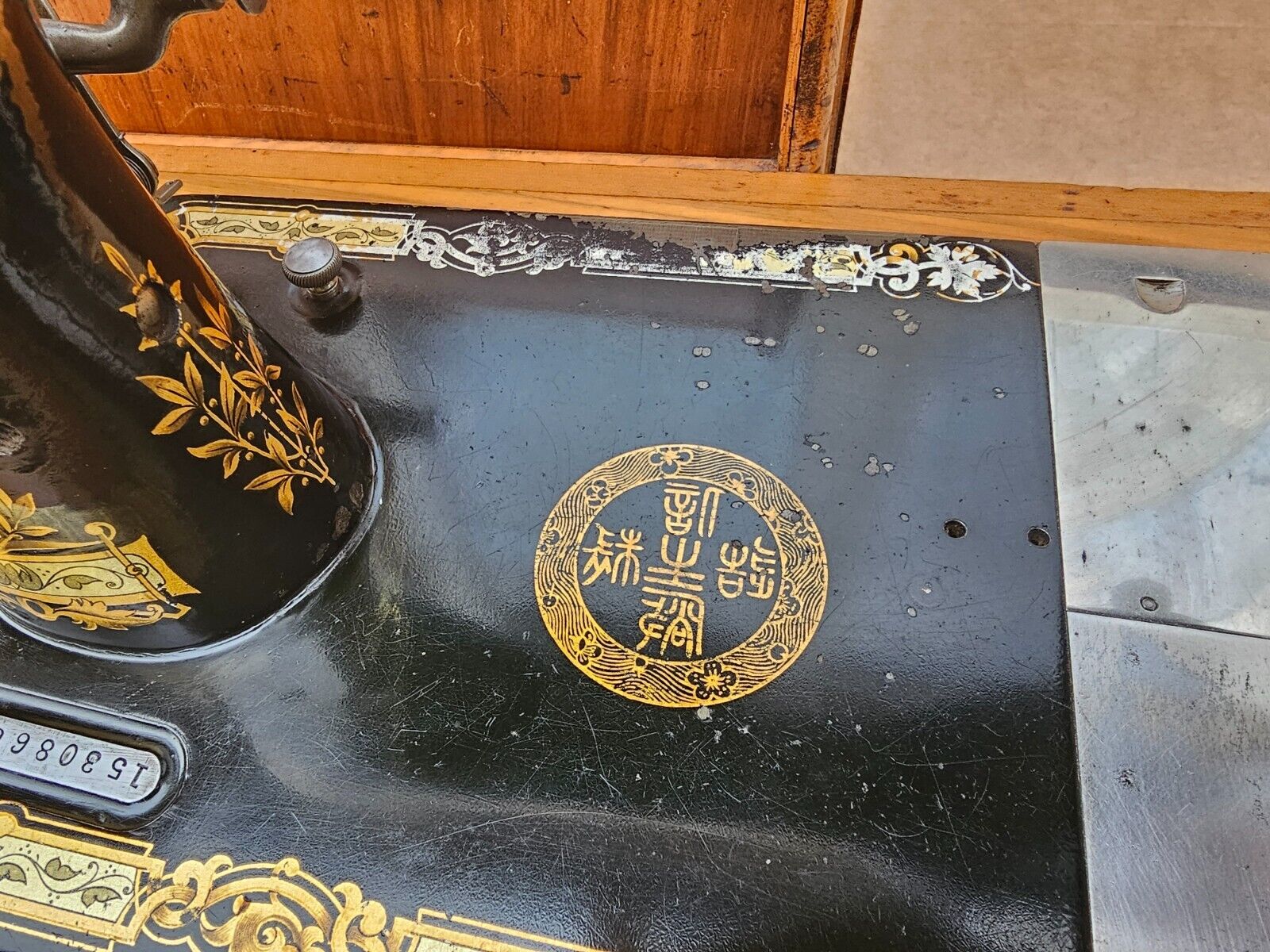
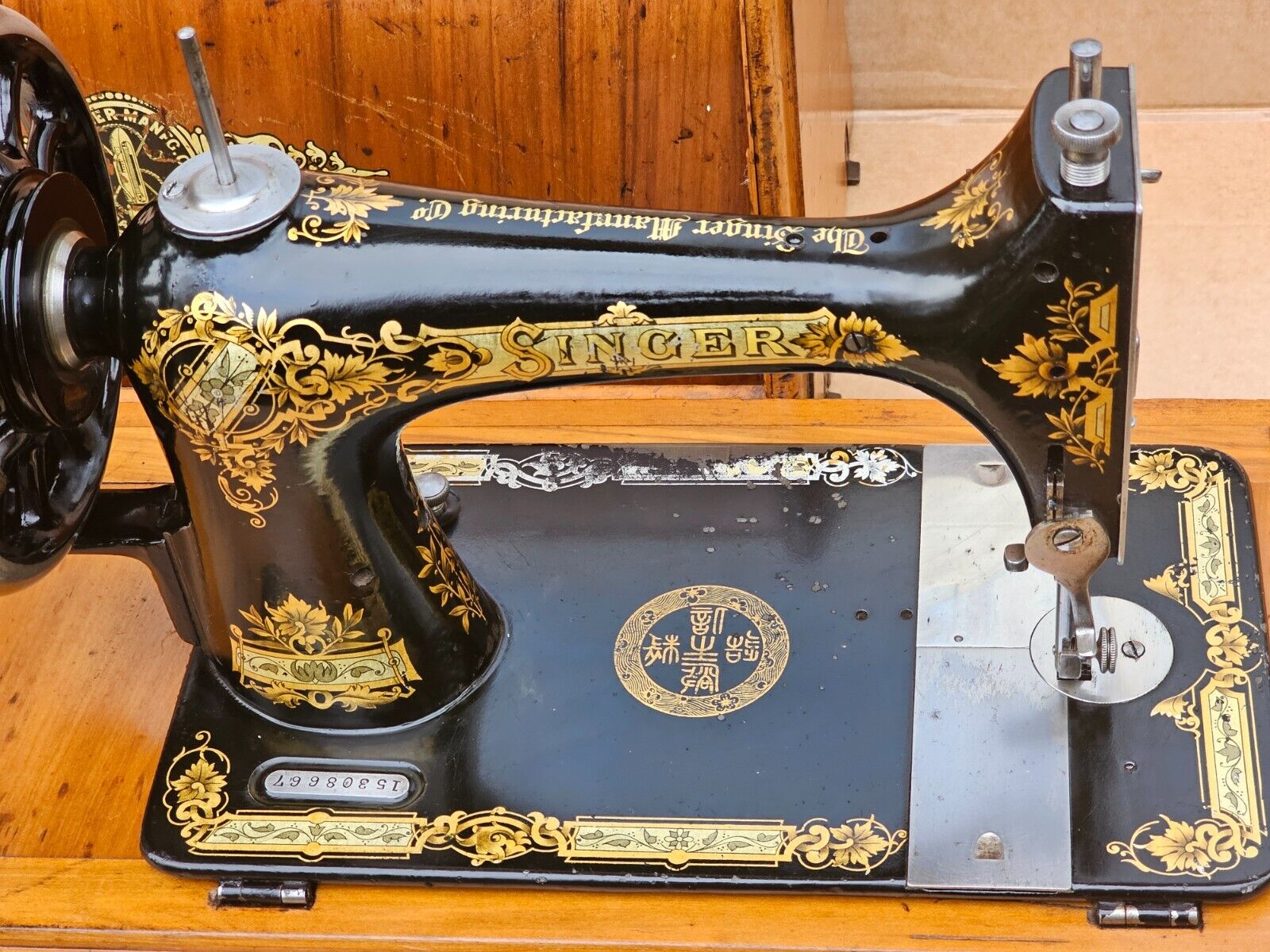
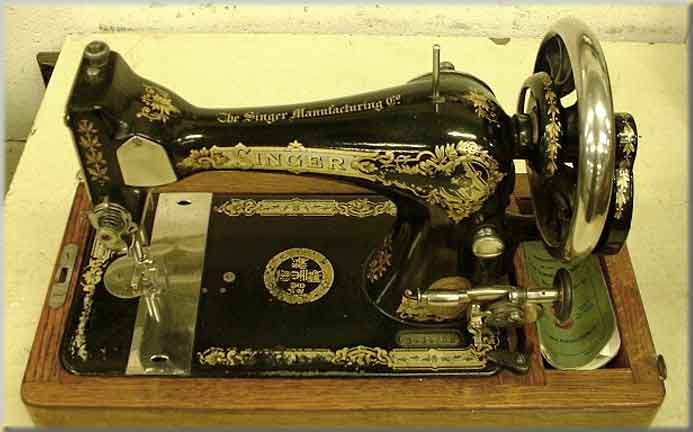
Recorded by The Needlebar wiki. This is like the second version of the Acanthus decal (in use around 1880–1884), but with a Chinese design on the bed of the machine. The Chinese characters in the center of the bed are in Seal Script, a very old and decorative writing style. In traditional Chinese: 福 — fú = good fortune / blessing 禄 — lù = prosperity / wealth / official success 寿 — shòu = longevity 喜 — xǐ = happiness / joy Together, 福禄寿喜 (fú lù shòu xǐ) is an extremely traditional auspicious combination meaning roughly “fortune, prosperity, longevity and happiness.” These characters were applied specifically on machines produced for the Chinese market. These characters were applied specifically on machines produced for the Chinese market.
In use for Classes:
- 189
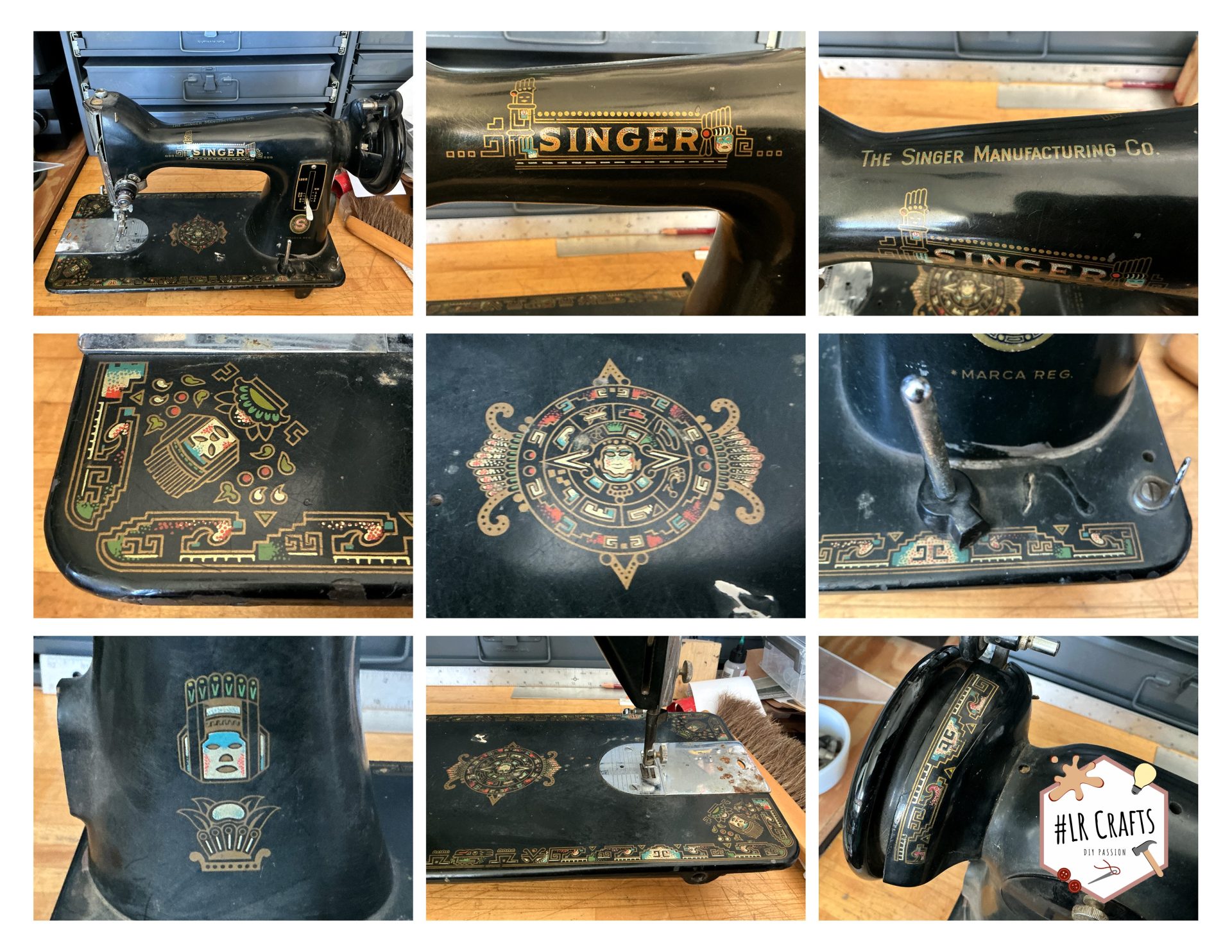
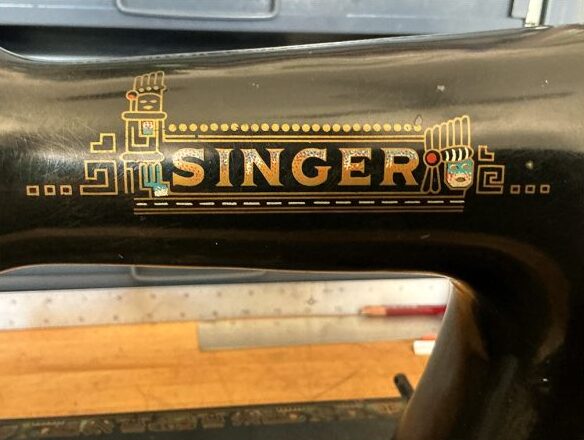
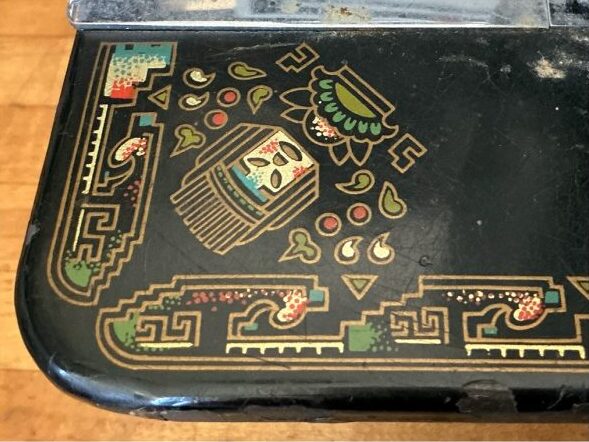
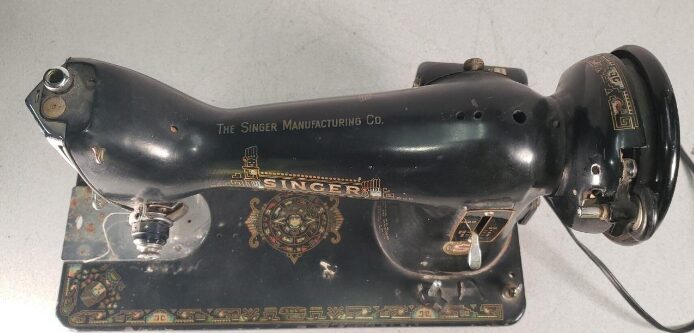
This decal has been verified on machines made in Querétaro (Mexico) and has been named by Bryan, the owner of a machine with model number 189R and those decals. He kindly sent the photos to us, and thanks to him we also found out that the location code for the factory is R.
Documented Machines
(What does it mean?)Total n.: 1
Factories:
Documented Classes:
- 189
In use for Classes:
- 39
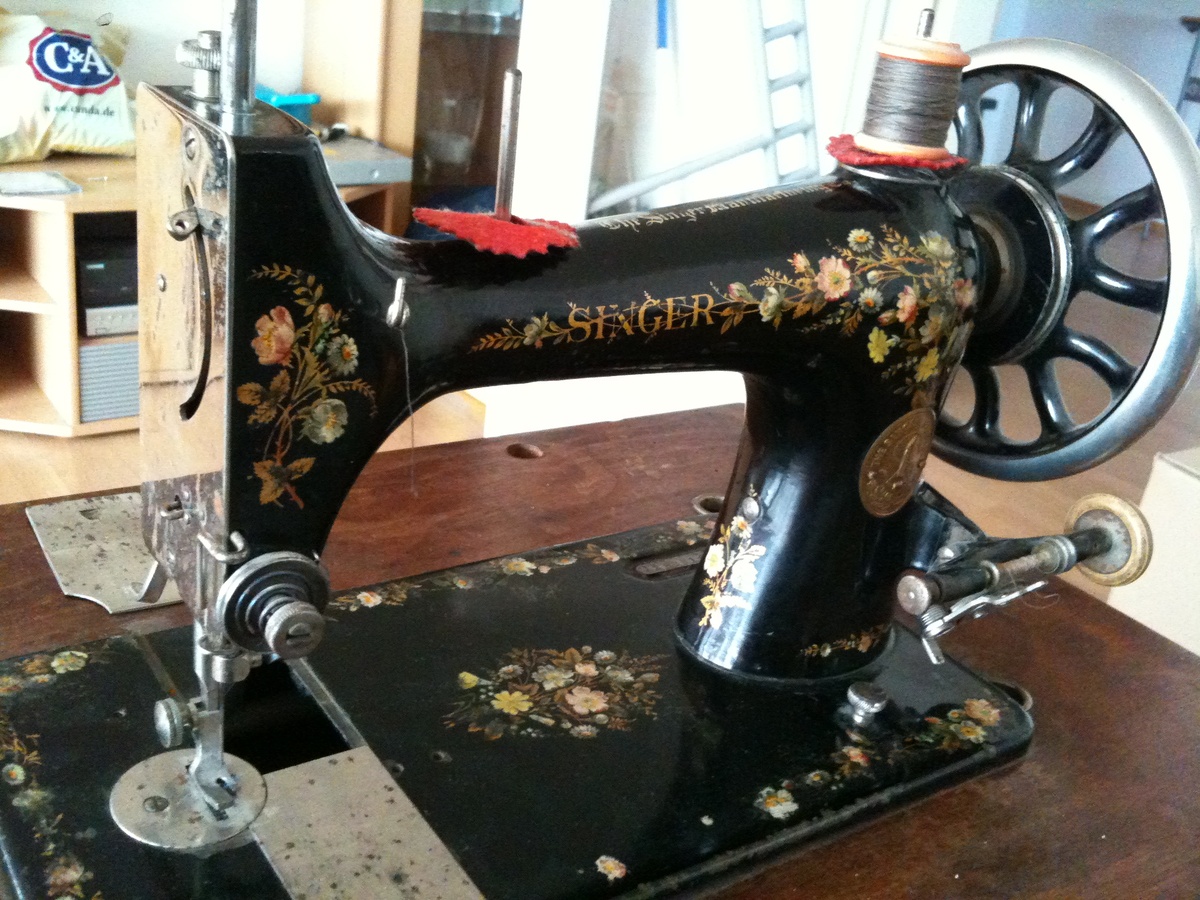
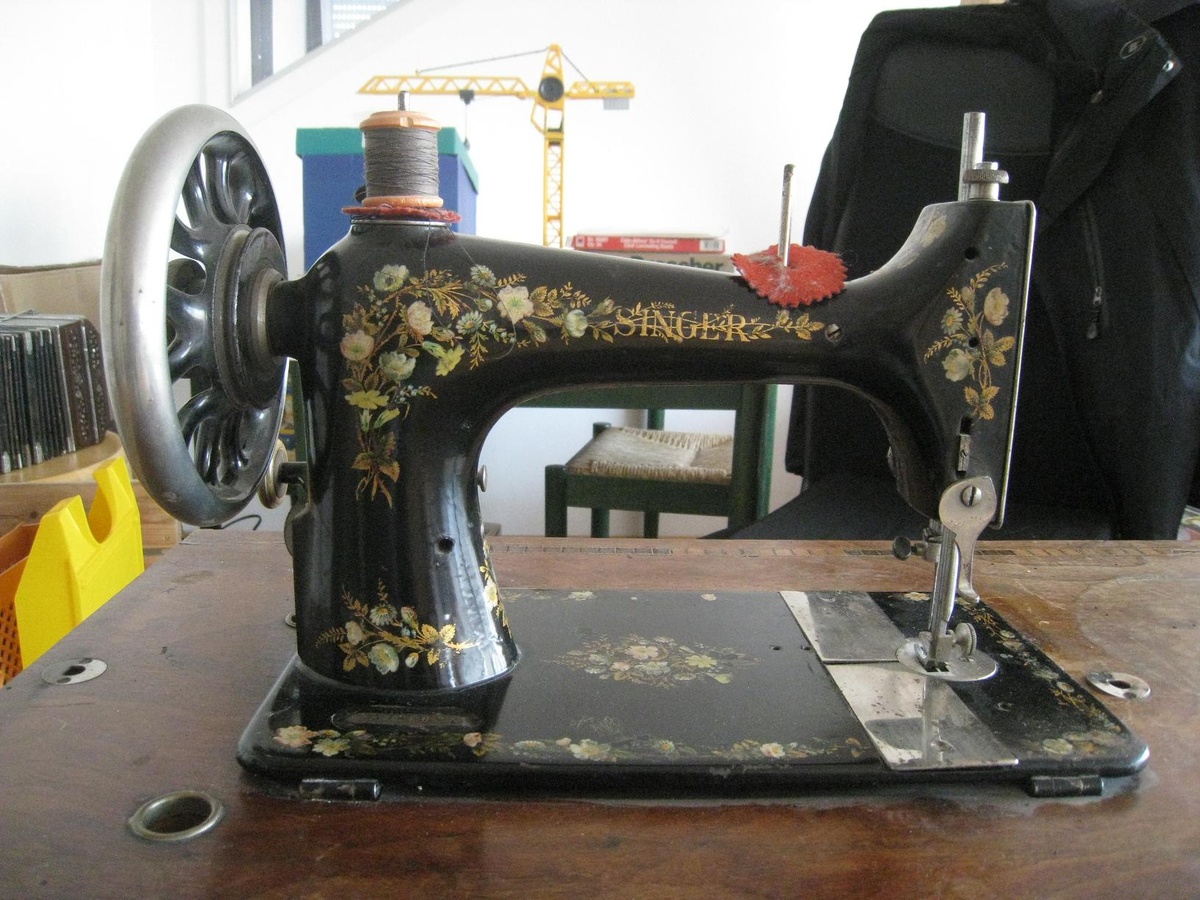
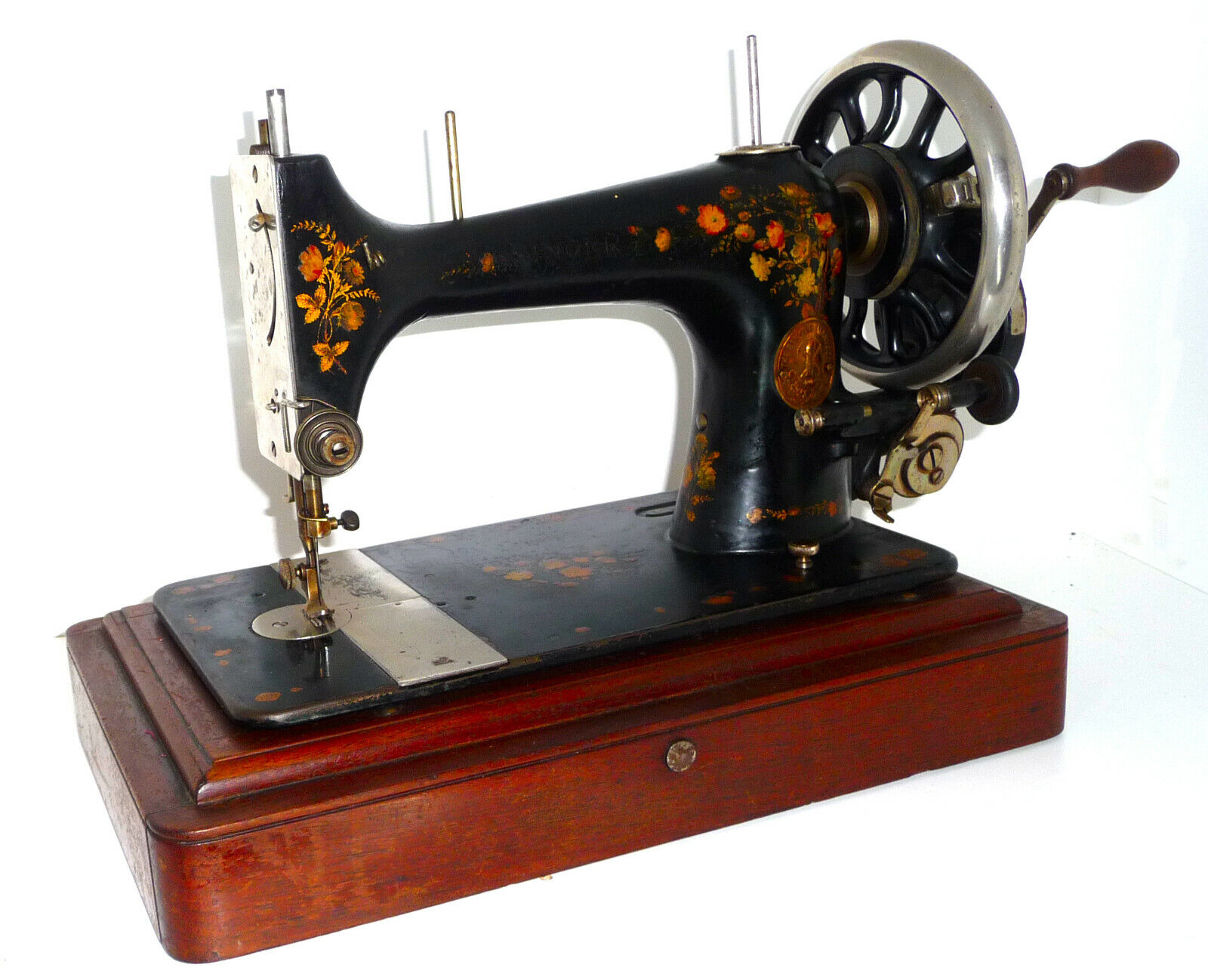
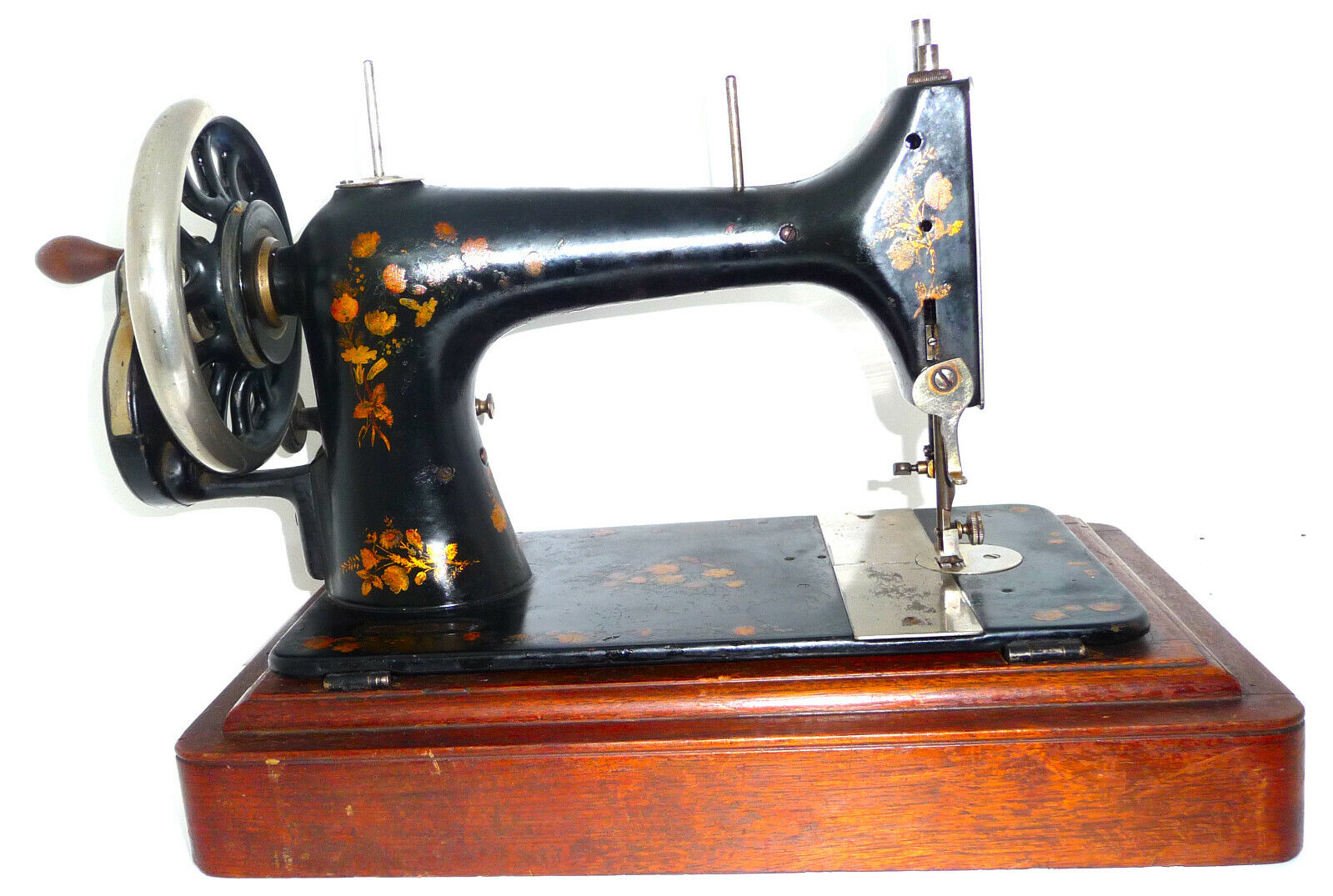
Another floral decal variant, with roses and daisies. The name we gave to this decoration set comes from the fact that the flowers seem to be gathered in bunches, mainly on the back. Applied on class 39 machines, which are rarer than other models, so we don't have many machines with pristine decals to be able to appreciate the flower types.
Documented Machines
(What does it mean?)Total n.: 2
Factories:
Documented Classes:
- 39
Documented years: 1895
In use from 1889 up to 1897
In use for Classes:
- VS3 / 28
- 39
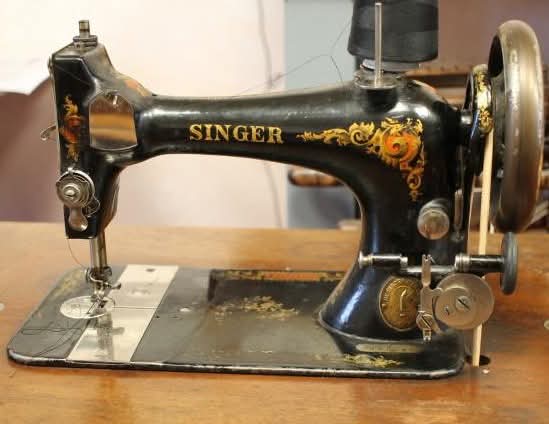
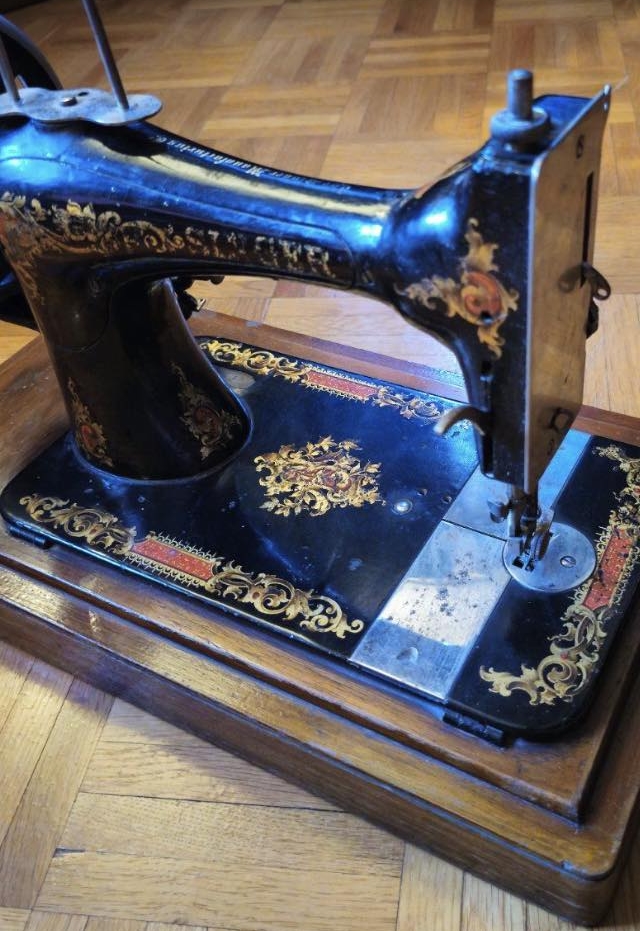
Quite rare decal set, easily mistake for the more common "La Vencedora". It's been documented on VS3 (28-class) models, and also on the uncommon model 39. It features red scrolls on all four sides of the bed, giving the decal its common name.
Documented Machines
(What does it mean?)Total n.: 7
Factories:
Documented Classes:
- 28
- 39
Documented years: 1889 - 1897


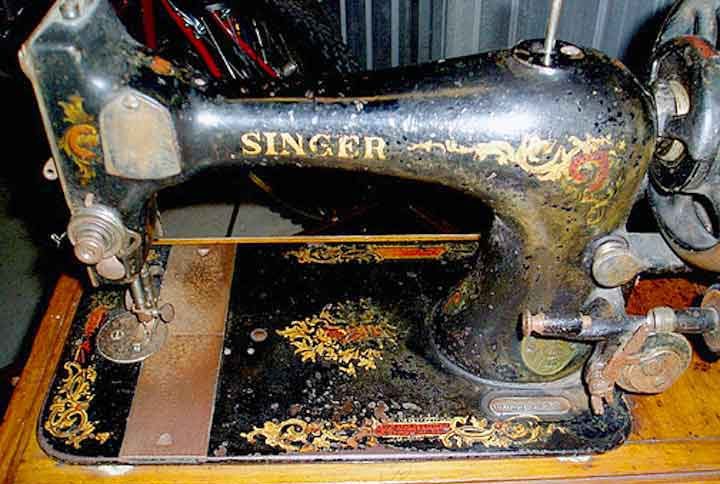

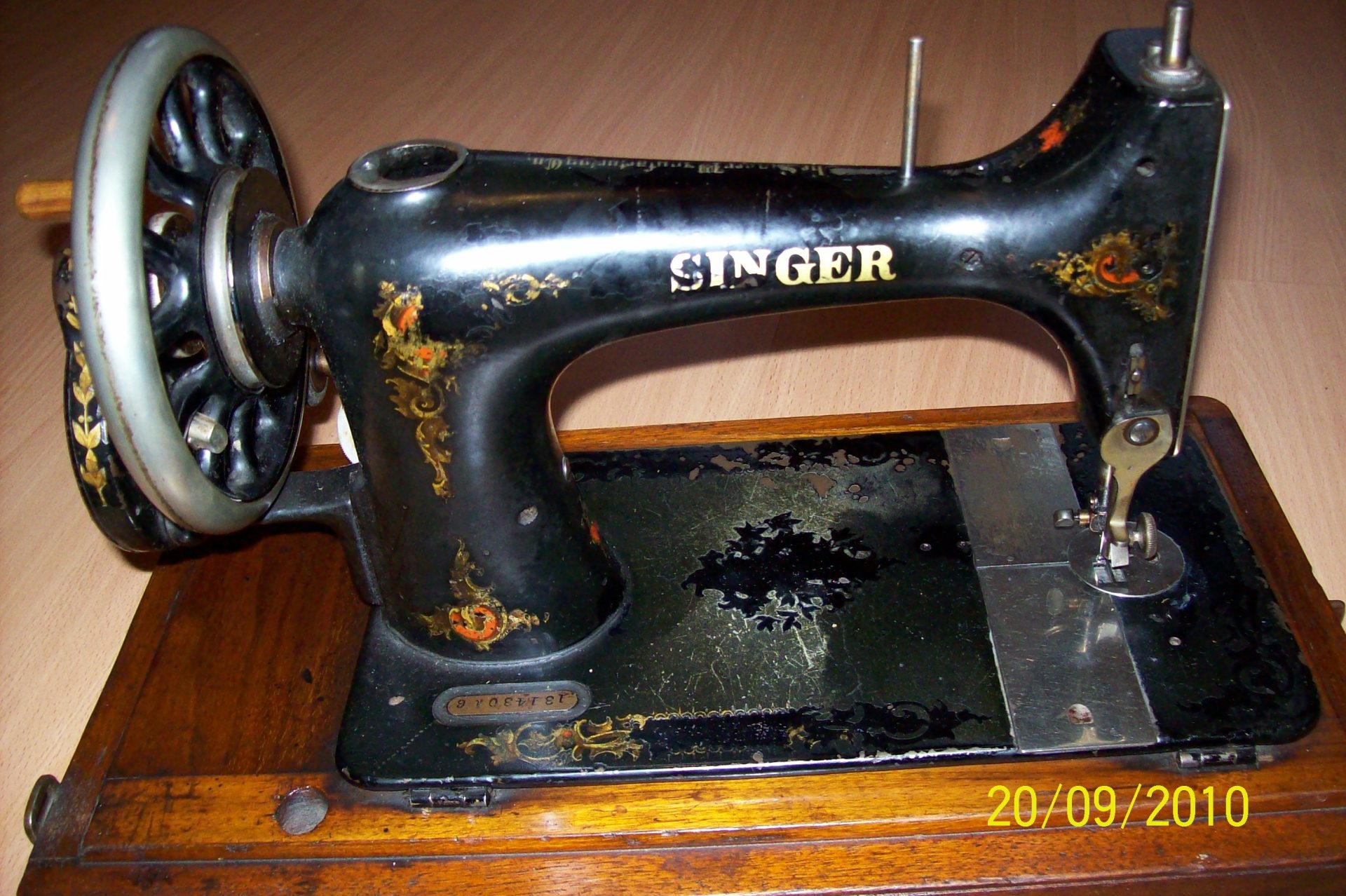
In use from 1933 up to 1954
In use for Classes:
- 221
Documented Machines
(What does it mean?)Total n.: 26
Factories:
Documented Classes:
- 221
Documented years: 1934 - 1953
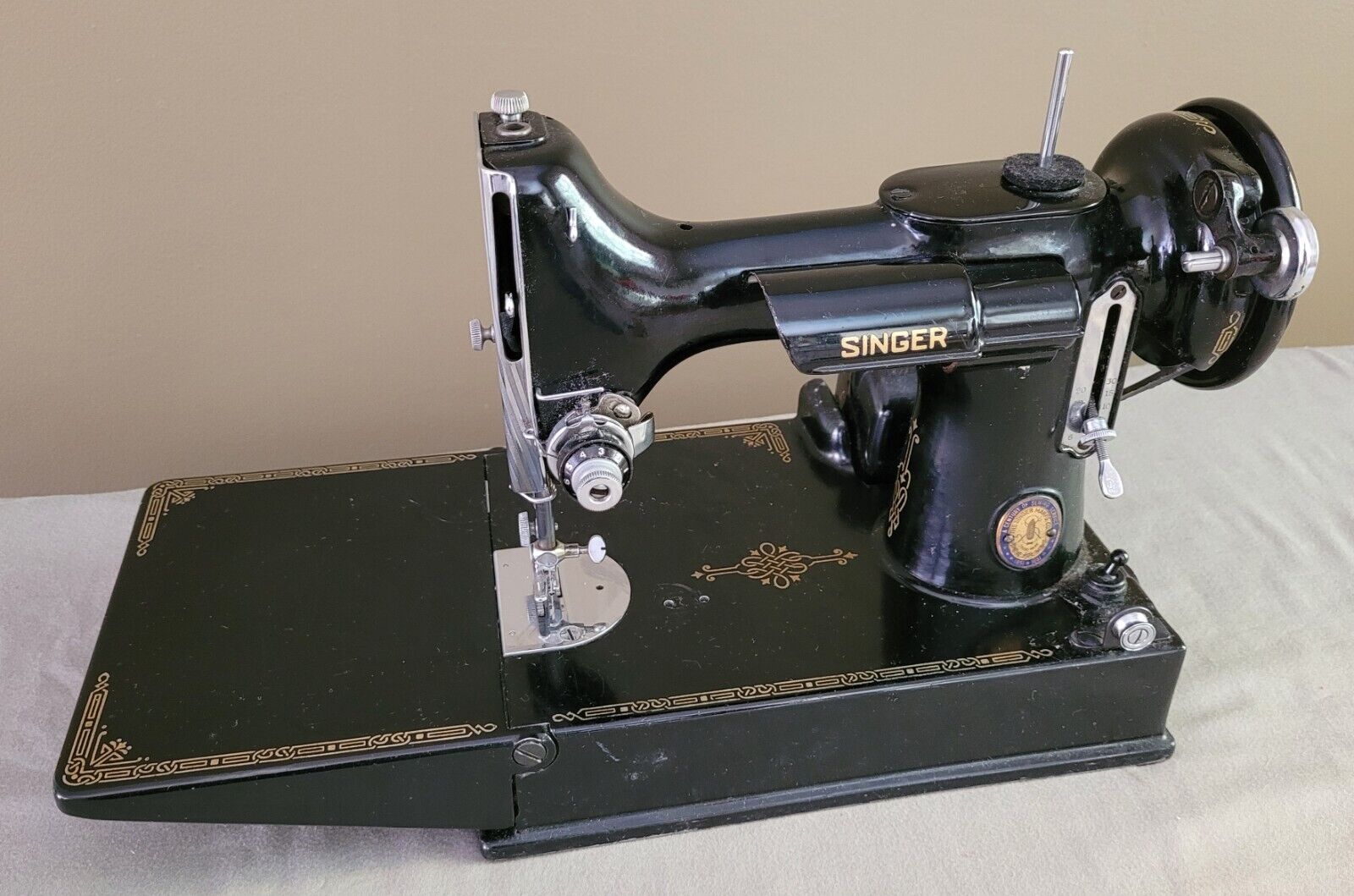
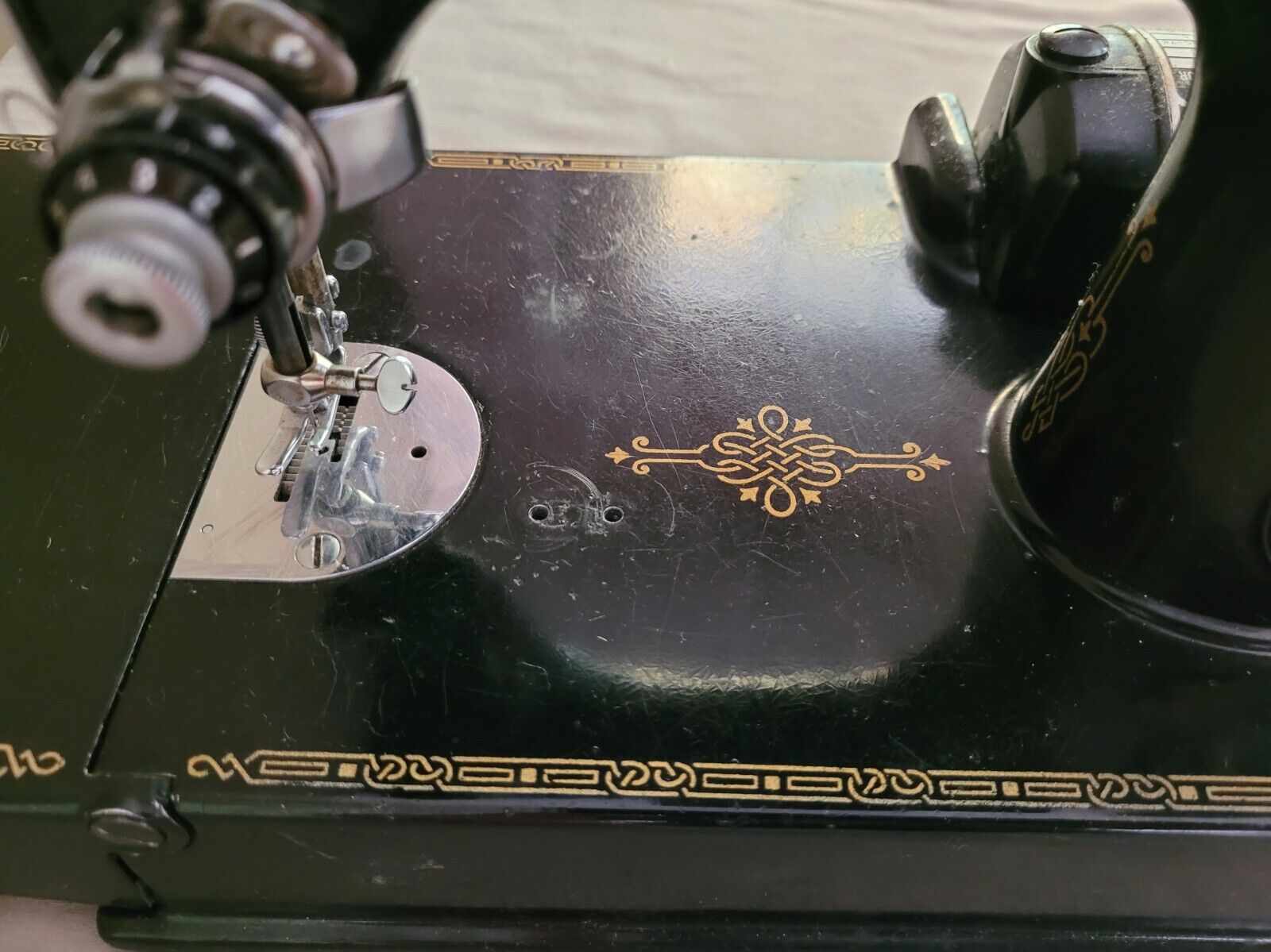
In use from 1905 up to 1913
In use for Classes:
- 9 (9W1, 9W3, 9W7)
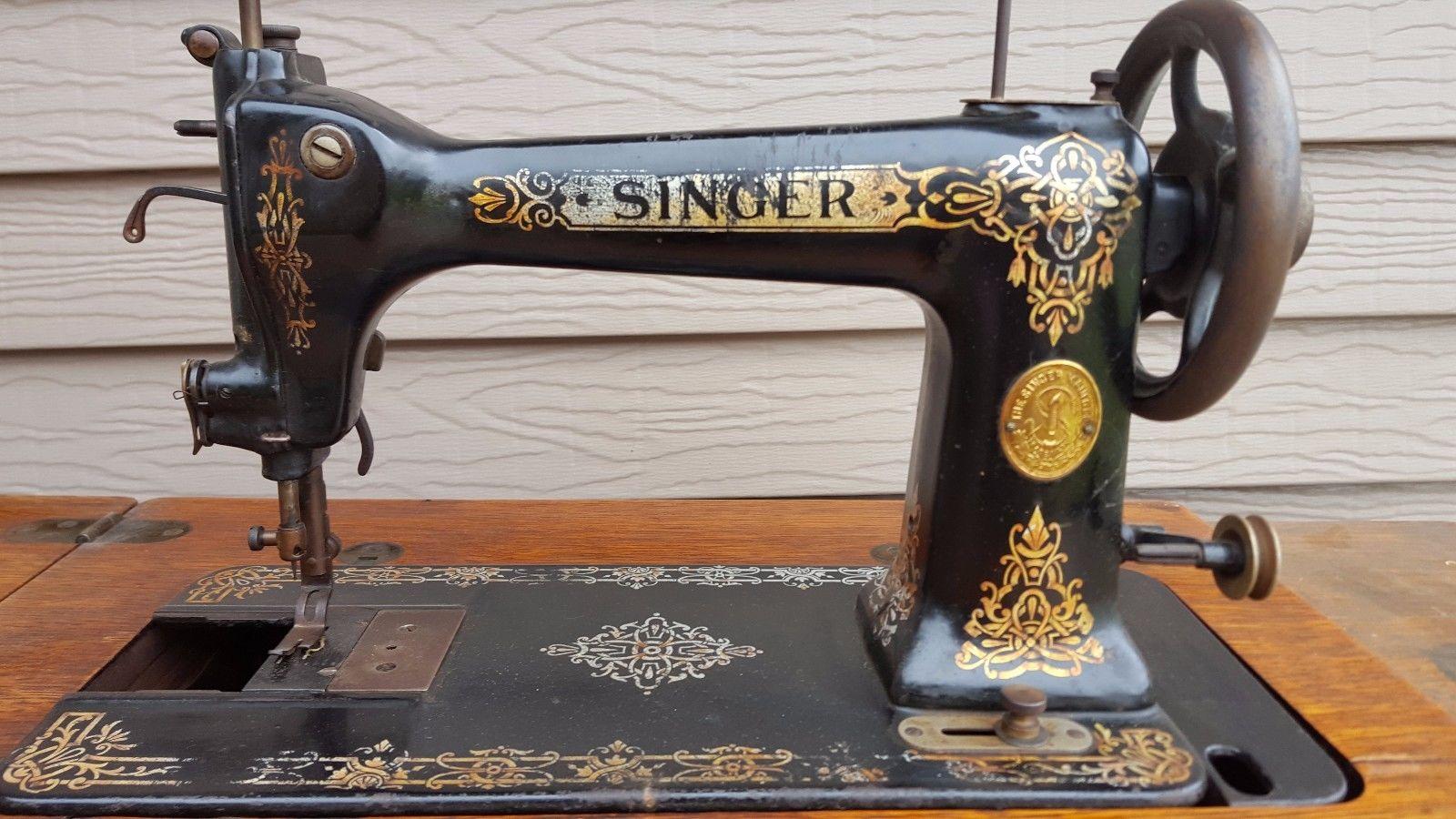
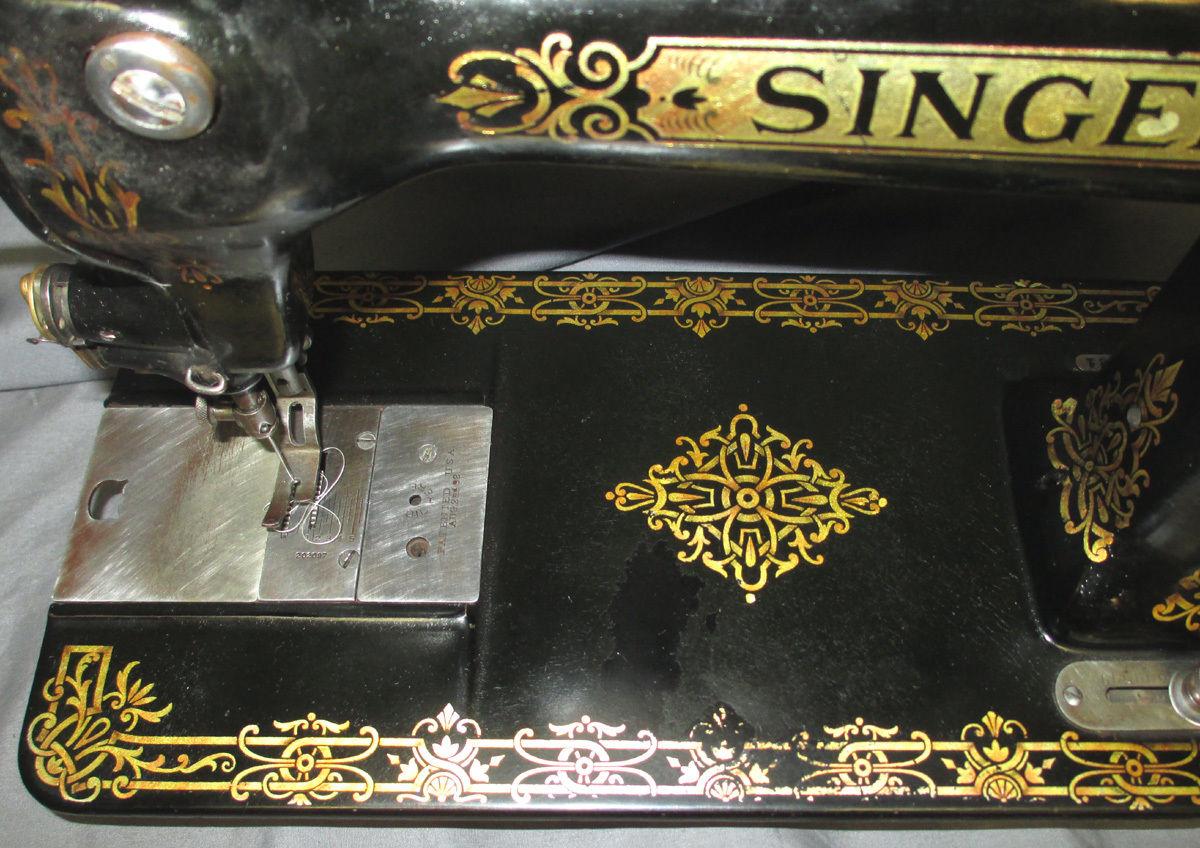
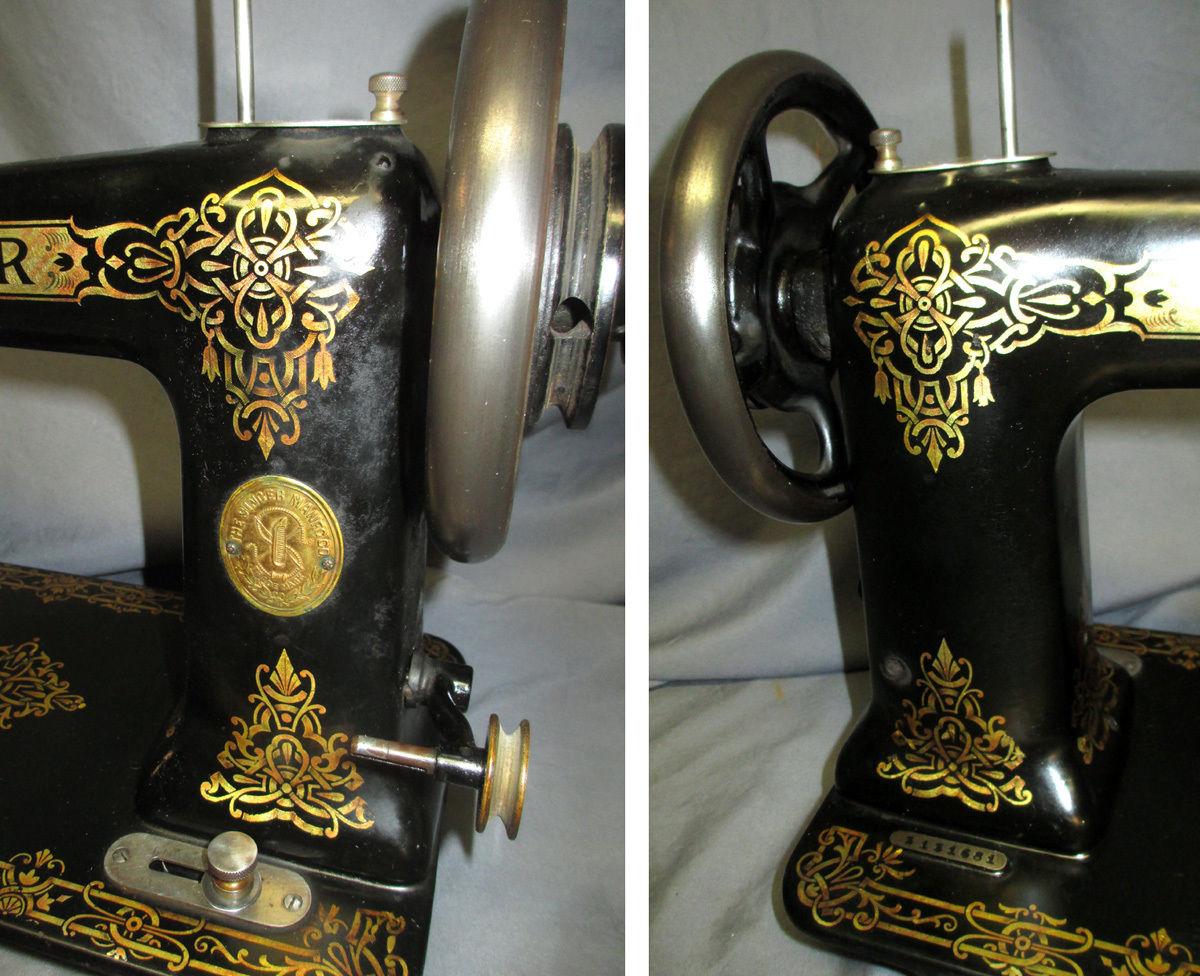
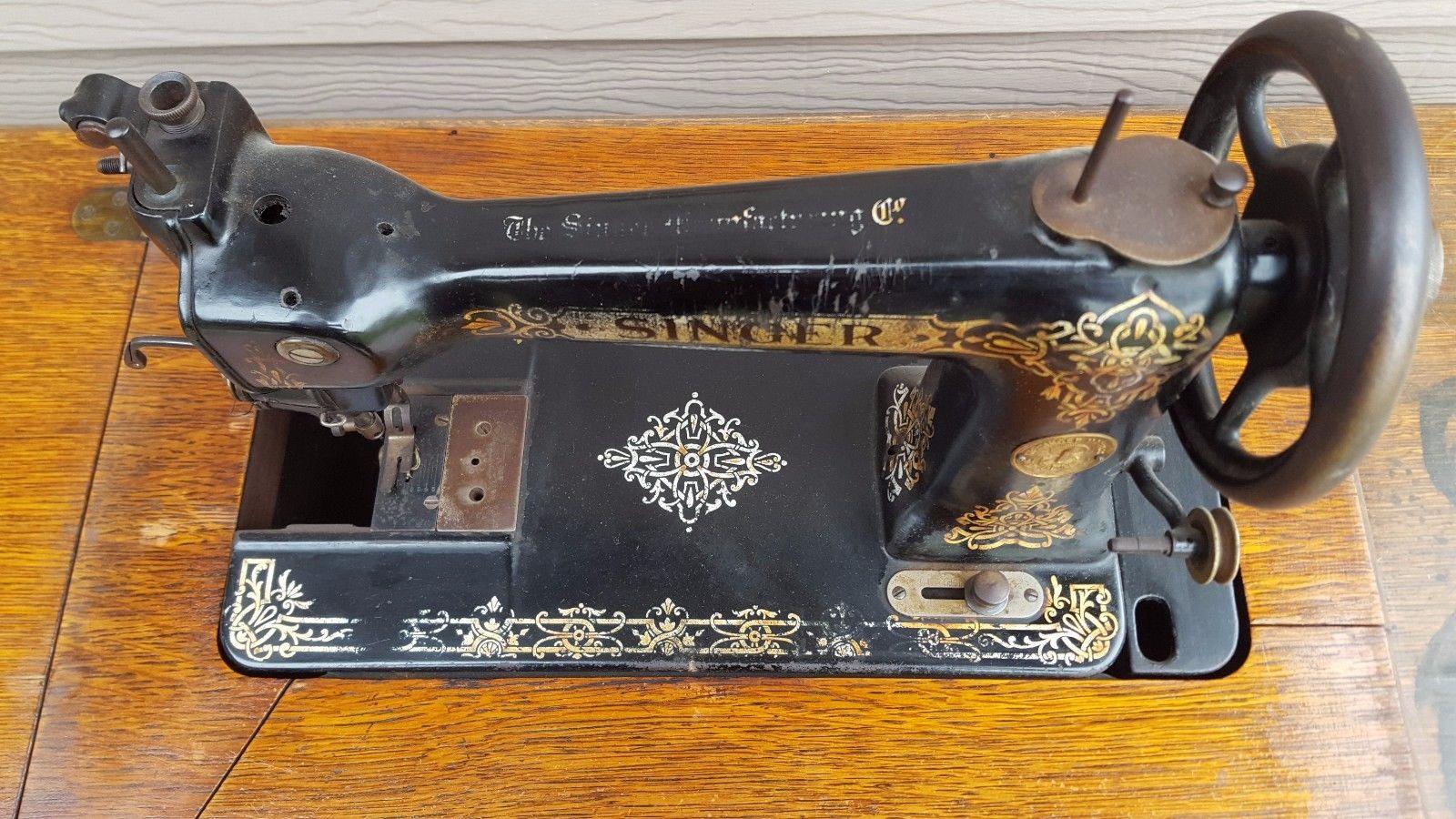
This decal set replaced the Wheeler and Wilson badging, after Singer spent a couple of years tweaking the Wheeler and Wilson W D9. This class of machines was produced between 1905 and 1913. Unfortunately, those machines have serial numbers that do not follow the Singer number system, and we don't have official records for them. We have been able to track a few of them.
Documented Machines
(What does it mean?)Total n.: 73
Factories:
Documented Classes:
- 9
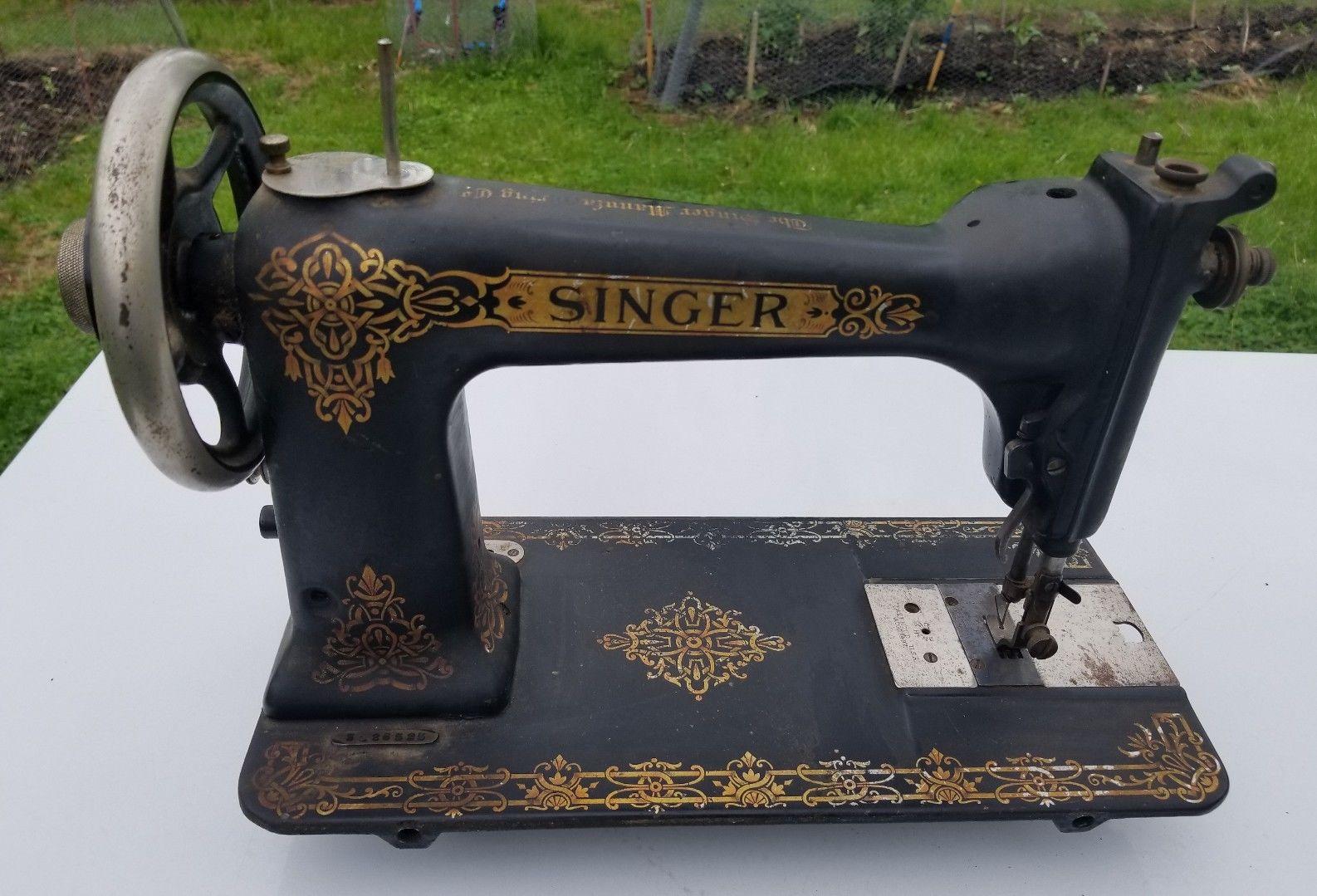
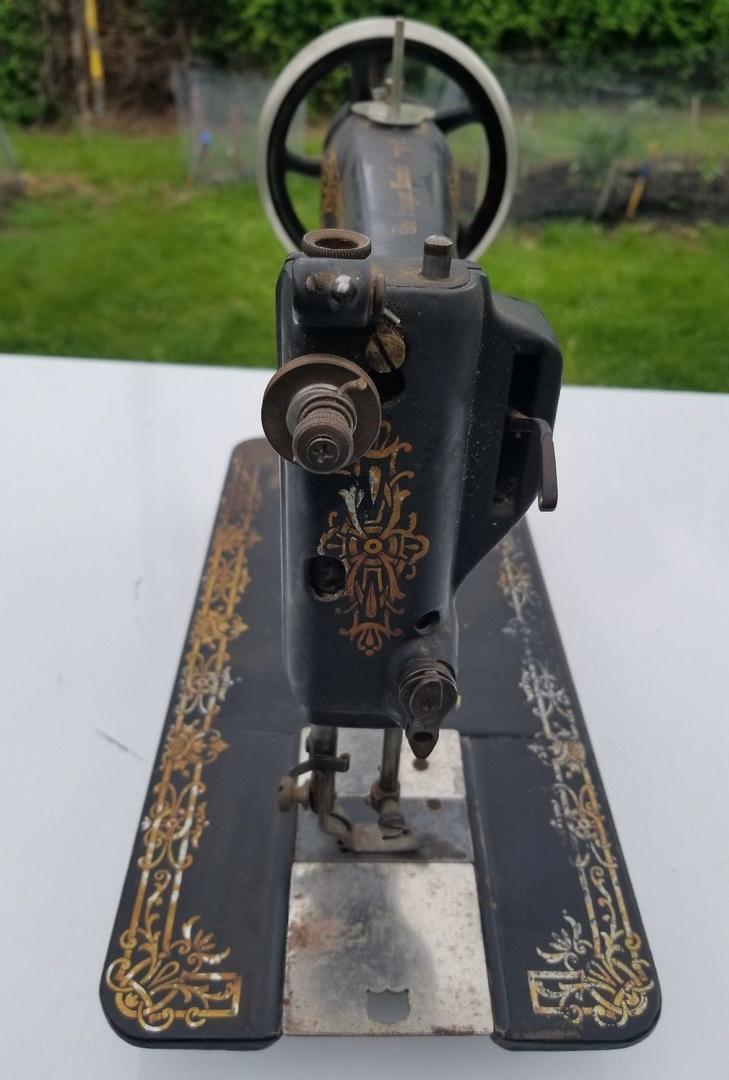
In use from 1945
In use for Classes:
- 24
Similar to the Celtic Knot design, but with leaves and flower elements. The back has no celtic knots.
Documented Machines
(What does it mean?)Total n.: 1
Factories:
Documented Classes:
- 24
Documented years: 1945
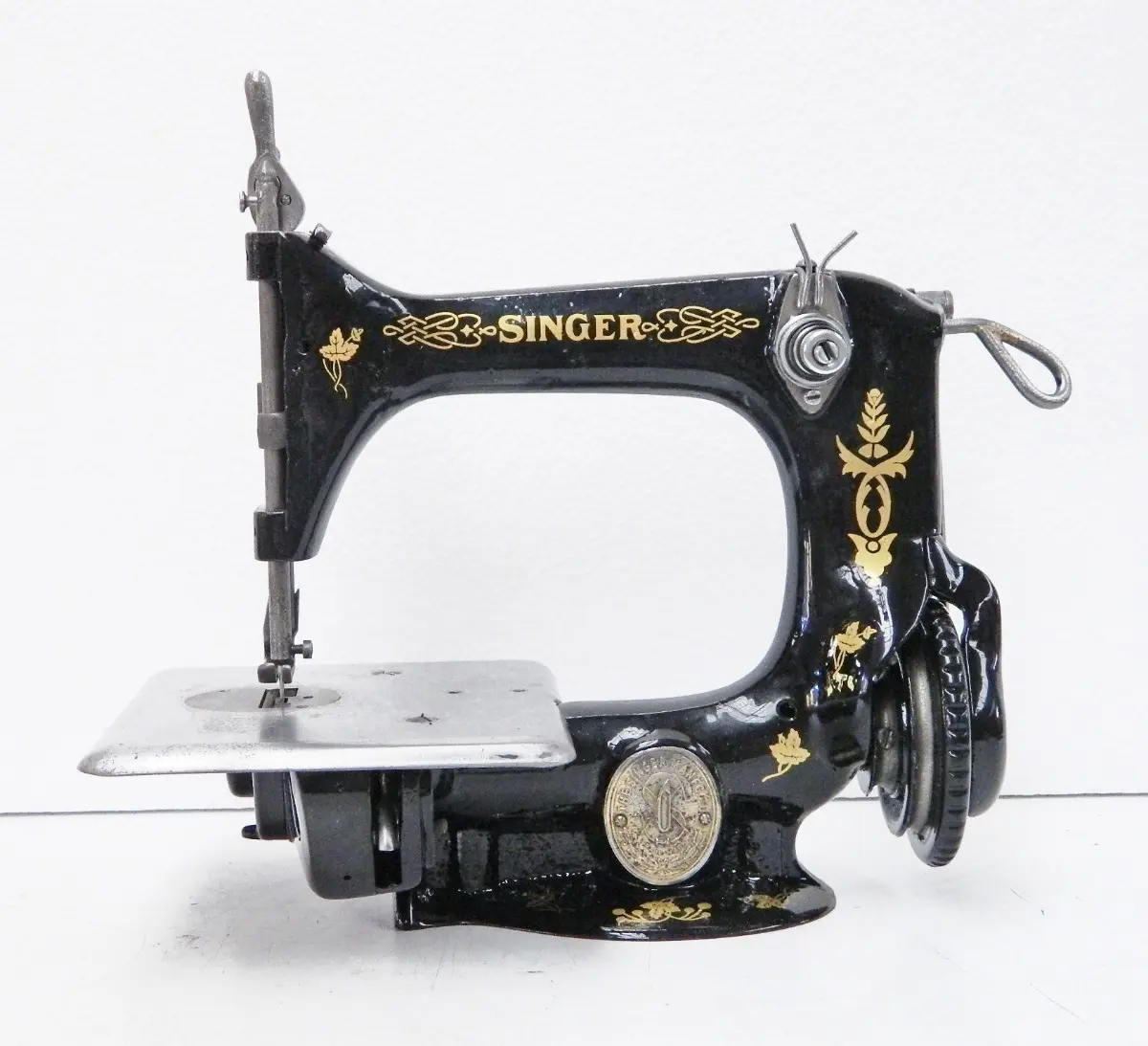
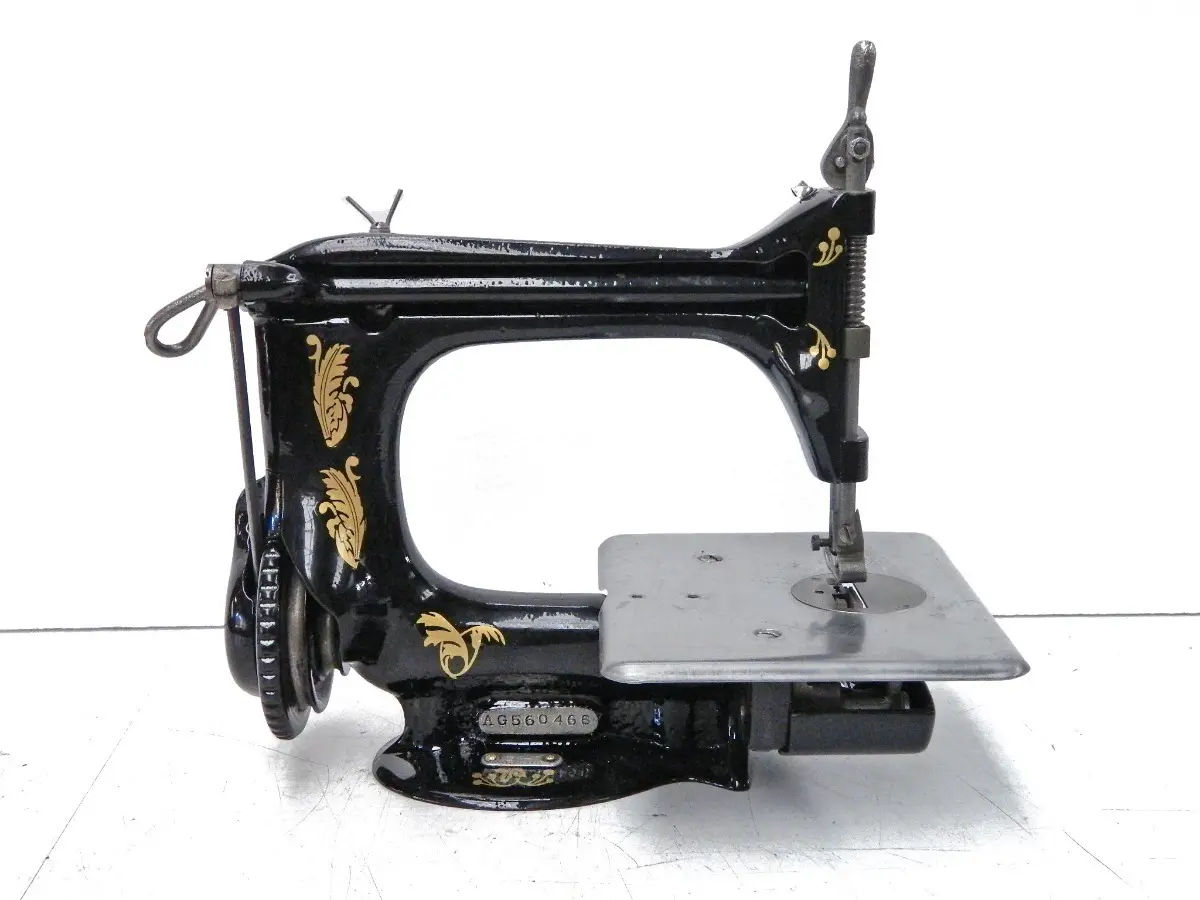
In use from 1920 up to 1925
In use for Classes:
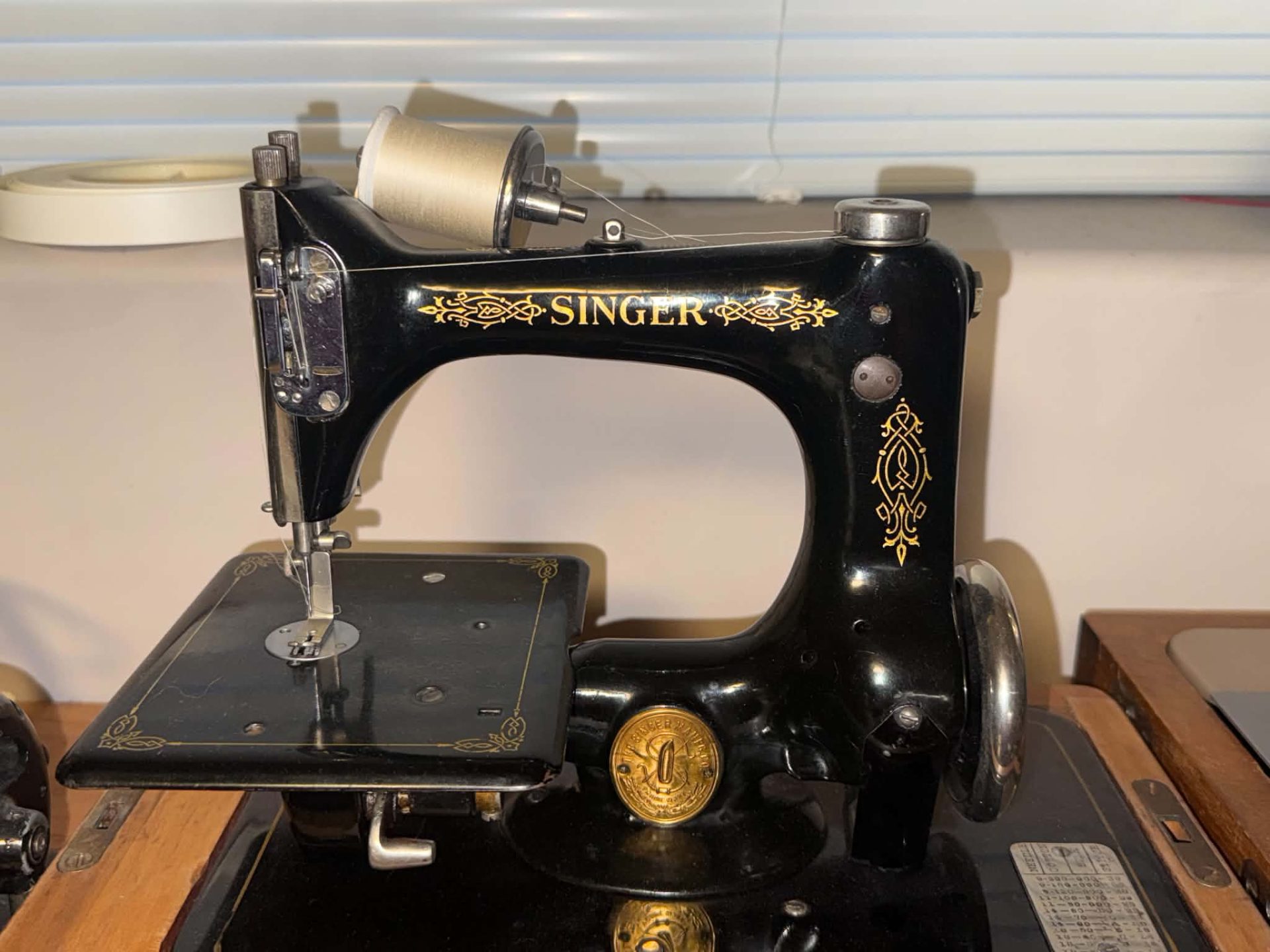
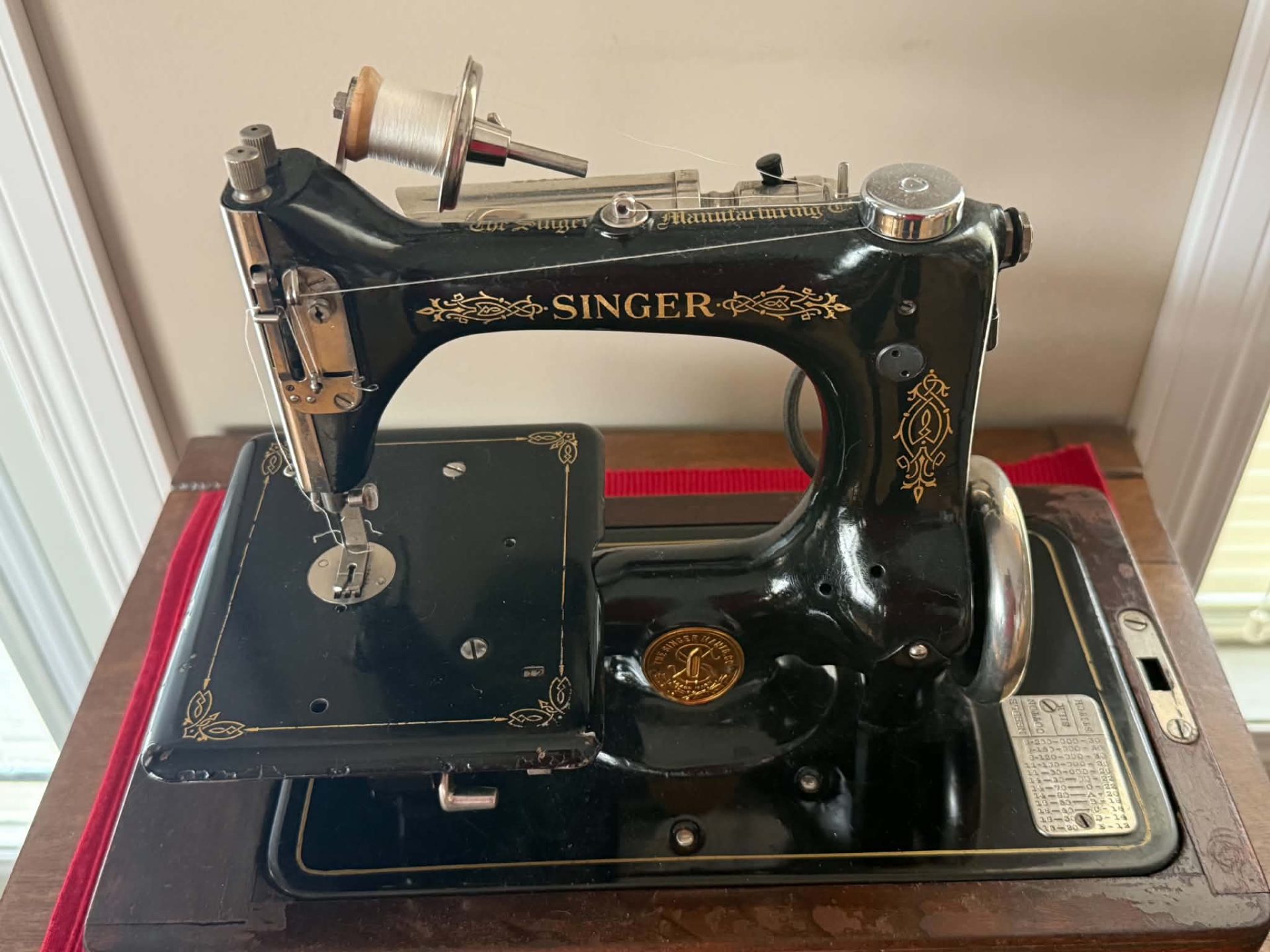
- 24
Very similar to the Celtic Knot Variant design in use for class 24, but this decal has denser, more intricate interlacing, with tighter loops and additional internal lines. The motif becomes elongated and more ornate.
Documented Machines
(What does it mean?)Total n.: 4
Factories:
Documented Classes:
- 24
Documented years: 1920 - 1925
In use for Classes:
- 51
This decal set is typical of the Bridgeport factory. It is a variation of the Celtic Knot decal used in 9W machines produced by Singer in Bridgeport between 1905 and 1913, a model derived from the Wheeler and Wilson D9. More on Bridgeport factory.
Documented Machines
(What does it mean?)Total n.: 1
Factories:
Documented Classes:
- 51
In use from 1934 up to 1957
In use for Classes:
- 127
- 128
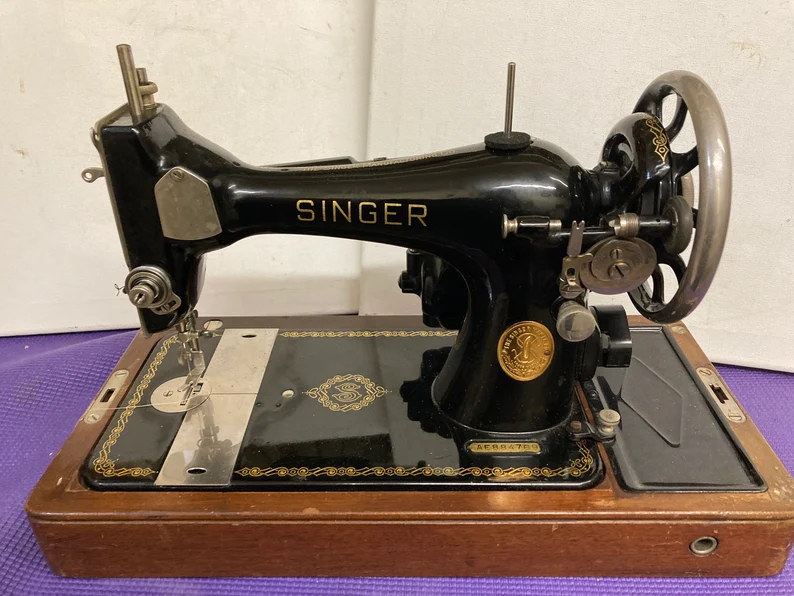
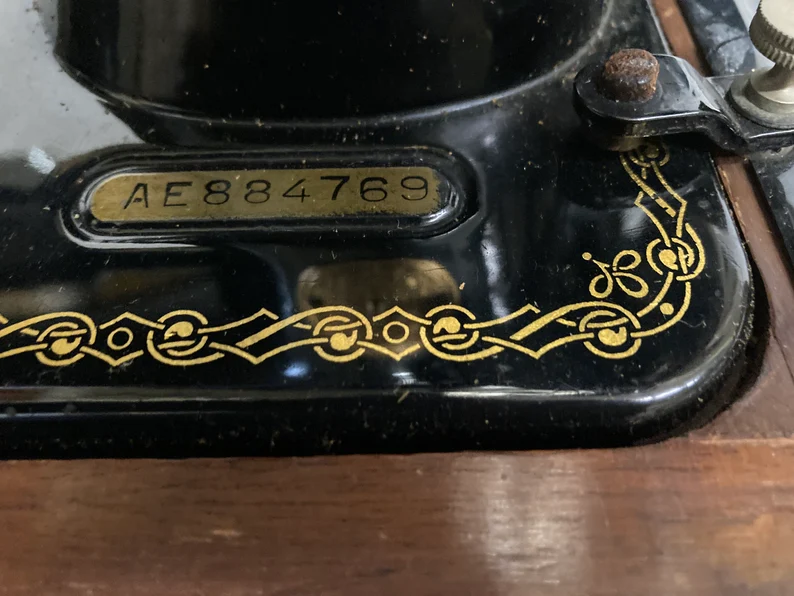
The Celtic Swirl has an "S"-like motive in the middle of the bed, and all the bed is surrounded by swirling motifs. Used on 128-class machines.
Documented Machines
(What does it mean?)Total n.: 39
Factories:
Documented Classes:
- 127
- 128
Documented years: 1938 - 1952
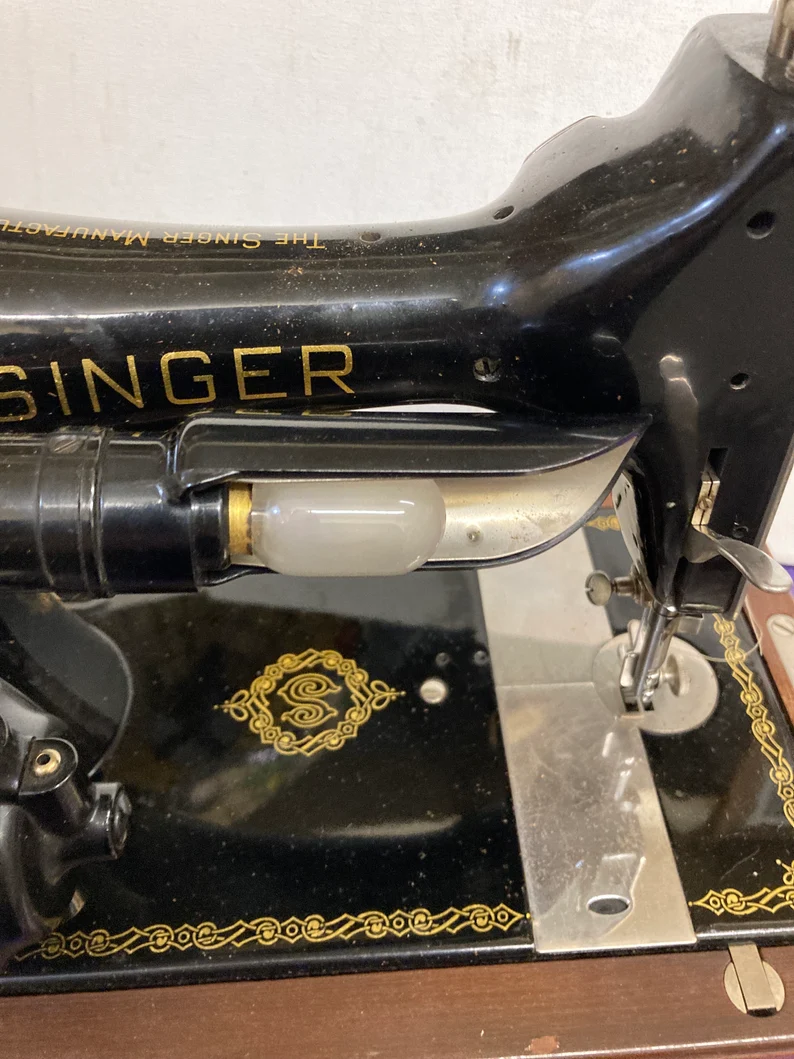
In use for Classes:
- 103
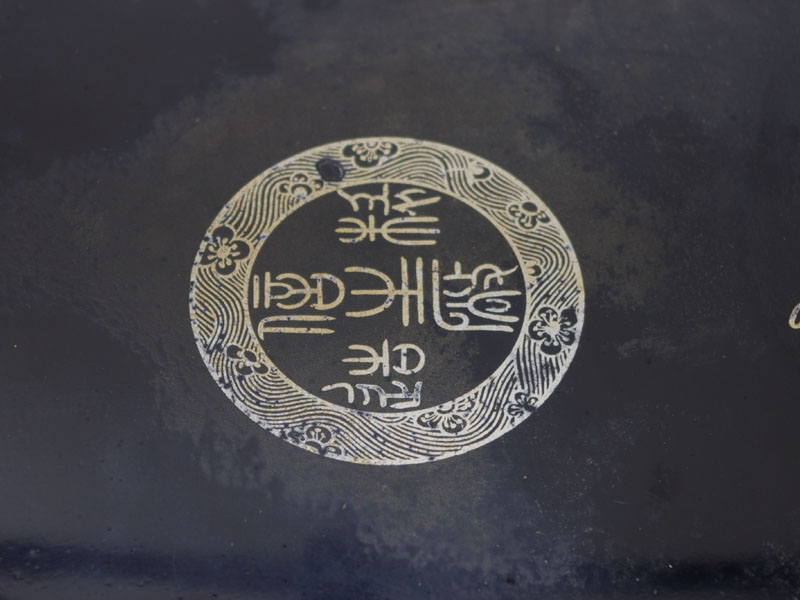
The Chinese characters in the center of the bed are in Seal Script, a very old and decorative writing style. In traditional Chinese: 福 — fú = good fortune / blessing 禄 — lù = prosperity / wealth / official success 寿 — shòu = longevity 喜 — xǐ = happiness / joy Together, 福禄寿喜 (fú lù shòu xǐ) is an extremely traditional auspicious combination meaning roughly “fortune, prosperity, longevity and happiness.” These characters were applied specifically on machines produced for the Chinese market. They were applied specifically on machines produced for the Chinese market, usually accompanied by more common decal designs such as Victorian or Acanthus Leaves.
Documented Machines
(What does it mean?)Total n.: 1
Factories:
Documented Classes:
- 103
Documented years: 1938
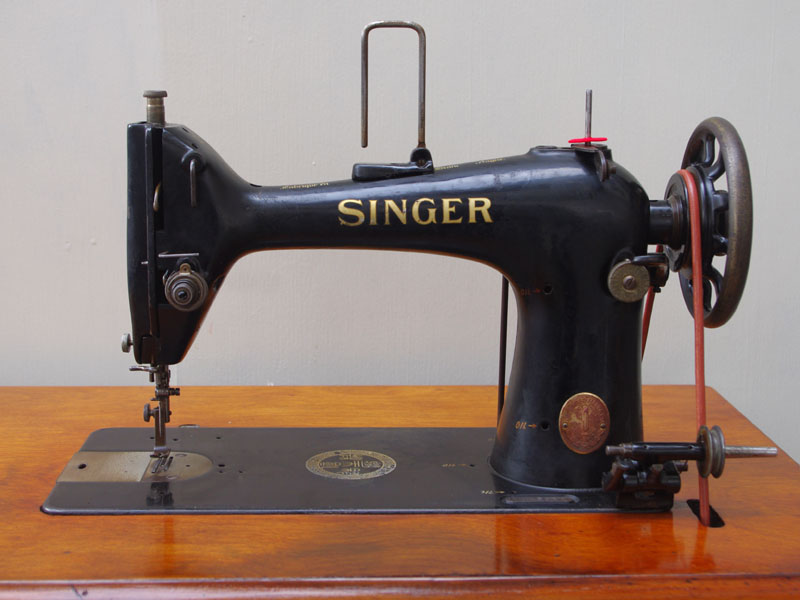
In use from 1900 up to 1920
In use for Classes:
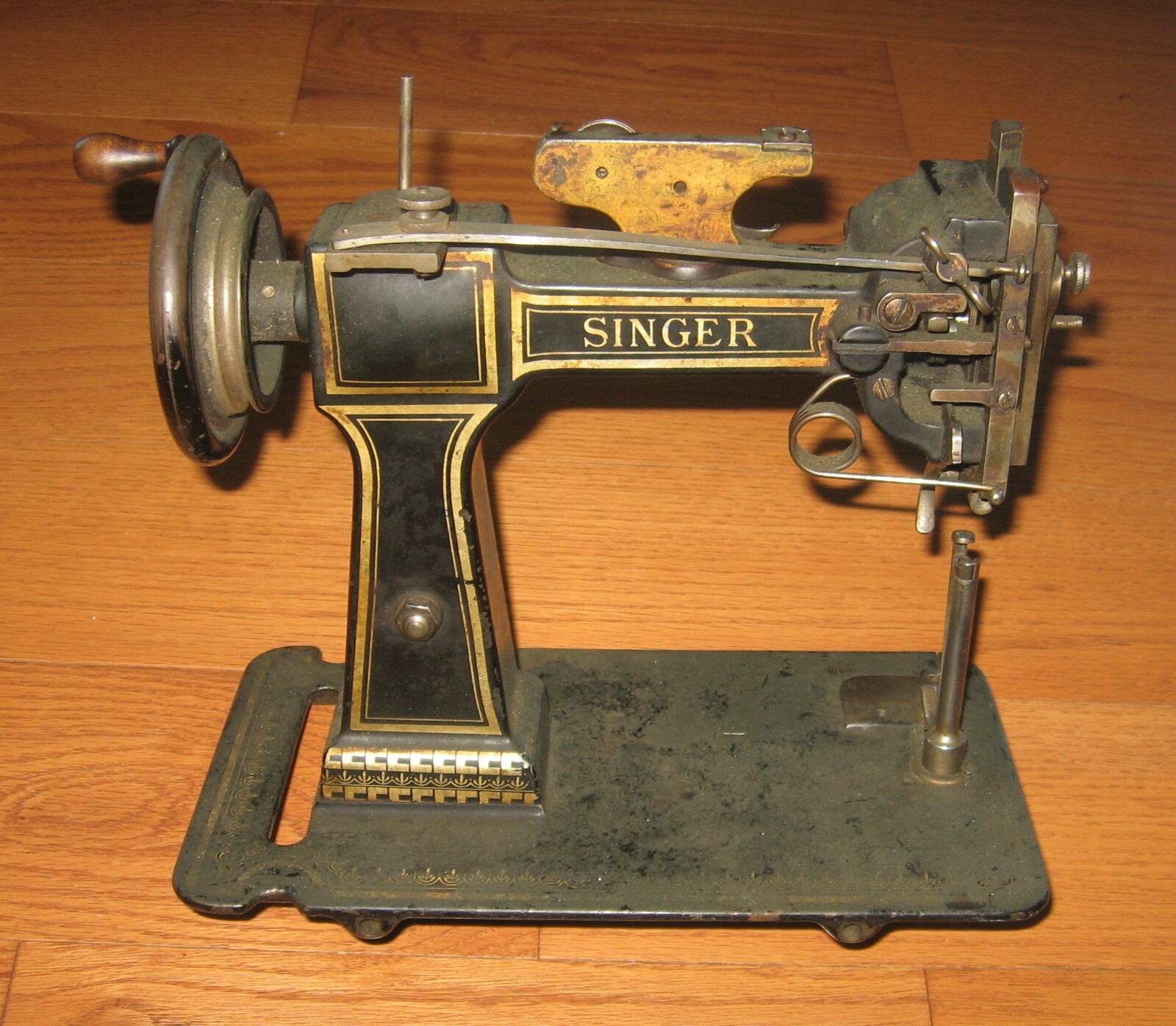
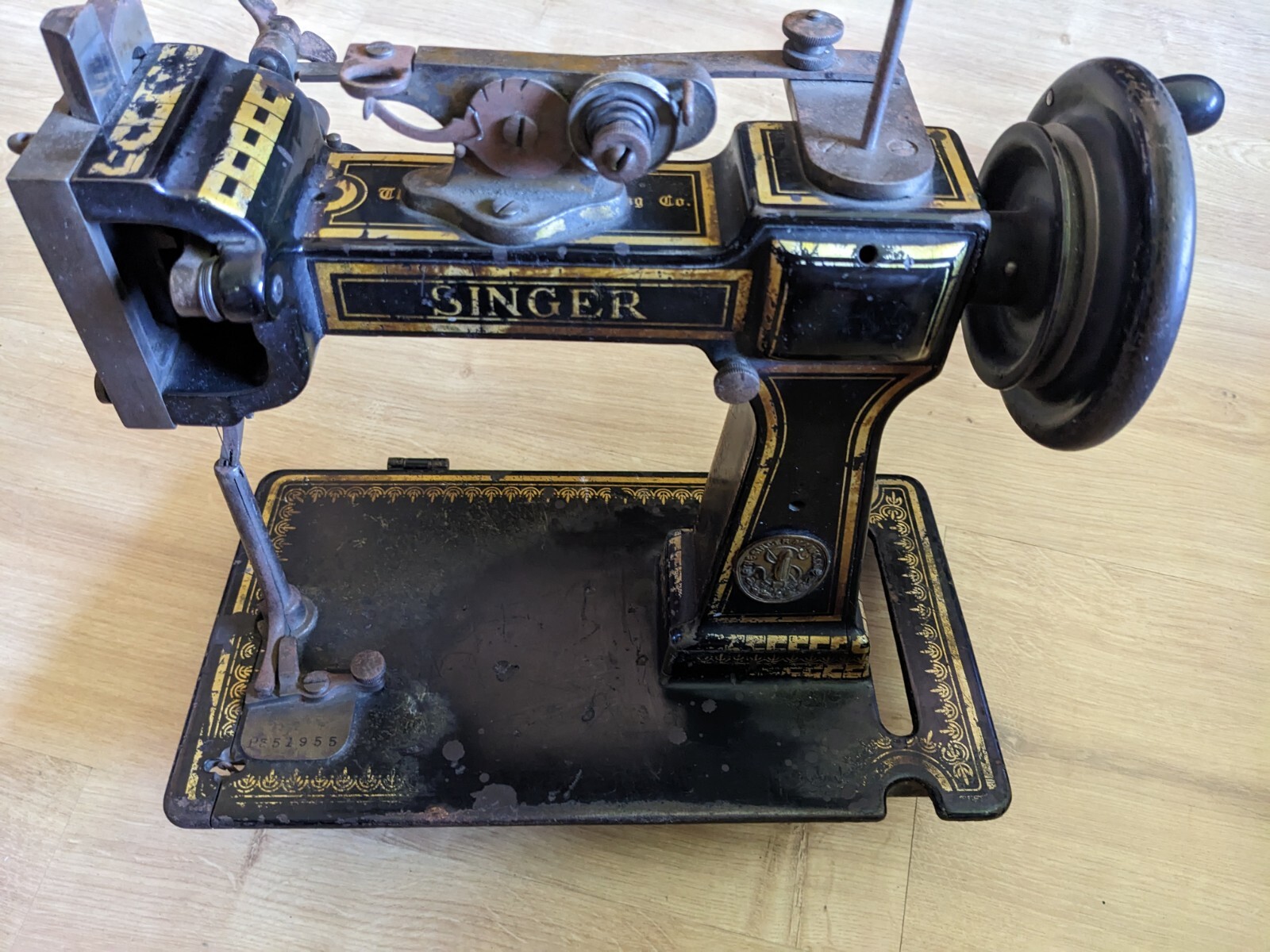
- 46K
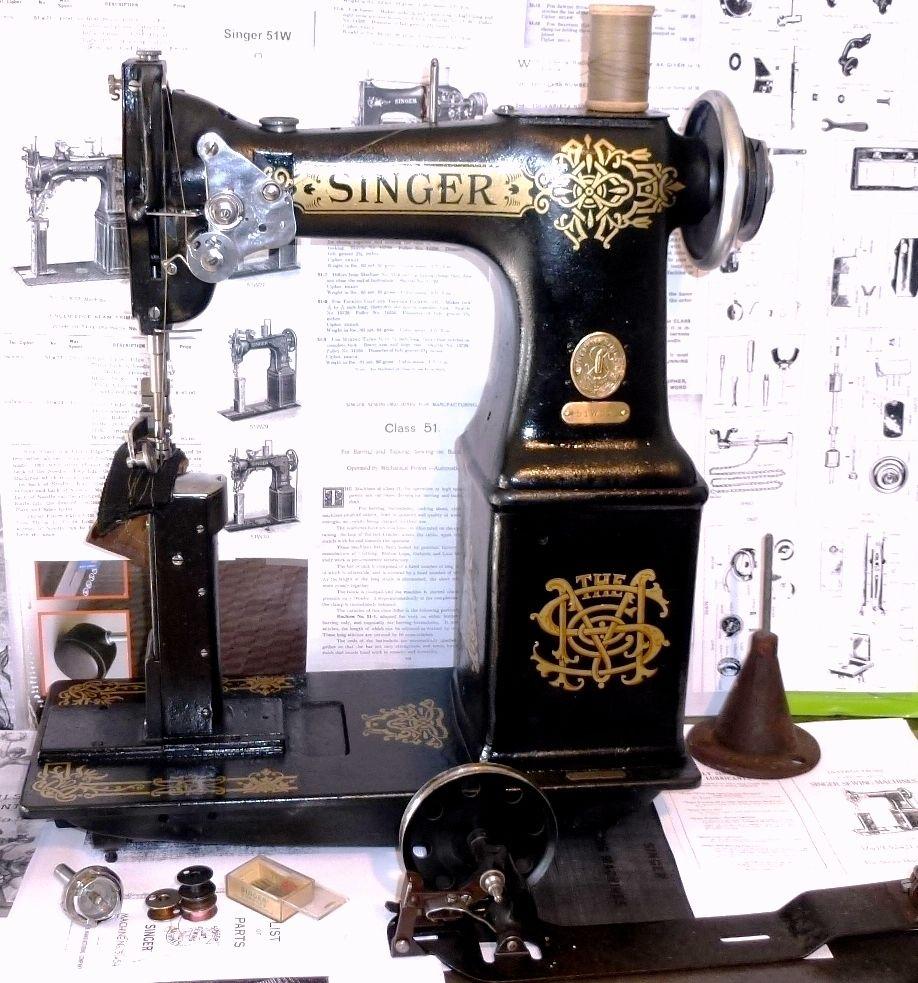
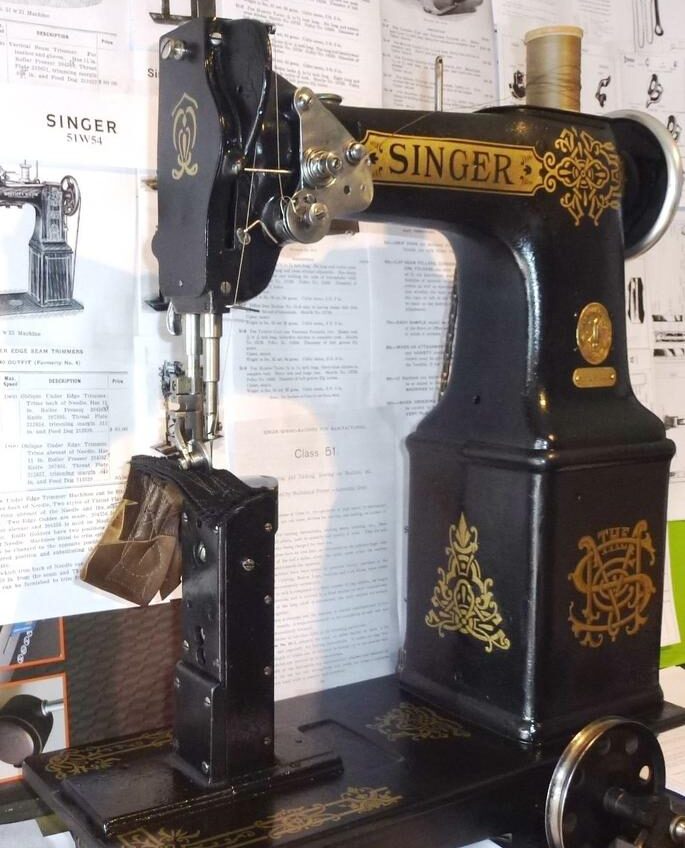
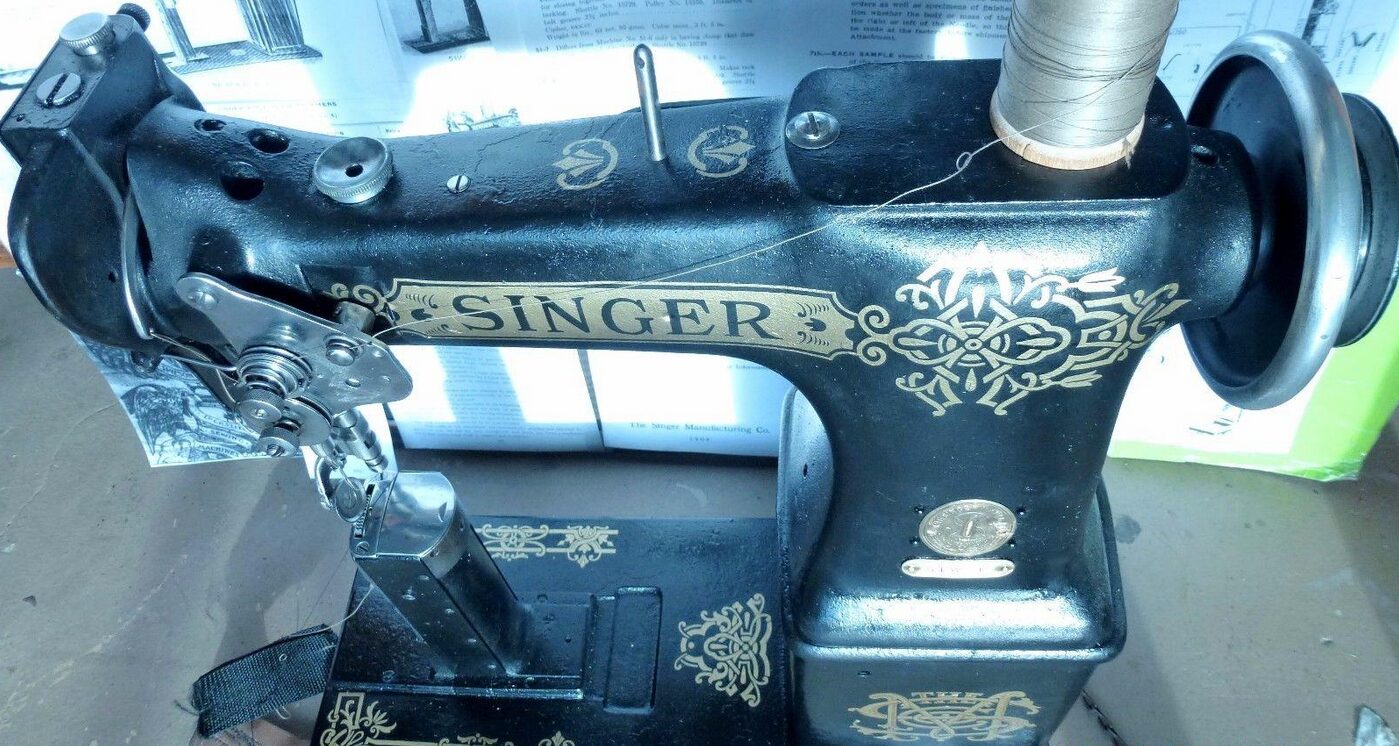
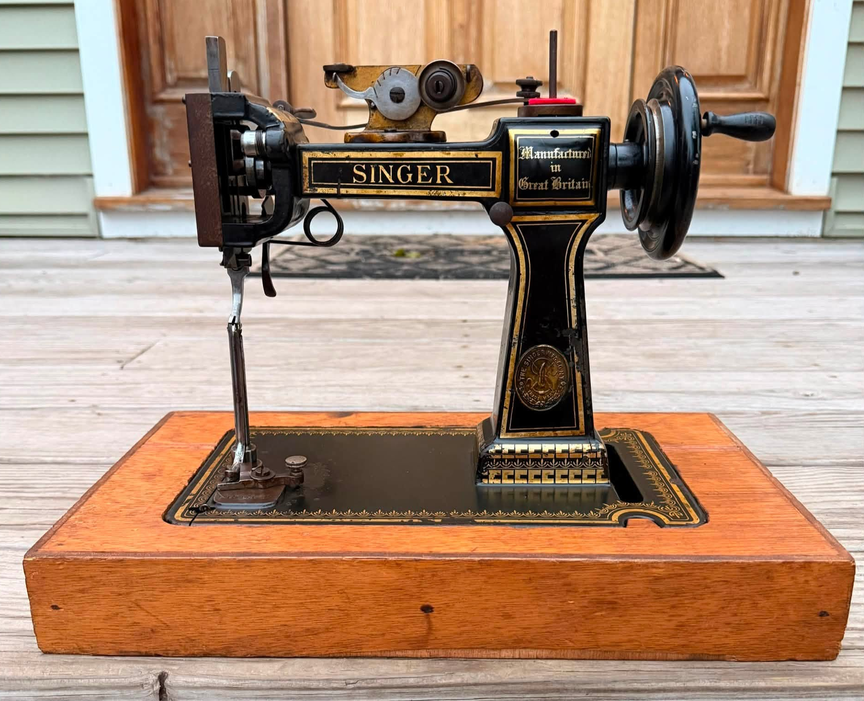
This decal is for a high pillar machine, the 46K1 or 46K2 models. The 46K1 and 46K2 models were specialized "pique stitch" cylinder/post-bed machine used primarily for sewing the fingers of gloves. The 46K2 is like the 46K1, but has a smaller column and looper. The shape of the machine, with the high column highlighted by golden borders, the base of the pillar with a stylized leaves border, gives the impression of classical ancient Greek decorations on columns. First image from The Wolfegang's Collectibles
Documented Machines
(What does it mean?)Total n.: 5
Factories:
Documented Classes:
- 46
Documented years: 1900 - 1917
In use from 1912 up to 1913
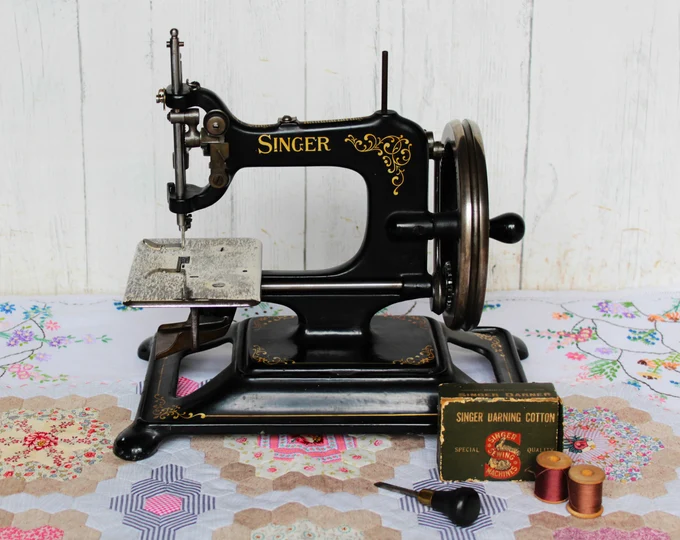
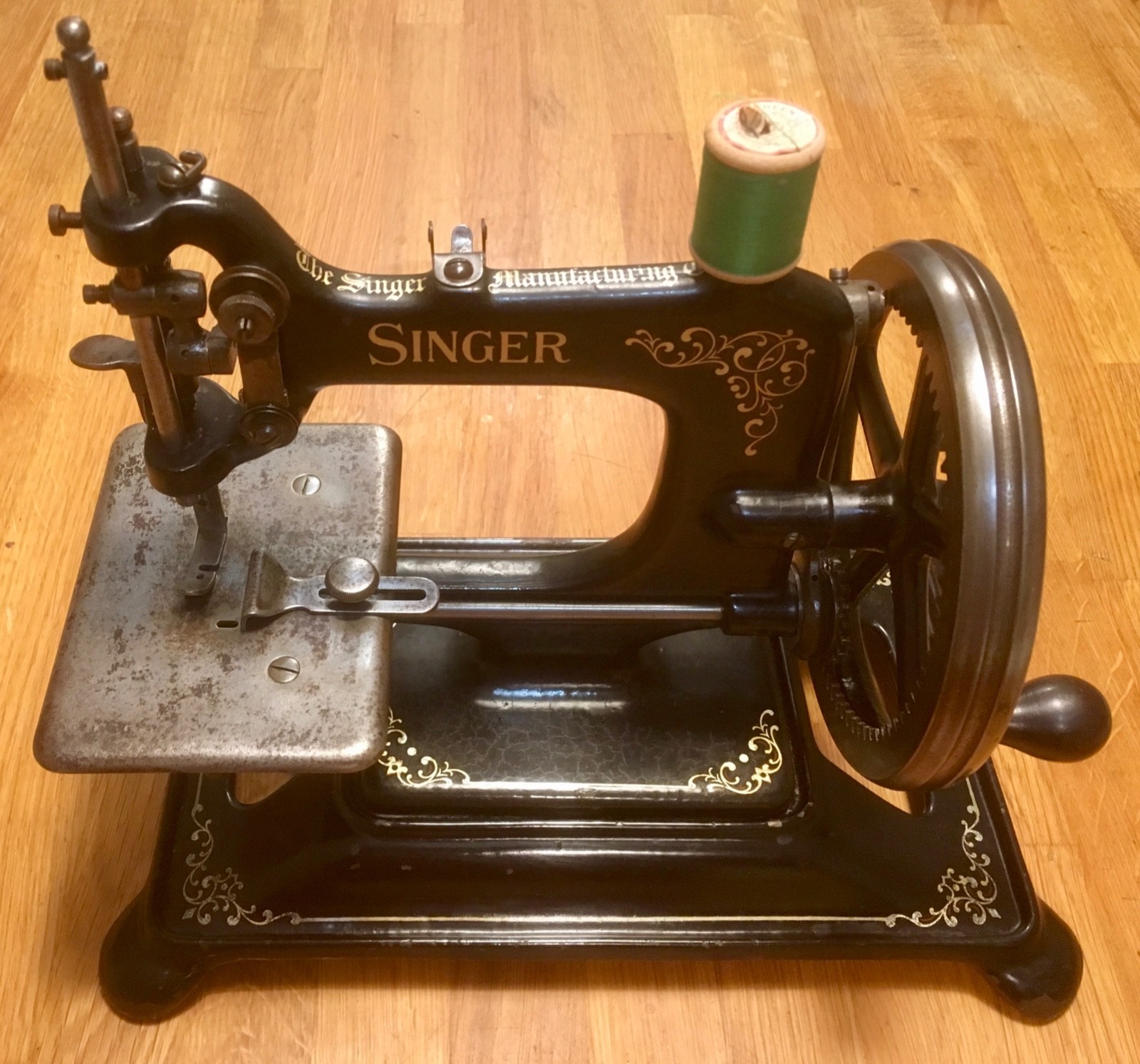
In use for Classes:
- 30
Documented Machines
(What does it mean?)Total n.: 2
Factories:
Documented Classes:
- 30
Documented years: 1913
In use from 1890 up to 1896
In use for Classes:
- 27 (rectangular bed)
- 28
- 39
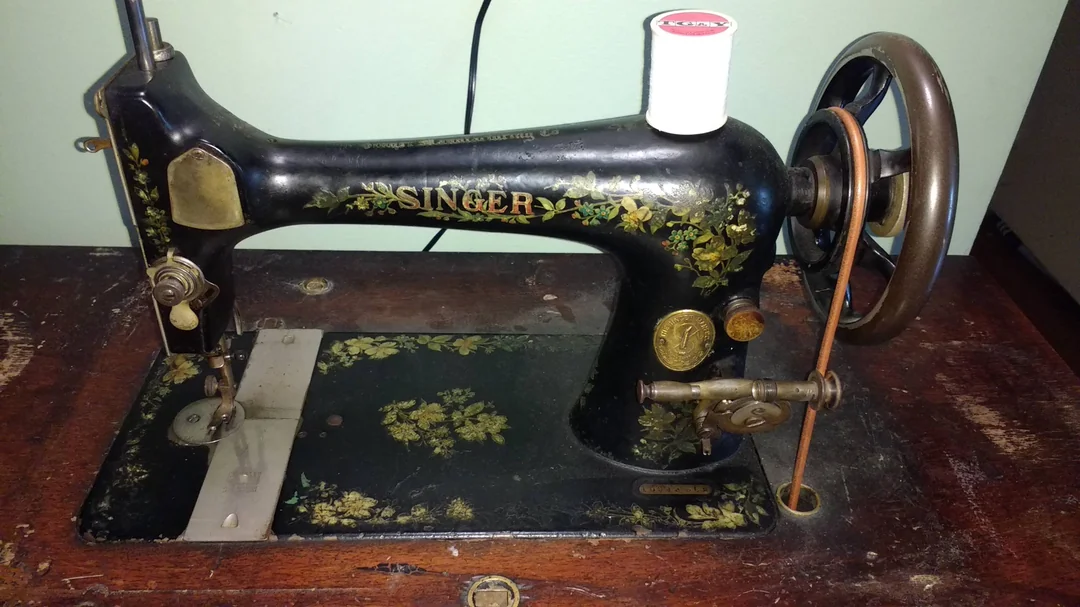
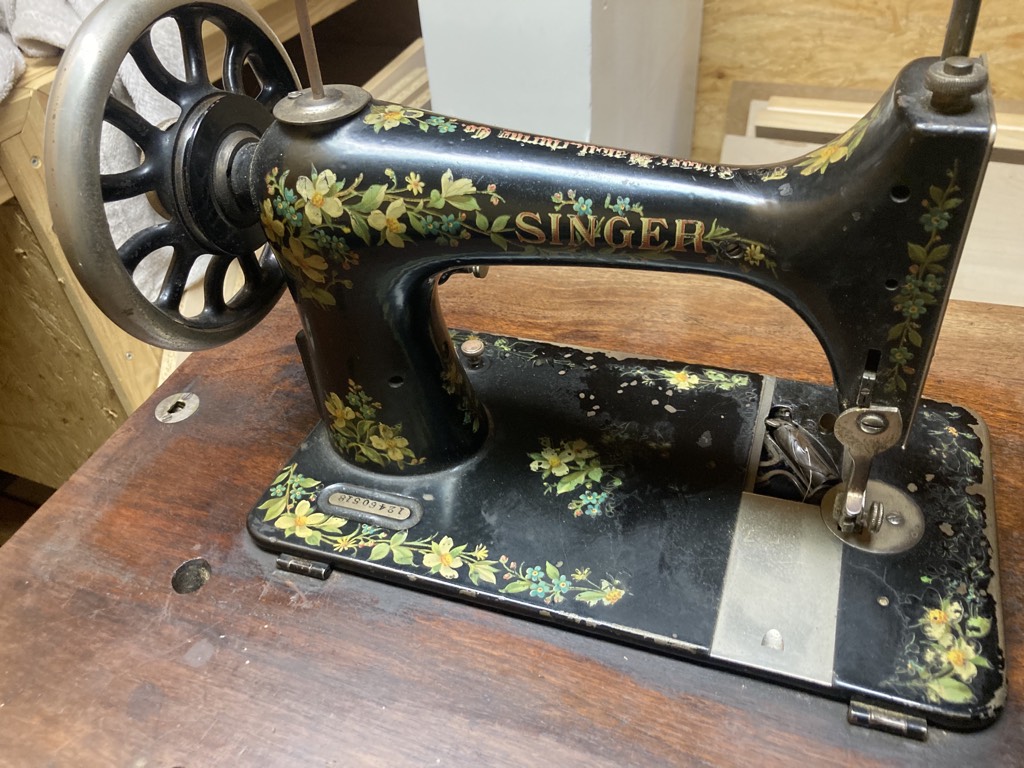
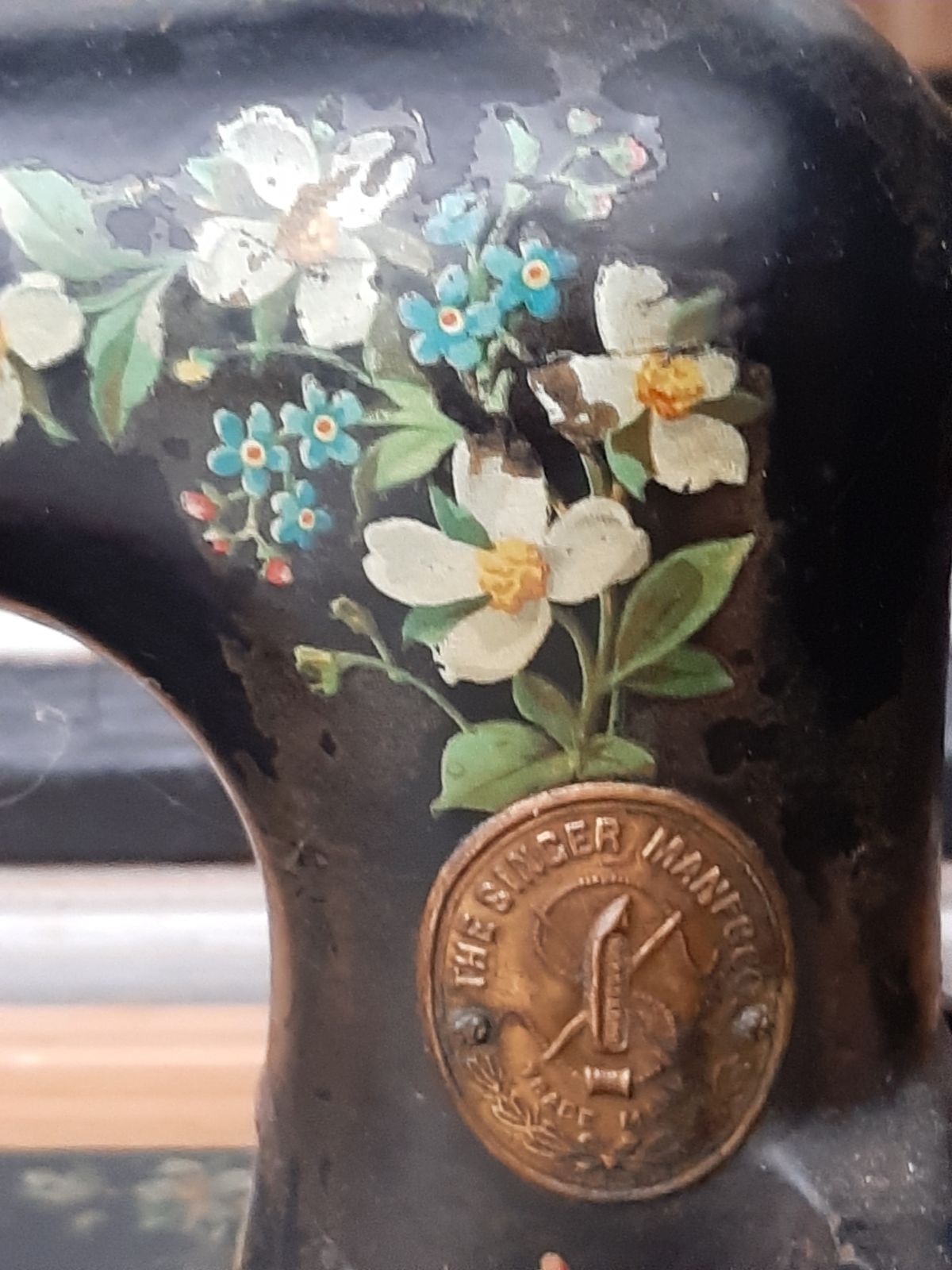
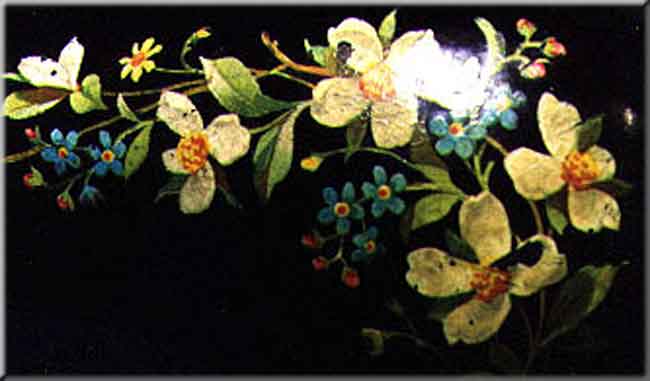
This decal set features delicate white and pinkish dogwood flower motifs, with forget-me-not blue flowers, all rich in colors and shadows.
Documented Machines
(What does it mean?)Total n.: 44
Factories:
Documented Classes:
- 27
- 39
Documented years: 1892 - 1896
In use from 1894
In use for Classes:
- 27
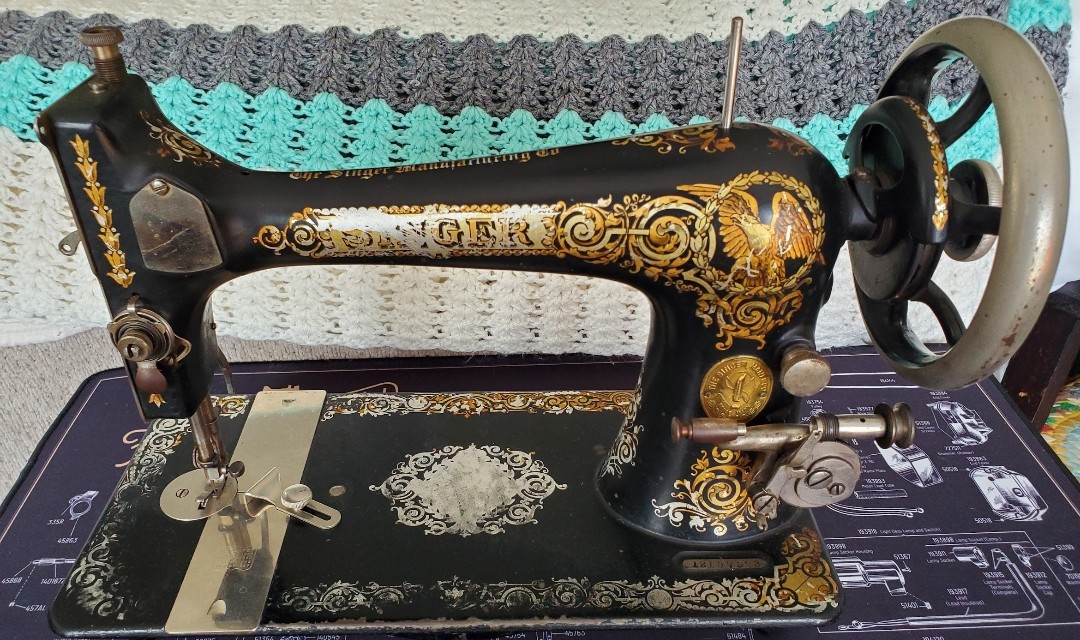
It reminds of the Owl decals, but the bird on the right of the arm is an eagle. It has a wing spread out as to point at the Singer wording.
Documented Machines
(What does it mean?)Total n.: 2
Factories:
Documented Classes:
- 27
Documented years: 1894
In use from 1884 up to 1955
In use for Classes:
- 12
- 16
- 18
- 29
- UFA - Universal Feed Arm (29)
- 31
- 42
- 77
- 91
- 92
- 103
- Other industrial models
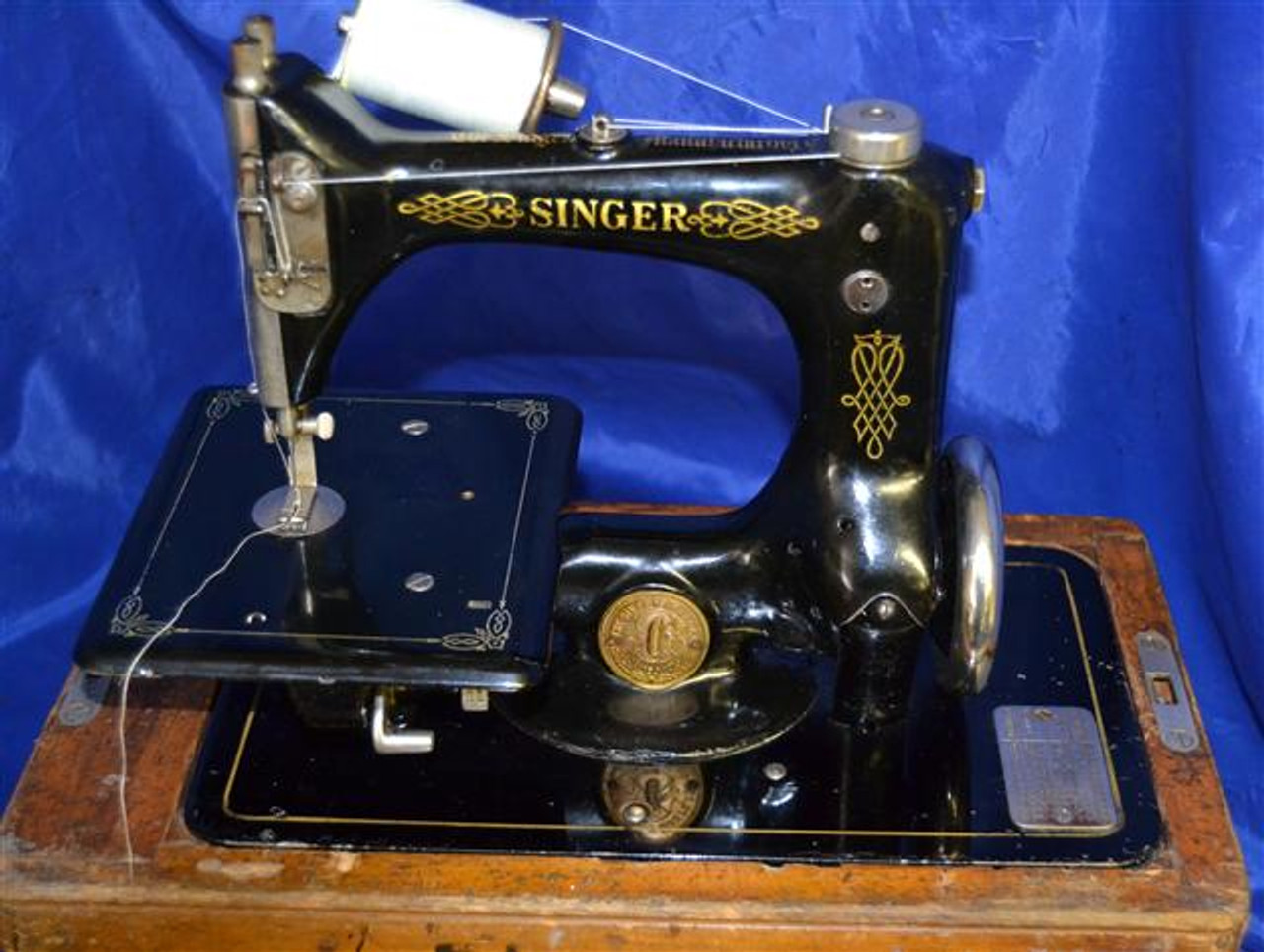
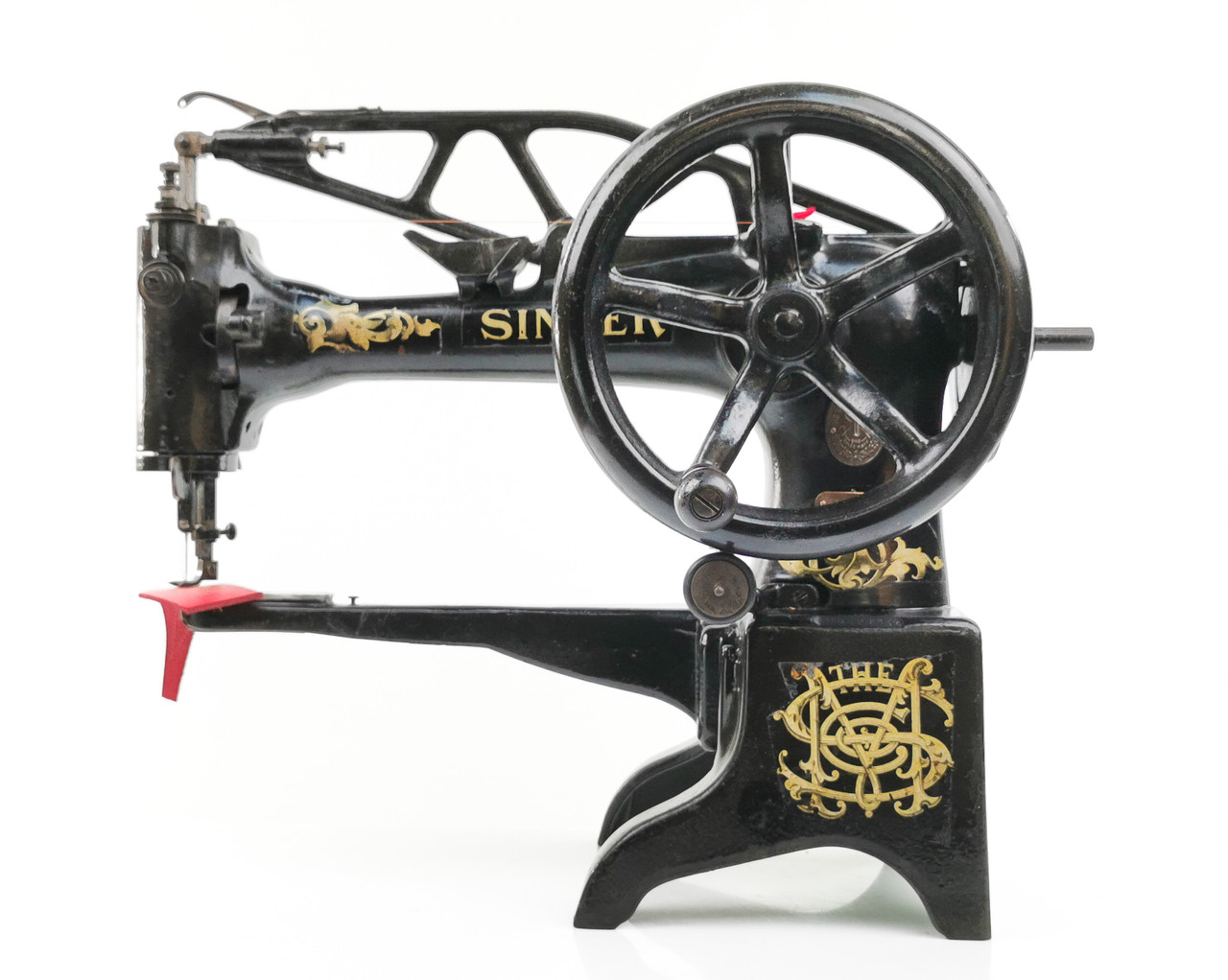
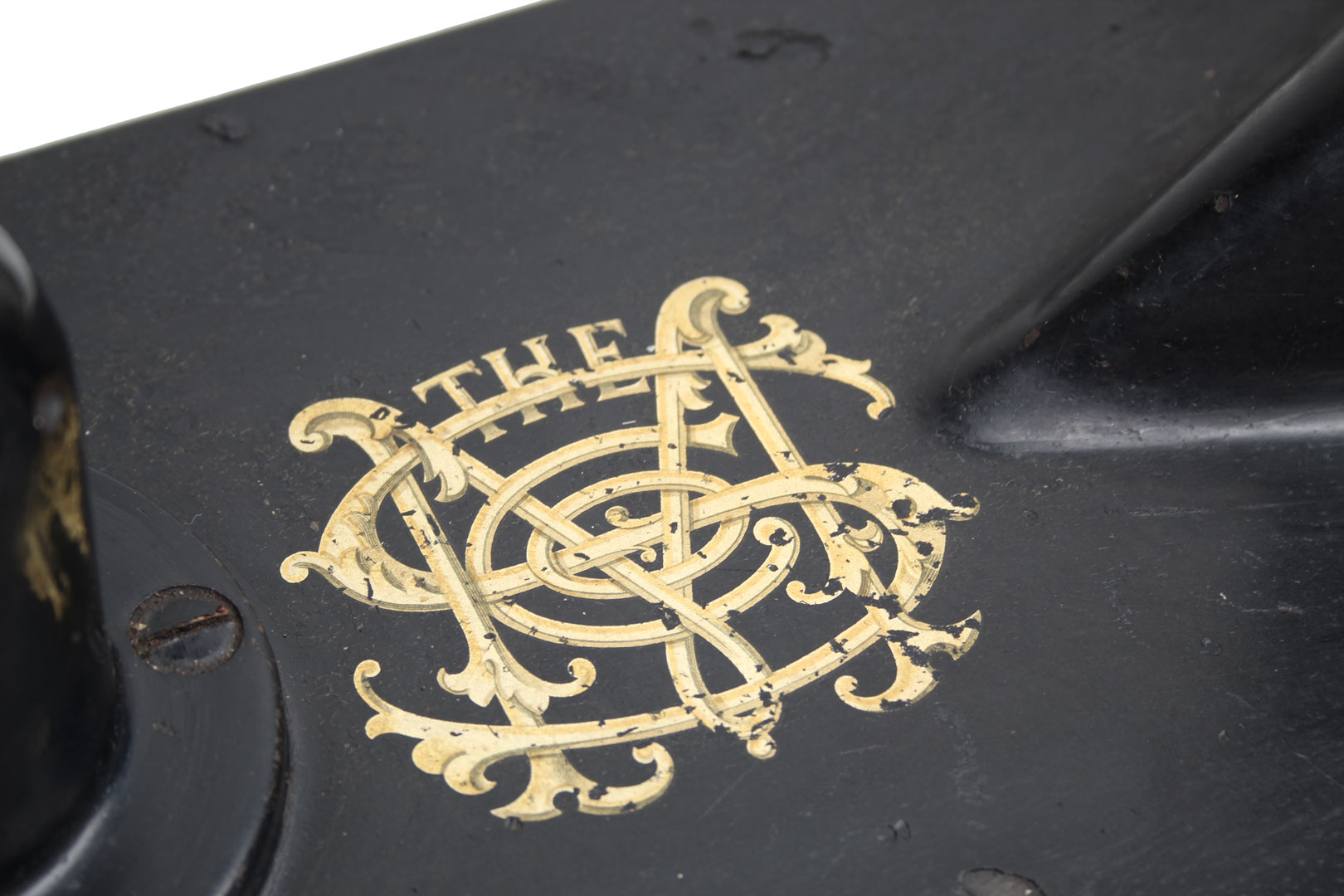
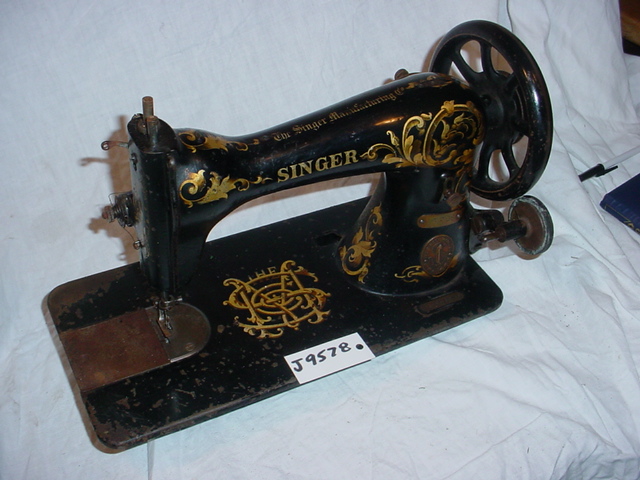
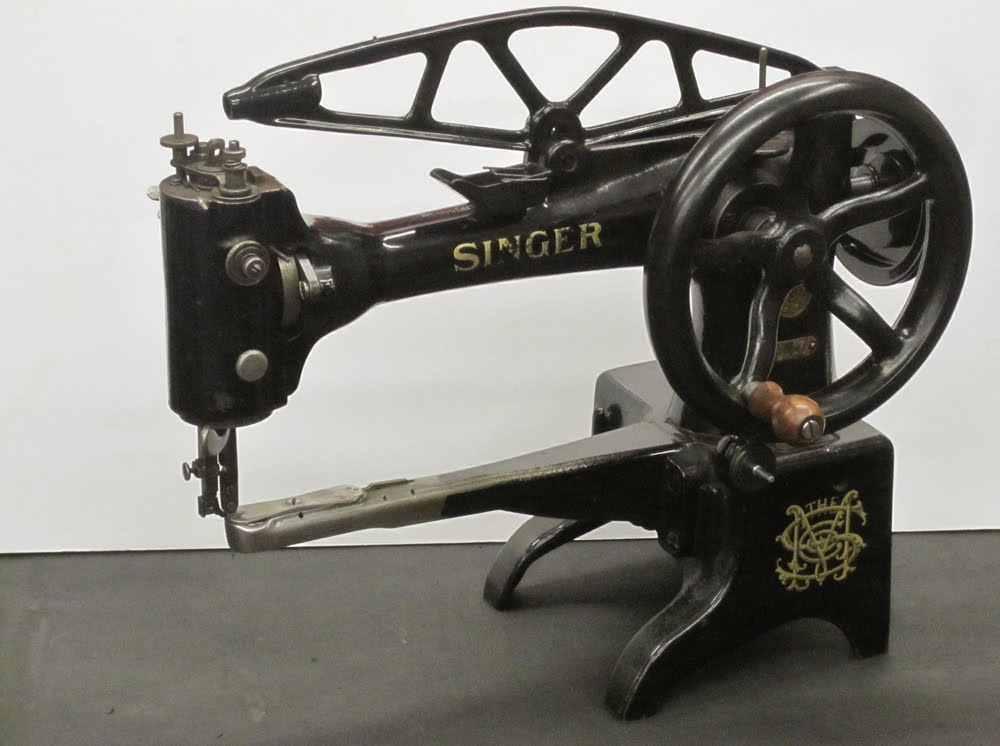
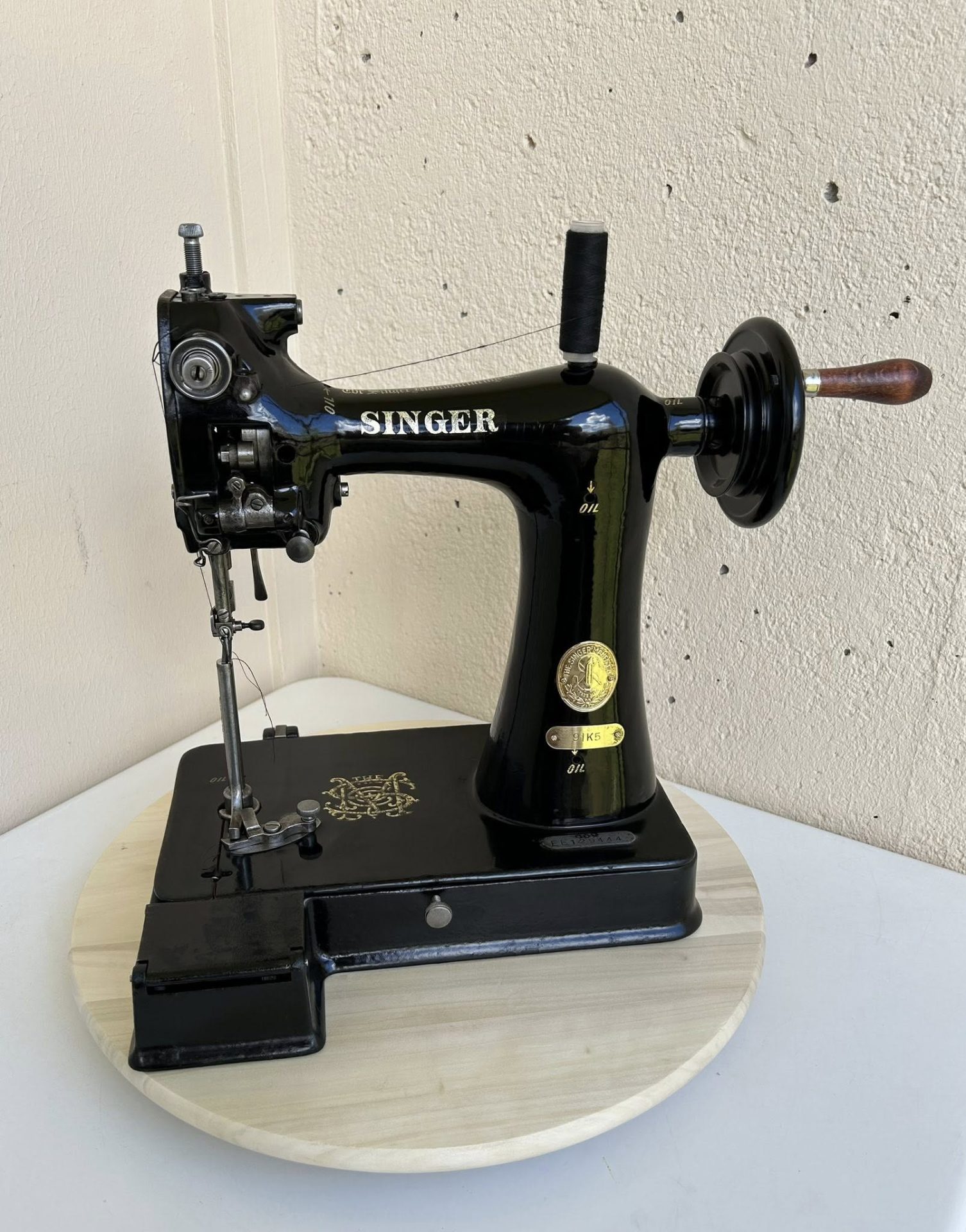
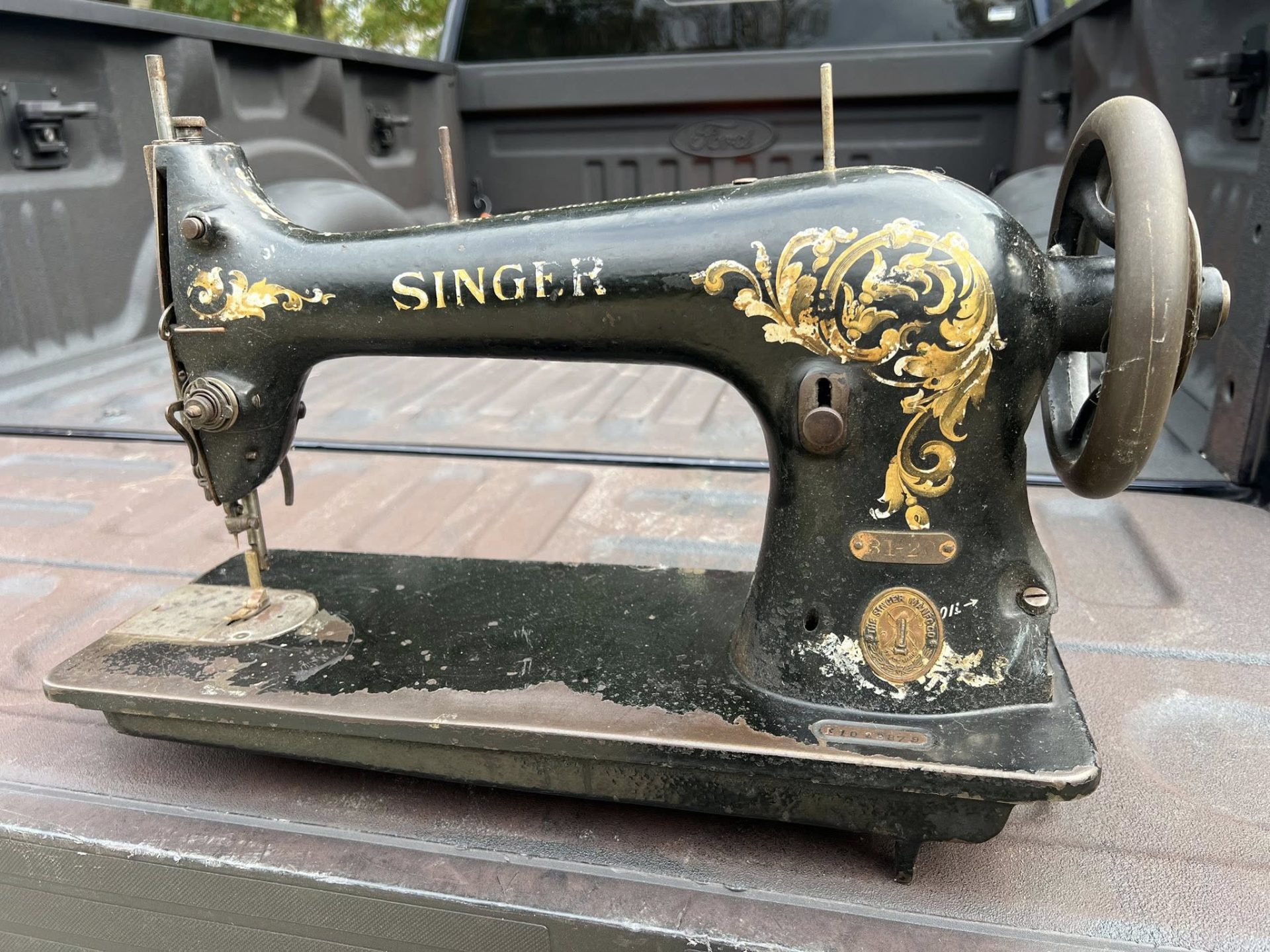
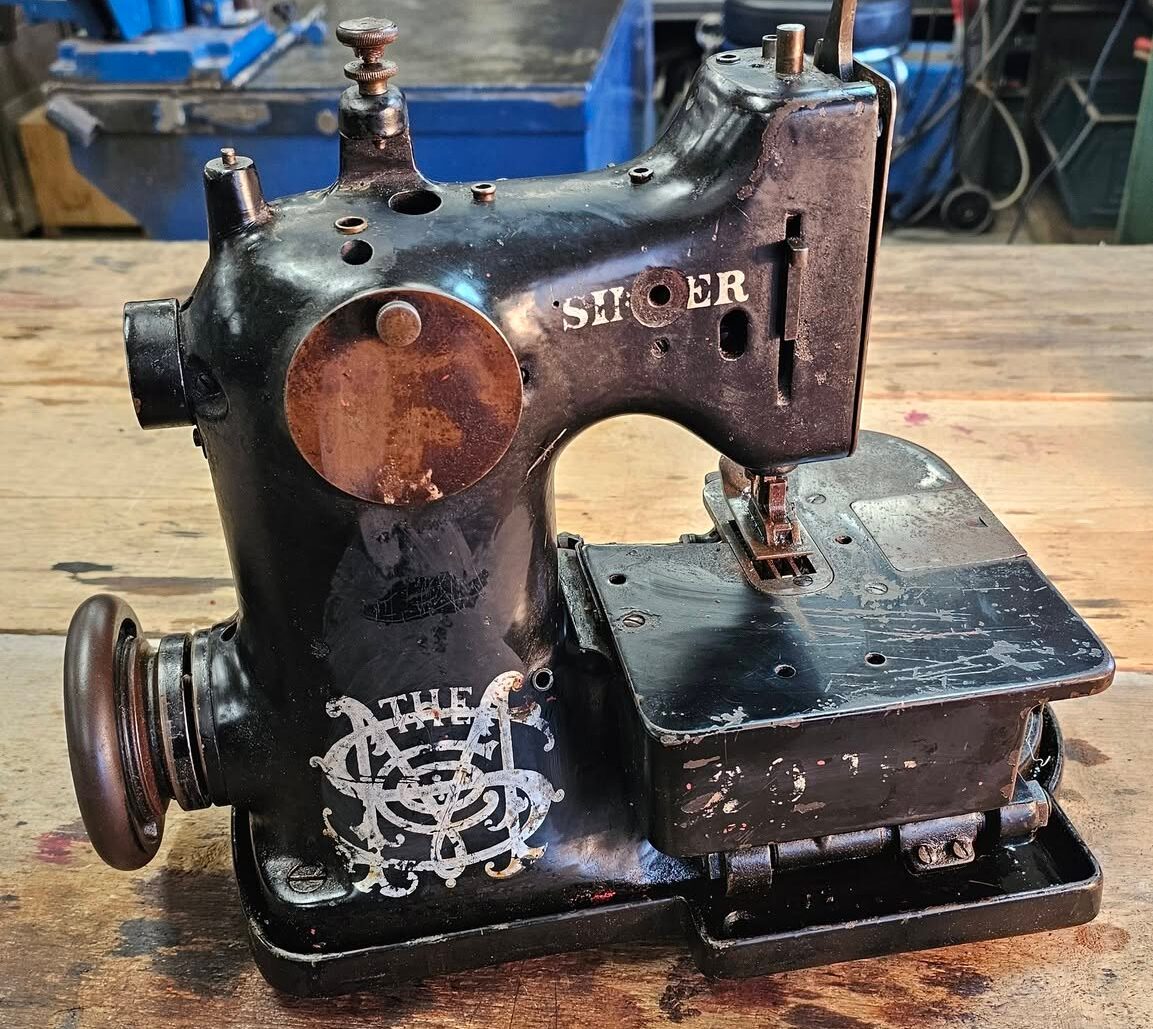
While most of the industrial models did not have decals, this one is probably the most common one used on industrial Singer machines. Variations depend largely on the shape of the specific machine. It may feature intricate leaf scrolls or just the ornate monogram "The S.M. Co." ("The Singer Manufacturing Company"). Also the position of each decorative element varies from model to model, due to the particular shapes of certain industrial machines.
Documented Machines
(What does it mean?)Total n.: 40
Factories:
Documented Classes:
- 12
- 15
- 16
- 18
- 21
- 24
- 29
- 31
- 42
- 44
- 45
- 72
- 77
- 91
Documented years: 1891 - 1955
In use from 1953 up to 1960
In use for Classes:
- 66
- 99
Usually documented for class-99 machines, we found one class-66 machine with this decal set. Name coming from The Needlebar wiki.
Documented Machines
(What does it mean?)Total n.: 17
Factories:
Documented Classes:
- 66
- 99
Documented years: 1953 - 1957
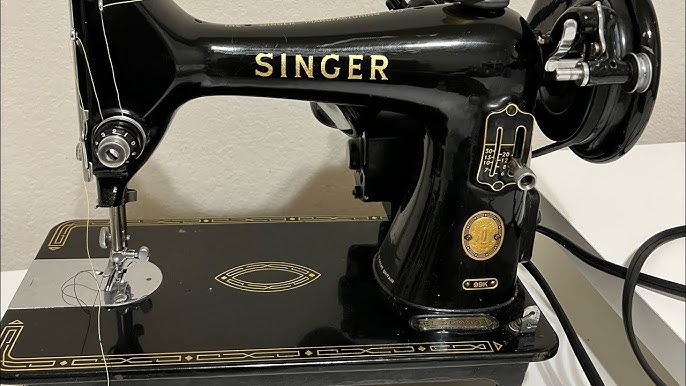
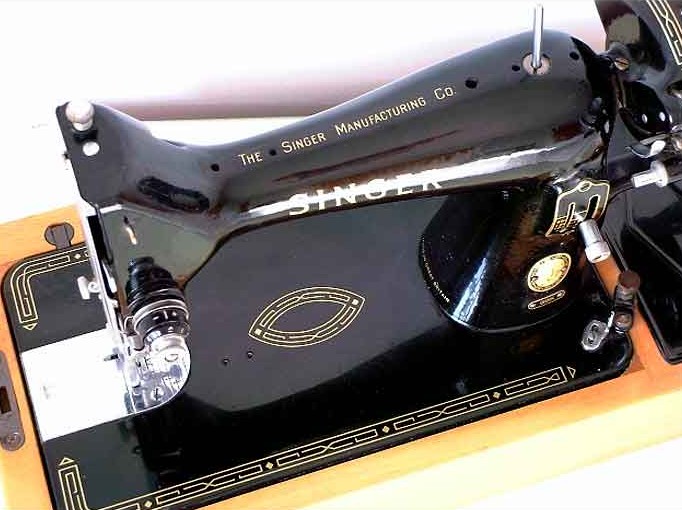
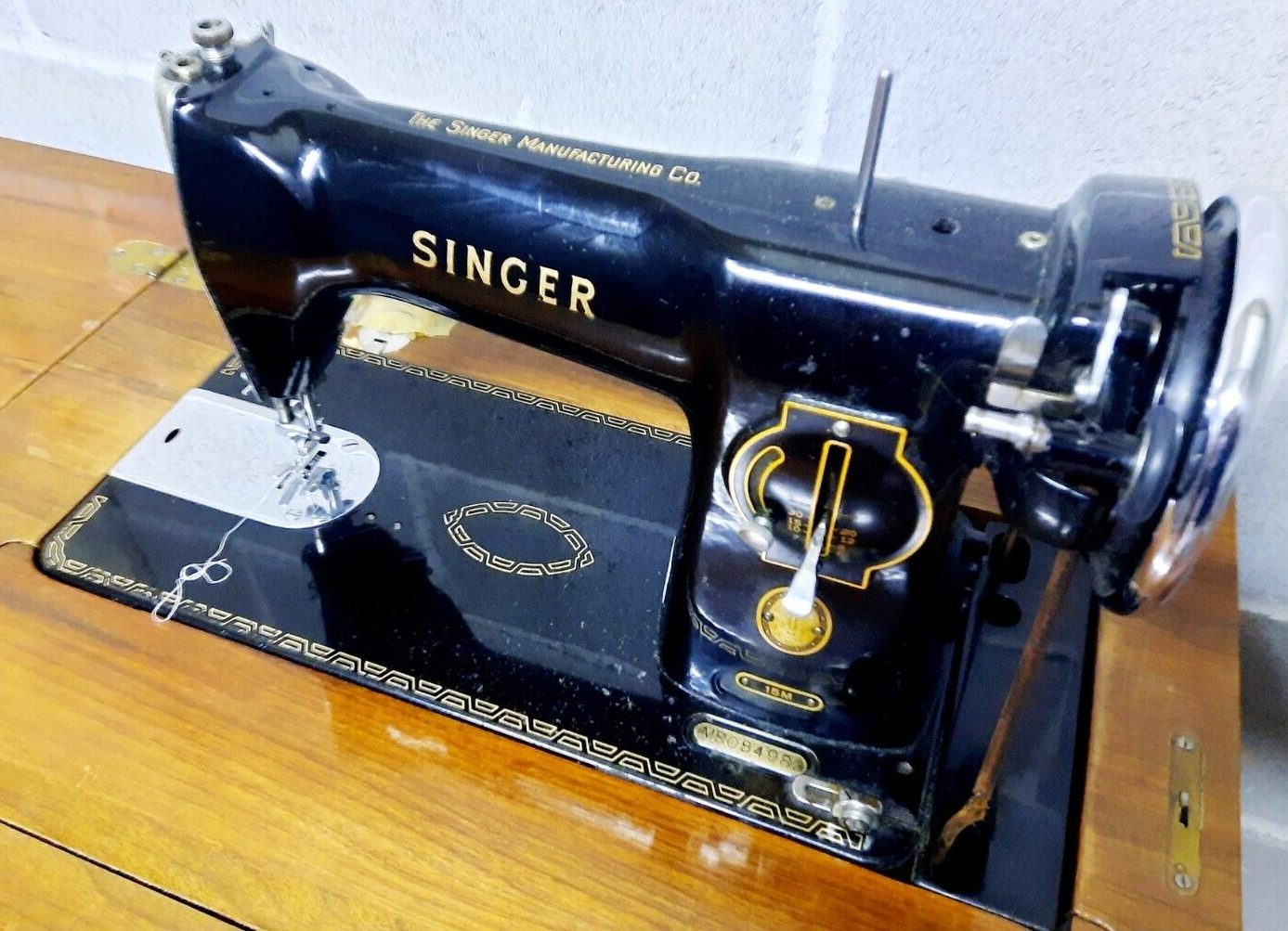
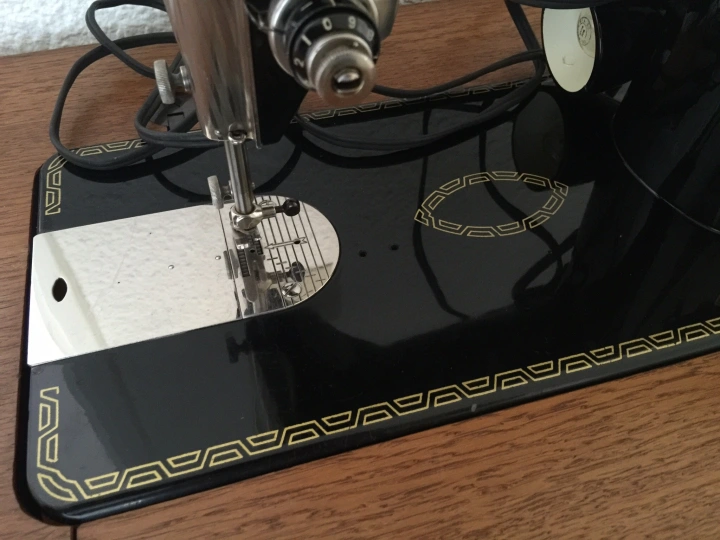
Official Singer name: Trapezia
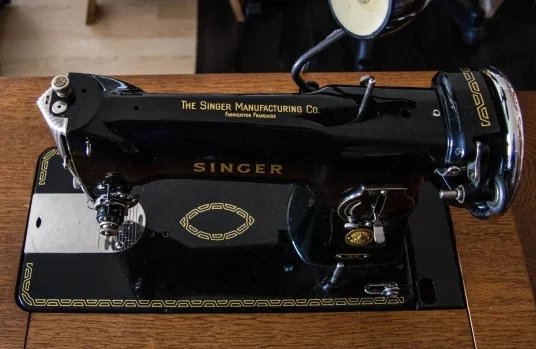
In use from 1955 up to 1968
In use for Classes:
- 15
- 189
- 191
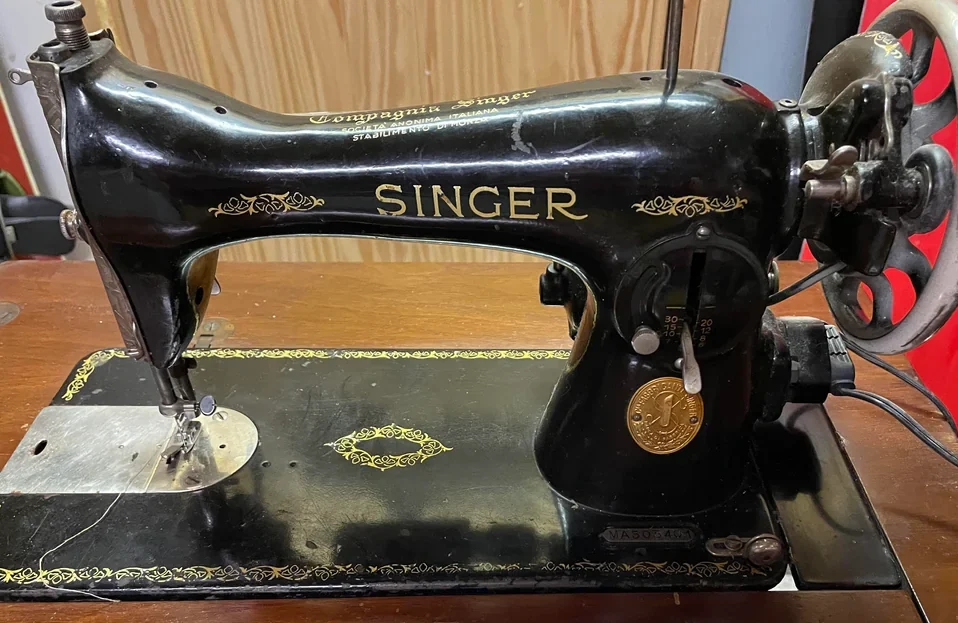
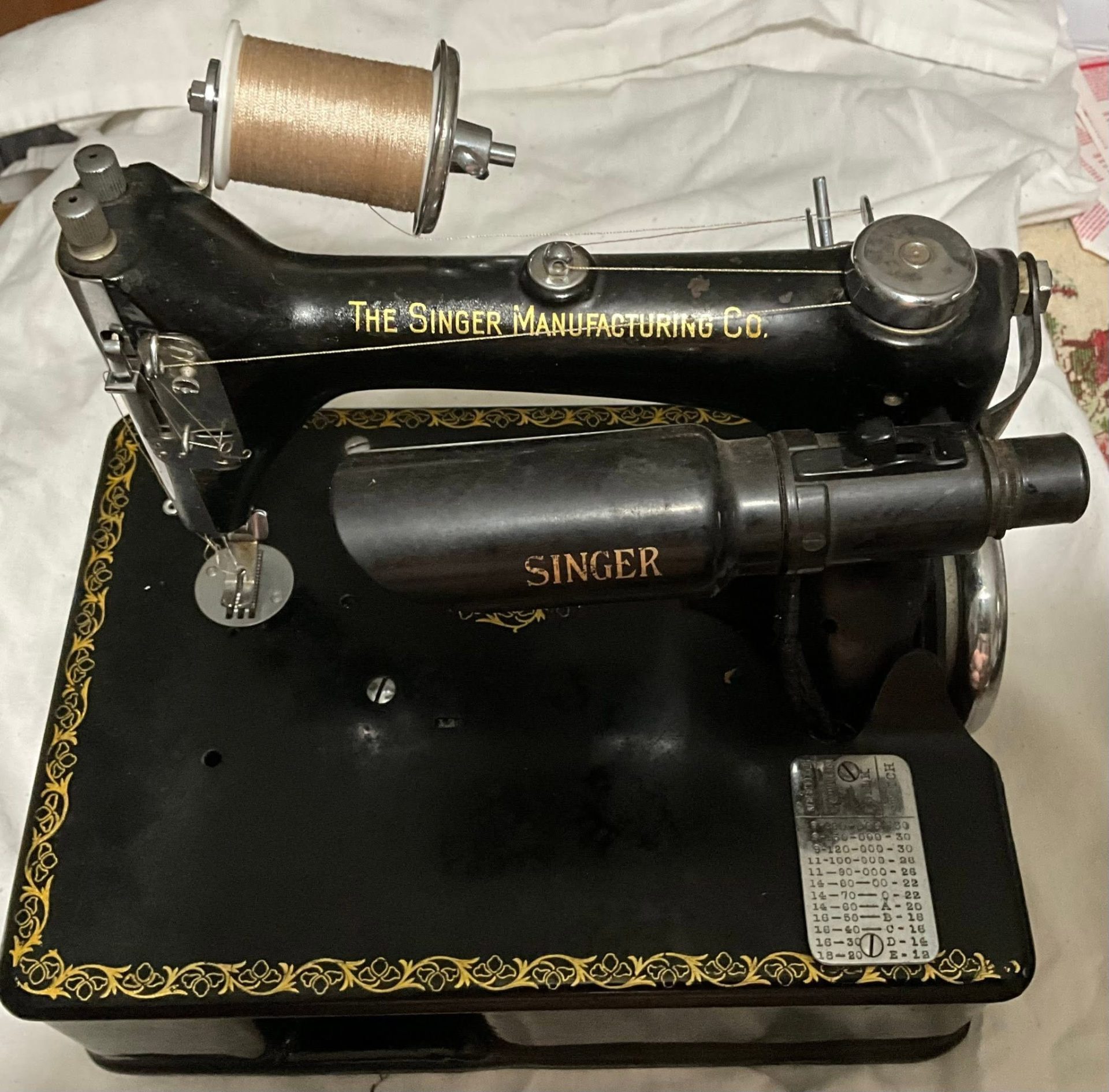
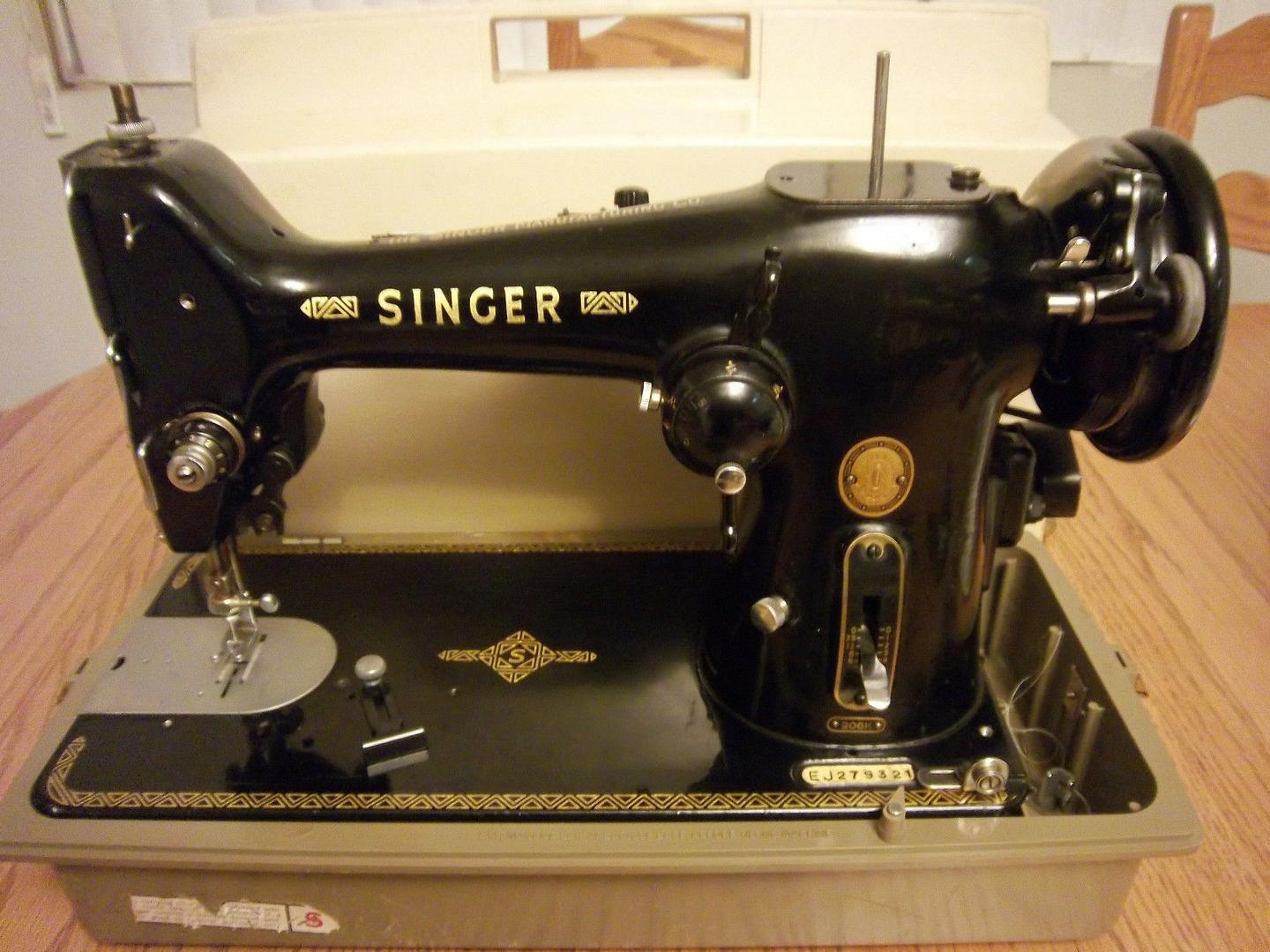
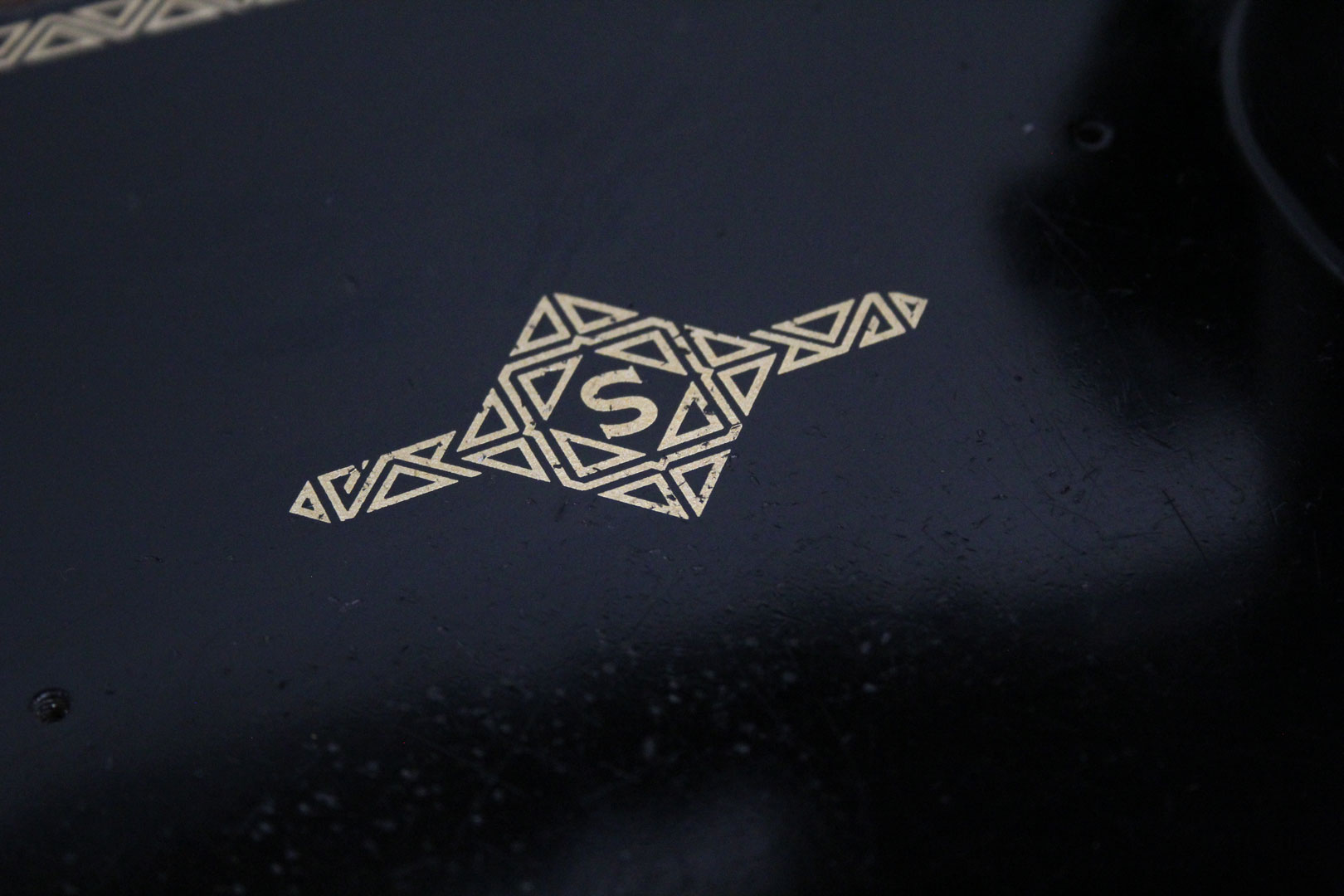
This decal has a repeating geometric trapezoidal border pattern, that goes all around the bed and makes an oval eye in the center.
Documented Machines
(What does it mean?)Total n.: 38
Factories:
- Bogota (Colombia)
- Bonnières-sur-Seine (France)
- Elizabethport, New Jersey (USA)
- Karlsruhe (Germany)
- Monza (Italy)
- Querétaro (Mexico)
- St. John's Factory, Quebec (Canada)
Documented Classes:
- 15
- 189
- 191
Documented years: 1956 - 1968
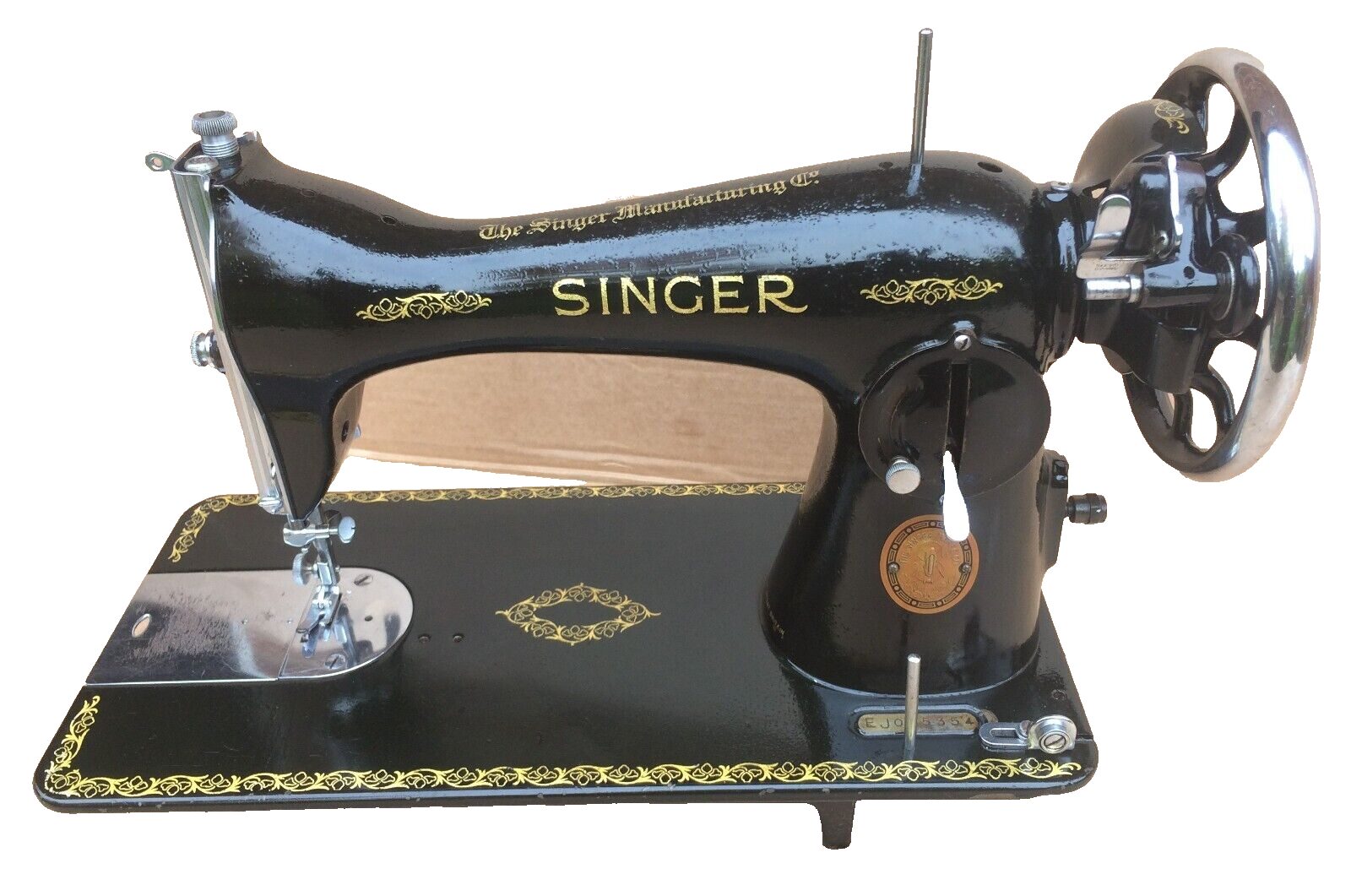
In use from 1921 up to 1955
In use for Classes:
- 15
- 24
- 215
This decal is sometimes called also "Triplets". Commonly used on 15-class machines. We recorded also a couple 66-class with these decals, but it could be a later application of decals on an older machine. Those 66 models were manufactured two decades before the patent for the Trefoil decals was filed. We also recorded a few 24-18 machine with Eye and Trefoils decal, produced before the 1931 patent for this decoration was files. It's indeed possible the patent was filed after the set had been used in production batches. Notice that the patents, while not mentioning specific models, seem to picture class 15 machines or similar.
Patents:
- 27/10/1931, Patent n. USD85435 "Design for a Sewing Machine Frame" by William Hopper (Pdf) - Also filed in Great Britain on 26th August 1931-08-26.
- 27/10/1931, Patent n. USD85434 "Design for a Decalcomania Transfer Sheet" by William Hopper (Pdf) - Also filed in Great Britain on 1931-08-26.
Documented Machines
(What does it mean?)Total n.: 225
Factories:
- Bonnières-sur-Seine (France)
- Campinas (Brazil)
- Elizabethport, New Jersey (USA)
- Karlsruhe (Germany)
- Kilbowie, Clydebank (Scotland, UK)
- Monza (Italy)
- Podolsk (Russia)
- St. John's Factory, Quebec (Canada)
- Wittenberge, Prussia (Germany)
Documented Classes:
- 15
- 24
- 66
- 215
Documented years: 1914 - 1955
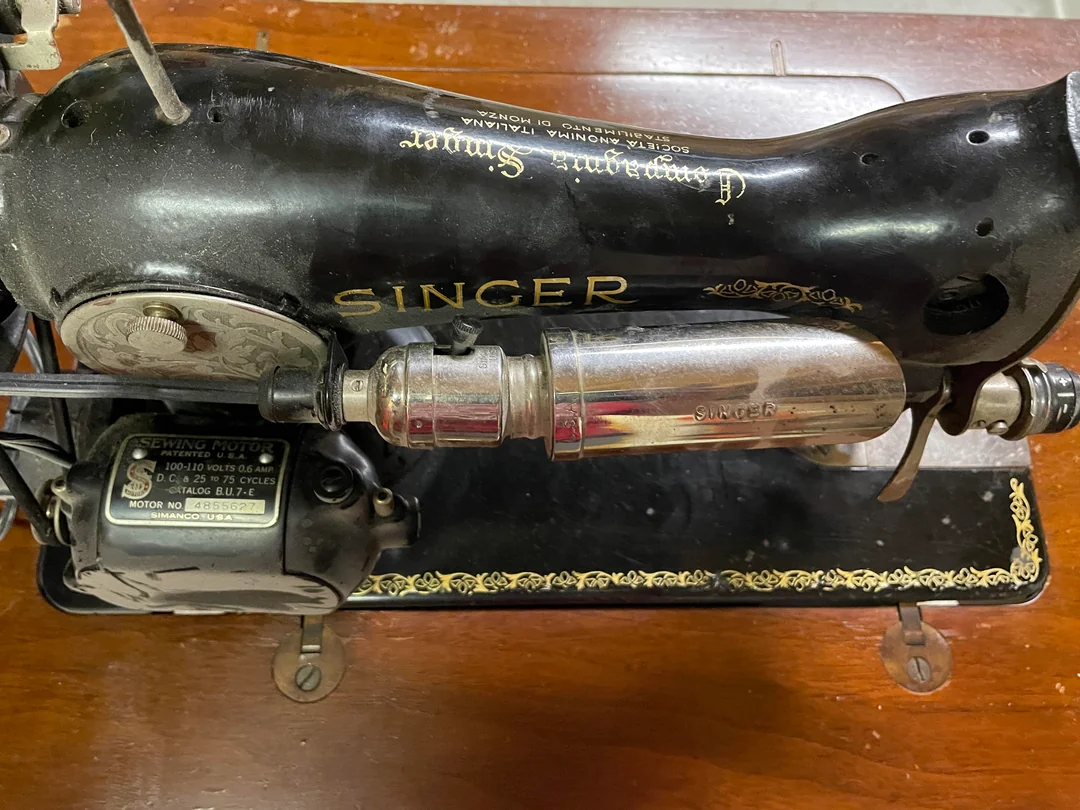
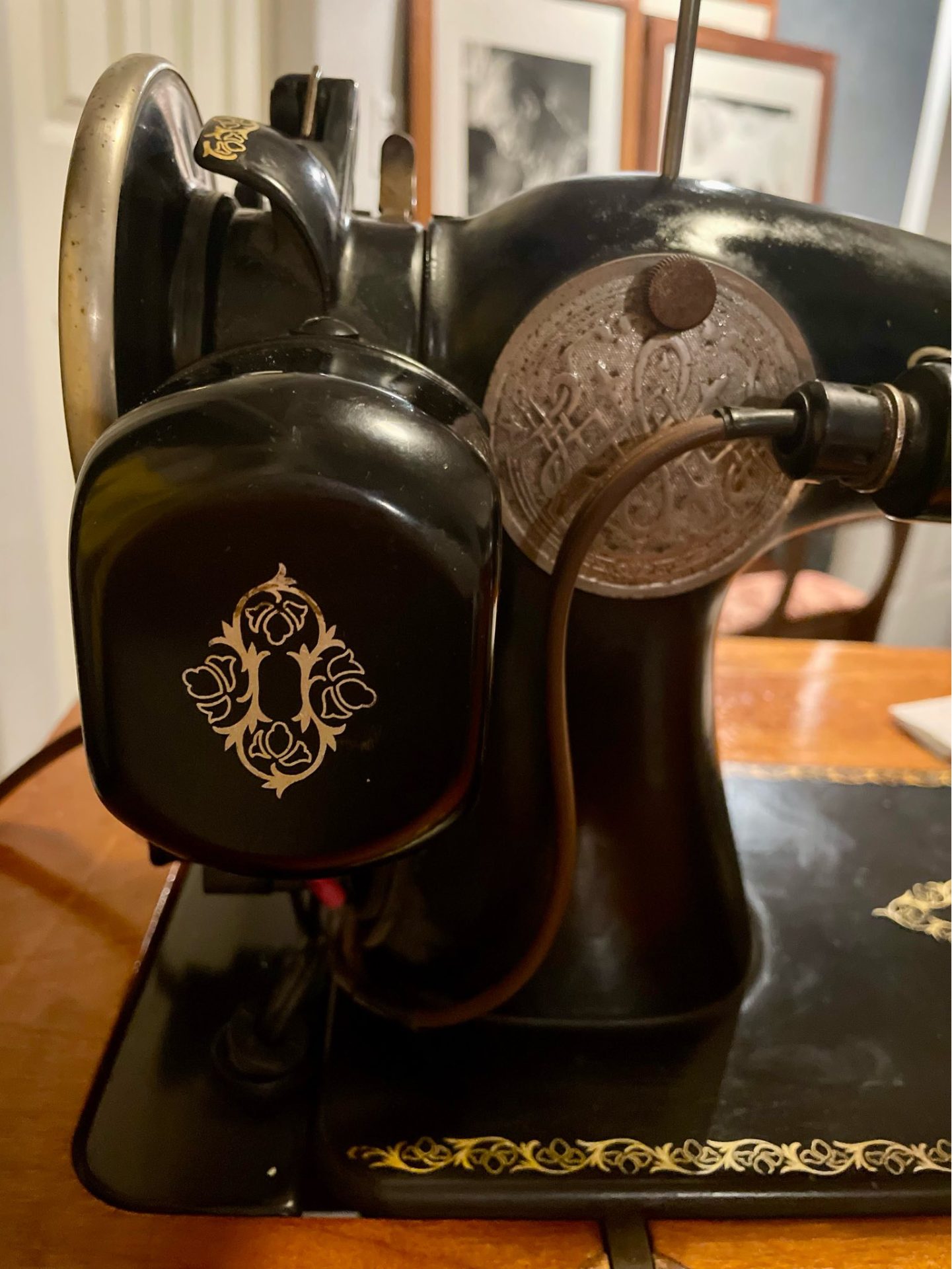
In use for Classes:
- 206
- 216
- 306
Documented Machines
(What does it mean?)Total n.: 12
Factories:
- Karlsruhe (Germany)
- Kilbowie, Clydebank (Scotland, UK)
- Monza (Italy)
Documented Classes:
- 206
- 216
- 306
Documented years: 1952 - 1954
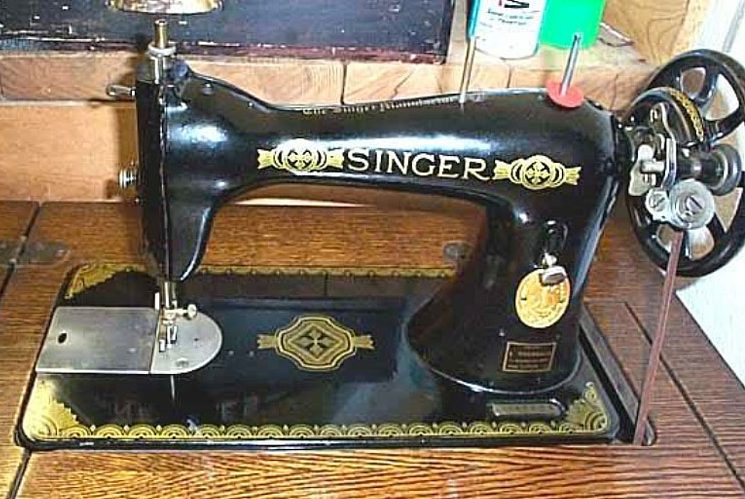
In use from 1911 up to 1952
In use for Classes:
- 15
- 66
- 99
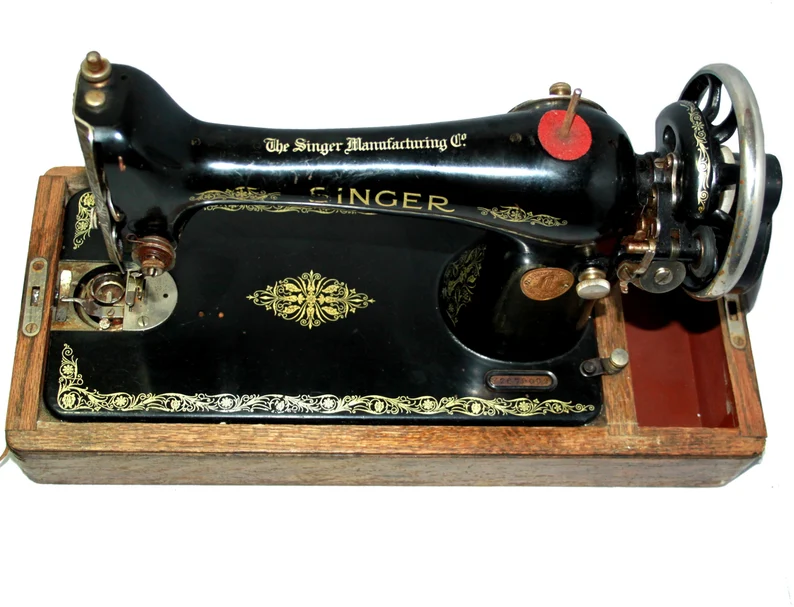
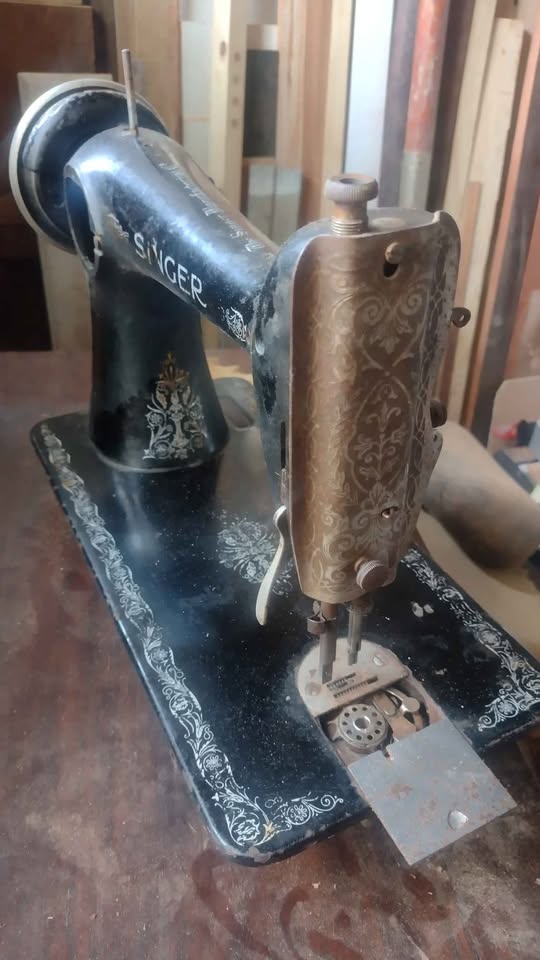
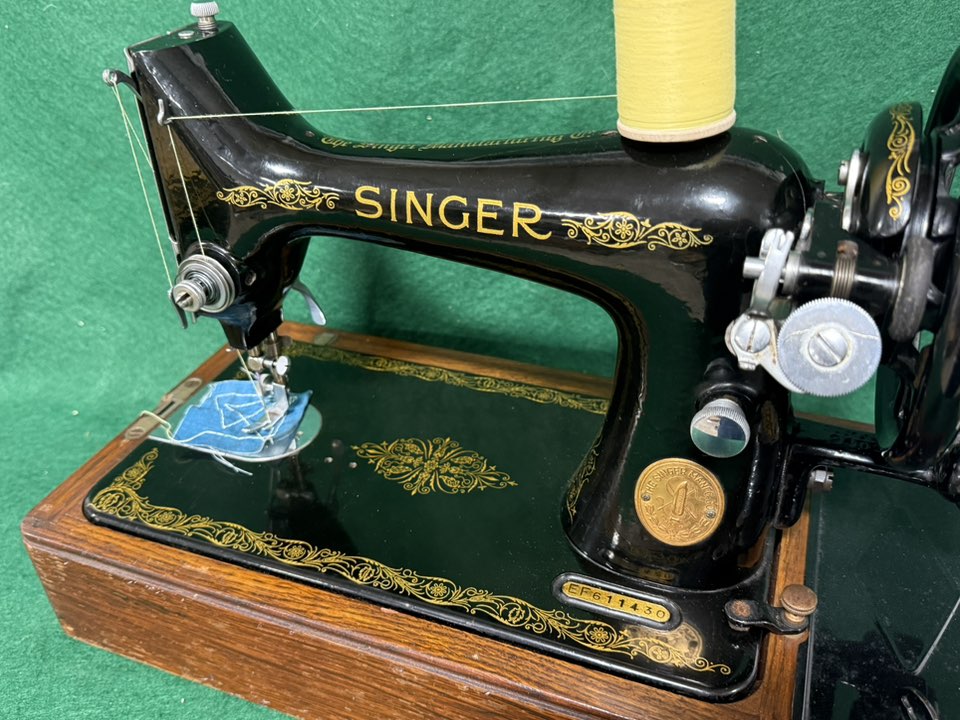
The common name of this decal set comes from its fine, lace-like metallic scrollwork designs. It's commonly found on models 66 and 99, but we could also verify a few 15-class machines with those decals, from the factory of Wittemberge (Germany) in particular.
Documented Machines
(What does it mean?)Total n.: 65
Factories:
- Elizabethport, New Jersey (USA)
- Kilbowie, Clydebank (Scotland, UK)
- Wittenberge, Prussia (Germany)
Documented Classes:
- 15
- 66
- 99
Documented years: 1914 - 1952
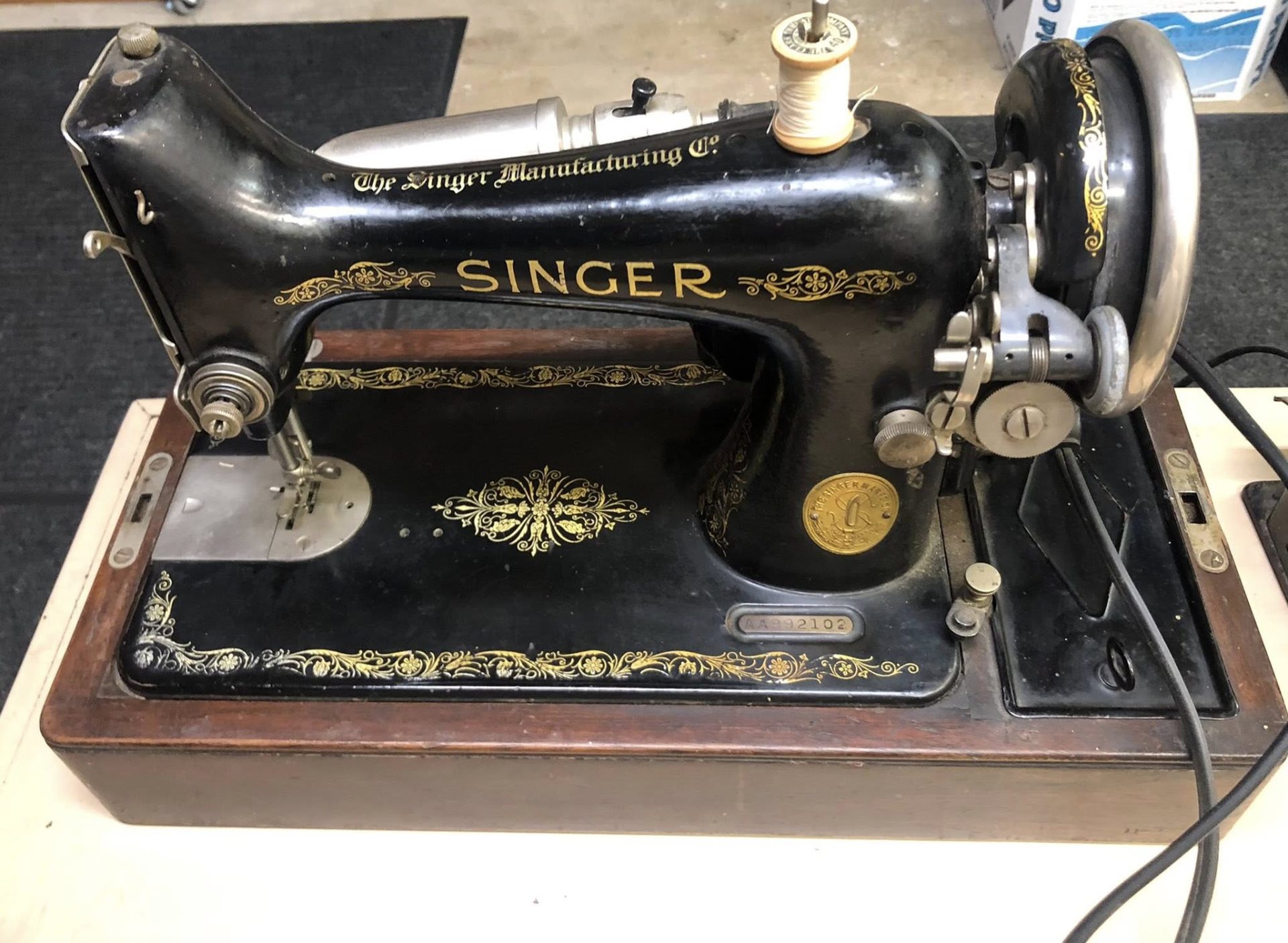
In use from 1926 up to 1948
In use for Classes:
- 99
The Indian Star decal was an attempt to stimulate the emerging Indian market at the beginning of the 20th century. Entering this market was not easy, though. The main difficulties were overcoming caste prejudice, language differences and limited access to women. The Indian Star machines say 'Singer' in different languages on each point of the star: Onya, Singhalese, Gujarati, Kannada, Hindi, Telugu, Malayalam (or Tamil), Urdu. The Indian Star appears as a variant in several decals, on different models.
Documented Machines
(What does it mean?)Total n.: 3
Factories:
Documented Classes:
- 99
Documented years: 1932 - 1948
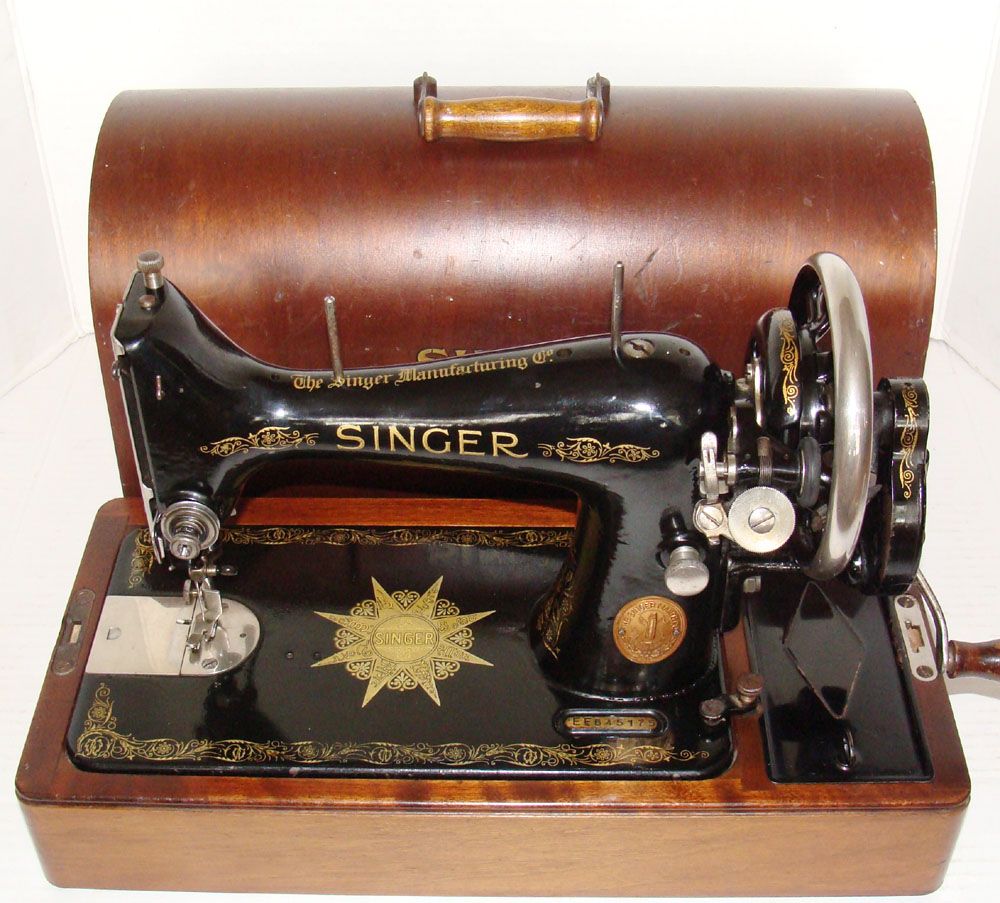
In use from 1879 up to 1882
In use for Classes:
- 12 (New Family)
Name of this decal comes from the knowleadgeable collector Gary Kleiner
Documented Machines
(What does it mean?)Total n.: 4
Factories:
Documented Classes:
- 12
Documented years: 1879 - 1882
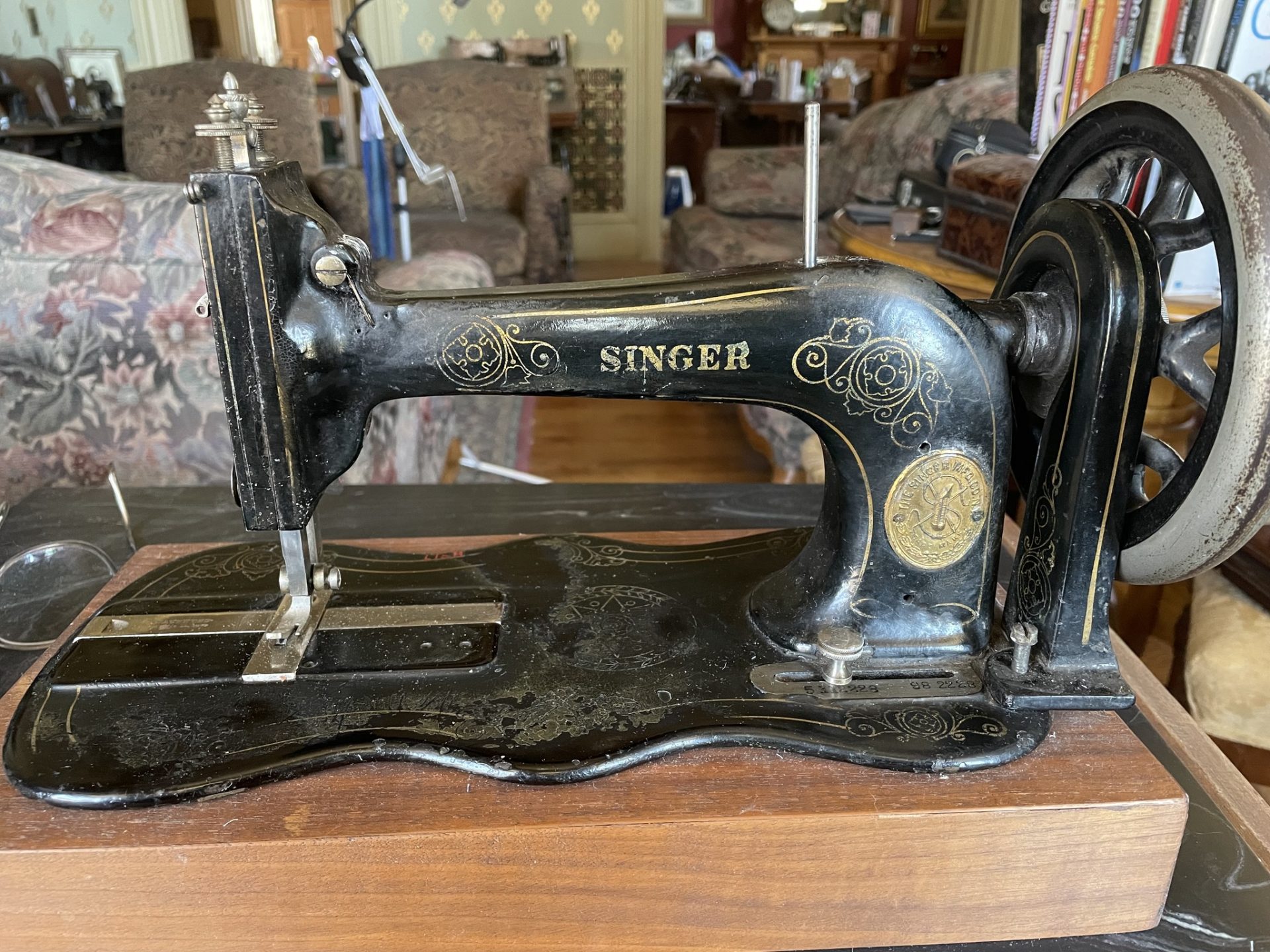
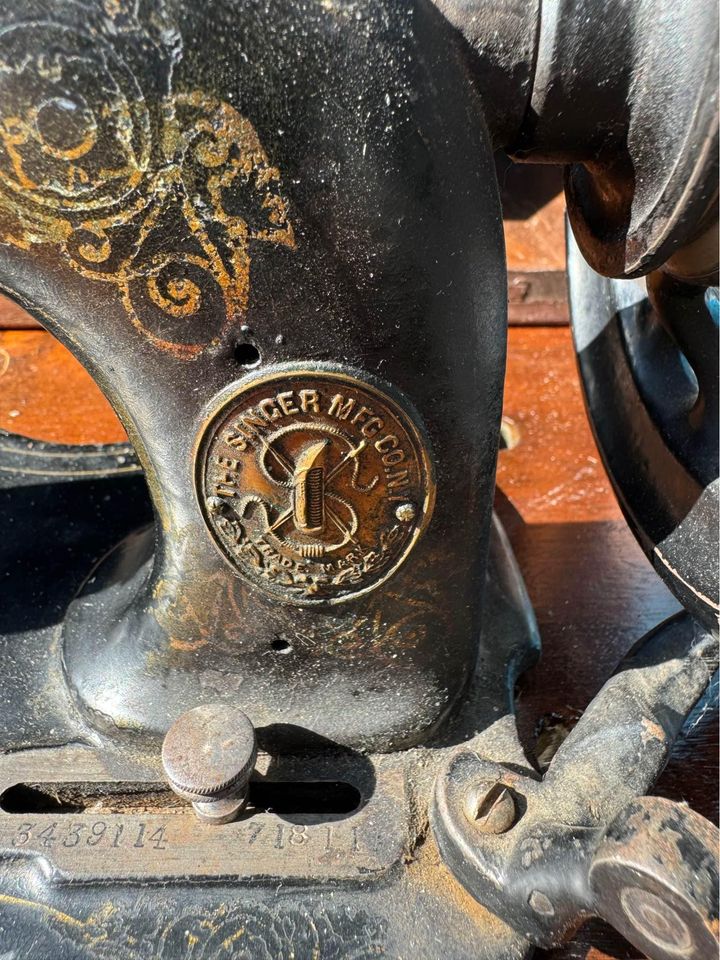
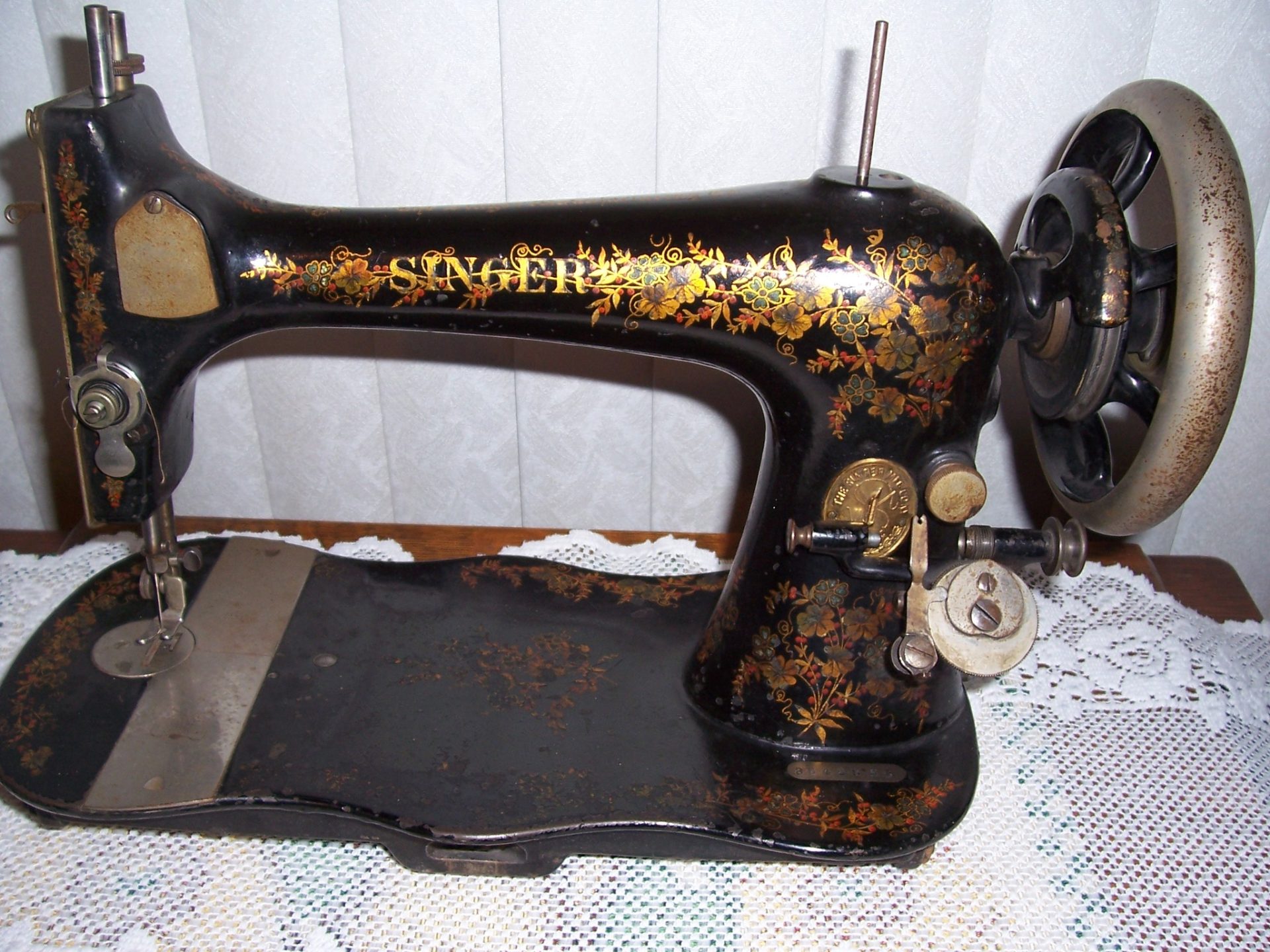
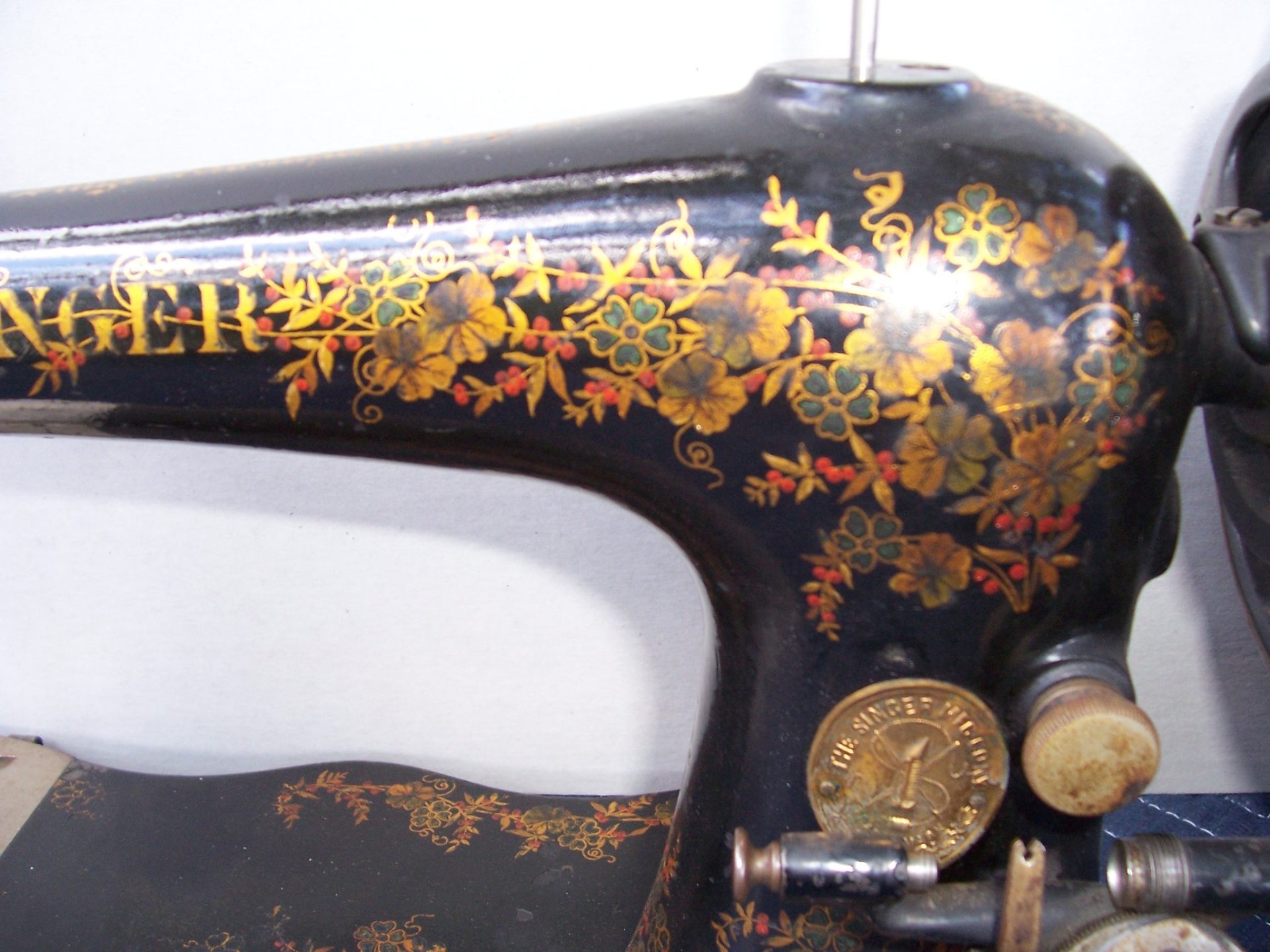
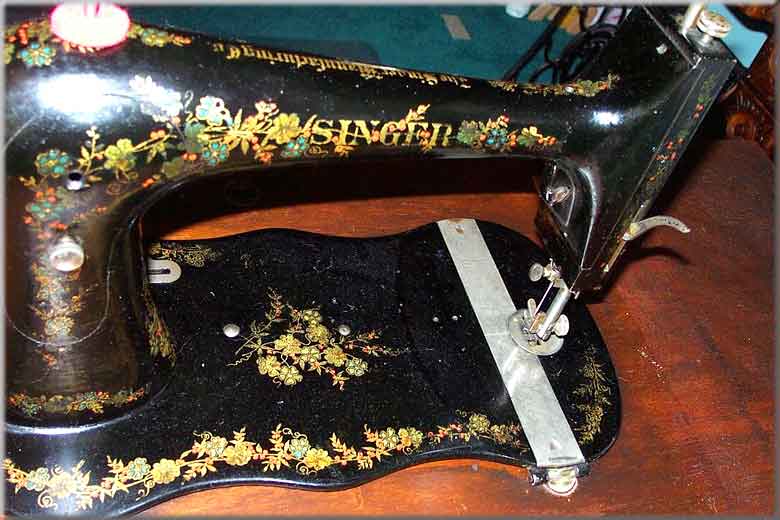
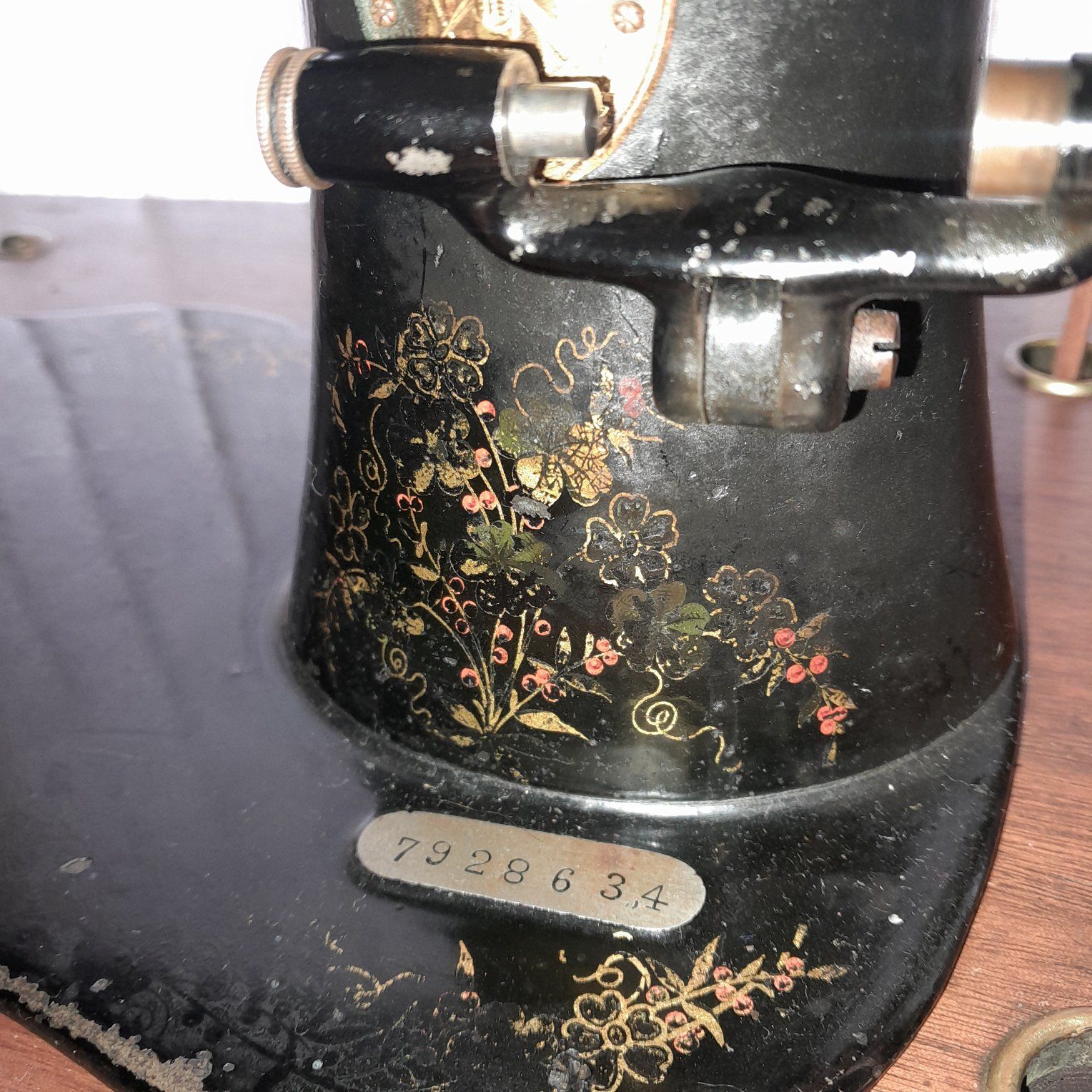
In use from 1885 up to 1894
In use for Classes:
- VS1 (1885)
- VS2 / 27 (1886 - 1889)
- 15 (Improved Family, 1886 - 1894)
Name coming from The Needlebar wiki.
Patents:
- 05/08/1884, Patent n. USD15221 "Ornamentation of a sewing machine" by George Alfred Squire (Pdf) - This patent is one of the best surviving records of Singer hand-painted and hand-gilded ornamentation in the mid-1880s, a direct ancestor of the later standardized decals. Specification describes multiple ornamental groups (A–I) consisting of trailing vines, wheel-form and cruciform flowers, tendrils, berries, and lettering used on the sides, arm, post, and other surfaces of a sewing machine. It’s possible that following decals borrowed their design from here.
Documented Machines
(What does it mean?)Total n.: 6
Factories:
Documented Classes:
- VS1
- 15
- 27
Documented years: 1885 - 1889
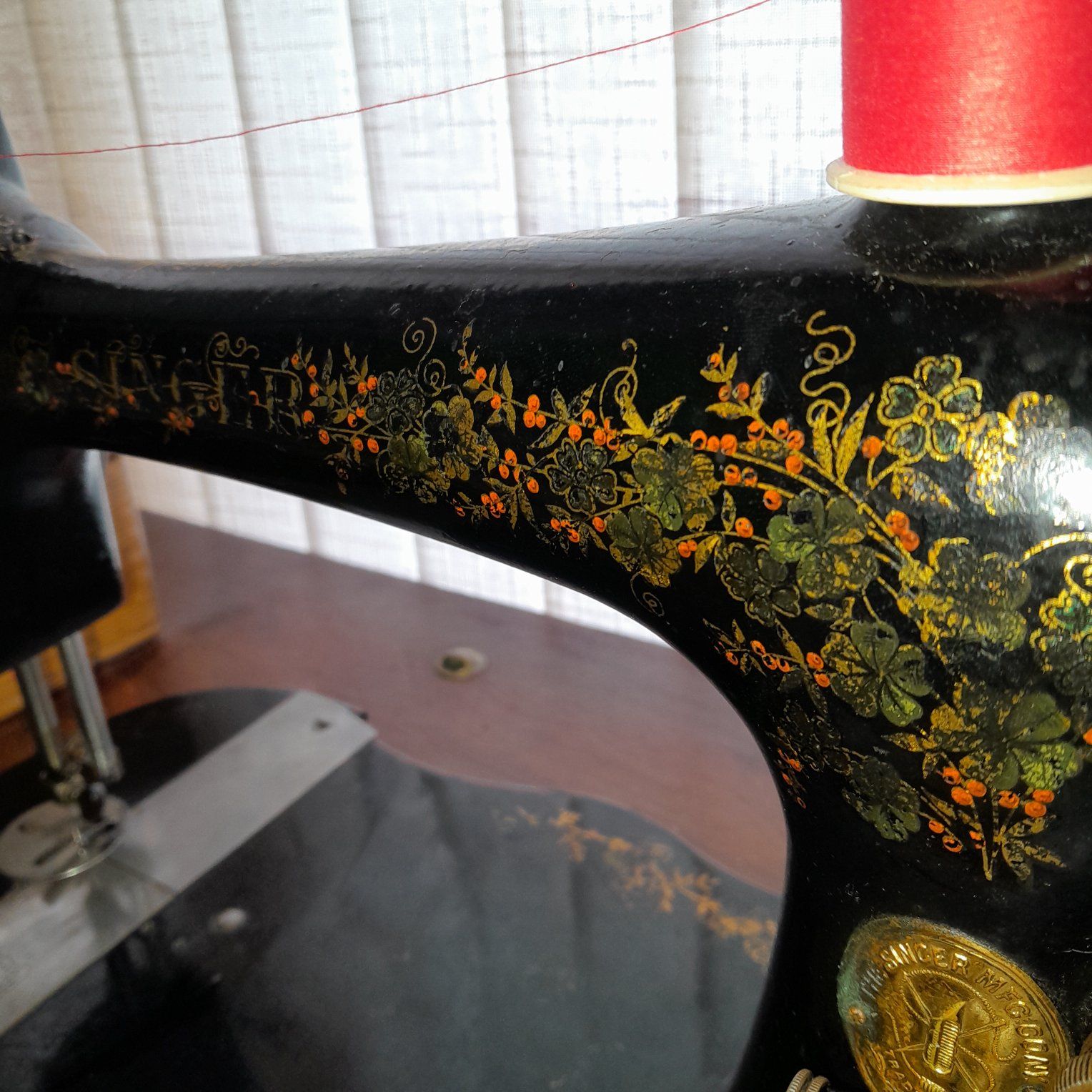
In use from 1883
In use for Classes:
- 15 (Improved Family)
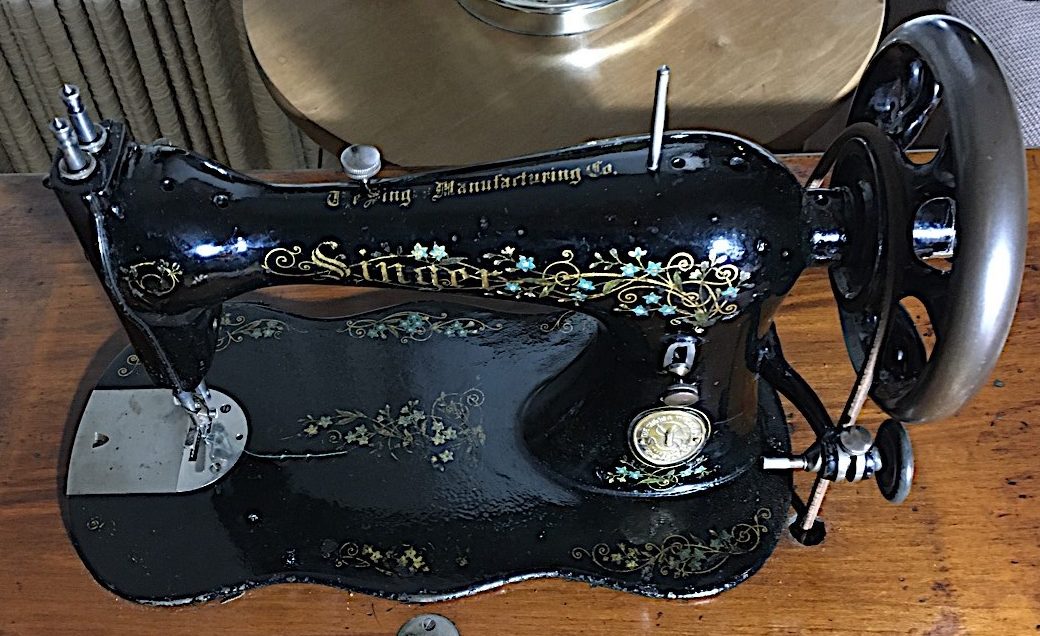
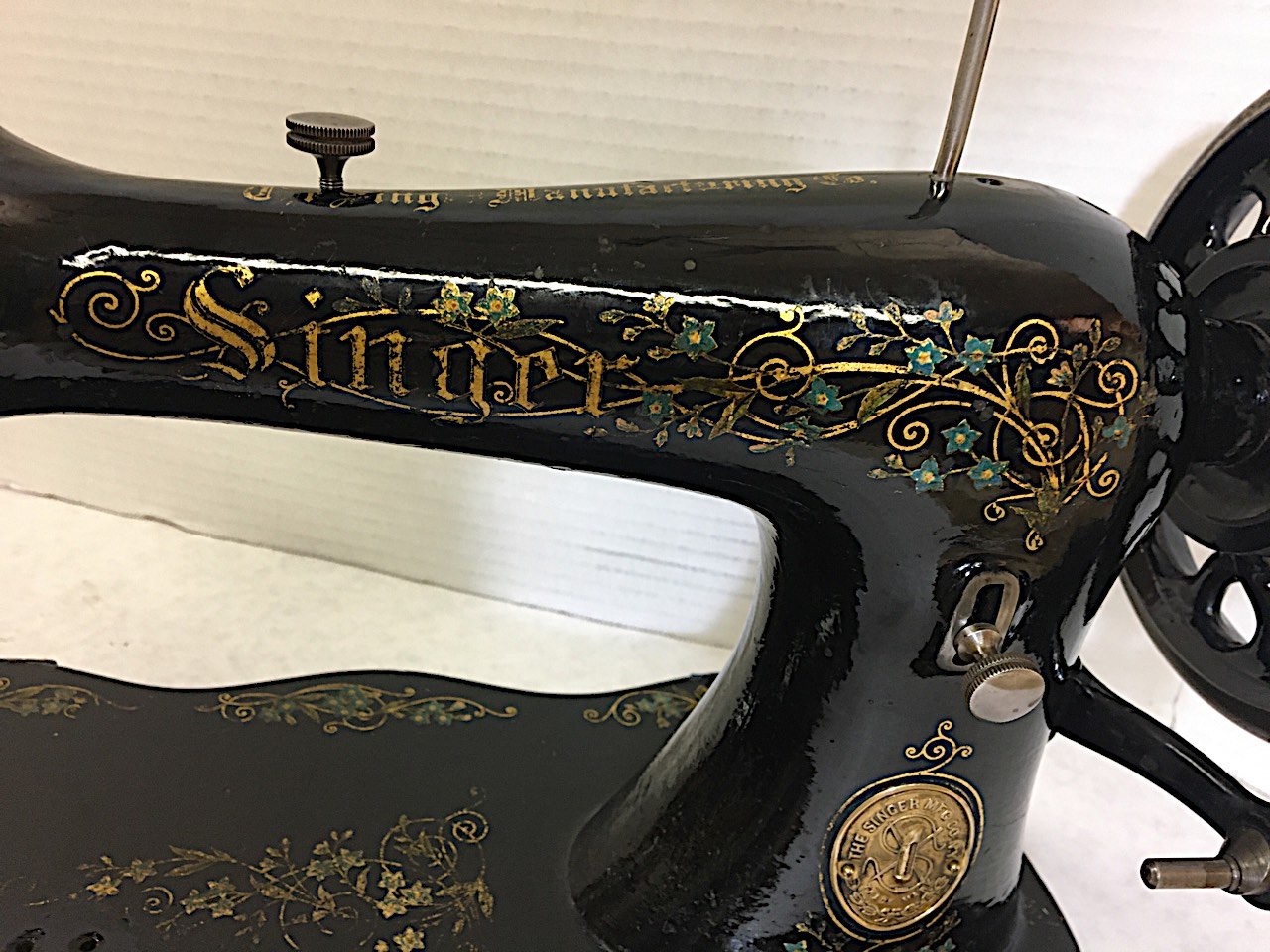
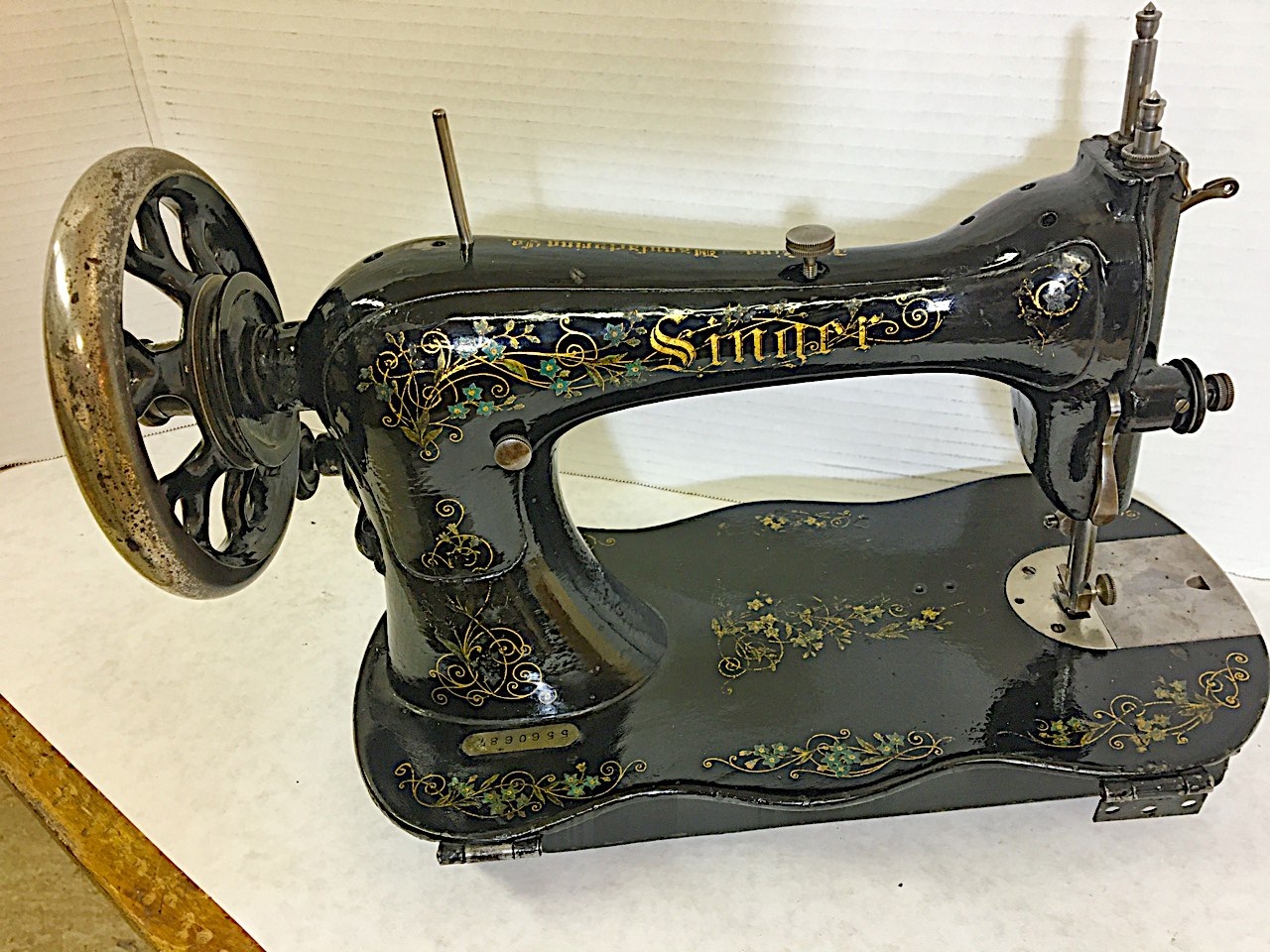
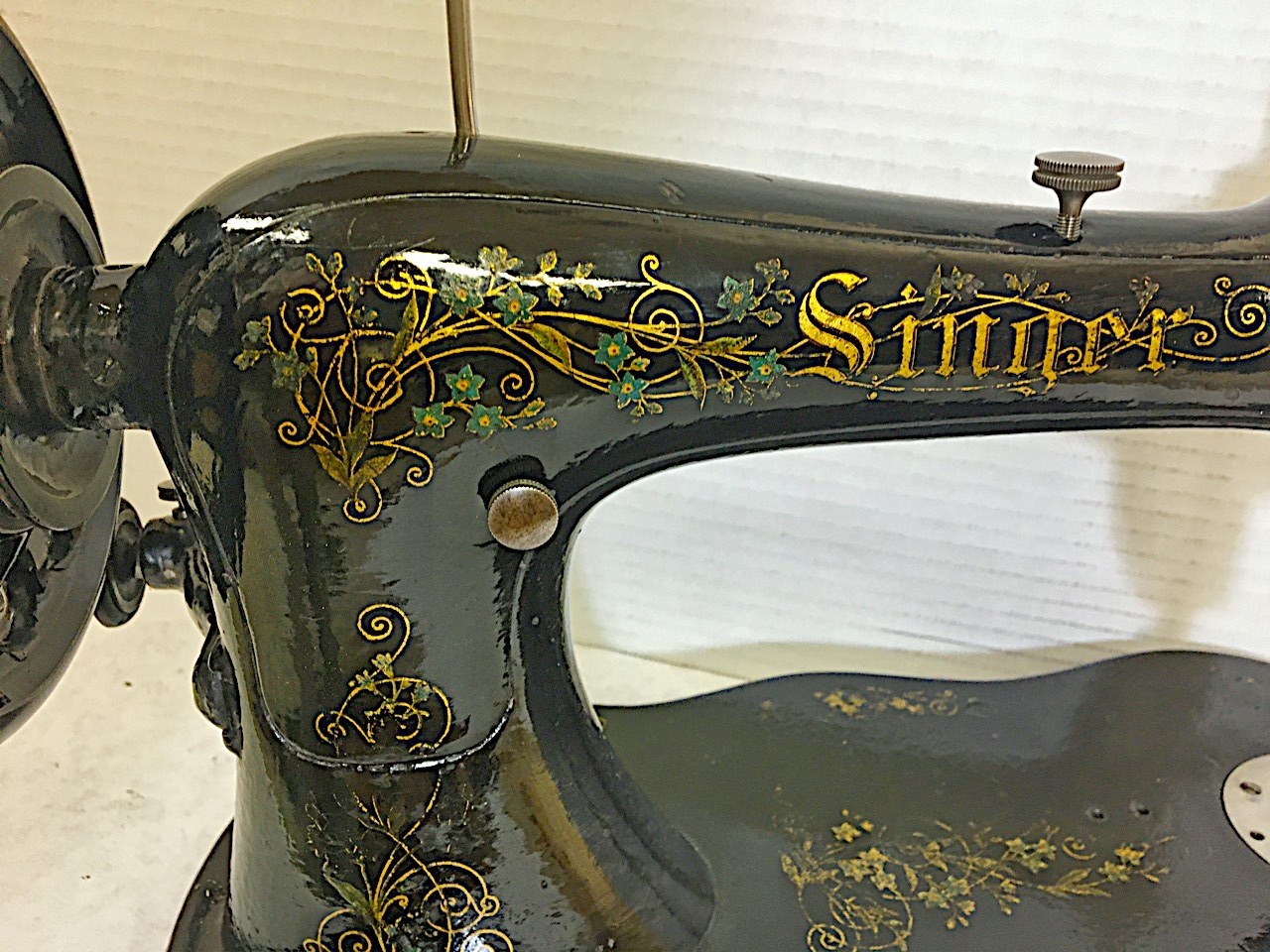
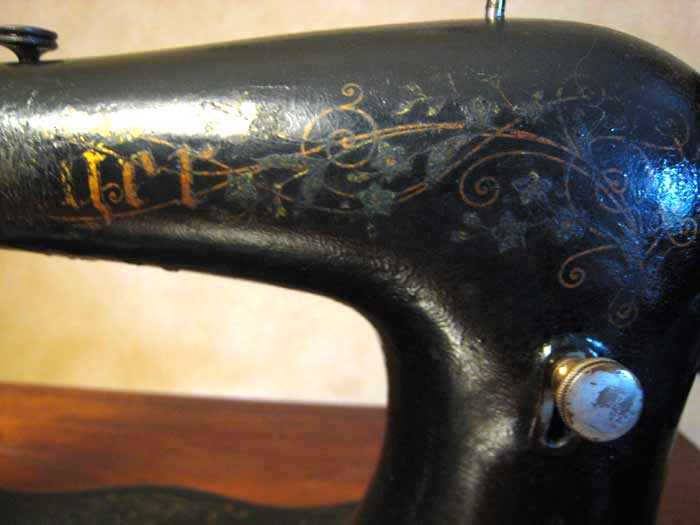
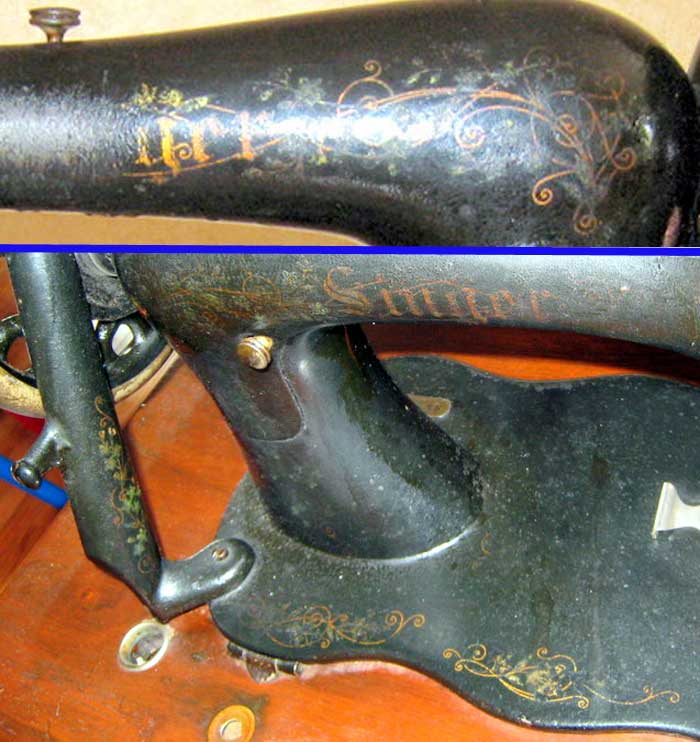
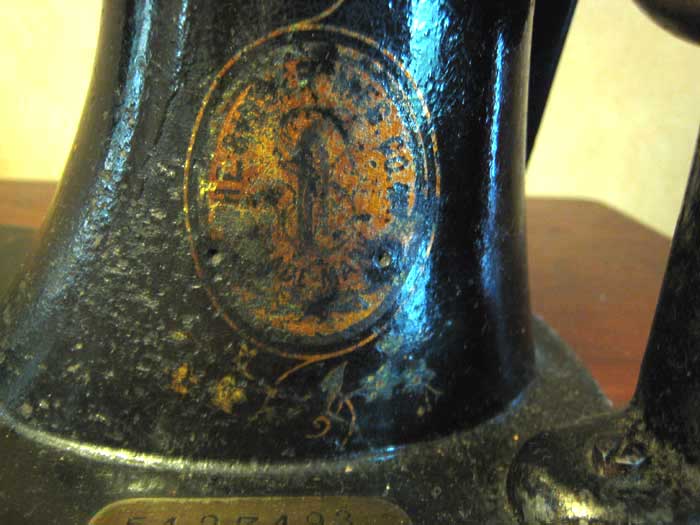
We have a patent for an ornamentation set featuring sprays of forget-me-nots with "... slender tendrils, various flowers and buds...". This was issued by William Hähnel in 1883. Hähnel was a freelance designer who designed decal sets for Singer, Minnesota, Davis, New Home and other manufacturers.
Name coming from The Needlebar wiki.
Patents:
- 27/02/1883, Patent n. USD13662 "Design for ornamentation of sewing machines" by William Hähnel (Pdf) - This design is not a decal: it describes hand-painted / gilded decoration.
Documented Machines
(What does it mean?)Total n.: 3
Factories:
Documented Classes:
- 15
Documented years: 1883
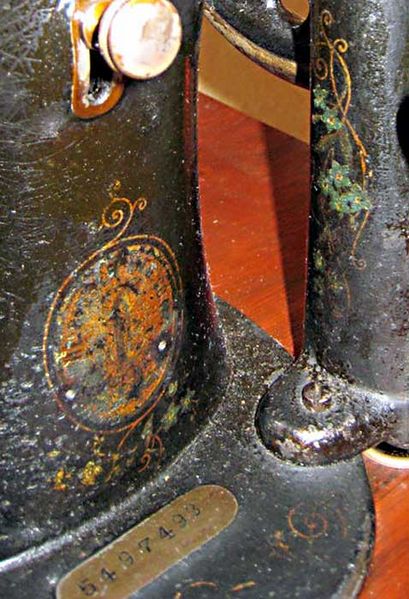
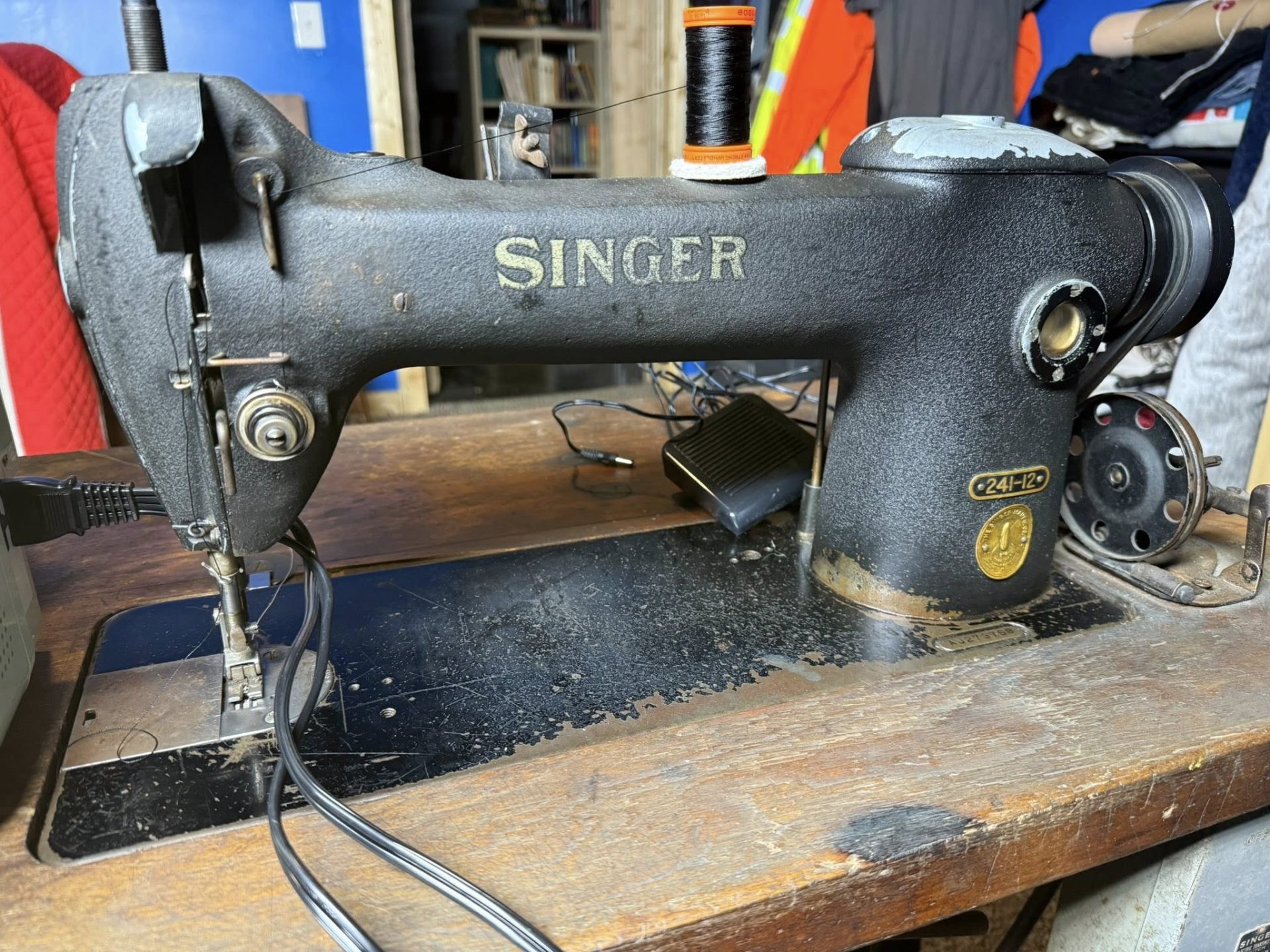
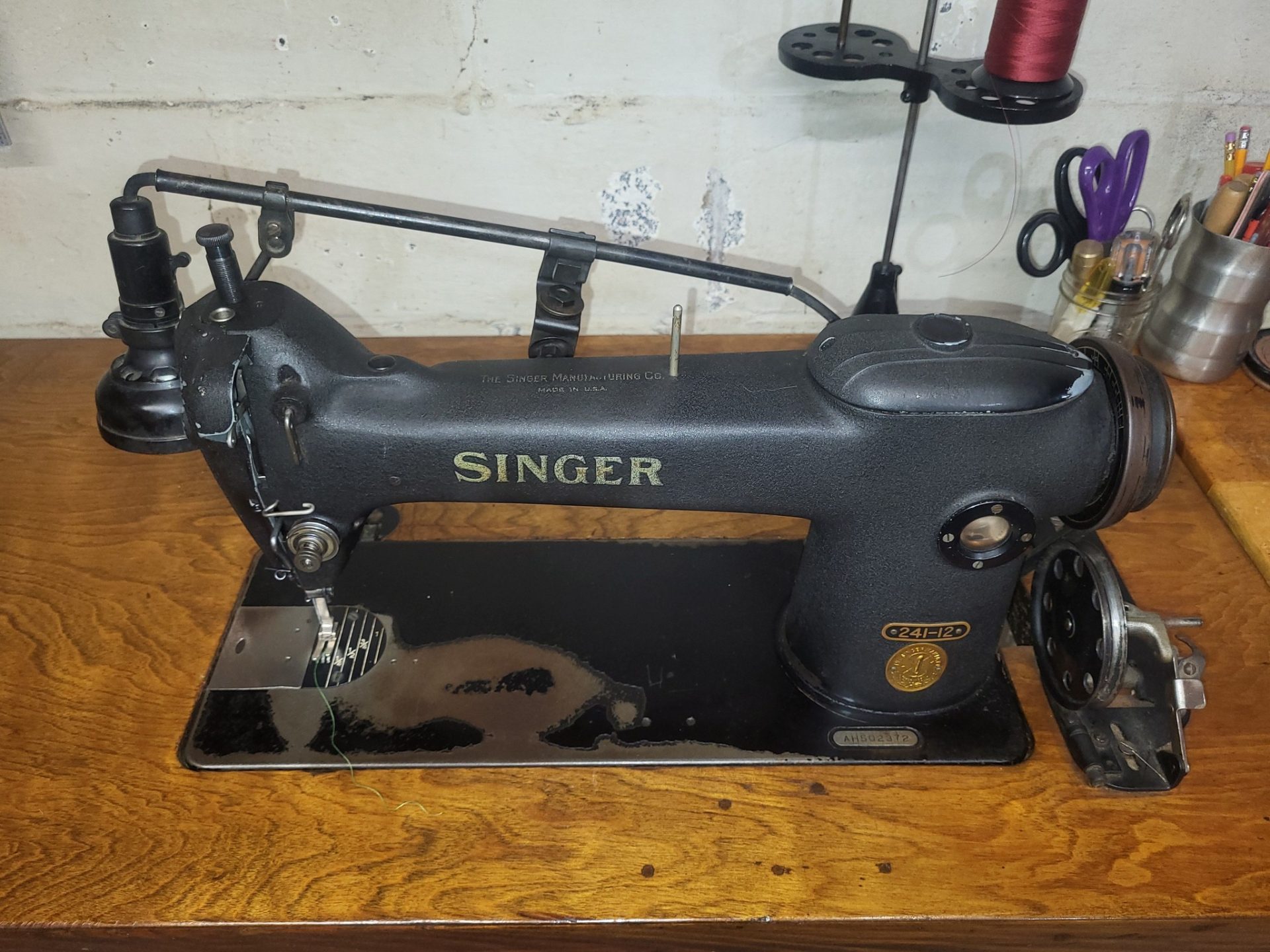
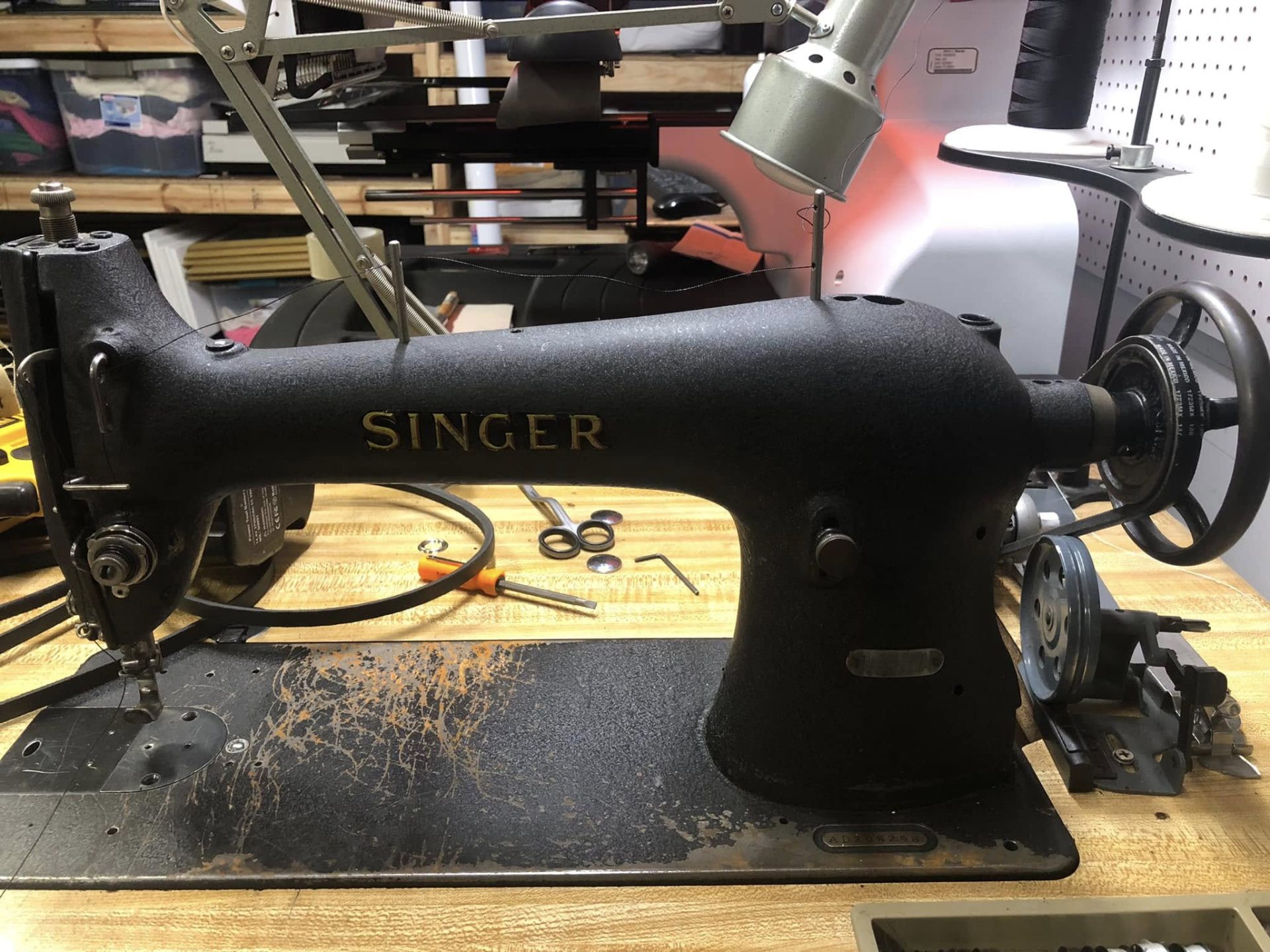
In use from 1930 up to 1953
In use for Classes:
- 31
- 96
- 241
- Other industrial models
The so-called "Godzilla finish" is also known as "crinkle" or "wrinkle" finish. Because of the nature of the crinkle paint, the decals are usually fainter than the more common bright golden decals. "Godzilla" models seem to have been manufactured with non-crinkle shiny drive wheels.
Documented Machines
(What does it mean?)Total n.: 5
Factories:
Documented Classes:
- 31
- 96
- 241
- 880
Documented years: 1908 - 1949
Official Singer name: Wings
In use from 1911 up to 1929
In use for Classes:
- 15
- 115
Gold Wings decals were applied mainly on 115-class machines, but also on the more common 15-class machines.
Documented Machines
(What does it mean?)Total n.: 7
Factories:
Documented Classes:
- 15
- 115
Documented years: 1911 - 1919
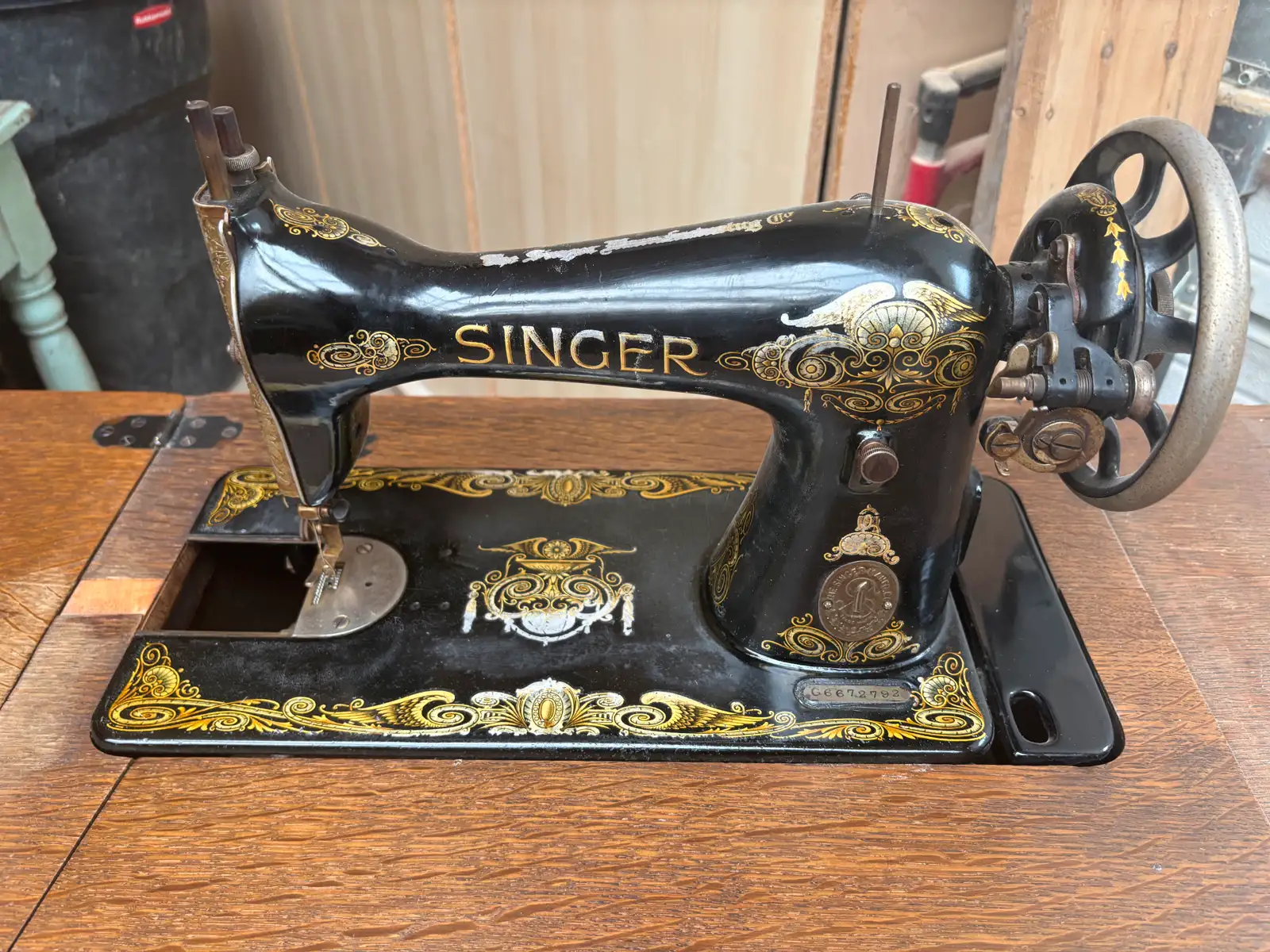
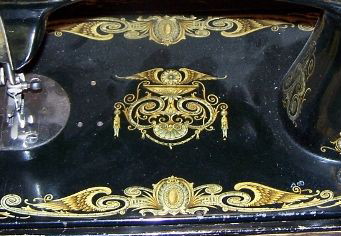
In use for Classes:
- 215
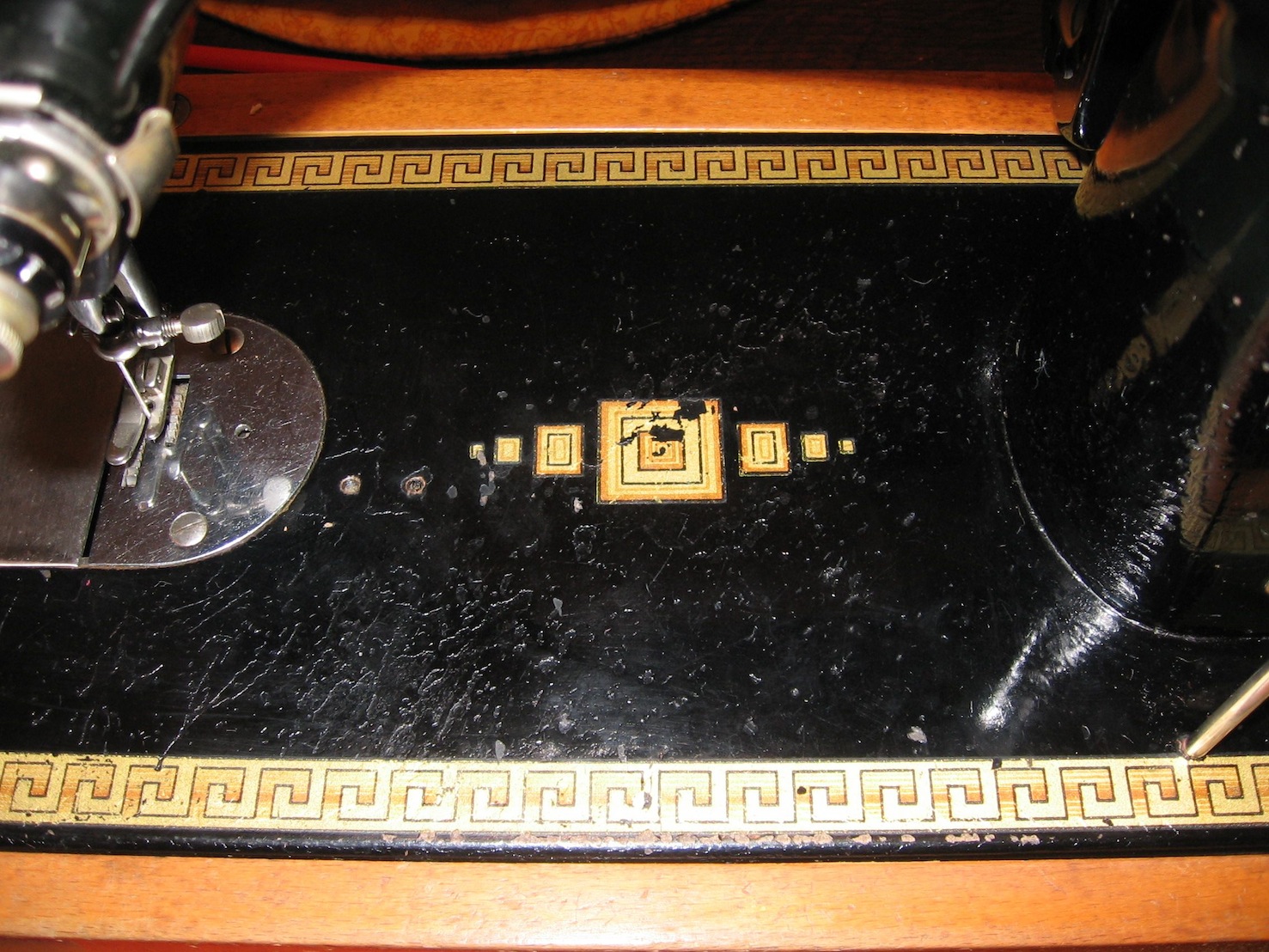
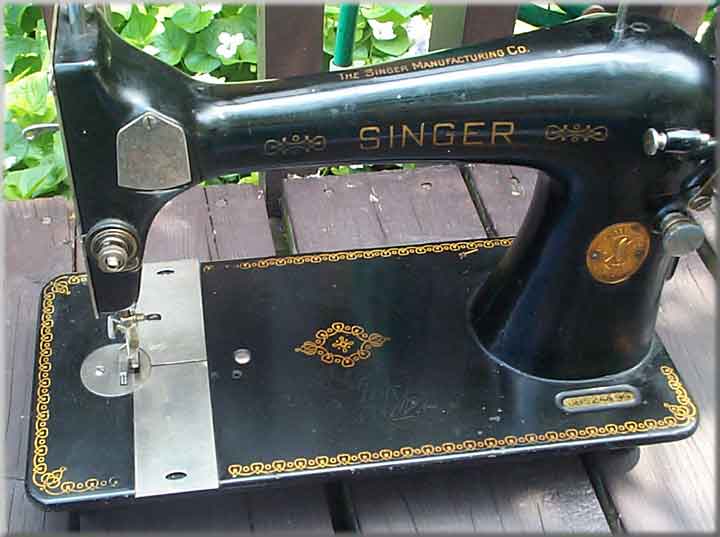
Seen on 215G machines made in Karlsruhe (Germany). Decal name recorded by us at #LRCrafts, for lack of documentation elsewhere.
In use from 1924 up to 1950
In use for Classes:
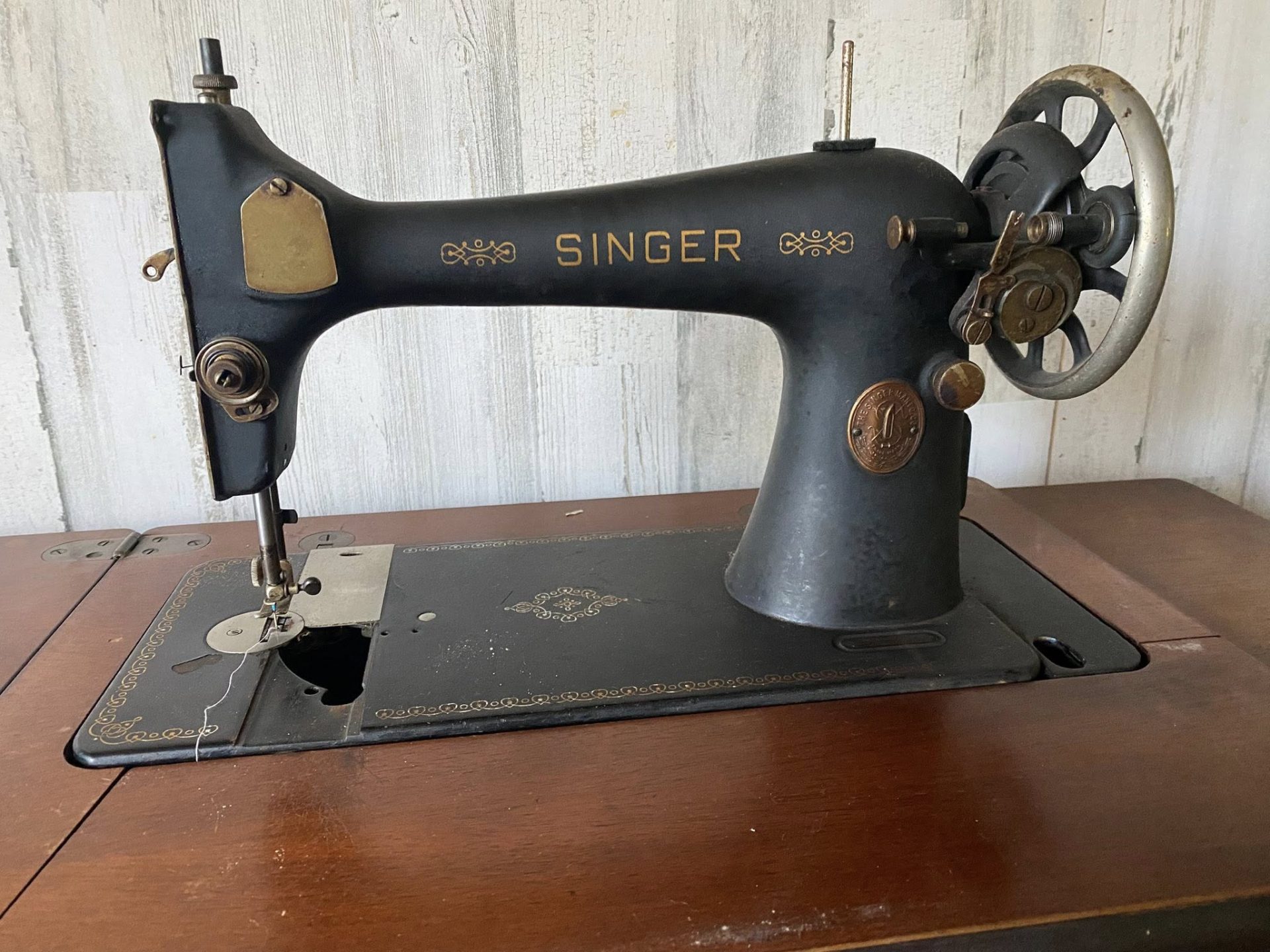
- 127
- 128
The pattern around the border of the bed features interlacing heart shapes. Two interlaced hearts are also on the front of the machine, surrounding the Singer logo on the arm.
Documented Machines
(What does it mean?)Total n.: 11
Factories:
Documented Classes:
- 127
- 128
Documented years: 1937
In use from 1940 up to 1953
In use for Classes:
- 127
- 128
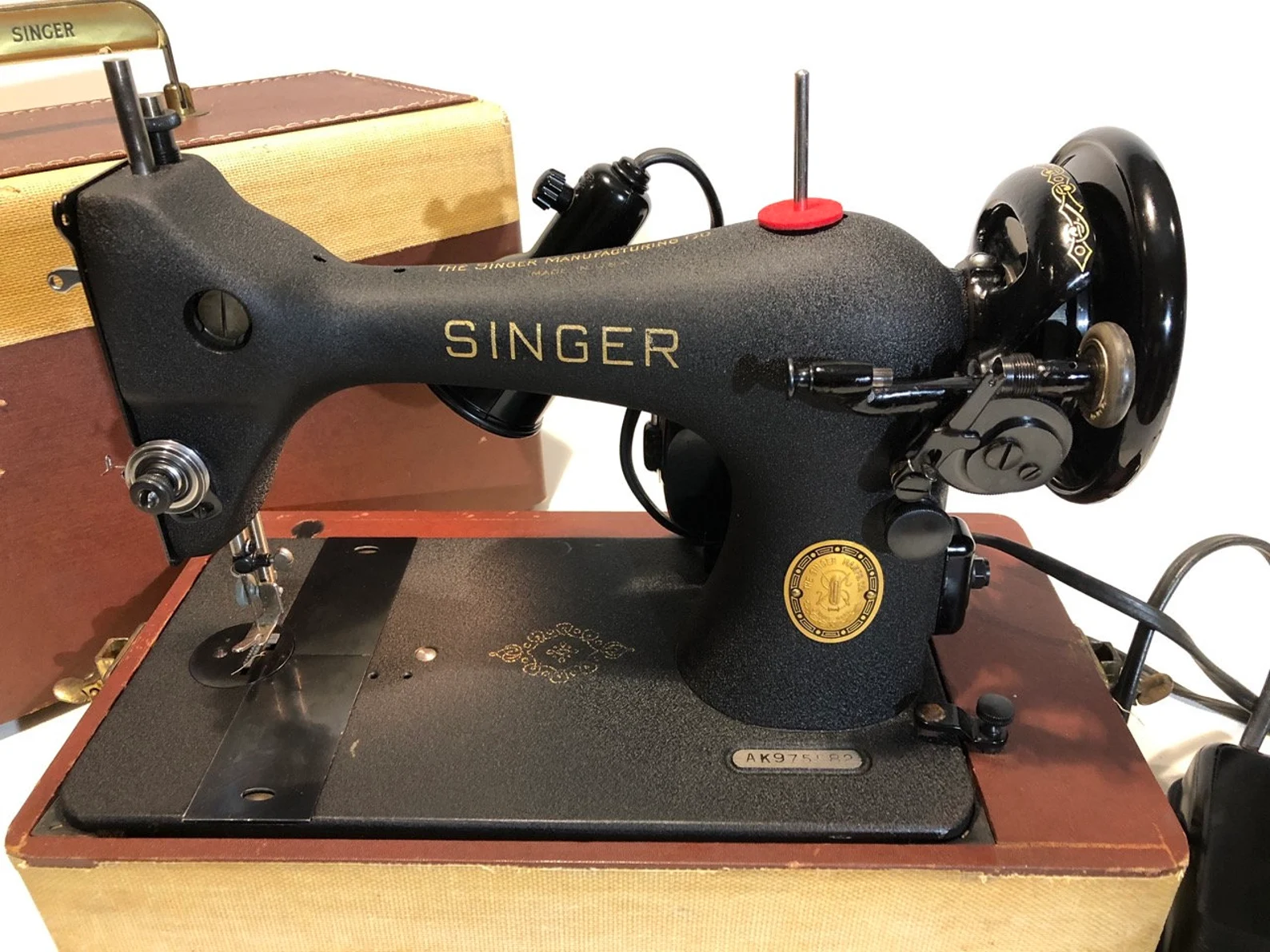
The so-called "Godzilla finish" is also known as "crinkle" or "wrinkle" finish. Because of the nature of the crinkle paint, the decals are usually fainter than the more common bright golden decals. With the "Godzilla" finishes variations, the decoration is applied only in the middle of the bed and on the front of the machine, around Singer logos, no borders around the bed. "Godzilla" models seem to have been manufactured with non-crinkle shiny drive wheels.
Documented Machines
(What does it mean?)Total n.: 7
Factories:
Documented Classes:
- 128
Documented years: 1940 - 1952
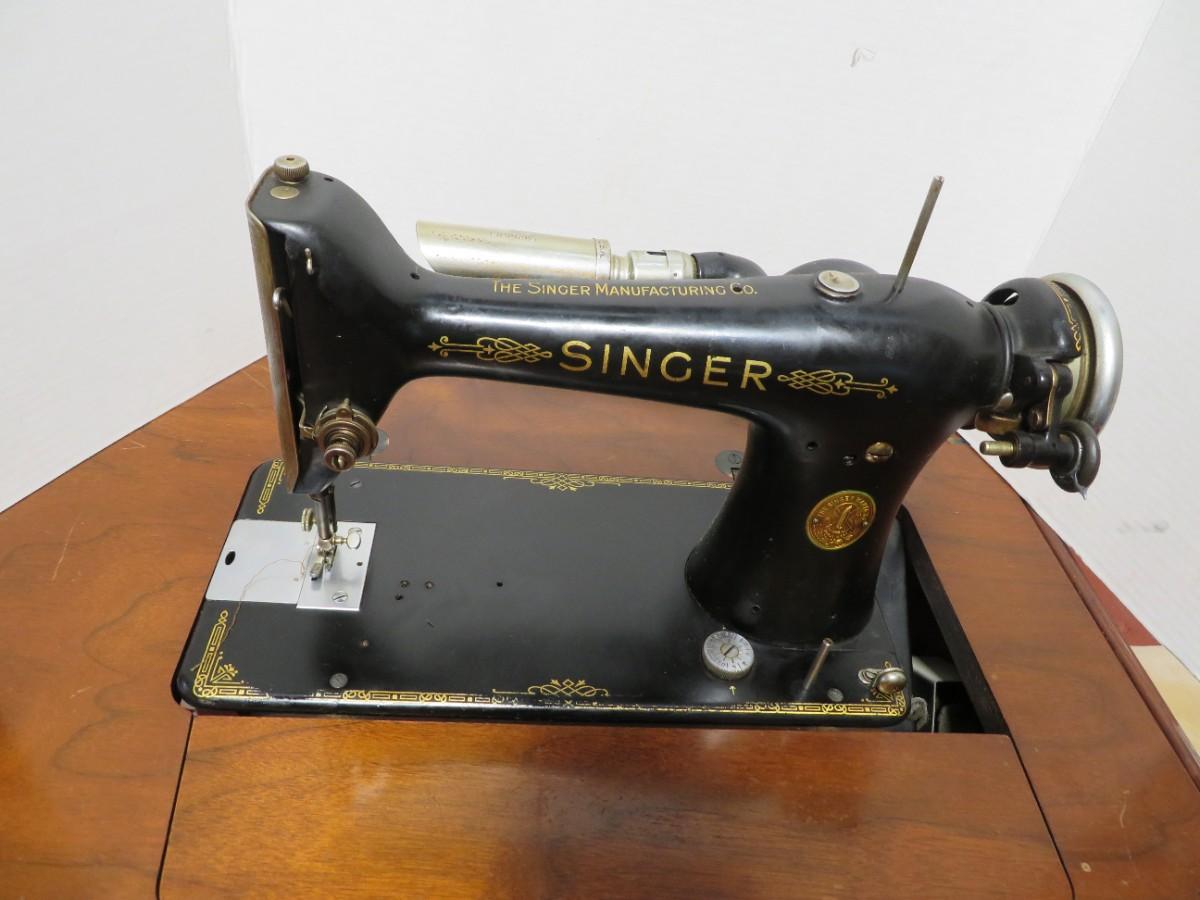
Official Singer name: 101-4
In use from 1920 up to 1939
In use for Classes:
- 101
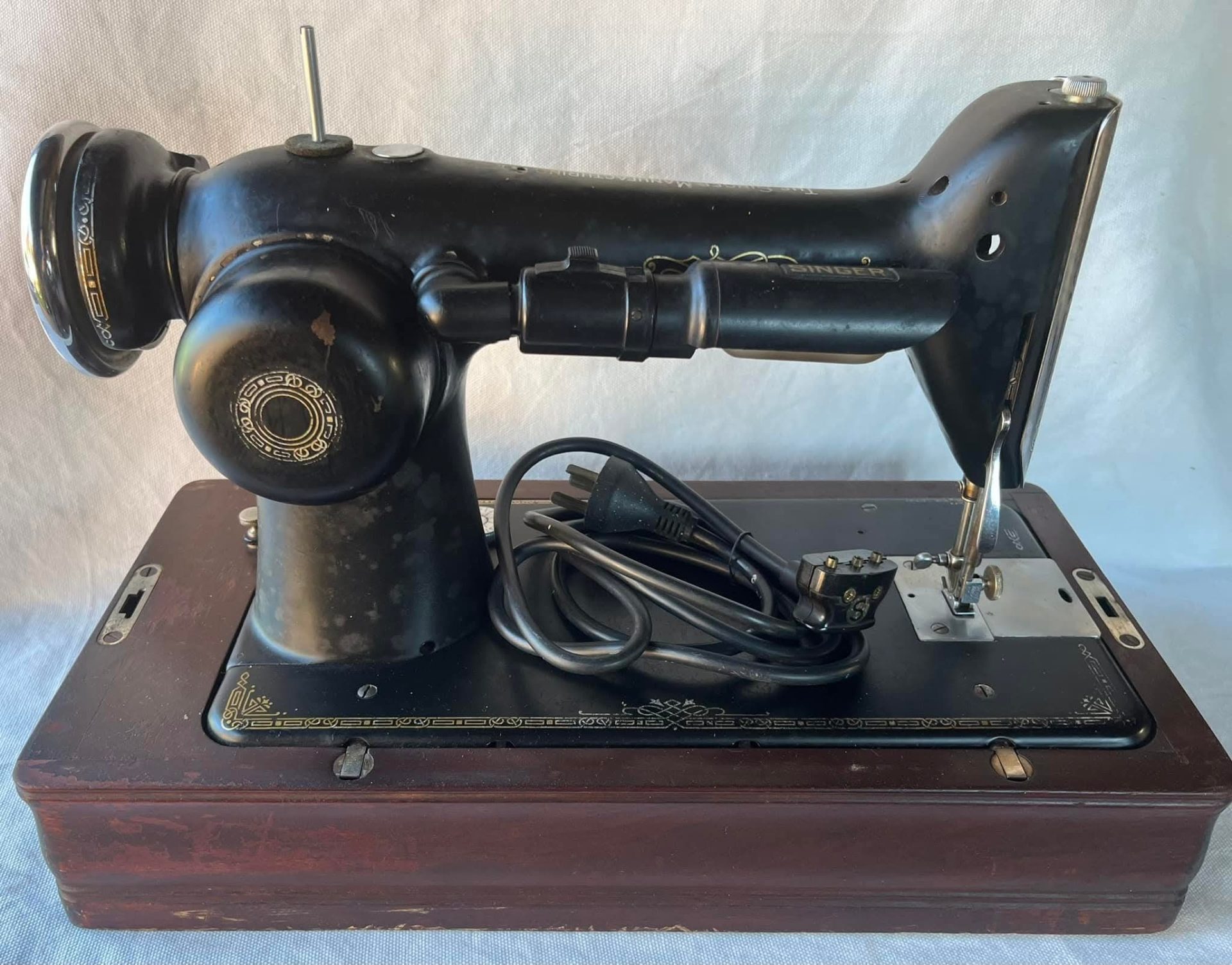
It features repeating small, ornate Celtic knots, inserted in a line framework. The Singer logo on the arm is flanked on both sides by interlocking Celtic-style knotwork. In use in class-101 machines. The official Singer code "101-4" for this decal set likely recalls the class it was used on.
Documented Machines
(What does it mean?)Total n.: 15
Factories:
Documented Classes:
- 101
Documented years: 1920 - 1931
In use from 1902 up to 1960
In use for Classes:
- 28
- 39
- 128
The name means "The Victrix"
Documented Machines
(What does it mean?)Total n.: 25
Factories:
- Bonnières-sur-Seine (France)
- Elizabethport, New Jersey (USA)
- Kilbowie, Clydebank (Scotland, UK)
- St. John's Factory, Quebec (Canada)
Documented Classes:
- 39
- 127
- 128
Documented years: 1902 - 1951
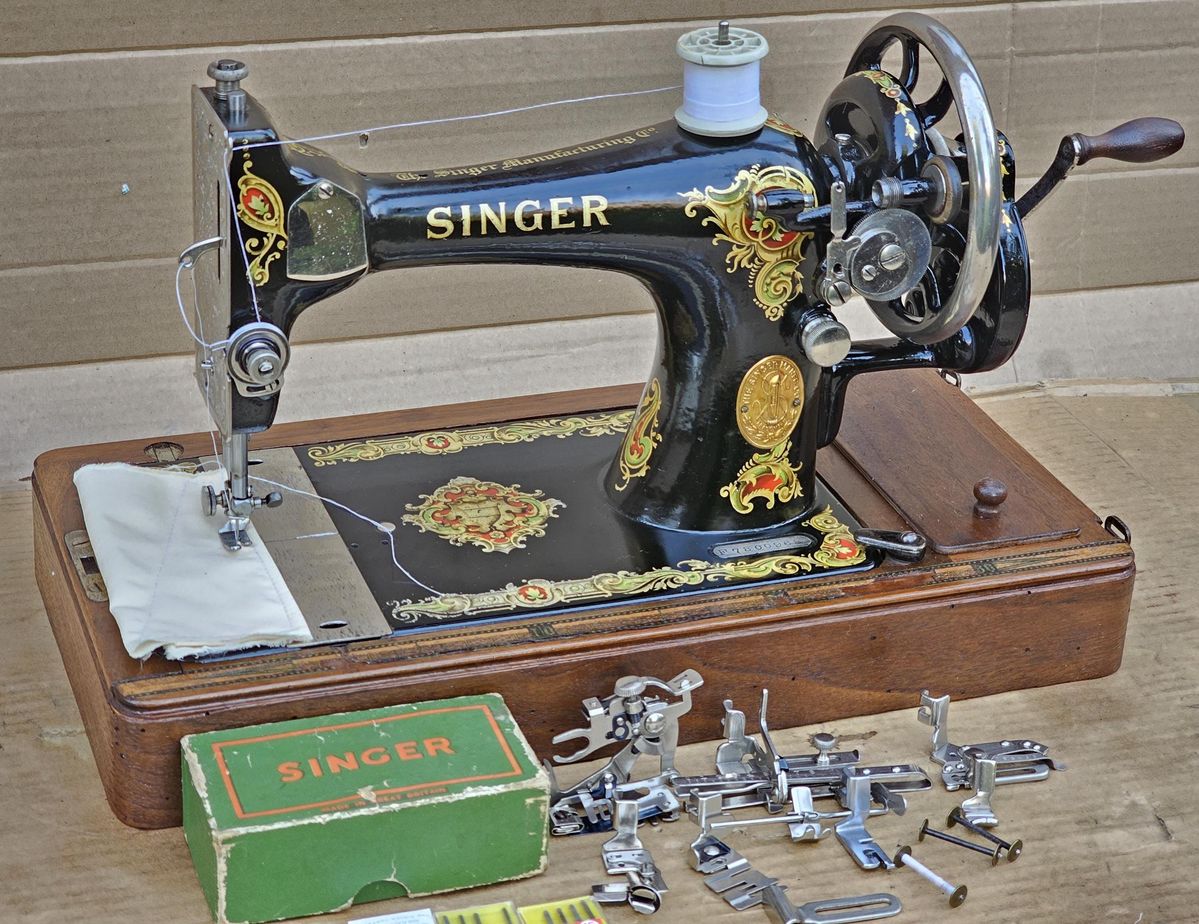
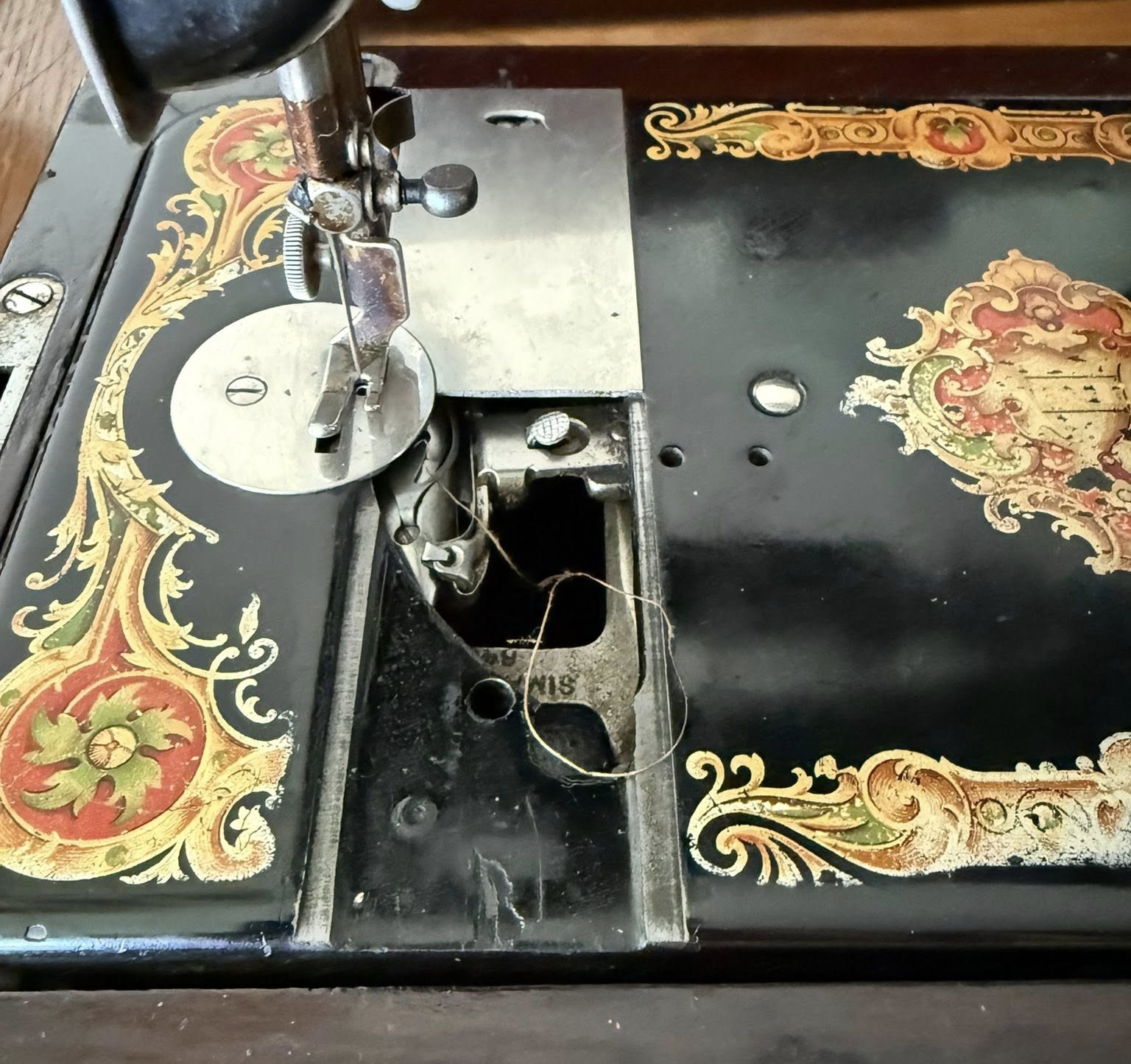
In use from 1916 up to 1960
In use for Classes:
- 128
The Indian Star decal was an attempt to stimulate the emerging Indian market at the beginning of the 20th century. Entering this market was not easy, though. The main difficulties were overcoming caste prejudice, language differences and limited access to women. The Indian Star machines say 'Singer' in different languages on each point of the star: Onya, Singhalese, Gujarati, Kannada, Hindi, Telugu, Malayalam (or Tamil), Urdu. The Indian Star appears as a variant in several decals, on different models.
Documented Machines
(What does it mean?)Total n.: 2
Factories:
Documented Classes:
- 128
Documented years: 1934 - 1946
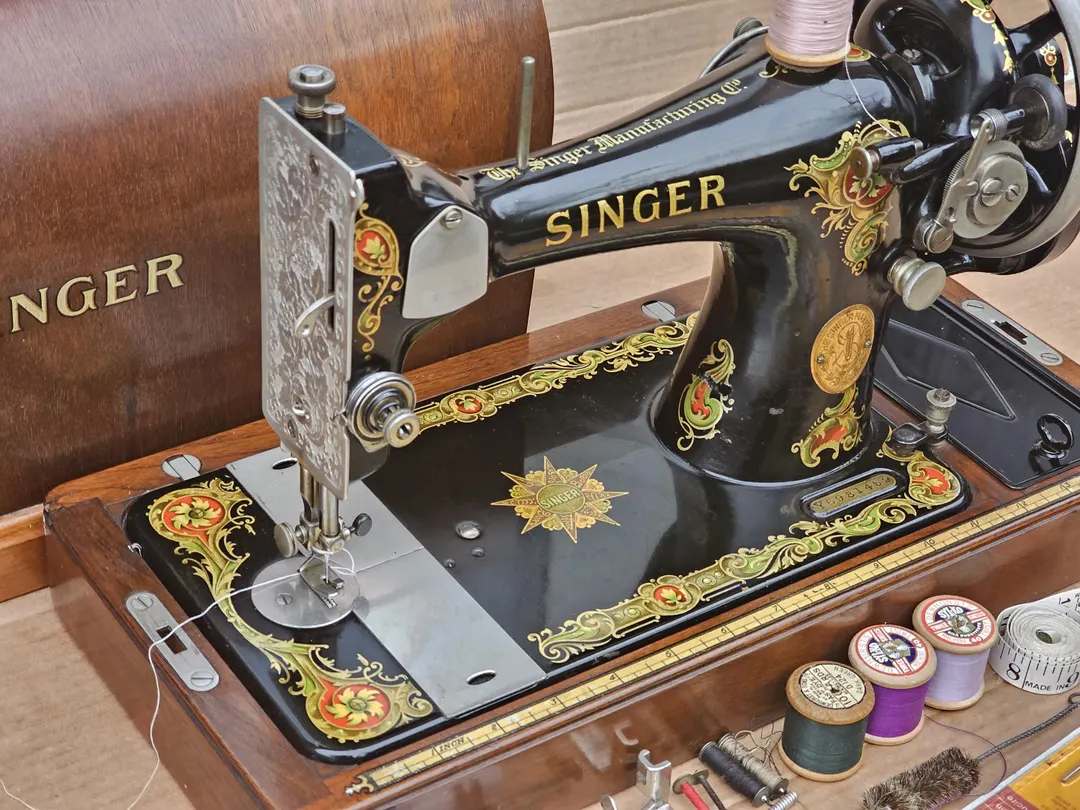
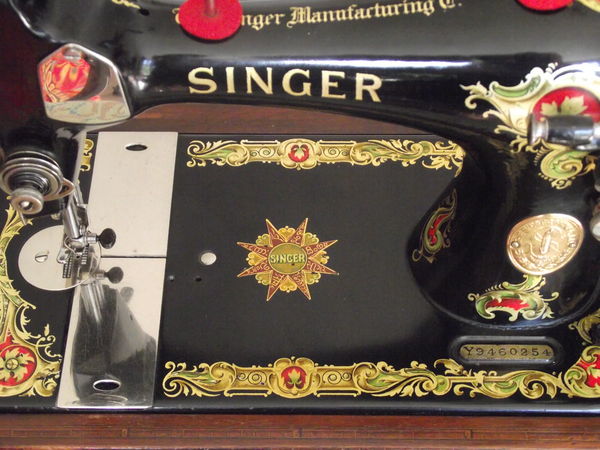
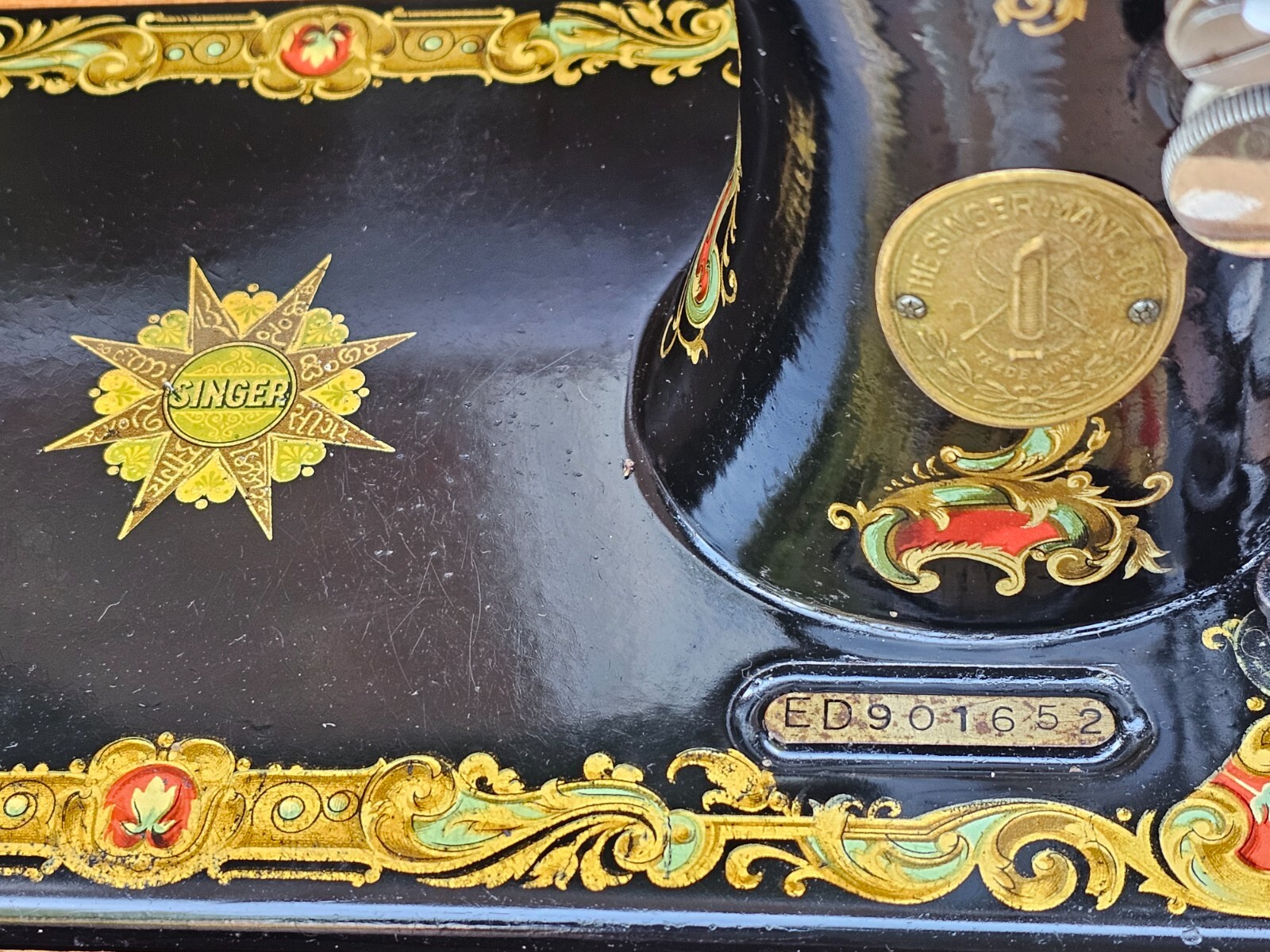
In use from 1871 up to 1899
In use for Classes:
- 24
This decal was first recorded on a 24-17 model by Rachael Bhakail.
Documented Machines
(What does it mean?)Total n.: 2
Factories:
- Elizabethport, New Jersey (USA)
- New York Mott Street (USA)
Documented Classes:
- 24
Documented years: 1871 - 1899
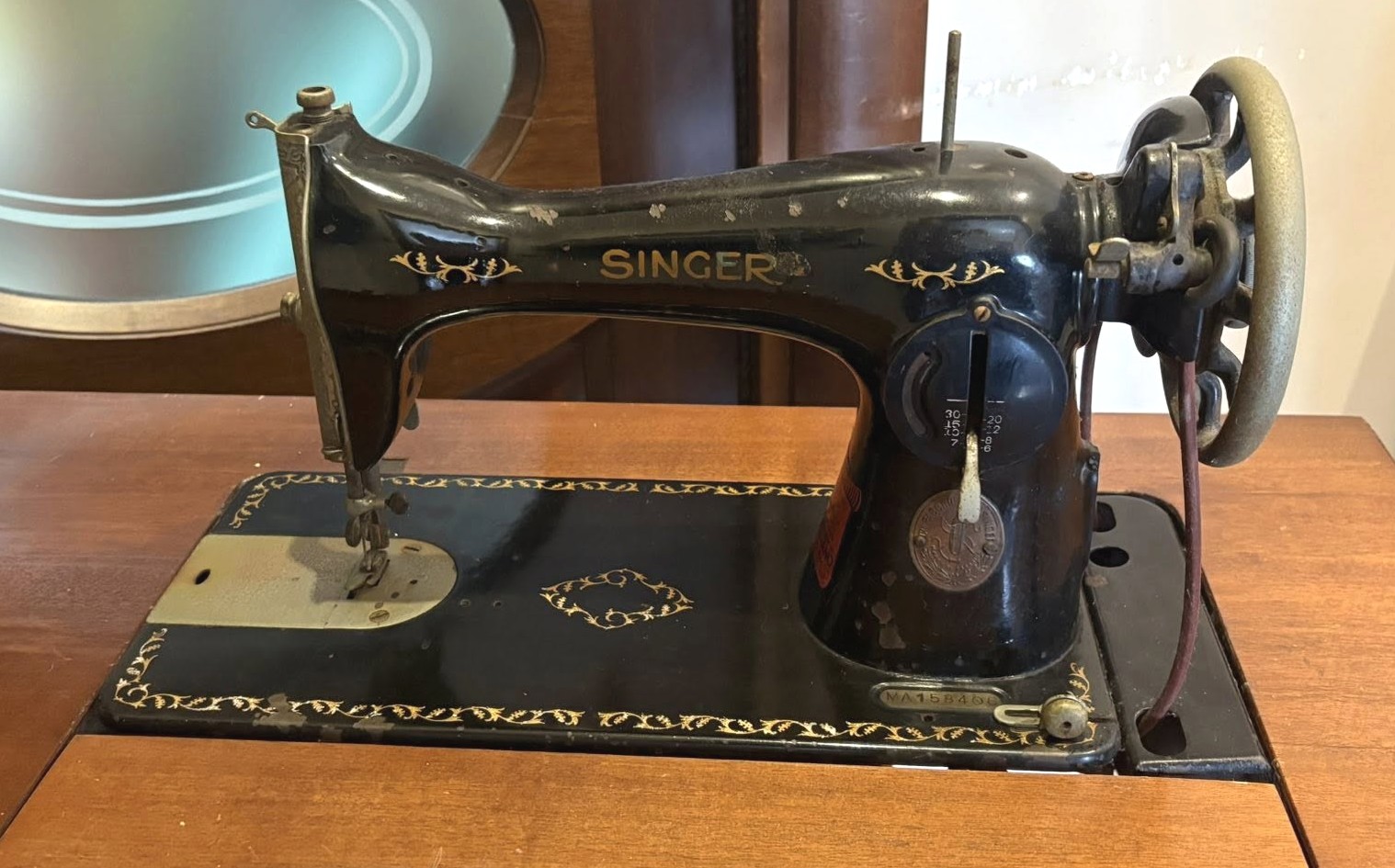
In use for Classes:
- 15
Similar to the Eye and Trefoils decal set, but without the trefoils. Recorded in use in the factory of Monza (Italy). Decal name recorded by us at #LRCrafts, for lack of documentation elsewhere.
Documented Machines
(What does it mean?)Total n.: 2
Factories:
Documented Classes:
- 15
In use from 1902 up to 1935
In use for Classes:
- 66
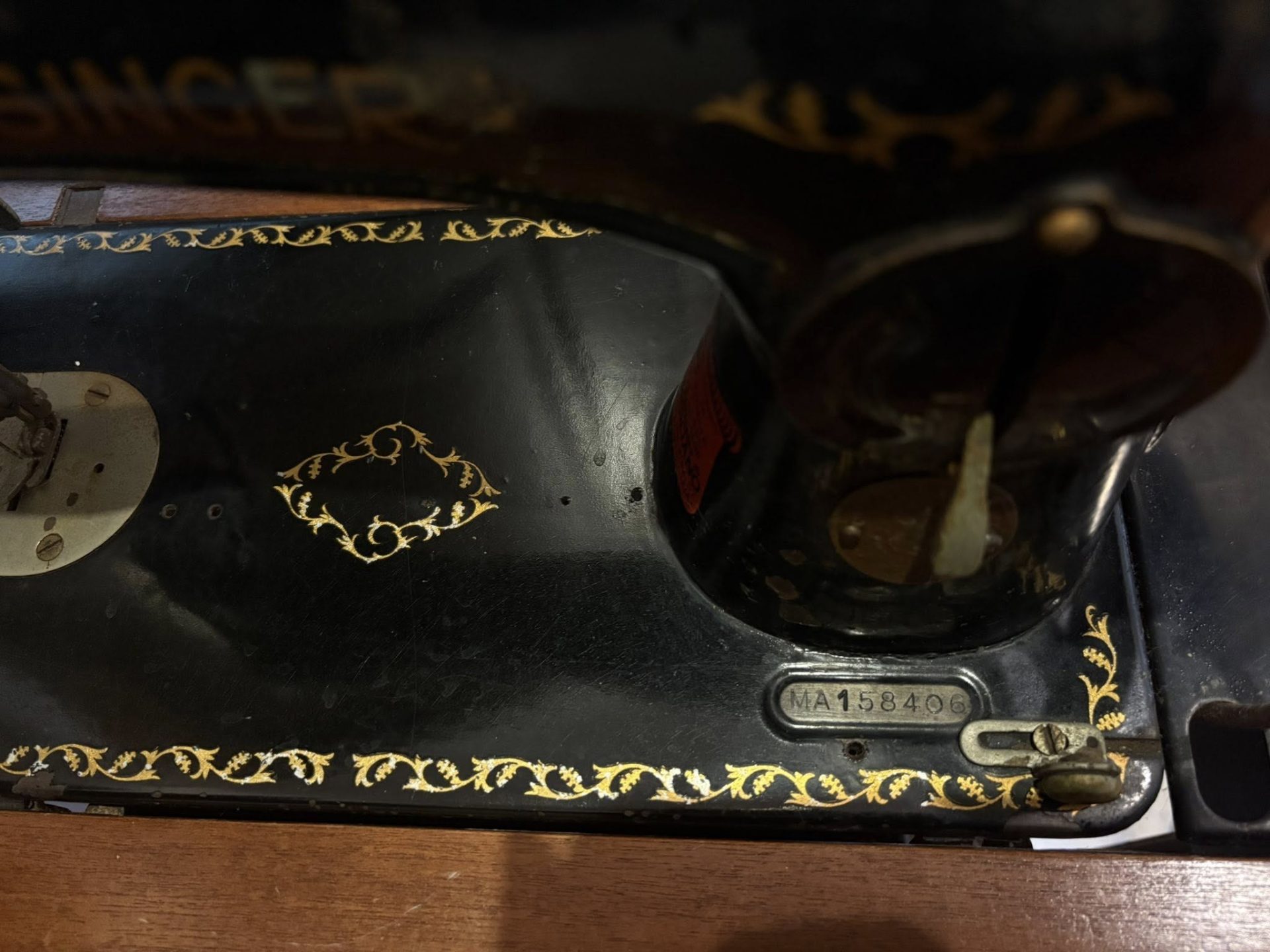
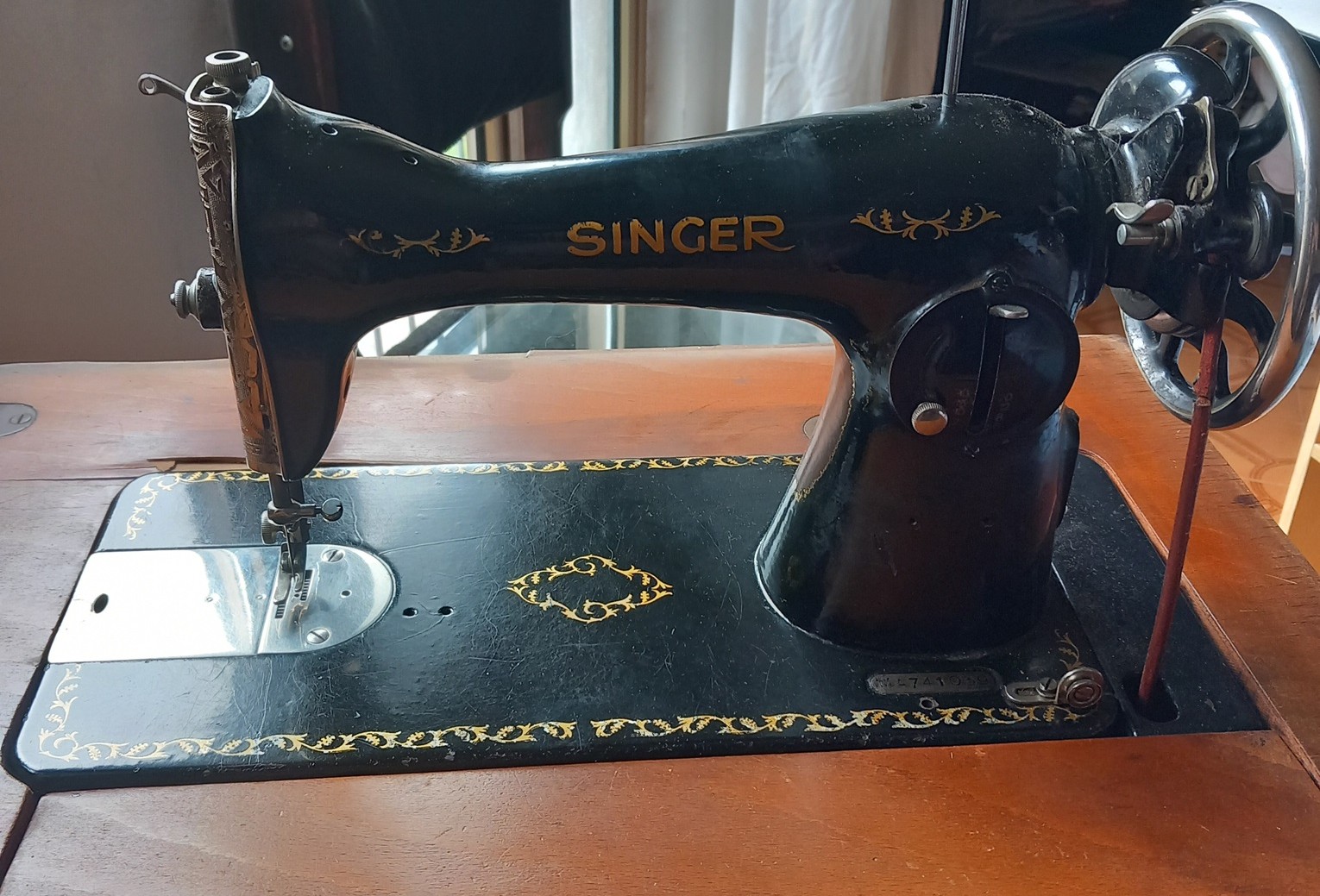
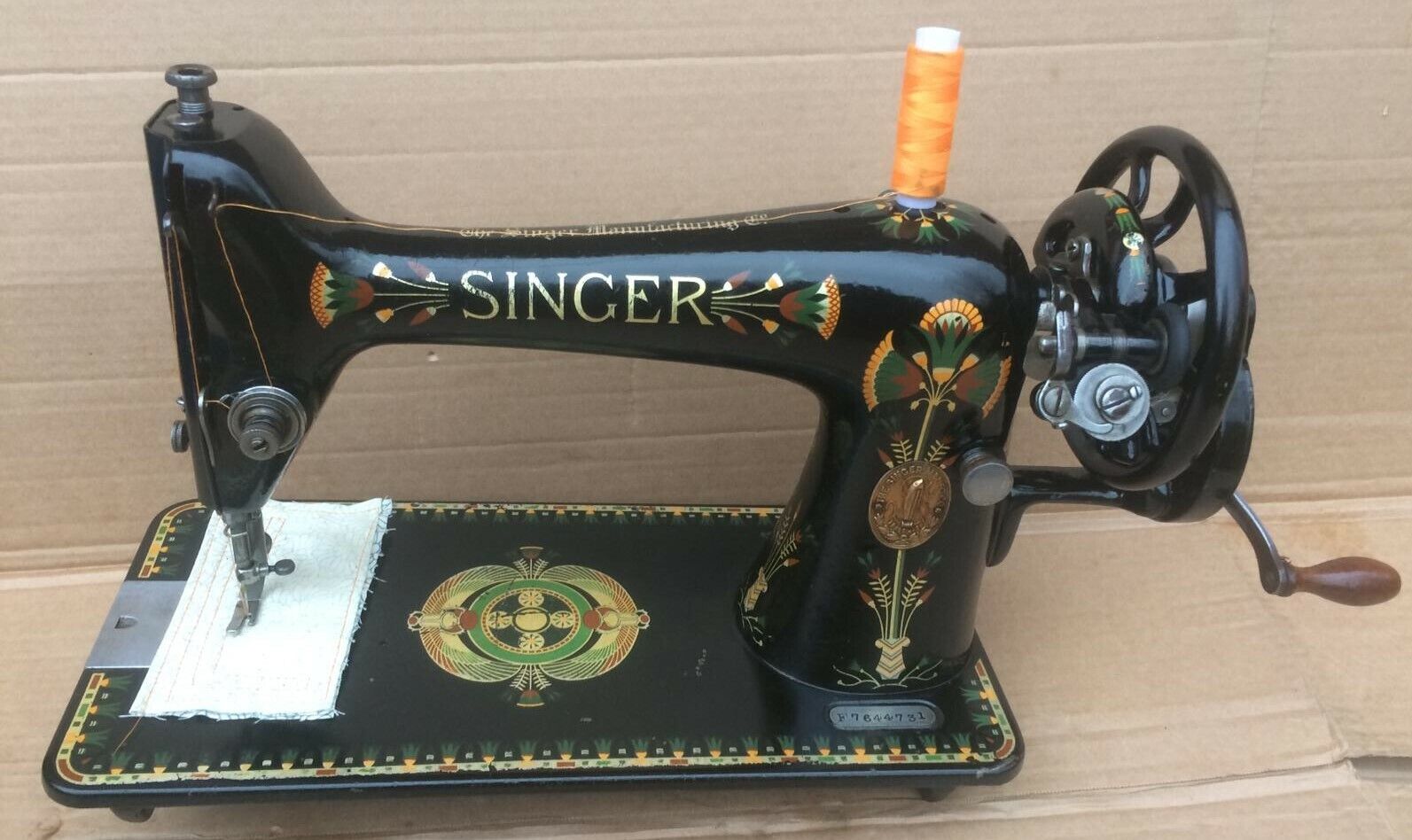
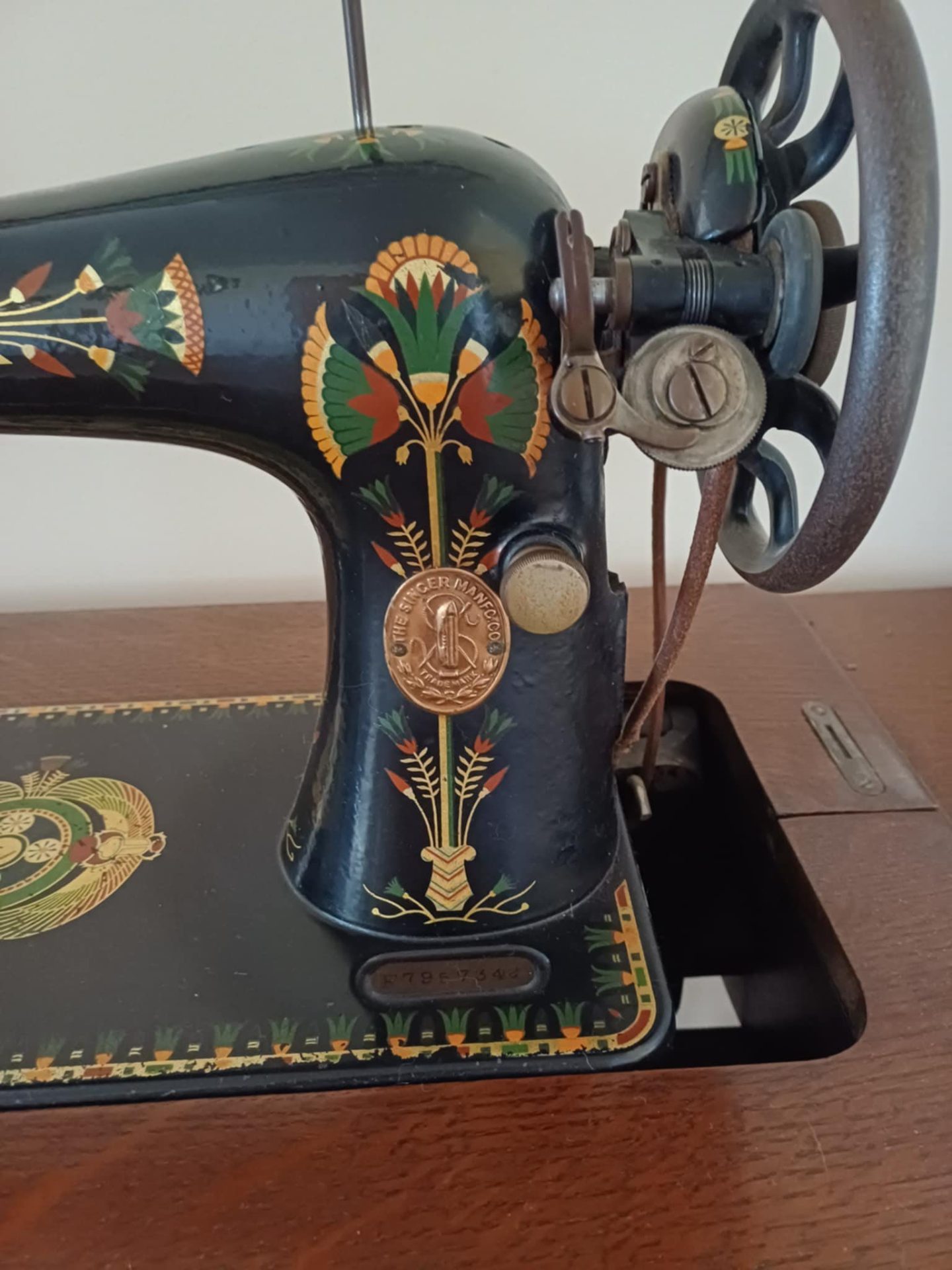
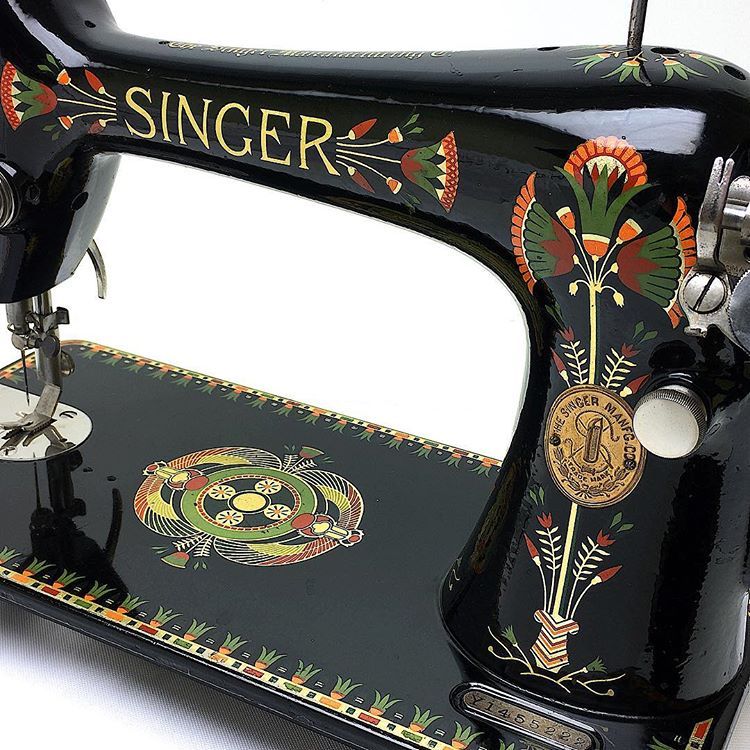
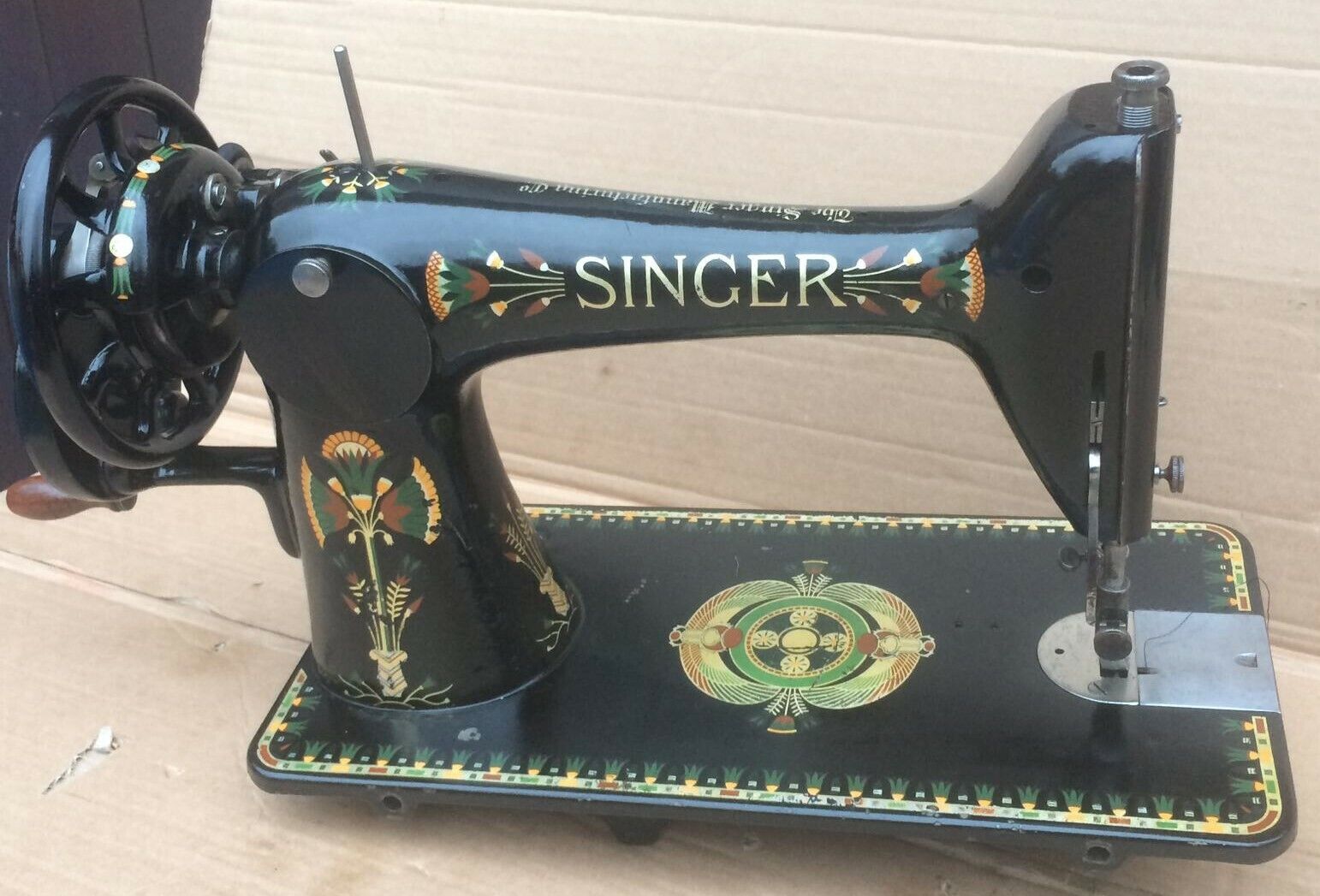
This decal set has ornamental gold flower patterns featuring scrollwork, red accents and an Egyptian-inspired design. Intricate, stylized lotus flower artwork is arranged in symmetrical layouts across the bed and pillar. Small pops of red coloring highlighting parts of the flowers and borders. The application for the patent filed by Robert Whyte in 1903 speaks about "comprises a set of several separate and disconnected parts or figures, all representing conventionally in the same general style the Egyptian lotus flower in various stages of development". This patent was filed in the USA, by a designer from Scotland. It's usually found on 66K machines made in Kilbowie (Scotland, UK), but also documented on 66 machines made in Elizabethport (NJ, USA).
Patents:
- 07/04/1903, Patent n. USD36282 "Design for a decalcomania transfer-sheet" by Robert Whyte (Pdf)
Documented Machines
(What does it mean?)Total n.: 37
Factories:
- Elizabethport, New Jersey (USA)
- Kilbowie, Clydebank (Scotland, UK)
- Wittenberge, Prussia (Germany)
Documented Classes:
- 66
Documented years: 1905 - 1935
In use from 1884 up to 1913
In use for Classes:
- VS1 (1884-1886)
- High Arm Family (1885-1886)
- 15 (Improved Family, 1885-1886)
- 12 (1885-1903)
- 28 (1891-1902)
- 39
- 48 (1900 - 1913)
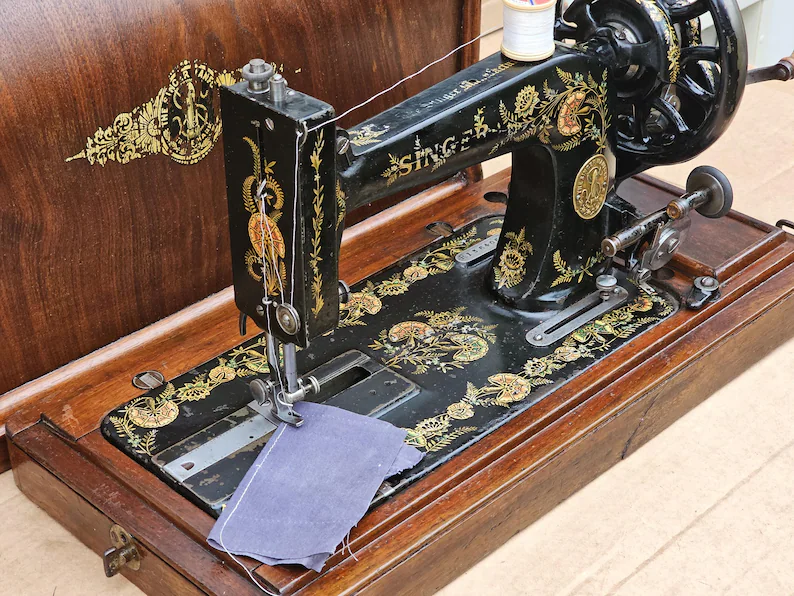
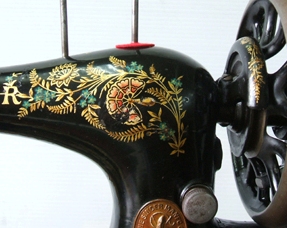
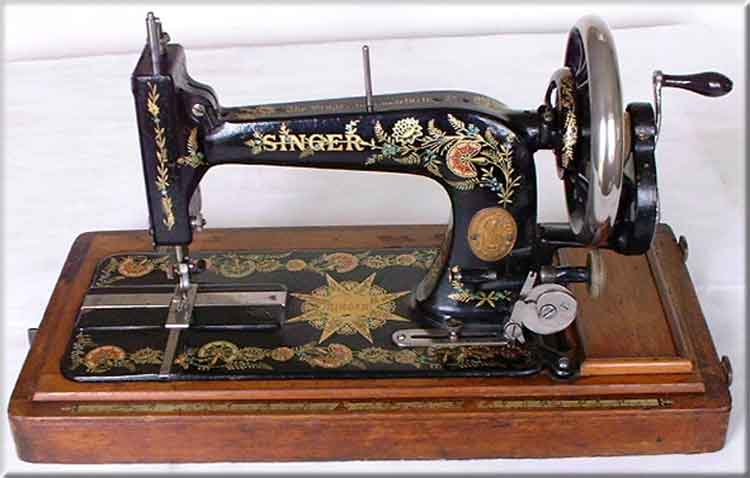
There are various, distinctly different versions of this design to suit a variety of machines. All of them were designed by George Alfred Squire of Bayonne (New Jersey, USA) in 1884.
In his patent, he describes it as "a main flower resembling a dianthus (carnation), and a smaller flower resembling a buttercup, and interlaced stems bearing buds and slender pointed leaves", without mentioning "Ottoman". This design got its "Ottoman" colloquial designation because of its mix of Islamic and figurative styles.
Patents:
- 05/08/1884, Patent n. USD15218 "Ornamentation of a sewing machine" by George Alfred Squire (Pdf) - Design patent for hand ornamentation, describing hand-painted or hand-gilded elements. It’s possible that following decals borrowed their design from here. The specification describes multiple ornamental groups (A–I) applied to the sides, arm, post, and cloth plate of the machine, including trailing vines, dianthus-like flowers, pointed leaves, tendrils, and lettering. Groups C and D include the word "Singer" integrated into the design.
- 05/08/1884, Patent n. USD15220 "Ornamentation of a sewing machine" by George Alfred Squire (Pdf) - Design patent for hand ornamentation, describing hand-painted or hand-gilded elements. It’s possible that following decals borrowed their design from here. The specification describes multiple ornamental groups (A–N) applied to the cloth plate, arm, post, and other surfaces of the machine. Features include branches, sprays, leaves, stems, buds, dianthus-like and buttercup-like flowers, pointed leaves, and lettering. Group II includes the word "Singer" integrated into the design.
Documented Machines
(What does it mean?)Total n.: 15
Factories:
Documented Classes:
- 12
- 28
- 39
- 48
Documented years: 1887 - 1911

In use for Classes:
- 48
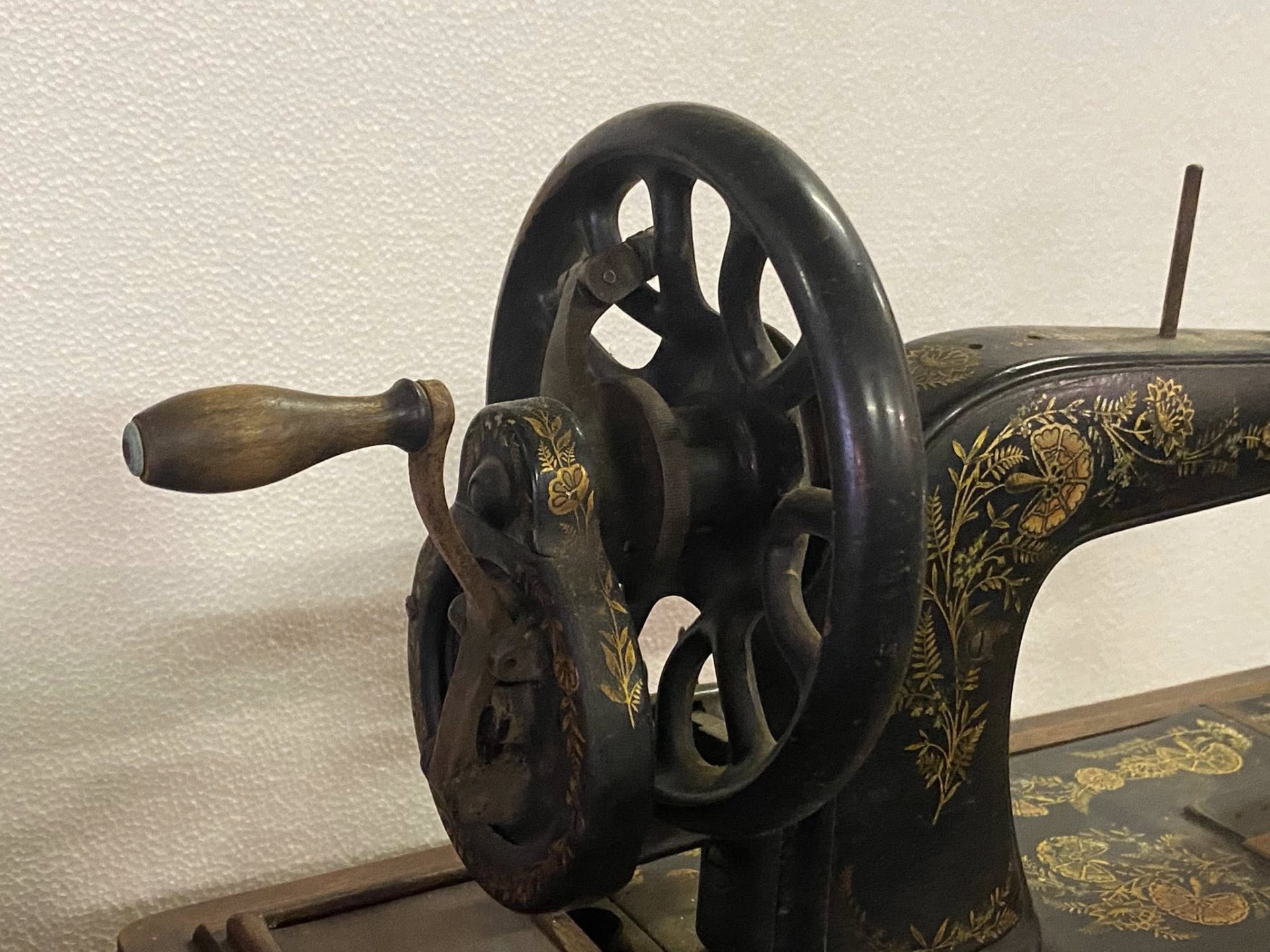
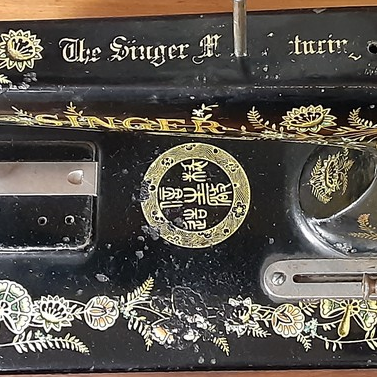
For variations of the Ottoman Carnation decals, patents and information, see the specific page. This specific variant has the same design as the Ottoman decals, but with a Chinese symbol on the bed. More info on a pristine condition surviving machine. The Chinese characters in the center of the bed are in Seal Script, a very old and decorative writing style. In traditional Chinese: 福 — fú = good fortune / blessing 禄 — lù = prosperity / wealth / official success 寿 — shòu = longevity 喜 — xǐ = happiness / joy Together, 福禄寿喜 (fú lù shòu xǐ) is an extremely traditional auspicious combination meaning roughly “fortune, prosperity, longevity and happiness.” These characters were applied specifically on machines produced for the Chinese market. These characters were applied specifically on machines produced for the Chinese market.
In use from 1903 up to 1913
In use for Classes:
- 48
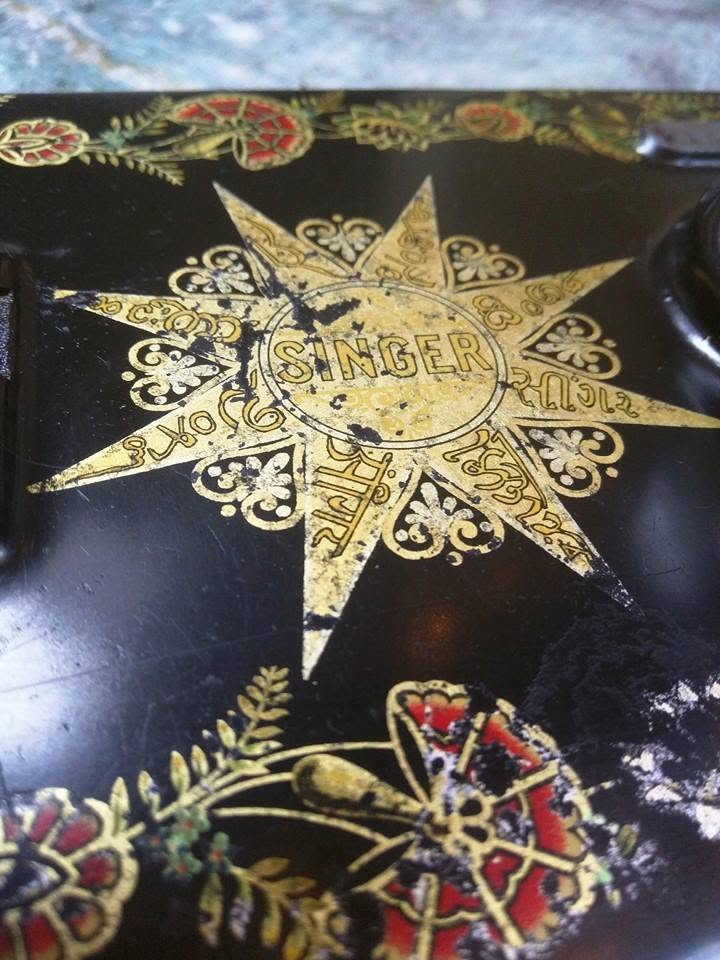
Ottoman Carnation Variant (Indian Star) was used only on 48K models produced in Kilbowie. The Indian Star decal was an attempt to stimulate the emerging Indian market at the beginning of the 20th century. Entering this market was not easy, though. The main difficulties were overcoming caste prejudice, language differences and limited access to women. The Indian Star machines say 'Singer' in different languages on each point of the star: Onya, Singhalese, Gujarati, Kannada, Hindi, Telugu, Malayalam (or Tamil), Urdu. The Indian Star appears as a variant in several decals, on different models.
Documented Machines
(What does it mean?)Total n.: 1
Factories:
Documented Classes:
- 48
Documented years: 1911
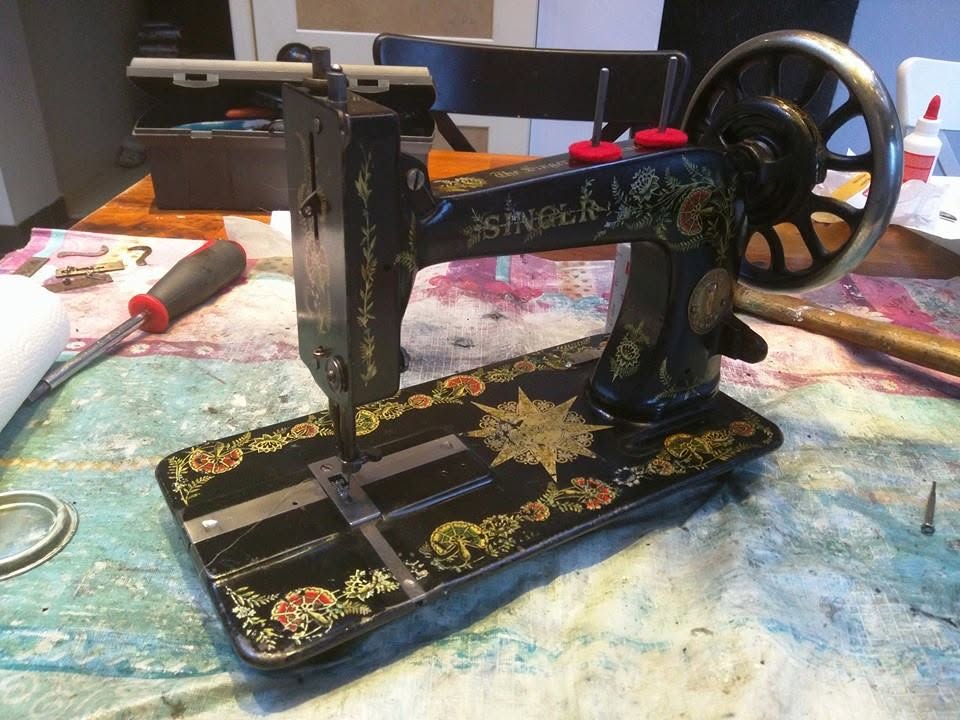
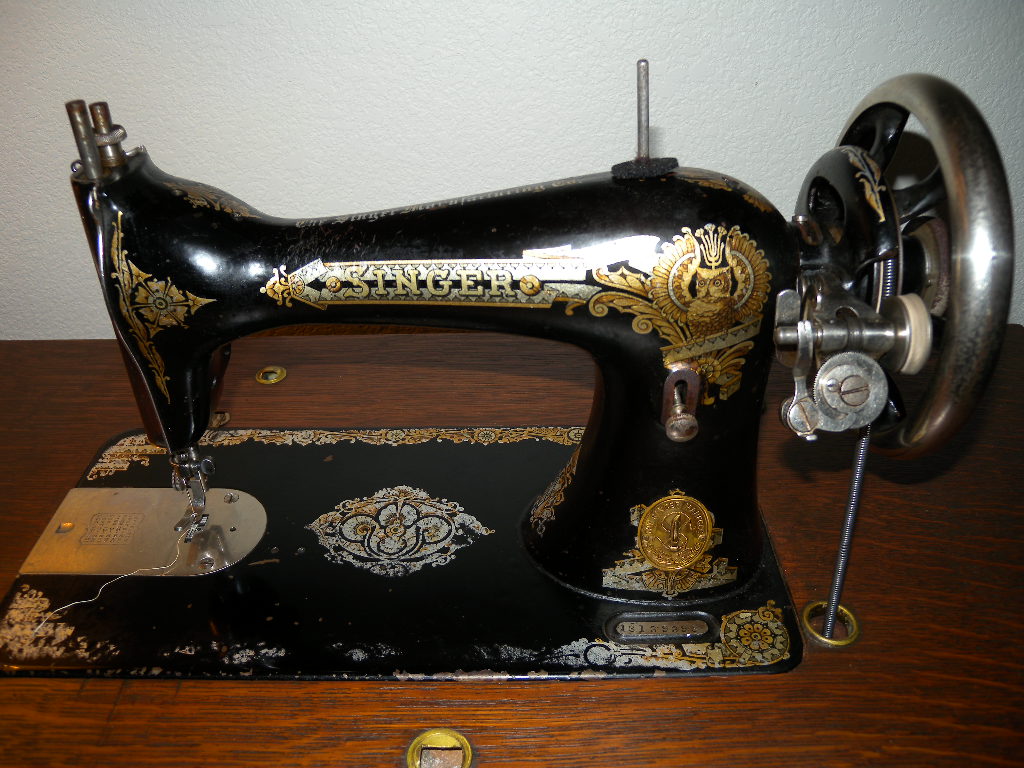
In use from 1891 up to 1898
In use for Classes:
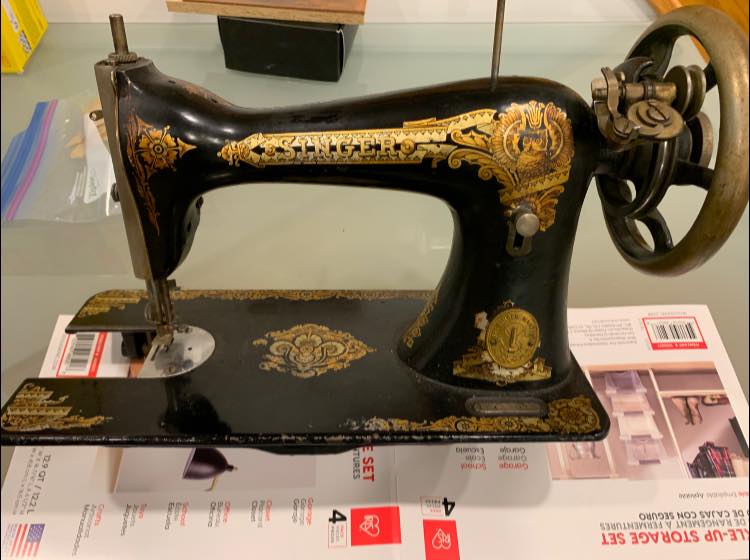
- 15
- 28
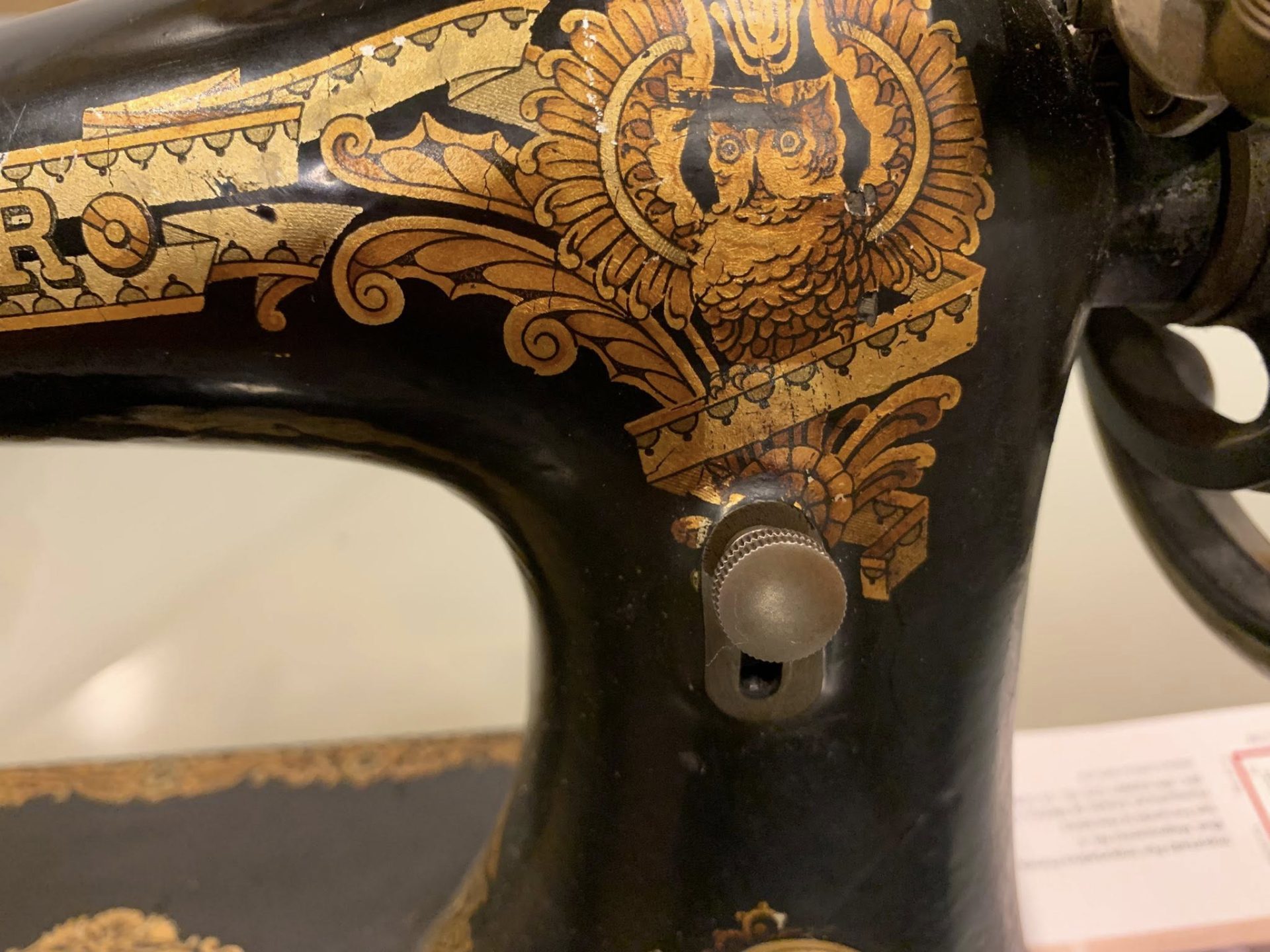
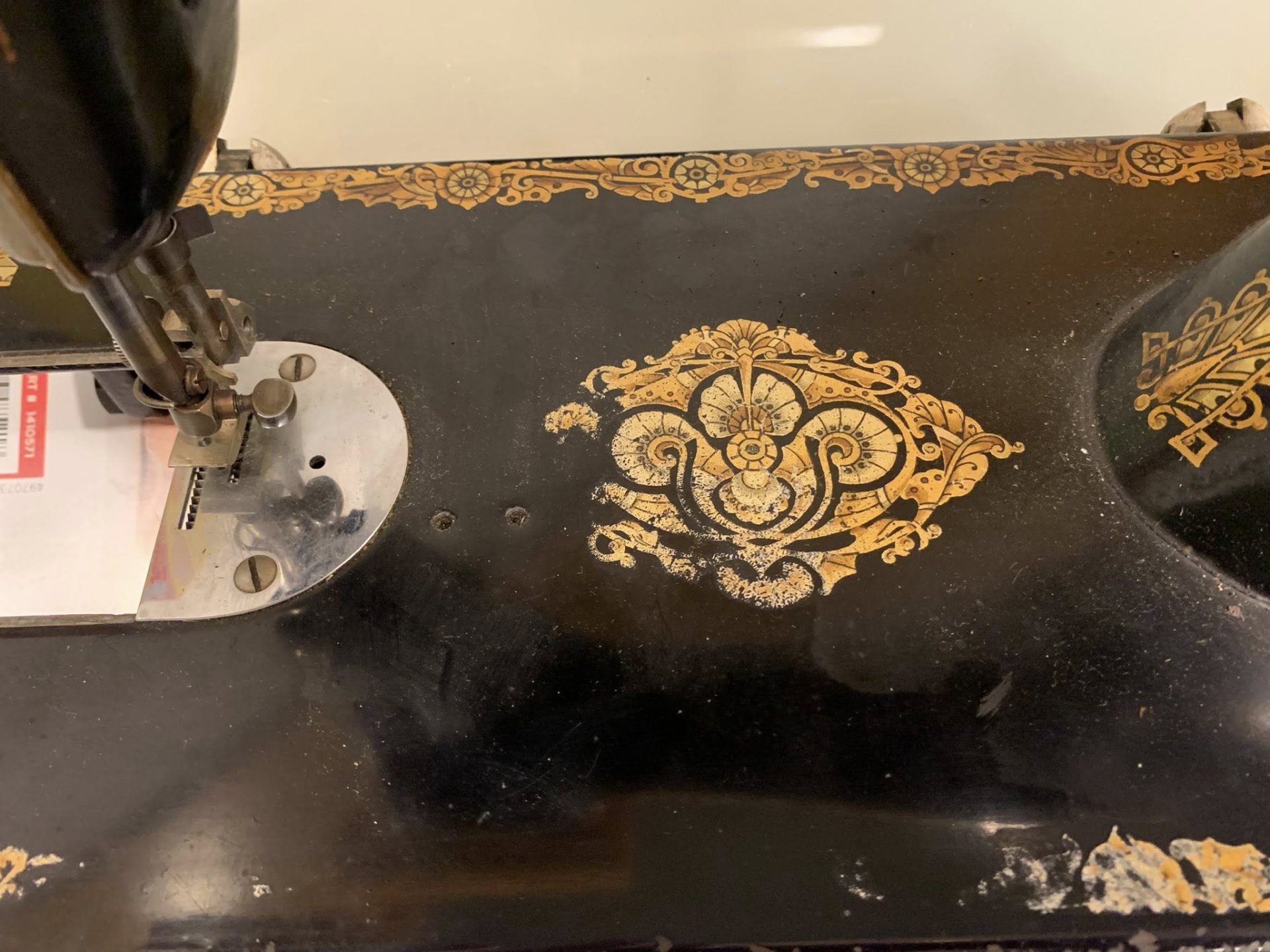
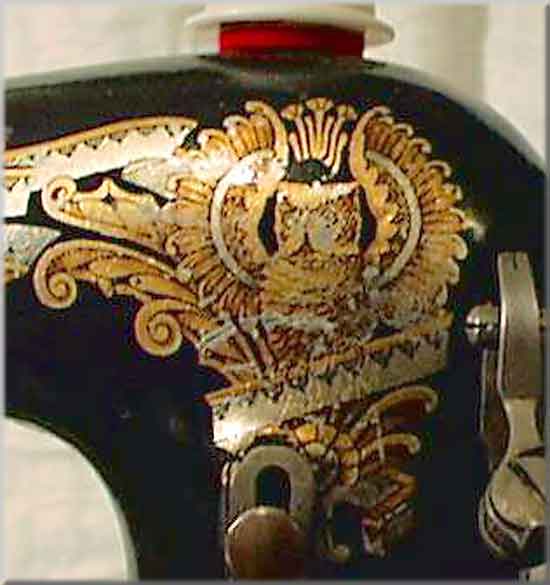
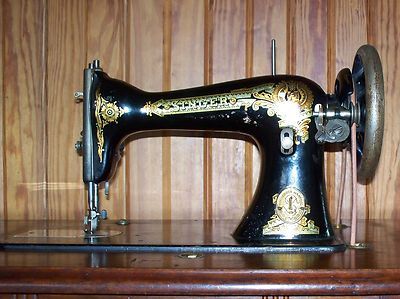
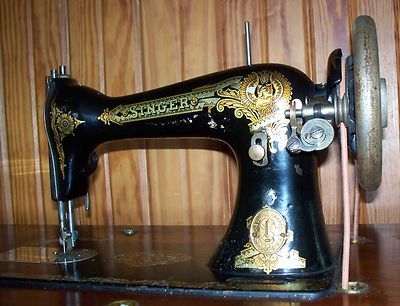
The owl that gives the name to this decal is on the right of the arm.
Documented Machines
(What does it mean?)Total n.: 8
Factories:
Documented Classes:
- 15
- 28
Documented years: 1891 - 1898
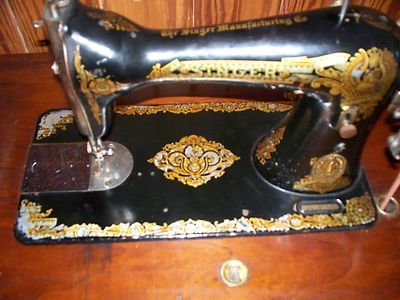
In use from 1884
In use for Classes:
- 15 (Improved Family)
Patents:
- 05/08/1884, Patent n. USD15217 "Ornamentation of a sewing machine design" by George Alfred Squire (Pdf) - Design patent for hand ornamentation, describing hand-painted or hand-gilded elements. It’s possible that following decals borrowed their design from here. The specification describes multiple ornamental groups (A–N) applied to the cloth plate, arm, post, and other surfaces of the machine. Features include branches, sprays, leaves, stems, buds, dianthus-like flowers, and lettering. Groups F and G include the word "Singer" integrated into the design.
Documented Machines
(What does it mean?)Total n.: 7
Factories:
Documented Classes:
- 15
Documented years: 1885 - 1893
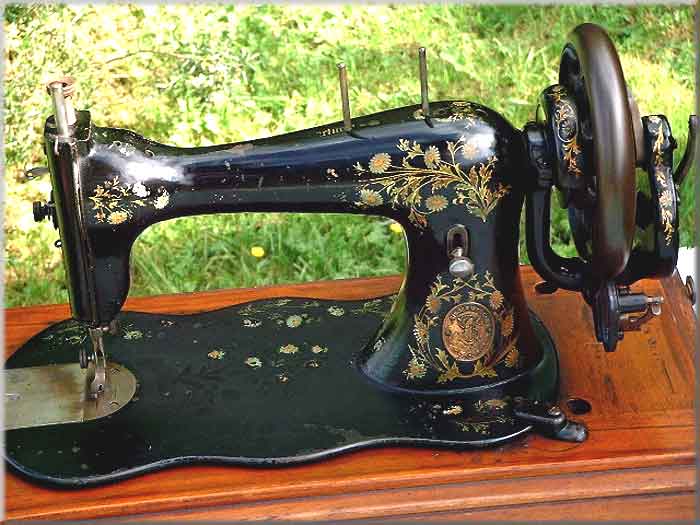
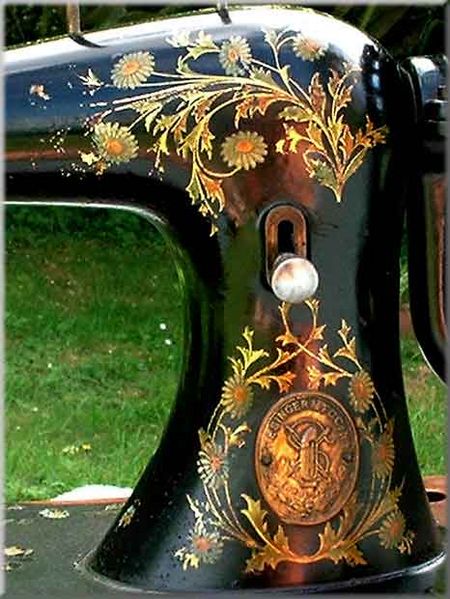
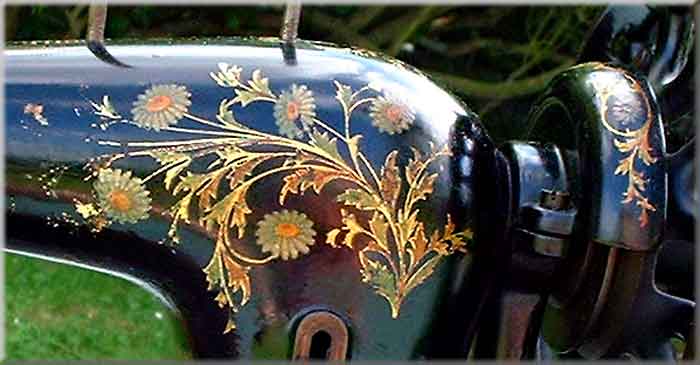
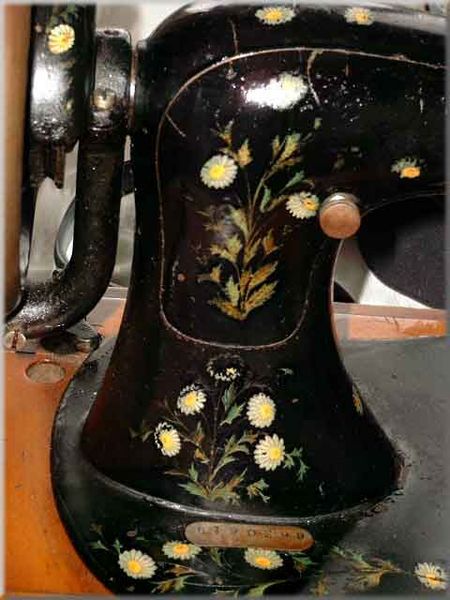
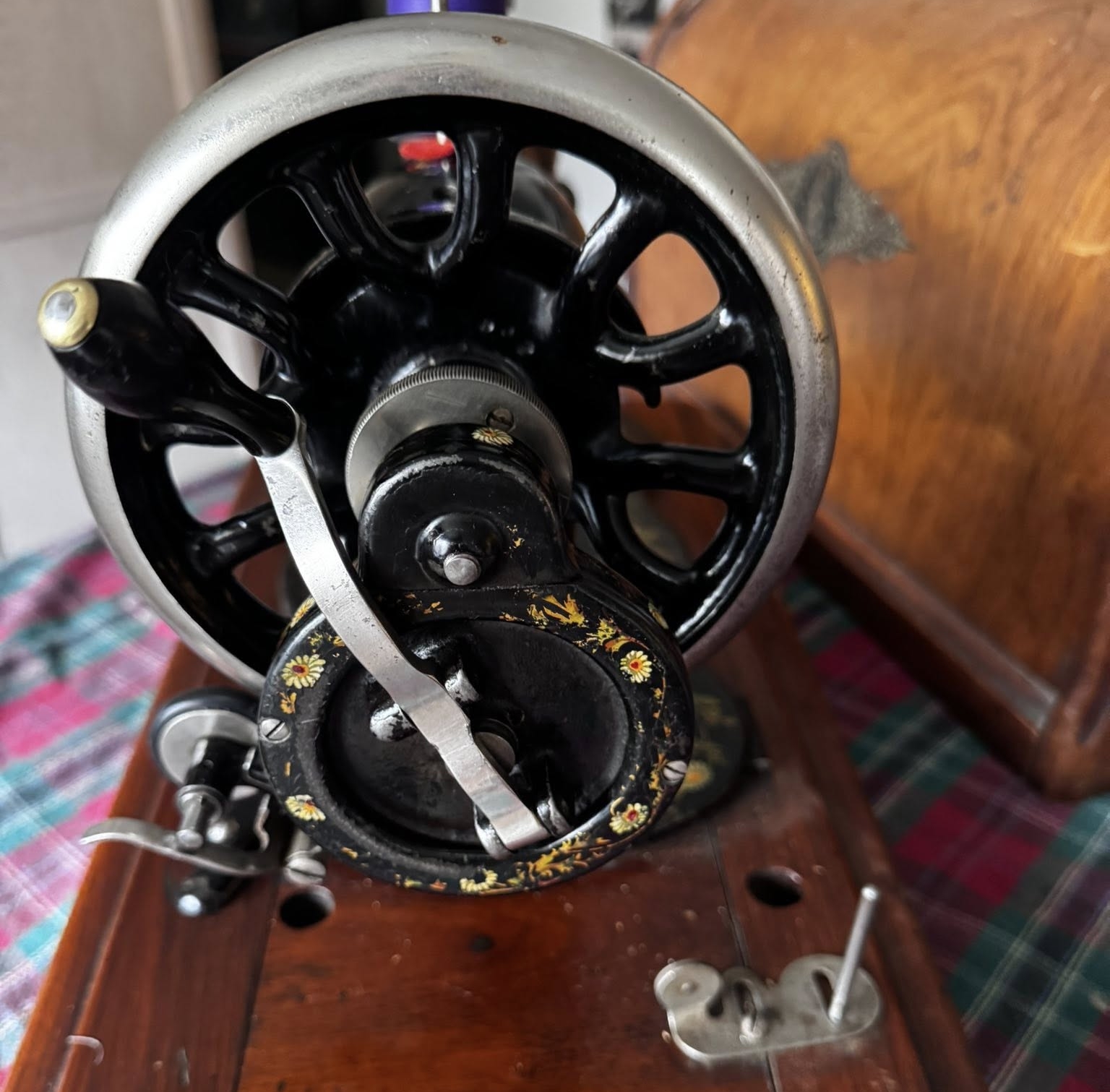
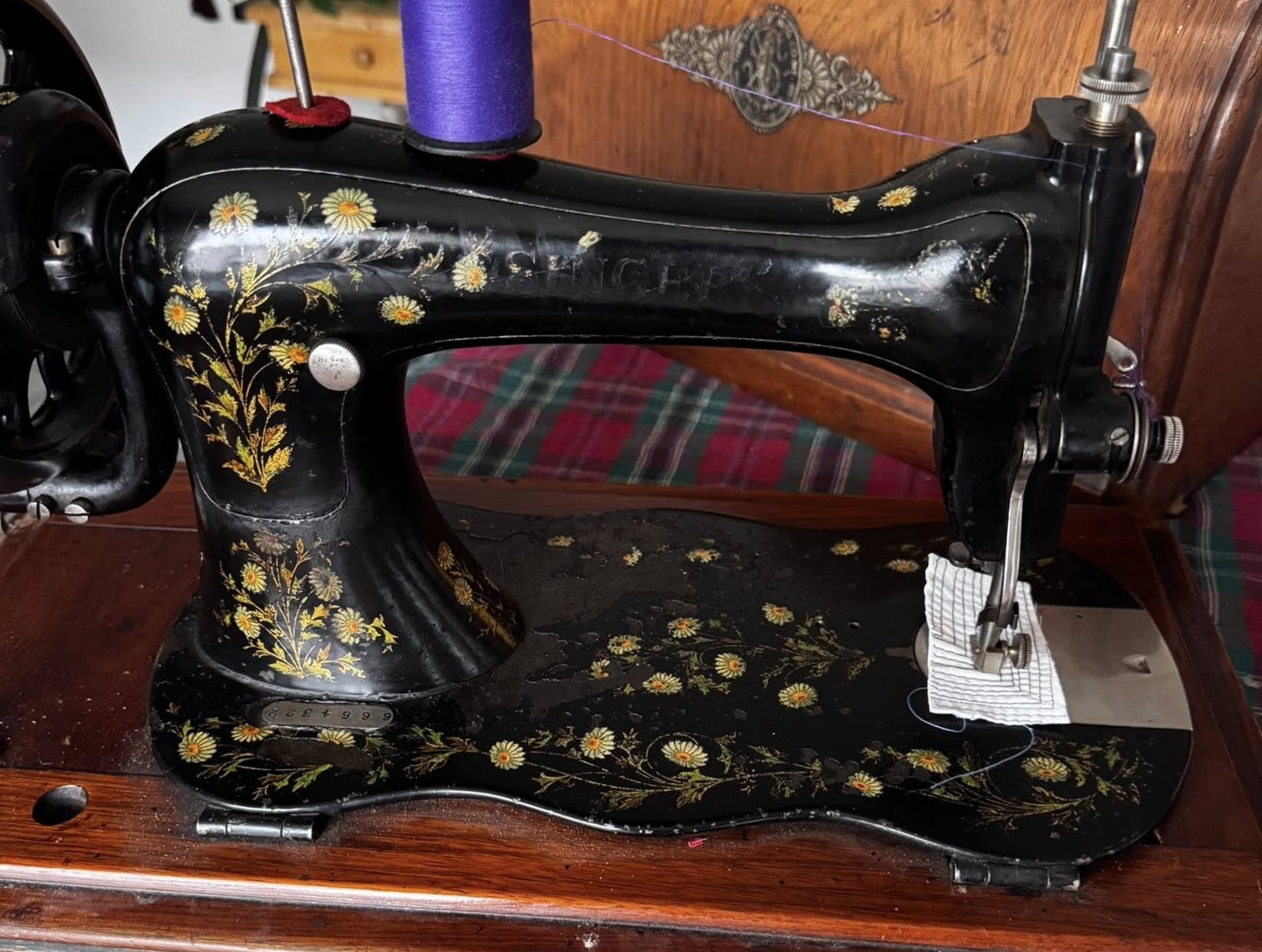
In use from 1883 up to 1894
In use for Classes:
- VS2 / 27
- VS3 / 28
- 15 (Improved Family)
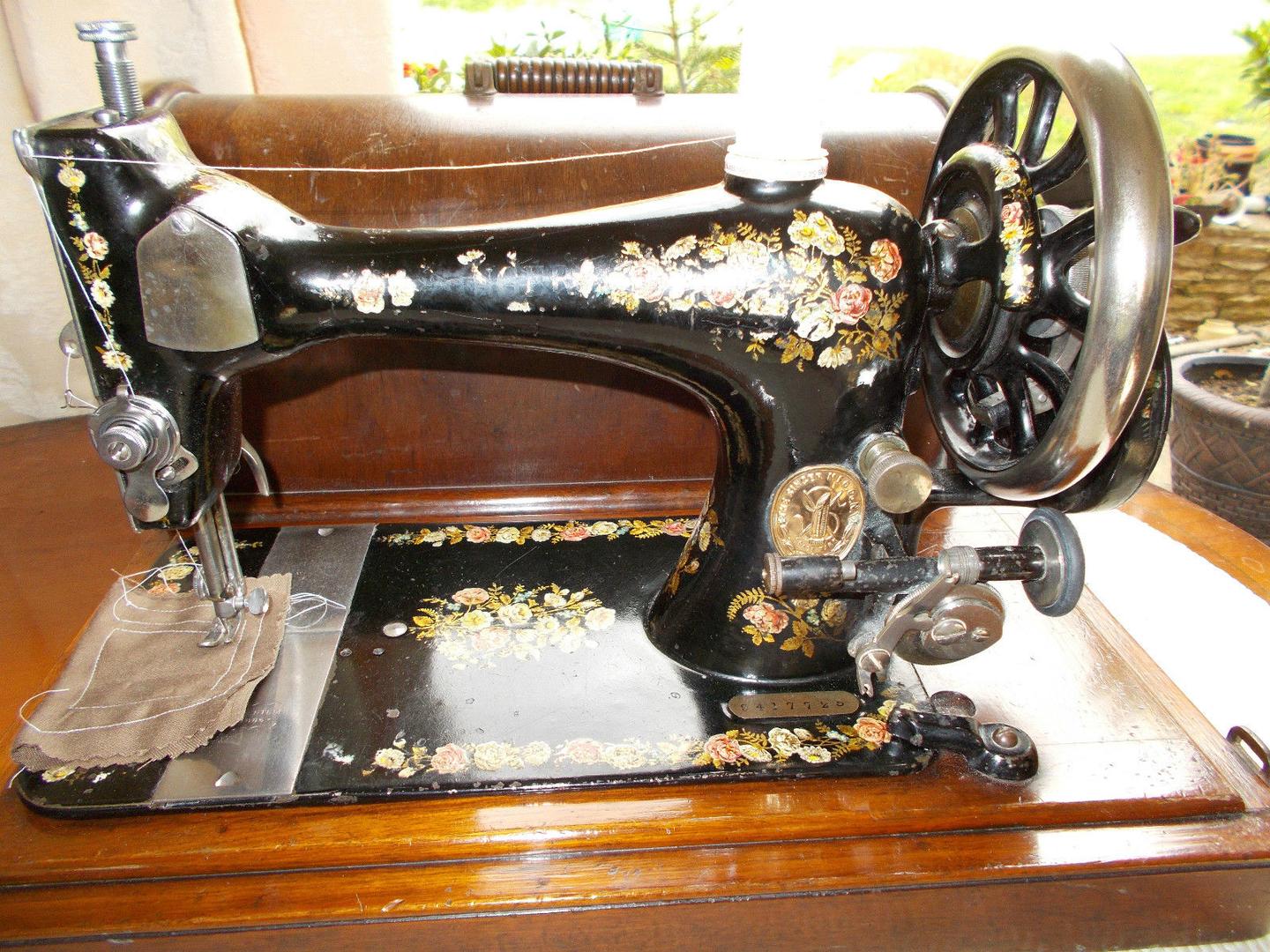
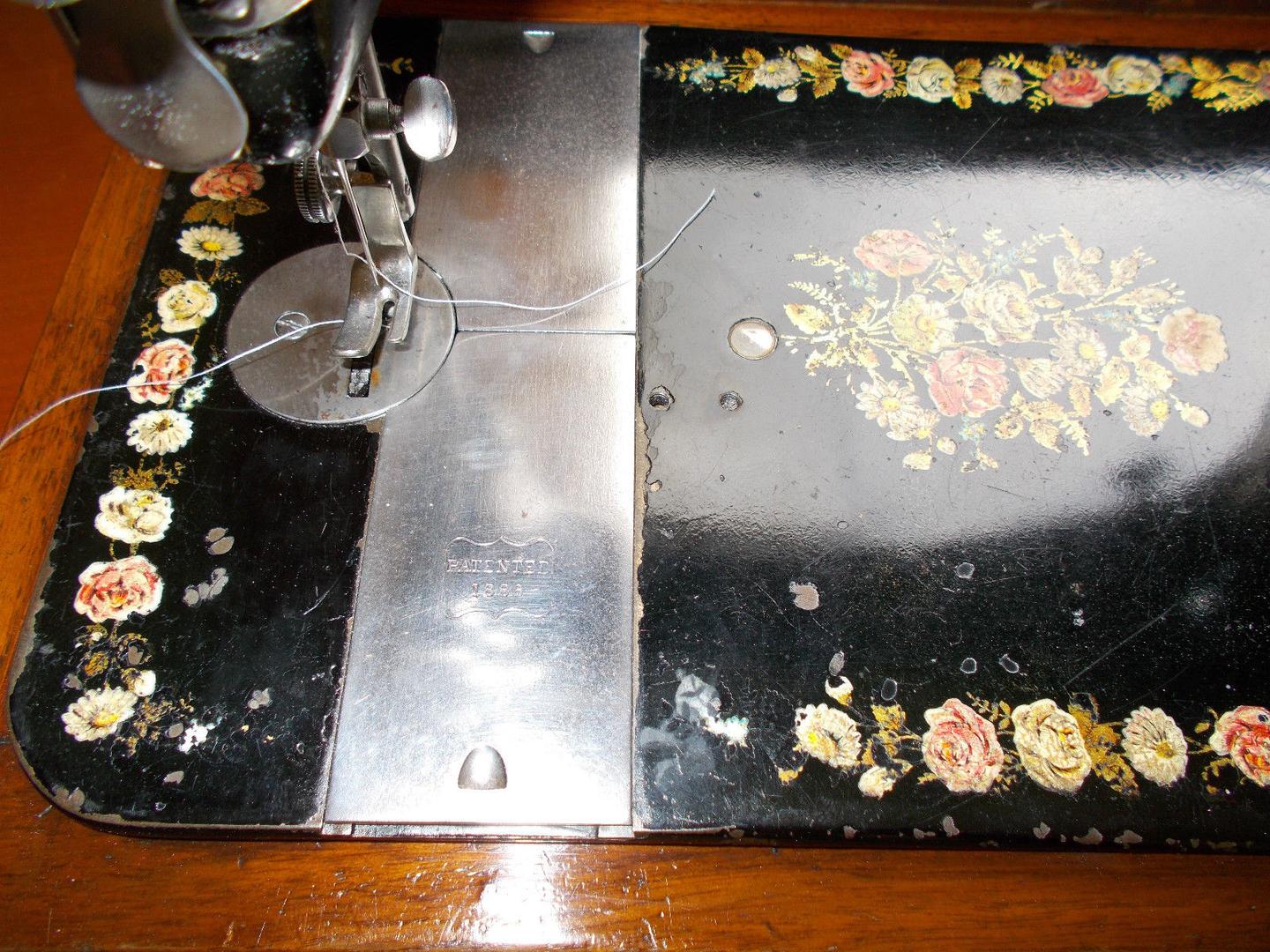
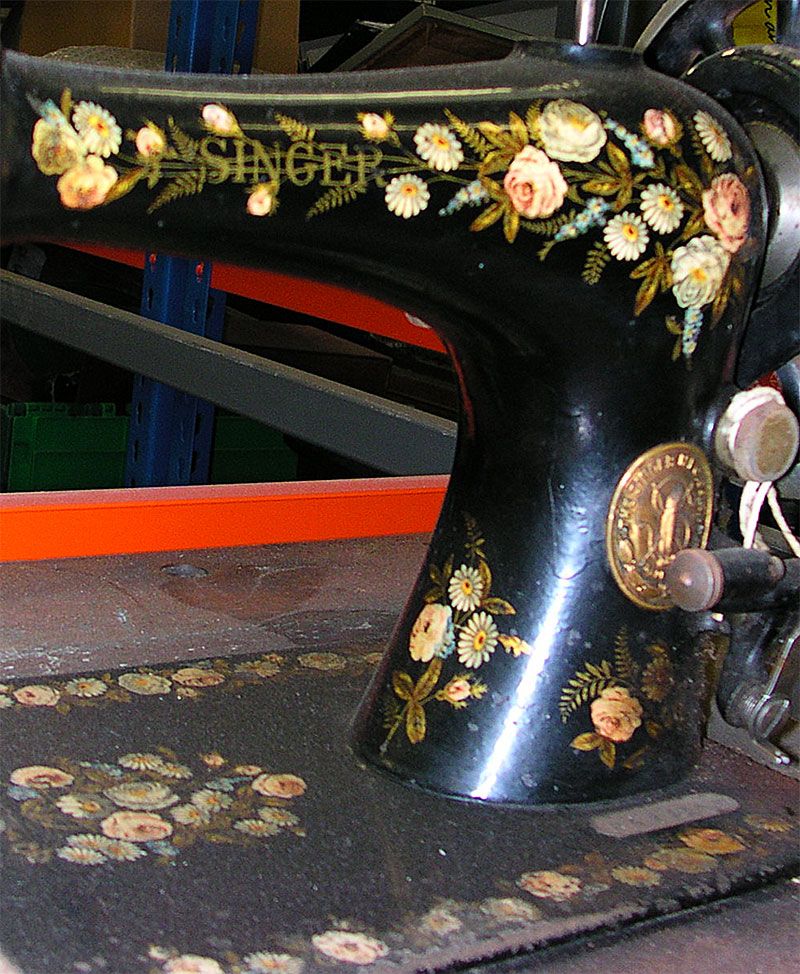
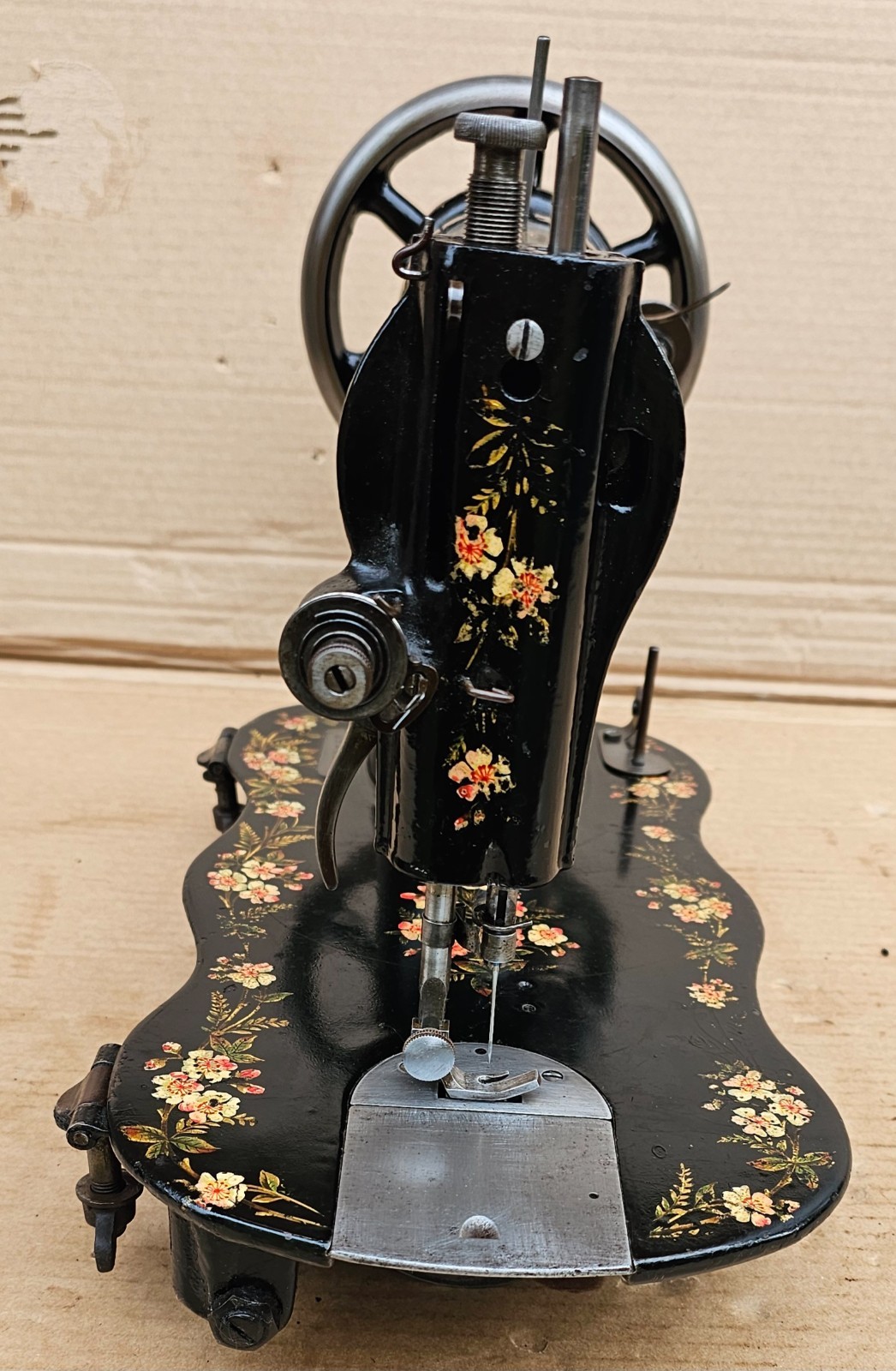
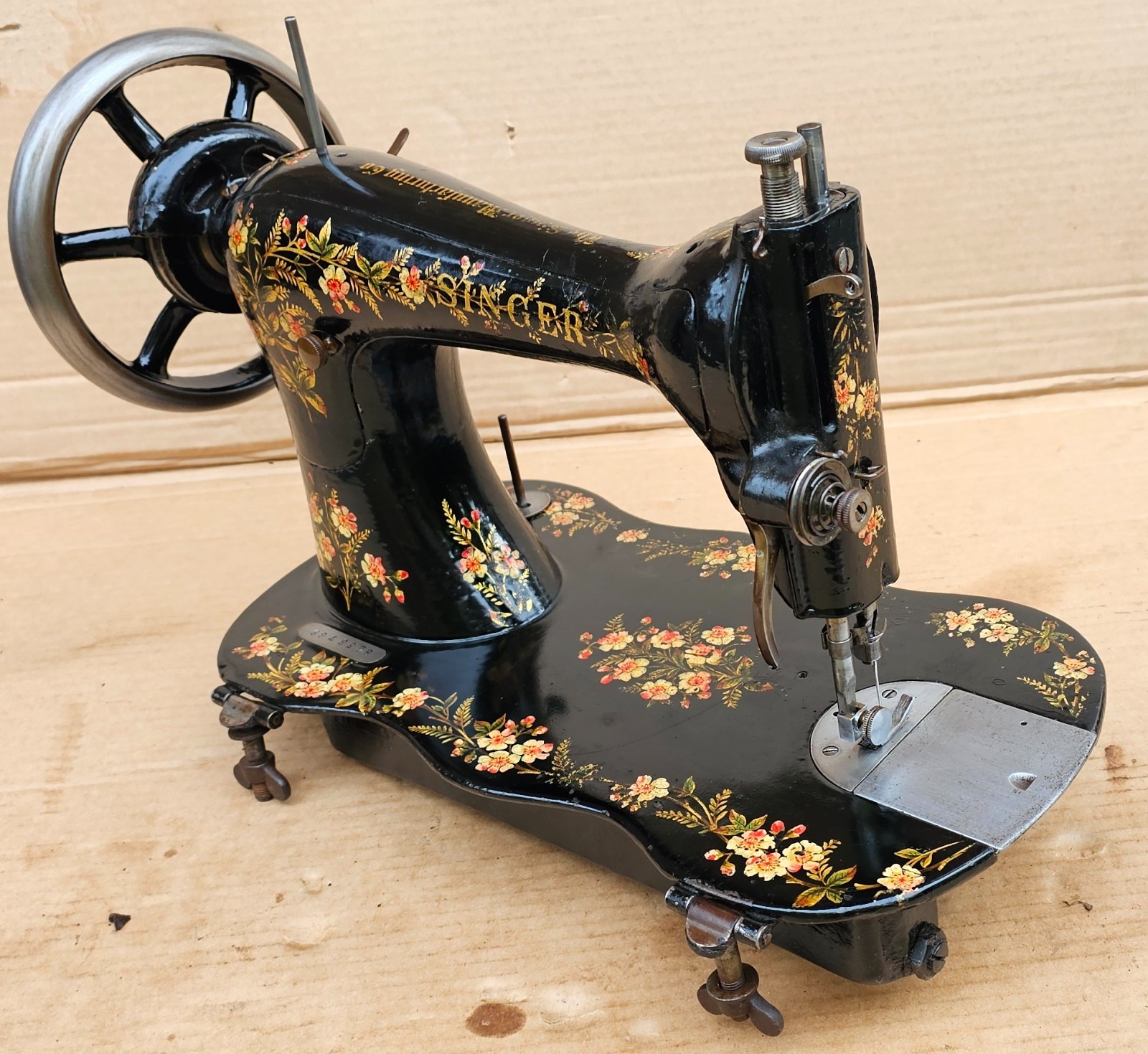
The identification of the exact flowers can be hard, and is easily inaccurate. There were several versions. Sometimes you can find this kind of decal under the name "Apple Blossom", but there's another different flower decal known as "Potentilla / Apple Blossom". This is why we chose to name this style using the more generic denomination. First photo by Selby Sewing Machines
Documented Machines
(What does it mean?)Total n.: 19
Factories:
Documented Classes:
- 15
- 27
- 28
Documented years: 1886 - 1894
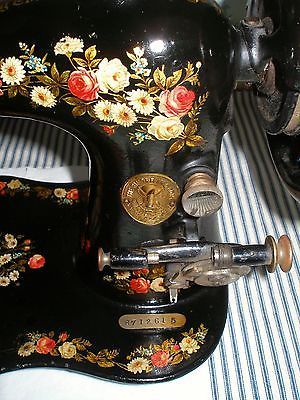
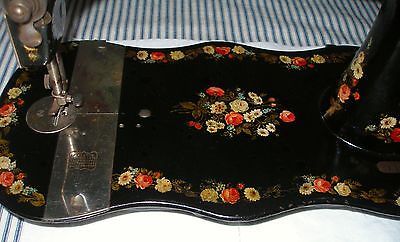
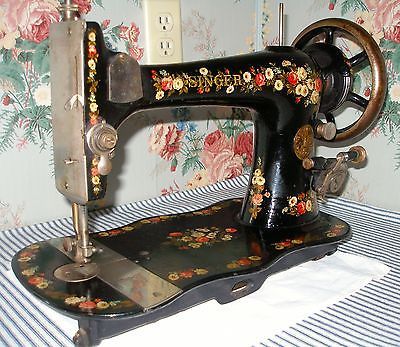
In use from 1886 up to 1906
In use for Classes:
- Improved Family (15)
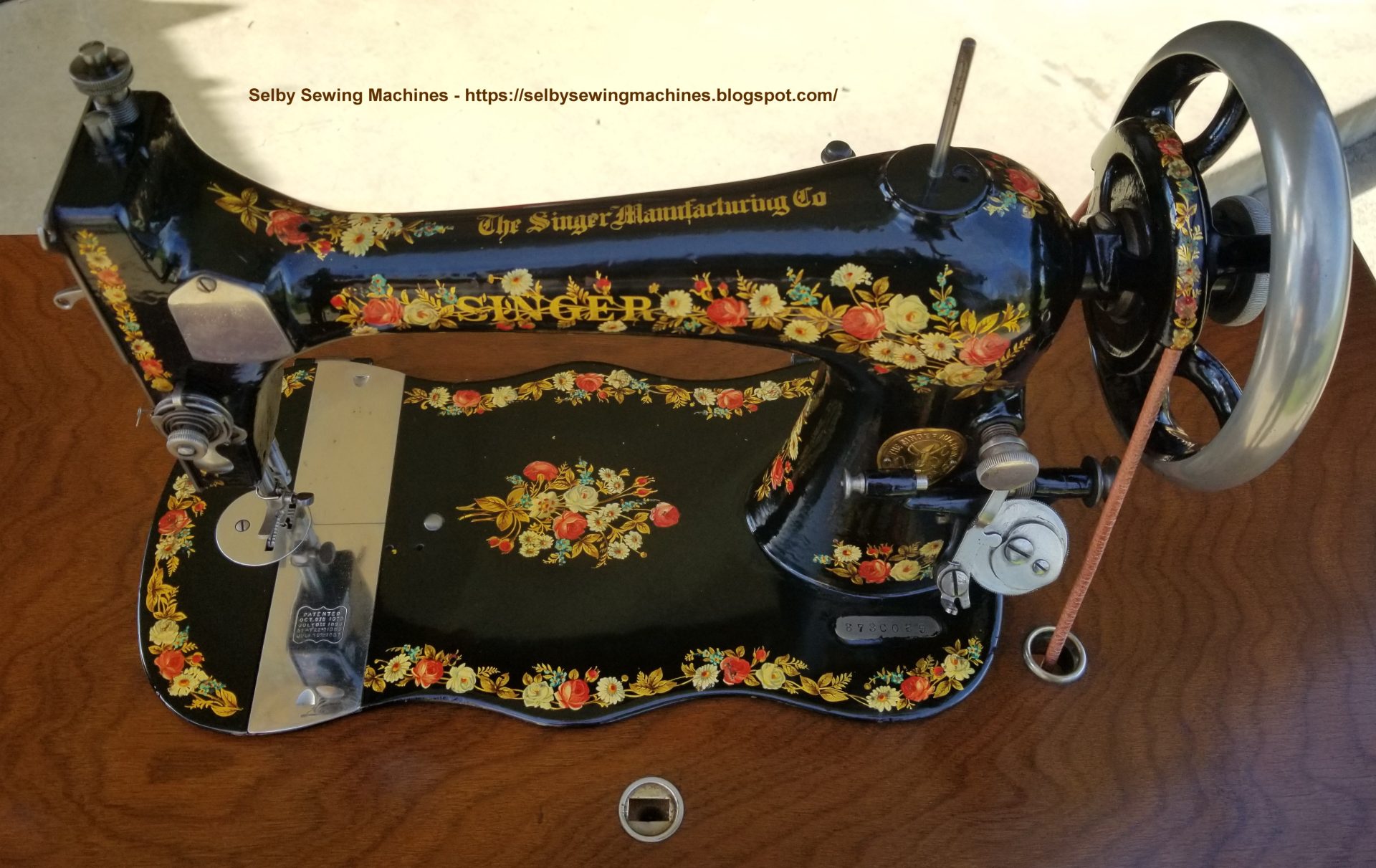
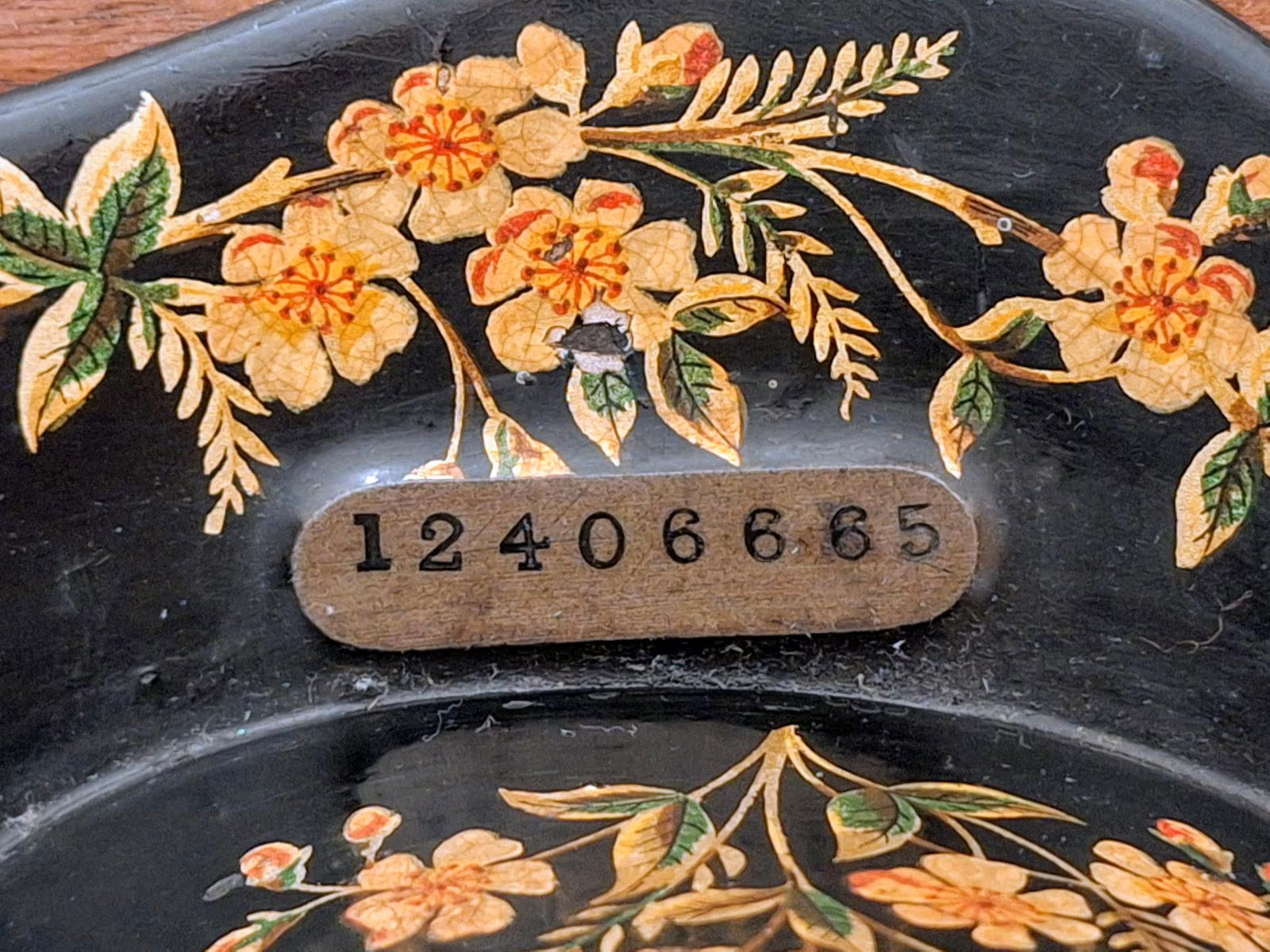
A variant of many decals with flowers. The identification of the exact flowers can be hard, and is easily inaccurate. There were several versions. The denomination "Potentilla / Apple Blossom" can be mistaken for another decal, known as "Apple Blossom". To try and avoid confusion, we named the second one "Painted Roses and Daisies (Flowers)".
Documented Machines
(What does it mean?)Total n.: 9
Factories:
Documented Classes:
- 15
Documented years: 1886 - 1906
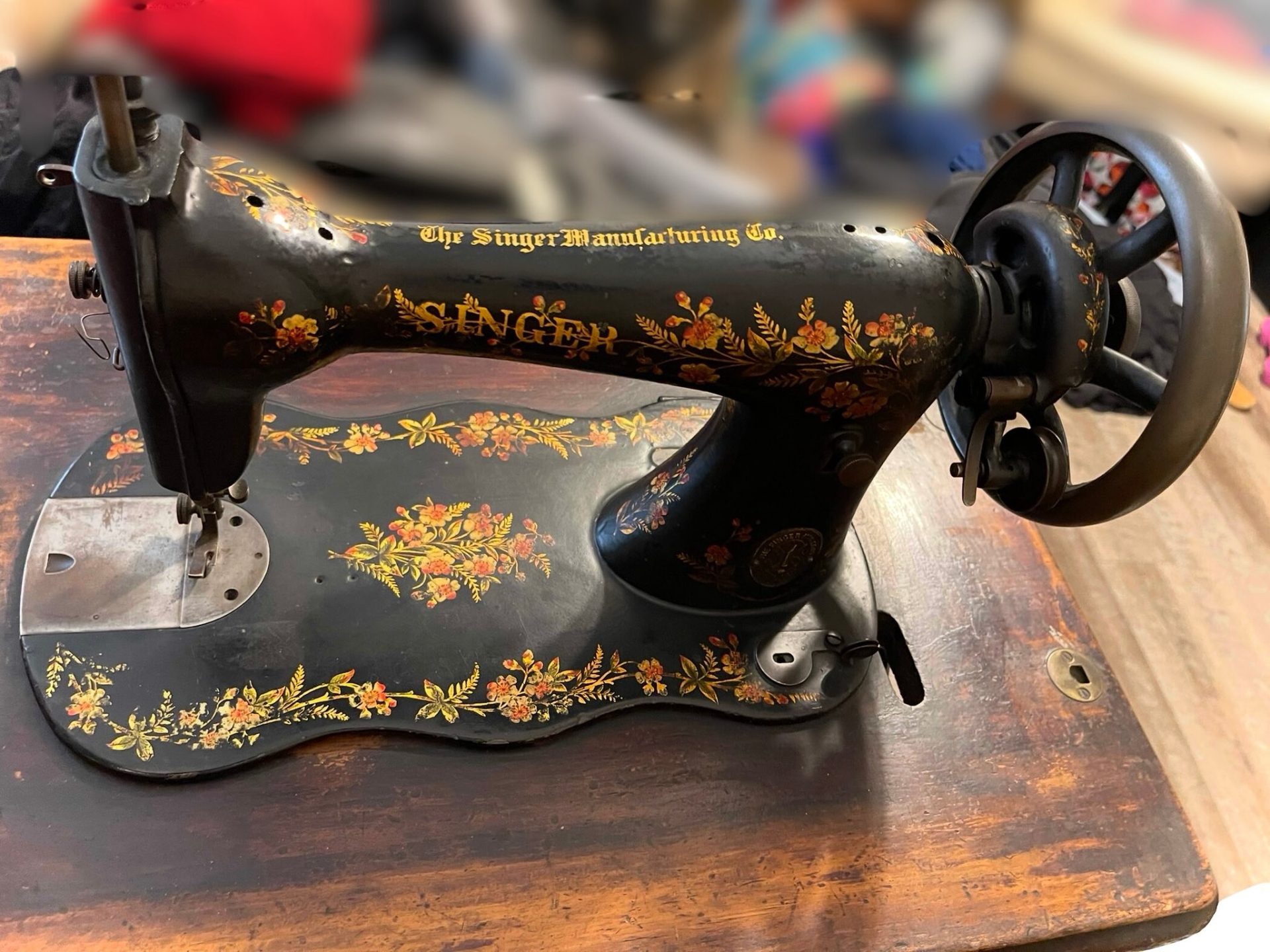
Official Singer name: 497
In use from 1934 up to 1956
In use for Classes:
- 201
- 301
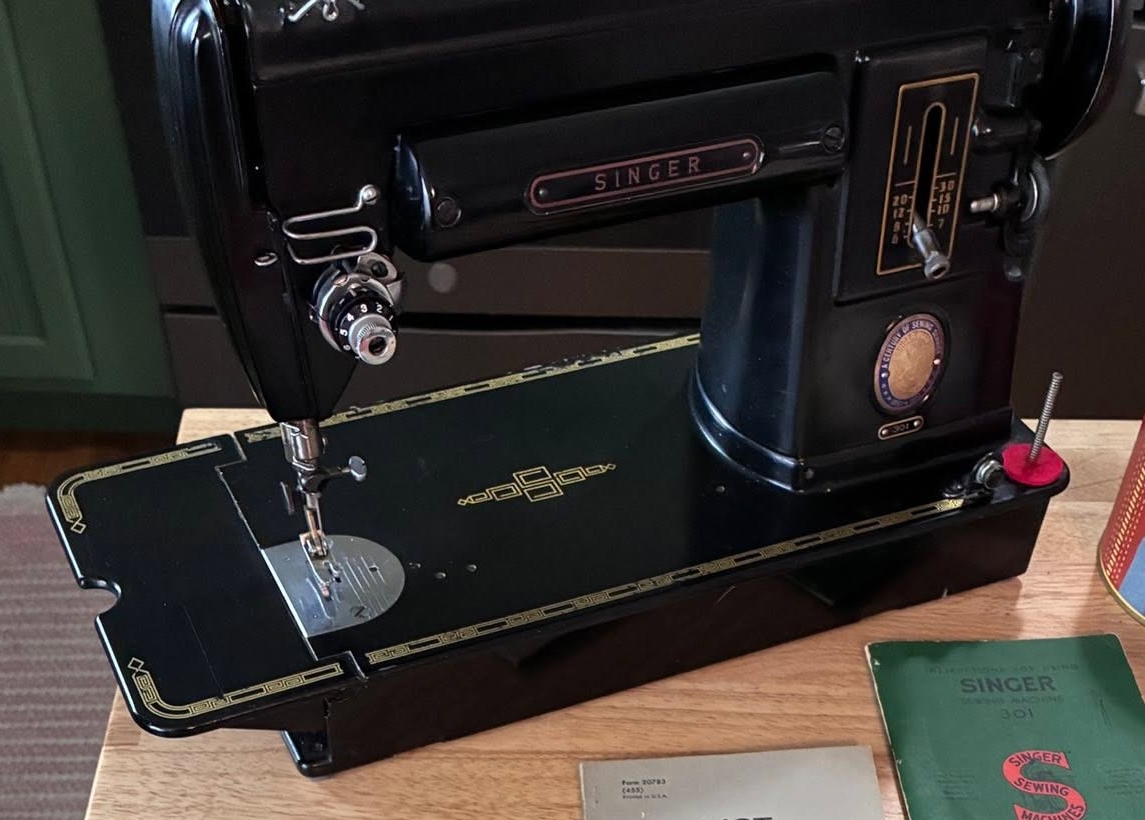
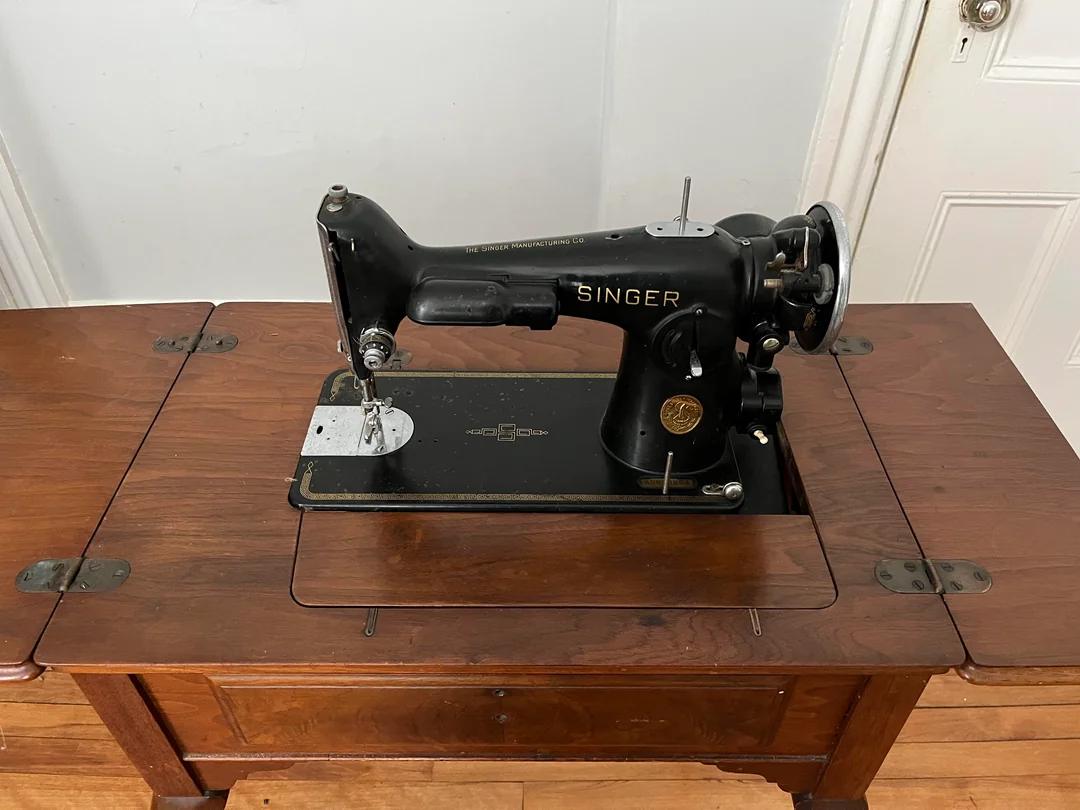
This decal set was also commonly used on refurbished machines of any model, even applied to models that were out of production before the decals were even designed. The bed edge transfers were cut to length to fit variously sized beds.
Documented Machines
(What does it mean?)Total n.: 29
Factories:
- Anderson, South Carolina (USA)
- Elizabethport, New Jersey (USA)
- Kilbowie, Clydebank (Scotland, UK)
- Wittenberge, Prussia (Germany)
Documented Classes:
- 201
- 301
Documented years: 1936 - 1956

In use from 1940 up to 1953
In use for Classes:
- 66
- 99
- 128
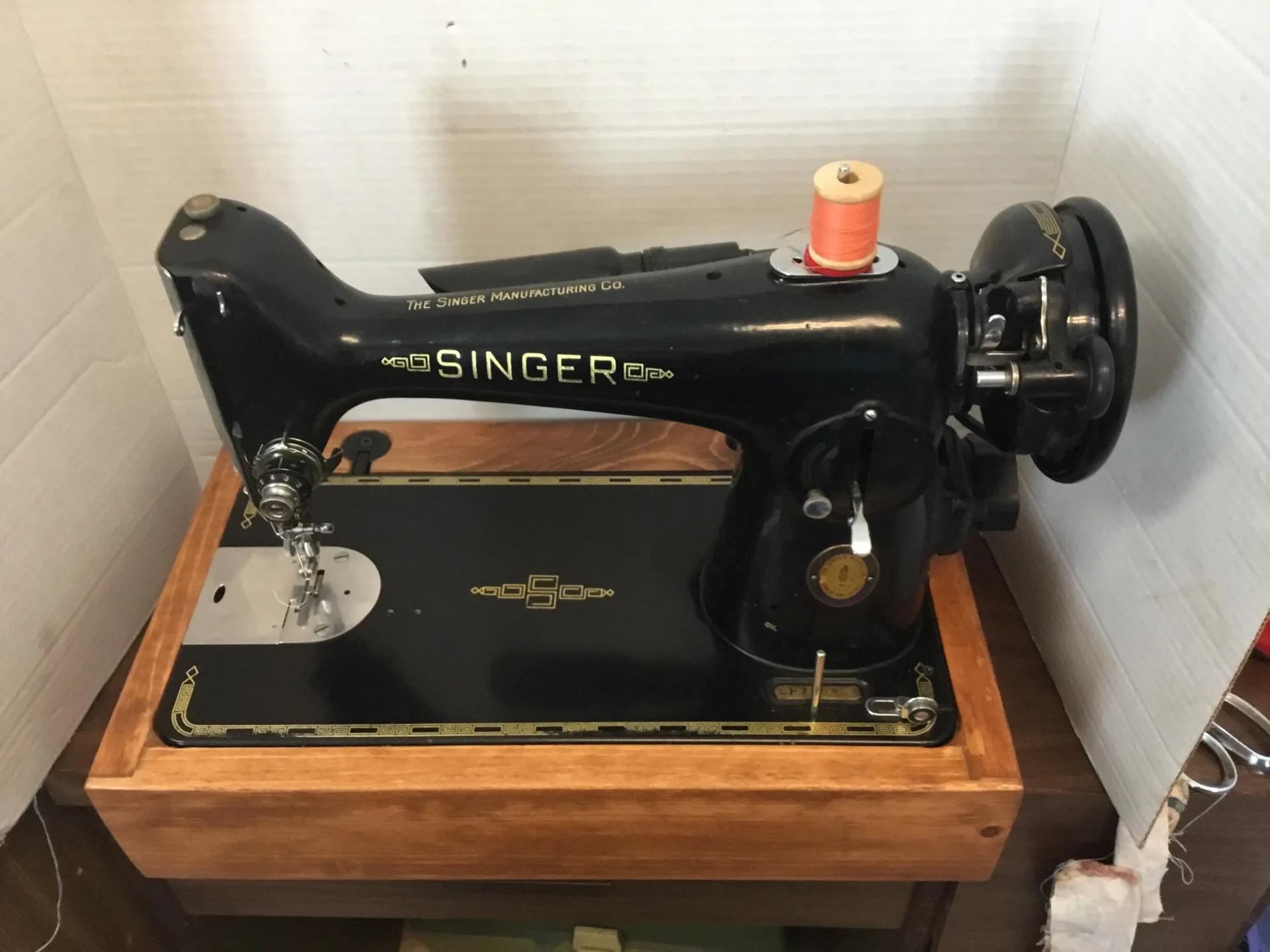
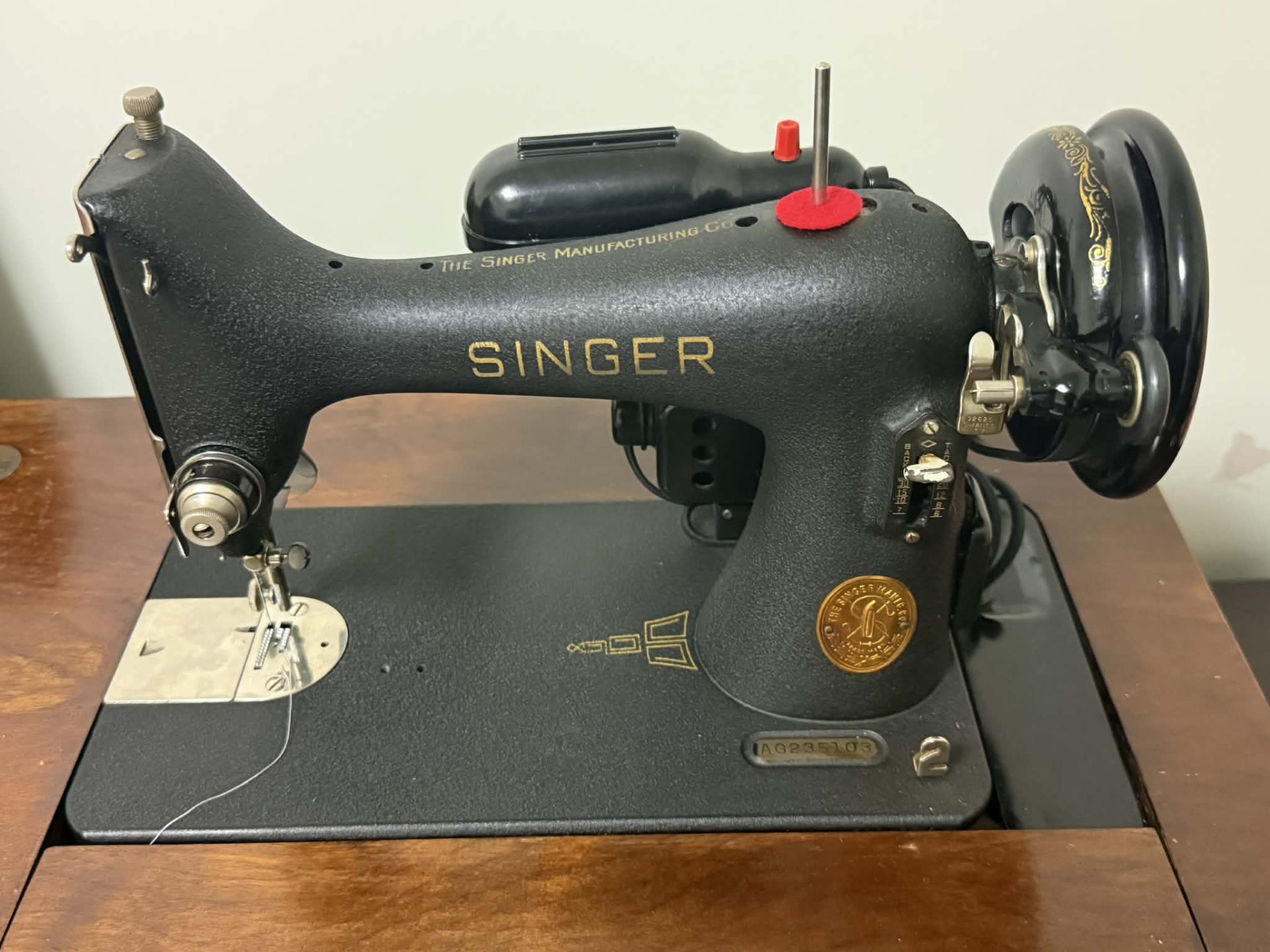
The Paperclip decal set was also applied to models with the so-called "Godzilla finish", also known as "crinkle" or "wrinkle" finish. In those cases, the decoration is applied only in the middle of the bed and on the front of the machine, around Singer logos, no borders around the bed. Because of the nature of the crinkle paint, the decals are usually fainter than the more common bright golden decals.
Documented Machines
(What does it mean?)Total n.: 13
Factories:
Documented Classes:
- 66
- 99
- 128
Documented years: 1940 - 1952

In use from 1932 up to 1934
In use for Classes:
- 201
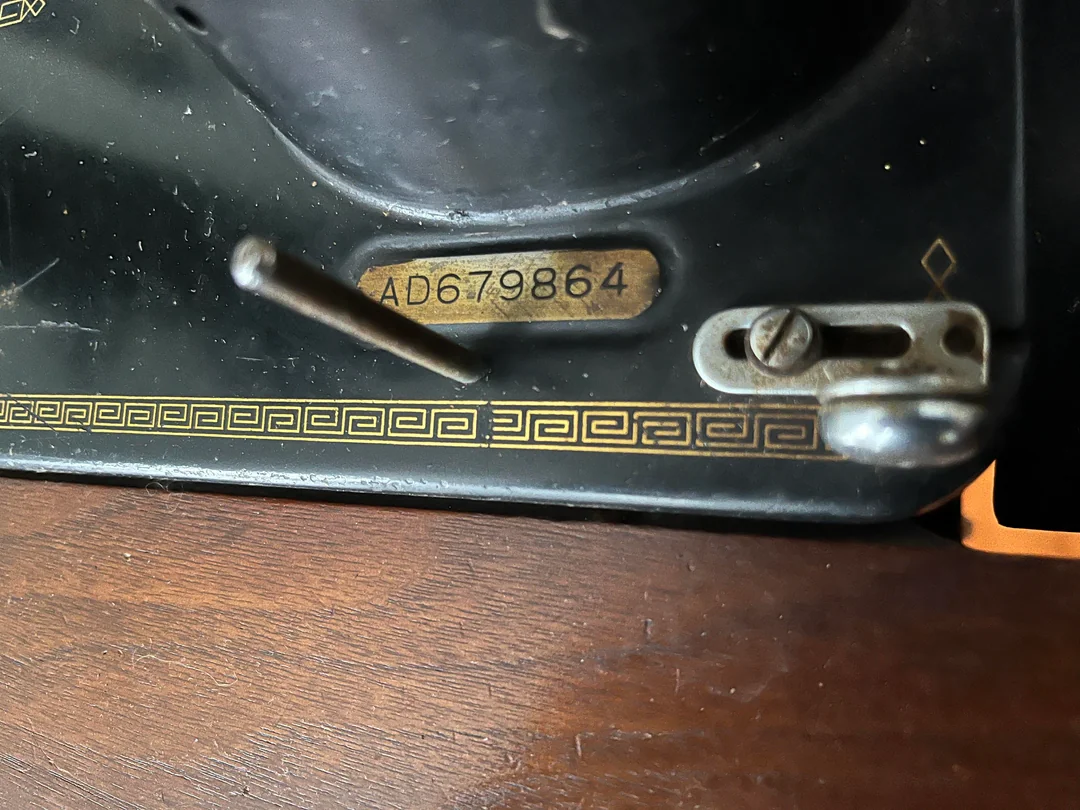
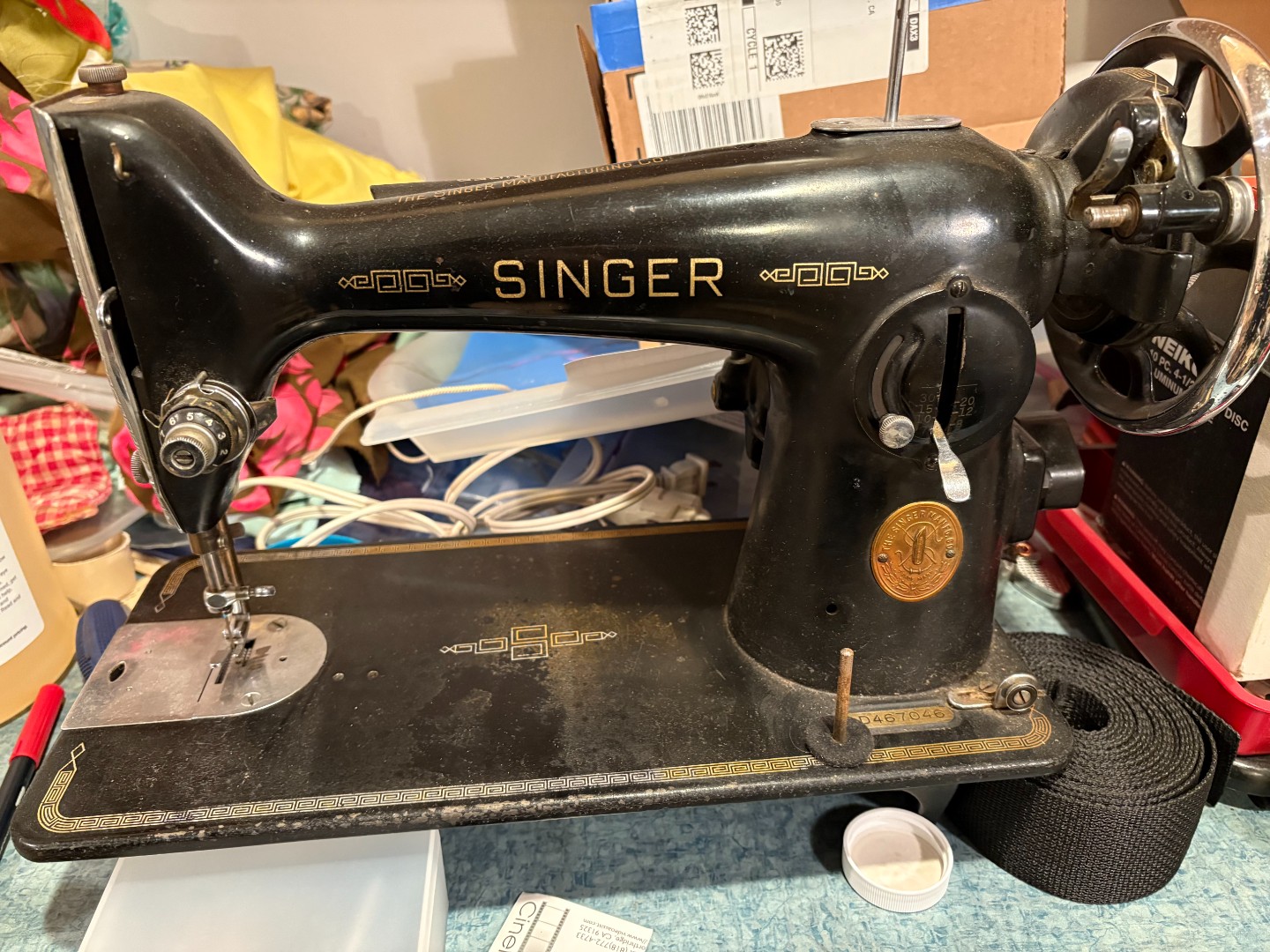
This design shows a border with a classical geometric pattern, featuring repeating Greek meanders at right-angle turns. This border forms a continuous, interlocking band, while the more common Paperclip decals feature instead smooth, elongated S-curves separated from each other. Seeing the patent from 1932, this might be the original first version of the Paperclip decals
Patents:
- 13/12/1932, Patent n. USD88671 "Design for a decalcomania transfer sheet" by Cornelius R. Powers and Lillian M. Koubek (Pdf) - The design features the Paperclip decals, but with a Greek meander border that's proper of a style that's less common on machines. The most commonly seen Paperclip border features a series of smooth, elongated S-curves, while in the patent is featured a continuous meander pattern.
Documented Machines
(What does it mean?)Total n.: 2
Factories:
Documented Classes:
- 201
Documented years: 1932 - 1934
In use from 1939 up to 1942
In use for Classes:
- 201
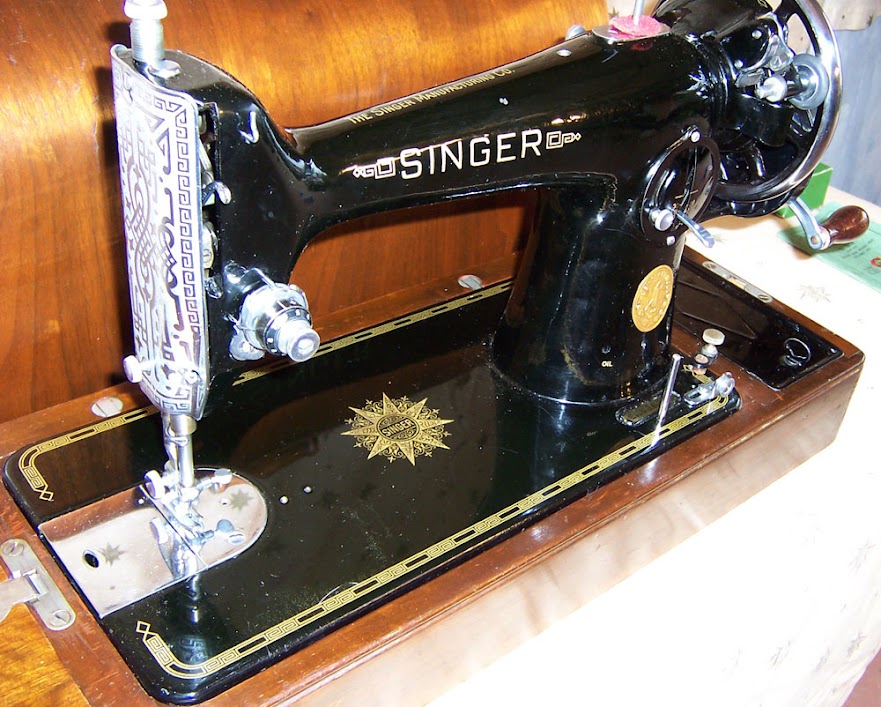
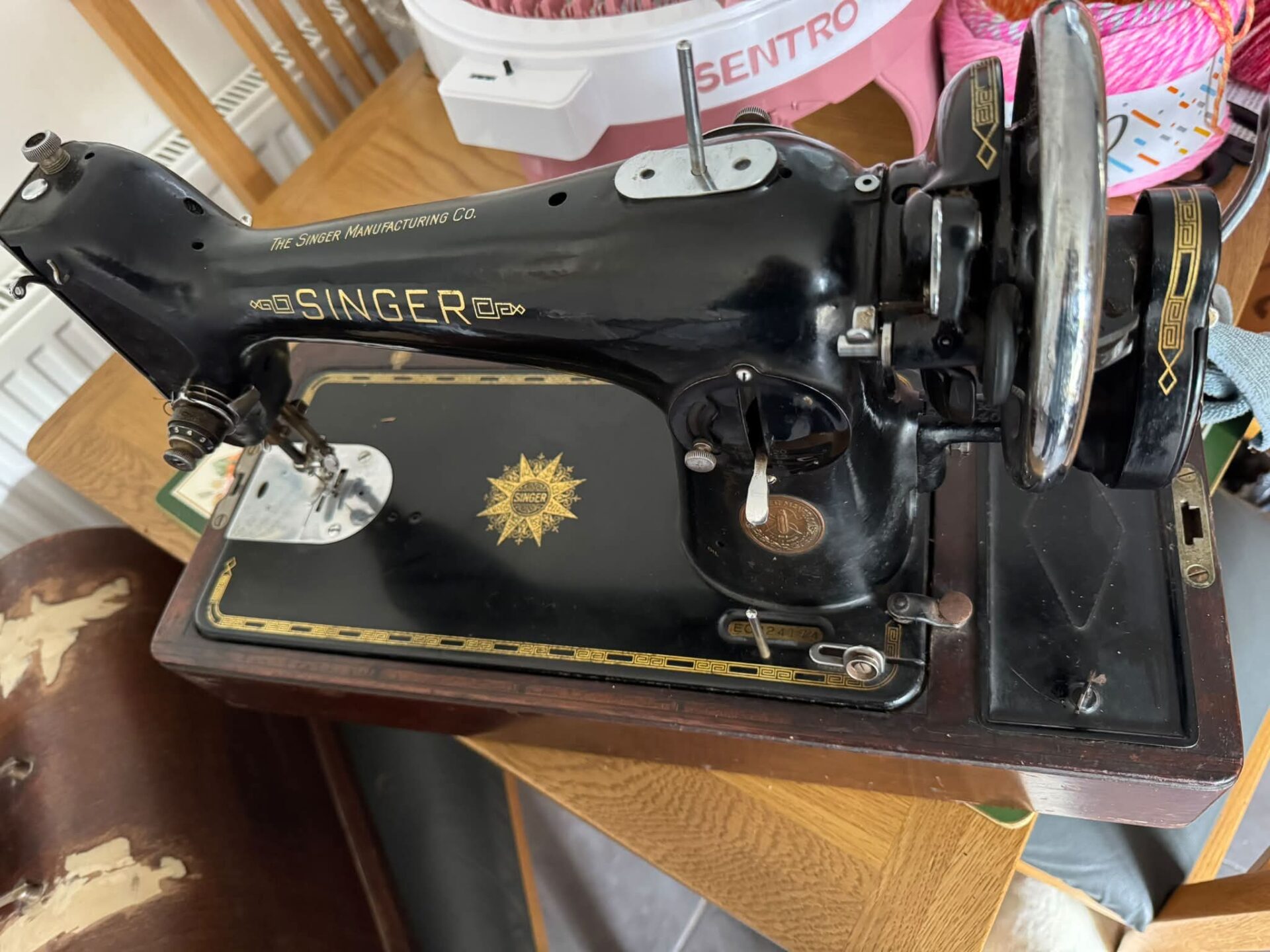
The Indian Star decal was an attempt to stimulate the emerging Indian market at the beginning of the 20th century. Entering this market was not easy, though. The main difficulties were overcoming caste prejudice, language differences and limited access to women. The Indian Star machines say 'Singer' in different languages on each point of the star: Onya, Singhalese, Gujarati, Kannada, Hindi, Telugu, Malayalam (or Tamil), Urdu. The Indian Star appears as a variant in several decals, on different models.
Documented Machines
(What does it mean?)Total n.: 1
Factories:
Documented Classes:
- 201
Documented years: 1939
In use from 1893 up to 1903
In use for Classes:
- 27
Documented Machines
(What does it mean?)Total n.: 27
Factories:
- Elizabethport, New Jersey (USA)
- Montreal (Canada)
Documented Classes:
- 27
Documented years: 1893 - 1901
In use from 1891 up to 1910
In use for Classes:
- 15
- 27
- 127
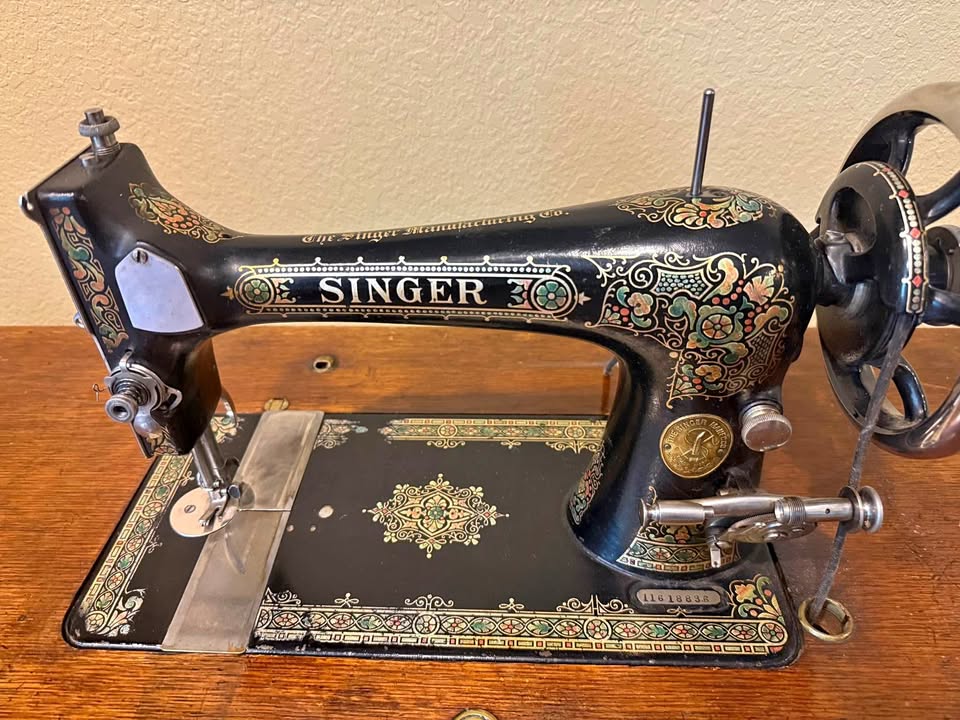
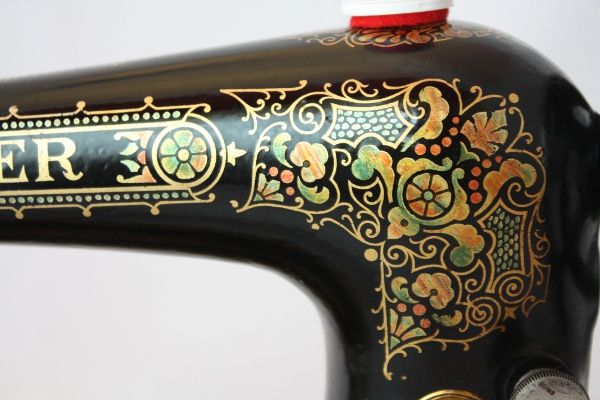
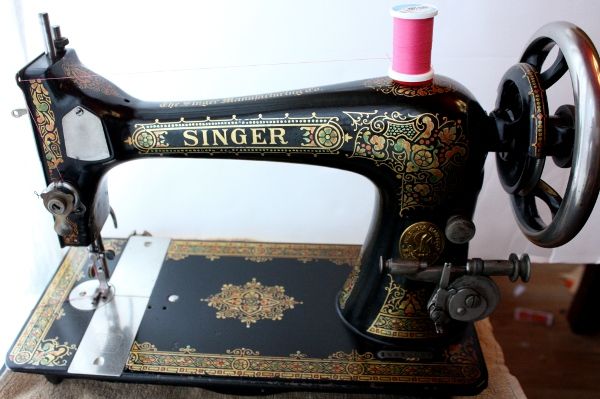
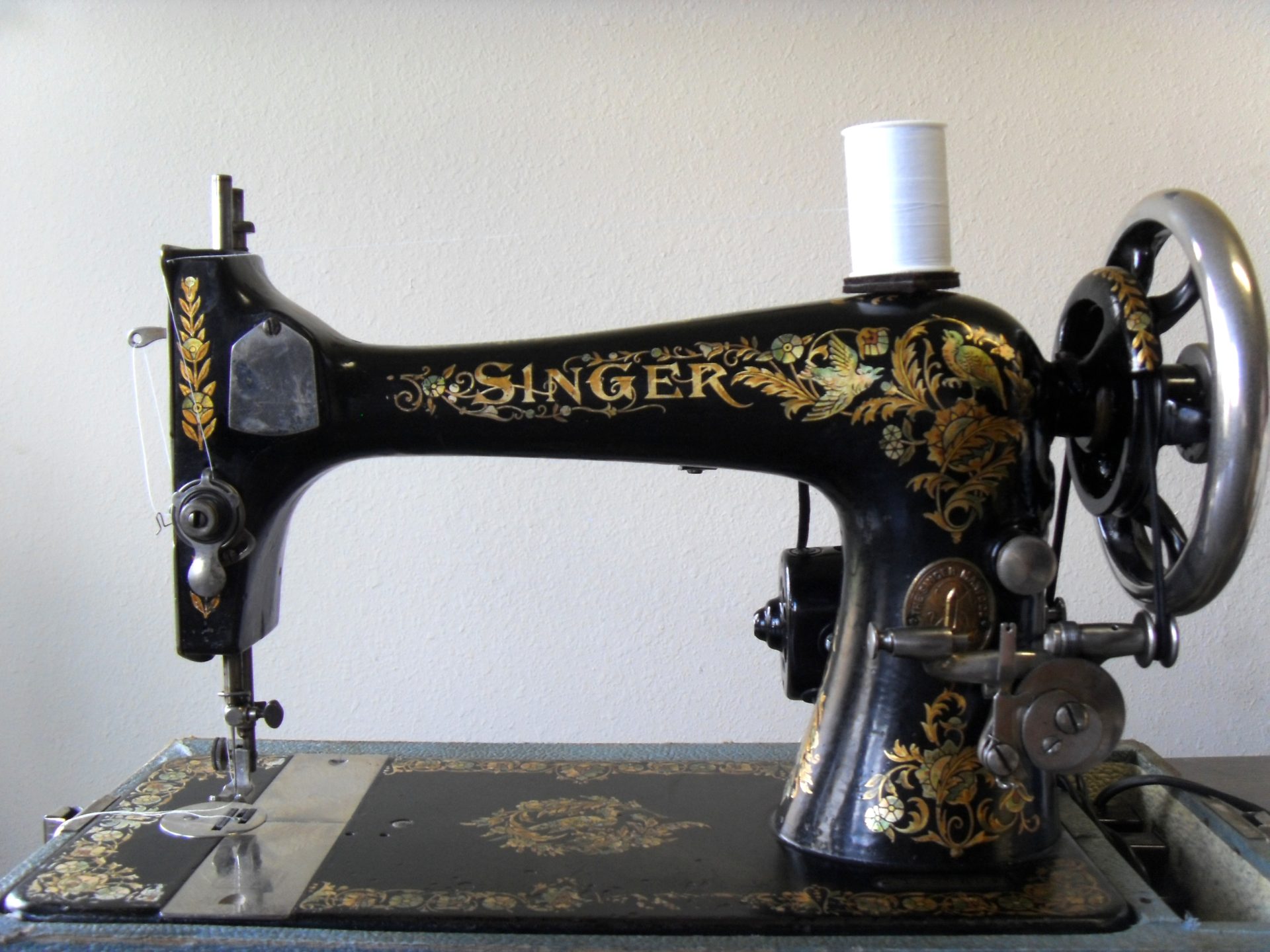
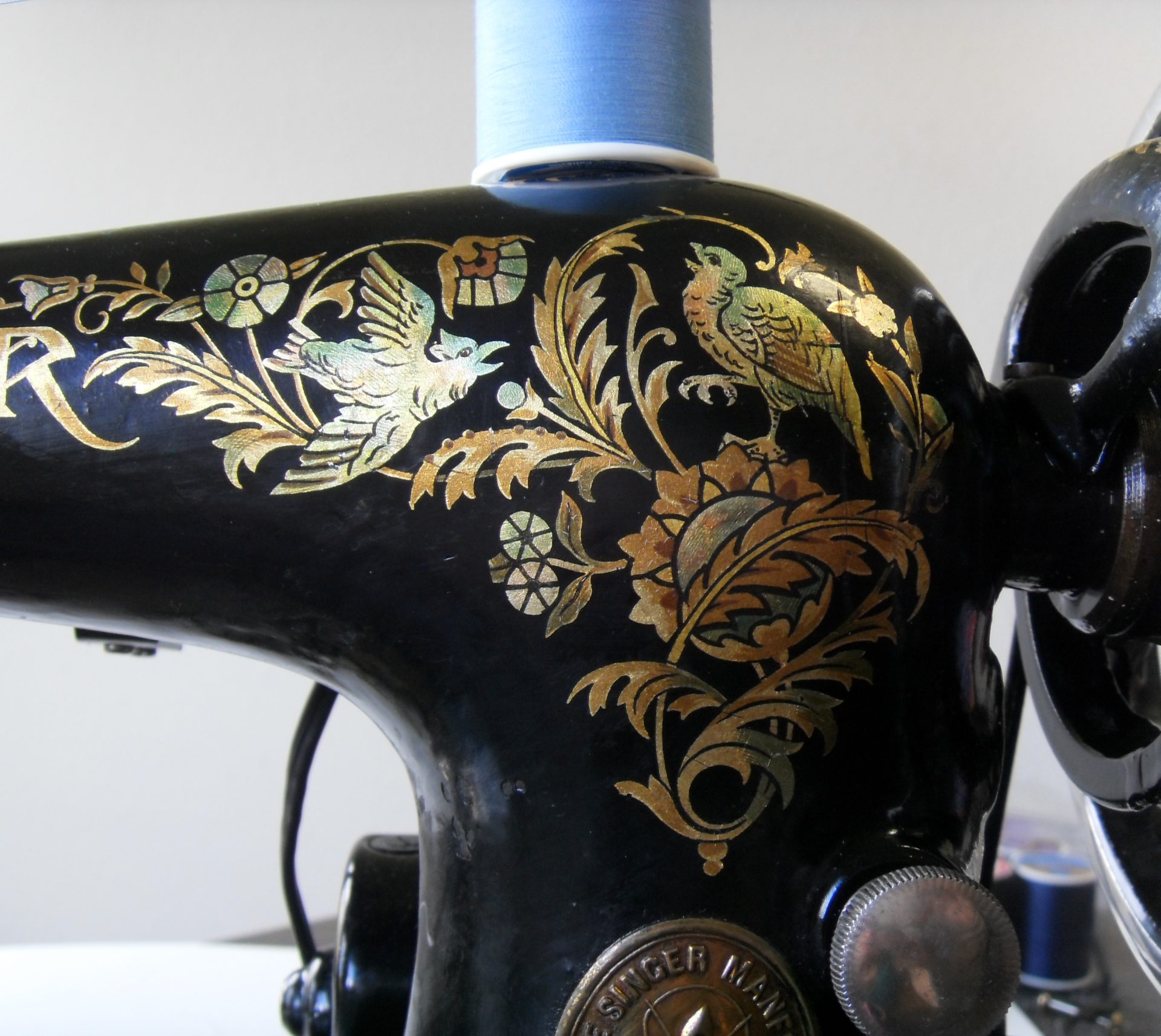
The name of the decal comes from the images of a pheasant bird: one is featured in the middle of the bed, another on the main body of the machine.
Documented Machines
(What does it mean?)Total n.: 61
Factories:
- Elizabethport, New Jersey (USA)
- Kilbowie, Clydebank (Scotland, UK)
- Montreal (Canada)
Documented Classes:
- 15
- 27
Documented years: 1893 - 1910
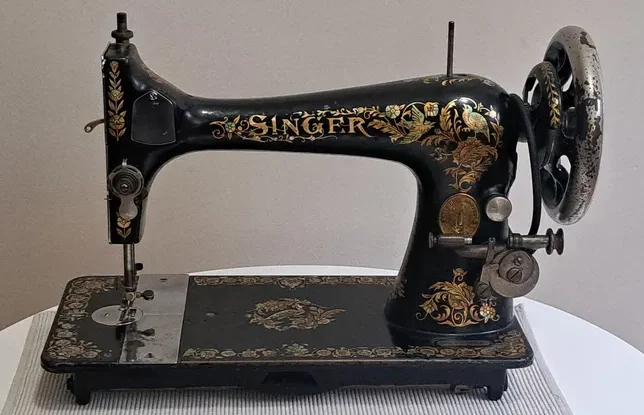
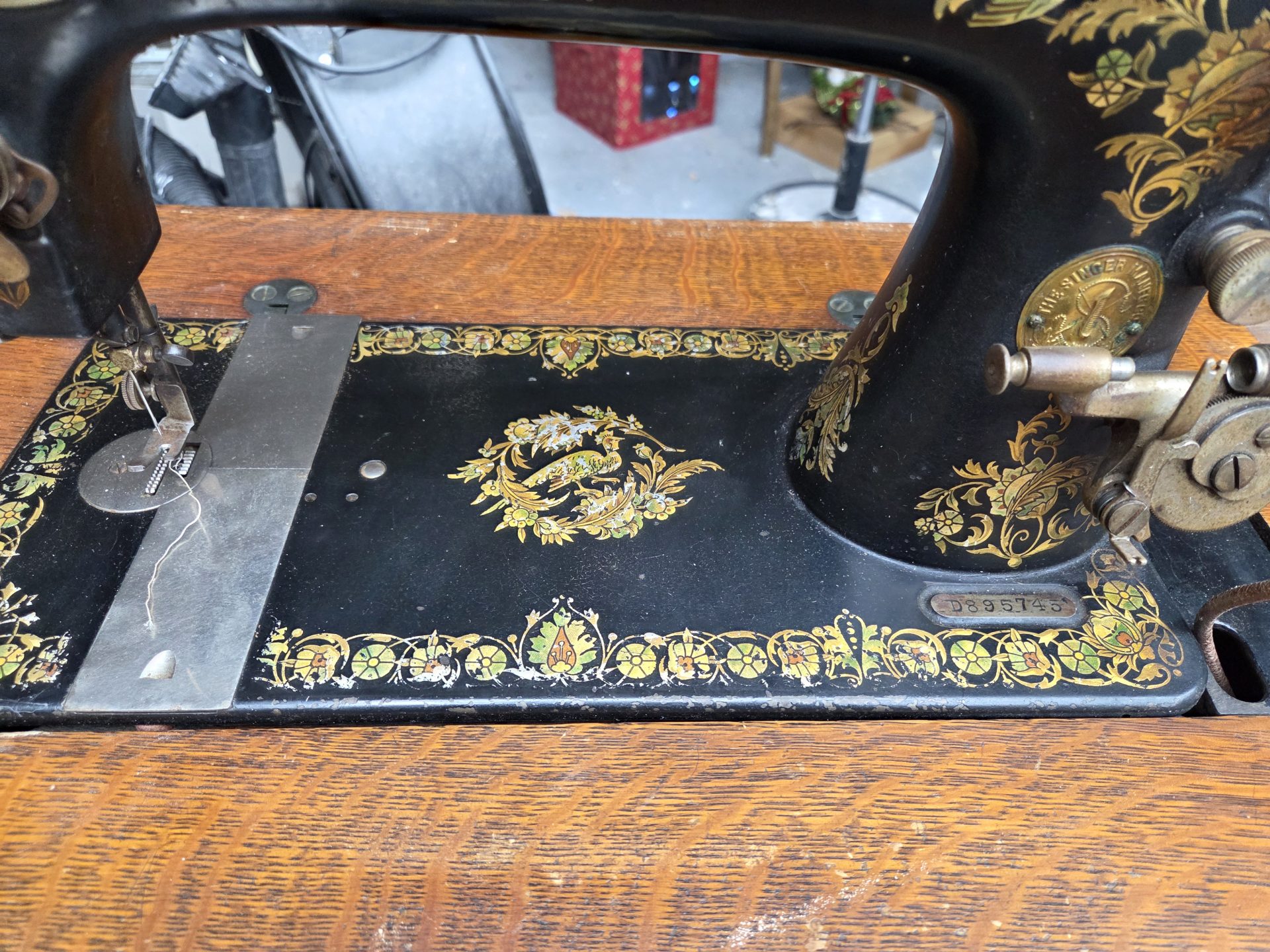
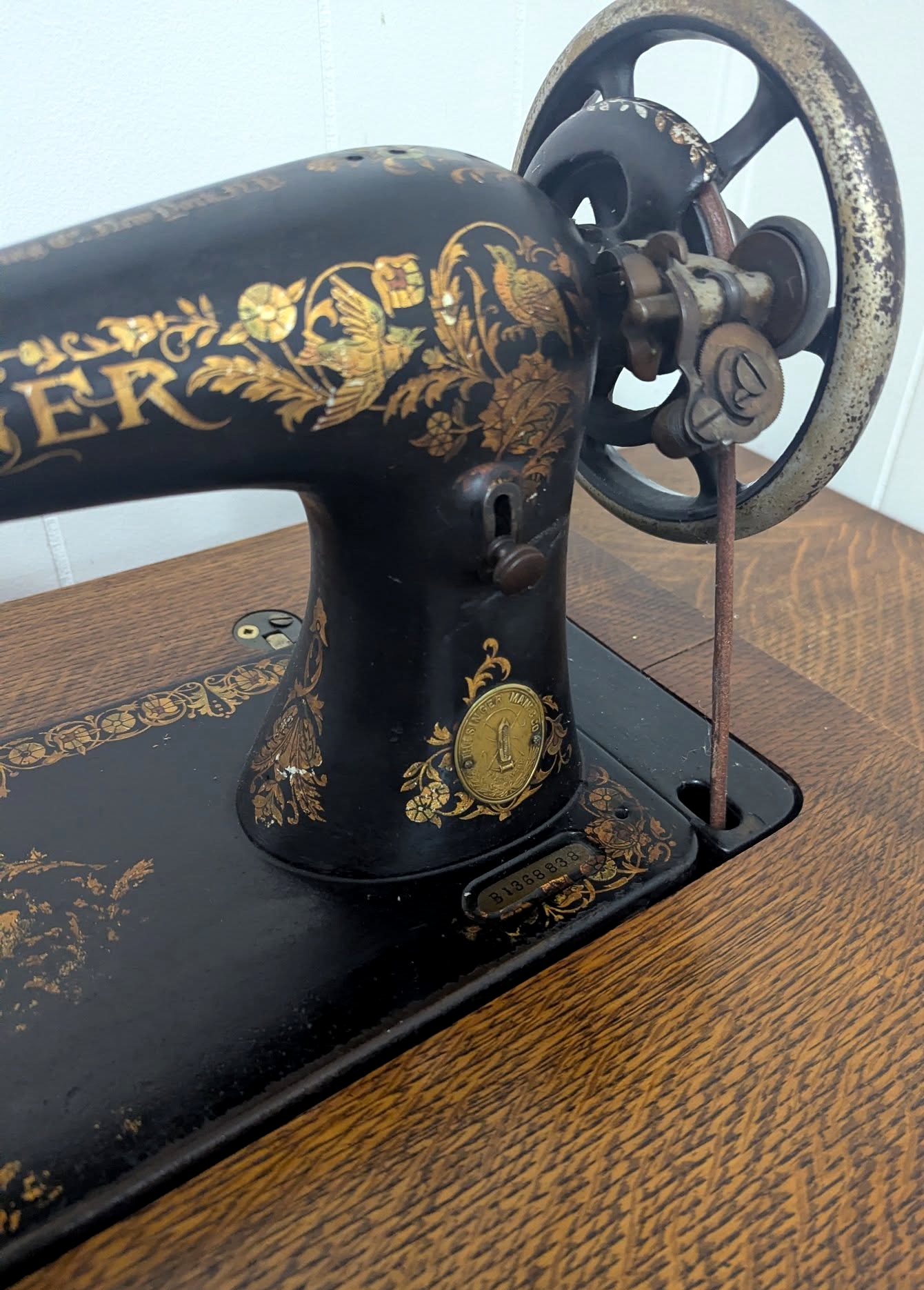
In use from 1952 up to 1961
In use for Classes:
- 201
- 221
- 222
- 301
Documented Machines
(What does it mean?)Total n.: 14
Factories:
Documented Classes:
- 201
- 221
- 222
- 301
Documented years: 1953 - 1961
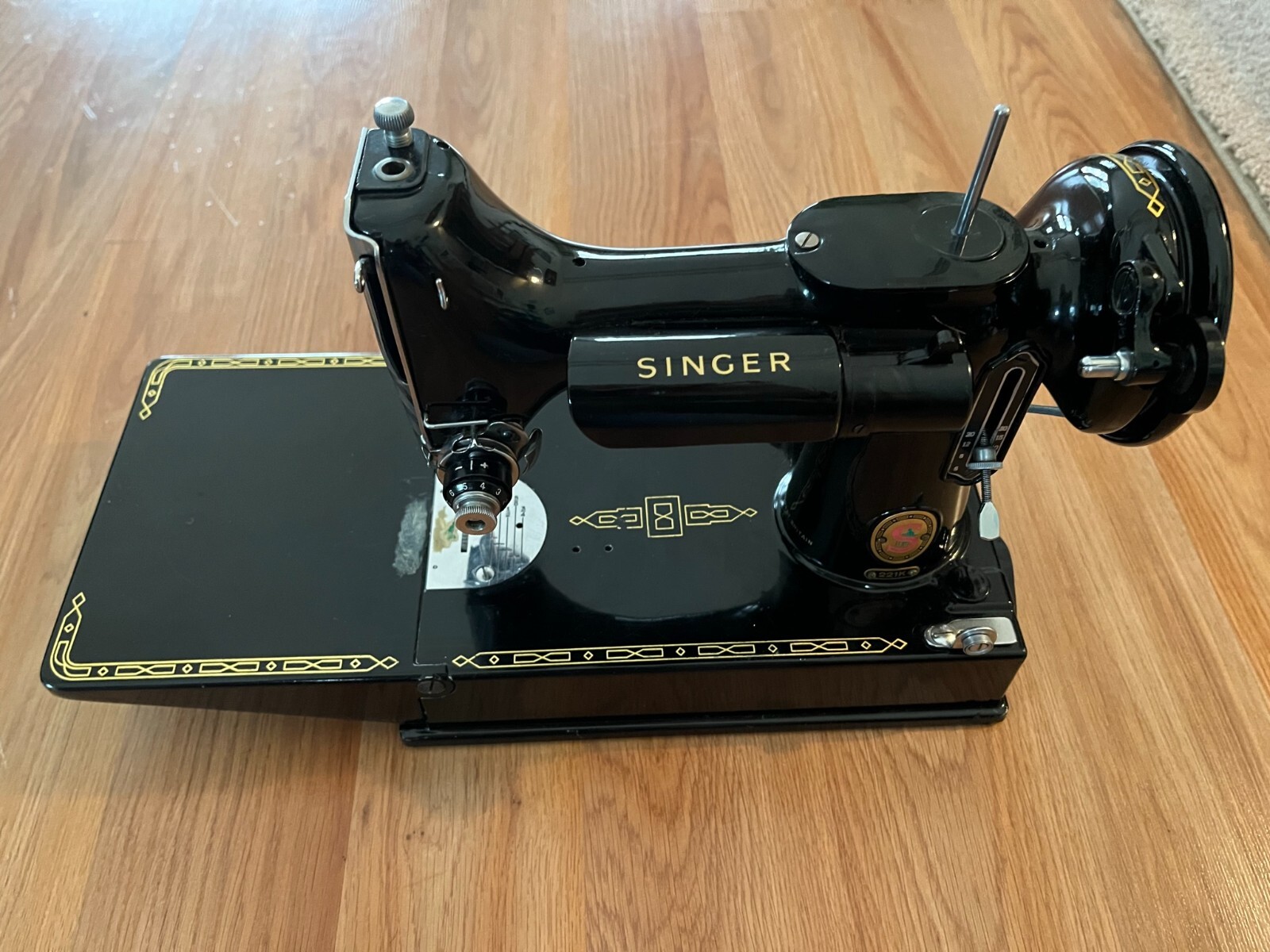
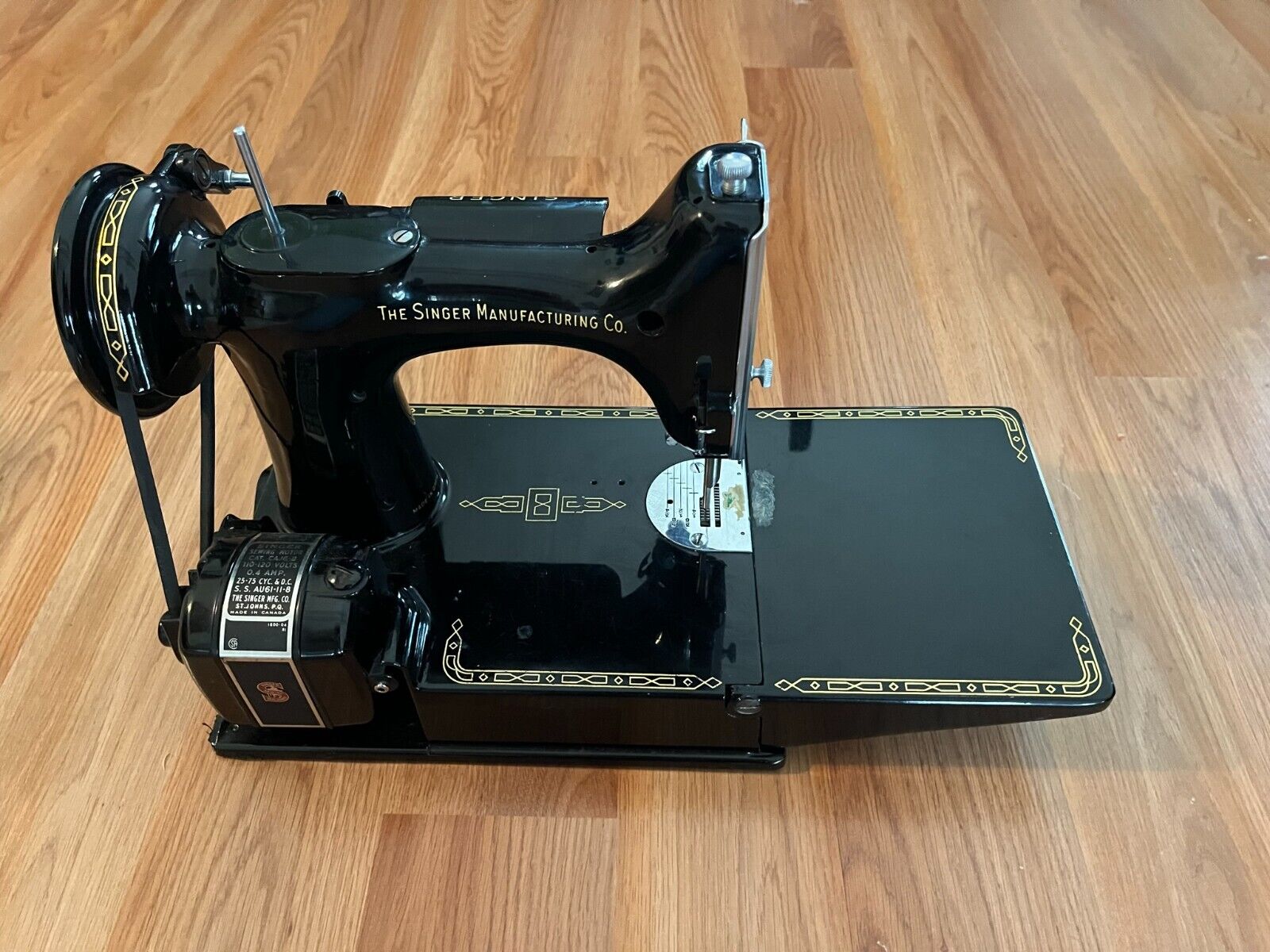
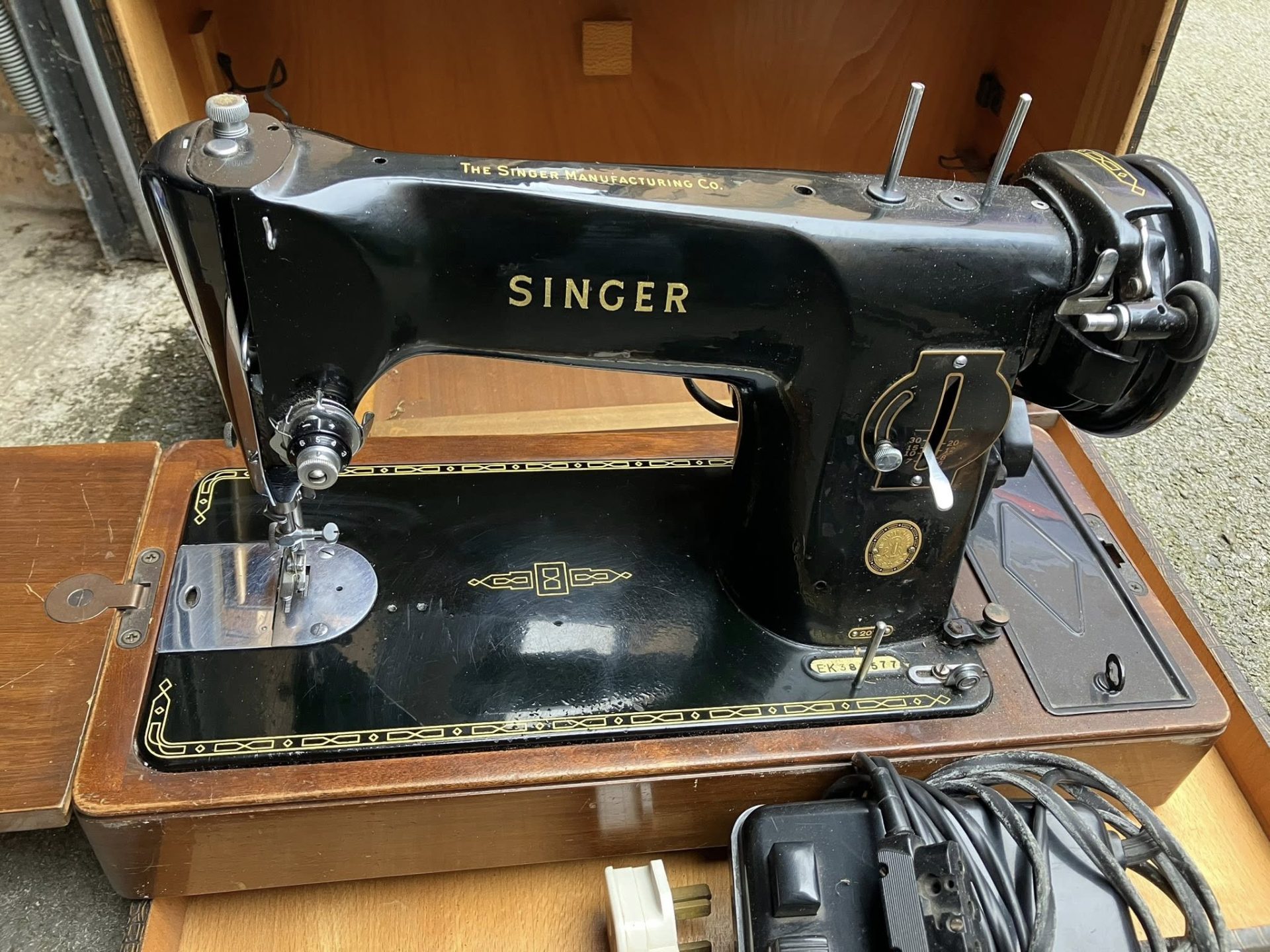
In use from 1931 up to 1960
In use for Classes:
- 15
- 191R
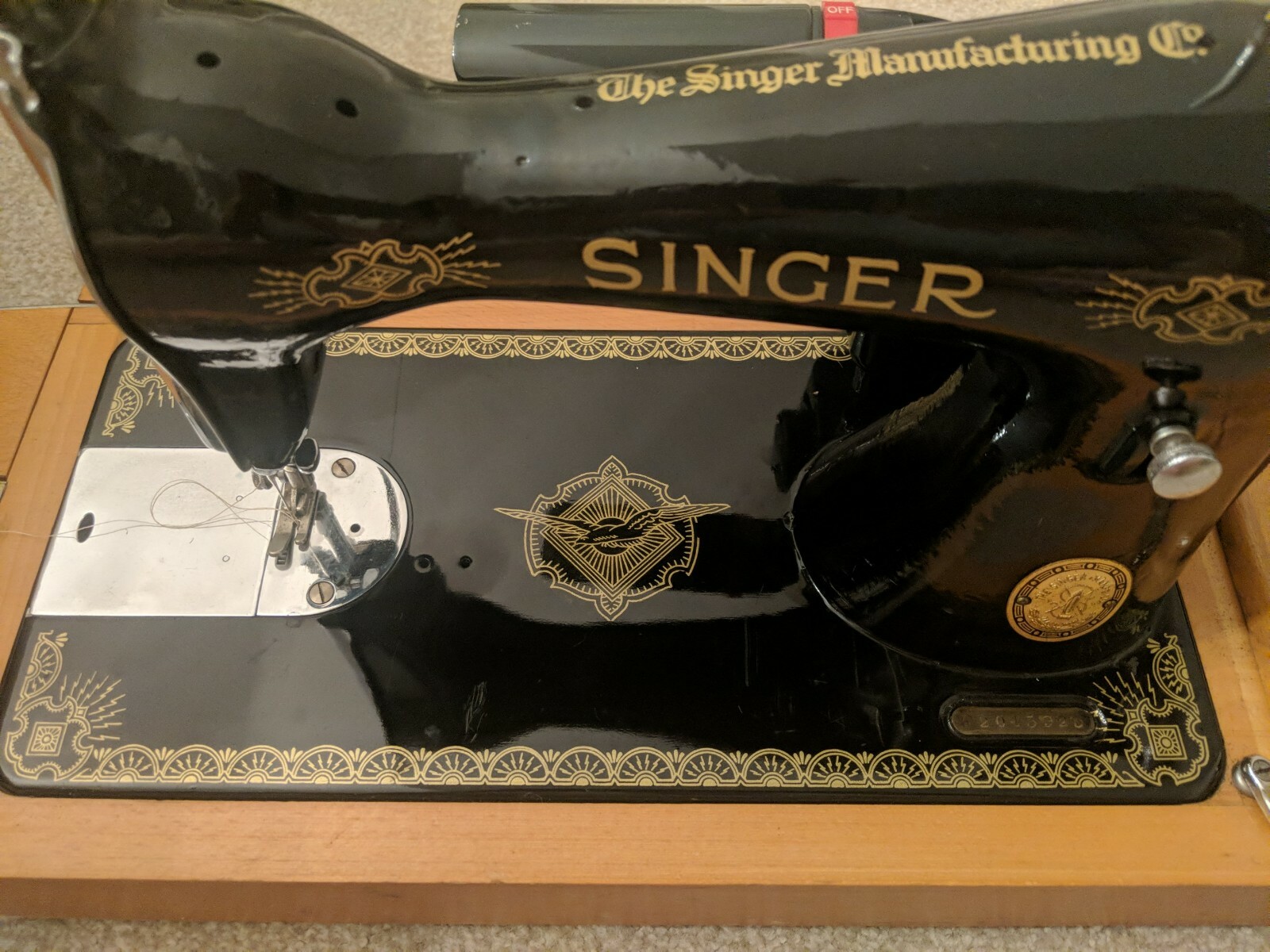
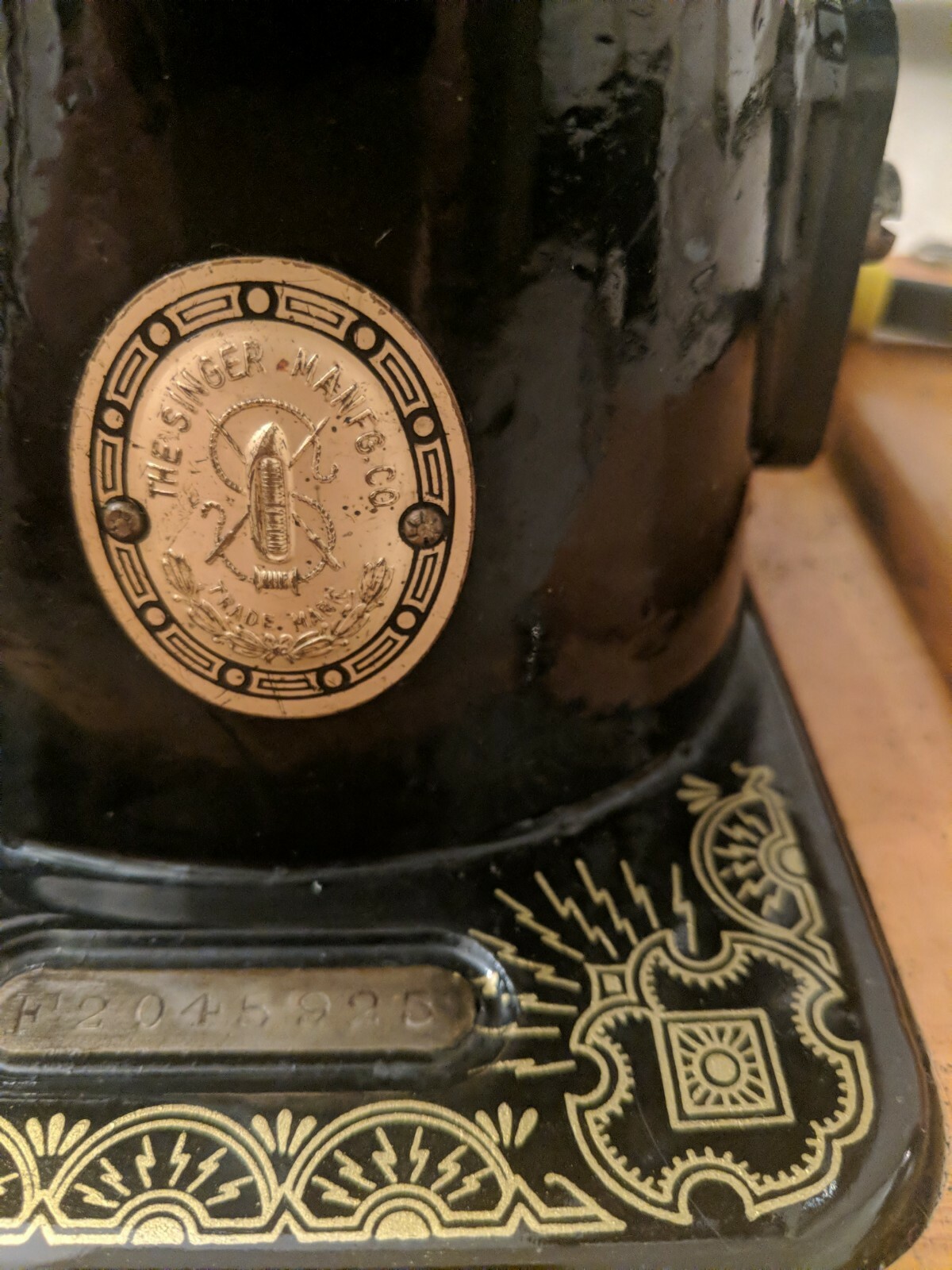
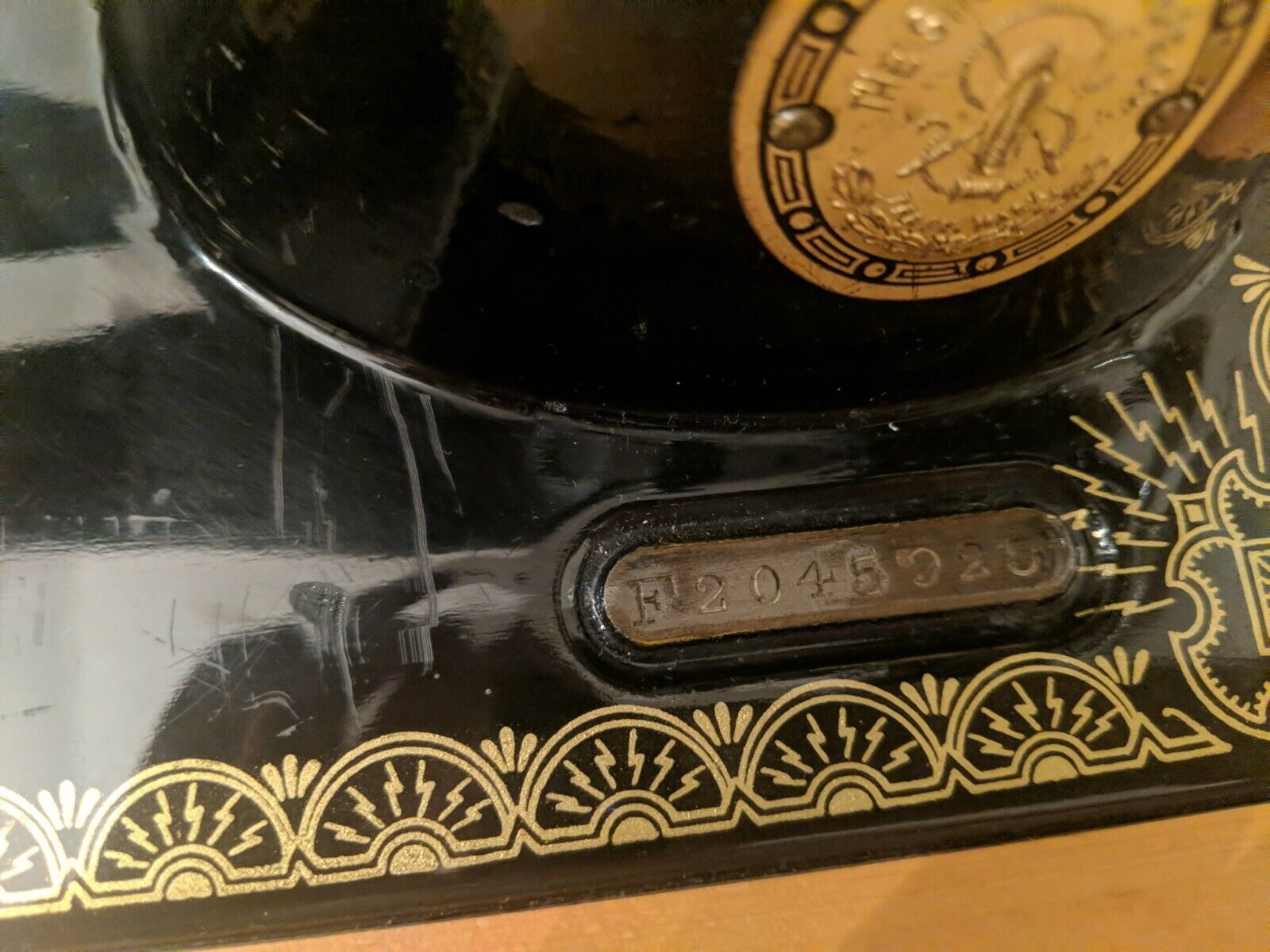
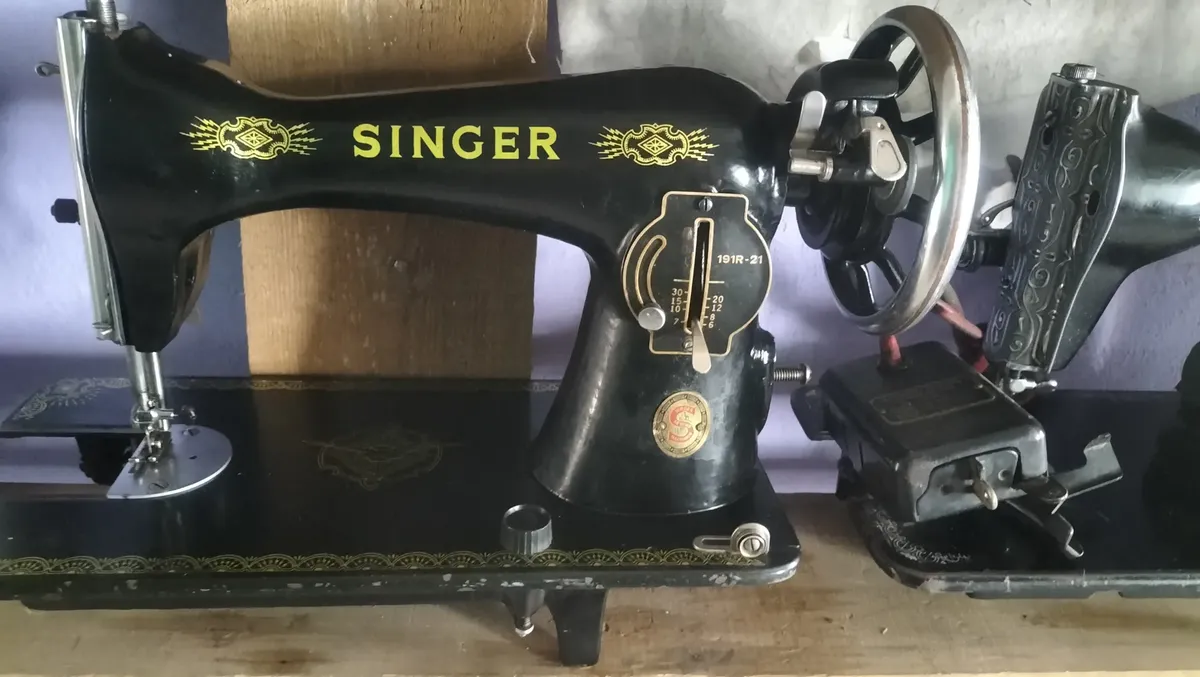
This decal features simplified motifs designed by William Hopper from Dumbarton (Scotland) and patented in 1931. Since he worked at the Kilbowie plant in Scotland, the most part of the machines with RAF decals come from this plant, but it was used also in other factories. For example, we know of a 191R machine made in Mexico that has RAF decals, but it had no serial number to record it in our database. The center of the bed features a stylized bird in flight combined with geometric or lightning-like lines, resembling a seagull or eagle. The name "RAF" stands for Royal Air Force, a colloquial nickname given by collectors. For many, the central geometric shape in the transfer pattern bears a passing resemblance to the circular roundel insignia used by the British Royal Air Force. No real connection with the Royal Air Force, but the name reference stuck nonetheless. We recorded a machine with RAF decals from 1912, but it seems those decals were re-applied afterwards during a restoration. The first machine with actual original RAF decals comes from 1931.
Patents:
- 13/10/1931, Patent n. USD85334 "Design for a Decalcomania Transfer Sheet" by William Hopper (Pdf)
- 27/10/1931, Patent n. USD85433 "Design for a Sewing Machine Frame" by William Hopper (Pdf) - Also filed in Great Britain on 1931-03-18.
Documented Machines
(What does it mean?)Total n.: 11
Factories:
- Elizabethport, New Jersey (USA)
- Kilbowie, Clydebank (Scotland, UK)
- St. John's Factory, Quebec (Canada)
- Utsunomiya (Japan)
Documented Classes:
- 15
Documented years: 1912 - 1938
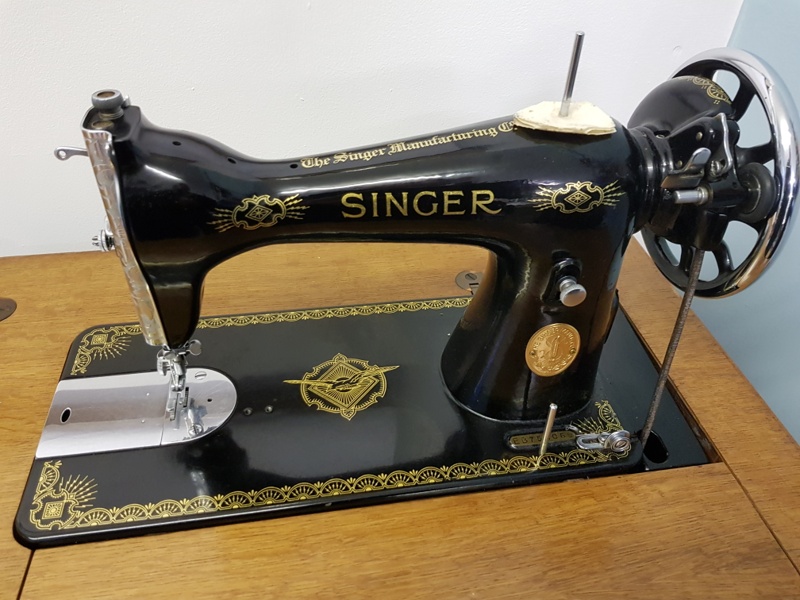
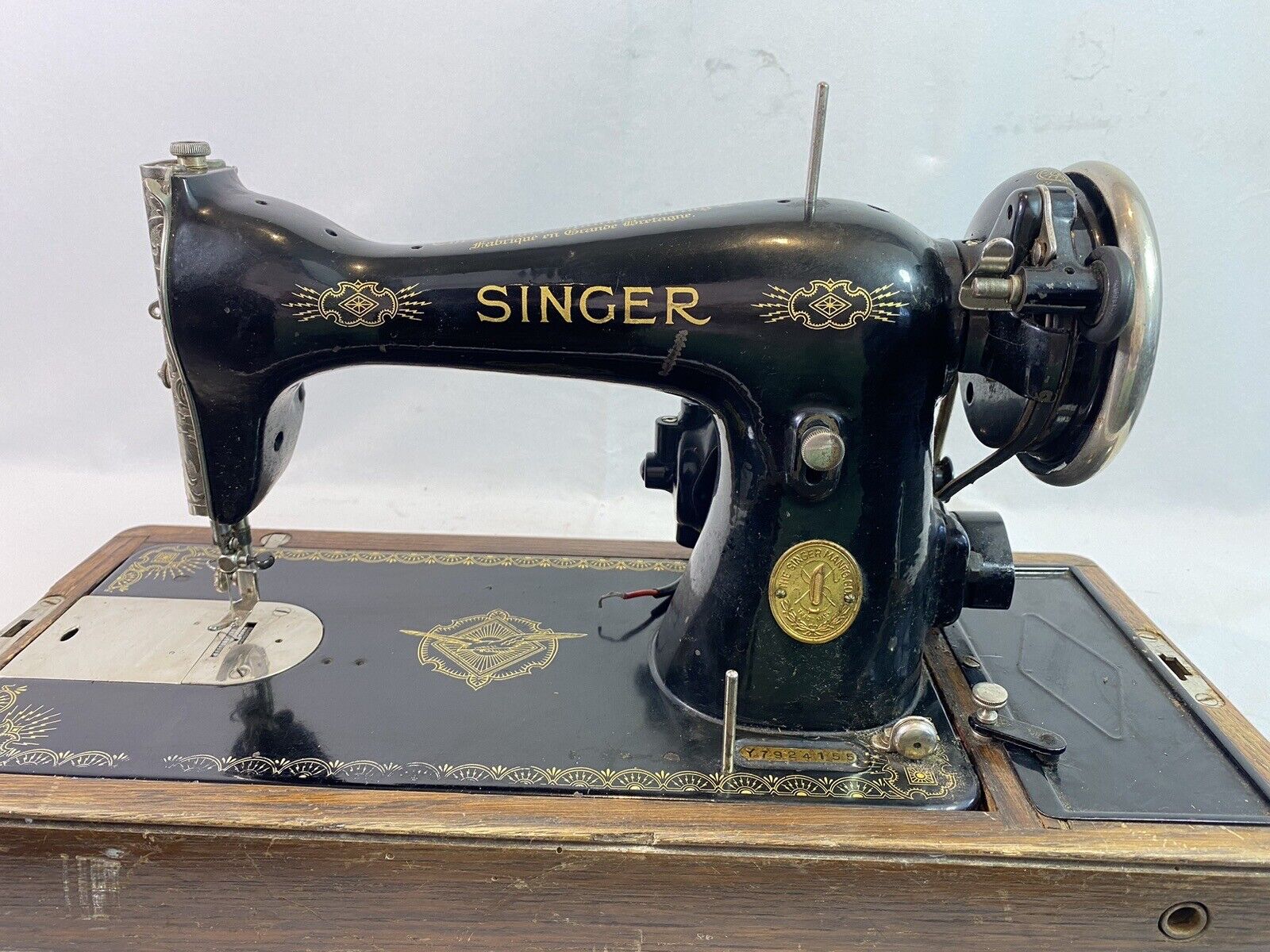
Official Singer name: Scroll (red)
In use from 1902 up to 1925
In use for Classes:
- 66
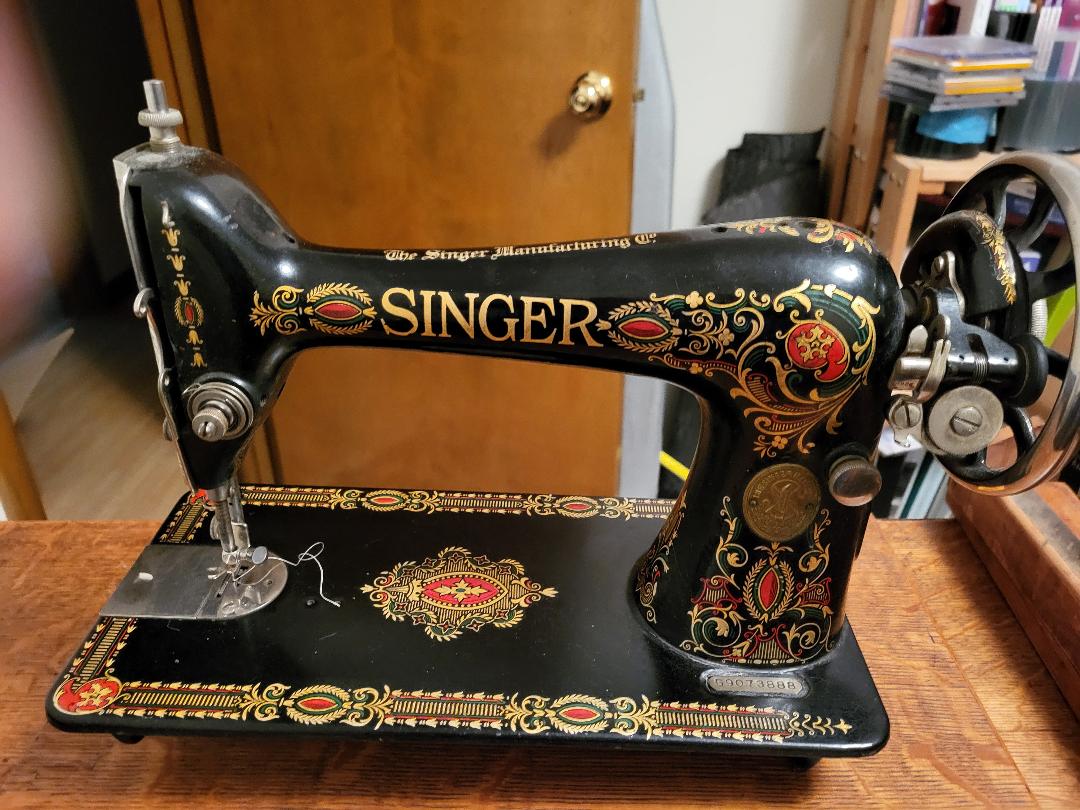
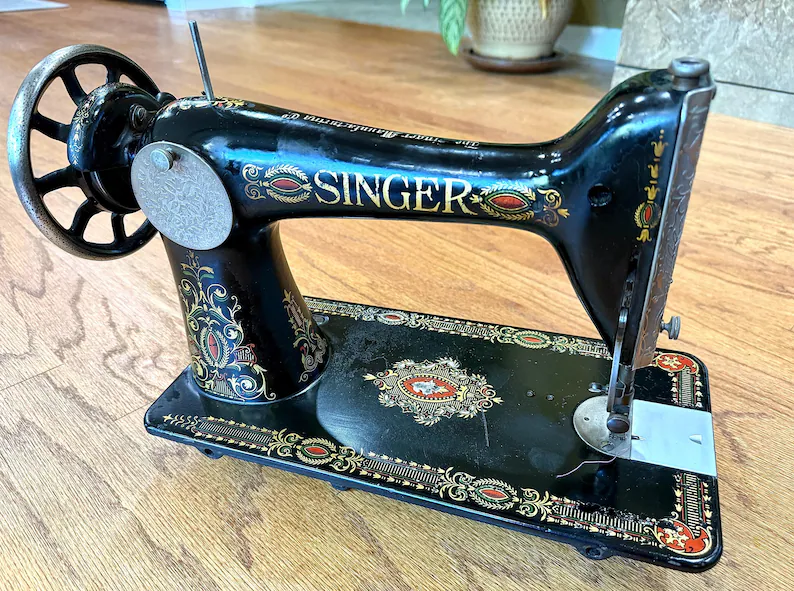
The "Red Eye" or "Red Head" decal (officially named "Scroll (red)" by Singer) is one of the most iconic. The name comes from its distinctive prominent central eye, and the two"eyes" on the front of the machine, surrounding the Singer wording. It has distinctive red and green scrollwork, more bright and prominent in earlier examples. It's characteristic of class-66 machines: all machines you'll encounter with Red Eye decals, you can be pretty confident they are class 66.
Documented Machines
(What does it mean?)Total n.: 50
Factories:
Documented Classes:
- 66
Documented years: 1910 - 1924


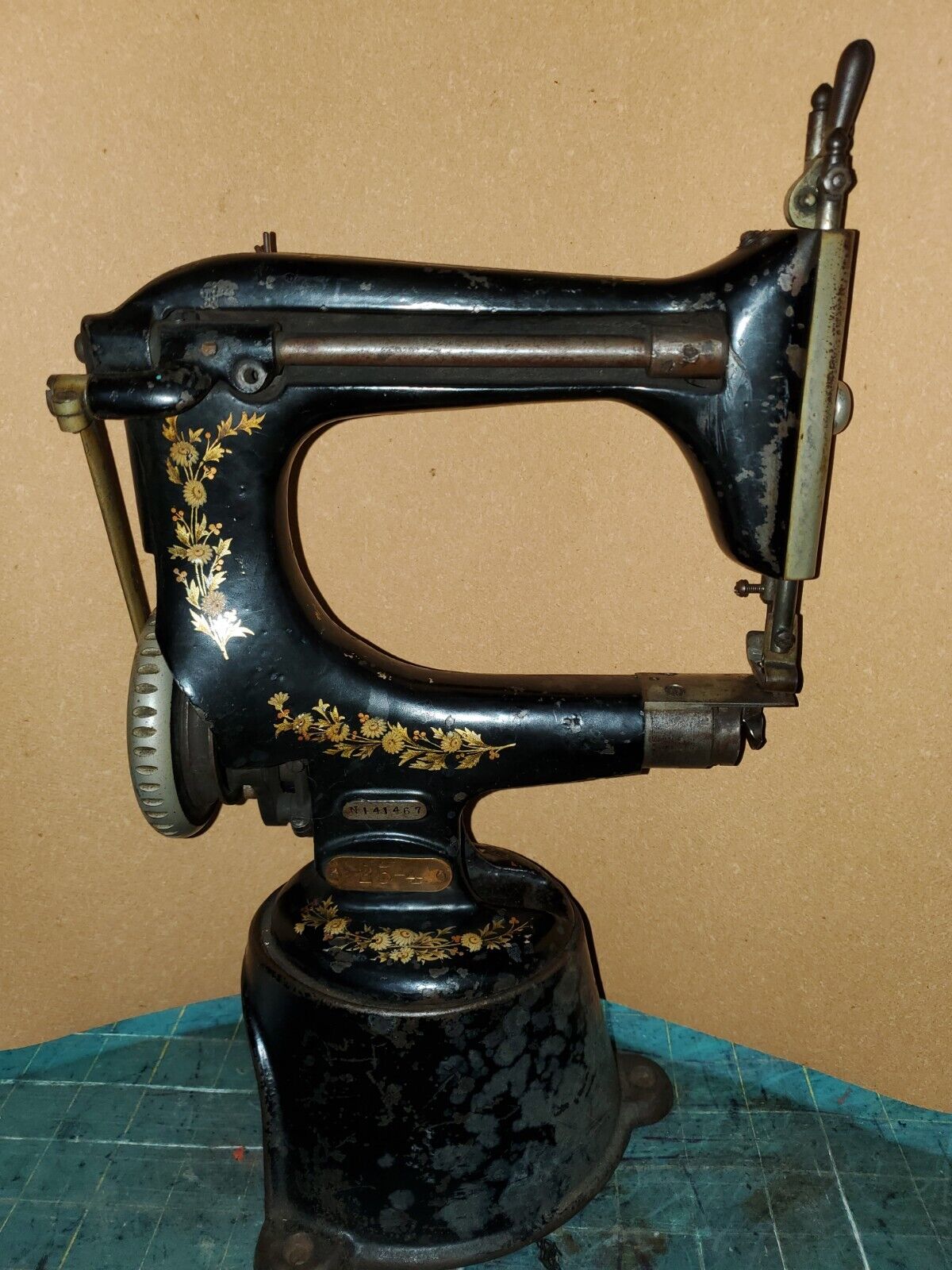
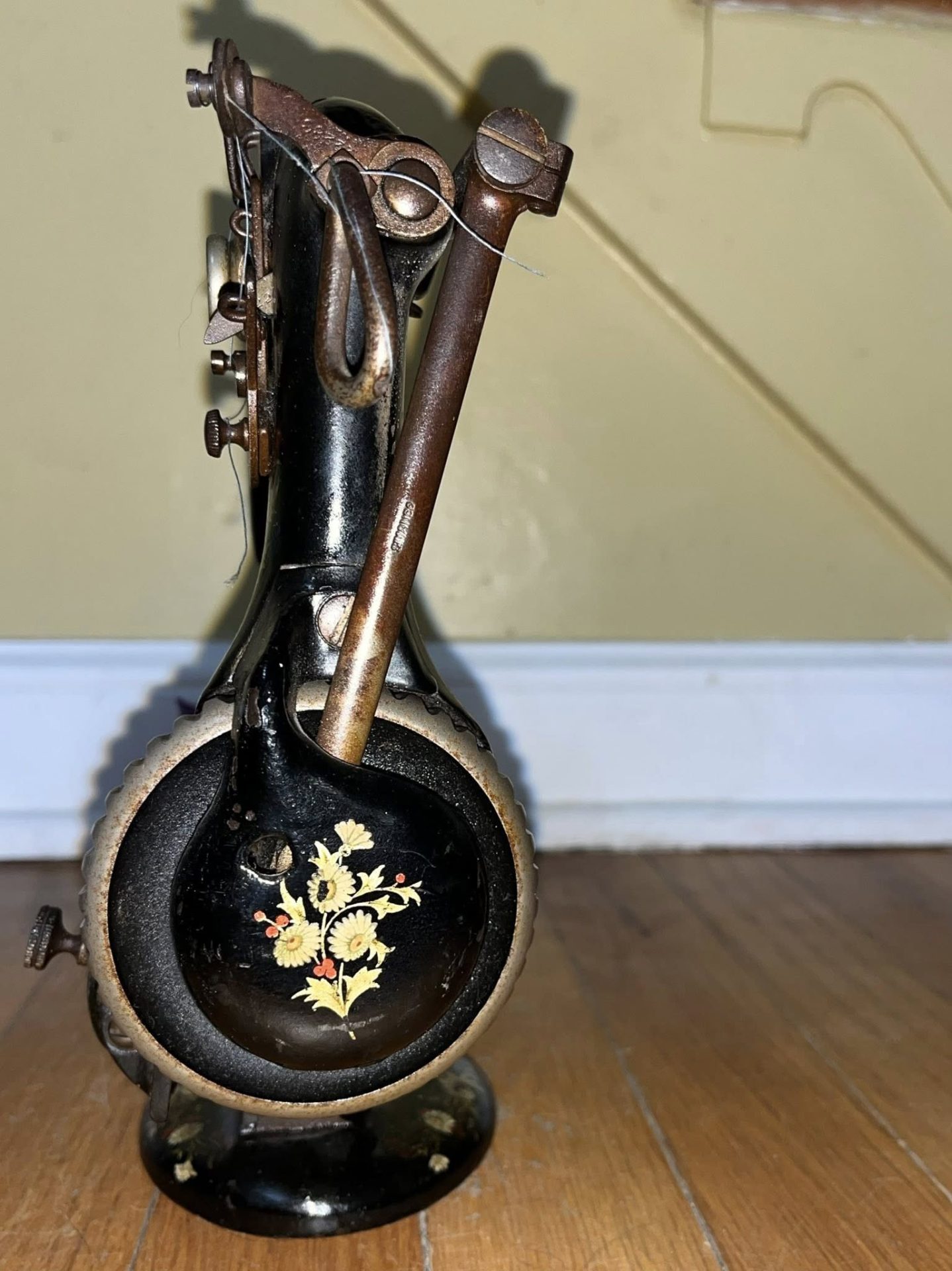
In use from 1900 up to 1929
In use for Classes:
- 24
- 25
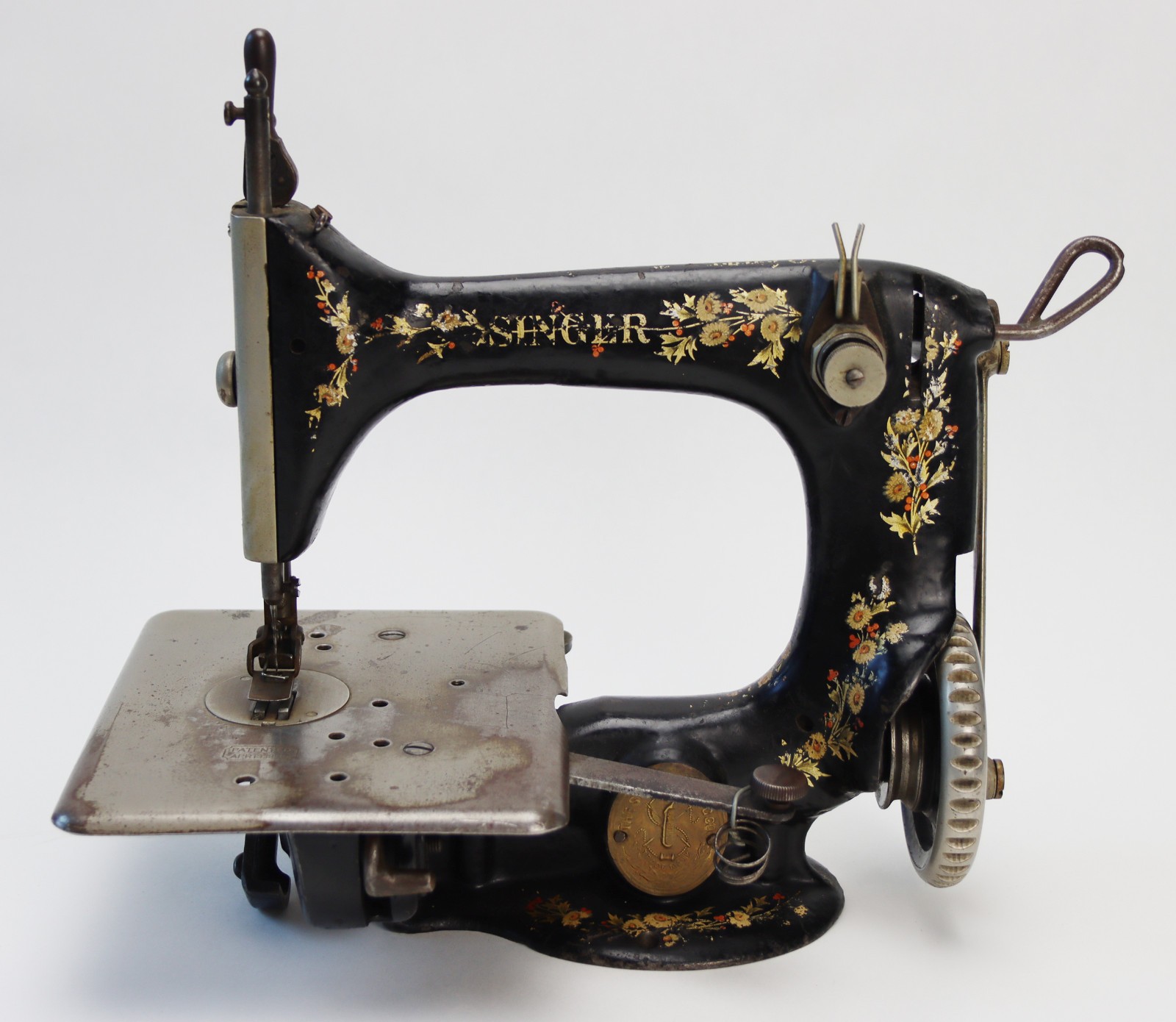
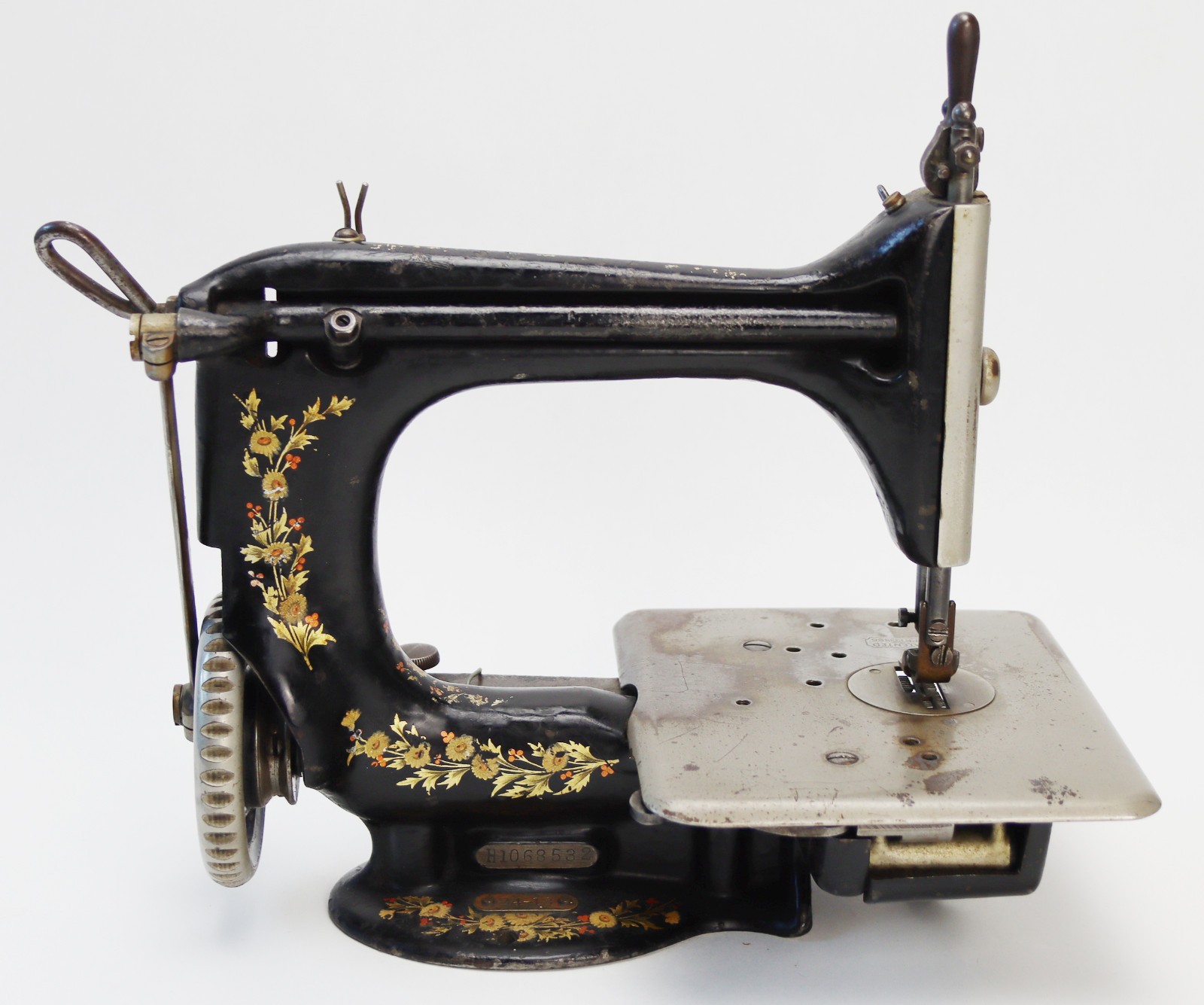
This decal features a delicate arrangement of small, delicate flowers and red berry clusters, giving this decoration its common name. It's found on miniature models, like 24-class and 25-class machines, made in the first decades of the 20th Century.
Documented Machines
(What does it mean?)Total n.: 17
Factories:
Documented Classes:
- 24
- 25
Documented years: 1897 - 1929
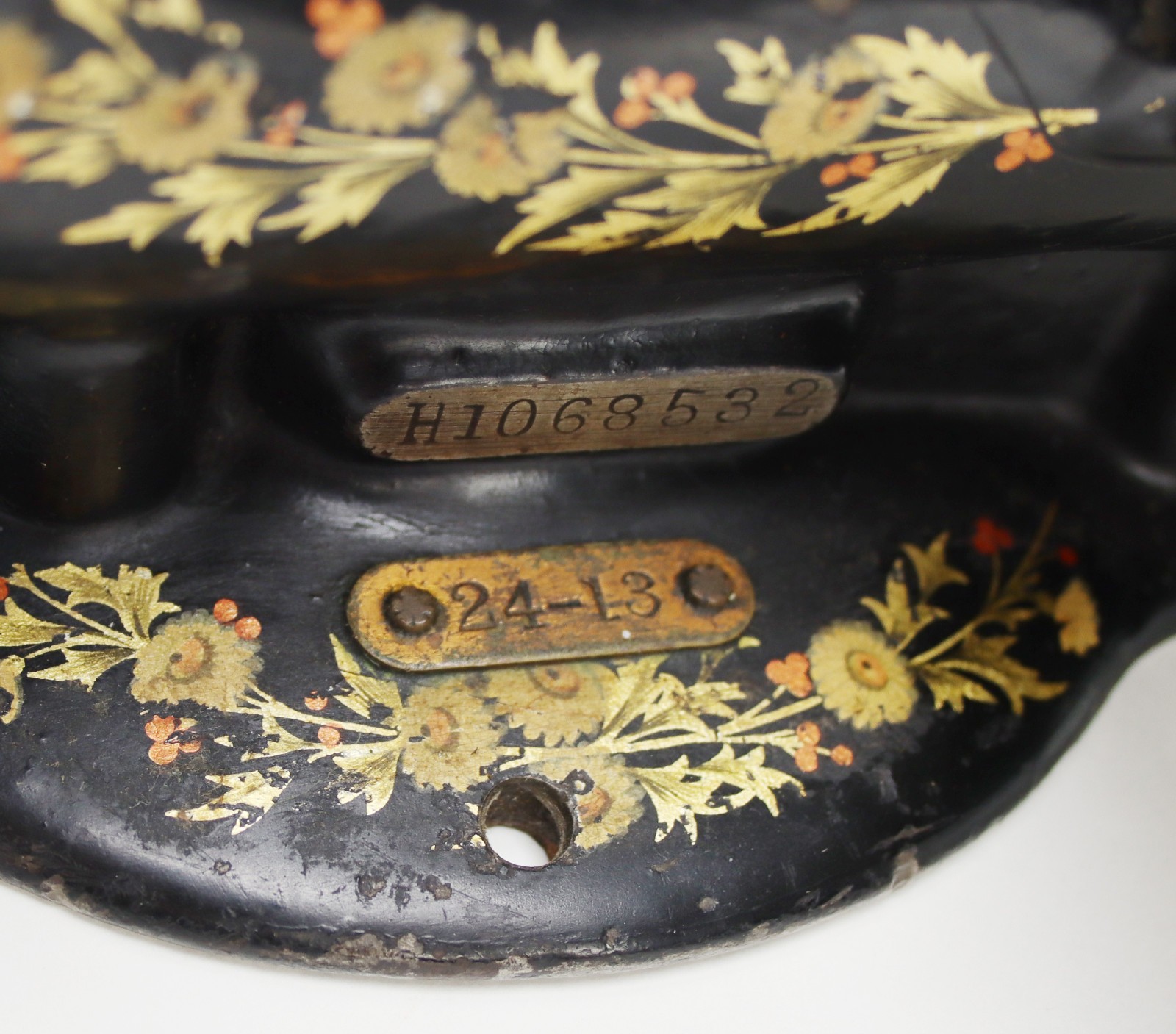
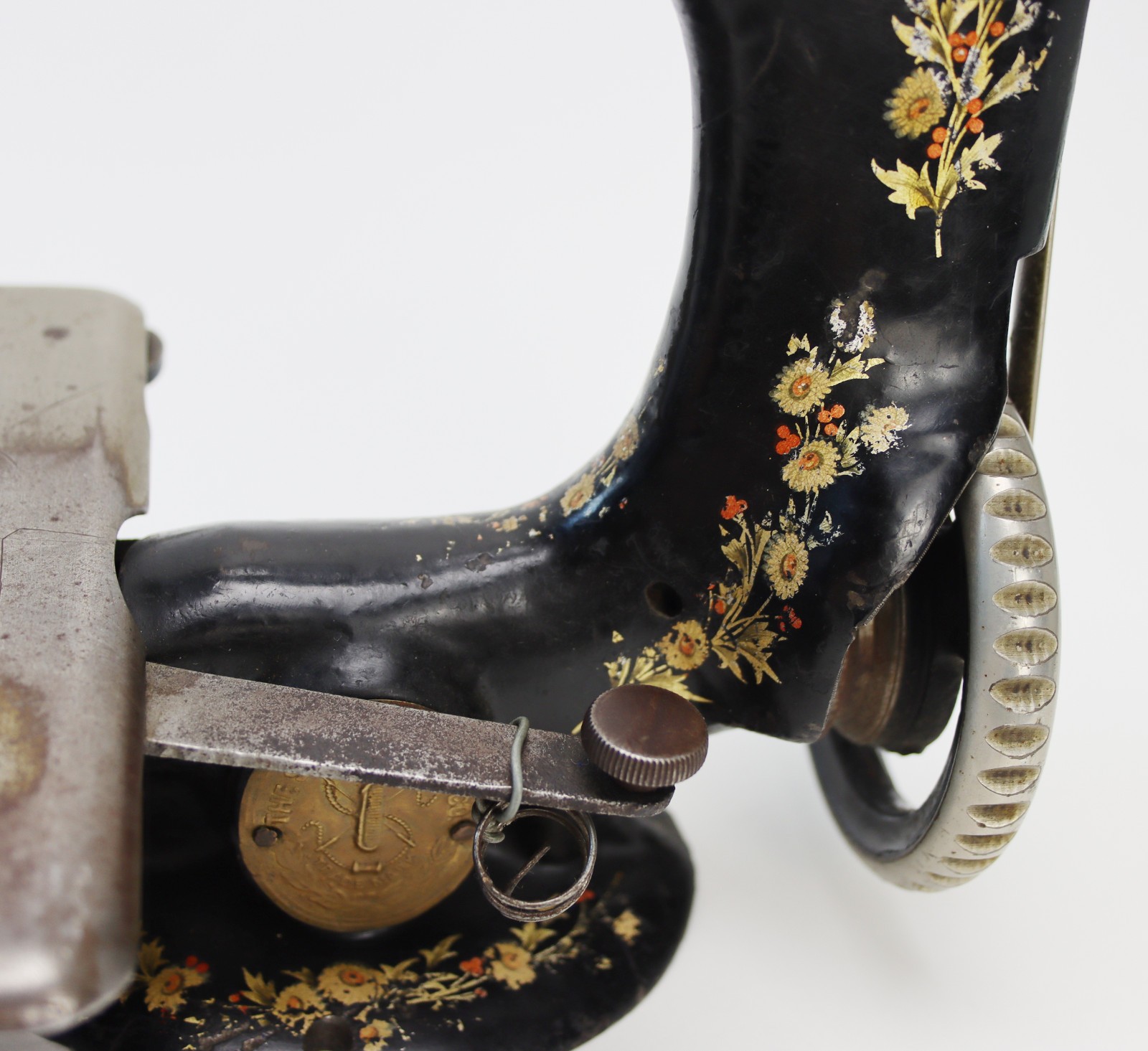
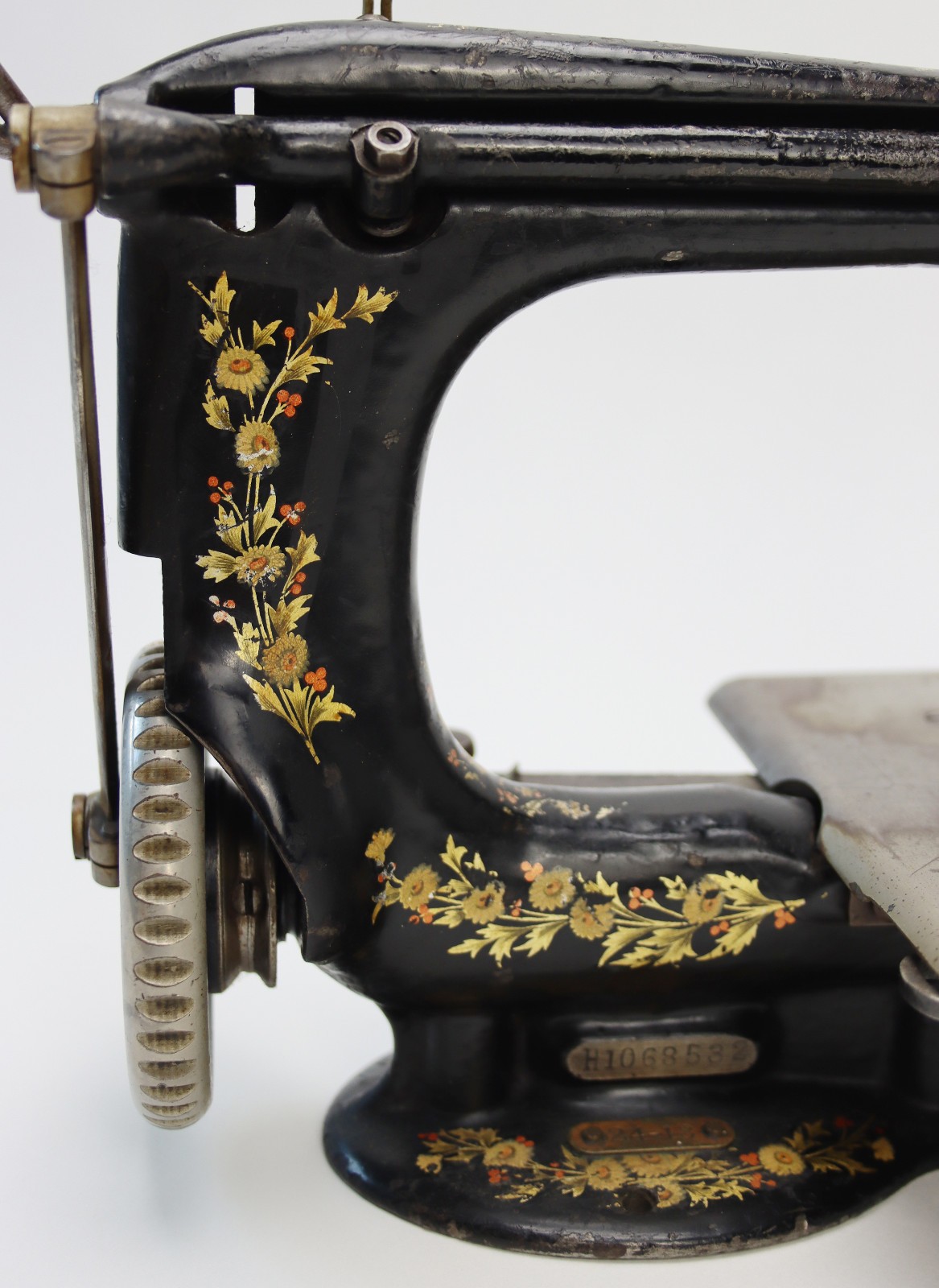
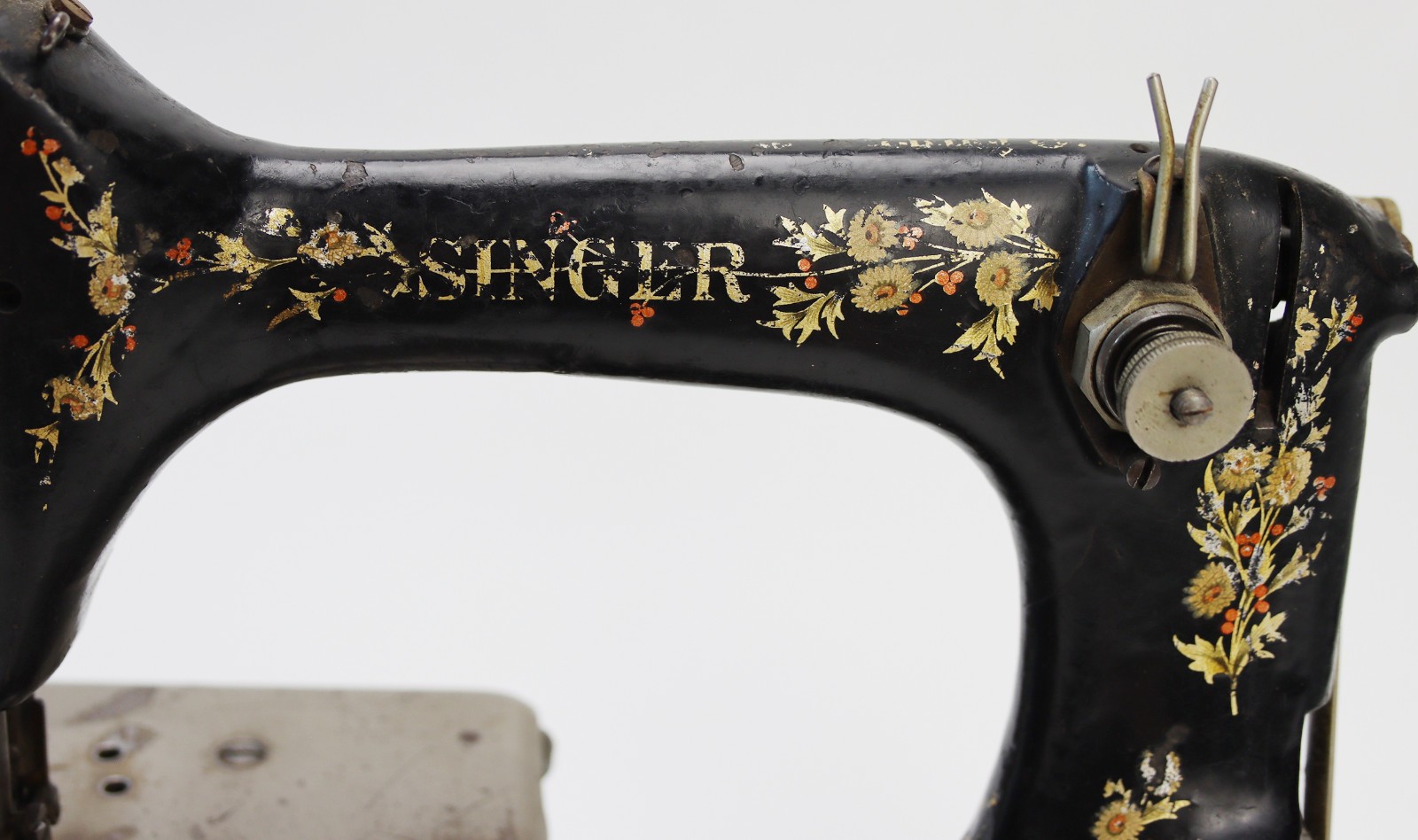
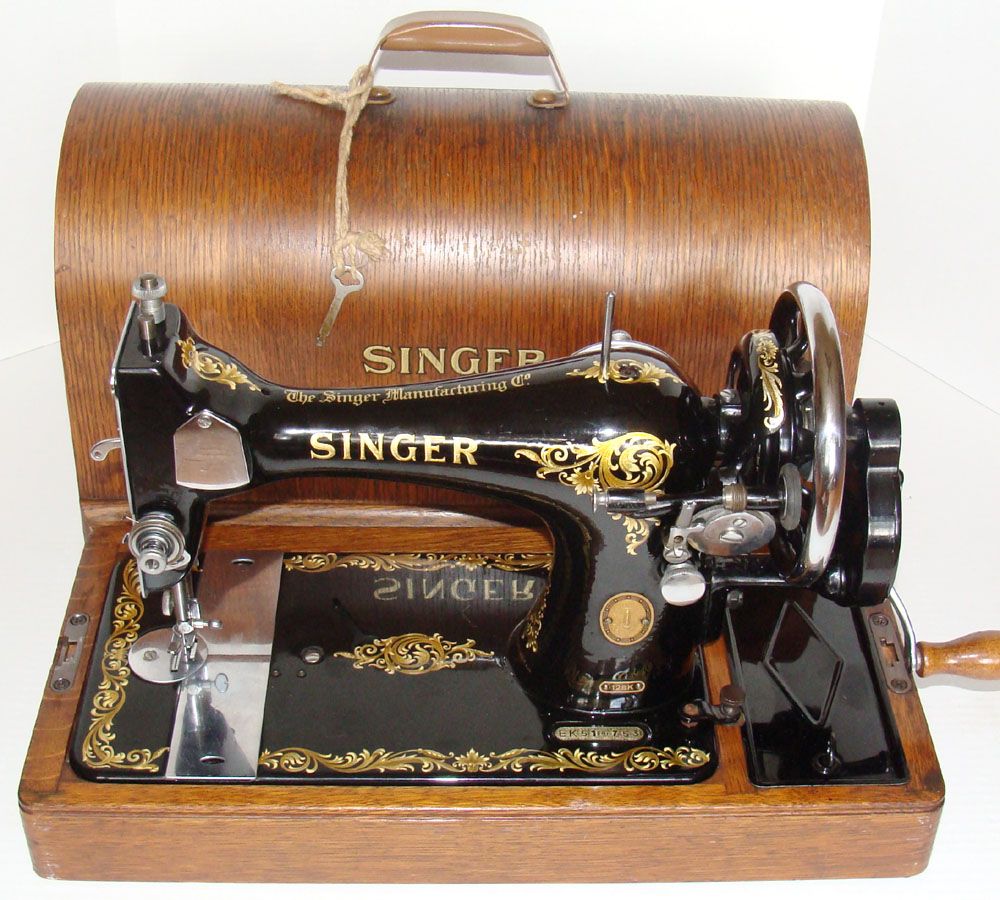
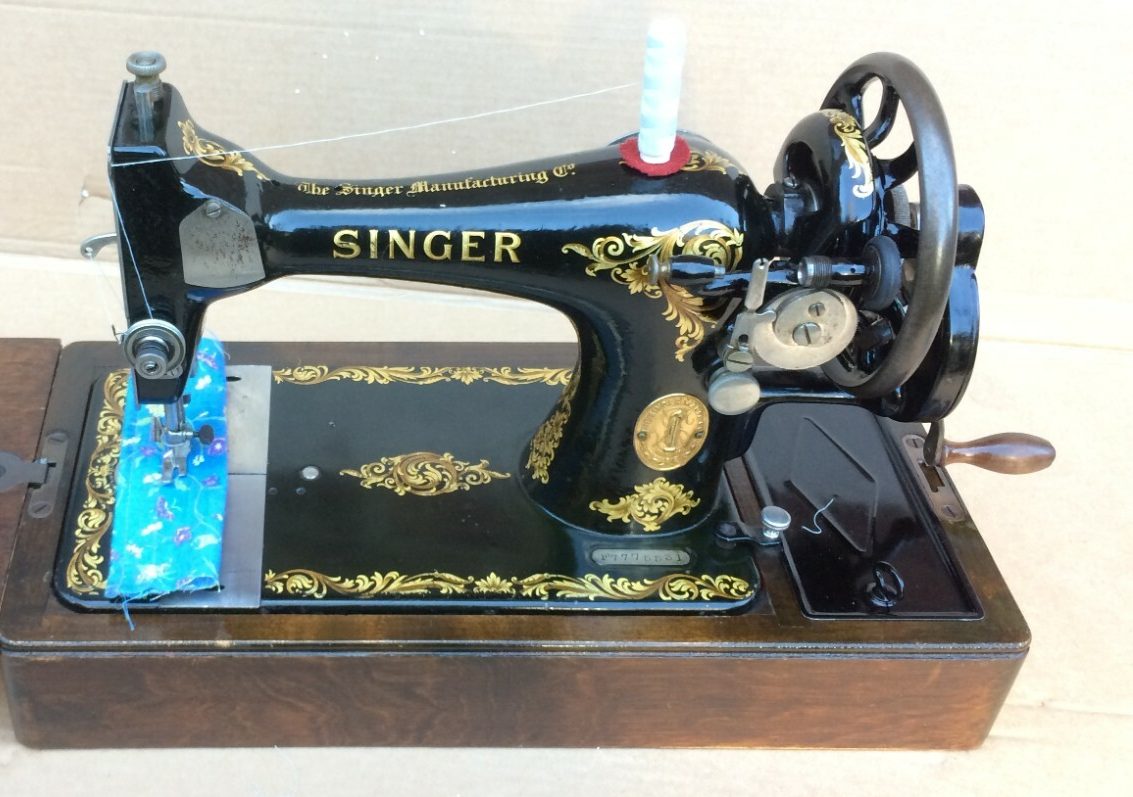
In use from 1912 up to 1961
In use for Classes:
- 128
Documented Machines
(What does it mean?)Total n.: 8
Factories:
Documented Classes:
- 128
Documented years: 1917 - 1956
In use from 1875 up to 1925
In use for Classes:
- 15
- VS2 / 27
- VS3 / 28
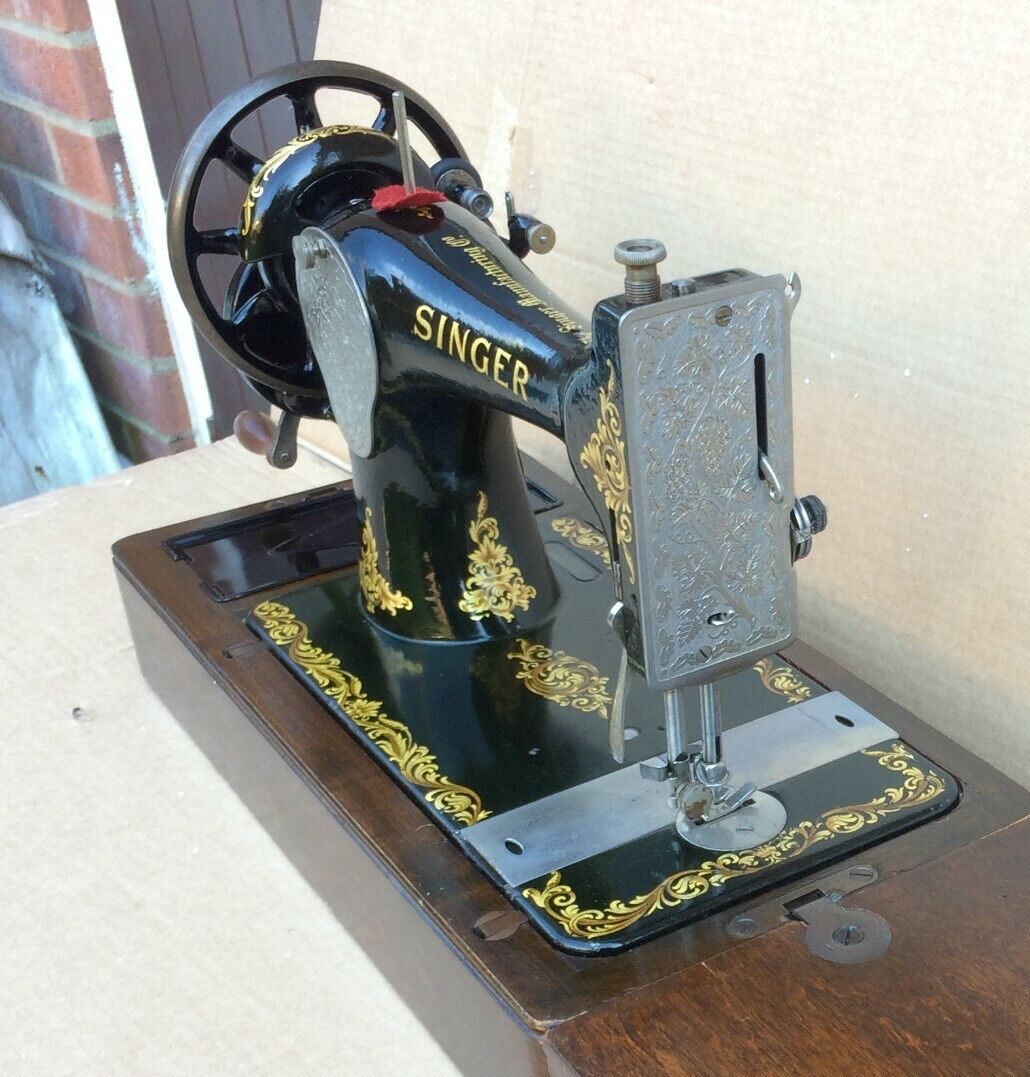
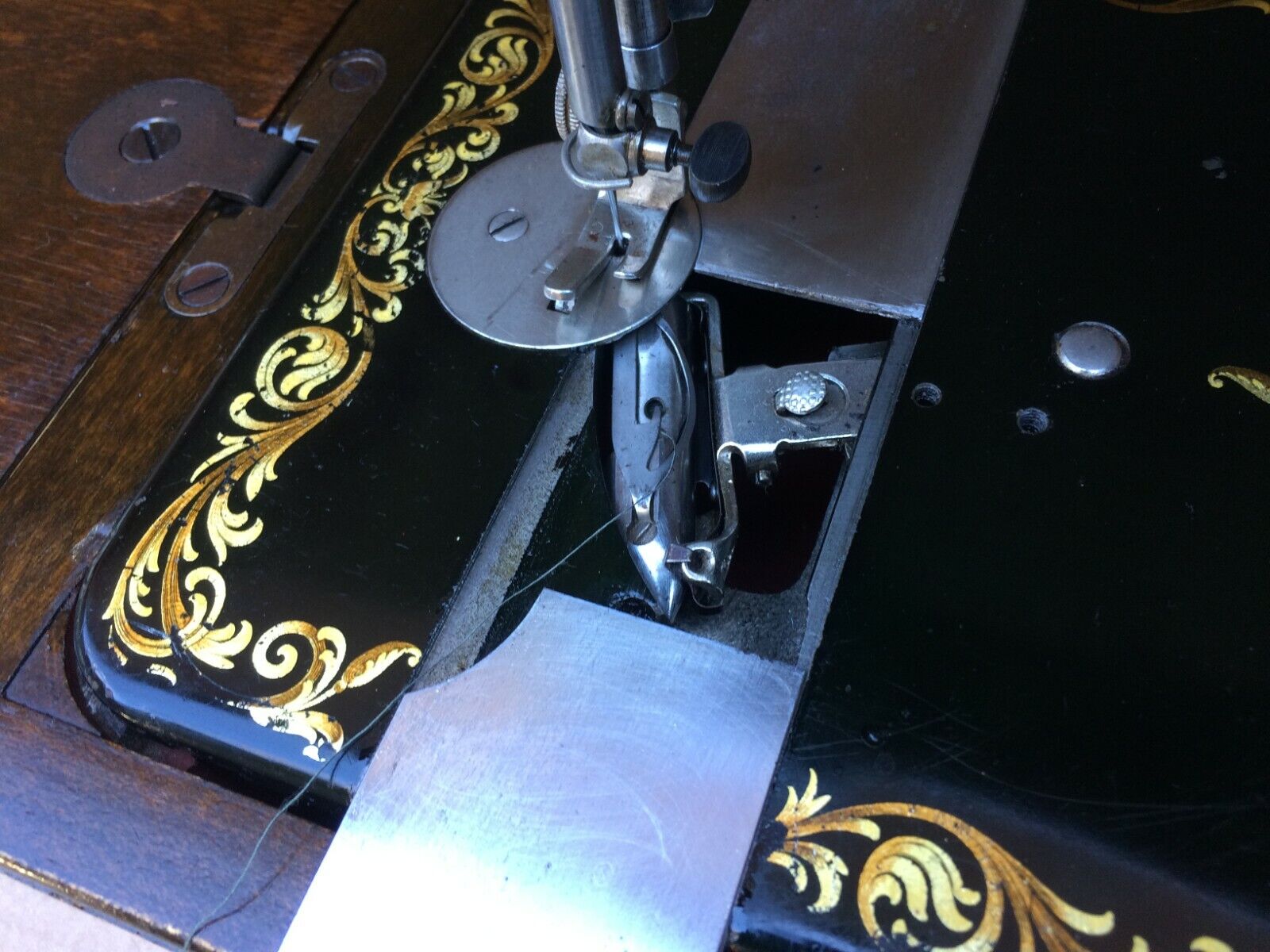
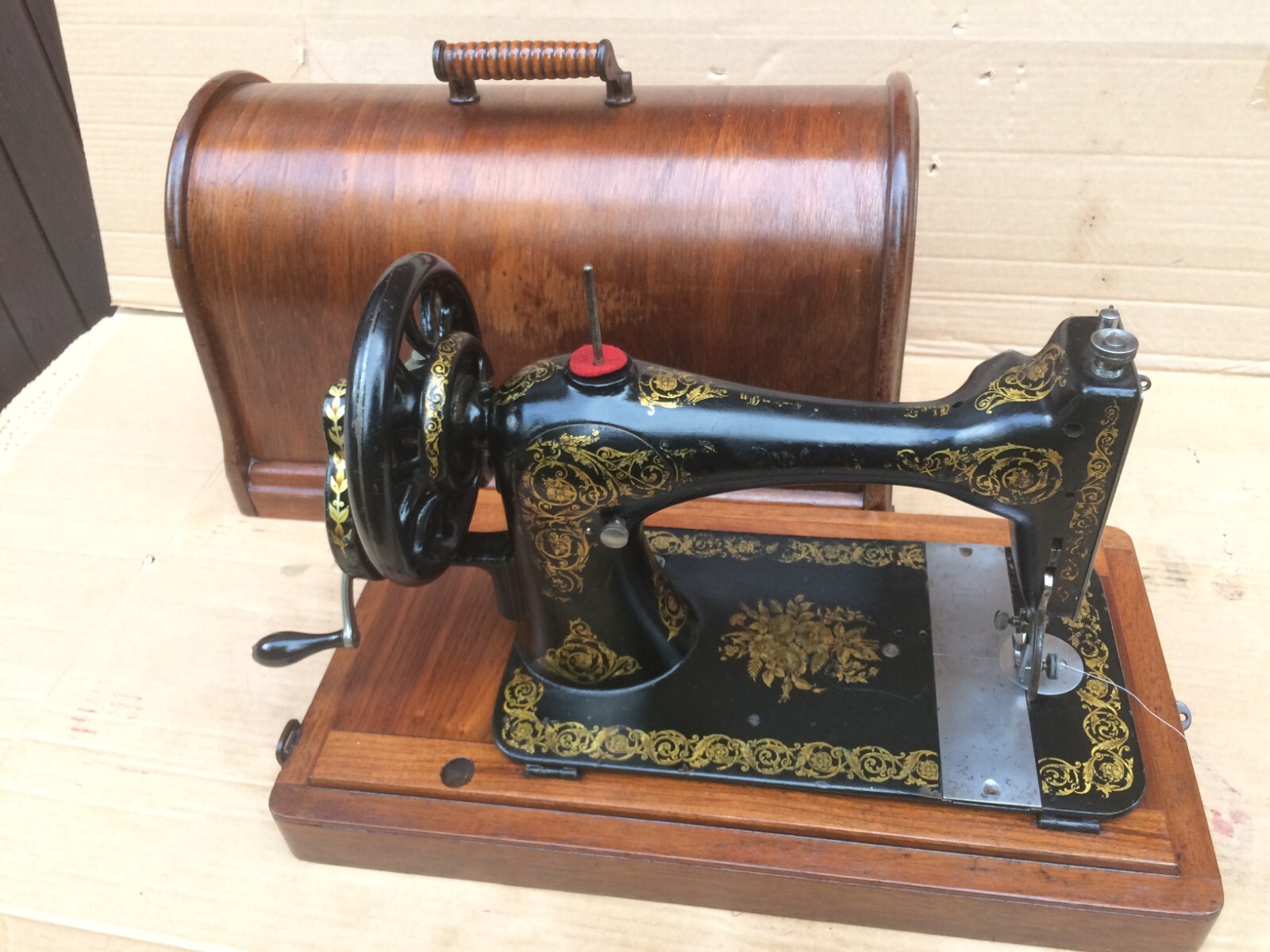
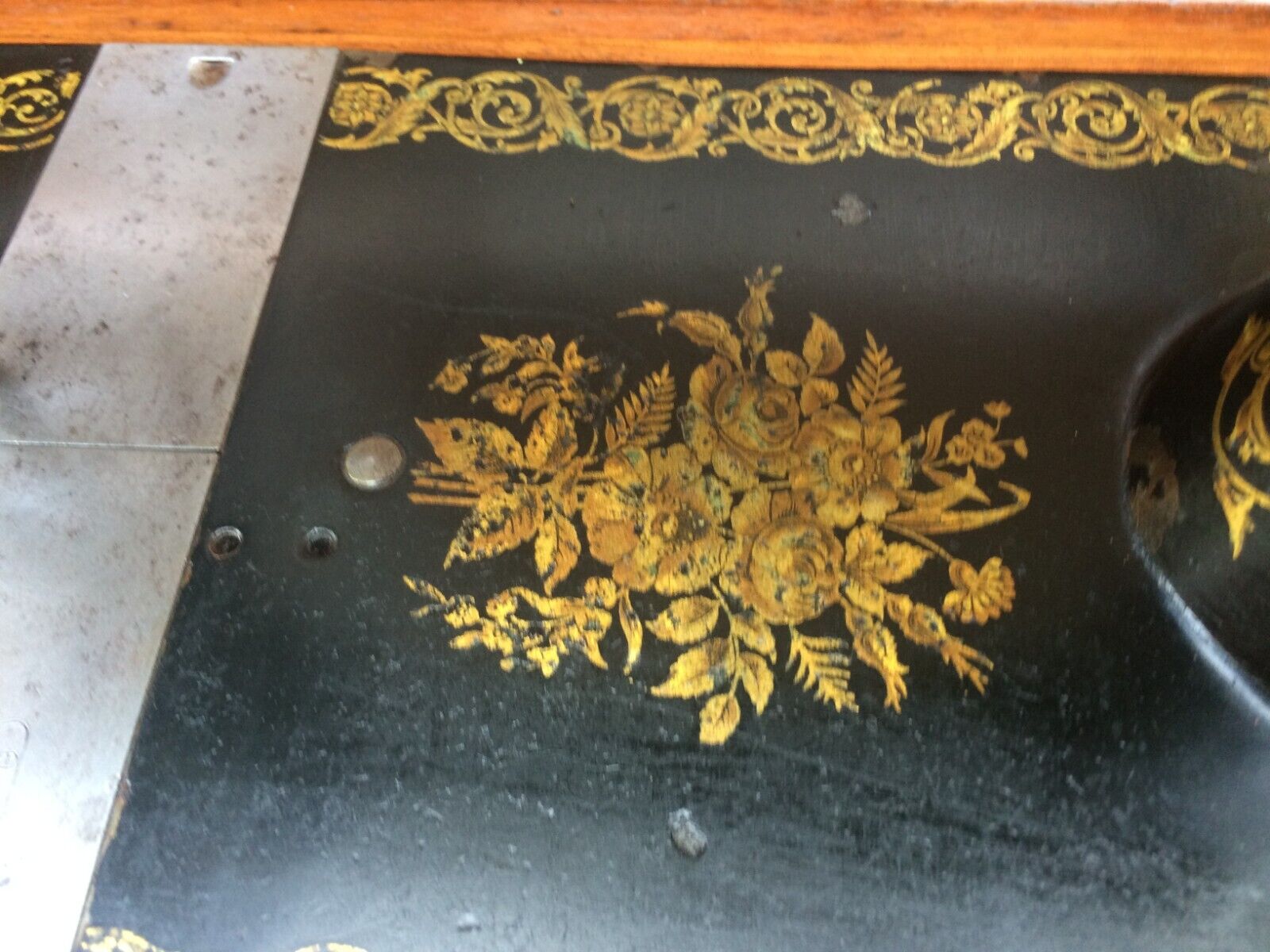
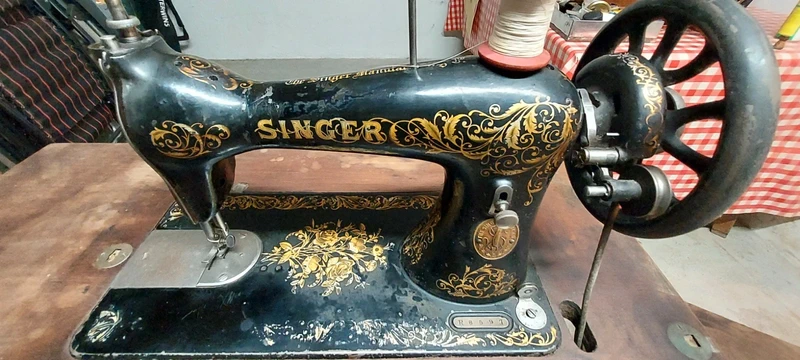
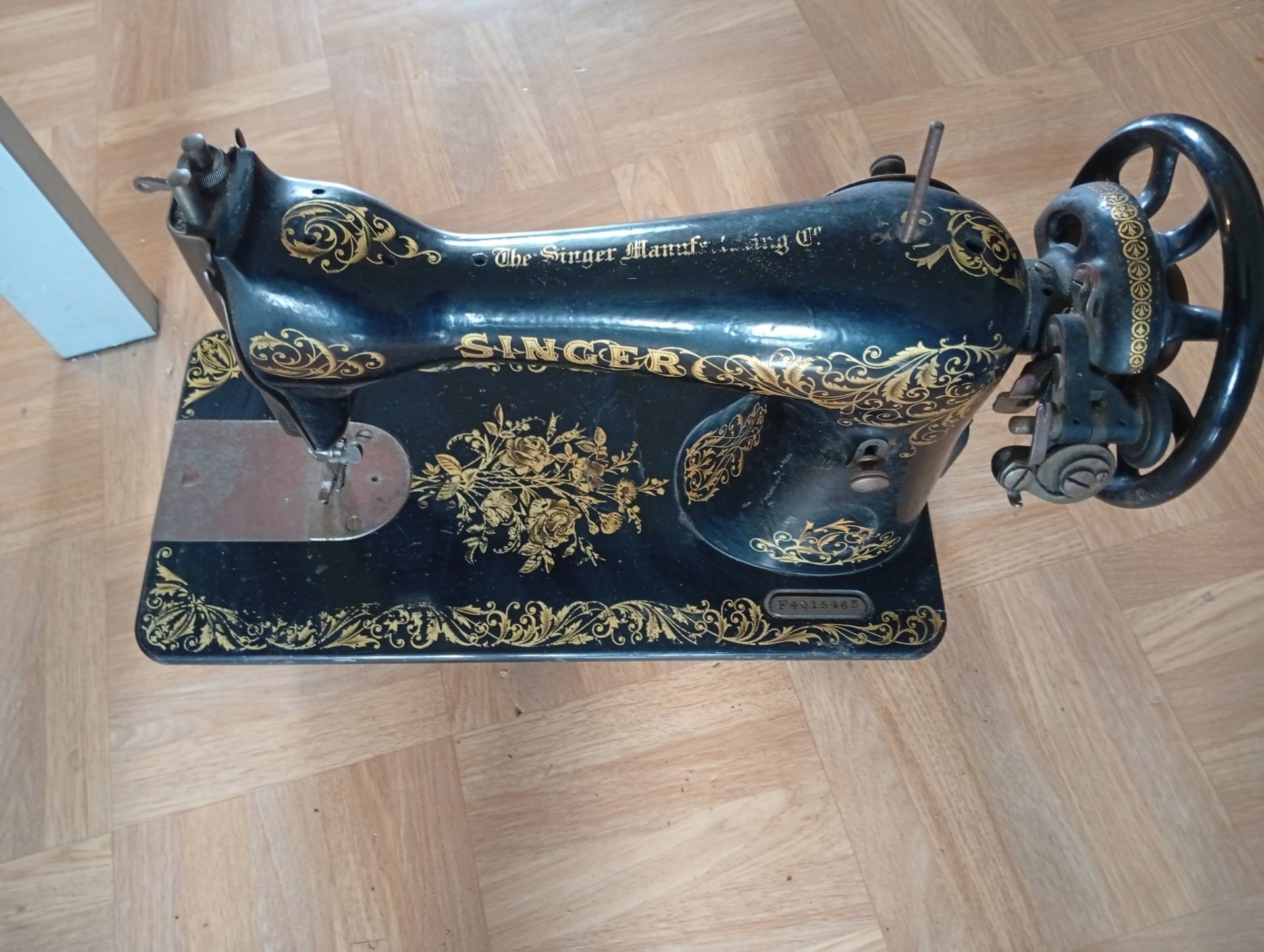
There are several variants of this decal set, with various scrolls on the arm and large or small roses on the bedplate. It features intricate, flowing gold filigree and acanthus-style borders along the machine arm and bed. Main characteristics are the roses in the middle of the bed.
Documented Machines
(What does it mean?)Total n.: 23
Factories:
Documented Classes:
- 15
- 27
- 28
Documented years: 1875 - 1920
In use from 1889 up to 1893
In use for Classes:
- VS2 / 27
- 15 (Improved Family)
Documented Machines
(What does it mean?)Total n.: 5
Factories:
Documented Classes:
- 15
- 27
Documented years: 1889 - 1893
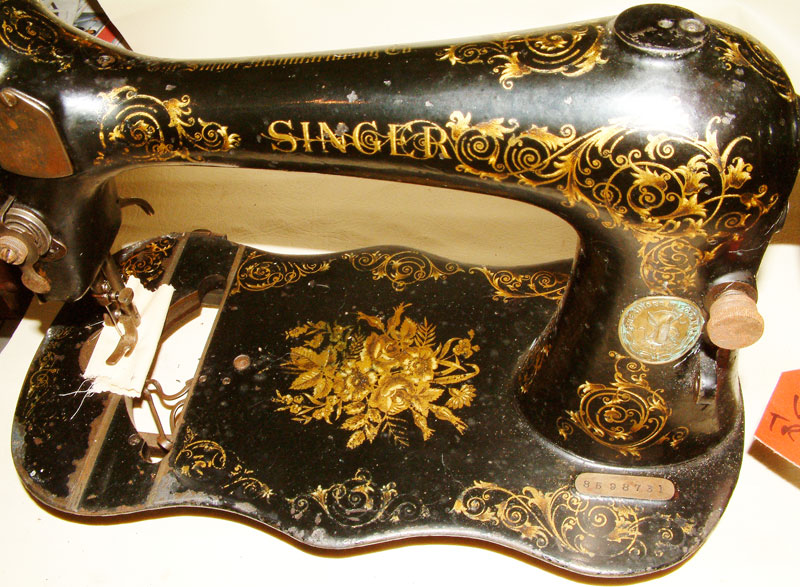
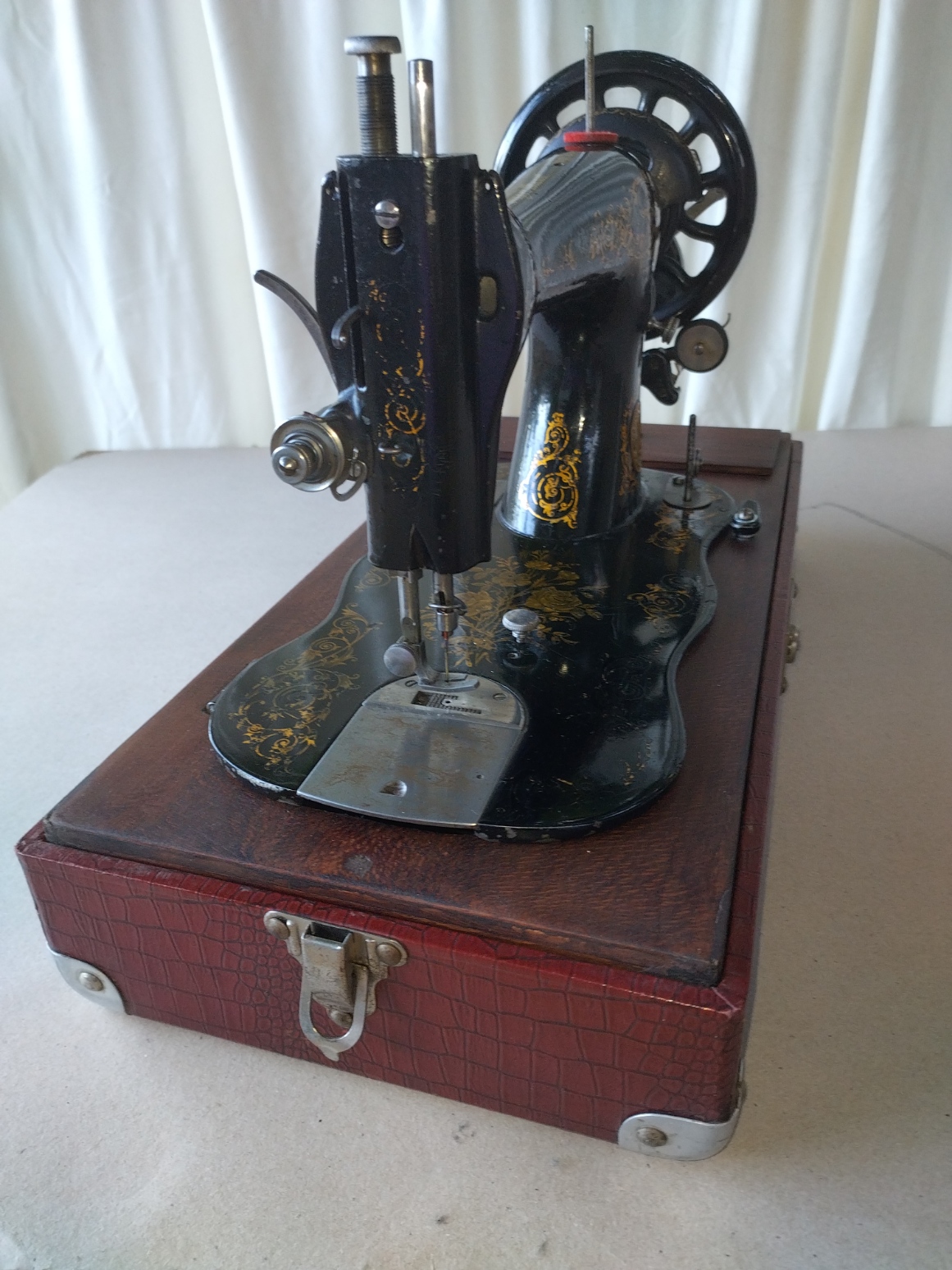
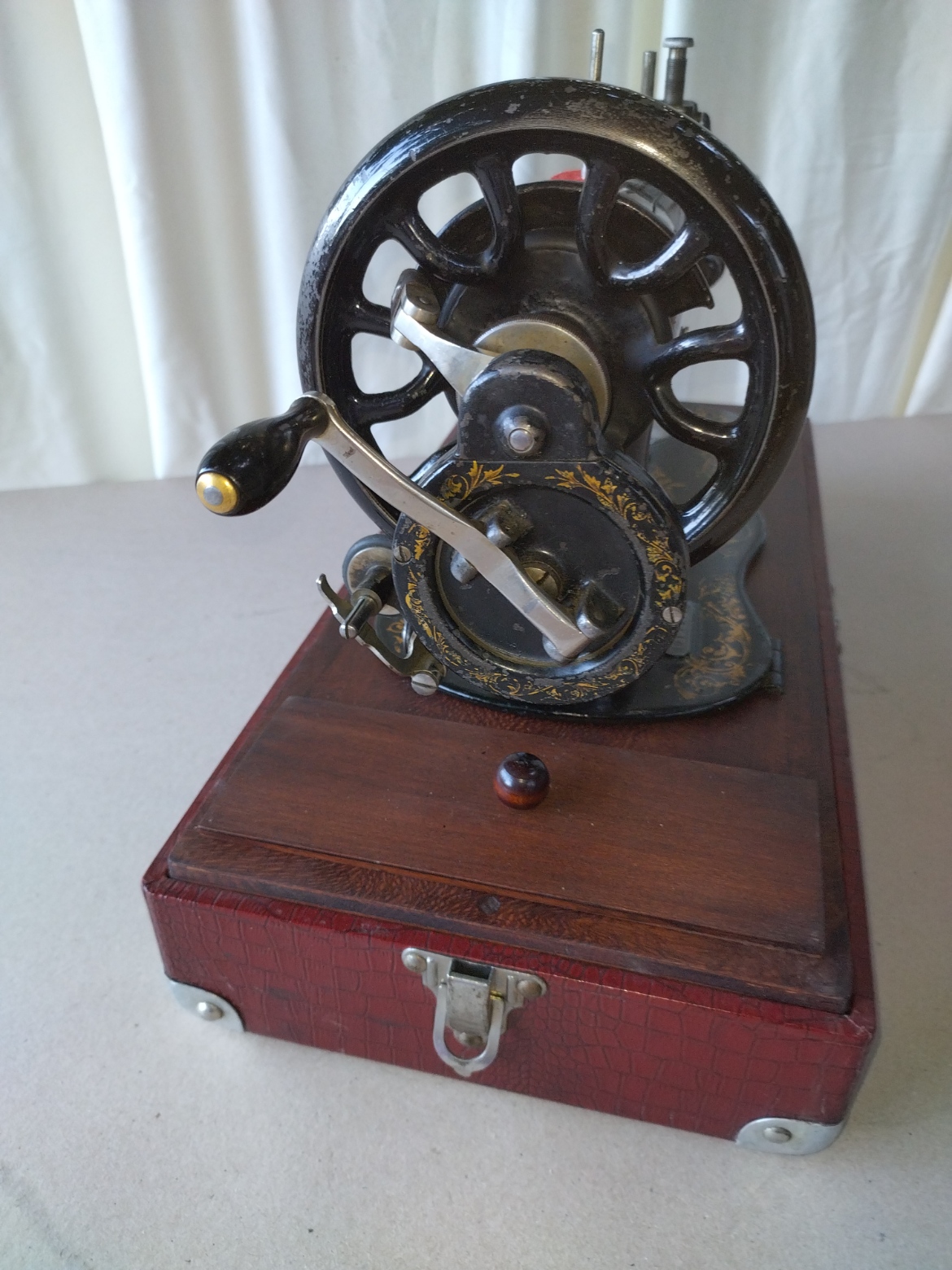
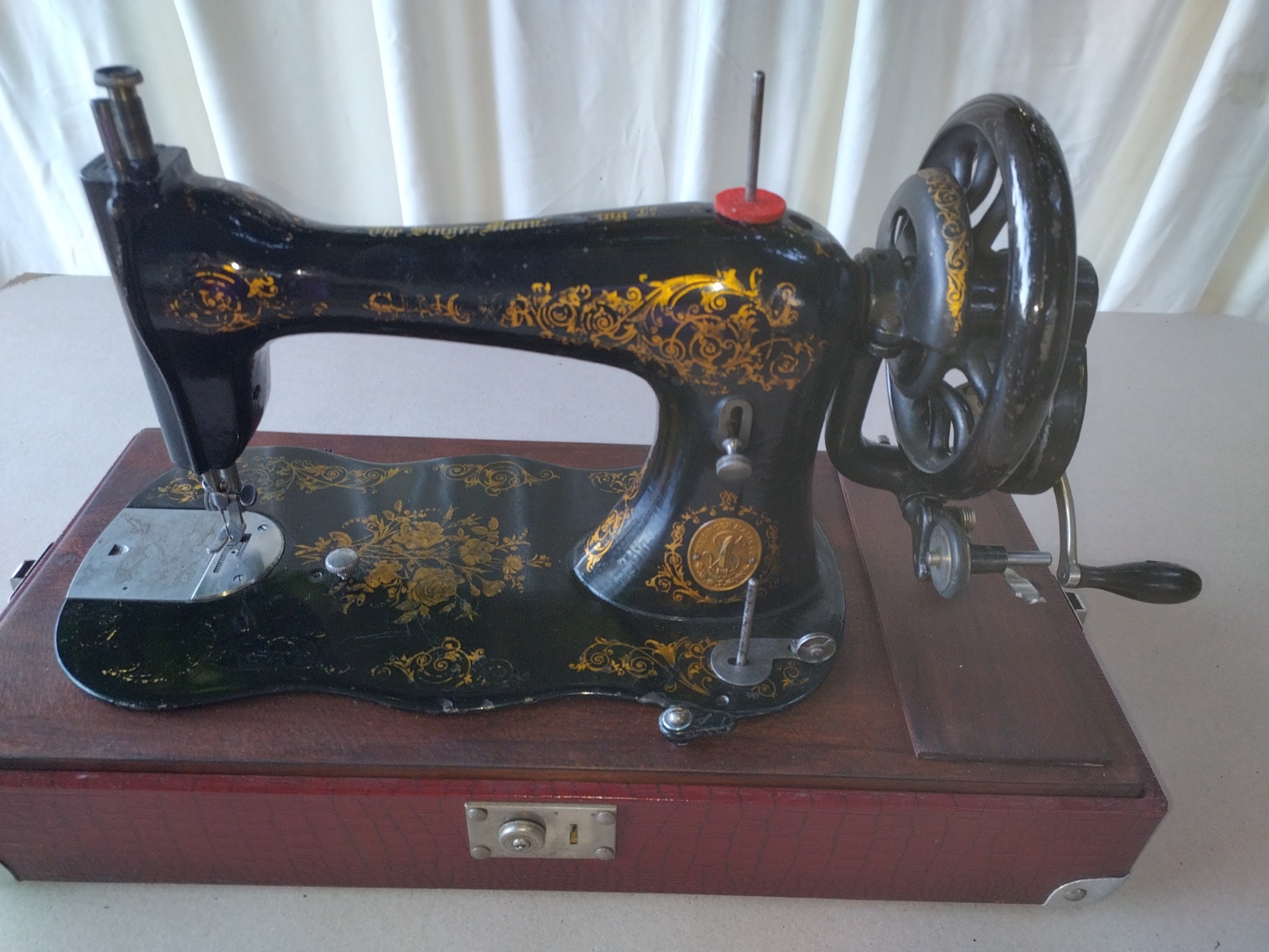
In use from 1879
In use for Classes:
- 16 (Improved Manufacturing)
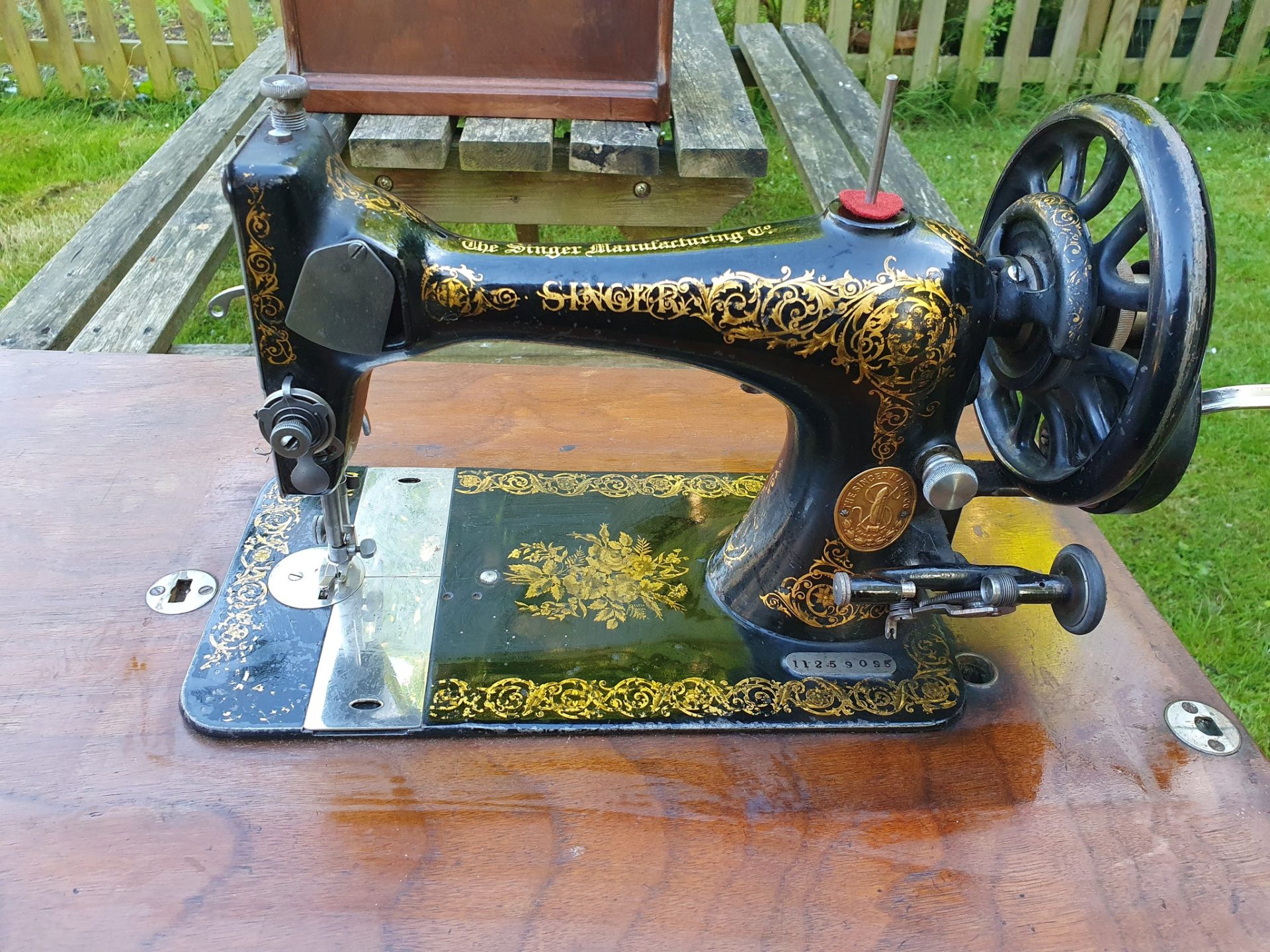
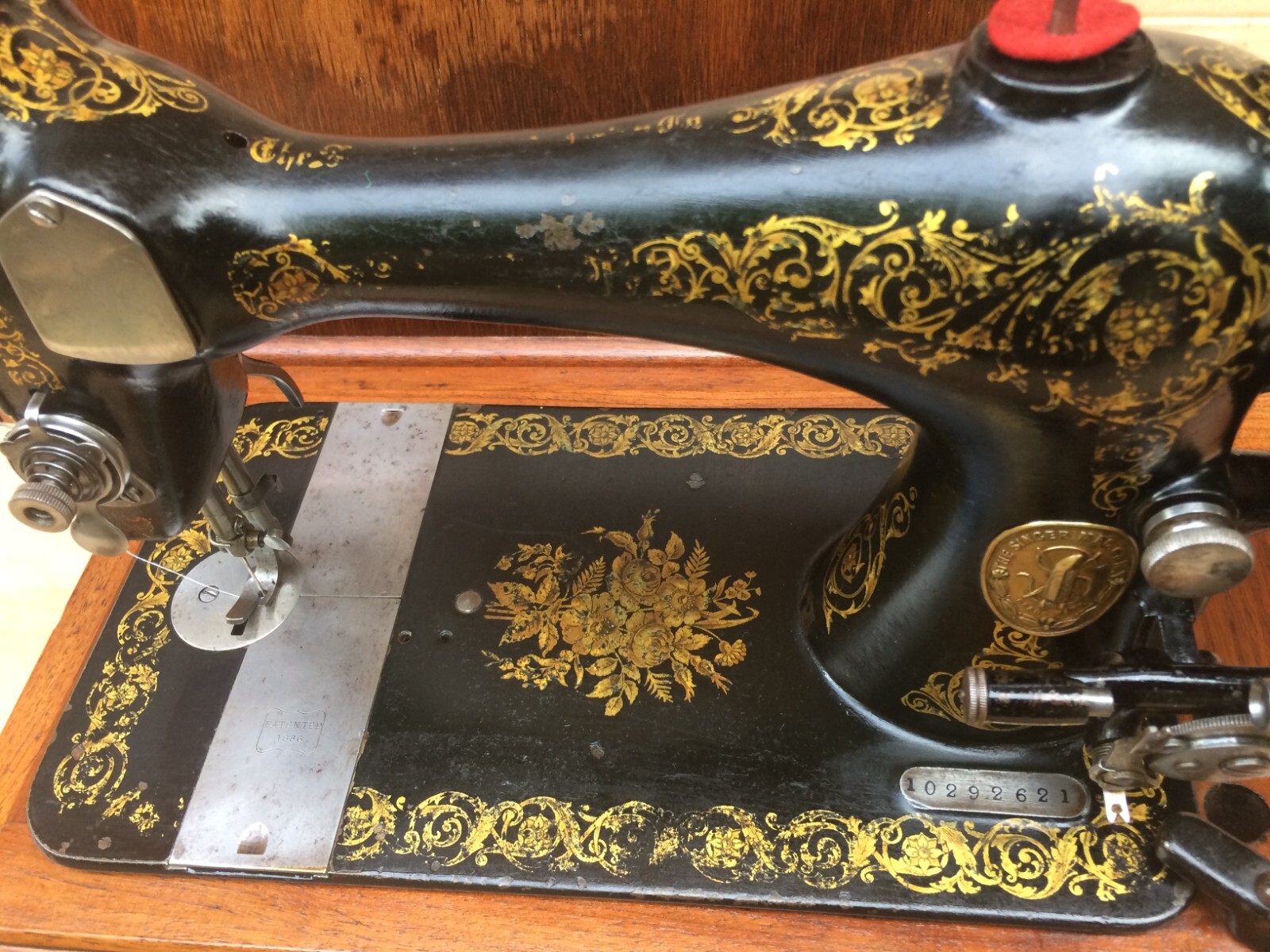
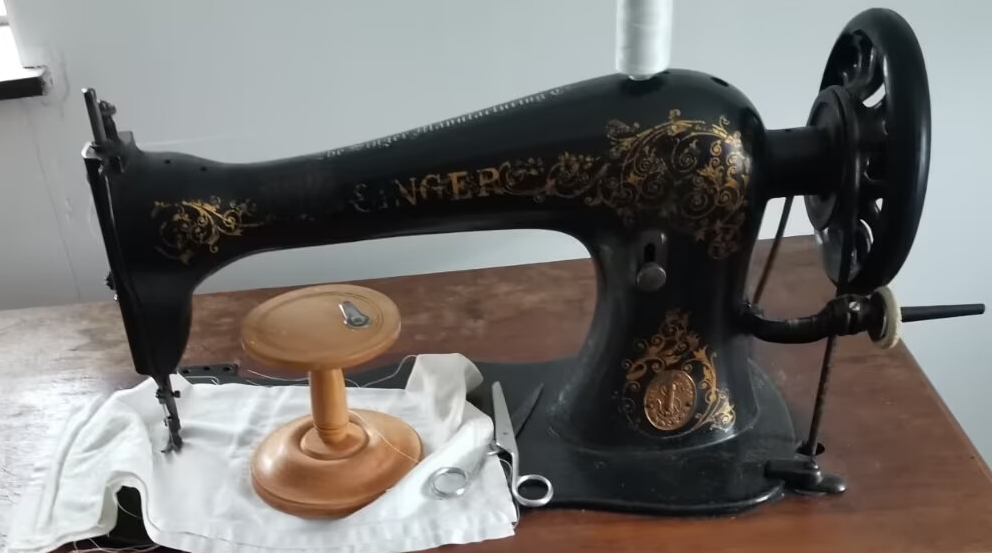
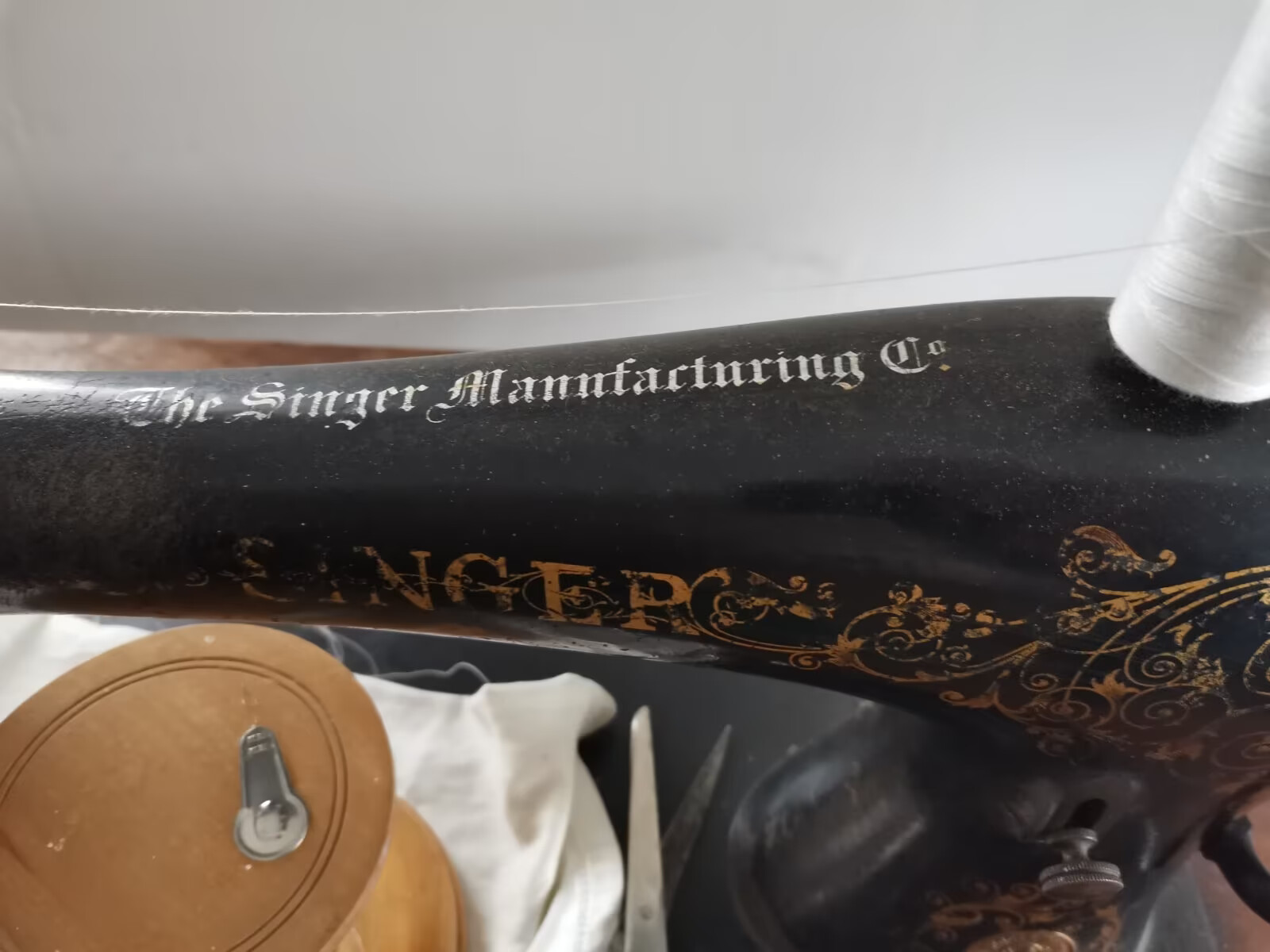
This decal set has several variants, where scrolls on the arm or roses on the bed change slightly from one another. The variant used on industrial models such as the Improved Manufacturing (I.M., class 16) have less intricate scrolls on the arm, that cover less the Singer logo.
Documented Machines
(What does it mean?)Total n.: 2
Factories:
Documented Classes:
- 16
Documented years: 1891
In use from 1900 up to 1913
In use for Classes:
- VS3 / 28
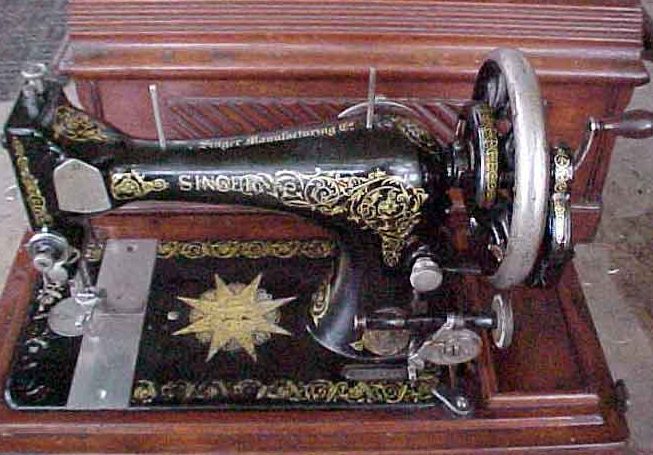
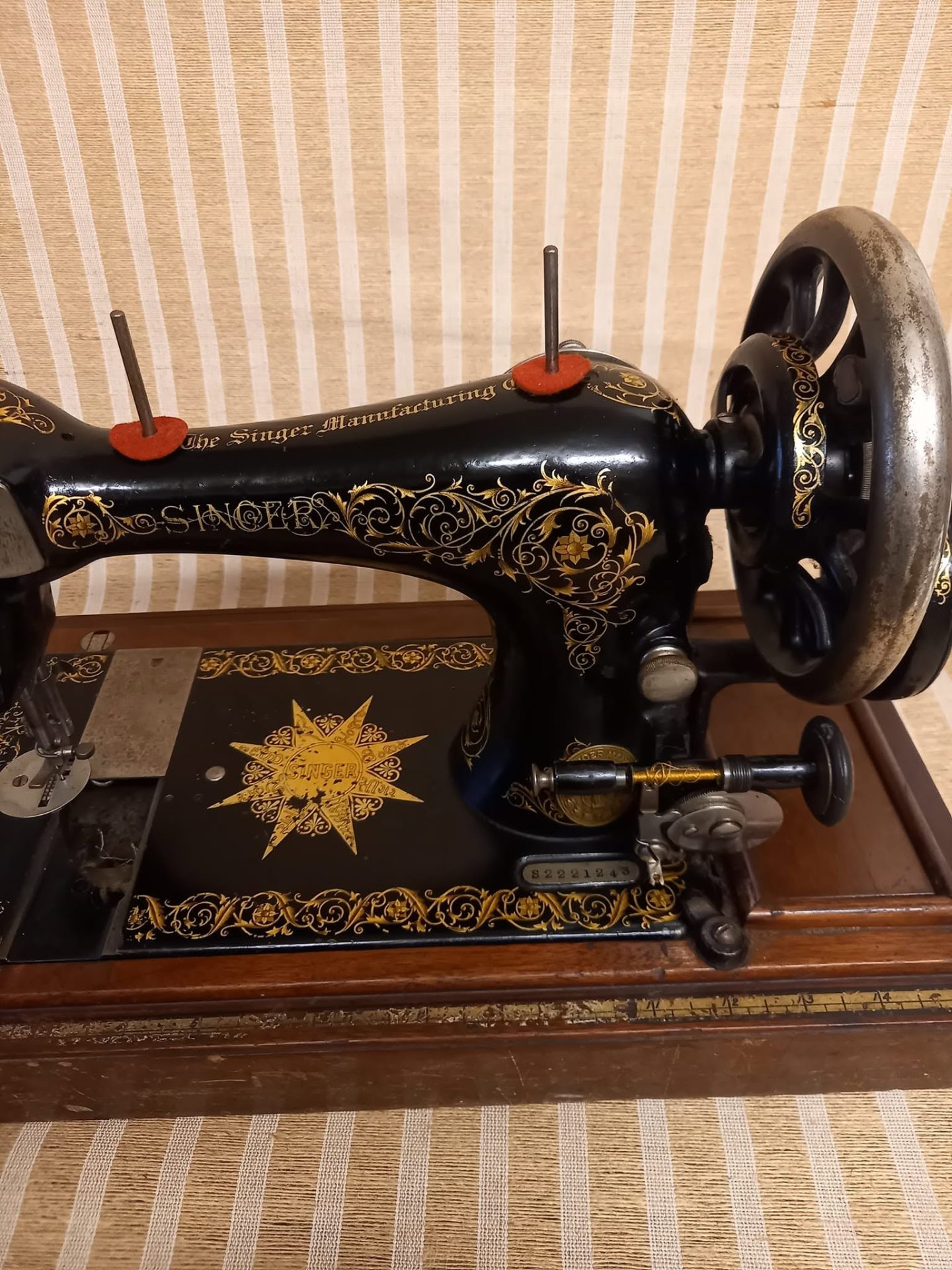
The Indian Star decal was an attempt to stimulate the emerging Indian market at the beginning of the 20th century. Entering this market was not easy, though. The main difficulties were overcoming caste prejudice, language differences and limited access to women. The Indian Star machines say 'Singer' in different languages on each point of the star: Onya, Singhalese, Gujarati, Kannada, Hindi, Telugu, Malayalam (or Tamil), Urdu. The Indian Star appears as a variant in several decals, on different models.
Documented Machines
(What does it mean?)Total n.: 1
Factories:
Documented Classes:
- 28
Documented years: 1907
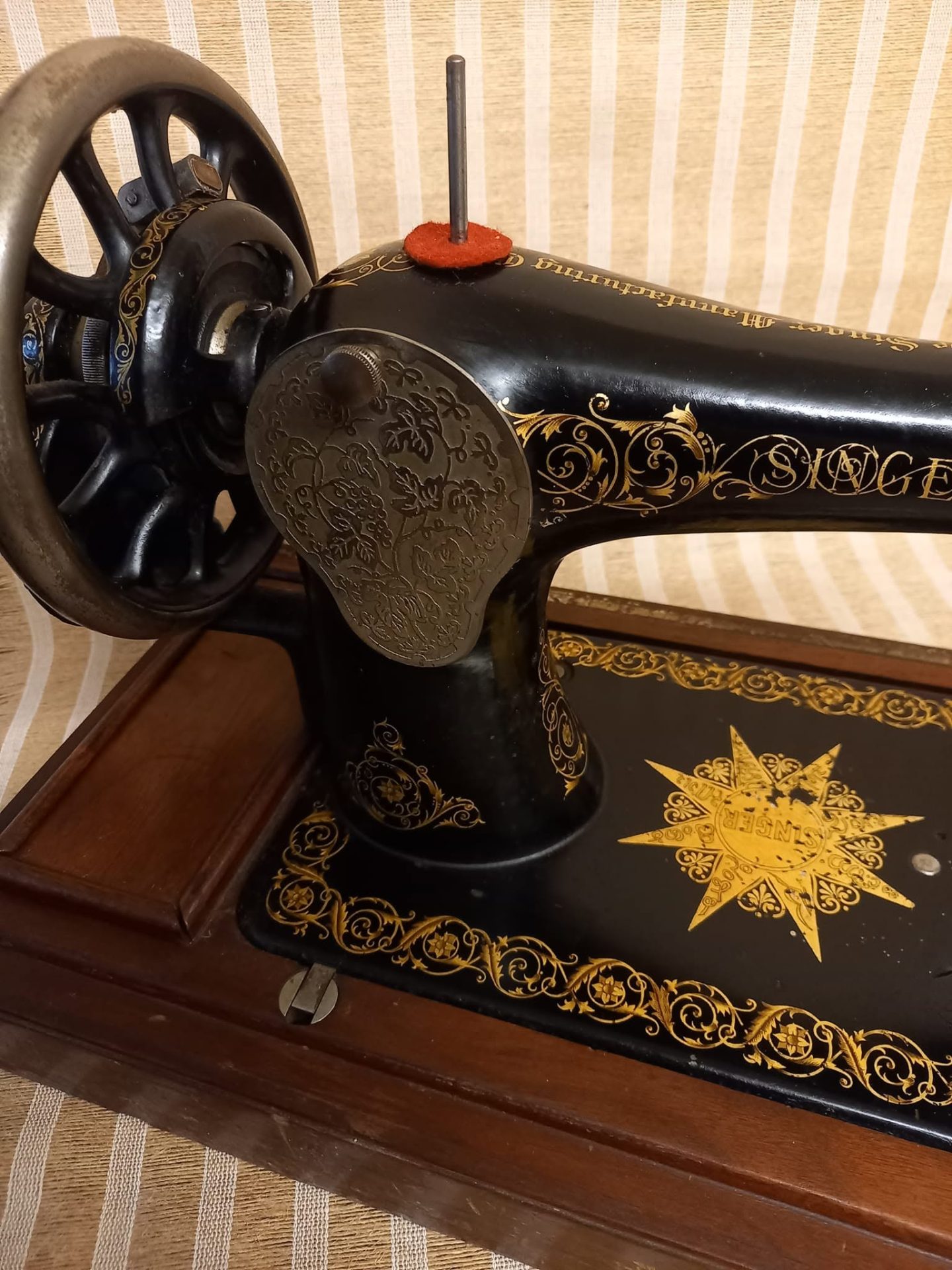
In use from 1896 up to 1897
In use for Classes:
- 27K
Documented Machines
(What does it mean?)Total n.: 1
Factories:
Documented Classes:
- 27
Documented years: 1896
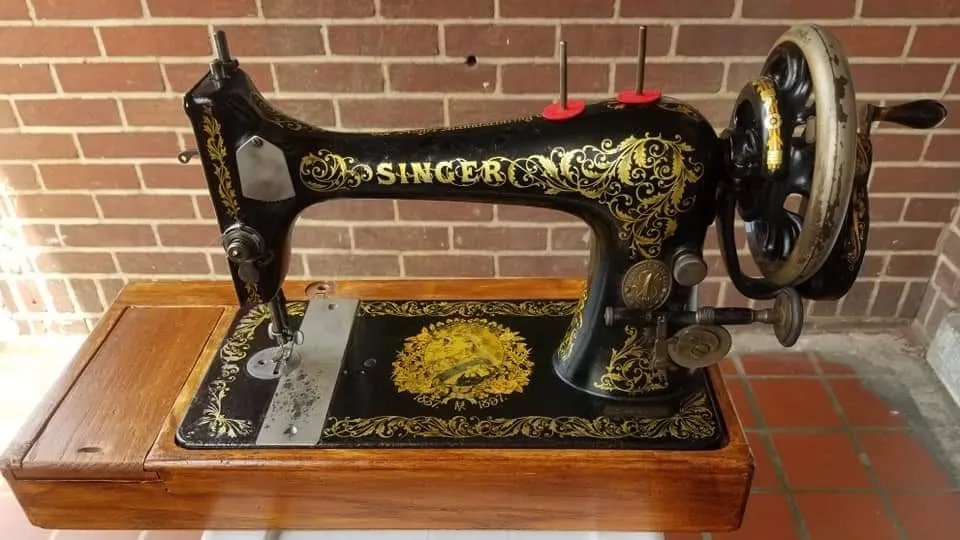
Design patent granted to George A. Squire in 1884, together with other sewing machine ornamentation patents. The patent describes the design as "composed of branches or sprays of a trailing vine having flowers and leaves, somewhat like plants of the genus Bellis, of which the common daisy is a species."
Decal name recorded by us at #LRCrafts, for lack of documentation elsewhere.
Main photo provided by Selby Sewing Machines
Patents:
- 05/08/1884, Patent n. USD15219 "Ornamentation of a sewing machine" by George Alfred Squire (Pdf) - Design patent for hand ornamentation. It’s possible that following decals borrowed their design from here.
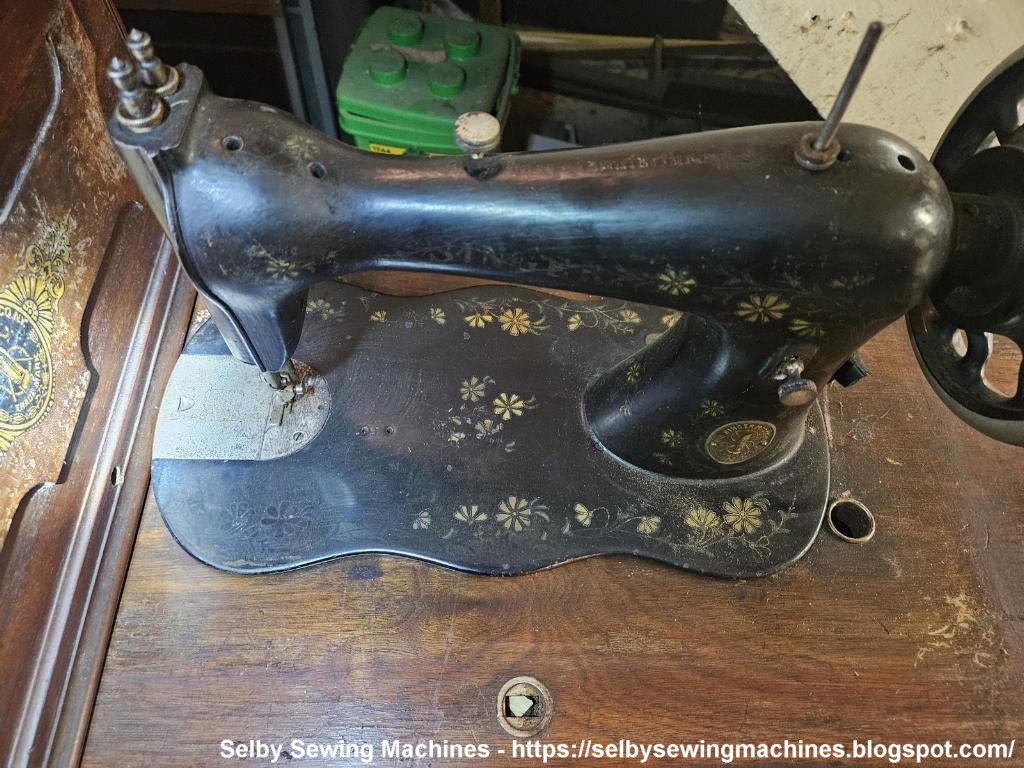
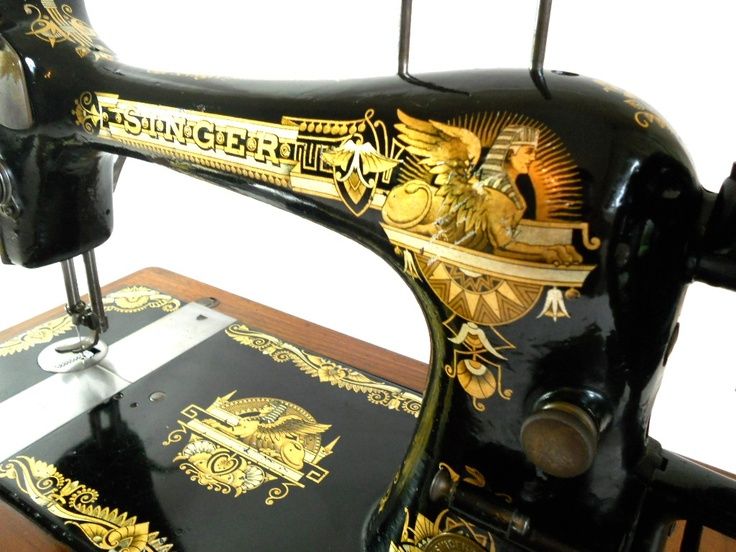
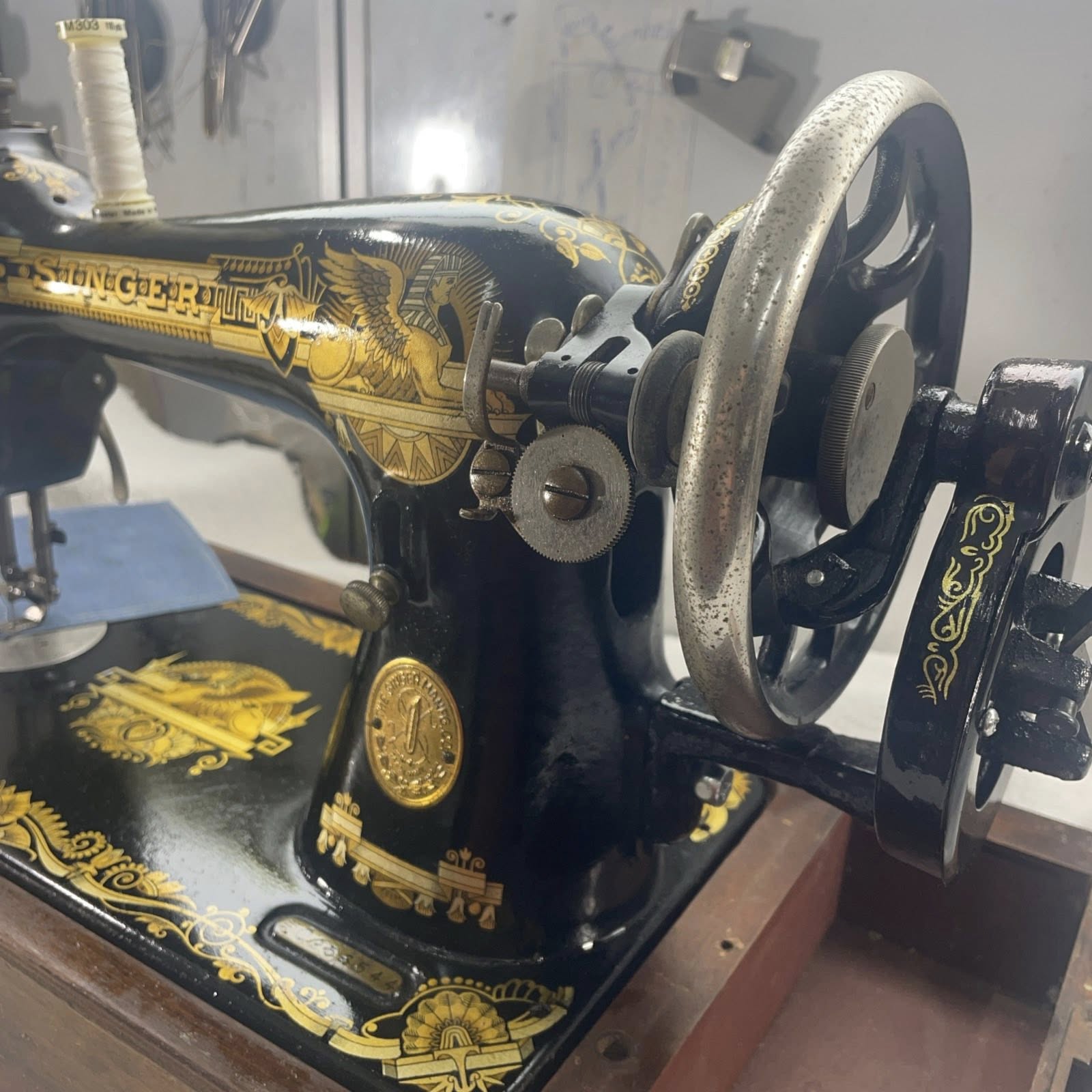
Official Singer name: 15 Sphinx
In use from 1886 up to 1959
In use for Classes:
- 15 (1896 - 1953)
- 27 (1891 - 1912)
- 127 (1912 - 1929)
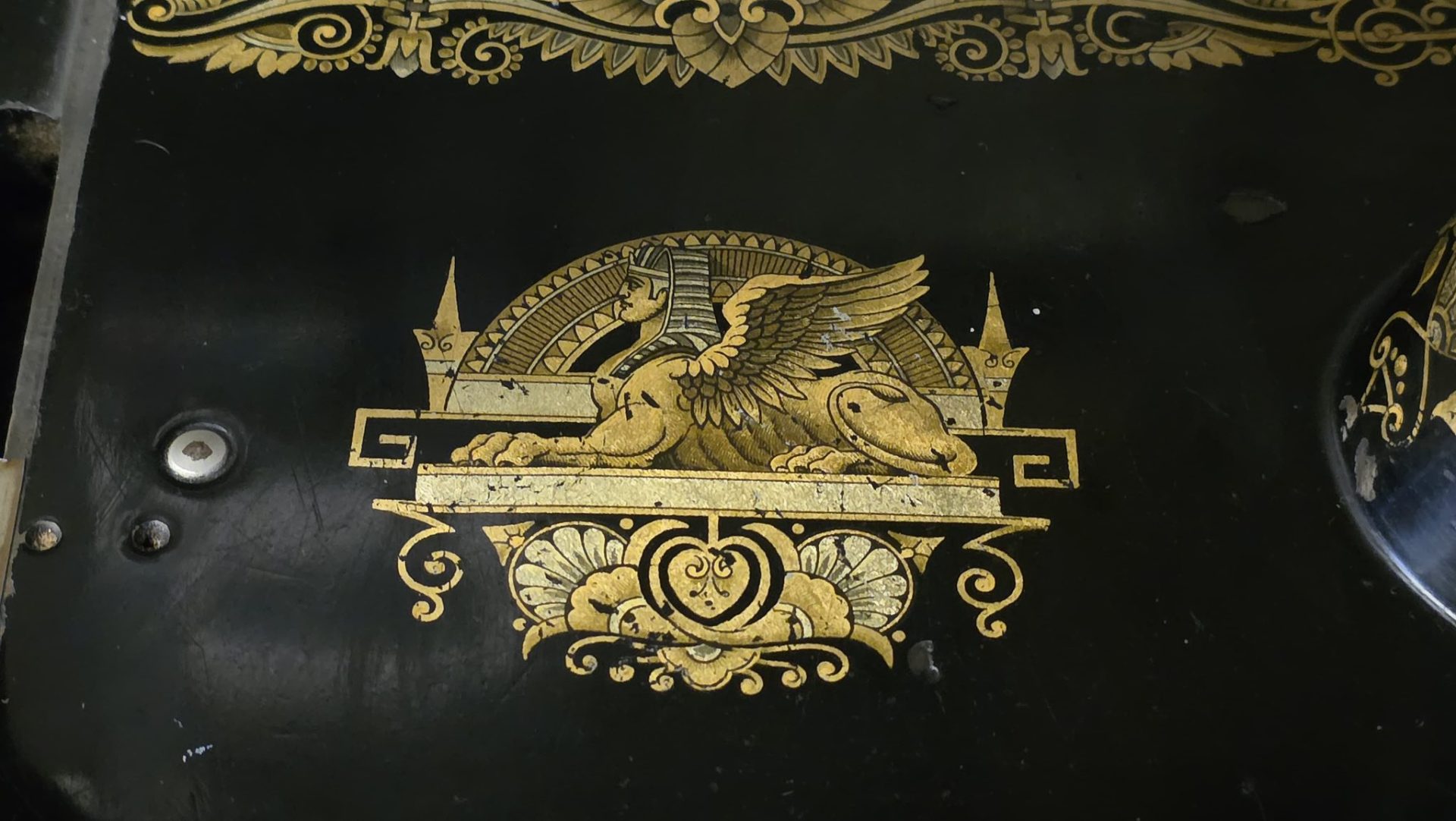
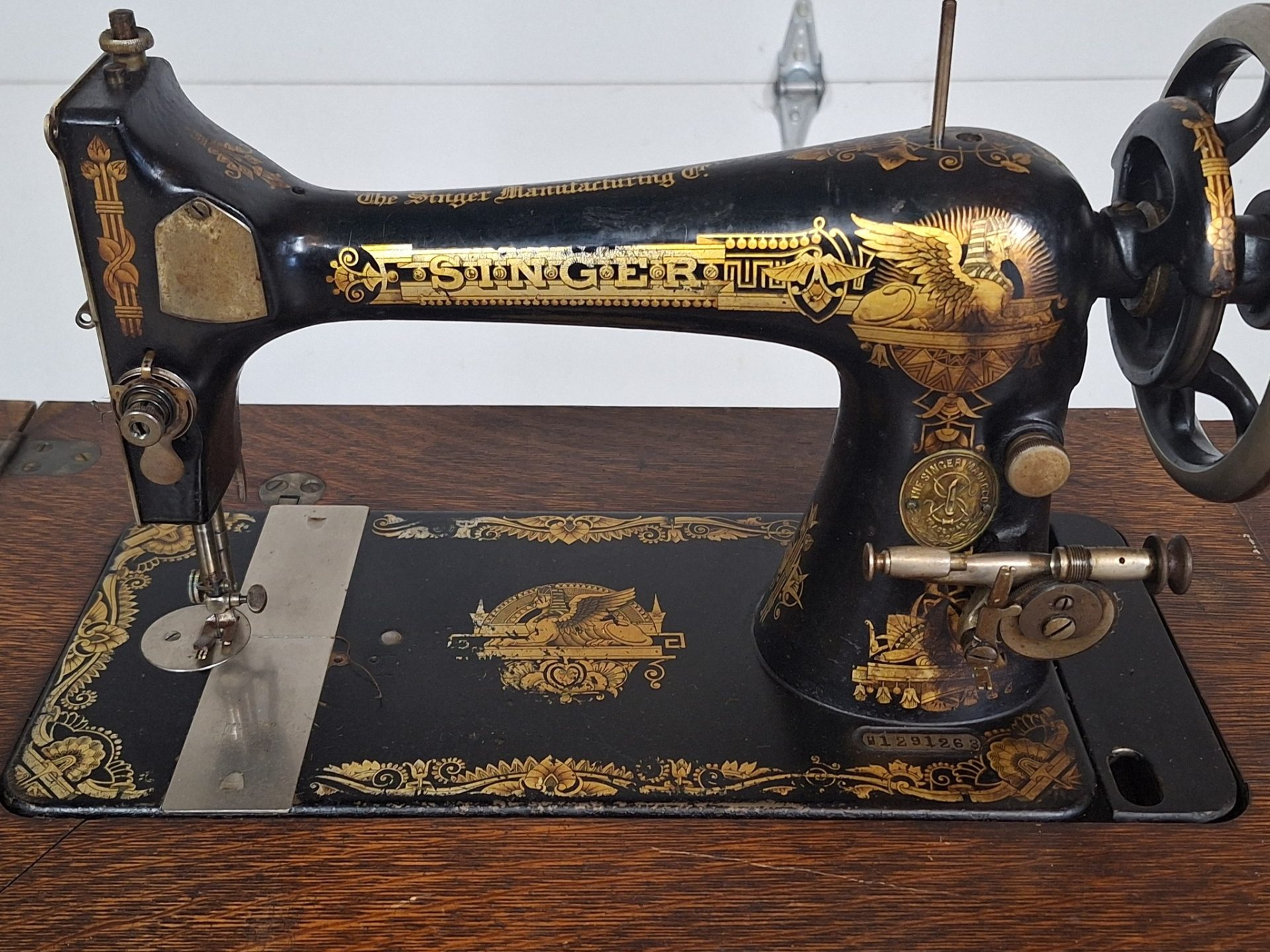
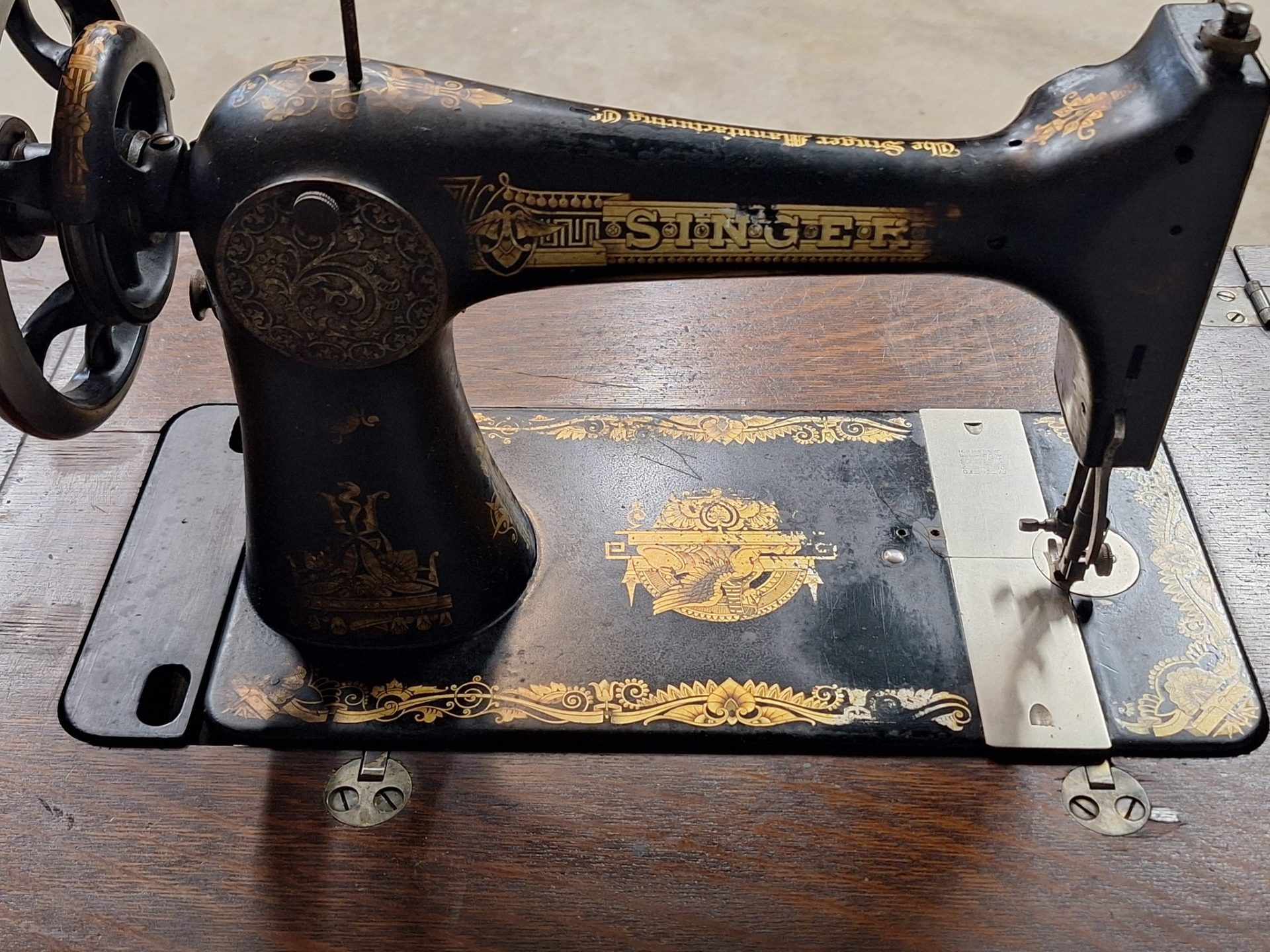
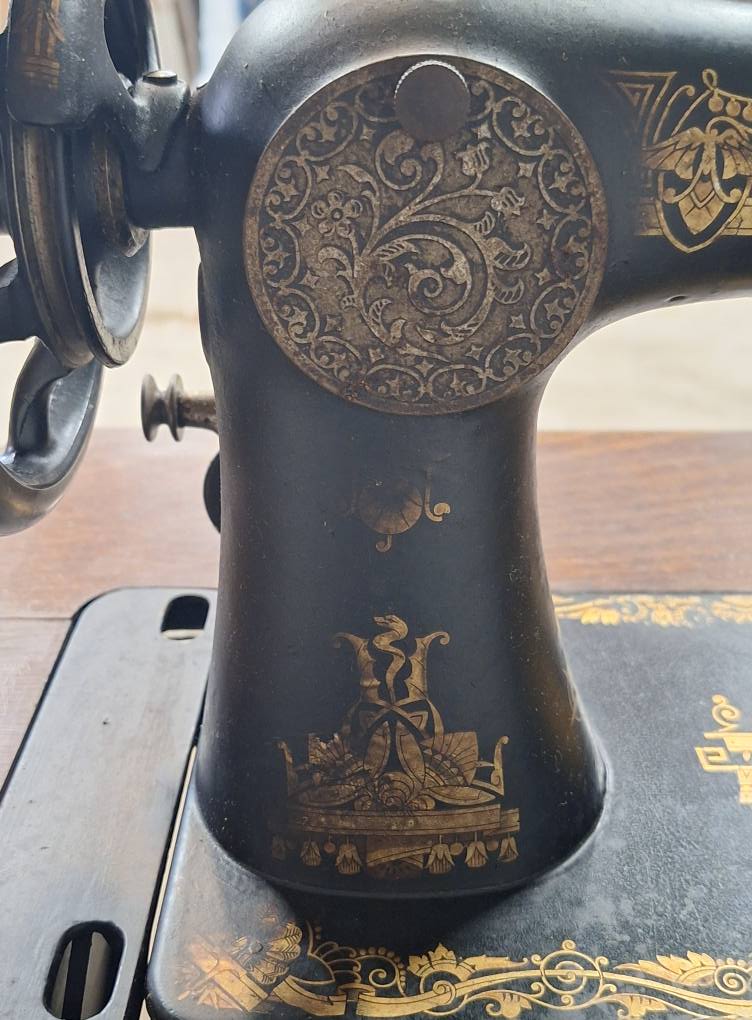
Also called “Egyptian” decals, they first appeared in the 1890’s. They were used on the class 15 and class 27 up to the 1950’s.
Documented Machines
(What does it mean?)Total n.: 342
Factories:
- Bridgeport, Connecticut (USA)
- Elizabethport, New Jersey (USA)
- Kilbowie, Clydebank (Scotland, UK)
- Montreal (Canada)
- Montreal or St. John (Canada)
- Monza (Italy)
- Podolsk (Russia)
- St. John's Factory, Quebec (Canada)
- Wittenberge, Prussia (Germany)
Documented Classes:
- 15
- 27
- 127
Documented years: 1888 - 1950
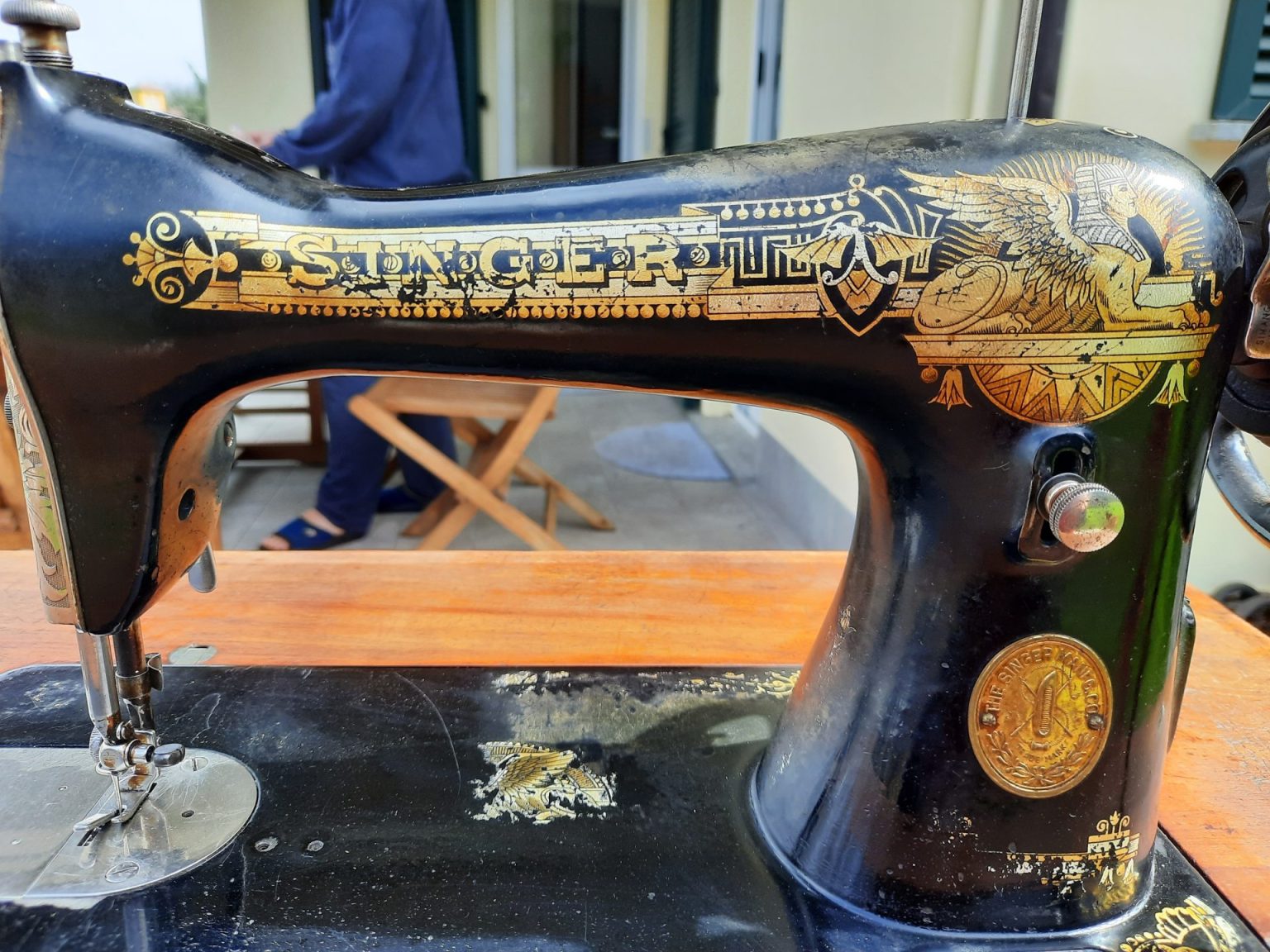
In use for Classes:
- 15
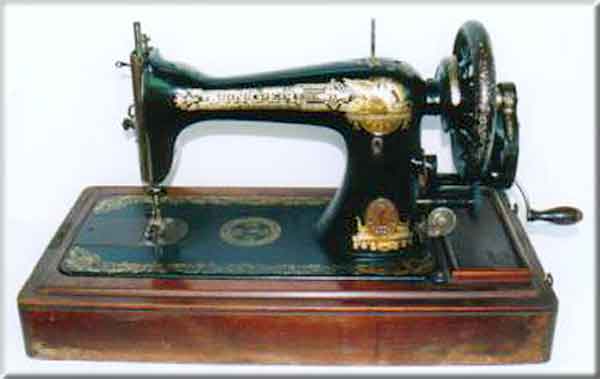
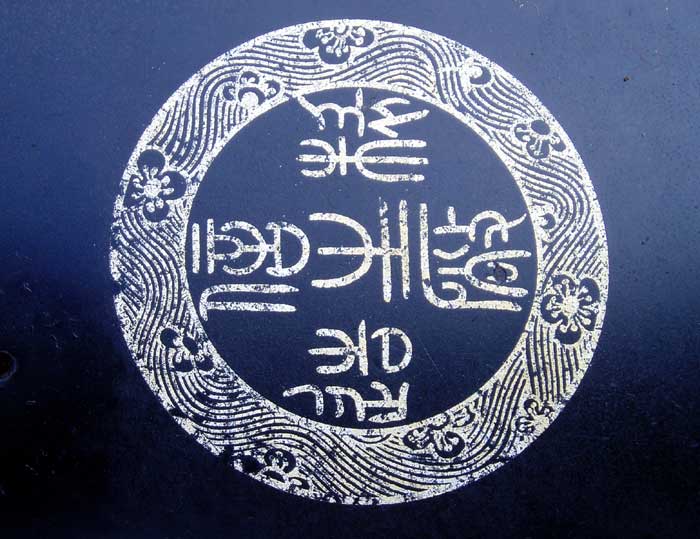
Recorded by The Needlebar wiki. The Chinese characters in the center of the bed are in Seal Script, a very old and decorative writing style. In traditional Chinese: 福 — fú = good fortune / blessing 禄 — lù = prosperity / wealth / official success 寿 — shòu = longevity 喜 — xǐ = happiness / joy Together, 福禄寿喜 (fú lù shòu xǐ) is an extremely traditional auspicious combination meaning roughly “fortune, prosperity, longevity and happiness.” These characters were applied specifically on machines produced for the Chinese market. They were applied specifically on machines produced for the Chinese market.
Official Singer name: 23 Indian Sphinx
In use from 1940 up to 1957
In use for Classes:
- 15
Based on the Sphinx / Memphis design, in the Indian national colors, with the Indian Star on the bed plate. A few different color variations may appear. The Indian Star decal was an attempt to stimulate the emerging Indian market at the beginning of the 20th century. Entering this market was not easy, though. The main difficulties were overcoming caste prejudice, language differences and limited access to women. The Indian Star machines say 'Singer' in different languages on each point of the star: Onya, Singhalese, Gujarati, Kannada, Hindi, Telugu, Malayalam (or Tamil), Urdu. The Indian Star appears as a variant in several decals, on different models.
Documented Machines
(What does it mean?)Total n.: 7
Factories:
Documented Classes:
- 15
Documented years: 1941 - 1957
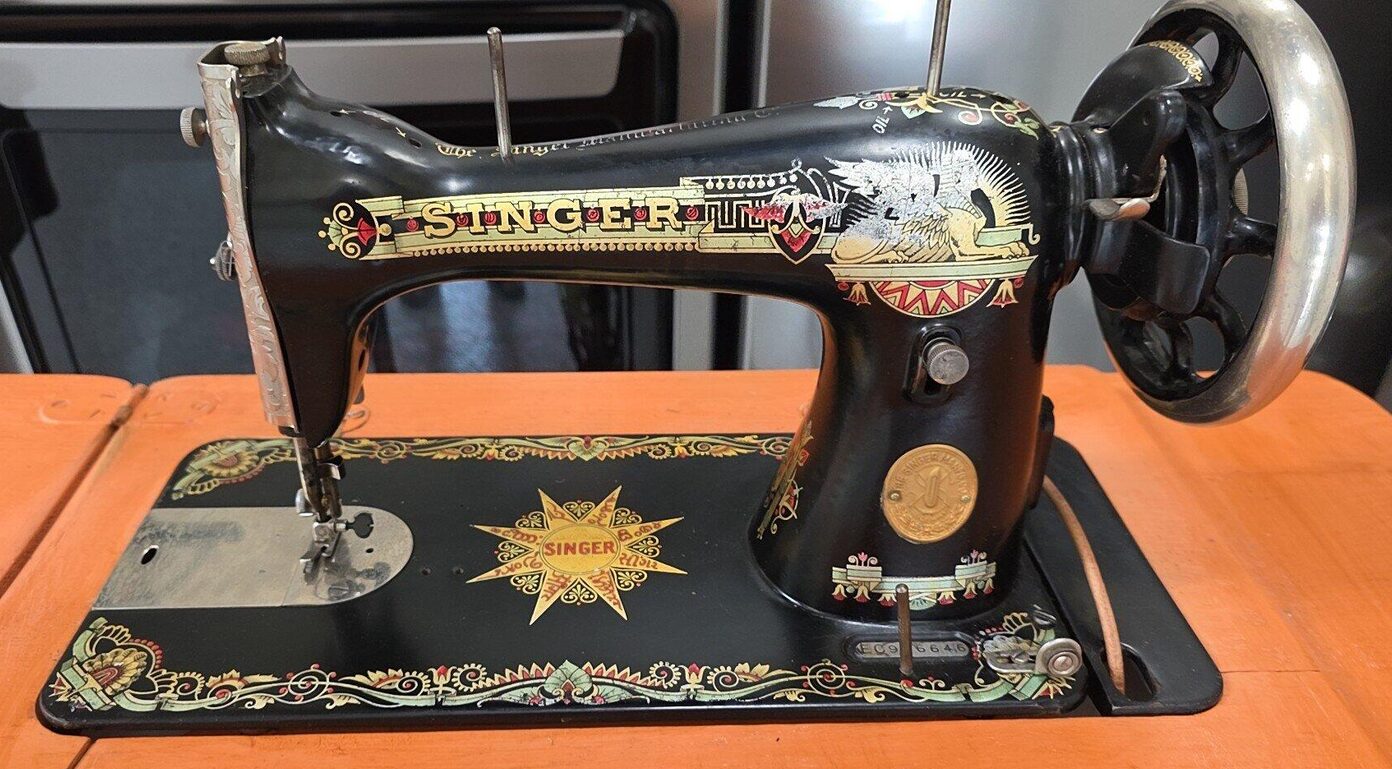
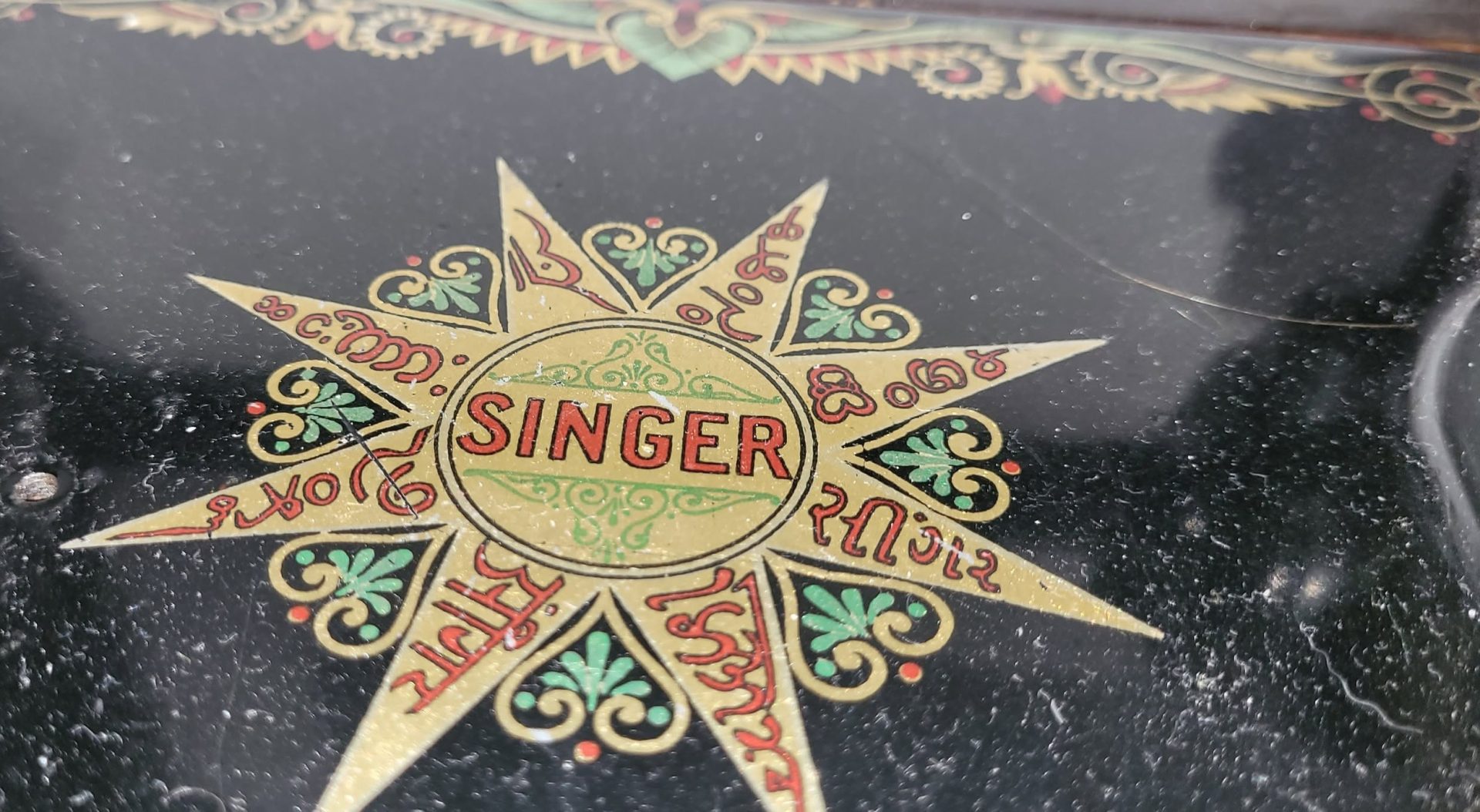
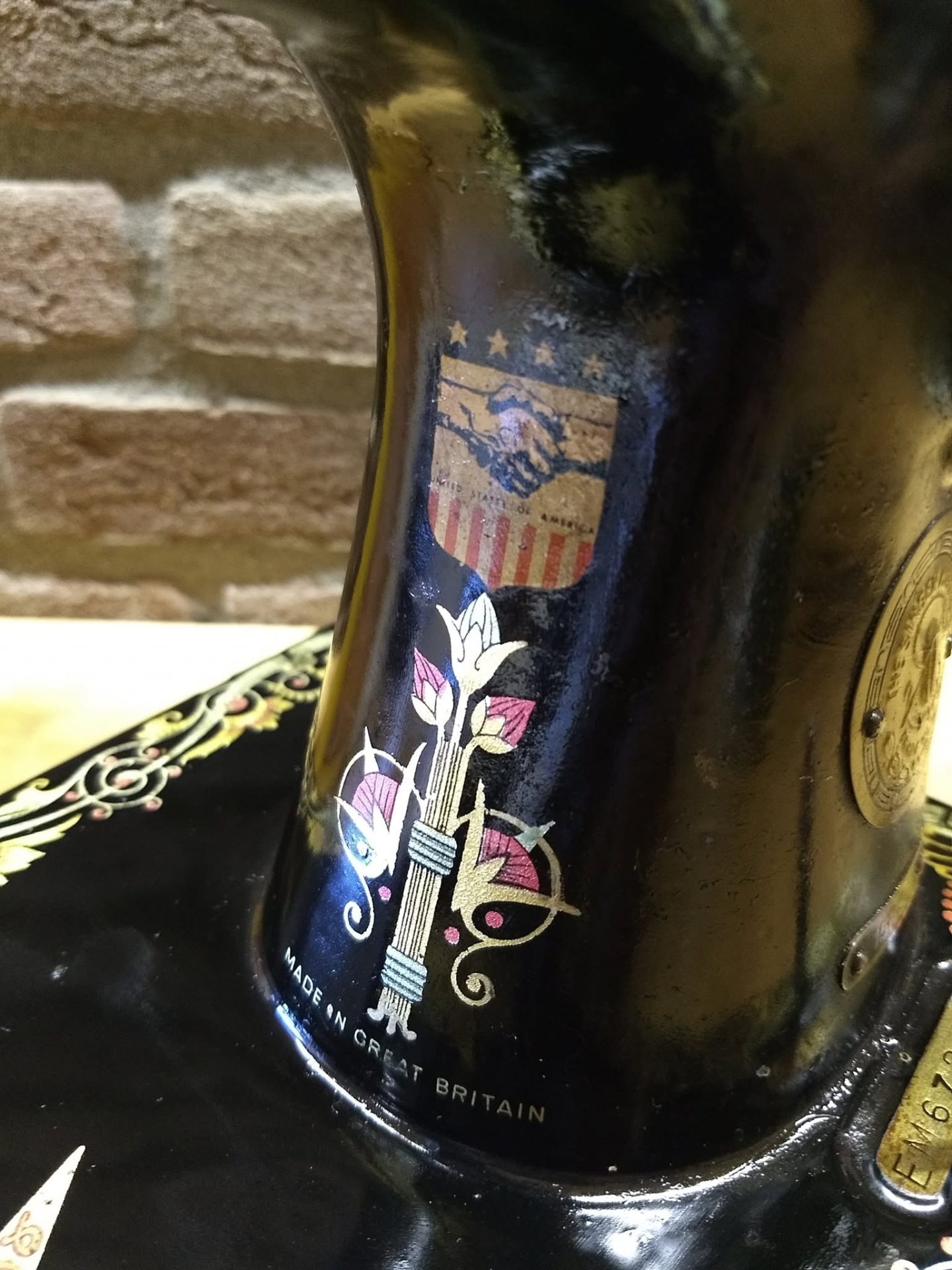
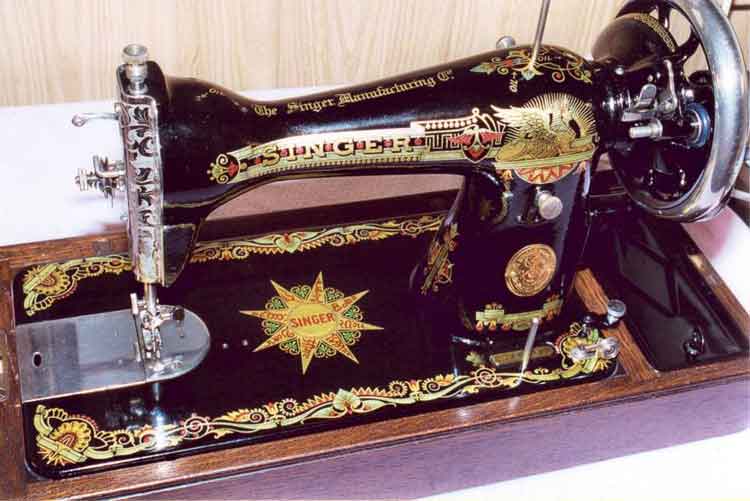
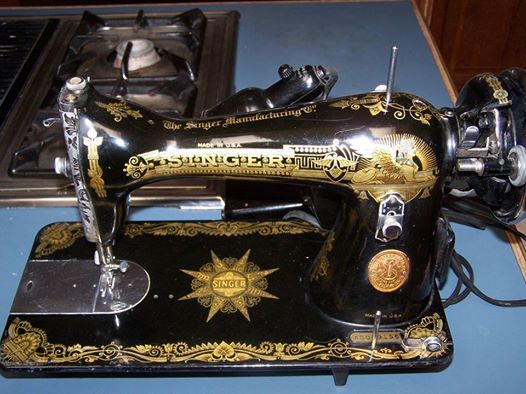
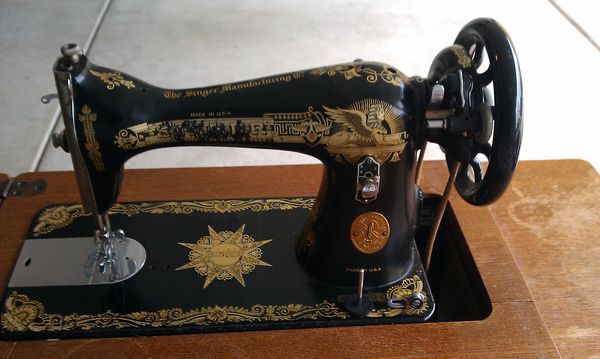
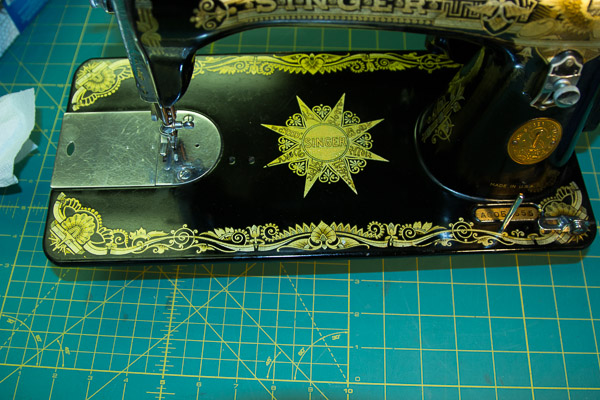
In use from 1871 up to 1881
In use for Classes:
- 12 (New Family)
Documented Machines
(What does it mean?)Total n.: 2
Factories:
- Elizabethport, New Jersey (USA)
- James Street, Bridgeton, Glasgow (Scotland, UK)
Documented Classes:
- 12
Documented years: 1871 - 1881
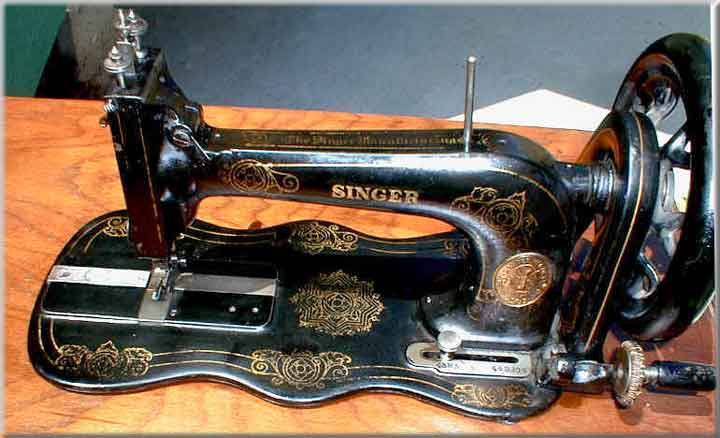
In use from 1887 up to 1890
In use for Classes:
- VS3 / 28
The name comes from an intricate design that could remind of classic decorative plant motifs on fabric tapestries popular in the Victorian era.
Documented Machines
(What does it mean?)Total n.: 7
Factories:
Documented Classes:
- 28
Documented years: 1888 - 1890

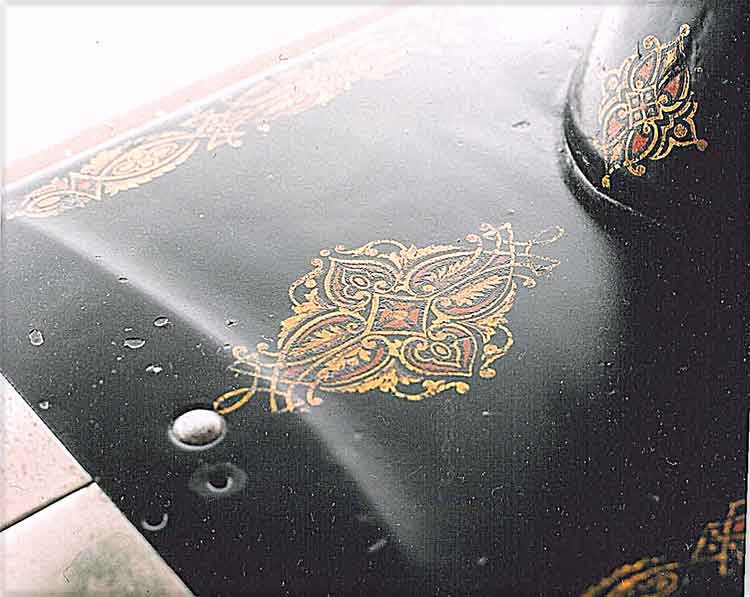
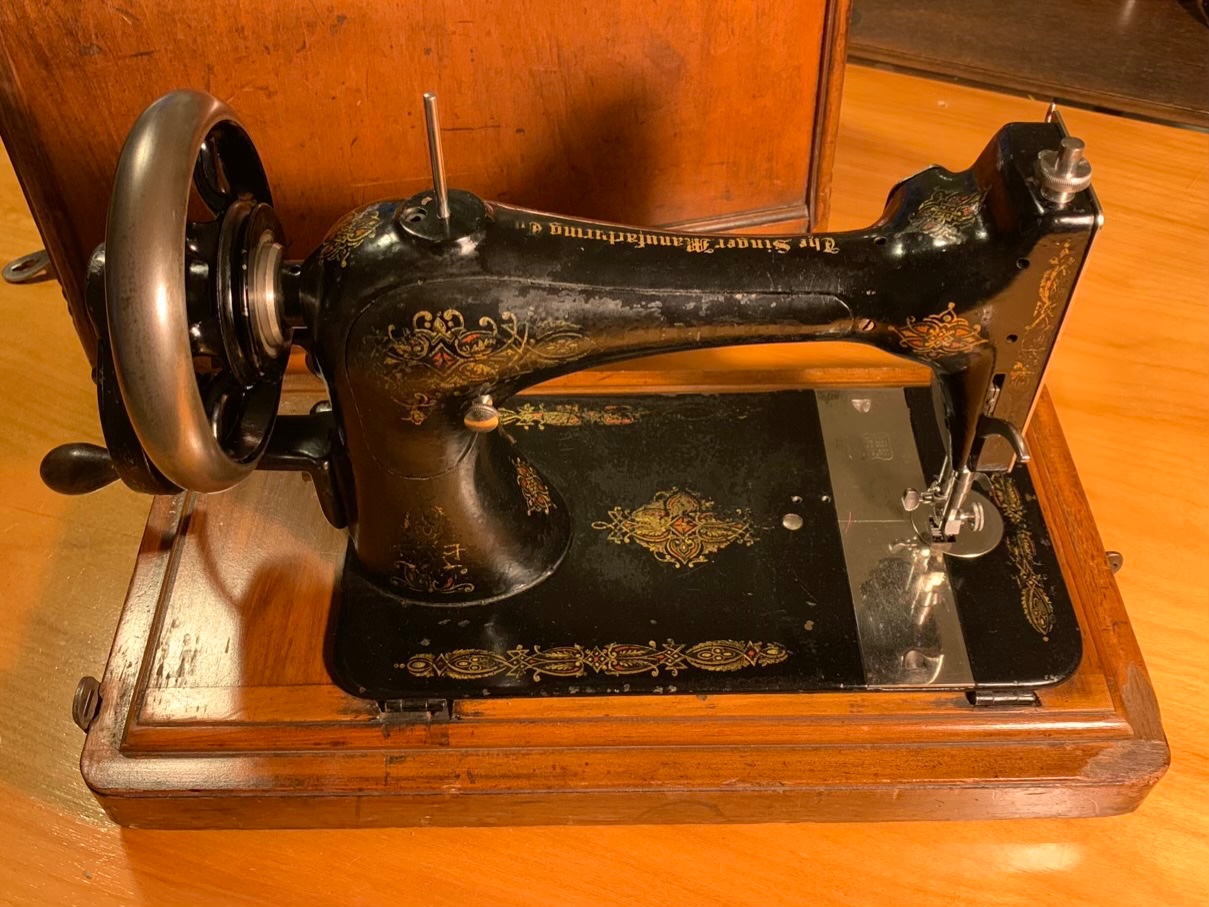
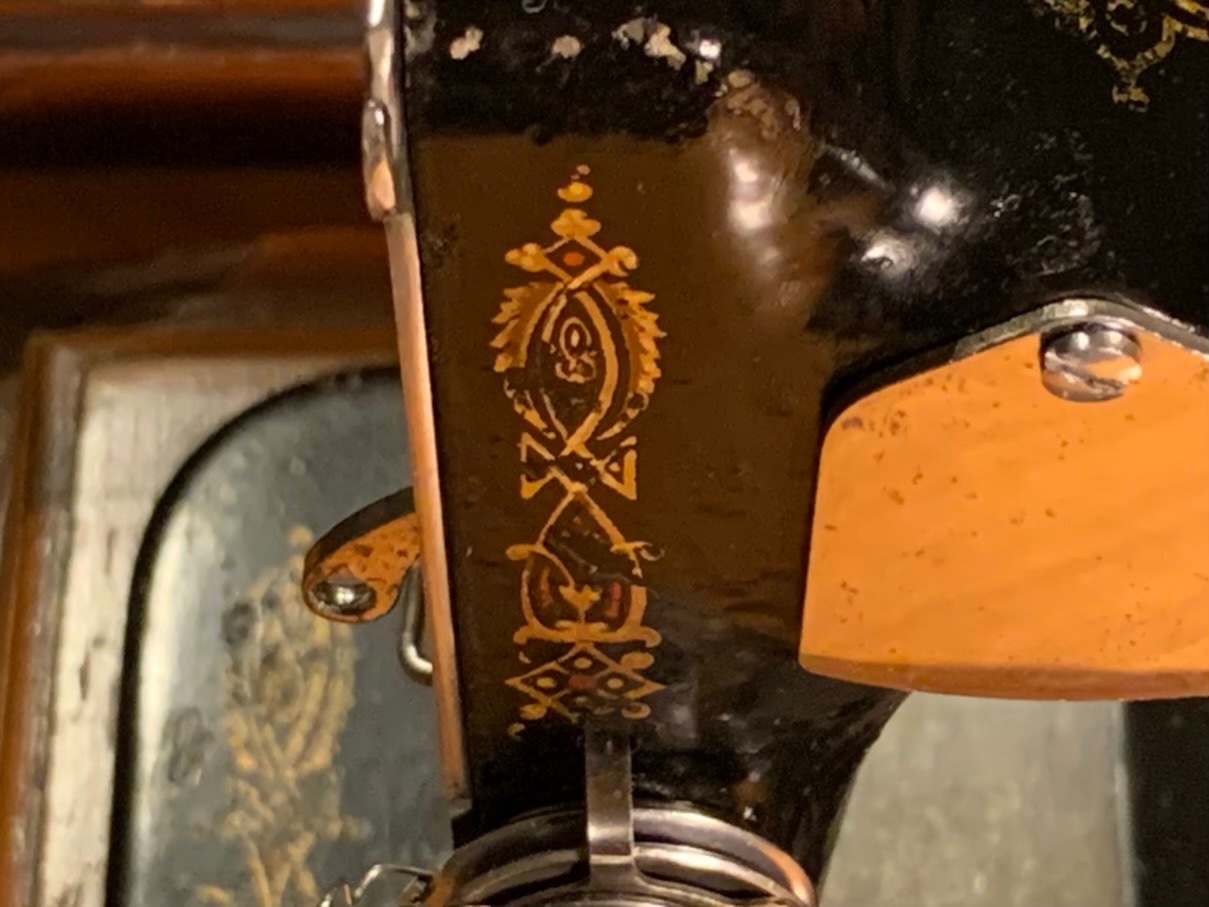
In use from 1887 up to 1930
In use for Classes:
- 15
- 27
- 28
- 66
- 115
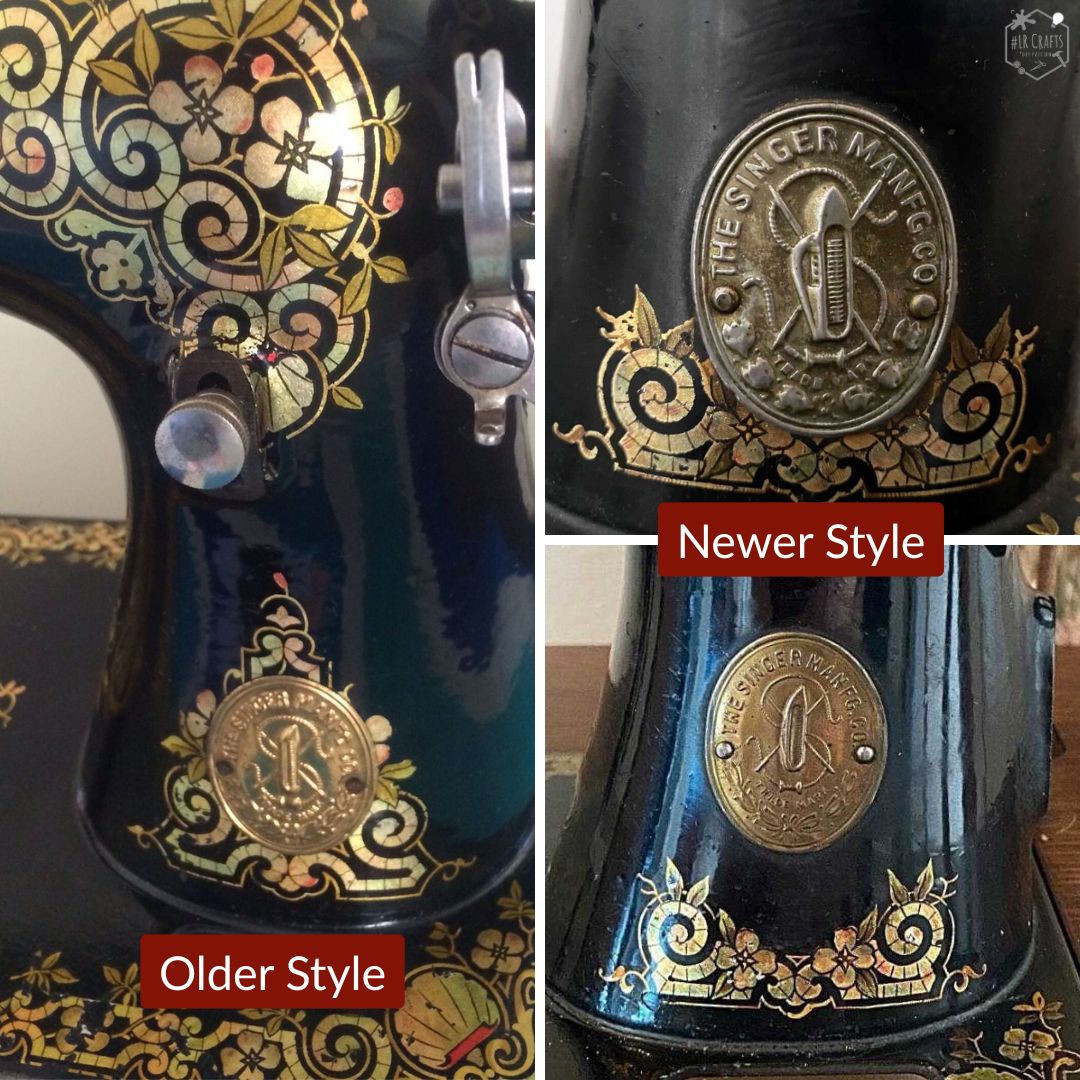
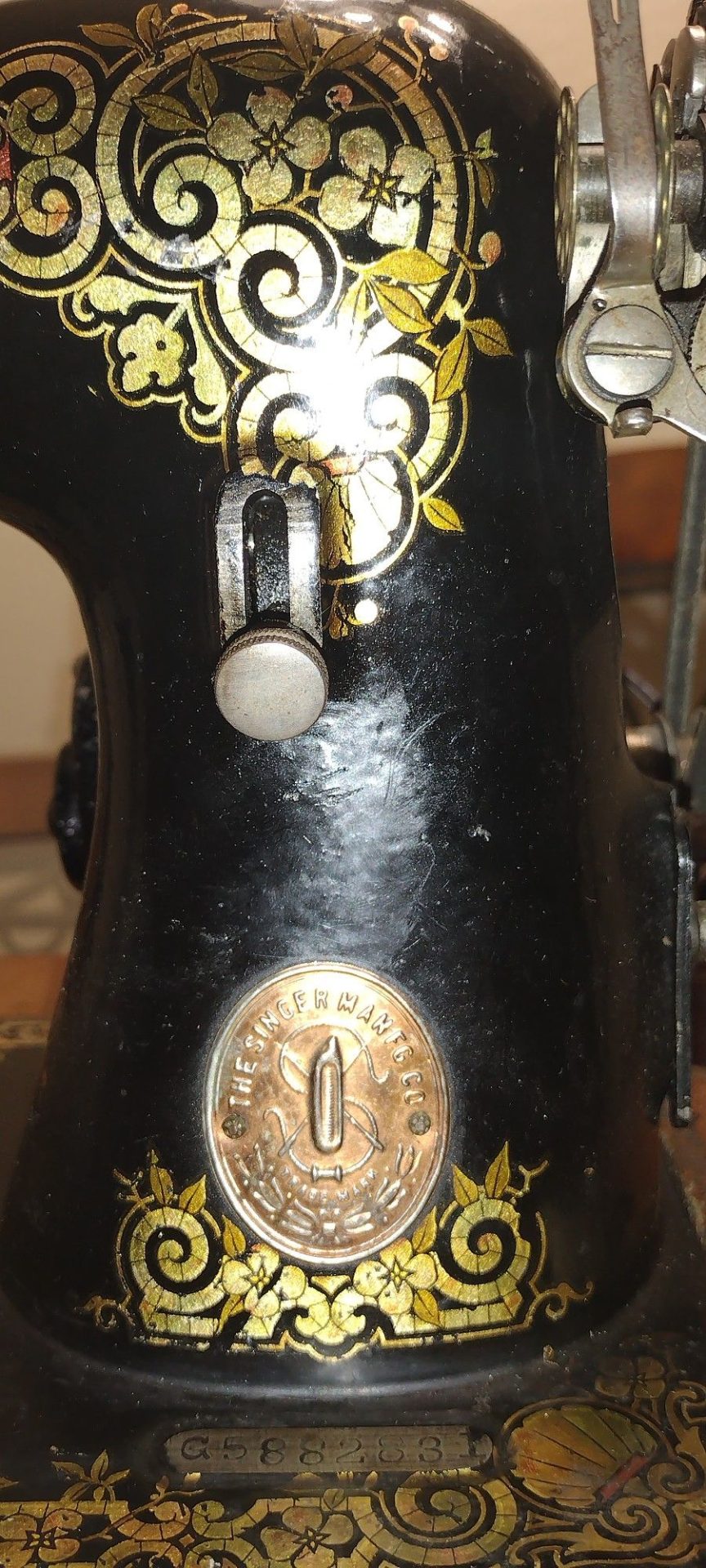
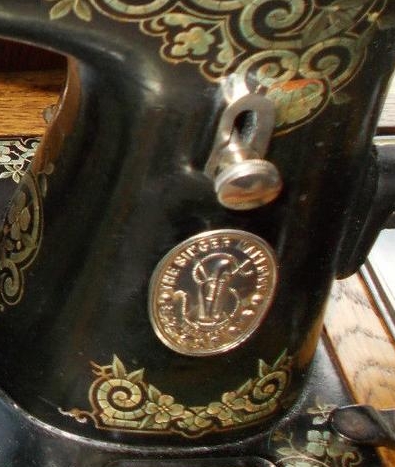
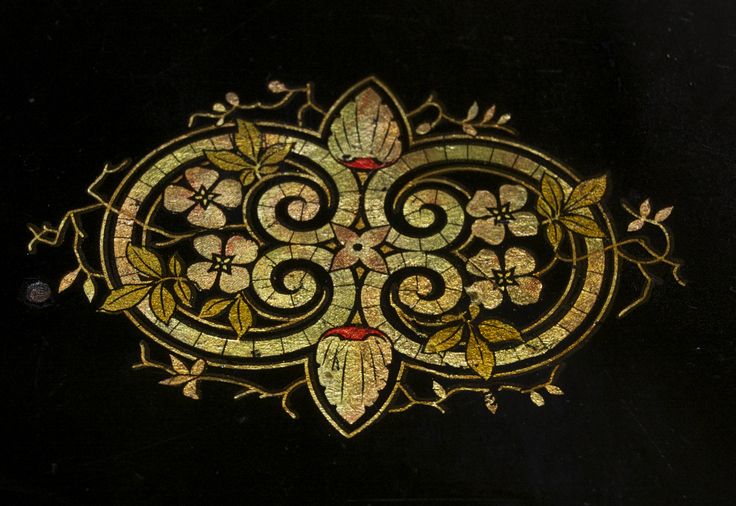
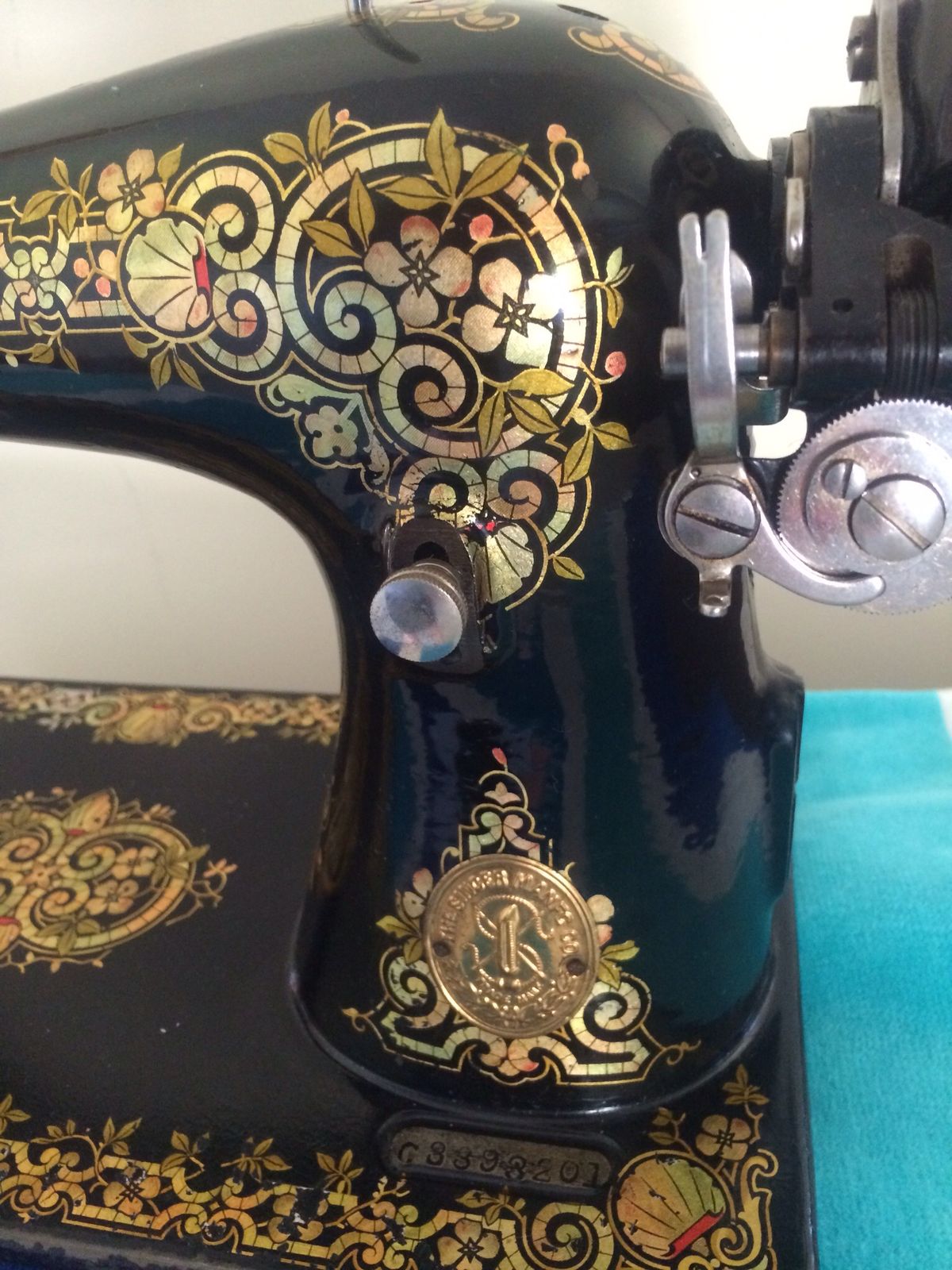
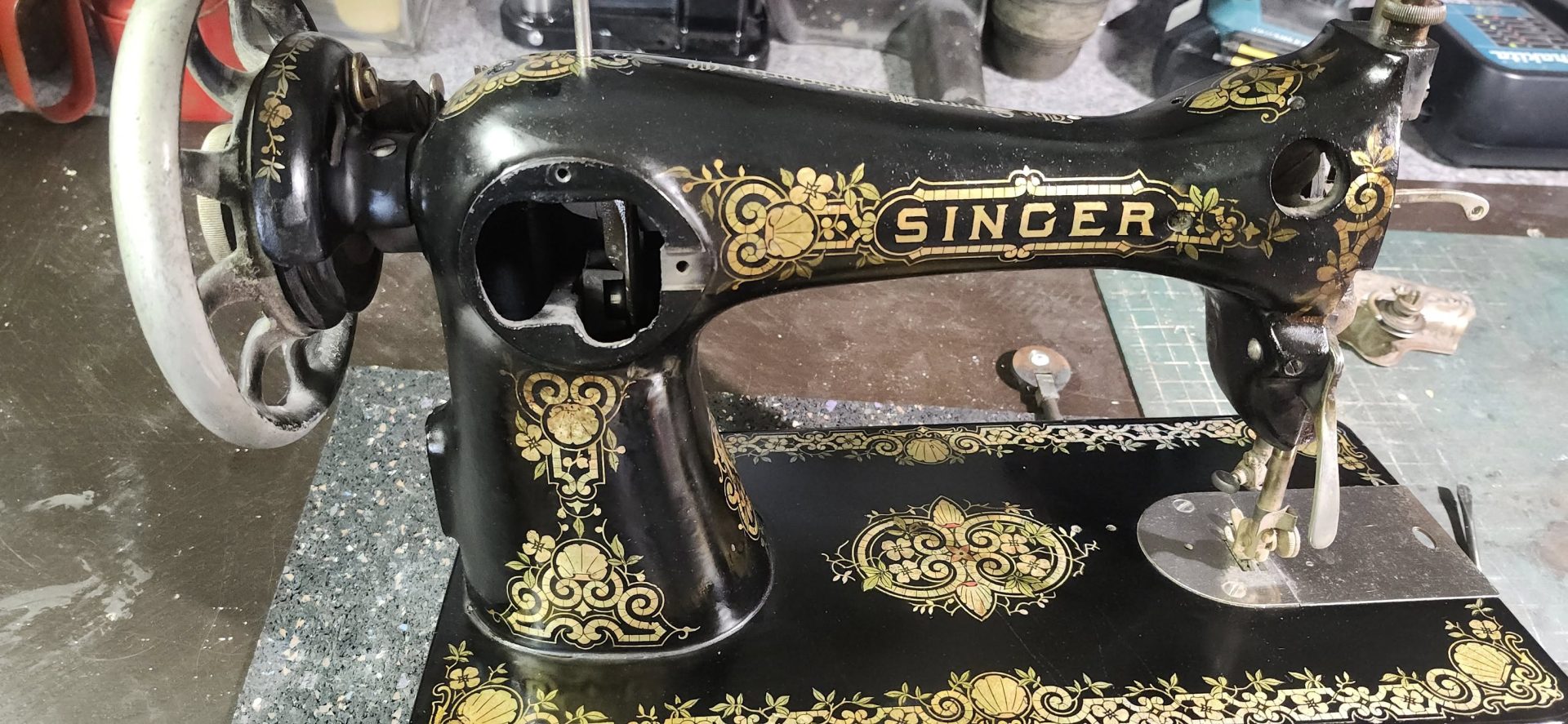
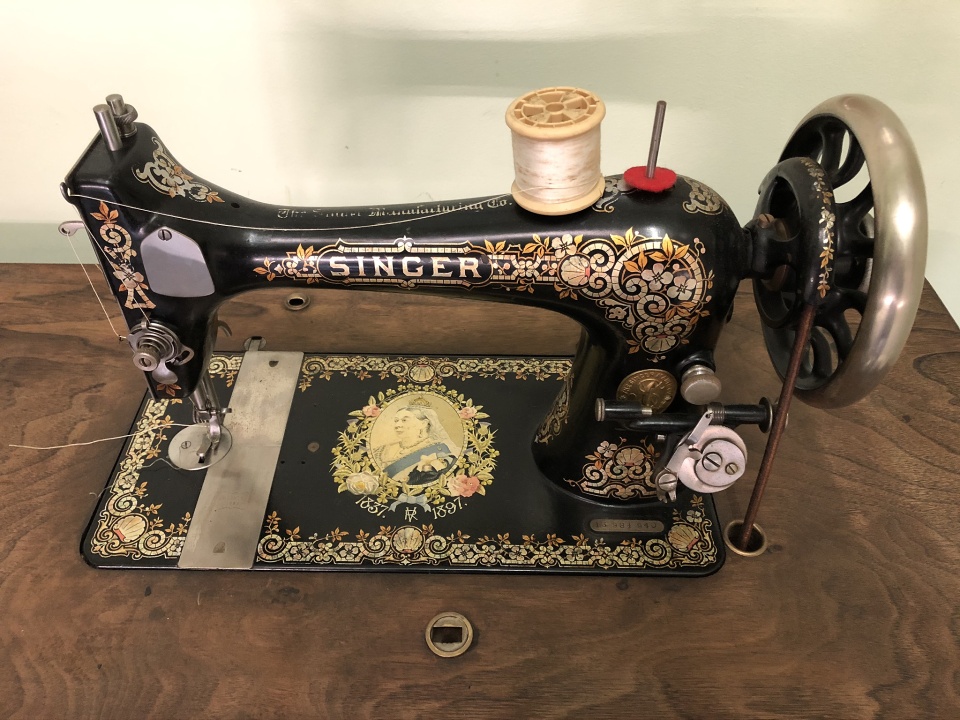
This design is known as Tiffany or Gingerbread. There are two known variants of the Tiffany decal: what changes is the design under the logo metal badge. The earlier style has a triangle-shaped design under the logo badge; the more recent style has a "bird's nest" design below the logo badge, with such badge resting inside the "nest" or slightly raised higher up. No information about when the style changed.
Documented Machines
(What does it mean?)Total n.: 98
Factories:
- Elizabethport, New Jersey (USA)
- Kilbowie, Clydebank (Scotland, UK)
- St. John's Factory, Quebec (Canada)
- Wittenberge, Prussia (Germany)
Documented Classes:
- 15
- 27
- 66
- 115
Documented years: 1887 - 1927
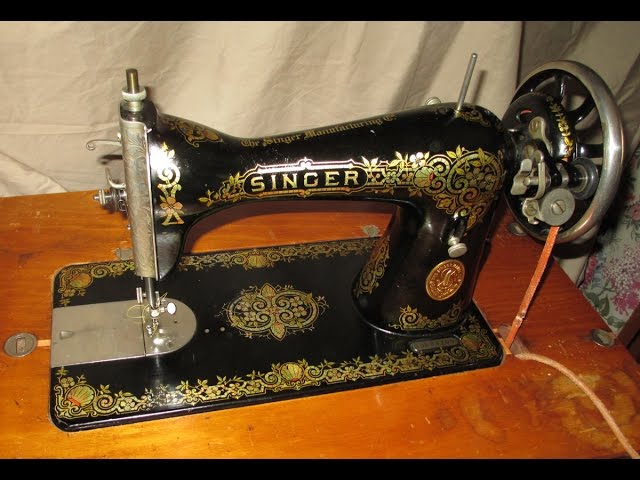
In use from 1896 up to 1897
In use for Classes:
- 27K
Documented Machines
(What does it mean?)Total n.: 2
Factories:
Documented Classes:
- 27
Documented years: 1896
In use for Classes:
- 28
- 66
Documented Machines
(What does it mean?)Total n.: 1
Factories:
Documented Classes:
- 66
Documented years: 1916
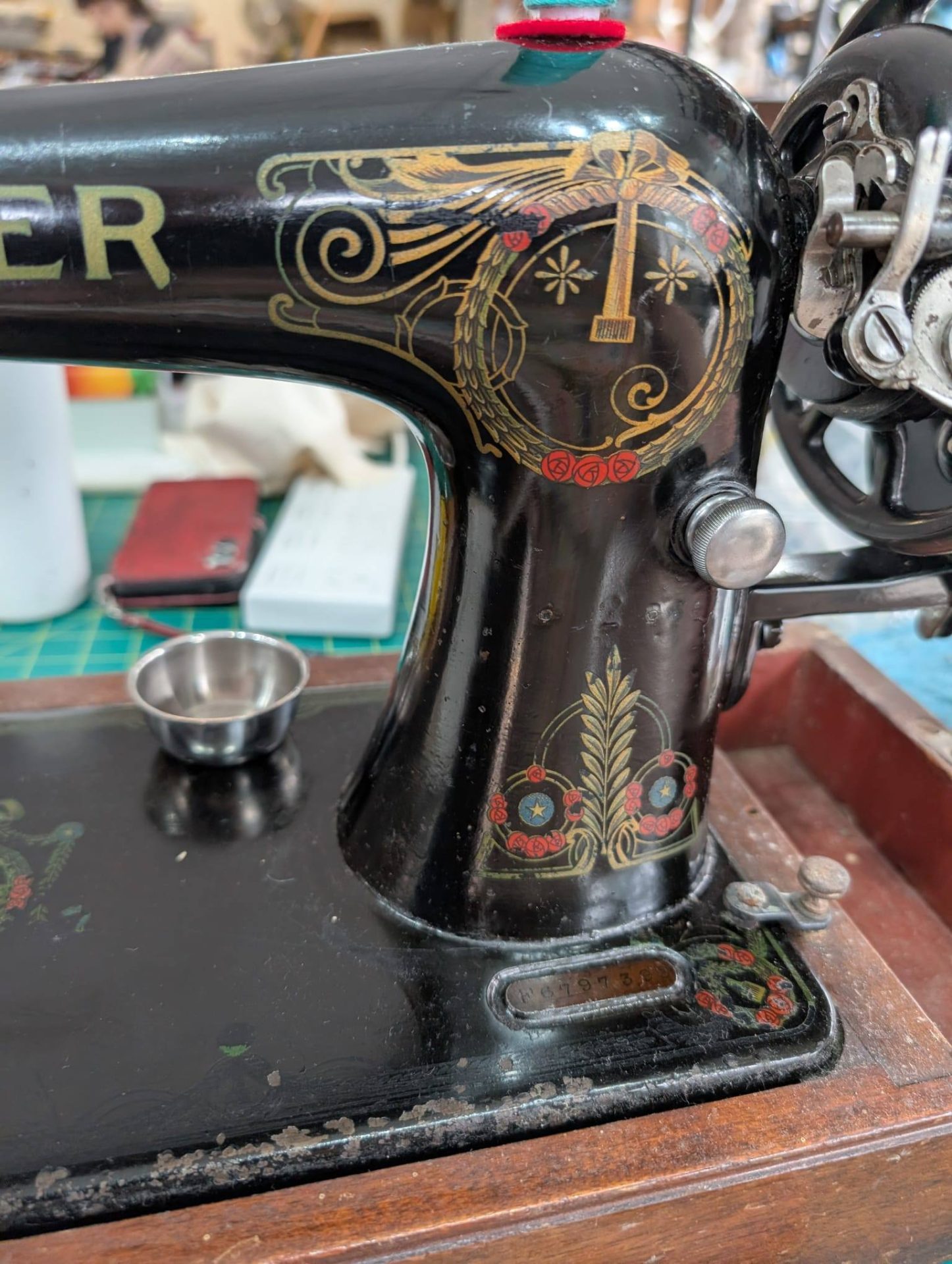
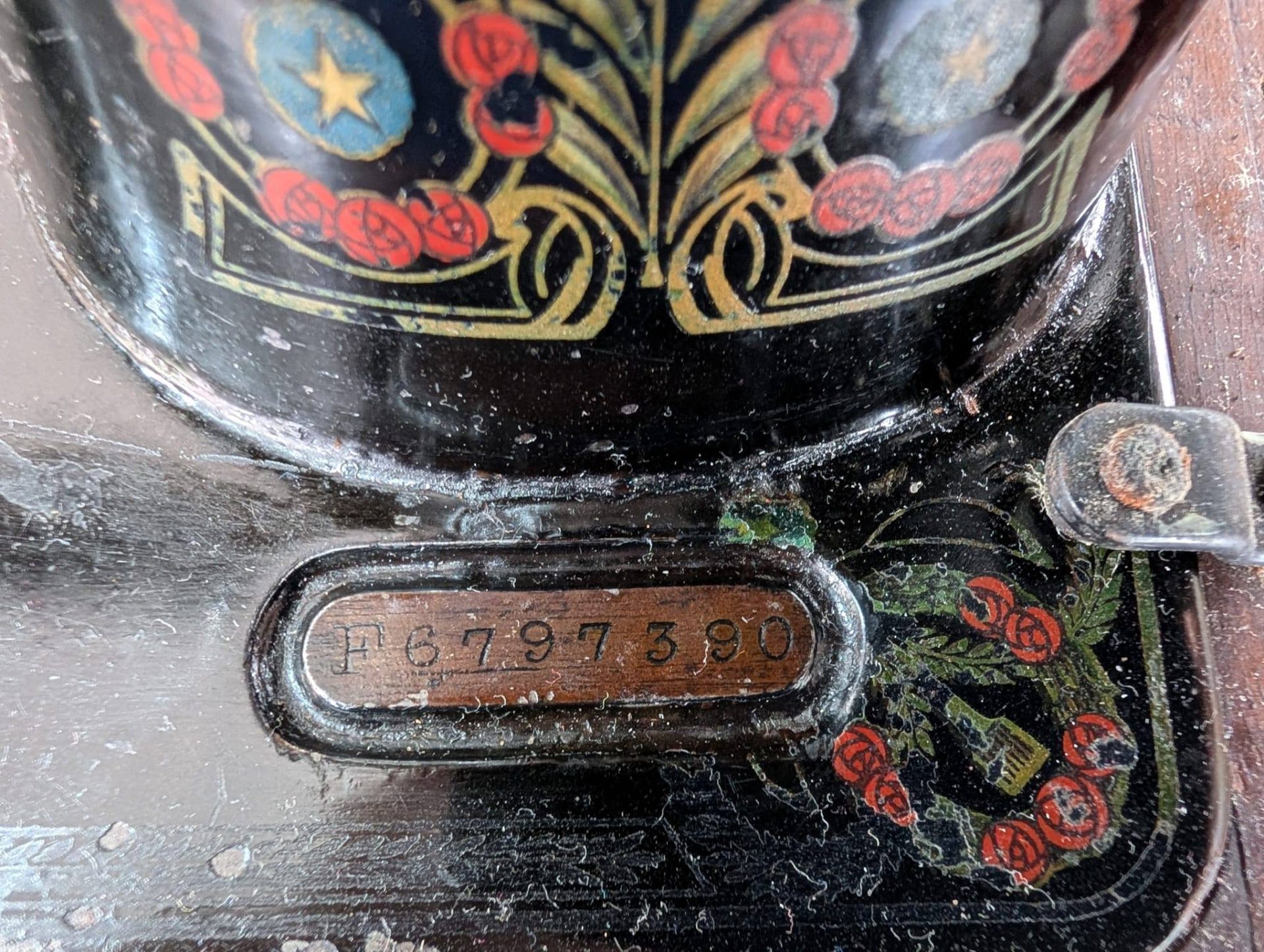
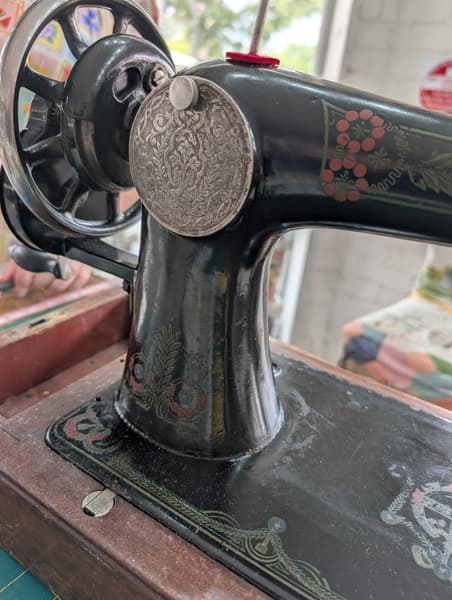
In use from 1954 up to 1962
In use for Classes:
- 306
- 319
Documented Machines
(What does it mean?)Total n.: 5
Factories:
Documented Classes:
- 306
- 319
Documented years: 1954 - 1956
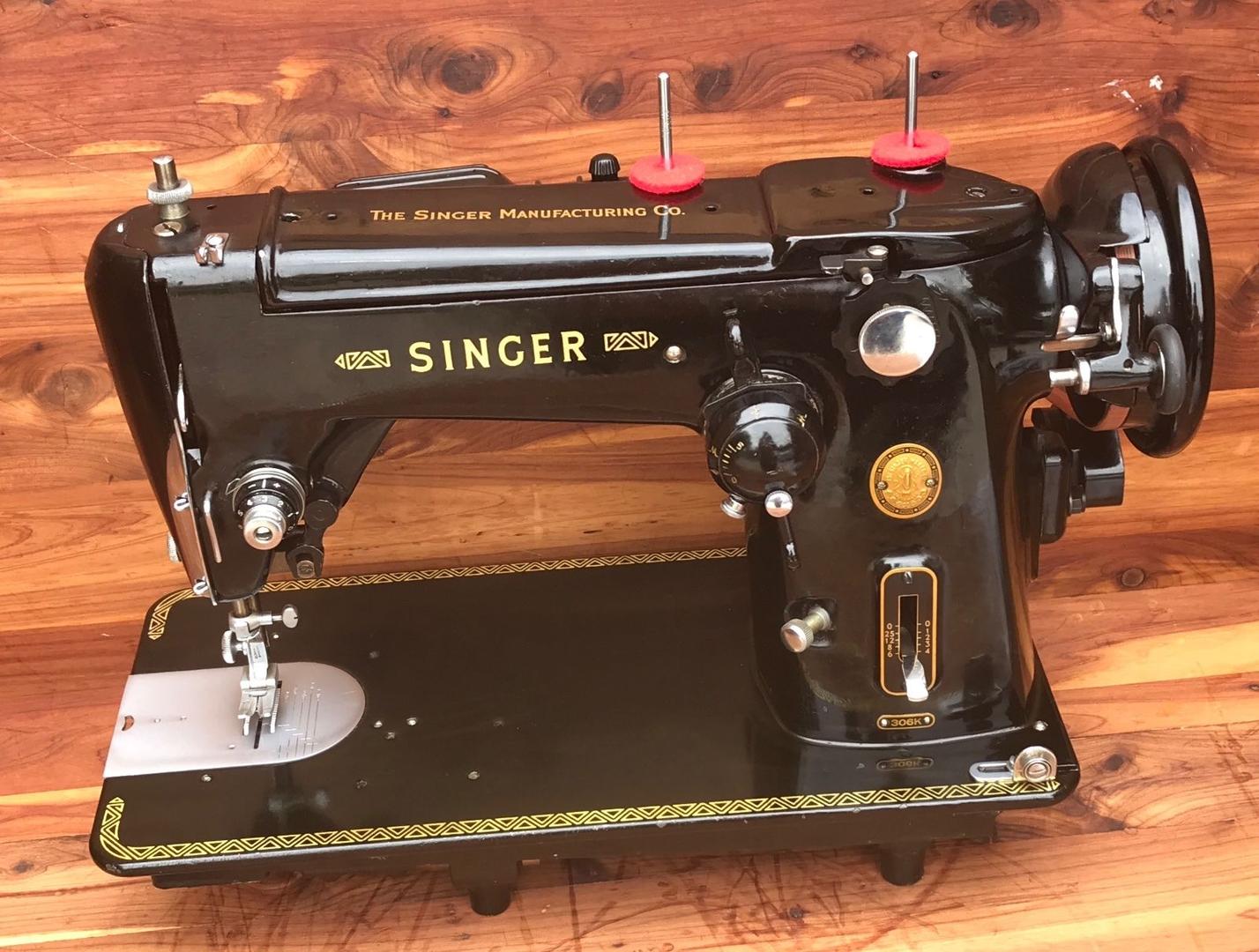
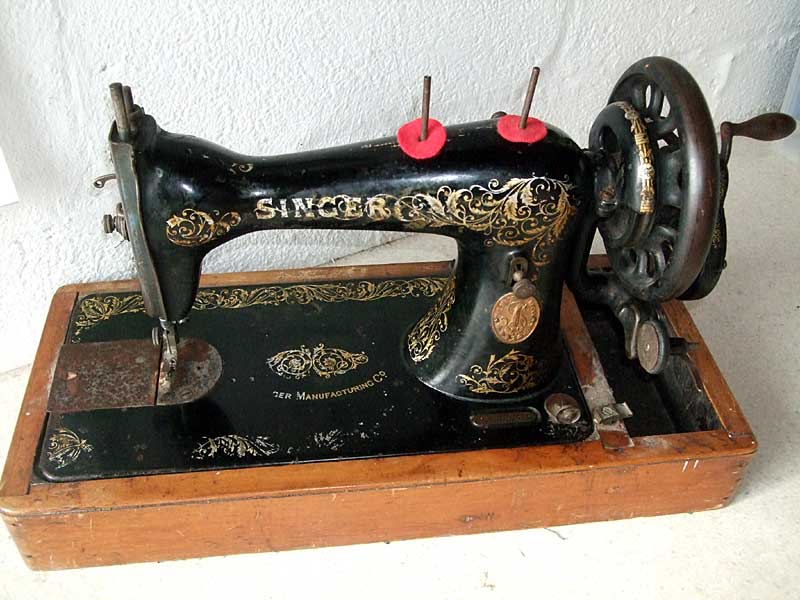
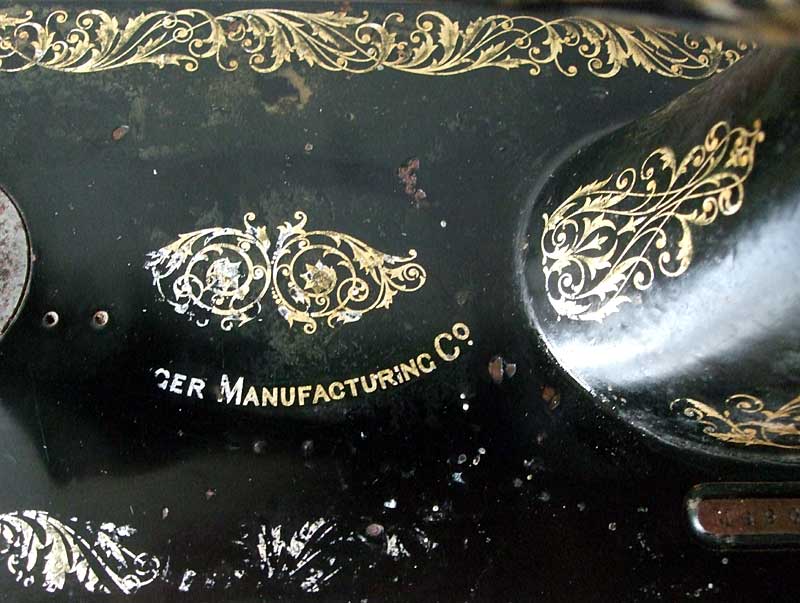
In use from 1885 up to 1941
In use for Classes:
- 28
- 39
- 128
Commonly seen on 28 and 128 models, we also documented class 39 machines with this kind of decoration. In use from the 1880s up to the 1940s.
Documented Machines
(What does it mean?)Total n.: 52
Factories:
- Elizabethport, New Jersey (USA)
- Kilbowie, Clydebank (Scotland, UK)
- St. John's Factory, Quebec (Canada)
Documented Classes:
- 27
- 28
- 39
- 128
Documented years: 1892 - 1940
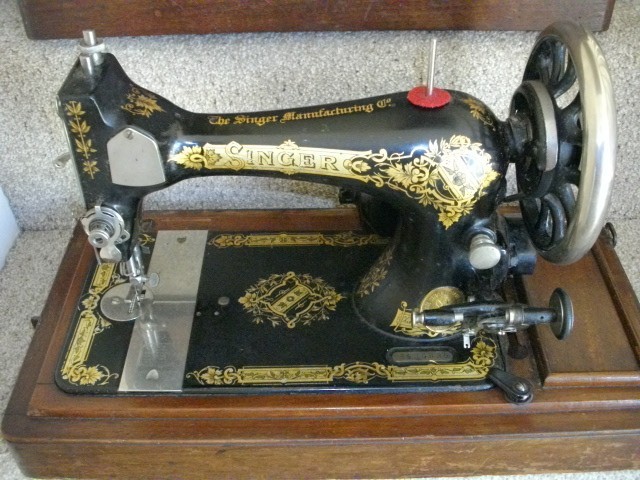
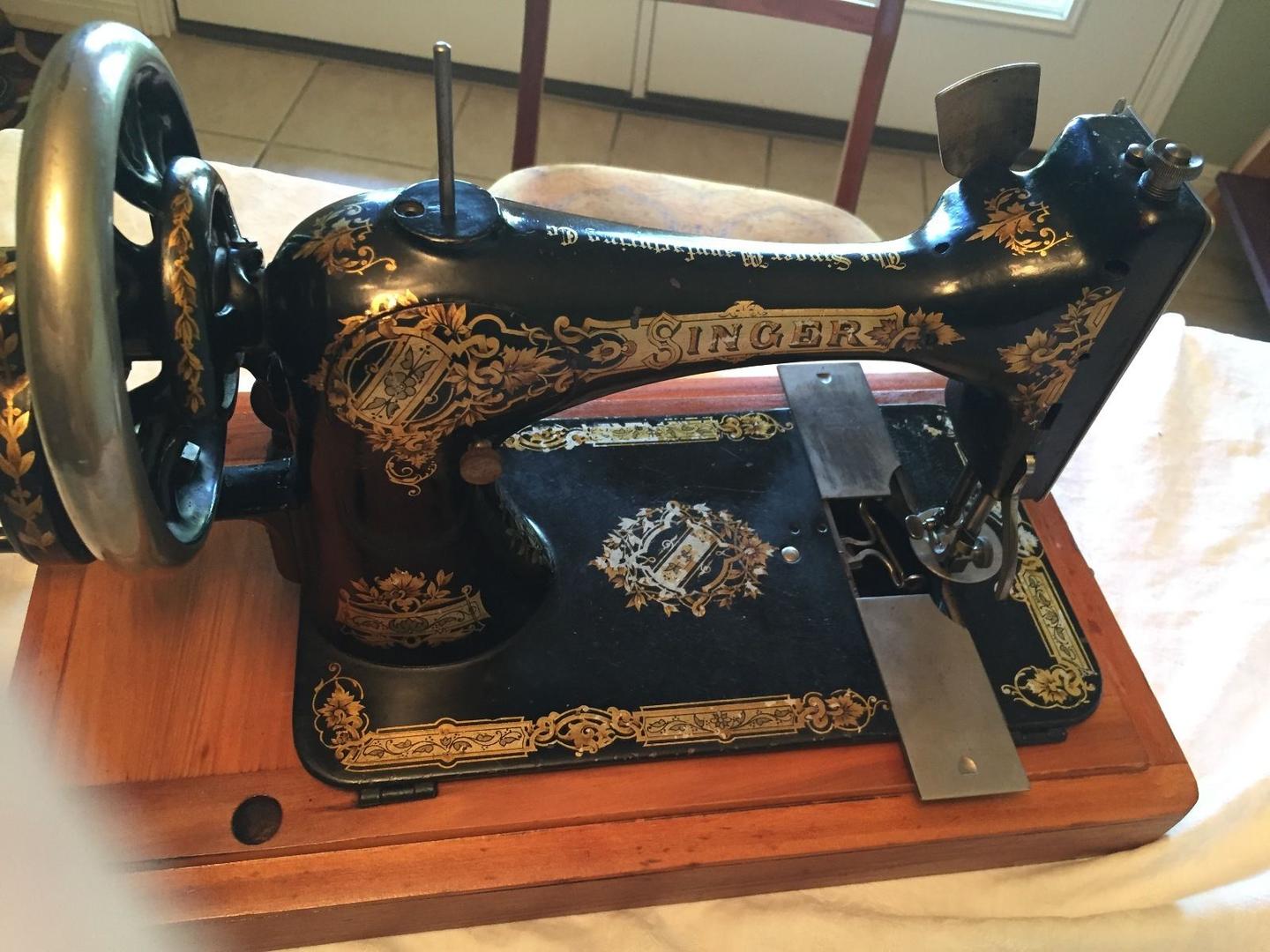
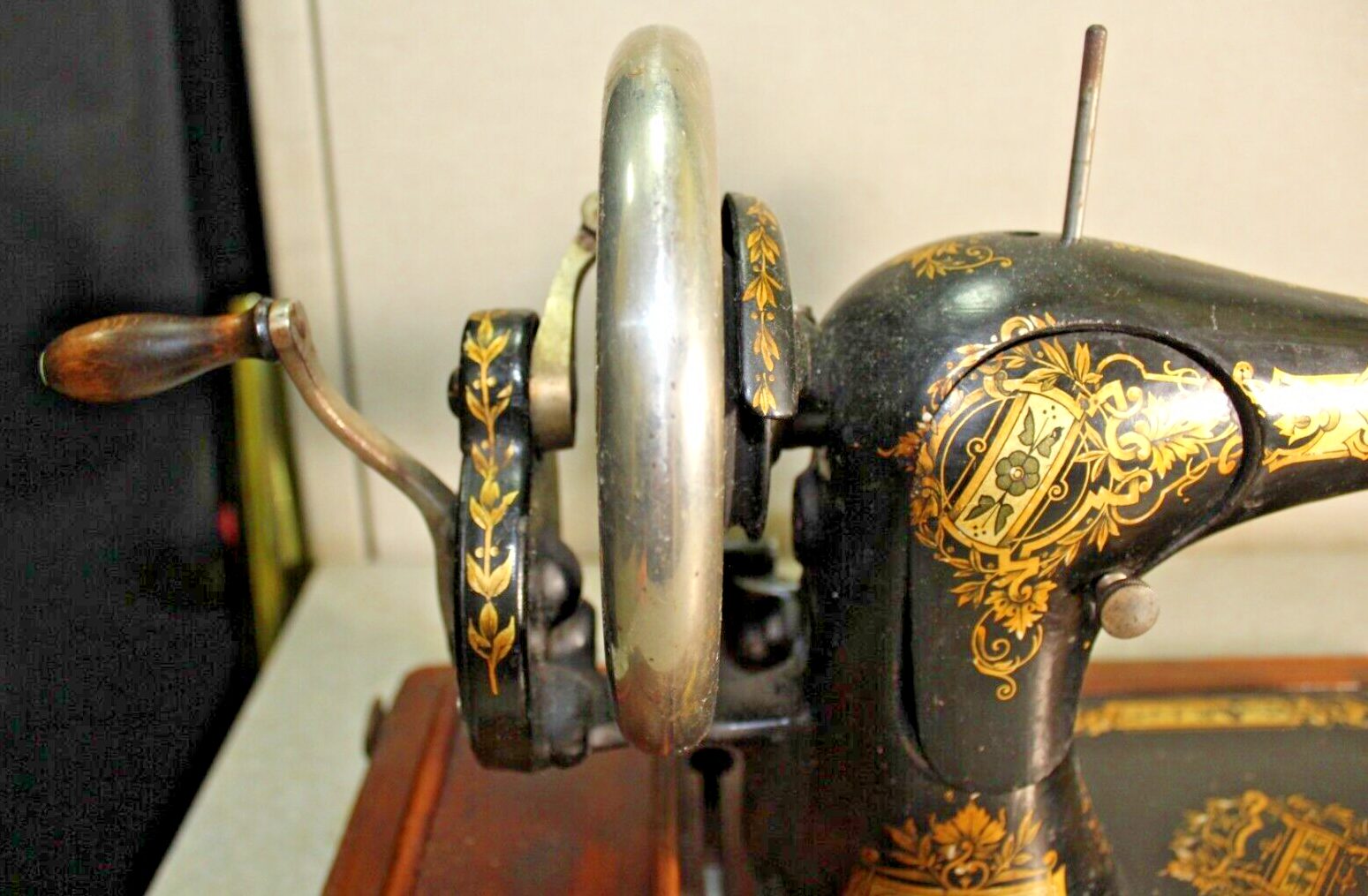
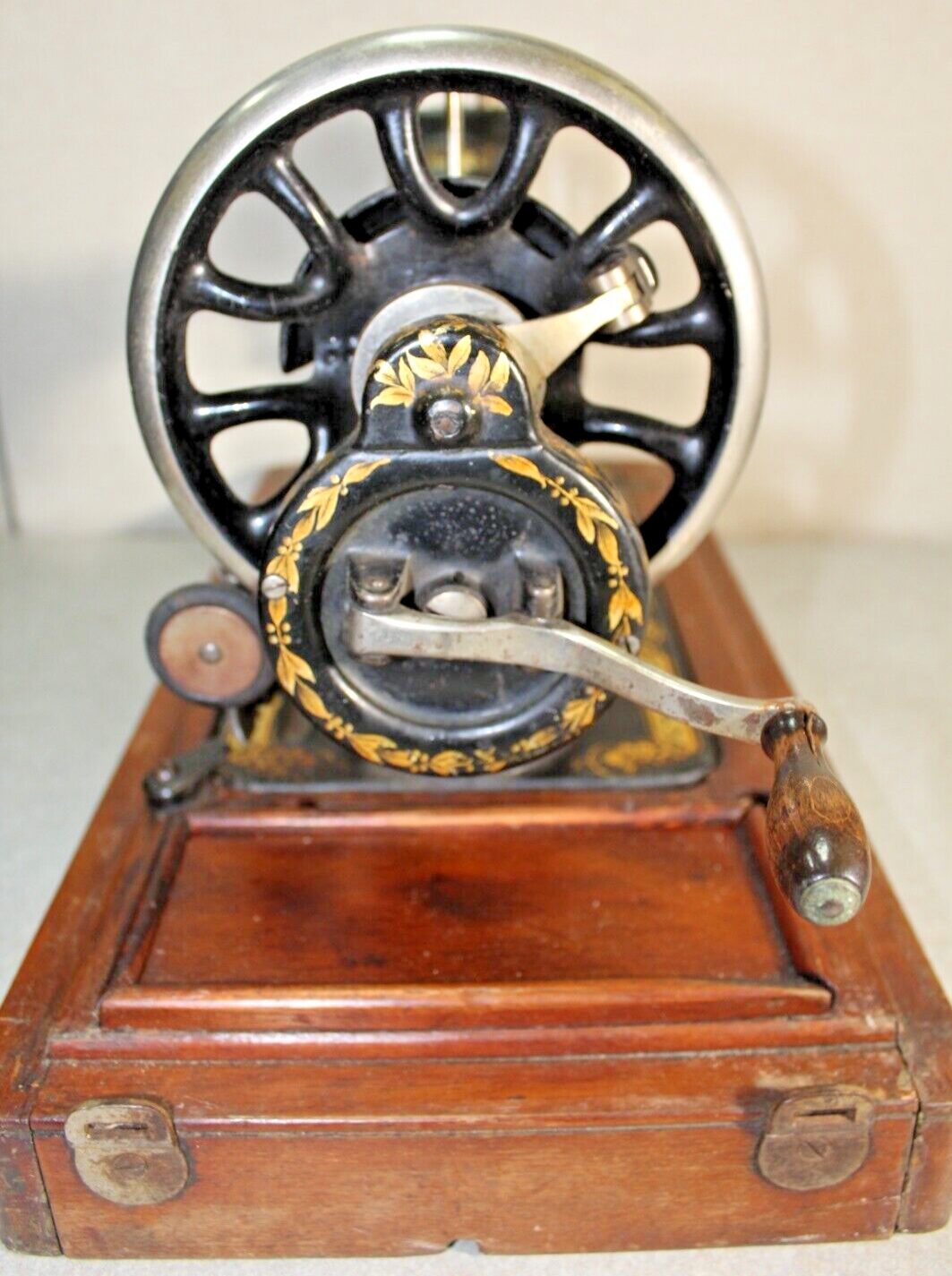
In use from 1886 up to 1892
In use for Classes:
- VS2 / 27
Documented Machines
(What does it mean?)Total n.: 29
Factories:
Documented Classes:
- 27
Documented years: 1886 - 1892
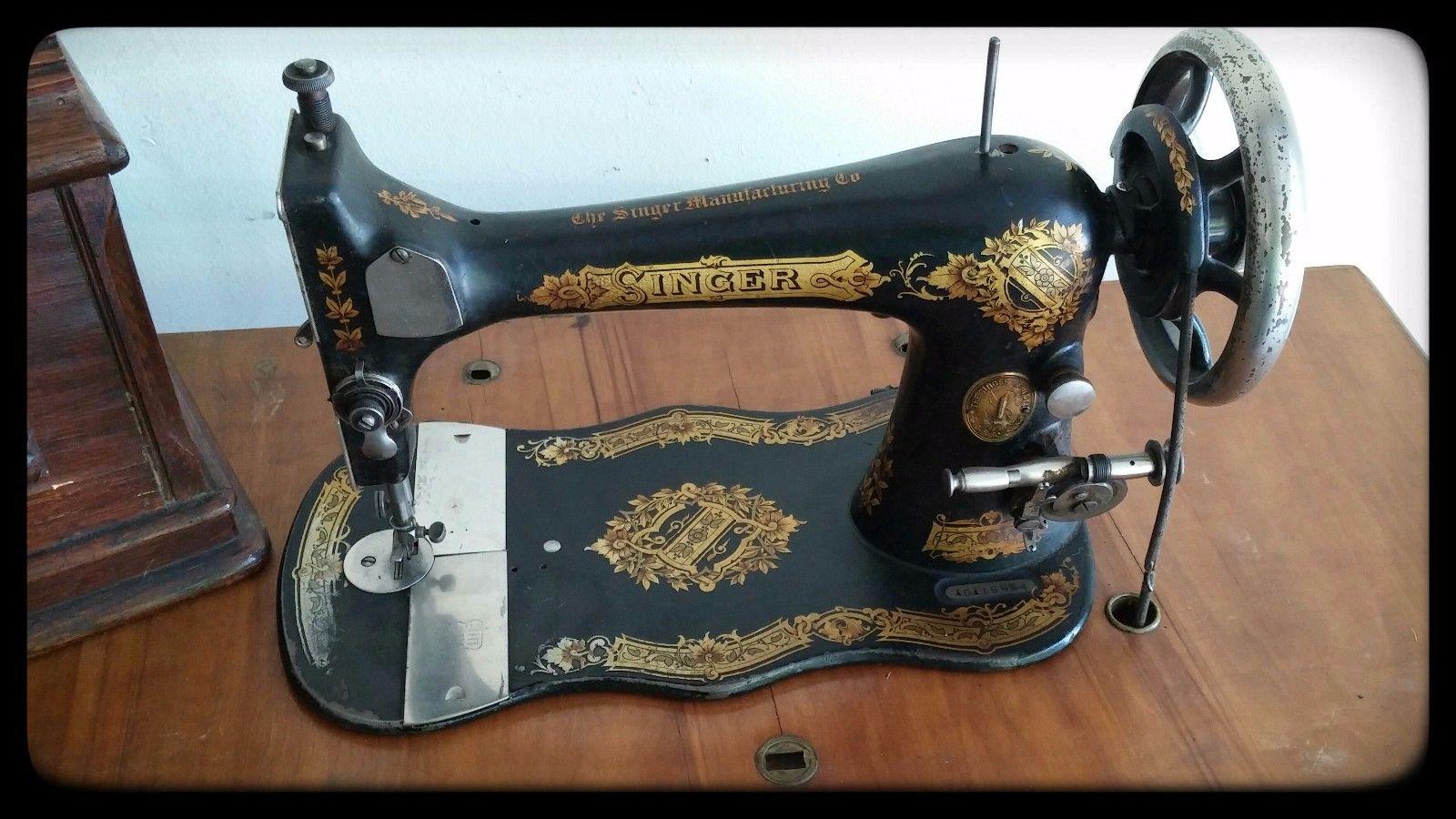
In use from 1898 up to 1908
In use for Classes:
- 28
- 39
Recorded by The Needlebar wiki. The Chinese characters in the center of the bed are in Seal Script, a very old and decorative writing style. In traditional Chinese: 福 — fú = good fortune / blessing 禄 — lù = prosperity / wealth / official success 寿 — shòu = longevity 喜 — xǐ = happiness / joy Together, 福禄寿喜 (fú lù shòu xǐ) is an extremely traditional auspicious combination meaning roughly “fortune, prosperity, longevity and happiness.” These characters were applied specifically on machines produced for the Chinese market. These characters were applied specifically on machines produced for the Chinese market.
Documented Machines
(What does it mean?)Total n.: 2
Factories:
Documented Classes:
- 28
- 39
Documented years: 1898 - 1906
In use for Classes:
- 28
- 128
The Indian Star decal was an attempt to stimulate the emerging Indian market at the beginning of the 20th century. Entering this market was not easy, though. The main difficulties were overcoming caste prejudice, language differences and limited access to women. The Indian Star machines say 'Singer' in different languages on each point of the star: Onya, Singhalese, Gujarati, Kannada, Hindi, Telugu, Malayalam (or Tamil), Urdu. The Indian Star appears as a variant in several decals, on different models.
Documented Machines
(What does it mean?)Total n.: 1
Factories:
Documented Classes:
- 28
Documented years: 1914
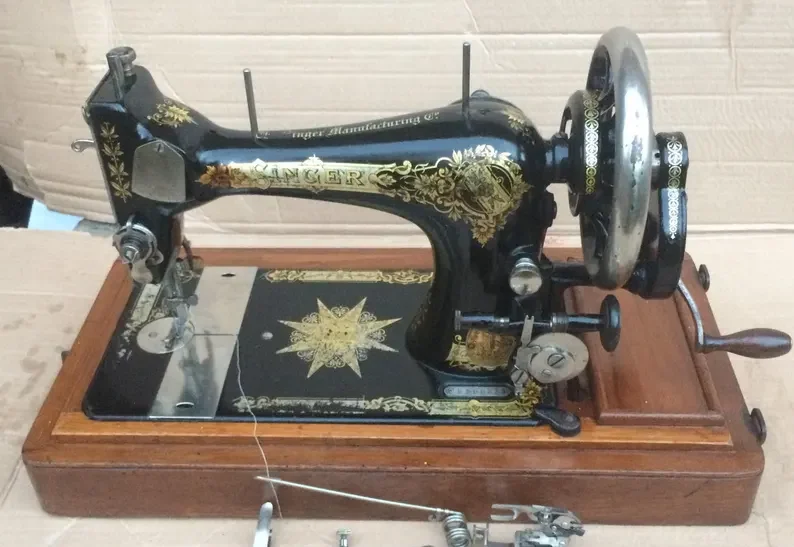
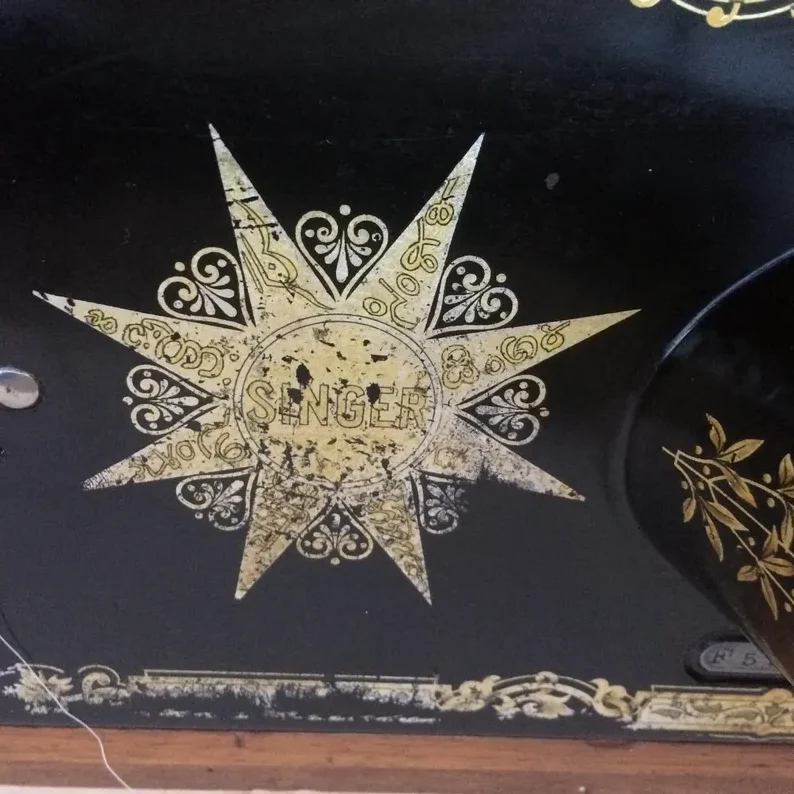
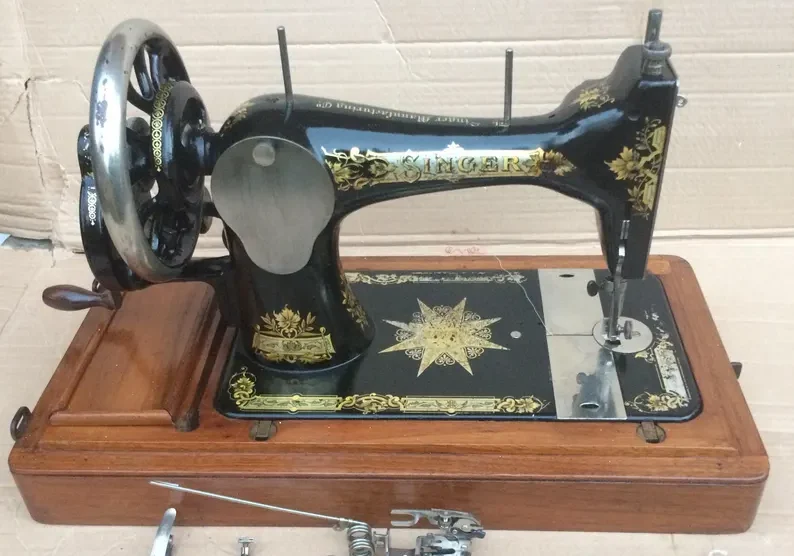
In use from 1877 up to 1892
In use for Classes:
- UFA - Universal Feed Arm (29)
Documented Machines
(What does it mean?)Total n.: 1
Factories:
Documented Classes:
- 29
Documented years: 1890
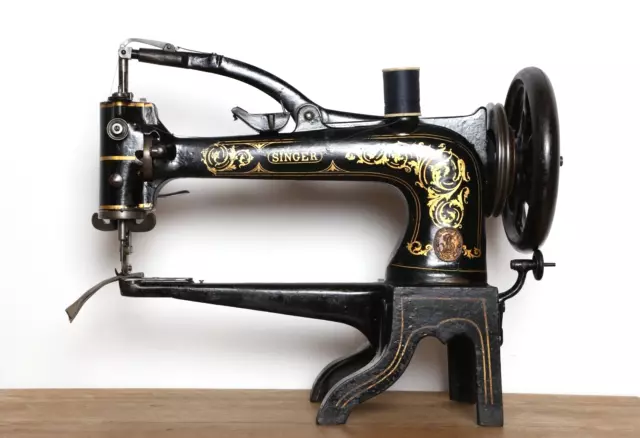
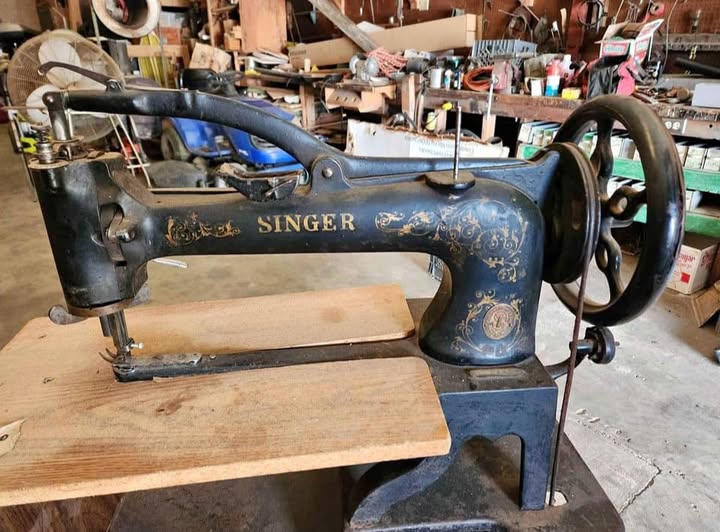
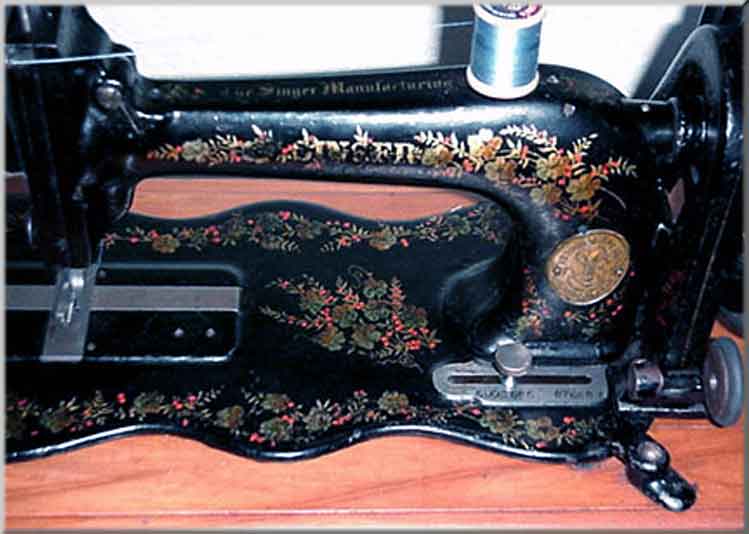
In use from 1885 up to 1888
In use for Classes:
- 12 (New Family)
Documented Machines
(What does it mean?)Total n.: 5
Factories:
Documented Classes:
- 12
Documented years: 1885 - 1888
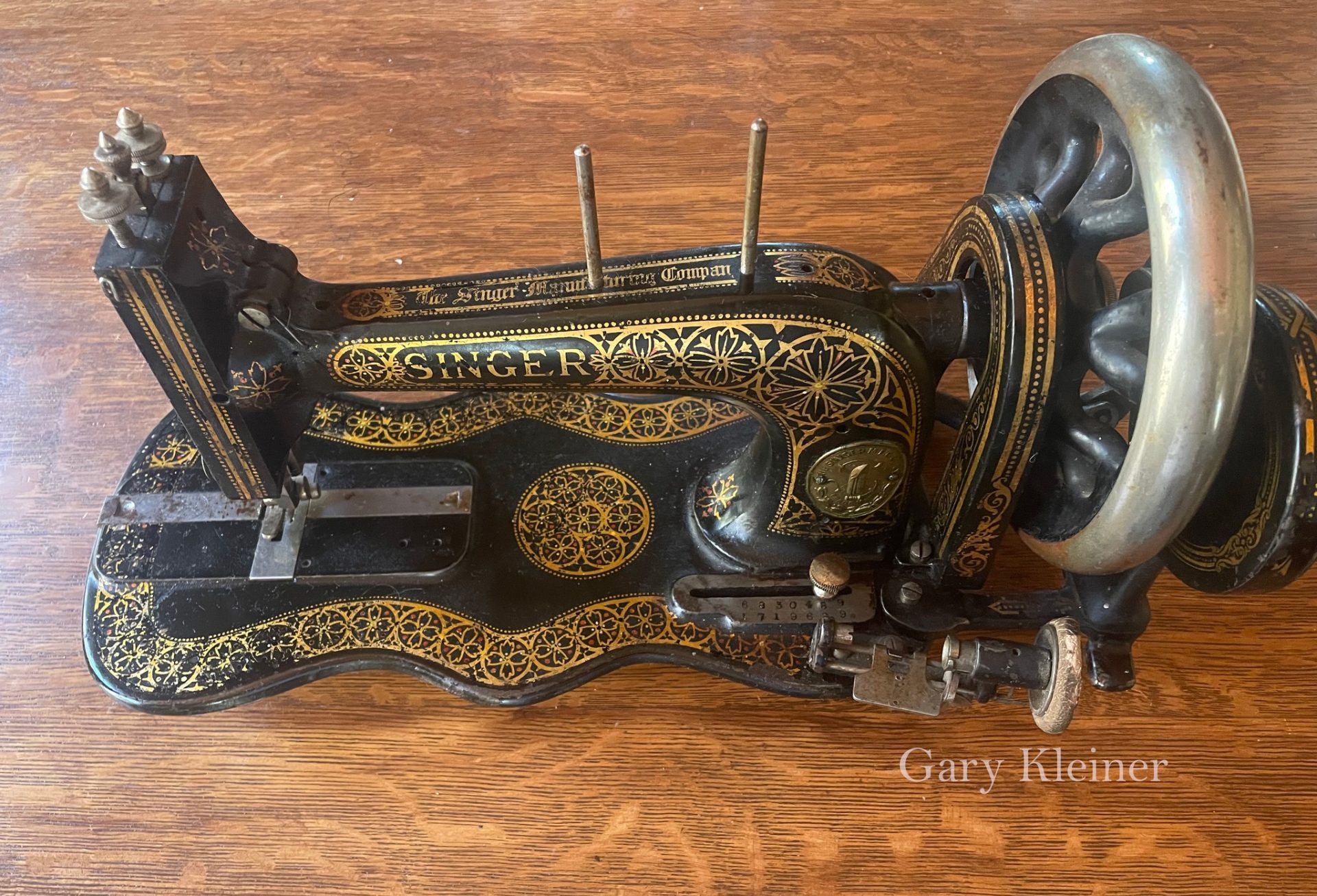
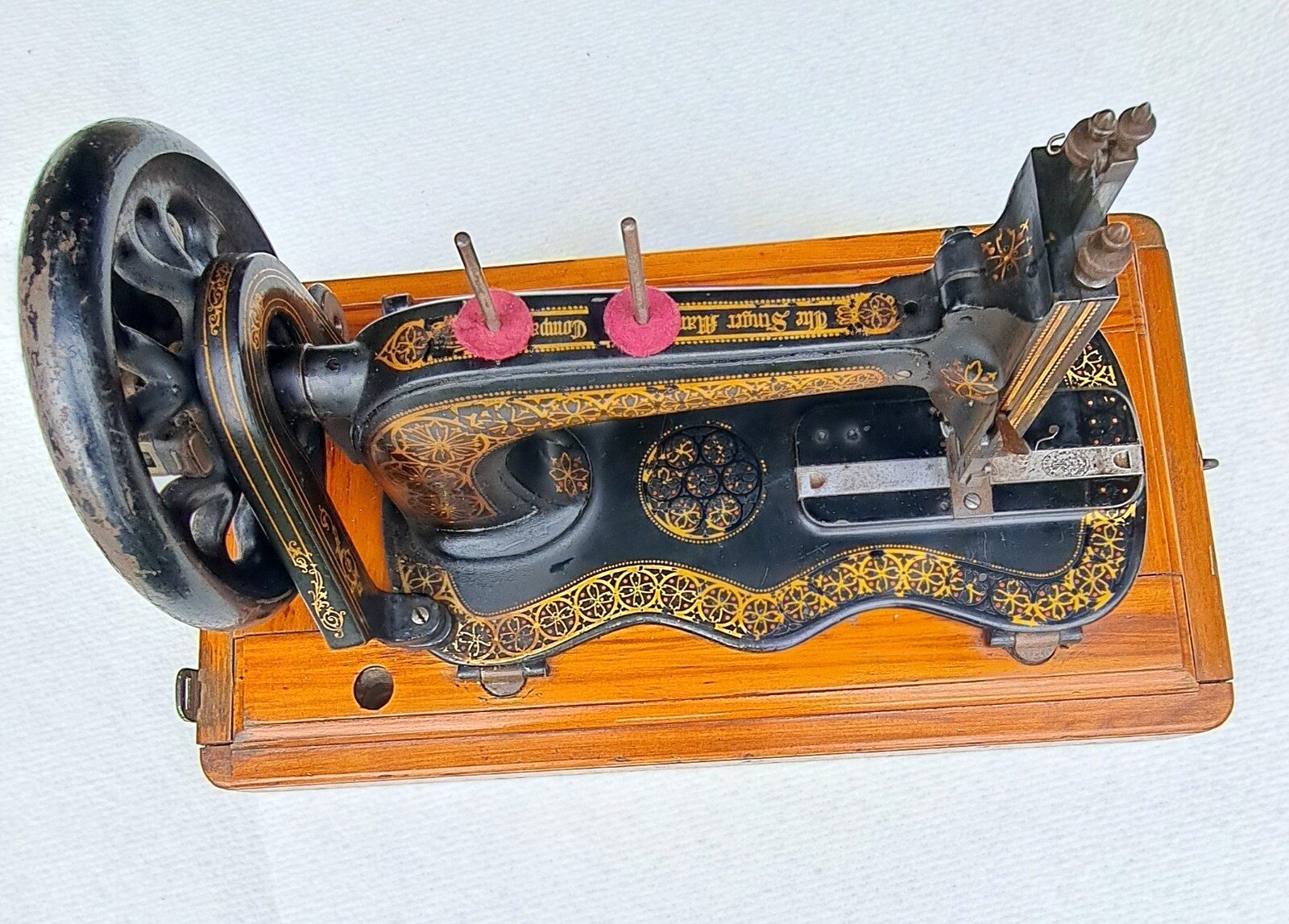
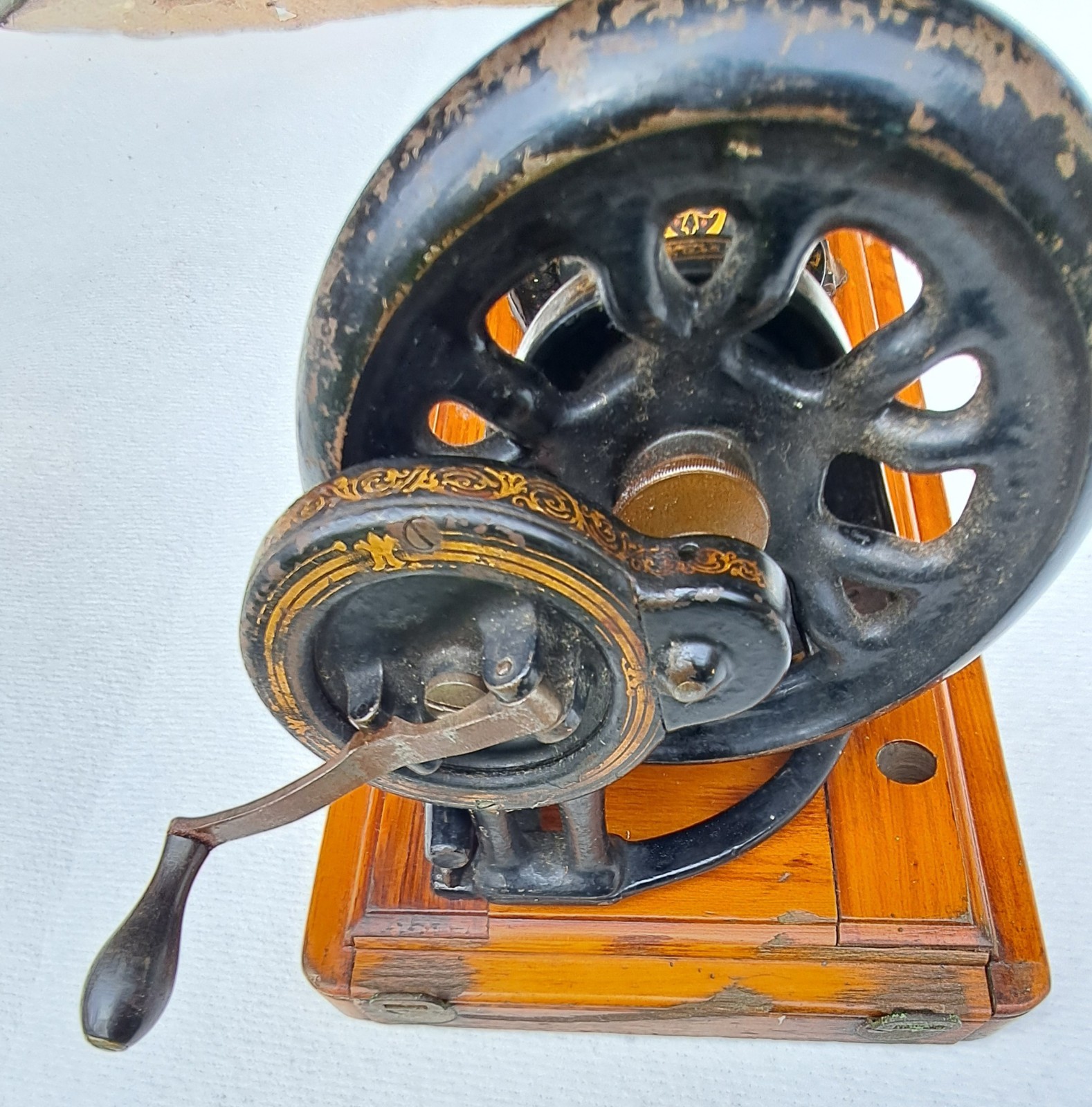
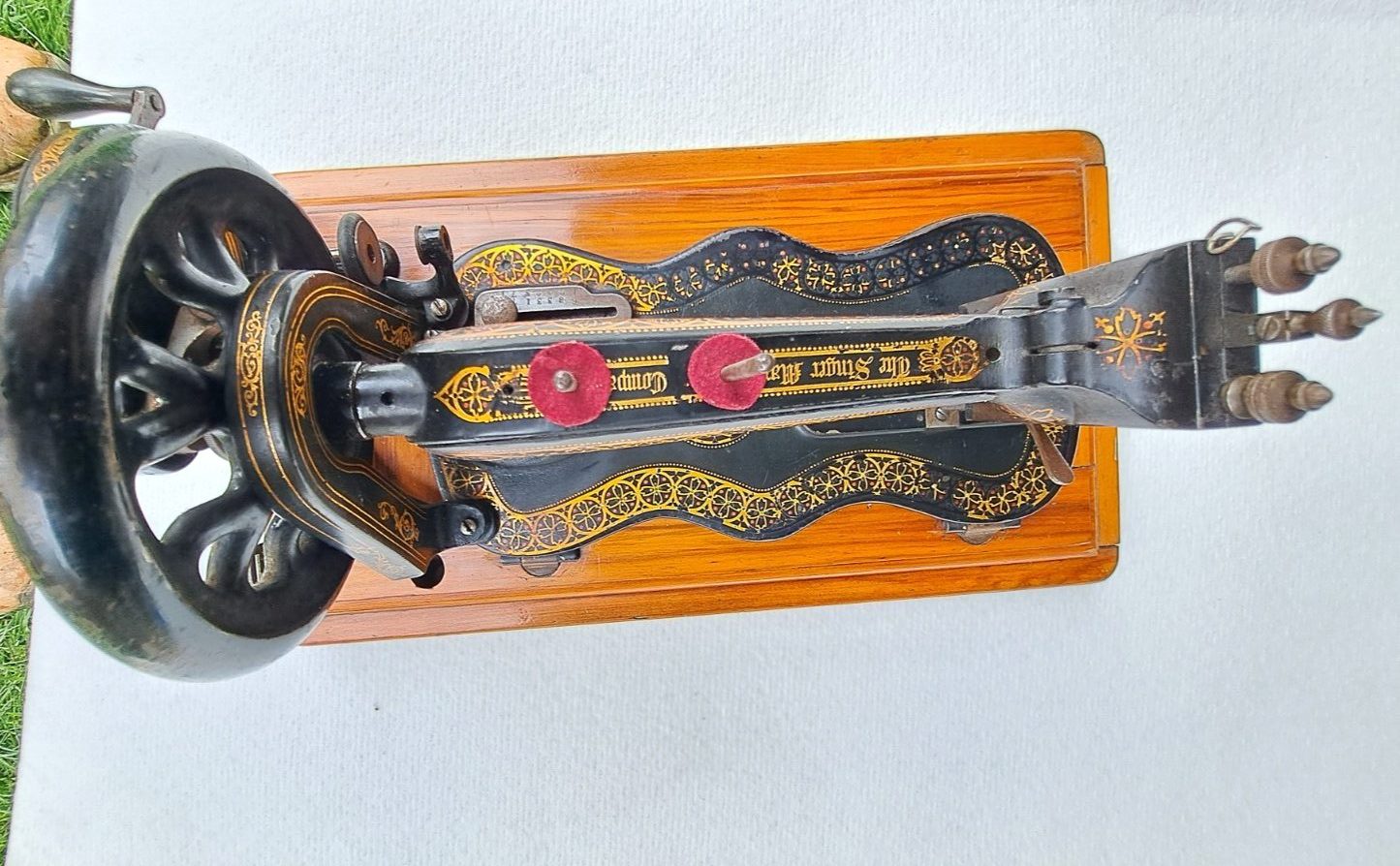
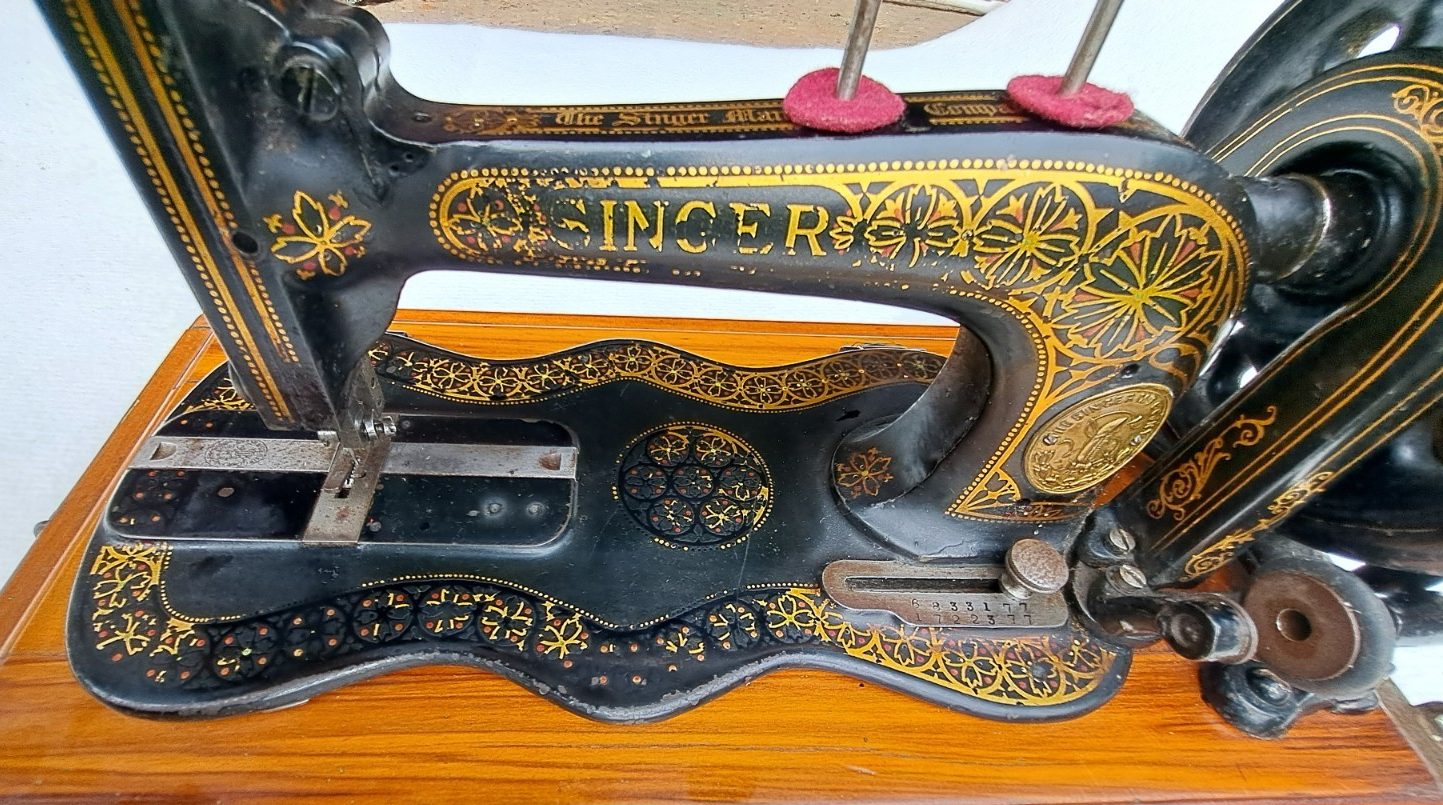
In use from 1884
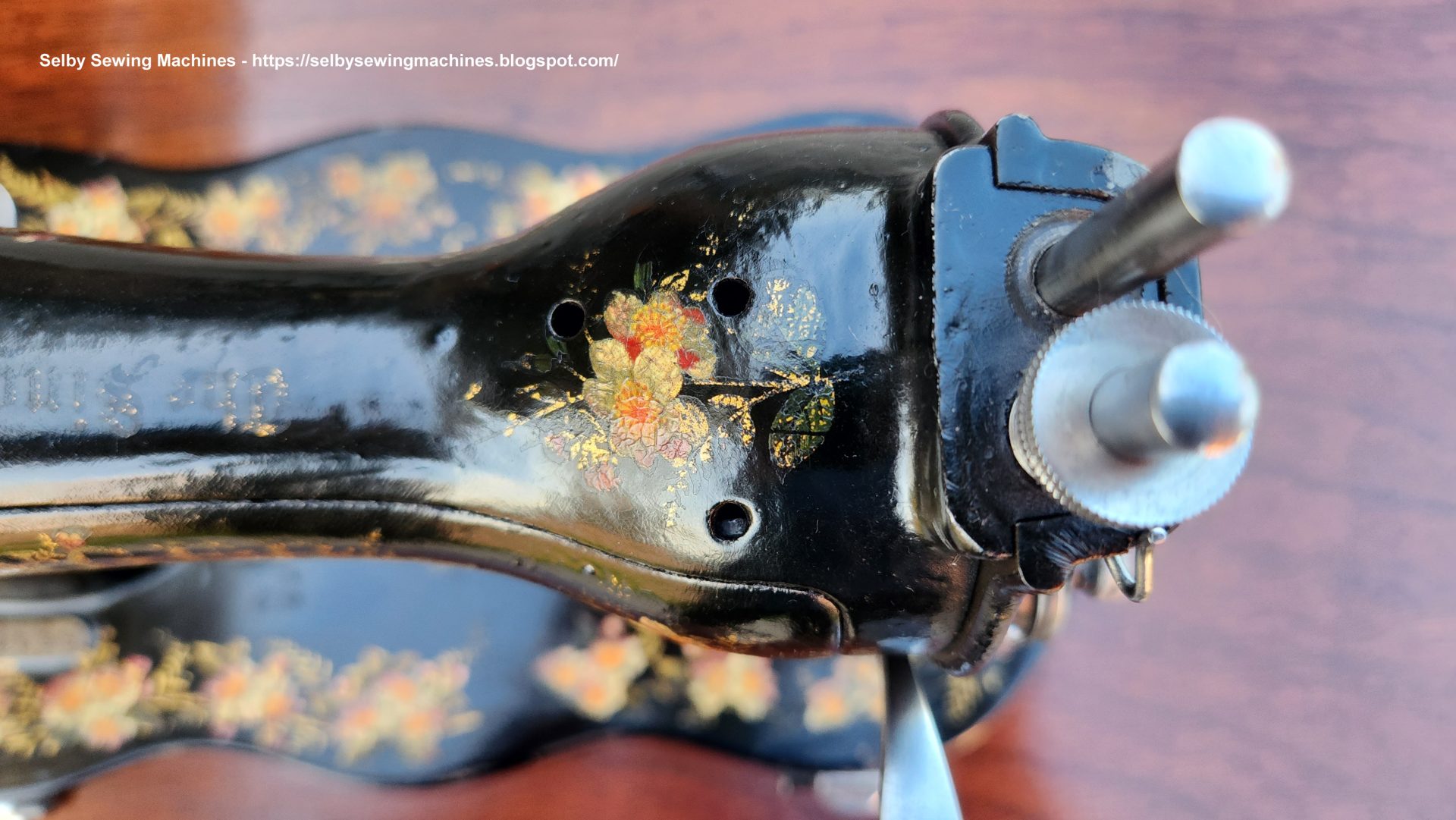
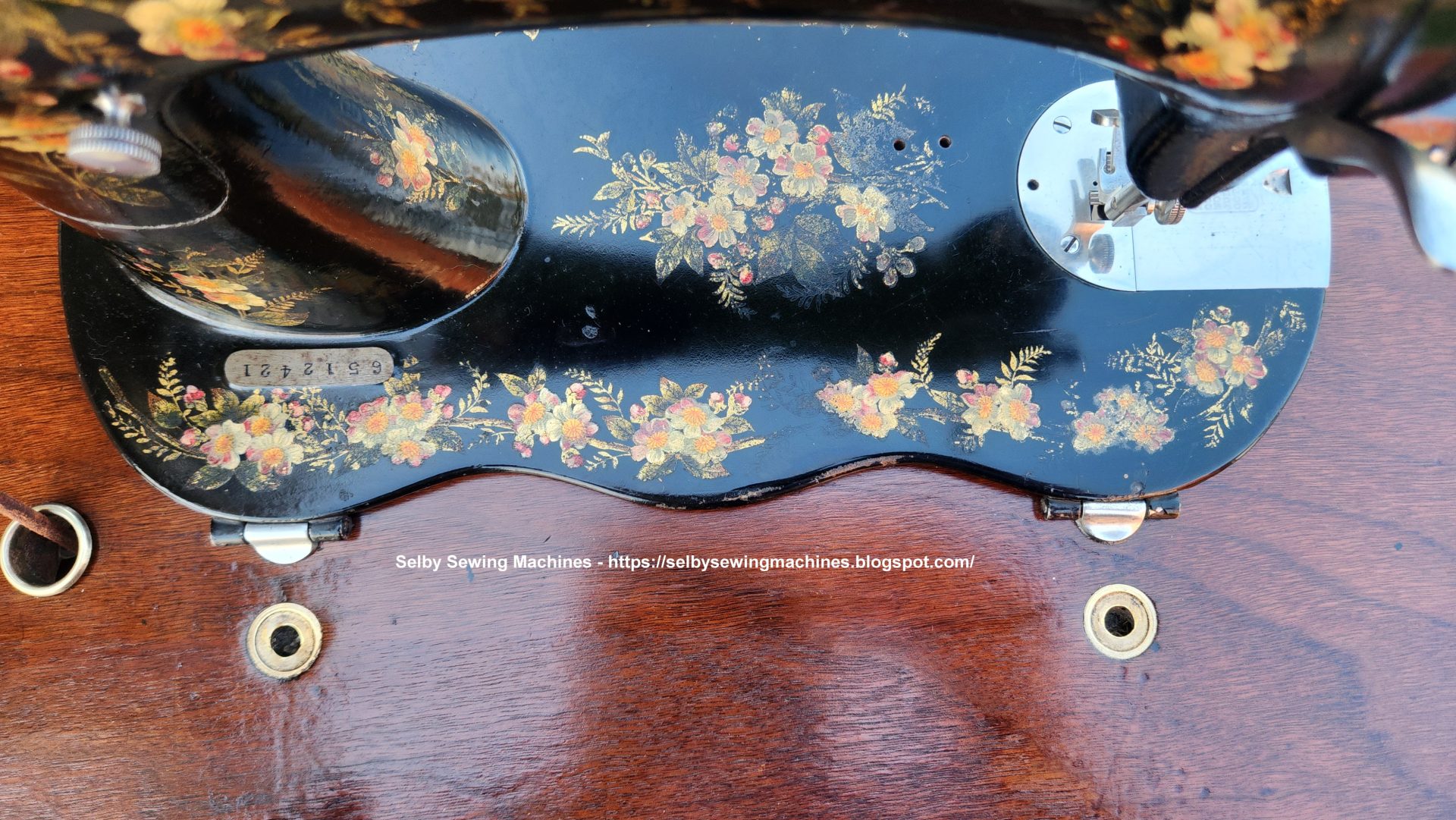
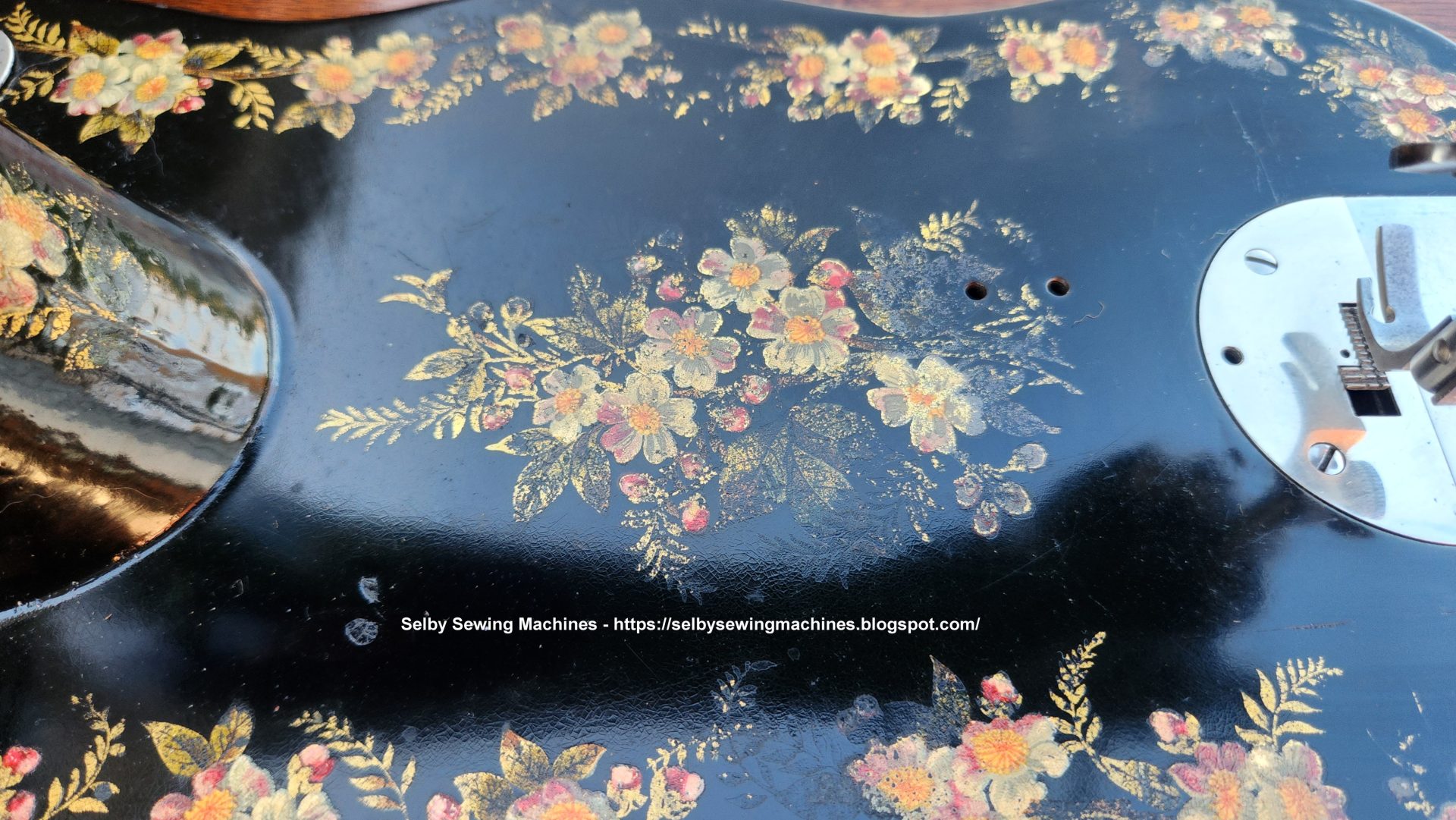
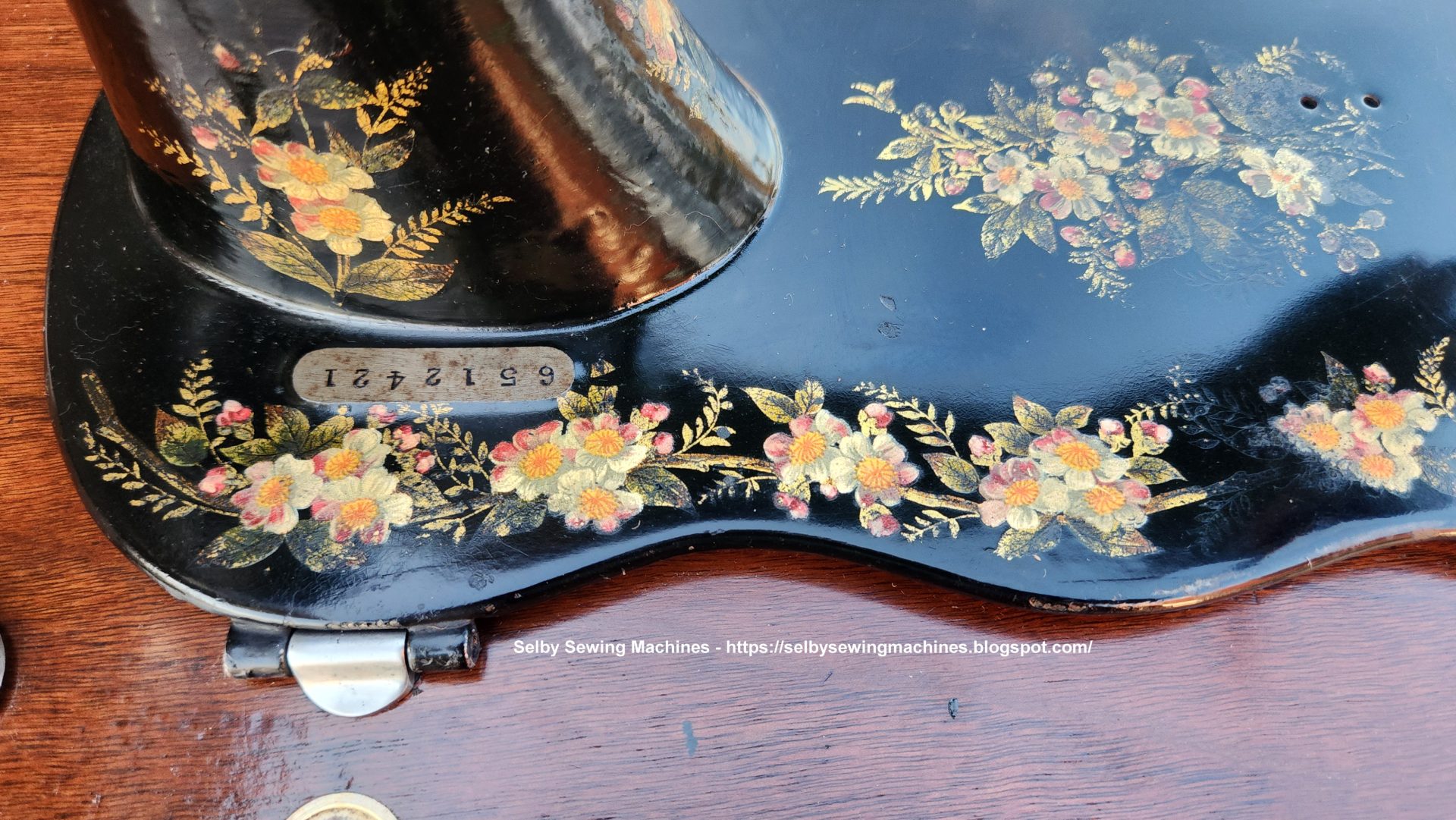
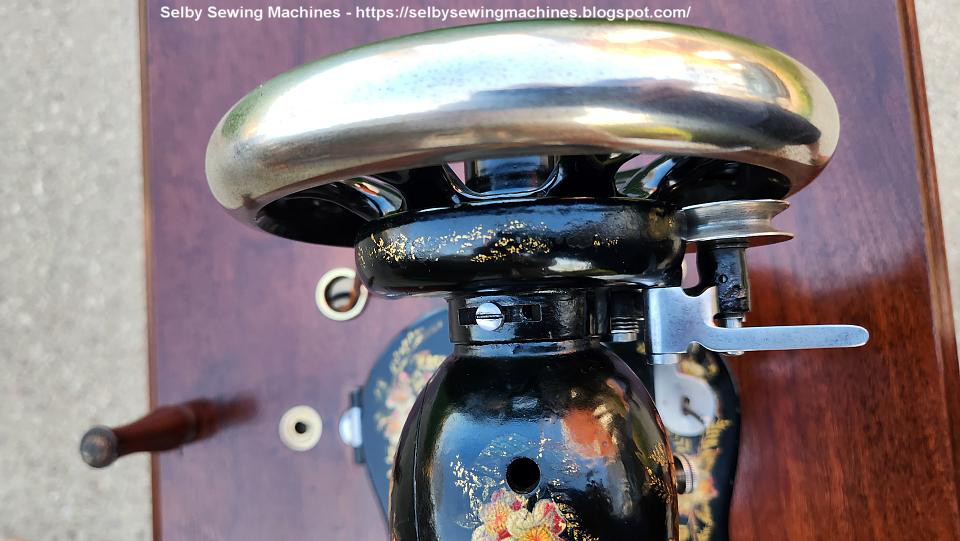
In use for Classes:
- 15 (Improved Family)
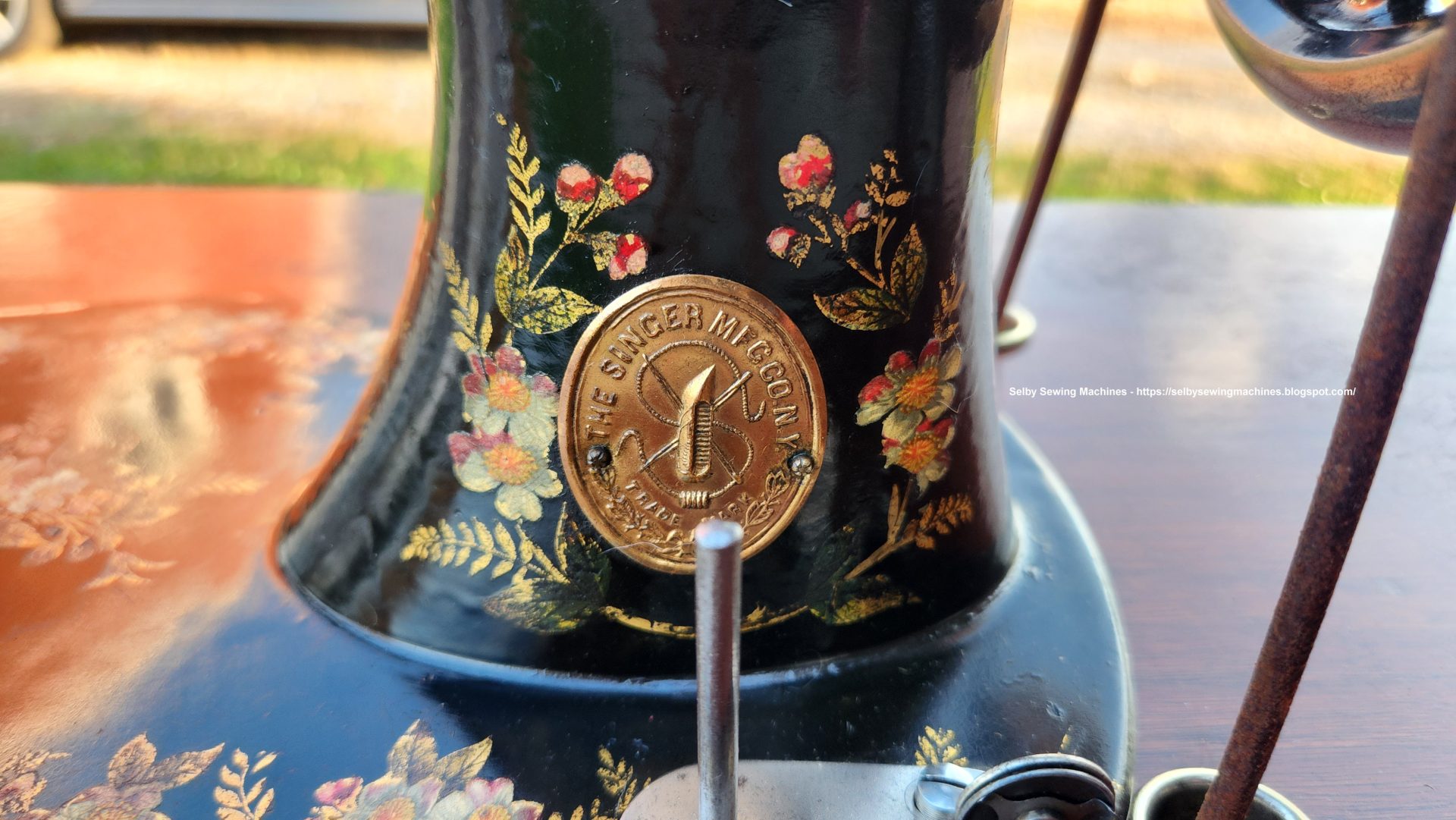
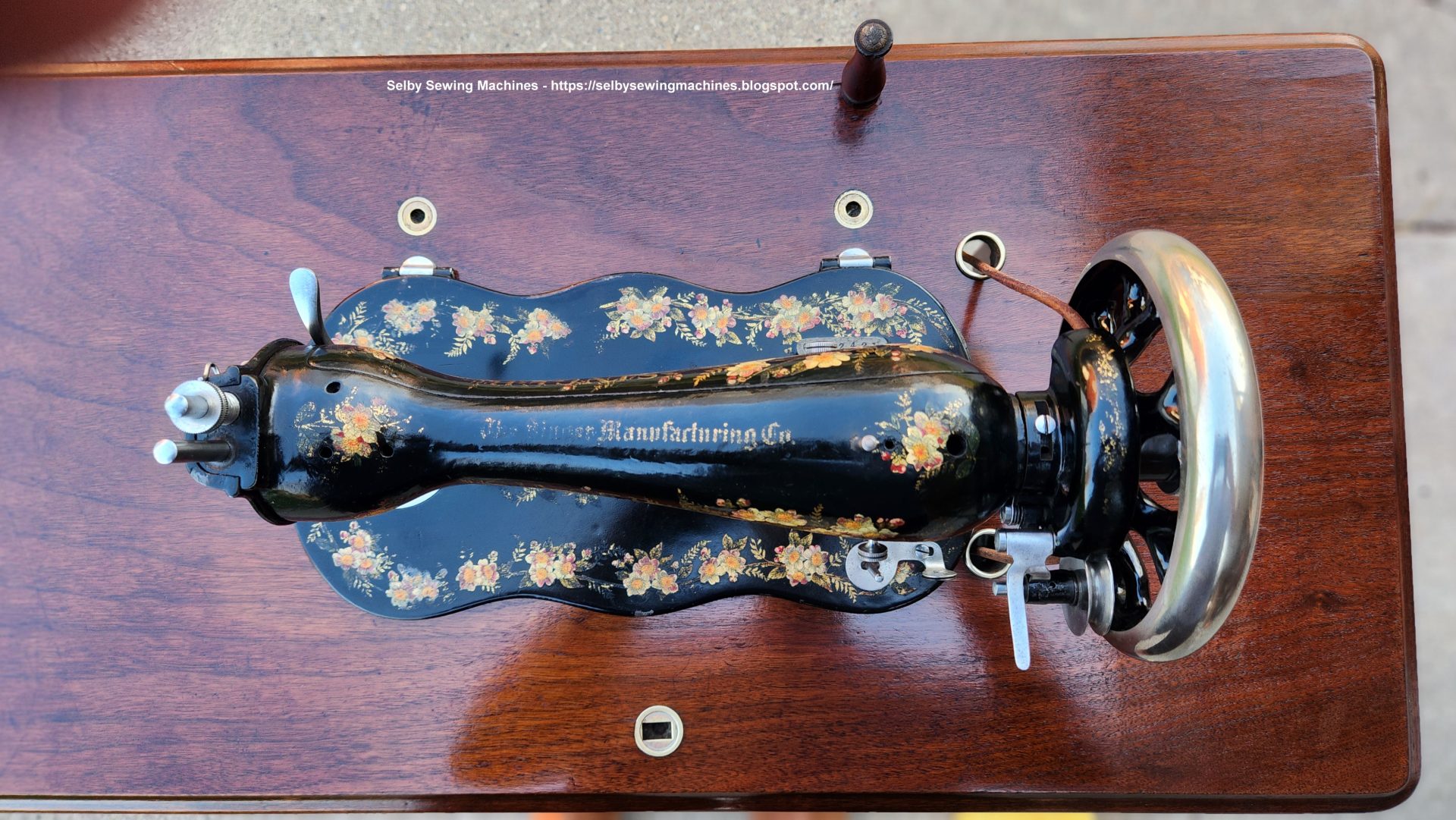
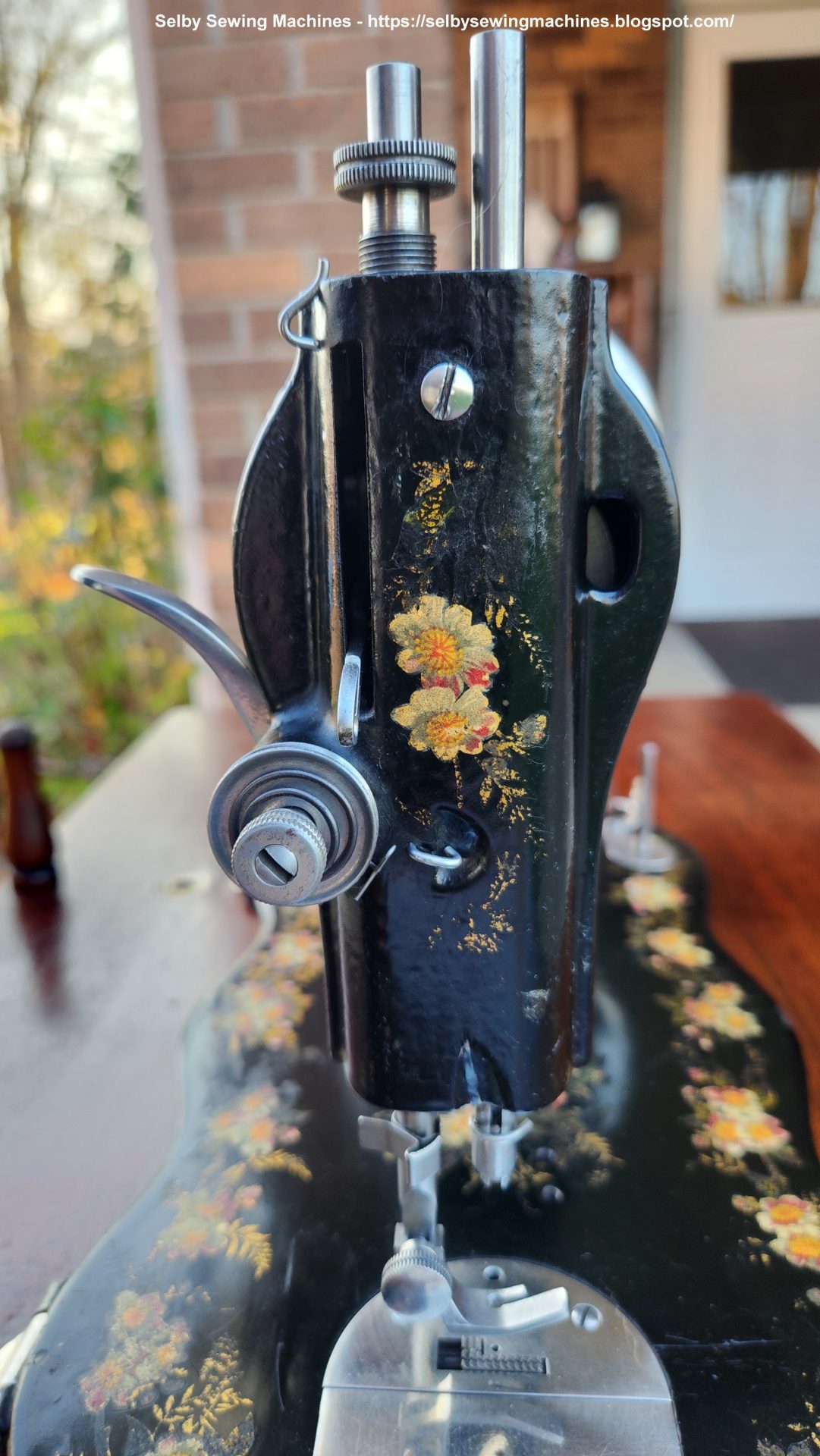
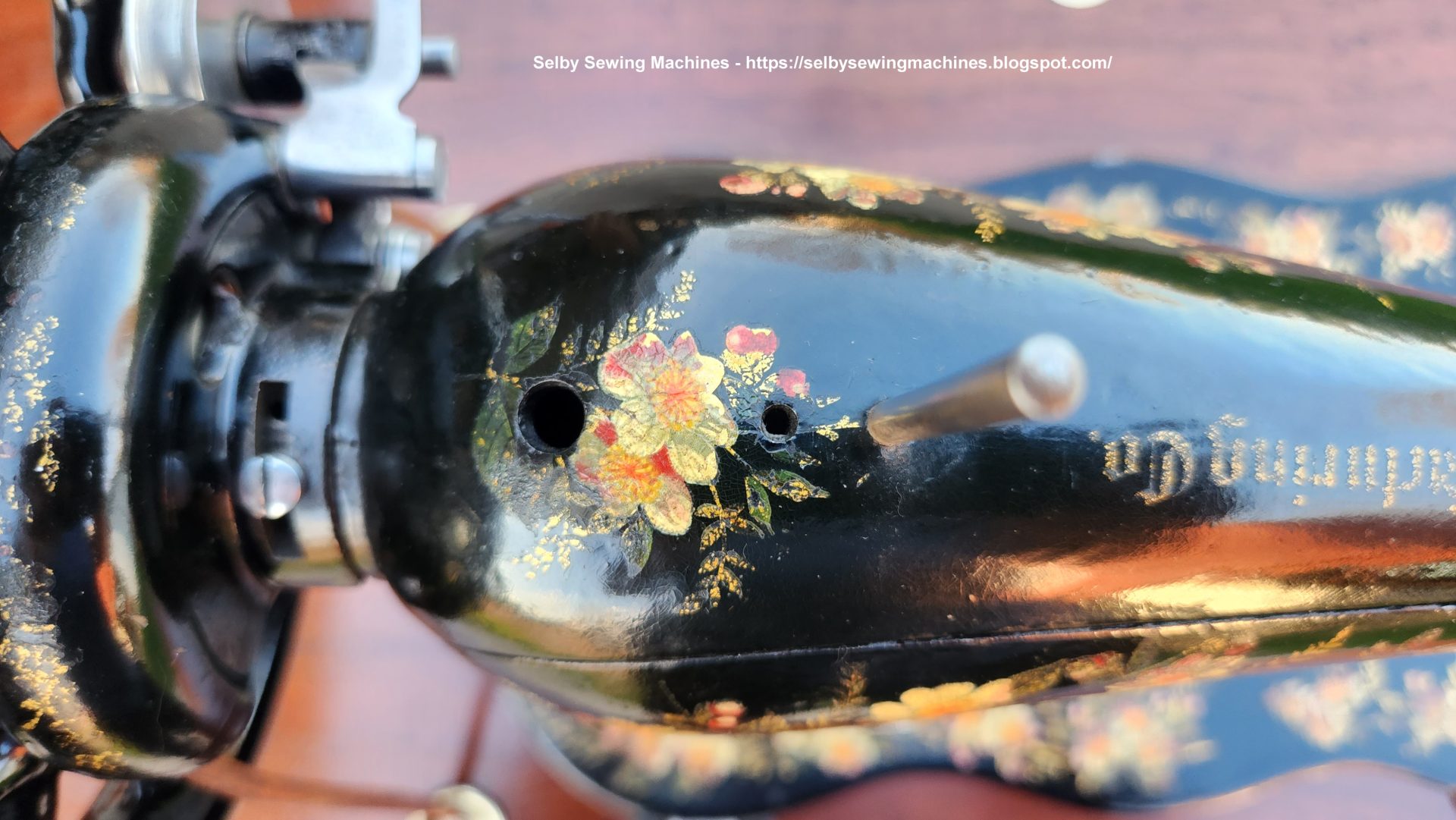
The name of this decal comes from the Selby Sewing Machines, who provided the detailed images and gave the name to this decoration. This decoration has a gold base as opposed to a silver base like most later decals.
Documented Machines
(What does it mean?)Total n.: 1
Factories:
Documented Classes:
- 15
Documented years: 1884
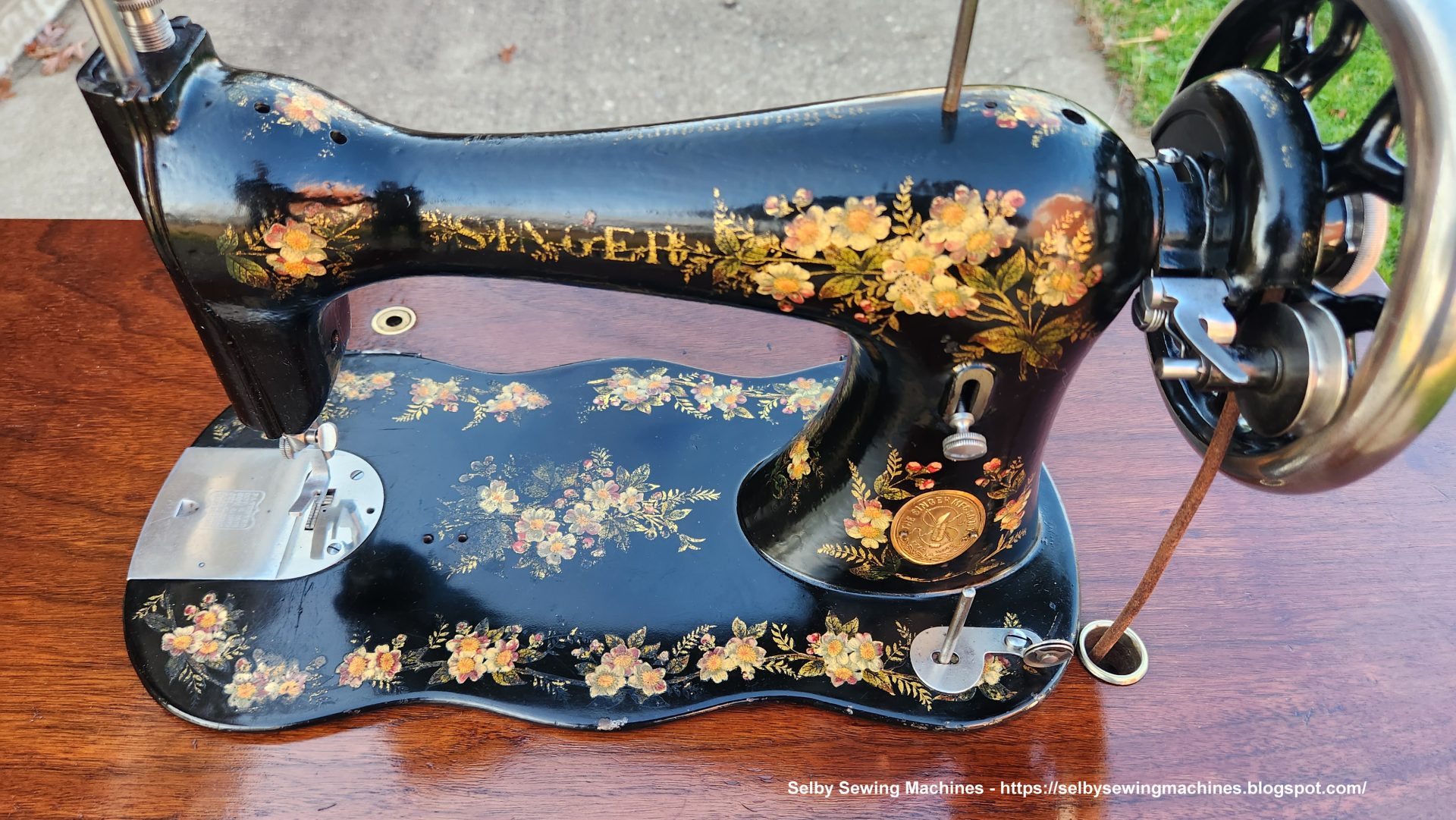
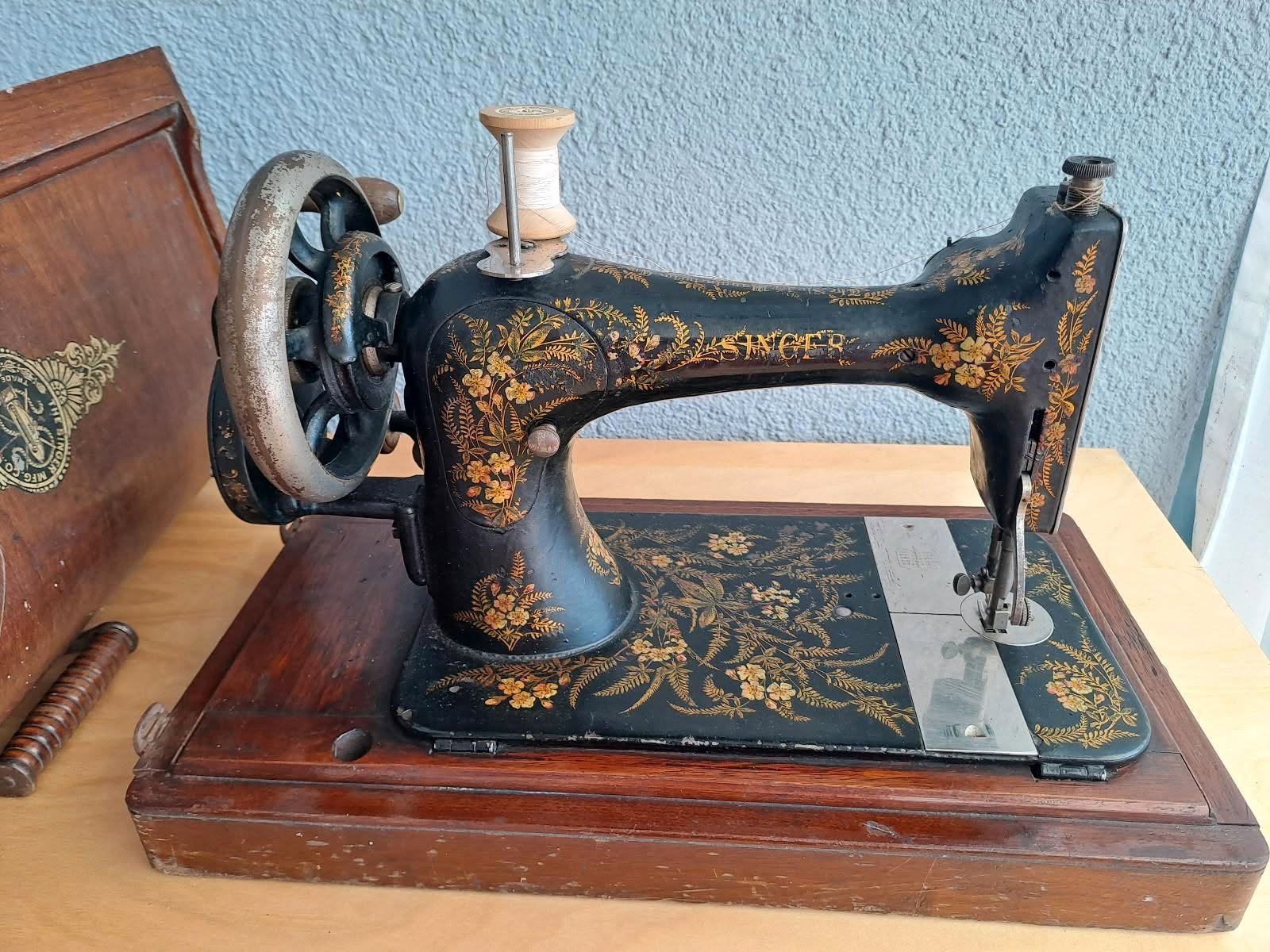
In use for Classes:
- 28
Documented Machines
(What does it mean?)Total n.: 1
Factories:
Documented Classes:
- 28
Documented years: 1891
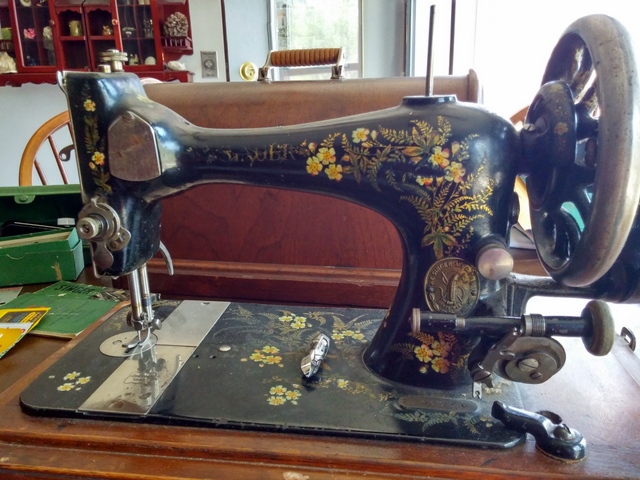
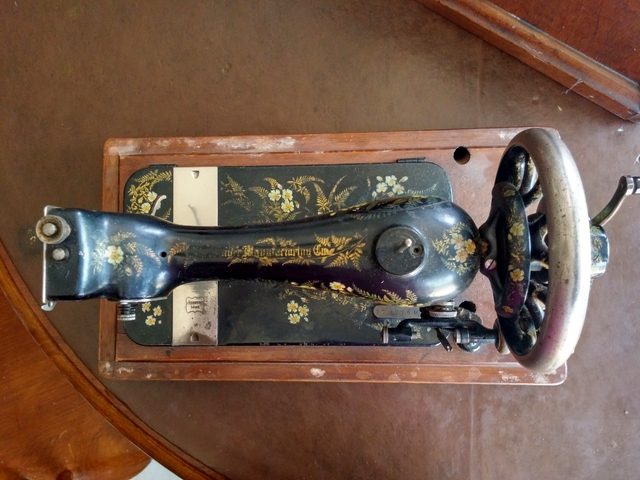
In use from 1907 up to 1929
In use for Classes:
- 28
Documented Machines
(What does it mean?)Total n.: 1
Factories:
Documented Classes:
- 28
Documented years: 1907
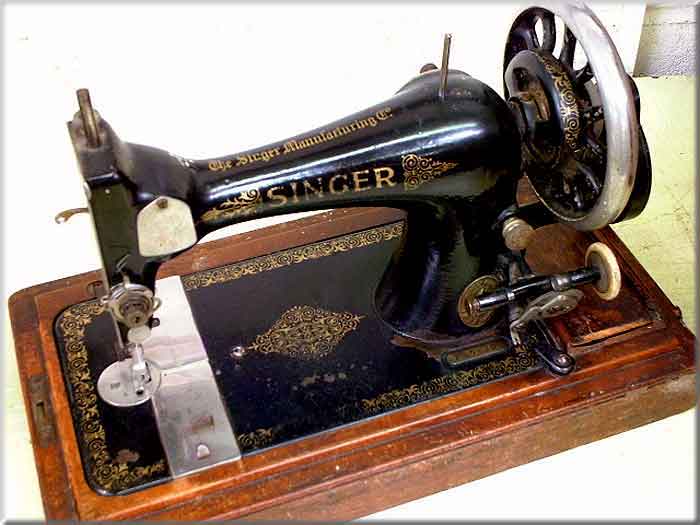
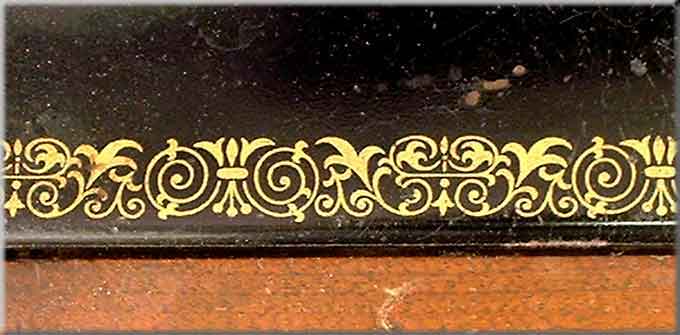
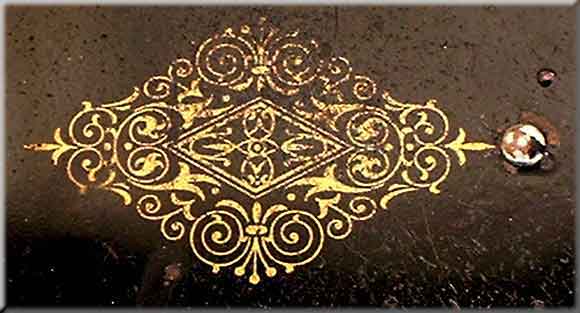
Decals vs hand ornamentation
Singer sewing machines were not always decorated using decals. At first, they were hand-ornamented.
The period when Singer introduced decals is still uncertain. Surviving examples show that some machines as late as the mid-1880s were still hand-ornamented, while others of the same years already carried decals.
It is unclear whether Singer phased out hand ornamentation gradually, whether both methods were offered side by side for a time, or whether different factories adopted decals at different speeds. Isaac Singer itself described the process of hand ornamentation in his publication “Genius Rewarded, or the story of the sewing machine“, in chapter 5 “The Great Factory”, where he describes the Elizabethport plant. The book was published in 1880, so it seems to confirm that this technique was still in regular use at that date.
Here’s what the book says about ornamentation:
After being carefully scoured, the heads are sent to the Ornamenting Department, where skillful workmen pencil out, with a fine camel’s hair brush, the designs of flowers and scroll work which ornament that portion of the machine which rests upon the table. The rapidity with which these pretty and often intricate designs are traced is wonderful. Look at your machine at home; observe all the gilded ornamentation and design, and then fancy a man doing such a machine head “offhand,” without the least guide for hand or brush, at the rate of 100 machines a day! As quickly as the penciling is done the machine is seized by another man, holding in his 49hand a book of gold leaf, which he deftly lays over every pencil-line. The gold leaf firmly adheres to the “sizing” laid on by the brush and the rest is rubbed off by a single touch of another man who passes a piece of soft cotton batting over it. The whole is then varnished with the best quality of white varnish and placed in a huge oven, where it bakes till it has become perfectly dry, hard and glossy. The Ornamenting Room is 125 feet long and 75 feet wide.
When decals fully displaced hand ornamentation still remains an open question, though, and further study of dated machines will be needed to clarify it.
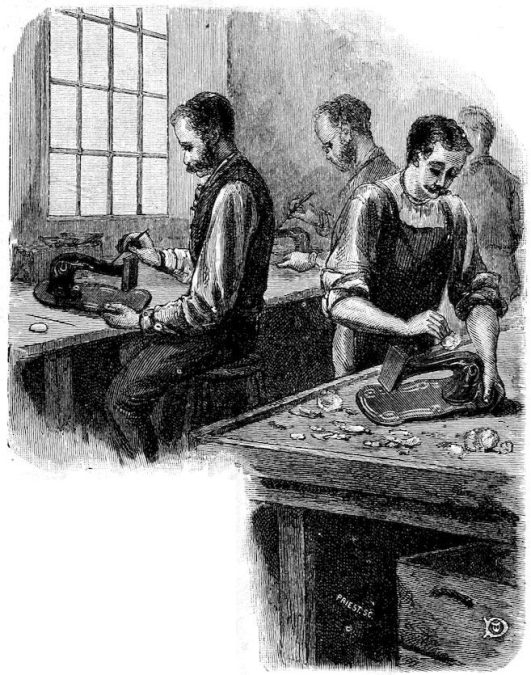
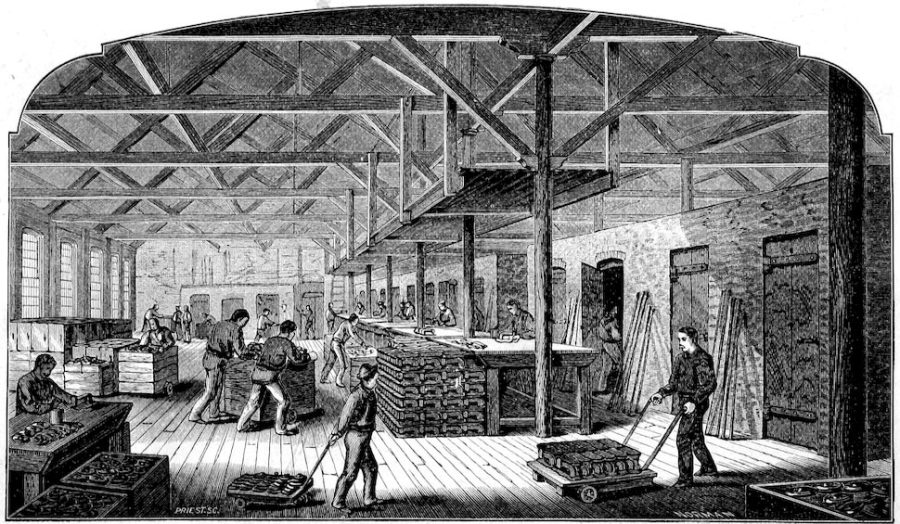
The same chapter of Isaac Singer’s book explains also a technique called Japanning. The American sewing-machine trade journal “The Sewing Machine Advance” describes this stove-enameling process known in its May 1880 issue: it was a technique used to obtain a black finish and fix decorations.
In consists of multiple coats of black japan baked overnight in super-heated brick ovens, followed by meticulous hand-pumicing, striping, and finally the application of gold leaf. The parts needing decoration were given to “the ornamenter, whose skill is greatly depended on to make a good-looking job”. Still a complex labor-intensive job, which required highly skilled workers, as the first painted hand decoration methods.
Ornamenters painted the designs freehand with camel-hair brushes, waited for it to cure (“acquires a certain “tack” or particular stage of gumminess”) and then applied gold leaf, that adhered only to the painted lines. Shading and color were added by hand afterward, and the finished heads were baked again in a varnish oven to achieve the glossy black finish. More elaborate methods, such as pearling and burnished-gold ornamentation, required additional coats, polishing and specialized techniques.
In 1871, Charles Ferdinand Mueller filed a patent for a new improved method for ornamenting sewing machines. This new method as described in Mueller’s document used thin sheet-metal pattern plates to remove gold leaf from selected areas, producing repeatable designs far more quickly than traditional freehand ornamentation. His method reduced the need for highly trained artists and significantly cut the time required.
Clearly fastet and cheapest, two important factors in a growing industry, where automation would become key to companies’ success. As soon as it was easily available, I suspect any sewing machine company would have adopted this new method.
From those sparce 19th century documents, it’s clear that in the same decades all those different methods could co-exist. Introduction of a new one required new materials and equipment, such as ovens: this coul mean a long time and high cost to be introduced. Their introduction could then differ from factory to factory of the same company.
The transition from hand-ornamentation to decals
The knowledgeable collector Gary Kleiner is an expert on vintage sewing machine ornamentation. He has generously provided photographs of many decorations and helped identify previously undocumented styles, such as the Fire Department decal and the Swirls gold-leaf ornamentation.
In the video below, Gary presents several outstanding examples from his collection of 19th-century Singer sewing machines. He also demonstrates some of the techniques used to decorate machines in the late 19th century, including freehand painting, the application of gold leaf and rubber-stamping methods.
His research suggests that Singer’s transition from hand-painted ornamentation to decals may not have been a simple, direct change. Drawing on surviving machines, Gary proposes that some late-1870s and early-1880s decorations, such as Fire Department and Swirls, were neither entirely hand-painted nor true decals. Instead, he suggests they may have been produced using rubber stamps to apply the sizing that held the gold leaf. This would have allowed factories to create more consistent and repeatable patterns while retaining the traditional gold-leaf process: ornamenters could transfer designs more quickly and consistently than entirely freehand work, helping to speed up production while retaining much of the traditional appearance. In the video, he demonstrates this technique and shows how it could have served as an intermediate step between freehand ornamentation and later decal production.
Gary also traces the evolution of some Singer Model 12 decorations.
According to his observations, the earliest Acanthus decals appeared in the Glasgow factory around 1878, a design without the Singer name on the front of the arm, followed by successive variations through the 1880s. He identifies the second version of the Acanthus decal, featuring the Singer name, as being used approximately from 1880 to 1884. This was followed by a third design he calls Dotted Acanthus design, which remained in use until around 1890 and is today the most commonly encountered decoration on Singer Model 12 machines.
Gary also notes that the rare Wheels decal appears on some machines from about 1885, while the Ottoman Carnations design first appeared around 1887. By the late 1890s, Ottoman Carnations had become one of Singer’s most widespread decal patterns, appearing not only on the Model 12 but also on later machines such as the High Arm, the VS3, and the 48K.
While some of these dates and interpretations remain open to discussion, Gary’s work provides valuable clues about how Singer’s decorative techniques evolved during a period of rapid industrial growth.

A word about floral designs
In the early years of Singer sewing machines, floral designs were common and varied.
The identification of the exact flowers can be hard, and is easily inaccurate. We do not have an official source to refer to, and many attempted to give names to several variants by trying to identify specific flowers. I chose to be conservative, here, and I do not present loads of floral variants with several different names. I preferred to list them under a generic “Painted Flowers“, if I wasn’t sure there’s a specific, replicated and easily distinguishable decoration.
About official documents, we have two original patents, specifically Design Registrations for two ornamentation sets. Since they are not called “decals”, and considering the decade they were issued, we can suppose they were designs for hand-ornamentation. It’s possible that following decals borrowed their design from here.
The first was filed in 1884 by George A. Squire, a floral design for the Improved Family. Another was files in 1883 by Ewald Hähnel and features sprays of forget-me-nots with “… slender tendrils, various flowers and buds…“. Ewald Hähnel was a freelance designer, who designed decal sets for Singer, Minnesota, Davis, New Home and other manufacturers.
George A. Squire in 1884 filed another patent for a design that is now known as “Ottoman Carnations”. Here, he describes it as “… a main flower resembling a dianthus (carnation), and a smaller flower resembling a buttercup, and interlaced stems bearing buds and slender pointed leaves“. He does not mention anything Ottoman, though the design seems a mix of Islamic and figurative styles. The “buttercups” he mentions seem more like forget-me-nots. This original design later became the Ottoman Carnations decal.
About the names used to identify decal sets
The names attributed to Singer’s decal sets that we know and use today were not necessarily given by the Singer company. For the most common decals, their names have become widely accepted among collectors, such as for the Red Eye. Certain sets may have had official factory names, such as the “Transfer No. 23 – Indian Sphinx” decals.
In production, decals were most likely identified primarily by a code number. It’s unclear whether they were assigned consecutively as new decals were created. I personally doubt it, seeing that even serial numbers eventually stopped being strictly consecutive (that happened in the Monza factory, for example). I am sure that, early on, consistency was probably maintained, but as production grew more complex, strict order could have become difficult to mantain. And I suppose Singer factories likely had more pressing concerns than keeping decal numbers perfectly sequential: as long as they could identify what they needed, that was sufficient.
So, here in my list I’ve tried using the most widely used and accepted names to identify decals. Please, if you notice names that could be improved for clarity, or if you know an official name I should use, or if you see the list is missing a decal, tell me in the comments or get in touch. I’ll do my best to keep this list accurate and useful for everyone.


Official Singer decal codes
Browsing around Singer manuals, attentive collectors have spotted decal mentions. It’s hard, nowadays, to link those decal codes to surviving examples, without visual clues.
For class 127 and 128, a 1951 adjuster’s manual mentions:
- #15 (Sphinx)
- #16 (Rose)
- #177 (Pearl)
- #317 (Scroll)
- #318 (Colored)
- #485 (Gilt)
- #492 (Gilt)
- #497 (Gilt)
- #506 (Gilt)
Sphinx is easy to identify, while the others are not. The manual itself shows a machine in figure 2 with Hearts decals, but no clue as to its official name. There’s also a specific mention of “black wrinkle” finishing. The manual specifically says “Finished in black wrinkle, they have bed ornamentation # 492 or #506 (Gilt)” for models 128-12. We know for 128 machines of two wrinkle or Godzilla decals: Hearts Godzilla and Paperclip Godzilla. But which is which?
Resources
- Singer decals wiki by The Needlebar
- ISMACS domestic sewing machine decals
- Singer ornamentation sets by ISMACS
- Gallery of Singer decals by SingerSewingMachineInfo
- “Genius Rewarded, or the story of the sewing machine” by John Scott around 1880 (searcheable version)
- “Genius Rewarded, or the story of the sewing machine” by John Scott around 1880 (book scan version)
- “Genius Rewarded, or the story of the sewing machine ” by John Scott around 1880 (explorable digitized book)






16 Comments. Leave new
Thank you for all this work to compile this information. I use your serial number data base frequently. I have an Owl that has been added to the pre 1900 data base and is from one of the “missing” sets of numbers from Elizabethport, possibly finished in Montreal. There is another in my area for sale from very close to the same time. I have additional photos of mine I could share if you want additional photos. Among your more rare ones, I also have a Persian, and an Indian Star Sphinx 15 (which, by serial number, was made in Elizabethport during the war while Clydebank would have been doing war work). If you are interested in photos of any of them, let me know.
Oh thanks a million! I am glad I can be of help!
Anything you mention here would be gold for the database and future researches, thank you for your will to share it with me. I’ll send you an email if you don’t mind. Thank you again!
Merhaba.
EF420691 seri numaaralı makinem için kullanma kılavuzu istiyorum. Saygılar.
Hello. Search for your machine on the database here: if available, you’ll get also the manual. In alternative, browse the complete list of manuals here.
EF420691 seri numaaralı makinem için kullanma kılavuzu istiyorum. Saygılar.
Hello. Search for your machine on the database here: if available, you’ll get also the manual. In alternative, browse the complete list of manuals here.
Bonsoir, je recherche les décalcomanies pour une Singer VS3/28 de 1892 .
Je l’ai vue sur votre site, mais où puis-je la commander?
Merci de votre réponse
Cordialement
Bonjour. Nous ne sommes pas revendeurs de décalcomanies. Nous effectuons seulments des recherches historiques. Si vous recherchez “Singer decals” sur Google, vous devriez trouver facilement un vendeur. Malheureusement, nous n’en avons pas à vous recommander, car nous n’en avons jamais acheté nous-mêmes. Bonne journée!
My Mom acquired her sewing machine in New Zealand
. Trademark Wellinstone Joseph Nathan & Co. Wellington N.Z. 128055
Hello! Sorry, never heard of this brand… Did you try asking the Victorian Sewatshop Forum? It’s full of knowleadgeable people from all over the world.
Thank you. I am interested in a value. My Mom passed last August 2025
That is a tricky question… Maybe photos of the machine would help. Did you try a search on Ebay for similar machines? An advice, though. When searching for the value of something on Ebay, filter by “Sold items”: this way you’ll know what people is really willing to pay for similar items.
Thank you for the comprehensive list of the decals. I found it very interesting. You can also add a verified machine with Sphinx pattern that was manufactured in Russia, in town Podolsk, not far from Moscow. They opened in 1900, started producing in 1902, then left Russia after the Soviet Revolution in 1918. Podolsk plant continued producing the sewing machines with name Singer about another 10 years. My grandma’s dad, who lived in the Far East Russia, got one as a prize for hard work in 1930. My grandma was only 6 years old and learned to sew on it. She was a seamstress all her life. The machine is still in good working condition located in Moldova. I have a photo of it that I can share.
Thanks a million! This means the world to me! I’d really appreciate you shared the photo and serial of your machine with me, thank you. You can use the submission form here. Thank you again!
I have just researched my mother’s Singer treadle sewing machine in a cabinet which I now own. Your data base is amazing.
Model 66K
Serial no Y9976556
1935 26 July
Clydebank Scotland.
I don’t know when she acquired the unit, I’m guessing it was in the 1950’s in Melbourne. I inherited it in 2002 and have used it often.
I have a photo of it.
Thanks a million! I’m glad the database lookup tool helped you! I’d love to receive a photo of your machine, I’d update the database with the decals info of your machine. Could you send it via the contact form? Thanks a million again!