All our resources on vintage sewing machines in one place.
Our main focus is documenting the history of vintage Singer sewing machines and making that information easy to access. We started by building our Singer Serial Number Database, where you can look up the serial number of your machine and uncover its history.
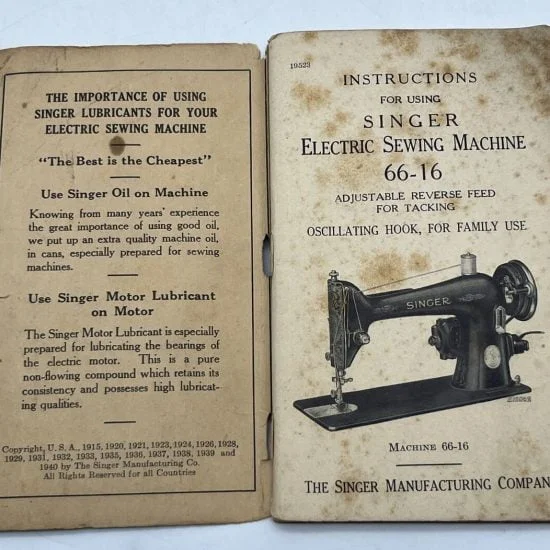
This is not just a lookup tool, though: it’s a comprehensive documentation project, with the goal of cross-referencing different kinds of historical data and connecting them to real surviving machines. Starting with a serial number, you can find information about the model and date of manufacture, decal style, factory of production, even get manuals and lists of spare parts. Our goal is to bring all this information together around a specific machine.
We are connecting preserved historical records to real surviving machines. That’s what we mean by “documented machines”.
You can get all this with a single quick research, then copy or screenshot the results, but if you want you can go deeper and deeper.
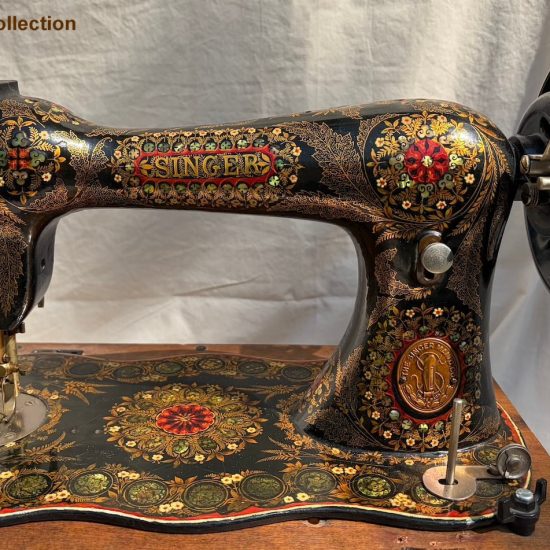
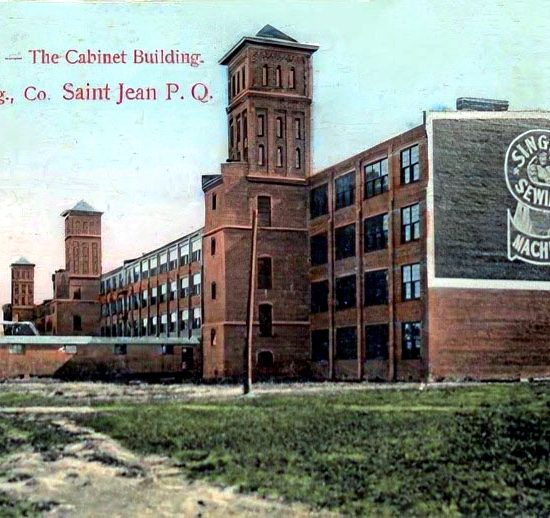
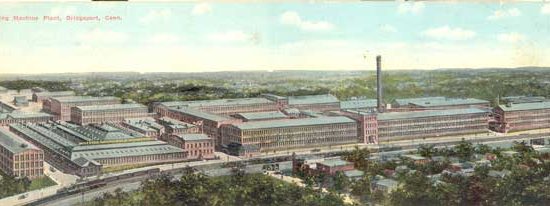
By collecting, reviewing and cross-referencing different historical records with information from real machines, we’ve been able to research Singer decals and ornamentation, the production of Singer factories around the world, collect free PDF manuals and resources, and many other aspects of Singer’s manufacturing history.
Singer was just the beginning. As we learn more about other makers, you’ll also find articles on vintage sewing machine history, toy machines, restoration and repairs, manuals and other resources, our own collection of antique machines, and a community where enthusiasts can ask questions, share knowledge, help one another.
Like many collectors, we started with just a single vintage sewing machine and quickly fell down the rabbit hole of sewing machine history. This section is where we share what we’ve learned along the way, hoping it helps others preserve and enjoy these remarkable machines.