I suppose you know, if you’ve been following up closely, now that my husband and I love trying new techniques and materials.
At the end of 2019 we discovered the wonders of acrylic colors. Thanks to my friend Sara, we learned the blending technique while making our first cement vase and began to be acquainted with those colors. We then started experiencing the acrylic pouring.
We saw a few artworks made with different pouring methods (yes, there’s not just one way of making a pour!), we began studying and researching how to use them until finally we gave it a try.
And we discovered we love it!
But what is acrylic pouring?
It’is a fluid painting technique: you mix your chosen acrylic colors with a pouring medium and apply them to the canvas by pouring them directly, without using a traditional brush. You can mix them in a pouring cup, one after the other, then let them flow on the canvas, or pour them separately on the canvas itself, or stack them one by one in a funnel… loads of combinations!
When the paint is on the canvas you then let it flow and change the direction of the flowing process, for instance by tilting the canvas or using a straw to blow around the fresh color or even with a hair dryer! You wouldn’t tell how many ways you have to combine colors!
When you’re satisfied by the appearance of your piece, there you go: your artwork is ready to dry and then be displayed on your wall. No rules about it: the painting is finished when it suits you. No drawing skills required, that’s a good thing for us, since those are wanting in the family.
There are tons of different acrylic pouring techniques: dirty pour, puddle pour, flip cup, swirl, swipe, Dutch pour, string pull and many more. For our first piece, we decided to try the most classic one: dirty pour. In particular, we thought we might obtain a better effect with a variant called tree ring or swirl.
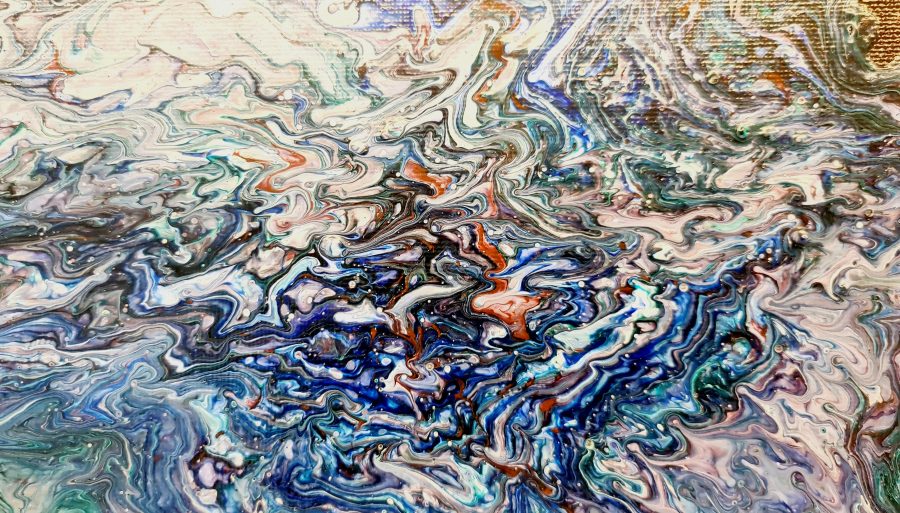
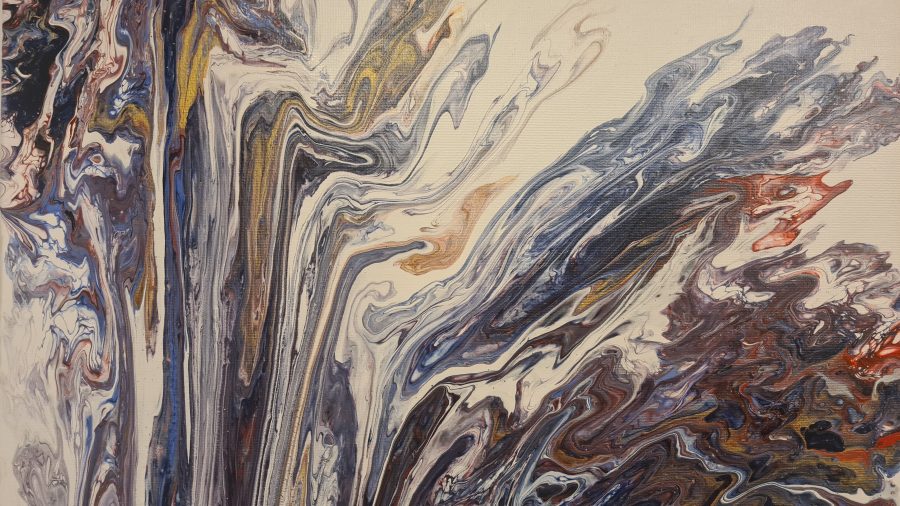
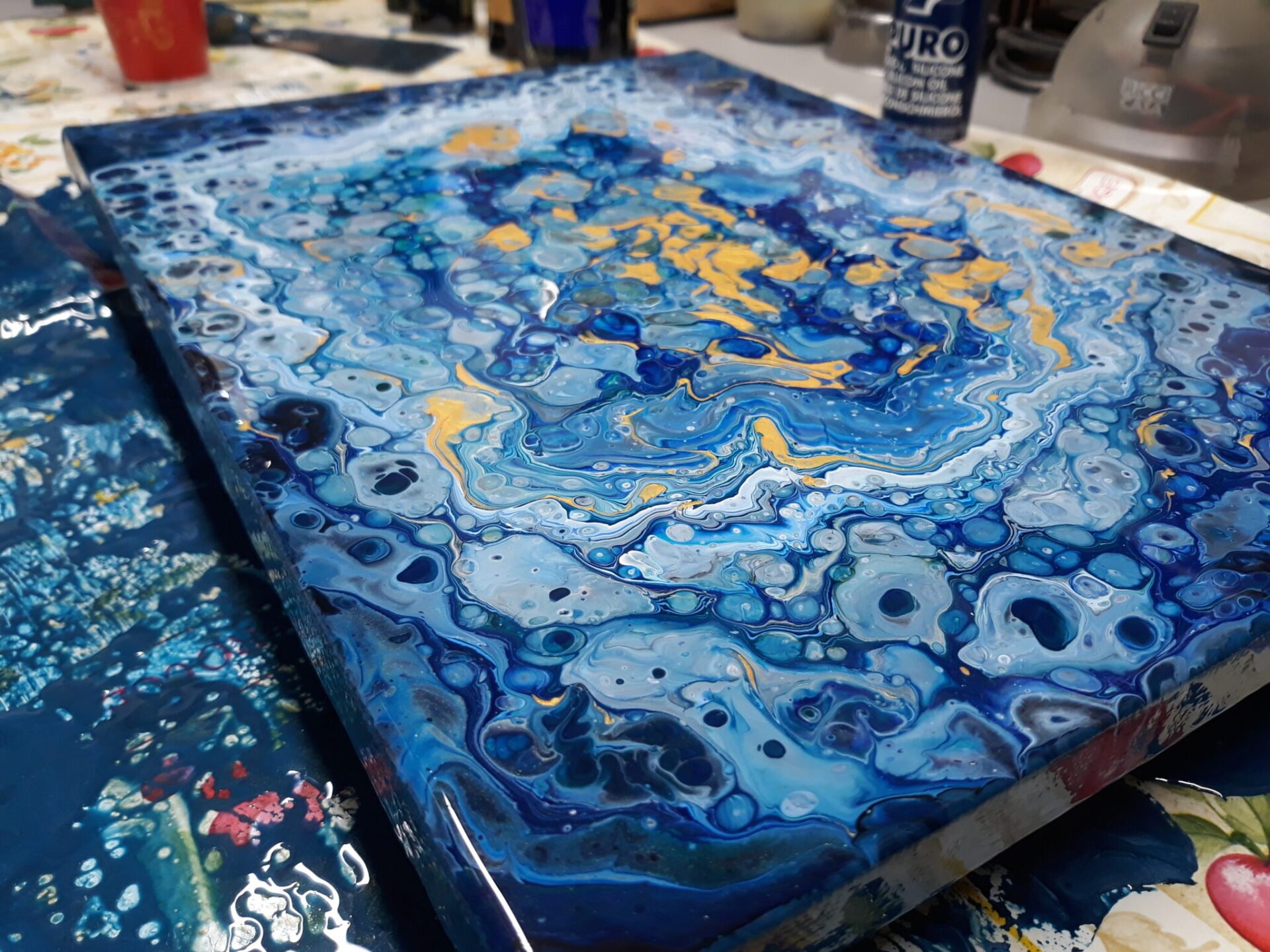
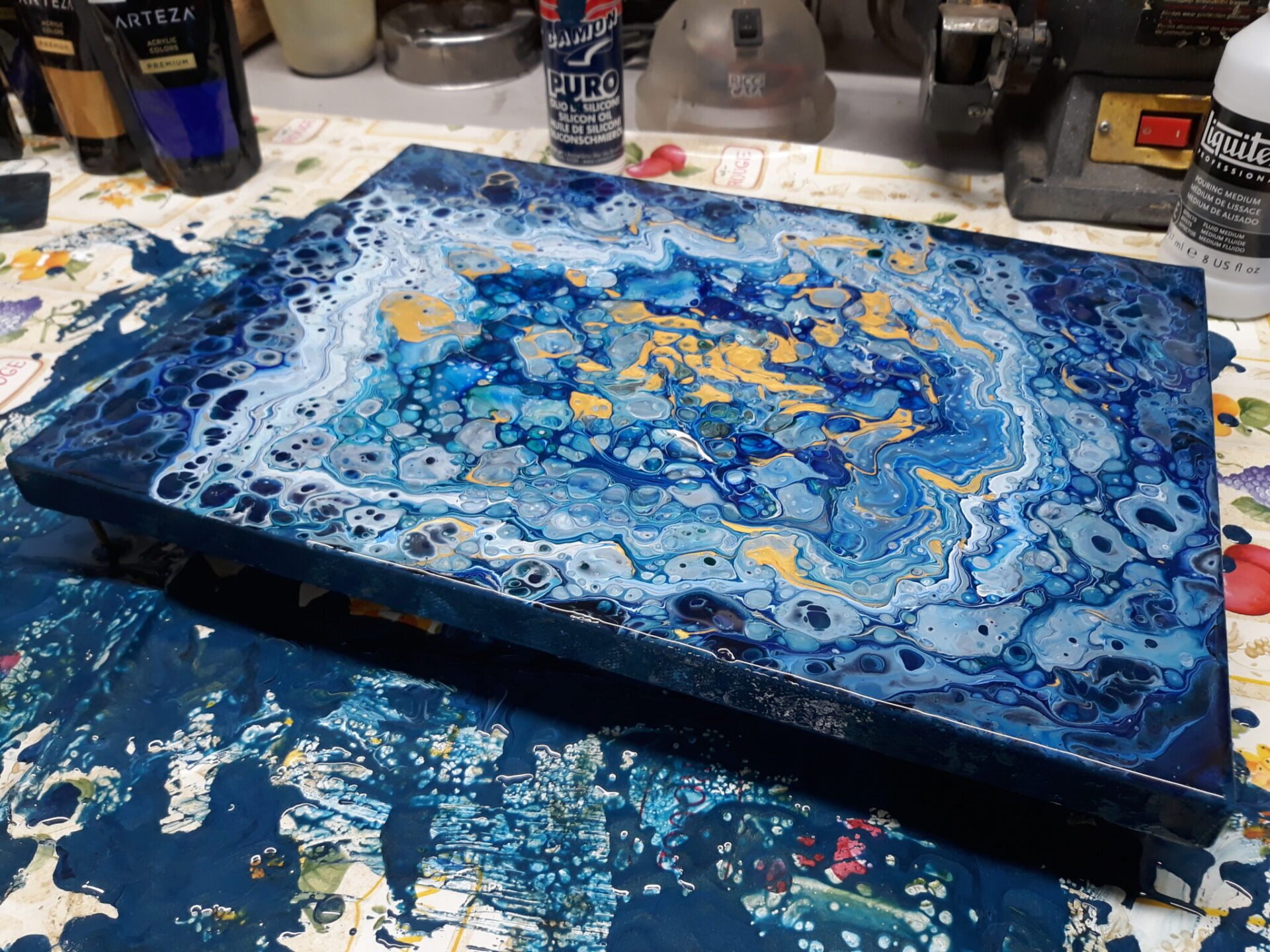
First of all you need to prepare the canvas: you have to lay down a fluid basis, and we chose a black one to match our chosen palette. We wanted the painting to be in the shades of blue with gold as an accent color.
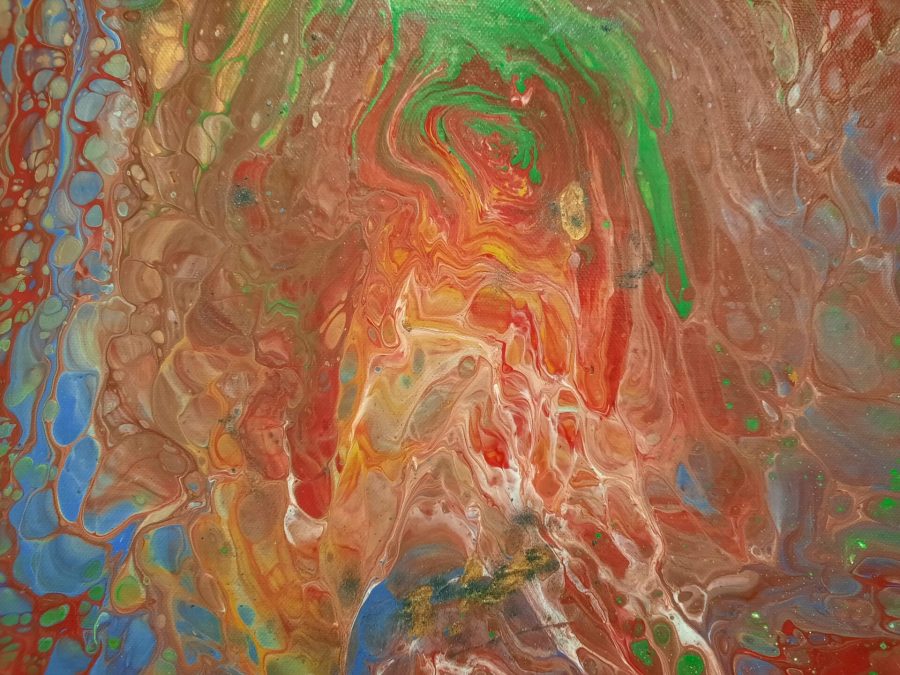
Following the chosen technique, we carefully prepared all the colors individually in paper cups, mixed them with almost the same quantity of pouring medium, a little water and two drops of silicon oil. Silicon oil is good to obtain one of the features we love most of acrylic pours: the cells. Do you know those fascinating circular patterns? Yes, those drops emerging in a painting during the color pouring or the tilting process, that come and go while the paint is fresh and moved around, mainly when heat is applied.
As the colors were ready, we stacked them in a bigger pouring cup, trying not to mix them in the process. I thought it very hard, but we discovered that this was easier than expected: we poured them on the walls of the cup to let them slide in place on the side. We followed a random order, choosing the next color to pour just as instinct told us at the moment. Once the cup was ready with multiple layers of each color, the real pouring began!
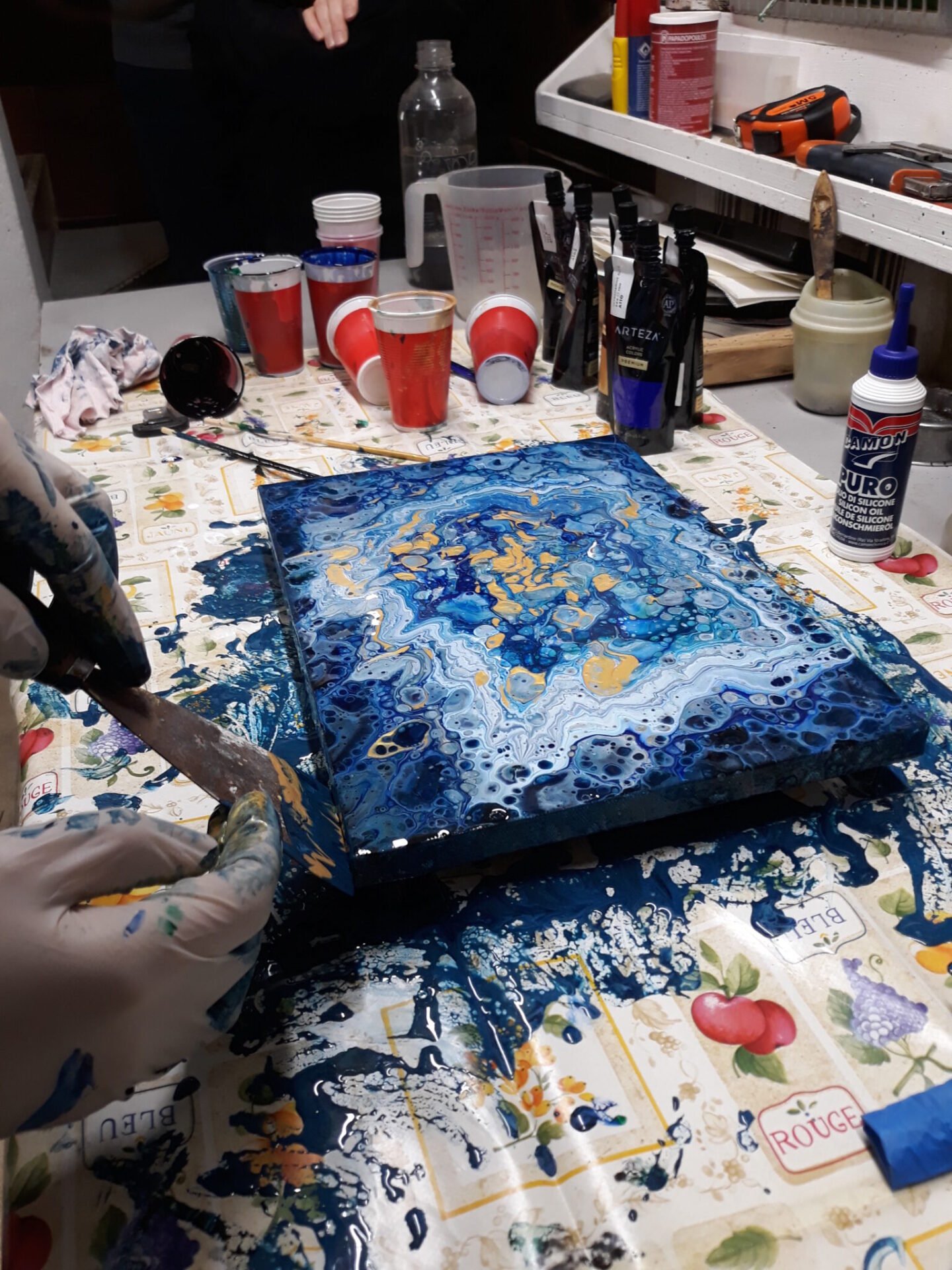
Be prepared: you’ll have paint all around, falling from the canvas on your table or floor. So arrange the room accordingly!
Watching the colors appearing on the black basis and mixing each other was mesmerizing. Don’t you agree?
And with the tilting, the colors moved around the canvas, creating lovely new scenarios. Each time you see a pattern appear and you love it, thinking the painting finished and good. Then you try other moves, and a better pattern reveals. You could go on indefinitely, but remember to stop somewhere!
I like this kind of art because you never know if the final result is going to be what you expected at first. You always obtain nice surprises!
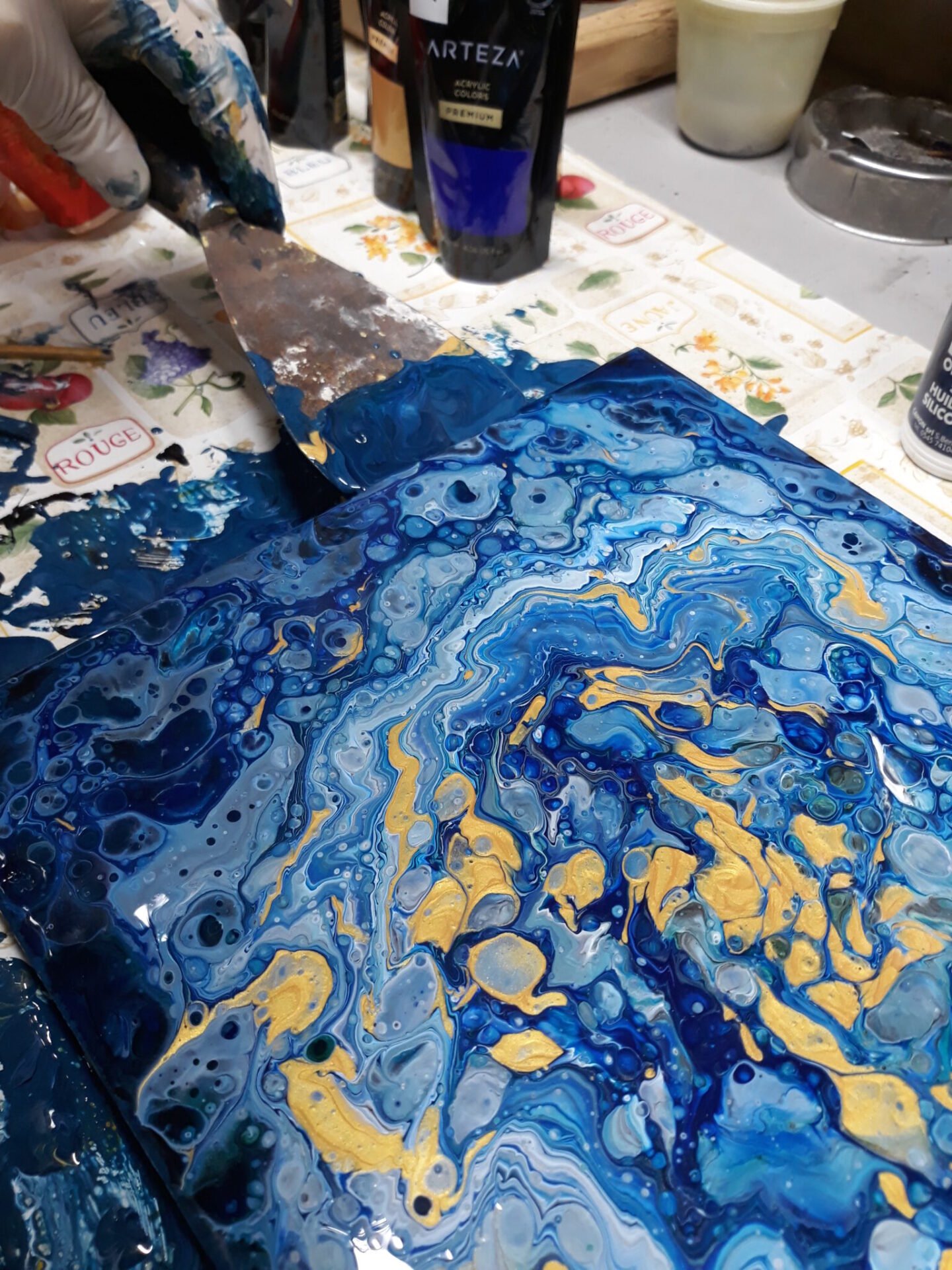
At the end of the tilting, don’t forget to finish the edges with a spatula or similar object. You can pick up the color that has fallen from the canvas, if needed.

So our first acrylic pouring piece was made!
The color palette we chose matched our blue bedroom, with the adding of gold as an accent color that gives it an elegant touch and a bit of light.
I have to say we are totally satisfied with the result of our first dirty pour canvas. What do you think of it?