If you’ve been following #LRCrafts for a while, you know we love experimenting. Not also with DIY techniques: I also love trying new digital crafts!
Since the opening of our YouTube Channel, I’m exploring new ways to make videos. I started from my short videos for Instagram stories: I combined all that material together in more complex videos to showcase our projects. Now, I’m also shooting new craft scenes, planning the filming for the idea I have in mind.
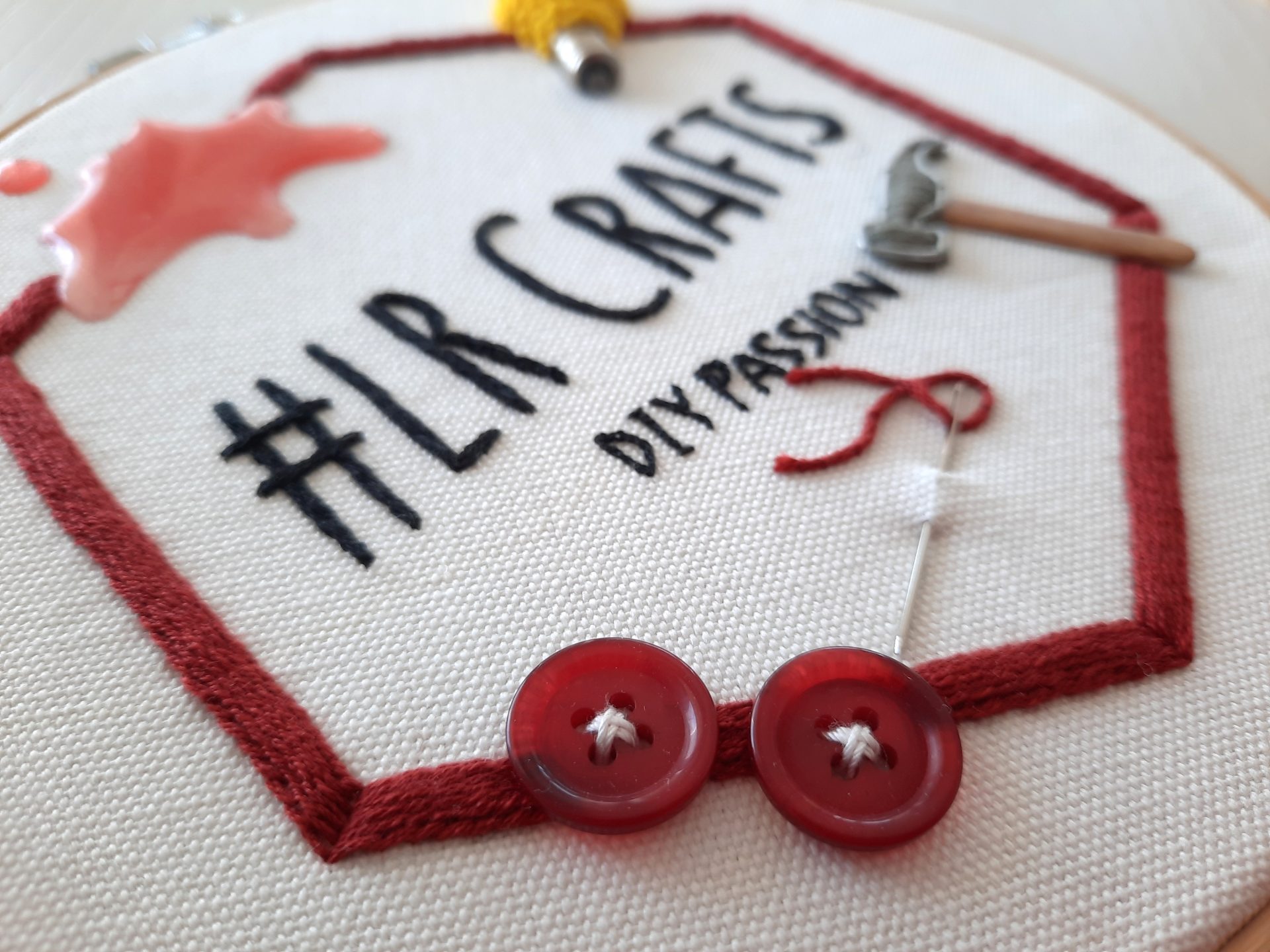
This is what happened with the video you can watch here: while making the mixed-media embroidery of #LRCrafts logo, the hexagonal border in particular, I wanted to try the making of a video tutorial of raised stem stitch.
I found this stitch easy, quick but also lovely to see, giving your embroidery a tiny 3D feeling. And I suppose, if you explore my hoop projects, you’ll clearly see how I love 3D embroidery!
So let’s have a look at how to embroider with raised stem stitch.
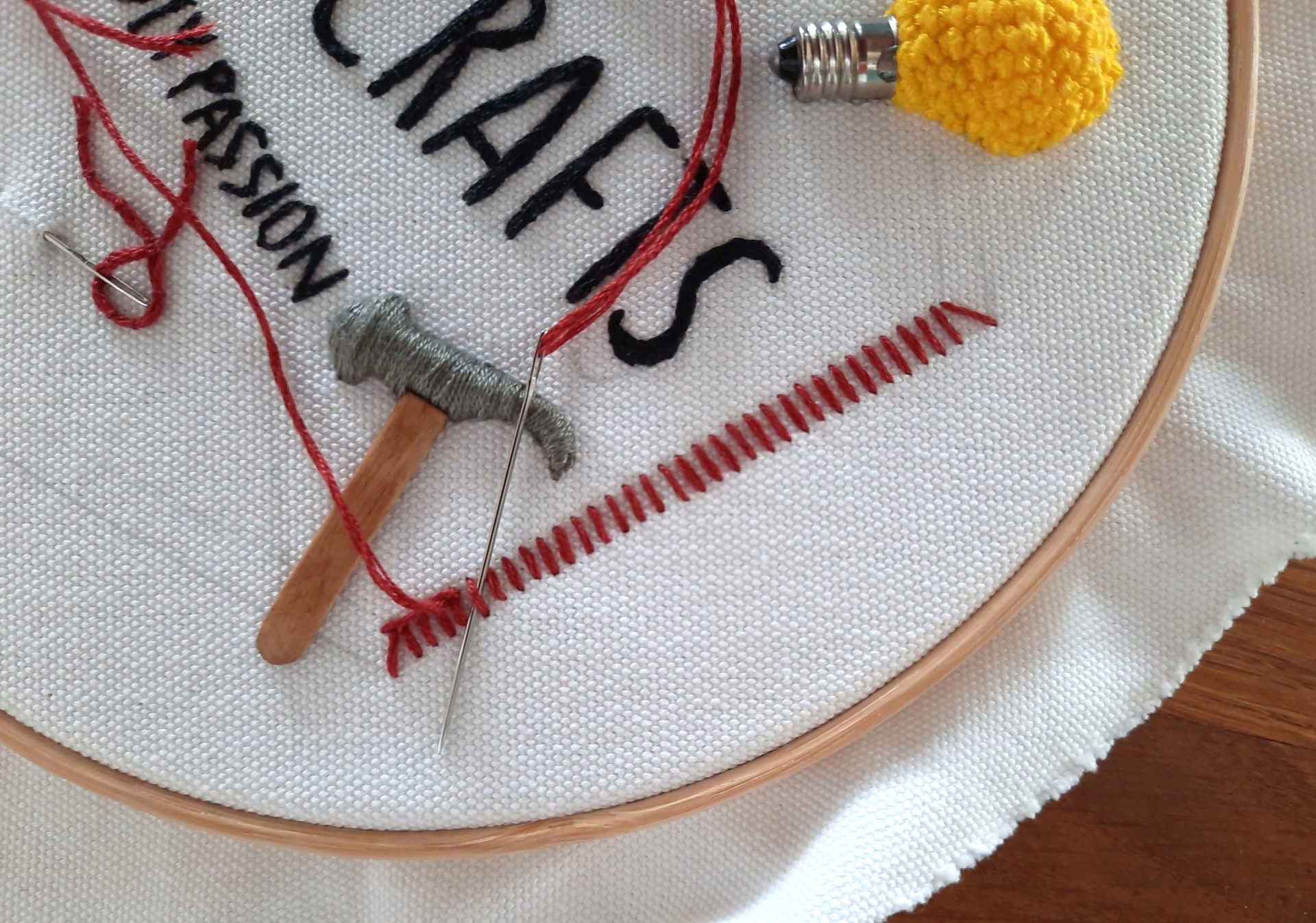
✔ First thing to do: draw two horizontal lines, parallel to each other, to outline the area you need to cover with raised satin stitch.
✔ Between the two lines, stitch evenly spaced lines, parallel to each other and perpendicular to the drawn lines. Keep the stitches loose enough to be able to fit the needle below the floss multiple times.
✔ Pull your needle out just on the left of your leftmost stitch.
Go over the first two vertical stitches, then go back underneath the second one to pass the floss around it, finally pull out. Keep the working thread below the needle, the same way you do to make a normal stem stitch.
✔ Work all the way down, following the horizontal line you draw: you have to circle each one of the vertical stitches. At the end, after crossing the last vertical stitch, take your needle down into the fabric, just right of your rightmost stitch.
✔ You need to work always in the same direction, so start again from the left of your work, to stitch a second line just over the first one. I usually cut the thread and secure it after each line, not to waste too much floss.
✔ There you go! After stitching as many lines you can fit around your vertical stitches, your work is over!
I hope you enjoyed my short video and this tiny tutorial.
Please feel free to comment with any suggestion!

Click on the project above to see the photogallery of all the details