
This last year has been a though one, I am sure you know what I mean. This Covid-19 pandemic struck hard. I’m glad my family is safe and sound, we have nothing to complain about: our kins’ health has always been good, our jobs have gone on fine as before, we also had the most wonderful thing we could ask for, our baby!
What we miss most is being close to our friends, mainly our dance mates. Second thing, we also miss travelling.
We planned to raise our child among people, bringing her with us everywhere we went, also abroad.
I hope we’ll be able to travel again soon. In the meantime, we are thinking about future destinations and looking back to our previous trips.
In 2019 my husband and I went on a trip to France. We visited part of Normandy and Britain and… well, in a certain way it happened to become an embroidery adventure!
During the first part of our vacation we stumbled onto wonderful museums that seemed the perfect spot for an embroiderer. A paradise for me! Just figure myself, walking around in awe with hearts painted in my eyes as you see in certain cartoons.
I would like to share the awesome embroidery-related things we discovered in France.
Our travels have always been a wonderful source of inspiration, and that one was not different.

Table of contents

Rouen: the Musée Le Secq de Tournelles
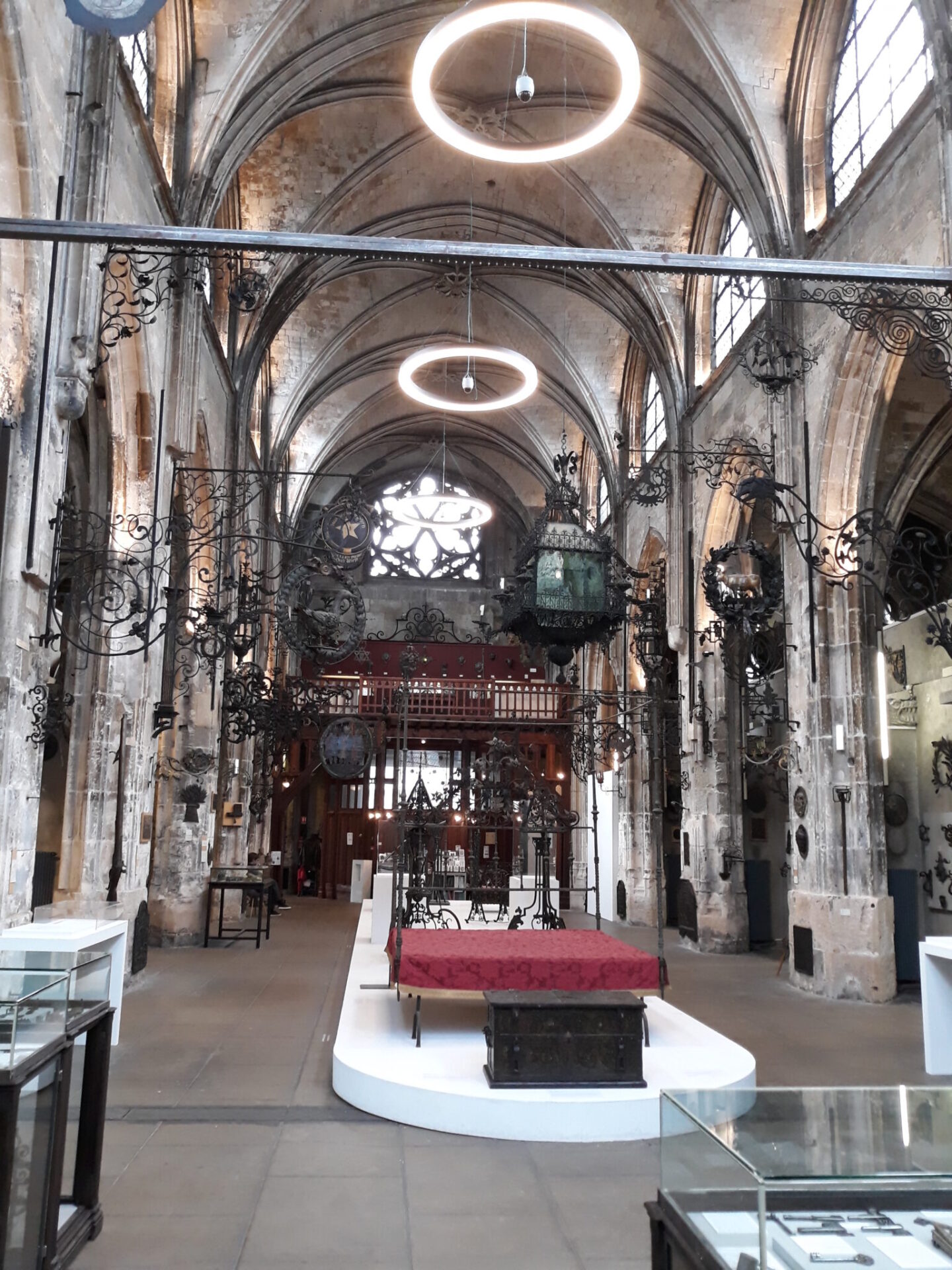
My husband and I happened to be in Rouen, Normandy, just for a brief one-night stop after the first day of our French Summer holidays. After a walk around this lovely city, just before returning to the hotel for dinner, we saw a church in the distance and decided to visit the last one before finishing the day. Well, it was worth the choice!
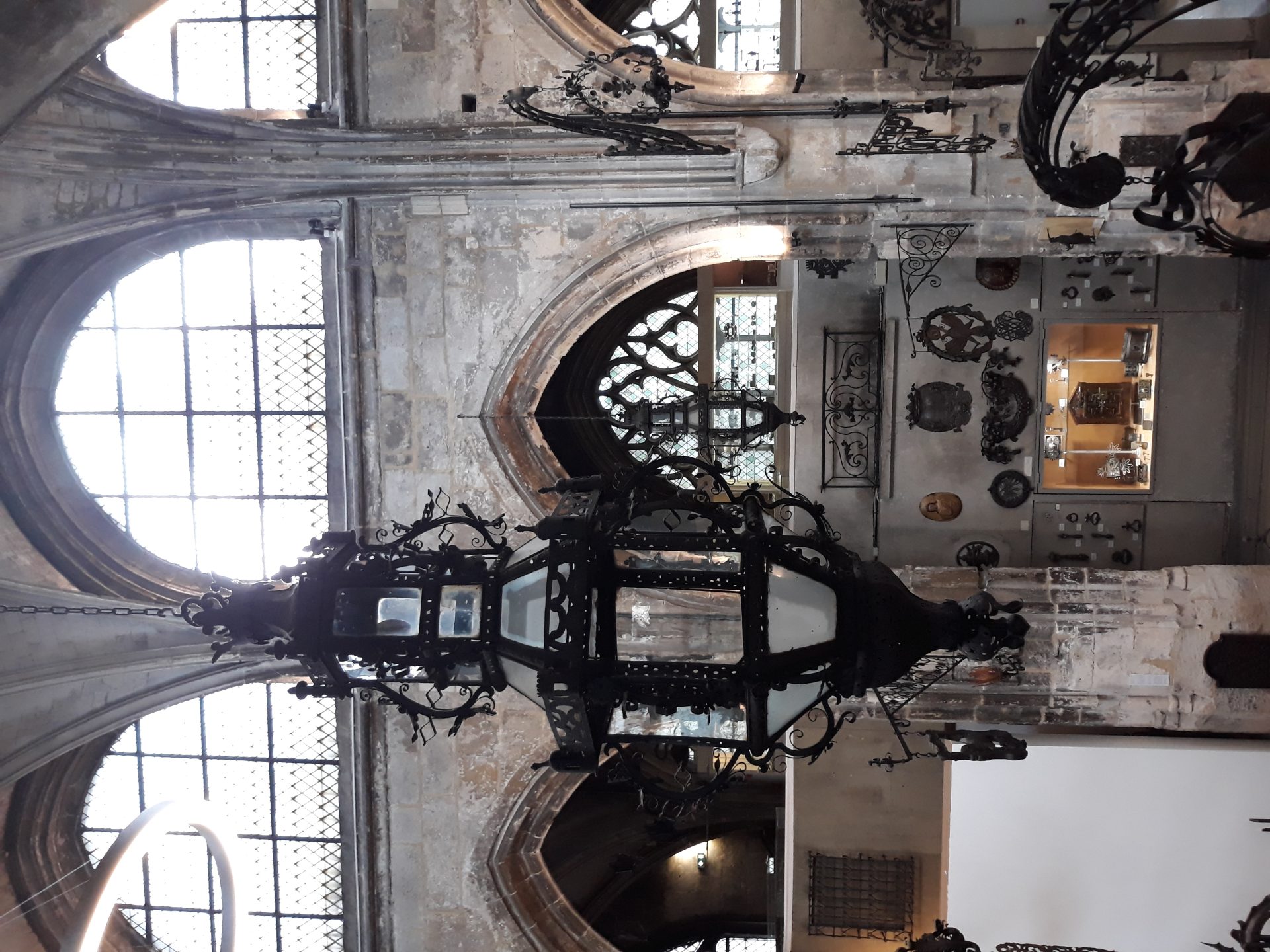
That was not a proper church, but and ex-church with an amazing display of ancient iron items: the Musée Le Secq de Tournelles.
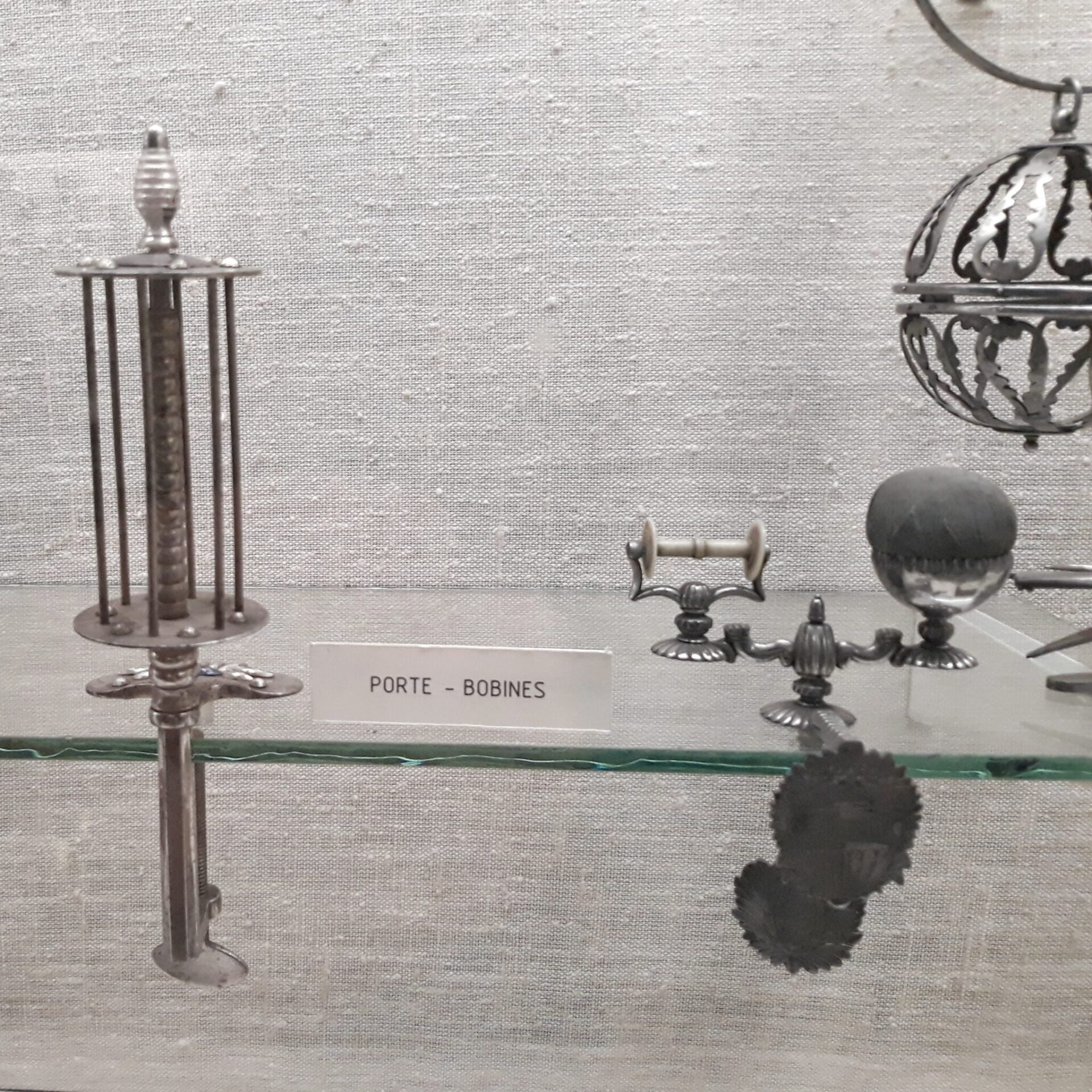
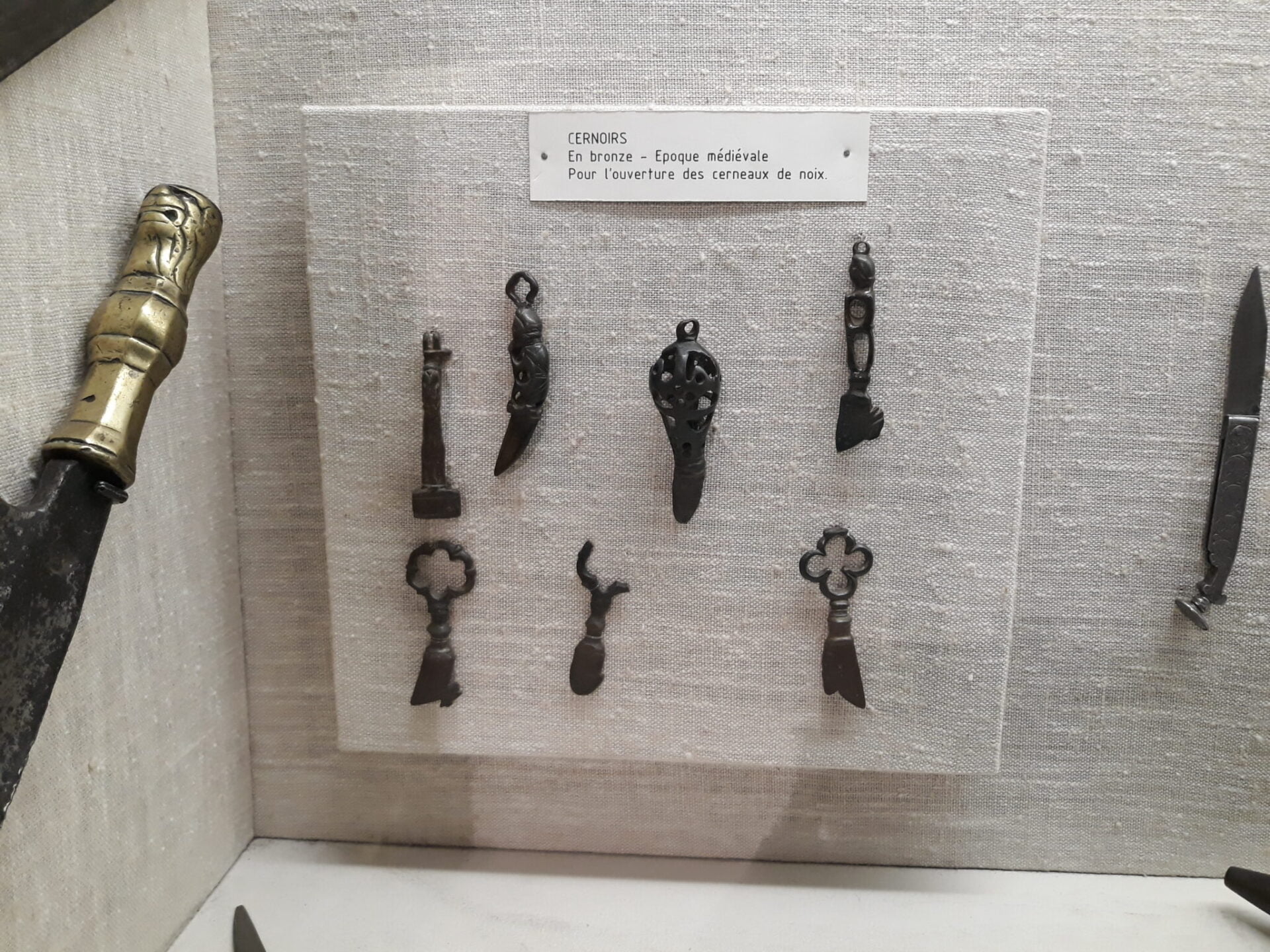
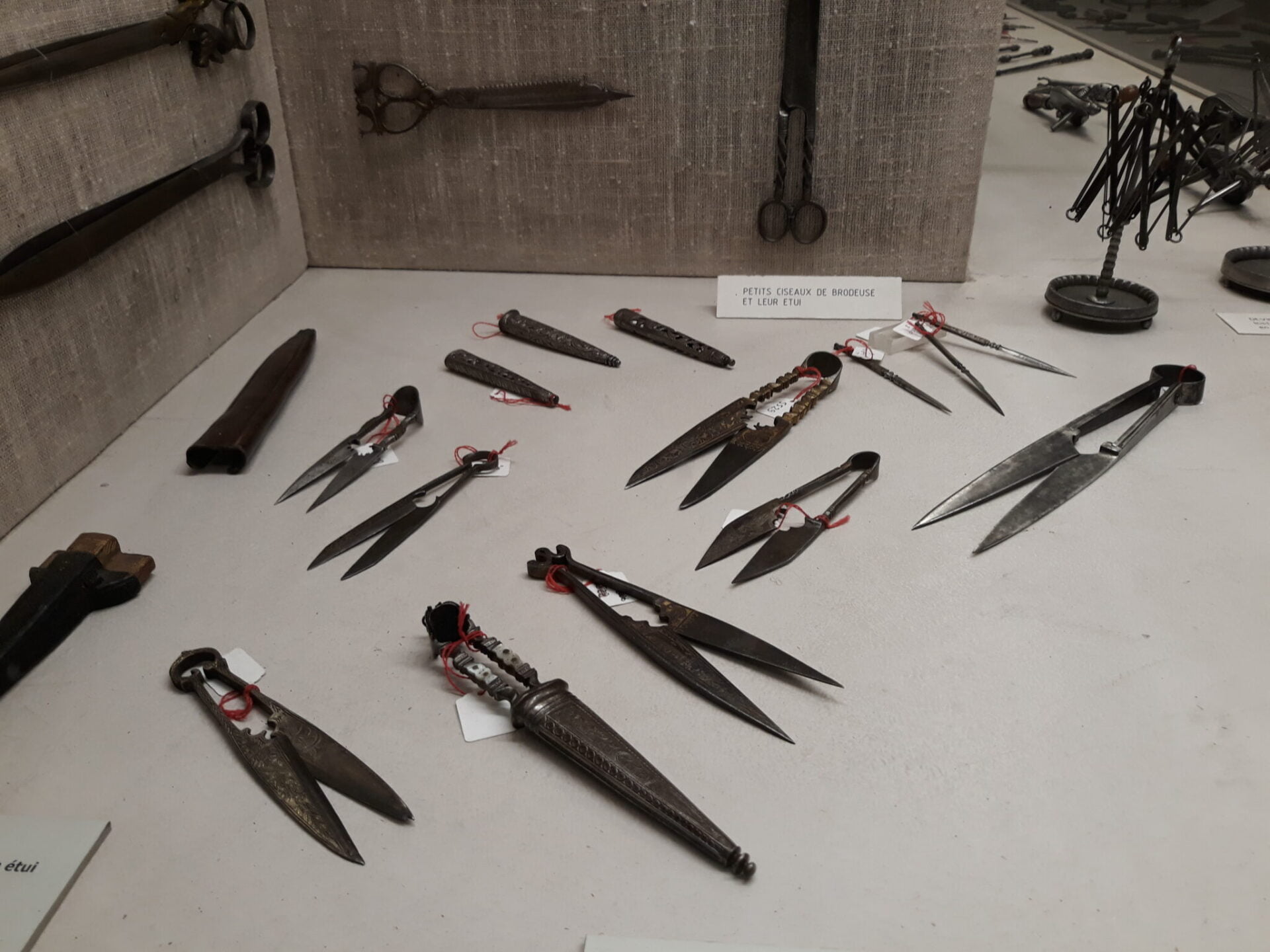
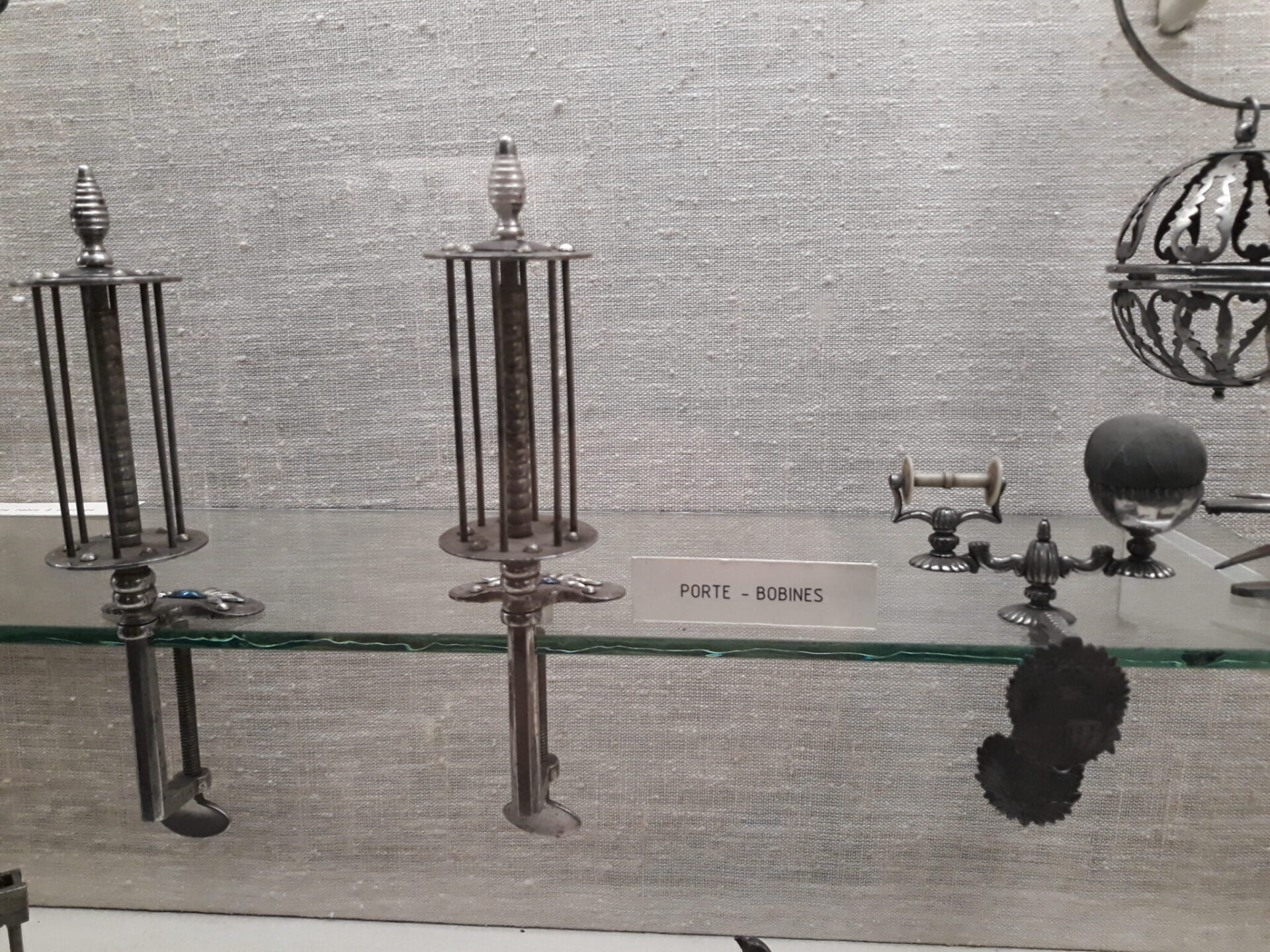
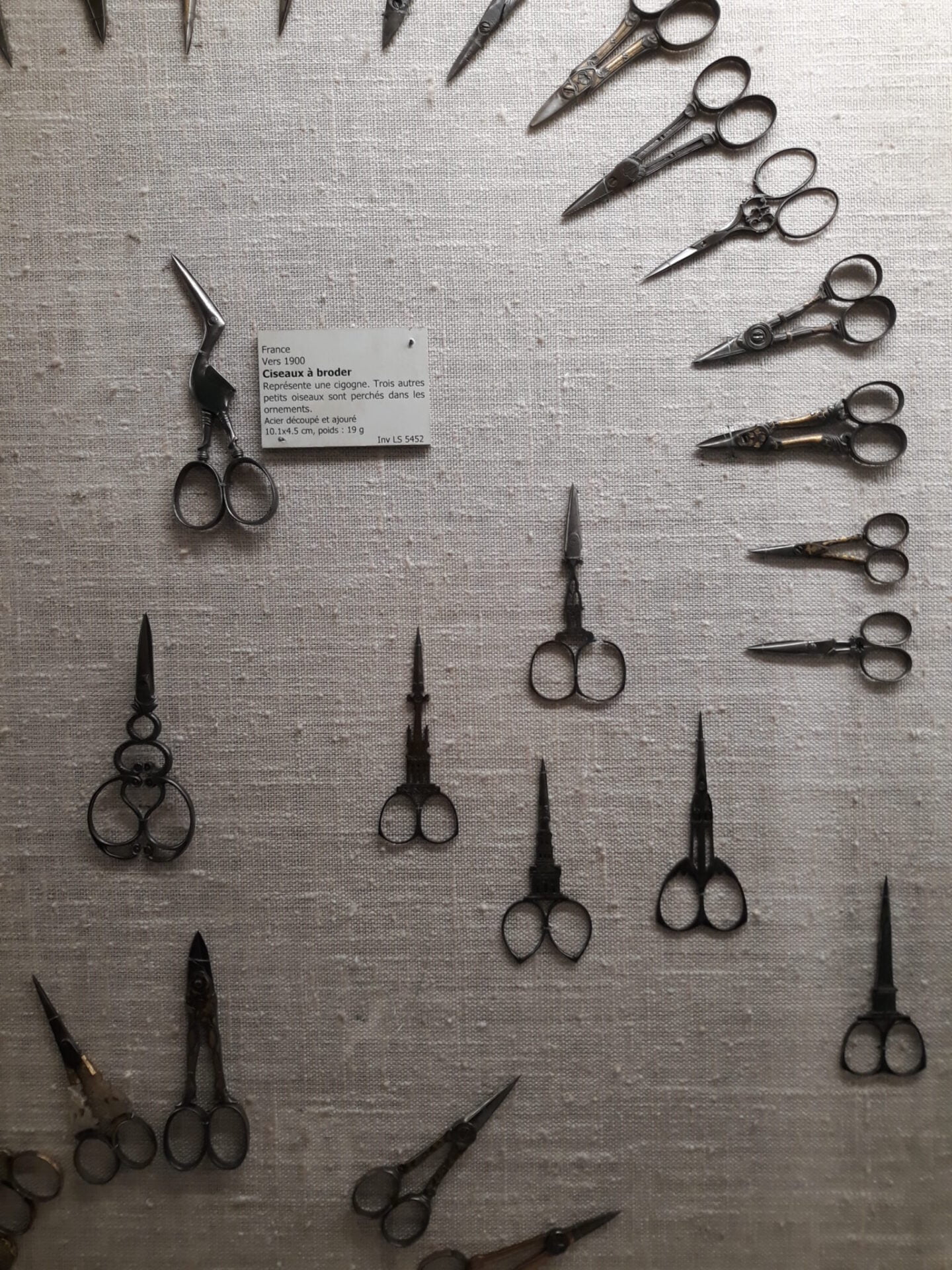
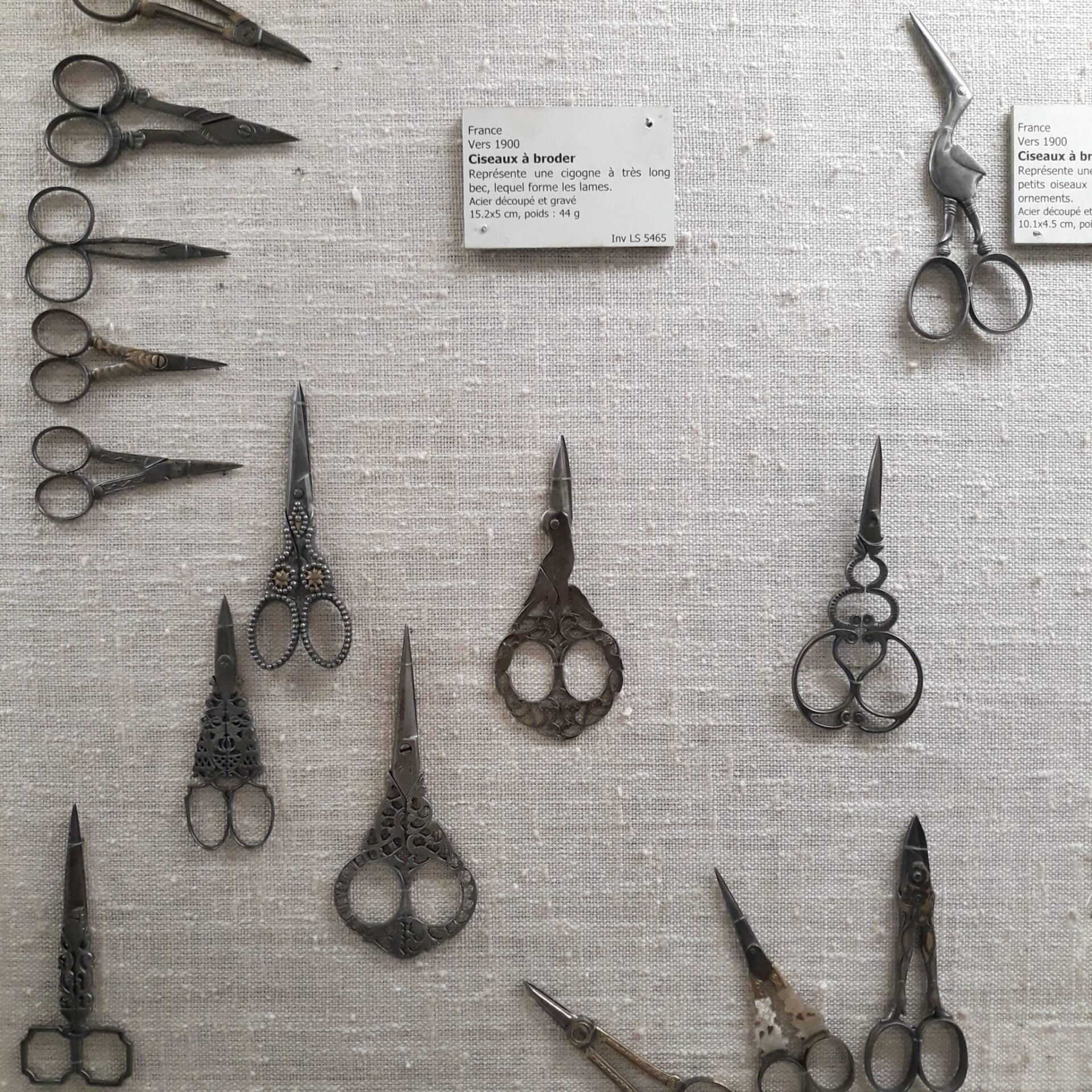
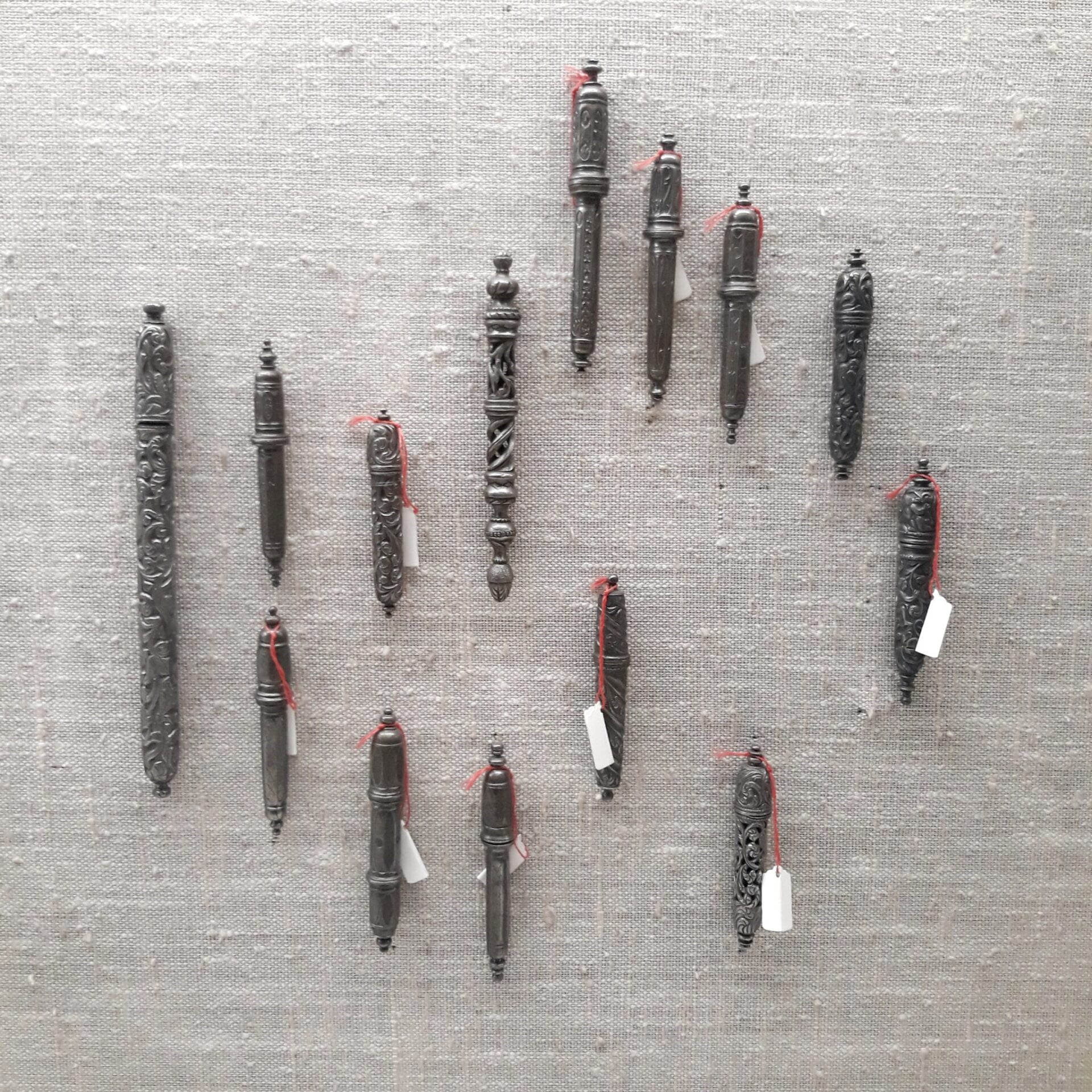
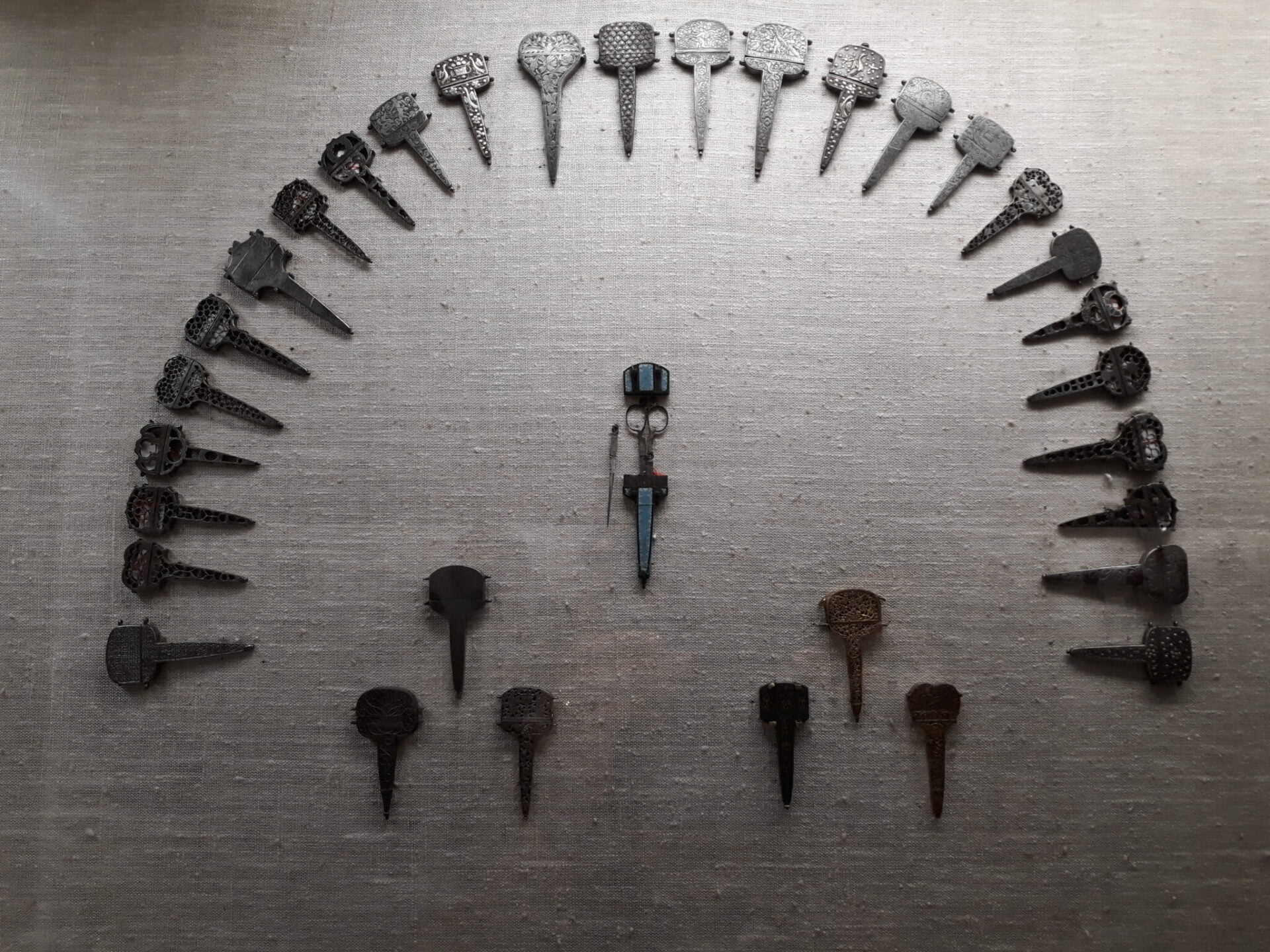
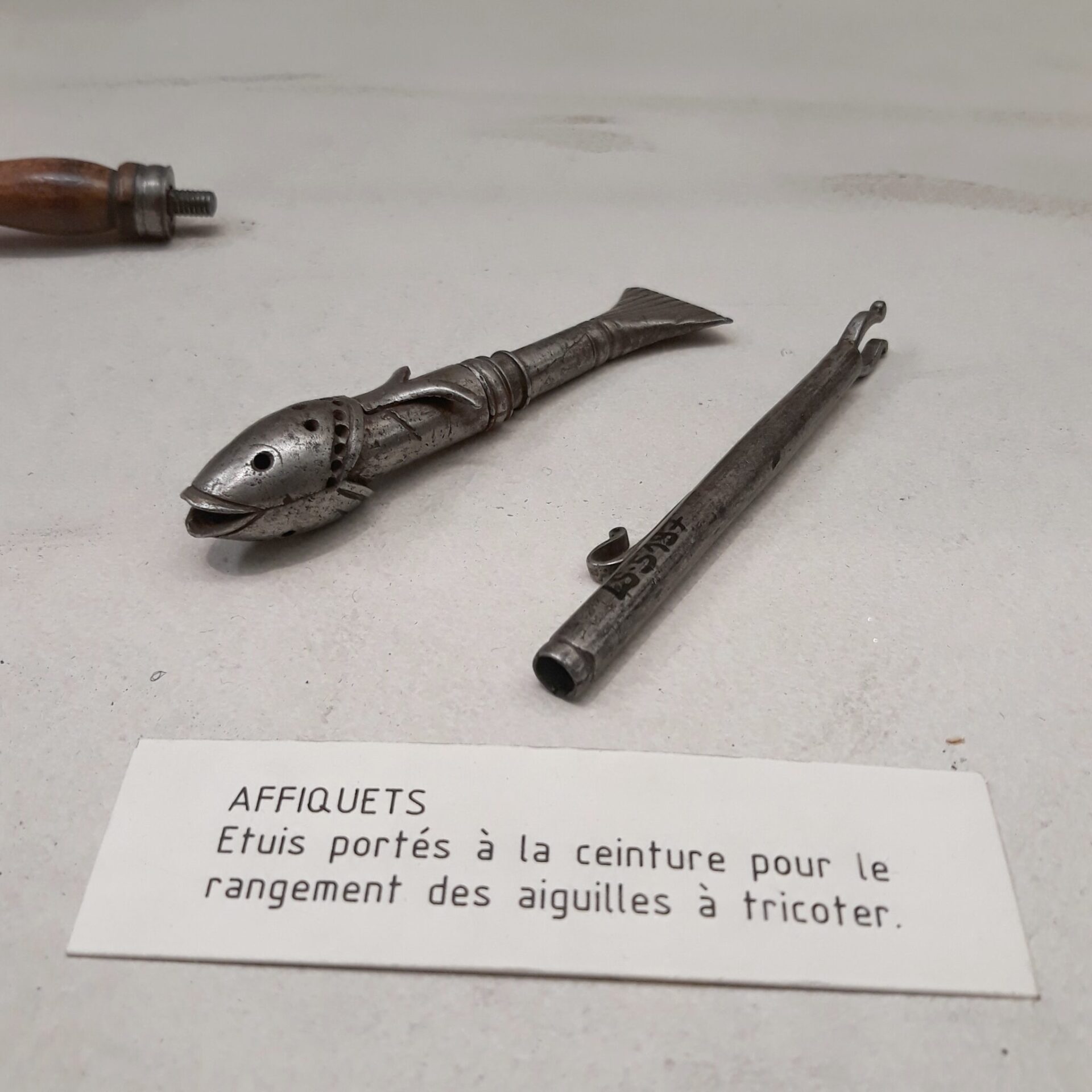
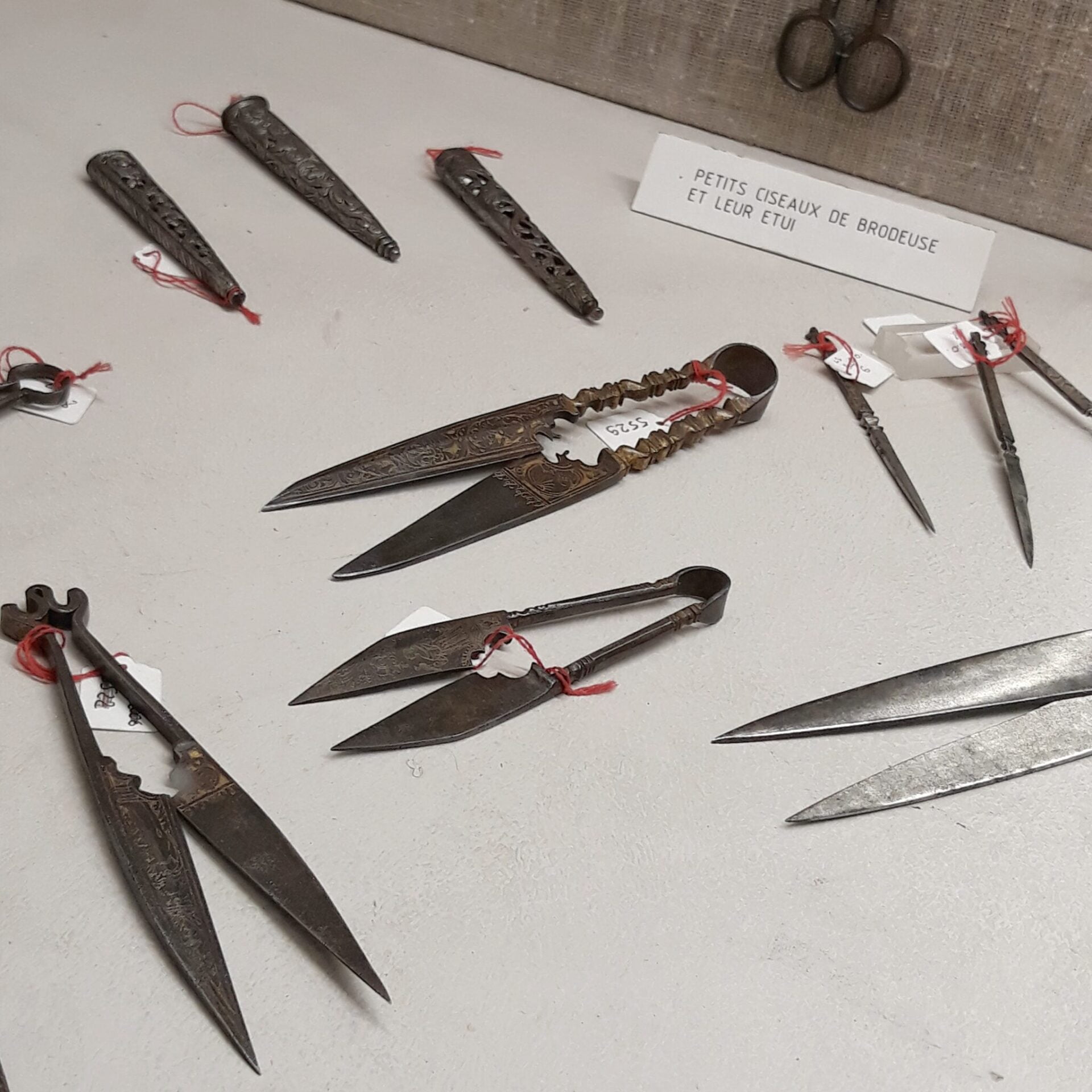
Here we saw, in the right nave, awesome ancient sewing tools: needles with cases, scissors, bobbin carriers and more. What I loved most were the engraved cases for scissors and needles. They are three or four centuries old, finely decorated, and they could be mistaken for modern tools, looking at their shapes.
Browsing the museum website, there is a selection of items to be seen, and they dedicated a proper section to ironing and sewing. Just a glimpse of the wonderful items you can see there!
Not to mention the other not-embroidery-related tools as well.
The entrance is free, if you happen to be there have a look! We were so happy for the discovery of this stunning place!
Not to miss in Rouen: the light show on the cathedral
A free Light Show takes place at Rouen’s Cathedral every Summer night: dazzling illuminations projected on the building’s façade, mesmerizing sounds, you’ll watch and re-watch in awe. We happened to discover the show by chance and, seeing it for the first time, not knowing what to expect, we remained in the square, astonished eyes fixed on the church, for two rounds in a row. Yes, each night they repeat the show multiple times, from nightfall on. Seeing it live is not the same as watching a video or photos or hearing accounts. One word to describe it: emotional.
Bayeux: the famous Medieval tapestry
While planning our family trip to France, I was looking at the map, when I discovered our route was not far from a special place: Bayeux. The home of the marvellous Bayeux Tapestry!
How could I miss a visit to the wonderful one thousand years old embroidery?
Well, my husband was so kind to accompany me (even though he’s not an embroidery enthusiast) and… in the end he loved the visit as I loved it!
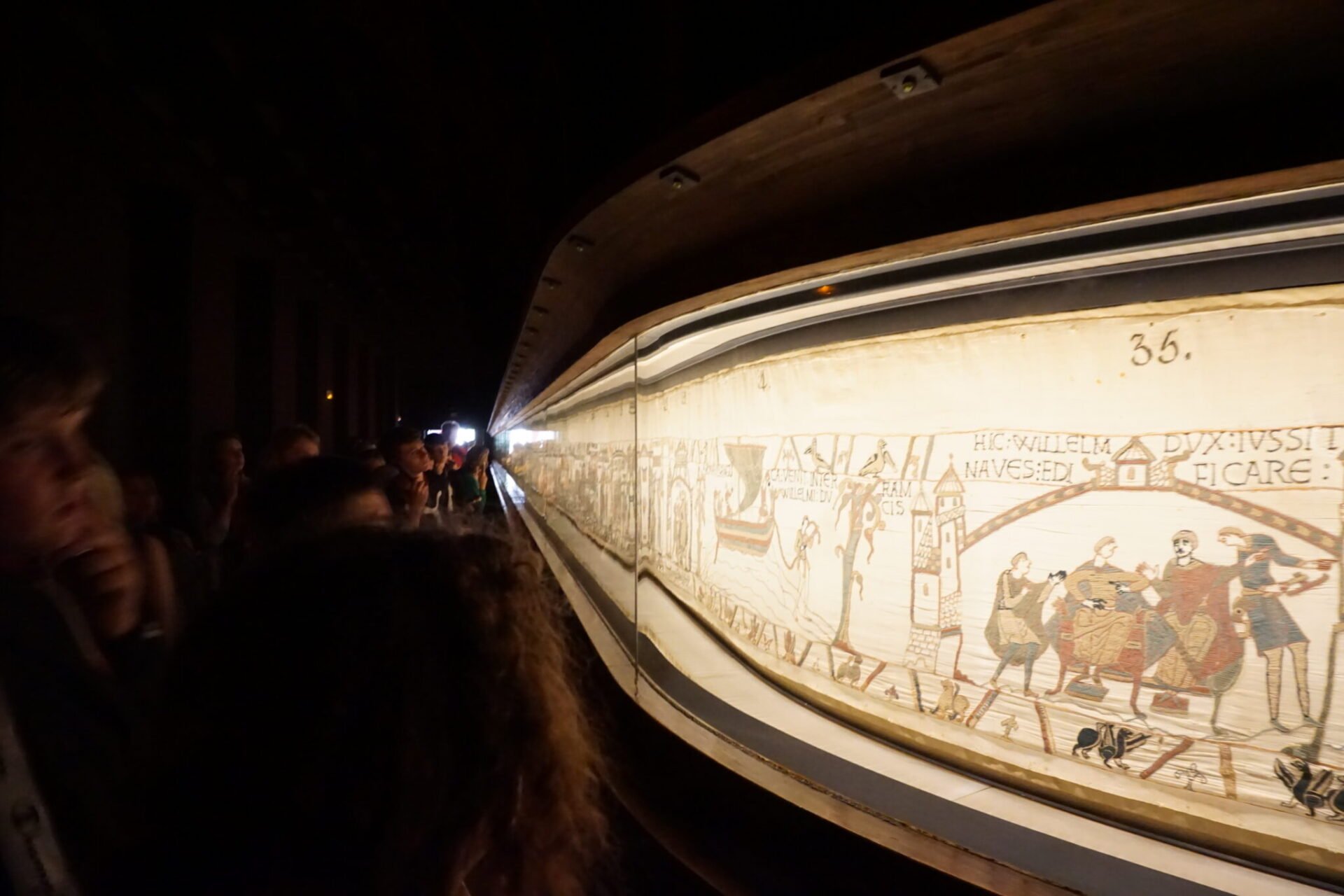
We were mesmerized by the stunning work of art as well as by the wonderful display that lets you appreciate it the best and plunge yourself in the discovery of the embroidery and its context.

The audio guide gives you a precise insight on the scenes on this 70 metres long embroidery, and the museum display was so well organised to let us deepen the history as well as the technique behind the Bayeux Tapestry.
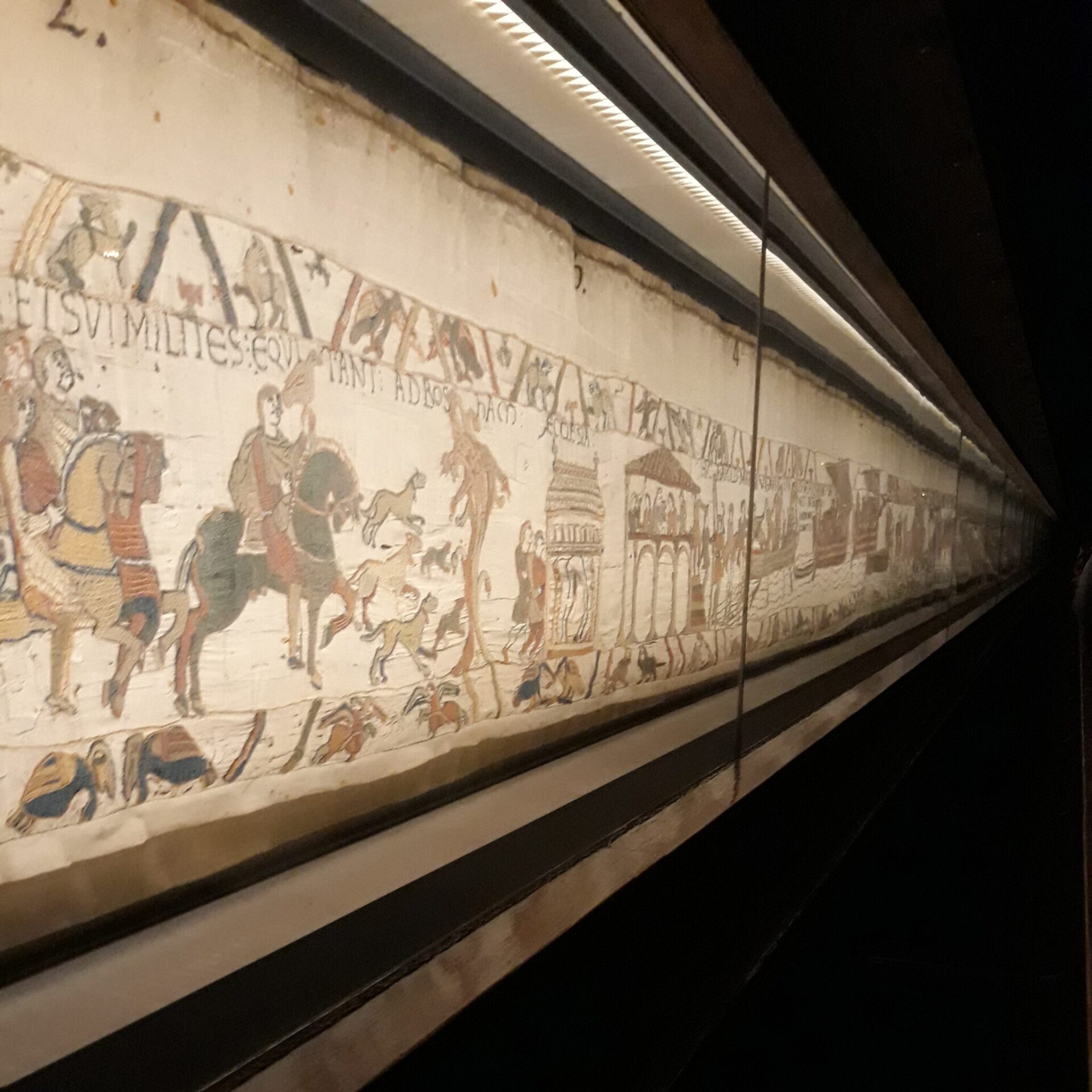
The 70 metre long embroidery (yes, it’s embroidered in wool thread on linen cloth, even if it’s worldwide known with the name “tapestry”) tells the epic story of William, Duke of Normandy, who became King of England in 1066 after the Battle of Hastings: best known as William the Conqueror. A lot has been written about the embroidery, I’m not such an expert about it to say more on its historical background.
The Bayeux Tapestry is displayed in a dark long room, in which the artwork only is lit. The best way to appreciate it is to follow the audio-guide commentaries first, walking beside the scenes with the same pace of the storytelling, then come back for a second glance to focus on the technique, the details or anything of your personal interest.
After looking at the tapestry itself, the visit continues with a permanent exhibition which presents an insight on its creation and an overview of the historical context and the Anglo-Norman kingdom in the 11th century. Finally, you can watch a short film, screened alternately in French and English, showing how the story told by the Bayeux Tapestry unfolds, with reconstructions of real scenes from the Battle of Hastings.
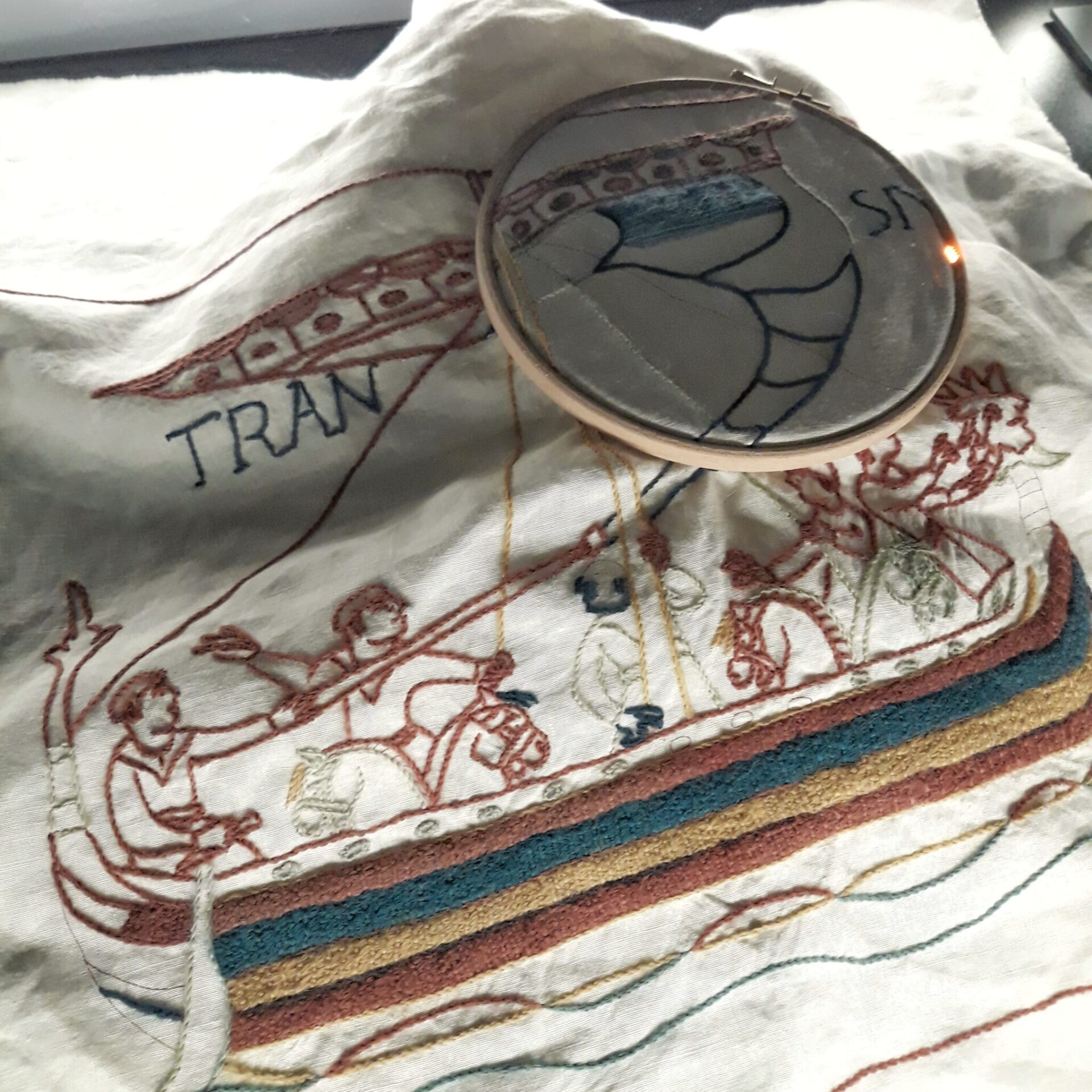
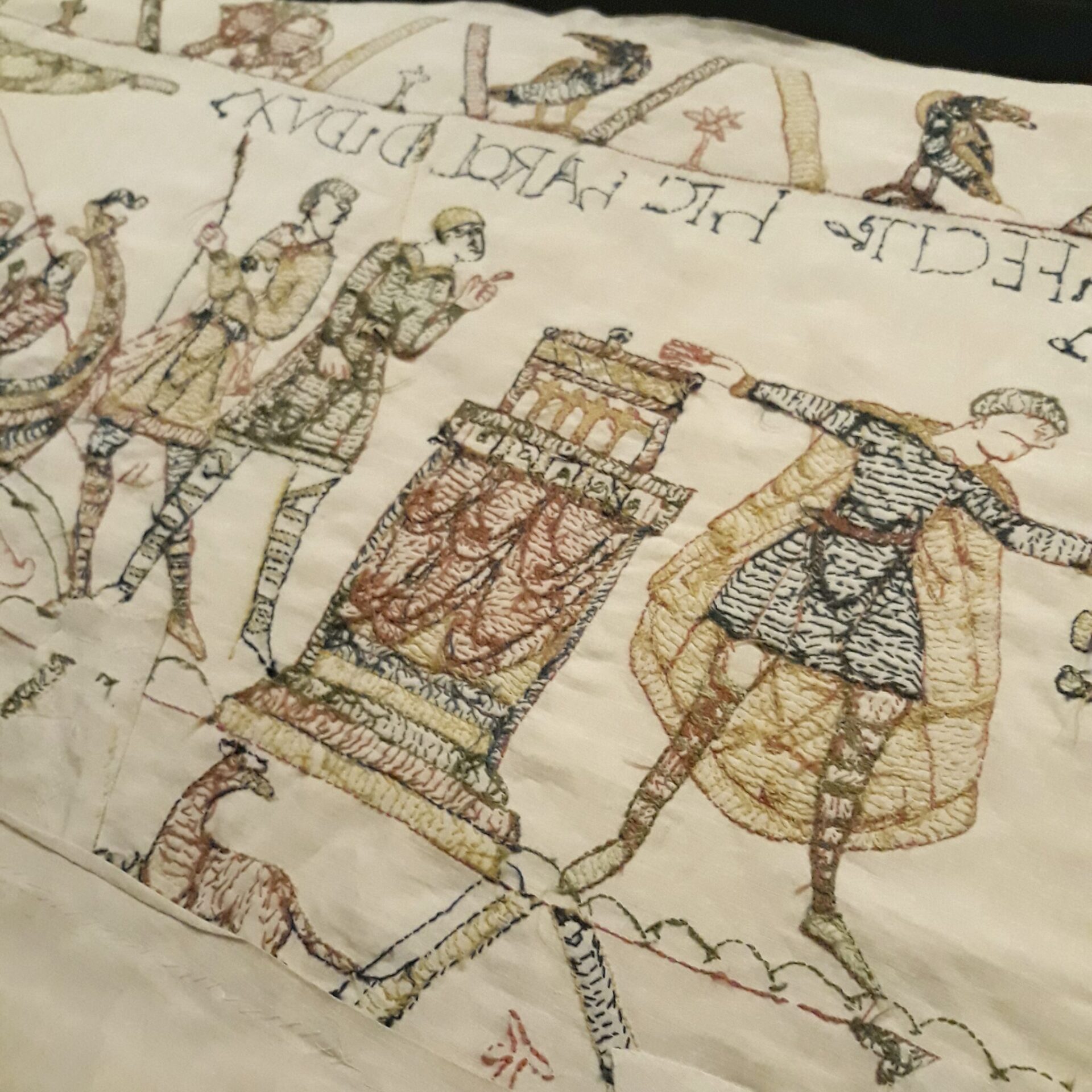
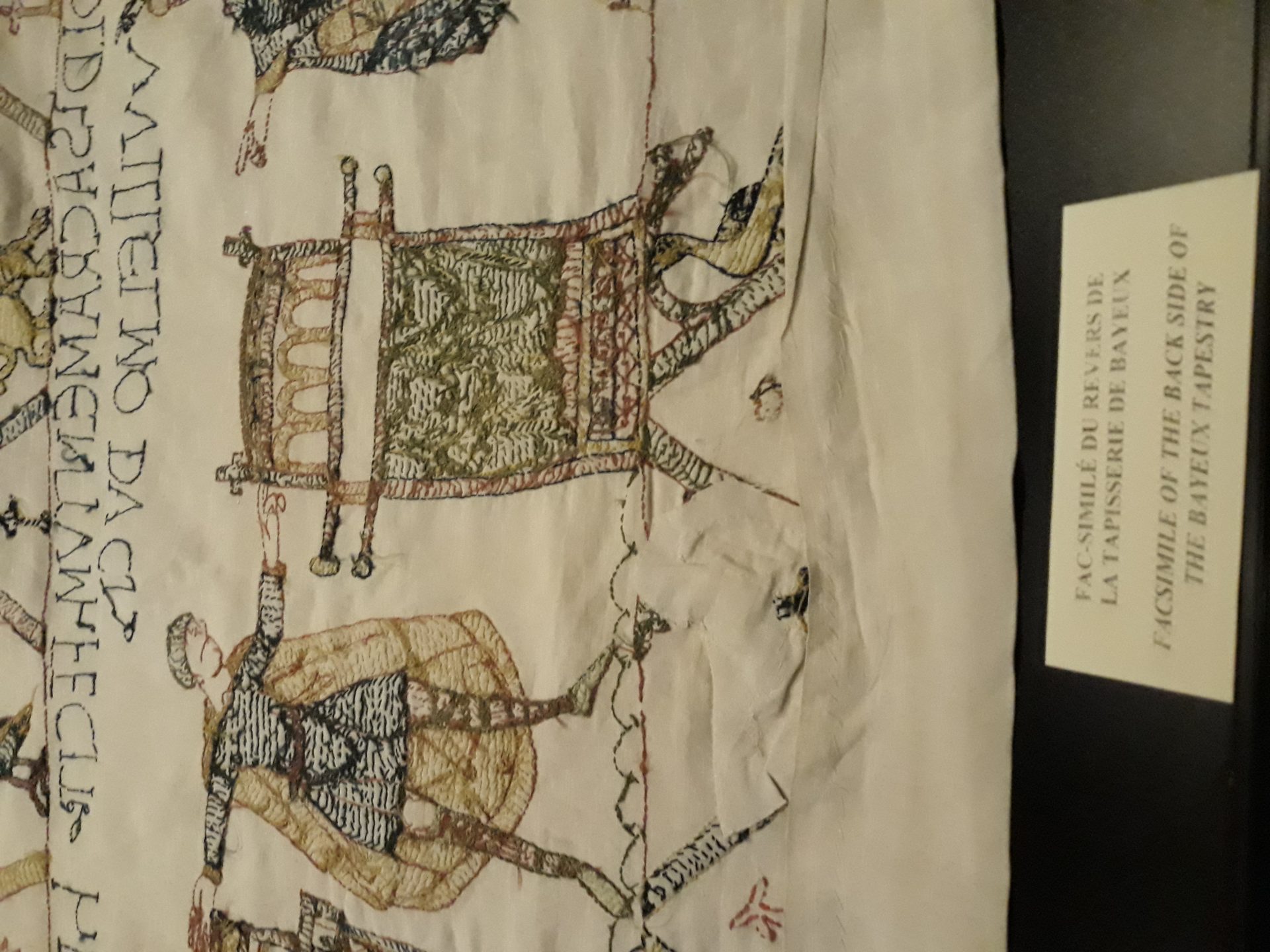
Needless to say, what I found most interesting was the part dedicated to the embroidery technique: the Bayeux Stitch, from the Norman and English Medieval tradition, gets its name from this famous piece, ad I was curious to see it live in its original form. The exhibitions also shows a reconstruction of a few fragments, with an interesting glance at the back of the artwork, a part that is so often hidden even nowadays, but is of paramount interest to learn the most about the making-of.
Not to miss, a monitor that allows you to explore and zoom the tapestry, to appreciate every single stitch.
Not to miss for embroiderers: the Bayeux Broderie shop
A tiny room not far from the Bayeux Tapestry Museum is home to Bayeux Broderie. Here you can shop anything embroidery-related, with a great focus on the tapestry, obviously. They organise events, workshops, courses, sell precious works of embroidery art and also do-it-yourself kits to replicate a part of the tapestry by yourself. I got one, they come with a lovey book about the tapestry, the technique, and guide you step-by-step in replicating a selected fragment.
Bayeux: the bobbin lace
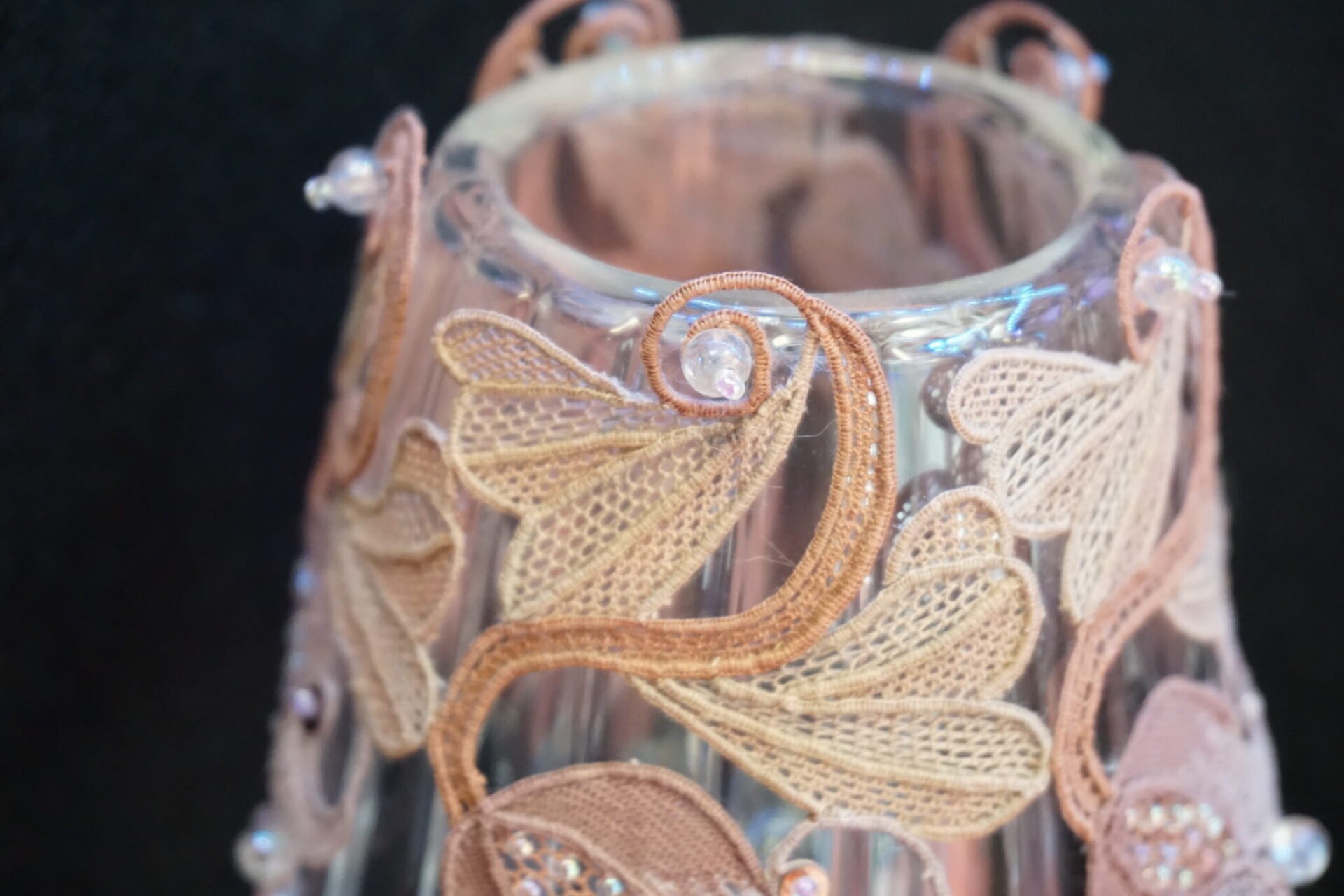
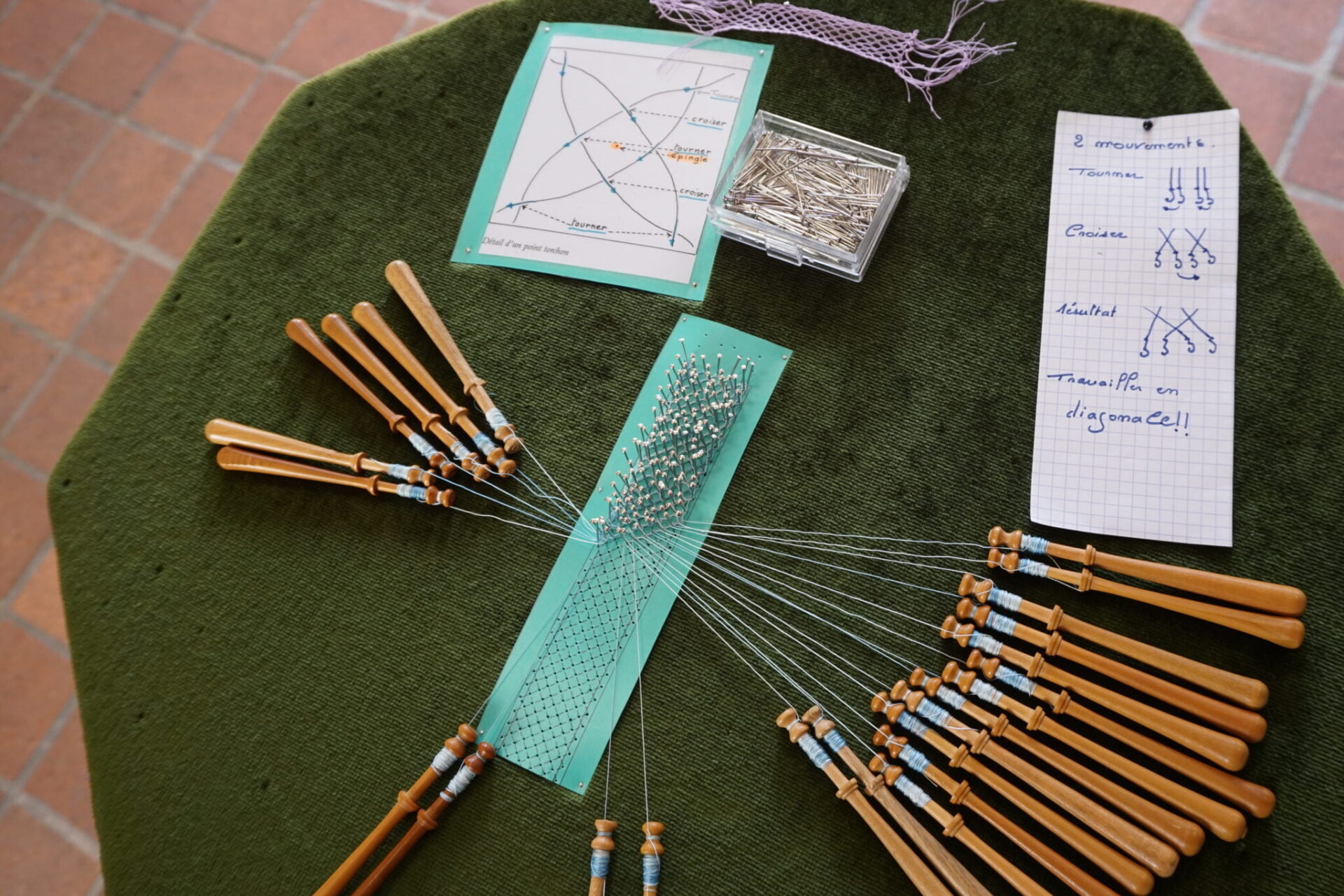
Strolling around Bayeux, we made a fortuitous and lovely discovery: the town is not just home of the famous Medieval Tapestry, but also of an ancient tradition of bobbin lace making.
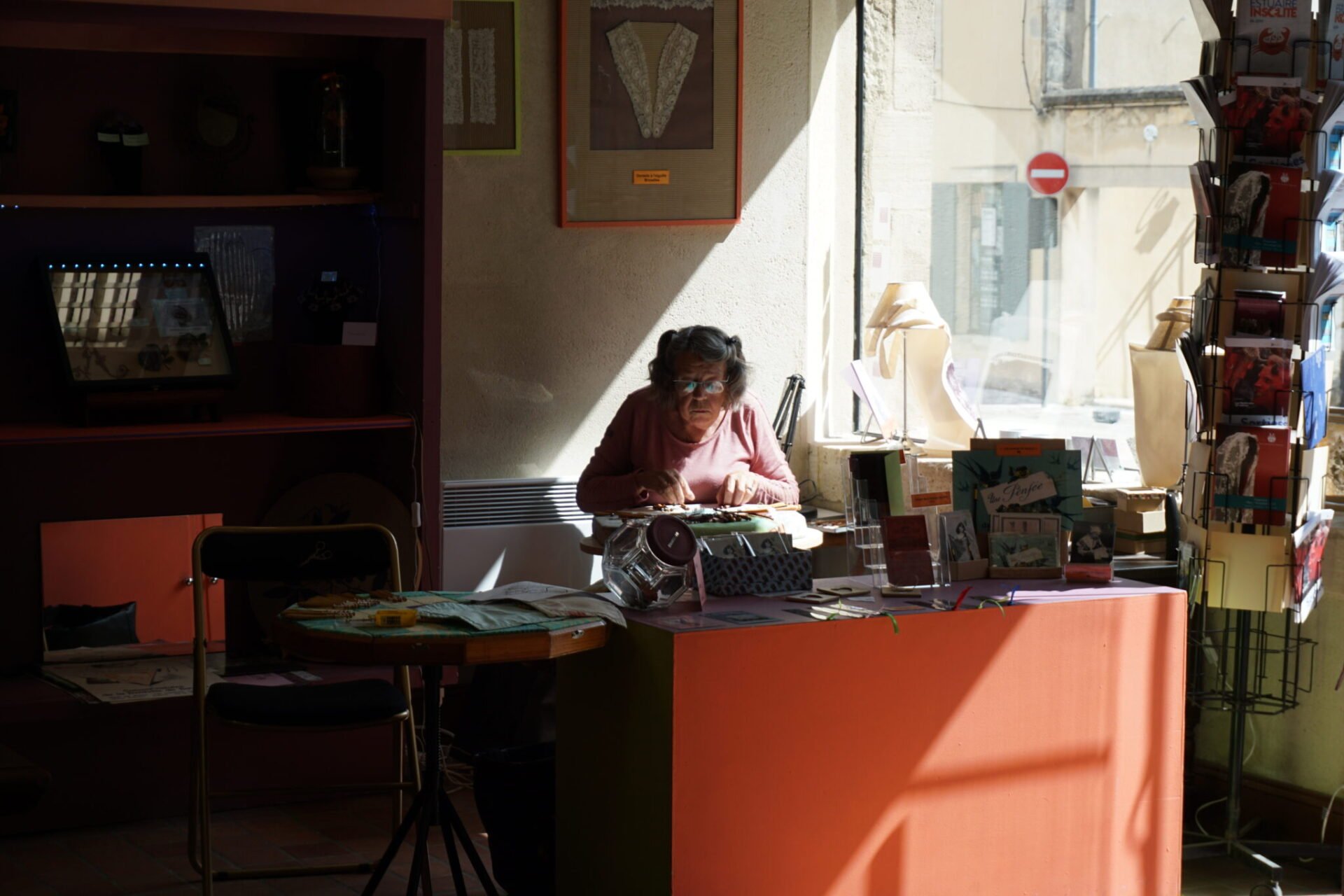
We happened to pass in front of a shop where a group of women were working at wonderful creations. Dating back to the 17th century (as we later discovered in a museum brochure) hand-made lace reached its peak in the 19th century, the speciality being bobbin lace. At its peak, Bayeaux and surrounding villages had in the order of 5000 workers creating bobbin or needle lace. Today there are less than a dozen artisans who create hand-made lace.

Seeing those women chatting and working with fast hands their precious and precise projects was mesmerizing. The dexterity and focus required to create such a handwork was not diminished by their speaking to each other and to the visitors. Seeing their skillful hands at work left us in awe. And they also organised courses! I was so sad we had not the time to attend one.
Moreover, I was sorry, months after our visit, to discover that the Atelier du centre normand de la dentelle aux fuseaux was destined to be closed. So sad to hear of a tradition losing its active promoters. But the Bayeux lace tradition is preserved thanks, among others, to the Conservatoire de la Dentelle de Bayeux, both an association and a professional atelier anyone can visit.

Dinan: the arts and crafts paradise
Who knows me is well aware of my passion for Medieval ages. How could we miss a stop in such a lovely Medieval town as Dinan?
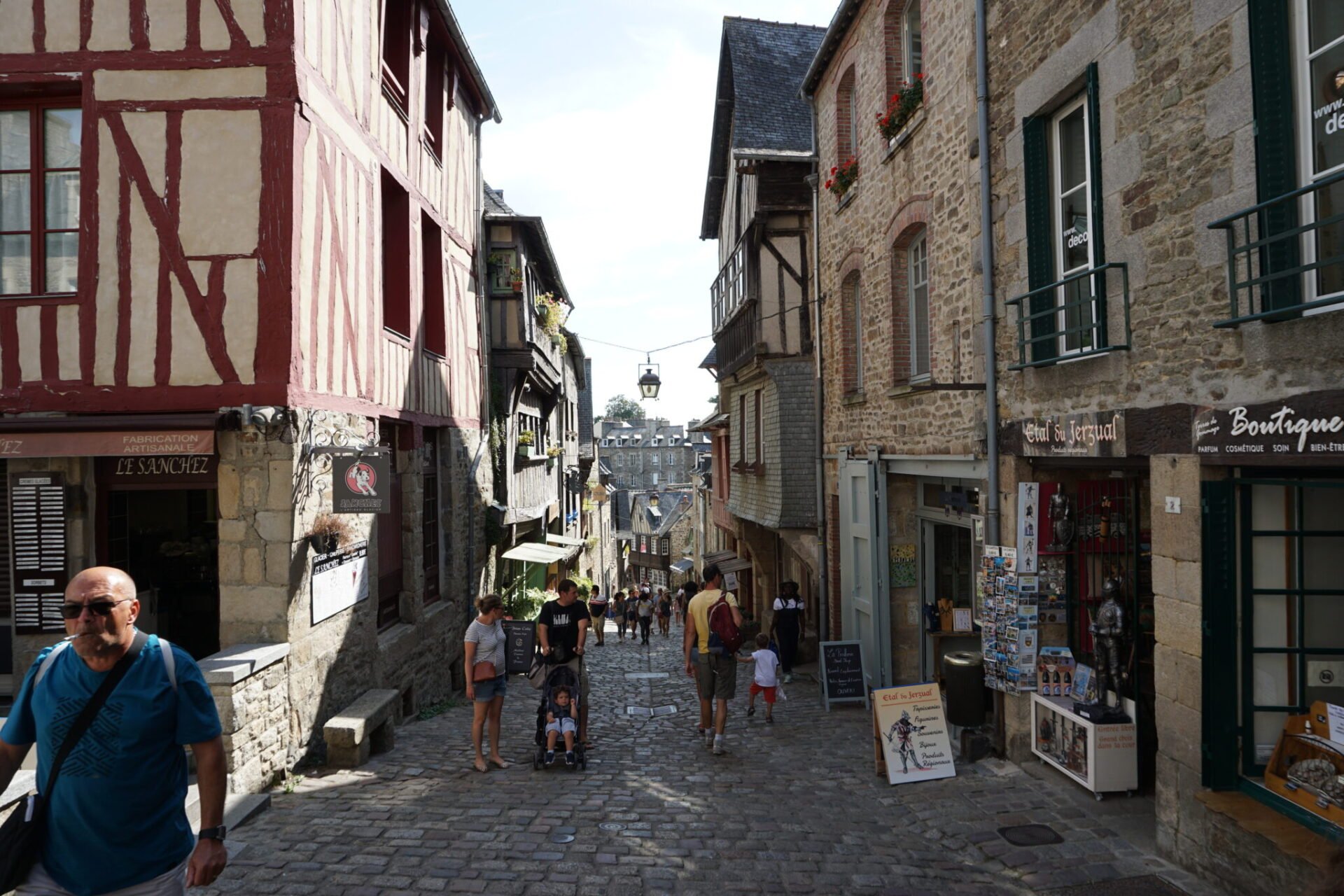
I can confirm this is one of the most attractive and best preserved small Medieval towns in Brittany. With its 3km-long ramparts, half-timbered houses, the attractive port and cobbled streets filled with art galleries and craft shops, it’s worth at least a day. Not to mention the castle! A must in evey trip of my husband and I!
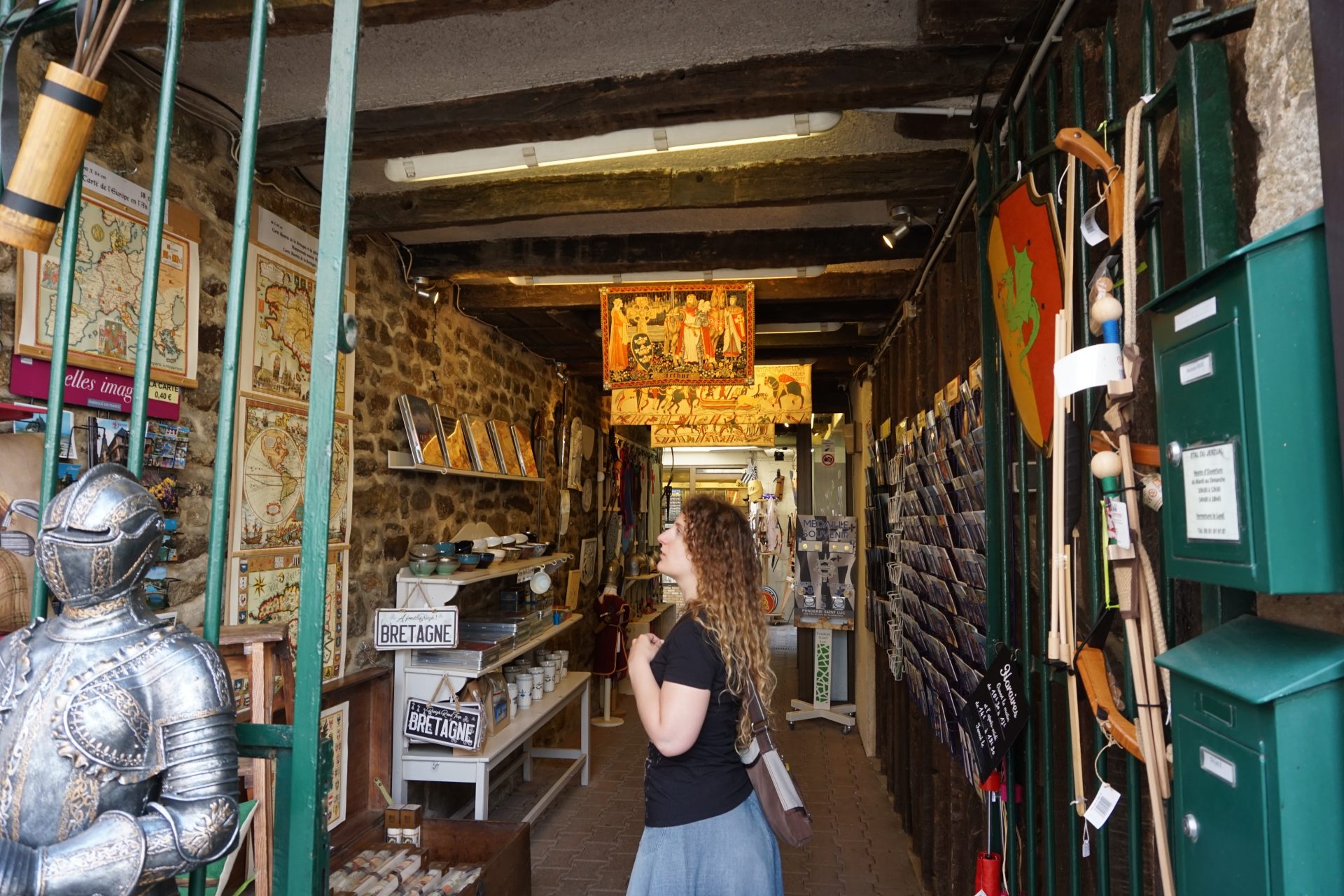
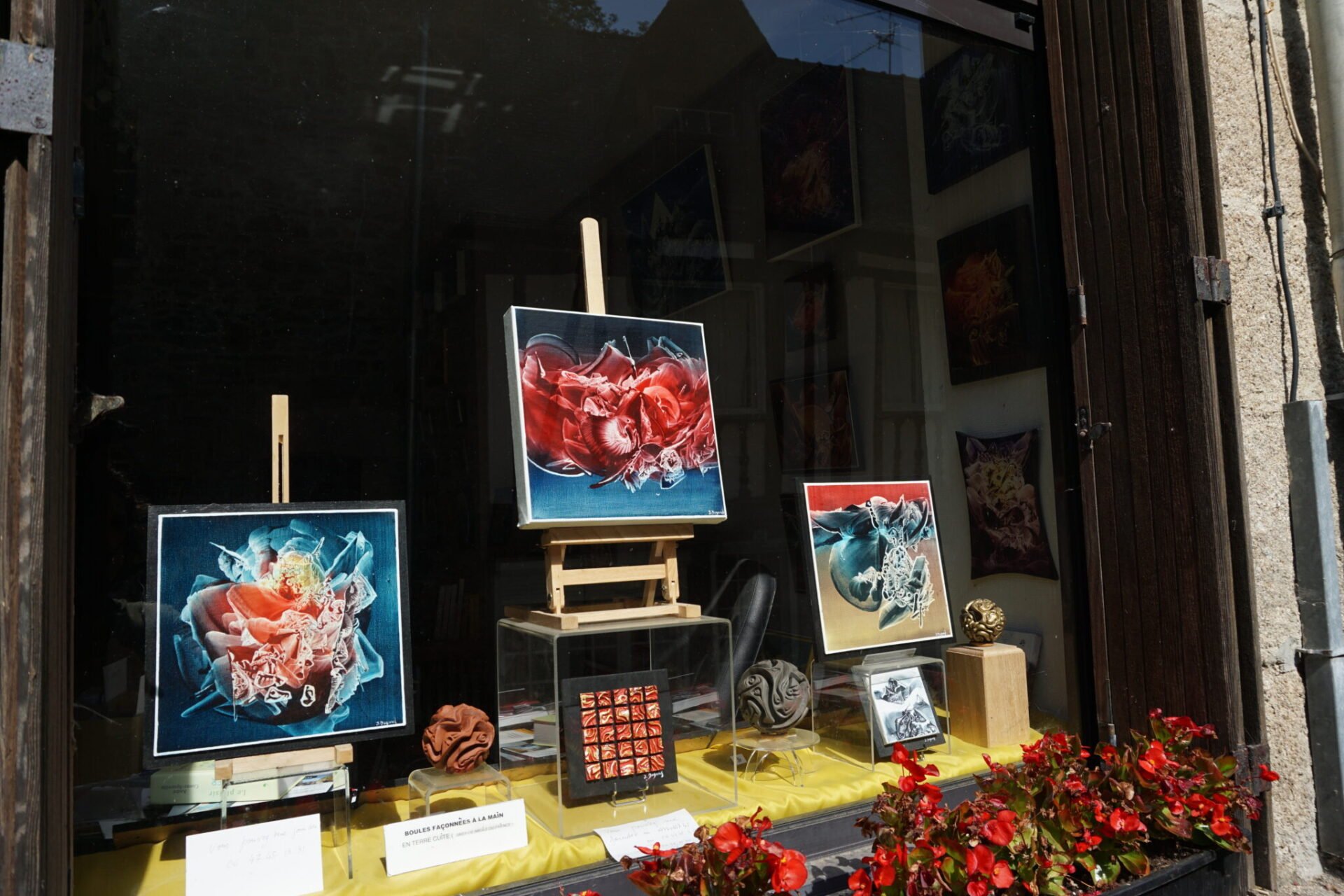
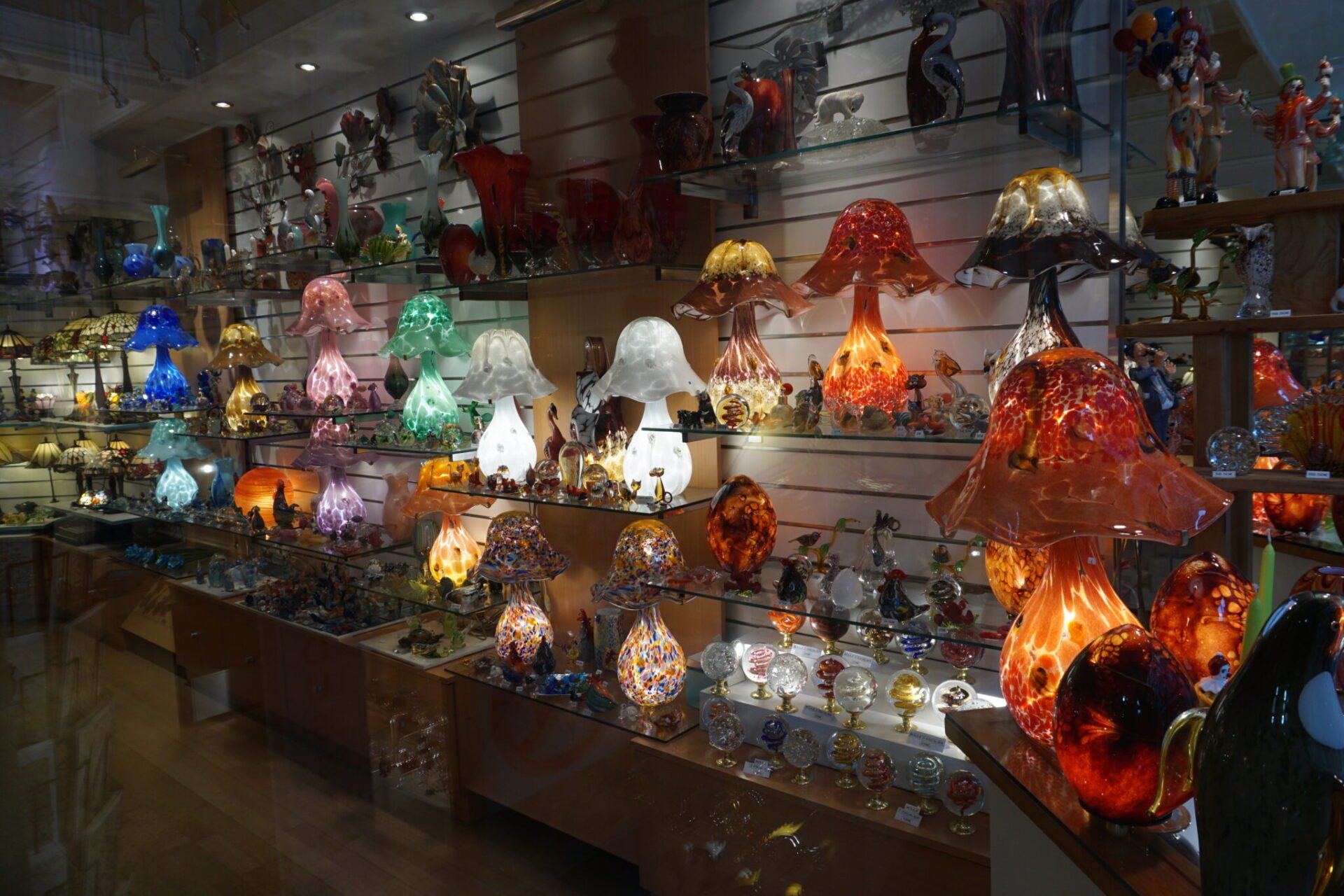
For the great joy of my husband, a real art galleries lover, Dinan has attracted craftspeople and artists for decades, and now you can walk around the stone-paved roads finding art shops, exhibitions, artisans, crafters everywhere. Not a single atelier is like the other, you’ll not be able to find the same merchandise in two different shops.
You’ll be able to buy an item directly from the artisan who made it, but you can also visit galleries that display and sell objects by different artists.
From the port, take Rue du Petit-Fort, which was Dinan’s main point of access until the 18th century: climb this cobbled hill looking at its half-timbered houses, you’ll recognise the place from many a postcard. Here’s plenty of arts and crafts shops, filled with artists, sculptors, engravers, bookbinders, glassblowers and more.
For fabric shopping: the Maison Bleu Lin
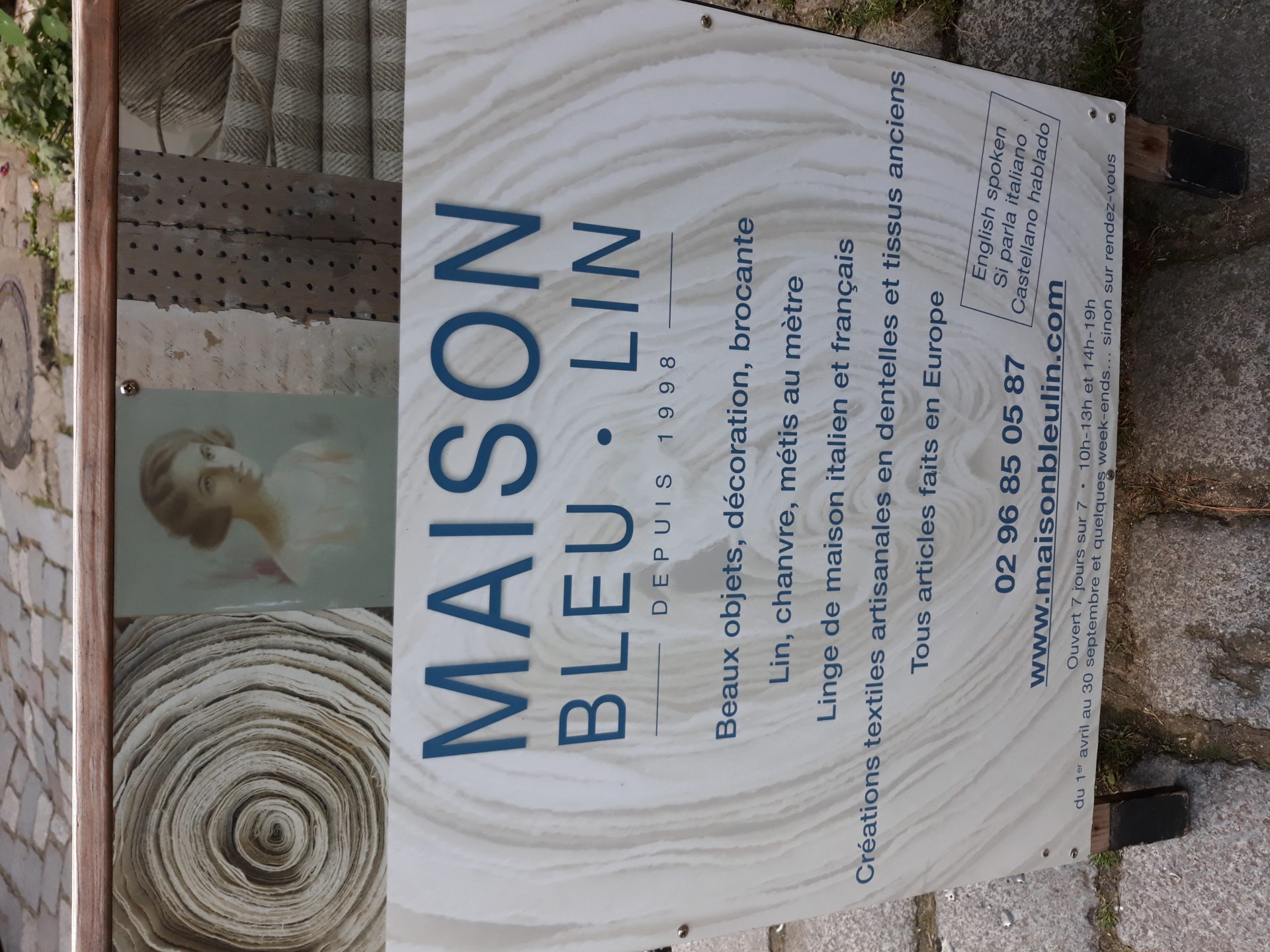
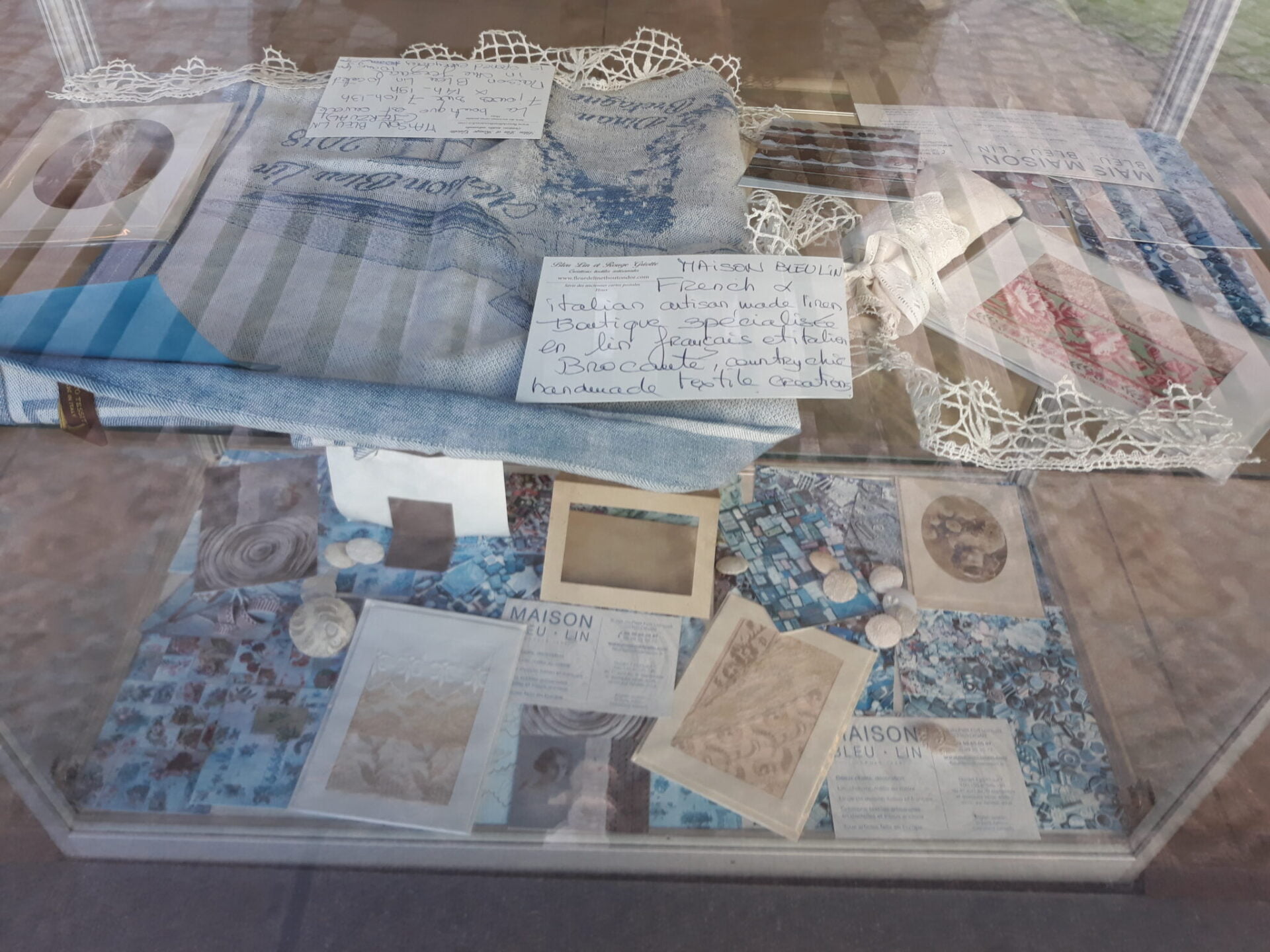
The Maison Bleu Lin is a historical boutique selling antique and new linens, French antique items and artisan creations. A perfect spot to buy unusual and precious fabric.




2 Comments. Leave new
I enjoyed what you wrote about your trip after seeing what you wrote on Needle and thread community on Facebook. I want to tell you though that you should correct a spelling mistake that only a French speaker could see namely the way to write bobbins in French which is “fuseaux” and not “fuseux”. You made the mistake when you copied Atelier du centre normand de la dentelle aux fuseaux. And in French we do not put capital letters on each letter. I do not want to critique, only to give you an opportunity to improve your blog. French is more difficult than English is. By the way, I am sure I made mistakes in writing to you as English isn’t my mother tongue.
Thank you so much for your kind comment! I am happy you enjoyed this post, but I am happier of your correction. It means a lot to me, it’s the proof you paid attention to what I wrote and cared about it. I really appreciate! Thank you again! I am going to correct suddenly!