One of the things I love most about reenactment is, while bringing history to life, it brings people into your life, too.
Over the years, I’ve met so many makers who don’t just study the past, but recreate it with their own hands, and it’s always fascinating to see how, sometimes, these passions evolve into something more.
Today, I’m very happy to introduce you to a friend I met through reenactment, the maker behind Hilda Arts and Crafts. Her work is rooted in Viking-era textile traditions, from embroidery to tablet weaving, all created using period techniques and materials. It’s the kind of craft that requires skill, research, patience and a deep respect for historical sources.
Through her project, she creates pieces designed for reenactment, where authenticity matters and every detail tells a story. She has already brought her work to events like “Armi e Bagagli“, one of the most well-known reenactment fairs here in Italy, connecting with a community that shares the same passion for history and handmade craftsmanship.
In this interview, we’ll talk about how she entered the world of Viking reenactment, how her project began, what it means to create with historical accuracy in mind, and what she has learned along the way.
If you’ve ever been curious about historical textile arts, or if you enjoy seeing how a passion can grow into something tangible and meaningful, I think you’ll enjoy meeting her.
Find Hilda Arts and Crafts online
Find more about Hilda Arts and Crafts on her social media profiles.


How did you first enter the world of Viking reenactment, and what drew you to its textile arts in particular?
My journey into reenactment began several years ago, around 2010, through a friend with whom I often attended medieval fairs and events in Northern Italy, running a stall selling historical beverages. Later, in 2016, I had the opportunity to accompany him to my first Midgard Viking Folk Fest, a very important historical Viking reenactment fair in the province of Mantua, featuring reenactors and merchants from across Europe.
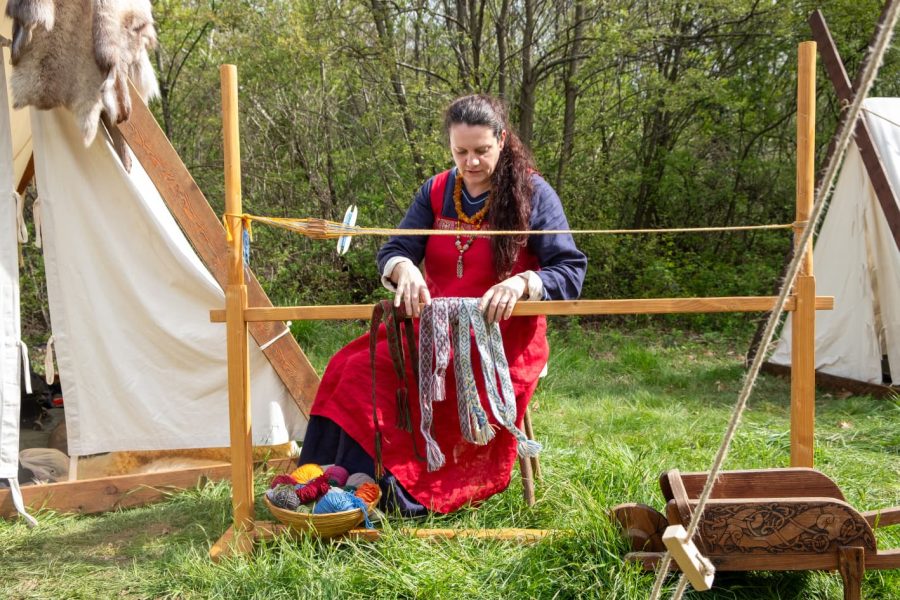
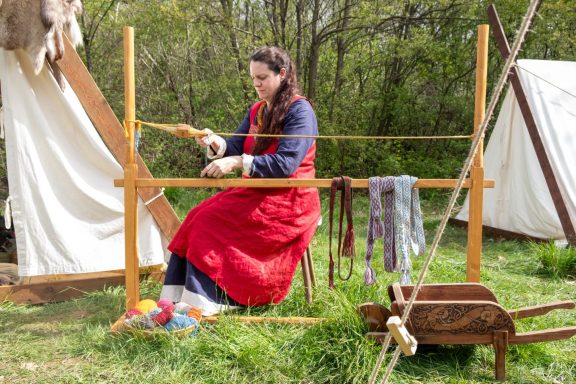
What most attracted me to this world was seeing for the first time the accuracy in the representation of camp life, the craftsmanship with which they faithfully reproduce clothing, accessories, tools, weapons, and everything related to Norse Living History. This was especially true of the textiles: weaves, fabrics, fine fabrics, brocades, trimmings (in which I later specialized) and, above all, the historical equipment, such as the sourcing of raw materials, such as wool, silk and linen, which are then applied to the historical loom. Mine in particular is the faithful reproduction based on the discovery of the Oseberg ship in Norway dating back to 834 AD.
But I must first thank my paternal grandmother, who worked as a seamstress and was also an excellent embroiderer, because thanks to her I learned about different textile materials and, above all, how to hold a needle and thread.
How did Hilda Arts and Crafts begin, and when did you decide to turn your historical textile work into a project to share with others?
The Hilda Art & Craft project was born primarily from a desire to share my work and studies with all those who appreciate them. Hilda (Hildr) is my Viking name, the name of a Valkyrie with the power to resurrect the dead, and also means “war” or “battle,” meaning “one who fights.”
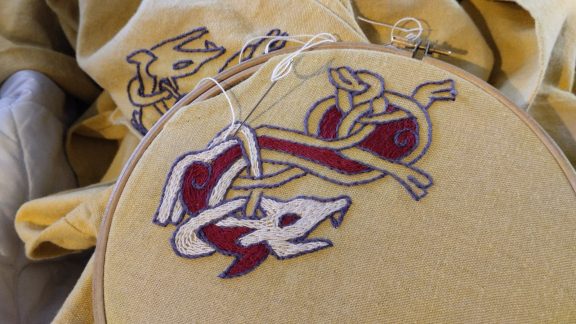
I began by sewing clothes for myself and my family. Later, I took up the loom, partly out of a sense of style, because embroidery in the Viking period was primarily used to embellish those same clothes, which on my account seemed too simple. With much study and dedication, I pursued my passion, transforming it into a work of historical research and then into meticulous execution.




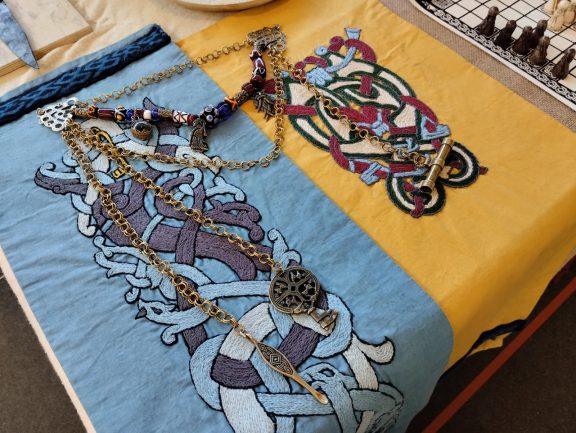

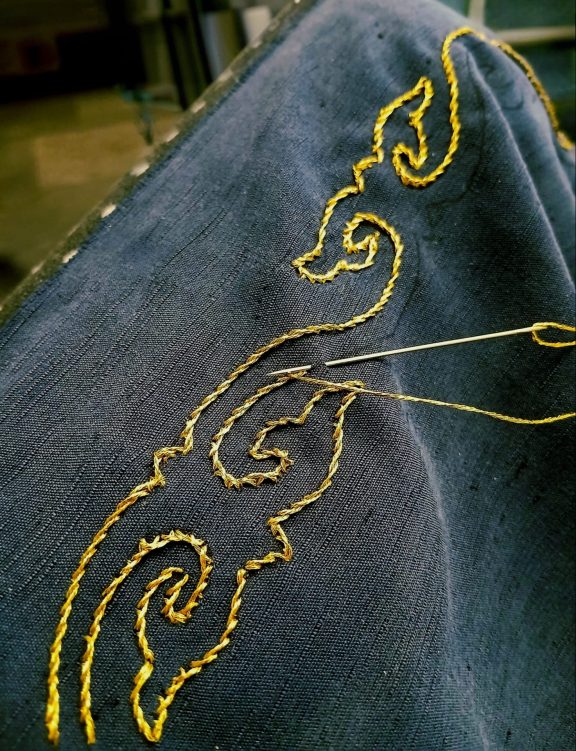
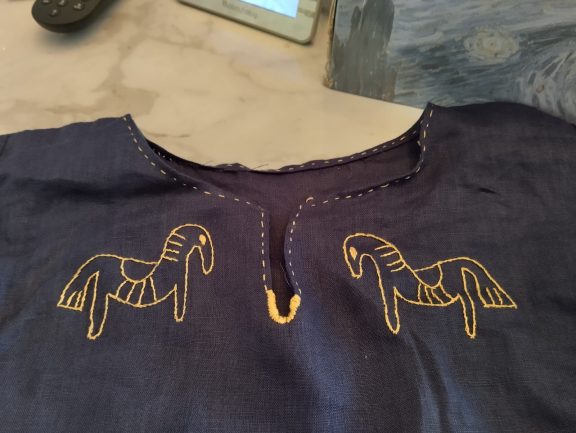

Your work is rooted in period techniques and materials. What does historical authenticity mean to you, and how does research influence what you make?
Study, research and dedication are the foundation of historical reenactment and craftsmanship in my specific case. There’s no coherent and appreciated work without historical authenticity.
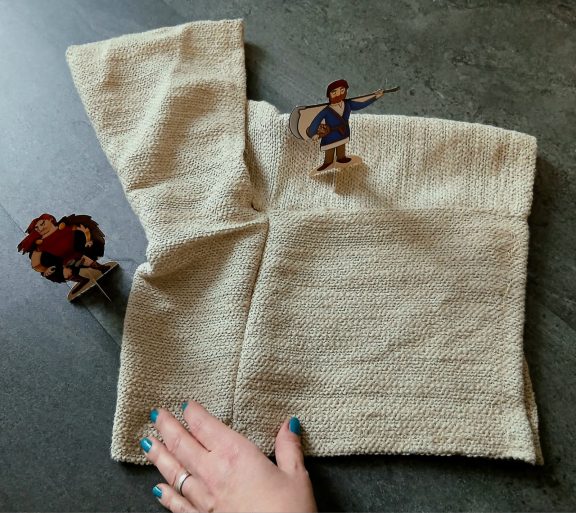
I primarily reproduce items based on Viking Age finds, seeking, as I mentioned before, materials and techniques that are as faithful as possible to the period I’m reproducing. A small, somewhat modest point, but my work is appreciated and sought after precisely for this reason.
Is there one historical technique that particularly fascinates you, and why?
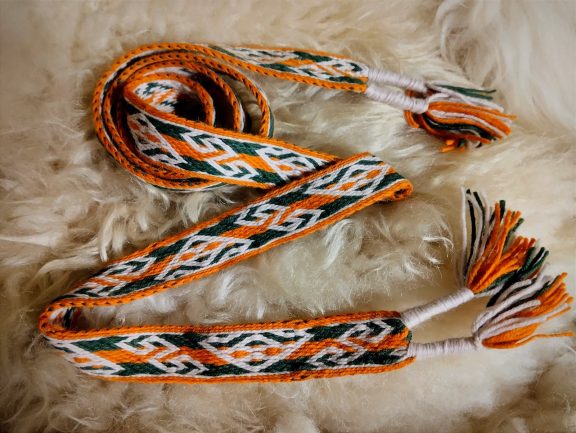
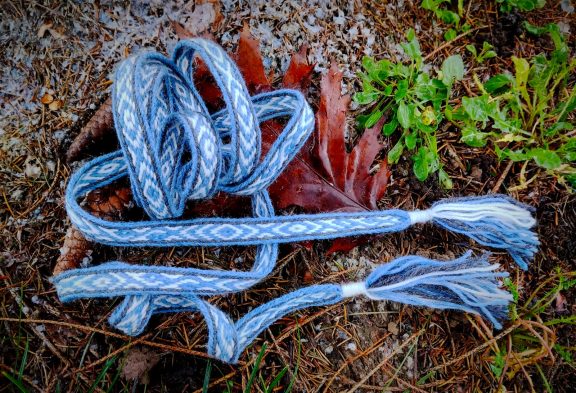
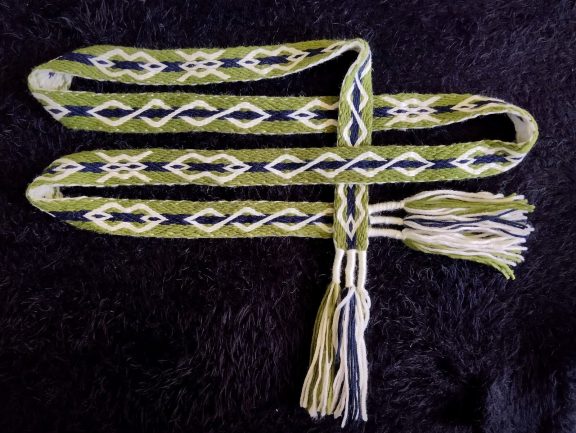
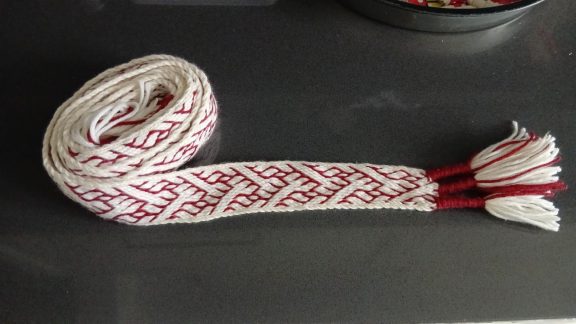
The technique I’m most interested in is still tablet weaving, which I also use for teaching purposes during historical reenactments, using natural materials like wool or linen, and more specifically, proposing brocade bands using silk woven with gold and silver threads. Each pattern for making belts and trimmings is carefully researched and faithfully reproduced to the original.
Being an ancient technique practiced since the Neolithic, through Egypt, the Celts, the Middle Ages, and up to the present day, it is one of the wonderful processes for creating historical elements, and one that, in its myriad variations, I love most. Using your hands to create history is the most beautiful thing!

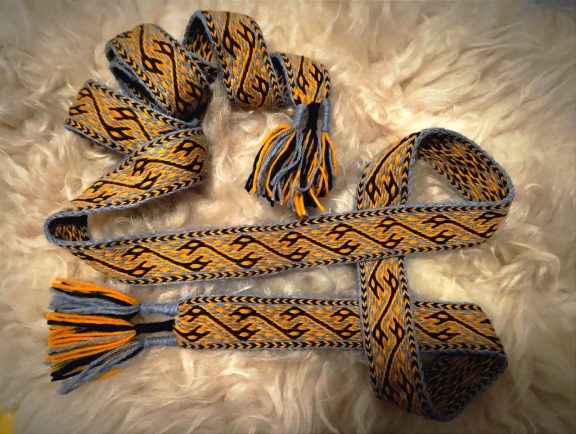


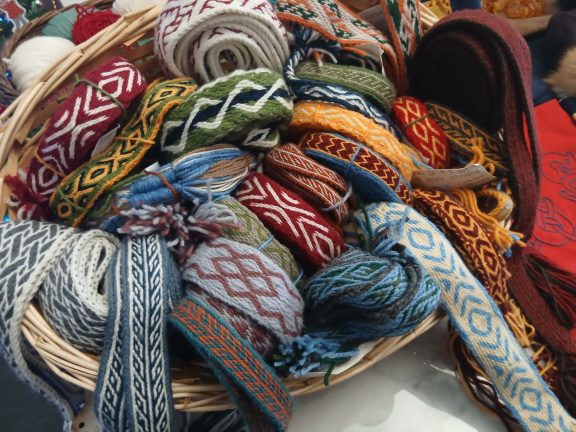

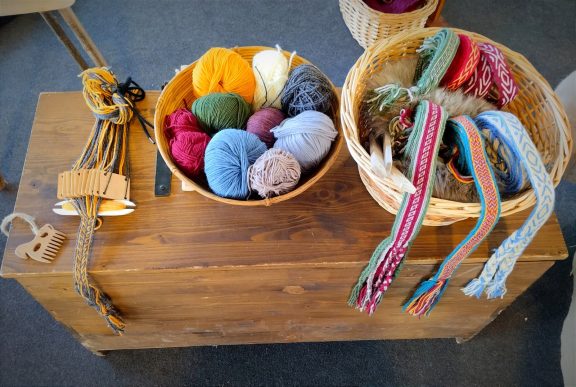


You recently brought your work to events like “Armi e Bagagli”. What has participating in reenactment fairs taught you about your craft, your audience and the community around historical making?
I’ve been attending Armi e Bagagli for at least a decade as a buyer, and for this reason, I’m intimately familiar with the audience and the format I proposed this year. The historic atmosphere is a key aspect of the fair, accompanied by wonderful people and international figures.
I was grateful to be a part of it, to show my passion and demonstrate my ability to offer items designed and crafted entirely by hand. I took home so much love, so much satisfaction, so many compliments, and even a little money, which doesn’t hurt!
For people curious about historical textile crafts, or even dreaming of turning a specialized passion like reenactment into a creative business: what advice would you give?
My advice to anyone who wants to delve not only into textile arts but into history in general is to always be curious, to study, to ask questions, and even to make mistakes. Seek reliable sources, ask questions that have verifiable, reasoned and plausible answers about shapes, materials and techniques. Develop a specific, uncommon project, which is the key to standing out from the crowd.
To conclude, before thanking you, I think I can say that what I do is giving me enormous satisfaction, both on a playful level with regard to reenactment, and on a professional level with my fledgling business, and above all on a personal level when I meet people who are grateful and attentive to what I do.


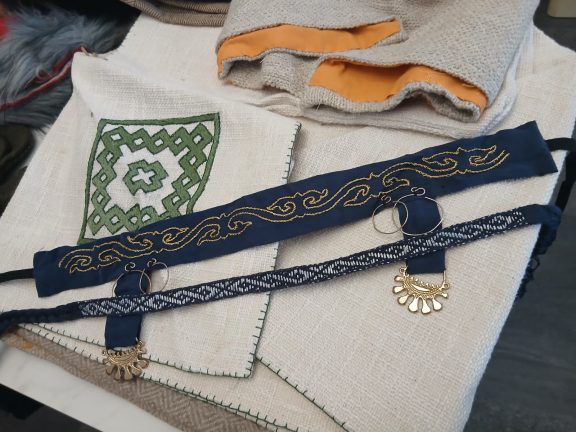

Thank you, Federica, for your time and words. I am convinced that sharing your journey with others could inspire more living history projects that focus on authenticity and research.
What I particularly appreciate about projects like Hilda Arts and Crafts is how they remind us that historical crafts are not frozen in museums or books. They are living skills, kept alive by people willing to study, experiment, practice, and dedicate countless hours to recreating techniques that might otherwise be forgotten. The kind of research that’s done on books or written sources is fundamental, but I do firmly believe it must be complimented with field research. And I am not referring to archaeological digs only. Any kind of reconstruction of extant finds with ancient techniques, any endeavour to recreate things how they should have been can help us shed a light on darker sides of history, and help us understand better how humanuty used to live in the centuries past.
Behind every woven band, every embroidered detail, and every carefully researched material, there is not only craftsmanship, but also passion, patience and respect for history. And I think this is exactly what makes reenactment and historical crafts so fascinating: they allow us not only to observe the past, but, in a way, to touch it with our own hands.
It was truly a pleasure to learn more about the journey behind Hilda Arts and Crafts. Seeing a passion evolve into something tangible and shared with others is always inspiring, especially in a niche world like historical crafting.
Thank you for sharing your story, your knowledge and your enthusiasm with us!
And now I’d love to hear from you: have you ever tried tablet weaving, embroidery, or any other traditional technique? Is there a historical craft you would love to learn one day? Feel free to share your experiences, favorite techniques, or even (especially!) your questions in the comments. I’m sure many fellow crafters and reenactors reading this would love to exchange ideas and inspiration with you.