
When you get into the the world of vintage sewing machines, you get into a rabbit hole that is hard to escape. Some people find their way into vintage sewing machines through a lifelong fascination with them. Others stumble into it by inheriting a machine or buying two Singer sewing machines at auction for $10.
For my part, my rabbit hole has been documenting the history of Singer machines via a database of serial numbers or research on decals and worldwide factories. For others, it could be the hunt for the unusual machine, the detective work involved in recognising what you’ve found, the network of collectors who help these machines find new homes, and all the practical knowledge required to preserve and transport them.
This latter part is exactly what Wolfegang’s Collectibles does for the community of vintage sewing machine enthusiasts. And the story behind it is particularly fascinating.
Mike Anderson, the man behind Wolfegang’s Collectibles, was not originally into antiques. He studied Music Business at Berklee College of Music and spent years working in the music industry. He had always bought and sold vintage and collectible items on the side, but it was only after leaving the music business and moving to New Hampshire that he started looking seriously for a new direction.
At a local auction, Mike noticed that sewing machines were selling for remarkably little. He bought two Singer machines for $10, put them on eBay, and was rather surprised when one sold for $145 and the other for more than $300. That first experiment turned into a full-time business, and then into something much more specialized. He began looking for the machines collectors actually struggled to find: unusual, obscure and sometimes exceedingly rare examples from the early history of the sewing machine. He developed relationships with collectors, followed their wish lists, and went looking for machines that might otherwise have remained hidden in attics, barns or local auctions.
And there is a lovely personal story behind the business name, too. Wolfegang was the name Mike’s birth mother gave him. He chose it for his business as a way of honoring her and the difficult decision she made when he was born. His love of old things, meanwhile, came from his adoptive mother, who raised him in an old New England house filled with antique furniture and collectibles. According to Mike, his mother told him he was already trying to “make an antique” at the age of five, using a hammer on an old wooden chair.
But finding a rare sewing machine is only part of the story. Mike also discovered that collectors had another problem: getting these heavy, fragile cast-iron machines safely from one place to another. After hearing one too many stories of valuable antique machines arriving broken because they had been poorly packed, he made careful packing and shipping part of what Wolfegang’s Collectibles was known for. His business eventually developed an international clientele, from Australia to Europe.
This is why I was particularly excited to talk to Mike for our series Meet the Crafter. Without further ado, let’s meet Mike Anderson and find out more about his search for the machines that almost everyone else overlooked.
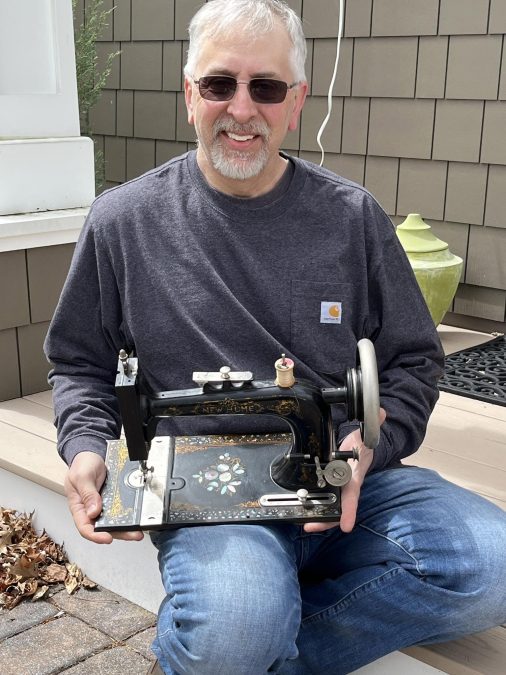
Find Wolfegang’s Collectibles online
Find more about Mike Anderson on his social media profiles.
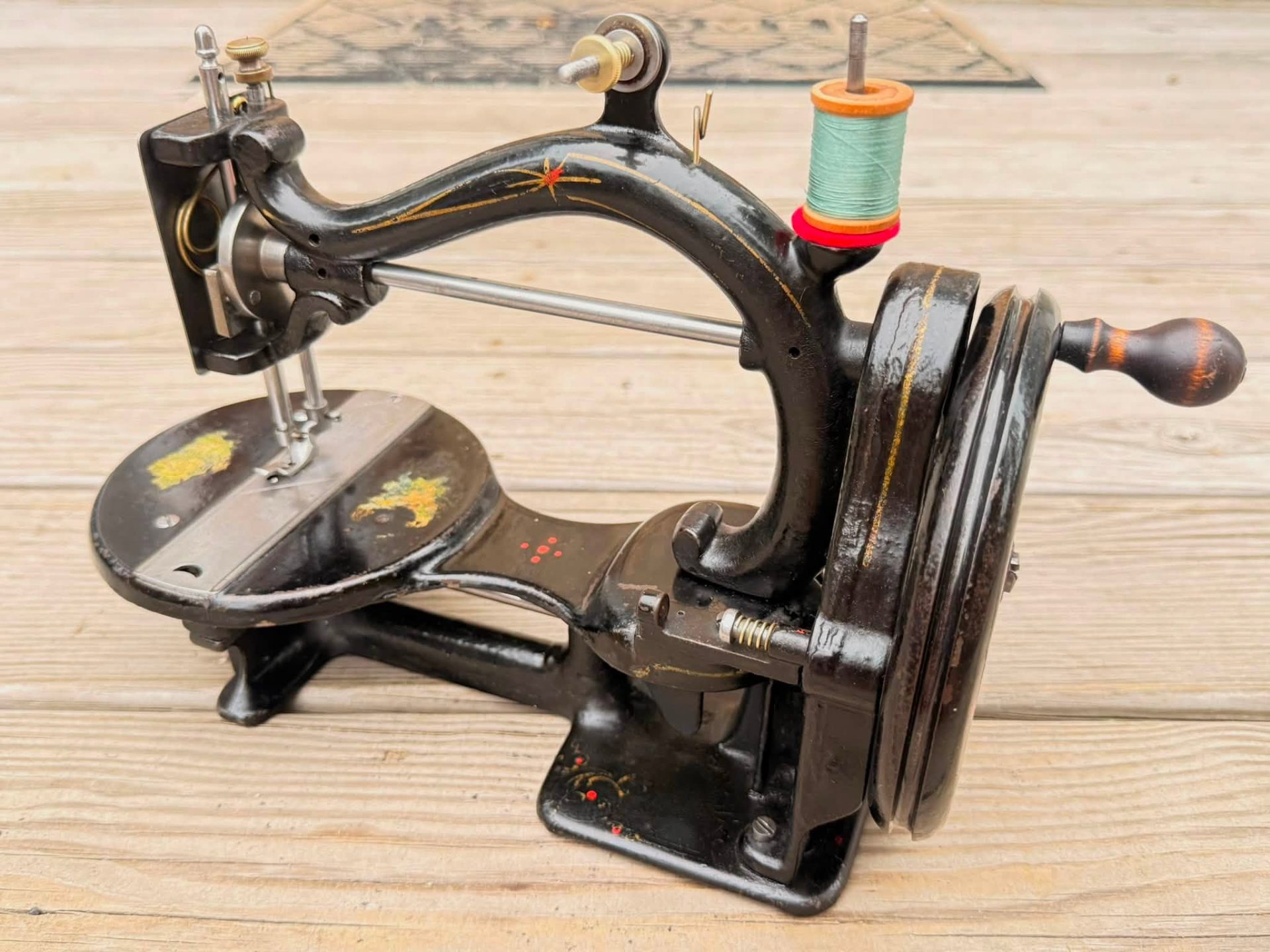
An example of low arm sewing machine, made by The Gold Medal SMCo
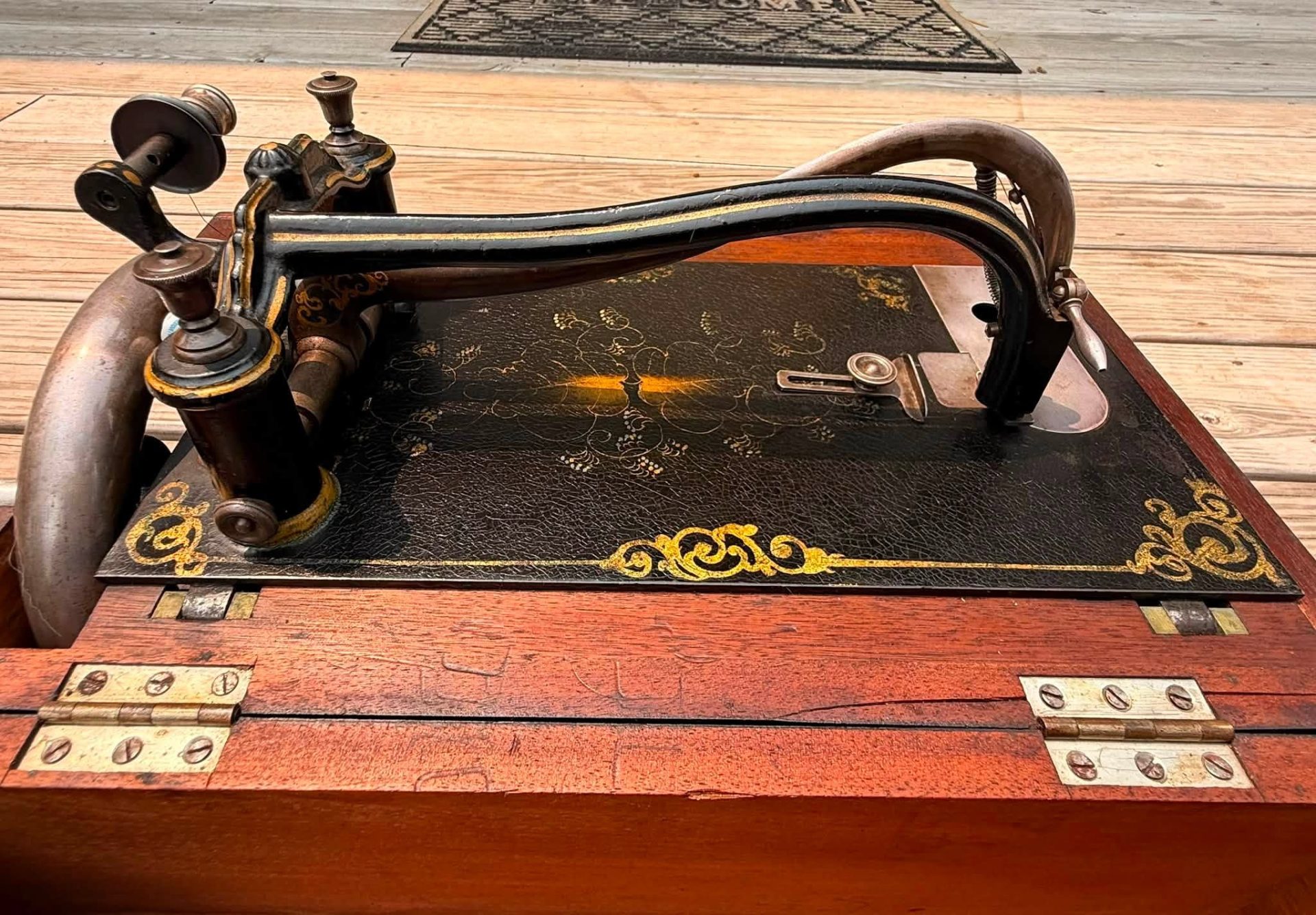
1858 Grover & Baker 1st model portable LONG bed, silver plated, transitional tension, 2 thread chain stitch hand crank sewing machine
Wolfegang’s Collectibles has become known for antique sewing machines, including some remarkably rare examples. When an unusual or obscure sewing machine comes through your hands, what clues do you look for to identify it and determine its history? Are there particular details that collectors should learn to look for?
First & foremost it’s an honor to be asked to be interviewed here, thank you!
One thing I have learned in my 25 years in business is that there’s no replacement for experience!
When I was just starting my business, several local antique dealers here in New Hampshire helped me! So while some feel that sharing information is a bad business decision, I have always felt the exact opposite! If the antique dealers years ago had not helped me, then I would have never learned and grown! I owe them all a great debt of gratitude!
Soon our sale will reach 57,000 antique & toy sewing machines sold since 2001. We have been blessed with many rare machines over the years!
What to look for?
That is a very complex question, but the basics are,
- Educate yourself. Don’t rely on the internet, there’s so much still in books that’s not online.
- Condition & Completeness. Antique sewing machine parts are hard to find! Pretty machines with the majority of their decorations are the most sought after.
- Type of decorations. Generally speaking, machines with hand painted decorations are earlier. Machines with decals are later. Bring a loop while searching for machines, to check if you are unsure. You will see brush strokes if the machine’s decorations are hand painted.
- Low arm and 2 arm machines. When you think about a common Singer, lets say a model 66 Red eye, this general style machine is a more modern design, 1880’s. Any brand of machine that has the same basic shape of a 66 Red eye, is a high arm machine. Low arm machines and 2 arm machines are earlier and more sought after! A Singer model 12 would be an example of a low arm machine. A Wheeler & Wilson 3 would be an example of a 2 arm machine.
- Be picky! Millions of machines were made by thousands makers all over the world, and most were exported too! If you are looking, you can still find fabulous examples with persistence.
More than millions, I would say billions! Our own database of Singer serial numbers alone contains 7.394.213.310 records, and it’s just the tip of the iceberg!
You often look for machines that collectors have been searching for, sometimes for years. Where do you actually find these machines today? Are there particular places, sources, or clues that have become especially valuable to you?
Quite honestly, nowadays the machines tend to find me! Nearly every day of the week my phone rings or I get messaged. I buy about 2% of the machines offered to me for various reasons, mostly age, completeness & quality of the decorations.
Remember the antique dealers who helped me early on? Most had kids my age, who moved around the world, became antique dealers themselves, and now I also have a wonderful worldwide network of “pickers,” who have learned which machines I like and will purchase from them.
Many years ago I also started my “Wish List” program. I encourage people to send me lists of the machines they’d ultimately like to own, text or picture lists accepted. When I find a machine that’s on a client’s wish list, I contact them with all of the pertinent information.
I have the luxury of years of being in business & having many contacts… but I still stop at flea markets, yard sales, and estate sales. These are great places to look.

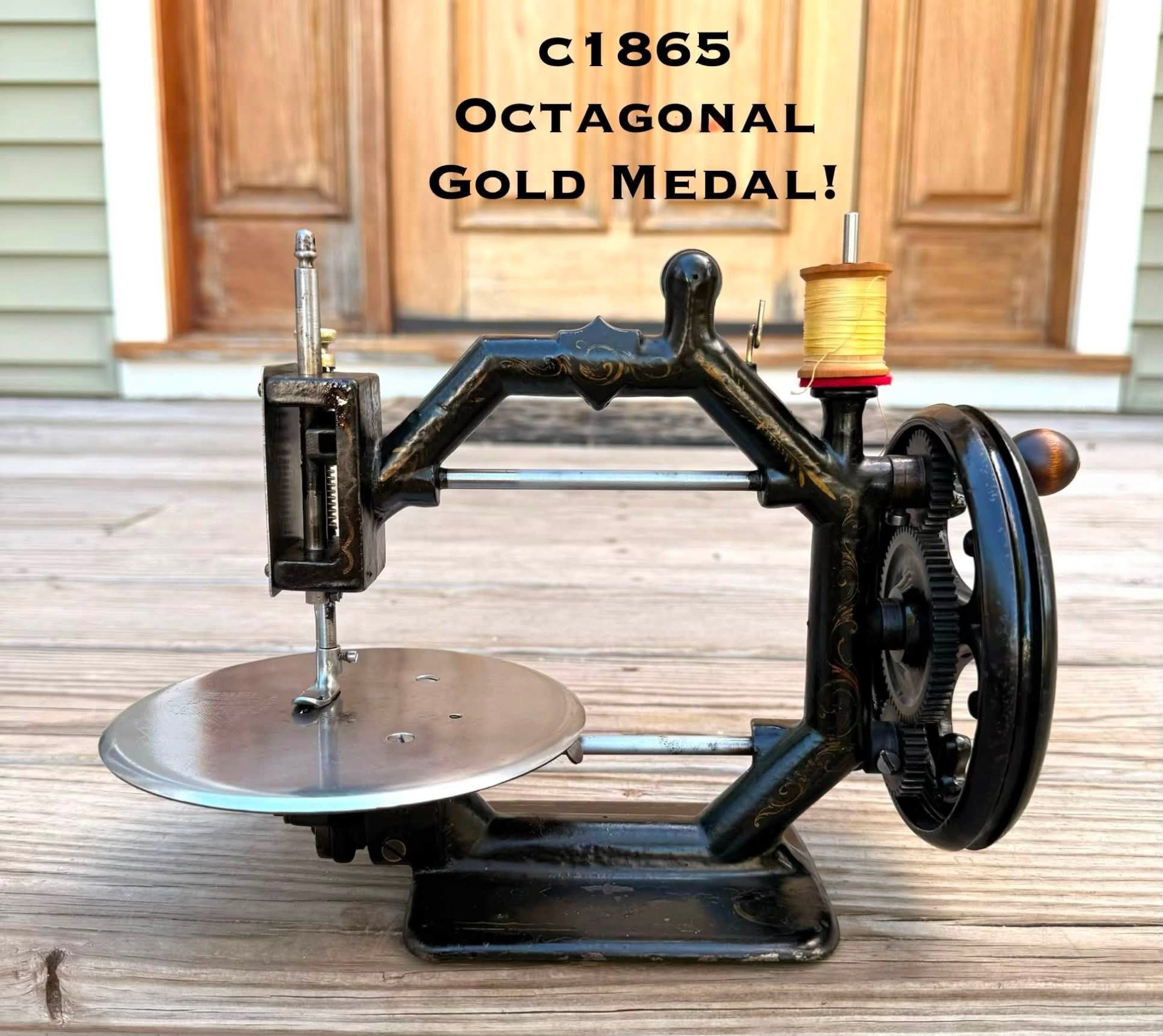
Octagonal-shaped Gold Medal from 1865
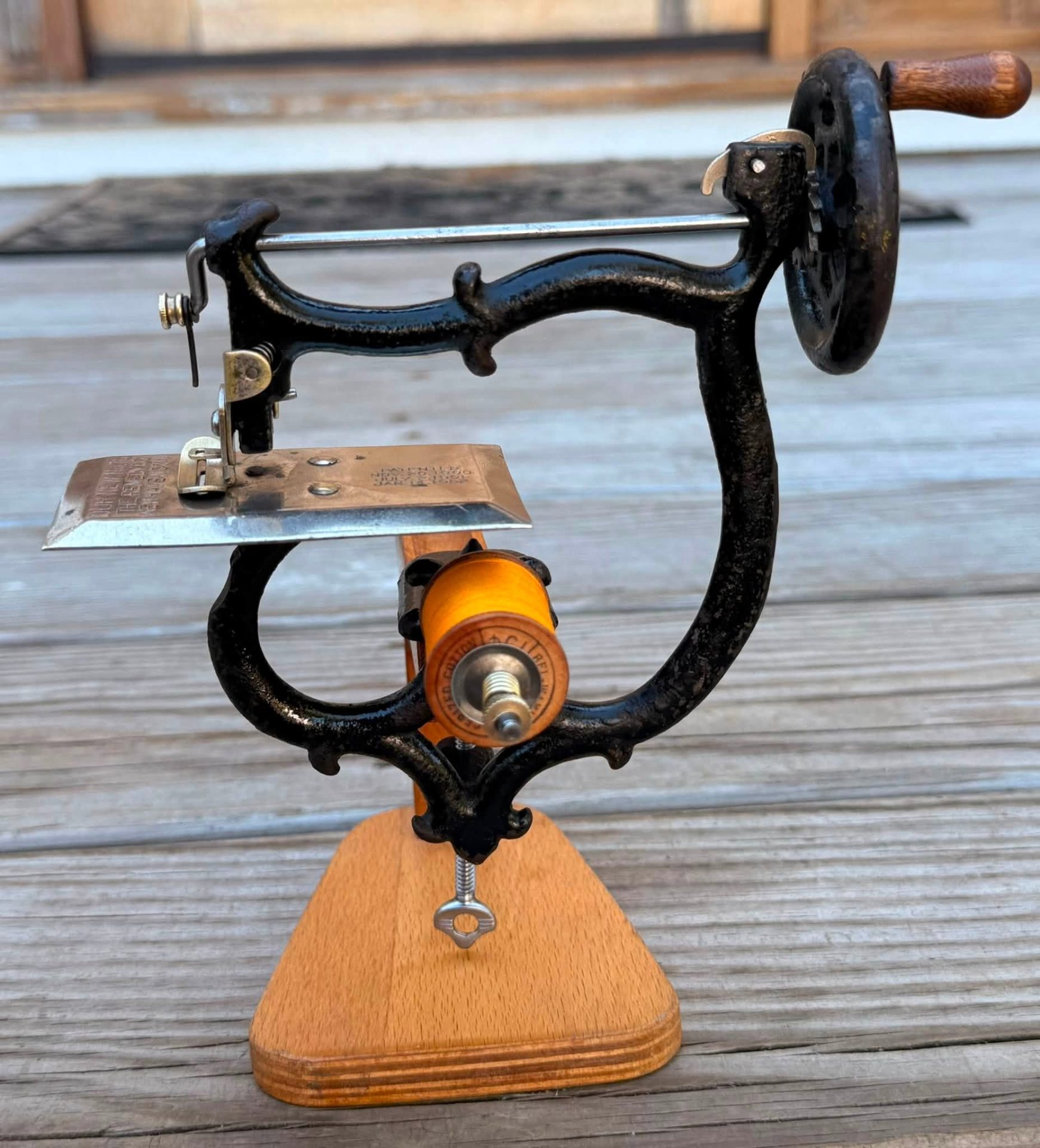
An unusual design from the Remedy Company
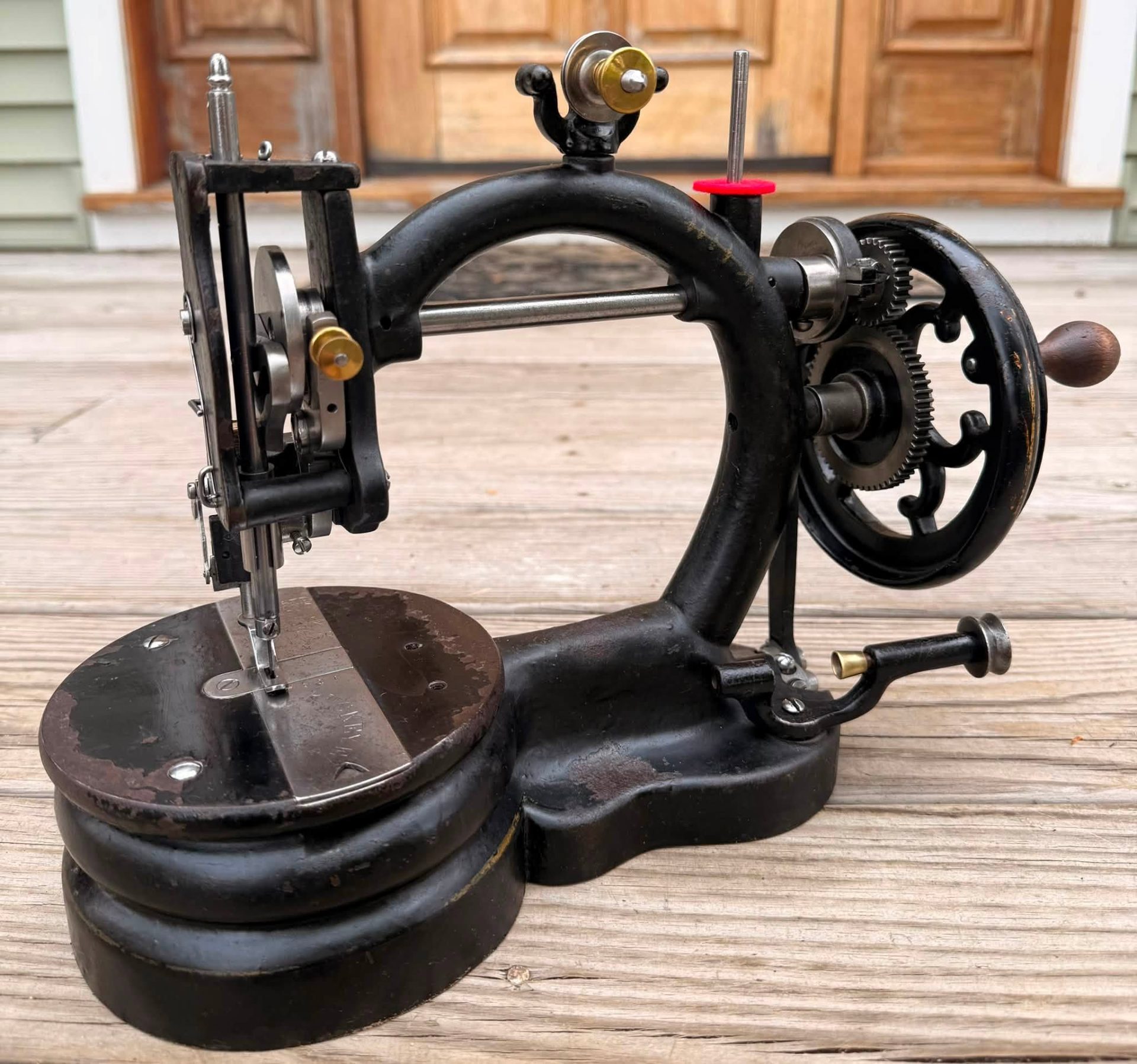
WG Wilson Buckeye
I can well see how, with all your experience, you don’t need to look for machines yourself anymore!
You have handled machines that are much rarer than the familiar Singer models. What makes a sewing machine particularly interesting or collectible to you? Is it rarity, age, design, mechanical innovation, condition, provenance, or something else entirely?
Oh my… can I say all of the above! Smiles! First & foremost nowadays I look for pre-US Civil War made machines. 1851-1861. These are the rarest machines in the world, and where the first serious production of sewing machines and innovations in sewing began. Next I look for the US Civil War Era machines. 1862-1864. During the war, sewing machine manufacturers were told to scale back production of machines, and to make munitions for the Union Army. So finding a Civil War Era machine is rare!
After those, I try to buy only machines made prior to 1880. Of course if a perfect 1898 Singer 27 Pheasant decals was offered to me, I’d probably buy it!
Exceptions to all these rules! A pretty floral decorated Singer will always hold its value and will always be highly desirable! May not be pre-1880, but I would never turn one away!
Lastly, interesting, heavily involved mechanics, gears, levers, knobs… these machines make my heart beat faster!
You have also had some extraordinary machines pass through your hands, including a rare Williams & Orvis that eventually went to the National Sewing Machine Museum of Australia. Is there a particular machine, discovery, or sale that has stayed with you—and what made it special?
That Williams & Orvis is a memorable one for sure! But let me tell you a fun story!
In 2015 I was commissioned to sell a collection here in New Hampshire. 869 machines!
The prize machine of the entire collection was a circa 1860 Leavitt treadle! But there was a problem, the Leavitt was stored in an old mill building, way, way, way… above our heads on narrow loft called the chicken post!
The mill building was filled with antique wide leather belts running from one large wooden pulley to another, all steam powered. This machinery was large & thus the Mill building had a very high ceiling where the chicken post was… about 15 meters up!
I decided that the Leavitt was too rare to leave behind, so up I went! I’m in old structures all the time, so climbing up there was no problem, but getting the Leavitt down was!
Along the sides of the massive steam engine were a few little perches… areas to access the tall machine for maintenance.
With the help of a friend, he climbed to within 3 or 4 meters of me. I then grabbed the treadle, head removed, and hung down with one arm gripping the edge of the chicken post, and the other extended down to my friend. We then flip-flopped on the perches… until the Leavitt was safe on the ground! What we do, to bring sewing machines to you!
There have been many memorable experiences over the years, the Leavitt went to a collector in Switzerland and sold for nearly $10,000. Well worth the effort!
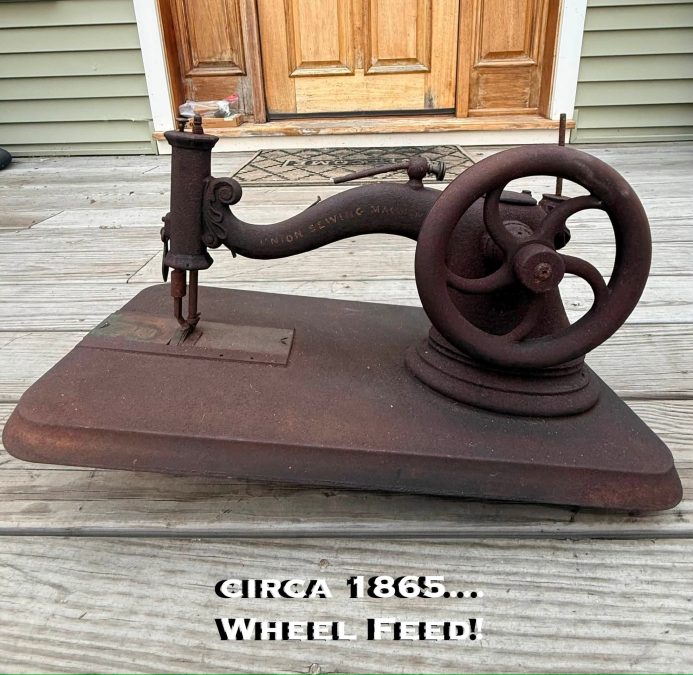

Well worth indeed!
After handling so many antique sewing machines, are there particular types, manufacturers, or machines that you think deserve much more attention from collectors than they currently receive?
I think the serious collectors fully appreciate & give the rare machines the attention they deserve. For me it’s the ability to predict which machines will be the collectible machines of the future.
Famous long time collector and friend Carter Bays had this ability in the late 1970’s when he started buying antique sewing machines. He told me that no one was paying attention to them, and he knew they’d appreciate in value & collectibility someday. Carter is the author of the Encyclopedia of Early American Sewing Machine, I sold his entire collection in 2022 for “$ 7 digits $” !!!
I think the collectible & valuable machines of the future are the machines from the 1920’s to the 1940’s. I call them machines that have not quite reached their potential yet.
When a rare machine comes into your hands, how do you approach cleaning and restoration? How do you decide what should (and shouldn’t) be changed?
Very important note. We never restore machines. We conserve machines. Restoration involves new paint & decorations, changes to the original machine that ultimately decrease the antique value of the machine over time.
Conserved machines have had their body & parts cleaned and polished exactly the way the original manufacturers would have originally done it. Conservation also includes replacing missing parts, fixing broken parts, and setting machine timing.
Our approach on conservation is minimal. Remove the dirt. Remove the rust… clean & oil. Many people out there do not agree with conserving machines, but my question to them always is… would you neglect you classic car by never changing it’s oil, or by never cleaning its body? The answer is no!
A sewing machine is just that, a machine. Rust, dirt & old congealed whale oil bind up machines & they will not work! There’s absolutely nothing wrong with conserving an antique sewing machine if you want it yo work!


Oh, that well resonates with me and my archaeologist side!
For someone who has just brought home an old sewing machine, what would you recommend doing first, and what should they absolutely avoid doing?
These 2 questions run hand in hand… clean off the dust, apply a drop of high grade sewing machine oil in the oil holes and in the pivot points, before you try to turn the machine or sew on it.
A little oil can prevent a lot of problems.
This reminder that “a little oil can prevent a lot of problems” is the best conclusion for this interview. After all, these machines have survived for generations, many still work as the day they came out of the factory, and sometimes what they need is just a little care and someone willing to understand what is already there.
Talking to Mike has been a fascinating journey into a side of vintage sewing machines that is easy to miss when we focus on the familiar names and models. We just had a glimpse into the life of a specialized antique dealer, with his stories of search and discovery, of his network of people and knowledge, and also quite a bit of ingenuity!
I’m particularly grateful to Mike for sharing his knowledge he has gathered over 25 years in the business. I had to end my questions somewhere, but each of his answers would have led to endless other conversations. Maybe if there’s a particular topic that fascinates you, I can come back to Mike for another chat: just let me know in the comments!
Thank you, Mike, for reminding us that there are still fabulous machines waiting to be found, if we are willing to look closely enough. And perhaps that is the real joy of falling down the vintage sewing machine rabbit hole: there is always something new to discover.



2 Comments. Leave new
You picked a genuinely nice man for your Meet the Maker series. Not only does he find wonderfully rare machines, but he shares his knowledge about the machines and the manufacturers.
I enjoy following his FB page, there is always another machine I haven’t seen. He posts extensive photos of them that are enjoyed by those who collect machines. There can never be too many photos or too much information.
I’ve only bought a few hard to find small parts from him and I was treated like a top tier customer. That’s the way to run a business.
That’s lovely Rhonda, thank you for sharing your opinion, of the man before the business ❤