Valle d’Aosta. A small alpine region in Northern Italy we’ve often visited. As a young child, I spent almost every summer Sunday here for a pic-nic with my family. Now as adults, my husband and I come almost every year to attend the Celtica Festival in a magnificent wood at the foot of Monte Bianco. Yes, that Festival would require a special chapter all for itself.
“But that is another story and shall be told another time”.
One day this June we were wandering along the main road in Courmayeur when, close to the main church, I spotted a sign pointing to the regional Handicraft Gallery. Could we miss it?
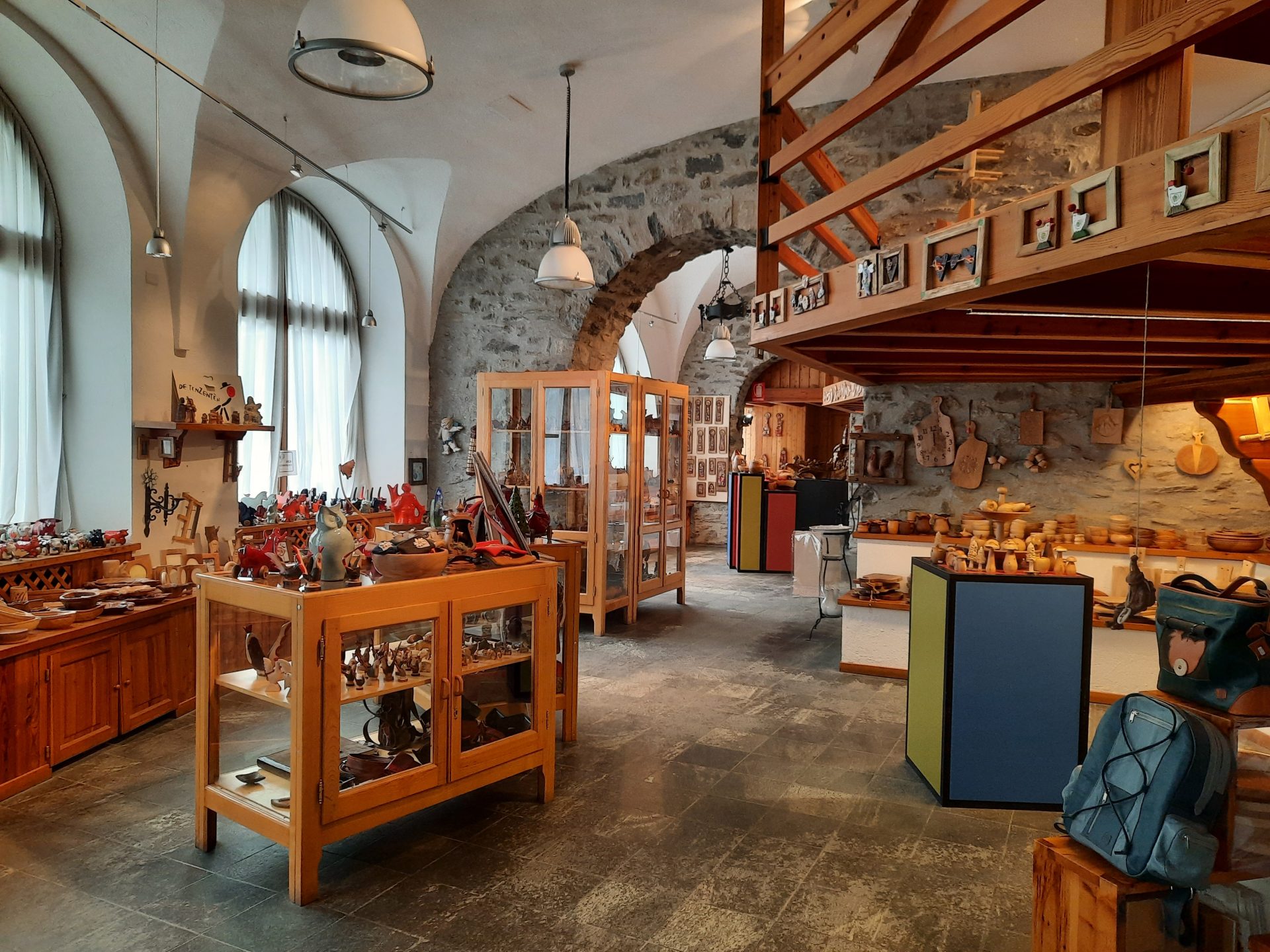
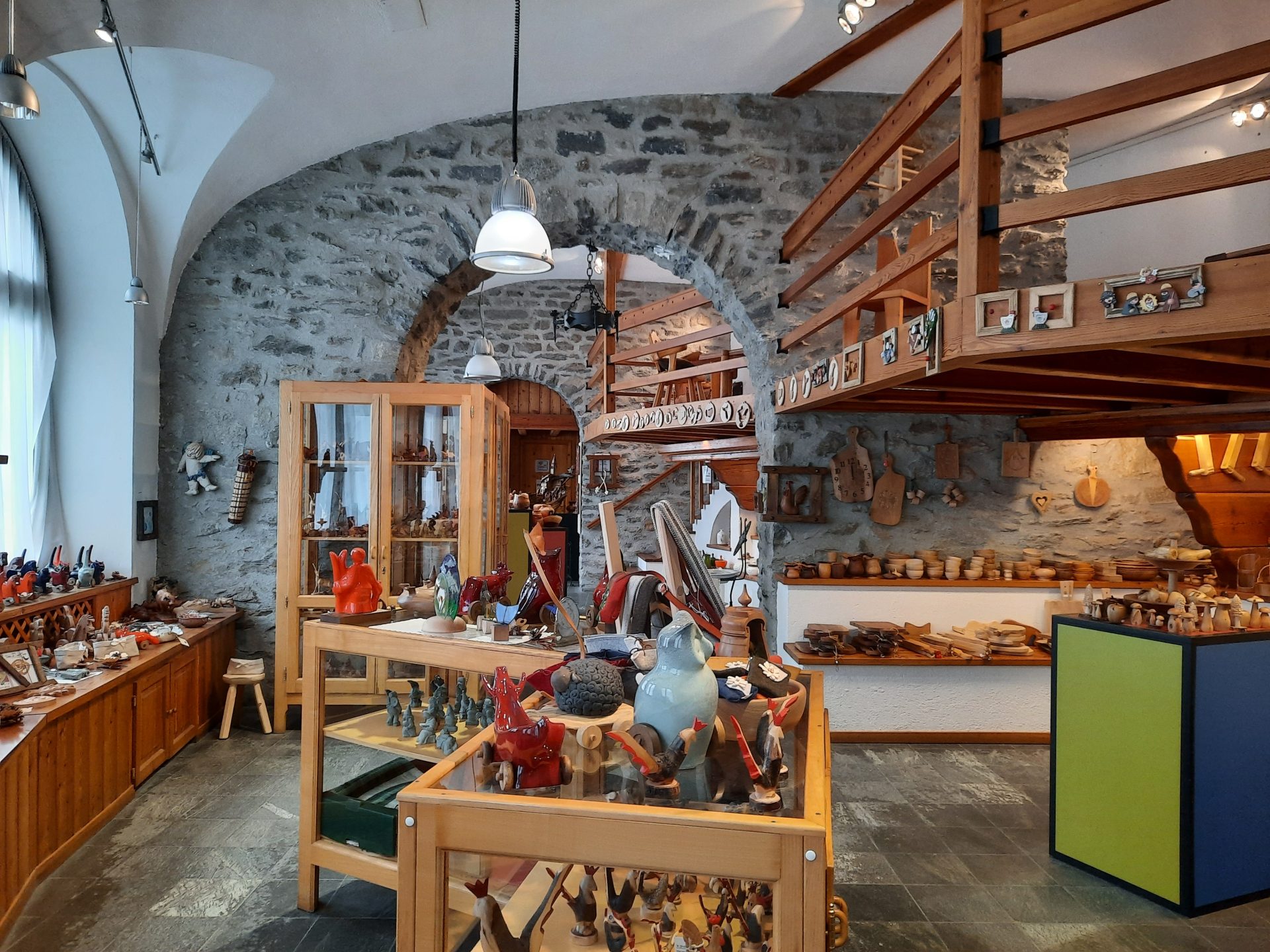
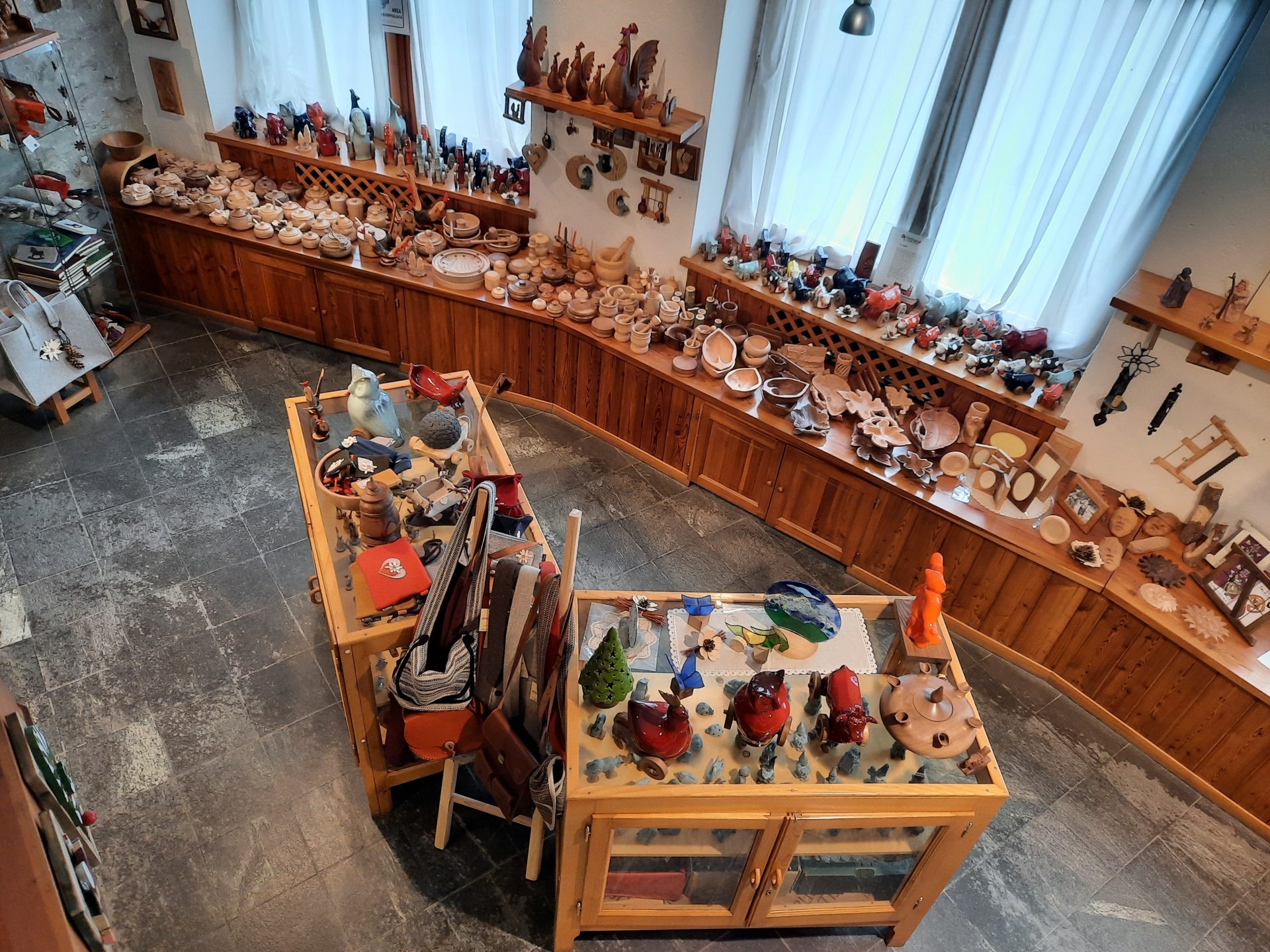
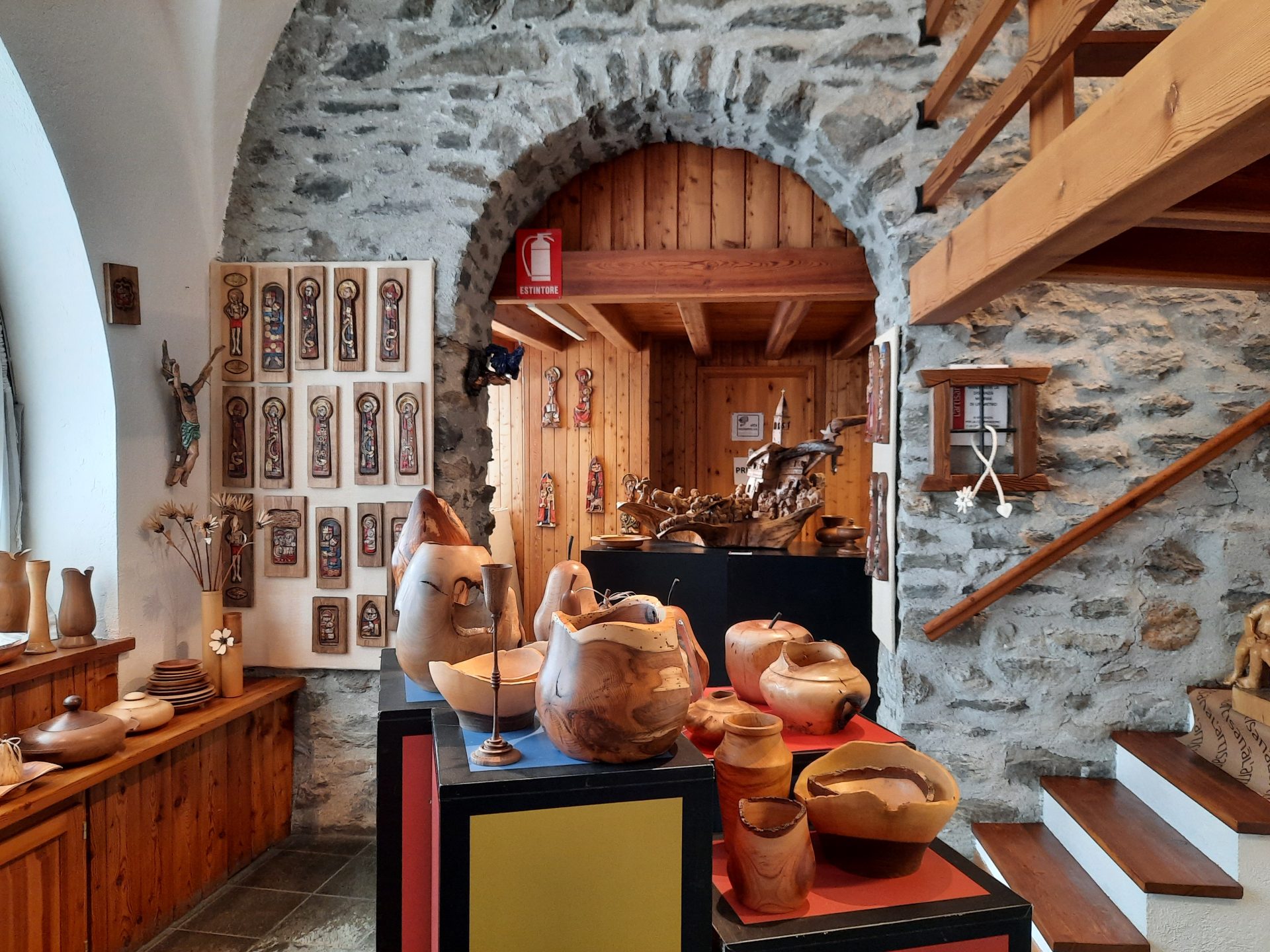
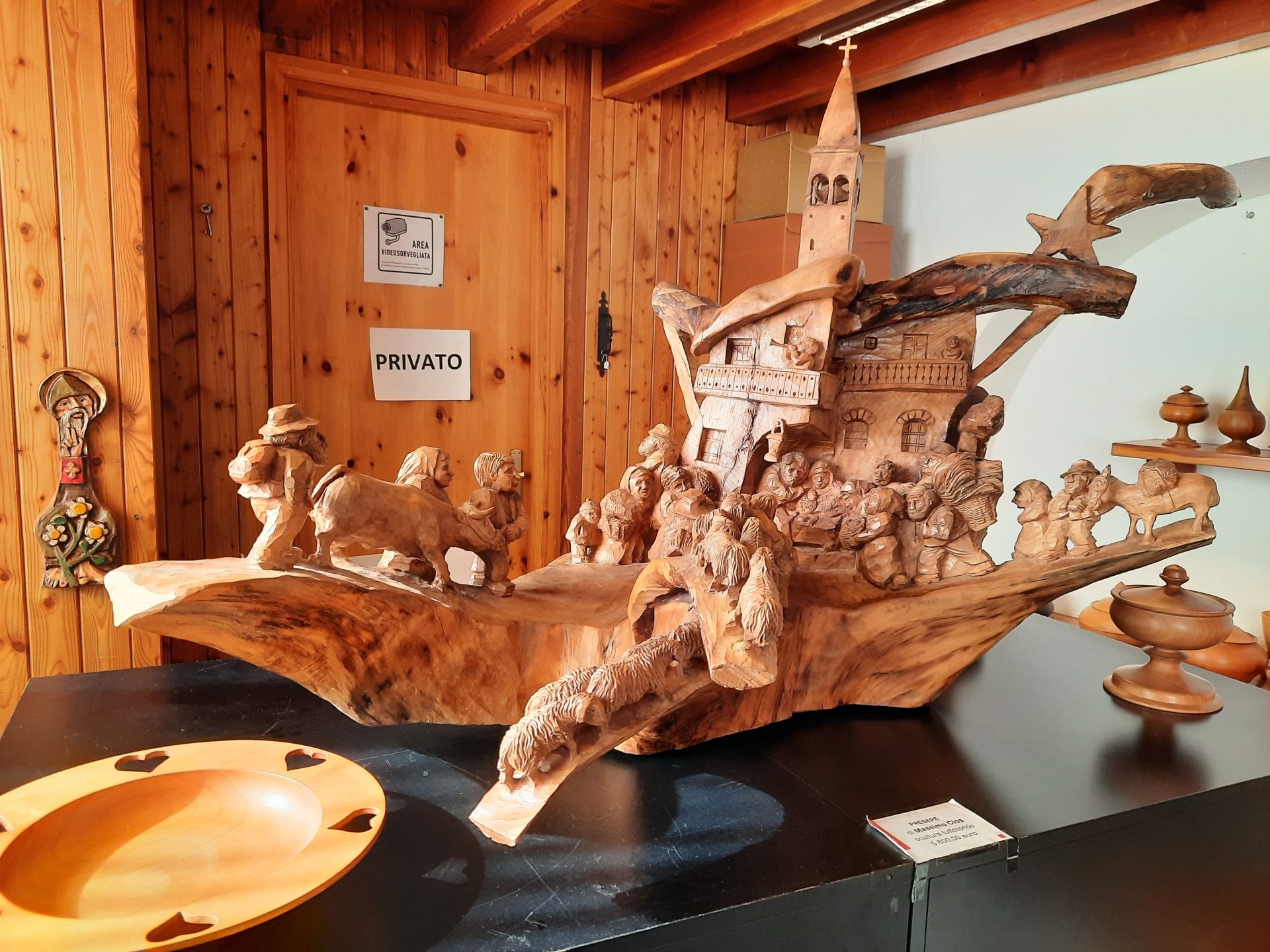
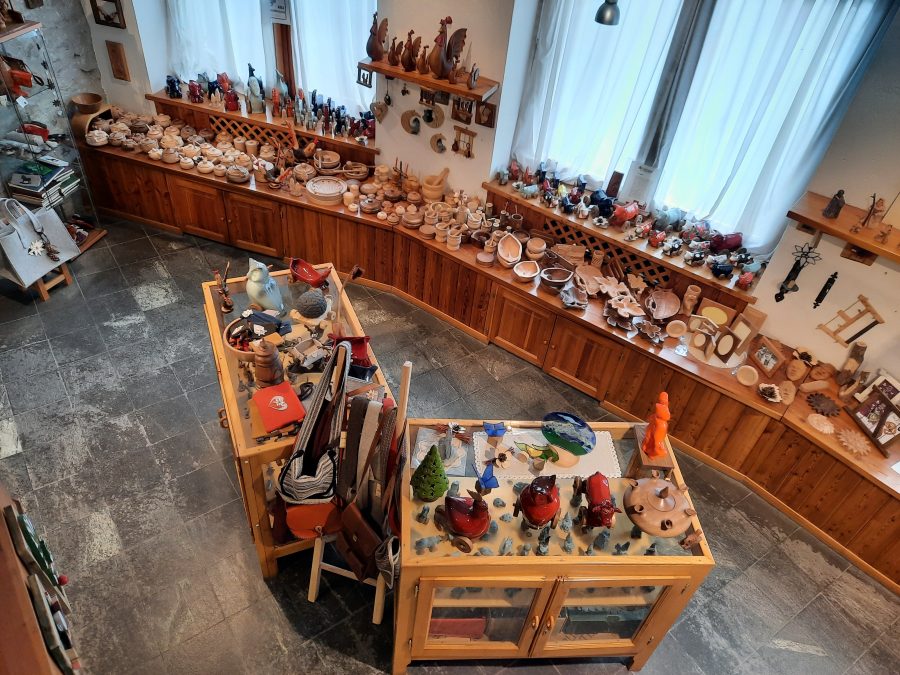
Well, we descended a few steps to come into a wonderful shop, with stone walls, arches, wooden balconies. Every wall and shelf was covered with wonderful items, made of wood, ceramics, stone, wool, leather…
I have to thank the lovely Ombretta, who welcomed us and gifted us with a special tour around the majesty of the Aosta Valley traditional crafts. All the things she showed us, all the tales she told… everything would require a dedicated post. Here I’ll try to give you an overview of why every crafter passing by should not miss a visit to this special place.

Celtica Festival
“There are no strangers here; Only friends you haven’t yet met.”
This quote by William Butler Yeats sums up the soul of Celtica Festival better than anything else.
What is Celtica Festival? If you ask someone who knows it, they will probably answer: “to know it, you have to live it”.
It would require more than a small box to tell what it is. Celtica is an experience. When you try it for the first time, youl’ll never be the same.




A special boutique with 1000 years of history, and counting
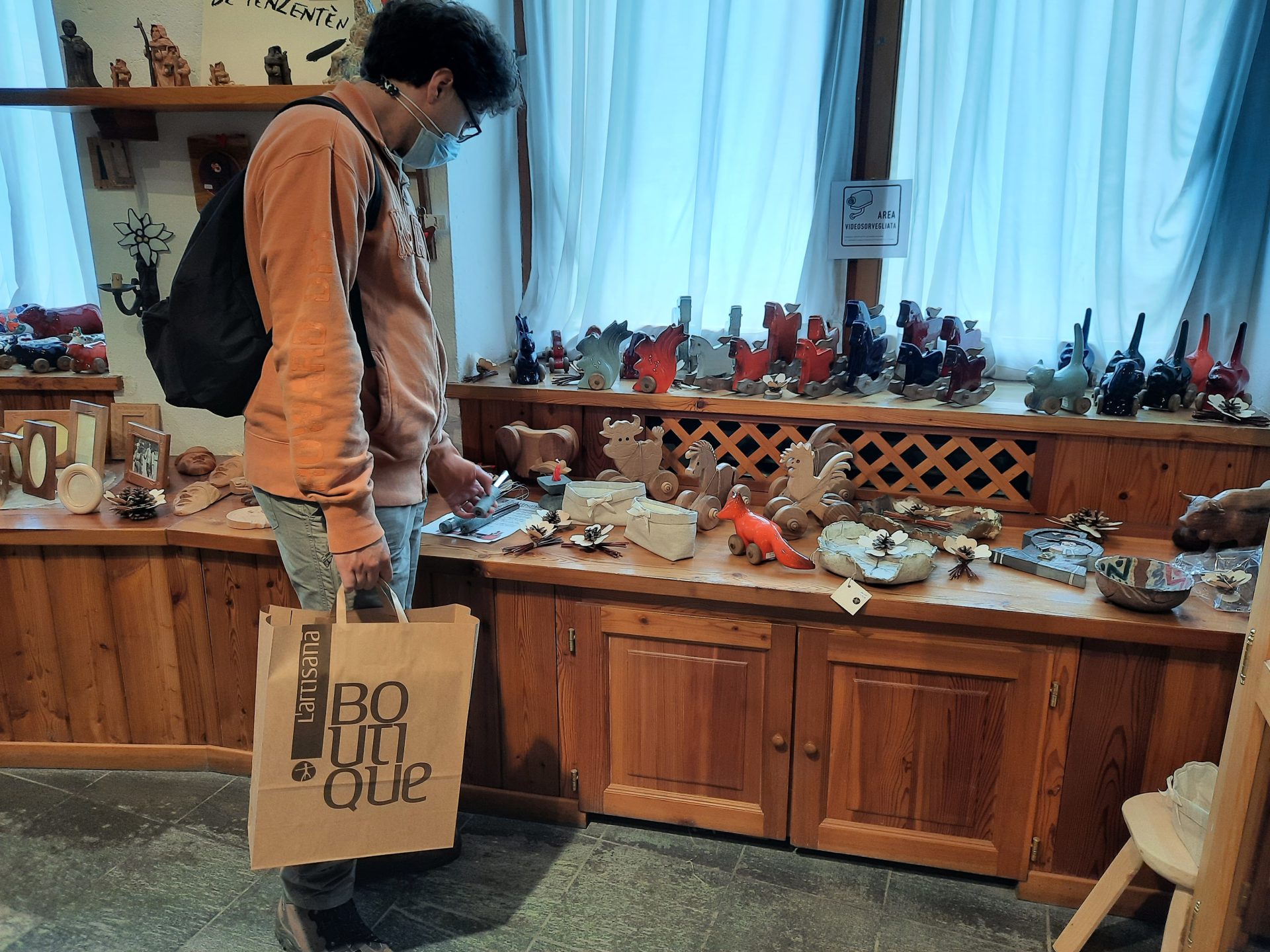
The name of this boutique, “L’Artisanà”, derives from the name that Valdostan craftsmen traditionally gave to the shop in the centre of Aosta where they left their production for sale after Sant’Orso Fair.
Why is this gallery and shop special? Well, it’s not just a crafts shop. It’s deeply linked to the Valdostan Institute of Traditional Handcraft: this institution wants to safeguard and promote the traditional regional crafts by means of cultural and commercial activities. Two museums, four boutiques, five corners around the region work together to give continuity to the tradition, while renewing it.
We could feel it, touch it, while visiting the shop with Ombretta. Also her fond passion was clear, while touring around and listening to her stories where past, present and future melted, becoming one thing.
L’Artisanà, today, represents over 1000 craftsmen still working along a thousand-years-old heritage: each of them has been able to bring this ancient craftsmanship into the 21st century, adapting it to the present days while succeeding in not losing identity.
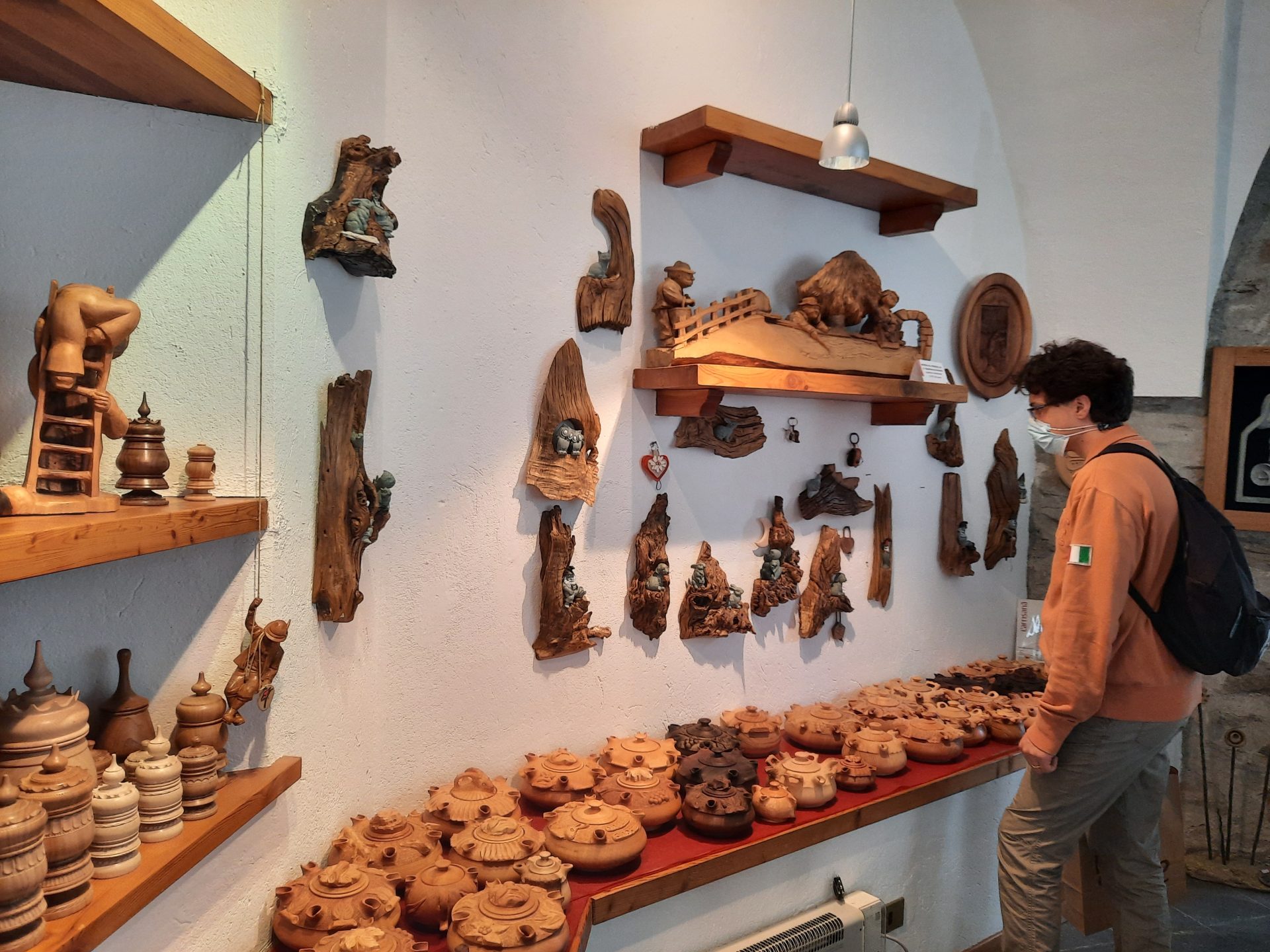
So, what can you find here in the shops nowadays? All the ancient items you would expect: the Friendship Cup, the Grolla, woolen shoes, wooden toys… But also modern artworks made with long-used materials and techniques. This deep bond between modern and ancient was the paramount reason for us for coming back twice in a week! We came home with my birthday present: a wooden root with two soapstone sculpted snails, made by Claudio Ferrari. I’m so happy of this artwork, reminding me of the little animals I loved so much during my infancy, made from a stone with a link to my past as an archaeologist.
Now, time to discover more about the history of Valdostan traditional crafts.
Not to miss in Courmayeur: the Skyway
Have you ever been on the roof of Europe? I have! That is the Skyway Monte Bianco, a cableway that can bring you up to let you reach almost 4000m altitude. On the magnificent terrace you see a white stretch of snow below you and high peaks above, a magnificent panorama you have to see by yourself to judge. Halfway up, don’t miss the botanical garden and explore all the cableway stations to find exhibitions, photos, pieces from the old structures of the cableway.
The friendship cup and the "Grolla"
If you say “Valle d’Aosta“, everybody will have in their heads the term “Grolla“.
It’s often used to call the wooden cup with which you taste the Valdostan coffee “à la ronde“, passing the cup to each other to wish good luck. Well, that’s not accurate.
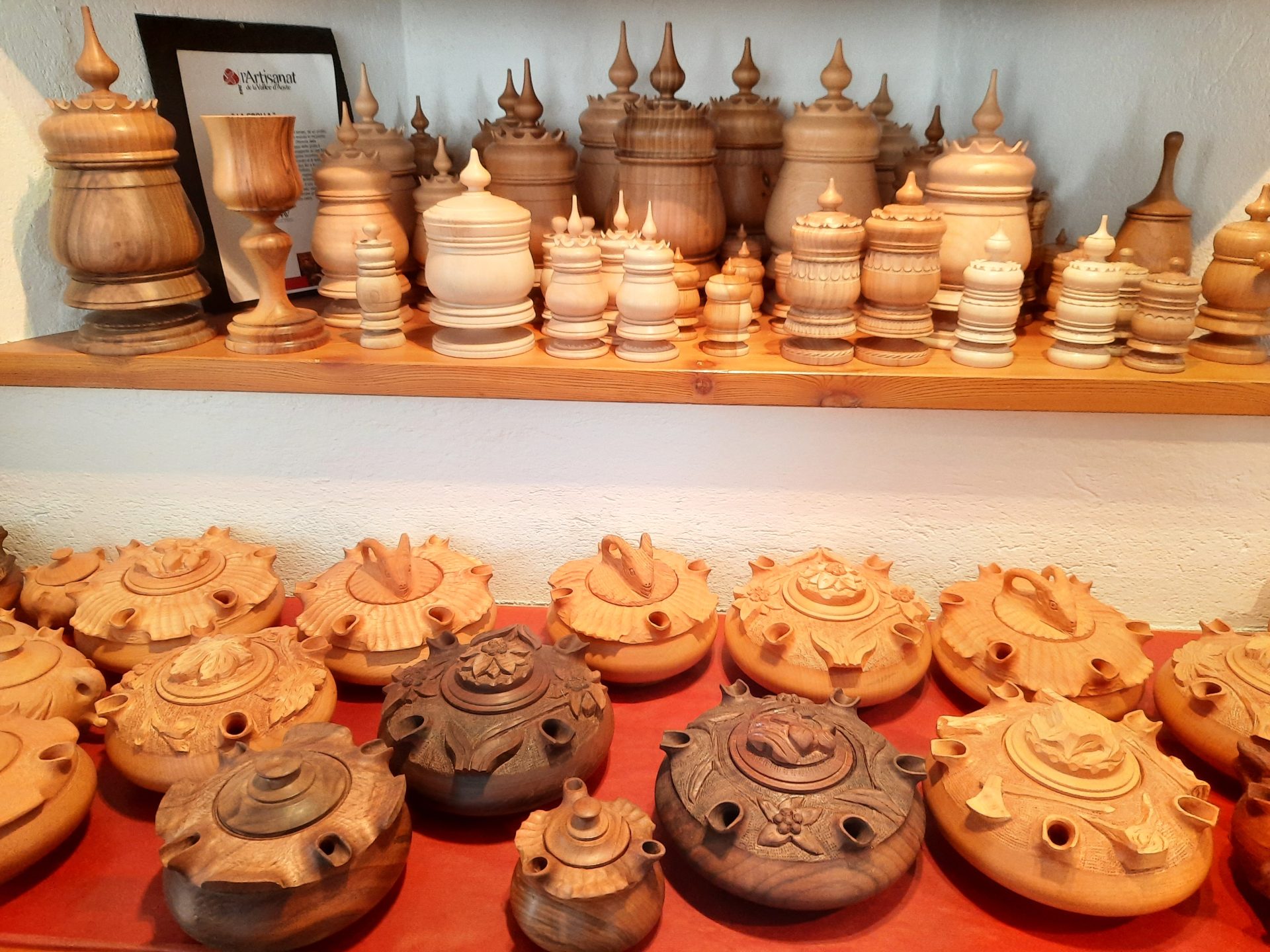
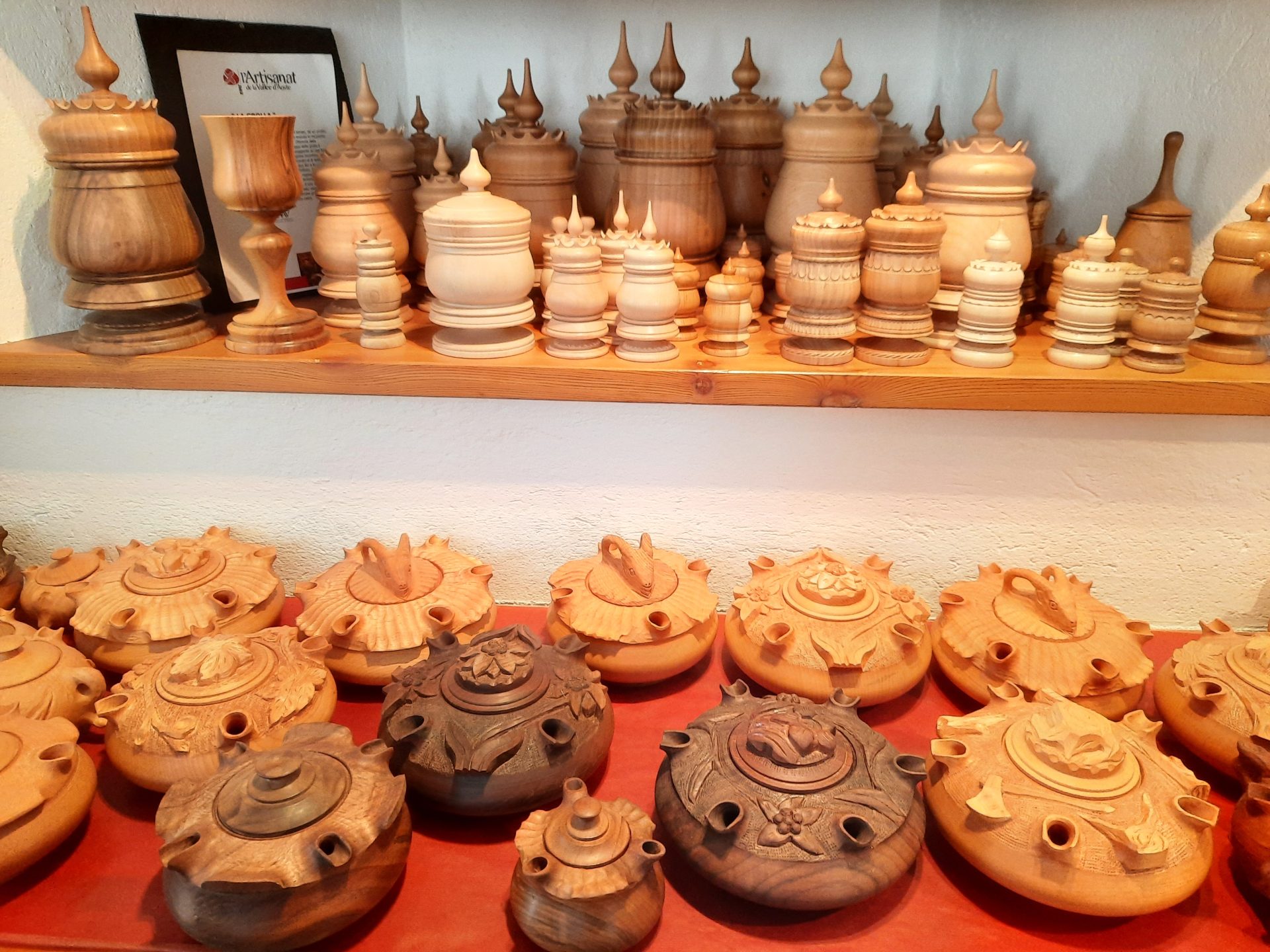
The original Grolla was a chalice with lid sculpted from a piece of precious wood. The term is said to come from “graal” (“grail”), meaning “cup” in the ancient langue d’oil. Once used for drinking, now it’s just an ornament and a popular souvenir.
The Grolla must not be mistaken for the Friendship Cup: this is a wooden bowl with a central lid surrounded by several nozzles. The number of nozzles varies with the size of the cup. It can be made of maple wood, pear wood or apple wood, all hard to lathe. The lid is usually decorated with plants or animals.
The Friendship Cup is used to drink the Valdostan coffee, that is flambé coffee with grappa or génépy and sugar. Since this cup is a symbol of conviviality, the coffee must be drank “à la ronde“, passing it from person to person without letting it touch the table.


The "Tatà"
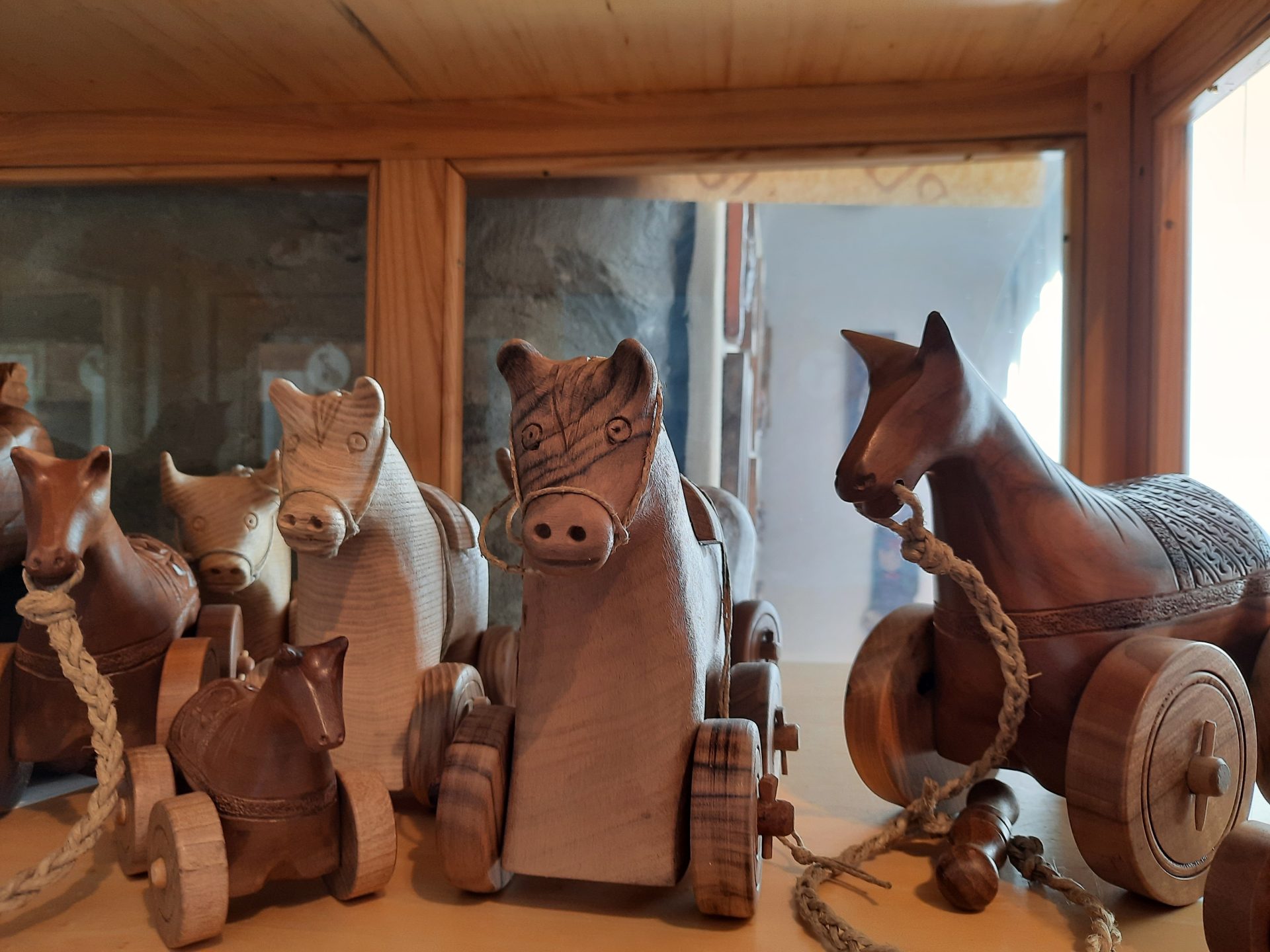
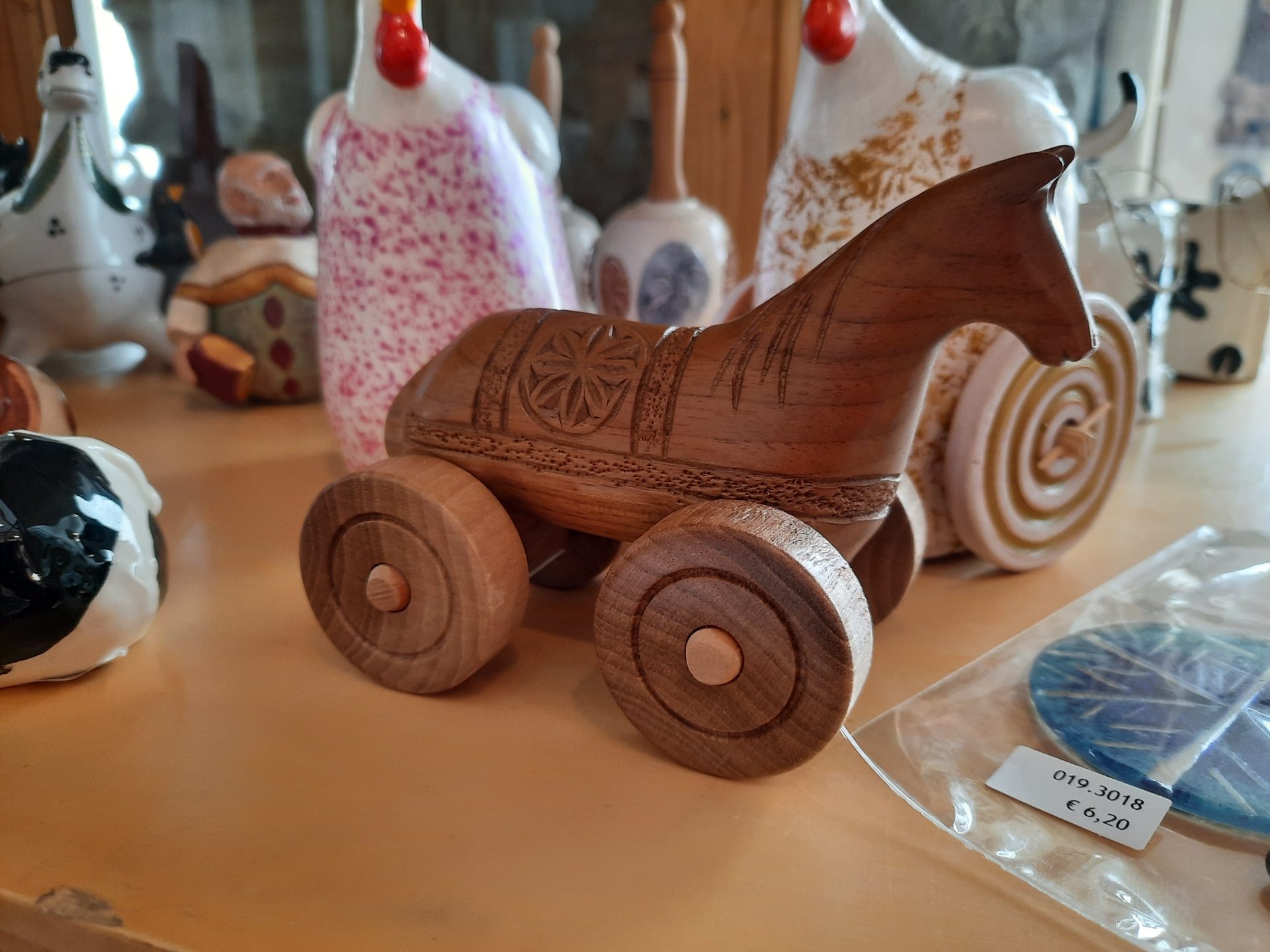
Wooden animals have been one of the most ancient toys (in Valle d’Aosta but not only there). Cows, chicken, horses, mules, birds and all sort of local animals were sculpted from simple pieces of wood during the hours of pasture or in the Summer evenings. They added wheels and ropes for pulling them around, and on the uneven stone floors inside or outside the houses those toys made typical rattling sounds: hence their name “tatà“, mimicking this noise.
Nowadays the “Tatà” is just a finely decorated sculpture, sometime made from other materials (for example ceramic).
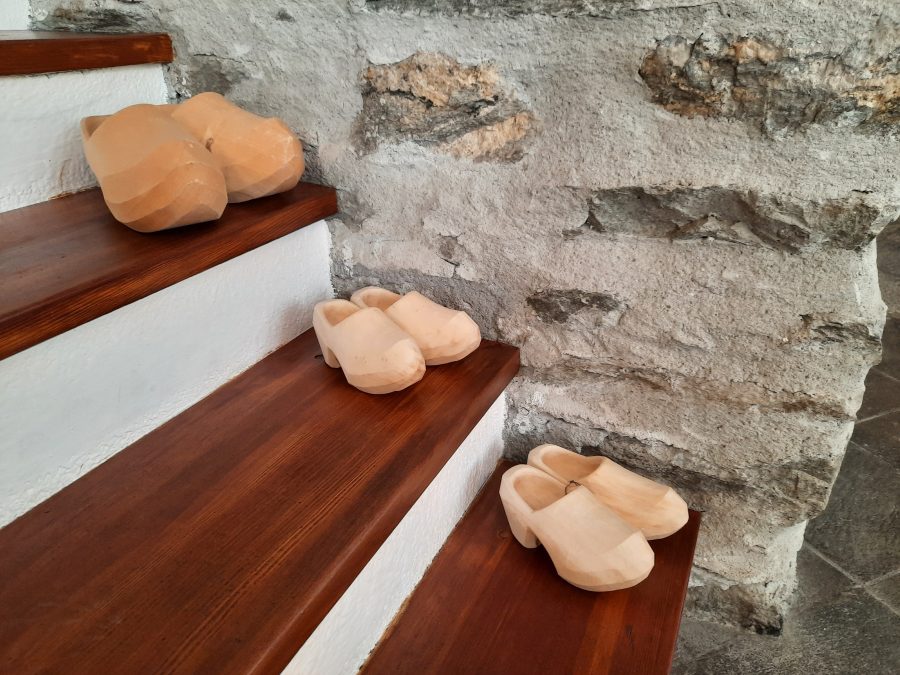
The "Sock" slippers
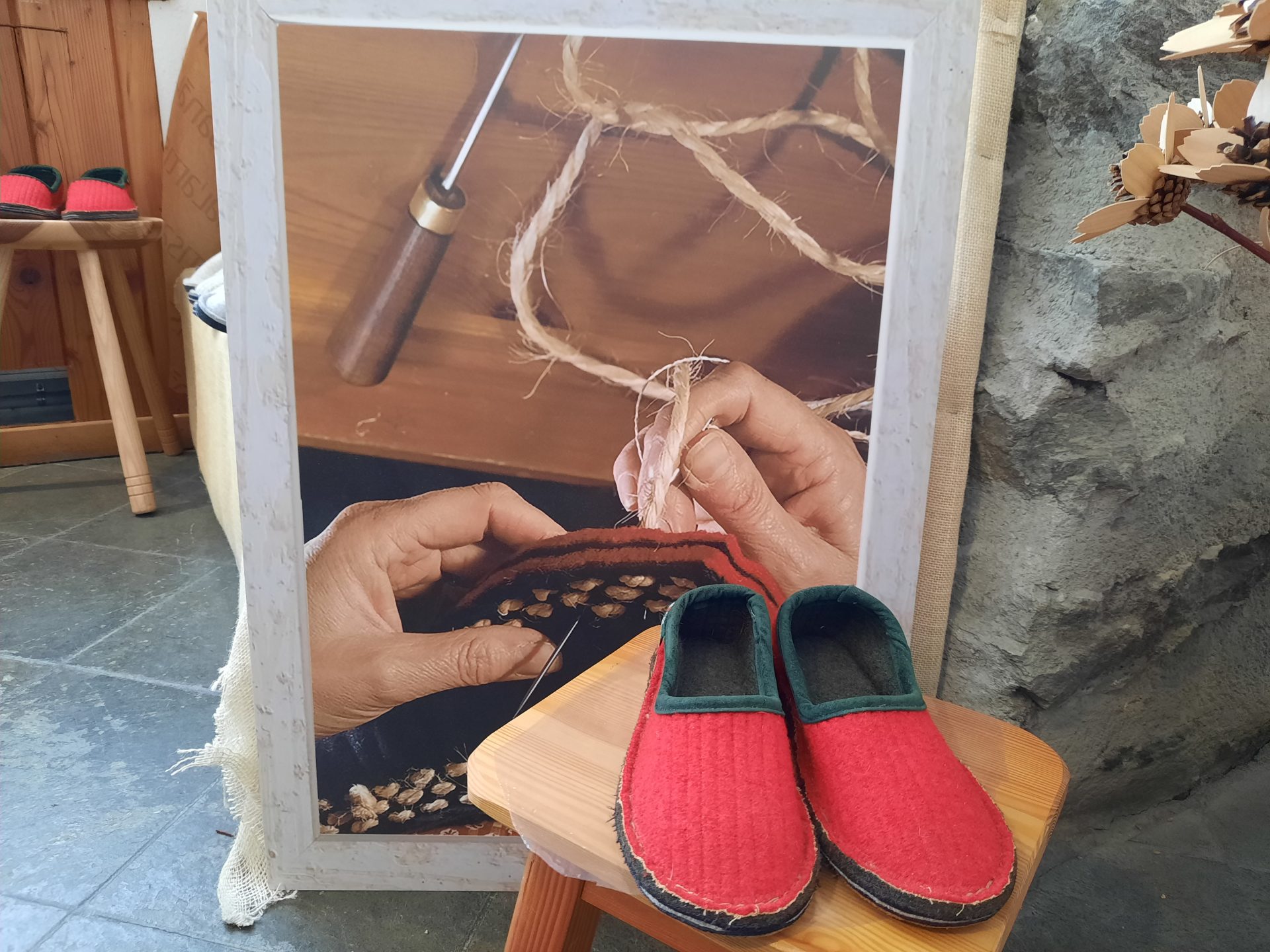
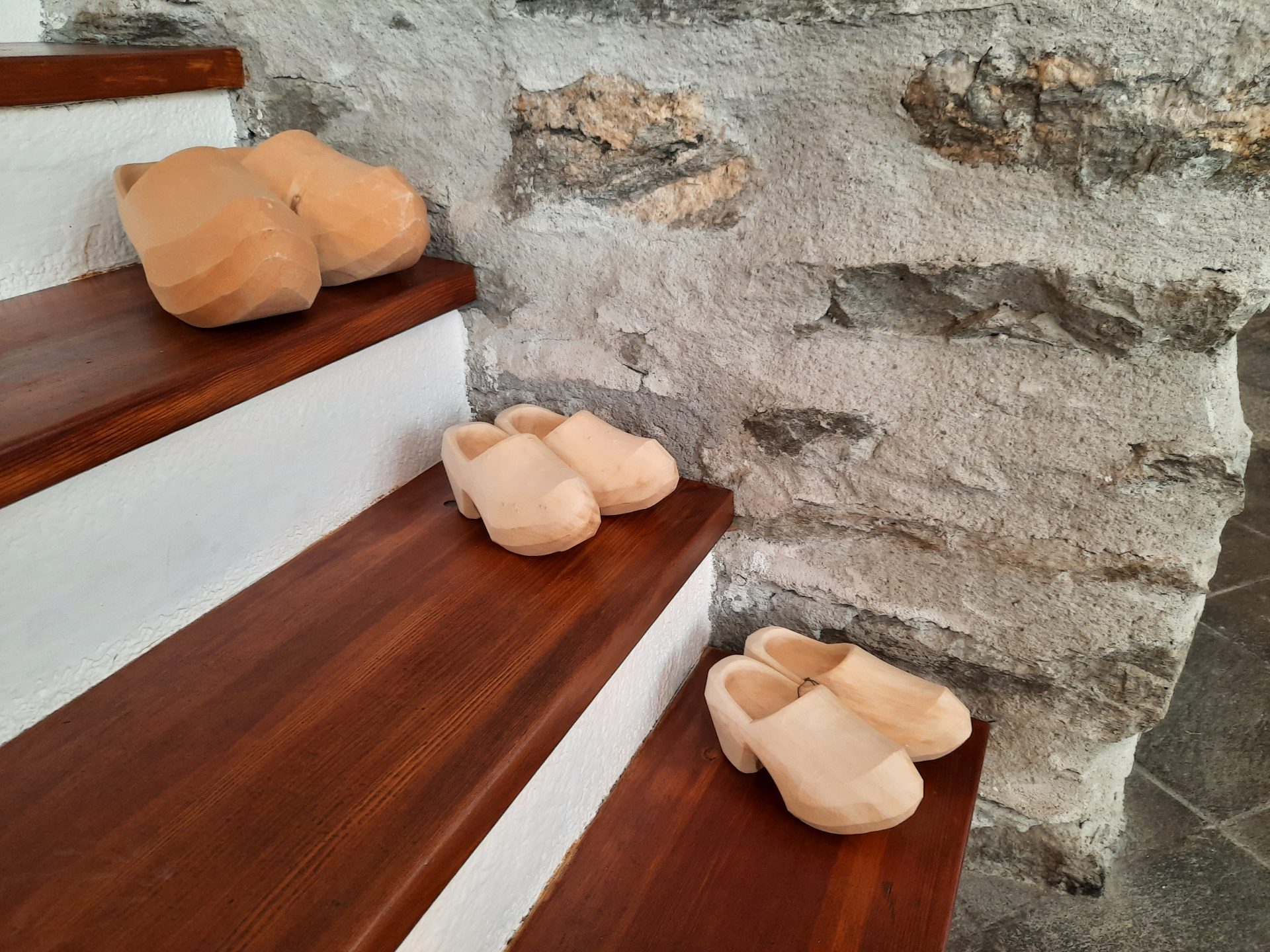
The typical multilayered fabric slippers from the Lys valley (Gressoney) were originally used even for farm work.
The first written documents which mention this particular type of footwear date back to the 19th century. These slippers were patiently made by women in winter: using old clothes made with heavy fabric, they sewed them with care to obtain warm sturdy shoes. They also used to exchange their slippers for essential goods like cheese or butter.
Worn both at home or outside, by women, men and children, these shoes were hard enough to work in the fields. The ones for festive days were brightly coloured and, for women, embellished with embroidery.
The sole was made of several layers of fabric, assembled and quilted with weaved cords called ligneul. The upper part was made of three layers of quilted fabric, all hand-sewn with the same cord used for the sole.

Near Courmayeur: Val Veny
The Val Veny opens out in the heart of the Mont Blanc massif and is for us a Summer paradise. Follow the river forming the valley: you’ll find lovely walks among fields and woods, that can bring you up to reach lakes (Miage is maybe the most famous), lodges, panoramic spots… A special mention to the Peuterey wood, location for the Celtica Festival in July. The best way to live the valley? Stay in one of the lovely camping areas, in a tent or a chalet.
What I told you here is just a glimpse of the wonderful handcraft traditions of the Aosta Valley.
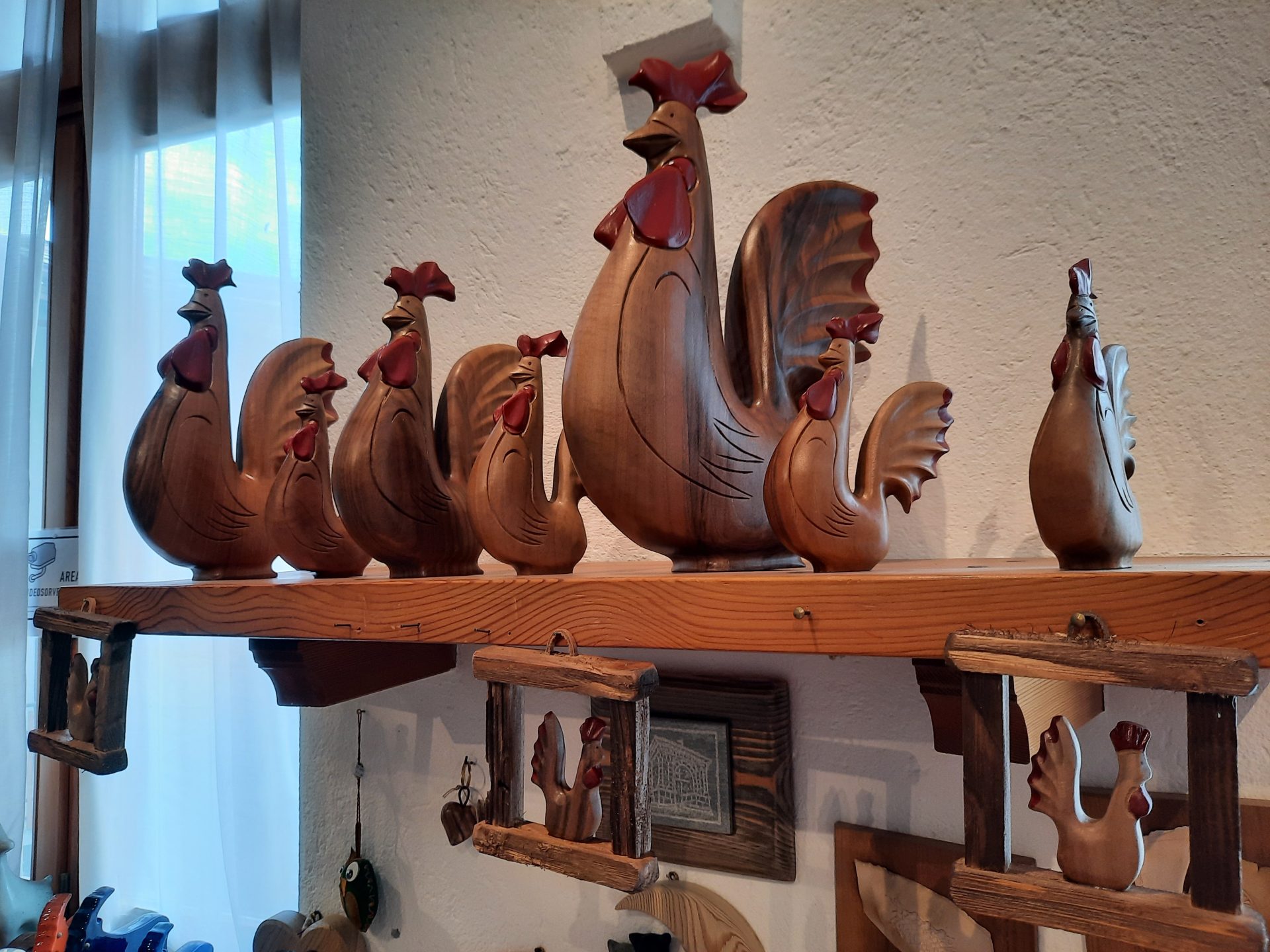
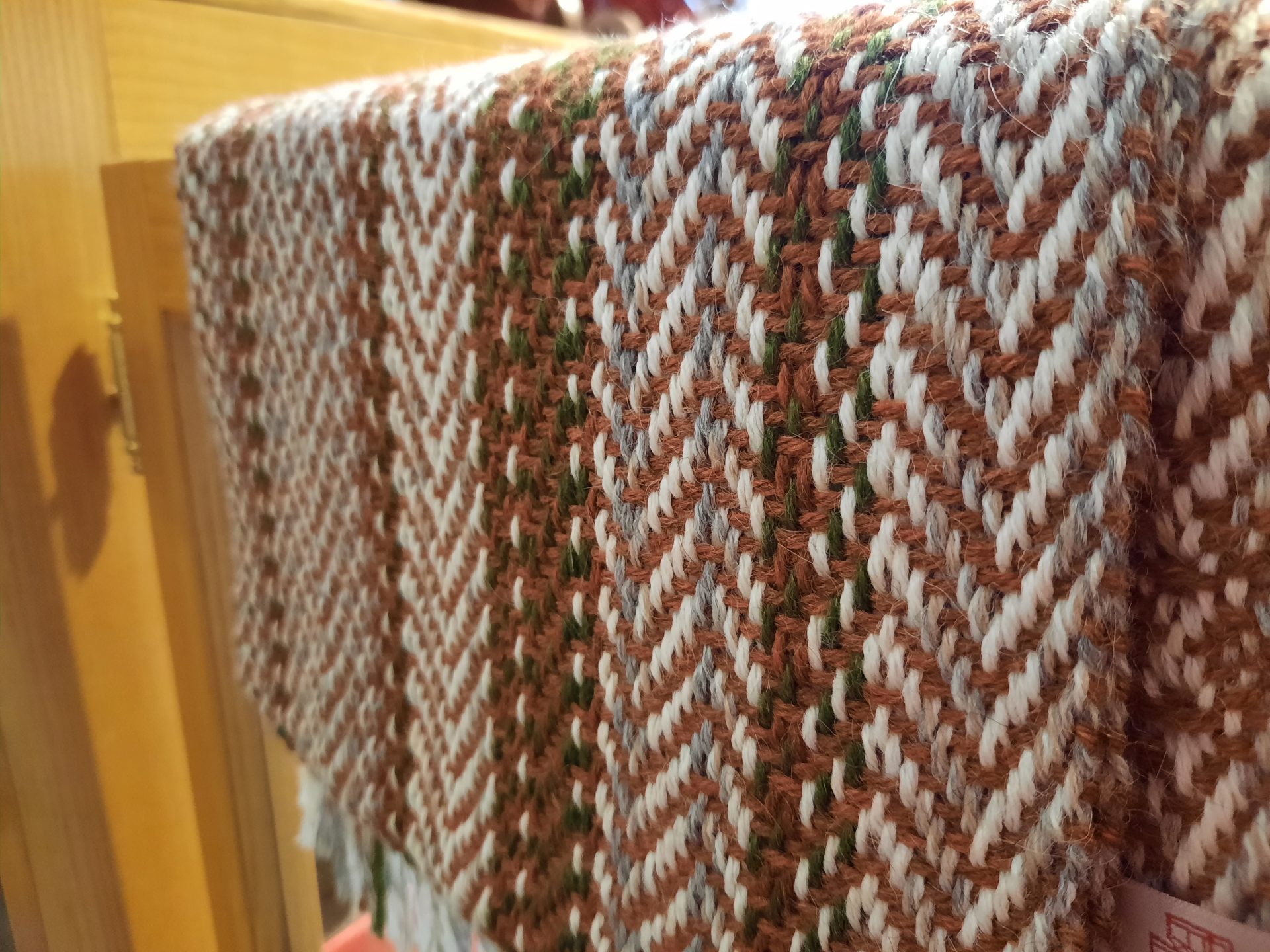
There could be loads of tales to tell: the story of the artisan that wanted to revive the ancient sculpture tradition of the region and succeded with his rooster sculptures; the artists that use ancient materials to make something new, such as the animals sculpted in Champorchet soapstone by Claudio Ferrari and placed to “live” on old roots; the Rosset sheep wool used to make tapestries…
How to discover more about those things? Head to “L’Artisanà Boutique” in Courmayeur and ask for Ombretta: I’m sure she’ll be eager to tell you more, as kindly as she was with us.
And maybe in another post I’ll tell you more myself.
Would you like to read more about Valdostan handcrafts, what we bought in the Boutique, a review of the book I took home with me?
Tell me in the comments!