If you’ve been reading us here for a while, I suppose you know that Celtica Festival in Valle d’Aosta holds a special place in our lives. I’ve said it many times: Celtica is something you have to experience by yourself to fully appreciate what it is, what it means, how it touches you deeply.
When you are there, the experience is full and immersive. You can stroll around the woods, explore the artisans’ market, or simply relax and soak in the atmosphere. You can sing and dance, attend concerts at any hour of the day or night, share stories under the trees. You can experience craft activities, try delicious food and drink, listen to insightful lectures.
There’s so much more, but I’ve already written at length about how the festival feels like. This time, I’d like to concentrate especially on the crafting side. Because here there’s countless opportunities for hands-on activities. And there’s something truly special about sitting in a quiet clearing, tools in hand, surrounded by others who are just as eager to learn, create and share. The craft workshops we attended at Celtica thought us how these moments are all about connecting: with ancient traditions, with the natural world, with fellow crafters, sometimes even with forgotten parts of ourselves.
I loved how the festival gave us the chance to explore new techniques and materials with lovely talented experts. It’s the kind of learning that would be hard to come by anywhere else, and here you have it all in one place. Just a word of advice: demand is high, so if there’s a workshop you really want to attend, be sure to book it early!

Table of contents




Sewing a leather bag with Labarum Bagauda Teuta Laevi
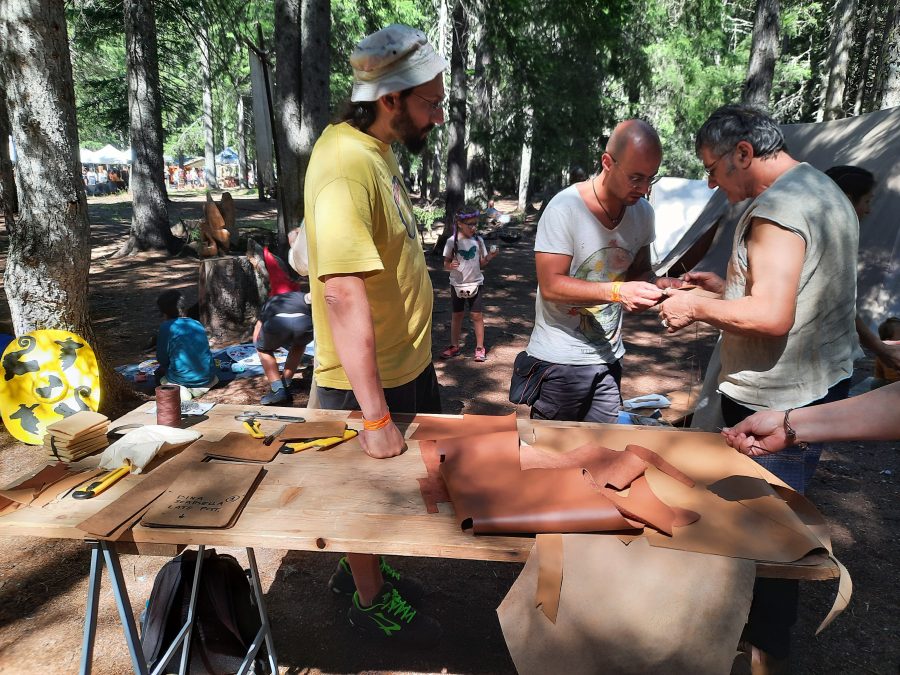
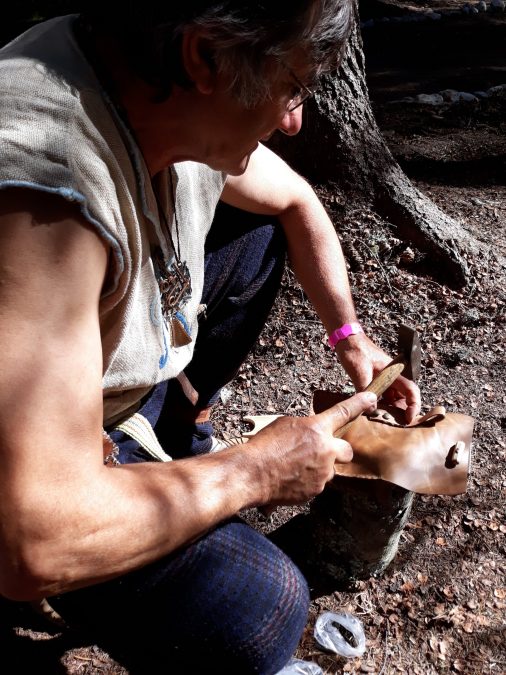
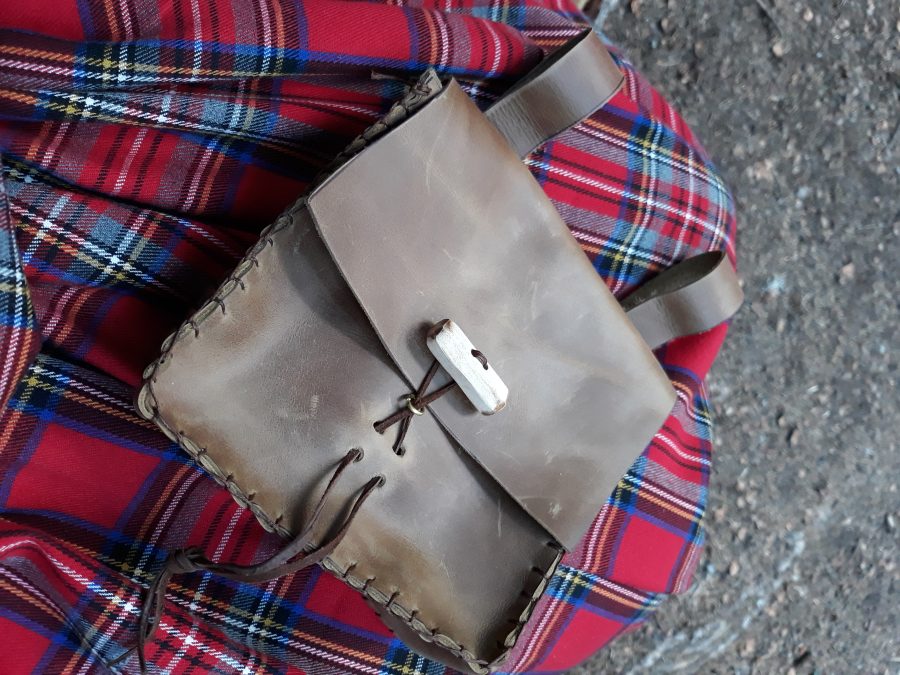
Our very first craft experience at Celtica was sewing a leather purse with Labarum Bagauda Teuta Laevi. To this day, it remains one of the most satisfying workshops we’ve ever attended.
We took part in it wearing our Celtic outfits, and that made everything feel even more meaningful. There we were, learning ancient techniques to create a historical bag, guided by a knowledgeable reenactor dressed in full Celtic attire, while we were dressed the same way.
The workshop itself is quite a long session, around three hours, even more depending on how fast you are with hand-sewing leather. It’s not particularly difficult, but it does require patience.
While my husband followed the instructions faithfully, I couldn’t resist adding a small personal touch. Instead of using a simple running stitch, I chose my beloved blanket stitch, giving my purse a slightly more decorative and personal finish. And from that moment on, our handmade purses became a full part of our Celtic outfits.
I would absolutely recommend this workshop, even if you’re not particularly into sewing. It’s deeply rewarding, and in such a special setting makes it even more unforgettable.
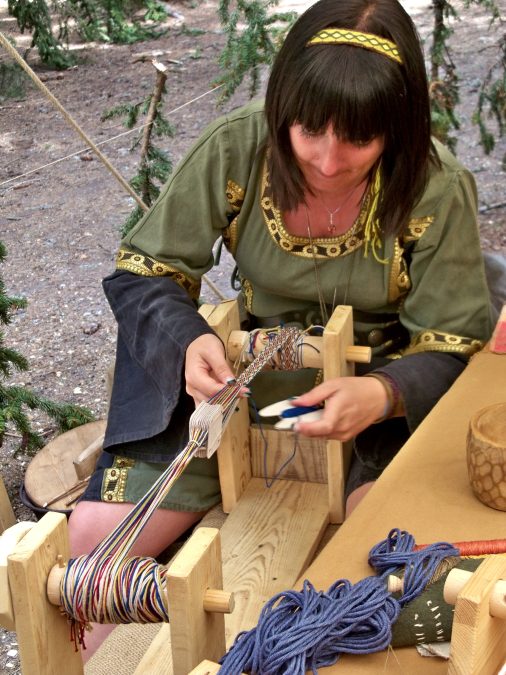
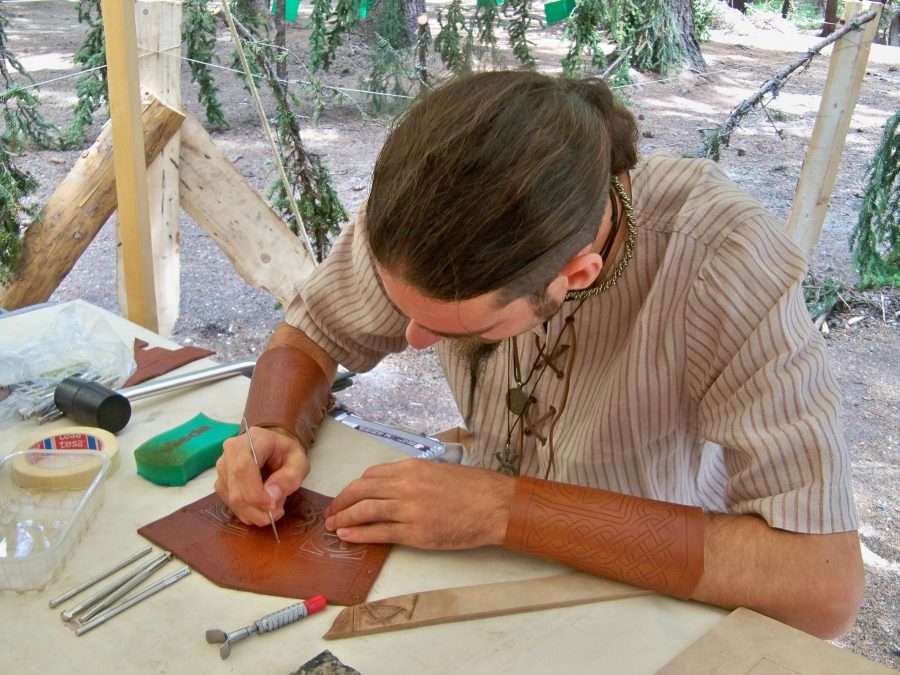
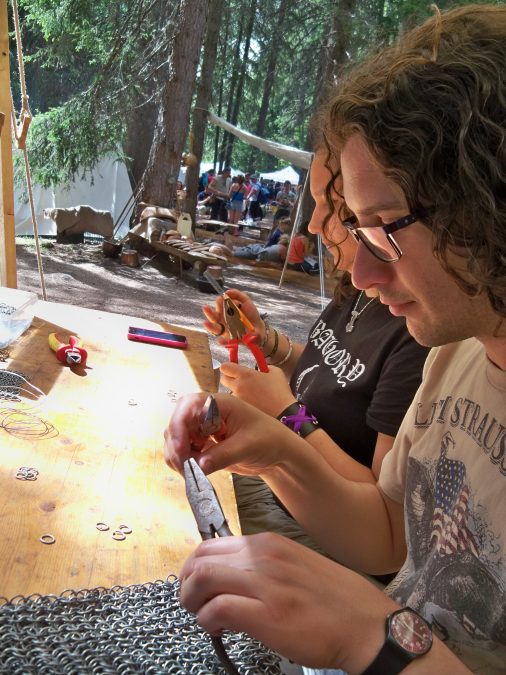
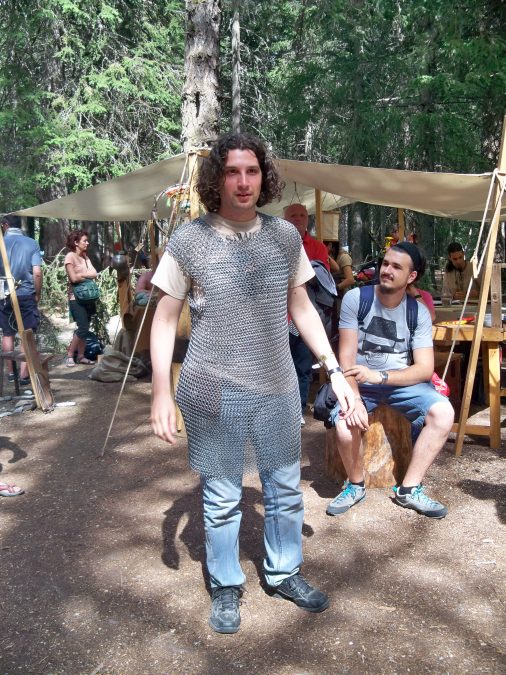


Ancient crafting techniques at the historical camp
The historical camp is one of the richest areas of the festival when it comes to hands-on experiences. You’ll find axe throwing, archery, fascinating displays of everyday life as it might have been centuries ago. But above all, it’s full of crafting activities happening all the time.
Beyond the structured workshops like the leather purse session, there is always someone busy making something. And what makes it even more special is that everyone is genuinely eager to share their work, to show you what they are doing, explain how and why, and often even let you try for yourself.
Over the years, we’ve had the chance to try our hand at making chainmail (and Locutus even got to wear a full piece), weaving, tablet weaving. We’ve watched leather workers, woodworkers, and all kinds of artisans demonstrate how things were done in the past, each one bringing their craft to life in a very tangible way.
And what’s especially fascinating is noticing how sometimes certain techniques subtly change over the centuries…





Copper jewels with Labarum Bagauda Teuta Laevi
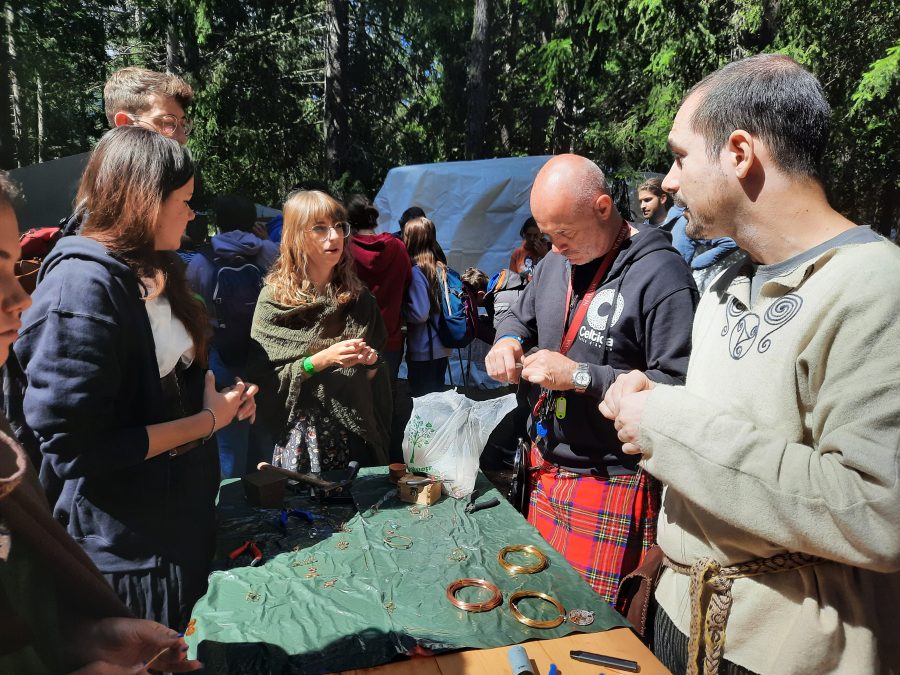
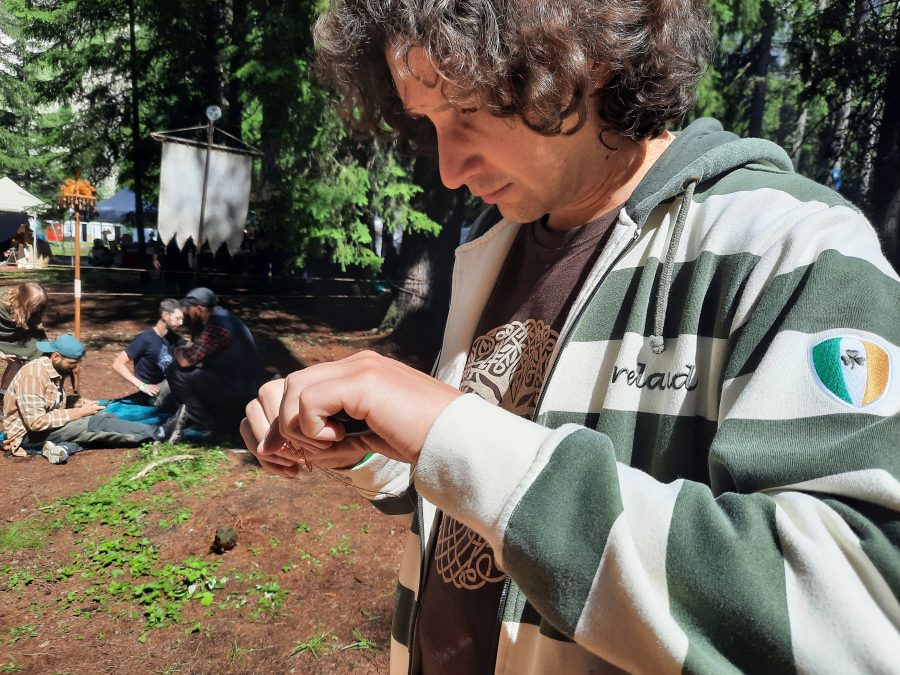
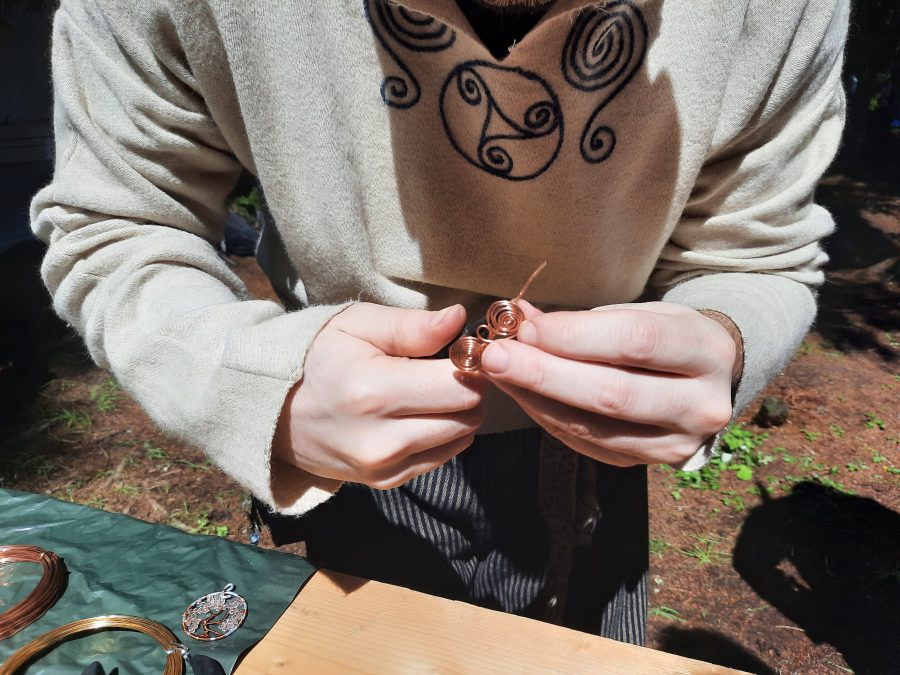
The same reenactment group that hosted the leather purse workshop also led a session on copper working, focused on making simple jewellery. We had the chance to try creating a fibula brooch.
All tools and materials were provided by the workshop leader, and we were guided step by step through the process with expert support. It was fascinating to work on an object that today is mostly decorative, but that in the past served a very practical purpose, essentially acting as the closest equivalent to modern buttons for fastening clothing.
At first glance, the piece might look quite complex, but in reality it was easier than expected and genuinely fun to make. That said, I would definitely recommend following an expert’s guidance the first time you try something like this: it makes everything much more approachable, showing you the right steps in the right order and giving you confidence as you go.


Ceramic workshop with Giulia Sbernini of "La Vecchia Signora"
Not only is the historical camp buzzing with activity: the market area is just as alive. It’s full of artisans making and selling their own wonderful creations, and many of them are eager to share their craft by hosting introductory workshops.
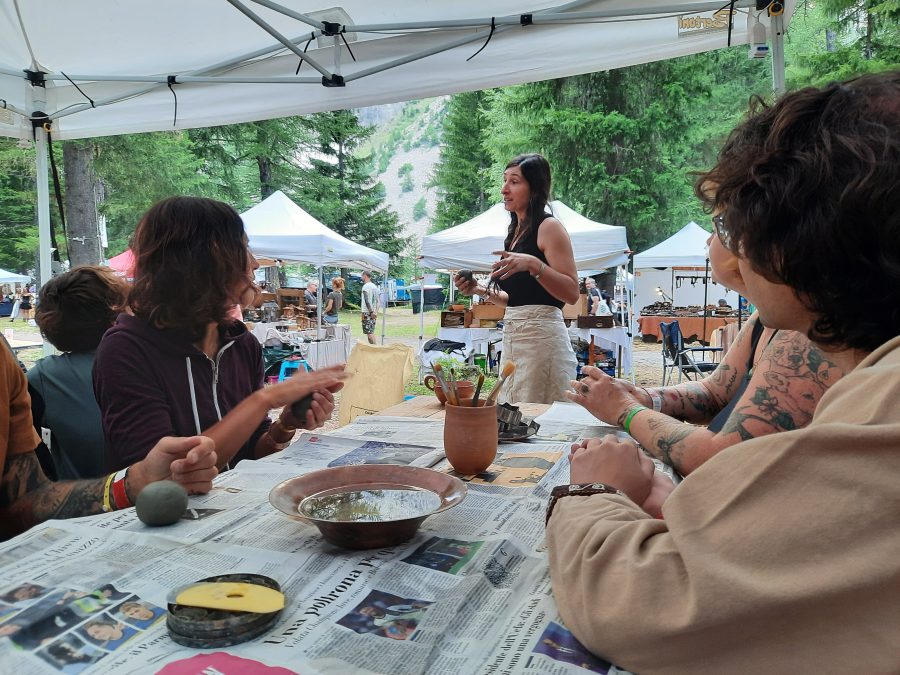
One of these artisans is Giulia Sbernini of La Vecchia Signora, an exceptional ceramist who creates reproductions of historical pottery with a subtle modern touch: most notably, the fact that her pieces are dishwasher safe. We absolutely love her work and have brought several pieces home over the years.
In 2025, we finally decided to try our hand at it ourselves and joined her ceramic workshop. It was a wonderful experience from start to finish. At the end, we left our creations with Giulia, who took them to her laboratory to later fire them in her kiln and thus complete the process.
Of course, our pieces are not quite on the same level as hers, but we are incredibly proud of what we managed to create with our own hands and her expert guidance.



Pyrography on wood with Marco Barzaghi of BarzaDeLegn
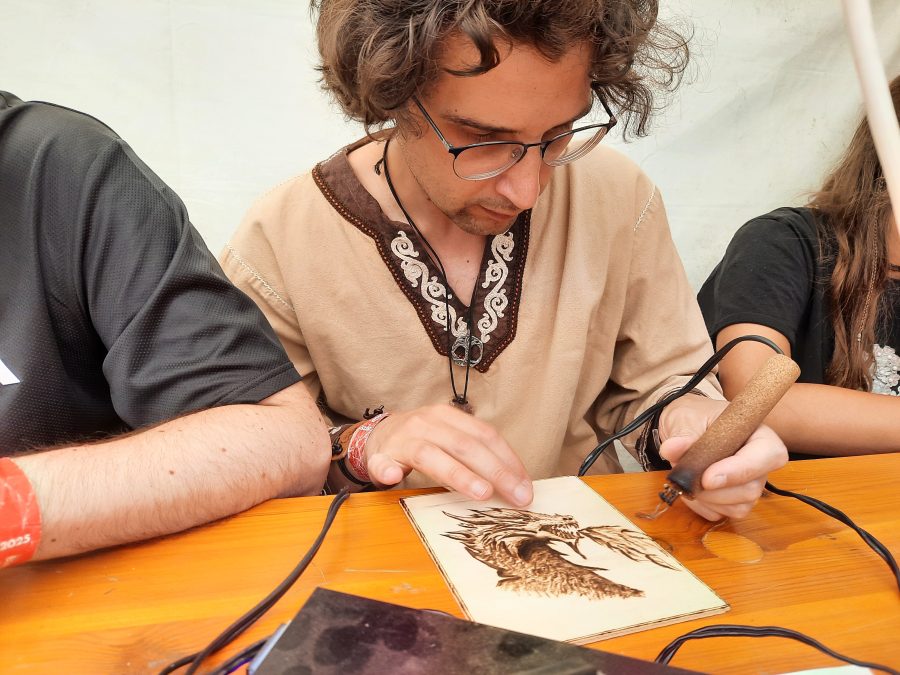
Marco Barzaghi is an artist, there’s really no other word for him. At his market stall, you can find it full of his delightful pignomi companions, but what truly stands out are his pyrographed portraits, so detailed and lifelike they almost seem to breathe.
Better known as Barza de Legn, he hosts workshops for both children and adults, and we loved to take part in one ourselves. While I chose to create a simple triskell symbol (although I quickly discovered that precise geometric patterns are far more challenging than they look when working with pyrography), Locutus opted for something more figurative and drew a fire-breathing dragon, learning all he could about lights and shadows made with the pyrograph.
Marco is patient, precise and wonderfully didactic: a perfect craft teacher, always eager to share his small tricks and guide you through the process step by step.




Making a leather bracelet with Tres Lunas
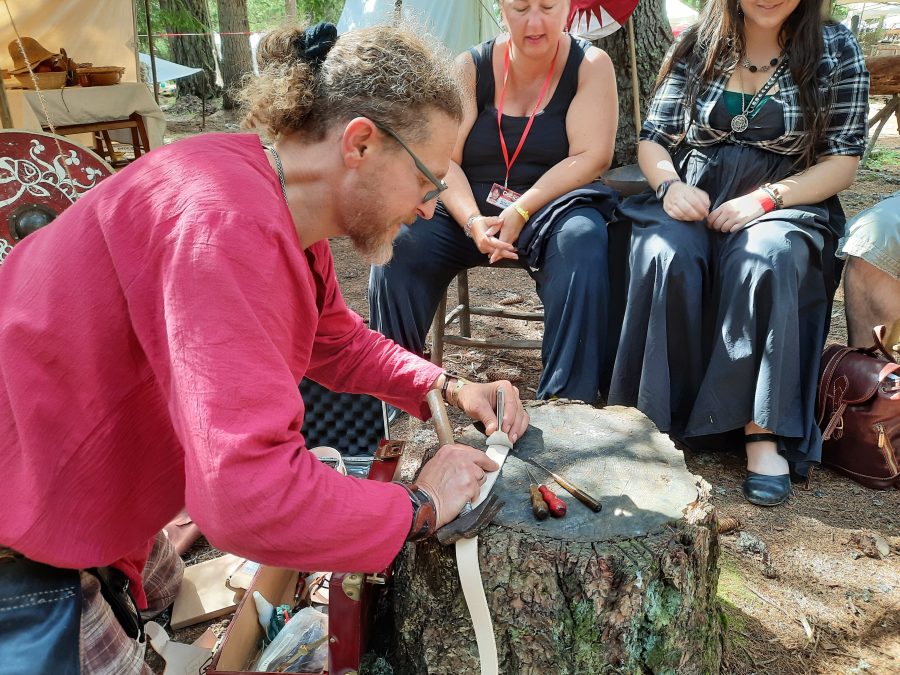
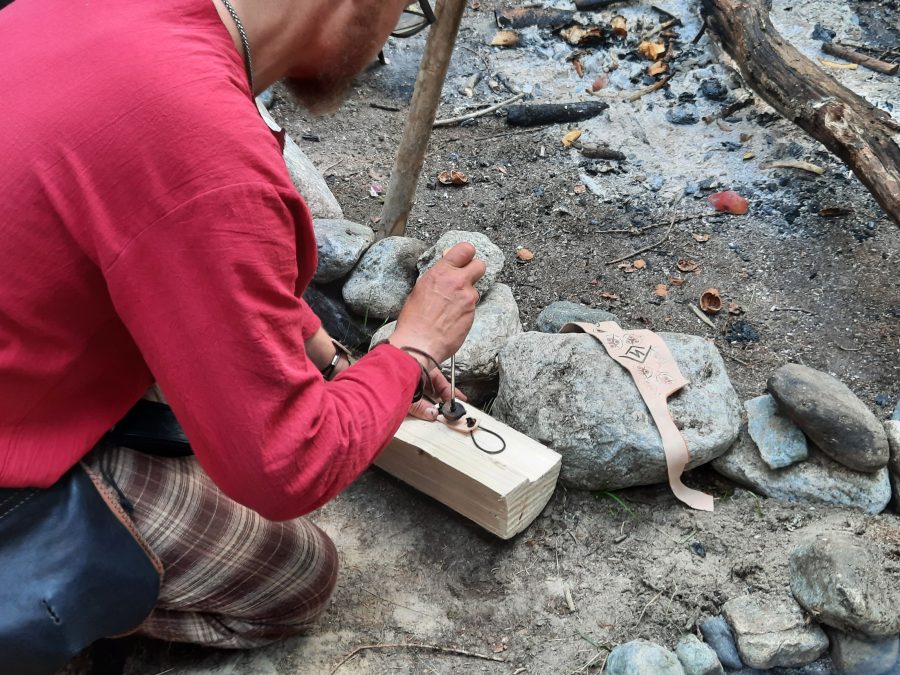
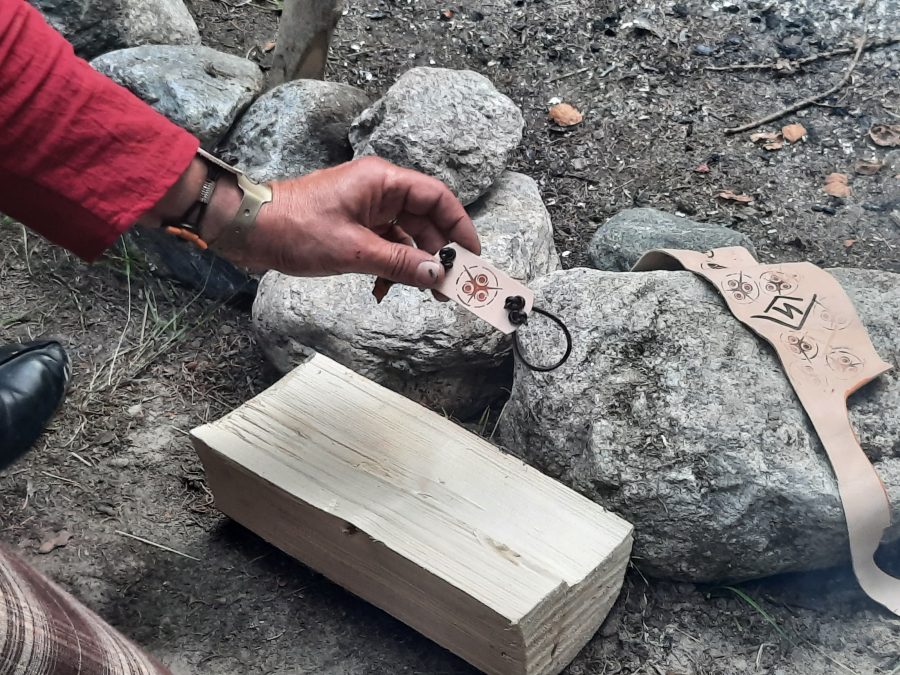
What stands out most about this workshop is the depth of knowledge it carries. We spent much of our crafting time in conversation with the knowledgeable teacher, learning a great deal about leather: its properties, its history, its ancient uses.
Leather is, in many ways, much like wood: a living material, even when it is no longer “alive”, and it continues to respond and change over time. As an organic material, it needs to be understood and treated likewise, since it reacts to weather conditions as well as to the contact with your own skin.
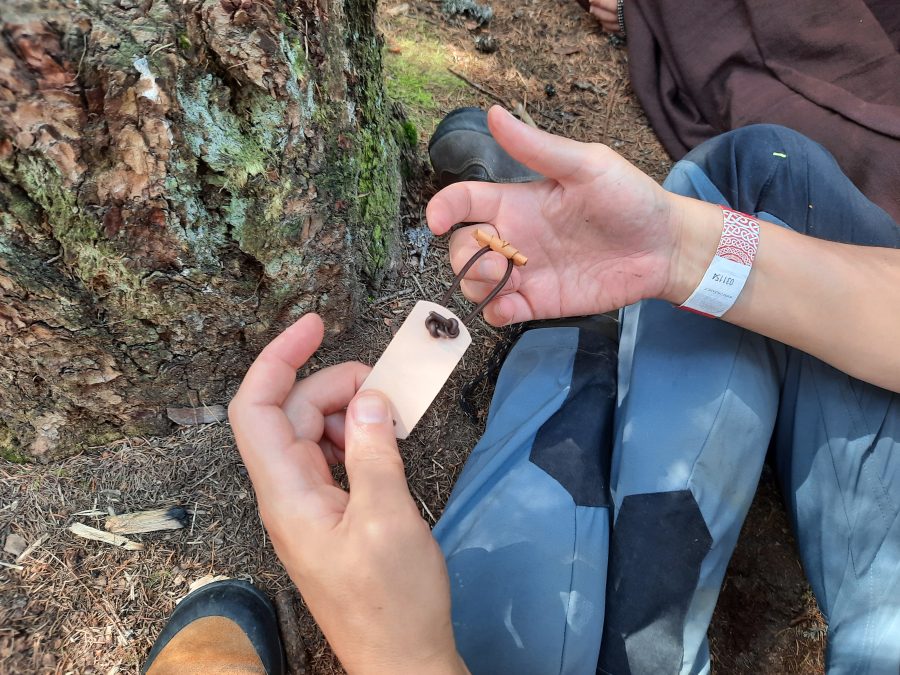
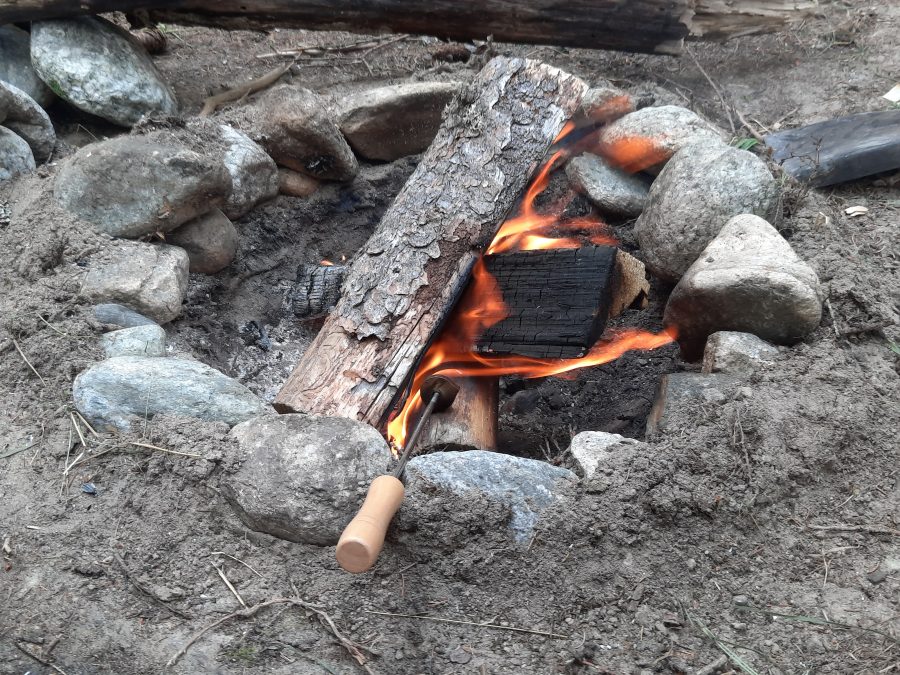
We created a simple bracelet, decorated with the symbol of the reenactment group, hot-stamped directly onto the leather. It was a small piece, but rich in meaning and in the knowledge shared throughout the process.







Our own lucet workshop
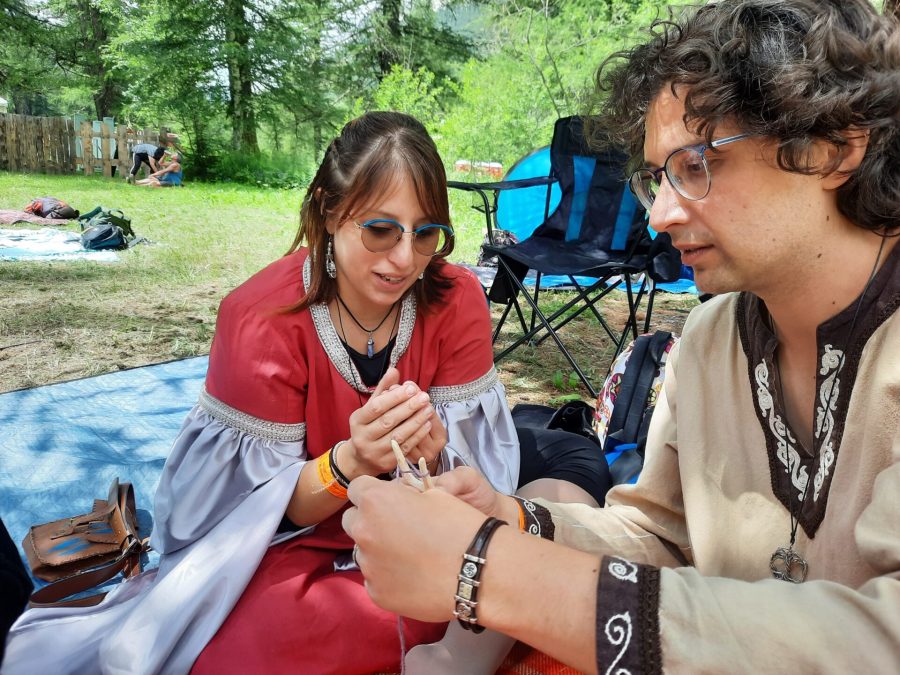
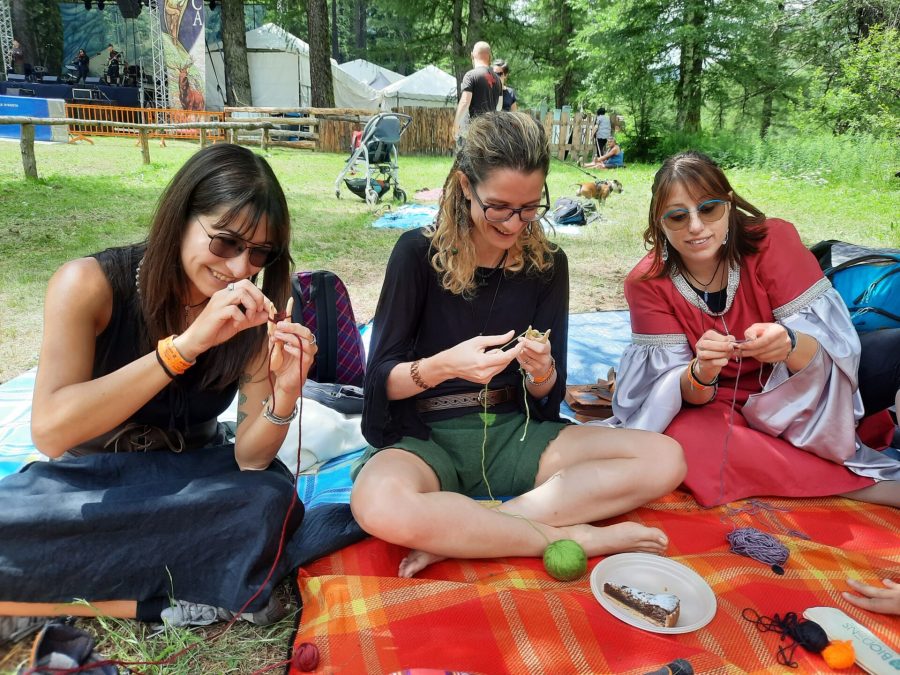
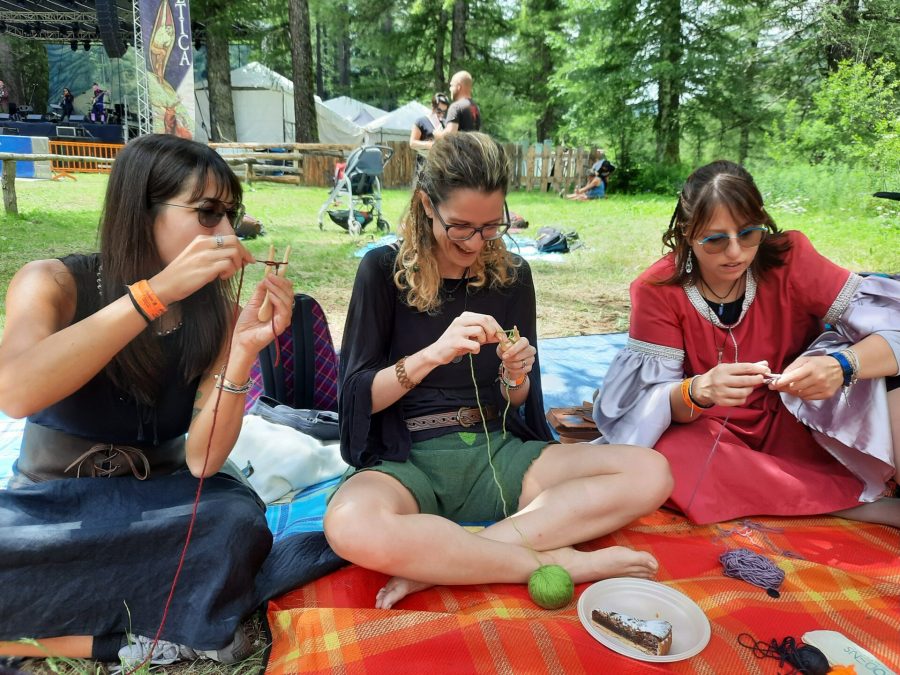
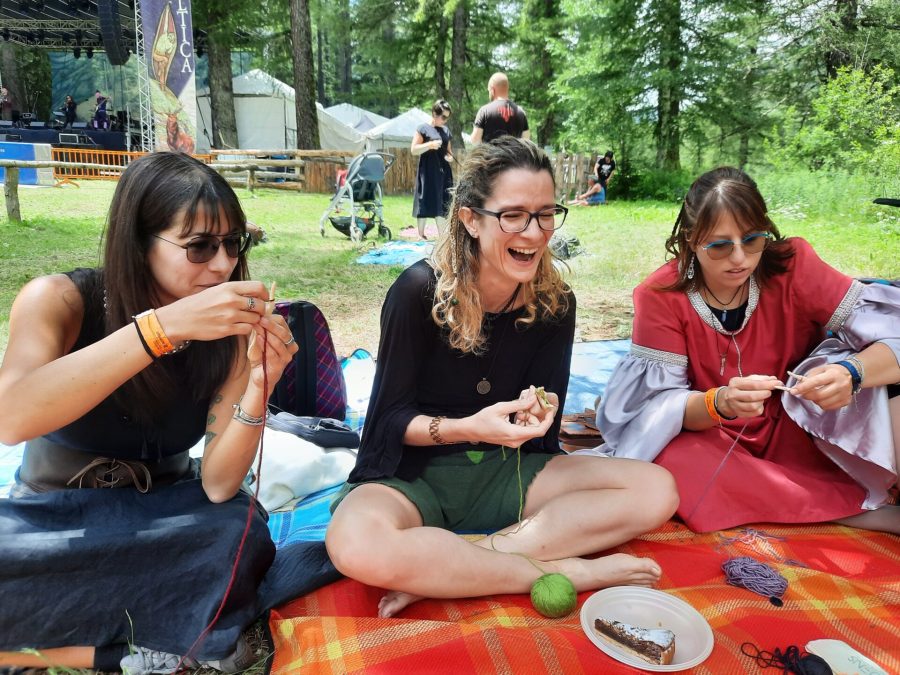
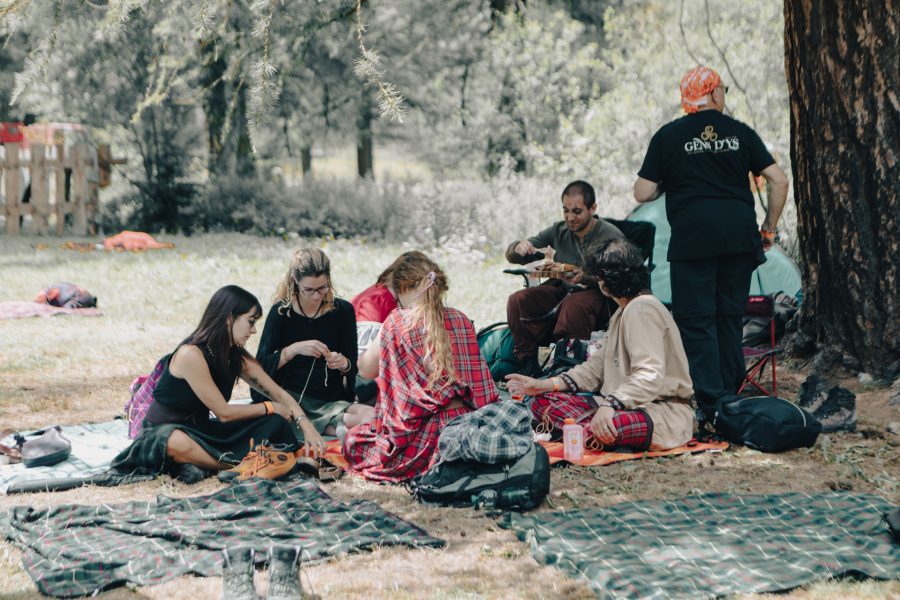
And of course, I couldn’t avoid mentioning our own lucet workshop. Well, it started as something entirely unplanned. It wasn’t a structured workshop, but a spontaneous moment that unfolded in the forest.
I was making lucet bracelets while relaxing among the trees when I suddenly found myself surrounded by friends who wanted to try as well. Since I had brought more than one lucet with me, that moment naturally turned into a small, improvised crafting circle. Before long, it became a true workshop of its own, filled with crafting, laughter, and shared curiosity.
In the end, our lucet “session” became a little mirror of the broader Celtica experience: a quiet example of how the festival brings people together in unexpected ways and builds a true sense of belonging. Celtica is a space where unexpected connections happen naturally and a real sense of community grows naturally. Celtica, as always, teaches us that the most unforgettable moments are often unplanned, and that when things drift away from what we expected, they sometimes lead us somewhere even more meaningful.
What next?
Looking back at all these experiences, it becomes clear that the craft workshops at Celtica are much more than simple activities. They are moments of learning, sharing and connection, each one offering a different perspective on ancient techniques, materials, traditions, while always being enriched by the people we meet along the way.
Celtica itself is a place where creativity and community naturally come together, where you actively participate instead of just observing from the outside. Each year we return home with new skills, new inspiration, and that familiar feeling of having been part of something rare and meaningful.
And the story is far from over: we already have our tickets for the next edition, and we can’t wait to see what it will bring us this year. Every Celtica has for us its own theme, its own invisible “fil rouge”, and each time we discover something new, both about the crafts and about ourselves.
And you? Have you ever experienced Celtica? If so, I’d love to hear your impressions and stories in the comments. And if not… maybe one day we’ll meet there, as “friends you haven’t yet met.”