
Sometimes, meaningful discoveries are places that make you feel instantly at home, even if you’ve never been there before.
Not long ago, I found a comment on this website with a link. Not a spammy one, but a genuinely thoughtful link to something special. And I am really glad I clicked on it: that’s how I discovered The Sewing Machine Orphanage, and promptly fell down a rabbit hole of wonder.
Now, if you’ve been following my work with the Singer sewing machine database, you already know how deeply I care about preserving the history of these beautiful mechanical marvels. To me, vintage sewing machines are first and foremost storytellers. My whole journey began when I tried to find a machine a machine like the one from my infancy that was lost during a move. Retracing its history felt like retracing a small piece of my own. That search pulled me deeper and deeper into research. I want to tell the history of those machines, and also their stories.
So when I discovered a project entirely devoted to rescuing, documenting and honouring vintage sewing machines that might otherwise be forgotten, I felt an immediate connection.

A short video where the founder of The Sewing Machine Orphanage explains why they do this
The Sewing Machine Orphanage is dedicated to saving machines that have been abandoned, neglected or simply left behind by time. Instead of letting them rust away in basements or end up in landfills, they gather them, preserve them and document them, giving each machine the dignity it deserves. In a world that so often celebrates the newest and fastest, this kind of work feels almost radical.
This isn’t just about metal and mechanics. It’s about safeguarding craftsmanship. It’s about remembering that these machines once sat at kitchen tables, in tailoring shops, in dressmaking rooms. They clothed families. They built businesses. They stitched history. As an archaeologist who has worked in museums for almost two decades, preserving history through the physical objects it leaves behind has always been deeply rooted in me. Objects carry memory. They connect us to the people who came before. Sewing machines are no different.
So I knew immediately that I wanted to share this story with you.
In this article, we’ll explore how The Sewing Machine Orphanage came to be, what drives their mission to preserve and document vintage machines, and why this work matters so much. It’s for anyone who, like me, believes that craft heritage deserves to be protected.
If you’ve ever been fascinated by the rhythmic motion of a treadle, as I was as a child, and wondered about the people who operated it before you, you’re going to love this.
Table of contents
A home for orphaned sewing machines
An important thing to note about The Sewing Machine Orphanage is that they don’t speak about “collecting.” They speak about stewardship.
They accept vintage sewing machines by donation from families who, for many reasons, can no longer care for them. Sometimes it’s a question of space, sometimes knowledge has been lost. Sometimes it’s simply that the generation who used the machine is no longer here, and no one quite knows what to do with it.
And so these machines just sit there, in basements, barns, attics, spare rooms, at risk of being one day discarded. I remember the day we visited granny’s home for the last time, the day before workers would come to clear the place, and I wanted to rescue her two sewing machines, the Singer 31K15 she used throughout her life and the Vesta Dietrich nobody even noticed was there. The same landfill destiny was awaiting those two machines as well.
The Sewing Machine Orphanage exists precisely for that fragile moment between storing and discarding.
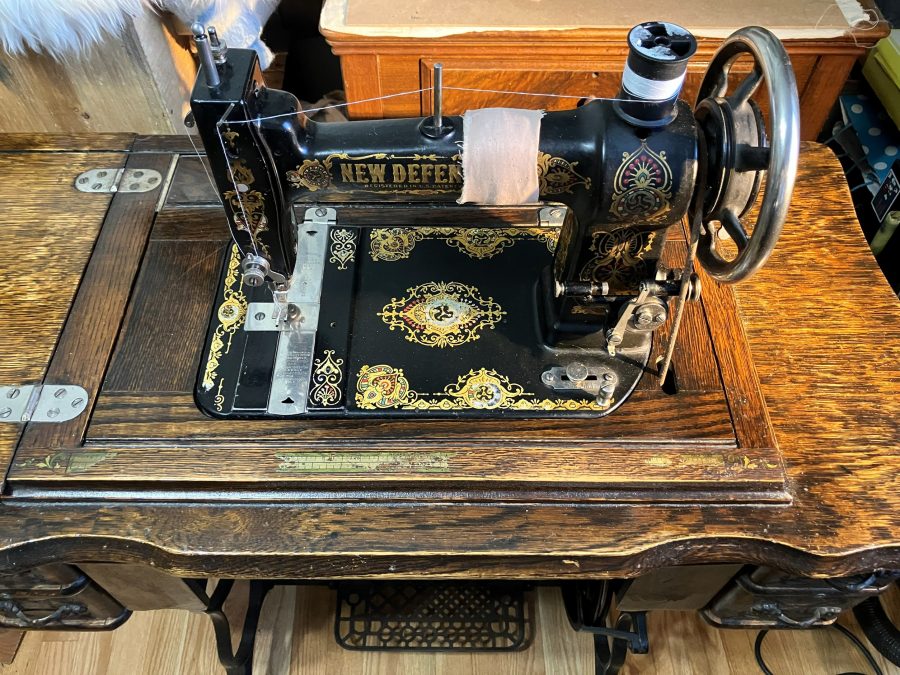

When a machine arrives, it is not stripped, modernised or “improved.” First, it is carefully documented: its maker, its condition, its provenance, and any story that accompanies it. They stabilize and preserve with minimal intervention, respecting the integrity of the object: the goal is to honor age without erasing it. Somebody might not agree here, and prefer a restoration that cares less about what’s called patina: here, the goal is not lifting the machine’s value for reselling. It’ more like the work of a museum curator.
After the caring phase, some machines remain as part of the collection, preserved as historical artifacts. Others are ethically rehomed through what they call adoption, placed with new stewards who understand the responsibility of preserving their legacy.
This reminds me a lot of a kind of awareness that’s both ancient and contemporary. I like reading about people who value second-hand items and intentional buying, asking themselves “do I really need this” before acquiring. It’s the realization that you are responsible for the things you own, that you should keep an item only if you can fit it into your like and find a real use for it. I think this way of thinking is both proper of the younger generations and something that our grannies did without noticing, because that’s how life had always been before modern lifestyle “booms”.
But beyond the physical care, there is something deeper happening at The Sewing Machine Orphanage.
Inspired by historian Laurel Thatcher Ulrich’s idea of the “orphaned sewing machine”, the Orphanage recognises that these objects are more than mechanisms. As Ulrich wrote in Harvard Magazine in 2017, “Every object tells a story, and most objects tell many stories.” A sewing machine might tell the story of a young bride starting her household. Of a mother mending late at night. Of a tailor building a livelihood. Of migration, resilience, thrift, creativity.
In this sense, their mission echoes that of museums. Check the National Museum of Ireland’s reflection on “The Grace of Important Objects”. Everyday tools, when looked at closely, reveal extraordinary dignity. They carry the imprint of human hands and human lives.
And this is why their work matters.
Because once an object is discarded, its stories are often lost with it. Documentation preserves more than metal and wood. It preserves context. It preserves memory. It preserves connection. The Sewing Machine Orphanage reminds us what’s worth protecting.
Maybe one day even those thoughtfully cared machines will be lost to time, but preserving their memories will make them last beyond their physical existence. Not all the objects gathered in an archaeological dig end up displayed in a museum. Sometimes they don’t even reach a museum’s deposit rooms. This doesn’t mean what they may tell is lost. Documentation is king. Sometimes, saving the stories an item carries is more meaningful than preserving the item itself. That’s why I really value the work they do at The Sewing Machine Orphanage.
Thank you for preserving the deep meaning and the lessons those ancient artifacts carry.
A meaningful clip from “Ordinary Things – The Grace of Objects (National Museum of Ireland)“
Darren of The Sewing Machine Orphanage answering the question “Why sewing machines?”
Why did Darren start The Sewing Machine Orphanage?
Maybe you wonder why all this project came to be. You are not the only one asking, so I’ll let Darren himself, the founder of The Sewing Machine Orphanage, answer with his own voice. You can listen to him explaining in a video, while watching a mesmerizing vibrating shuttle Singer 28K mechanism in action, or read the transcript below.
Folks have asked me why sewing machines. I’m not much good with fabric and piecing together patterns.
For me, it’s admiration. I admire those people who make them sing that can take this tool and create for themselves, their families, and their communities items of beauty and utility. I admire those people who made these machines work so well, from the craftspeople in the factory around the world to the inventors and patent holders that designed the parts to work in harmony. But most of all, I like to listen to the objects themselves and hear what they are willing to tell me.
When I was younger, I thought it would be cool if I could know the history of an object just by holding it. Know who held it and who used it before me and what happened around it. I could roam from town to town solving crime and finding lost objects. Well, this isn’t that, but it’s close.
I can see where hands that use these machines have worn handles and polished surfaces with repeated careful action. I can imagine the person who cared for and maybe even cherished this object when they bought it on a payment plan from a traveling salesperson who promised improved efficiency in production. This promise that would help provide for a family needing garments and repairs.
And I can imagine the machine sitting and waiting in a corner of a garage for the next person to give it a little oil and help it sing again.
How you can help keep these stories alive
One of the things I appreciate most about The Sewing Machine Orphanage is that their mission is not closed behind glass cases. It’s participatory. It invites us in.
There are several ways to support their work, and each one reflects the same principle at the heart of their mission: stewardship.
Discover more on The Sewing Machine Orphanage
Visit the official website to know everything about the project and browse their collection.
You can also see their videos on Youtube.
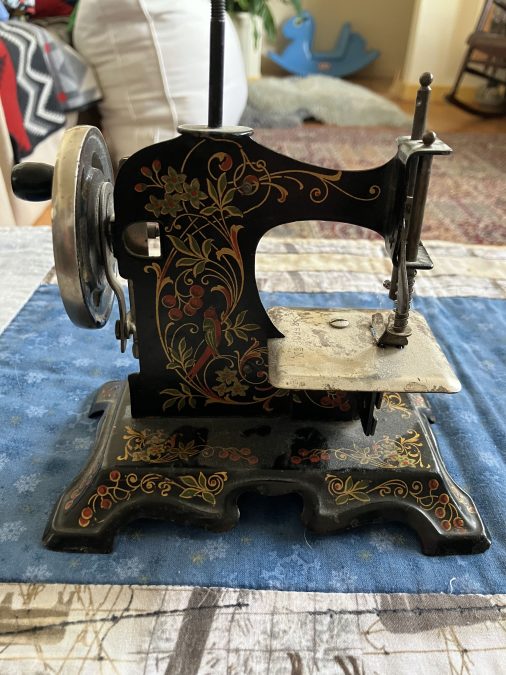
Adopt a sewing machine
Some of the machines entrusted to The Sewing Machine Orphanage remain with them in long-term care. Others, though, are ready to continue their lives in homes, studios, classrooms or workshops.
The key here is that adoption is not ownership. It is a continuation of stewardship.
When someone adopts a machine, they agree to care for it respectfully, preserve its identifying marks and history, and avoid irreversible modifications. The machine’s documentation travels with it, and it remains part of the Orphanage’s records even as it begins a new chapter elsewhere.
In other words, these machines are not being “sold.” They are being placed, thoughtfully and intentionally, with new guardians who understand that they are caring for a piece of history.
Adoption fees help support the ongoing rescue, documentation, conservation and storage of other machines waiting for their turn. It’s a cycle of care.
If you’ve ever dreamed of giving a vintage machine a meaningful second life, this might be one of the most ethical ways to do so.
Donate a sewing machine
Perhaps you are on the other side of the story. Maybe there is a machine in your family that no one can keep: be space is limited, knowledge has faded, you simply don’t want to see it end up in a landfill.
When a machine is donated:
- It is photographed and catalogued
- Its known history and provenance are recorded
- A decision is made about preservation or light restoration
- It is either cared for long-term or prepared for ethical adoption
Even machines that are not in working condition are welcomed. Wear, repair marks, missing pieces are all part of the story.
And if you know even the smallest detail about its past (who used it, where it lived, what it made) those fragments become part of the historical record.
As someone who has spent years piecing together bits of history, I can tell you: small details matter more than you think.

Removing debris from the bobbin cover of a 1904 New Defender Sewing Machine
Visit, learn, connect
The Sewing Machine Orphanage is located in Devon, Alberta, Canada, and visits are possible by appointment.
Be aware that this is not a polished public gallery: it’s a working preservation space. That distinction matters: it means care comes first, for both the machines and the people who entrust them.
They also offer sewing lessons by appointment, including:
- Vintage machine operation and maintenance
- Beginner to intermediate sewing skills
- Learning to sew on classic mechanical machines
This is something I deeply appreciate: preservation is mainly about understanding objects, without freezing them in time. They teach us how important is using them responsibly and passing on knowledge.
And of course, one of the simplest ways to help is the one I’m doing right now: spread the word. Maybe you can’t visit because you live on the other side of the ocean, like me. Maybe you don’t have a machine to donate or are not ready for an adoption. But sharing this story, telling it to your connections, linking it online, matters too. You could reach a person that can help them more than you can. The more people understand the value of these machines, the fewer will end up forgotten.
What next?
I want to say thank you to The Sewing Machine Orphanage for all their work. For choosing stewardship over possession. For documenting what others might overlook. For recognizing the storytelling power of those machines.
We are currently talking about ways to collaborate, and I sincerely hope I can do my small part to support and strengthen this project. Even sharing their work, telling their story, and connecting them with the right people feels meaningful. Sometimes preservation begins simply by paying attention.
If you are close to Devon, Alberta, consider getting in touch with them: visit, donate, adopt, ask questions, learn. If you have a machine sitting quietly in an attic or a family story attached to one, know that there is a place where it will be treated with dignity.
Before discarding an old sewing machine, pause. Ask yourself:
- Does someone still need this?
- Does it still have something to teach?
- Could its story be preserved?
We can’t save every object. Even archaeology teaches us that. But we can choose which stories we allow to disappear without trace. And that choice, that small moment between “store” and “discard”, is where stewardship begins.
And if you know of other similar projects in your country, your region, your community, please tell about them in the comments below. I would love to discover and share more realities that protect everyday artifacts and the stories they carry.


6 Comments. Leave new
Thank you, Lrcrafts, for your interest and support of our project. I look forward to future collaboration.
Thanks to you for coming to us and telling about your project! Can’t wait for what’s next in our journey!
This a great aventure, I’m a sewing mechanic and collector for the last 50 years work all my life in the sewing trade .
I agree, a lovely adventure!
I was wondering if you know of a place in british columbia that takes singer sewing machines?
Hi! Do you mean like this Orphanage, like a donation? Did you try at local non-profit groups and charities? I can ask around if you need 🙂